Connect with us

Tech

An ultra-rare piece of Microsoft history could be hiding on your shelf

Published

on

OFFBEAT

Red Tetris stickers and shirtless Windows 95 tots – accidental collectibles gathering dust

In a future edition of The Antiques Roadshow, the hosts might get all excited about a mint Microsoft Entertainment Pack for Windows… with a sticker on the box instead of a printed Tetris promotion.

Veteran Microsoft engineer Raymond Chen explained the reasoning behind using the sticker instead of simply printing what was in the box. Microsoft hadn’t locked down the rights for Tetris before the first print run of the packaging, so went with what it had.

Advertisement

The Microsoft Entertainment Pack for Windows debuted in 1990, the same year that Windows 3.0 was released and ushered in an era of Microsoft desktop dominance. Three more iterations of the entertainment pack followed, which included FreeCell, before Microsoft pulled the plug in 1992 (although a Best Of version arrived in 1994, and there was another version for Windows CE later in the 1990s).

We’ll draw a discreet veil over the ad-festooned version currently in the Microsoft Store.

The floppy disks in the box included several card games, Minesweeper, and a Windows version of the fiendishly addictive and massively popular game of the era, Tetris.

But it might not have gone that way. Chen explained in a post on his Old New Thing blog, “At the time the first run of boxes were being printed, the negotiations to license Tetris hadn’t yet concluded. There was a chance that the negotiations would fall through, and the Entertainment Pack would have to be released without Tetris.”

Advertisement

So, rather than risk throwing away a production run, Microsoft went ahead with the Tetris-less branding, and added a sticker when the deal was done. Later print runs made the sticker part of the box art, hence the rarity of the original.

Microsoft has a bit of a history of inadvertently creating collectibles. Chen recalled an incident with Windows 95, when an anti-piracy hologram on the case depicted a child pointing at a computer monitor and the Windows 95 logo. The child was shirtless, which caused offense in some quarters. Microsoft’s solution? A new hologram with the baby in a shirt and overalls.

However, some original versions still exist. Chen said, “So if you still have your copy of Windows 95, go look at the hologram. If the baby in your hologram isn’t wearing a shirt, you have a genuine collector’s item.”

We can just imagine the excitement at the recording now, as someone produces not only a stickered version of the Microsoft Entertainment Pack for Windows, but also the topless baby version of Windows 95… ®

Advertisement

Source link

Continue Reading
Click to comment

You must be logged in to post a comment Login

Leave a Reply

Tech

Get Excited for Grand Theft Auto 6 By Watching an Extended Preview on Aug. 27

Published

on

After more than a decade of anticipation, Grand Theft Auto 6 is finally coming out. Rockstar Games is set to release the game on Nov. 19, and you can preorder the standard edition for $80 or the Ultimate Edition for $100 now. Before the game’s release, Netflix is streaming an extended look at GTA 6 at 3 p.m. ET (12 p.m. PT) on Aug. 27. YouTube will also be streaming the extended preview a few hours later at 9 p.m. ET (6 p.m. PT) on the same day.

Grand Theft Auto 6 is expected to be a juggernaut once Rockstar releases it. After the company nailed down a November release date, almost every other game publisher steered clear of that month. When Rockstar delayed GTA 6 in 2025, industry analysts predicted publishers would adjust their release calendars to avoid competing with the gaming juggernaut.

“Publishers will undoubtedly shuffle around their release schedules to avoid going head-to-head with GTA 6,” Piers Harding-Rolls, research director of games at Ampere Analysis, told GamesIndustry.biz at the time.

The result is that August, September and October have at least 30 releases across those months, including heavy hitters like Marvel’s Wolverine on Sept. 15 and Gears of War: E-Day on Oct. 6. According to GameRant, only Godzilla: Destroy All Monsters Melee Remastered is willing to challenge GTA 6 and is scheduled for release on Nov. 3, about two weeks before Rockstar releases GTA 6.

Advertisement

So far, we know that GTA 6 follows star-crossed lovers Jason Duval and Lucia Caminos in Vice City and the surrounding state of Leonida, loosely based on Miami and Florida, respectively. 

In early trailers, we see Jason working as a handyman and muscle for local drug smuggler Brian Heder, and we watch as Lucia is released from the Leonida Penitentiary. We also see both characters rob a store, fight others and take part in the seedy underworld of Vice City. The trailers make it clear that Jason and Lucia will work together and do almost anything to give each other the life they dream of. 

To learn more about the game, here’s how to watch the extended preview.

Release date and time of the GTA 6 extended preview

The swamps of Leonida are filled with more than just gators.Rockstar Games

On Aug. 6, Rockstar and Netflix announced that an extended look would air on the streaming giant on Aug. 27 at 3 p.m. ET (noon PT). So if you already have a Netflix subscription (which starts at $9 a month), you’ll be able to watch Grand Theft Auto 6: An Extended Look.

If you don’t have a Netflix subscription, you can still watch the extended preview on YouTube; you’ll just have to wait 6 hours and watch it at 9 p.m. ET (6 p.m. PT) on Aug. 27. I’d wait it out if I didn’t already have a Netflix subscription. It’s just a preview, and it’s not worth the $9 subscription fee only to watch the preview – but you might feel differently if you plan to watch any of Netflix’s excellent movies and TV shows.

Advertisement

For more gaming news, here’s what we know about GTA 6 and other games fighting for your attention this year.

Sony to End Game Discs, Anthropic's Deal With California and Meta Smart Glasses Rate Limits | Tech Today

Source link

Continue Reading

Tech

Enterprise AI agents are only as reliable as the messiest documents behind them

Published

on

Enterprise AI has largely been built around context engineering. Teams connect enterprise systems, generate chunks and embeddings, build retrieval pipelines, and assemble the context needed by individual AI applications. While this approach works well for isolated assistants and copilots, it treats enterprise knowledge as application-specific context rather than a shared enterprise asset.

As organizations deploy more AI applications and agents, this model begins to break down. Different teams process the same documents, maintain separate embeddings and indexes, and create inconsistent representations of the same business knowledge. The challenge is no longer simply providing context to AI systems — it is managing enterprise knowledge itself.

Why building context is not enough for enterprise AI

The common approach to enterprise AI today is to build context for individual applications. Teams connect enterprise systems, process the required information, generate retrieval representations such as chunks and embeddings, and assemble the context an agent needs at runtime. While this works for a single application, it does not manage enterprise knowledge as a shared enterprise asset.

As organizations deploy more AI applications, this approach begins to break down for three reasons.

Advertisement

First, knowledge becomes inconsistent. Enterprise knowledge is distributed across many independent systems with different schemas, business definitions, and update cycles. The same product, customer, or business process may be described differently — or even contradict itself — across documents, Jira tickets, source code, CRM systems, and metadata. Extracting this information into context does not resolve these inconsistencies; it simply transfers them to the AI application, causing different agents to develop different understandings of the business.

Second, changes become difficult to propagate. Enterprise knowledge evolves continuously, but each application maintains its own context pipeline. As documents, code, and business definitions change, downstream chunks, embeddings, indexes, and agent context are updated independently, causing AI applications to operate on different versions of the same knowledge.

Finally, organizations repeatedly rebuild the same knowledge pipelines. Different teams process the same enterprise knowledge, generate similar embeddings, maintain separate indexes, and construct overlapping context for different applications, resulting in duplicated engineering effort, unnecessary infrastructure costs, and fragmented knowledge.

These are not fundamentally context engineering problems —they are knowledge management problems. Enterprise data platforms solved the same challenge for structured data by managing enterprise data once and sharing it across applications. Enterprise AI now requires the same architectural discipline: a shared enterprise knowledge platform that manages knowledge once and publishes reusable representations for every AI application.

Advertisement

A layered data and knowledge management system

An enterprise knowledge platform is the equivalent of an enterprise data platform for enterprise knowledge. Instead of treating documents, source code, Jira tickets, emails, APIs, and other enterprise systems as isolated inputs for individual AI applications, it manages them as a shared enterprise asset. It ingests, organizes, integrates, governs, and publishes enterprise knowledge through a common architecture so that every AI application consumes the same trusted knowledge foundation rather than maintaining its own context.

To achieve this, the platform separates knowledge management into four layers with distinct responsibilities. Knowledge is first preserved in its original form, then normalized into managed knowledge objects, connected into a common enterprise knowledge model, and finally published in representations optimized for different AI applications. This separation allows each stage to evolve independently while providing a consistent foundation for every downstream application.

The platform organizes enterprise knowledge into four layers:

Raw → Refined → Integrated → Serving

Advertisement
  • Raw preserves the original enterprise sources.

  • Refined transforms heterogeneous sources into managed knowledge objects.

  • Integrated connects knowledge across systems into a unified enterprise knowledge model.

  • Serving publishes reusable and agent-specific representations for AI applications.

Raw layer – preserve the source

The raw layer captures information from enterprise systems while preserving its original form and source identity. This may include database records and change events, PDFs and other documents, Confluence pages, Jira tickets, source code, API responses, emails, images, and event streams.

The purpose of this layer is not to make information ready for an agent. It is to maintain a reliable source from which the platform can rebuild downstream knowledge. If extraction logic changes, a model improves, or a downstream representation becomes corrupted, the information can be processed again without depending on an application-specific copy.

Refined layer – normalize enterprise knowledge

The refined layer transforms heterogeneous enterprise sources into managed knowledge objects. Each source is normalized into a consistent representation while preserving its identity, metadata, permissions, versions, lineage, and references to the original content. 

For example, a product requirement document is transformed into a structured knowledge object containing metadata such as document ID, product ID, title, source system, author, version, permissions, tags, creation time, and last modification time, together with its associated content. This representation provides a consistent way to manage enterprise knowledge regardless of whether the source is a document, Jira ticket, source code repository, email, or API.

Advertisement

At this stage, the platform is not trying to connect different domains. Instead, it establishes a reusable and governed representation for every enterprise knowledge source. Once each source has been normalized into structured or semi-structured knowledge objects, the integrated layer can connect them through shared business entities and relationships.

Integrated layer – build the enterprise knowledge model

The integrated layer transforms independent knowledge objects into a unified enterprise knowledge model. It serves two purposes: Connecting knowledge across systems and business domains, and modeling the business relationships that AI needs for reasoning.

Knowledge is connected using shared business identifiers (such as product or customer IDs), explicit cross-system references (such as Jira and Git links), or AI-based entity resolution when no direct relationship exists. For example, a product requirement document describing “Bulk Invoice Upload,” a Jira story titled “Implement Invoice Upload API,” and a release note announcing the same feature may all refer to the same business capability, even though no explicit relationship exists among them.

Once connected, the platform models business relationships based on business logic such as implemented_by, contains, belongs_to, affects, and depends_on, capturing how the business actually operates rather than simply how records are linked.

Advertisement

Unlike traditional primary and foreign key relationships, these relationships describe business workflows, dependencies, ownership, and business impact. They allow AI to trace knowledge across engineering, product, customer support, finance, and other domains using a shared understanding of the enterprise.

Serving layer – publish knowledge for AI

The serving layer is similar to the context layer used in many enterprise AI applications, but it is built on top of a managed enterprise knowledge foundation. It transforms the enterprise knowledge model into representations optimized for different AI workloads. These representations fall into two categories.

The first is shared enterprise representations, which provide a common knowledge foundation for all AI applications. Examples include SQL views, search indexes, chunks, embeddings, graph models, and APIs that are created once and reused across the organization.

The second is agent-specific representations. Instead of maintaining separate copies of enterprise knowledge, the platform dynamically assembles task-specific context from the integrated knowledge model based on the needs of each agent. A Product Agent, Revenue Agent, and Customer Support Agent may all consume the same enterprise knowledge foundation while receiving different context tailored to their responsibilities.

Advertisement

The diagram clearly defines the high-level model of the serving layer:

                          Enterprise Knowledge Model
                                        │
                ┌─────────────────────┴─────────────────────┐
                │                                               │
                ▼                                               ▼
    Shared Enterprise Representations         Agent-specific Representations
  ┌───────────────────────────────┐         ┌──────────────────────────────┐
  │ SQL Views                        │         │ Product Context                 │
  │ Search Index                     │         │ Revenue Context                 │
  │ Chunks                           │         │ Customer Context                │
  │ Embeddings                       │         │ Planning Context                │
  │ Graph                            │         │ Coding Context                  │
  │ APIs                             │         │ …                             │
  └───────────────────────────────┘         └──────────────────────────────┘
                │                                                │
                └──────────────────────┬─────────────────────┘
                                        │
        ┌────────────────────────────┼────────────────────────────┐
        ▼                               ▼                               ▼
  Product Agent                   Revenue Agent                 Customer Agent

Managed knowledge platform: The data foundation for AI

Most current enterprise knowledge systems were built for people, not AI. Confluence pages and documents help employees record and share knowledge. Jira enables teams to plan work and collaborate. Metadata systems help analysts understand data assets. These systems organize information so that humans can search, interpret, and connect it using their own experience, knowledge, and judgment.

Large language models have fundamentally changed how enterprise knowledge is consumed. Machines can now understand natural language, reason over documents, and interact with enterprise knowledge in ways that were previously only possible for people. This shift requires more than new AI applications — it requires a new data foundation that manages enterprise knowledge as infrastructure rather than treating it as a single embedding.

Advertisement

This managed enterprise knowledge platform provides the data foundation for AI agents. It transforms human-oriented knowledge systems into AI-ready infrastructure by organizing enterprise knowledge into a consistent, reusable, and governed data platform. 

This foundation enables system capabilities that are difficult or impossible to achieve when every AI application builds and manages its own context.

Platform capability

What it enables

Advertisement

Knowledge lifecycle management

Incremental loading, change propagation, version management, and historical reasoning without rebuilding every context pipeline.

Governance and trust

End-to-end lineage, traceability, permissions, ownership, quality controls, and explainable AI responses linked back to original enterprise sources.

Advertisement

Reusable knowledge services

Shared search indexes, embeddings, graph models, SQL views, APIs, and dynamic context assembly that can be reused across applications instead of rebuilt for every agent.

Continuous evolution

Independent evolution of storage, retrieval, embedding models, and AI applications, while allowing agent feedback to continuously improve enterprise knowledge.

Advertisement

The platform also provides the foundation for human-in-the-loop and reinforcement learning workflows in agentic systems. Feedback generated by AI agents can be ingested back into the platform, validated, governed, and integrated into the enterprise knowledge model before being published to downstream AI applications. This creates a closed feedback loop that continuously improves enterprise knowledge and enables AI agents to evolve.

The next competitive advantage is the enterprise data foundation

Ever since ChatGPT 3 was released in late 2022, the industry has invested enormous effort in foundation models, RAG architectures, vector databases, embeddings, MCP, and multi-agent frameworks. These technologies have significantly improved how AI applications are built and deployed. Today, the AI application stack is rapidly maturing.

The next bottleneck is no longer the model or the agent framework. It is the enterprise data foundation behind them. AI agents are only as capable as the data and knowledge they consume. Better models cannot compensate for fragmented documents, inconsistent business definitions, disconnected systems, or poorly managed enterprise knowledge. Like every data-driven system before it, enterprise AI ultimately follows the same principle: Garbage in, garbage out.

The most important investment for enterprises is no longer building more AI agents, but building the enterprise knowledge platform that supports every agent. Organizations that treat enterprise knowledge as shared infrastructure rather than application-specific context will build more reliable AI, develop new applications faster, and scale AI across the enterprise without repeatedly rebuilding the same knowledge foundation.

Advertisement

The next competitive advantage in enterprise AI will not come from building more agents. It will come from building the data and knowledge foundation that every agent depends on.

Shuhua Xu is a Lead Data Engineer.

Welcome to the VentureBeat community!

Our guest posting program is where technical experts share insights and provide neutral, non-vested deep dives on AI, data infrastructure, cybersecurity and other cutting-edge technologies shaping the future of enterprise.

Advertisement

Read more from our guest post program — and check out our guidelines if you’re interested in contributing an article of your own!

Source link

Continue Reading

Tech

Using The Basic SNES Hardware To Play Minecraft

Published

on

After previously putting a very basic version of Minecraft on the Game Boy Color, [Tobi] decided to have some fun and port that version also to the Super Nintendo (SNES), just to see what would happen with its more powerful hardware. Even without using an add-on chip like the Super FX 3D chip that made games like Star Fox and Doom possible with its 3D-rendered geometry, the basic SNES hardware can already provide a serviceable Minecraft experience.

You can download the SFC file here, featuring a starting world in which you can do all the usual Minecraft-ing shenanigans, like world destruction and construction. Unsurprisingly the game’s resolution is much higher than on the GBC, though the brief glimpse [Tobi] shows of Minecraft on the Game Boy Advance (GBA) with its proper 3D-rendering hardware are leaps ahead of what the basic SNES can do.

This of course raises the question of what Minecraft on the SNES could look like once you add the Super FX or similar 3D accelerator chips for the SNES into the mix. Rather than just being limited to sprite-based graphics and transformations, suddenly you can use real polygons.

Advertisement

Source link

Advertisement
Continue Reading

Tech

Why Beats Studio Pro are the Over-Ear Option That Actually Makes Sense Right Now

Published

on

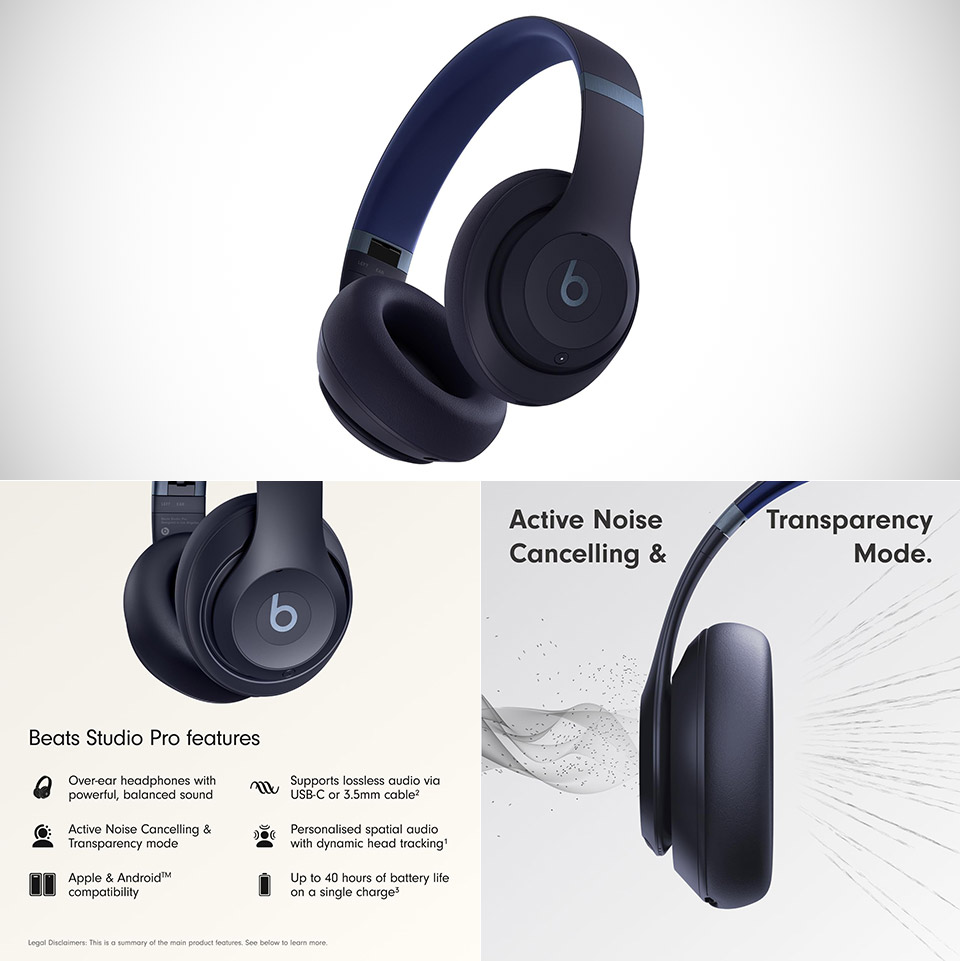
Beats Studio Pro Premium ANC Headphones 2026
People who want a pair of over-ear headphones with good noise cancelation and a long battery life without spending money on AirPods Max continue to prefer the Beats Studio Pro, priced at $149.99 (was $350). They borrow enough from Apple’s playbook to be comfortable while being versatile enough for Android users, and they do it in a package that is substantially lighter and more robust than the aluminum cans that many people desire.


Beats preserved the Studio style, but made some substantial changes to the materials. The earcups now include UltraPlush cushions coated in this beautiful engineered leather with no seams. The headband is made entirely of metal sliders that can be adjusted with ease, and when you’re finished, simply fold it up and store it in the provided protective case. They weigh roughly 260 grams, which is significantly lighter than the AirPods Max, and you’ll notice the difference after a few hours.

Sale


Beats Studio Pro Premium Wireless Over-Ear Headphones- Up to 40-Hour Battery Life, Active Noise…
  • INCREDIBLE SOUND: Custom acoustic platform delivers rich, balanced audio for music, calls and everyday listening.
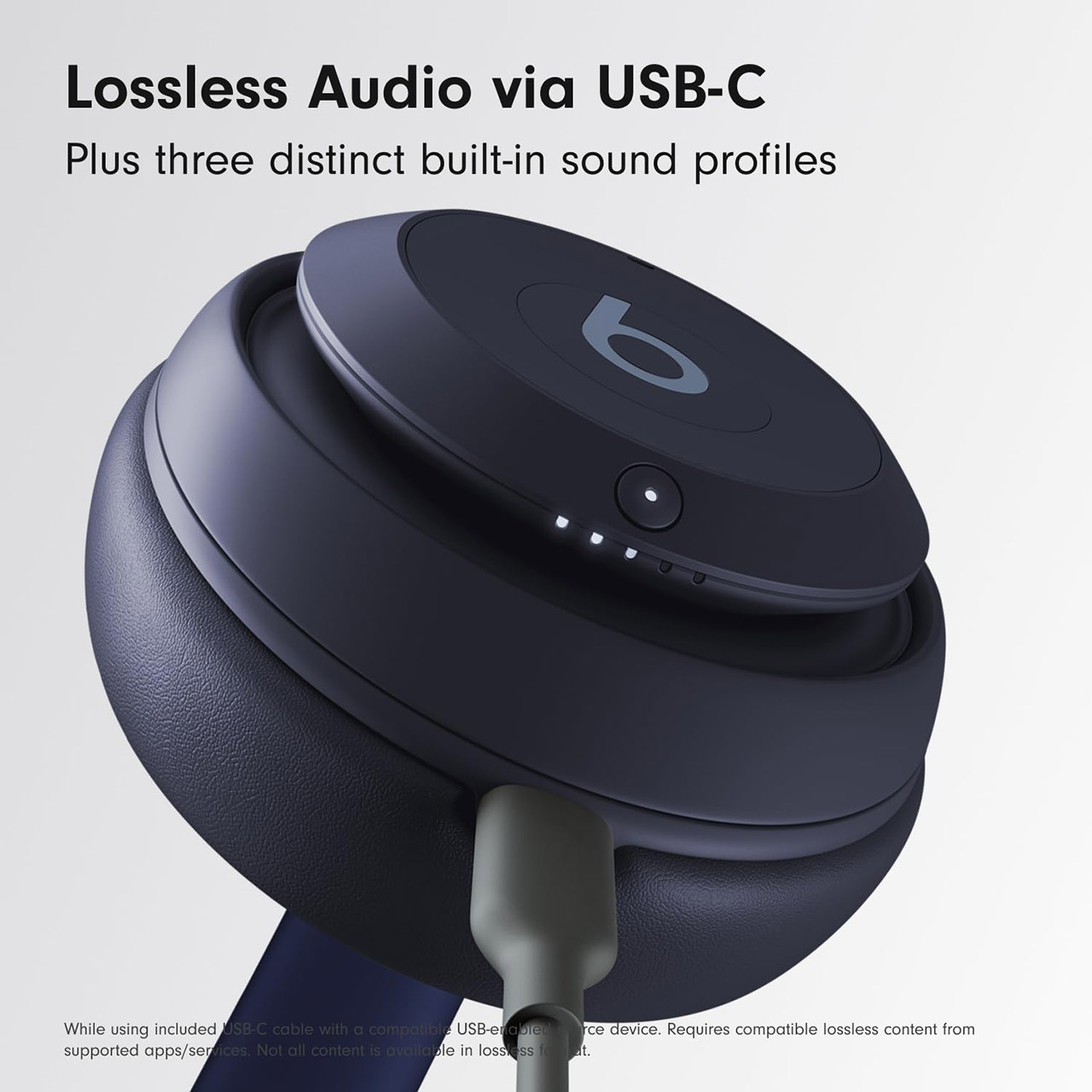
  • LOSSLESS AUDIO SUPPORT: USB-C lossless audio and sound profiles optimize music quality across devices and environments. Additional option to use the…
  • ACTIVE NOISE CANCELLING (ANC): block distractions at work, on flights or during your daily commute. Or use Transparency mode to let the sounds of your…


The sound comes from a custom 40mm speaker drivers that Beats fully overhauled from the previous Studio model. They claim to have decreased distortion by up to 80% at high volumes by combining a two-layer diaphragm, stronger magnets, and enhanced micro-venting. In practice, it sounds significantly more balanced than their prior work, while still providing Beats’ signature thunderous bass. The low end has considerable weight to it without being overly muddy. The mids are clear enough to hear what people say in voices and podcasts, and the treble is just fine, not too harsh.

Advertisement

Beats Studio Pro Premium ANC Headphones
When you connect the USB-C cable, you gain access to all of this, including lossless audio and some very intriguing sound profiles: a balanced Signature mode, an Entertainment mode that amplifies the sound for movies and games, and a Conversation mode that simply focuses your voice. Those profiles only operate via USB-C, and noise cancelation is turned off when you plug the cord in, but it’s still really useful for simply laying around on your desk or in a location where Bluetooth won’t work.

Beats Studio Pro Premium ANC Headphones
The active noise cancellation is really effective. Four of the six microphones are constantly sampling what’s happening around you and changing the noise filtering in real time. As a result, it easily manages all of that consistent low-frequency sounds, such as jet engines and air conditioners, while also eliminating any background noise. Transparency mode is also fairly slick; it allows outside sound in without making it sound false and echoed. For calls, the other two beam-forming microphones do an excellent job of making your speech sound crystal clear; according to Beats, this enhances voice quality by up to 27% over the previous Studio model. You’ll notice that your calls perform well in noisy surroundings.

Beats Studio Pro Premium ANC Headphones
One of the clear winners here is battery life, which can last up to 40 hours with noise cancelation and transparency set off and 24 hours with either switched on. If you’re running low, simply plug in your headphones for ten minutes to receive four hours of listening time back. Bluetooth 5.3 is a reliable connection with a good range that is simple to set up. iOS and Android users get a fairly similar experience, with Apple users receiving additional features such as Personalized Spatial Audio and Find My, while Android users have Google Fast Pair, Audio Switch, and a variety of other benefits. They also support AAC and SBC audio codecs over Bluetooth.

Source link

Continue Reading

Tech

Hackaday Links: August 23, 2026

Published

on

We’ll start this week off with some disappointing, though not entirely unexpected, news — the ambitious commercial mission to save NASA’s Neil Gehrels Swift Observatory is officially a bust. The space agency provided an update earlier this week explaining that the attitude control issues with the LINK spacecraft that started a few weeks after it launched will prevent it from being able to safely dock with the Swift Observatory and boost its altitude. As such, the space telescope is now expected to reenter the Earth’s atmosphere and burn up before the end of the year.

Although LINK won’t be able to live up to its name, NASA did say operator Katalyst Space has been given permission to continue with the rendezvous attempt. The two craft won’t actually make contact with each other, but teams on both sides feel there’s lessons to be learned and data to be collected by seeing the orbital dance of these two vehicles play out for as long as possible.

Speaking of hardware that couldn’t quite hit its design goals, TechCrunch is reporting that a class action lawsuit has been filed against Oura by customers that say the company made misleading claims about the sleep-tracking accuracy of their smart rings. Namely, that the rings could somehow detect which stage of sleep the wearer was in with only the pulse and temperature sensors it has onboard.

The complaint argues that sleep stages can only be accurately determined with an electroencephalogram (EEG), and that there’s no way for the ring hardware to actually know what’s happening in the wearer’s brain. For their part Oura has released a statement defending their methodology, and say that the ability of their rings to estimate sleep cycles compares favorably with data collected from clinical sleep studies. It should be interesting to see how this one plays out.

On the subject of products not quite doing what you expected, there’s been a story buzzing around online about a number of computer games failing to work properly on Windows machines that have installed the August system updates. Microsoft has investigated the issue and is currently pointing the finger towards RGB lights as the potential culprit.

Advertisement

On the surface it might sound like some kind of exotic hardware clash or interference, but the actual issue is disappointingly mundane. According to Microsoft, the August update fiddles with a system component that the software which drives some of these lights ties into, namely inpoutx64. As a quick fix they’ve provided some instructions on keys that can be modified in the Windows Registry to prevent the conflict, but it sounds like such gefingerpoken und mittengrabben may prevent the blinkenlights from performing their critical function.

Finally, we’ll end this week with an update on the ASCII CITY project that’s been making the rounds online. For those who haven’t seen it yet, this is 3D engine implemented in a single HTML file that renders a cyberpunk 3D city for players to wander around in. The latest version brings many new features to the non-game, notably the ability to enter the various buildings scattered throughout the world.

Previously we could only admire this virtual world from afar. But now that developer Grow Now! Games has released a playable prototype, you can transport yourself into this new digital frontier like in Tron.

Advertisement

See something interesting that you think would be a good fit for our weekly Links column? Drop us a line; we’d love to hear about it.

Source link

Advertisement
Continue Reading

Tech

iPhone Ultra will be an exceptional foldable, testers claim

Published

on

The iPhone Ultra may actually live up to the hype, as people who have tried pre-release versions of the model indicate it will be worthy of its hyper-premium price.

Apple is widely expected to be launching its first foldable smartphone in September, under what is believed to be called the iPhone Ultra. However, while it will ship with a more premium price than a typical Pro-grade iPhone, it seems that it may actually be worth it.

In Sunday’s “Power On” newsletter for Bloomberg, Mark Gurman says he has spoken to multiple people who have tried out the inbound foldable. Based on what they say, it seems like it will offer a lot to potential buyers.

Despite being a thick device when folded, the pre-launch users say it still manages to fit in a pocket. They liked the way the hinge mechanism worked, expressing that it also felt durable.

Advertisement

The model, as you’d expect, also benefits from its massive folding display, which lets Apple introduce iPad-like app layouts. Even this was seen as a positive to the initial users.

When it comes to photography, the device apparently doesn’t have a telephoto camera, but it’s still great for taking shots. The foldable device apparently excels as a camera viewfinder.

There’s also a reversion when it comes to biometric security, too. While iPhones are using Face ID, the new model will go back to Touch ID.

Multiple halos

The lack of a telephoto camera could be an issue when it comes to price. With expectations of it costing consumers at least $2,000, omissions like that could put off some potential early adopters who are used to getting the best specifications in such devices.

Advertisement

That said, the iPhone Ultra stands to become a new halo product for Apple, and possibly the smartphone industry in general.

Though Apple is late to the foldables market compared to rivals such as Samsung, its own launch will reverberate across the industry. This is a thing we have seen time and again, with Apple helping buoy the rest of the market in new areas and design ideas.

Your typical consumer may have heard of foldables but won’t necessarily have investigated the product category. With Apple bringing out a model, complete with its marketing engine, it will help raise awareness of foldables in general.

The iPhone Ultra stands to benefit foldables made by rivals.

Advertisement

As for Apple, the existence of the iPhone Ultra will draw even more attention to the rest of the iPhone range. Apple coming out with something outlandish like a folding smartphone will have a natural halo effect on the rest of the range.

Consumers may not necessarily buy the iPhone Ultra, but they may be drawn to other products launching at the same time in their price bracket.

Source link

Advertisement
Continue Reading

Tech

It’s anyone’s guess how high iPhone prices might go

Published

on

Apple has already raised prices on Macs and iPads to absorb the costs of increased RAM costs, but an iPhone price hike is still expected. The competition may have provided a hint as to how much.

Prices went up across many product lines, including ones like Apple TV, Apple Vision Pro, and Mac to compensate for the AI-induced RAM shortage. Only the iPhone remained untouched by price hikes, but new premium devices launching in September will almost definitely see higher prices.

According to the “Power On” newsletter from Bloomberg, Apple’s competition could provide a hint about where iPhone prices might go. It’s all guesswork with no indication of knowledge of Apple’s actual plans, but the idea works simply because of the volumes Apple sells iPhones at.

Samsung, Google, and others have increased prices by about $100. The report suggests that means the iPhone 18 Pro would start at $1,199, a 9% increase, which is low compared to Apple’s other price increases.

Advertisement

It is impossible to predict what Apple might do here. No one expected the years-old Apple TV 4K to jump up by $70 either.

I expect that Apple will do everything in its power to leave the base prices unaffected since that base price is basically a feature of the device. Higher storage tiers will see bigger price jumps than normal.

The real question is where the foldable iPhone “Ultra” might land. It is expected to start at $1,999, but even then that might not be enough for the ultra-niche device.

Apple is expected to reveal the iPhone 18 Pro, iPhone 18 Pro Max, iPhone Ultra, and new Apple Watches during the September event. The Apple Event will be announced any day now, and may take place on September 9.

Advertisement

Source link

Continue Reading

Tech

4 Two-Door Cars With Surprisingly Roomy Rear Seats

Published

on


Two-door cars aren’t known for their roomy interiors, especially compared to all the SUVs taking over United States roads. But not every two-door car is extremely cramped — some even have rear seats that can fit adults comfortably! And hey, at least they can fit four adults — some sports cars can barely fit one

While four-door cars will offer more room for passengers, many drivers opt for two-door coupes because they have a sportier look and performance to match — since they are lighter and have a shorter wheelbase, they offer better handling on average. There are some two-door cars that provide a fun driving experience without sacrificing backseat comfort and cargo room. 

Advertisement

From straight line menaces to impressive handling, here are four two-door coupes that offer a surprising amount of room for backseat passengers despite their sportier appearance, making them just at home carpooling to work as they are on the track.

Advertisement

2026 Dodge Charger

The 2026 Dodge Charger has 42.6 inches of rear legroom — four more inches than the previous generation — and 39.1 inches of rear headroom, making the backseat quite spacious. It’s not as roomy as the four-door Challenger, but Car and Driver said it’s comfortable, especially for one extra passenger. The Drive, however, felt that it was still cramped for someone six feet tall due to the raised floor in the 2026 model. 

It makes sense that the latest Dodge Charger would feel a bit larger inside. The 2026 Charger is an overall big car, at 206.6 inches long, 79.9 inches wide, and 4,921 pounds. Despite its imposing size, it can hit 60 miles per hour in 3.7 seconds thanks to its twin-turbocharged inline-six Hurricane engine. It may not be our favorite Dodge Charger ever made, but it’s surprisingly pragmatic thanks to its roomy cabin. Why, it’s practically a family car, assuming your family is under 6 ft. tall.

Advertisement

2022 Hyundai Veloster N

The Hyundai Veloster N was discontinued in 2022, with Hyundai wanting to focus on the incoming Elantra N and Kona N models instead. However, many car enthusiasts still prefer the 2022 Veloster N for its impressive performance. Its turbocharged 2.0-liter four-cylinder made 275 horsepower and 260 lb-ft of torque, which allowed it to hit 60 mph in 5.1 seconds and finish a quarter mile run in 13.8 seconds, hitting 102 mph. Paired with a manual transmission, the Veloster N was fun and quick. 

You probably wouldn’t expect a small, sporty car like the 2022 Veloster N to have room in the back, but it does. There are 34.1 inches of rear legroom and 35.9 inches of headroom, so adults can definitely sit in the back seat, although it may get cramped for taller passengers. Our own review said the rear seats are “adult scale,” adding: “The seats are comfortable and supportive; the leather wrapped wheel is meaty; and there’s a simplicity here which — though it may come from the Veloster’s original no-frills positioning –- is welcome.”

Advertisement

2026 Ford Mustang GT

The 2026 Ford Mustang GT is similar to the Dodge Charger in that it’s unapologetically large. It’s 189.4 inches long, 75.4 inches wide, and 3,579 pounds, making it one of the heaviest generations. For its size, the rear seats are not the most spacious. But for a performance-focused pony car, it’s not bad, with 29 inches of legroom and 34.8 inches of headroom. While it’s not the most spacious on the list, the comfortable, plush seating makes up for it. Our review noted: “The Mustang GT makes a solid case for being the sole ride in your garage. The seats are plenty comfortable, the sound system is good, and the trunk is far more roomy than you might ever have imagined.”

Taller passengers will forgive the legroom when they hear the Mustang start up, with The Redline calling the fire up “close to perfection.” The drive itself feels powerful and a bit like you’re taming a wild horse. It hits 60 mph in 3.7 seconds, and it has surprisingly impressive handling. Drag Mode may be the most fun, however, removing torque reduction during upshifts for maximum momentum in straight lines.

Advertisement

2026 BMW 4 Series 430i Coupe

The 2026 BMW 4-Series 430i Coupe offers 34.5 inches of legroom and 35.2 inches of headroom for those in the rear seats, the most of any of its two-door options in 2026. Drive AU noted that the rear seats were comfortable, and it was easy to slide the front seat forward. Its cargo space is also worth mentioning, offering more room than other options in the same segment. Edmunds noted: “There’s good storage space inside, with plenty of cupholders and cubbies, plus side-panel cutouts and cupholders for rear passengers.” Passengers won’t feel cramped, especially with BMW’s luxurious touches. 

Advertisement

Sure, it’s not as much room as the four-door options in BMW’s lineup, but the comfortable, refined interior makes it more forgiving. The performance is also a plus: the 430i has a turbocharged 2.0-liter engine that makes 255 hp and 295 lb-ft. of torque, in addition to excellent handling, responsive steering, and impressive braking. 

Advertisement

Methodology

When it comes to adjectives like “roomy,” it can be a bit subjective. Even a tall person sitting in the front seat could completely change the space someone in the back has based on how far back their seat has to go. However, I took it to mean “these two-door cars can comfortably fit average-sized adults without their knees practically hitting their foreheads.” I wasn’t as focused on fitting baby seats or children since they generally need less room and are likely not the target passengers of a two-door coupe. 

Checking out vehicles’ official interior dimensions, I looked for vehicles that had actually functional back seats that friends wouldn’t dread squishing into. To narrow down the options, I wanted to choose a range of vehicles that offered a variety of driving experiences while having comfortable interiors. On top of a good amount of backseat room, I looked for two-door cars that offered smooth rides, plush seating, and other features that would keep passengers satisfied. I wanted to focus on vehicles available in 2026, but included one older model for used car options.

Advertisement


Source link

Continue Reading

Tech

In China, AI has reached dumpling shops where you also get to feed on compute tokens

Published

on

Imagine you visit a dumpling shop to indulge in a plate of piping-hot savory goodness. And as you queue up, you are given access to compute tokens for AI interactions and to an agentic system that recommends delicacies and helps visitors explore the menu in an interactive fashion. That’s exactly what a viral dumpling shop in China’s national capital is serving. 

The unexpected pairing of AI agents with dumplings is not surprising, at least for the Chinese market.  

It’s not just the corporate race, where companies are offering frontier AI models at a fraction of the cost compared to American products such as ChatGPT and Gemini. Earlier this year, as the OpenClaw frenzy gripped the internet, China was operating on a whole other level with AI agents. Even people in their 50s and 60s lined up outside booths to get the agentic system installed on their phones, and local administrations in China even started offering subsidies for OpenClaw projects. 

A dumpling restaurant in Beijing now gives you AI compute with your meal.

Finish your dumplings, report your table number at the counter, and claim free tokens for your AI agent.

Advertisement

The card on every table reads: “You’re full. Now feed your agent some compute.”

This is Jingu… pic.twitter.com/HhavocDtUt

— Poe Zhao (@poezhao0605) August 5, 2026

Some AI tokens with my dumplings, please!

But as the saying goes, a technology can truly claim to have reached mass-market or universal adoption if it has reached the lowest strata of social interactions. In China, the mania is apparently reaching pretty close to the home (and belly) of the target audience. How about a dumpling shop?

Advertisement

The outlet, which goes by the name Jinguyuan, was started by 41-year-old Li Bo, according to Rest of World. Interestingly, Li graduated with a degree in telecommunications engineering at the Beijing University of Posts and Telecommunications, but instead of finding a career anchored to his academic qualifications, he tried his hand at the food business. 

At his dumpling outlet, customers receive coupons for AI usage tokens worth $1.50, which they can use to interact with AI  models. Additionally, Li built an AI-coded website to track the queues at two other branches of his outlet.

Broadly, the rapid adoption of AI in China has been quite a spectacle. In June, the Chinese government killed over 12,000 university degrees and replaced them with new courses that focus on AI and robotics. Chinese AI companies are hiring talent straight from the high school pool, and the government is also pushing for AI education at all school levels. 

Advertisement

Source link

Continue Reading

Tech

Etzioni on AI: An Opinionated Glossary of AI

Published

on

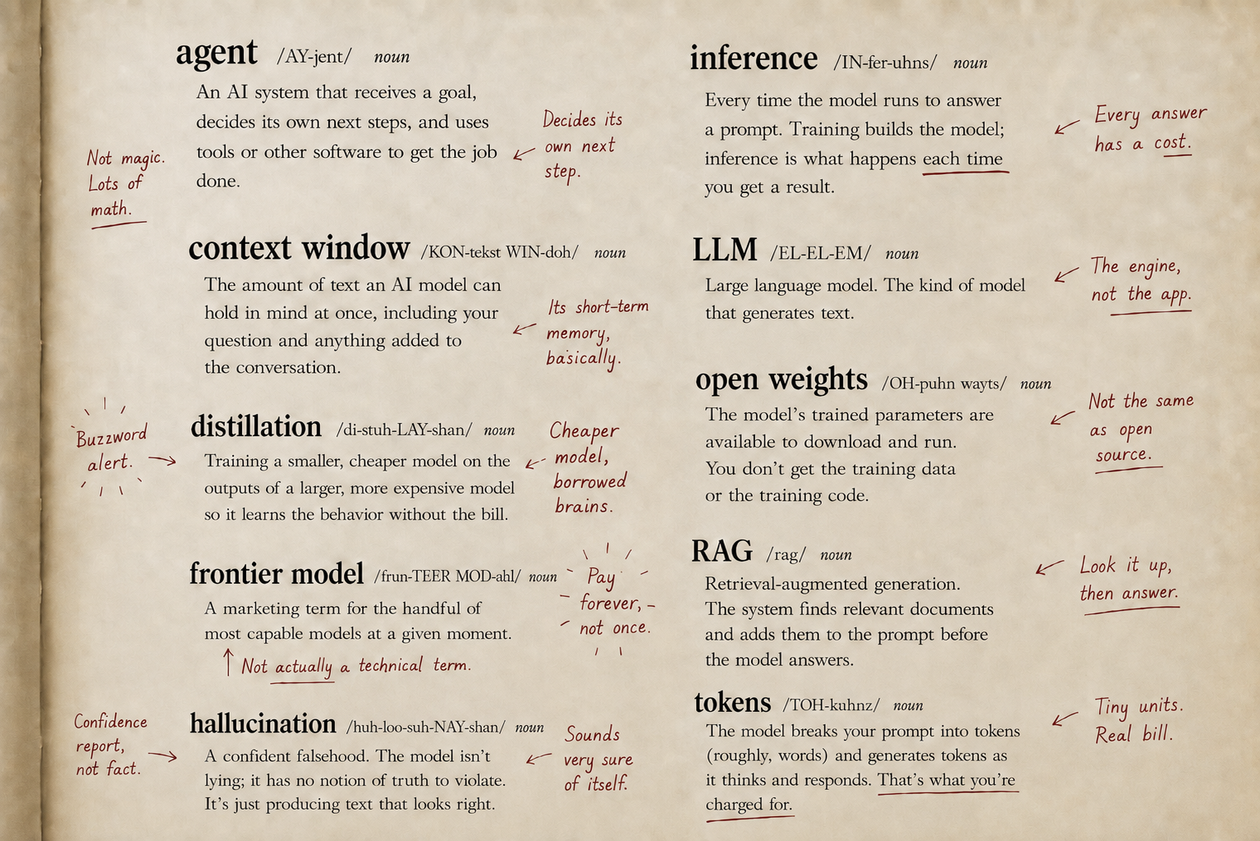
Jargon stinks.  What do the terms open weights, RAG, and agent mean exactly? Here’s a plain English, slightly snarky glossary of befuddling AI terminology with references for further reading.

AI is a broad name for the technology. Machine learning is the part where a system learns from data instead of following rules somebody wrote, a neural network is the structure that does the learning, and deep learning just means a neural network with a lot of layers.

Here’s the nitty-gritty: the terms that get used loosely, and the distinctions the loose usage hides.

1. Model, LLM, frontier model

ChatGPT is the app you open; an LLM, or large language model, is the AI running inside it.

Advertisement

“Frontier” isn’t a technical category at all. It means the handful of biggest and most capable models at any given moment, so the trophy keeps changing hands.

Everyone says “LLM” and hardly anyone could define it on the spot. “Frontier model” is worse. It’s a ranking, announced by the people being ranked.

Further reading: How ChatGPT Works: A Non-Technical Primer (MIT Sloan). Rama Ramakrishnan walks through the predict-the-next-word mechanism everything else is built on.

2. Prompts, tokens, parameters

A prompt is the thought, question, or instructions you provide to the LLM (plus whatever the app added before it without telling you). The LLM takes the prompt and generates words, both in its internal “thinking” process and in the answer it shows you.  

Advertisement

Tokens are (roughly) the words going in and coming out. The model chops your prompt into tokens, then produces more of them as it answers, and they’re what the industry charges by.

Parameters, also called weights, are the numbers inside the model. A frontier model has hundreds of billions of them and the biggest now run to trillions, and nobody can tell you what any single one does.

Parameter counts get quoted like horsepower. The number nobody advertises is how many tokens it takes to answer your question, and that’s the one that shows up on the bill.

Further reading: The only AI glossary you’ll need this year (TechCrunch, July 2026). Its entries on tokens and weights are the clearest short treatment of the building blocks.

Advertisement

3. Pre-training, post-training, fine-tuning

Pre-training is feeding the model most of the internet, so it learns to predict the next word in a sentence. That’s the expensive part, and it produces something that knows a great deal but can’t follow an instruction.

Post-training is where people rank its answers and it learns to give more of what ranked well. Fine-tuning is post-training done by you, to somebody else’s model, on your data.

Pre-training costs hundreds of millions and gets you a model that won’t answer a question well. Post-training is what gets you the product.

Further reading: Illustrating Reinforcement Learning from Human Feedback (RLHF) (Hugging Face, 2022). The clearest walk-through of how ranking a model’s answers becomes a signal for training.

Advertisement

4. Training from scratch vs. distillation

From scratch, you buy (or rent) the computers and do the work to build and train a model. Distillation trains a cheap model on an expensive model’s outputs, so it inherits the behavior without the bill. Distillation is against most AI companies’ terms of service.

OpenAI accused DeepSeek of distilling its models, which is a bold position for a company that trained on the whole internet without asking. Learning from other people’s work is fine right up until the other people are you.

Further reading: OpenAI accuses DeepSeek of “free-riding” on American R&D (Rest of World, February 2026). OpenAI’s memo to Congress, and an analyst’s reply that no model is an island.

5. Training vs. inference

Training is how you build a model. Inference is what happens every time it answers: the model runs and produces a result.

Advertisement

Training is a one-time cost. Inference is a cost you’ll pay forever. Training runs for months and costs hundreds of millions; one inference, meaning one answer, costs a fraction of a cent, and it happens billions of times a day.

Training costs get announced. Inference costs get discovered. Only one of them shows up in a press release.

Further reading: Why AI’s next phase will likely demand more computational power, not less (Deloitte, 2025). Inference reaches about two-thirds of all AI compute in 2026, up from a third in 2023.

6. Open weights, open source, API-only

We typically use LLMs by accessing an app like ChatGPT, Claude, or Gemini. But experts often want the model itself, not just an app wrapped around it. Open weights means that an AI expert can download the model and run it on a server. You don’t get the data or the code that made it.

Advertisement

Open source means data and software that experts can use and modify, which almost no major model offers (AI2’s Olmo is a rare exception).

API-only means you can’t have the model at all. You send your text to the company’s computers, the answer comes back, and you pay for every use, which is also what’s happening when you use ChatGPT or Claude through an ordinary account.

Open weights is how you claim the open-source mantle without giving much away. Open washing, basically.

Further reading: Open-Weight Models Aren’t Enough. We Need Truly Open Source AI Models for Science and Society. (Stanford HAI, August 2026). James Landay’s term for downloadable weights without the data or code is “open distribution.”

Advertisement

7. Context window, memory, RAG

The context window is how much text the model can hold in mind at once, including your question and everything pasted into the conversation.

Memory is a feature that saves facts about you and slips them back into the context window later.

RAG, short for retrieval-augmented generation, searches a document collection and drops the relevant passages into the context window before the model answers.

Nothing in the model remembers you. The app keeps a file on you and pastes it in before every conversation, and that’s a less charming way to describe the same feature.

Advertisement

Further reading: Glossary of Terms: Generative AI Basics (MIT Sloan Teaching & Learning Technologies). Defines context window and RAG in plain language, and is careful to put the model’s “memory” in quotation marks.

8. Chatbot, workflow, agent

A chatbot answers and stops. A workflow runs the steps you defined, in your order. An agent receives a goal instead of steps, and works out for itself what to do, calling out to other software and checking the results until it’s done or stuck.

Ask about a delayed flight and a chatbot quotes you the policy; a workflow uploads the refund form you built; an agent rebooks you.

Useful test: if it decides its own next step, it’s an agent. If you decided the steps, it’s a workflow.

Advertisement

Further reading: Building effective agents (Anthropic, December 2024). The source of the distinction: workflows run predefined code paths, agents direct their own.

9. Hallucination, AI slop, AI cream

A hallucination is a confident falsehood, like a citation to a paper that doesn’t exist. The model isn’t lying; it has no notion of truth to violate. It’s producing text that looks like the right kind of answer.

AI slop is a different failure: accurate, fluent, and worthless. Think of the LinkedIn post that says nothing in 300 fluent words.

AI cream is the third case and the rare one: superb writing authored with the help of AI.

Advertisement

Nobody sets out to make slop. Everyone believes they’re making cream.

Further reading:  2025 Word of the Year: Slop (Merriam-Webster, December 2025). The dictionary definition turns on quantity: low-quality content “produced usually in quantity” by AI.

Why language models hallucinate (OpenAI, September 2025). Argues that hallucinations persist because benchmarks score accuracy alone, so guessing beats admitting ignorance.

10. Alignment, guardrails, censorship

Alignment is the research problem of getting a model to do what people want when nobody’s watching. Guardrails are the rules behind its refusals: “no, I won’t tell you how to make a bio weapon.” Censorship is a guardrail that blocked something you wanted.

Advertisement

The same refusal is “safety” in the press release, “guardrails” in the documentation, and “censorship” on X.

Further reading:  Model Spec (OpenAI, updated December 2025). A published rulebook for what one model will and won’t do, which makes refusals arguable rather than mysterious.

I snuck in one novel term that’s been sorely absent from the field.  Can you tell which one?

Further reading: other glossaries

Five general AI glossaries, listed roughly from most opinionated to most technical.

Advertisement

The only AI glossary you’ll need this year (TechCrunch). About 30 entries, written for readers who follow the industry news. Strongest on distillation and compute.

Artificial intelligence glossary: 60+ terms to know (TechTarget). The broadest of the mainstream lists, and the only one that bothers to define model collapse.

Glossary of Terms: Generative AI Basics (MIT Sloan Teaching & Learning Technologies). Twenty-odd entries aimed at people who use the tools rather than build them.

Glossary of Terms for Artificial Intelligence (Columbia Business School). The shortest and plainest. Useful as a test of which terms are unavoidable.

Advertisement

Machine Learning Glossary (Google for Developers). Hundreds of technical entries, and the only glossary here that defines “AI slop” a few lines away from several hundred pieces of real math.

Source link

Continue Reading

Trending

Copyright © 2025