
Join Mikko Hyppönen and security leaders from the NFL, CHANEL, and Atlassian for a two-hour digital summit on what AI-speed attacks change, what defenders should stop doing, and how to validate, decide, fix, and re-validate at machine speed.
Tech
Anthropic turns Claude into an AI marketplace with 2,000+ plugins and connectors



Anthropic has just announced a new Claude Marketplace, and it brings all AI-related tools into one place, including plugins, connectors, agents, and more.
Claude’s marketplace is already public, and Anthropic says it’s already offering more than 2,000 connectors and plugins.
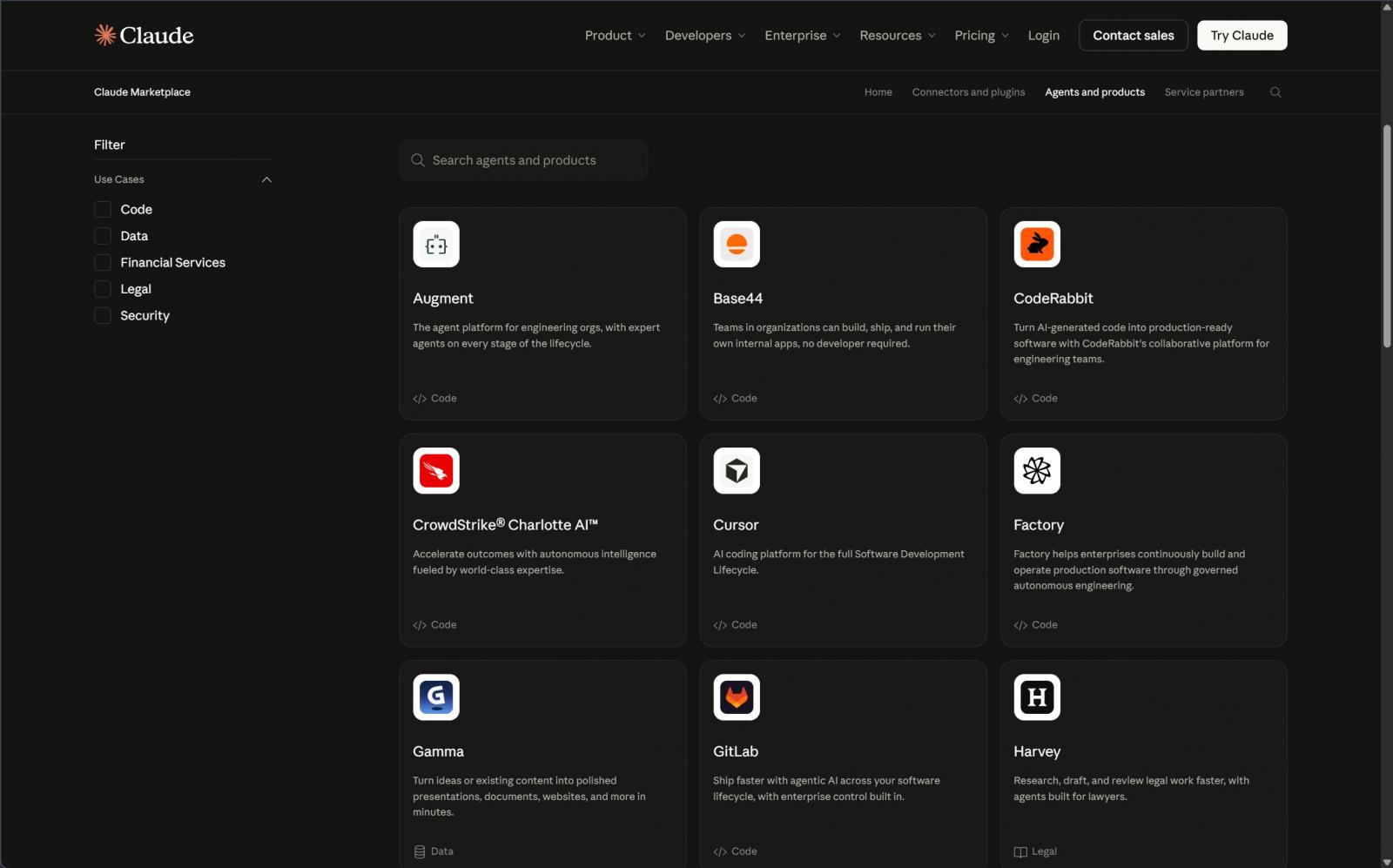
These plugins or connectors are available from companies like Atlassian, Google, Microsoft, Notion, Salesforce, and others, so it’s not just Anthropic filling up the marketplace.
Anthropic is also allowing companies to buy Claude-powered agents and products from partners such as CrowdStrike, Cursor, Harvey, Legora, Lovable, and Snowflake.
In a blog post, Anthropic noted that Claude Marketplace also includes consulting and systems integration partners.
This includes Accenture, Boston Consulting Group, and Deloitte, for companies that want help deploying Claude across their organization.
Claude has always allowed users to connect more of the apps they already use, but having a marketplace similar to the Play Store allows you to go beyond basic integrations.
Anthropic also wants developers to build for Claude
Having Microsoft or Google’s support alone may not be enough for the marketplace to succeed, and we have seen similar problems when OpenAI launched an apps marketplace. It didn’t work out, and Anthropic wants to avoid that mistake by allowing anybody to publish their products.
If you’re a developer, you can create connectors and plugins using Model Context Protocol (MCP) and Agent Skills, while companies selling Claude-powered software can apply to have their products listed.
Anthropic says the goal is to make it easier for teams to discover products that already work with Claude, while giving developers and partners a direct way to reach existing Claude customers.
In a way, Anthropic is building a Google Play Store for AI-related features, but only time will tell if it works out.
You can try Claude’s marketplace on Anthropic’s website.


Continue Reading
LG is well-known for its refrigerators, ranges, dishwashers, and other home appliances, but there’s a difference between LG the appliance brand and LG the conglomerate. The parent company also owns a luxury kitchen appliance brand separate from the LG brand.
SKS is LG’s ultra-premium built-in appliance line. LG first introduced the brand as Signature Kitchen Suite in 2016, before shortening its name to SKS in a 2025 rebranding. These appliances aren’t just LG products with a different badge, though, and LG frames SKS as the more luxurious option for premium custom kitchens.
The full SKS lineup includes various ovens, microwaves, fridges, dishwashers, and ventilation equipment. Unlike LG, SKS products are designed to blend in better with cabinetry rather than stand out as conventional freestanding appliances. The easiest way to understand the relationship between them is to think of SKS as LG’s luxury-focused appliance brand instead of a separate company competing against it.
Highlights from the SKS brand of appliances
One example of the kind of luxury you get with the SKS name is the 36-inch Cook-zone-free Induction Pro Range. Instead of limiting cookware placement to designated heating zones, this SKS cooktop lets you place pots and pans anywhere on the cooking surface. It also incorporates convection cooking, steam technology, a built-in camera, and LG’s Gourmet AI technology for better heating control.
Another example of SKS’ target market is its Island System concept, which builds cooking and the necessary ventilation right into a kitchen island. The induction cooker blends seamlessly into the woodgrain countertop when a user isn’t cooking, while its downdraft ventilation system uses a discreet air curtain design to remove smoke and steam.
That’s much fancier than what most would envision from an LG product, and you’ll find similarly luxurious features across the full SKS catalog. That’s the biggest difference between LG and SKS: the former is a mass-market, mainstream brand, while the latter is an ultra-premium, professional-grade brand.
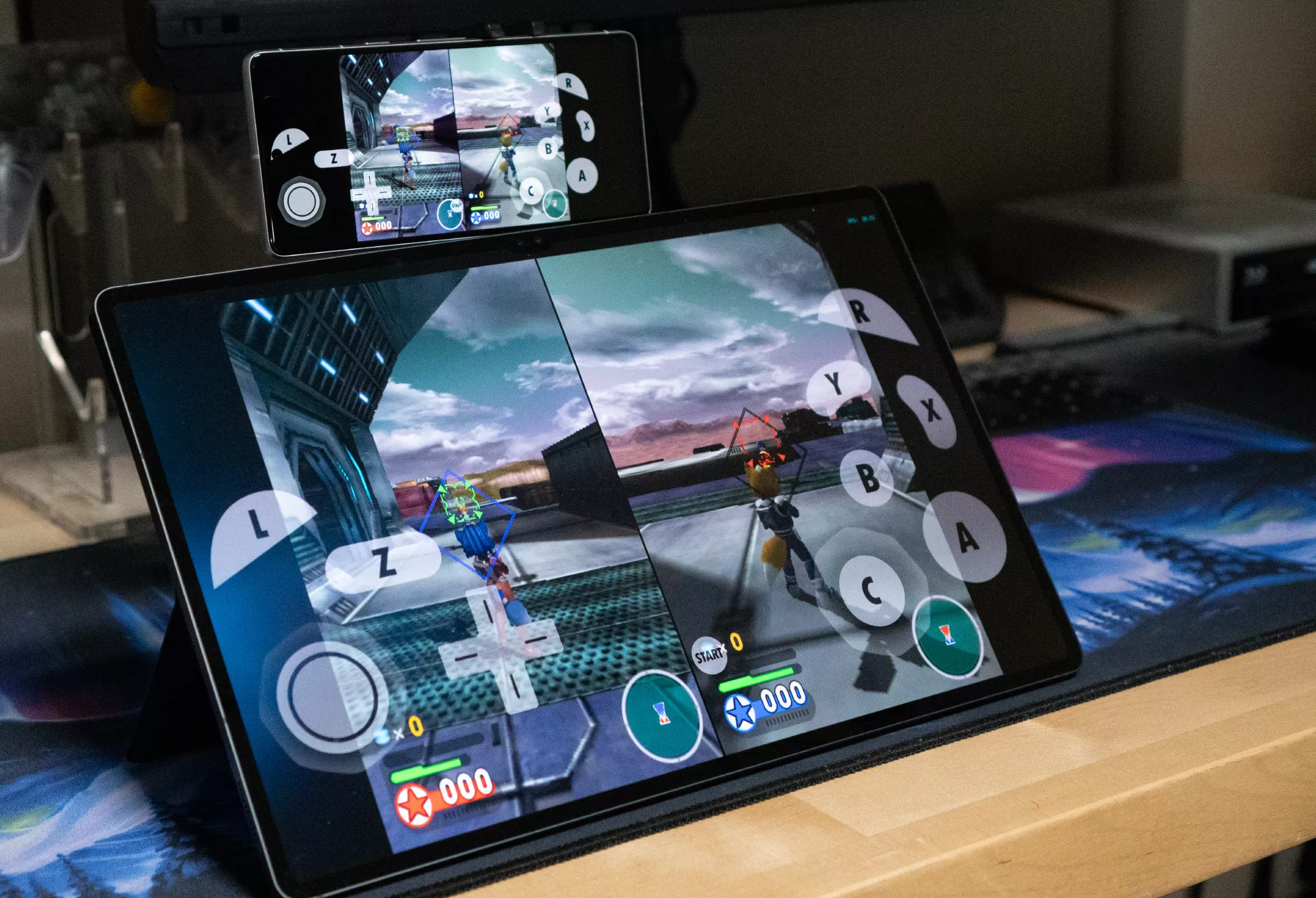
Dolphin is an emulator for the Nintendo GameCube and Wii. It allows PC gamers to enjoy games from both consoles in full HD (1080p), along with a range of enhancements – including support for all PC controllers, turbo speed, networked multiplayer, and more.
To run the Windows version, the 64-bit Visual C++ redistributable for Visual Studio 2022 must be installed.
What games can you plan with Dolphin Emulator?
Dolphin lets you enjoy Nintendo GameCube and Wii games on PC. For a complete list of playable games, you can check out the list here.
What kind of CPU do I need to run Dolphin?
You’ll need a quad-core CPU or better. With four cores, Dolphin has two cores for the main emulation threads, a third core for other tasks, and another core for the OS and background tasks.
Do I need a powerful GPU to run the Dolphin emulator?
A discrete graphics card that supports DirectX11.1 and OpenGL 4.4 is highly recommended. The more powerful the graphics card, the more pixels and enhancements you can throw at it.
- Nvidia: A GeForce GTX 1060 or better Nvidia GPU will be able to play Dolphin in HD resolutions with Ubershaders well.
- AMD: A Radeon RX 570 or better AMD GPU will perform well in Dolphin with Ubershaders. AMD generally favors D3D over OpenGL.
- Intel: Iris Pro iGPUs will handle Dolphin well in D3D in Windows. Integrated graphics older than HD 4000 are not supported.
How much RAM do I need to run Dolphin?
Dolphin requires at least 2GB of RAM. RAM speed generally has no effect on emulation performance.
Can I use two or more controllers for local multiplayer on Dolphin emulator?
Yes, if you have two or more friends connecting from the same computer, you can give a single computer multiple controllers. You only need to configure the first two ports of the Controller Configuration page.
What operating systems are supported?
Dolphin is a cross-platform emulator that runs on Windows 10 and Windows 11, Linux, macOS (10.15 Catalina and up), and Android (5.0 and above). Dolphin requires 64-bit operating systems to run properly.
What’s New
Welcome to Dolphin 2609’s accompanying Progress Report! Like everyone else, we’ve been doing our best to weather the Techpocalypse brought on by AI, but it’s really come after us in the past few months. Our website has been up and down repeatedly lately, as our defenses are barely holding out under the endless bombardment. But now AI has started to come for the emulator directly, with people using AI to mass-scan open source projects for potential vulnerabilities and overwhelm our volunteer team with very verbose reports. Though draining, once these vulnerabilities are out there, we can’t ignore them. A lot of effort has had to be diverted to deal with them, both in patching them and adjusting our workflows to better manage them. For more information, zip directly to that section with this link here.
But that’s not all. A vulnerability in macOS allowed our macOS buildbot to be briefly compromised by a generic cryptominer attack. We’ll skip the quick summary and just point you toward the full story below, which you can reach by clicking here. The important thing is that we have determined that no builds were compromised.
We really just want to keep making Dolphin better. Fortunately, despite these headaches and roadbumps, there are still quite a few notable changes to go through, so let’s get to it.
Notable Changes
2606-91 – Android NetPlay by tom-pratt
Under the hood, our mobile and desktop builds are almost identical. Dolphin is simply Dolphin; the only difference is the UI that lays on top. Despite this, our Android release doesn’t have feature parity with our flagship desktop builds. A lot of features that are missing in the Android GUI that are present in the desktop GUI are mostly missing because they’d be difficult to implement or would have limited value on Android.
NetPlay once fell into both camps.
For those unaware, Dolphin has lockstep NetPlay available to allow for online play in games that only had local multiplayer. Lockstep NetPlay requires perfect synchronization between each instance, and thus Dolphin has to run in a deterministic mode. This means forcing Single Core (or using a slower and even hackier version of Dual Core), setting the same starting time/seed, and making sure the same inputs make it to every machine. Optionally, save data and cheats can also be synchronized for use on NetPlay. If done right, each instance of the emulator will stay synchronized with no further intervention, with Dolphin only passing inputs.
All of these complexities make NetPlay an enticing, but often cumbersome-to-use feature. And given that it would be annoying to create a good GUI for NetPlay on Android and it would make games run slower on already limited hardware, there was no rush to implement it on Android.
In the 2020s, the scales started to tilt in the other direction. Android devices have gotten stronger and stronger, and though CPU governors and GPU drivers still confound us, many flagship devices can run games in Single Core just fine. Additionally, Jetpack Compose for Android allows for easier and faster development of Android GUIs.
Wanting to share some of his favorite childhood experiences with his own kids, tom-pratt stepped up to the challenge. Using Compose, he built up the NetPlay Android GUI across several pull requests, with an initial bare bones implementation. This made it easier to review and eventually merge, and was quickly followed up with more features, such as controller port configuration for the host, that brings it closer to parity with the desktop implementation.
And now, as of Dolphin 2609, NetPlay is ready for Android users!
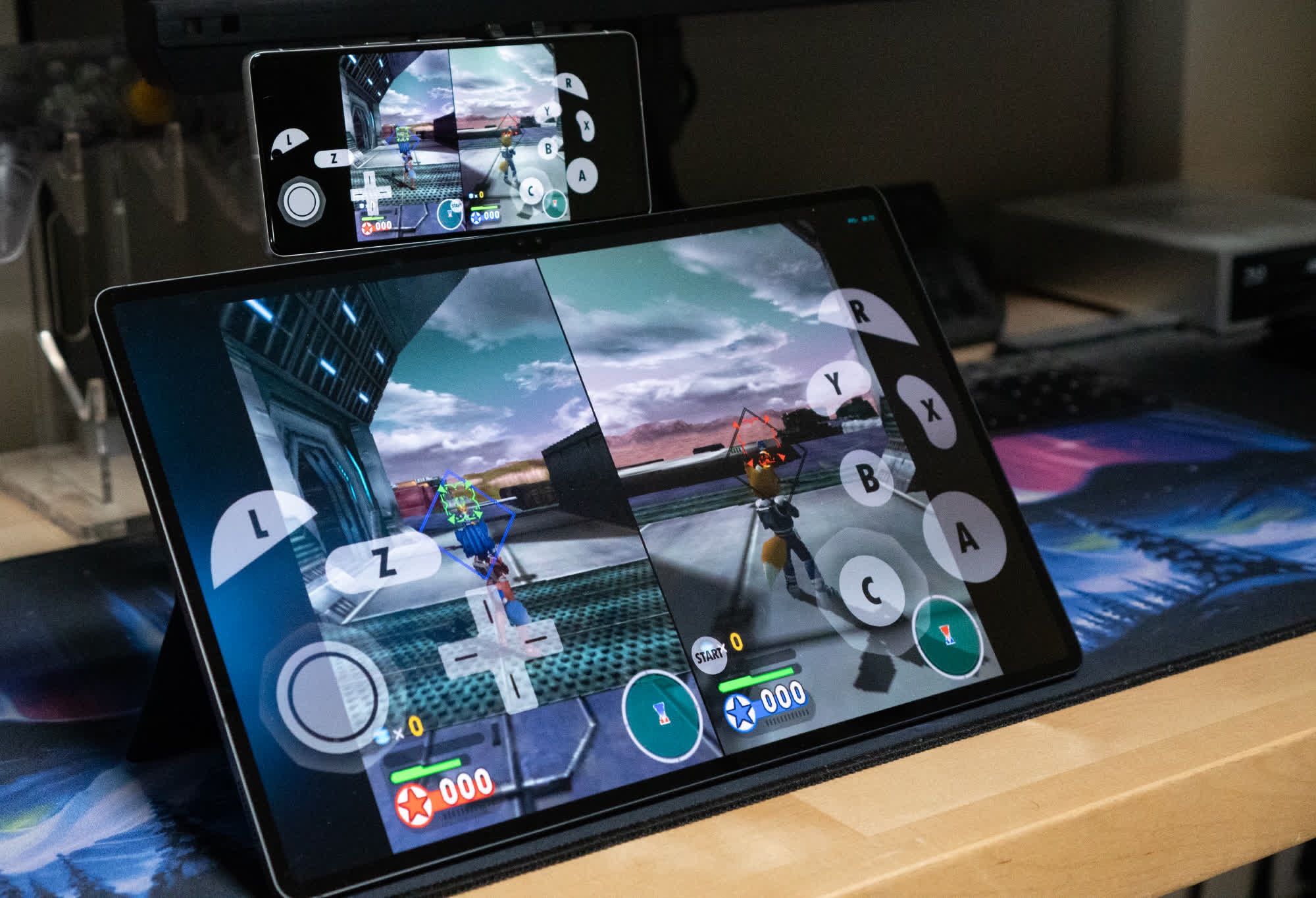
Currently, Android NetPlay requires users to be on a standard network (Wi-Fi, Ethernet, etc), but work has been started on adding support for Wi-Fi Direct, which would allow Android NetPlay to function between nearby devices with no network, similar to how the Nintendo DS’s local Wi-Fi play worked.
Note: Using NetPlay over mobile data is not recommended. Even if you can get it to work, the packet loss and latency are not particularly suitable for lockstep multiplayer.
Cross Platform NetPlay
Can Android and desktop Dolphin play together with NetPlay? Yes, they can! Players can mix and match devices with whatever they have, so phones and laptops can play together just fine! However, there are some limitations that must be kept in mind.
Most full-size desktops use x86-64 processors, while most phones use ARM processors, and Dolphin uses different JITs depending on the host CPU. While our ARM64 and x86-64 JITs are very similar, they are not completely identical, and those JIT differences are likely to cause desyncs. Mixing and matching CPU architectures isn’t a guaranteed failure though – whether these differences lead to a desync or not depends on what instructions games use and in what order.
Ignoring the JIT problem, there is one more major source of potential desyncs: the Framebuffer! Games that use EFB Access and/or Store EFB/XFB Copies to RAM can get different results from different graphics drivers. If these results mismatch at all, even if it doesn’t directly affect game logic, a timebase desync will usually be reported. Often this won’t outright break NetPlay (at least immediately), but if the difference becomes big enough, the instances will diverge. Given how special Adreno and Mali drivers are, there may even be problems when playing between different kinds of phones in those games!
Looking for a different day?
A new Quordle puzzle appears at midnight each day for your time zone – which means that some people are always playing ‘today’s game’ while others are playing ‘yesterday’s’. If you’re looking for Sunday’s puzzle instead then click here: Quordle hints and answers for Sunday, September 27 (game #1707).
Quordle was one of the original Wordle alternatives and is still going strong now more than 1,500 games later. It offers a genuine challenge, though, so read on if you need some Quordle hints today — or scroll down further for the answers.
Enjoy playing word games? You can also check out my NYT Connections today and NYT Strands today pages for hints and answers for those puzzles, while Marc’s Wordle today column covers the original viral word game.
SPOILER WARNING: Information about Quordle today is below, so don’t read on if you don’t want to know the answers.
Latest Videos FromTechRadar
Quordle today (game #1708) — hint #1 — Vowels
How many different vowels are in Quordle today?
• The number of different vowels in Quordle today is 4*.
* Note that by vowel we mean the five standard vowels (A, E, I, O, U), not Y (which is sometimes counted as a vowel too).
Quordle today (game #1708) — hint #2 — repeated letters
Do any of today’s Quordle answers contain repeated letters?
• The number of Quordle answers containing a repeated letter today is 2.
Quordle today (game #1708) — hint #3 — uncommon letters
Do the letters Q, Z, X or J appear in Quordle today?
• No. None of Q, Z, X or J appear among today’s Quordle answers.
Quordle today (game #1708) — hint #4 — starting letters (1)
Do any of today’s Quordle puzzles start with the same letter?
• The number of today’s Quordle answers starting with the same letter is 0.
If you just want to know the answers at this stage, simply scroll down. If you’re not ready yet then here’s one more clue to make things a lot easier:
Quordle today (game #1708) — hint #5 — starting letters (2)
What letters do today’s Quordle answers start with?
• B
• T
• S
• H
Right, the answers are below, so DO NOT SCROLL ANY FURTHER IF YOU DON’T WANT TO SEE THEM.
Quordle today (game #1708) — the answers

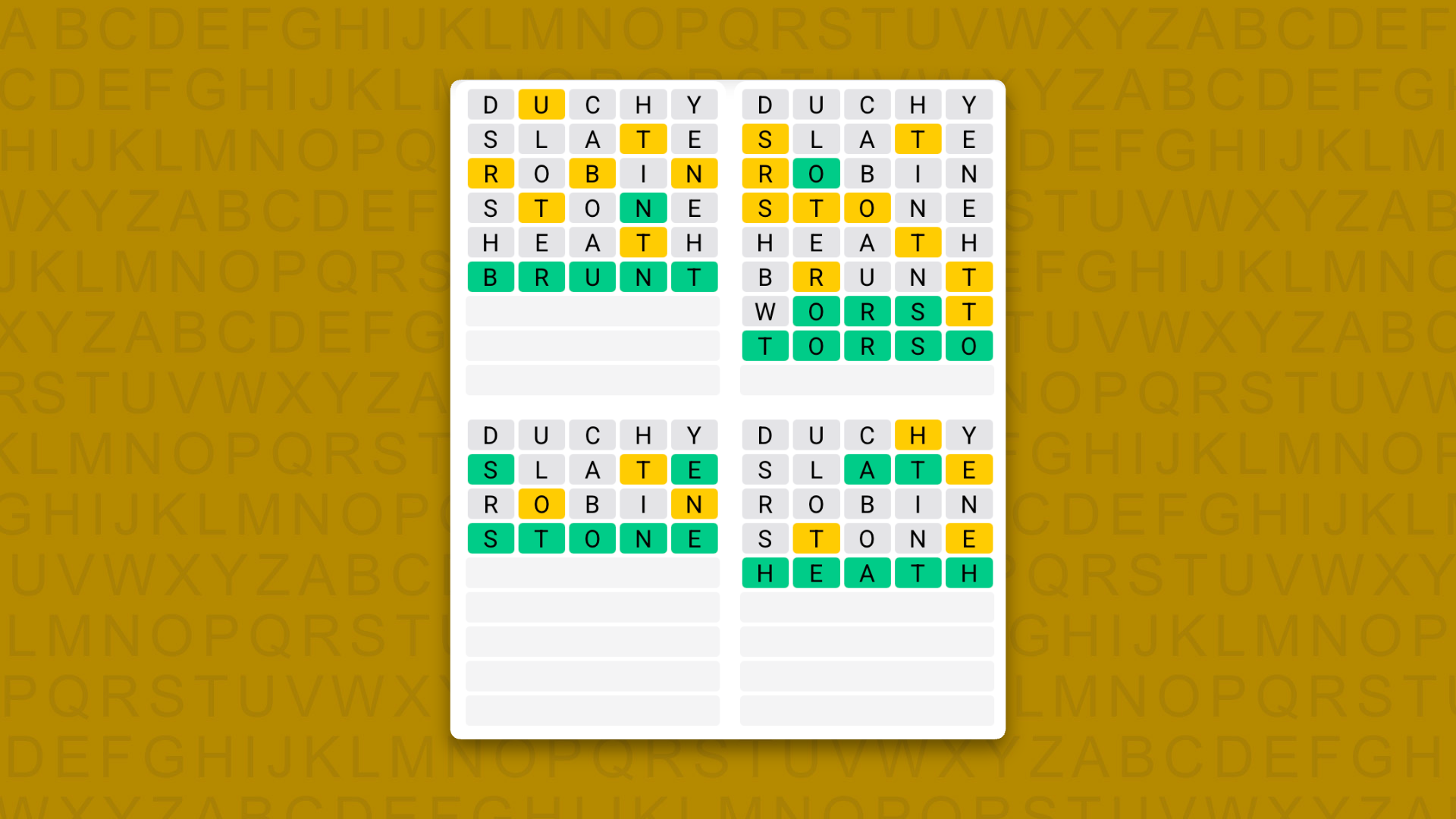
The answers to today’s Quordle, game #1708, are…
Words beginning in T and ending in O always look exotic to me — possibly because the one that I’d first think of would be tango.
There are also two brilliant cities in Tokyo and Tromso, which today’s most difficult-to-get word, TORSO, shares some of its letters with.
Daily Sequence today (game #1708) — the answers

The answers to today’s Quordle Daily Sequence, game #1708, are…
Quordle answers: The past 20
- Quordle #1707, Sunday, 27 September: VALET, CHEST, VIGIL, PUREE
- Quordle #1706, Saturday, 26 September: SNORT, BIBLE, LAPSE, CRANE
- Quordle #1705, Friday, 25 September: SWEAR, FLOOD, GUPPY, GROAN
- Quordle #1704, Thursday, 24 September: TOPIC, METRO, SCALP, FREED
- Quordle #1703, Wednesday, 23 September: SHEET, BLAND, JOIST, GUAVA
- Quordle #1702, Tuesday, 22 September: COMFY, LOBBY, DRESS, PANEL
- Quordle #1701, Monday, 21 September: WAXEN, HIPPO, PETAL, LEASH
- Quordle #1700, Sunday, 20 September: DERBY, LIMBO, GAWKY, REIGN
- Quordle #1699, Saturday, 19 September: SCOPE, HEIST, PULSE, CHAMP
- Quordle #1698, Friday, 18 September: MUCUS, MIRTH, APPLE, TILDE
- Quordle #1697, Thursday, 17 September: CRIER, CHIRP, NEIGH, FREER
- Quordle #1696, Wednesday, 16 September: SPEAR, PRICE, BLUNT, FISHY
- Quordle #1695, Tuesday, 15 September: SHUSH, LITHE, DELTA, BUGLE
- Quordle #1694, Monday, 14 September: ZEBRA, LEGAL, RATIO, TROLL
- Quordle #1693, Sunday, 13 September: LUCID, SPRAY, MANGE, EMAIL
- Quordle #1692, Saturday, 12 September: SUPER, BRUSH, RESET, SOWER
- Quordle #1691, Friday, 11 September: PLUSH, PAINT, RIVAL, AFOUL
- Quordle #1690, Thursday, 10 September: AGENT, EXILE, TITAN, PUREE
- Quordle #1689, Wednesday, 9 September: HAPPY, GONER, SMACK, MOTIF
- Quordle #1688, Tuesday, 8 September: FLUNG, DIARY, HALVE, BERTH


Campaigners who helped stop the UK from letting AI companies train on copyrighted work without permission have warned Australia not to try the same thing. They spoke to Dan Milmo for the Guardian.
Australia’s government is weighing an opt-out model, under which AI firms could train on creators’ work unless they object. The plan came to light this month in leaked slides from the Attorney-General’s Department, ABC News reported.
The UK dropped a similar plan in March. Technology secretary Liz Kendall said the government no longer had a preferred option, after only 3% of more than 10,000 people who responded to its consultation backed opt-out.
Beeban Kidron, a film director and member of the House of Lords, led the political fight in the UK. She told the Guardian that Prime Minister Anthony Albanese should take note.
“He should not squander his reputation by selling Australian creatives down the river,” Kidron said.
Composer Ed Newton-Rex, a former AI executive, organised a silent protest album backed by more than 1,000 musicians and a book with no text, signed by 10,000 writers. He said the UK campaign made the government see that the public wanted AI firms to pay for content.
“It will take just a moment for people to understand this is not fair,” Newton-Rex told the Guardian.
However, the tech industry still argues that AI training and fair pay for creators can go together. Antony Walker of trade group techUK told the Guardian that rights holders had been very effective at shouting down the debate in the UK.
In Australia, AI firms including OpenAI and Anthropic have asked the government to ease its rules. OpenAI has said it could not set up an Australian training centre without changes to copyright law, according to ABC News.
Attorney-General Michelle Rowland’s office said it is still consulting on options that give creators meaningful control and fair payment.
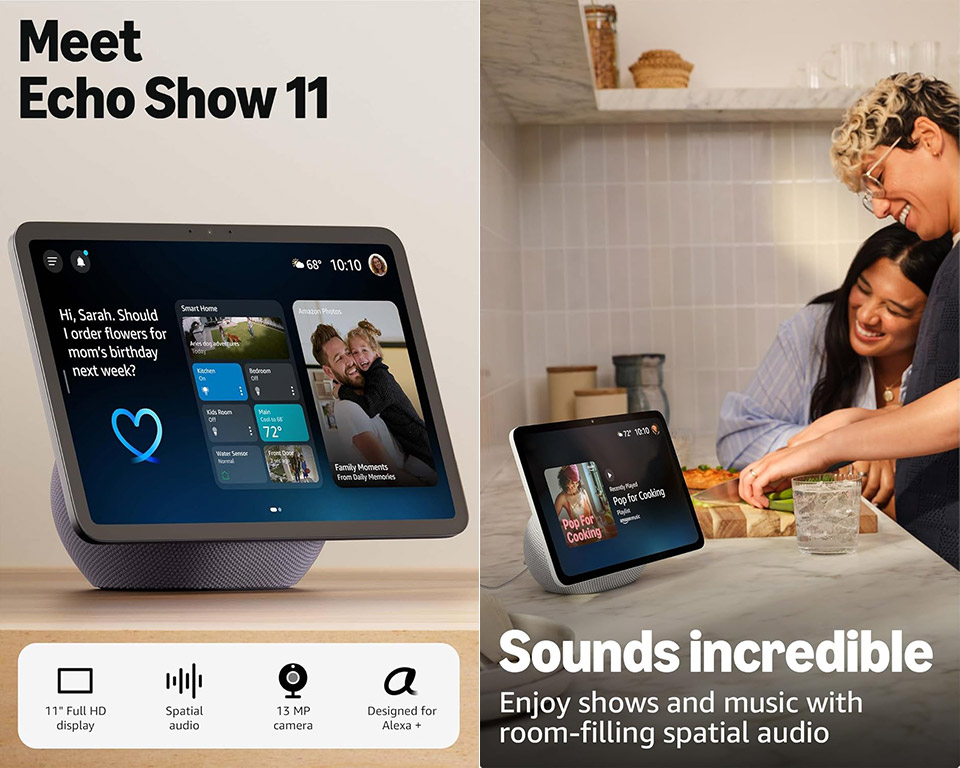
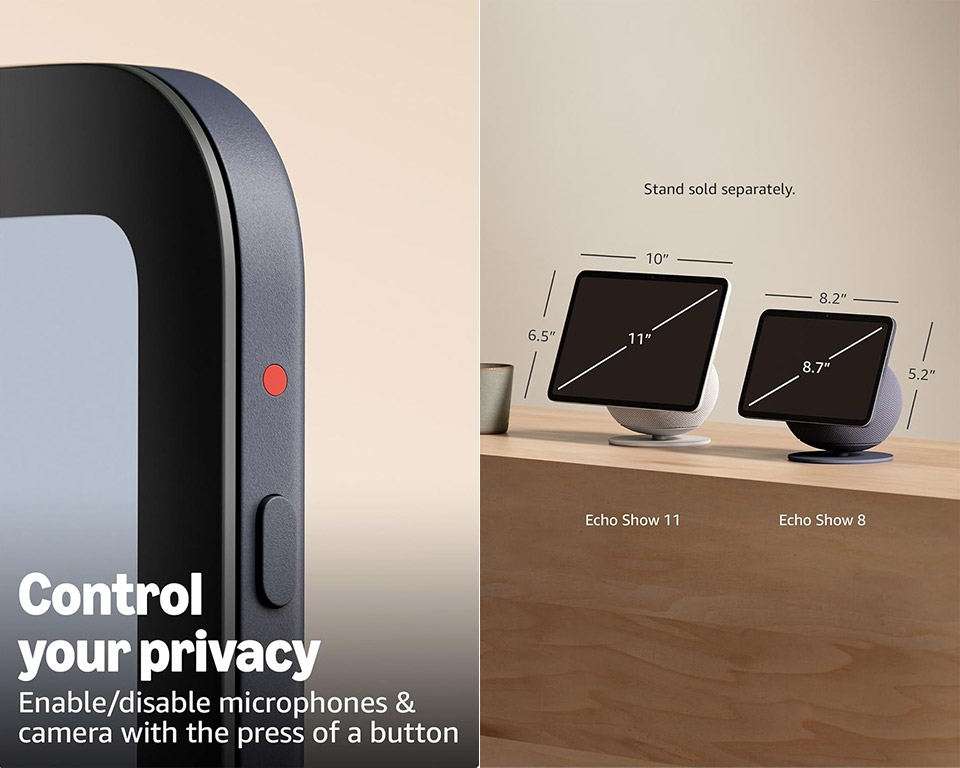
Amazon billed the newest Echo Show 11, priced at $149.99 (was $250), as a mini entertainment center you can park anywhere in the house, even on the road. Rooms with a wall outlet get the better half of that promise. This late-2025 smart display sits on the same rounded, fabric-wrapped base as the current Echo Show 8, then hangs an 11-inch Full HD touchscreen in front so the glass appears to float. Graphite and Glacier White are the two finishes. At about 10 by 7.2 by 5 inches and 2.9 pounds, you can slide it from kitchen to guest room. A 30-watt brick is the only power source, and the only port on the back is that power jack, so a weekend trip means packing a cord and hunting for an outlet.
This model exists solely because of its screen size. The panel measures around 10.95 inches diagonally and boasts a sharp resolution of 1920 by 1200 pixels, which is a significant improvement over the 8.7 inch HD screen on the comparable Show 8 and the previous Echo Show 10. The color remains visible from the side of a counter, which is beneficial when looking at a recipe while chopping. Adaptive brightness is useful in a bright kitchen, but don’t expect HDR. However, features like as timers, weather, Prime Video, and Netflix make the additional glass worthwhile.
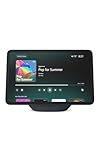
Amazon Echo Show 11 (newest model), Vibrant Full-HD 11″ display with more viewing area and spatial audio…
- New size, more viewing area: The 11“ smart display features a vibrant Full-HD touchscreen with 60% more viewing area versus Echo Show…
- Content looks and sounds incredible: Watch shows on Prime Video, Netflix, and more on the vibrant Full-HD 11″ screen and enjoy room-filling spatial…
- Your everyday assistant: The 11″ display makes it easy to see recipes and calendars at a glance, find meal inspo, and manage your shopping lists. With…
The sound comes from a 2.8-inch woofer and two forward-facing speakers wrapped in this lovely 3D knit fabric. Spatial audio does a good job of broadening the stage and is appropriate for a kitchen or small living room, but Amazon claims it has up to twice the bass of the 2023 Echo Show 8. Vocals are clear on podcasts and phone calls, however. The two speakers are set close together, so you won’t get much stereo width from them. That speaker setup is actually identical to the new Show 8, so the extra money you spent likely only got you a bigger and sharper screen and absolutely nothing better in the audio department.

Amazon’s AZ3 Pro chip, which features a specialized AI engine for Alexa+, is the brains behind this device in the United States, and it does an excellent job of keeping Alexa’s wake phrase sharp even when music is playing. Responses are also prompt. Above the bezel, there’s a 13 megapixel camera that auto frames video calls and feeds Visual ID, allowing the home screen to move to someone’s calendar. However, this time, there is no real camera shutter. There is a button on the side that disables the microphones and camera and illuminates a red LED, which is adequate for regular use, but those who preferred a sliding cover will likely miss it.
The new Omnisense is a quieter update, though. It employs ultrasound, Wi-Fi radar, an accelerometer, light and temperature sensors, and a camera to determine when someone enters the room, who they are, and how far away they are standing. Stand back and you’ll see a simple clock or photo reel. The widgets become visible as you move closer. Routines can be triggered even when a room is empty. You also get built-in Zigbee, a Thread border router, and Matter compatibility, allowing the Show 11 to function as a standalone smart-home hub without the need for additional box on the shelf. It supports Wi-Fi 6E and Bluetooth 5.3 radios.

A new Brookings Institution study notes the “strikingly physical” economic footprint of AI’s buildout, from specialized chips and electricity to purpose-built data centers. (Two-thirds of a data center’s costs are IT equipment, with one-third going to real estate and its associated power infrastructure.) “At an average of 3.63 percent of GDP per year, the projected buildout would be larger relative to the economy than the major U.S. canal, railroad, electrification, highway, and telecommunications investment booms.”
This is pushing up prices for workers, electricity, and even commercial real estate (as well as consumer products that use chips), notes the Wall Street Journal, and reducing the construction on new houses and apartment buildings. And in addition, the paper points out, projections for this buildout “would double the electricity consumption of the entire U.S. residential sector.”
The calculations come from Columbia Business School finance/real estate professor Stijn van Nieuwerburgh — and Reuters explains their significance:
Just as the rail and telecoms expansions led to notable bubbles and busts, Van Nieuwerburgh wrote that the extent of the buildout, the still-untested revenue streams, and the intricate financing structure emerging around AI mean it could be primed for a fall. “This is freaking complicated,” he said in a briefing with reporters of the arrangements emerging between AI firms, major tech hyperscalers, banks, private credit lenders, real estate firms, and a host of other players involved in building what he conservatively estimated at 183 gigawatts worth of new data-center capacity over the next seven years, compared with about 57 gigawatts currently installed…. The investment underway already has outstripped what the major players can fund from their own cash flows. The shift to outside financing has increased leverage, redistributed risks across the economy, and made the venture dependent on revenue streams that have yet to be proven, Van Nieuwerburgh noted in the paper, which will be presented on Friday…
“These developments do not imply that financial distress is imminent. Strong growth in AI applications, high utilization, and continued improvements in model capability could support the projected infrastructure and generate stable cash flows,” he wrote. “But the combination of uncertain demand, rapid technological change, execution bottlenecks, and high leverage creates meaningful downside risk if expectations are revised.” As an example, he wrote that the AI industry will need to be earning about $3.7 trillion in annual revenue by 2032 to achieve the expected return on the investment, and “given current estimates of annual combined revenues of OpenAI and Anthropic of around $100 billion, revenues would need to grow at roughly 80% per year.”
The paper suggests policies that “improve measurement and transparency” for financing.


Read more of this story at Slashdot.
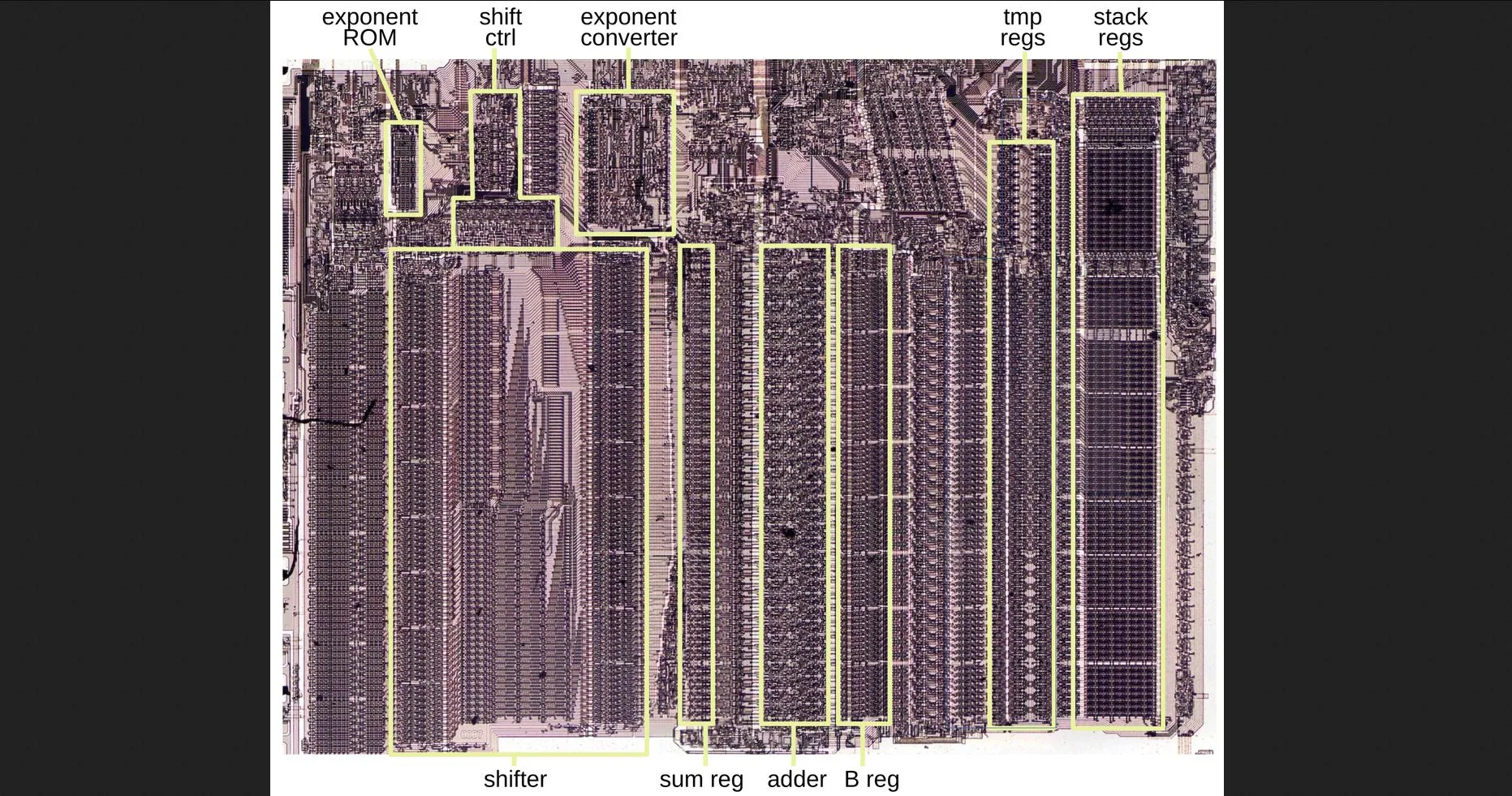
Continuing their reverse-engineering of Intel’s 8087 FPU, [Ken Shirriff] and friends took a look at one of the trigonometric functions, specifically FPTAN. The most exciting part with such reverse-engineering is probably figuring out which algorithm was used in the implementation, while trying to determine the reasoning behind the final hardware design.
If you’re running a simple MCU or MPU like the 6502 or Z80 without hardware functions you’d likely use an algorithm such as CORDIC or similar, as this requires only basic hardware features like addition, subtraction, bitshift, and look-up tables. One can also use polynomial approximation if there’s hardware support for a potential speed-up, or as is the case in the 8087, create a hybrid approach that targets speed and accuracy.
In the article the exact implementation to get to 64 bits of accuracy is detailed, starting with the 16 bits calculated using CORDIC before switching to the Padé approximant technique involving the ratio of two polynomials. Since after calculating the brunt of the final value with CORDIC the remainder is a fairly small value this polynomial approximation not just very accurate but also fast.
This approach allows the FPTAN and similar trigonometric functions in this FPU to hit a very high level of accuracy and not require the look-up table sizes and additional time required to work through the remaining bits with CORDIC. For those who want to see the full algorithm Intel’s engineers used, [Ken] has the full microcode listing with comments in the article as well.
As for the exact speed-up from this approach, [Ken] calculates for one value that FPTAN would spend 33% on CORDIC pseudo-division, 47% on CORDIC pseudo-multiplication and a mere 15% on the polynomial approximation along with about 5% overhead.
With the Pentium series of CPUs Intel moved completely away from CORDIC, as it’s clear that as accurate as it may be, it’s hard to scale to a significant number of bits without incurring significant time penalties. With the introduction of SIMD instructions the x87 ISA has further seen its functionality reduced, but this analysis shows once again why the 8087 made such an impact when it was released.
Good morning! Let’s play Connections, the NYT’s clever word game that challenges you to group answers in various categories. It can be tough, so read on if you need Connections hints.
What should you do once you’ve finished? Why, play some more word games of course. I’ve also got daily Strands hints and answers and Quordle hints and answers articles if you need help for those too, while Marc’s Wordle today page covers the original viral word game.
SPOILER WARNING: Information about NYT Connections today is below, so don’t read on if you don’t want to know the answers.
Latest Videos FromTechRadar
NYT Connections today (game #1205) – today’s words

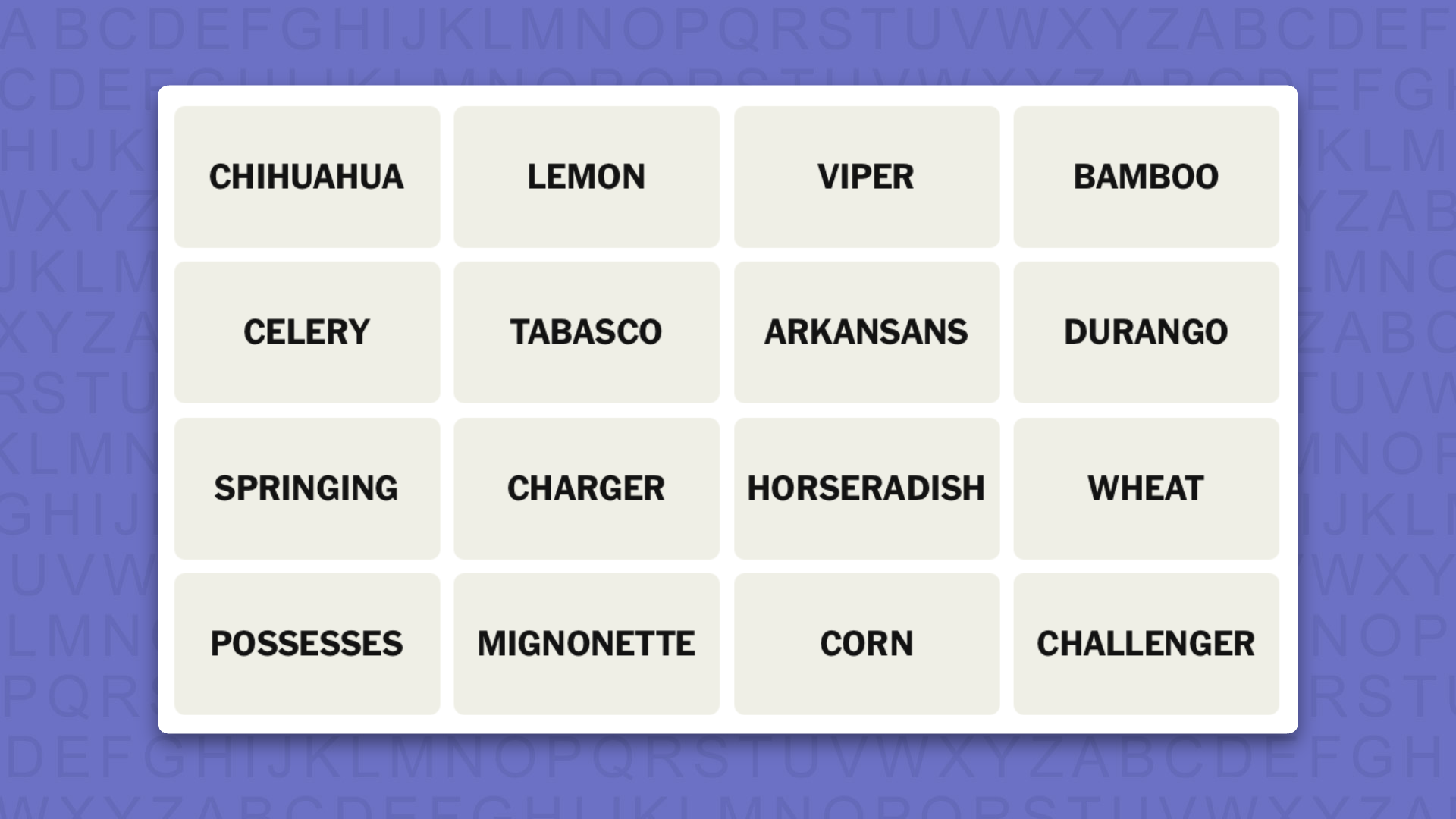
Today’s NYT Connections words are…
- CHIHUAHUA
- LEMON
- VIPER
- BAMBOO
- CELERY
- TABASCO
- ARKANSANS
- DURANGO
- SPRINGING
- CHARGER
- HORSERADISH
- WHEAT
- POSSESSES
- MIGNONETTE
- CORN
- CHALLENGER
NYT Connections today (game #1205) – hint #1 – group hints
What are some clues for today’s NYT Connections groups?
- YELLOW: Stick up plants
- GREEN: Enhance your seafood with these
- BLUE: Types of car
- PURPLE: Triple trouble
Need more clues?
We’re firmly in spoiler territory now, but read on if you want to know what the four theme answers are for today’s NYT Connections puzzles…
NYT Connections today (game #1205) – hint #2 – group answers
What are the answers for today’s NYT Connections groups?
- YELLOW: THINGS WITH STALKS
- GREEN: OYSTER CONDIMENTS
- BLUE: DODGE MODELS
- PURPLE: THREE LETTERS PLUS REPEATED TRIGRAMS
Right, the answers are below, so DO NOT SCROLL ANY FURTHER IF YOU DON’T WANT TO SEE THEM.
NYT Connections today (game #1205) – the answers

The answers to today’s Connections, game #1205, are…
- YELLOW: THINGS WITH STALKS: BAMBOO, CELERY, CORN, WHEAT
- GREEN: OYSTER CONDIMENTS: HORSERADISH, LEMON, MIGNONETTE, TABASCO
- BLUE: DODGE MODELS: CHALLENGER, CHARGER, DURANGO, VIPER
- PURPLE: THREE LETTERS PLUS REPEATED TRIGRAMS: ARKANSANS, CHIHUAHUA, POSSESSES, SPRINGING
- My rating: Hard
- My score: 1 mistake
I have never actually had a Bloody Mary, but I managed to convince myself that CELERY, TABASCO, HORSERADISH and LEMON were all things that you would add to vodka and tomato juice.
Fortunately I soon corrected my error after thinking what CELERY might have in common with some of the other tiles.
The next two groups were put together on hunches — I had no idea about DODGE MODELS, but thought that CHALLENGER, CHARGER, DURANGO and VIPER all sounded like macho names for cars. Finally, I took a gamble that MIGNONETTE was a foodstuff (I now know it’s a type of vinegar) and lumped it in with the other OYSTER CONDIMENTS; I’m a purist myself.
Yesterday’s NYT Connections answers (Sunday, September 27, 2026, game #1204)
- YELLOW: SCULPTURE MEDIA: BRONZE, CLAY, MARBLE, PLASTER
- GREEN: RESTAURANT SEATING OPTIONS: BANQUETTE, BOOTH, CHAIR, STOOL
- BLUE: TELECOM: CARRIER, NETWORK, OPERATOR, PROVIDER
- PURPLE: ENDING IN CHINESE DYNASTIES: BBQING, HOMING, LOHAN, WU-TANG
What is NYT Connections?
NYT Connections is one of several increasingly popular word games made by the New York Times. It challenges you to find groups of four items that share something in common, and each group has a different difficulty level: green is easy, yellow a little harder, blue often quite tough and purple usually very difficult.
On the plus side, you don’t technically need to solve the final one, as you’ll be able to answer that one by a process of elimination. What’s more, you can make up to four mistakes, which gives you a little bit of breathing room.
It’s a little more involved than something like Wordle, however, and there are plenty of opportunities for the game to trip you up with tricks. For instance, watch out for homophones and other word games that could disguise the answers.
It’s playable for free via the NYT Games site on desktop or mobile.
Tech
America’s nuclear comeback just reached a milestone that could change where the country’s reactor fuel comes from

- X-energy has completed the main structure of its Tennessee fuel plant called TX-1
- The facility could eventually produce 700,000 TRISO fuel pebbles annually
- TX-1 will be America’s first new commercial-scale advanced fuel facility in decades
X-energy has completed the main structure of TX-1, a nuclear fuel manufacturing facility located in Oak Ridge, Tennessee.
The 214,000-square-foot plant, developed by subsidiary TRISO-X, represents the first commercial-scale advanced nuclear fuel facility built domestically in over 50 years.
Clark Construction Group, the contractor handling the project, oversaw this vertical construction phase, clearing the path toward interior systems and eventual equipment installation.
Latest Videos FromTechRadar
Manufacturing capacity built for a growing fleet of reactors
TRISO fuel consists of tiny uranium particles wrapped in multiple carbon- and ceramic-based protective layers for durability.
Those layered coatings contain fission products while letting the fuel withstand temperatures far higher than conventional nuclear fuel typically tolerates.
The TX-1 plant is expected to produce roughly 700,000 TRISO fuel pebbles annually when it commences full operations, consuming about 5 metric tons of uranium, which would supply enough fuel for as many as 11 of X-energy’s Xe-100 advanced reactor units combined.
Each Xe-100 reactor module produces 80 megawatts of electricity, with four combined modules forming one standard 320-megawatt plant.
TX-1 will initially supply fuel for X-energy’s planned Xe-100 deployment at Dow’s UCC Seadrift Operations manufacturing site in Texas.
“Completing vertical construction is a major milestone for TX-1 and another tangible demonstration of the progress our team is making in Oak Ridge,” said Joel Duling, president of TRISO-X.
Clark Construction Group will now shift focus toward process equipment, an administration building, and an adjacent graphite matrix powder facility.
Earlier this year, the Nuclear Regulatory Commission granted the plant a 40-year Special Nuclear Material License for operations ahead.
X-energy says this represents the first NRC Category 2 fuel fabrication license issued for processing high-assay low-enriched uranium, known as HALEU.
Expanding beyond one site as demand for advanced fuel grows
TRISO-X has separately expanded its broader Oak Ridge nuclear fuel campus by approximately 70 additional acres of land.
The company also extended its existing research partnership with Oak Ridge National Laboratory while beginning construction on a separate facility.
That new facility, called TX-L, will function as a dedicated research and development site going forward.
Beyond the Dow project, X-energy is pursuing additional Xe-100 deployments with Energy Northwest, Amazon, and Centrica as future customers.
Each new reactor project would add further demand for the specialized fuel TX-1 is being built to eventually produce.
Finishing the building’s main structure does not mean fuel manufacturing can begin immediately at this location.
X-energy must still install specialized production equipment, commission interior systems, and prepare the facility for full commercial operations ahead.
No completion date has been disclosed for TX-1, but when completed, it would give the United States its first new domestic source of advanced reactor fuel in decades.
That outcome would also reduce reliance on foreign uranium suppliers while supporting new clean energy projects already planned with Amazon, Energy Northwest, and Centrica.

Follow TechRadar on Google News and add us as a preferred source to get our expert news, reviews, and opinion in your feeds.
111 years ago, American automaker Packard unveiled a new model called the Twin Six. At the time, they were in a heated back-and-forth battle with Cadillac, each marque vying for the number-one spot as America’s premier luxury automaker. Cadillac was riding the high of its first V8, but with the Twin Six, Packard introduced the world to the first production V12.
Since its inception with Packard, the V12 has been lauded as the ultimate form of the combustion engine. Huge power output can be extracted from its high cylinder count; its firing order is inherently balanced, resulting in smooth power delivery and stability in the engine bay; and it’s known for its vocal cords, too. In short, the V12 is perfectly suited to both performance and luxury applications. This grants the V12 a prestige and reputation that is unmatched by any other engine—they’re only found in the world’s finest cars.
The V12 is the statement piece of any automaker’s portfolio, so when you build one, it better be good. Because the V12 holds so much gravity, no holds are barred during its development, and usually, the result is something spectacular. The silky smoothness of a Rolls-Royce V12, or the rabid screams of a Lamborghini V12, are equally distinct, yet successful takes on the engine layout that both perfectly embody their brands’ ethos. However, not every instance is a success story. Here are two of the worst V12 engines ever made, and two of the best.
Worst: Jaguar 5.3L V12
Today, the Jaguar E-Type is regarded as one of the world’s finest sports cars. Even during its production, the world and Jaguar knew that the E-Type was something special, so when it came time to make a replacement, Jaguar knew they had a near-insurmountable task on their hands. That replacement came in the form of the Jaguar XJ-S, a stately coupe with modernized looks, a relatively cheap price tag, and a 5.3-liter V12. At first, this seemed like a perfectly acceptable successor. A 285 horsepower V12 with a Jaguar badge for just $19,200 felt like a steal, but the truth soon reared its ugly head.
The XJ-S’s V12 was obscenely complex, especially the electronics. One particular problem area was the Marelli ignition system, which functioned as two separate six-cylinder ignitor layouts rather than a holistic 12-cylinder version. The issue was that one half could shut down, leaving unlit fuel in the banks that the working half could ignite at any moment, leading to engine fires. U.S. spec models also had the catalytic converters mounted too close to the exhaust manifolds, which could lead to engine fires.
Beyond the fire problems, a Road & Track owner’s survey also reported issues with the brakes, alternator, cooling system, fuel pumps, instruments, and more. These engines required constant, expensive maintenance to prevent catastrophic damage, making this V12 a stain on Jaguar’s legacy and adding to their reputation for poor reliability.
Worst: Lincoln Zephyr V12
Despite entering the market at the tail end of the Great Depression, Lincoln decided to introduce its new V12-powered car, the Zephyr, in 1936. Regardless of the V12’s status as a range-topping engine, the Zephyr was meant to help Lincoln expand their market and move away from the low-volume, coachbuilding model it had followed up until this point. From the outside, the Zephyr is a wonderful thing to look at. Although the looks were polarizing at the time, its streamlined lines and teardrop proportions gave it an undeniable Art Deco panache.
Under the hood, though, the engine couldn’t match the exterior’s confidence. The Zephyr’s V12 had many similarities to Ford’s flathead V8, including its L-head valvetrain layout and twin-water-pump cooling system, but it failed to match Ford’s reliability. Almost all of the issues were caused by, or stemmed from, overheating. Thin cylinder walls that poorly withheld combustion heat, along with an underpowered crankcase ventilation system, made these engines run extremely hot. The water-cooling pathways were too small, further exacerbating heat buildup, which cooked the engine oil into sludge that could damage the engine and sap power. Even in a well-functioning example, the small bore and displacement meant these engines produced only 110 horsepower, which, even for the day, was underwhelming for a V12.
The car was a perfect example of 20th-century American elegance, but its underwhelming, problematic engine held it back, and it faded into obscurity as one of the forgotten cars of the 1930s.
Best: Ferrari F140
The V12 engine is steeped in the very essence of the Ferrari brand. Since the beginning of the prancing horse, the V12 has been the continuous masterpiece of Maranello, constantly evolving and improving. Each iteration improves upon the last, so it’s no surprise that its most recent version is the best the world has ever seen. Developed in 2002 for Ferrari’s fourth ultimate supercar, the Enzo, the 6-liter V12 was dubbed F140. The engine was pure Formula One, utilizing a 65-degree bank angle that allowed for a larger bore, more space for the intake manifolds, and a shorter engine height, resulting in a lower center of gravity and a compact package. In the Enzo, this naturally aspirated V12 produced 651 horsepower and an operatic shriek.
The F140’s involvement in the Enzo project alone makes it legendary, but that’s just the beginning. Ferrari upped displacement to 6.3 liters, and tossed the F140 in the F12. Later, in the Enzo’s successor, they bumped the power up to 800 horsepower and added an electric motor and a KERS system, introducing the LaFerrari as the brand’s first hybrid. Then, Ferrari updated the engine again for the 812, increasing displacement to 6.5 liters and boosting power to 819 horsepower. This most recent version powers all 812 variants, the Daytona SP3 and other Icona series cars, and the Purosangue, Ferrari’s first SUV. The F140 is the mascot of Italian, high-performance V12s, and it’s been blessing the hearts and ears of Ferrari fans since 2002.
Best: Mercedes M120
The M120 was developed with similar vigor as the F140, but its goal was different from the beginning. In the late 1980s, Mercedes was due for a new S-Class. An S-Class has to be solid and silky, and that includes the engine; it has to be solid and effortless. This quest for a smooth and stable powerplant gave rise to the M120 V12, and Mercedes brought out all the stops in its development. The engineers wanted power but opted for a naturally aspirated configuration over forced induction, as they felt the linear power delivery of an NA engine was better suited to the S-Class’s task.
Mercedes wanted nothing to come in the way of the M120’s longevity, and meticulously engineered and tested each component until they could comfortably withstand more stress than would ever be placed on them in regular use. Its cooling and oil circulatory systems were simple and robust, as was the rest of the engine. Its 390 horsepower was doled out smoothly and predictably, with torque available across the rev range. In the S-Class, the M120 was like a Navy SEAL playing paintball. It was so capable that you never had to worry about it, and its performance potential was quickly realized, too. Mercedes used an AMG-tuned version of the M120 in the fabled CLK-GTR, as did Pagani in the Zonda. The M120 was solid as a bank vault door, and it conquered both the luxury and performance arenas of V12 greatness.
Methodology
The V12 engine family is known for excelling as a powerplant for both luxury and performance cars. In luxury applications, their inherent balance between cylinder banks and firing orders lends itself well to smooth running and stability in the engine bay even at high revs. Their high cylinder count means combustion overlaps almost constantly, making the powerband linear and acceleration predictable and easy to control.
As for performance applications, this linear powerband is also beneficial, eliminating power jumps or drops that could disrupt a driver’s instincts. Their high cylinder count and displacement mean their horsepower ceiling is very high as well, without the need for forced induction.
Engines on this list were chosen based on their adherence or lack thereof to these characteristics. Engines that exemplify the benefits and exceed the expectations of a V12’s capabilities were chosen as the best, while engines that fell short of said capabilities and expectations were chosen as the worst. Beyond V12-specific criteria, engines were also ranked based on general metrics like reliability and maintenance needs.

Business2 minutes ago
Asia Faces Inflation Pressures Through 2027, ADB Warns

Sports7 minutes ago
Matthew Stafford becomes first QB with 20K yards for two teams

Entertainment9 minutes ago
Presley Gerber’s Ex On The Side Of Him The Public Rarely Saw





-

 Fashion2 days ago
Weekend Open Thread: J.McLaughlin – Corporette.com
-

 Crypto World5 days ago
Goldman Sachs and Deutsche Bank Agree: The S&P 500 Rally Isn't Over
-

 Fashion4 days ago
8 iPhone Accessories That Add Personality
-

 Entertainment5 days ago
These 17 Fall Amazon Dresses Seriously Look Like Anthropologie
-

 Tech5 days ago
Reolink’s solar 4K security camera falls to its lowest price in months
-

 Crypto World5 days ago
This Bearish Netflix Stock Trade Can Cash In On Video Streaming Giant’s Woes
-

 Crypto World6 days ago
Trump-Xi Polymarket Odds for Handshake Hit 50%
-

 Tech6 days ago
Google’s $899 Googlebook is a bet that you’ll buy a new laptop for Gemini
-

 Crypto World4 days ago
Crude Oil Prices Pressured by Diplomatic Hopes in the Middle East
-
 Business5 days ago
Oil Price Today (September 23): Crude oil below $100 on hopes of US-Iran talks. What did Trump say?
-
 Crypto World4 days ago
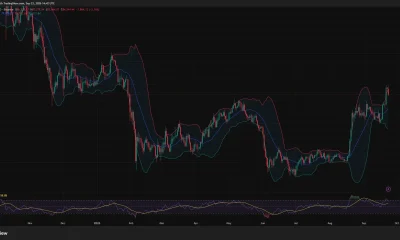
Bitcoin price tests $83,600 Supertrend support after $87K rejection
-

 Crypto World4 days ago
Bitcoin Threatens Sub-$84,000 Breakdown as Long Liquidations Spike
-
 Crypto World6 days ago
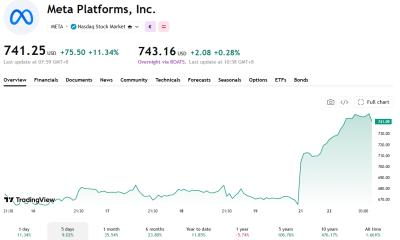
Meta Jumps 11% As Muse Shines and Investors Show an Appetite for Advancing AI
-

 Crypto World5 days ago
BitGo says Bitcoin absorbed Fed hike, CLARITY failure
-

 Crypto World5 days ago
Did Jim Cramer Just Give GameStop Stock the Kiss of Death When He Said the Turnaround Is Working?
-
 Crypto World7 days ago
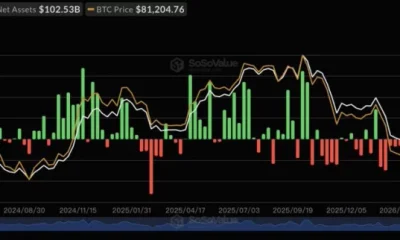
Bitcoin price holds above $81K as key catalysts line up
-
 Crypto World6 days ago
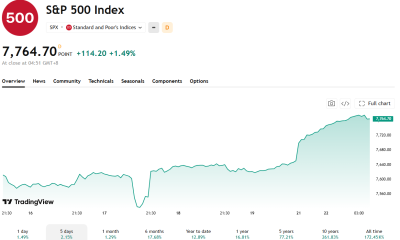
Trump, Xi Meet on S&P 500's Best Day Since Early August: Will Markets Stay Bullish?
-
 Tech4 days ago
UiPath’s Dines says AI needs a manual and launches Cartographer to write it
-
 Tech7 days ago
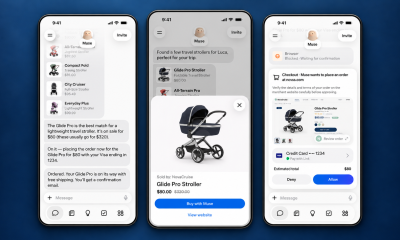
Amazon blocks Meta’s Muse AI assistant in new standoff over agentic shopping
-

 Crypto World6 days ago
Strategy Adds 950 BTC for $76M, Funds $174M STRC Buyback
You must be logged in to post a comment Login