TL;DR
Apple plans to disrupt the $200B eyewear market the way it disrupted watches. Swatch fell 28%, Fossil 70%. Smart glasses are targeting late 2027.





Apple plans to disrupt the $200B eyewear market the way it disrupted watches. Swatch fell 28%, Fossil 70%. Smart glasses are targeting late 2027.
When Apple launched the Apple Watch in 2015, the mid-tier wristwatch market had a handful of dominant companies. Swatch Group sold watches under Tissot, Hamilton, and Longines. Fossil Group sold under Michael Kors, Armani, and Kate Spade. Movado sold under Coach, Hugo Boss, and Tommy Hilfiger.
Ten years later, the damage is quantifiable. Swatch’s revenue is 28% lower in 2025 than it was in 2014. Fossil’s sales dropped roughly 70%. Apple became the world’s largest watchmaker by unit volume within a few years and last year overtook Rolex as the number one watch brand by revenue. The Apple Watch now generates an estimated $17 billion annually.
Bloomberg’s Mark Gurman reports that Apple is planning the same playbook for glasses. The company sees the $200 billion global eyewear market as a bigger opportunity than watches and intends to compete directly with products sold between $200 and $500, a segment dominated by EssilorLuxottica (Ray-Ban, Oakley, Persol, Oliver Peoples), Safilo Group (Tommy Hilfiger, Hugo Boss), and Warby Parker.
The addressable market is staggering. The WHO estimates 2.2 billion people globally have some form of vision impairment. Hundreds of millions of pairs of glasses are sold each year. Apple believes its brand, industrial design, iPhone integration, and AI features will lead people seeking new regular glasses to buy an Apple pair instead.
The first Apple glasses, codenamed N50, were initially planned for late 2026 with shipping by early 2027. Delays have pushed the timeline to a launch at the end of 2027, Gurman reports. The product will use oval-shaped cameras, unique colours, and multiple frame styles. Over time, Apple believes the glasses could become a health device and eventually incorporate augmented reality.
Meta has a substantial head start. It sold more than seven million Ray-Ban smart glasses in 2025 and commands roughly 82% of the smart glasses market. It has retail partnerships with LensCrafters and is steadily rolling out new models, with more coming in June. Meta also leads on AI features and has the advantage of working with Android, which remains larger than iOS globally.
Apple’s historical refusal to support Android gives Meta an opportunity to own that side of the market permanently. Ironically, Apple’s entry could benefit Meta by generating broader consumer excitement about smart glasses, with Android users then steered toward Meta’s models.
Meta is also expanding its wearables strategy beyond glasses. A leaked internal memo this week confirmed the company is developing an AI pendant and a “Wearables for Work” enterprise subscription. The competitive landscape is widening before Apple’s product even ships.
The risk for Apple is timing. Every month of delay gives Meta more users, more retail presence, and more data on what consumers want from smart glasses. The product depends on a revamped Siri that has already been delayed for two years. The new Siri app in iOS 27 may still launch as a beta.
Tim Cook has described the glasses as his top priority. Incoming CEO John Ternus is the driving force behind the project. The Vision Products Group developing the glasses has operated under his leadership for the past two years. The support from Apple’s highest levels is not in question. The execution timeline is.
Not all eyewear companies need to worry. High-fashion brands selling glasses for thousands of dollars, names like Cartier, Lindberg, Jacques Marie Mage, and Maison Bonnet, will likely continue to thrive. Apple never had a meaningful impact on the luxury watch market despite its attempt at $10,000 gold Apple Watches. Rolex generated an estimated $14 billion in revenue last year, more than double its sales from a decade earlier.
The target is the mass market, not the luxury segment. Apple is going after EssilorLuxottica, Safilo, and Warby Parker the way it went after Swatch, Fossil, and Movado. The pattern is clear: enter an established consumer product market, offer something that integrates with the iPhone, and wait for the incumbents’ revenue to decline.
Apple’s Watch business is itself facing new competitive pressure from screenless wearables like Whoop, Oura, and Google’s Fitbit Air. The company needs a new hardware growth category. Glasses, if executed well, could be it. The addressable market is not millions of users. It is billions.
Gurman also reported that iOS 27’s Siri app will sync conversations across devices via iCloud. Early work on iOS 28 (codenamed Bell) and macOS 28 (codenamed Poppy) has begun, with next year’s releases expected to be “far more significant” than the iOS 27 updates. A new Apple TV set-top box and HomePod mini are nearly ready, having been delayed for months to launch alongside the new Siri.

Apple is already developing its 2027 updates for iOS 28, iPadOS 28, macOS 28, and its other operating systems. This is entirely unsurprising.
As a major operating system producer and hardware manufacturer, it has to work long in advance to perfect its releases. While it has a lengthy schedule for products like the iPhone and Mac lineups, it can take just as long to get software out the door.
In Sunday’s “Power On” newsletter for Bloomberg, Mark Gurman writes that Apple has already kicked off development for the 2027 operating system updates. Indeed, he is told that software engineering teams are at the stage where they develop individual features, apps, and enhancements.
However, at this stage, it has yet to start bringing all of the parts together into cohesive whole operating systems. But, since it has about a year to go before it will show off the product of its work to developers at WWDC 2027, it still has a lot of time to play with.
Gurman adds that the iOS and iPadOS 28 updates have an internal codename of “Bell,” while macOS 28 is referred to as “Poppy.” This has led to employees creating a portmanteau of the two names, referring to the 2027 releases as “Boppy.”
This is not new to the company, as it did the same for the 27 generation. The internal name of iOS and iPadOS 27 was “Rave,” while macOS 27 was known as “Fizz,” resulting in the combination “Rizz.”

Some owners of the HomePod and HomePod mini have been startled awake by music playing from their devices in the middle of the night. There are some things you can do to stop ghost or phantom touches firing up audio at random.

The HomePod and HomePod mini are largely hands-free devices. Most of the time, you’re directly interacting with them by voice, or through HomeKit, or using AirPlay.
All models also include a touch-sensitive display in the top. While you could keep yelling at HomePod Siri to change volumes, you can also tap the display to do the same thing, or to trigger Siri manually.
Continue Reading on AppleInsider | Discuss on our Forums
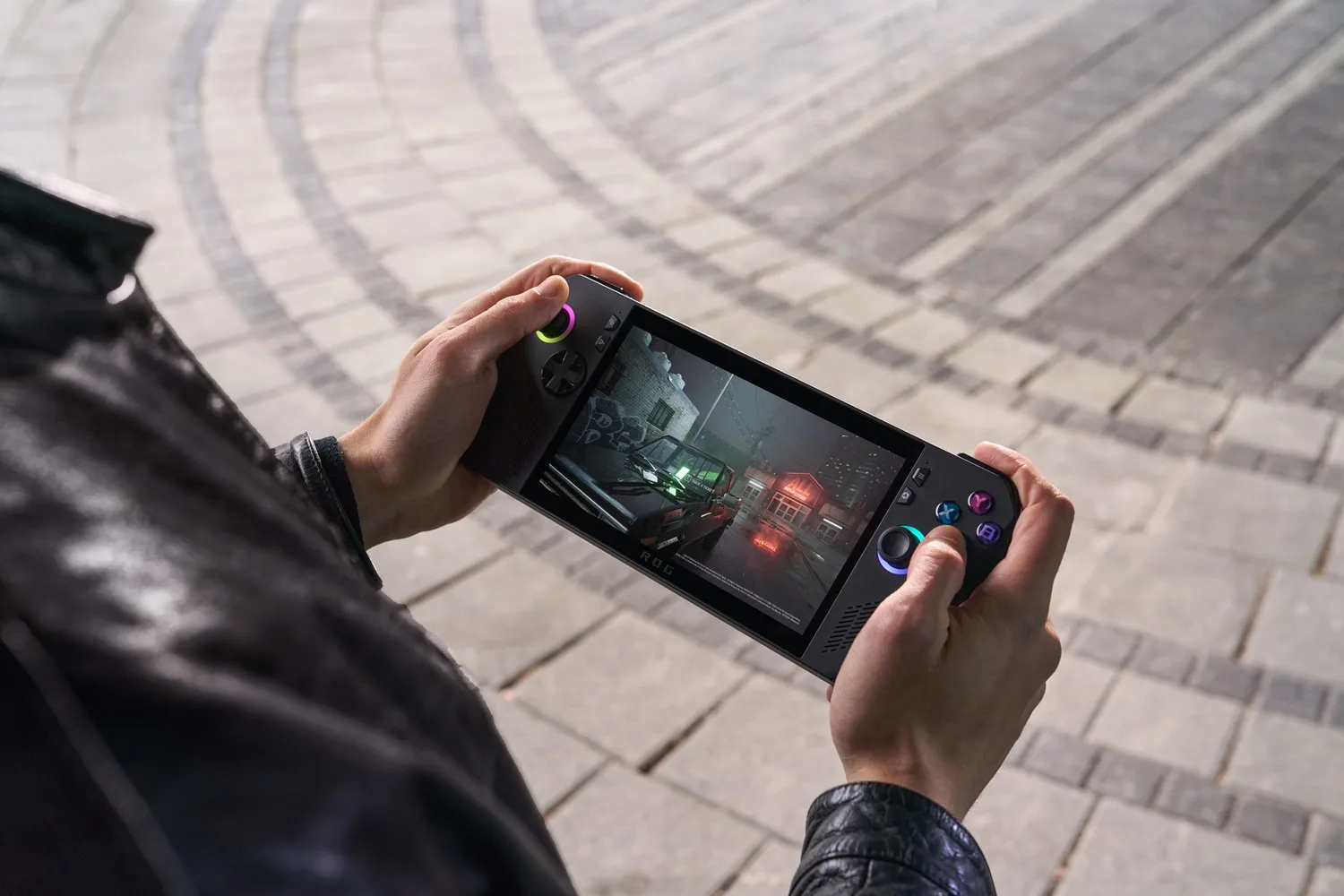
The handheld gaming market moves fast, and that’s exactly why a newly leaked ASUS device feels a little underwhelming on paper. A fresh listing suggests ASUS is preparing another ROG Ally handheld, but instead of delivering a major redesign, the company may simply be refreshing the internals. The leak points to an AMD Ryzen Z2 Extreme processor at the heart of the device, suggesting a mid-generation update rather than a true successor.
That’s not necessarily bad news. The Ryzen Z2 Extreme is expected to be a capable chip for portable gaming. The problem is that handheld gamers are increasingly looking for more than just a processor upgrade.
The listing doesn’t reveal much beyond the processor. Key details such as display technology, battery capacity, RAM, storage options, and even the final design remain under wraps. That leaves plenty of room for speculation, but it also makes the device feel less exciting than some fans may have hoped. If the leak is accurate, ASUS appears to be taking the same route many laptop makers follow: refresh the silicon, keep most of the hardware intact, and extend the product’s lifespan.

For existing ROG Ally owners, that may not be enough reason to upgrade. The more intriguing rumor is what the handheld doesn’t include. Previous speculation hinted that ASUS could experiment with Intel’s Arc-powered gaming silicon. Instead, the company seems to be sticking with AMD once again.
If ASUS wants this refresh to stand out, the screen may be its biggest opportunity. The handheld market has changed considerably since the original ROG Ally arrived. The Steam Deck OLED raised expectations for display quality, while larger-screen devices have become increasingly common. An OLED panel or a roomier 8-inch display would instantly make the new handheld more appealing.

Unfortunately, early clues suggest that it may not happen. If references in the product identifier are accurate, ASUS could be sticking with a 7-inch display once again. That’s where the potential disappointment lies. A faster processor is always welcome, but gamers tend to notice the screen every second they’re using a handheld. If ASUS delivers another LCD-based 7-inch device with only incremental upgrades elsewhere, it risks feeling like a spec bump arriving in a market that has already moved forward. For now, one thing seems clear: a new ROG Ally is on the way — whether it feels genuinely new is a different question altogether.
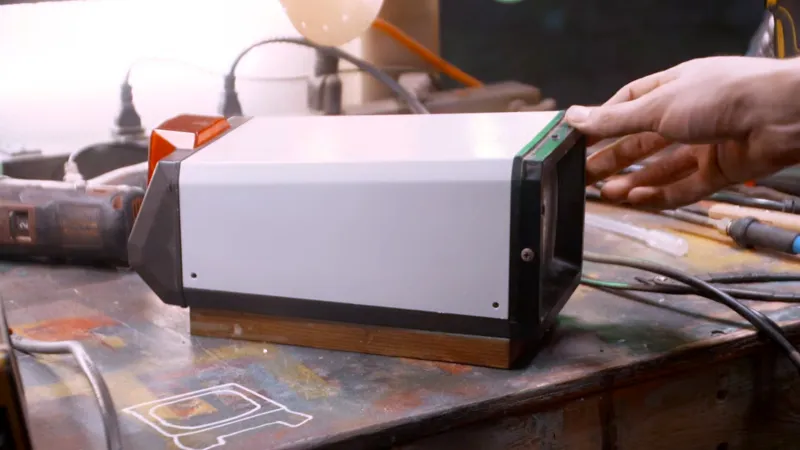
When we think of CRT camera viewfinders, most of us probably imagine the tiny CRTs you’d find in a 1980s camcorder. They’re super cute and a load of fun to play with, but they’re very much a consumer device. Professional cameras of the type you’d find in a studio had their own viewfinders, which were a lot closer to a small TV. They’re about as high quality as it gets for a monochrome CRT, and [Evan Monsma] has done the conversion to a general-purpose monitor.
On one side, this is a very straightforward hack, simply a case of tracing wires to identify the power and video pins. Given a tool battery, the monitor fires up and gives a super-sharp picture. What we like about this is the wooden base he’s made for the thing, at the same time rough-and-ready, and professional-looking from the outside. It has a routed space for the cables, and once mounted flush with the monitor base and given a bit of wood stain, it looks almost as though it was manufactured that way.
It’s likely most of us won’t find a broadcast viewfinder in the trash, instead settling at best for a little Chinese portable TV. But it’s still interesting to see these unusual devices. Perhaps it might make a good cyberdeck.
Thanks [Luis] for the tip!


When drivers hear the word “idling,” they may think about sitting in traffic at a stoplight or leaving the car running in a fast food drive-thru. Both situations count as idle time, which refers to any period when an engine is running but the vehicle itself isn’t moving. Unfortunately, excessive idling causes wear and tear on your engine, and that stationary time still contributes to your vehicle’s total engine hours.
By definition, the term “engine hours” refers to the total running time of a vehicle’s engine, whether it’s moving or sitting still. That means every minute you spend driving, warming up your car, sitting in traffic, or just idling in a parking lot contributes to the overall total. Idle hours are simply the portion of that running time spent while your vehicle isn’t moving.
Engine hours are so important that many commercial businesses track them for their vehicle fleets. This is because mileage alone, even in a used diesel truck, isn’t a proper measurement of just how much wear and tear a vehicle’s engine has actually experienced. For example, two cars with similar mileage can have very different engine hours, depending on how they were used. In some cases, heavy idling can add a lot of engine time without adding that many miles overall.

Continuous idling can lead to a decrease in engine efficiency over time, along with other internal engine issues. That’s because an idling engine is running without the same working load and operating conditions it experiences during normal driving. Without that heat and pressure, the engine’s combustion cycle is less efficient, and internal conditions become less ideal. This is especially true for modern diesel engines, which are designed to perform best while under load.
Idling can eventually lead to carbon buildup in key engine components, including the vehicle’s exhaust system and engine cylinders. It can also reduce oil quality over time. That’s because fuel can mix with the engine oil during low-temperature, low-load operation. This affects how well the oil lubricates and protects internal engine components.
However, mechanical issues aren’t the only problems caused by too much vehicle idling. Unnecessary idling means more harmful exhaust fumes are produced, which contribute to both air pollution and impact the climate. An idling vehicle is also wasting fuel, which can get expensive over the long term.
Four-wheel drive (4WD) systems can be pretty capable in situations where front-wheel drive and rear-wheel drive vehicles become hopelessly stuck. Before moving on, let’s first understand the different types of drive systems that exist. Front-wheel drive, as the name suggests, only sends power to the two front wheels, and is known to be fuel efficient. Rear-wheel drive does the opposite, sending power to only the rear wheels, and gives sportier handling than front-wheel drive systems. AWD, or all-wheel drive, can send power to all four wheels, as and when needed, and can even vary the power between the front and rear wheels.
4-wheel drive is the ultimate setup for off-roading, and drives all four wheels on the car all the time. It’s important to note that in both AWD and 4WD, the mode is not constantly on. Instead, the driver –- or the car -– will activate the mode, and then the effects come into play. Many modern vehicles will be front-wheel drive until the 4WD/AWD mode is activated; for example, this is the case on the Toyota RAV4. However, many drivers tend to treat their 4WD buttons like something magical that makes their vehicle invincible, no matter what the conditions are. Now, this does stem partly from manufacturers marketing 4WD as a foolproof system rather than a tool that requires knowledge to operate. The results can be catastrophic damage and expensive repairs. If you want to avoid such a fate, here are five common mistakes that people make when using 4WD.
One of the classic errors that people unfamiliar with 4WD systems make is driving on pavement or asphalt with the 4WD system engaged. In really egregious cases, these drivers will be driving at high speeds with the system on, which can quickly wreck the entire 4WD setup. This is because 4WD systems are primarily intended for use in situations when traction is reduced -– and only at rather low speeds.
The issue here is that when you turn your vehicle on the road –- left or right, doesn’t really matter -– the left and right wheels will want to rotate at different speeds. However, the 4WD system will prevent them from doing that. Off-road, in a muddy creek bed, this stress can exit the system naturally because the wheels would “slip” , but this can’t happen on dry, high-traction pavement. The result is something called drivetrain binding, which is also called “wind up” in some parts of the world, and is extremely detrimental to your car.
Among a great many possibilities, it can make turning feel jerky, make your tires wear a lot faster, apply undue stress to your axles, and even harm the transfer case. The reason this happens is because many of the traditional 4WD setups lock the front and rear wheels together manually via something called a center differential. This is another reason why AWD systems are preferred, because they usually engage automatically when wheel slipping is detected, without much need for user input.
There are usually two types of 4WD mode, known as 4WD high and low range. 4WD high range, usually indicated with a “4WD Hi”, “4H”, or some similar demarcation near the 4WD button, locks the front and rear wheels together without changing any gearing ratios. That last bit is important because the car is still using its “standard” gears, meaning the torque delivery to those wheels would remain relatively normal. This means the car in 4WD high can still move at moderate speeds with little problems, perfect for applications like driving in snow or sand.
4WD low range, on the other hand, changes things up quite a bit. The low-range refers to a change in the gearing ratios, so that the engine can deliver lots of torque to the wheels at low RPMs . This helps traction significantly, and people who tow things will know how much 4WD low helps in towing something heavy uphill. Also, during 4WD low, engine braking is much higher than normal, so it also helps when going downhill. The tradeoff with 4WD low is that it’s not intended for even moderate speed use, with the most experienced drivers just sticking to a crawl when using it. Using the wrong mode can lead to problems like the transmission overheating, clutches wearing excessively on manuals, drivetrain binding, extremely high engine revs, and just plain old getting stuck –- which is what 4WD was supposed to avoid.
The tires -– and more specifically the tread on those tires -– is as important as having a 4WD system on your car. In fact, we’re willing to say that in most cases, an AWD system with off-road tires will outperform a 4WD system with street tires in the hands of the everyday driver. That’s because street or road-use-specific tires will have a tread that balances traction with fuel economy and noise levels, whereas off-road tires prioritize grip . We cannot stress how important it is to have the correct tires for your particular situation –- snow tires won’t do you much good if visiting Texas in the summer, for instance.
Even the National Parks Service (NPS) says that tire choice is critical. For example, the NPS says that in order to visit the Mojave reserve in California, the most important item that a visitor needs is “a high clearance 4×4 with tires designed for off-pavement use”, so it’s best to take this seriously. That same NPS page also says that street tires getting ripped up while being used off-road are a significant cause for vehicles getting stranded, along with breakdowns and not having proper ground clearance.
The NPS also advises travelers to carry at least two spare tires when visiting, of which one is explicitly supposed to be an all-terrain tire. So, don’t take a chance when planning a trip off the beaten track; research your environment thoroughly, choose the right tires, and don’t forget to bring a spare.
As we’ve mentioned earlier, many 4WD vehicles come with something called a differential, which is a piece of the 4WD system that allows the wheels to turn independently or forces them to turn together depending on the setting. Vehicles can have up to three differentials, mounted on the front axle, rear axle, and in the middle of the vehicle, each serving different purposes.
A front locking diff locks the front left and front right wheels together, making them spin at the same speed. The rear does the same, but for the back wheels –- the rear is arguably more important because the back axle on SUVs can usually handle more weight, thus leading to those back wheels being able to provide more traction. There is also something called a limited-slip differential that is sort of a hybrid option between these, but we won’t get into that. A center locking differential, however, is slightly different, in that it locks the front and rear driveshafts together, with no locking of the left and right wheels -– but should never be used on paved roads unless you want accelerated wear on your vehicle.
So, with a center diff, the driver gets the choice of choosing whether they want power sent equally to both axles (by using the center diff), if they want the rear wheels to push the vehicle together (rear diff engaged), or both cases together. This flexibility is what gives serious off-road vehicles like the Mercedes G63 and some Toyota Land cruisers the ultimate off-road capability, and not using your center locking diff is essentially leaving torque on the table in rough terrain.
If you think about it, the basic function of every 4×4 system is to provide traction in conditions where that traction could otherwise be reduced. In such instances, airing down your tires -– which means reducing the air below the recommended roadgoing PSI -– can help quite a bit, especially on soft surfaces like snow, sand, gravel, and dirt. The primary reason why this helps is because the area of your tire that’s actually making contact with the ground (known as the “contact patch”), increases drastically with lower tire pressure.
A larger contact patch on one or even more tires increases the surface area that the weight of the vehicle rests on, which in turn means a lot more traction than normal. It also makes it easier to go over small obstacles. For instance, if you’re going over a brick at road-level PSI, the particular tire that’s going over the brick might lift up into the air, leaving a very small contact patch for traction on that particular tire. However, if you air down your tires, the tire “absorbs” the brick, maintaining a large contact patch, and therefore, more traction. Not airing down your tires means that your 4×4 system won’t be delivering the optimum amount of traction to get you out of sticky situations, so it’s best to do so. Some off-road focused vehicles even come with a built-in air compressor for reinflation.

Brazil vs Panama are both ramping up their World Cup preparations this weekend as they face off in a friendly at the Maracanã Stadium in Rio de Janeiro.
A Seleção is one of the favourites for the tournament, but with question marks over Neymar Jr’s fitness, attention is very much elsewhere.
For Panama, it is a chance to test themselves against some of the world’s best before they embark on a second World Cup campaign.
The big question, of course, is this: how can you watch Brazil vs Panama for free? Fortunately, there are several ways to stream the friendly, including a free option in Brazil.
In this guide, we’ll show you how to watch Brazil vs Panama for free from anywhere in the world.
Brazil vs Panama will be available to watch for free on Globoplay.
Globoplay is a great pick, here’s why:
Globoplay’s free coverage of Brazil vs Panama is geo-restricted to Brazilian residents.
Soccer fans traveling or working outside the South American country will need to use a VPN to access the free coverage.
There are lots of VPNs but NordVPN is the one you can rely on to unblock Globoplay and watch Brazil take on Panama.
It’s super simple to use a VPN to catch Brazil vs Panama.
1. Install the VPN of your choice. As we’ve said, NordVPN is our favourite.
2. Choose the location you wish to connect to in the VPN app. For instance, if you’re visiting the UK and want to watch your free Globoplay coverage, you’d select ‘Brazil’.
3. Sit back and enjoy the action. Head to Globoplay and watch all the action unfold this Sunday for free.

Brazil vs Panama has limited streaming options. The US, UK and Australia aren’t showing it at all with only Fancode showing it in South Asian countries and TVPanama in Panama.
✈️ Remember. If you’re outside Brazil today use NordVPN to access your Globoplay live stream.
We test and review VPN services in the context of legal recreational uses. For example: 1. Accessing a service from another country (subject to the terms and conditions of that service). 2. Protecting your online security and strengthening your online privacy when abroad. We do not support or condone the illegal or malicious use of VPN services. Consuming pirated content that is paid-for is neither endorsed nor approved by Future Publishing.

After criticizing a startup called Artisan for misusing his work, artist KC Green — creator of the famous “This is fine” meme — said he’s reached an agreement with Artisan.
The dispute arose after the startup appeared to use a version of Green’s art to promote its AI assistant Ava. In Artisan’s bus and subway ads, Green’s recognizable dog sat amid recognizable flames, but instead of saying “This is fine,” it declared, “My pipeline is on fire,” while the ad urged people to “Hire Ava the AI BDR.”
Earlier this month, Green posted on social media that his art had been “stolen like AI steals” and urged his followers to “vandalize” the ads if they saw them. He also told TechCrunch he was frustrated about having to “try my hand at the American court system” instead of putting that time into his comics.
Artisan, meanwhile, told us it has “a lot of respect for Green and his work.” Then, earlier this week, founder and CEO Jaspar Carmichael-Jack said the two sides had come to an agreement.
When TechCrunch reached out to Green, he confirmed that they’d “reached a settlement pretty quick,” with Artisan taking down the ads in New York and San Francisco that used his character, and Green taking down his initial post.
Whether you’re choosing your first motorcycle with the intention of carrying a passenger or just looking to upgrade to a more capable bike for two-up riding, it’s important to consider several factors. First, you’ll need to make an honest assessment of your riding skill level and your partner’s needs.
For example, you may be tempted by the thrills promised by some of the fastest touring motorcycles in the world. After all, they have the word “touring” in their classification, passenger accommodations, and, in most cases, attached luggage, so they must be suitable for long-range two-up rides. Right?
Personal experience proves that’s not always the case. Having bought an early 2000s Honda VFR800Fi complete with a cushy aftermarket seat and hard side bags, I was excited to take my wife on our first two-up ride into the nearby countryside. She hated it immediately. The passenger position on the VFR, admittedly a motorcycle that’s more sport than touring, was not comfortable. So, when choosing the best motorcycle for two-up riding, it’s best to consider its passenger accommodations before you buy.
On the other hand, sport touring bikes are a great option for many riders and their partners. Full-on touring motorcycles offer the most highway comfort, but can be cumbersome to move around when parking. Cruisers are a great choice for many two-up couples, and those looking to get off the beaten path can find adventure bikes suitable for two-up riding.
Many enthusiasts consider the standard Honda Africa Twin adventure bike one of the best motorcycles for solo riding, but find it falls short of greatness for two-up riding. One key element holding it back from a passenger perspective is its off-road-inspired forward-sloping passenger seat design.
The Honda Africa Twin Adventure Sports ES features an upgraded seat with improved foam and a more neutral riding posture for greater comfort on longer trips. Honda Powersports lists the 2026 model’s base MSRP at $17,799, plus a $775 “Destination Charge.” There are two other two-up-capable adventure bikes priced higher and lower than the Honda that come to mind: the Triumph Tiger 1200 Rally Pro on the upper end of the scale and the less expensive Husqvarna Norden 901 Expedition. However, the Africa Twin Adventure Sports ES provides plenty of usable power, a well-rounded suite of features, and comfortable ergonomics from both seats. For many riding pairs, this blend of traits at its mid-range price makes it just right, as Goldilocks might say.
A 1,084cc liquid-cooled parallel-twin four-stroke engine powers the Africa Twin Adventure Sports ES with around 100 horsepower and 82 pound-feet of torque. The electronically adjustable suspension system includes inverted 45mm Showa front forks with 8.3 inches of travel and a Pro-Link Showa rear shock with 7.9 inches of travel.
There’s little doubt that the Honda adventure bike is more road-biased. It makes sense since most adventures will involve more pavement than dirt two-track riding. When on the highway, riders will enjoy the Africa Twin’s cruise control, Apple CarPlay and Android Auto, cornering ABS, rally-inspired fairing, and TFT touchscreen display. Other features, like the aforementioned ES seat, selectable torque control, electronically-adjustable suspension preload, and the bike’s low center of gravity, will be appreciated on or off-road.
It’s no secret that Harley-Davidson has produced some of the most iconic motorcycles for two riders. While even the brand’s intro-level models like the Nightster offer functional two-up riding performance, the sky is the limit with models like the 2025 Harley-Davidson CVO Road Glide RR.
The best Harley-Davidson for two-up touring falls between those extremes. For the price of the CVO Road Glide RR, one could buy a 2026 Road Glide Limited with a starting MSRP of $32,999 (plus undisclosed destination charges), complete with fairing, hard side luggage, and trunk, ride it to Sturgis on a two-week road trip, and still afford a nice down payment on a house.
The 2026 Harley-Davidson Road Glide Limited is loaded with features designed for comfortable long-distance two-up (or solo) touring. The Milwaukee-Eight 117 cubic-inch V-Twin provides predictable performance with variable-valve timing and electronic sequential port fuel injection, producing 131 pound-feet of torque and 106 horsepower.
Safety is a significant factor for a motorcycle destined to carry two people on long rides. The HD Road Glide Limited includes several safety features designed for that task. Harley-Davidson’s Cornering Rider Safety Enhancements provide extra traction when it matters most, adding another layer of safety to features like its anti-lock brake systems, electronic linked braking, traction control systems, and drag-torque slip control.
The standard passenger seat provides accommodations akin to sitting in a recliner. However, there are upgrades available through Harley-Davidson. For the ultimate backseat ride, consider a set of extended passenger armrests, and the heated rear seat option is practically a must-have for cooler temperatures.
The 2025 BMW R 18 Transcontinental, with an MSRP of $24,395 (plus $895 destination and handling), is one of those timeless motorcycle designs that blend old-school style with modern performance. Of course, there are a number of other motorcycle brands that offer serviceable cruisers for two-up riding, and each one is someone’s favorite.
One design feature that sets the BMW R 18 apart is its boxer engine, which differs from the standard V-Twin found on most capable cruisers today. The R 18’s twin-cylinder boxer engine displaces 1,802 cubic centimeters, delivering 91 horsepower and up to 120 lb-ft of torque, with at least 110 lb-ft throughout the 2000 to 4000 rpm range.
Power is routed through a constant-mesh six-speed gearbox engaged via a single-disc dry clutch and delivered to a shaft final drive. The BMW Motorrad Integral ABS handles braking duties, enhanced by Automatic Stability Control, Dynamic Brake Control, and Dynamic Engine Brake Control.
With the range of sport-touring motorcycles on the market today, it’s difficult to choose one as the best for every type of riding duo. More adventurous types might prefer something from the Kawasaki Ninja series, like the Ninja H2 SX or SE. Others are well-suited by more subdued, but still sporty models like the Yamaha Tracer 9 GT+, Kawasaki Versys, or Honda NT1100.
While those are all fine sport-touring models, especially for solo touring, it’s hard to argue against the more refined Yamaha FJR1300 as the best sport-touring motorcycle for two-up riding. The downside is that Yamaha’s website doesn’t list a current-year model for the FJR. Instead, it still shows the 2024 FJR1300ES with an MSRP starting at $18,299, plus a $575 Destination Charge.
According to Cycle World, Yamaha last updated the FJR in 2016. So while it may not have the latest technological advancements, it’s still a good example of not messing with near-perfection for the sake of padding the sales brochure. Despite its aging platform, the 2024 FJR1300ES offers features designed for long-range two-up touring.
Passenger and rider comfort is enhanced by its adjustable ergonomics, push-button windscreen adjustments, plush passenger and rider seating, heated grips, cruise control, and integrated hard luggage. Adjustable ergonomics include 0.8 inches of toolless seat adjustment, three handlebar positions, and over 5.1 inches of windscreen adjustment at the push of a button. The electronically adjustable suspension allows settings that provide the most comfort for long stretches and best performance to tackle the twisties.
When you close your eyes and imagine a motorcycle capable of delivering comfortable accommodations for two-up riding mile after mile, it’s very likely that you’ll picture the Honda Gold Wing. In fact, the Gold Wing is often considered one of the most comfortable motorcycles around, even by those who have never ridden one.
The first Honda GL1000 Gold Wing that hit the streets in 1975 was quite different from what we see in the current generation, although it was designed as Honda’s flagship high-speed touring bike even then. However, its horizontally-opposed 1,000cc four-cylinder engine set the stage for what the Gold Wing would become.
Second-generation Gold Wings, introduced in 1980, began offering touring-enhanced models such as the GL1100 Interstate that featured full fairings, tall windscreens, and hard-sided luggage to carry enough clothes for a few days. The fourth-generation GL1500 introduced the Gold Wing’s first flat-six engine design in 1988.
The current-generation Honda Gold Wing, the GL1800, has an MSRP starting at $25,500 (plus $775 Destination Charges). The Gold Wing Tour, which adds a rear trunk (doubling as a passenger backrest), heated seats, and upgraded suspension, starts at $29,500 (plus the destination charge). At the GL1800’s heart is a smooth-running 1,833 cc flat-six, delivering 90 horsepower and 102.5 lb-ft of torque, according to Cycle World.


A top Communist Party journal told China’s platforms to stop price wars and invest in AI. The signal suggests regulatory stabilisation after years of crackdowns.
A top-level Communist Party publication has signaled a shift in how Beijing intends to govern its largest internet platforms. A draft commentary set to appear in the Qiushi journal on Monday says the focus will be on balancing support for growth with enhanced regulatory oversight. The message is directed at companies including Alibaba, Meituan, and PDD Holdings.
The guidance reiterates Beijing’s stance on curbing “involution-style” competition, a reference to the price wars and aggressive subsidies that have defined Chinese e-commerce in recent years. Platforms are told to compete on value, not on who can lose money the fastest. The commentary also calls for stronger oversight of algorithms, data use, and consumer protection.
The more significant signal is what the commentary encourages. Platform companies are told to increase investment in strategic technologies, specifically artificial intelligence and cloud computing. Beijing is pointing its tech giants toward higher-value growth areas and away from the subsidy-fuelled margin destruction that has characterised the sector.
“The healthy development of the sector depends on a sound governance system and effective regulatory measures,” the commentary says. “The irregularities seen in China’s platform economy are partly linked to the fact that regulatory and governance frameworks have yet to fully adapt to its characteristics.”
The policy follows years of sustained scrutiny. Alibaba was fined $2.8 billion in 2021. Didi was forced to delist from the New York Stock Exchange. Meituan faced antitrust investigations. PDD’s Temu has been under pressure over merchant fees and pricing practices. The regulatory crackdown wiped hundreds of billions of dollars from Chinese tech market capitalisations between 2021 and 2023.
The Qiushi commentary suggests Beijing is moving from crackdown to calibration. The regulatory backdrop is stabilising, but compliance costs are rising and operational constraints are tightening. Platforms get permission to grow again, with conditions.
Chinese AI companies are already competing aggressively on price. DeepSeek permanently cut its V4 Pro model pricing by 75% this week, undercutting every Western frontier model. The Qiushi commentary’s call for AI investment aligns with a broader national strategy to dominate the AI stack from models to chips to applications.
China’s technology exports are expanding simultaneously across multiple fronts. BYD, Chery, and Geely are entering Canada. Xiaomi shipped 600,000 EVs in under two years. CXMT’s DRAM is appearing inside Corsair kits. The platform regulation signal is one piece of a broader industrial policy that encourages Chinese companies to invest in strategic technologies at home while competing globally.
For investors, the message is cautiously positive. The crackdown era appears to be over. Alibaba’s stock has recovered significantly from its 2022 lows. But the new framework means higher compliance costs, tighter algorithm transparency requirements, and an end to the subsidy-driven growth models that built Pinduoduo and Temu. The companies that redirect spending from price wars to AI will be rewarded. Those that do not will face regulatory pressure.
The Qiushi journal is the Communist Party’s premier theoretical publication. Commentary published in it reflects official policy direction rather than speculative opinion. When it tells China’s platforms to stop fighting on price and start investing in AI, the platforms listen. The question is whether the investment produces innovation or compliance theatre. Beijing is betting on the former.




Israel says it has killed new Hamas military leader in Gaza City airstrikes


NASA taps Blue Origin to deliver lunar rovers for Moon Base initiative


Bridgerton Season 5: Cast, Release Date And Everything We Know So Far

Brian Armstrong Outlines Crypto Vision for the Future Financial System


XRP *JUST* SUCCEEDED!!!! CLARITY ACT EXPOSED!!! (SHE EXPOSED IT)


2026 NBA Finals schedule, odds: Knicks await Thunder or Spurs after winning East
Micron Crosses $1 Trillion Market Cap as AI Demand Reshapes Memory Sector


Selena Gomez Reportedly Upset Over Benny Blanco’s Comments on Her ‘Terrible’ Diet


This is BROKEN! INSANE 5x MONEY CAR WASH WEEK! The NEW GTA Online UPDATE Today! (GTA5 New Update)


BTS Sells Out Four Las Vegas Shows at Allegiant Stadium for ARIRANG World Tour

Hottest May day ever as London hits 34.8C in 2C leap from previous records

China assigns ID codes to 28,000+ humanoid robots


Microsoft’s quiet Claude Code retreat and the real cost of enterprise AI


Waymo dominates autonomous vehicle registrations as Tesla trails behind


Nikkei 225 Surges Past 65,000 for First Time as Iran Peace Hopes Fuel Record Rally
The Samsung pay deal is the moment Korean unions changed register


Crowds find riverside shade in York as temperatures soar


Westone Audio and Etymotic Acquired by Fidelity Collective in Major IEM Market Move

‘Breaking Bad’ Star’s Easy-to-Binge 6-Part Crime Series Spin-Off Is Finally Heading to Free Streaming


Millions of AI agents imperiled by critical vulnerability in open source package



You must be logged in to post a comment Login