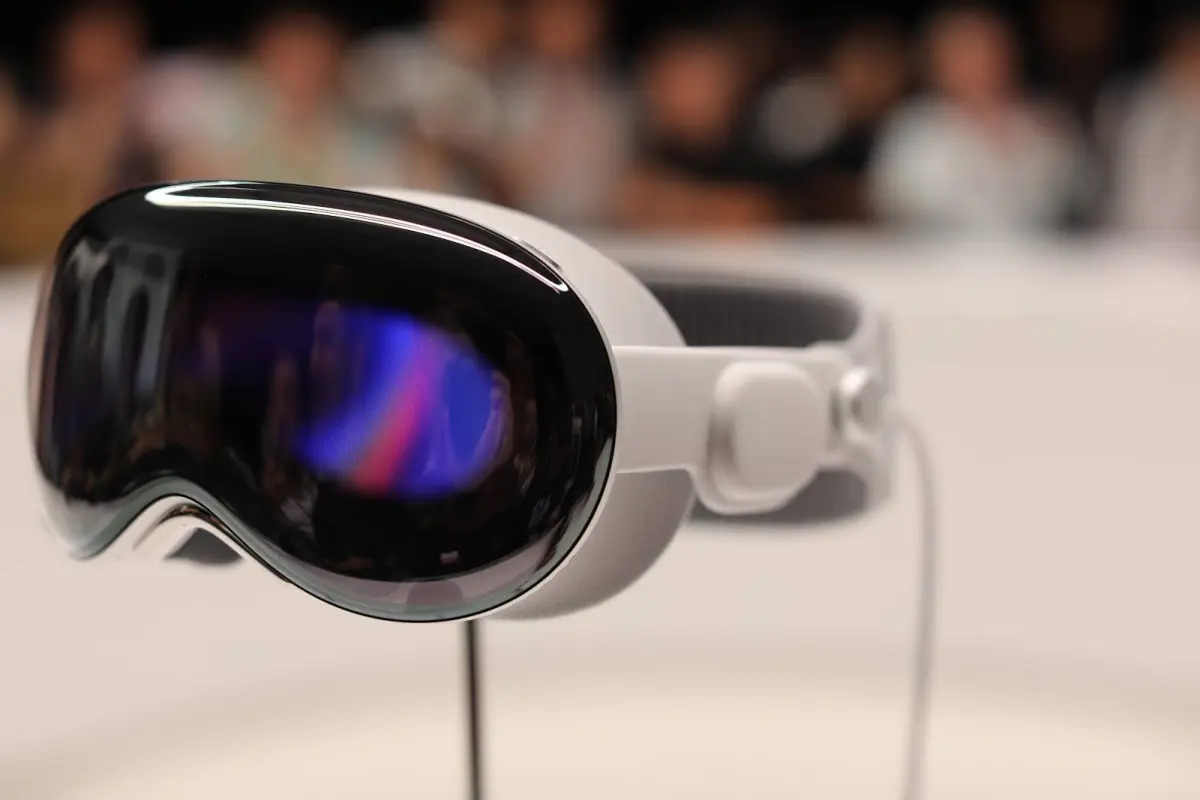
Paul Meade, the Apple vice president in charge of the Vision Pro headset, is leaving the company to join OpenAI’s hardware team, according to Bloomberg’s Mark Gurman.
Gurman frames this departure as a byproduct of John Ternus’ imminent elevation to Apple CEO, and of Ternus’ decision to shake up the hardware engineering team, which left some of the company’s vice presidents feeling like they’d been demoted.
Automaker Polestar will not be allowed to sell its 2027 models and beyond in the US after the US Department of Commerce’s Bureau of Industry and Security banned those sales over concerns about Chinese-made connected technology. And the company has no plans to return.
The crux of the issue is Polestar’s ownership by Volvo and Volvo’s own parent company, China-based Geely.
Advertisement
The Swedish manufacturer of electric vehicles, which became a distinct brand in 2017, revealed the ban in an SEC filing, which it paired with a press release this week announcing that it’s shifting manufacturing to Europe.
It said in the release that it will continue to sell existing stock of its Polestar 3 and Polestar 4 vehicles in the US and to support customers through its service network.
A representative for Polestar told CNET in an email that, because of the Commerce Department’s decision, the company has no plans to sell new cars in the US from model year 2027 onward, including the planned Polestar 7.
The company has marketed the Polestar 7 as a premium compact SUV. It’s due out in 2028.
Advertisement
This decision isn’t surprising: A 2024 letter from Polestar (PDF) to the Bureau of Industry and Security foreshadowed what would eventually happen. It said at the time that the agency’s prohibitions could eventually lead the company to stop selling vehicles in the US, even ones it manufactures in South Carolina.
The US ban has not been posted on the Commerce Department’s website or social media, but it’s in line with the agency’s directive to police technology from China that the government considers a potential security threat. This month, the department issued a $36 million penalty against Bosch for exporting sensors and auto software to Huawei.
In May, however, the Bureau of Industry and Security granted Volvo special authorization to sell its vehicles in the US after the auto company said it discussed its connected technology with the department.
A representative of the Bureau of Industry and Security did not immediately respond to a request for comment.
Advertisement
US agencies aren’t just looking at the auto industry. The Federal Communications Commission has targeted consumer products including routers and drones that have technology made in China.
Considering EVs in the US
Polestar is not one of the top 10 EV manufacturers, lagging behind larger companies including Tesla, BYD and Volkswagen.
Electric vehicles only account for about 6.5 percent of the US auto market, according to industry watcher Edmunds. In the US, EVs are typically priced higher, and federal rebates to purchase these types of vehicles have been phased out.
With gas prices high this summer, consumers may be giving EVs another look, but concerns remain about pricing and range.
Advertisement
Some automakers are trying to boost the appeal of electric vehicles through lower-cost models. Slate is taking preorders for a basic, modular EV truck that costs $24,950 before delivery fees. Other EV models, such as the Chevrolet Bolt, can be found for about $30,000.
Something happened this morning which will have been unnoticed by many, but which for a certain breed of radio enthusiast marks the end of an era. The BBC stopped broadcasting Radio 4 on their 198 kHz Long Wave frequency, ending over a century of transmission in the band. For now the transmitter carries a recorded message telling listeners that the service has ended, but it’s expected that this will soon be turned off.
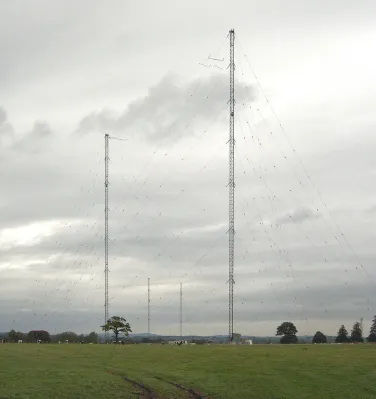
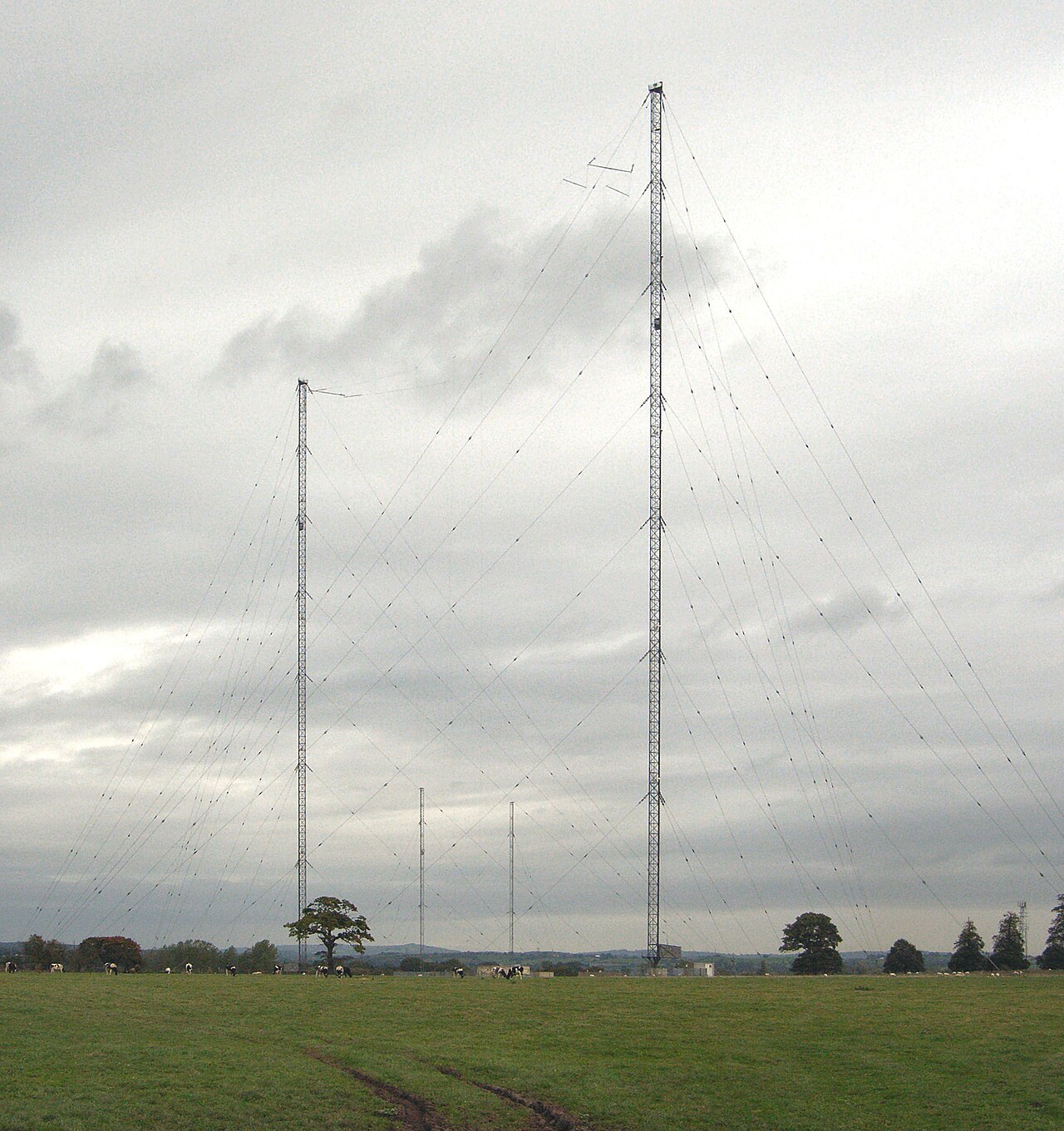
The main 198kHz BBC transmitter, at Droitwich. Bob Nienhuis, Public domain.
American readers may be unfamiliar with Long Wave as it’s a band not allocated in their region. Covering 153 to 279 kHz, it’s a relic from the earliest days of high-power broadcasting in the 1920s, used because of the enormous distances that could be covered with its lower frequencies. The main long wave transmitter for the BBC is at Droitwich, and its demise comes because there are no more spares for its high-power transmitter tubes. It joins many Medium Wave, or AM, as it is commonly known, stations in leaving the airwaves, as increased interference from switch mode electronics and the availability of higher quality alternatives took away their listeners. It’s fair to say that there will be few whose lives are inconvenienced by the switch-off in 2026, but it’s worth taking a moment to remember.
The first BBC Long Wave transmissions in the mid-1920s were on a 1600 metre wavelength, or 187.5 kHz. A series of international agreements saw them move to 193 kHz, and then 200 KHz or 1500 metres in 1934. They stayed on that frequency until another shift down 2 KHz to 198 kHz in 1988. They were atomic-controlled, and thus usable as a frequency standard. The programming started with station names redolent of their era, first the BBC National Service, then the Light Programme you’ll see on the dial in the header image, and finally the more modern-sounding Radio 4. A famous BBC programme tied to Long Wave is the Shipping Forecast, a weather bulletin for deep-sea fishermen which became cult listening on land and now features on FM and digital services too, and there’s even a probably-apocryphal tale that British nuclear submarine captains would once use its presence or absence to judge whether nuclear war had occurred.
In an Oxfordshire farmhouse not far short of fifty years ago, a young child who would later become a Hackaday writer heard a radio show like nothing before, which made an impression that continues to this day. The show was one of the earliest airings of the original Hitchhikers Guide To The Galaxy radio series, through a 1970s ITT radio tuned to BBC Radio 4 on (then) 200 kHz Long Wave. So long, Droitwich, and thanks for all the fish.
Last year, hackers attacked car giant Jaguar Land Rover (JPL), one of the U.K.’s biggest employers. The hack halted production for months and made a dent in the country’s economy. The damage was so severe that the U.K. government decided to bail out the company with a £1.5 billion (around $2 billion) payment, and estimates say the hack cost the British economy $2.5 billion.
For months, there was only speculation about who did it. Now, citing people close to the investigation, The New York Times reports that the hackers behind the breach were Russian, although it’s still unclear if they were working directly for Vladimir Putin’s government, were just criminals, or something in between, like criminals operating with the government’s tacit approval.
Microsoft was tracking the Russian hacking group and alerted JLR to the information about the hacker’s identities, the Times reports. However, sources also said that the FBI, Britain’s National Crime Agency and National Cyber Security Centre, Google’s Mandiant unit, and Palo Alto Networks all worked on the investigation.
In what is a rare, but not an unprecedented occurrence in the world of cybersecurity, it turned out that the Russian hacking group was not the only one that breached some JPL networks. A Jordanian hacker who went by Rey had also broken in, according to the Times.
If you have ever wanted to buy Plex’s lifetime pass to keep streaming your movie collection to your iPhone, get it now before the price rockets up to a ludicrous $749.99 on July 1.
Price rises are a regular occurrence for most online services, and that even includes self-hosted streaming platforms. However, for a particular segment of Plex users, one extremely expensive jump in price is on the horizon.
Back in May, Plex warned that it will be raising the price of its Lifetime Plex Pass, which gives users all of the benefits of the normal annual or monthly Plex Pass, but without a subscription. That price rise is set to take place on July 1 at 12:01 a.m. UTC.
As for the amount the price will go up by, it’s not a small amount. Instead of the current $249.99 pricing, it will be going up to an eye-watering $749.99.
In justifying the price, Plex admitted that it had previously considered removing the Lifetime Plex Pass altogether. While recurring subscriptions sustain long-term development, the lifetime pass does not, and becomes less useful to Plex as time goes on.
The new price, according to Plex, “reflects the real, ongoing value of the software we’re committed to building and maintaining for years to come.”
Does this affect me?
The price change is something that really only matters to a small section of Plex’s user base. Those who don’t feel like paying the monthly or annual fee and believe they can get years of use out of Plex.
Advertisement
There are no changes to the monthly $6.99 or annual $69.99 subscriptions. It’s only affecting the lifetime version.
The current $250 price may seem hefty for a user to pay, but that’s the equivalent of three and a half years of the annual subscription in terms of cost. Or just under three years of paying the monthly plan.
By contrast, the $750 price change works out to be the same cost as just over ten years of the annual subscription.
Existing Lifetime Plex Plan users won’t have to pay anything extra, as they already have the plan. There won’t be any change of service either, as planned future changes affect all paid plans equally.
Advertisement
Consider your options
Current monthly and annual subscribers who are happy to continue paying the fee can carry on without worry. For those who were tempted but didn’t pull the trigger on the Lifetime Plex Plan previously, they have an incentive to get it now.
A 200% price increase is certainly a good incentive for fence-sitters to pay up.
That said, the market has changed, and maybe those users wanting to save a bit of money could consider a completely different option. One that was free, if you’re not afraid of a little work.
Rival app Jellyfin is free to set up and use in mostly the same way as Plex. Where Plex succeeds is in having a massive community and product support, whereas you’ve got more research to do with Jellyfin.
Advertisement
There’s also the alternative content sources Plex offers, but that’s a minor thing compared to the main functionality.
That said, it’s not that difficult to get up and running with Jellyfin. It has many of the same features as Plex, including fetching relevant metadata for your collection, as well as apps for many devices you would want to stream to in the first place.
Ultimately, this is a good opportunity for everyone to take stock in their setups, and to really work out what they want from their home streaming server.
You could “save” money by paying for the lifetime Plex upgrade now instead of suffering later. But you could also save by switching to Jellyfin and avoiding subscriptions altogether.
Croatia face another test of nerve as they take on a miserly Ghana side in the final round of Group L fixtures at the FIFA World Cup 2026 – and you can watch the game from anywhere for free.
After reaching the 2018 final and the last four in 2022, the Vatreni have been a slow burner this tournament. An entertaining 4-2 defeat by England in their opening game was followed by a crucial 1-0 win over Panama, in which inspirational captain Luka Modric won his 200th senior international cap. The game in Philadelphia is effectively a play-off to see who qualifies in second place from Group L – assuming England beat Panama in the other fixture – and who will be relying on progressing as one of the best third-place teams. Manager Zlatko Dalic will be confident, his side having come through plenty of high-stakes games in the past decade.
Beating Ghana is no mean feat, though, as England will tell you. The Black Stars held the Three Lions to a 0-0 draw in Boston on Tuesday as they kept their second successive clean sheet at this World Cup, following a last-gasp 1-0 victory over Panama. Ghana may even feel hard done by after Ezri Konsa appeared to foul Prince Kwabena Adu in the penalty area late on, but celebrated nevertheless at full-time after effectively booking their knockout place for the first time since they reached the 2010 quarter-finals. Carlos Queiroz’s men just need a point to guarantee a runners-up spot that would almost certainly mean Colombia or Portugal in the last 32.
Advertisement
So, read on as we show you exactly how to watch Croatia vs Ghana for free from anywhere in the FIFA World Cup 2026.
How to watch Croatia vs Ghana for free
Croatia vs Ghana is available to watch for free in multiple countries, including the UK, Australia, Brazil, Belgium, Ireland, Netherlands, Switzerland and Turkey.
Abroad? Can’t access your free stream? Unblock your free World Cup stream with Norton VPN — more on that below.
Advertisement
Use a VPN to watch Croatia vs Ghana live streams
It’s the World Cup, and if you’re traveling, you might discover your usual Croatia vs Ghana stream is suddenly unavailable due to geo-restrictions.
Don’t worry, that’s exactly where a VPN can help. A virtual private network lets you connect to servers around the world so you can securely access your usual World Cup coverage as if you were back home.
Defenders: Josko Gvardiol (Manchester City), Duje Caleta-Car (Real Sociedad), Josip Sutalo (Ajax Amsterdam), Josip Stanisic (Bayern Munich), Marin Pongracic (Fiorentina), Martin Erlic (Midtjylland), Luka Vuskovic (Hamburg).
Midfielders: Luka Modric (AC Milan), Mateo Kovacic (Manchester City), Mario Pasalic (Atalanta), Nikola Vlasic (Torino), Luka Sucic (Real Sociedad), Martin Baturina (Como), Kristijan Jakic (Augsburg), Petar Sucic (Inter Milan), Nikola Moro (Bologna), Toni Fruk (Rijeka).
Forwards: Ivan Perisic (PSV Eindhoven), Andrej Kramaric (Hoffenheim), Ante Budimir (Osasuna), Marco Pasalic (Orlando City), Petar Musa (Dallas), Igor Matanovic (Freiburg).
Advertisement
Ghana
Goalkeepers: Lawrence Ati-Zigi (St. Gallen), Joseph Anang (St Patrick’s Athletic), Benjamin Asare (Hearts of Oak).
Defenders: Alidu Seidu (Rennes), Jonas Adjetey (VfL Wolfsburg), Abdul Mumin (Rayo Vallecano), Gideon Mensah (Auxerre), Abdul Rahman Baba (PAOK), Jerome Opoku (Istanbul Basaksehir), Kojo Peprah Oppong (Nice), Derrick Luckassen (Pafos), Marvin Senaya (Auxerre).
Midfielders: Caleb Yirenkyi (Nordsjaelland), Thomas Partey (Villarreal), Abdul Fatawu (Leicester City), Kwasi Sibo (Oviedo), Antoine Semenyo (Manchester City), Elisha Owusu (Auxerre), Augustine Boakye (Saint-Etienne), Kamaldeen Sulemana (Atalanta).
Advertisement
Forwards: Jordan Ayew (Leicester City), Brandon Thomas-Asante (Coventry City), Christopher Bonsu Baah (Al-Qadsiah), Inaki Williams (Athletic Bilbao), Ernest Nuamah (Lyon), Prince Kwabena Adu (Viktoria Plzen).
Swipe to scroll horizontally
Group L Table
Position
Team
GD
Advertisement
Points
1
England
2
Advertisement
4
2
Ghana
1
Advertisement
4
3
Croatia
-1
Advertisement
3
4
Panama
-2
Advertisement
0
Can I watch Croatia vs Ghana on my mobile?
Of course, most broadcasters have streaming services that you can access through mobile apps or via your phone’s browser.
You can also stay up-to-date with all of the key World Cup moments on the official social media channels on X/Twitter (@FIFAWorldCup), Instagram (@FIFAWorldCup), TikTok (@FIFAWorldCup) and YouTube (@FIFA).
We test and review VPN services in the context of legal recreational uses. For example: 1. Accessing a service from another country (subject to the terms and conditions of that service). 2. Protecting your online security and strengthening your online privacy when abroad. We do not support or condone the illegal or malicious use of VPN services. Consuming pirated content that is paid-for is neither endorsed nor approved by Future Publishing.
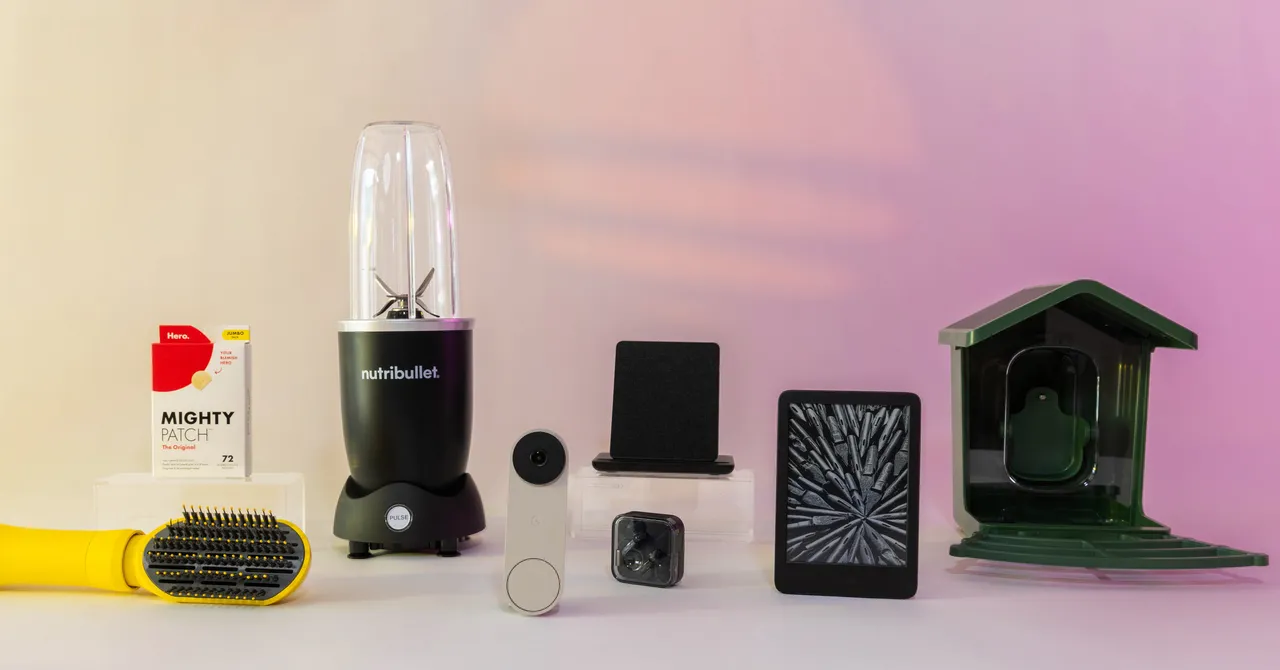
These are the best-sounding open earbuds, with clear audio and instrumental detail. The rollable build offers a secure fit with minimal discomfort, but it may take a few tries to attach them correctly. Battery life lasts about seven and a half hours, and they have an IPX4 rating, meaning they’re resistant to splashes and light rain. Lastly, they’re equipped with some of Bose’s advanced features, including multipoint pairing, Bose Spatial Audio, and push-button controls for playback, calling, and volume adjustments. —Boutayna Chokrane
Our favorite Bluetooth speaker is on sale for Prime Day. Our reviewers say the JBL Flip 7 the perfect balance of portable design and sound quality, with surprisingly full sound in its compact package. The Flip 7 is plenty durable for the outdoors with a drop-tested design and water resistance, and it also supports Auracast to sync with other new JBL models. —Nena Farrell
Easily the smartest indoor security camera currently available, Google’s third-generation Nest Cam indoor kicks the resolution up to 2K at 30 fps, with HDR and night vision. There’s also two-way audio, enforced two-factor authentication, and accurate detection to alert you about people, animals, or vehicles. The Google Home Premium subscription is pricey at $10 per month ($100/year) for 30 days of event video history and familiar face alerts, but it covers all your Nest devices. —Simon Hill
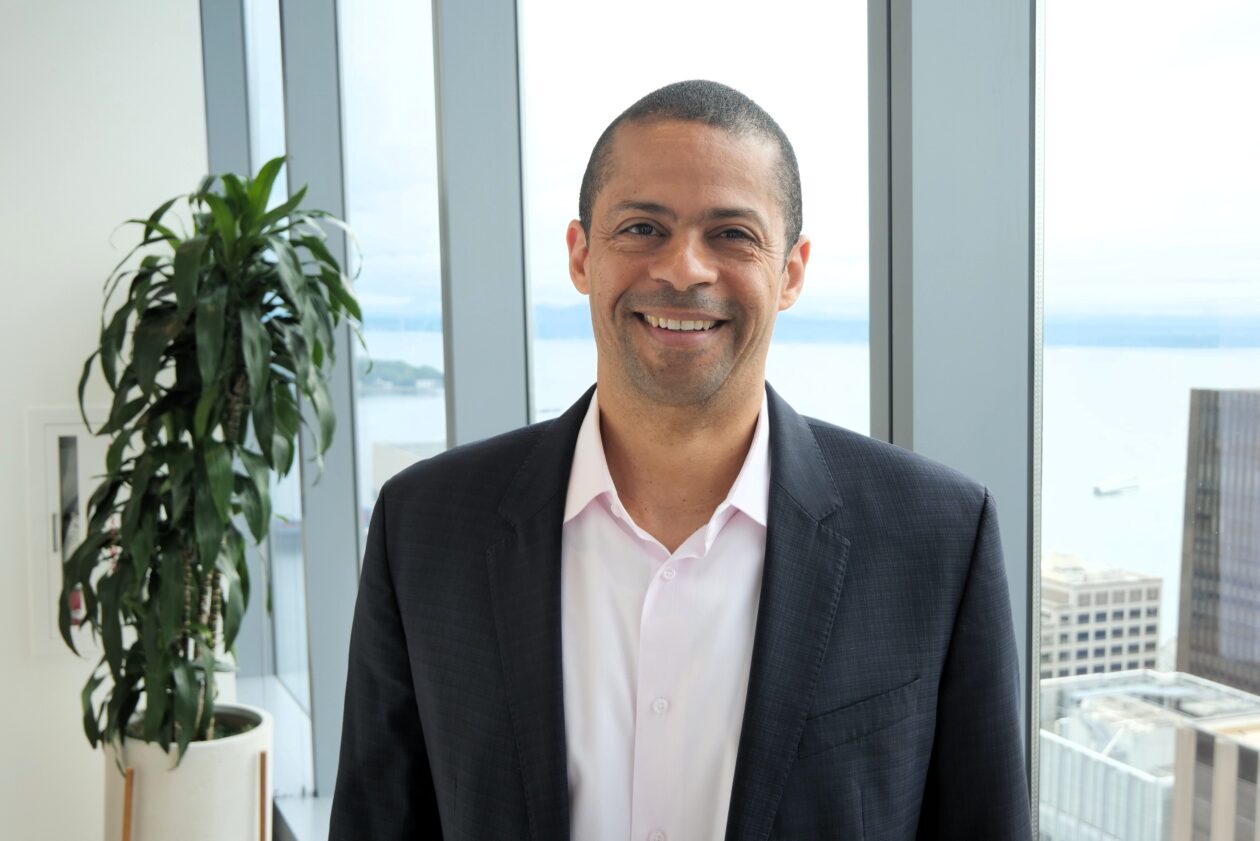
François Locoh-Donou, F5’s chairman, president and CEO, at the company’s headquarters this week. (GeekWire Photo / Todd Bishop)
F5’s acquisition this week of SurePath AI, a startup that detects artificial intelligence on corporate networks, is part of a broader effort by the Seattle company to cement itself in the booming market for securing AI for businesses.
“The more an enterprise adopts AI, the less visibility it has into what AI is crawling in the organization,” said François Locoh-Donou, F5’s chairman, president and CEO, in an interview for this weekend’s GeekWire Podcast, conducted Thursday at the company’s downtown Seattle headquarters.
Denver-based SurePath, founded in 2023 and led by co-founder Casey Bleeker as CEO, had about 19 employees and had raised roughly $6 million in venture funding, according to PitchBook. Financial terms of F5’s acquisition weren’t disclosed.
SurePath monitors a company’s network to identify which AI tools and agents employees are using, including ones the company doesn’t know about, and tracks what they do.
F5 is incorporating SurePath into its broader AI security platform, announced this week, designed to discover the AI models and agents running inside a company, test them for vulnerabilities, and apply guardrails to keep them in check.
Advertisement
Locoh-Donou said customers have been forced to cobble that together from separate products. “Having four, five, six different tools to discover, test and secure your AI is a nightmare,” he said.
Kunal Anand, F5’s chief product officer, compared the problem to an earlier era, when employees adopted cloud software faster than their IT departments could track it. The big difference is that the AI version is moving faster and carries higher stakes.
“Shadow AI is shadow SaaS with a faster clock and a larger blast radius,” he wrote in a blog post.
F5, founded in Seattle in 1996, makes technology for securing and deploying applications across multiple platforms. The publicly traded company reported $3.1 billion in revenue in its most recent fiscal year and marked its 30th anniversary in May.
Advertisement
The SurePath deal is the latest in a string of acquisitions for the company, including its purchase last fall of CalypsoAI, now offered as F5 AI Red Team and F5 AI Guardrails.
Locoh-Donou said the company weighs three things in each acquisition: whether it can build the technology itself fast enough, whether the deal genuinely serves customers, and, above all, whether the team will fit F5’s culture.
“We have encountered companies in the industry that had great technology and brilliant people, but it was very clear to us that they would never be a great fit,” he said. “And so we walked away.”
Locoh-Donou discussed the acquisition, F5’s evolution, the rise of AI, the World Cup in Seattle and other topics in the GeekWire Podcast conversation. Look for the episode this weekend, and subscribe to GeekWire in Apple Podcasts, Spotify, or wherever you listen.
Apple’s long-rumoured OLED iPad mini may finally be moving closer to launch. And we couldn’t be happier.
According to ETNews (via MacRumors), Samsung Display has reportedly started mass production of OLED panels for Apple’s first OLED iPad mini. This means the upgrade is looking more than just an early rumour.
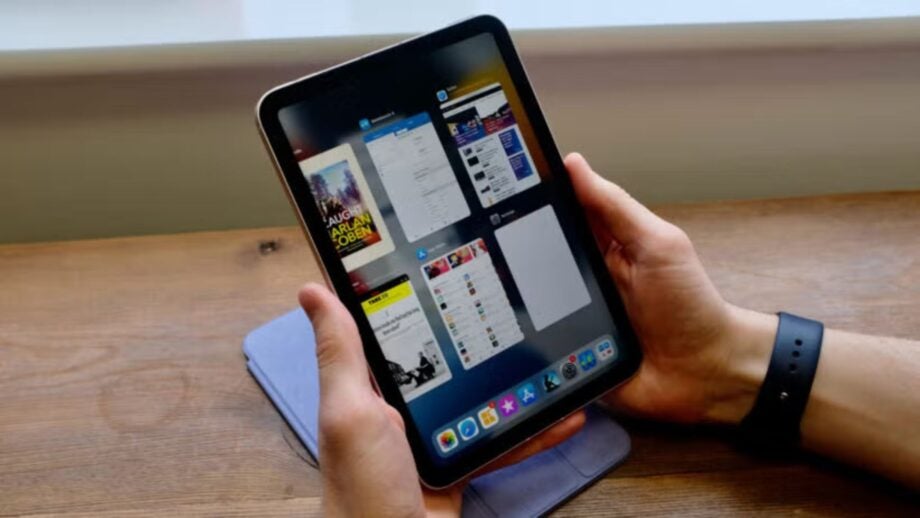
The current iPad Mini 7 still uses LCD tech, so a move to OLED would be a major screen upgrade for Apple’s smallest tablet. OLED should bring deeper blacks, higher contrast, and better power efficiency, which could make the iPad mini much better for watching videos, reading, and gaming. All the best tablets use OLED tech.
The iPad Pro has already shown what OLED can do for Apple’s higher-end devices. Since the 2024 M4 model, the display upgrade has made a real difference to contrast, brightness and overall image quality.
Advertisement
There is still no confirmed release date for the OLED iPad mini, and Apple has not announced the device. However, a late 2026 launch is widely expected, which would line up with the timing of panel production reportedly starting now.
Advertisement
The same ETNews report also claims OLED panel production for the next MacBook Pro is scheduled to begin in July. According to Bloomberg’s Mark Gurman and Apple analyst Ming-Chi Kuo, the OLED MacBook Pro is also expected to be Apple’s first touchscreen Mac.
If accurate, it would mark a major redesign for the MacBook Pro line, with OLED replacing the current mini-LED display and touchscreen support potentially coming to Macs after years of Apple avoiding it.
Advertisement
Samsung Display is said to be the exclusive supplier for the OLED iPad mini, OLED MacBook Pro, and Apple’s rumoured foldable iPhone displays. LG Display is also reportedly supplying OLED panels for some other Apple products launching later this year.
As of now, the OLED iPad mini is still unofficial. But if panel production has really started, Apple’s smallest tablet may be in line for its biggest display upgrade in years.
A major sports piracy ring linked to the illegal PirloTV streaming platform has been disrupted in an action that targeted 44 domains.
PirloTV is a network of websites that aggregate and embed links to unauthorized live sports streams, primarily soccer, replaying feeds from various licensed broadcasters, depending on the event.
The platform, which does not stream content directly, is notorious for its aggressive migration to new domains following takedown actions from authorities.
The Alliance for Creativity and Entertainment (ACE), together with UEFA, UC3, and Mexican authorities, collaborated to shut down the 44 domains that collectively generated more than 950 million visits every year.
“Collectively, the domains targeted in the operation generated more than 950 million visits worldwide each year, including approximately 230 million visits from Mexico alone,” reads the ACE announcement.
Advertisement
“The service primarily targeted viewers throughout Latin America, with particularly strong audiences in Mexico and Colombia, while also attracting significant traffic from markets such as Spain and the United States.”
ACE noted that the action took place ahead of the UEFA Champions League final on May 30.
However, with the FIFA World Cup currently underway, taking down any domains used by the PirloTV network could have a significant impact on the piracy ecosystem in Latin America.
Spanish media report that PirloTV is heavily used by people who want to watch World Cup 2026 matches on mobile phones, where legal access is complicated by the segmentation of broadcasting rights and platform-related access restrictions.
Advertisement
It appears that PirloTV can quickly pivot to new domains, and at the time of writing, there are still domains indexed by public search engines that provide illegal streaming for sports events.
Some of them offer multiple live streams from more than a dozen channels, including ESPN, Fox Sports, TNT Sports, DSports (formerly DirecTV Sports), and TyC Sports.
UEFA became the first holder of sports rights to join ACE in October 2025. Since then, the organizations have worked together to identify operators, map piracy networks, investigate infrastructure, and coordinate with local law enforcement agencies to dismantle backend services.
ACE says the latest action against PirloTV marks its first collaboration with Mexico’s Institute of Industrial Property (IMPI) under a newly signed Memorandum of Understanding aimed at strengthening anti-piracy cooperation.
Advertisement
Security teams log 54% of successful attacks and alert on just 14%. The rest move through your environment unseen.
The Picus whitepaper shows how breach and attack simulation tests your SIEM and EDR rules so threats stop slipping by detection.
OpenAI’s hardware ambitions just got a major boost, and it could be another clue that the company is preparing to take AI beyond smartphones and laptops. Paul Meade, Apple’s longtime engineering leader behind the Vision Pro headset and its upcoming smart glasses efforts, is leaving Cupertino to join OpenAI’s hardware division.
Another Apple hardware veteran joins OpenAI
According to Bloomberg, Meade spent seven years leading hardware engineering for the Vision Pro and also oversaw Apple’s display-free smart glasses project that’s expected to compete with Meta’s Ray-Ban smart glasses. His team was also involved in future augmented reality glasses and several AI-focused wearable projects, making him one of Apple’s most experienced hardware executives in the emerging wearables space.
Digital Trends
At OpenAI, Meade will join an increasingly familiar cast of former Apple executives. He’ll work alongside legendary designer Jony Ive, former Apple design chief Evans Hankey, and former iPhone operations executive Tang Tan, all of whom are now helping build OpenAI’s next generation of AI hardware. That team came together after OpenAI acquired Ive’s startup, io, in a deal worth $6.5 billion, signaling that the company is investing heavily in dedicated AI devices rather than treating ChatGPT as just another app.
Apple
Neither Apple nor OpenAI has revealed exactly what these devices will look like. However, Bloomberg notes that OpenAI is already working on “several new devices” expected to launch over the next few years, while Apple is simultaneously developing smart glasses, AI-enabled AirPods with cameras, tabletop robots, and other AI-centric hardware of its own.
Could ChatGPT hardware be closer than we think?
Let’s be real, Meade’s move doesn’t confirm that OpenAI is building AI glasses, so it’s worth treating the speculation with caution. But hiring the executive who helped lead Apple’s Vision Pro and smart glasses hardware certainly strengthens the theory that OpenAI is assembling the talent needed for wearable AI, especially after bringing Jony Ive and several other former Apple veterans into its hardware team.
Unsplash
The funny thing is that this is starting to feel less like an AI chatbot race and more like a wearables race. Meta already has smart glasses on the market, Apple is reportedly preparing its own, and OpenAI is quietly building an all-star hardware team. Whether that leads to AI glasses, a wearable pendant, or something like an OpenAI ear wearable remains to be seen, but the company’s ambitions clearly extend far beyond ChatGPT on a screen.



















































You must be logged in to post a comment Login