TL;DR
China wants a global AI cooperation org and offers cheap/free models. The G7 is discussing “trusted partner” access to US AI. Two systems are forming.




China wants a global AI cooperation org and offers cheap/free models. The G7 is discussing “trusted partner” access to US AI. Two systems are forming.
China’s top diplomat Wang Yi announced on Wednesday that Beijing is “accelerating the establishment of a global AI cooperation organization” and invited all countries to join. The comments came as the G7 summit in France wrapped up with discussions about giving “trusted partners” access to leading US AI models, according to Reuters. Two competing visions of AI governance are now diverging in public.
Wang was speaking at the release of China’s global governance whitepaper, which criticised trade wars and emphasised support for the Global South. Vice chair Zhao Haibing of China’s top economic agency pushed back on “closed, exclusive and monopolistic approaches to tech development.” The language was aimed directly at Washington.
The timing is deliberate. The US Commerce Department ordered Anthropic to shut down Fable 5 and Mythos 5 last week, cutting off every foreign user. Anthropic and Google DeepMind used the G7 to call for a US-led AI coalition that would set international rules. Canada agreed. China was not invited.

The 💜 of EU tech
The latest rumblings from the EU tech scene, a story from our wise ol’ founder Boris, and some questionable AI art. It’s free, every week, in your inbox. Sign up now!
The contrast in approaches is stark. US AI models are subscription-only and increasingly subject to export controls. China’s efforts have focused on cheap or free models that can be downloaded in their entirety. DeepSeek, Qwen, and other Chinese open-weight models are available to anyone with an internet connection. The Global South, which cannot afford enterprise AI subscriptions and was not consulted on the G7’s “trusted partner” framework, has a clear choice between the two.
China is routing its AI diplomacy through existing multilateral bodies. Wang pointed to cooperation through BRICs and the Shanghai Cooperation Organisation. Zhao cited China’s “AI Capacity Building for All” initiative, support for the UN in leading global AI governance, and programmes to help developing countries with technology and talent.
The US and China said last month they would work on AI guardrails together, but few details have emerged. President Xi Jinping proposed a “Global Governance Initiative” at the SCO last summer. Premier Li Qiang announced the global AI cooperation organisation at a Shanghai conference in July 2025, just days after the Trump administration released its own AI action plan supporting US tech development overseas.
The structural split is now visible. The US is building an alliance of wealthy democracies with controlled access to its most powerful models. China is building data exchanges, exporting governance via the Digital Silk Road, and treating AI distribution as a geopolitical tool. For the 6 billion people who live outside the G7, the question is not which system is better. It is which system shows up first.


Helion Energy announced Tuesday that it’s the first company in the world to receive regulatory licenses for a fusion power facility. The Everett, Wash.-based startup broke ground last year on the planned plant in Central Washington.
The Washington Department of Health (DOH) issued the new permissions, which include a Radioactive Materials License and a Radioactive Air Emissions License. Their issuance indicates Helion has met safety requirements for the plant’s facilities, personnel and safety programs.
Helion worked closely with DOH to secure the licenses, said CEO David Kirtley. Jill Wood, director of DOH’s Office of Radiation, praised the partnership with the company.
“Leading radioactive regulatory oversight for the fusion industry in Washington state is an honor and is essential to protecting public health while advancing clean energy,” Wood added.
Helion is one of more than 40 companies worldwide racing to replicate the reactions that power the sun, aiming to produce clean, abundant energy from fusion on Earth — and it hopes to be the first to succeed. Three years ago, the startup signed a deal with Microsoft to begin supplying electricity by 2028 to power one of the tech company’s data centers.
@media (max-width: 600px) {
aside.callout { float:none !important; max-width:100% !important; margin-left:0 !important; margin-right:0 !important; }
aside.callout .callout-img { display:none !important; }
}
The facilities will sit near each other in Malaga, Wash. Helion’s Orion plant aims to produce 50 megawatts of power. The company recently raised $463 million in new funding, bringing its total investments to $1.5 billion.
So far, no company or academic effort has produced commercially viable amounts of energy from fusion compared to what it takes to power the overall system, though both have notched important milestones toward that goal. Skeptics believe it will take many years before anyone cracks fusion power, and some wonder whether the energy source will ever be cost-competitive.
Even so, the sector and its regulations keep evolving in hopes that someone hits the fusion target. The U.S. Nuclear Regulatory Commission determined in 2023 that fusion technology is more akin to particle accelerators and hospital equipment than to traditional nuclear fission reactors, and decided it should be regulated by DOH rather than treated like a fission plant.
Washington state lawmakers also passed House Bill 1924 and House Bill 1018 to further clarify fusion’s status as a clean energy source and to establish permitting rules.
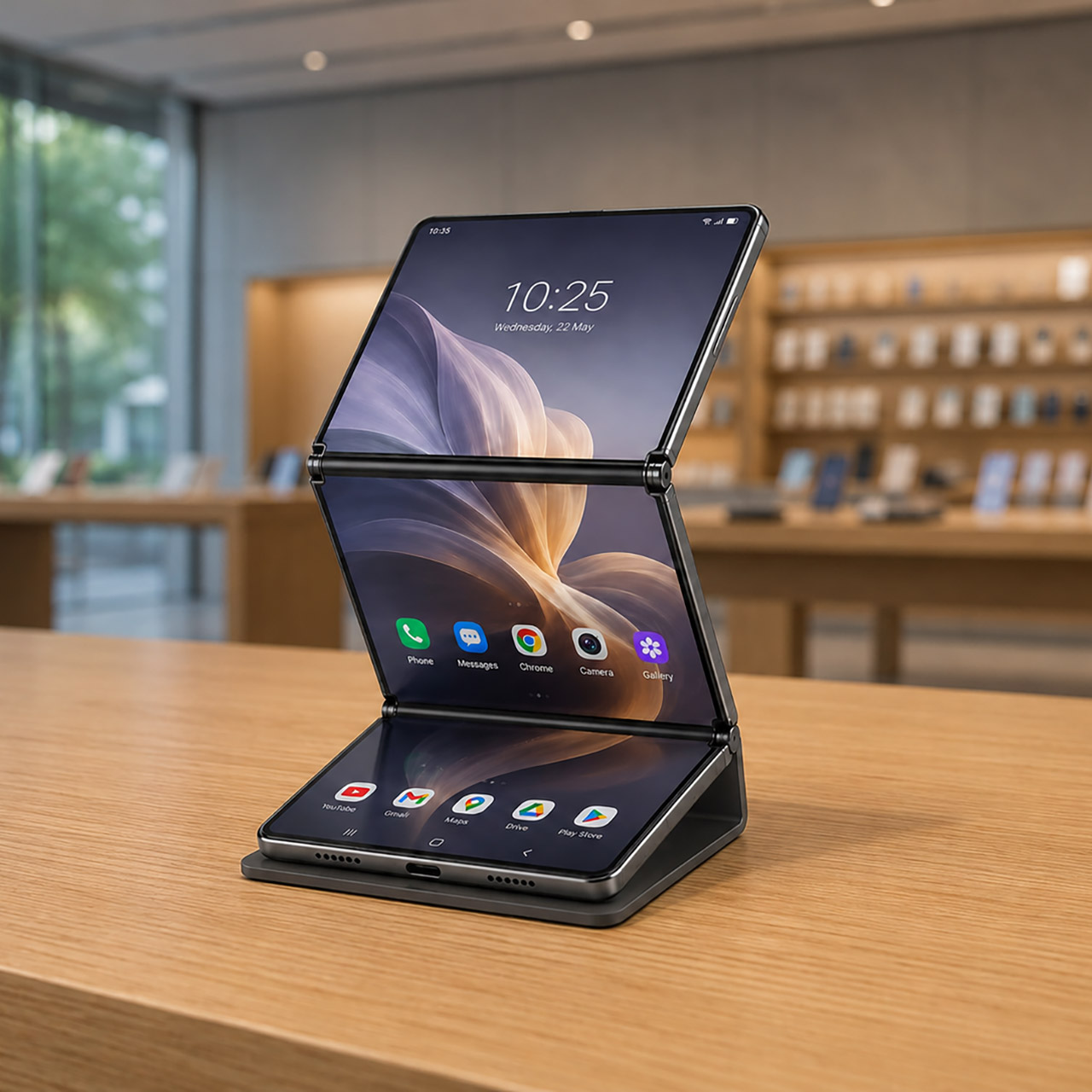
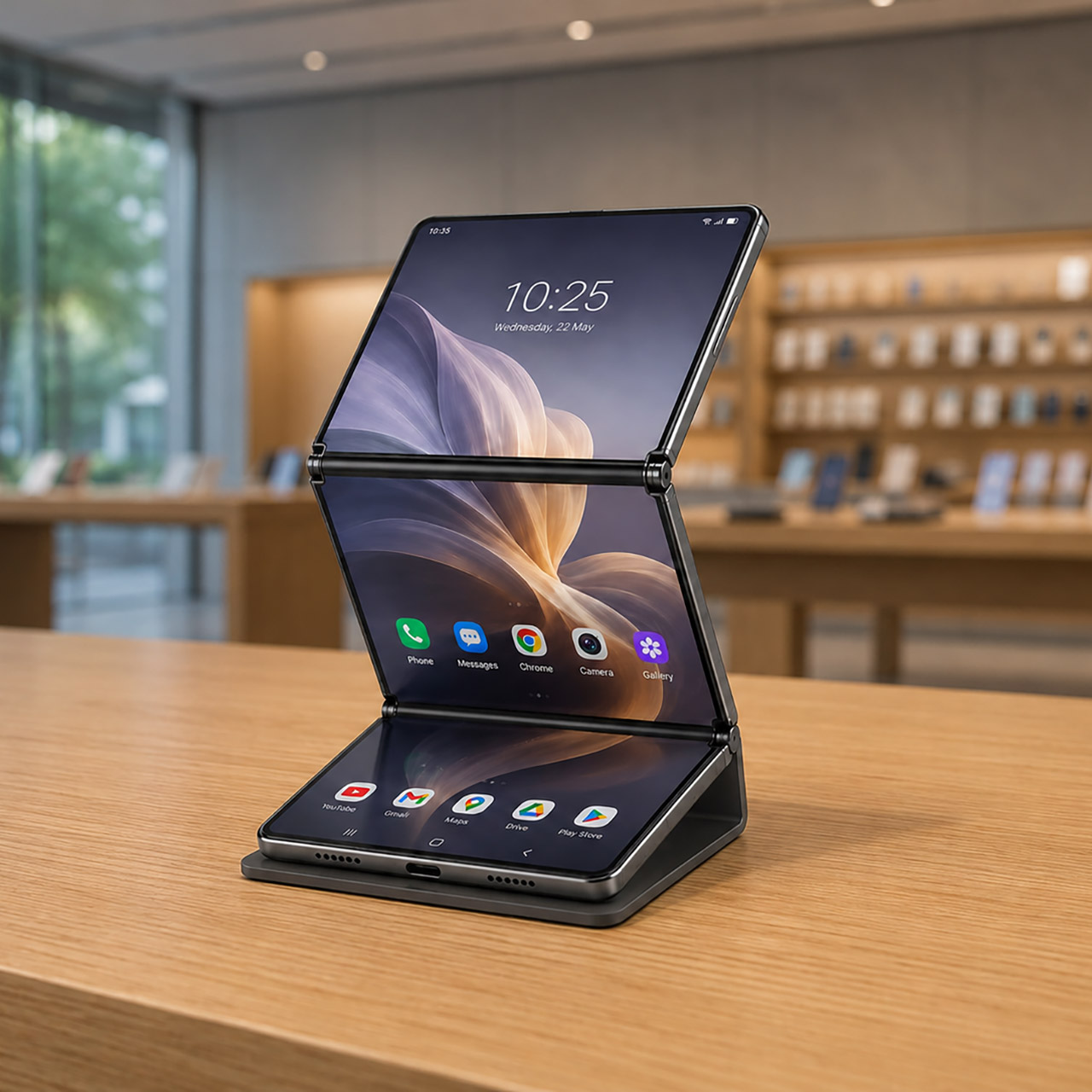
Photo credit: NotebookCheck
Recent patent documents from Huawei describe a vertical tri-fold smartphone built around three connected segments and two opposing hinges. The design draws clear inspiration from clamshell flip phones like the Galaxy Z Flip while adding an extra fold for more screen area.

Photo credit: Post Fast
Two hinges hold the panels together and allow them to fold in opposite directions. This results in a true Z-shape when you finally close the device completely. The flexible display extends across all three areas. When it’s closed, the phone’s thickness triples, yet it still manages to remain relatively small, with a footprint around the same size as a conventional smartphone or cigarette pack.
Sale

The patent drawings are noteworthy because they immediately reveal a practical detail. Even when the phone is fully closed, a portion of the screen remains visible on the outside surface. Users can check messages, change the music, and complete simple activities without having to open anything. This design essentially eliminates the requirement for a small external display on most flip-style phones.

Each portion serves a specific purpose; the top panel holds the main back camera system, while the middle section houses the main processor, battery components, and all connectivity points. The bottom panel keeps everything balanced and simply extends the screen real estate a little. Despite the thin stacking appearance, specific structural layers and shielding are used around the antennas to prevent signal interference.
When you first open the phone partially, you get this intermediate tall screen, and when you fully extend it, the display simply spreads out into a long, tall rectangle. Which, to be honest, is ideal for portrait material; no need to maintain zooming or sideways scrolling through social media feeds, articles, and videos in their natural orientation. You also have numerous folding positions, so you can select the screen height you require based on the situation.
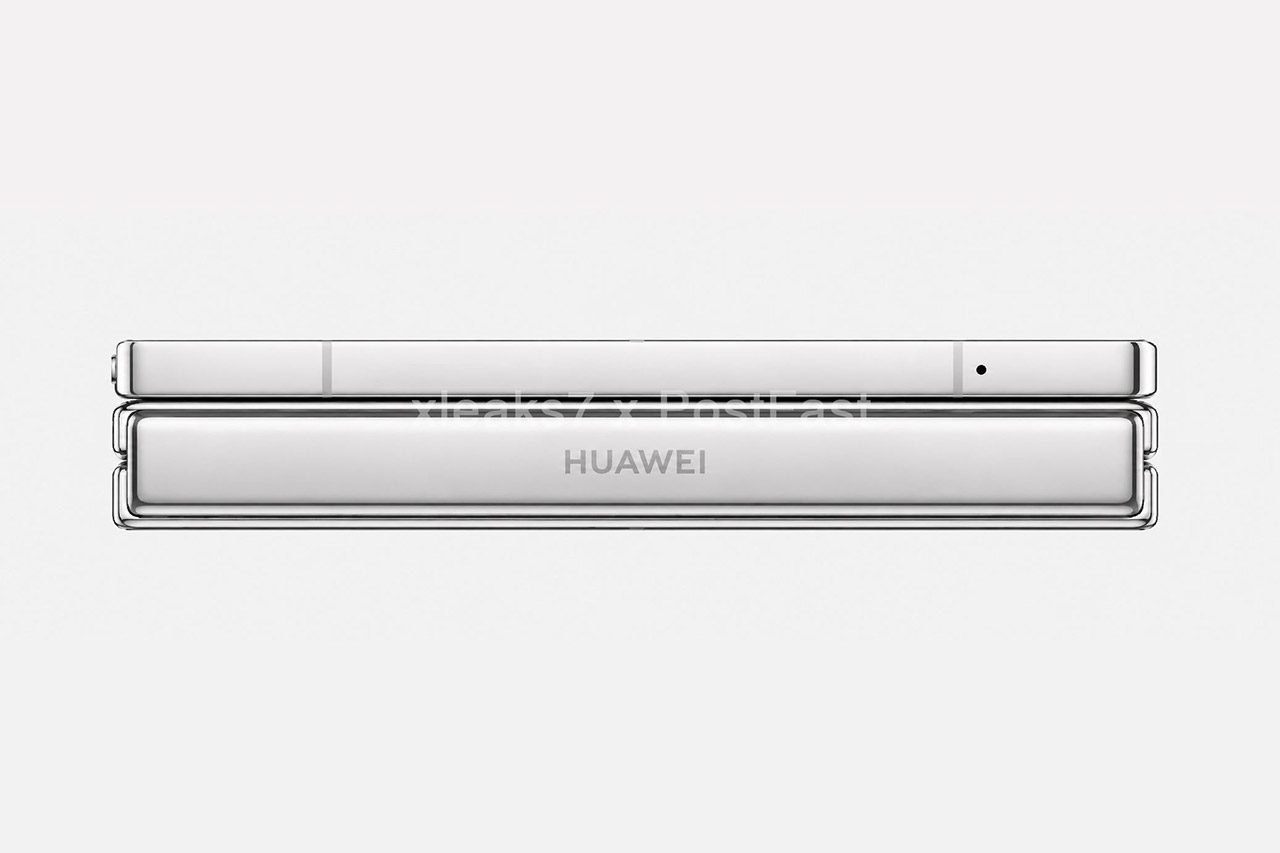
In comparison to Huawei’s own Mate XT, this proposal keeps the closed shape much thinner and more pocket-friendly. The Mate XT opens up into a large, tablet-like surface that some owners found difficult to carry around on a daily basis. Meanwhile, this vertical variant maintains the classic one-handed grip when closed while providing extra screen space when needed.
These phones take a different strategy than single-fold flip phones, which typically stop at one hinge and have only one extra screen size. Here’s a third panel that provides some height without demanding the broad stance of a book-style folding. What you get is a compromise between being able to take this device with you every day and occasionally having a large screen to use.

The HarmonyOS system would handle all transitions between these stages, scaling programs as available height changes. However, developers will most likely need some modifications to ensure that their interfaces reflow properly across multiple aspect ratios. Early Mate XT software demonstrated how multi-state foldables require special care and attention on both the platform and app sides.
For the time being, the patent is all that exists; there is no launch date or product name (yet). However, it does indicate that Huawei is still experimenting with novel form factors that differ from those of its competitors. Meanwhile, everyone is waiting for Apple’s predicted foldable release later this year, which will include a horizontal configuration. So this patent refers to Huawei’s continuing vertical experiments that attempt to address certain common pain points that other phones tend to overlook.
[Source]
HP laptops are generally seen as a great mix of affordability and reliability, but even the best major PC brand in terms of customer satisfaction can run into problems from time to time. Some problems are more common in certain HP laptop lineups, such as Pavilion and Envy models, due to their design or the suite of manufacturer-included software.
If you’ve noticed your HP laptop overheating or rapidly declining in performance as you use it more, you’re not alone. Similarly, if you’ve experienced spontaneous audio issues – especially after a Windows update – you may have a model that uses Bang & Olufsen and/or Realtek audio drivers, which can cause a known issue for some HP laptops.
Other issues reported on support forums, reviews, and repair shops stem from bloatware and mechanical malfunctions, but where there are common problems, there are solutions. Knowing about these common pain points can help you diagnose and troubleshoot the issues, getting your laptop back in working shape in less time.
Certain HP laptop models, namely the Pavilion and Pavilion Gaming lineup, push quite a bit of heat through their thin frames. Depending on the amount of stress you’re putting on the system, it can overheat, triggering the fans to run at a higher setting and leading to slower performance.
You can check your device’s temperature using a tool like Open Hardware Monitor to gauge how hot it’s running and compare it to the temperature range listed in your laptop’s manual or on the manufacturer’s site for the individual part. First things first: make sure you don’t have a case on the laptop that’s blocking its airflow, or that you’re not using it in a particularly hot, sunny area. If neither of those applies to you, it’s likely because of a stressful workload or dust buildup in the fans.
To check how many resources your PC is using at a given time, open the Task Manager by right-clicking on the taskbar and selecting Task Manager (or pressing Ctrl + Alt + Del and clicking Task Manager). Then, click on the CPU or Memory column headers to sort the currently running programs by most usage. Check the top programs — do you recognize all of them? If not, there are apps or processes running in the background (or that you’ve forgotten to close) that are consuming resources and generating more heat. Verify that the app or process is not a vital Windows application (a quick Google search of the process name will usually identify it), and if it’s not, close it down. Then, look to uninstall the application to prevent further background usage. Not only will this reduce system heat, but it will also go hand in hand with fixing long startup times.
If you notice your HP laptop is particularly slow to boot after a restart, there’s a good chance bloatware is to blame. Bloatware is any software on your laptop or PC that you didn’t intend to install — and it doesn’t have to come from malware or shady websites. Many manufacturers of the best laptops you can buy, HP included, install certain suites of apps and processes onto laptops to improve the user experience and offer more features. But in many cases, and especially on budget laptops with less memory, these manufacturer-installed apps do more harm than good.
To remove bloatware from Windows 11, open the Windows search bar located on your taskbar and type “Add or remove programs,” then click on the Settings result. Once the Settings page opens, sort through the apps and remove anything you don’t recognize or want, keeping in mind that some apps and processes, such as Microsoft Windows Desktop Runtime, are important to your operating system’s functionality. So if you’re unsure whether an application is important, do a quick online search to verify.
And to aid in a faster startup time, go back to the Windows search bar on the taskbar and search for Startup Apps. This Settings page shows you all of the apps that start up immediately upon restarting your laptop. If you notice anything you don’t recognize, toggle it off to improve your laptop’s responsiveness on startup.
Batteries that don’t charge to 100% and “Plugged in, not charging” messages are among the most common complaints on community forums about HP laptops. In many cases, this is due to HP’s battery optimization software — Battery Health Manager and Intelligent Charging — which may intentionally cap charging at 80% to preserve battery health longer. If you have a ProBook, EliteBook, or ZBook, this feature is likely the culprit.
If your laptop still has some battery life left, try restarting it first. Power cycling your laptop can often fix small, one-off bugs. If you have multiple HP chargers, try using another one to test if the power adapter is the problem. If neither charger works, it’s likely an issue with the charging port or the laptop’s battery.
Inspect your laptop’s charging port with a flashlight for signs of wear and tear. Another sign of charging port damage is if your charging cable sits loosely inside the port and doesn’t connect firmly. If nothing is stuck inside the port and there’s no visual damage, your laptop’s battery may be the issue. Many HP laptops come with a hardware diagnostics tool called HP PC Hardware Diagnostics for Windows, which can help you evaluate your laptop’s battery condition. If the laptop is completely dead and won’t charge, you’ll likely have to send it or take it to a repair shop.
Hinges on the HP Envy and Pavilion laptops have been known to break after only a few years of light use. The problem usually starts with a subtle “click” or “crack” sound when opening the lid. Over time, you may notice that one side of the display feels stiffer than the other, the bezel starts separating from the screen, and the laptop doesn’t open as easily as it used to. These are precursors to a full-blown hinge failure, so if you notice these signs early, you may want to take the laptop into a repair shop to get it checked out and avoid opening and closing the lid to reduce further stress on the joint.
Interestingly, the hinge itself isn’t always the part that fails. Many repair reports blame broken plastic mounting brackets that connect the hinge to the laptop’s frame. Opening and closing the laptop’s lid places stress on these mounting brackets over time, which can eventually cause them to crack and break away from the chassis.
Most of the time, your only solution is to take the laptop to a repair shop or replace it entirely.
HP laptop models like the Spectre x360, HP Envy, Omen, and Victus lineups come out of the box with Bang & Olufsen (B&O) audio drivers as well as Realtek drivers, which are meant to provide enhanced audio and sound control. And in most cases, they work perfectly well. But in other cases, particularly after Windows or BIOS updates, these drivers have been known to malfunction, causing crackling, popping, distorted, and intermittent audio.
To make sure your drivers are up to date, open the Windows search bar on your taskbar and search for Device Manager. With this page open, locate the Audio Processing Objects (APOs) (or “Sound, video and game controllers”) dropdown, right-click each driver, and select Update driver. Then choose Search automatically for drivers to check for updates.
If all of your drivers are up to date, there are still a few things you can try. Reinstalling the Realtek audio driver, updating the BIOS, disabling audio enhancements, and reinstalling HP’s audio control software are all potential fixes.
We identified these HP laptop problems by searching community forum posts, HP troubleshooting pages, manufacturer documentation, and product reviews to find the most common pain points.
Complaints that appeared across multiple laptop families, rather than issues affecting a single device, such as those typically found in HP Pavilion and Envy models, received primary consideration. Solutions to the problems were researched on consumer tech repair websites and HP’s official support site, as well as pulled from expert background knowledge.
To qualify for a spot on the list, the problem had to stem from multiple user complaints or troubleshooting procedures across several sources. Issues common to all laptops, such as aging batteries or accidental damage, were omitted unless HP-specific software, design, or hardware contributed to the problem.
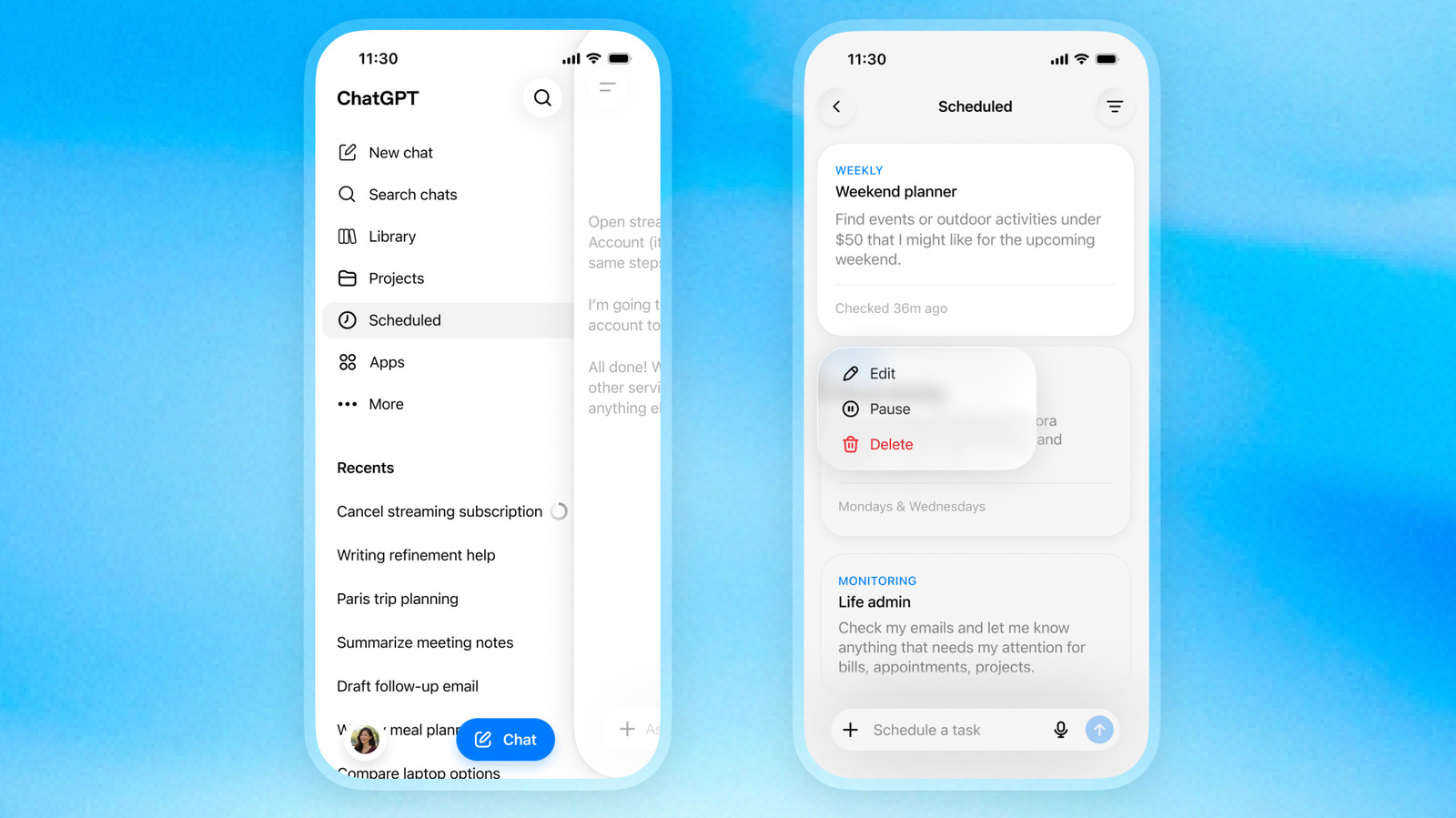
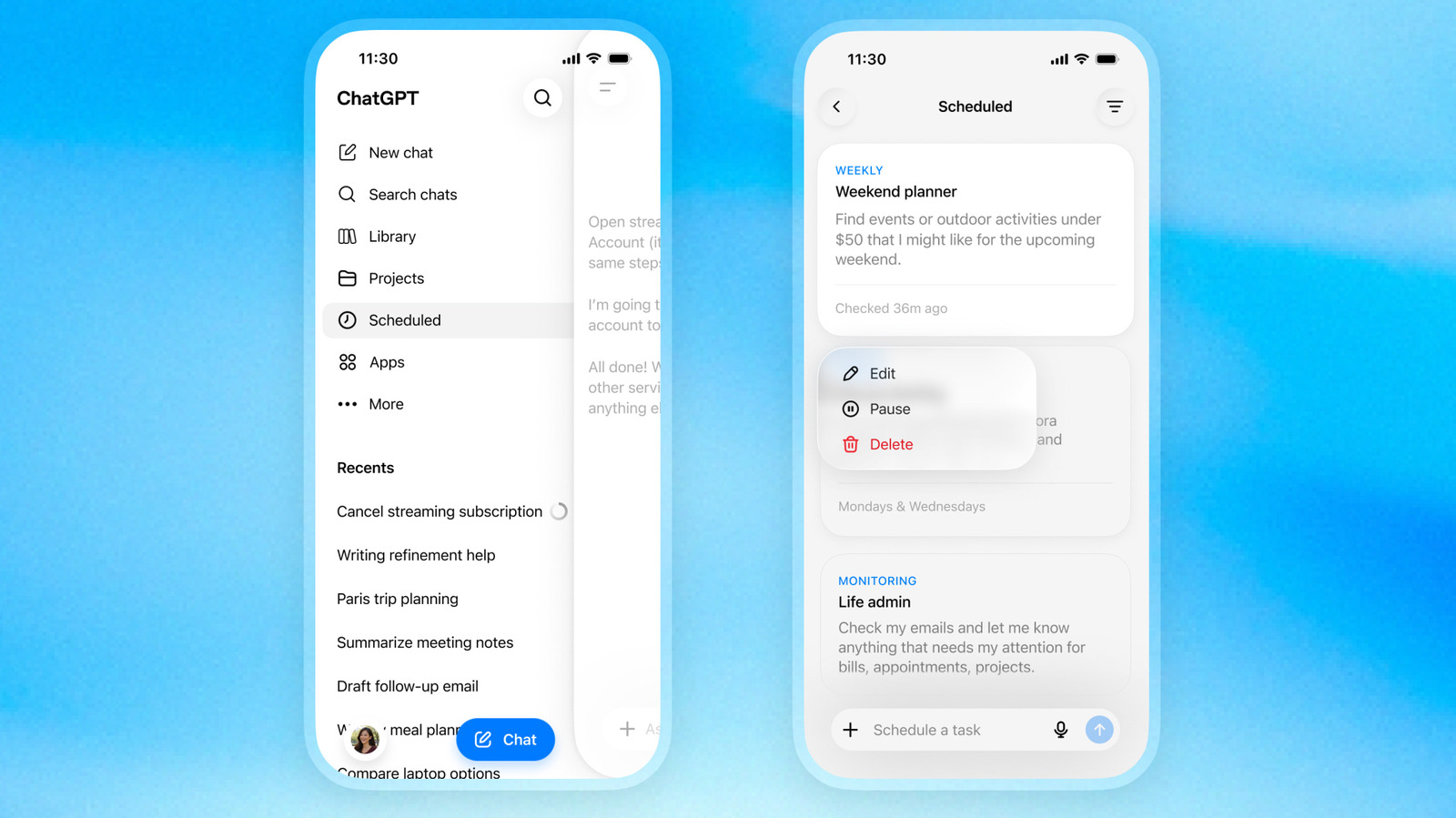
Did you know you could schedule tasks in ChatGPT? I’ll be honest, I never thought to ask OpenAI’s chatbot to do something in the future, and it seems like a lot of you didn’t either, because the company has begun rolling out an update that better highlights ChatGPT’s ability to do just that.
The next time you open ChatGPT’s sidebar, you’ll see a shortcut to a new Scheduled page that gives you a place to see any active tasks you might have assigned to ChatGPT, including when they’re set to run. From this page, you can also pause, edit and delete any upcoming requests. At the same time, OpenAI has made ChatGPT’s ability to handle scheduled prompts more robust, stating “all tasks are faster and more reliable.” What’s more, when you ask the chatbot to do something in the future, you can either tell it to complete that task at a specific time or sometime during a broader timeframe, such as the morning, afternoon or evening.
New in ChatGPT: a better way to schedule tasks.
Scheduled tasks are faster, more reliable, and easier to manage from the new Scheduled page.
The new scheduled tasks experience is rolling out to Go, Plus, Pro, Business, and Enterprise users on web and mobile. pic.twitter.com/YC7JON6Hxn
— ChatGPT (@ChatGPTapp) June 17, 2026
As you can see from the video OpenAI shared, it’s also possible to set up monitoring tasks, which will see ChatGPT proactively search the web or your connected apps on your behalf. OpenAI is rolling out Scheduled tasks to Plus, Pro, Business and Enterprise customers. No word yet on when the Free tier might get access. With today’s update, OpenAI is also sunsetting Pulse, the personalized daily summaries the company began offering last year. Pro users can continue using the feature for the next 14 days. After that point, you can use the new scheduling hub to generate future summaries.

Looking for the most recent Mini Crossword answer? Click here for today’s Mini Crossword hints, as well as our daily answers and hints for The New York Times Wordle, Strands, Connections and Connections: Sports Edition puzzles.
Need some help with today’s Mini Crossword? It’s a pretty easy one today, but read on for all the answers. And if you could use some hints and guidance for daily solving, check out our Mini Crossword tips.
If you’re looking for today’s Wordle, Connections, Connections: Sports Edition and Strands answers, you can visit CNET’s NYT puzzle hints page.
Read more: Tips and Tricks for Solving The New York Times Mini Crossword
Let’s get to those Mini Crossword clues and answers.
The completed NYT Mini Crossword puzzle for June 18, 2026.
1A clue: Pop music’s ___ Bunny
Answer: BAD
4A clue: Unaccompanied
Answer: ALONE
7A clue: Date circled in blue on a Google Calendar
Answer: TODAY
8A clue: Kitchen appliance with burners
Answer: STOVE
9A clue: The “S” of GPS: Abbr.
Answer: SYS
1D clue: Takes a turn at the plate
Answer: BATS
2D clue: Tons and tons
Answer: ALOT
3D clue: Extinct flightless pigeons (don’t worry, you’ve heard of this answer!)
Answer: DODOS
5D clue: Dark shade of blue
Answer: NAVY
6D clue: Googly ___
Answer: EYES

TL;DR: The Stop Killing Games initiative has spent two years pushing legislators across multiple countries to consider laws that would prevent publishers from rendering full-priced games unplayable. After the European Commission declined the group’s core demand following a closed-door industry meeting, SKG says other avenues remain open.
The European Commission has rejected a petition bearing 1,294,188 verified signatures to propose legislation against making end-of-life premium games permanently unplayable.
The decision is a significant setback for Stop Killing Games, which formally submitted its European Citizens’ Initiative – titled “Stop Destroying Videogames” – to the Commission in January, but the group says it will pursue other routes to strengthen consumer protections in the games industry.
SKG emerged after Ubisoft deactivated the servers for The Crew, leaving the game unplayable for the 12 million players who had accessed it, including some who bought physical copies shortly before they became useless. Ubisoft is currently facing legal action over the shutdown in both California and France.
– Stop Killing Games Official (@StopKilingGames) June 16, 2026
In response to the shutdown, the consumer initiative gathered over 1.3 million verified signatures from European citizens, obligating the Commission to formally consider complaints about planned obsolescence in video games. Lobbying group Video Games Europe, alongside Ubisoft, has strongly opposed SKG, fueling a broader debate over whether a game purchase conveys a product or merely a license to access a service.
Ubisoft, VGE, and the Entertainment Software Association argue that developers should not be required to maintain servers indefinitely and that customers purchase only licenses. SKG accuses the industry of misrepresenting its goal, saying it is only demanding full-priced games remain playable in some form, be it offline modes or privately hosted servers. Furthermore, while Ubisoft believes gamers should “get used to not owning games,” the initiative argues that the debate actually hinges on how long someone who buys a license can expect to retain access.
Despite outspoken support from multiple European politicians, the Commission announced that it would not propose new laws at this time. SKG and other observers noted that Ubisoft and VGE met with the Commission behind closed doors two weeks before the ruling, raising questions about whether industry lobbying shaped the outcome.
– Stop Killing Games Official (@StopKilingGames) June 17, 2026
In its official response, the Commission said it could not propose laws to keep games playable after they are pulled from sale – something SKG says it never demanded – citing existing intellectual property rights, publisher costs, and potential cybersecurity concerns.
Instead, the Commission plans to convene industry and consumer representatives to work toward a voluntary, non-binding code of conduct for end-of-life products by the end of 2026. Possible measures include warnings on store pages for games requiring internet connections and engagement with preservation groups.
SKG remains undeterred. In a press conference, the group explained that it has other paths to appeal to the European Parliament. Some have suggested amending the Digital Fairness Act, a package of consumer protection laws that the EU is currently discussing. It already includes rules against dark patterns, addictive design, misleading pricing, and hard-to-cancel subscriptions.
Meanwhile, in the US, SKG is backing California’s Protect Our Games Act, which has already passed the state Assembly and now heads to the Senate. The bill would require publishers to give 60 days’ notice before shutting down an online game and to either keep it playable through an offline mode or community server support, or issue a full refund.

Is video-game industry leader Gabe Newell getting ready to vacate the Seattle area for sunny South Florida like some of his billionaire contemporaries? Reports of a luxury property purchase raise the question.
According to The Wall Street Journal, Newell, CEO and co-founder of Valve Corp., is the buyer of a $70.8 million waterfront estate in Manalapan, Fla., north of Miami. The newspaper this week cited people familiar with the transaction.
Sellers Cindy and Ron McMackin paid roughly $39 million for the 2.06-acre property in 2020, and listed it for $85 million in December, according to the WSJ. The couple, founders of the mechanical subcontracting company Pan-Pacific Mechanical, declined to comment on the buyer’s identity.
The estate is featured in a 2020 YouTube video from Premier Estate Properties, above, and among its features is a tunnel that connects the house with the ocean. It has a roughly 20,000-square-foot residence, an outdoor pool, a dock and a boat lift, the WSJ reported.

Newell, 63, has led Bellevue, Wash.-based Valve since co-founding the video game company in 1996 alongside former Microsoft colleague Mike Harrington. Newell spent 13 years at Microsoft and is credited with helping to build the first three versions of Windows before he left.
Valve is known for creating the PC gaming platform Steam, and its game franchises include “Half-Life” and “Portal,” among others.
With a net worth of $11 billion, Newell is No. 293 on Forbes’ list of the richest people in the world.
A move to Miami would put Newell in the same company as Amazon founder Jeff Bezos, who announced his move from Seattle in an Instagram message in November 2023. Former Starbucks CEO Howard Schultz also recently announced on LinkedIn a Miami move, and then last month wrote a critical op-ed in The Wall Street Journal blasting Seattle’s anti-business climate and Mayor Katie Wilson.
Seattle entrepreneur Rich Barton, co-founder of Zillow Group and Expedia Group, cited personal reasons for his recent move to Las Vegas.
All of those relocations come amid an increasingly heated debate over taxes in Washington state, where lawmakers have expanded taxes on wealthy residents while some business leaders warn that the policies could drive entrepreneurs elsewhere.
Even though Newell’s move out of the region isn’t confirmed, Bellevue commercial real estate developer Kevin Wallace was already lamenting the loss of another Washington billionaire. In a post on LinkedIn, Wallace shared a chart tracking the state’s billionaire “flight log” — listing the state’s richest people and whether they are still residents.
“Assuming Newell changes his domicile, that’s $15,000,000,000 in wealth headed for states with no income, capital gains or estate taxes, and it’s only been 96 days since the income tax bill passed,” Wallace wrote. “This is going to leave a mark.”

An anonymous reader quotes a report from Ars Technica: Tesco, a retail conglomerate headquartered in the United Kingdom, is moving 40,000 server workloads off of VMware amid “abusive conduct” from Broadcom, recent legal filings claim. Tesco filed a lawsuit in the UK’s High Court against Broadcom alleging breach of contract last year. According to a September report from The Register, the lawsuit claimed that in January 2021, Tesco bought perpetual licenses for VMware’s vSphere Foundation and Cloud Foundation, a subscription to VMware Tanzu, plus support services until 2026, with the option to extend support for four additional years.
But when Broadcom took over VMware in November 2023, it would not honor the deal and instead tried to get Tesco to pay “excessive and inflated prices for virtualization software for which Tesco has already paid” and would not allow it to buy support services for its perpetually licensed software without buying “duplicative subscription-based licenses for those same Software products,” the initial complaint read, The Register reported at the time. Tesco, which reported 73.7 billion pounds (about $98.7 billion) in revenue in its fiscal year 2026, has since started migrating away from VMware and Broadcom’s mainframe products, according to late-May court filings reported on by The Register today.
In January, Broadcom stopped supporting Tesco’s VMware products, Tesco said, and Tesco has been paying for third-party support since. In its initial filing, Tesco also said that Broadcom refused to upgrade software or provide all security updates to customers without subscriptions. One of Tesco’s recent filings, per The Register, reads: “Faced with Broadcom’s abusive conduct, and given the criticality of virtualization and mainframe software and services to its business, Tesco has been forced to incur material costs to procure alternative solutions with reduced functionality, and to migrate to that software in a manner, and on a timeframe, that creates very significant risks to its business.”
If it works “at exceptional pace,” Tesco will be completely off VMware by the end of 2027 at the earliest. However, “the timeframe in which that migration must be undertaken has created and continues to create operational and commercial risk, and at material ongoing cost and disruption to the business,” Tesco reportedly noted. Tesco is also dealing with migration challenges related to data security because its new, unnamed virtualization software is incompatible with the Veeam and Zerto products it uses. Tesco initially requested at least 100 million pounds (about $133.6 million) in damages each from Broadcom, VMware, and reseller Computacenter, plus interest. In its recent filings, Tesco said it turned down at least four offers from Broadcom to continue using VMware and Broadcom’s mainframe tech. […] The case is expected to go to court between November 1, 2027, and February 25, 2028, The Register reported. Afterward, it could go to trial. Further reading: HPE Tempts VMware Users, Partners With Year of Free Virtualization Software

When the superhero adventure game Dispatch made its way to the Nintendo Switch and Switch 2 in January, gamers noticed that the game was censored as black bars covered up partially nude bodies and obscene gestures. Developed AdHoc Studio said it was working with Nintendo to resolve these issues, and it looks like a new update will bring back all the censored content if players want it.
The HR Violations Pack for Dispatch went live Wednesday and with it a visual filters setting to change the censorship in the game. Players can now decide if they want to remove the black bars from the Switch 2 version or add them to versions on other platforms, but depending on the region, their choices can be limited.
For Switch players in North America, Europe, Australia and New Zealand, they will have access to full or partial coverage of characters’ bodies, while players in Japan, Taiwan, Hong Kong, Korea and Southeast Asia will have full coverage only. There are different options for coverage from the standard blackout bars, a mosaic effect or what the developer calls a Chaotic style that will offer more creativity with the censorship, such as one character’s naked private parts being covered up by a pair of jean shorts. Only the Japan region limits censorship in the game to blackout bars.
An example of the mosaic effect to cover up an obscene gesture.
“We’ve confirmed that Switch players can now see all the breasts, butts and birds (AKA, obscene gestures) they want in North America, Europe, Australia, and New Zealand,” Nick Herman, co-founder of AdHoc Studio, said in a Discord message on Wednesday.
The studio didn’t provide much of an explanation in January as to why the game was so heavily censored, but Herman cleared things up in his message on Discord, saying that when nearing the launch day of the game on Switch 2, the team learned that the game would need some censoring for certain regions. Without time to make all the changes needed for the different regions, AdHoc Studios decided to have all versions use the most restrictive settings, which appear to be for Japan, according to the previously mentioned region options.
Dispatch is AdHoc Studios’ debut game, and it received praise for its story and characters, voiced by Aaron Paul and Jeffrey Wright. Last year, it was named one of CNET’s Favorite Games of 2025.
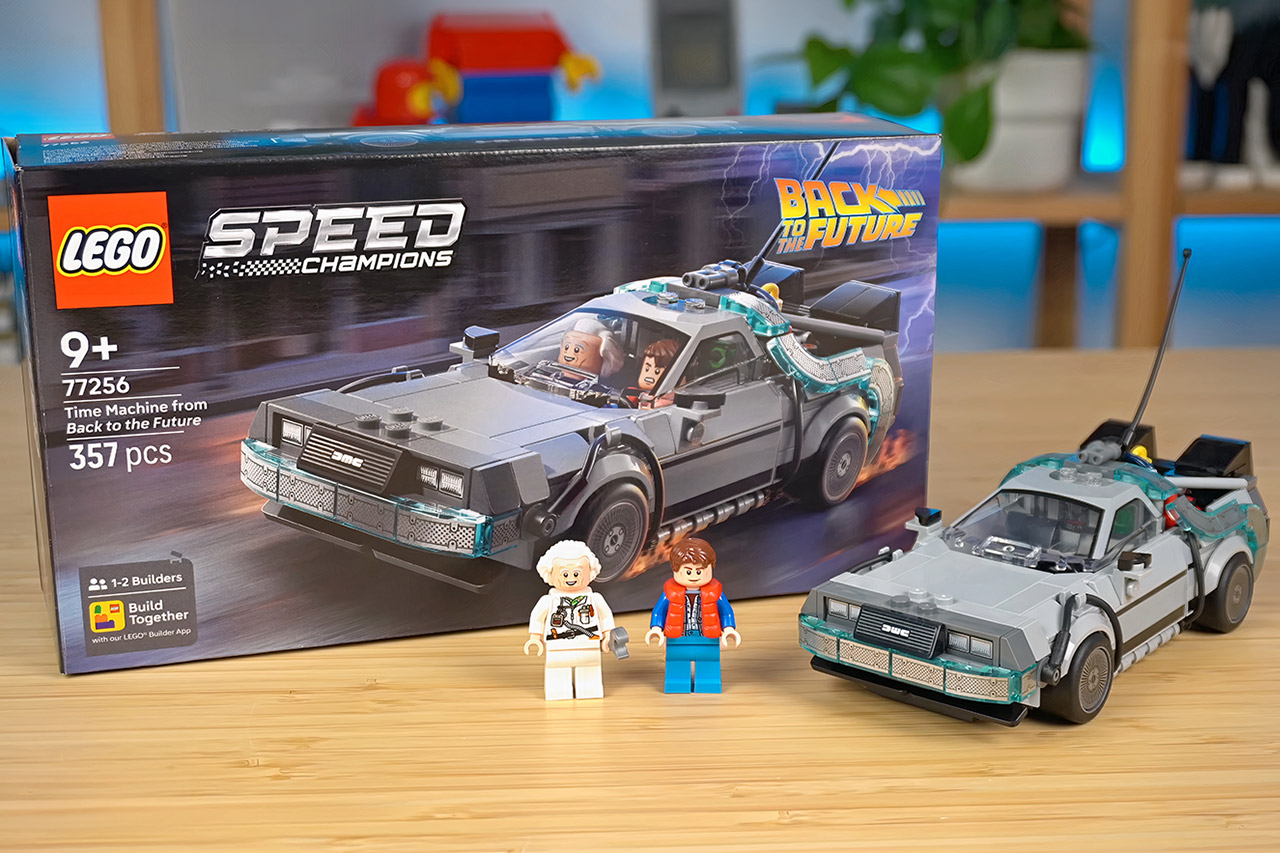
Builders who pick up set 77256, priced at $22.39 (was $28), get a compact LEGO Speed Champions model that covers key looks from the first two Back to the Future films without needing extra purchases. The 357-piece count keeps the finished car at roughly six and a half inches long, a scale that sits comfortably alongside other vehicles in the same line for display or light play.
“>One of the notable features is the rebuild option. The instructions lead you through an initial version that looks exactly like the DeLorean from the original film, replete with a California plate on the back and the iconic tall lightning rod. Swap a few sections around and you’ll have the sequel’s DeLorean, complete with the Mr. Fusion unit strapped to the back, wheels angled out to give the impression of hover mode, and, of course, all the details you’d expect, such as the rear vents, the flux capacitor visible under the hood, and the time calculator display in the cabin.

Transparent details and printed tiles make movie-specific elements stand out, even on a small scale. The interior work in the cockpit section is excellent, with enough space for the supplied minifigures to sit comfortably. If you prefer getting up close and personal with the model, you’ll appreciate the degree of detailing on all of the body panels, as well as the way the little light-up accents capture the eye when the model is displayed on a shelf.
This set features new prints of Doc Brown and Marty McFly, both of which are amazing (to fans of the film series). Doc wears a little clock around his neck that is set to the precise time as shown in the movie’s clock tower scene, and Marty wears a puffy jacket that can be removed to expose his shirt patterns and a few smaller elements underneath. Both figures have a variety of expressions to choose from, and they fit nicely inside the DeLorean for role-playing or simply decoration.

The build is ideal for children aged nine and up, but there’s plenty to keep even older fans amused. The digital instructions on the LEGO app are a godsend since they allow you to zoom in, rotate the model, track your progress, and do other things that would be difficult to do with a large print guide. Once completed, the model feels worthy of exhibition, but it’s not so large that it can’t fit into a small place if necessary.





No Jackpot Winner as $257 Million Prize Rolls Over to $269 Million Monday Draw


Weekend Open Thread: Tuckernuck – Corporette.com


Oppenheimer backs SpaceX as $70 billion retail frenzy builds


Markets Rally as SpaceX IPO Looms Amid Iran Tensions and Inflation Surge

Zimbabwe Requires Crypto Businesses to Register Annually Under New FIU Regulations


NanoClaw integrates JFrog registries to secure AI agent downloads


Bitget enters Argentina’s regulated crypto market through PSAV registration


This Week In Security: Microsoft On Microsoft, Register Your Domains, Linux On ARM, And FreeBSD Joins The File Cache Club


El Nino has formed in the Pacific and could set records, forecasters say

Dutton Ranch star claims they ‘didn’t see any disruption’ on set following Chad Feehan’s exit from Yellowstone spinoff fueled by Taylor Sheridan clash rumors


Politics Home | Healey Resignation Is “Colossal Failure Of Government”, Says Former Labour Defence Secretary

Donnie Wahlberg & More Heat Up Las Vegas at Circa’s Barry’s Downtown Prime

Opendoor Ends India Operations, Fueling a Bigger Conversation About AI and Outsourcing


First Time Since 1971: Australia Register Historic Low In ODI Cricket


Belfast burns, while Met chief points finger at Iran and Russia


FBI searches office of Ohio voter registration group


AT&T: Verizon's 27% Outperformance Sets Up A Solid Entry Point

Anthropic is spending $150M to embed 1,000 AI fellows inside nonprofits. No degree required.


Modi thanks Trump for wishes as US attacks Indian seafarers
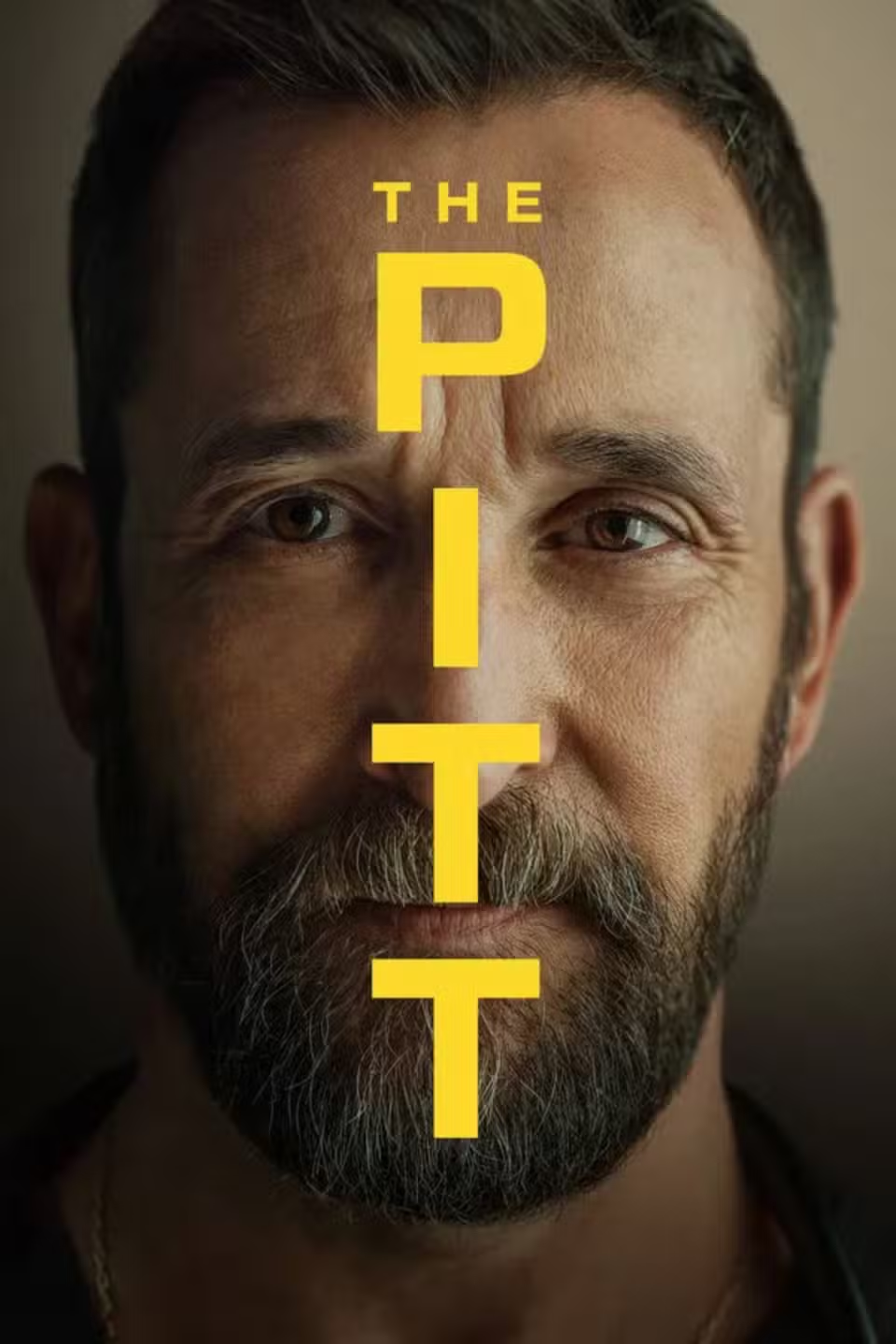
‘The Pitt’s Fan-Favorite Doctor Confirms Noah Wyle Gave His Blessing to Return [Exclusive]



You must be logged in to post a comment Login