


Connect with us
DAPA Banner

Tech

Days before giving birth, her boss cut her pay. She quit & opened her own clinic.

Published

on

Dr Michelle Ng turned a moment of loss into a new beginning for herself

On Jun 28, 2025, Dr Michelle Ng was 39 weeks pregnant, nine days away from giving birth.

That’s when she received an email from her previous employer, saying that they would pause her senior doctor incentives and deduct from her maternity pay to cover the commissions for doctors hired in her place. 

She read the email twice. Then she went on to draft her resignation letter with conviction.

What happened next would transform Dr Michelle’s and her family’s lives. Within a few months, she would open ARTÉ by Dr M, an aesthetic clinic that had built a waiting list stretching to Feb 2026 before it even opened its doors in Dec 2025. 

Advertisement

But that Jun morning, none of that was visible. All she could see was the uncertainty of her future with her four-year-old daughter and her soon-to-be-born son, a career ending where motherhood began.

This is Dr Michelle’s story—how she turned a moment of loss, on the brink of motherhood, into the start of something entirely new. Vulcan Post spoke with her and her husband, Vincent, to understand the challenges, the risks, and the decisions that led to ARTÉ by Dr M.

Facing “career suicide” for taking her maternity leave

An NUS Medicine graduate with dermatology rotations at public hospitals, Dr Michelle built a strong foundation in skin and facial anatomy. She is renowned for her ambidextrous injection skills, which are widely regarded as highly advanced.

Over more than a decade in the field, she moved between doctor-led and investor-owned clinics, generating S$200,000–S$300,000 in monthly revenue from her work alone, according to her husband, Vincent.

She joined her ex-employer in 2023. But when her second pregnancy came in early 2025, her employer’s support waned. At 12 weeks, tests confirmed a high-risk pregnancy. Despite mounting fatigue and medical complications, she continued showing up for her patients, even as her body signalled the need to slow down.

Advertisement
dr michelle ng aarte by M children familydr michelle ng aarte by M children family
(Left): Dr Michelle Ng at the hospital when she was pregnant with her son last year; (Right): Dr Michelle Ng with her children./ Image Credit: ARTÉ by Dr. M

With lessons learned from her first pregnancy—when she had little time to bond with her first child after opting for half-day arrangements despite being fully entitled to maternity leave—Dr Michelle decided to take her full entitlement for her second child.

She took 16 weeks of government-paid maternity leave plus six weeks of shared parental leave (three weeks from her husband), totalling 22 weeks (about five months) to recover and spend time with her family.

However, upon applying for leave, she was told by her ex-employer that going on maternity leave for that long is “career suicide.” Dr Michelle was disheartened and lost all hope in her career, but she knew that she had to prove otherwise.

The final straw came nine days before her son’s delivery in Jul 2025. Her ex-employer sent an email informing her of the temporary pause of her senior doctor incentives during her maternity period, and any commissions paid to covering doctors in her absence will be deducted from her maternity salary.

The next day, between prenatal appointments and birth preparations, she drafted her response. Dr Michelle informed them that the deduction was not allowed under the relevant laws, tendered her resignation, and began her four-month notice period—sacrificing her remaining shared parental leave in the process.

Advertisement

That same day, her son Louis was born, and the idea of ARTÉ then slowly took shape.

Navigating motherhood & ambition

ARTÉ by Dr. M opened its doors in the middle of Dec 2025, but the journey tested Dr Michelle in every way.

In the lead-up, she navigated one of the most demanding periods of her life: caring for a newborn, managing postpartum recovery, and simultaneously building a clinic from the ground up.

She secured a unit at Millenia Walk, negotiated with her landlord, Pontiac Land Group, coordinated with medical suppliers, and oversaw a complex renovation—all within the span of just a few months.

Advertisement
 ARTÉ by Dr. M interior dr michelle ARTÉ by Dr. M interior dr michelle
Shortly after giving birth, Dr Michelle went on to build ARTÉ by Dr. M, overseeing the interior design and daily operations./ Image Credit: ARTÉ by Dr. M

Then, just as things began to take shape, another challenge surfaced.

Her long-term domestic helper left abruptly, leaving Dr Michelle scrambling to arrange childcare while keeping the clinic’s construction on track. On top of that, as with any major project, renovation delays arose, pushing ARTÉ’s opening back by a month from the original Nov 2025 target.

Watching her hold everything together through that chaos, her husband left his 13-year career in commodities to support her. 

“I couldn’t bear to see her carry everything on her own,” he said. “The way she showed up for her patients during her maternity period, and for what she believes in. It made it clear to me that this was more than just a career. It was her calling, and she convinced me to give up my career to help her give her best for her patients.”

ARTÉ by Dr. M interior exterior storefrontARTÉ by Dr. M interior exterior storefront
ARTÉ by Dr. M’s storefront and vast corridors./ Image Credit: ARTÉ by Dr. M

The couple’s capital investment exceeded S$1 million for equipment and renovation alone in the 1,600 sqft unit, with monthly operating costs averaging between S$60,000 and S$100,000.

“Many people commented that I was crazy to start a business as soon as I gave birth, but it was this belief that I told myself that I wanted ARTÉ to be a beacon of hope for all women that anything is possible even in the most demanding seasons of life,” Dr Ng recalled. 

Advertisement

She runs the clinic supported by a team of four

ARTÉ by Dr. M specialises in non-surgical anti-ageing treatments with a focus on injectables (including botox, dermal fillers, and collagen stimulators), alongside lasers and Ultherapy Prime machines for skin lifting, tightening and rejuvenation.

non-surgical anti-ageing treatments with a focus on injectables (including botullinum toxin, dermal fillers, and collagen stimulators), alongside lasers and Ultherapy Prime machines
arte by dr mnon-surgical anti-ageing treatments with a focus on injectables (including botullinum toxin, dermal fillers, and collagen stimulators), alongside lasers and Ultherapy Prime machines
arte by dr m
Dr Michelle administering Ultherapy Prime machines and injectables to stimulate collagen./ Image Credit: ARTÉ by Dr. M

Dr Michelle is the clinic’s sole doctor, supported by a team of four.

Treatments led by her typically begin from S$800 up to S$2,000 per session, while non-doctor therapist treatments start from S$200. For patients looking for a more personalised approach, the clinic also offers customised programs tailored to individual needs and budgets.

Dr Michelle said transparency is a core principle of the clinic. “There are no hard-selling and no hidden fees,” she explained. Treatments are usually structured in three sessions, followed by a detailed review of progress.

The clinic’s reputation was evident even before its doors opened in Dec 2025: bookings were filled up to Feb 2026, reflecting the trust Dr Michelle had built with her patients over the years.

Advertisement

Beyond patient experience, Dr Michelle shared that ARTÉ represents a deliberate choice about how care should be practised. “The field has become increasingly commoditised, with price wars and the race to the bottom,” she said. More investors are setting up clinics with commercial priorities at the forefront, while medical risks become secondary to sales performance and treatment pricing.

“For us, every treatment, even for trials, is done with full intent, and we give our 100%,” she added.

“There are sacrifices that come with building something you believe in”

Today, Dr Michelle is not only an aesthetic doctor but also a speaker and trainer for leading global brands such as Merz, where she mentors and trains younger doctors. 

She also has plans to grow ARTÉ meaningfully, guided by the same patient-centric principles on which it was built. 

Advertisement
ARTÉ by Dr. M family dr michelle ngARTÉ by Dr. M family dr michelle ng
Dr Michelle and her family./ Image Credit: ARTÉ by Dr. M

Yet behind all this growth lies a reality she carries quietly. She sees patients six days a week, often skipping meals and returning home after her children have already fallen asleep. 

She shared, “There are sacrifices that come with building something you believe in. I don’t always get the time I wish I had at home, but when I am present, I make sure I am fully there for my children.”

For Dr Michelle, ARTÉ’s growth isn’t just about scale or revenue—it’s about building something meaningful, even if it demands more from her personally.

“Every time I look at my clinic,” she added, “I see blood, sweat and tears. But I also see that despite everything, we chose to keep going and to build something we could stand behind.” She also hopes her story shows other women that maternity is not a setback to overcome, but a source of strength to draw from.

Since her ex-employer challenged her maternity entitlements, Dr Michelle has engaged lawyers and attended multiple legal meetings.

Advertisement

As a mother and doctor in an industry built on empowering women, I couldn’t stay silent and accept what felt wrong. That day, I chose to stand for what I believe in.

Dr Michelle Ng

The matter remains unresolved to this day, yet she continues to focus on her patients, her clinic, and inspiring other women to find strength in their own journeys.

  • Find out more about ARTÉ by Dr. M here.
  • Read other articles we’ve written on Singaporean businesses here.

Featured Image Credit: ARTÉ by Dr. M

Advertisement

Source link

Continue Reading
Click to comment

You must be logged in to post a comment Login

Leave a Reply

Tech

Apple says Mac mini shortages will last for months

Published

on

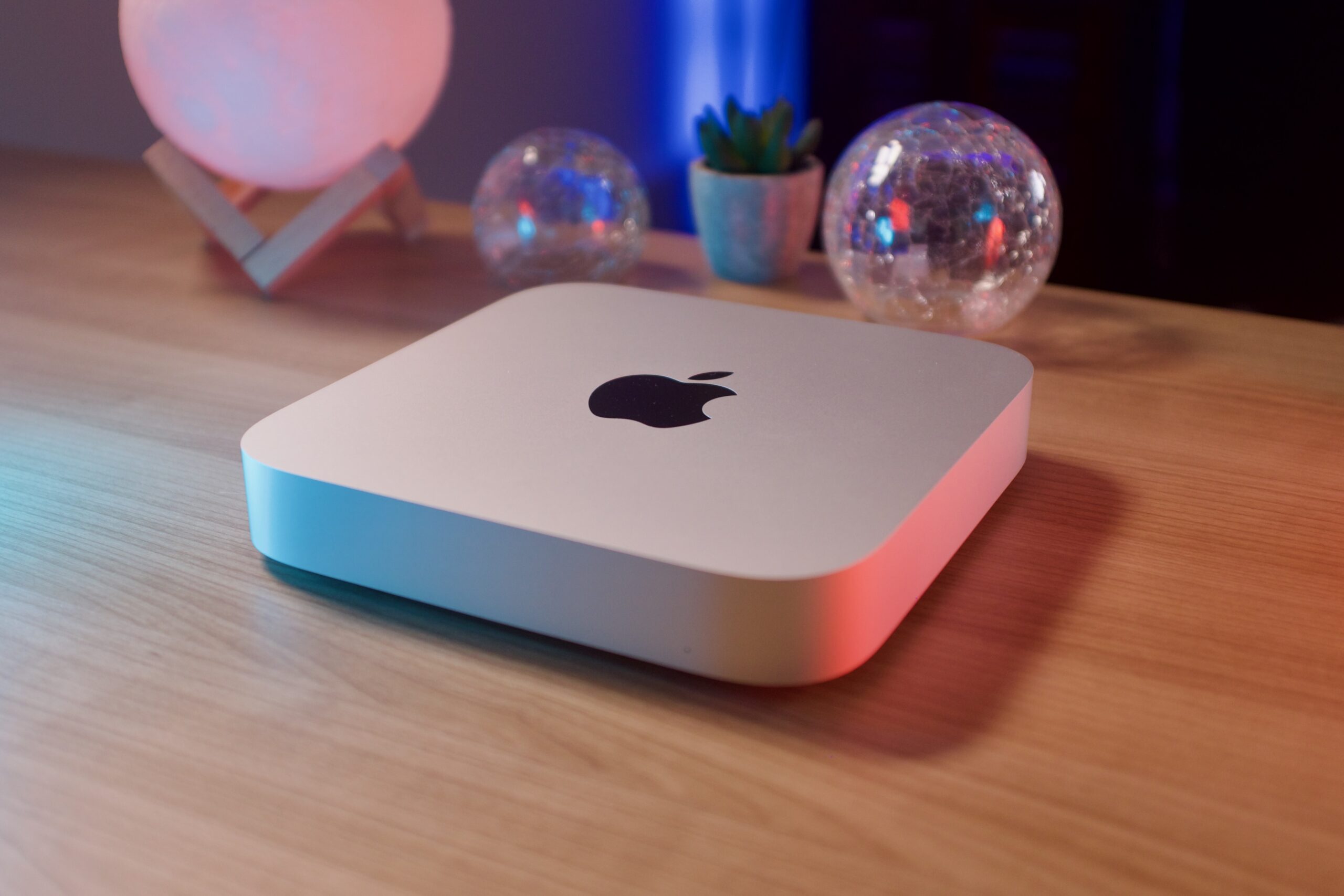
If you were planning to pick up a Mac mini anytime soon, you might be in for a wait.

Apple has confirmed that its smallest desktop is facing supply issues that could take “several months” to resolve. This is happening as demand continues to run ahead of what the company expected.

The update came during Apple’s Q2 2026 earnings call. There, the company acknowledged that both the Mac mini and Mac Studio are currently struggling to stay available in normal supply-demand balance. In short, Apple is selling them faster than it can keep up.

The Mac mini has always sat in a slightly unusual place in Apple’s lineup. It’s never been the flagship Mac. However, it has quietly built a loyal following among developers, creators, and anyone trying to build compact desktop setups. The latest generation, though, seems to have pushed it into a different category altogether.

Advertisement

With Apple Silicon bringing major gains in performance and efficiency, the Mac mini is no longer just an entry-level Mac. In fact, it’s now being used for heavier workloads like coding, creative production, and even home server setups. All this is possible in a tiny footprint that doesn’t take over your desk.

Advertisement

Apple CEO Tim Cook said the company “undercalled the demand” for both the Mac mini and Mac Studio. He added that it expects supply to take “several months” to fully catch up.

It’s happening at a strong moment for Apple’s Mac business overall. The company reported $111.2 billion in revenue for Q2 2026, up 17% year-on-year, with Mac revenue hitting $8.4 billion. So while the shortage is technically a supply problem, it also reflects strong demand for Apple’s desktop lineup more broadly.

Advertisement

For buyers, though, it’s less of a silver lining. Depending on the region, the Mac mini is now either delayed or harder to find in stores.

Source link

Advertisement
Continue Reading

Tech

Who Makes Harbor Freight’s Most Affordable Engine Hoist & Is It Any Good?

Published

on


If you’re a DIYer on a budget, you’ve no doubt done a little shopping at your local Harbor Freight. The family-owned retail hardware store chain has, after all, been delivering quality tools at wallet-friendly prices since it was founded in 1977. That includes even heavy-duty garage gear like shop cranes, engine stands, and engine hoists. 

Engine hoists come in various shapes, sizes, and prices — with some selling for hundreds of dollars or more. If you are shopping for an engine hoist on a budget, however, there are a few options available from Harbor Freight worth checking out. The Haul-Master’s 1-Ton Manual Chain Hoist, in particular, is one of the most affordable options you’ll find currently in-stock in the retail chain’s online store. 

Haul-Master, which also makes utility trailers, is one of several notable brands that are currently owned by Harbor Freight and sold exclusively through its outlets. As of this writing, the heavy-duty hoist was selling for just $69.99, which should raise an eyebrow for any mechanic or home garage dweller in need of a device with 1-ton capacity. The only question is whether or not it actually works.

Advertisement

What users are saying about Haul-Master’s 1-ton engine hoist

Overall, customers who have bought this item from Harbor Freight are largely happy with their purchase. To date, almost all of the 1,500-plus reviews on its product page rate it either 4 or 5 stars. From the sounds of it, not all of those customers are using their Haul-Master to hoist engines, however. In fact, many claim they are using their 1-ton engine hoist to move everything from concrete artwork to animals slain on a hunt. 

Advertisement

Nevertheless, durability is a pretty common point of praise, with many users claiming that they’ve been using their engine hoist for several years without fault. Most of those users also state that the hoist is surprisingly lightweight and easy to use. And yes, many of those happy customers also thought this was a solid price for the product.

However, some 58 Harbor Freight customers rated the hoist at 3 stars or lower, and those users have noted a couple of potentially worrisome issues. For instance, one user claims their chain broke lifting a mere 30 pounds. Others note that their hoist locked up shortly after purchase, while one claimed that the lack of a zinc-coating made it impossible to clean off collected oil and grease. These factors are all worth considering prior to purchase.

Advertisement


Source link

Continue Reading

Tech

Up-Close with Kawaii, a Modder’s Dream Device That Fits an Entire Nintendo GameCube Console on a Keychain

Published

on

Kawaii Smallest Nintendo GameCube
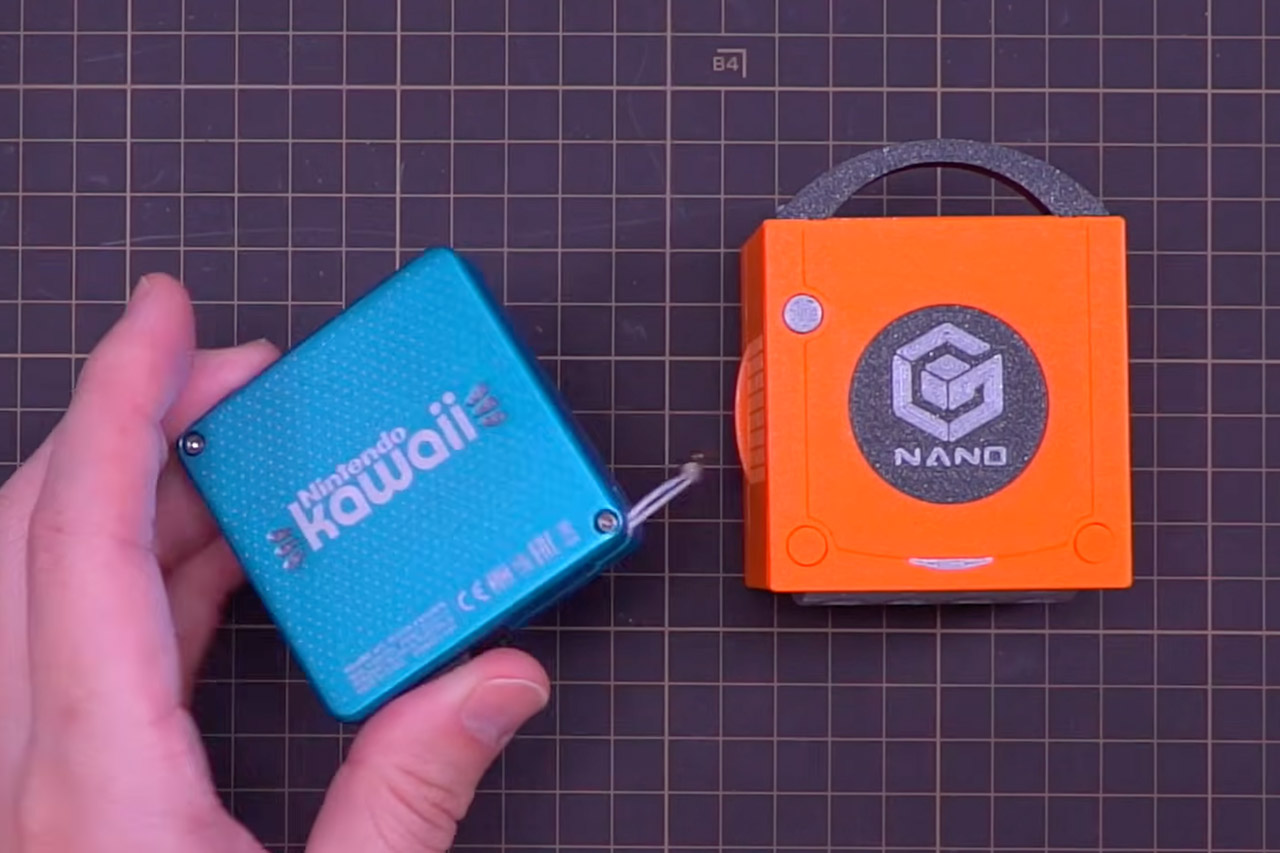
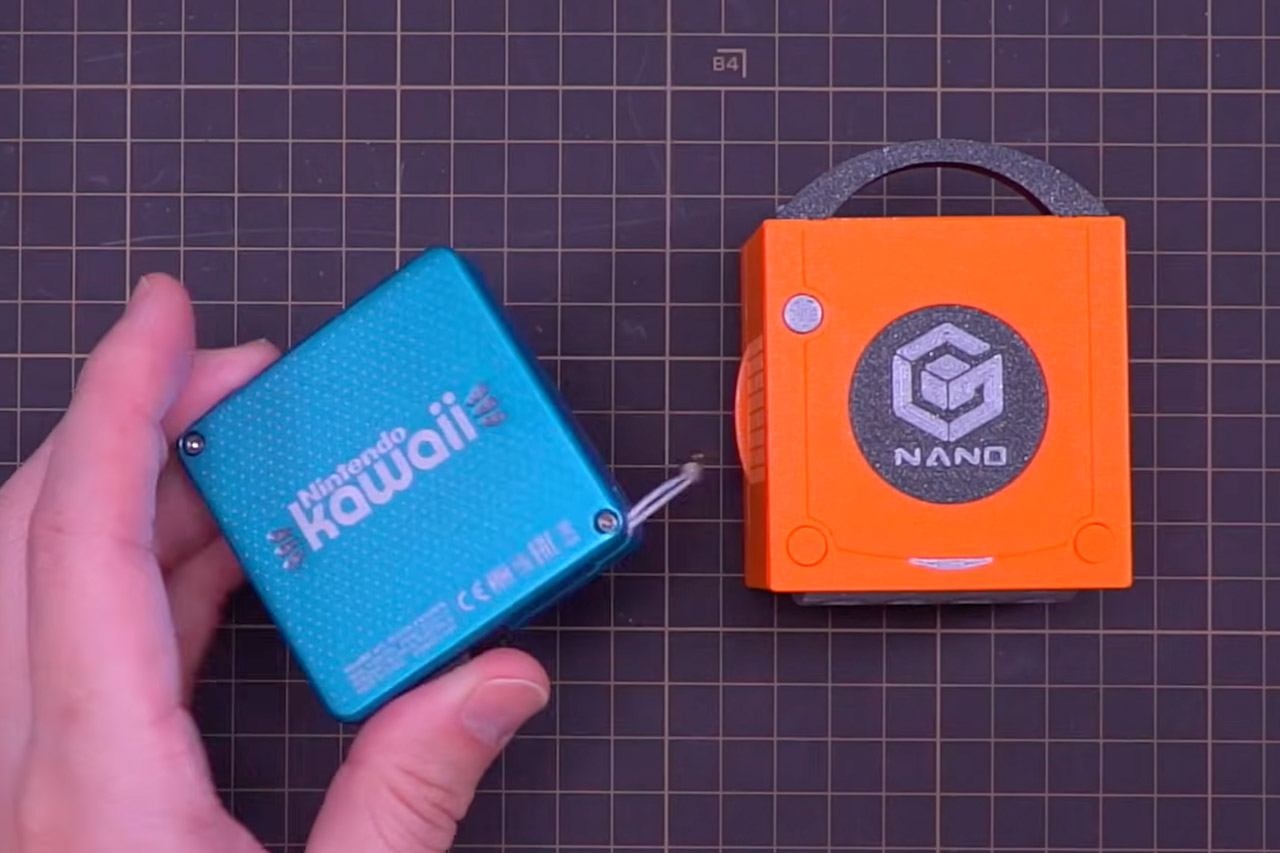
Modders shrank a normal Wii motherboard to a fraction of its original size while retaining all functionality, allowing you to play games exactly like the original. Tito from Macho Nacho Productions just posted a detailed look at the Nintendo Kawaii project.


At first glance, you can see how small this thing actually is, measuring only sixty millimeters wide, sixty millimeters tall, and sixteen millimeters thick, but it is still a fully functional gaming console. You can attach it to your keys with a small keychain loop and carry it around with you all day. The outside casing is composed of CNC-machined aluminum, giving it a very smooth finish, and they’ve added some subtle etched artwork and some goofy compliance labels to give it some individuality without clutter. When you turn it on, six soft-glowing RGB LEDs illuminate it from the inside, adding to its charming appearance.

Kawaii Smallest Nintendo GameCube
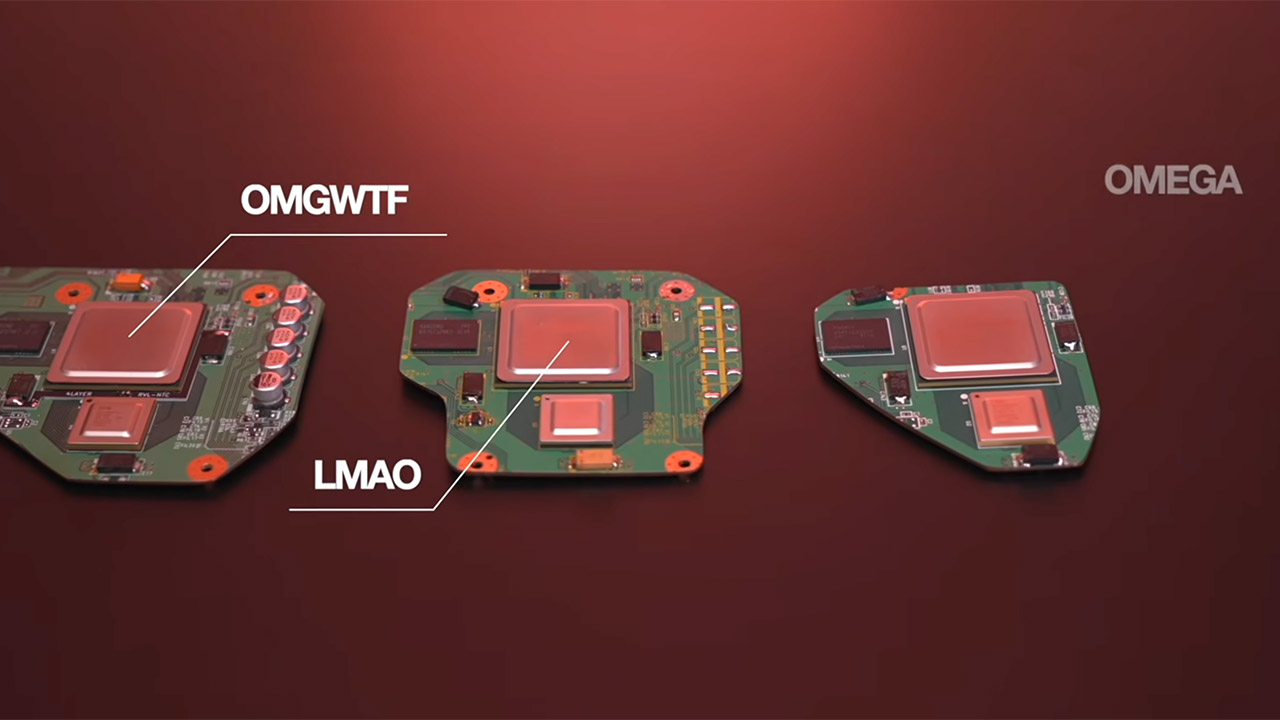
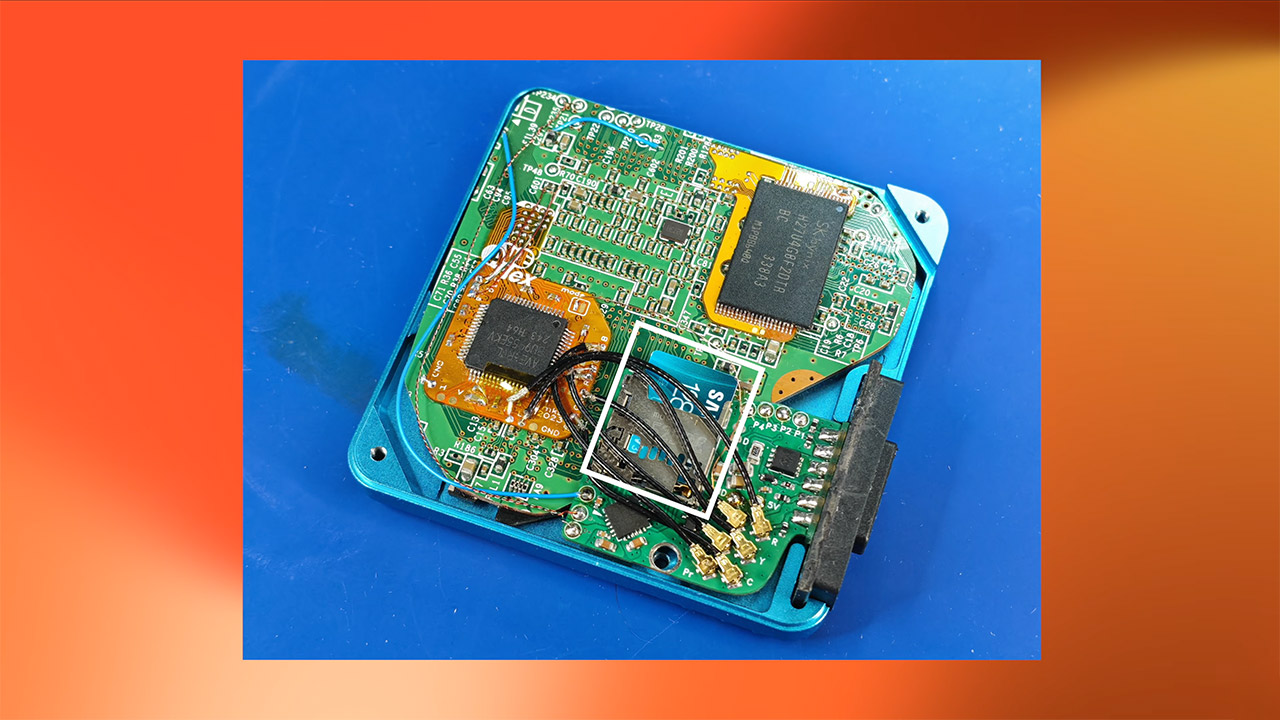
The trick to making it this compact was using an Omega trim, as they began with a Hollywood-2 Wii Mini board and simply chipped away at all of the non-essential pieces until they were down to the bare requirements, yet they still managed to fit all of the functionality in there. The chip relocation job was arguably the most difficult, as they had to shift crucial components to new spots on the tiny board, which took some time. They ended up with two flex boards, one for the video output chip and another for the NAND memory chip. They’ve also created a bespoke power module called Thundervolt that not only gives electricity but also reduces the voltage to the CPU, allowing it to run cool and efficiently; brilliant stuff. They based all of their ideas on open-source designs supplied by the project’s crew.

Kawaii Smallest Nintendo GameCube
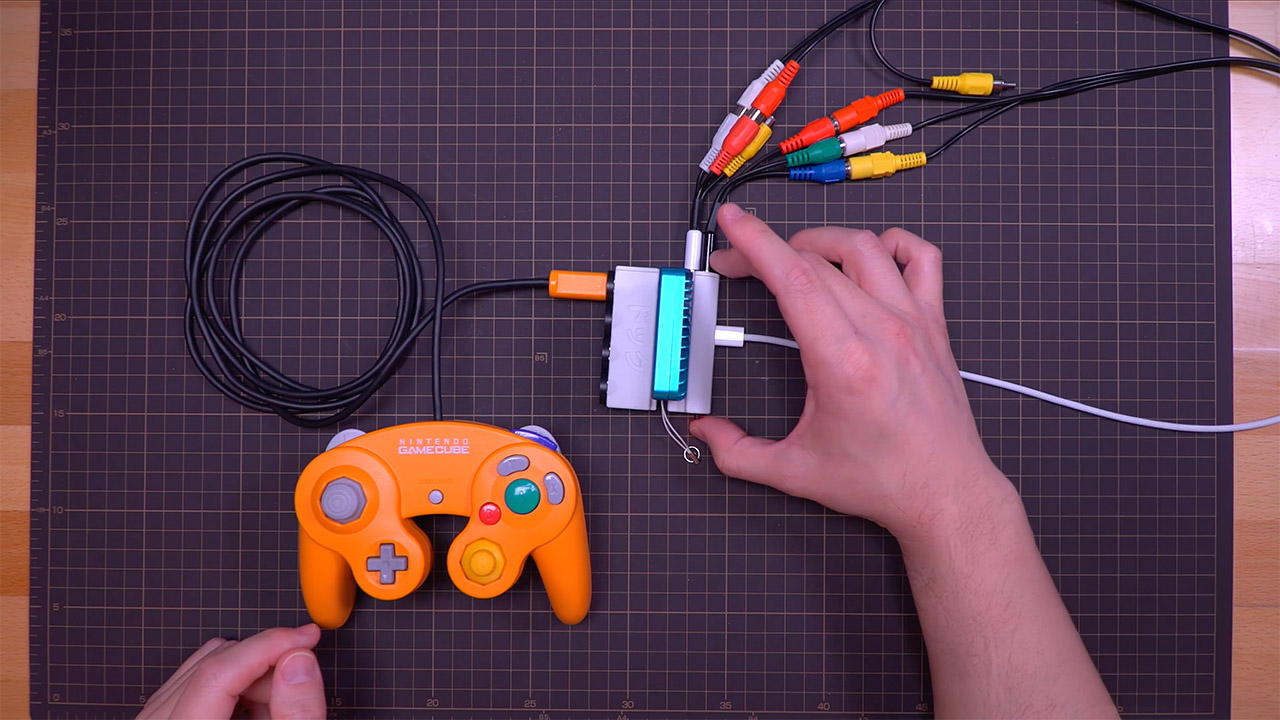
A small microSD card is used for internal storage, and games are loaded from it using homebrew software. Of course, the trimmed-down board leaves no area for a disc drive. The output options are very standard; composite television, 480p component, and stereo audio all plug into this single connection port. When you pull out the corresponding magnetic dock, you can plug in four GameCube controllers at once. The dock itself connects via pogo pins, so there are no cables dangling everywhere, making for a really nice solution.

Kawaii Smallest Nintendo GameCube
Getting games to run on this machine is shockingly simple, as all titles run at full speed, with no software techniques to aid them; the original Nintendo hardware is doing all the heavy lifting. The controllers continue to respond exactly as they did when you had a large, cumbersome console on your television. Of course, because there is no active cooling, it gets a little warm after a while of play; nevertheless, an external fan protruding out the side helps a lot, though it is a bit of a trade-off for the significant size reduction.

Source link

Advertisement
Continue Reading

Tech

How to Track Your Luggage (2026): AirTag, Pebblebee, CaseSafe

Published

on

This is really useful if you, like me, tend to swap out your Bluetooth trackers between items as you’re using them. If you’ve attached a Pebblebee Clip to your luggage, you can pop it out and put it in your pocket for when you grab dinner by yourself while you’re traveling. Pebblebee works with both Apple Find My and Google Find Hub. If you’re nervous about triggering the siren, you can also grab the Pebblebee Card 5 ($35), which is the same price and doesn’t have the siren.

Tips and Tricks for Finding Your Luggage

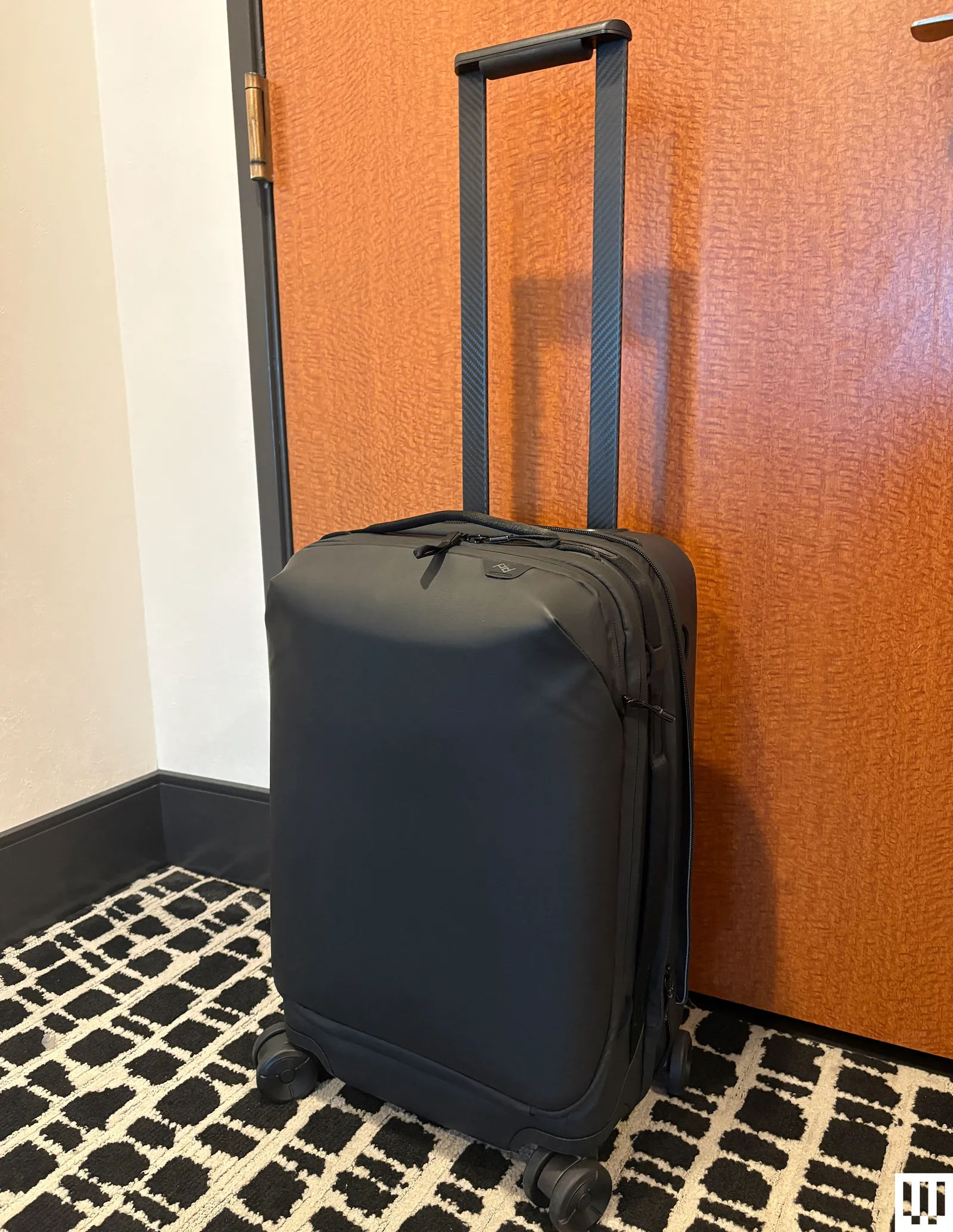
Peak Design Roller Pro black rectangular luggage with wheels and the handle extended upwards

Photograph: Adrienne So

I have been losing my luggage since I was four years old, getting sent on planes halfway around the world. Here are a few ways I’ve learned to keep track of my luggage (and how to deal with the disappointment when I inevitably don’t).

Zip your tracker into an interior pocket. You don’t want to just place it loose in your belongings. Maybe it will slide into the middle of your clothes, where the Bluetooth signal will get blocked, or you or a careless TSA employee might accidentally shake it out onto the floor. Some of my favorite carry-on suitcases, like the Peak Design Roller Pro ($600), have AirTag pockets built into the bag, so you don’t have to worry about them falling out.

Advertisement

Label your individual trackers. It’s pretty easy to change the name and emoji of your trackers in Find My or Find Hub, and you should! It’s hard to keep track of which item you’ve lost when you have six AirTags, all labeled “Adrienne’s Luggage.”

Check the battery before you leave. If you’re not traveling often, it’s easy to let your luggage Bluetooth trackers sit unused for months.

What about GPS trackers? GPS trackers use satellites, whereas AirTags and other similar trackers use Bluetooth and a crowdsourced network of compatible devices they can communicate with, such as phones. While you may experience small gaps in coverage with Bluetooth trackers when you’re locating your luggage—for example, your suitcase got loaded onto the cart and isn’t within 30 feet of an iPhone while it’s making its way to baggage claim—you’re pretty much guaranteed to have a lot of devices on the Find My or Find Hub network at an airport to help establish the tracker’s position. GPS trackers usually require a subscription, so I don’t recommend them for luggage tracking if you’ll only use them a few times a year.


Power up with unlimited access to WIRED. Get best-in-class reporting and exclusive subscriber content that’s too important to ignore. Subscribe Today.

Advertisement

Source link

Continue Reading

Tech

This tiny, magnetic e-reader could stop you from doomscrolling

Published

on

It was love at first sight. It felt like scouring the mall, dipping in and out of sprawling department stores in search of a specific, elusive item, only to finally find what you’re looking for. Only, I didn’t even know I was searching for something like the Xteink X3, because I never dared dream of something so delightful: a tiny, MagSafe-compatible e-ink reader that could attach to my iPhone like a Pop Socket.

This was it. My life would change forever. I would get my hands on the Xteink X3, and I would stop doomscrolling forever. I would read more books than ever before… which is saying something, since – brag – I read at least 50 books a year. But – not a brag – I probably spend even more time on social media than I do reading. I know that I feel generally less anxious when I limit my social media time, but alas, the siren song of TikTok beckons me. What if instead of opening social media, I could just flip my phone over and read on a tiny, Kindle-like e-ink screen? Could this $80 gadget fix me?

I’ve tried reading books (… or downloads from AO3) on my phone, immersing myself in a fictional world, rather than posts from the president in which he threatens to obliterate an entire country. But something about looking at my phone, where I’m constantly tempted to open Instagram to see whatever Reel someone sent me, doesn’t quite soothe me the way that a book or an e-ink device like a Kindle does.

I was so excited for my X3 to arrive that I constantly refreshed the tracking link until finally, it was delivered. Even though I had meticulously compared the dimensions of the X3 to my iPhone 16, or my Pop Socket wallet, I still worried it might not fit – the previous model, the Xteink X4 (basically the same device but a little bigger) only fit on larger phones like the iPhone Pro Max line. But sure enough, the X3 magnetically attached to the back of my phone like it was custom-made to fit.

Advertisement

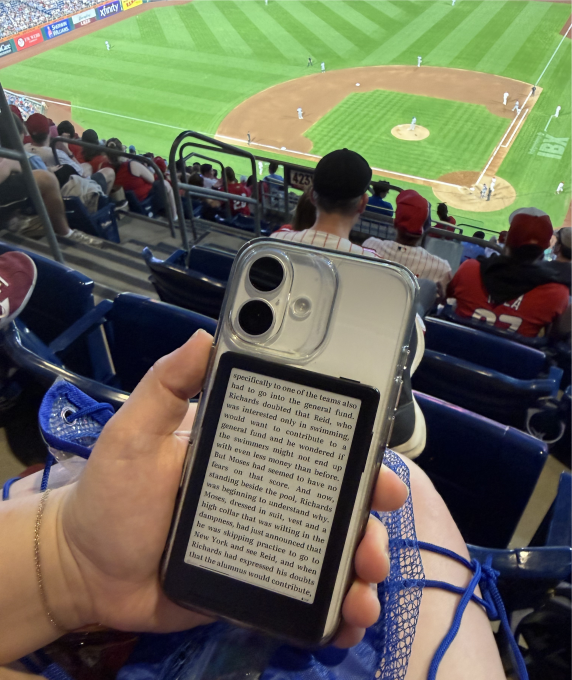
My X3 came in the mail about two hours before I had to leave to go to a Phillies game, so I rushed to load books onto it, because I thought it would be really funny to take photos in which I read “The Power Broker” in a crowded baseball stadium. Behold, my handiwork:

The XTeink X3 watches as the Phillies kick off a ten-game losing streakImage Credits:TechCrunch

For the first several days that I had the X3, I carried it with me on the back of my phone. This made me a bit nervous, though, since I’m used to having a Pop Socket wallet, which means I’ve gotten in the habit of leaving home without my actual wallet. But I found that I used the X3 just as much when I carried it in my purse or pocket, rather than attaching it to my phone. I’m still not sure if I’ll keep this setup, or if I’ll start actually using a real wallet so that I can attach the ereader, but for now, that’s what has felt most natural. Plus, my X3 shipped with a very compact, cute, magnetic case, which perfectly protects the device and its screen and makes it a little easier to hold. At just $9 for the case, I’d recommend getting one. The case can also magnetize to your phone, though it feels a bit less secure than attaching your X3 alone.

Over my two weeks of testing, I did find that the X3 helped me read more. If you’re in line at a coffee shop, or waiting for the bus, you can just pull out the ereader instead of opening Instagram. I didn’t find the small screen difficult to read on, either. But just buying the device won’t change your habits – you have to remember that you have a 3.7 inch screen in your pocket that can fit hundreds of books.

Techcrunch event

San Francisco, CA
|
October 13-15, 2026

Advertisement
A Pop Socket wallet and the Xteink X3, side by sideImage Credits:TechCrunch

The Xteink X3 is pretty close to being the device of my dreams, but it’s not quite there yet. The firmware that the device comes with is pretty clunky – not unusable, but not exactly intuitive. I expected this, since the Xteink Reddit community was buzzing about CrossPoint, a community-made, free, open source firmware. The process of downloading CrossPoint was a bit intimidating as someone who writes words, rather than code – but with the instructions on CrossPoint’s website (and a few videos), it was easy enough. I encountered some difficulties at first, but then I realized it was because I was trying to download the X4 firmware onto my X3, so… my bad. You probably won’t even need the YouTube videos!

When you start loading books and open source firmware onto your X3, you’ll notice another divisive aspect of the device: it doesn’t have a USB-C port, unlike the X4. Instead, it uses a magnetic charger. Yes, it’s annoying to have yet another charging cable specifically for this one device, but I don’t care that much. After two weeks of consistent use, my X3 has dropped from a 100% charge to a 96% charge, so I can’t imagine I’ll be using that magnetic charger too often. You don’t even need the cord to add new books to your ereader – you can transfer files over Wi-Fi from your phone or computer (I wouldn’t call the process user-friendly, but I was able to figure it out without Googling anything).

Speaking of loading books, that’s another drawback. The majority of what I read on my Kindle comes from Libby, which is my favorite app (#notsponsored). The Libby app allows you to easily borrow ebooks or audiobooks from your library and send them to your Kindle. But you can’t get those ebooks (legally) onto an Xteink ereader, since libraries use protected versions of .epub files that deter users from copying them (you also can’t read books you buy from Amazon’s ebook store on non-Amazon devices, because capitalism). This lack of compatibility is a drawback, but it also makes the device feel unique – it’s a “dumb” device that has no apps and no touch screen, which feels startlingly refreshing in an era of AI-enabled refrigerators.

Advertisement
You can add your own screen savers, which I have clearly had too much fun withImage Credits:TechCrunch

It’s not hard to find interesting .epub files to load onto the X3, even if you can’t access your Kindle library or Libby. A lot of great books are in the public domain, which means that they’re no longer subject to copyright and can be downloaded for free (I’ve weirdly never read “Pride and Prejudice,” so the time is now). A few months ago, I bought the entire .epub catalogs of sci-fi writers Charlie Jane Anders and Annalee Newitz as part of a charity fundraiser, which should keep me busy for quite a bit. If you wanted to, you could even turn online articles or blogs into .epubs using a free program like Calibre.

So, did the Xteink X3 fix me? Am I now a newly reformed woman who has a healthy relationship with social media and has read a bunch of classic novels that I never read as an English major, since I mostly took classes with ridiculous titles like “Aestheticus Extremus: The Politics of Precarious Invention in North American Poetry and Poetics”? It’s not that simple. But if you meet the X3 halfway and make a concerted effort to use it, then maybe you’ll spare yourself from a bit more brainrot.

When you purchase through links in our articles, we may earn a small commission. This doesn’t affect our editorial independence.

Source link

Advertisement
Continue Reading

Tech

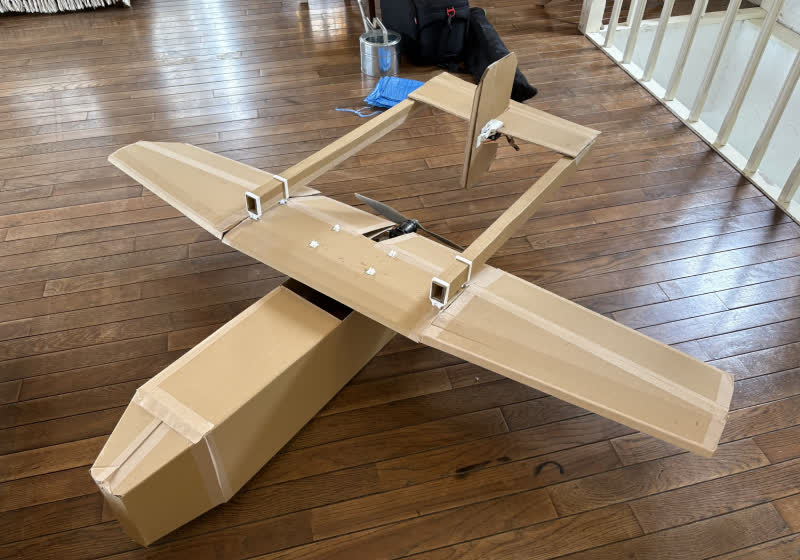
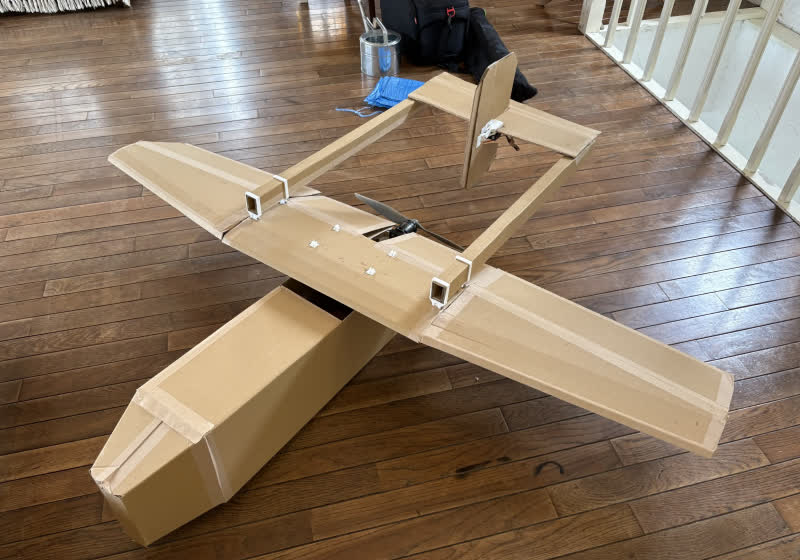
Japan is building military drones out of cardboard, and they're faster and cheaper than you'd expect

Published

on


Japan’s defense ministry recently sat down with Air Kamuy, a drone manufacturer whose signature design relies on corrugated cardboard construction. The meeting signals Tokyo’s broader ambition to carve out a leadership role in low-cost drone production as mass-market models reshape the calculus of modern warfare.
Read Entire Article
Source link

Continue Reading

Tech

Apple Watch Ultra’s Modular face simplified for watchOS 27

Published

on

The Apple Watch updates in watchOS 27 includes new watch faces, with Apple testing a new simpler version of the Modular Ultra for the standard model.

In the run-up to WWDC in June, the rumor mill will surface leaks and speculation about Apple’s software changes. One of the more frequent updates to expect is for the Apple Watch, in the form of new faces.

According to Mark Gurman in Sunday’s “Power On” newsletter for Bloomberg, Apple’s update to watchOS 27 will include some watch face changes as usual. Apple is said to be testing multiple new faces for inclusion, but Gurman only discusses one stand-out version.

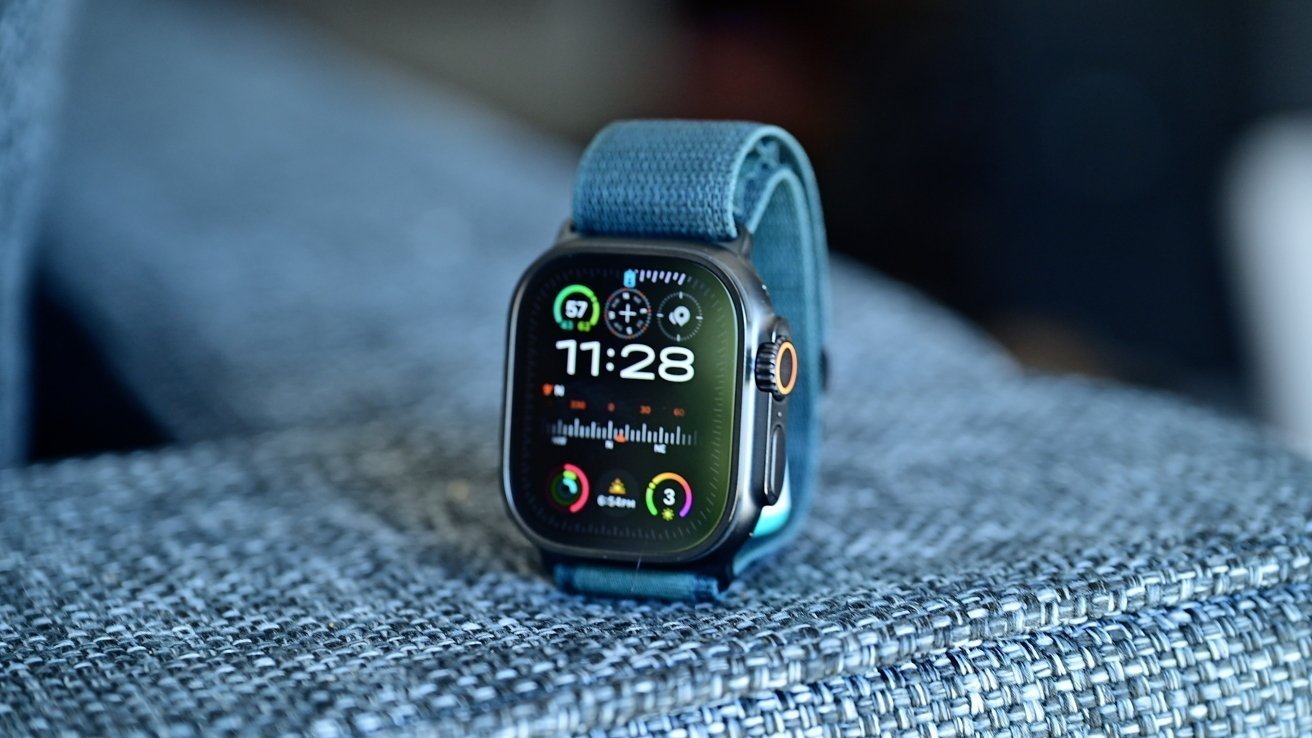
He writes that Apple is doing a simplified version of the Modular Ultra, the watch face designed for the Apple Watch Ultra. It’s a version that Apple is seemingly trying to rework so it can be used on the smaller face of other Apple Watch models.

Advertisement

The refinements maintain the large clock from the face design, but eliminates the large complication section in the center. It also removes the row of three small complications that appear above the time, and the information that surrounds the bezel.

The change turns into a large clock for the top two thirds of the display. The lower row of three small complications remains under the time, filling out the rest of the design.

The result is a face that is less information-dense but suitable for the standard Series models.

The modular face is not the only one on the way. As part of watchOS 26.5, Apple is bringing out a new Pride Luminance face as part of its annual Pride collection.

Advertisement

Source link

Continue Reading

Tech

The Fitbit-for-your-brain era could be closer than we think

Published

on

Consumer tech has spent the last decade turning the body into a stream of metrics. Heart rate, sleep stages, blood oxygen, recovery, stress, and readiness have all been packaged into dashboards that deliver a clearer picture of your “health”. Now the next frontier may be a little more intimate by moving up to the brain—not literally, thankfully.

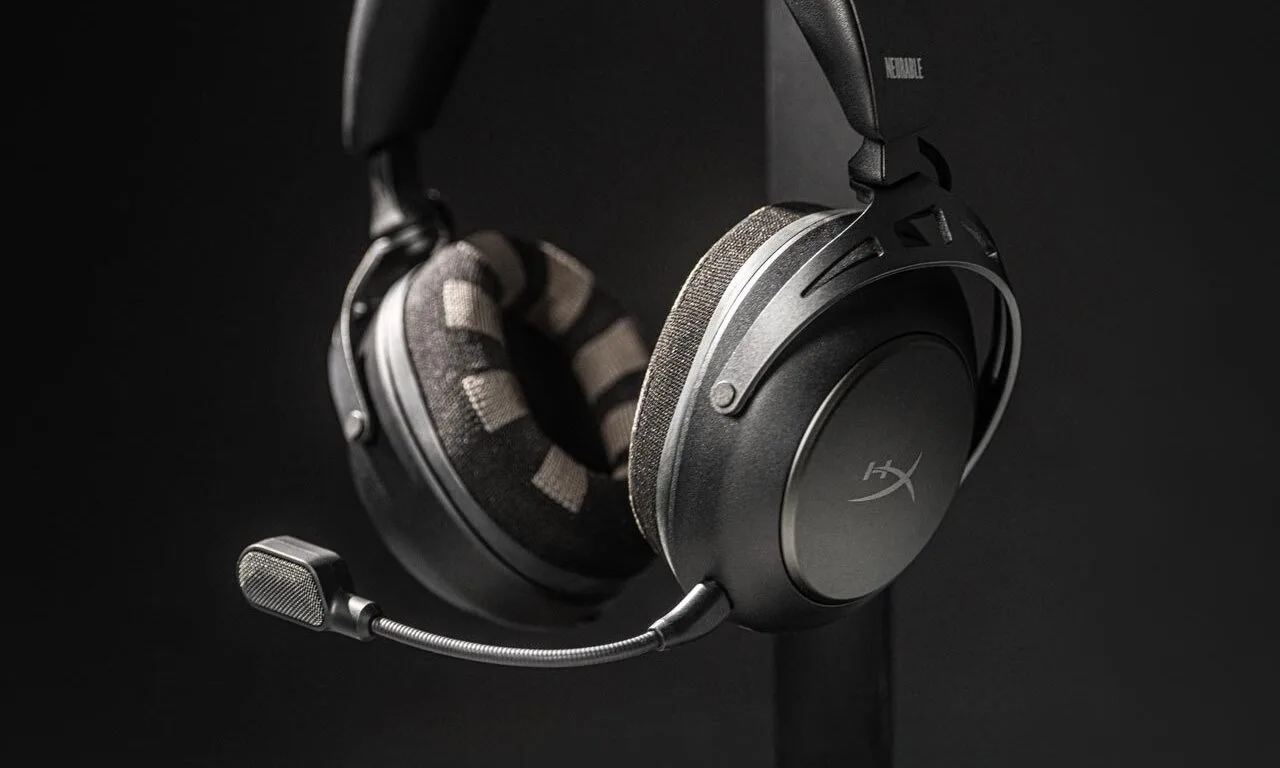
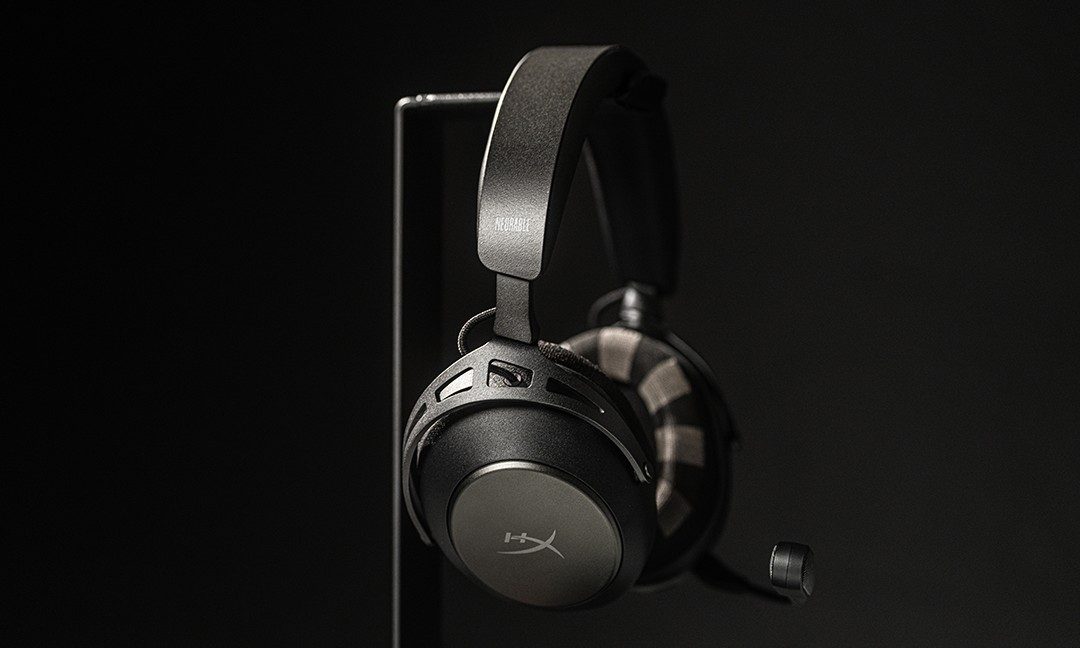
Neurable, a Boston company building noninvasive brain-computer interface tech, is moving to a licensing model, which means its EEG-based system could soon show up in a much wider range of consumer gadgets beyond the company’s own headphones. Other brands may be able to build the tech into familiar products such as gaming headsets, smart glasses, hats, helmets, and other hearables. One of the first products expected to feature it is a gaming headset developed in collaboration with HyperX.

The technology isn’t as sci-fi as it sounds

When most people hear “brain tech,” they probably think of Neuralink-style implants or some dramatic form of mind reading. Neurable’s approach is a lot less dramatic. Its system uses electroencephalography, or EEG, which measures electrical activity in the brain through sensors placed on the head. Those signals are then processed through software models designed to estimate things like focus, cognitive strain, mental recovery, readiness, and anxiety.

So rather than decoding thoughts, Neurable is trying to translate broad brain-state signals into consumer-facing scores and prompts that resemble the health insights people already get from smartwatches and fitness bands. That is exactly what the company is betting on—making it feel similar to smartwatches or smart bands like Fitbit.

A headset that claims to monitor concentration or detect mental fatigue can sit much more comfortably next to a wellness device than a lab instrument. Neurable talks about use cases like gaming performance, student focus, workplace fatigue, and recovery from cognitive overload. The language around the product is carefully framed as well. It avoids talk of invasive surveillance and leans instead on self-optimization, routine management, and better day-to-day performance.

Advertisement

Why this could become normal surprisingly fast

The big reason this might stick is the form factor. Consumer neurotech is not arriving as some awkward and medical-looking gadget. The hardware is being tucked into products people already understand and already buy. That is how new categories become socially acceptable. Fitness tracking followed that path on the wrist. Brain-state tracking now seems to be attempting the same move through headphones and other head-worn devices.

This philosophy extends to the experience itself. “Brain readiness” starts sounding a lot like the familiar language of health metrics, not unlike sleep scores or heart-rate variability. Once enough products start promising insights into mental workload, fatigue, or focus, a whole new wearable category starts to open up.

There is promise here, but there are also real questions

There is a genuine consumer appeal here. Plenty of people would want better signals around burnout, stress, or cognitive fatigue if those signals are reliable and useful. From students to gamers, anyone whose day depends more on mental sharpness than physical output could see the appeal. A wearable that helps identify when focus is slipping or when recovery is needed fits neatly into a culture already obsessed with “doing better”.

But trust is where things get slippery. Brain metrics sound authoritative by default, and that can become a problem quickly. Privacy concerns feel much sharper once companies begin collecting data that feels more personal than step counts or sleep trends. Neurable says its practices are privacy-conscious and consent-driven, but those assurances are going to face much tougher scrutiny if the technology spreads across more brands and more product categories.

The darker outcome goes beyond privacy. A system built to track focus and cognitive strain could easily attract companies that want more than wellness insights. It could become a way to monitor whether workers look alert enough, engaged enough, or productive enough, which is exactly how consumer neurotech could slide from self-tracking into workplace surveillance.

The real tension is easy to miss because the packaging is so friendly. A headset that promises better focus sounds useful enough. A market full of products trying to score your mental state every day sounds like something people should probably think a lot harder about before it becomes normal.

Advertisement

Source link

Continue Reading

Tech

Google Pixel 10A vs. Samsung Galaxy A57: Which Midranger Should You Buy?

Published

on

Affordable phones are bearing the brunt of supply chain constraints, which is reshaping what you can expect from a $500 phone. While midrange phones in 2026 don’t provide the same value as they used to, the latest phones from Google and Samsung are still competing neck-and-neck. The new Pixel 10A and Galaxy A57 remain the most lucrative midrange phones in the market right now. While they aren’t terribly different from their predecessors, each phone has its own distinct appeal.

The Google Pixel 10A didn’t get a lot of upgrades this year, but it has kept the $499 price of the Pixel 9A and has already gotten the occasional discount. On the other hand, Samsung’s Galaxy A57 is one of the lightest phones in this price range, even with a larger screen. I put them head-to-head, and both phones have their own highlights that could be better for different reasons.

Design and build

Advertisement
Google Pixel 10A and Samsung Galaxy A57 with their screens turned on.

Samsung Galaxy A57 has a more immersive screen, thanks to its slim bezels.

Prakhar Khanna/CNET

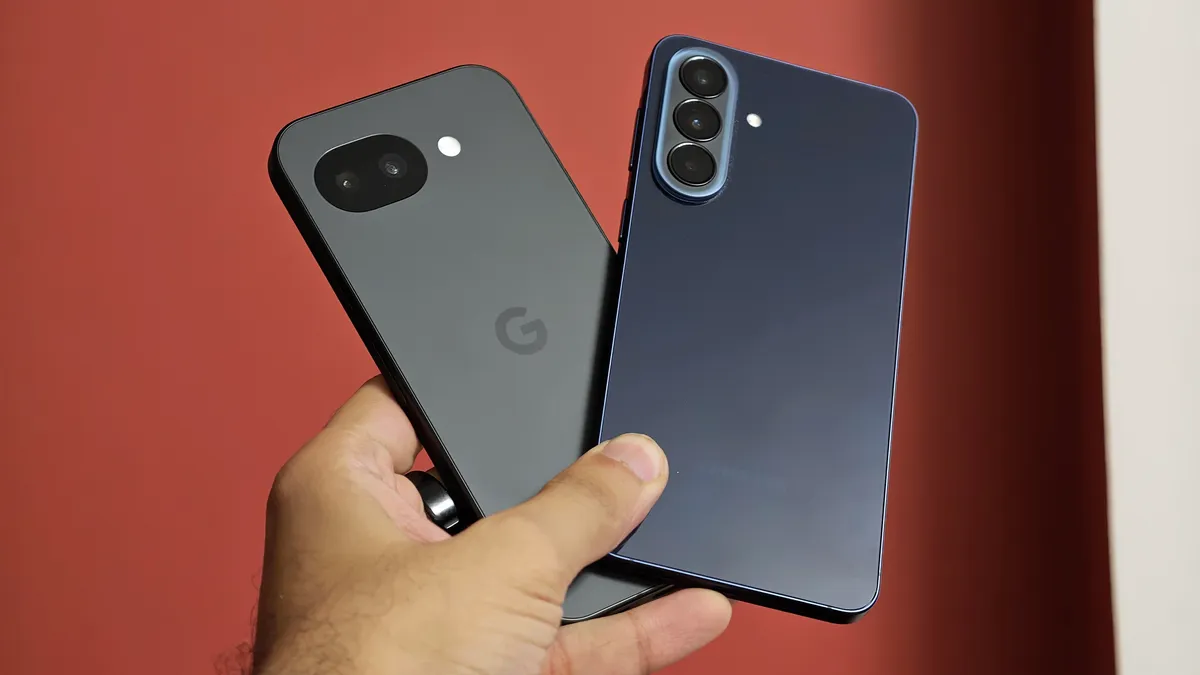
The two Google and Samsung phones are drastically different in terms of design. The Pixel 10A is a small phone with a comparatively compact 6.3-inch screen, whereas the Galaxy A57 is a big phone with a 6.7-inch display. Both are comfortable to hold and use in day-to-day life.

However, the Samsung phone is impressively lightweight this time around. You no longer need to settle for a bulky phone if you want a big screen. At 6.9mm in thickness and 179 grams in weight, the Galaxy A57 is thinner than the smaller Google Pixel 10A (9mm thick and 183 grams in weight).

I liked using the A57 more because of its slimmer bezels, which give it a more modern look. In comparison, Google’s phone looks outdated with its thick borders around the screen. Samsung’s slimmer, albeit asymmetrical, bezels also allow for a more immersive content consumption experience. Both of these displays are visible in direct sunlight, but they’re smudge-prone and highly reflective panels. However, I didn’t have any major issues when navigating on Google Maps outdoors.

Advertisement

Both the Pixel 10A and Galaxy A57 are rated IP68 for dust and water resistance. This means they generally can survive most plunges into shallow water and days at the beach without letting sand inside of them. Google retained the plastic back on its Pixel phone along with an aluminum frame, whereas Samsung gave its device a glass back. The Galaxy A57 is theoretically more durable, thanks to the Gorilla Glass Victus Plus on both the front and back. To compare, the Pixel 10A has a less-scratch-resistant Gorilla Glass 7i on the front.

The Google midranger has a unique design, where its dual-camera cover is recessed beneath the plastic back. On the other hand, the Galaxy A57 has three rear cameras, arranged vertically, like the Galaxy S26.

If you’ve ever wished for a phone with no camera bumps, the Pixel 10A is the device to get. However, if you want a more immersive screen in a handy and more premium-feeling design, the Galaxy A57 scores an easy win.

Performance and battery

Advertisement
Google Pixel 10A and Samsung Galaxy A57 side by side.

The Galaxy A57 is more prone to smudges and fingerprints due to its glossy back, especially on the blue variant.

Prakhar Khanna/CNET

Neither phone will deliver flagship-grade performance, but both are powered by capable in-house chips. The Google Pixel 10A has a Tensor G4, paired with 8GB of RAM and 128GB or 256GB of storage, whereas the Galaxy A57 houses an Exynos 1680 processor with the same amount of RAM and storage. However, you can get a 12GB RAM Galaxy A57 variant outside of the US that’s paired up with 256GB or 512GB of storage in some markets.

I used both phones in similar ways: messaging on social apps (WhatsApp, Instagram), navigating on Google Maps, work conversations on Slack and using the cameras when needed. I didn’t face any noticeable stutters or lags on either device. While neither is built for gaming at high graphics settings, the Galaxy A57 is a bit better thanks to its more capable processor.

Both of them lasted me an entire day on a single charge. To compare, the Pixel 10A has a slightly larger battery with a 5,100-mAh capacity (charging at 30 watts), but the Galaxy A57 charges its 5,000-mAh battery faster at 45 watts. The Google phone supports 10-watt wireless charging, while the A57 doesn’t support wireless top-ups.

Advertisement

I’d still say that Google missed out by not including its PixelSnap magnetic technology in the lower-cost 10A after providing it to all of the other Pixel 10 phones. It could’ve been a major selling point, but third-party cases can instead bring support for magnetic accessories to both the 10A and the Galaxy A57.

Both phones run Android 16 with their own versions on top. The Pixel 10A debuted with Pixel UI and Material 3 Expressive, whereas the Galaxy A57 launched with One UI 8.5 onboard. Both devices will give you long-term software support, with Google promising seven years of Android OS updates, while Samsung will give you six years of OS upgrades.

I like One UI better for its customizations and widgets, but the Pixel UI has its own unique capabilities and experience. Both phones support a number of AI features for enhancing photography, including a feature for editing a group photo in case someone is blinking. The Pixel version of this feature is called Auto Best Take, while the Galaxy A57 calls it Best Face. More AI features include AI Eraser to remove unwanted objects from a photo and Gemini for a smart virtual assistant, among others.

The cameras

Advertisement
Prakhar holding the Google Pixel 10A and Samsung Galaxy A57.

The Galaxy A57 has more cameras but that doesn’t equate to a more versatile camera system.

Prakhar Khanna/CNET

The Google Pixel 10A has a dual rear camera setup. It has a 48-megapixel main camera, which is accompanied by a 12-megapixel ultrawide-angle lens. On the other hand, the Galaxy A57 has a 50-megapixel main camera, a 13-megapixel ultrawide-angle lens and a 5-megapixel macro sensor.

However, only two of the three Samsung cameras are usable. In my review period, I relied on 4x zoom in 50-megapixel camera mode to get sharper images with natural-looking bokeh rather than using the macro sensor, which outputs noisy results with poor color reproduction. This puts both the mid-rangers head-to-head in camera performance.

Both phones’ main cameras capture a good amount of detail. You get pixel-binned photos by default, but the Galaxy A57 offers a 50-megapixel camera mode that lets you capture higher-resolution photos. As for the ultrawide sensors, there’s no noticeable color shift, but both exhibit the “fishbowl” effect common to ultrawide cameras.

Advertisement

As for the selfie shooters, you get a 13-megapixel front camera on the Pixel 10A and a 12-megapixel sensor on the Galaxy A57. Both offer satisfactory results.

Google Pixel 10A vs. Samsung Galaxy A57: Specs

Google Pixel 10A Samsung Galaxy A57
Display size, tech, resolution, refresh rate 6.3-inch pOLED, 2,424×1,080 pixels, 60-120 Hz variable refresh rate 6.7-inch Super AMOLED, 2340 x 1080 pixels, 120Hz variable refresh rate
Pixel density 422 ppi 385 ppi
Dimensions (inches) 6.06 x 2.87 x 0.35 in 6.36 x 3.02 x 0.27 in
Dimensions (millimeters) 153.9 x 73 x 9 mm 161.5 x 76.8 x 6.9 mm
Weight (grams, ounces) 183g (6.5 oz) 179 g (6.31 oz)
Mobile software Android 16 with Pixel UI Android 16 with One UI 8.5
Camera 48-megapixel (wide), 13-megapixel (ultrawide) 50-megapixel (wide), 12-megapixel (ultrawide), 5-megapixel macro
Front-facing camera 13-megapixel 12-megapixel
Video capture 4K 4K
Processor Google Tensor G4 Samsung Exynos 1680
RAM + storage 8GB + 128GB, 256GB 8GB + 128GB, 256GB
or 12GB + 256GB, 512GB (in some international markets)
Expandable storage None None
Battery 5,100 mAh 5,000mAh
Fingerprint sensor Under display Under display
Connector USB-C USB-C
Headphone jack None None
Special features 7 years of OS, security and Pixel feature drops; Gorilla Glass 7i cover glass; IP68 dust and water resistance; 3,000-nit peak brightness; 2,000,000:1 contrast ratio; 30W fast charging with 45 charging adapter (charger not included); 10W wireless charging Qi certified; Satellite SOS; Wi-Fi 6; NFC; Bluetooth 6; dual-SIM (nano SIM + eSIM); Camera Coach, Add Me; Best Take; Magic Eraser; Magic Editor; Photo Unblur; Circle to Search. Colors: Lavender, berry, fog, obsidian (black) 6 years of OS and security updates; Gorilla Glass Victus+ on the front and back; 1,900 nits peak brightness; IP68 dust and water resistance; Galaxy AI features like AI Select, Live Transcribe etc.; Google Gemini support; Circle to Search; 45W fast charging (adapter not included); Wi-Fi 6; NFC; Bluetooth 6; Colors: navy, gray, icyblue, lilac;
US price starts at $499 (128GB) $550 (128GB)

Source link

Advertisement
Continue Reading

Tech

iPhone 17 vs iPhone Air: do you want specs or style?

Published

on

Of the two, the iPhone Air commands the highest price tag, but it’s actually a worse phone in some ways, with Apple prioritizing its weight and slimness over other specs. In other words, even if money is no object, it might not be the right choice for you.

Source link

Continue Reading

Trending

Copyright © 2025