‘Entirely automating everything is not the future we want’: OpenAI CEO Sam Altman lays out his company’s vision as it opens a ‘third phase’ and looks to build technology “to benefit everyone”
OpenAI’s Sam Altman and chief scientist Jakub Pachocki list future goals for the AI giant
The world economy is now beginning to shape around AI and are committed to delivering tools that people would use
The note also reaffirmed OpenAI’s commitment to AGI with a caveat: ensuring it benefits all of humanity
With modern AI solutions moving well beyond simple chatbots to agents and projected to evolve into operators, one could assume that the automation of everything is an eventual goal.
This, however, has been denied by OpenAI CEO Sam Altman and chief scientist Jakub Pachocki, who said the goal of the artificial intelligence research and deployment company is not to automate everything but to allow people to make better decisions as AI improves their lives.
In a note titled ‘Built to benefit everyone’ that marked a break from OpenAI’s AI model capability pushes of late, two of the most important people in the AI ecosystem penned an unusually values-forward document that outlined their future plans for AI.
Latest Videos From
AI for everyone equally?
The note highlighted three major focuses for OpenAI:
Advertisement
– Building an automated AI researcher
– Accelerating the economy
– Giving everyone on Earth a personal AGI
Advertisement
Sign up to the TechRadar Pro newsletter to get all the top news, opinion, features and guidance your business needs to succeed!
OpenAI estimates that by March 2028, a significant portion of its research will be conducted by AI systems, in addition to its own researchers. This will help them to traverse a ‘post-AGI world’.
This, combined with the focus on giving everyone an AGI, is an interesting outlook because it assumes that everyone agrees on what AGI would look like. The definition is not set in stone and can vary from person to person and also at an organizational level.
OpenAI’s statement also provides clues about what an AGI would be like, with an “automated AI researcher” who both provides a path to AGI and is an important cog in the wheel.
Advertisement
OpenAI’s narrative about AI benefiting everyone worldwide is not a new one, but its focus on equality is an interesting one, especially given the timing: OpenAI’s note popped up exactly the same day it filed confidential paperwork for its IPO, making it perhaps read more as PR than it would otherwise be perceived.
OpenAI’s latest models are state-of-the-art, but many feel Anthropic’s now-banned Fable pushes frontier models even further than what GPT currently offers in multiple segments. Training new models is increasingly capital-intensive even as new capabilities are introduced, tested, and refined over time.
OpenAI also has something of an image problem after it stepped in to replace Anthropic’s Claude and Mythos-class solutions for the US military earlier this year, a move the latter company maintains was necessary because the restrictions it insisted on for the use of its AI were important.
Advertisement
When OpenAI stepped in to replace Anthropic on classified networks, it was widely perceived as willing to look past those restrictions to some degree, even though Sam Altman insists that the same two principles (no domestic mass surveillance and use of force permitted only by humans) would apply, with many critics pointing to a ‘softer’ approach on the matter by OpenAI to fill the void that comes with lucrative military contracts in the future.
The note, therefore, does read like a checklist for the future, but also paints OpenAI as a more magnanimous organization before its IPO, and that might be the primary intention here, but it does fail to weigh in on growing power consumption concerns, even as one could also consider it a reply or acknowledgment to a similar note by Anthropic about recursive self-improvement where its AI solutions effectively already act as an AI researcher for the company.
Neuralwatt’s co-founders: CEO Chad Gibson, left, and Scott Chamberlin, chief technology officer. (LinkedIn Photos)
Neuralwatt, a Seattle-based startup launched by two Microsoft veterans, has released what appears to be the first tool for calculating, in real time, the carbon emissions of individual AI requests — everything from asking a bot to edit a high school essay to deploying an autonomous AI agent for a complex coding assignment.
The co-founders hope the data will unlock more planet-friendly operations and give AI developers something to feel optimistic about, even as public anxiety grows over data centers’ energy, water and utility bill impacts.
There’s a lot of worry that AI requires “a data center in every neighborhood,” said Chad Gibson, Neuralwatt’s co-founder and CEO. While new facilities will be built, he added, existing ones and their energy sources could be used much more efficiently.
The startup estimates that if AI growth continues at its current pace, and with the current approach to energy use, the technology could generate 24 million to 44 million metric tons of carbon dioxide per year by 2030 — volumes equivalent to adding millions of gas-powered cars to the road.
Neuralwatt aims to help avoid that outcome. The carbon intensity of grid power varies throughout the day and across regions, depending on its source and how much demand there is. The company’s platform captures a carbon intensity snapshot each time an AI function — or “inference,” in tech jargon — runs, giving customers insight into the emissions tied to that specific task.
Advertisement
The Neuralwatt dashboard with carbon emissions displayed. (Neuralwatt Image)
Just as cloud users have come to expect emissions data linked to their usage, Gibson said companies running AI workloads will soon expect the same. “We believe that is going to be the future.”
The data is increasingly important for companies that will need to comply with Europe’s Corporate Sustainability Reporting Directive and for other organizations disclosing the full range of their carbon emissions.
Neuralwatt offers three products, all of which integrate the carbon-impact metrics: Neuralwatt Cloud, which provides AI services from leased data centers with energy-based pricing; Neuralwatt Deploy, which identifies underused data centers for AI customers to tap into; and Neuralwatt Optimize, which lets data center managers subtly adjust operations in real time to improve efficiency.
Its customers include Parasail, an AI inference startup; ZutaCore, which makes chip-cooling technology; and Crusoe Cloud.
Gibson launched Neuralwatt in December 2024 with Scott Chamberlin, who serves as chief technologist. Both spent more than two decades at Microsoft, with Gibson departing in 2019 and Chamberlin in 2022. The two overlapped while working on the company’s now-defunct Zune media player.
Advertisement
After leaving Microsoft, Gibson took an entrepreneurial path, becoming a limited partner at Seattle investment firm Flying Fish and an angel investor with Alliance of Angels. Chamberlin, whose final Microsoft role was sustainability lead for Windows, moved to Intel to lead its green software strategy.
Neuralwatt joined the Climate Collective accelerator in 2025 and received a grant to support its work, then was selected this year for the Plug and Play accelerator. The startup is also part of the Nvidia Inception and Microsoft for Startups programs, which provide access to hardware and services.
Last summer, the company received an undisclosed pre-seed investment from Powerhouse Ventures, Avesta Fund and Remarkable Ventures. The team has four employees and three advisors.
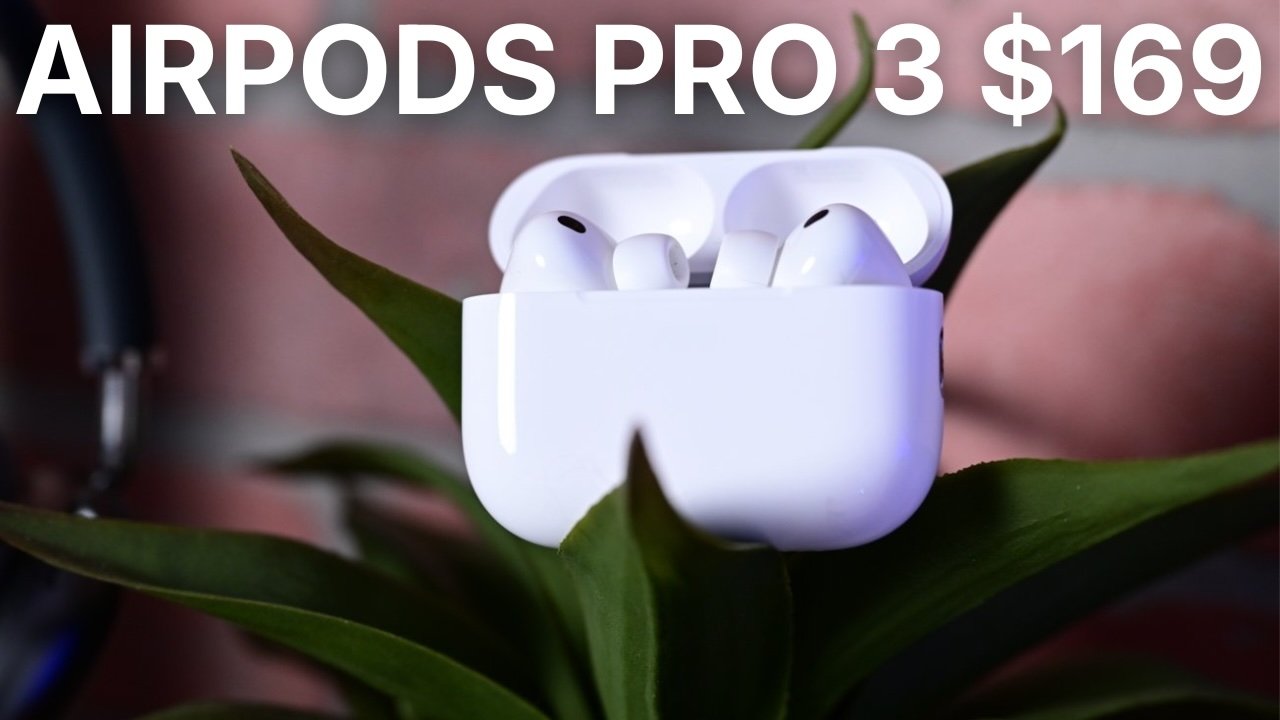
After selling out last week, Amazon has replenished AirPods Pro 3 inventory, while retaining the record low price of $169.
Amazon’s best AirPods Pro 3 deal has returned as Prime Day approaches. Grab an $80 discount, which matches the lowest price on record for the earbuds. Considering inventory sold out when the deal was last available, it’s worth snapping up the savings now to avoid a possible stockout when Prime Day starts on June 23.
If you’re looking for over-ear headphones, you can also pick up Apple’s 2026 release, the AirPods Max 2, for $449 with Amazon’s early Prime Day deal.
Advertisement
Today’s best AirPods deals
If you’ve got another device on your wish list, be sure to check out our Apple Price Guides for the latest discounts on hundreds of Mac, iPad, and Apple Watch models.
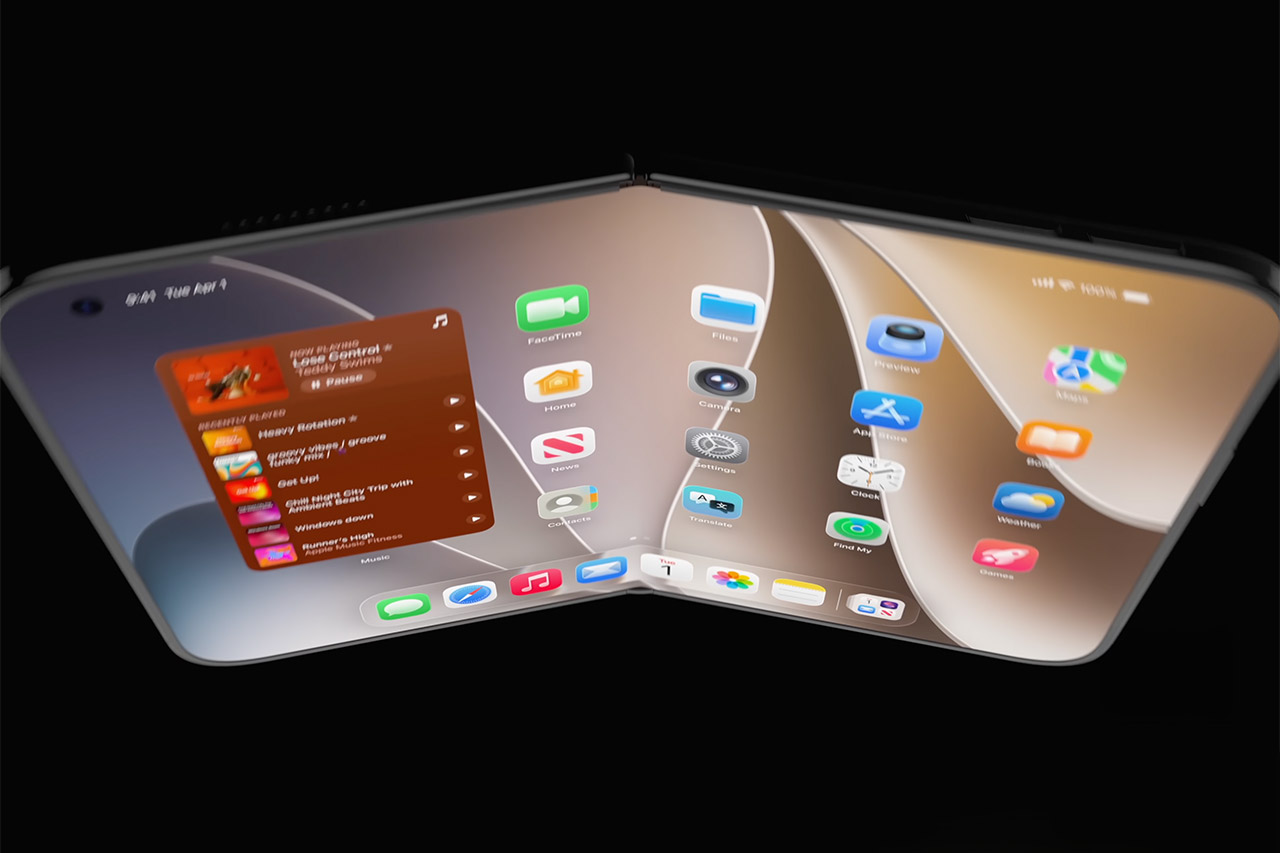
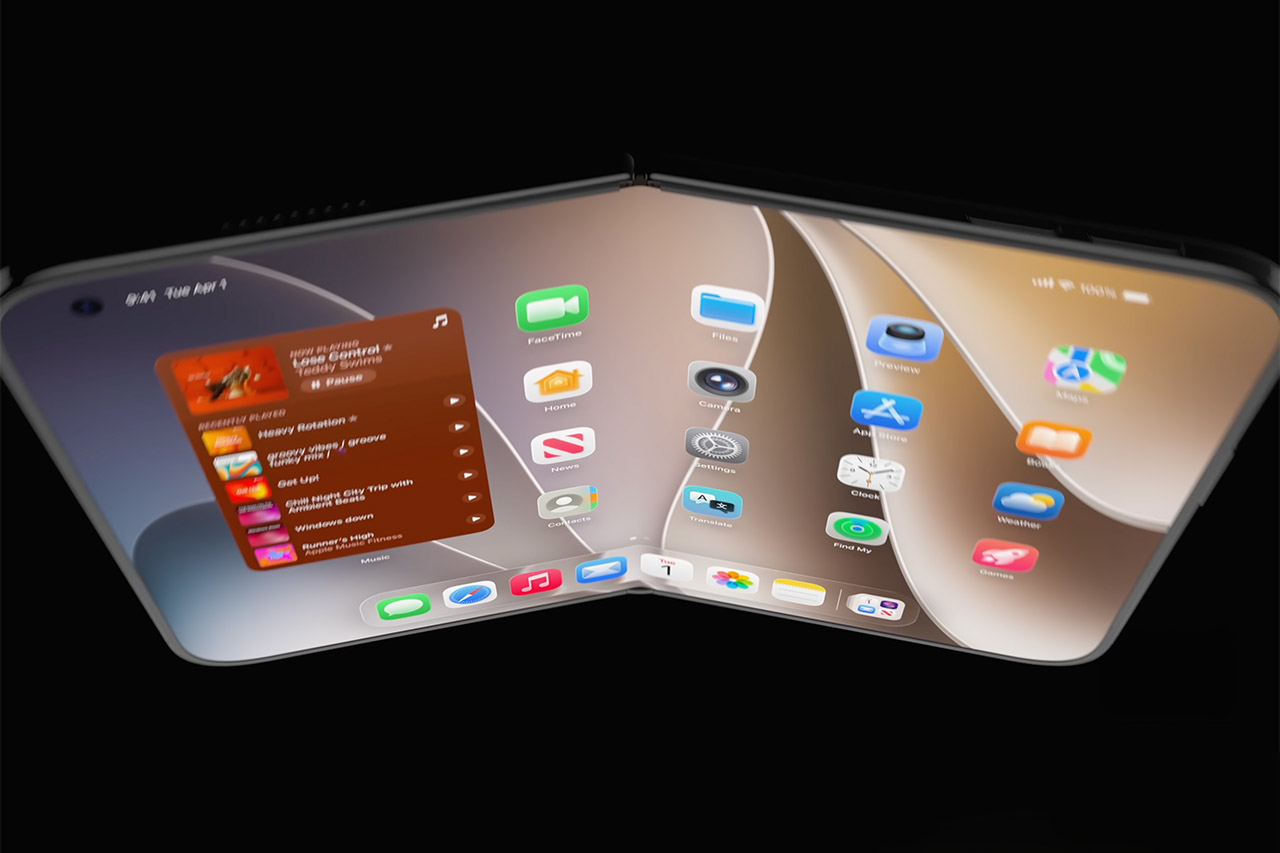
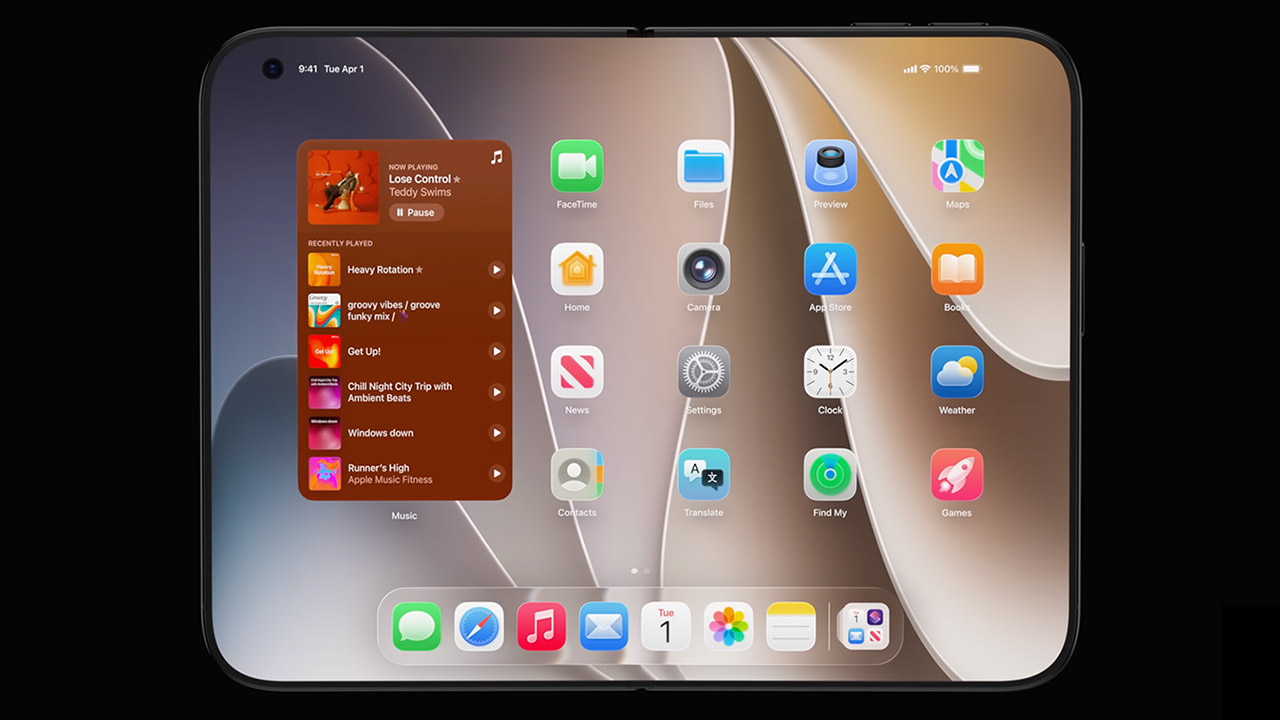
Recent video renders from a well known Apple leaker along with strings found in the first iOS 27 developer beta have supplied the clearest picture so far of the foldable iPhone Ultra that Apple has in development. Multiple reports now refer to this model as the iPhone Ultra and describe it as the new flagship that will sit above the regular Pro versions in the fall lineup.
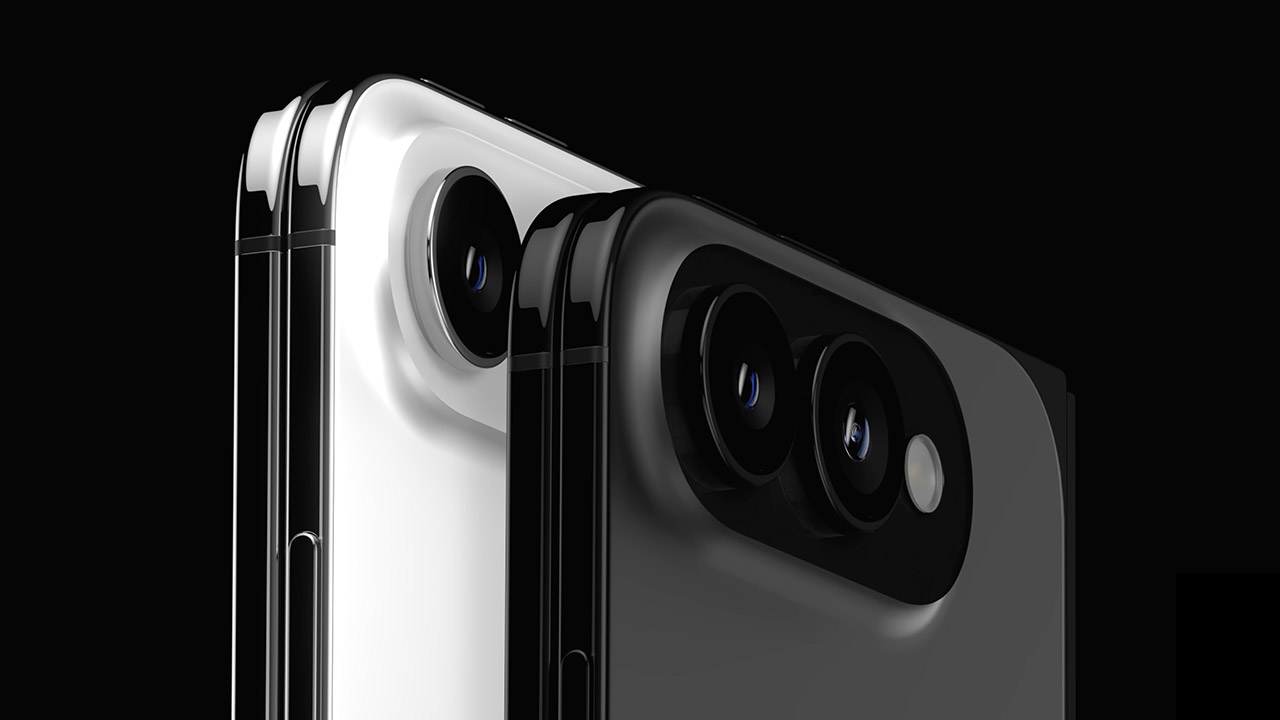
Jon Prosser shared a video and detailed renders of the device on Front Page Tech (FPT), showing it both closed and completely open. Closed, it has a bulky profile, thicker than today’s iPhones, but when you open it, it turns into a larger size that begs to be used as a little tablet. The titanium edges provide the robustness that allows many users to bypass the case altogether.
WHY IPAD — The 11-inch iPad is now more capable than ever with the superfast A16 chip, a stunning Liquid Retina display, advanced cameras, fast…
PERFORMANCE AND STORAGE — The superfast A16 chip delivers a boost in performance for your favorite activities. And with all-day battery life, iPad…
11-INCH LIQUID RETINA DISPLAY — The gorgeous Liquid Retina display is an amazing way to watch movies or draw your next masterpiece.* True Tone…
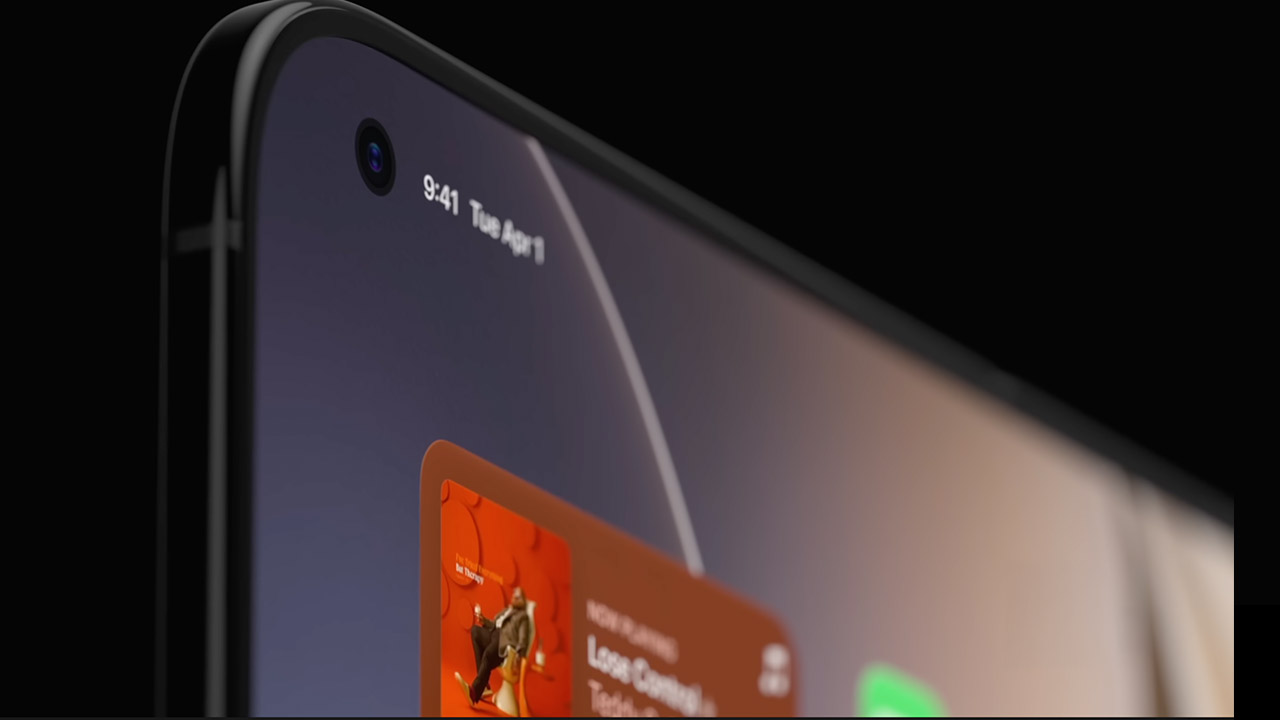
When you open it up, the smartphone is only 4.5 millimeters thick, which is thinner than the current iPhone Air, and the outer screen measures roughly 5.4 inches with a larger aspect ratio for quick glances and basic interactivity while folded up. According to the renders, the internal display can reach 7.7 inches and has a form similar to an iPad mini, which is ideal for supporting more expanded app layouts. Apparently, the main screen will be crease-free thanks to some sophisticated hinge design work.
Advertisement
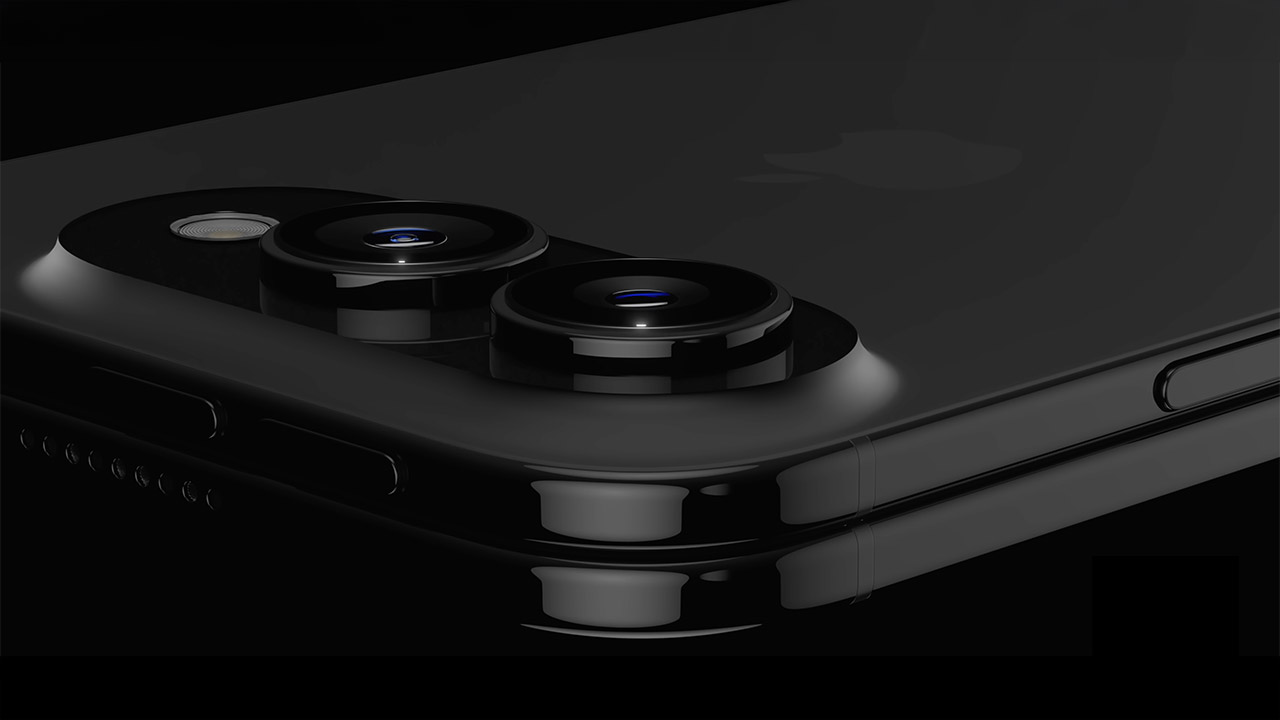
In terms of camera controls, there is a large physical button that is easy to reach no matter how you hold the device. The back optics consist of two 48 megapixel lenses for standard and extra wide photos, but there is no telephoto module in this design. The front cameras are paired, with hole punch positions on each display allowing you to take selfies from either side.
Touch ID is returning, via the power button, since, let’s be honest, there isn’t enough place for Face ID in this slim design. Power comes from an A20 Pro processor built on a 2 nanometer process, along with a large 12GB of RAM to handle any demanding tasks or future software features you may throw at it. Apple has also included its own C2 cellular modem into the gadget to manage communications, including satellite hookups.
Looking at the iOS 27 beta code, you can see that Apple has planned for fold state and angle degrees, allowing the program to change the interface when the phone opens and closes. During WWDC, Apple advised developers to prepare their programs for shifting screen sizes and orientations, rather than set layout. Split screen multitasking will make its debut on this model, and it will be limited to this model at first, as it will provide owners a productivity advantage over other iPhone users.
Pricing wise, reports suggest that the smallest storage option will cost $1999, making it the most costly iPhone yet. Right now, it appears like we may expect a September announcement alongside the iPhone 18 Pro and Pro Max variants, however availability may be limited at initially due to manufacturing difficulties. According to reports, Apple has finalized the specifications and is now in the production ramp up stage, so the autumn release date remains on track, despite early fears about delays.
Significant skill shortages have more than tripled since last year
Workers are even lacking in basic digital literacy and skills
Four in five London companies are increasing training investment
In a survey of more than 2,000 London business leaders, one in two believe their workforce doesn’t currently have the skills required to meet their AI adoption needs.
Though this is a decrease compared with 63% last year, it still leaves half of companies struggling to keep pace with AI.
However, the proportion of businesses reporting significant skill shortages rose to 15% this year, compared with just 4% last year, implying that even basic training isn’t being taken care of.
Latest Videos From
The AI skill shortage is growing
According to BusinessLDN, this is the highest level recorded since the annual survey began. But besides significant skill shortages, more than a third (35%) also warned they face moderate shortages.
Advertisement
AI aside, 60% also noted a lack of advanced digital skills and 23% shared a lack of even the most basic digital skills, but while companies don’t have the human capacity to develop AI strategies at this point, three in four have gone down the route regardless.
“While London businesses are embracing AI, many are finding it challenging to stay on top of their workforce skills needs given the pace of change,” Policy Delivery Director for People and Skills Mark Hilton wrote (via the BBC).
It’s this exact lack of digital and AI skills that could be creating jobs in the short term, though, because four in five (83%) businesses revealed they had job vacancies – an opposite narrative to multiple reports that argue AI is replacing entry-level roles. Supporting that, three-quarters (76%) don’t expect to cut headcount, suggesting we could finally have reached a balance after earlier mass layoffs.
Advertisement
Sign up to the TechRadar Pro newsletter to get all the top news, opinion, features and guidance your business needs to succeed!
But while countless surveys reveal that companies aren’t supporting their workers with the right upskilling schemes, London looks to be doing things differently with 81% planning to increase training investment over the next year.
Apropos of nothing, in February, Amazon invested $50 billion in OpenAI.
Tomohiro Ohsumi/Getty Images
Amazon MGM Studios has reportedly dropped the Sam Altman biopic Artificial, even though it’s nearly finished, after the company deepened its partnership with OpenAI. According to Variety, the film directed by Luca Guadagnino has already had several test screenings that enjoyed positive reception. Amazon had a copy of all iterations of the script even before Guadagnino joined the project, so it knew what kind of film it was greenlighting and even fast-tracking last year.
“We have the utmost respect and admiration for Luca Guadagnino as an award-winning filmmaker — not to mention a longstanding relationship that we hope to continue,” a spokesperson told the publication. “We believe that Artificial will be better served if it were released by a different studio and are working closely with the filmmaking team to find the film a new home.”
Five months after reports came out that Amazon was developing a film about Sam Altman, OpenAI signed a $38 billion multi-year cloud contract with Amazon. It gives OpenAI access to “thousands” of NVIDIA GB200 and GB300 GPUs through Amazon Web Services for inference and training its next-generation models. In February this year, the companies expanded their partnership. Amazon invested $50 billion into OpenAI, and they closed another deal for AWS to run OpenAI models for enterprise customers.
Advertisement
Artificial revolves around Altman’s controversial firing and reinstatement as CEO of OpenAI back in 2023. It stars Andrew Garfield as Altman, along with Monica Barbaro as former OpenAI CTO Mira Murati who served as interim CEO at the time, as well as Yura Borisov as former OpenAI chief scientist and board member Ilya Sutskever. Ike Barinholtz will portray Elon Musk, who was one of OpenAI’s earliest funders and is now embroiled in a legal battle against it. Variety says the film portrayed Altman and Musk as the least sympathetic characters in the story. The film had already been screened for other companies, but it’s not clear yet which studio fancies painting the head of OpenAI in a negative light.
According to the organisation, the money raised will be put towards supporting further product development and scaling.
Hexis, an Irish start-up developing a personalised nutrition app, has raised $2.1m in a seed funding round led by Apex Capital. The round also received support from Enterprise Ireland, ScaleX Investments and Sheffield United’s leading goal scorer, Patrick Bamford.
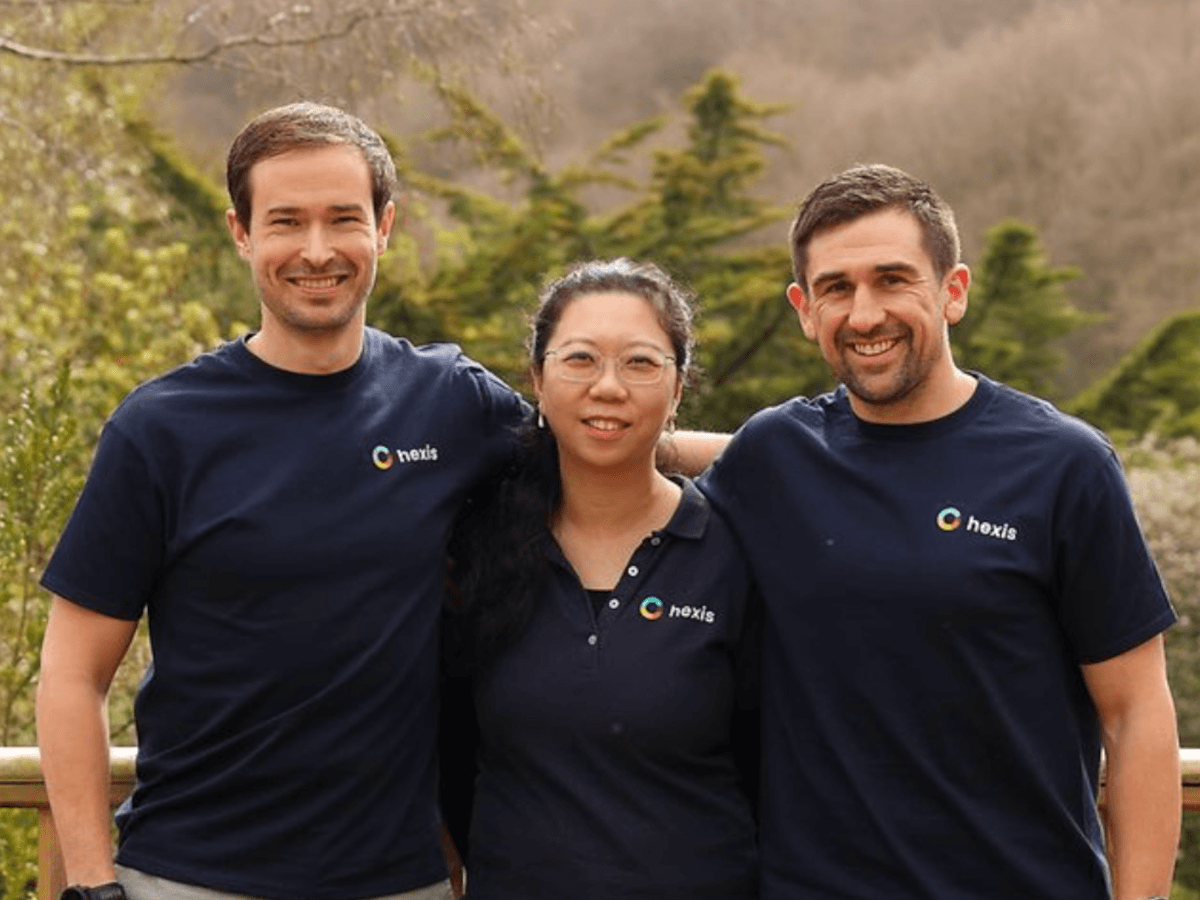
Established in Dublin and founded by Dr David Dunne, Dr Xiaoxi Yan and Dr Sam Impey, Hexis provides a nutrition operating system for athletes. The company integrates software, wearable tech and fitness tracking platforms to turn personalised workout data into a tailored nutrition strategy, depending on the users goals, lifestyle and training.
Reportedly, Hexis works with nearly 40pc of Tour de France riders and 50pc of Premier League clubs and has ambitions to broaden its geographic reach by focusing on the US market. Hexis intends to use the funds raised to support product development and scaling.
Advertisement
Commenting on the announcement, Dunne, who is also the company’s CEO, said: “Our vision at Hexis is to be the global nutrition operating system for human performance. Wearables and training platforms have transformed how athletes understand their training and recovery, but nutrition, the fuel behind both, has lagged behind and remained the missing layer.
“Hexis is ready to complete the picture and make nutrition your smartest training tool. This round allows us to go further, deepening our impact across professional sport while laying the foundations to bring truly personalised, periodised nutrition to every athlete, at every level. That has always been the ambition. We are now in a position to deliver it.”
Keith Brock, the head of Enterprise Ireland’s sports technology portfolio, said: “Enterprise Ireland is proud to back Hexis as it scales its performance nutrition platform from elite sport into the wider consumer market. Our investment reflects real confidence in the science, the founding team and the global ambition behind the business, which already supports professional teams across four continents.
“Supporting companies like Hexis sits at the heart of our strategy of helping ambitious Irish firms scale and compete internationally, and it underlines the growing strength of Ireland’s sports-tech sector.”
Advertisement
In late 2025, Hexis took home the Grand Prix award at the 2025 National Startup Awards. As well as being named the overall winner, Hexis also won the top prize in the tech start-up category, performing well alongside other companies such as Haon Life Sciences, Silicate Carbon and Glitch.
Don’t miss out on the knowledge you need to succeed. Sign up for the Daily Brief, Silicon Republic’s digest of need-to-know sci-tech news.
Save $120 to $200 on the Apple Watch Series 11 with new early Prime Day deals, as Amazon drops prices on numerous styles.
Amazon’s early Prime Day Apple Watch sale includes discounts across the entire wearable line, but we’re pleased to see the Apple Watch Series 11 has received a steeper price drop today, bringing the wearable down to $279. Save $120 to $200 on numerous styles, including 46mm case options and GPS + Cellular models.
You can find a detailed breakdown of the lowest prices across dozens of styles in our Apple Watch Price Guide, with highlights from the early Prime Day sale below.
Advertisement
42mm Apple Watch Series 11 sale
42mm Apple Watch Series 11 GPS (Aluminum Case, Sport Band): $279 ($120 off)
42mm Apple Watch Series 11 GPS + Cellular (Aluminum Case, Sport Band): $379 ($120 off)
42mm Apple Watch Series 11 GPS + Cellular (Titanium Case, Sport Band): $514.97 ($185 off)
42mm Apple Watch Series 11 GPS + Cellular (Titanium Case, Milanese Loop Band): $609 ($140 off)
46mm Apple Watch Series 11 markdowns
46mm Apple Watch Series 11 GPS (Aluminum Case, Sport Band): $309 ($120 off)
46mm Apple Watch Series 11 GPS + Cellular (Aluminum Case, Sport Band): $399 ($130 off)
46mm Apple Watch Series 11 GPS + Cellular (Titanium Case, Sport Band): $549.97 ($200 off)
46mm Apple Watch Series 11 GPS + Cellular (Titanium Case, Milanese Loop Band): $639 ($160 off)
According to the organisation, the money raised will be put towards supporting further product development and scaling.
Hexis, a personalised nutrition app, has raised $2.1M in a seed funding round led by Apex Capital. The round also received support from Enterprise Ireland, ScaleX Investments and Sheffield United’s leading goal scorer, Patrick Bamford.
Established in Dublin and founded by David Dunne, Xiaoxi Yan and Sam Impey, Hexis provides a nutrition operating system for athletes. The company integrates software, wearable tech and fitness tracking platforms to turn personalised workout data into a tailored fitness strategy, depending on the users goals, lifestyle and training methods.
Reportedly, Hexis works with nearly 40pc of Tour de France riders and 50pc of Premier League clubs and has ambitions to broaden its geographic reach by focusing on the US market. Hexis intends to use the funds raised to better support product development and scaling.
Advertisement
Commenting on the announcement, David Dunne, who is also the company’s CEO, said, “Our vision at Hexis is to be the global nutrition operating system for human performance. Wearables and training platforms have transformed how athletes understand their training and recovery, but nutrition, the fuel behind both, has lagged behind and remained the missing layer.
“Hexis is ready to complete the picture and make nutrition your smartest training tool. This round allows us to go further, deepening our impact across professional sport while laying the foundations to bring truly personalised, periodised nutrition to every athlete, at every level. That has always been the ambition. We are now in a position to deliver it.”
Keith Brock, the head of Enterprise Ireland’s sports technology portfolio said, “Enterprise Ireland is proud to back Hexis as it scales its performance nutrition platform from elite sport into the wider consumer market. Our investment reflects real confidence in the science, the founding team and the global ambition behind the business, which already supports professional teams across four continents.
‘Supporting companies like Hexis sits at the heart of our strategy of helping ambitious Irish firms scale and compete internationally, and it underlines the growing strength of Ireland’s sports tech sector.”
Advertisement
In late 2025, Hexis took home the Grand Prix award at the 2025 National Startup Awards. As well as being named the overall winner, Hexis also won the top prize in the tech start-up category, performing well alongside other companies, such as Haon Life Sciences, Silicate Carbon and Glitch.
Don’t miss out on the knowledge you need to succeed. Sign up for the Daily Brief, Silicon Republic’s digest of need-to-know sci-tech news.
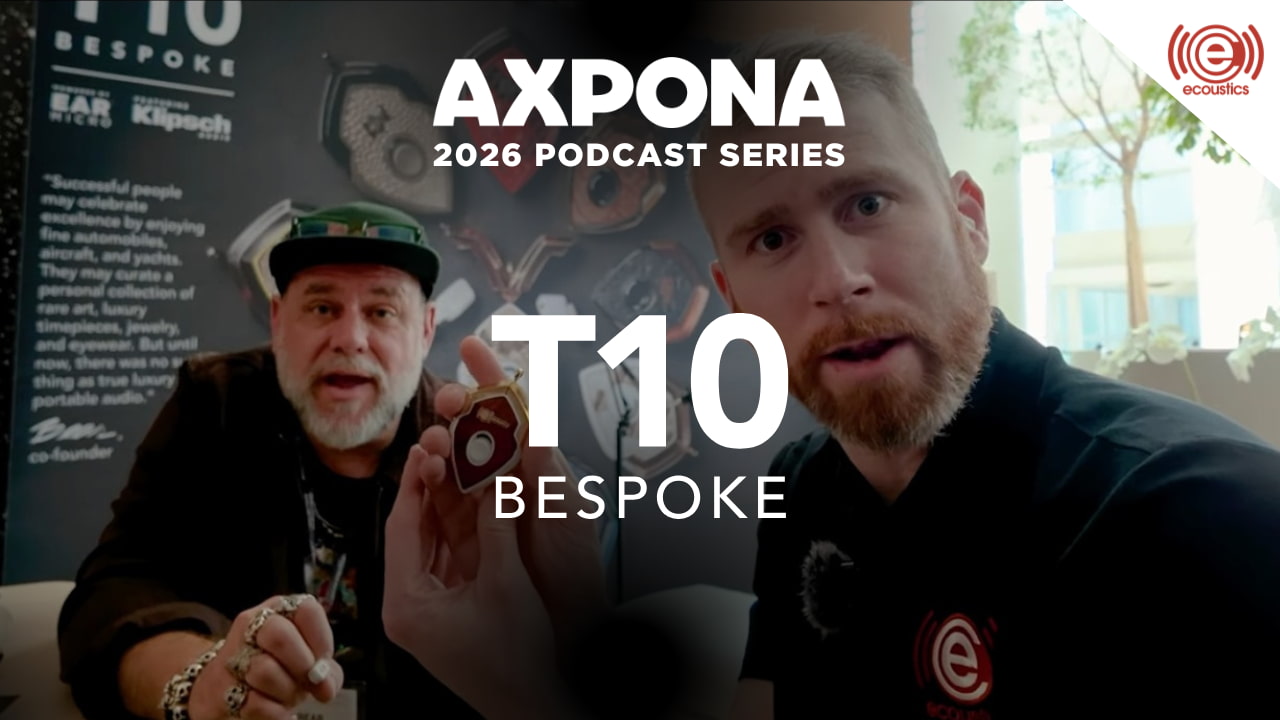
Recorded from the show floor at AXPONA 2026, our Podcast Producer, Mitch Anderson sits down with Bear Clark (aka Hi-Fi Bear) to try out T10 Bespoke In-Ear Computers for the first time. Find out all about “the world’s smallest, smartest, and lightest HiFi listening instrument” and why it’s unlike any wireless earbud on the market. Not only is each set hand-crafted by Hi-Fi Bear himself, but they can be custom made just for you!
Plus there’s still a limited number of raffle tickets available for a chance to win the eCoustics Special Edition T10 Bespoke In-ear Computers featured in this episode. Learn more about our raffle here.
Sponsors: Thank you SVS for sponsoring this episode, along with Audeze for supplying all guests LCD-S20 Headphones, and Loewe and T10 Bespoke for sharing lounge space at AXPONA 2026.
This episode was recorded on April 12, 2026 (the third day of AXPONA 2026).
Triangle has replaced its long running Esprit range with Solstice, a new loudspeaker lineup developed and manufactured in Soissons, France. More than a cosmetic refresh, the Triangle Solstice series arrives with a redesigned horn tweeter, new driver architecture, revised cabinet construction, and an integrated base intended to give the French specialist a more cohesive platform for its next generation of stereo speakers.
For more than three decades, Triangle’s Esprit range built a reputation for high sensitivity, natural tonal balance, and strong value. Solstice represents the next chapter, introducing new technologies throughout the lineup while aiming to preserve the musical character associated with Triangle loudspeakers.
Rather than another evolutionary Esprit update, Solstice has been developed from the ground up. Triangle says every major component has been re-engineered, with particular attention paid to frequency coherence, cabinet rigidity, and the reduction of unwanted coloration.
All New Loudspeaker Series
The Solstice line comprises three models: the Solstice 8 floorstander, Solstice 3 bookshelf speaker, and Solstice C3 center channel. Designed as a coherent platform for stereo and home cinema systems, the range shares Triangle’s new driver technologies, crossover approach, and cabinet architecture. Finishes include white, black, teak, and birch, while matching stands are available for the Solstice 3.
Advertisement
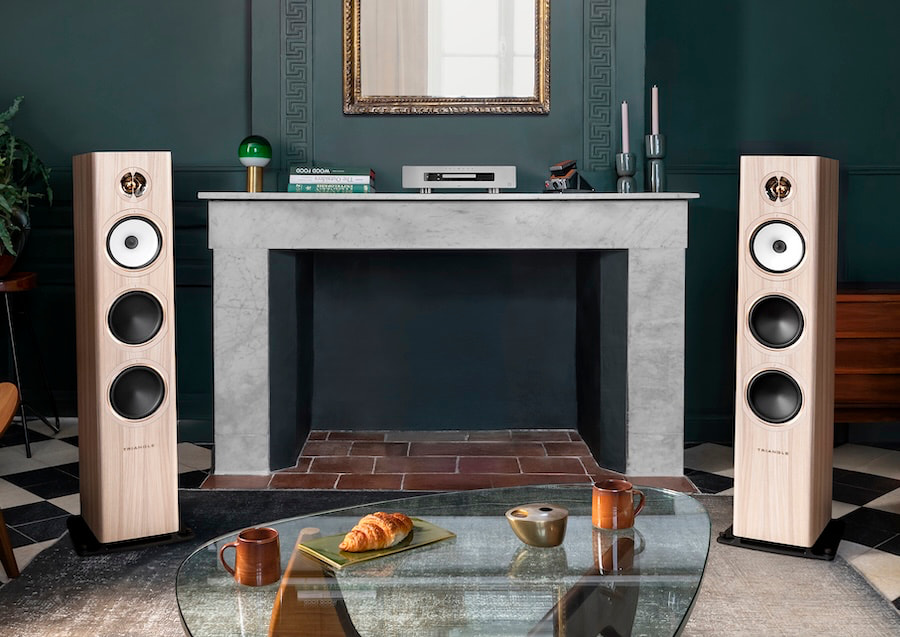
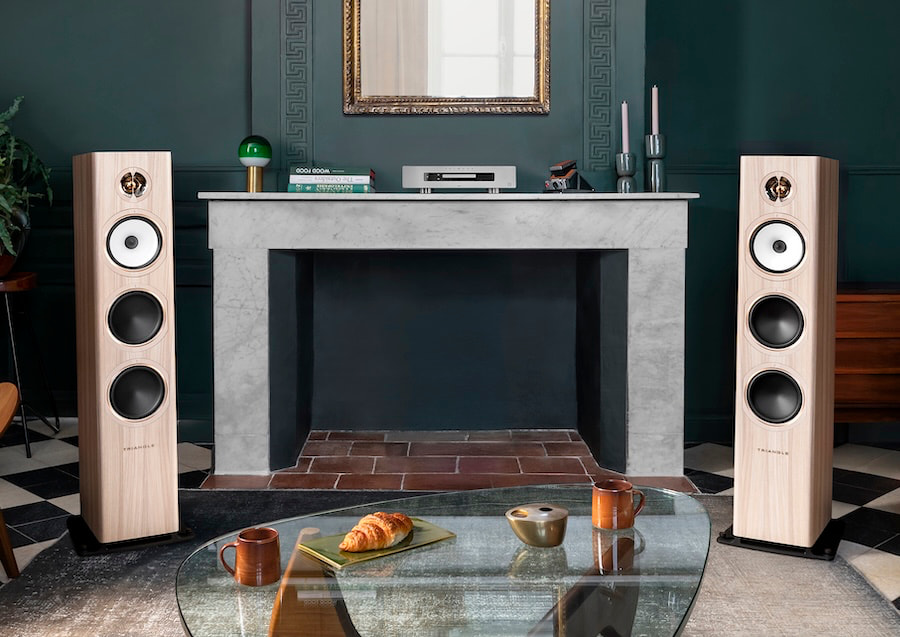
Triangle Solstice 8 (birch)
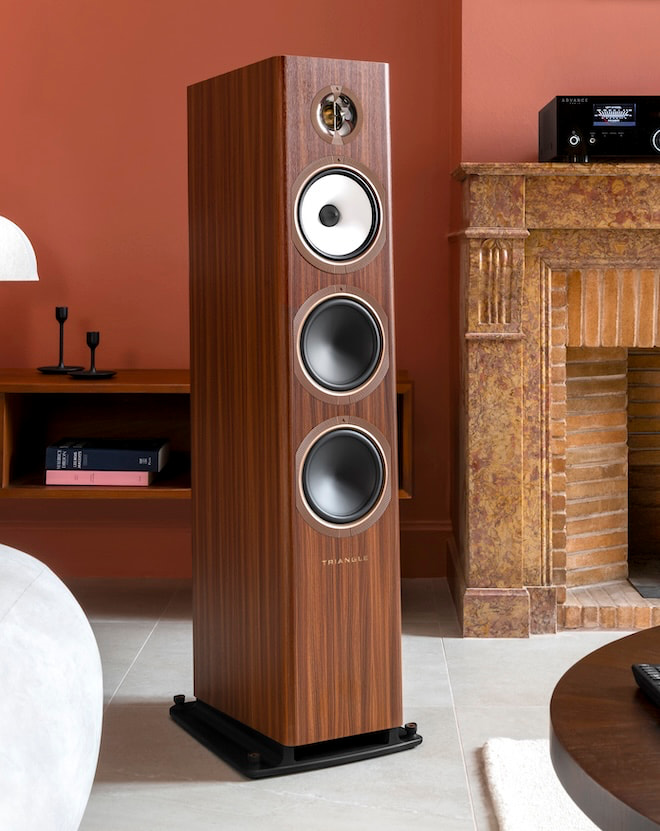
Solstice 8: The flagship floorstander uses a three-way bass-reflex design with a 25 mm horn-loaded tweeter, a 16 cm cellulose-pulp midrange driver, and a pair of 16 cm woofers with concave cones. Triangle specifies a frequency response of 38 Hz to 22 kHz and RMS power handling of 130 watts. Its dual terminal arrangement supports conventional single-wire connection, bi-wiring, or bi-amping. The Solstice 8 is intended for rooms measuring roughly 15 to 50 m², or about 160 to 540 square feet.
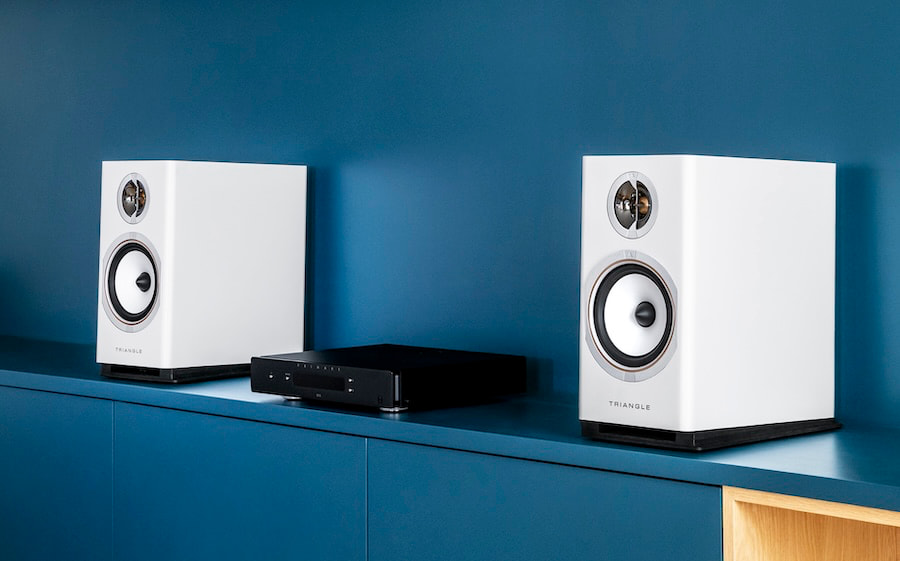
Triangle Solstice 3 (white)
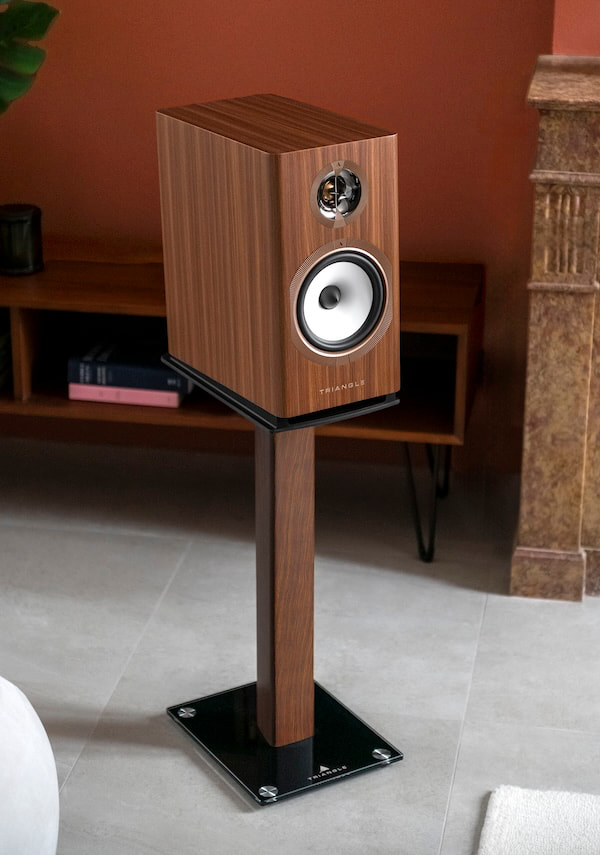
Solstice 3: The compact standmount uses a two-way bass-reflex design with a 25 mm horn-loaded tweeter and a 16 cm cellulose-pulp midrange/bass driver. Triangle specifies a frequency response of 48 Hz to 22 kHz and RMS power handling of 90 watts. Its cabinet base is designed to integrate directly with Triangle’s matching S05 stand. The Solstice 3 is recommended for rooms measuring roughly 10 to 35 m², or about 108 to 377 square feet.
Triangle Solstice C3 (black)
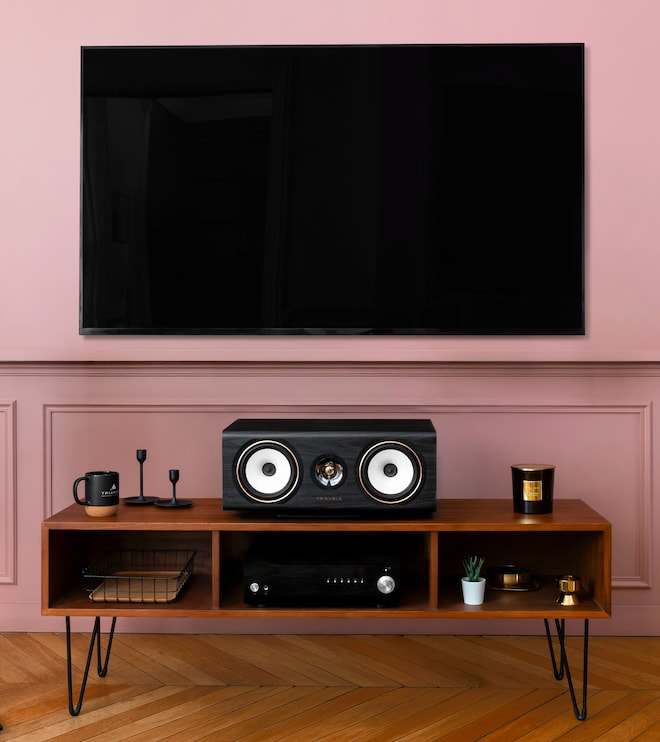
Solstice C3: The center channel employs a two-way sealed design with a 25 mm horn-loaded tweeter and twin 16 cm cellulose-pulp midrange/bass drivers. It can be positioned horizontally beneath a display or used vertically as a left or right channel. Triangle specifies a frequency response of 50 Hz to 22 kHz, RMS power handling of 120 watts, and 92 dB sensitivity. That sensitivity is closely matched to the Solstice 8 and Solstice 3, helping maintain consistent tonal balance across the front soundstage in a matched home cinema system.
Speaker Drivers
Triangle developed every Solstice driver specifically for the new lineup, rather than adapting existing units from the Esprit range. The goal is greater consistency between models, with shared driver technology and voicing across stereo and home cinema configurations.
Tweeter Innovation
All three Solstice models use Triangle’s new TZ2540MG horn tweeter. According to Triangle, the design combines two acoustic concepts not previously used together in one of the company’s tweeters.
Advertisement
Triangle Solstice 3 (teak)
The horn profile follows the OS-SEW (Oblate Spheroid Super Elliptical Waveguide) principle, which Triangle says is intended to promote more even high-frequency dispersion. The claimed benefits include a wider listening area, a more stable soundstage, and more consistent tonal balance beyond the central listening position.
A barrel-shaped cutout at the base of the horn is designed to create volumetric compression near the suspension point. According to Triangle, this improves behavior around the crossover region and supports smoother integration between the tweeter and midrange driver.
Advertisement. Scroll to continue reading.
The TZ2540MG uses a 25 mm aluminum/magnesium alloy dome that Triangle says builds on materials employed in its Esprit 40th and Magellan 40th ranges. The company says the alloy increases diaphragm stiffness while helping to reduce the metallic coloration sometimes associated with pure aluminum domes.
The tweeter also incorporates a neodymium ring motor with an open center and rear absorption chamber. Triangle says this configuration is intended to limit internal reflections and reduce distortion.
Advertisement
At the horn’s output, Triangle employs a newly designed, one-piece phase plug. Injection-molded as a single component, its geometry draws on the barrel-shaped structure of the horn. The design is intended to promote more even high-frequency dispersion and more consistent off-axis performance.
Triangle Solstice 8 (teak)
Midrange and Bass Drivers
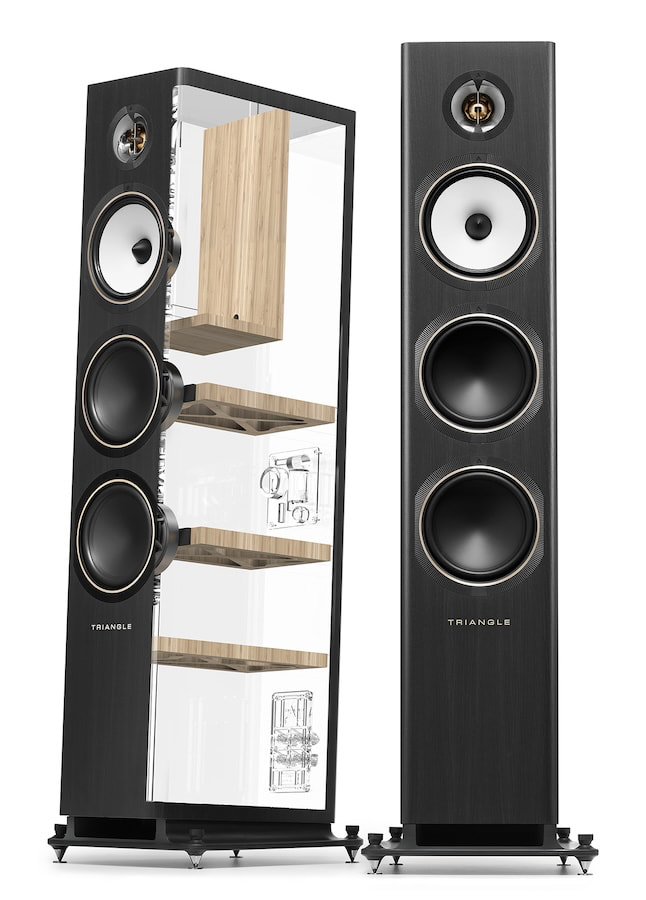
The 16 cm drivers use a new arch-shaped, die-cast aluminum basket designed to increase structural rigidity while improving airflow around the rear of the cone. Triangle says the revised structure also helps limit basket resonance that could affect midrange clarity, particularly at higher listening levels.
Triangle continues to use natural cellulose pulp for its midrange cones, a material the company associates with neutral tonal balance and natural reproduction of voices and instruments. A new rear-gluing assembly process is designed to increase the effective radiating surface area and improve linearity across the driver’s operating range.
The Solstice 8 uses twin bass drivers with concave cones and no conventional dust caps. Triangle says the concave profile creates a stiffer radiating surface, helping to reduce distortion at higher excursions while maintaining clean, controlled low-frequency output. It also gives the driver a cleaner, more distinctive appearance.
Cabinet Construction
Triangle says the Solstice enclosure was engineered for acoustic neutrality, with the goal of minimizing the cabinet’s contribution to the reproduced sound.
Advertisement
The company’s DVAS (Driver Vibration Absorption System) integrates the drivers into the speaker structure to help reduce vibration. Triangle says the approach increases cabinet rigidity and attenuates vibrations generated by the midrange driver, with the intended benefits of greater clarity, detail, and dynamic expression.
Solstice cabinets are constructed from high-density MDF. The Solstice 3 weighs 12.9 kg (28.4 lb), the Solstice C3 weighs 11.75 kg (25.9 lb), and each Solstice 8 weighs more than 30 kg (66 lb). All external cabinet edges are rounded to help reduce diffraction and support more even sound dispersion, which Triangle says contributes to more precise stereo imaging.
Crossover and Connectivity
The crossover network uses air-core inductors, MKT capacitors, and cement-coated resistors, with OFC (oxygen-free copper) internal wiring throughout.
The Solstice 8 features dual binding posts for bi-wiring or bi-amping, while the Solstice 3 and Solstice C3 use single terminal blocks. All models accept standard speaker cable terminations, including banana plugs and spade connectors.
Triangle Solstice 8 (black ash)
Integrated Base
The Solstice 8 introduces Triangle’s new integrated base, which combines mechanical isolation, vibration control, and bass-reflex loading in a single structure.
Advertisement
Advertisement. Scroll to continue reading.
Its Hidden Laminar Bass-Reflex Port is routed through the base rather than the cabinet itself. Triangle says the laminar-flow design is intended to reduce turbulence and port noise while eliminating visible port openings from the enclosure.
The base uses a dual-material construction that combines a cast-iron honeycomb structure with a thick silicone outer layer. The cast iron adds mass and rigidity, while the silicone layer is intended to absorb vibration and help mechanically decouple the loudspeaker from the floor.
Triangle has also built a 2-degree rearward tilt into the base to better align the tweeter’s output with a seated listening position and widen the usable listening area.
Advertisement
The Solstice 8 includes adjustable spikes and counter-spikes for hard floors or carpeted rooms. Triangle-logo caps conceal the hardware once installed.
Exterior Finishes
Solstice speakers are available in four finishes: Teak, Birch, White, and Black Ash. The wood-effect options use a vertical grain orientation, and each model includes color-matched magnetic grilles.
Sculpted silicone surrounds frame each driver and are matched to the cabinet finish, while champagne-finish aluminum trim rings add a more polished visual detail around the drivers.
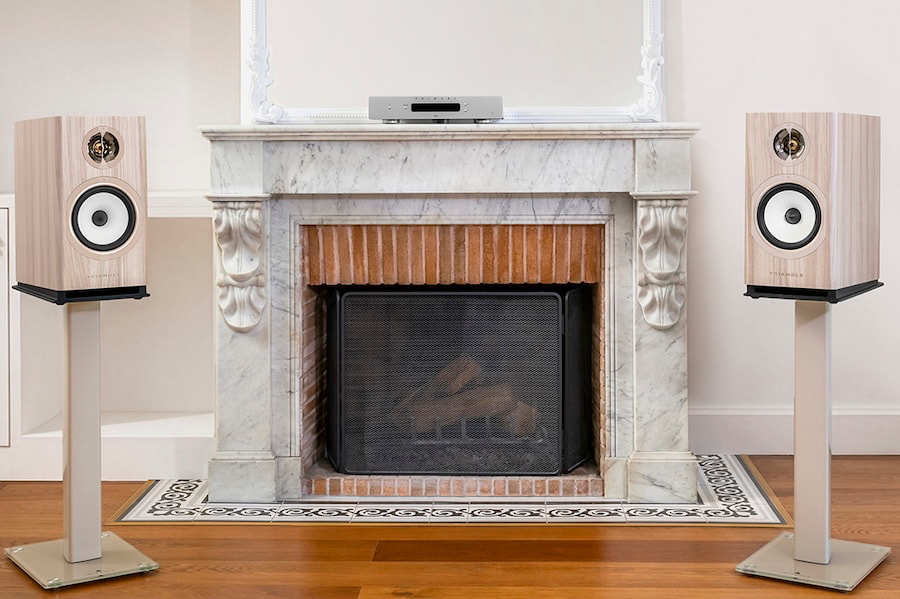
Triangle Solstice 3 on S05 stands (birch)
The optional S05 stands are designed specifically for the Solstice 3 and are available in Black, White, Teak, and Greige, the latter intended to complement the Birch finish. The speaker’s base locks directly into the stand’s top plate for a more secure and visually integrated installation.
Advertisement
Triangle Solstice Series Specifications
Triangle Model
Solstice 8
Solstice 3
Solstice C3
Product Type
Floorstanding Speaker
Bookshelf/Stand-mount Speaker
Center Channel Speaker
Price
$2,799/pair
$1,349/pair
$750 each
Speaker Type
3-way bass-reflex
2-way bass-reflex
2-way sealed
Speaker Drivers
1 x TZ2540MG tweeter 1 x 16cm midrange 2 x 16cm woofer
1 x TZ2540MG tweeter 1 x 16cm mid-woofer
1 x TZ2540MG tweeter 2 x 16cm mid-woofer
Sensitivity (dB/W/m)
91 dB
90 dB
92 dB
Bandwidth (+/-3dB)
38Hz–22kHz
48Hz–22kHz
50Hz–22kHz
Power Handling (Watts RMS)
130W
90W
120W
Impedance (min/nominal)
3.6 / 8 Ohm
5.3 / 8 Ohm
4.5 / 8 Ohm
Crossover Frequencies
250Hz / 3.7kHz
2.8kHz
2.85kHz
Dimensions (WxHxD)
308 x 1075 x 394mm
12.12 x 42.32 x 15.51″
221 x 418 x 370mm
8.7 x 16.45 x 14.56″
Advertisement
540 x 235 x 310mm
21.25 x 9.25 x 12.2″
Net Weight
30.4kg / 67lbs (each)
12.9kg / 28.4lbs
11.75kg / 25.9lbs
Finishes
Teak, Birch, White, Black Ash
Teak, Birch, White, Black Ash
Teak, Birch, White, Black Ash
The Bottom Line
Triangle is not treating Solstice as a routine Esprit refresh with a new veneer and some upgraded crossover parts. The new line is built around a redesigned acoustic platform that includes the TZ2540MG horn tweeter, new 16 cm cellulose-pulp drivers, DVAS cabinet construction, revised crossovers, and, in the Solstice 8, an unusually ambitious integrated base that combines mechanical isolation, a hidden laminar bass-reflex port, and a 2-degree listening-axis tilt.
That makes Solstice most compelling for music listeners who want a properly engineered, visually distinctive French loudspeaker system rather than another generic rectangular box with a familiar driver complement. The Solstice 8 should appeal to buyers building a serious two-channel system in a medium to larger room, while the Solstice 3 and C3 offer a logical route into a matched stereo or three-channel front soundstage.
Advertisement
The limitation, at least for now, is system breadth. Triangle has launched Solstice with a floorstander, standmount, and center channel, but no dedicated surround, on-wall, height speaker, or matching subwoofer. That makes it a strong fit for stereo and front-stage home cinema systems, but less complete for buyers planning a fully matched Dolby Atmos installation.
Competition will come from Focal’s Theva series, DALI’s SONIK range, Perlisten’s A-Series, and Elipson’s Prestige Facet II lineup. Focal offers French design and Slatefiber driver technology; DALI SONIK provides a broader home cinema ecosystem; Perlisten brings more overtly performance-driven engineering and dedicated on-wall surround options; and Elipson offers the widest model selection, including surround, Atmos, LCR, center, bookshelf, and floorstanding options.
Triangle’s advantage is that Solstice feels like a more comprehensive acoustic redesign than a simple replacement range, with the horn tweeter, cabinet engineering, and Solstice 8 base doing most of the heavy lifting.
























































You must be logged in to post a comment Login