The T8 isn’t going to be something that absolutely everyone needs but what it does is turn any digital input into a peerless streamer with just enough EQ adjustment to help things on their way. For many people, that will be enough
Excellent and utterly stable performance
Excellent, user friendly control app
Beautifully made and finished
No digital inputs
No Google Cast
Not cheap
Key Features
Advertisement
Outputs
Optical, coaxial, AES, USB and i2S
Advertisement
Storage
Up to 16TB via internal bay
Advertisement
Audio formats
Up to 32-bit/768kHz and DSD512
Introduction
Some products have descriptions that need little in the way of further explanation. If you see an integrated amp here, it won’t take too much deductive reasoning to find out what it does. Some other products are a little more challenging in this regard though.
Advertisement
The Eversolo T8 is a network streaming transport. Effectively, it is the front half of a network streamer but, where you would expect to find analogue outputs for connection to an amplifier, the T8 is exclusively equipped with digital outputs.
This might seem a bit odd at first glance. Why would you only want the front end of a network streamer when you can spend (a lot) less and get one that has decoding built in? The answer is twofold and comes down to practicality and performance.
Advertisement
In practical terms, a great many devices we look at here have digital inputs and decoding built in. Buying a streamer means doubling up on digital boards whereas something like the T8 simply makes use of the decoding you have. Alternatively, you might already own a DAC that has superb performance and the T8 is going to be the means of unlocking that. Then, there’s a more intangible benefit.
Advertisement
Eversolo says that the engineering that has gone into the T8 offers higher performance than would be achieved by simply using a streamer or a PC you happen to have lying around. Certainly, some of the engineering on offer suggests the Eversolo should be able to do some impressive things so we should crack on and see if it does or not
Price
In the UK, the Eversolo T8 costs £1,290. It is available from a usefully broad dealer network and can be purchased online if you don’t feel you are in a position to visit a physical store. In the USA, the T8 is available for $1,380 while in Australia, it costs $2,399 AUD.
It’s worth noting that the more conventional Eversolo streamers are not exactly shabby at being used as transports either. They have a selection of digital outputs that allow them to perform the same role so, if you already own one of those and unless you need the specific outputs that the T8 offers, you might at least want to start there.
Design
Slightly less than full width design
Superb control interface
Looks and feels worth the asking price
Advertisement
Eversolo has elected to use casework that is 365mm wide for the T8 which means it’s about 10 centimetres shorter than the accepted full width size. Oddly, it’s also not a perfect match for the Z10 DAC already reviewed here so if you’re the sort of person who wants a neat stack of things the same size as each other, this might not be the product for you. The T8’s styling is usefully neutral though so it won’t look at odds with most other components.
Advertisement
Something that is carried over wholesale from other Eversolo devices is the control interface and this is emphatically A Good Thing. The main app is an absolute pleasure to use. The screen mirror function that Eversolo includes as part of it is still one of the cleverest and most underrated ideas doing the rounds in streamers (it makes adjusting the many setup menus a huge amount easier).
Image Credit (Trusted Reviews)
It looks and feels like software designed by people who have been using it day in, day out for years and who know exactly what matters. Eversolo also understands that you don’t want to have to whip your phone out every single time you want to do something which is why there are both front panel controls and a smart remote handset.
One key feature of how you perceive it is that the app assembles and caches a library on the device itself which means that moving around a large volume of stored content feels effortlessly slick (and means that browsing a library on a local drive feels exactly the same as using a NAS). If you have a large collection of your own music as opposed to mainly using streaming services, the Eversolo is pretty much as good as it gets.
Image Credit (Trusted Reviews)
Advertisement
Of course, if you do use streaming services, the Eversolo holds up pretty well there too. Streaming service provision is excellent and features like the Listen at Will feature that can shuffle from your library and subscribed streaming service as a single stream are really well implemented.
Connect functionality is present on the services that support it and it’s fully up to speed with Spotify Lossless as well. You also get AirPlay but no Google Cast or Bluetooth. This is also one of a tiny number of devices that can access Apple Music natively which puts it in pretty select company.
Advertisement
This is complemented by a standard of build and finish that justifies the term ‘immaculate.’ This isn’t a cheap bit of kit but the build and finish is pretty much flawless.
We place different values on this aspect of product design but having access to a large and easy to read display and a chassis that feels as confidence inspiring as this one does has some worth for me at least. If you are looking at a T8 as a front end for an expensive integrated amp with a DAC board or similar, it’s going to hold its own sat on the rack nearby.
Image Credit (Trusted Reviews)
Features
Selection of digital outputs…
…but no inputs
Unique networking hardware
Carefully designed internal circuitry
Internal storage option
Customisable EQ
Advertisement
The focus of the T8 is to provide a digital signal to an external DAC and to ensure that you have the most options available to do this, Eversolo has fitted it with a useful spread of connections.
As well as optical, coaxial and USB outputs (all of which are fitted to the one box streamers too), the T8 also has an AES balanced output and an i2S output which uses an HDMI socket. The USB and i2S connections support up to 768kHz PCM and DSD512 while the other three connections are 24/192kHz capable and can send DSD64 as DoP over these outputs if the connected device supports it.
Advertisement
Image Credit (Trusted Reviews)
I2S is an interesting connection and something that is becoming more common in the market. A high proportion of the top spec models from a number of Far East manufacturers include it (notably the Topping D900 reviewed here recently) because it offers a very high bandwidth clocked signal.
The catch is that ‘i2S’ covers off a wide selection of possible wiring patterns. It’s not a given your i2S equipped source will play nice with your i2S DAC. The T8 can be adjusted through no less than 8 different wiring profiles, with the different pin wirings being noted in the on screen menus. Under test, I have had the T8 work happily with i2S devices from completely different manufacturers which suggests that Eversolo’s diligence has paid off.
What you don’t get though are any digital inputs. There is a reasonable argument for removing them because some signals (HDMI being one of them) simply won’t be passed to a USB output rather negating their worth and it is reasonably likely that the device the T8 is outputting to will also have additional inputs.
Advertisement
Image Credit (Trusted Reviews)
Another feature that is unique to the T8 is an SFP fibre optic network connection which sits alongside the standard gigabit LAN port. Some of the claims being made for this connection (not really by Eversolo I hasten to add) are… probably optimistic… but it might be better to see its inclusion as a potentially handy bit of future proofing.
If there is a move to SFP equipped network hardware in the future, the T8 will converse with it without needing any form of conversion. The good news is that if this all sounds a bit much you can ignore it and there is an excellent Wi-Fi 6 implementation too.
Advertisement
Internally, the T8 differs from its one box streaming relatives. It has been designed from the outset with a view to keeping electrical and mechanical noise to an absolute minimum. A custom 4N oxygen-free copper toroidal transformer is partnered with internal wiring shielded with Teflon insulation.
Eversolo claims noise levels as low as 30μV with suppression of high-frequency interference and ground noise through precision voltage regulation and high-grade filtering components. The T8 proceeds to add an ultra-high precision femtosecond clock to the circuit for good measure; so when you do use a connection like i2S, this should ensure performance is as good as it can be.
Image Credit (Trusted Reviews)
Advertisement
Something else you’ll find in the casework is a hard drive bay on the underside. This can handle up to 16 terabytes of storage which should be enough for most needs. This means you have the scope to operate the T8 with little to no additional network hardware and no unsightly drives hanging off the back off of it.
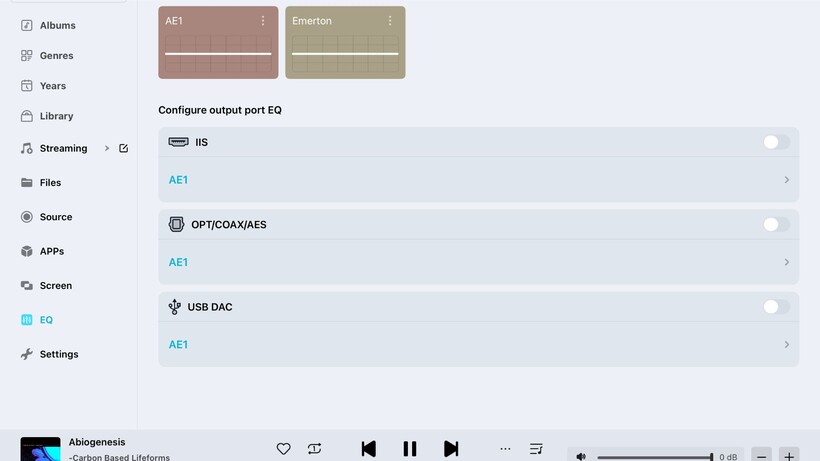
The last feature the T8 offers is an interesting one. Eversolo has updated their EQ system to include a feature they call Evotune. This can use your phone’s microphone to take readings that can be fed back into a 10 band EQ which supports frequency, gain, and Q values to adjust output to compensate for the room.
Advertisement
It also supports FIR filter import, loudness control, and dynamic compression. This is an interesting place to implement EQ because it shouldn’t technically affect the ‘character’ of your decoding and amplification. There are more sophisticated rival systems but this is a useful extra function to have.
Performance
Will be governed by the performance of the decoding it is connected to
…but superb performance is possible with upsampling and the i2S connection
Operationally bulletproof
Compared to the marathon length sections I’ve had up to this point, this one will be briefer because, even allowing for the care and attention that Eversolo has lavished on the T8, the performance of the digital input it is connected to is going to have more of an effect on your overall sound quality.
Modern DAC chips are better at rejecting errors in the incoming signal than was the case previously so the benefits of scrupulously removing them are less than they might once have been.
Advertisement
Image Credit (Trusted Reviews)
This isn’t to say that the T8 can’t prove its worth. If you have a DAC with an i2S input, the performance I’ve obtained using this connection on both DACs I’ve tested with it has been superior to any other option available. It’s not a night and day difference but Agnes Obel’s lovely Philharmonics has been slightly better defined and tonally believable played back in this way. The nature of this connection being ‘clocked’ between the two devices does seem to help with the overall performance.
If you choose a different path to using the T8, it has other virtues too. When you switch to Roon as a control point (for which the Eversolo is fully certified), the upsampling facilities become available and this works to the. Using the T8 connected to a Cambridge Audio Edge A via USB with DSD conversion enabled (so that all signals are converted before they reach the Eversolo) is something that benefits the ESS based digital board of the Cambridge Audio considerably and gives a richness and immediacy to Air’s Love 2 that is hugely engaging to listen to.
Advertisement
Image Credit (Trusted Reviews)
There is one other aspect of performance too and it’s arguably more important than detailed aspects of sound quality. The T8 is operationally bulletproof. This sample has been here a while now and at no stage during intensive and heavy handed use has the T8 so much as hinted at needing attention.
I’ve hotplugged it, moved between the dedicated app, Connect functions, Spotify and Roon at will and across multiple control points and generally behaved in a wholly unsympathetic way and it hasn’t missed a beat. Google Cast aside, it will receive content pretty much any way you choose to send it and it ensures that it never feels highly strung or demanding to use.
Advertisement
Ultimately, streamers have to give you a user experience that makes you want to keep using them and the T8 delivers on this superbly well.
Should you buy it?
Advertisement
Superb streaming interface
If you have a high quality digital input going spare, the T8 allows you to bolt on a superbly implemented streaming interface that is an absolute joy to use. If you have the option to use i2S, it’s pretty much a no brainer.
Advertisement
The engineering in the T8 is peerless but the amount of sonic difference it can make over less ornate solutions will always be relatively limited. It’s a pleasure to use… but so is Eversolo’s DMP A6 Gen2 at over £400 less.
Final Thoughts
You will need to take streaming pretty seriously to consider the Eversolo but the flexibility and reliability that it brings to its performance is every bit as important as its sonic attributes and this sheer user friendliness is likely to win it many friends.
Advertisement
How We Test
We test every streaming transport we review thoroughly over an extended period of time. We use industry standard tests to compare features properly. We’ll always tell you what we find.
We never, ever, accept money to review a product.
Find out more about how we test in our ethics policy.
Tested for several days
Tested with real world use
Full Specs
Eversolo T8 Review
UK RRP
£1290
USA RRP
$1399
AUD RRP
AU$2399
Manufacturer
–
Size (Dimensions)
230 x 315 x 88 MM
Weight
4.5 KG
Release Date
2026
Resolution
x
Connectivity
Wi-Fi 6
Colours
Black
Audio Formats
DSD (DSF,DFF,SACD ISO Support DST up to DSD512), MP3, APE, WAV, FLAC, AIF, AIFF, AAC, NRG, CUE
This week Jonathan chats with Florian Gilcher about Rust and Ferrous Systems! How have we gotten here, what’s coming next, and what’s new in the Rust world? Watch to find out!
Did you know you can watch the live recording of the show right on our YouTube Channel? Have someone you’d like us to interview? Let us know, or have the guest contact us! Take a look at the schedule here.
The Trump administration’sdisagreement with Anthropic over its most advanced AI models appears to be fast coming to a head.
Trump officials tell Inner Loop that if Anthropic wants to rerelease Claude Fable 5, the AI model that they took offline with export controls last week over concerns about jailbreaking—a method of using prompts to get around a model’s safeguards—the company will need to take steps to actually address what the government alleges are vulnerabilities.
Anthropic has said for days that the administration’s concerns are overblown and that the effects of the jailbreaks are minimal. It reiterated this position to the Commerce Department and the Office of the National Cyber Director, Sean Cairncross, in a technical meeting on Monday.
But officials say they are past arguing whether the jailbreaks are significant, since the National Security Agency concluded that there are ways to disable guardrails on Fable 5, which are put in place to prevent users from accessing capabilities of the Mythos model related to cybersecurity, chemistry, and biology
Advertisement
At this stage, the administration essentially views the situation as Anthropic’s problem to fix, according to three people familiar with discussions.
Neither the Commerce Department’s Center for AI Standards and Innovation nor the National Security Agency has the staff or the bandwidth to be drawn into chasing down every conceivable jailbreak on every model that reaches the market, the people said.
As a result, the administration believes that Anthropic should be more proactive about continually testing not just Fable 5 but all of its frontier AI models to find potential jailbreaks and flag them to the government themselves.
But on a more fundamental level, it remains unclear how Anthropic is supposed to prevent jailbreaking.
Advertisement
Independent cybersecurity experts have increasingly taken the view that guardrails on AI models are only a stopgap solution, since skilled users and future AI models will find ways to bypass constraints—meaning that what the White House appears to want cannot be done.
A White House spokesperson declined to comment.
DNI = Do Not Invite
At the start of the week, Trump’s pick to serve as Acting Director of National Intelligence, Bill Pulte, was on track to never even start the job. Now, Trump has thrown him a lifeline—and it’s the permanent DNI nominee, Jay Clayton, who now faces the prospect of never serving in the role.
To recap: Trump initially named Pulte, his housing finance chief, to replace outgoing DNI Tulsi Gabbard.
Advertisement
Faced with bipartisan pushback because Pulte doesn’t have the national security experience required by law for the role and because he flagged allegedly questionable mortgage fraud accusations against Trump’s political enemies, Trump announced Clayton, the US attorney for the Southern District of New York, as his nominee for a permanent DNI.
Gabbard was scheduled to depart June 18, with Pulte’s first day set for June 19. But Senate Republicans wondered, if Clayton could have his hearing fast-tracked to June 17 and start by June 22, would Pulte even get into the building?
On Wednesday, Trump blew up the plan. As part of a wider feud with Senate Republican leadership over the filibuster, Trump announced Clayton’s hearing would be delayed indefinitely, in an apparent effort to prevent Pulte from getting jumped. Senate Republicans then announced that the hearing would proceed, unless Clayton didn’t appear or his nomination was withdrawn.
The situation may be a body blow for the Office of the Director of National Intelligence, which Trump has directed Pulte to vastly downsize, and staffers have been unimpressed by what they see as Pulte’s minimal effort to get to know the agency and lack of regular briefings, people familiar with the matter said.
If you need to store some data on a resource-constrained embedded platform, the prospect of dragging in a dependency for something like FAT filesystem access to flash or other storage medium can seem rather daunting. Not only is your binary size now significantly larger, the overhead of these filesystems is also not insignificant as they were not really designed for this type of environment. Here [Drew Gaylo]’s UTFS format is an interesting alternative to just writing raw binary data to said storage medium.
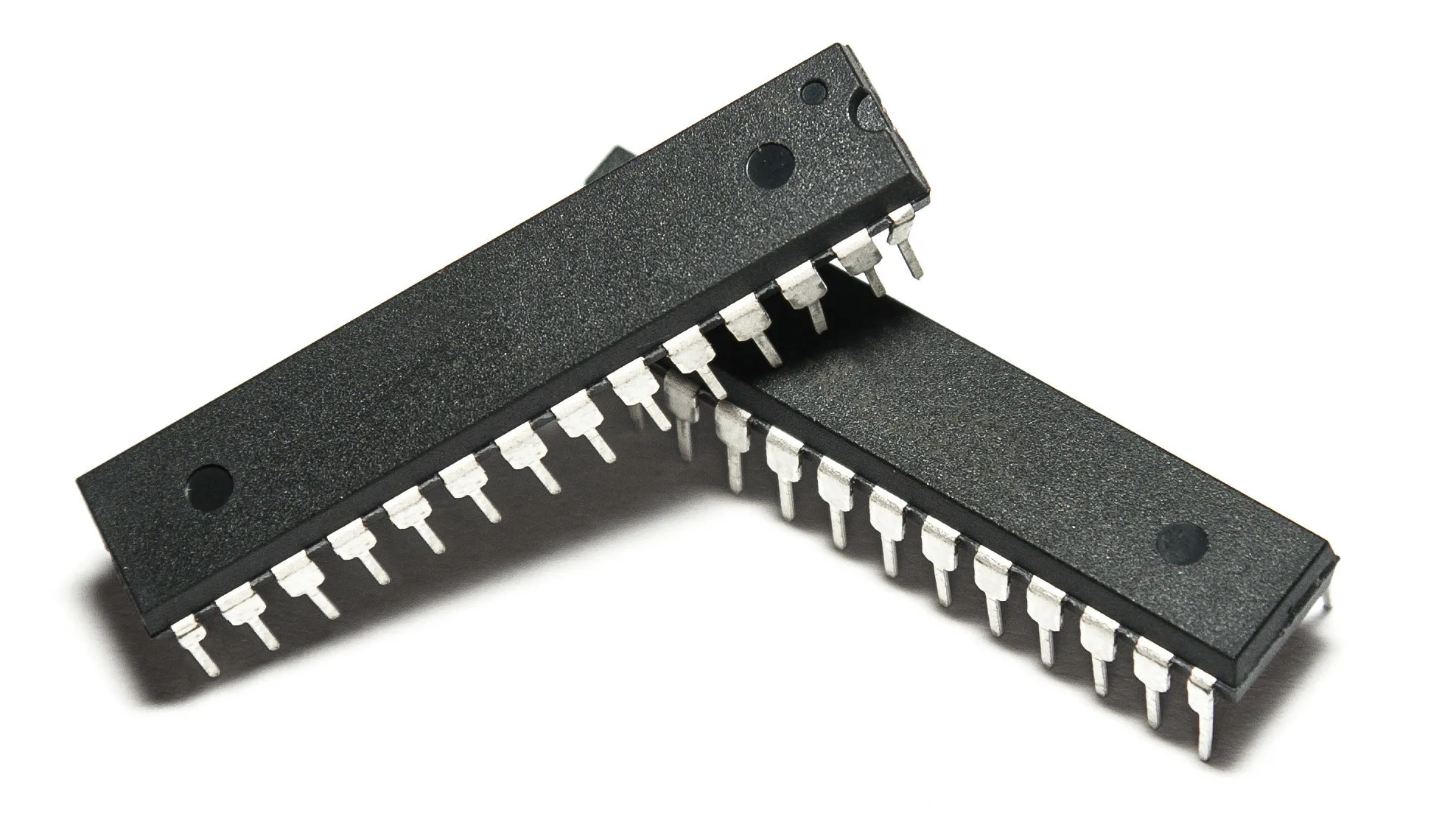
As explained in the accompanying introduction article, the basic idea is similar in scope but very much slimmed down compared to the venerable Tape ARchive (TAR) format, hence the Micro (µ) Tar File System name. The provided UTFS implementation is quite small, spanning two source files in C99 with zero heap usage. Targeting a custom store medium requires implementing one read and one write function to match the underlying platform.
A couple of examples are also provided, covering using the built-in Flash of a SAMD20 MCU and the EEPROM of an ATmega328. Compared to raw binary data that’d have to be fully rewritten, UTFS allows for sections of the storage to be accessed as files and thus updated in-place.
Schools are racing to write AI policies, but what if the policy is not the first step? This week, we hear from Aleta Margolis, founder and president of the Center for Inspired Teaching, who argues that real progress starts with a conversation, not a rule. Then EdSurge editor-in-chief Sarah McKibben brings it home with what AI actually looks like at her kitchen table, with two middle schoolers navigating it in real time.
What You’ll Learn:
A new RAND American Youth Panel survey found that only about one in three students say their school has a school-wide AI policy, and Aleta Margolis of the Center for Inspired Teaching explains why co-creating guidelines with students leads to better outcomes than top-down rule-making.
A recent NPR and Ipsos poll found that 54 percent of teachers say AI is making it harder for students to learn critical thinking skills, and nearly three in four believe its impact on education will exceed that of the internet or computers.
Sarah McKibben describes the mix of productive and concerning AI use she sees with her own children, including a student using an AI humanizer app to avoid plagiarism detection when submitting AI-written essays.
Both guests converge on the idea of productive struggle: the concern is not AI itself but whether students are learning to think with it rather than bypassing the thinking entirely.
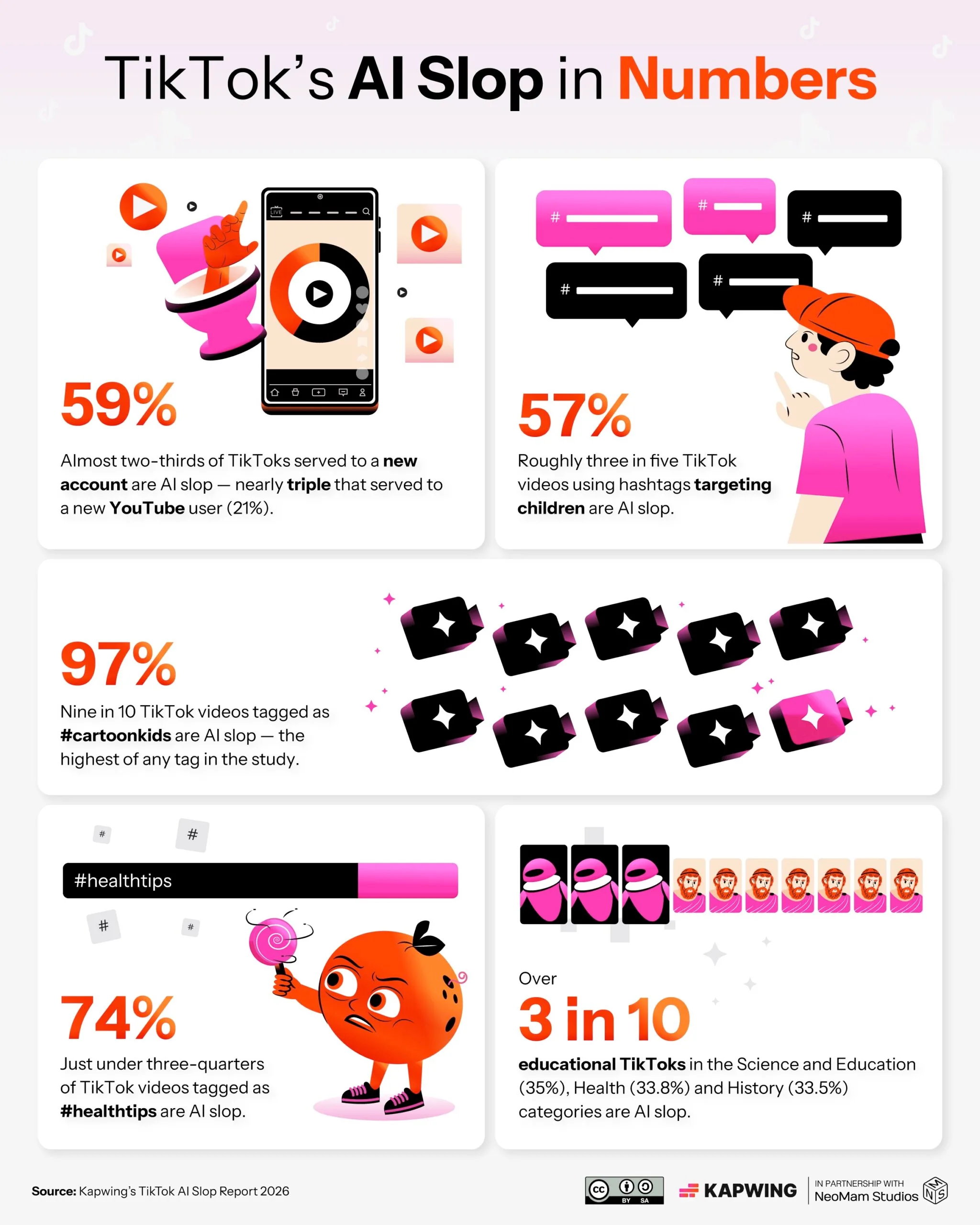
If you have ever felt like your TikTok feed is mostly fake content, you are not imagining it. A new report from Kapwing found that 59% of videos served to a brand-new TikTok account are AI slop. That is roughly three times the rate Kapwing found when it ran the same test on YouTube.
How bad is TikTok’s AI slop problem compared to YouTube?
Kapwing built a fresh account on both platforms and manually checked the first 500 videos served to each one. On TikTok, 294 of those videos were AI-generated. On YouTube, only 104 of the first 500 Shorts qualified as slop, putting that platform’s rate at 21%.
Kapwing
The scale of the problem is staggering when you consider that TikTok had already labeled 1.3 billion videos as AI-generated by November. Kapwing also manually reviewed over 10,000 TikTok videos across 20 different content categories to get a fuller picture of where slop tends to cluster.
Which TikTok categories are flooded with AI slop
Kids’ content topped every category, with 57% of the 2,000 videos turning out to be AI-generated. The worst single tag was #cartoonkids, where 97 out of 100 featured videos were artificial.
Kapwing
Science and Education, Health, and History followed close behind, each landing between 33% and 35% AI slop. These are categories where animation and voiceover narration tend to replace real demonstration.
On the other end, Fashion, Music, and Fitness were nearly untouched, each sitting below 2%, likely because those formats rely heavily on real, on-camera presence.
The problem with letting an AI agent loose inside a company is not that it might forget who it is. It is that it has no reason to hold back.
A human employee is restrained by the fear of being fired. An agent, as one investor in Arcade.dev put it, “will exhaustively exploit every permission it inherits” to reach its goal. Arcade has raised $60mn to make sure that, by design, it cannot.
The Series A was led by SYN Ventures, with strategic cheques from Morgan Stanley and Wipro. Added to a $12mn seed last year, it brings the San Francisco startup to $72mn in total funding.
Identity is easy. Authorisation is the wall
Most companies can already verify that an agent is what it claims to be. What they cannot do, according to Arcade chief executive Alex Salazar, is prove that a given agent, acting for a given user, is allowed to perform a given action on a given system.
Advertisement
The 💜 of EU tech
The latest rumblings from the EU tech scene, a story from our wise ol’ founder Boris, and some questionable AI art. It’s free, every week, in your inbox. Sign up now!
“Agents don’t fail in production because the model is wrong,” Salazar said. “They fail because nobody can prove” who is authorised to do what. That gap, he argues, is why so many corporate agents never leave the pilot stage.
Salazar, a former Okta product leader who once sold a startup to the identity firm, built Arcade with chief technology officer Sam Partee, formerly of Redis.
Advertisement
The accidental product
Arcade did not set out to build this. Its first product was an agent that diagnosed misbehaving servers and databases, which required sweeping super-user access. “No one in their right mind was going to actually let us do that in the real world,” Salazar said.
So the team split the model’s reasoning from the layer that actually touches tools, and built the part that decides which tools the agent may use. Nobody was excited about the diagnostic agent. Everybody who understood AI was excited about the authorisation layer. Arcade dropped the agent and kept the plumbing.
Plumbing for the agent era
That plumbing now hangs off Anthropic’s Model Context Protocol, the emerging standard for connecting models to tools like email and internal APIs, to which Arcade says it has contributed. Its runtime checks each request against an organisation’s real permissions, can run inside a customer’s own environment, and logs every action so a company can tell an agent’s move apart from a human’s.
Salazar’s argument for why a control layer has to sit outside the agent is the oldest one in enterprise risk: the thing taking an action never gets to authorise itself. Traders don’t approve their own trades. A smarter model, he says, doesn’t change that, and because most companies run several models at once, the control layer has to be neutral to all of them rather than owned by any one vendor.
Advertisement
It lands amid a rush of startups selling ways to put AI agents to work and, increasingly, to fence them in. Arcade frames the incumbents as solving the wrong problem, with API gateways routing traffic and identity tools proving who you are, when the question is what an agent may do, on which system, right now. Its bet is that the boring layer underneath is where the durable business sits.
The catch
For now this is a roughly 40-person company that still has to scale and defend its turf in a field filling up fast. Several of its headline proof points, production use at the world’s largest banks, a 25-fold jump in usage, thousands of prebuilt tools, are Arcade’s own figures rather than independently verified.
The underlying argument, though, is hard to dismiss. As agents start acting on systems no single person fully understands, the question of what they are permitted to touch stops being a policy document and becomes infrastructure. Arcade is betting it owns that infrastructure.
AI drug discovery is so last year, even though it hasn’t accomplished much yet
In order to move more semiconductor manufacturing onshore, the US needs to depend less on foreign-sourced materials. Now, the government is giving an Alphabet spinoff $500 million in CHIPS Act funds to find domestic minerals, molecules, and chemicals needed for this process.
SandboxAQ (that’s AI and Quantum, for those wondering), which spun off from Alphabet in 2022 under the chairmanship of former Google CEO Eric Schmidt, announced the award Wednesday. The company won’t be doing any manufacturing – this is just an R&D grant to turn the startup’s AI simulation software toward discoveries necessary to build a domestic chip industry.
Advertisement
According to SandboxAQ, the $500 million awarded to it by the Department of Commerce will go toward developing “novel molecules and formulations for semiconductor manufacturing,” including chip production materials that are free of PFAS (“forever chemicals”), new semiconductor fabrication catalysts, magnets that don’t rely on foreign-sourced neodymium and other rare earths, and fab-powering batteries that don’t rely on majority foreign-sourced materials like lithium.
The CHIPS and Science Act, signed into law by President Biden in 2022, was designed in part to dole out $52 billion to US firms to reignite domestic semiconductor manufacturing, which has mostly fled the country for more favorable production environments overseas. Four years on, the government’s many investments have seen some payoff, like the acquisition of a 10 percent stake in Intel to help keep the company afloat, but there’s still a lot of work to be done to reduce dependence on foreign supply chains and manufacturers.
SandboxAQ relies its own large quantitative models (LQMs), which it describes as “AI systems trained on the laws of physics, chemistry, and biology, not human language.” That, the company asserts, means they’re well-suited to discover new materials needed to eliminate harmful PFAS and foreign-sourced materials from the semiconductor supply chain.
The hope is that the LQMs will be able to generate their own material predictions that researchers then test in the lab – essentially the same process that’s undergirded the years-long effort to use AI to help synthesize new drugs.
Advertisement
Despite AI industry leaders prognosticating we’d be popping AI-designed drugs in 2025, AI has yet to design a functional medicine, according to the US National Institutes of Health. Why, then, should we presume an AI will succeed at replacing critical battery and chip manufacturing components where drug research has failed?
In fact, according to SandboxAQ’s announcement, its LQMs aren’t even necessarily grounded in real-world data. They rely in part on synthetic data, which is then fed into the company’s LQMs and used to train their design-make-test workflows.
A company spokesperson told The Register in an email that it still uses real-world data where possible.
“Where experimental data exists, we incorporate it,” SandboxAQ told us. “Where it doesn’t, we can still move forward and solve the problem.”
Advertisement
When asked whether an error in the reasoning process could compound, leading to considerable lost time for researchers and a lack of results, the company admitted that such a potential is exactly what “any rigorous AI-driven materials program has to answer.”
“Our models are trained on the laws of physics and chemistry, so they are anchored to physical reality, rather than free to drift,” the spokesperson told us, adding that lab testing is the final check on AI accuracy. “A material either performs in the lab, or it doesn’t, and that validation gate is precisely what prevents a chain of reasoning from running away with itself.”
SandboxAQ added that it is not starting from zero in any of the four target areas, having done previous work on catalysts, battery materials, alloy discovery, and PFAS breakdown that will be incorporated into its CHIPS Act-funded work.
“In commercial deployment, we’ve already cut development timelines from months to weeks” at the candidate screening stage, the SandboxAQ spokesperson explained. SandboxAQ said that some of the work it’s doing, like PFAS mitigation, could be rolled out to existing fabs, as could new batteries and the like, but it admitted that the various verticals will operate on different timelines.
Advertisement
“Qualification in the semiconductor industry is genuinely rigorous and does take time – we wouldn’t minimize that – but the path runs through validation and industrial qualification with existing manufacturers, not through standing up new fabrication capacity from scratch,” SandboxAQ told us. ®
The company was recognised for its work in e-commerce advertising for Meta and Google promotions.
Belfast-based technology company Karb AI has come away from the 2026 UK StartUp Awards with the Digital Startup of the Year title for Northern Ireland (NI). The ad optimisation tool for e-commerce brands and agencies was recognised for an ‘AI layer’ that impacts how e-commerce advertises for Meta and Google promotions.
Advertisement
Established in 2025 by Karthik Bangalore Rajendra Prasad, Karb AI enables e-commerce platforms to audit, optimise and scale digital advertising. Its flagship product is an AI decision layer for e-commerce Meta ads.
The UK StartUp Awards, which were founded by Prof Dylan Jones Evans aim to celebrate the ambition and resilience of the entrepreneurs driving the economy. As the NI winner, Karb AI will progress to the UK StartUp Awards national final to be held on 9 September at Ideas Fest in Champneys Tring in Hertfordshire, an event projected to attract 6,000 founders, investors and leaders.
Commenting on the win, Prasad said: “Winning the Digital Startup of the Year for Northern Ireland is a significant milestone for us as we approach our first anniversary. Our mission is to empower e-commerce brands with AI-driven insights that simplify complex advertising decisions and this recognition from the UK StartUp Awards validates the many benefits we’re already delivering for digital marketers and e-commerce companies.”
In other start-up news, earlier this week University College Dublin’s Nax Bioscience and Trinity College Dublin’s Imragen were awarded the top spot at the inaugural Irish Genomics Business Plan Competition, an initiative established to identify and support high-potential genomics-focused start-ups and research ventures in Ireland’s life sciences ecosystem.
Advertisement
Both Nax Bioscience and Imragen were selected as the winners in recognition of their innovative genomics-driven technologies and strong commercial potential.
Don’t miss out on the knowledge you need to succeed. Sign up for the Daily Brief, Silicon Republic’s digest of need-to-know sci-tech news.
Knowing absolutely nothing about you other than the fact that you’re currently reading Hackaday, I can predict with a high degree of certainty that we’re both fond of at least a few of the same movies. That’s not to say they’re necessarily our favorite works of art. Indeed, in some cases they may even be objectively bad films. But the memory of them has stuck with us — and by extension nearly everyone else in the hacker and maker community — for decades.
Even if you don’t remember all the little details, you’ll never forget the names: movies like WarGames, Ghostbusters, Back to the Future, and Short Circuit. Stories that showed smart people using their intellect and a bit of cobbled together hardware to triumph over the bad guys. The tech wasn’t always believable, sometimes it was downright farcical. But they made it seem real, and by the end of the story when they won the day using brains and a soldering iron rather than fists or a gun, the minutia of how it all worked wasn’t really that important anyway.
It’s not a stretch to say that films such as these helped put many of us on a path towards science and technology. For those with an interest in more cerebral pursuits, seeing a scientist or an engineer save the day was hugely influential. How many engineers got their start watching Scotty frantically eke just a bit more power out of the Enterprise?
But as we recently discussed some of these classic movies behind the scenes here at Hackaday, it struck us that all of the best examples we could come up with were now 20, 30, or even 40 years old. That’s not to say there aren’t a few contemporary standouts, but they mostly seem to be biopics or other historical dramatizations which don’t quite scratch the same itch. Even so, none of them appear to have had the cultural impact necessary to stand the test of time in the same way their predecessors have.
So where have all of Hollywood’s heroic nerds gone, and what does it mean for future generations if these niche role models are no longer represented?
Advertisement
Evil Geniuses and Thick Glasses
Before we get lost down memory lane, we should acknowledge that there’s undoubtedly an element of survivorship bias at play here. We naturally identify with the examples that put techie types on a pedestal, and tend to forget about the less flattering portrayals. In truth, it seems that there’s was only a short period of time in which the classic “nerd” characters got promoted from comedic sidekick roles to protagonists. Before that, and arguably after, it’s a different story.
In the early days, the archetype of the “Mad Scientist” was extremely pervasive. From the 1940s up until the 60s or so, you’d be hard pressed to find a drive-in that wasn’t showing the latest hideous creature pieced together by an unscrupulous doctor. But it wasn’t a concept limited to horror and science fiction. After all, MI6 wasn’t in the habit of dispatching James Bond to defeat drooling imbeciles. Whether they knew how to build killer robots or were titans of industry, the smartest person in the room was often seen as the most dangerous.
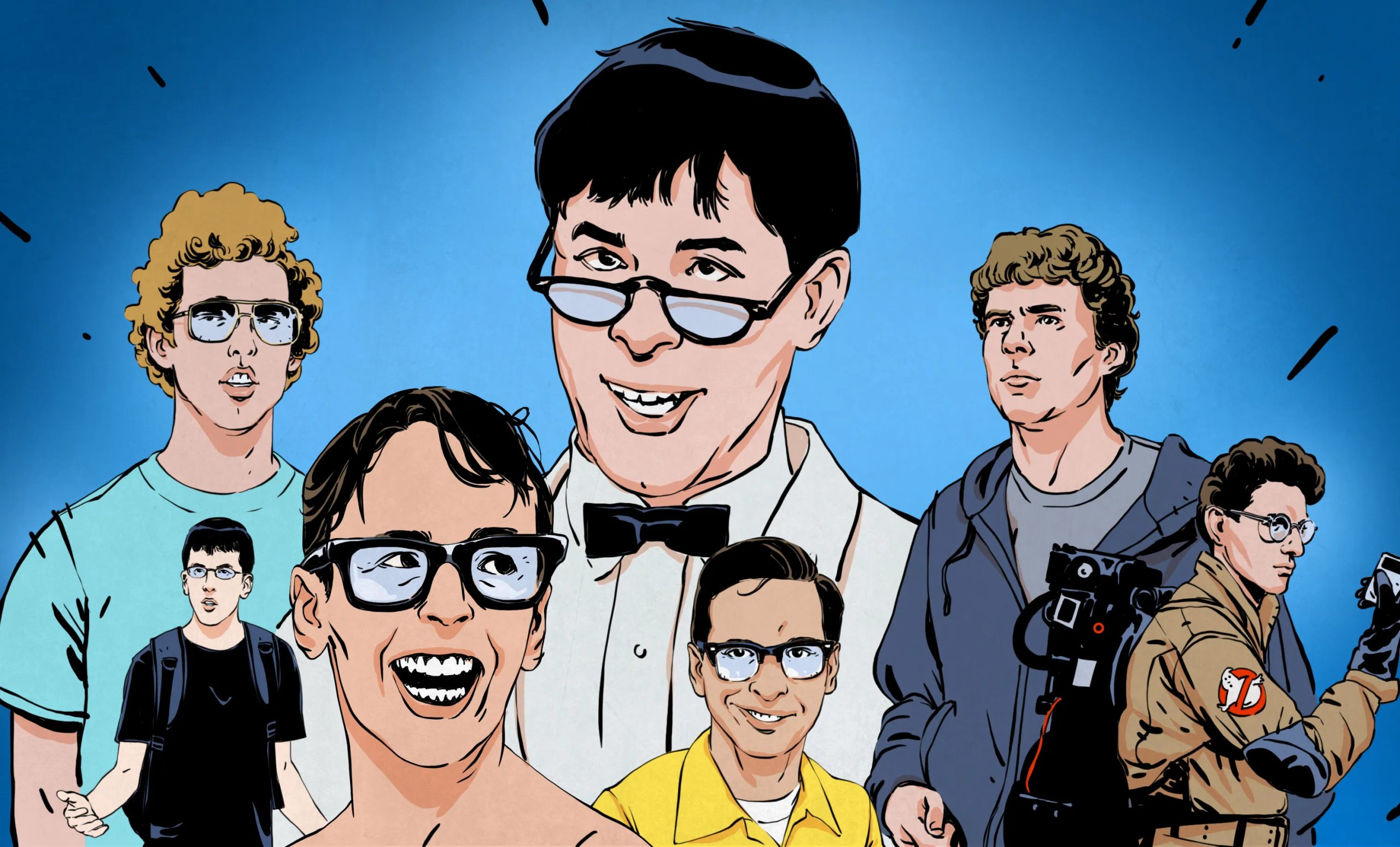
In a way, that was still less insulting than the alternative. If a scientist wasn’t trying to forcibly transplant somebody’s brain, they probably had a pocket protector, horn-rimmed glasses, unkempt hair, and buck teeth. My sincere apologies to any readers who may currently meet that description. They might not have been the “bad guy” in the traditional sense, and may even have ended up helping out the heroes in their own way, but nobody was looking at the screen and wishing they were the one with the lisp and the lab coat.
A particularly notable case is The Nutty Professor, in which Jerry Lewis portrays the quintessential nerd who uses his knowledge of chemistry to create a confident and suave alter-ego for himself in the style of Jekyll and Hyde. To be fair, the movie ultimately makes a statement about being true to yourself and the importance of what’s on the inside. But ironically, more than 60 years later, the imagery of Lewis hamming it up as a socially awkward intellectual is undeniably the film’s most indelible element.
The Era of Golden Geeks
At the dawn of the 80s, things started to change. You still had the classic bespectacled nerd, but increasingly films started to put greater focus on their skills and abilities. The “geeks vs jocks” trope became very popular, perhaps most famously exemplified by the Revenge of the Nerds franchise which managed to wring four films out of the concept.
Advertisement
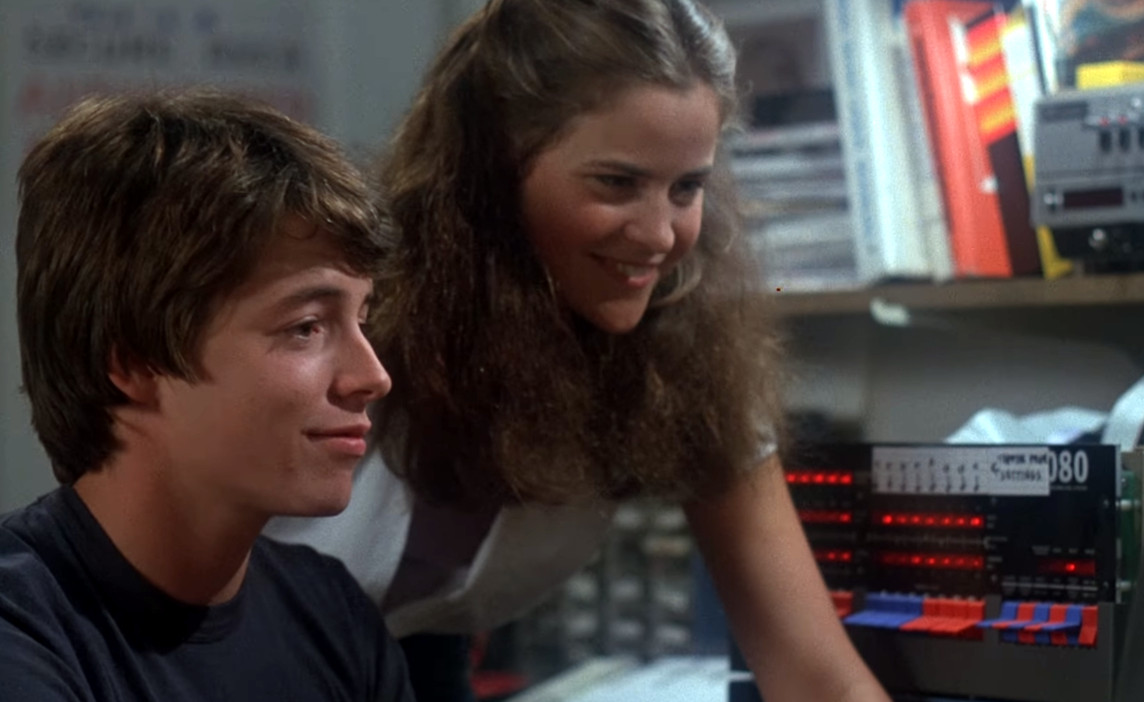
Now a new breed of nerd started to emerge in film that was young, charismatic, and handsome. The only thing that identified Matthew Broderick’s character in WarGames as anything other than a normal teenager in 1983 was the fact that he had a computer in his bedroom and knew how to program it. Steve Guttenberg played a heartthrob roboticist in Short Circuit, and they really screwed the curve up for the rest of us when they cast Val Kilmer as a laser prodigy in Real Genius. The nerds even started to find love, and one wonders how many young men spent their evenings furiously flipping switches on the front panel of their IMSAI 8080 in hopes that a breathless Ally Sheedy might appear in their doorway with an urgent mission that needed their unique expertise. I don’t know about anyone else, but I still haven’t given up hope.
Find somebody that looks at you the way Val Kilmer looks at a six-megawatt excimer laser.
Even school-age kids were getting in on the action. In 1985, Explorers featured a trio of youngsters who built their own spacecraft after assembling a circuit board based on a schematic they collectively dreamt about. The same year saw the release of The Goonies, and while only one of the kids was a tech wiz, they were all clearly meant to be somewhat off-center socially.
Of course, the most famous and culturally relevant example of 1980s nerds using their tech skills to save the day is Ghostbusters. Three 30-something scientists not only determine the physical properties of supernatural entities through empirical research, but also design and construct the equipment necessary to combat them. The resulting “Proton Pack”, which brilliantly captured the look and feel of a piece of hardware hastily thrown together from scavenged parts, became what is arguably the most iconic prop in cinema history. Not only has it been lovingly and reverently recreated by hackers and makers countless times since the movie’s release in 1985, but not a Halloween goes by that you won’t see at least one strapped to the back of a child.
What’s a Nerd, Anyway?
There’s little question that the 1980s represent the high-water mark for nerds in media, but it’s not as if somebody flipped a switch and it all ended at once. There are a few standouts from the early 1990s, with Sneakers coming immediately to mind. It not only meets all of the criteria we’ve discussed here, it’s legitimately an excellent film with an incredible cast. If you haven’t already, please go watch Sneakers.
But for all the hate it’s gotten over the years, I’d also give the nod to Hackers. With a reminder that technical accuracy was never one of the criteria, it absolutely ticks the proper boxes when it comes to young, competent people using their technical skills for good. Plus, if Kilmer raised the bar for hot hackers in film, Angelina Jolie sent it into orbit.
Advertisement
Although the aesthetic benefit that Jolie’s character brings to the film is beyond contestation, it’s important to note that Hackers presents her as exceptionally skilled, with abilities that meet or exceed those of her male peers. The fact that those abilities are accepted by every character in the film without question is a testament to how the audience’s expectations were changing at the dawn of the 2000s. The boys in Revenge of the Nerds might have been able to get away with a panty raid in 1984, but by 1995, the girls were popping shells with the best of them.
That said, those evolving standards may be the reason these type of movies seem to be so uncommon today. Given the expectations and the technical proficiency of the average moviegoer in 2026, what exactly would a nerd hero actually look like? The nerd stereotypes from the Nutty Professor era would be all but completely unrecognizable to modern audiences, and while one could argue that the likes of Elon Musk and Jeff Bezos are getting uncomfortably close to real-life Bond villains, that’s taking us in the wrong direction.
The reality is, it will take more than a teenager with a computer to captivate audiences today. Or to put it another way, if everyone in the theater is at least a little bit of a nerd to begin with, it’s much more difficult to create that mystique on the screen without taking the story to fantastical lengths.
Or at least, that’s one possibility. We’d love to hear your thoughts on the past, present, and future of nerds in the media. Will we ever see the likes of Real Genius and WarGames again, or has the world simply moved on? Are nerds normal?
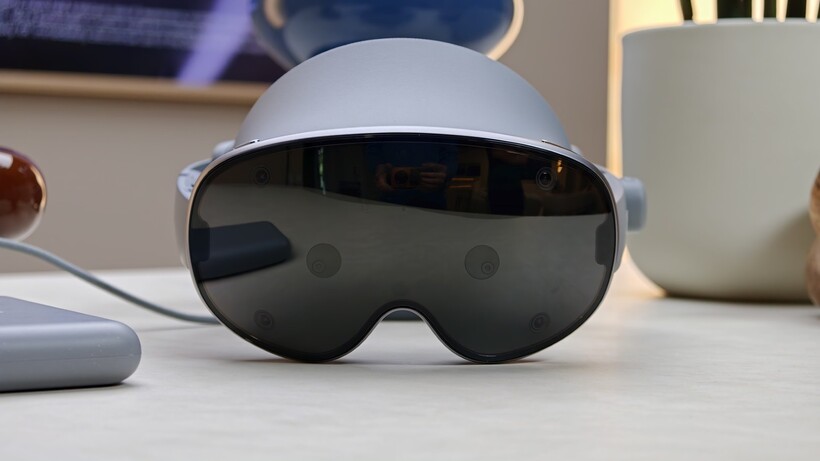
Samsung has finally opened pre-orders for the high-end Galaxy XR headset in the UK ahead of release on 8th July, following its release in the States in October 2025.
The launch marks Samsung’s first major step into mixed reality hardware, with Galaxy XR developed in partnership with Google and Qualcomm. It is also the first device to ship in the UK with Android XR, Google’s new extended reality platform, which means tight integration with familiar Google services as well as compatibility with existing Android apps.
The headset runs on Android XR and centres its feature set on multimodal AI interactions that allow users to navigate virtual and real environments through voice, vision and gesture controls. Samsung says the software experience will feel familiar to existing Galaxy users too, with an interface influenced by One UI.
Google’s suite of services sits at the core of the experience, with Gemini available as an in-headset assistant for contextual queries, Google Maps offering immersive 3D exploration with personalised location suggestions, and YouTube providing access to a library of 180 and 360-degree VR content alongside a spatial tab for 3D-converted videos.
Advertisement
Image Credit (Trusted Reviews)
Advertisement
You can also use apps such as Chrome, Gmail, Netflix and Paramount Plus in floating windows, giving the headset a broader productivity and entertainment pitch than simple VR content consumption.
A Circle to Search feature extends that discovery layer into the physical world, letting users draw a circle in the air around any real-world object in pass-through mode to trigger an instant search result without removing the headset. Gemini integration also goes beyond simple voice assistance, with the ability to ask questions about what you are seeing around you or to use AI-guided help while exploring places in Google Maps.
The Galaxy XR is built around dual 4K Micro-OLED displays, with Samsung saying each panel is roughly postage-stamp-sized. It runs on Qualcomm’s Snapdragon XR2 Plus Gen 2 platform, which the company says delivers around 20% faster CPU performance and roughly 15% stronger GPU performance than the standard XR2 Gen 2 chip. Samsung has also equipped the headset with 16GB of memory and 256GB of storage, while support extends to 4K per eye at up to 90fps.
For mixed reality use, the headset includes two world-facing cameras for full-HD colour passthrough, six hand-tracking cameras and four eye-tracking cameras, allowing for controller-free navigation in many situations.
Advertisement
Samsung Galaxy XR is available for pre-order now on the Samsung website, with general sale beginning on 8th July. It will also be available in select Samsung stores in London and Manchester, as well as the KX store.
Pricing starts at £1,699 for the headset itself, while the optional XR controllers cost £249, the travel case is priced at £249, and the smart keyboard costs £90.























































You must be logged in to post a comment Login