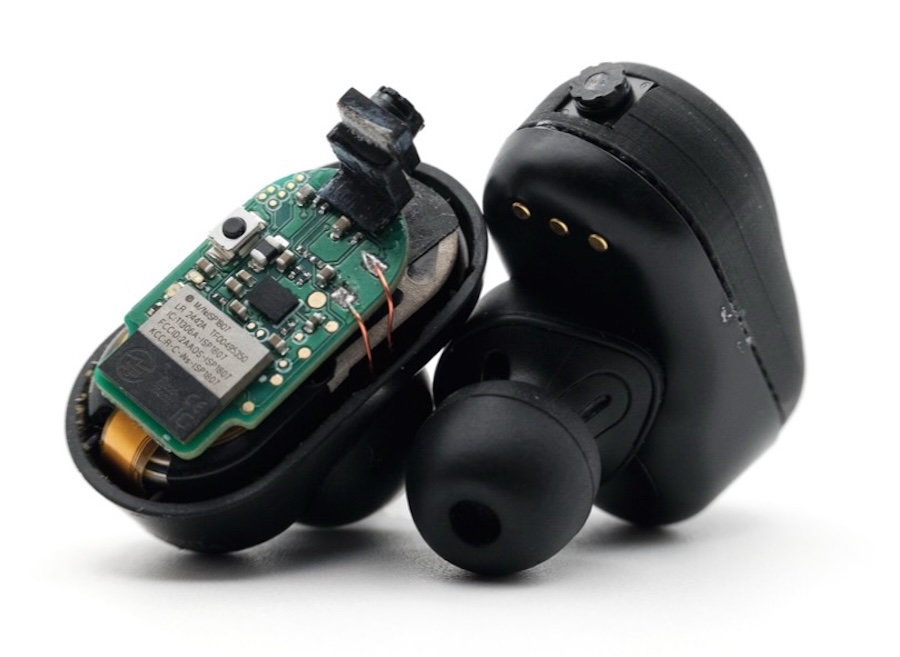
VueBuds, a prototype developed by University of Washington researchers who have embedded a rice-grain-sized camera into each earbud of a standard pair of Sony wireless earbuds. (UW Photo)
Wireless earbuds seemingly sprang out of nowhere. Popularized by Apple’s AirPods, they were suddenly everywhere — on the subway, in the grocery store, in the ears of the person sitting across from you — until somewhere along the way, they became the thing nearly everyone wears without a second thought.
Could that popularity make earbuds better than smart glasses for AI? That is the bet behind VueBuds, a prototype developed by University of Washington researchers who have embedded a rice-grain-sized camera into each earbud of a standard pair of Sony wireless earbuds. The result is a visual AI assistant hiding in plain sight: look at a can of food and ask how many calories it has, hold up an unfamiliar kitchen tool and get an answer in about a second.
The system processes images on-device and responds through a connected AI model — no cloud required, no images stored.
The UW team believes it is the first to embed cameras directly in commercial wireless earbuds.
The earbuds don’t remember anything, but the people around you might not know that. That tension sits at the heart of what the UW team built and raises a question the researchers take seriously: what are the social norms when cameras are embedded in objects nobody thinks of as cameras?
Advertisement
The team’s answer is to lean hard on minimizing data collection. Images are processed and discarded; nothing is saved. But the system offers no outward signal to bystanders that a camera is present, which the researchers acknowledge is an open challenge rather than a solved one.
For technology like this to earn trust, Maruchi Kim, lead researcher and UW doctoral student in the Paul G. Allen School of Computer Science & Engineering, argued that privacy can’t be an afterthought.
“We don’t support saving the images,” Kim said. “It’s mainly just to bridge the interaction between a person and having access to AI on the go, especially in hands-free scenarios.”
The team’s other central argument is about form factor — and it’s a pointed challenge to Meta, which has spent years and hundreds of millions of dollars trying to make camera glasses a mainstream product.
Advertisement
The UW team’s position is that smart glasses will never fully shed their social baggage: the memory of Google Glass, the discomfort of being watched, the visible signal that the wearer has opted into something most people haven’t. Earbuds carry none of that history.
“From the get-go, we didn’t want to be associated with that,” Kim said.
Getting cameras into earbuds required solving a power problem first. Cameras consume far more energy than microphones, so the team opted for a low-power sensor that captures roughly one frame per second in black and white — slow by video standards, but fast enough for the question-and-answer style of interaction the researchers had in mind.
The cameras are angled five to 10 degrees outward, providing a 98- to 108-degree field of view, and images from both earbuds are stitched into a single frame before processing, cutting response time to about one second.
Advertisement
The applications range from the practical to the significant. The system can read text on food packaging, identify objects, and translate written Korean. But for people with low vision or cataracts, the implications run deeper.
The team received more than a dozen emails from people with visual impairments describing what they’d use it for: understanding facial expressions, reading books, watching television — tasks that existing AI tools can’t easily support in a hands-free, ambient way.
Kim sees another underserved group in the workforce. Electricians, plumbers, and workers in industrial settings often can’t pause to pull out a phone mid-task — a pipe fitting wedged in place, a live wire that needs both hands.
For those workers, a voice-queryable visual assistant that doesn’t require touching a screen is the difference between having access to AI and not having it at all.
Advertisement
“There’s a lot of blue collar work where those people aren’t really able to harness the benefits of recent AI advances,” Kim said. “They can’t just whip out their phones and take a photo.”
The hands-free framing extends broadly: surgeons, cooks, anyone who has ever tried to follow a recipe with wet hands.
The system remains experimental and isn’t available for purchase. Shyam Gollakota, a professor in the Allen School and the project’s senior researcher, said interest from technology companies has been significant, and camera-equipped earbuds could reach consumers within a few years.
On cost, Gollakota is optimistic. The camera sensor itself could run under a dollar at the component level, he said — meaning that at the scale of a major consumer electronics manufacturer, the price premium over standard earbuds would likely be modest.
Advertisement
The $10 figure Gollakota cited refers to a more conservative estimate at smaller production volumes.
“What we do at the universities is show that you can solve technical problems,” Gollakota said. “Then we show a path for these companies and other people to say that this is actually possible.”
Hackers have injected credential-stealing malware into newly published versions of node-ipc, a popular inter-process communication package, in a new supply chain attack targeting npm.
The node-ipc package is a Node.js module that enables various processes to communicate through all forms of sockets, including Unix, Windows, UDP, TLS, and TCP.
Despite the maintainer publishing in March 2022 weaponized versions that targeted Russia and Belarus-based systems with a data-overwriting module, in protest to the Russian invasion of Ukraine, the package still has more than 690,000 weekly downloads on npm.
The recent supply-chain attack was detected by multiple application security companies, including Socket, Ox Security, and Upwind, who confirmed the following three versions as malicious:
Advertisement
node-ipc@9.1.6
node-ipc@9.2.3
node-ipc@12.0.1
The malicious code hides inside the CommonJS entrypoint (node-ipc.cjs) and executes automatically whenever applications are loaded.
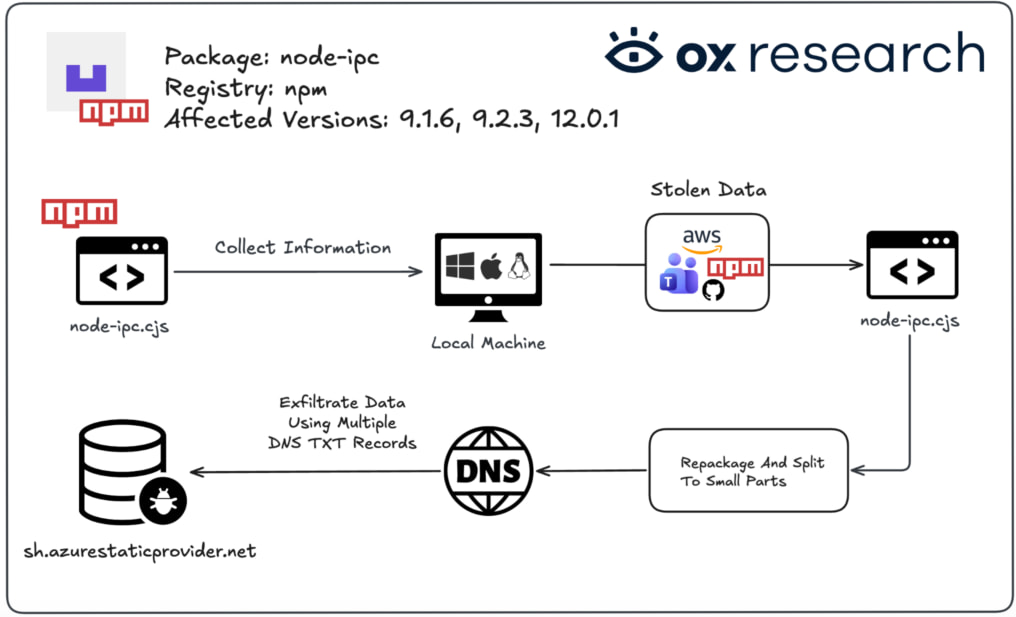
The malware is heavily obfuscated and fingerprints infected systems, collects environment variables and sensitive local files, compresses the stolen data into archives, and exfiltrates it through DNS TXT queries.
The latest compromise appears to be the work of an external actor who compromised the account of an inactive maintainer named ‘atiertant.’
According to the researchers, the infostealer injected in the new node-ipc versions collects the following types of information from compromised systems:
Cloud credentials from AWS, Azure, GCP, OCI, DigitalOcean, and others
SSH keys and SSH configs
Kubernetes, Docker, Helm, and Terraform credentials
npm, GitHub, GitLab, and Git CLI tokens
.env files and database credentials
Shell histories and CI/CD secrets
macOS Keychain files and Linux keyrings
Firefox profile and key database files (on macOS)
Microsoft Teams local storage and IndexedDB paths
The malware skips files larger than 4 MiB and avoids scanning .git and node_modules directories to increase efficiency and reduce operational noise on the host.
Attack overview Source: Ox Research
A notable operational characteristic is the use of DNS TXT queries instead of conventional HTTP-based command-and-control (C2) traffic for data exfiltration. The attackers use a fake Azure-themed domain (sh[.]azurestaticprovider[.]net:443) as a bootstrap resolver, transmitting the data to ‘bt[.]node[.]js’ with query prefixes like xh, xd, and xf.
According to Socket, exfiltrating a 500 KB compressed archive could generate roughly 29,400 DNS TXT requests, helping the traffic blend into normal DNS activity.
Advertisement
Prior to submission, the malware stores collected data in temporary compressed tar.gz archives, which are deleted after exfiltration to reduce forensic traces.
The malware does not establish persistence or download any secondary payloads, so the operation appears focused on rapid credential theft and exfiltration.
Potentially impacted developers should immediately remove the affected versions, rotate exposed secrets and credentials, and inspect lockfiles and npm caches.
Automated pentesting tools deliver real value, but they were built to answer one question: can an attacker move through the network? They were not built to test whether your controls block threats, your detection rules fire, or your cloud configs hold.
This guide covers the 6 surfaces you actually need to validate.
The Alienware 15 is available in several hardware configurations, with both AMD and Intel CPU options, along with multiple generations of Nvidia GeForce RTX GPUs. A configuration featuring an AMD Ryzen 5 220 processor and a GeForce RTX 4050 graphics card starts at $1,300, while the most expensive Intel-based model… Read Entire Article Source link
Lenovo has introduced a new budget gaming monitor in China under its Lecoo branding, and on paper, it looks like serious value for money.
The new Lecoo N2757Q combines a high refresh rate and 1440p resolution with a relatively low price tag, targeting gamers who want smooth performance without spending much.
At the centre of the package is a 27-inch Fast IPS panel with a 2560 × 1440 resolution and a native 200Hz refresh rate. The refresh rate can even be pushed slightly higher to 210Hz via overclocking, putting it firmly in competitive gaming territory. This is especially true for fast-paced FPS and RTS titles where frame smoothness matters more than anything else.
Lenovo also claims a 1ms (GTG) response time, aiming to reduce motion blur during high-speed gameplay. Colour performance sits in the mid-to-upper range for a budget display with 121% sRGB coverage and 96% DCI-P3; decent for everyday gaming and content consumption, but it’s not aimed at professional colour work.
Advertisement
Brightness peaks at 400 nits, which allows the monitor to meet the HDR400 standard. That won’t deliver true HDR impact compared to higher-end panels, but it should still offer a noticeable boost in contrast and highlights over standard SDR displays. Lenovo is also highlighting built-in game modes, designed to optimise visuals for different genres like shooters and strategy games.
Advertisement
On the connectivity side, there’s nothing flashy, but the monitor is practical. It includes two DisplayPort 1.4 ports and two HDMI 2.1 ports. This allows multiple devices to stay connected at the same time without constant swapping.
Elsewhere, the Lecoo N2757Q comes with an adjustable stand, VESA mount support, and a fairly minimal design. It keeps things simple rather than aggressive or overly “gamer-focused”.
Advertisement
The most striking part of the package, though, is the price. Lenovo has launched the Lecoo N2757Q in China at CNY 799 (around $118). This undercuts many 1440p high-refresh monitors currently on the market.
There’s no word yet on international availability, and given the Lecoo branding’s limited global presence, it’s unclear if this ultra-budget 200Hz monitor will ever leave China. Still, on specs alone, it’s one of the more aggressive value plays in the gaming display space right now.
Interested in taking some wild new 3D printing features for a test drive? preFlight is free and open source slicer that brings a host of processing improvements as well as fascinating new features and interesting twists on old ones. There are almost too many to list, so here are a few that caught our eye.
Cross-sectional view of Interlocking Perimeters, which increases Z-strength. Unlike brick layers, layer height stays constant.
Those features alone are pretty intriguing, but there’s one in particular that is particularly relevant to creating stronger parts. Interlocking Perimeters increases layer bonding to increase object strength. Unlike brick layers, which staggers layers vertically, interlocking perimeters plays with spacing and compression to increase bonding in the Z axis while keeping layer heights constant. This is possible thanks in part to the greater control offered by Athena, the new perimeter generator.
There are plenty more features — like a full Python runtime embedded directly into the slicing pipeline, and a host of export pathways — so check out the GitHub repository for added detail and let us know in the comments if you give it a try.
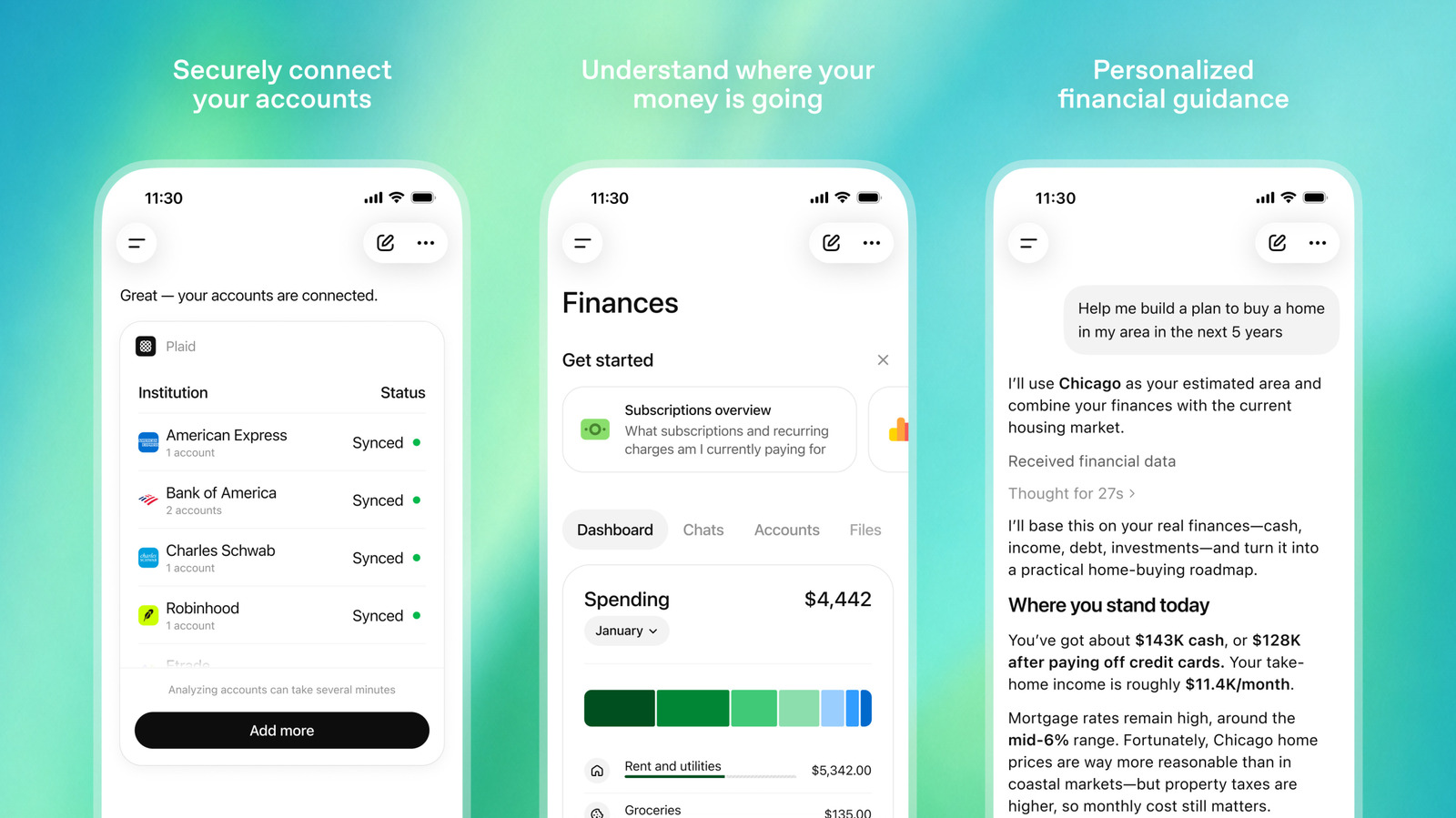
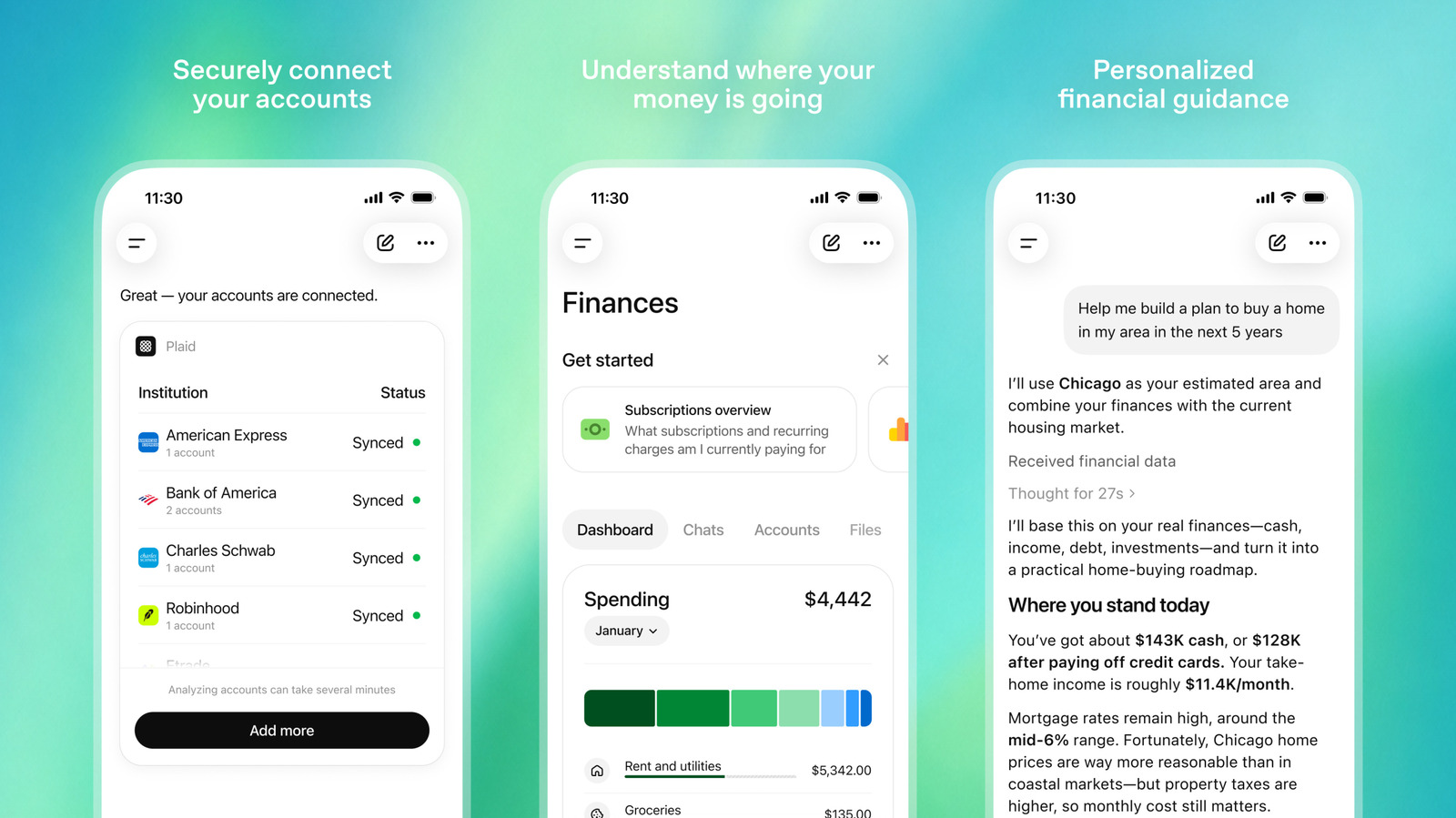
OpenAI is rolling out a preview of a new personal finance feature inside of ChatGPT. Starting today, Pro users in the US can connect their financial accounts to ChatGPT in order to get more personalized advice from the chatbot.
To hear OpenAI tell it, every month more than 200 million users already turn to ChatGPT for guidance on managing their money. By building a framework that allows those people to connect their accounts to its servers, ChatGPT can go from offering generic advice to helping those same users take actions that more directly improve their lives. The integration is made possible through a partnership OpenAI has signed with Plaid, which offers connections to more than 12,000 financial institutions, including banks like Citi and Chase, in addition to services like Affirm and Robinhood.
To begin using the new integration, find the “Finances” section inside of ChatGPT’s sidebar or write a prompt along the lines of “@Finances, connect my accounts.” ChatGPT will guide you through the process of importing your financial information through Plaid. The chatbot will then start building a visual dashboard, like the one you see in the screenshot OpenAI provided. The process of generating a visual representation of your finances may take a few minutes. From there, you can select one of the starter prompts or ask your own questions.
Understandably, some people may be hesitant to share their financial information with ChatGPT. OpenAI is looking to address those concerns by limiting the scope of what its chatbot can see. According to the company, ChatGPT can only read your balances, transactions, investments and liabilities through Plaid. It cannot see full account numbers or make changes to your accounts through the system.
Advertisement
Additionally, the company says users can disconnect their financial accounts from ChatGPT at any time, and any memories the chatbot saves about your financial situation can be seen or deleted directly from the Finances section of the app. ChatGPT cannot access these memories when using the temporary chats feature. Lastly, OpenAI’s data controls settings apply to the new experience, so if you’ve already dug into those, your prompts and other information won’t be used by the company to train future models.
According to an OpenAI spokesperson, work on the feature began before the company’s recent acquisition of fintech startup Hiro, which offered an AI-powered financial planning tool for consumers. The company hopes to bring this new experience to more users, including Plus subscribers, in the future. “We’re starting with a preview to a smaller group so we can learn from real-world use, improve the experience, and expand thoughtfully,” OpenAI said.
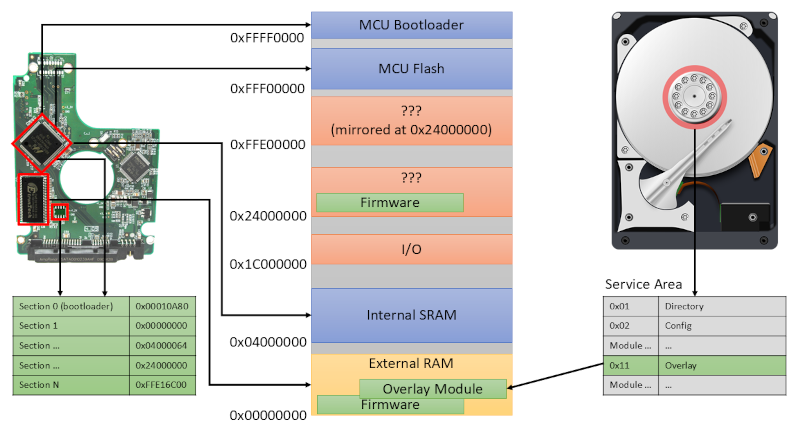
You probably flash new firmware on a variety of devices regularly, even though that’s rare for non-technical types. But what about your hard drive firmware? Most of us don’t want to touch our operating drives, so unless you are dealing with surplus drives or have a special project in mind, you may not think much about the firmware running your spinning rust storage. [I Code 4 Coffee] uses hard drives in an unusual way to exploit Xbox 360s, and wound up reverse engineering some drive firmware with an eye to making changes.
The analysis started with three hard drives and an SSD. Looking for people who’ve done similar work wasn’t as productive as you might think. There isn’t much call for modifying hard drive firmware, and what data there is can be outdated.
One thing that was available was firmware dumps taken with a PC-3000 data recovery tool. What follows is a deep dive down the hard drive rabbit hole. There are backdoor vendor commands and connections to the diagnostic RS-232 port on some drives. You can find the technical artifacts on GitHub.
Given the upfront cost of a car, some of the biggest car brands have been known to hand out perks as added incentives to buy. And before you figure you’ve heard it all before, these special offers go beyond the standard checklist of benefits (like a warranty or free roadside assistance options). Like Ford, for example. When you drive off the lot in one of their vehicles, Ford tacks on several nice little bonuses you might not even realize you have.
Some of these perks are meant to save you time. Others are meant to save you money. No matter what, though, they all make owning a Ford just that much sweeter. We’ve put together the four coolest below, plus instructions on how to make the most of them (if you haven’t already). Pick one or two to take advantage of, or get your money’s worth and start enjoying all four.
Advertisement
1. Complimentary Pickup & Delivery service
NikkaOl/Shutterstock
It’s one of the biggest hassles associated with vehicle maintenance: actually getting the car to the dealership. Ford seems to understand this, as many of their dealerships offer a complimentary Pickup & Delivery service. Instead of rearranging your entire day around an oil change or warranty repair, you can just schedule a service appointment at the dealership and have your vehicle picked up directly from your home or office.
A technician will pick up your car from your place, take it to the dealership for servicing, and bring it back once the work is done. If your local dealership is participating, it’s all done completely free of charge. (Although you still have to pay for the repair and parts costs, of course.) The program covers both warranty work and customer-pay repairs. As long as your car’s drivable and hasn’t been involved in an accident, you can take advantage of Pickup & Delivery.
Advertisement
2. Complimentary Mobile Service program
PJ McDonnell/Shutterstock
Alongside the Pickup & Delivery perk, Ford’s complimentary Mobile Service program makes dealership maintenance even easier. Rather than having to drive to the service center (or have the Ford dealership come pick up the car and bring it back), Ford Mobile Service will send a dealership technician straight to your home or work. The tech will then handle the on-site maintenance tasks.
The service itself is totally complimentary for Ford owners through participating dealerships. (As mentioned above, you still have to pay for the actual maintenance task itself.) The list of services available through Ford Mobile Service is a lot more extensive than you might expect, as well. They can do oil and filter changes, brake services, battery replacements, tire rotations, wiper replacements, fluid checks, filter replacements, lamp and bulb service, software updates, accessory installations, and diagnostic scanning, all right there in your driveway or parking spot.
Advertisement
3. Phone As A Key feature
Another nice perk of owning a Ford: The “Phone As A Key” feature in the FordPass app. This perk lets owners of select Ford vehicles use their smartphone in place of a traditional key fob. Once you’re paired with your vehicle, you can lock and unlock the doors, start the engine, and control several other functions directly through the app. You can also roll windows up or down, honk the horn, and open the trunk, no separate physical key required.
It’s all done via Bluetooth Low Energy, which means it’ll work within a range of roughly 30 to 50 meters. Passive entry functions specifically will only work within about two meters. (That’s nothing out of the ordinary for other keyless entry systems you might’ve used before.) All in all, Ford lets you pair up to four Phone As A Key setups per vehicle. As long as you have iOS 16 or later or Android 8.0 or later, you can store your car keys on an iPhone or Android.
Advertisement
4. Free service visits with points
Tada Images/Shutterstock
If you own a Ford, you might not realize you’re sitting on a heap of rewards points. Ford owners receive tens of thousands of points for getting the car in the first place, then add to that grand total with maintenance visits, accessory purchases, and other Ford transactions. More specifically, it’s 31,000 points for gas, diesel, or hybrid vehicle purchases or leases, or 22,000 for an EV purchase.
For many drivers, those many points can cover your first few oil changes. Depending on your driving habits and service intervals, that could be the first year and a half to two years of ownership. (This writer was personally able to stretch it to two years.) Of course, you don’t have to spend them on that. Points can also be redeemed for accessories and connected services like Ford BlueCruise. It’s not unlike airline rewards systems, in a way: It pays you to stay within Ford’s broader service ecosystem.
Boston-based robotics startup Automated Tire this week unveiled an AI-powered robotic tire-changing platform called SmartBay that can not only change tires, but also do associated tasks, such as wheel balancing and vehicle inspections. The robot uses computer vision and machine learning to perform the tasks and does not need any… Read Entire Article Source link
A new The Sims 4 bundle inspired by the Netflix Bridgerton series is now available
The Masquerade Ball Bundle is limited time and includes the Masquerade Ball Fashion Kit and Masquerade Ballroom Kit
A free, four-week event with new rewards has also kicked off
EA has released two new The Sims 4 kits inspired by the hit Netflix romance series Bridgerton.
The Masquerade Ball Bundle is available May 14 across all platforms and features two kits: the Lady Bridgerton’s Masquerade Ball Fashion Kit and Lady Bridgerton’s Masquerade Ballroom Kit.
Three exclusive items will be available as part of the bundle and are themed after specific Bridgerton characters, such as The Bridgerton House Gazebo from the iconic Benedict and Sophie’s encounter, Francesca’s Bridgerton House Piano, and a Bundle of Joy Bassinet for Penelope and Colin’s baby.
Latest Videos From
“With the Masquerade Ball Fashion Kit, one may don suave tailcoats, dazzling gowns, and accessories worthy of the season’s most talked about affair: from Sophie’s Lady in Silver dress, paired with shoes and mask, to Benedict’s effortlessly styled look that is sure to invite intrigue,” EA said.
Advertisement
“Adorn oneself further with Lady Bridgerton’s opulent mask and tiara, or command the room in Queen Charlotte’s striking Celestial Wig and gown. These ensembles are plucked straight from the grandest ballrooms of the ton themselves.”
Meanwhile, the Masquerade Ballroom Kit offers new build items to recreate the Bridgerton household, such as crystal chandeliers, opulent florals, a dance floor, wallpaper, and more.
The Lady Bridgerton’s Masquerade Ball Bundle, which includes both kits, will be available May 14 through August 14 for $9.99 as a limited-time offer. Both kits can also be bought individually at $6.99 each.
Sign up for breaking news, reviews, opinion, top tech deals, and more.
Advertisement
Alongside the bundle release, from now through July 7, a free masquerade multi-week login event will allow players to claim over 22 items including a new trait.
The event officially kicked off on May 12, so the first batch of rewards is available right now. Week 2 begins on May 19, followed by week 3 on May 26, and week 4 on June 2.
Mercury Research’s Q1 2026 numbers show AMD reaching 46.2% of x86 server CPU revenue, a new record for the company. Its server unit share climbed to 33.2%, underlining how Epyc continues to gain traction in cloud, enterprise, and AI infrastructure deployments. Read Entire Article Source link


























































You must be logged in to post a comment Login