Dongle DACs are everywhere. Scroll through Amazon or any audio retailer and you will find dozens of tiny USB DAC/amps promising better sound from your phone. Most solve one problem while creating another: a cable dangling from your handset and one more gadget rattling around in your pocket.
The Fosi Audio MD3 tries to clean up that mess in a manner that will work for some.
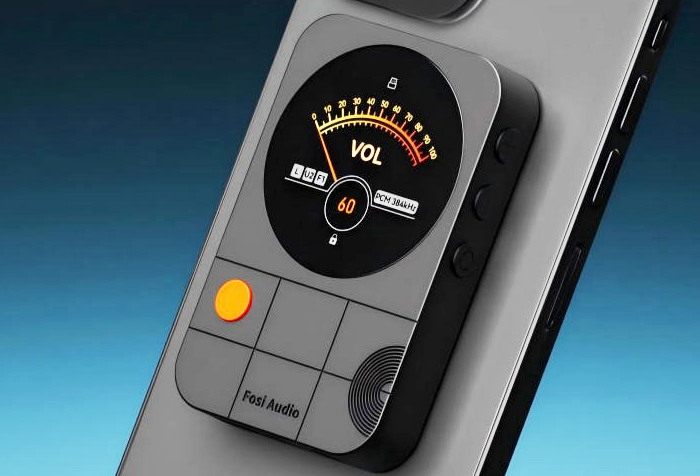
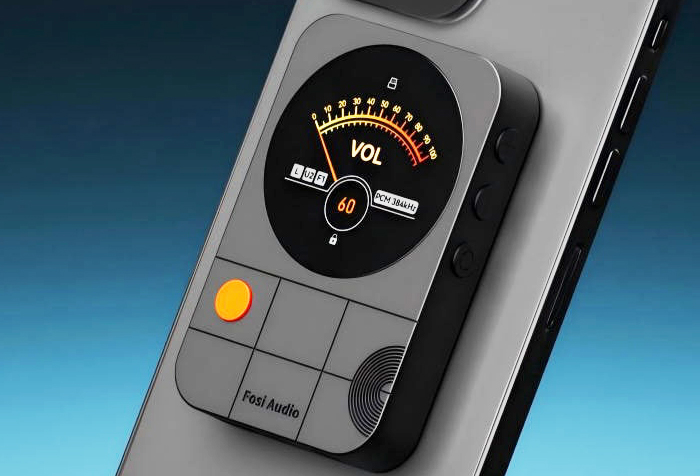
Priced at $149.99, this compact DAC/amp attaches directly to the back of your phone using 16 high strength N52 magnets, making it MagSafe compatible with modern iPhones. Instead of a dongle hanging off the bottom of your device, the MD3 sticks flush to the rear panel, turning the DAC into something closer to an integrated mobile audio upgrade than yet another accessory.
While affordable, it is entering one of the most crowded categories in portable audio. The difference is that very few of those competitors try to physically integrate with your phone the way the MD3 does. The question is whether the concept works in practice and more importantly, whether the sound quality justifies sticking it to the back of your phone.
Advertisement
Fosi Audio MD3 Specifications and Technology Explained
At the heart of the Fosi Audio MD3 is the ESS ES9039Q2M DAC, the chip responsible for converting digital data into analog sound. It’s a highly regarded converter with impressive specifications, including a 116dB signal to noise ratio and total harmonic distortion plus noise of roughly 0.00075%. The chip also supports PCM up to 384kHz/32-bit and native DSD256, so those with a library of hi-res FLAC or DSD files will have plenty of headroom.
Another advantage of the ES9039Q2M is its low power consumption, which is important in a portable device. In theory, that should allow the MD3 to deliver better sound without draining your phone’s battery as quickly as some other portable DAC/amp designs.
Amplification duties are handled by four ESS ES9063Q op amps, which together deliver up to 180mW of output at 32 ohms. That is a respectable amount of power for a compact mobile device and should be more than adequate for most in-ear monitors and an acceptable range of high-sensitivity headphones.
One of the MD3’s more unusual design choices is its MagSafe compatible magnetic backplate, which uses 16 high-strength N52 neodymium magnets. The idea is simple: instead of dangling from your phone like a traditional dongle DAC, the MD3 can snap directly onto the back of compatible iPhones, keeping the setup compact and eliminating cable clutter.
I wasn’t able to test that feature personally because I use an Android phone, but Editor in-Chief Ian White tried the MD3 with his iPhone 14 at CanJam NYC 2026 last weekend and confirmed that the magnetic attachment works as intended. It’s a clever approach that separates the MD3 from the dozens of conventional dongle DACs currently competing for attention in the portable audio space.
Advertisement
Design & Build Quality
Despite the budget friendly nature of the Fosi Audio MD3, the chassis is made from aluminium alloy, something you do not always see on dongle DACs priced under $200.
Even with its all metal construction, the MD3 remains extremely portable. It weighs just 50 grams (1.76 ounces) and measures 70 x 45 x 12 mm (2.76 x 1.77 x 0.47 inches), making it about as unobtrusive as a portable DAC/amp can be.
Advertisement. Scroll to continue reading.
That 12 mm (0.47 inch) thickness is not accidental. According to Fosi Audio, the dimension was carefully chosen so that most headphone plugs will not lift the unit away from the back of the phone when connected. That detail is important because the MagSafe magnetic attachment relies on the MD3 sitting flush against the device.
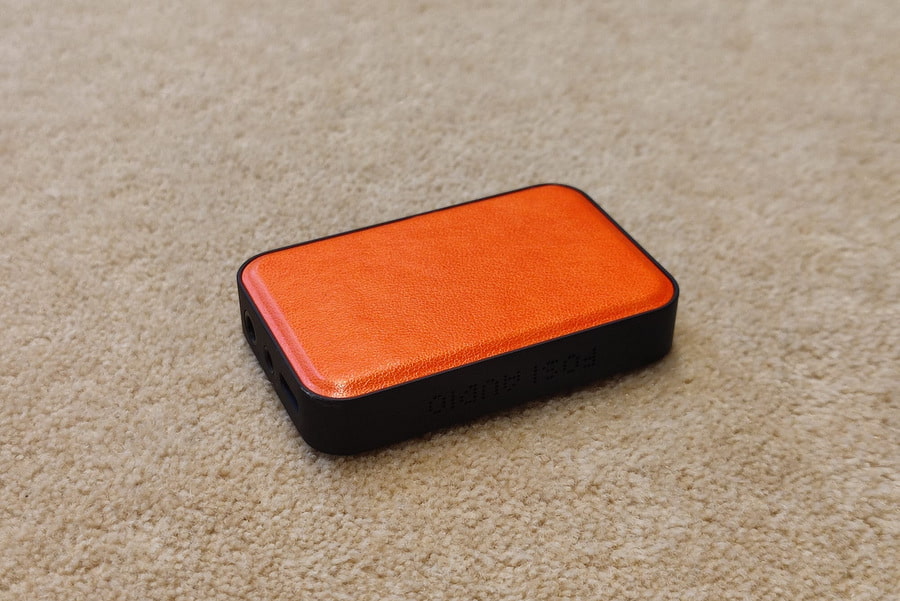
I was also surprised to find hand stitched leather covering the rear panel. It is a small touch, but one that adds a bit of tactile refinement to an otherwise utilitarian product and likely costs Fosi Audio more than you would expect at this price point.
Advertisement
Moving to the front of the Fosi Audio MD3, you’re greeted by a 1.28 inch circular LCD display. It doesn’t get especially bright, but visibility is perfectly adequate in most lighting conditions and the colors are surprisingly vibrant for such a small screen.
The default volume display is particularly clever. It mimics the look of a classic VU meter, giving the interface a bit of retro flair while still presenting useful information such as gain level, sample rate, and the selected digital filter.
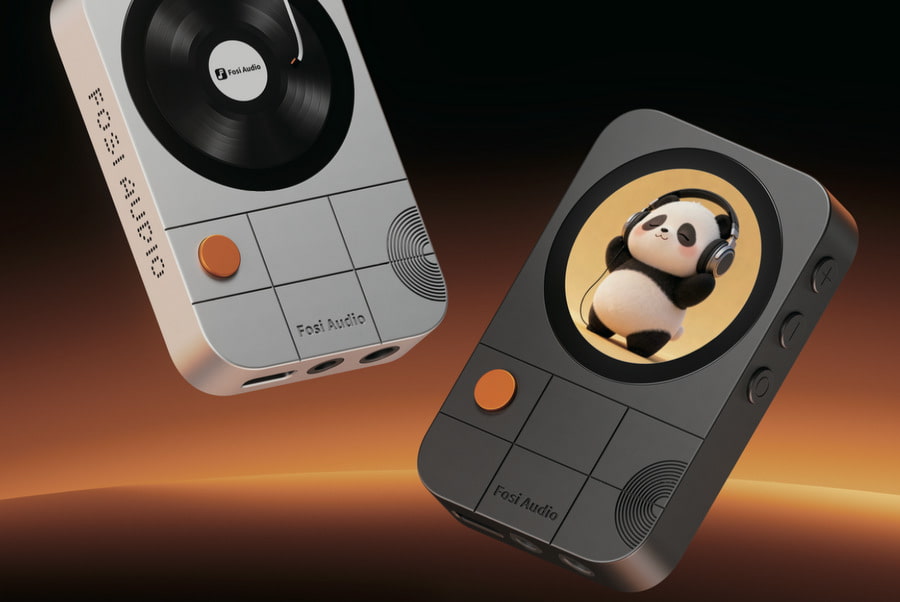
The screen can also do more than simply display playback data. Fosi has included a selection of images and preloaded animations, including a spinning vinyl record, a cartoon dog, and even an anime character. None of it is essential to the MD3’s function as a DAC/amp, but it adds a bit of personality to a category that is usually very utilitarian.
There are even a few built-in mini games, including dice rolling, spin the bottle, and rock paper scissors, which make use of the display. I didn’t spend much time with them, but someone out there will inevitably appreciate the novelty.
Just below the screen sits what Fosi calls the Vista button, which cycles through the available images and animations.
Advertisement
On the right side of the MD3 are three physical buttons. From top to bottom they handle volume up, volume down, and menu or confirm, with the volume buttons also doubling as navigation controls when scrolling through the menu.
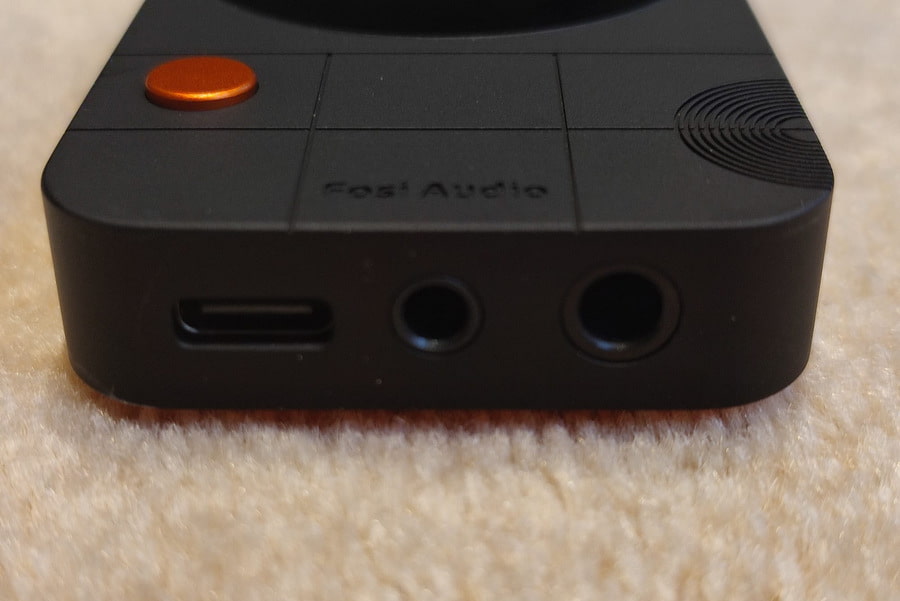
Connectivity is straightforward. The top panel features a USB Type-C port for connection to your phone or source device. The bottom panel includes a second USB-C port, along with both 4.4 mm Pentaconn balanced and 3.5 mm single ended headphone outputs.
That’s really all there is to it. The MD3 is a refreshingly simple device to operate.
But features and design only get you so far. The real question is how it performs where it matters most: sound quality.
Advertisement
Listening & Headphone Synergy
To evaluate the sonic performance of the Fosi Audio MD3, I connected it to both my mobile phone and laptop, feeding it a mix of Spotify streams and hi res FLAC files.
Advertisement. Scroll to continue reading.
On the output side, I rotated through a range of over-ear headphones to see how well the MD3 would pair with different designs and whether it could handle more demanding loads. Headphones including the HiFiMAN HE1000 Unveiled, Thieaudio Cypher, Sendy Audio Egret, and Beyerdynamic DT880 Edition 600 Ohm were plugged in to see how far the little DAC/amp could be pushed.
After a few months of listening, my overall impression of the MD3’s sound quality is fairly straightforward. It presents music with a neutral, largely coloration free tonal balance that walks a careful line between analytical clarity and musical engagement. Fosi Audio has managed to maintain good balance across the audible spectrum without tipping into the sterile or overly clinical presentation that sometimes plagues affordable DAC/amps.
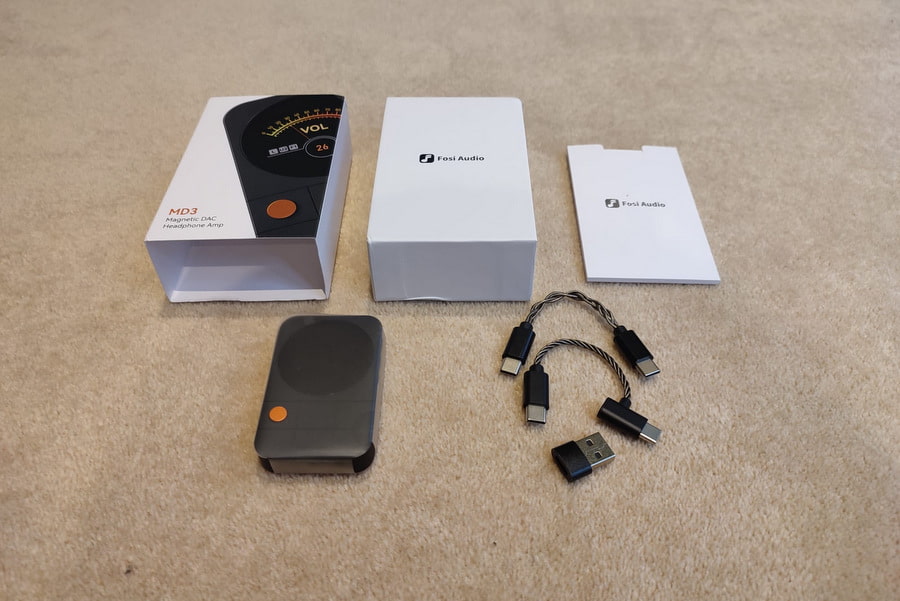
Included: Two braided USB-C to C cables, USB-C to A adapter, instruction manual
Starting with the bass, the MD3 reaches deep into the sub bass without obvious roll off and delivers satisfying texture and dynamic impact. Electronic music and drum heavy tracks carry the right sense of weight and physicality, so you never feel like the low end is being shortchanged. A good example is the infamous sub bass swell around the three and a half minute mark in Hans Zimmer and James Newton Howard’s “Why So Serious?”. Through the HiFiMAN HE1000 Unveiled, the MD3 reproduced that moment with convincing rumble and control.
The midrange maintains the same level of clarity and composure as the lower frequencies. Vocals and instruments come across with a natural timbre and a sense of intimacy when the recording calls for it. Listening to Sade’s “Smooth Operator,” the presentation placed her voice front and center with the kind of effortless smoothness that suits the track perfectly.
Advertisement
Up top, the treble extends cleanly with a healthy amount of sparkle, but without drifting into sharpness or glare that could lead to listening fatigue. “La Lune” by L’Impératrice sounded particularly engaging through the Thieaudio Cypher, with the delicate triangle strikes rendered clearly and with impressive nuance despite their relatively low level in the mix.
Overall, the MD3 paired well with most of the headphones in my collection, largely thanks to its neutral and balanced sound signature. In practice, that means any reasonably well tuned pair of headphones will likely perform well with the little Fosi.
There are limits, however. Extremely power hungry headphones such as the Modhouse Tungsten or HiFiMAN HE6se V2 are simply asking too much of a compact device like this. While the MD3 could push the HE6se V2 to my preferred listening level of around 65 dB, the bass became noticeably thin and some of the finer details were lost. Headphones with very high impedance or low sensitivity typically need several watts of power to perform at their best, which is well beyond the intended use case of a portable DAC/amp like the MD3.
The Bottom Line
The Fosi Audio MD3 takes a different approach in a category crowded with tiny USB dongle DACs. Instead of dangling from your phone with a short cable, the $149.99 MD3 magnetically attaches to the back of compatible iPhones, turning it into a compact all in one mobile audio upgrade. Combined with a capable ESS ES9039Q2M DAC, clean amplification, and a neutral, well balanced sound signature, the MD3 delivers a natural listening experience that pairs well with the vast majority of headphones.
It also stands out with thoughtful design touches such as an aluminium chassis, hand stitched leather backing, and a customizable circular display that adds some personality to what is usually a very utilitarian product category.
Advertisement
Where the MD3 faces pressure is on value and raw power. Competitors like the HiBy W4 offer more output power and Bluetooth connectivity for roughly $50 less, which may matter more to some listeners than magnetic convenience. And while the MD3 has more than enough power for most headphones and IEMs, it will struggle with extremely demanding models that require several watts to perform at their best.
For iPhone users who want a cleaner, cable free portable setup, the MD3 solves a problem that few dongle DACs even attempt to address. If MagSafe integration and tidy pocket ergonomics matter to you, the MD3 is a clever and enjoyable mobile audio companion. If raw power and features are the priority, there are stronger values elsewhere.
Pros:
MagSafe compatible design attaches directly to the back of newer iPhones
Aluminium chassis with hand stitched leather gives it a premium feel
Interactive circular LCD display with customizable visuals and animations
Neutral yet musical sound signature that works well with most headphones
Enough power for the vast majority of IEMs and portable headphones
Cons:
$149.99 price feels slightly high compared to competing dongle DACs
Less output power and fewer features than some cheaper rivals like the HiBy W4
Not suitable for extremely power hungry headphones like HE6 class designs
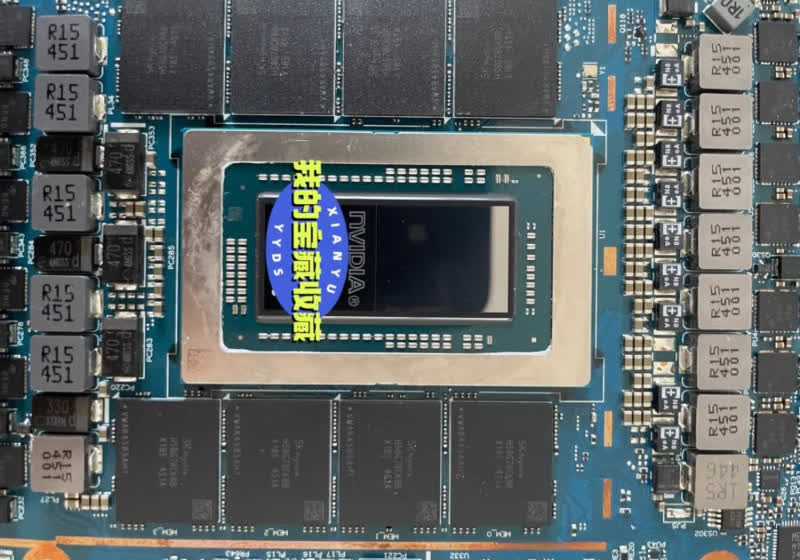
The long-rumored Nvidia N1 chip has been circulating in leaks and rumors for what feels like an eternity. But with a fresh leak, we may finally be getting our first proper look at it – and this time, it includes actual, high-quality images. From these, the product appears closer to… Read Entire Article Source link
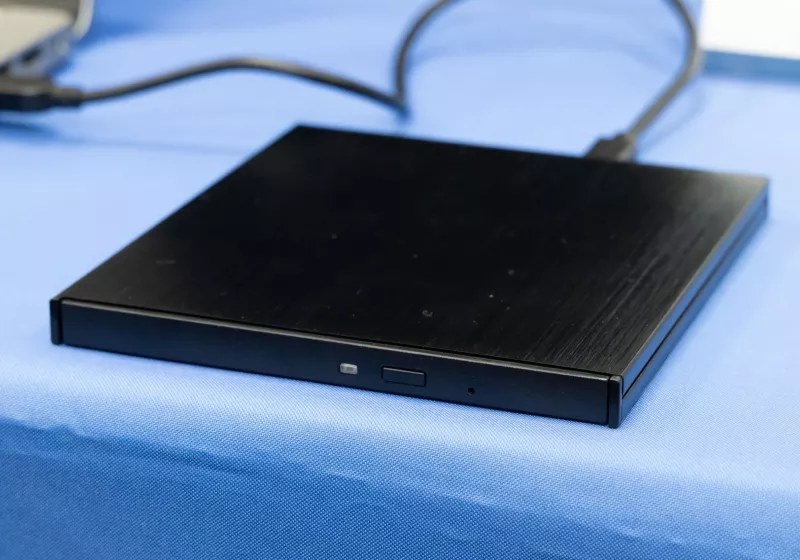
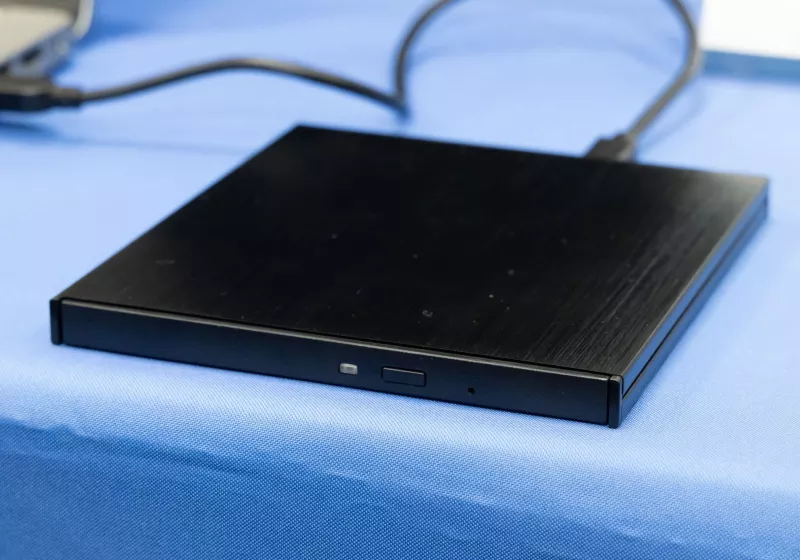
In an official announcement translated by Automaton West, the two firms recently confirmed plans to strengthen their partnership to maintain the supply of Blu-ray discs and players in Japan. Verbatim and I-O Data acknowledged that, despite the rise of digital distribution, individuals and businesses still use optical discs for recording,… Read Entire Article Source link
Finland usually exports two things with authority: hockey players like Teemu Selänne and beverages that feel like a dare. High-end loudspeakers? Not so much — at least that was the assumption before Amphion Loudspeakers decided to quietly ruin that narrative.
First unveiled at High End Munich 2025, the new Argon X-Series which includes the Argon3X, Argon3LX, and Argon7LX, finally made its way to AXPONA 2026, giving us our first real chance to hear what all the quiet confidence was about.
No, Amphion doesn’t offer the same overwhelming breadth of models as the Danes who practically carpet-bombed this show with options, but that’s not really the point. What Amphion brings is focus: cleaner execution, refined engineering, and a sound that leans toward honesty over theatrics. With expanded U.S. distribution through Playback Distribution, these Finnish imports are no longer a niche curiosity.
Finnish Precision Meets Studio Credibility
For more than 25 years, Amphion Loudspeakers has taken a more restrained approach to speaker design. Instead of boosting bass or adding extra sparkle up top to grab attention in a quick demo, their speakers are built to play it straight. What you hear is closer to what was actually recorded, which means better recordings sound great and bad ones have nowhere to hide.
That same approach has carried into the pro audio world over the past decade, where engineers working with Billie Eilish, Beck, and Kendrick Lamar rely on Amphion studio monitors for mixing. Film composers such as Ali Shaheed Muhammad and Jussi Tegelman have adopted them as well, where consistency and accuracy matter more than sounding impressive for five minutes.
Advertisement
Amphion Argon7LX: What It Is and What Actually Changed
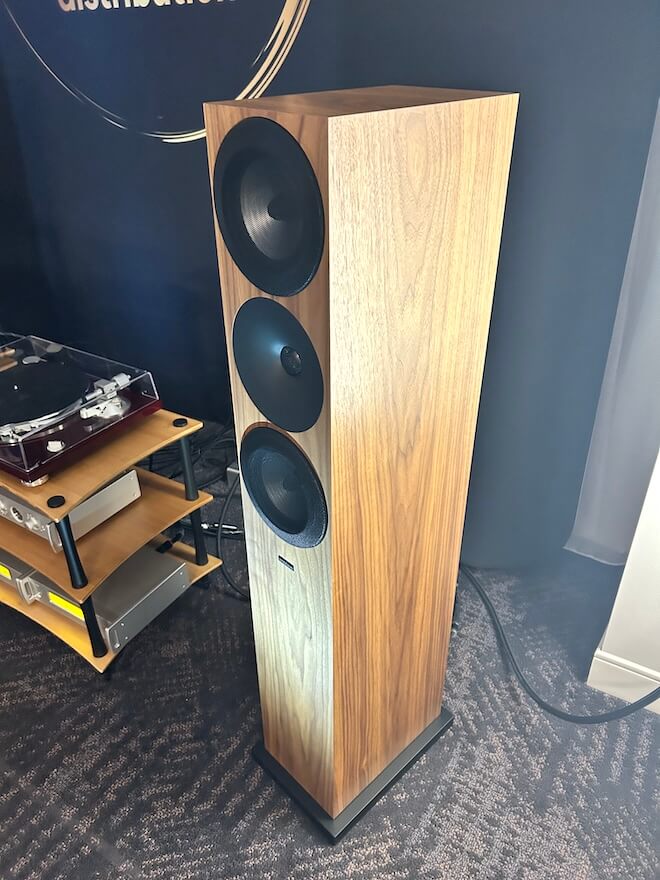
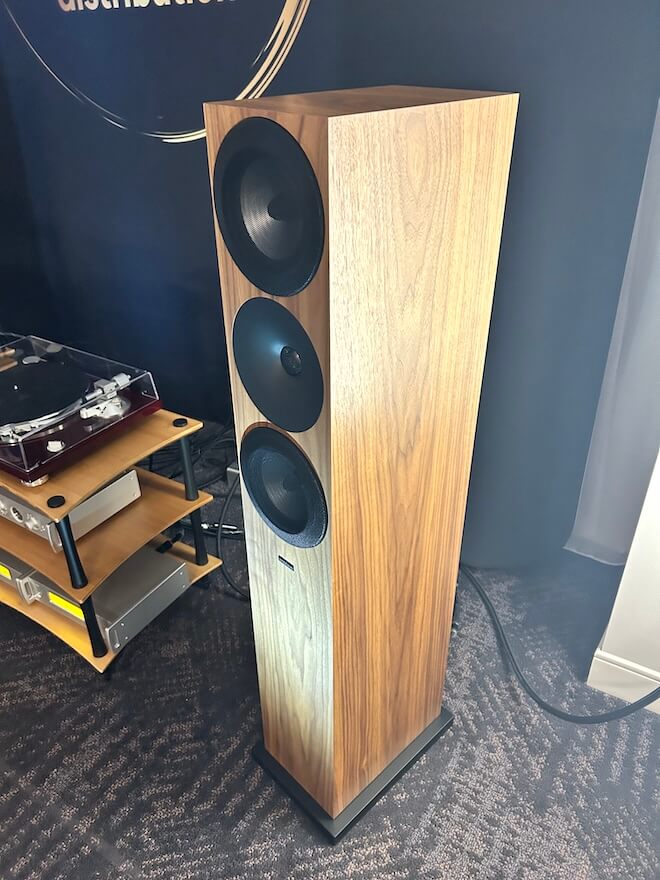
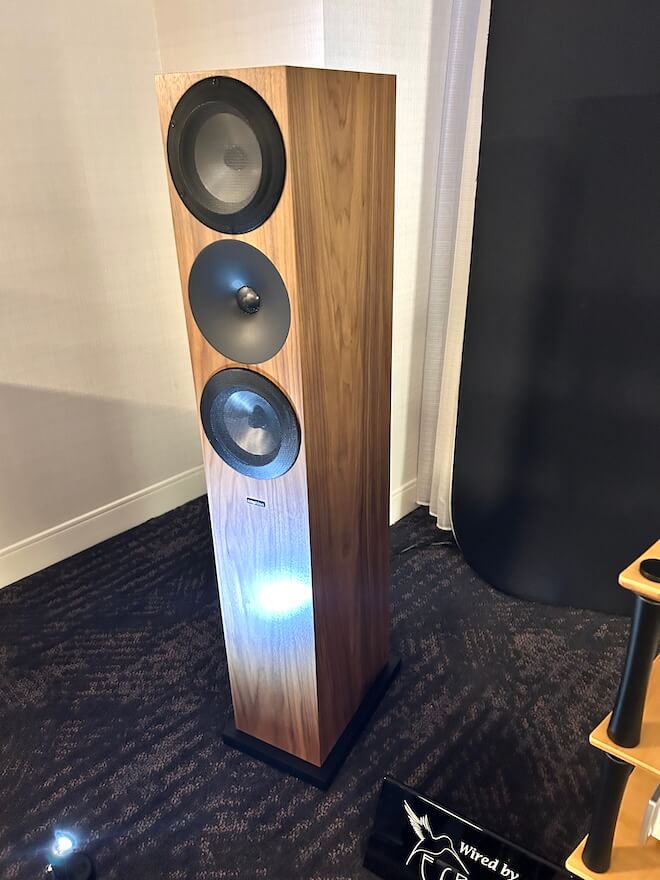
The Argon7LX is a floorstanding loudspeaker from Amphion Loudspeakers that sticks to a fairly straightforward concept on paper but executes it with a level of precision that’s anything but casual. It’s a two-way design using a passive radiator system, built around a newly developed 1 inch titanium tweeter and dual 6.5-inch aluminum woofers. That configuration is meant to deliver full range sound without relying on a traditional port, which helps keep the bass tighter and more controlled, especially in real rooms where things can get messy fast.
The biggest update here is the tweeter, and it’s not a cosmetic change. Amphion revised it to improve low level detail and clean up the top end without pushing things into fatigue. There’s more information, but it’s presented in a controlled way. The crossover has also been reworked and sits at 1600 Hz, which is relatively low, helping create a smoother transition between the tweeter and woofers. The result is better integration, so the sound doesn’t feel segmented across frequencies.
That carries into the soundstage. Imaging is stable, placement is precise, and nothing shifts around when the material gets more complex. The bass remains controlled, but the more noticeable change is how it connects with the midrange and treble. The overall presentation is more cohesive and consistent.
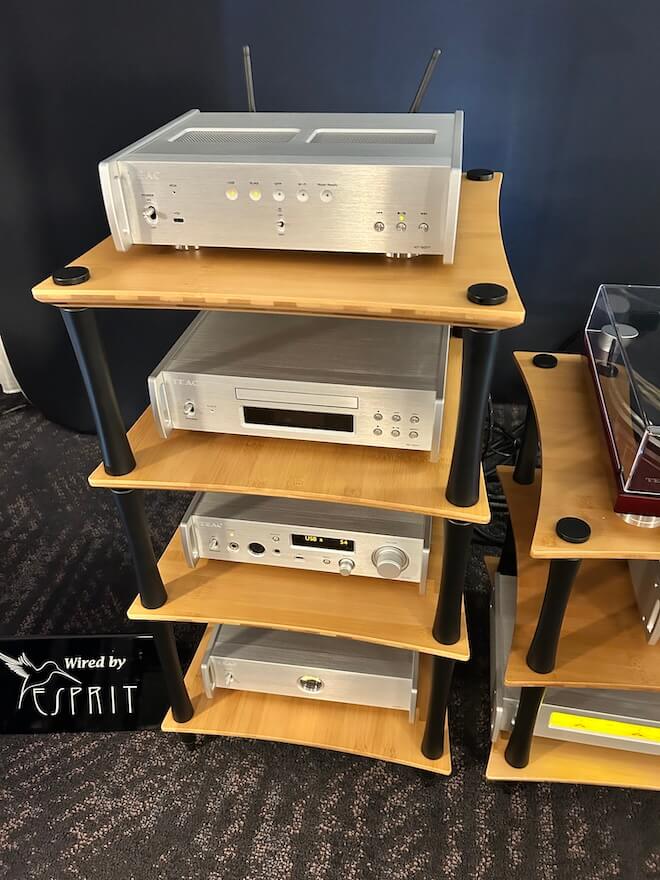
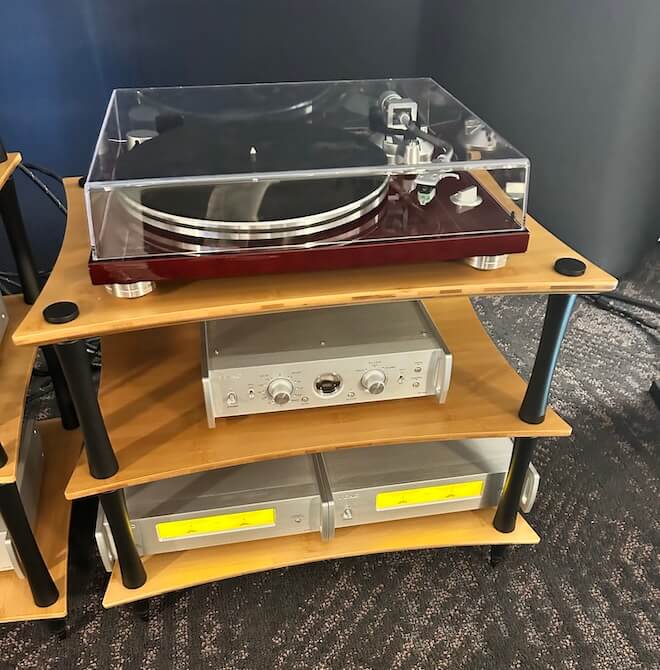
For the demo, Amphion Loudspeakers used two compact TEAC AP-507 power amplifiers, also distributed in the U.S. by Playback Distribution. Each amplifier delivers 170 watts per channel into 4 ohms and can be configured for stereo, bi-amp, or bridged operation, with higher output available in BTL mode. The pairing had no issue driving the Argon7LX to normal listening levels with control and stability, which is notable given the size of the amplifiers.
On the practical side, the Argon7LX is a 4 ohm speaker with a sensitivity rating of 91 dB, which means it’s not especially hard to drive but will benefit from an amplifier with solid current delivery. Amphion recommends anywhere from 50 to 300 watts, which gives you some flexibility depending on your setup.
Advertisement
Frequency response is rated from 28 Hz to 55 kHz at minus 6 dB, so it reaches low enough for most music without needing a subwoofer, while also extending well beyond the limits of human hearing on the top end.
Advertisement. Scroll to continue reading.
Physically, it’s a substantial speaker without being ridiculous. Just over 45 inches tall, under 10 inches wide, and weighing about 60 pounds each, it’s designed to fit into real living spaces without dominating them.
So how did it sound? Calm, controlled… and slightly judging you
I walked into the room expecting at least a small crowd and… nothing. A few seats open, plenty of space, almost suspiciously calm. This system had no business being that overlooked. My host didn’t rush anything, just handed me the reins. When I asked for electronic music, he cracked a slight smile and queued up a few tracks he clearly had ready. Finns get it. They’ll dismantle your penalty kill and still have time to argue about synth textures.
Right off the bat, the neutrality hits. No extra flavor, no “look what I can do” tuning. Just fast, clean, open sound that moves with real intent. Propulsive fits. The music had momentum, not just presence. It filled the room without feeling pushed, and there was an ease to it that made you stop thinking about the system and just let it run. Detail was there, but it didn’t feel dissected. More like everything was just… available.
Advertisement
The bass? Not trying to win any Texas BBQ competitions. This isn’t brisket dripping onto your plate. More like a perfectly trimmed filet—tight, controlled, and cooked exactly how it should be. You might want a little more heft if that’s your thing, but it never felt thin or out of place. There was even a hint of that club-like scale, just without the kind of low end that rearranges your organs and your plans for the next morning. Don’t forget to bring some protection.
The company frames the dispute not as a question of safety or bias mitigation, but as a First Amendment issue over who controls the information that large-scale AI systems generate. Read Entire Article Source link
In April 2025, a new company called Slate Auto came out of stealth and shocked the car industry. Not only was this startup focused on making an ultra-cheap, customizable electric pickup truck with funding from Jeff Bezos, but it had also been operating in secret for three years in Troy, Michigan — the backyard of major automakers like Ford and General Motors.
TechCrunch was first to the story, reporting in early April about the company’s existence, its involvement with the Amazon founder, and its curious and unique business model. The weeks between our report and Slate’s official coming out party in late April provided a whirlwind of news, with prototypes of the startup’s truck popping up around California.
Slate is an aberration in the U.S. EV sector, where bankruptcies, failed product launches, and pivots have become commonplace. And while its current backers, executive lineup, first product, and business model provide a compelling path forward, the road is still riddled with potential hurdles as it pushes toward production in late 2026.
Here’s a timeline that charts out everything you need to know about Slate Auto, from its origin story and backers to its product, business model, and production plans.
Advertisement
Inside the EV startup secretly backed by Jeff Bezos
April 8 – After a year-long investigation, TechCrunch published a story revealing that a secretive EV startup called Slate Auto had been operating for three years with the financial backing of Jeff Bezos and LA Dodgers owner Mark Walter.
Unlike other EV startups, Slate had been working on developing an extremely low-cost electric pickup truck that would start at around $25,000. This truck would be deeply customizable, leveraging the experience of many former employees from Harley-Davidson and Chrysler, two companies that have extensive accessories and aftermarket parts businesses.
Slate Auto’s pickup truck spotted in the wild
April 10 – One day later, a photo of a nondescript electric truck started circulating on the r/whatisthiscar subreddit, with Redditors speculating it could be Slate’s mystery EV.
Techcrunch event
Advertisement
San Francisco, CA | October 13-15, 2026
TechCrunch was able to confirm the photo was, in fact, of a prototype of Slate’s truck parked outside the company’s Long Beach, California design center.
Advertisement
An EV that can change like a ‘Transformer’
April 21 – Slate began putting concept versions of the Slate EV on public streets to generate marketing buzz ahead of its planned launch event on April 24. Curiously, some of them appeared to be styled more like SUVs or hatchbacks, not just pickup trucks.
TechCrunch was able to confirm the company had developed the EV to have “Transformer-like” modular capabilities, and that this stunt was a way to tease this customization.
The analog EV pickup truck that is decidedly anti-Tesla
April 24 – Slate made its debut at a launch event in Long Beach, California, where it revealed its customizable electric pickup truck. Slate also announced the truck would be available for under $20,000 — with the $7,500 federal EV tax credit.
The base version of the truck was revealed to be very bare-bones, with just 150 miles of range, no power windows, no main infotainment screen, and not even any paint. Slate promised essentially everything about the truck would be customizable, even down to the number of seats and the overall silhouette.
Advertisement
A former Indiana printing plant eyed for EV truck production
April 25 – TechCrunch reported that Slate had identified a former printing plant in Warsaw, Indiana as the location for its truck factory. The 1.4 million-square-foot facility was built in 1958 and had been dormant for around two years.
Slate Auto crosses 100,000 refundable reservations in two weeks
May 12 – Slate confirmed to TechCrunch it had already surpassed 100,000 refundable $50 reservations for its affordable EV truck. It was evidence that the company’s ideas had caught on with a wide audience, despite no one knowing about Slate just two months prior.
Slate Auto drops ‘under $20,000’ pricing after Trump administration ends federal EV tax credit
July 3 – The Trump administration pushed through a massive tax-cut bill that, among many other actions, set a September end-date for the $7,500 federal EV tax credit. That means Slate’s truck will no longer be able to lean on that credit to reach the “under $20,000” starting price the startup was touting. As such, Slate pulled that language from its website before the bill was even signed into law.
Why this LA-based VC firm was an early investor in Slate Auto
July 8 – Slate’s 2023 funding round included at least 16 investors — one of them being Bezos. While most of those investors have still not been identified, Los Angeles-based Slauson & Co. spoke to TechCrunch about why it threw in with the EV startup in that initial funding round, as well as Slate’s Series B.
Advertisement
Slate Auto appears on the TechCrunch Disrupt main stage
October 30 – Slate Auto CEO Chris Barman sat down for an interview on the main stage at TechCrunch Disrupt 2025, where she talked about Jeff Bezos’ involvement, the challenge of building an automaker from scratch, and how the company plans to make a marketplace for customization.
Slate passes 150,000 reservations
December 16 – Despite EV growth cooling off in the U.S., Slate Auto crosses 150,000 refundable reservations for its truck and SUV, showing there is still serious interest in the vehicle despite the loss of the federal tax credit. And with fewer EVs set to come to the U.S., it appears that the startup will have very little competition at the low end of the market.
2026
A surprise CEO swap
March 9 – Slate pulls a surprise and swaps in a new CEO: former Amazon Marketplace VP Peter Faricy. Former CEO (and Slate’s first hire) Chris Barman is staying with the company though, shifting over to a “President of Vehicles” role. Slate tapped Faricy to get the startup ready for its end-of-year commercial launch – starting with converting the reservation list into as many full orders as possible.
Mobile gaming is the future. At least, that’s what we’ve heard for the last decade. But it’s fair to say that plenty of us are still pretty skeptical about that notion.
It seemed that, for a while, the available technology was not making the leaps forward needed to deliver a satisfying gameplay experience in this alternative format. Console gaming excelled while mobile gaming fell behind.
However, we’ve heard a great deal recently about the incredible capabilities of the modern generation of mobile platforms; that these entertainment hubs have become legitimate consoles unto themselves. For the skeptical out there, it was important to explore that concept fully. That’s why I spent six hours straight gaming on the Samsung Galaxy S26 Ultra — to really test its mettle as a legitimate rival to the best game consoles.
Advertisement
Article continues below
The Galaxy S26 Ultra is among the best phones money can buy, and its Snapdragon 8 Elite Gen 5 For Galaxy chipset and 6.9-inch AMOLED display are billed as a formidable combo for mobile gaming. But which game did I choose for my test?
Advertisement
Choosing the game
(Image credit: Future)
Selecting the right game to test out the Galaxy S26 Ultra’s performance credentials was critical. The title in question needed to not only push the best Samsung phone to its limits, but also be well-known among the mobile gaming community. That’s why I settled on Genshin Impact.
Developed and published by miHoYo, with HoYoverse taking on distribution duties globally, Genshin Impact was released back in 2020 on Windows, PlayStation 4, and, critically, iOS and Android. The action RPG has proven extremely popular and has since been released on both the PlayStation 5 and Xbox Series X|S. It’s a title with critical acclaim, a firm player base, and crucially, the ability to perform cross-platform.
Genshin Impact received over 23 million downloads in its first week of release and has since become a staple of mobile gaming. Its stunning world, vibrant graphics, and fast-paced combat provide a perfect variety of tests to push the S26 Ultra to its limits.
Sign up for breaking news, reviews, opinion, top tech deals, and more.
Advertisement
Of course, I played the game with high SFX quality, the highest render resolution, high shadow quality, the highest environmental detailing, high motion blur, and bloom all activated.
The initial performance
(Image credit: Future)
Logging in to Genshin Impact was a breeze, with the game taking around 30 seconds to get through its various loading screens. Sure, a dedicated console goes through the same motions slightly quicker, but 30 seconds is significantly quicker than the minute-long wait times demanded by previous smartphone generations.
Running smoothly with a target of 60fps, I was instantly struck by the ease of traversing the game’s settings and menus. The Galaxy S26 Ultra showed no signs of early stress, and jumping into the game itself, I thought it appropriate to take a minute to explore the lush landscape of Teyvat, one of the game’s seven nations.
Advertisement
It’s a landscape full of rich greenery and ethereal man-made constructs, the complex lighting putting the phone’s custom Snapdragon chipset to work. Whether it was a desert-like landscape with dry, barren vistas or a more fruitful, forest backdrop, I couldn’t help but marvel at the level of detail the Galaxy S26 Ultra captured. The Snapdragon 8 Elite Gen 5 chipset showed initial promise as it powered through some difficult moments, avoiding lag where needed.
(Image credit: Future)
A quick word on the Galaxy S26 Ultra’s size. We’ve seen a drive towards larger phone displays in recent years, and sitting at 6.9 inches, Samsung‘s latest flagship mobile display offers plenty in the way of cinematic spectacle. With a high-fidelity stereo speaker system providing a promising audio balance, I felt as though there was real depth to everything I was seeing and hearing in Genshin Impact.
For a moment, it seemed that perhaps this smartphone was genuinely giving the console world a run for its money….
Advertisement
Long-term play became slightly more taxing
However, after extended play, things started to look a little different. The longer I played, the more framerate imperfections I noticed. Momentary lag started to creep in, and with the phone’s gradual but managed warming, it became clear that mobile gaming is built to be a sprint, not a marathon.
Image 1 of 3
(Image credit: Future)
(Image credit: Future)
(Image credit: Future)
Prolonged, busy set pieces began to have a visible impact on the Galaxy S26 Ultra’s performance. With combat sequences came screen cramming, as multiple enemies and detailed SFX fought for visual dominance. Inconsistencies were rare, but they were still present.
So, while the Galaxy S26 Ultra is far better for gaming than many other mobile devices I’ve tried, Genshin Impact still played as if it were not the phone’s primary focus.
Advertisement
And in fairness, why should it be? This is a smartphone after all. But there’s still a noticeable gap between the performance of phones and consoles.
Still, considering that the Galaxy S26 Ultra is not a stationary block of mains-powered circuitry à la the PS5, it handled the intense demands of Genshin Impact remarkably well. Mobile gaming isn’t yet a threat to major PC and console platforms, but it is a genuine alternative that can provide quick, easy, and satisfying access to the AAA titles you love.
For an even more complete experience, the best gaming phones offer extras like shoulder triggers and improved cooling mechanisms, but the Galaxy S26 Ultra gets the seal of approval for accessible, short-term play.
Dune: Part Three is set for a December 18, 2026 release, confirming that Denis Villeneuve’s return to Arrakis is happening sooner than expected — and bringing his adaptation of Frank Herbert’s saga to a close. The third film is positioned as the conclusion to Villeneuve’s trilogy, following Dune: Part One (2021) and Dune: Part Two (2024), the latter of which crossed $700 million globally and significantly expanded the franchise’s audience.
The trailer for Dune: Part Three was released in March and it offers the clearest look yet at how the final chapter is being shaped. It shifts the focus away from Paul Atreides’ rise and toward the consequences of his rule. Paul is shown as an emperor dealing with political instability, resistance, and the long-term fallout of the empire built in his name. The scale remains, but the emphasis is more controlled — less about conquest, more about power and its consequences.
The trailer points to a clear shift in direction. Instead of continuing Paul Atreides’ rise, the film focuses on the consequences of his rule. Paul is shown as an emperor dealing with political instability, resistance, and the long-term fallout of the empire built in his name. The tone is more restrained and inward-looking, with a stronger emphasis on power, control, and the cost of both.
Villeneuve had planned to take a break after Part Two
Following the release of Dune: Part Two director Denis Villeneuve had stated several months ago that he planned to take a bit of a break between Dune: Part Two and its intended sequel, Dune: Messiah. However, coming off the immense success of Dune: Part Two earlier this year, which received rave reviews from both critics and casual moviegoers alike and earned over $700 million at the box office, it sounds like Villeneuve has thrown his original vacation plans out the window.
Advertisement
Speaking with Deadline, the French Canadian filmmaker revealed that he is going to go “back behind the camera faster” than he thought he would and that his “break” from Frank Herbert’s Dune world is already over. “I’m in the writing zone right now,” he said, referencing the script for Dune: Messiah. Villeneuve did not confirm the specific timeline he now has in mind for the sequel, but he did note that he is likely going to make Messiah much faster than he originally planned.
Warner Bros. Pictures / Warner Bros. Pictures
He spoke about the need for distance after completing two large-scale productions back-to-back and avoided committing to any timeline for a follow-up.
The response to Part Two changed that timeline
That plan shifted after Dune: Part Two’s critical and commercial success. The film’s performance reinforced the scale of audience interest in the franchise, and Villeneuve returned to writing sooner than initially expected.
Production on Dune: Part Three moved forward quickly, and the film is now in post-production. With Warner Bros. setting a December 2026 release, the gap between the second and third films is shorter than originally indicated.
The final chapter focuses on consequences, not conquest
Dune 3 trailer / Warner Bros
Returning cast members include Timothée Chalamet, Zendaya, and Florence Pugh, with Anya Taylor-Joy expected to expand her role following her appearance in Part Two.
Villeneuve has described the film as distinct from its predecessors despite returning to the same world and characters — a continuation that closes the story rather than extending it further.
The repository, posted by NASA’s Chris Garry and designated as public domain, contains two distinct programs: Comanche055, used onboard Apollo’s Command Module, and Luminary099, used in the Lunar Module. Read Entire Article Source link
175 million people in Brazil now use its instant-payment system “Pix”, developed by the country’s central bank for real-time payments using QR codes or keys, and American Banker notes that the central banks of Argentina and Costa Rica also have developed their own widely used digital systems for instant payments.
Latin America has been able to build up sleek and effective payment systems in record time because it is not held back by legacy payment technology that isn’t built for instant money movement. In the likes of the U.K., U.S. and Europe, payment systems are built on infrastructure that is often decades old. The process of building new systems is therefore incredibly operationally complex. Money must continue moving, so these systems can’t just be “switched off.”
Emerging markets, such as those in Latin America, did not have to contend with legacy technology on the same scale. Many of these communities were cash dominant until recently, due to the high fees associated with card usage and the lack of banking infrastructure in rural regions. However, while many people didn’t have a local bank on their corner, they did have mobile phones… Through these digital channels, money moves instantly, via account-to-account transfers, QR codes and mobile wallets… Beyond this, real-time and traceable digital payments generate valuable cash-flow data that can transform credit underwriting for small and medium-size businesses, or SMEs. Historically, many SMEs in emerging and cash-reliant markets have struggled to access credit due to a lack of documented transaction histories, audited accounts or formal credit records…
Mexico is now poised to be the next success story. In Mexico, a third of people are unbanked, but 96% of the population owns a mobile phone. This creates the perfect launchpad for a digital-first payment system that can reach those historically excluded from traditional banking systems. In fact, something already changed in 2025. Bloomberg reports that for the first time, digital payment transfers in the U.S.-to-Mexico remittance corridor exceeded cash transfers (with physical pickup locations like Western Union), according to Mexico’s central bank. It’s part of a Latin American market “worth more than $160 billion a year, roughly $62 billion of which goes to Mexico.”
Ascend Elements said on Friday it has started Chapter 11 bankruptcy proceedings in the U.S., a heavy blow to investors who had sunk nearly $900 million into the company.
Linh Austin, Ascend’s CEO, announced the decision in a post on LinkedIn late Thursday night. He said the company faced “insurmountable” financial challenges.
Ascend’s filing comes amid a softening market for electric vehicles in the U.S. and was likely compounded by the Trump administration’s decision to cancel a $316 million grant intended for a Kentucky facility that was under construction. At the time, $204 million was disbursed, but Ascend had to look for additional capital to make up the shortfall.
The market for EVs in the U.S. has hit a rough patch recently. Though sales surged prior to the end of tax credits in September last year, they haven’t quite recovered. Analysts predicted that customers who might have bought this year pulled their purchases forward to take advantage of the credit, but it didn’t help assuage automakers’ fears.
Advertisement
Since then, several automakers have dialed back their plans for new EVs in the U.S. For example, Volkswagen said yesterday that it was ending production of the ID.4 at its Chattanooga, Tennessee, factory in favor of the gas-powered Atlas.
Ascend has developed a process to extract valuable critical minerals from scrap and end-of-life batteries. It says its process limits the number of steps needed to transform shredded waste into precursor materials for new cathodes.
The company has been building a 1 million-square-foot facility in Kentucky that has been beset by lawsuits and delays, according to local reports.
Techcrunch event
Advertisement
San Francisco, CA | October 13-15, 2026
Like many battery-related startups, Ascend was entering a challenging and cutthroat industry. The largest market for battery materials is cells for EVs, but automakers have long lead times, and their specifications are known to change over time. Chinese manufacturers, which benefit from steady and generous state support, have been dominating the market and driving down costs.
Advertisement
Other recycling startups like Redwood Materials have pivoted to reusing some of the packs that flow through their sourcing network. The startup developed a way to incorporate a range of different pack types into larger, grid-scale batteries capable of powering data centers. The market for stationary storage has exploded in recent years, allowing Redwood to draw near-term revenue while continuing to build its recycling business.





























































You must be logged in to post a comment Login