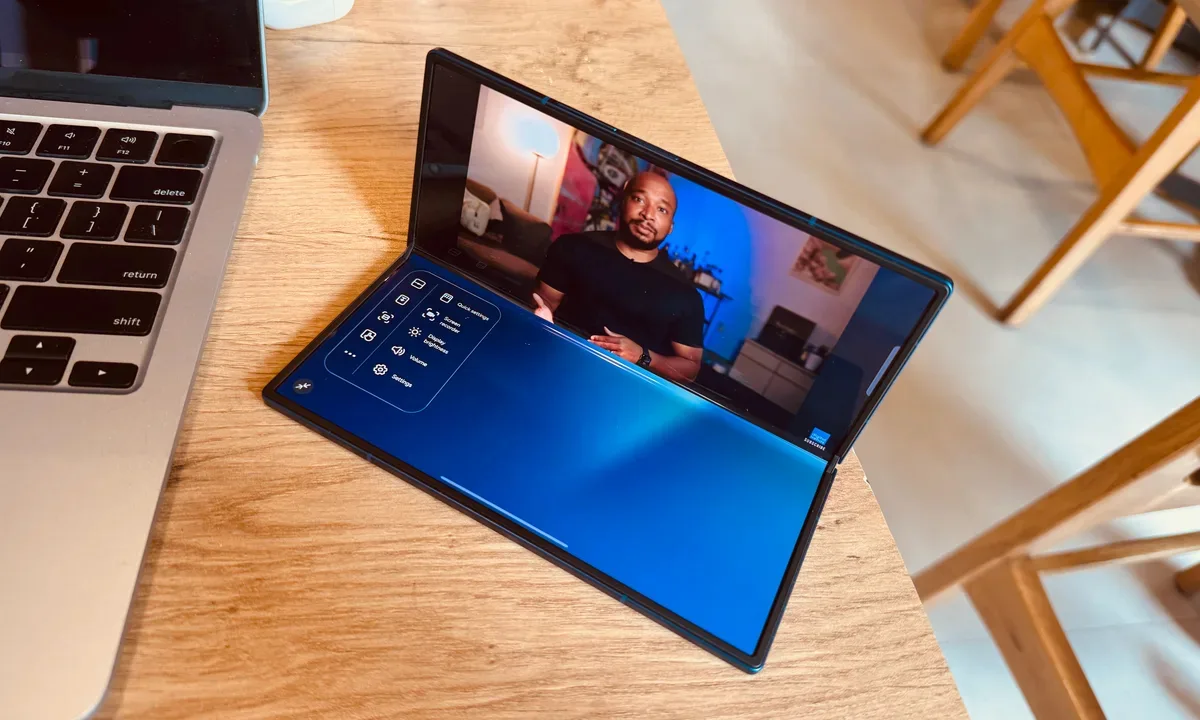
Google’s new Gemini Intelligence platform is quickly becoming one of the biggest talking points in the Android world right now. After being highlighted during this week’s Android Show, the feature is already being tied to several upcoming premium foldables and flagship phones. But there’s a catch: not every high-end Android device will be able to run it. And surprisingly, even some of Google and Samsung’s latest foldables may miss out.
According to Google’s requirements, Gemini Intelligence isn’t just another software update you can casually push to older devices. The company appears to be building this around a much stricter hardware and long-term software support system. To qualify, a phone needs a flagship-grade chipset, at least 12GB RAM, support for AI Core, and Gemini Nano v3 or newer. That immediately creates a problem for several current-generation phones.
Gemini Intelligence needs more than just a powerful chip
Google’s requirements go beyond raw performance. Devices also need to promise at least 5 Android OS upgrades and 6 years of security patches, with quality standards tied to system stability and crash rates.
While many flagship phones already offer long software support cycles, the Gemini Nano version requirement seems to be the real barrier here. Reports suggest devices like the Pixel 9 series and Samsung’s Galaxy Z Fold 7 are still running Gemini Nano v2, meaning they don’t currently qualify for Gemini Intelligence support.
Advertisement
Nadeem Sarwar / Digital Trends
The feature list is expected to expand significantly across 2026 Android flagships, including the Pixel 10 series and the Oppo Find X9 lineup, which are likely being designed with these AI requirements in mind from the start.
That said, the situation is still slightly unclear. Google’s documentation specifically mentions support for Gemini Nano’s Prompt API rather than directly confirming whether older devices are permanently excluded. So there’s still a possibility that some phones could gain compatibility later through future Android updates or backend upgrades.
The RAM requirement could reveal Google’s bigger AI plans
One of the more interesting details here is Google’s insistence on a minimum of 12GB of RAM for Gemini Intelligence. That’s a fairly aggressive requirement, especially given that some leaks have suggested the base Pixel 11 might actually ship with only 8GB of RAM. If these new AI requirements are accurate, those earlier leaks may not tell the full story.
Google
It would be odd for Google to heavily market advanced on-device AI features while simultaneously lowering memory capacity on its own flagship phones. For now, Google says Gemini Intelligence will first arrive on Pixel and Samsung Galaxy devices later this year.
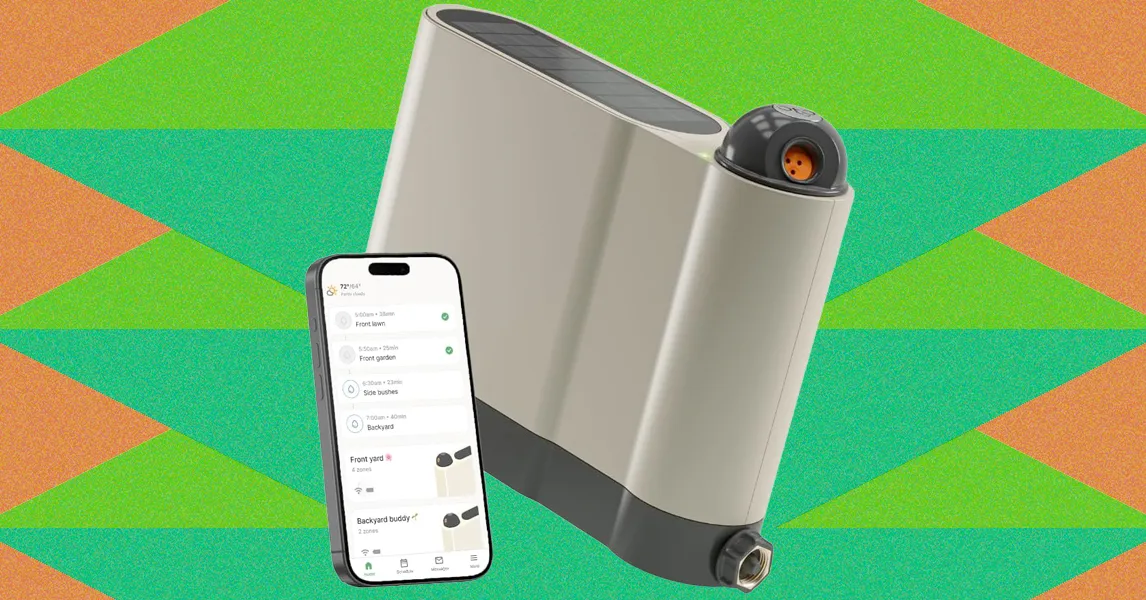
Once configured, setup proceeds much like the Aiper and pricier Irrigreen apps: You create a zone, then use the app to define its boundaries. Similar to the aforementioned systems, Oto’s sprinkler is designed for precision watering, firing water in a beam in a single direction instead of a wide spray. That said, Oto’s spray is comparably narrow, only hitting a single, designated patch instead of producing a two-dimensional curtain of water like Irrigreen’s “water printing” system. You get a nice preview of this as you set the boundaries of your yard.
Like its competitors, Oto lets you set each zone as a spot (for watering a single tree, perhaps), a line (for a flowerbed), or a 2-D area (for a yard). I tested all of these modes but spent most of my time working with area zones, which are the most complex option. When defining an area zone, I found Oto’s system to be virtually identical to that of Irrigreen and Aiper, though ever so slightly slower to respond to commands. Even so, it’s very easy to use: A simple interface lets you drop points around the sprinkler to define the boundaries of the zone. When you’ve made a full circle around the sprinkler, the area is complete.
Advertisement
Once configured, you can assign each zone a schedule, with copious options available around which days to water (odd days, even days, select days of the week, every day), and designate a start time (though there is no tying time to sundown or sunrise). Each schedule also gets a weekly watering limit (in inches of depth), which you’ll then parse out over each week’s watering runs. Weather intelligence features let you elect to skip watering if your zip code receives measurable rainfall or if winds are high (both based on internet reports); the user can tweak both the amount of rain and windspeed needed to trigger a skip. The app logs the 20 most recent runs and includes a calendar that details upcoming events.
When watering an area, Oto takes a novel approach to covering the lawn, first moving in circular arcs directly around the sprinkler, then slowly increasing in range with each successive swipe. When finished, it does additional “clean-up” runs to hit any areas that the initial watering arcs didn’t reach. The speed is slow enough and the size of the water’s beam is large enough that the resulting coverage is solid. After test runs, I found the yard to be plenty wet across the entire zone, with no dry patches.
As with all sprinklers, changes in water pressure can make for occasional over- or underwatering of areas, but I found this to be a minimal problem when using the Oto. However, when watering at the terminus of Oto’s range, the power needed to throw the water that far can make for a strong splashdown, which may result in some soil erosion or damage to more sensitive plants.
The Oto also has a “play mode” option that lets you use the sprinkler for a watery game of chase or a more random “splash tag” mode, aka “try to avoid getting hit by the water.” Pro tip: It’s impossible not to get hit.
Earlier this month, Abnormal Security confirmed that Tycoon2FA had rebounded to normal operations and even added new obfuscation layers to strengthen its resilience against new disruption attempts.
In late April, Tycoon2FA was observed in a campaign that leveraged the OAuth 2.0 device authorization grant flows to compromise Microsoft 365 accounts, indicating that the operator continues to develop the kit.
Advertisement
Device code phishing is a type of attack in which threat actors send a device authorization request to the target service’s provider and forward the generated code to the victim, tricking them into entering it on the service’s legitimate login page.
Doing so authorizes the attacker to register a rogue device with the victim’s Microsoft 365 account, giving them unrestricted access to the victim’s data and services, including email, calendar, and cloud file storage.
Push Security recently warned that this type of attack has increased by 37x this year, supported by at least ten distinct phishing-as-a-service (PhaaS) platforms and private kits. A more recent report by Proofpoint records a similar surge in the use of the tactic.
Tycoon2FA adds device-code phishing
According to new research from managed detection and response company eSentire, Tycoon2FA confirms that device code phishing has become highly popular among cybercriminals.
Advertisement
“The attack begins when a victim clicks a Trustifi click-tracking URL in a lure email and culminates in the victim unknowingly granting OAuth tokens to an attacker-controlled device through Microsoft’s legitimate device-login flow at microsoft.com/devicelogin,” explains eSentire.
“Connecting those two endpoints is a four-layer in-browser delivery chain whose Tycoon 2FA tradecraft is virtually unchanged from the credential-relay variant TRU documented in April 2025 and the post-takedown variant documented in April 2026.”
Trustifi is a legitimate email security platform that provides a range of tools integrated into various email services, including those from Microsoft and Google. However, eSentire does not know how the attackers came to use Trustifi.
According to the researchers, the attack uses an invoice-themed phishing email containing a Trustifi tracking URL that redirects through Trustifi, Cloudflare Workers, and several obfuscated JavaScript layers, landing the victim on a fake Microsoft CAPTCHA page.
Advertisement
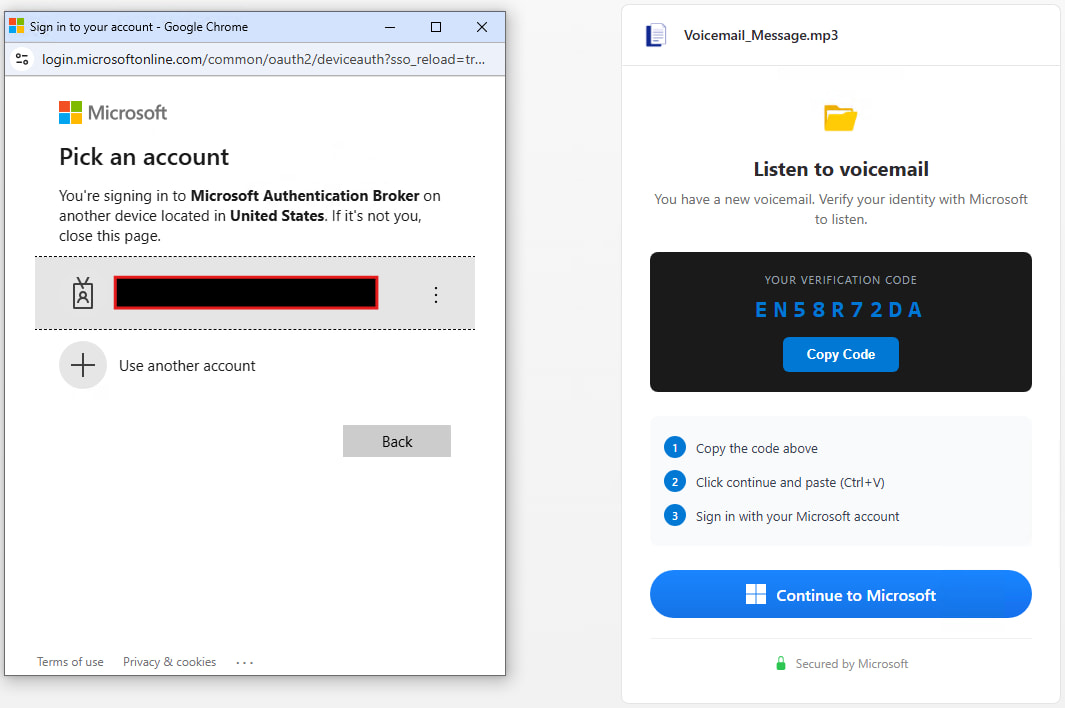
The phishing page retrieves a Microsoft OAuth device code from the attacker’s backend and instructs the victim to copy and paste it to ‘microsoft.com/devicelogin,’ after which the victim completes multi-factor authentication (MFA) on their end.
After this step, Microsoft issues OAuth access and refresh tokens to the attacker-controlled device.
Tycoon2FA attack flow Source: eSentire
The Tycoon2FA phishing kit includes extensive protection against researchers and automated scanning, detecting Selenium, Puppeteer, Playwright, Burp Suite, blocking security vendors, VPNs, sandboxes, AI crawlers, and cloud providers, and using debugger timing traps.
Requests from devices indicating an analysis environment are automatically redirected to a legitimate Microsoft page, eSentire says.
The researchers have found that the kit’s blocklist currently contains 230 vendor names and is constantly updated.
Advertisement
eSentire recommends disabling the OAuth device code flow when not needed, restricting OAuth consent permissions, requiring admin approval for third-party apps, enabling Continuous Access Evaluation (CAE), and enforcing compliant device access policies.
Additionally, the researchers recommend monitoring Entra logs for deviceCode authentication, Microsoft Authentication Broker usage, and Node.js user agents.
eSentire has published a set of indicators of compromise (IoCs) for the latest Tycoon2FA attacks to help defenders protect their environments.
Automated pentesting tools deliver real value, but they were built to answer one question: can an attacker move through the network? They were not built to test whether your controls block threats, your detection rules fire, or your cloud configs hold.
This guide covers the 6 surfaces you actually need to validate.
Finally, we know that plug-in solar systems are finally coming to the UK at some point soon, but so far, the lead headlines from the nationals have been about the supermarket chains that will fill the aisles with £400 systems that you can take away and connect yourself.
While all systems sold must meet safety requirements, there’s a lot more to consider, including how much energy you want to generate, installation requirements, and whether you need a battery.
After seeing the new Anker SOLIX Solarbank 4 E5000 Pro (freshly launched and available in Germany), it’s clear that the talk about plug-in solar in the UK has been oversimplified, and that it will be more important to buy the right system rather than the cheapest.
Solar panels might not be straightforward to install
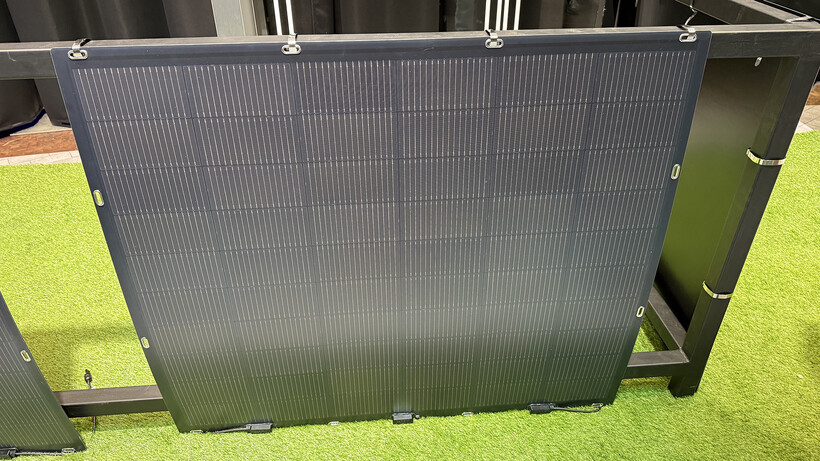
Plug-in solar is often also referred to as balcony solar. Many of the systems are designed to use thin, light solar panels that are tied to the front of a balcony, connecting via an inverter to a regular power socket.
Advertisement
Sounds easy, but even a lightweight solar panel is around 8kg, and it needs to be secured properly to avoid falling off. Before I buy any system, I’d want to double-check the installation instructions and make sure they all make sense, and you’re more likely to get that from a bigger manufacturer.
Advertisement
Image Credit (Trusted Reviews)
While balcony solar is one option, plug-in solar is also designed for use with panels ground-mounted in a garden or mounted on a flat roof, such as a garage or garden office. These alternative mounting options need frames to angle the panels towards the sun, and this needs to be made clear at the point of purchase.
I think there’s a real danger that systems will be bought, because people think they’re plug-in and easy to install, but the reality will be that some installations will be more complicated, and you might even want to pay a professional to do the work to get it right.
While a lower price may seem good, that’s not the only metric: a solar panel’s wattage is important. Wattage is measured using Standard Test Conditions (STC), so it isn’t the amount of power generation you’ll see, but how much power a panel can produce in ideal conditions. It’s still a useful metric: the higher the wattage the more power you’ll generate from the sun. This metric has nothing to do with physical panel size, either, as two identically sized panels can have a different rated Wattage.
Advertisement
My guess is that cheap systems will use older, lower-power panels, so you’ll see less benefit from them.
Be careful of cheap batteries
According to research from global business insurer, QBE, the UK fire brigades are tackling a lithium-ion fire every five hours (or 4.8 fires per day). Most fires were from ebike batteries, with converted or retrofitted models the cause of the majority.
Advertisement
What this statistic shows is that Li-ion batteries can be dangerous. If I bought a plug-in solar system with a battery, I would only buy from a reputable vendor with specialist knowledge in this kind of market, particularly for any batteries placed outside.
Advertisement
With the Anker SOLIX Solarbank 4 E5000 Pro, for example, you get C5-M anti-corrosion (the highest protective coating rating), a guarantee that it will operate in temperatures down to -20°C, and an IP66 rating (fully protected against dust and protection from high-pressure water jets). This system, and ones from other reputable manufacturers, are fully designed to be installed outside, and I wouldn’t buy an outdoor battery system with lower ratings to avoid fire damage.
Batteries have other important metrics, too: capacity, depth-of-discharge, and the number of charge cycles they’re rated for. With the Anker SOLIX Solarbank 4 E5000 Pro, you get a base 5kWh capacity, which is roughly around half the total power that a typical UK household will use in a day.
This system is rated to last for 10,000 charge cycles at a 100% depth of discharge. So, what does that mean?
A charge cycle is when the battery is charged and then discharged. The higher the number of charge cycles, the longer the battery will last for, which means you can store more power in total before the battery has to be replaced.
Advertisement
Alongside the number of charge cycles is the rated depth of discharge. Many batteries are rated at 90% depth of discharge, which means that each charge cycle uses only 90% of the rated capacity, with the remaining 10% unused.
Advertisement
The Anker SOLIX Solarbank 4 E5000 Pro, you get 100% depth-of-discharge, so all of that capacity is available.
Before buying any solar battery, it’s important to know what to expect, how long the system will last and how much power it can hold. It’s then, the cost over a product’s lifetime that’s important. For example, Anker says that its new system has a payback time of just three-years.
Advertisement
And, it’s an expandable system. You can add up to 30kWh of battery storage, using the stackable design, and add up to 12 solar panels for a total 5kW input. With cheaper systems, you’re likely to be stuck with what you get in the box, with no expansion available.
The current change to regulations only talks about 800W input
Currently, although the UK government has said plug-in solar will be available soon, the regulations are not in place. That makes life difficult for the manufacturers, as it’s not clear what they’ll need to do to any products to make them compatible with the UK. That’s true of the Anker SOLIX Solarbank 4 E5000 Pro, which will be sold in the UK, although whether the maximum output can be used isn’t yet clear.
If we look at Germany, plug-in solar devices that connect to a standard Schuko socket are limited to an 800W output. However, have a Wieland socket installed by an electrician, and the Anker SOLIX Solarbank 4 E5000 Pro can have its full 2500W output enabled.
Advertisement
In the UK, the government has said that it’s working “with the Energy Networks Association, DNOs and Ofgem to update the G98 distribution code and wiring regulations BS 7671 to allow UK households to connect <800W plug-in solar panels to domestic mains sockets, without the need for an electrician and with tailored safety standards.”
Advertisement
What isn’t clear is whether higher power output will be available if the system is professionally installed.
That’s potentially quite a big difference. With an 800W output, you can trickle power into your home for smaller appliances, but when you exceed this limit, you’ll have to buy power in. With 2500W, you can power pretty much anything in your home, up to a lot of ovens, so you can use all of the free power you’ve generated.
If the UK regulations allow for higher power inputs, and you’ve got space to put a decent number of solar panels, having a system that can feed more power in may well be worth it, even if that will be a future update as regulations evolve.
I should point out that the Solarbank 4 E5000 Pro has a neat trick, in that you can directly plug a device into its 2500W input, say, powering your washing machine directly from the battery.
Advertisement
Advertisement
Intelligent power usage is just as important
As noted before, when I talked about whether solar panels are worth it in the UK, it’s important to maximise solar power usage. For example, running a washing machine cycle when there’s excess power.
With a battery, it gets more complicated, as you want to balance charging it with solar and also use an anytime-of-use tariff to access cheap electricity. With budget systems, you’ll have to handle all of this yourself.
With a more expensive system, you don’t just get the hardware, but software behind it. Using AI, with inputs from how you use power, the weather forecast and more, the system can optimise your plug-in solar, maximising free energy for charging, but balancing this out with any time-of-use tariff that you have.
Advertisement
This level of intelligence can help unlock better savings and make any system deliver more.
Rather than just going for the lowest price for a plug-in solar system, it’s more important to get one that has a longer life, better warranty, wider installation options (with help if needed), and the option to expand to meet future needs.
It’s that time of the year when Trusted Reviews rolls its sleeves and starts testing TVs. Starting from April, it’s usually the time when TVs roll off the production line and into test rooms for a closer look.
Samsung’s flagship models have already been looked at, while I have started to look at LG’s G-series OLED (with the C-series coming soon). Sony has announced a couple of its lower-tier sets, while I’ve also started testing at Hisense’s RGB Mini LED screens, and hopefully TCL’s new models will follow suit later in May.
But there are two brands I haven’t yet covered. One is Panasonic, which I suspect will enter the market later in the year after the seismic changes that have been made with its TV and home cinema division. The other is Phillips, who announced forthcoming sets back in February, but it’s been whisper-quiet on any review samples.
Phillips tends to launch its TVs in waves, but I do wonder whether it’s leaving out of sync with other launches.
Advertisement
Out of sync
Every TV brand has its launch cycle. Sony tends to be in 18-month cycles (sometimes even two years for its more premium TVs), LG, Samsung, Hisense and TCL are yearly, Panasonic appears to be moving to a different, longer cycle.
Advertisement
Philips launches flagship TVs almost every six months to eight months.
This can get confusing, as by the time I’ve received a review sample for one telly, it’s almost time for the other to go on sale. From my perspective, this can be hard to ingest, especially when it comes to reviewing, as there’s always another model on the horizon; a TV that’s likely to be better specc’d and offer better performance.
Advertisement
But the current TV is likely to have come down in price and offer better value. How do you judge it? In the end, the TV has to be judged on its own merits and now in light of what’s coming down the line.
Image Credit (Trusted Reviews)
I think the Philips OLED+910 is an absolute cracker of a TV. The picture quality, aside from a few problems, is one of the best I’ve seen from an OLED in recent years; while the sound quality trounces that of LG and Samsung, and it does so fat a price that’s less expensive than most of its rivals.
But do you stick and go for the OLED+910, or decide to wait for the OLED+911 that’s set to launch in June? Philips is very consistent in terms of quality – it’s rarely delivered a stinker of an OLED TV – but launching these premium TVs on a six-month cycle has to cause them some pain. You can get the OLED+910 but if you find out that the OLED+911 is even better (and costs similar), would that lead to a sense of buyer’s remorse?
Advertisement
The quality of the TVs themselves may lead to people simply being satisfied with their purchase, but perhaps it’s not really how often Philips updates its premium models that’s the problem; it’s a case of when they launch that’s the biggest issue.
Advertisement
Overshadowed by other TV brands
By now, LG and Samsung TVs will be available in stores, while Sony seems to have put some effort into getting most of its TVs into stores around the same time. Hisense and TCL will soon be available if not already available online and in stores, and this leaves Philips at a disadvantage because obviously, it’s launching later than others.
Some will have already planned their purchases and made them. If you’re waiting on reviews, it could be some time before they’re published, as I’ve found that it does take some time for Philips to get their ducks in a row and distribute review samples. We could potentially be looking at September for reviews, by which time, that’s a long time if you’re itching to purchase a new TV.
Image Credit (Philips)
It doesn’t help that other manufacturers will be lowering their prices (in fact, that doesn’t help them either), but at least it gives them a competitive advantage because if you have been waiting for a price for an LG or Samsung OLED, you’re likely to be more eager to get it once the price has dropped. Philip takes the approach of undercutting the likes of LG, Samsung and Sony, but in some cases that undercut isn’t as strong once prices have gone down across the board.
Advertisement
It also means that Philips isn’t really involved in the discussion when it comes to new developments in TV technology. The innovations it drives tend to be lost among the marketing campaigns of others. Conceivably, if they launched at the same time, that could still be a problem – but rather than being separate from these announcements, it’d be grouped as part of the whole.
Advertisement
Right now Philips feels like an island off to the side, while there’s a continent of stuff happening elsewhere that’s casting a shadow over Philips.
An ace up its sleeve?
Philips will be launching with a feature that others seem to be skipping, and that is Dolby Vision 2 HDR.
Samsung doesn’t support Dolby Vision and came up with its own rival in HDR10+ Advanced. LG isn’t supporting it, and Sony hasn’t announced anything as of yet, and neither has Panasonic, leaving Chinese brands such as Hisense and TCL with the field to themselves. Philips is the only European TV brand to announce its interest in Dolby’s new HDR format.
But how much of an ace will it be if there’s nothing in Dolby Vision 2 to watch? Dolby has said that it can upscale original Dolby Vision content in some ways, but some upgrades are locked to Dolby Vision 2.
Advertisement
Advertisement
There’s still no word on when it will launch other than later in 2026 (which might suit Philips’ release dates more) but perhaps with the launch of the HDR format, that’s a conversation that Philips can be a part of and drive.
But who’s to say whether the addition of Dolby Vision 2 will drive people’s interest and sales? It may take time for the format to find its groove and appeal.
Philips isn’t likely to change its approach anytime, but one wonders whether it should. A new TV season generates interest and discussion, and Philips being a part of it rather than away is a positive. That the brand would be compared with others and featured in round-ups should only strengthen the brand rather than weaken it. Its flagship TVs are more than a match for the likes of Samsung and LG – why not take them on in a head-to-head?
I reckon Philips would triumph more often than people might think. But in order for that to happen, that release schedule needs some more finesse.
Modern gaming has somehow normalized the idea that publishers can permanently shut down games people already paid for. Thankfully, California is now trying to push back against that with its proposed “Protect Our Games Act,” which has officially cleared another key legislative hurdle with strong backing from the Stop Killing Games movement.
California’s new bill could force publishers to preserve online games
If passed in its current form, the legislation would require publishers to either keep games playable after official support ends, provide an offline patch, release a standalone playable version, or issue refunds to players. The bill would reportedly apply to paid games released after January 1, 2027, while free-to-play and subscription-only titles would remain exempt.
The Crew / Ubisoft
The movement gained major traction after Ubisoft shut down The Crew in 2024, effectively making the game inaccessible even for players who had already purchased it. That incident became a rallying point for preservation advocates, arguing that modern online games are increasingly being treated like temporary rentals rather than products consumers actually own.
“The bill is based on a false premise: that consumers ‘own’ digital games with permanent access. That is not how software works-games are licensed, not sold as unrestricted property.” – ESA
Publishers and industry groups are obviously not thrilled, with the ESA arguing that indefinite support requirements could become technically and financially unrealistic for developers. Interestingly, preservation groups previously accused the ESA of lobbying against expanded DMCA exemptions for preserving older video games back in 2024.
Honestly, gamers are finally questioning what “buying” a game even means now
The bigger reason this bill matters is that it taps directly into growing frustration around digital ownership. Over the last few years, gamers have slowly realized that many “purchased” online games can effectively vanish overnight if servers disappear. Ironically, California itself already pushed the industry toward more transparency last year by forcing digital storefronts to clarify that users are often buying licenses instead of permanent ownership. Steam even added warnings explaining this directly before purchases.
Advertisement
Stop Killing Games
At this point, the entire debate feels bigger than just preserving old multiplayer games. It’s becoming a fight over whether players actually own anything in the digital era, or whether publishers can simply decide when products stop existing. And honestly, judging by how aggressively communities have rallied behind Stop Killing Games, a lot of players seem very tired of feeling like long-term rentals disguised as customers.
Are statistical programmers coalescing around a handful of popular languages? That’s the question asked by the CEO of software assessment site TIOBE, which every month estimates the popularity of programming languages based on their frequency in search results:
This month, the programming language R matched its all-time high by reaching position #8 in the TIOBE index once again. This is not a coincidence. The statistical programming language market is clearly undergoing a major consolidation. The biggest winners are Python and R, while many long-established alternatives continue to lose momentum. The era in which the statistical computing landscape was fragmented across many niche languages and platforms appears to be coming to an end.
Several established players are steadily declining:
— MATLAB is close to dropping out of the TIOBE top 20.
Advertisement
— SAS is about to leave the top 30 for the first time since the TIOBE index began.
— Wolfram/Mathematica remains well below its historical peak and is losing further ground.
— SPSS dropped out of the top 100 last month….
Elsewhere in the index, Java and C++ swapped positions this month. Java gained momentum following the successful release of Java 26. Another notable riser is Zig, which is approaching the TIOBE top 30 for the first time. Zig’s growing popularity appears to be driven by its rare combination of low-level performance, straightforward tooling, and relative ease of use compared to traditional systems programming languages. Their estimate for the most popular programming languages in May:
Advertisement
Python
C
Java
C++
C#
JavaScript
Visual Basic
R
SQL
Delphi/Object Pascal
The five next most popular languages on their rankings are Fortran, Scratch, Perl, PHP, and then Rust at #15. Rust is up for positions from May of 2025 — while Go has dropped to #16, seven ranks lower than its May 2025 position of #7.
Mozilla is the latest company sounding the alarm, warning UK regulators that VPNs remain “essential privacy and security tools” that should not be weakened or treated like suspicious circumvention software. The statement comes amid growing debates around online age verification systems, content controls, and broader internet regulation across Europe and beyond.
Mozilla says weakening VPNs could seriously hurt online privacy
In its latest policy push, Mozilla argues that VPNs are critical for protecting users from surveillance, cyberattacks, and invasive data collection. The company also warned regulators against creating laws or technical frameworks that indirectly discourage VPN usage or make them harder to access.
The timing here is important. Several governments are increasingly framing VPNs less as privacy tools and more as ways to bypass online restrictions, especially as countries roll out mandatory age-verification systems and tighter internet controls. Even the European Union has recently hinted at tougher scrutiny around VPN usage tied to online safety initiatives.
Mozilla’s concerns also come shortly after the company announced plans to expand privacy protections inside Firefox itself, including built-in VPN functionality as part of a broader browser overhaul.
The bigger problem is that VPNs are slowly becoming “suspicious” by default
The awkward reality is that Mozilla might already be fighting a losing battle here. Around the world, governments are becoming increasingly aggressive about restricting encrypted internet access and anonymous browsing tools. Countries like China, Iran, Russia, Iraq, and Myanmar already heavily restrict or outright ban VPN usage in various forms, while others are actively discussing tighter controls.
Advertisement
Unsplash
Ironically, the more governments try to clamp down on VPNs, the more essential they become for journalists, activists, remote workers, businesses, and even regular users simply trying to protect their browsing activity on public networks. In fact, in a recent conversation with Russian business outlet RBC, Valery Fadeyev, head of Russia’s Presidential Council for Civil Society and Human Rights, also admitted that fully banning VPNs is “simply impossible”.
“It became clear fairly quickly that this is an extremely complex system and that banning or switching off VPNs altogether is impossible.” – Fadeyev
That’s what makes this entire debate feel so messy. VPNs are simultaneously being treated as cybersecurity necessities and internet loopholes, depending on who’s talking. And honestly, once privacy tools start being framed as inherently suspicious, it becomes very hard to convince regulators otherwise.
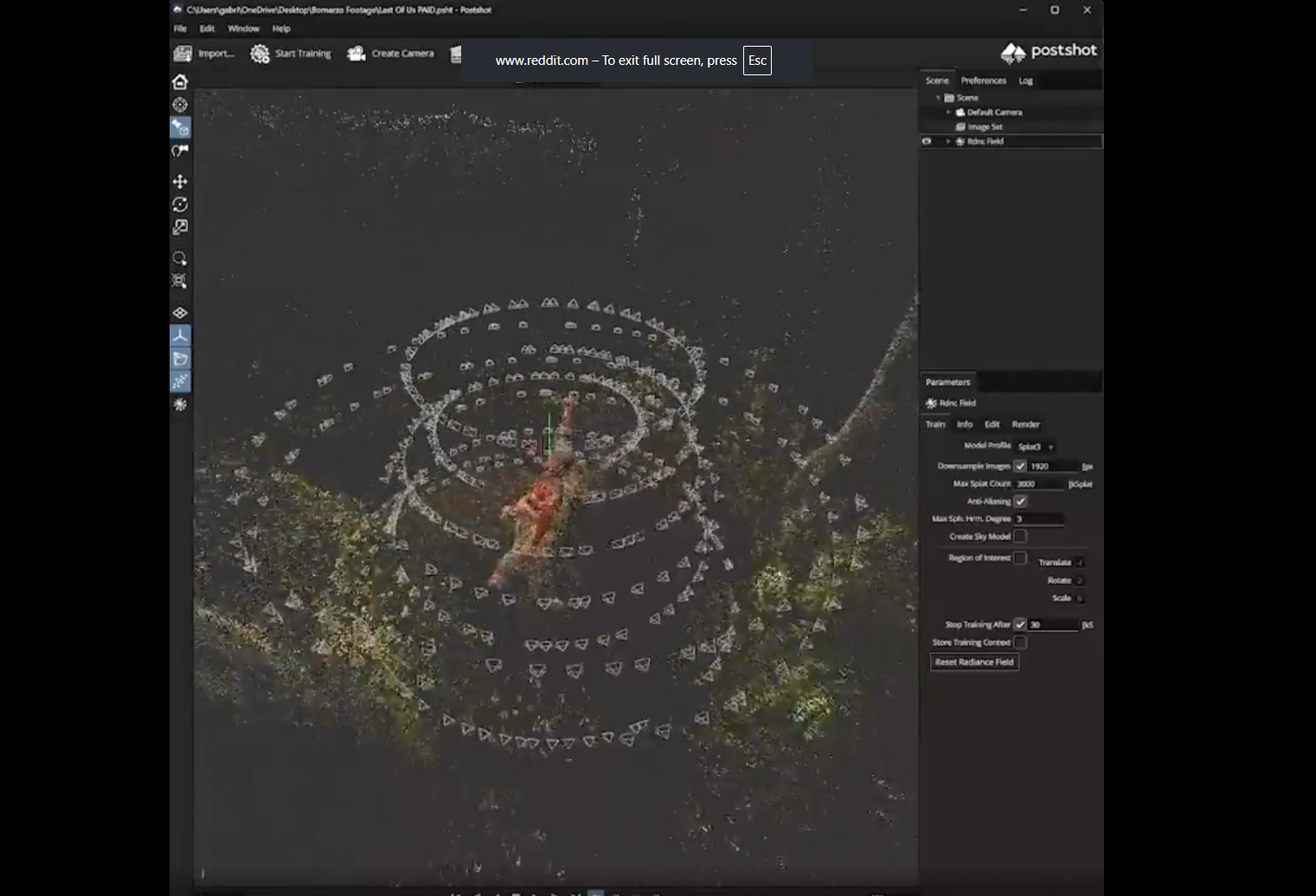
Here’s a pretty clever method [Dung3onlord] used to capture 3D scenes from a PlayStation 5 without needing any specialized software. All that’s needed is a series of high-resolution screenshots, and a few software tools.
The process is essentially photogrammetry, it just uses screenshots as the input instead of photographs.
Instead of sneakily yanking 3D assets from the runtime, he fires up the game’s photo mode on his PS5. By capturing an orbiting video of a static scene (making sure to hide the game’s user interface, something photo mode in games is good for) he ends up with a video file whose content — essentially a series of screenshots — can be used to reconstruct the original 3D scene. The workflow [Dung3onlord] uses has rather more steps, but conceptually that’s all there is to it.
The whole process is remarkably similar to photogrammetry, a method of turning a bunch of photographs from different angles into a 3D point cloud. We’ve seen photogrammetry used to digitize objects because point clouds can be turned into 3D models, essentially allowing one to 3D scan an object using little more than a digital camera.
In [Dung3onlord]’s case, once the point cloud is cleaned up and background removed, the scene is used to generate a gaussian splat which is then viewed through a VR headset.
It’s pretty cool stuff, but using photo mode as a way to capture game content, then reconstructing that content with tools intended for use with photos is an inspired solution. Be sure to check out the video overview of the process below.
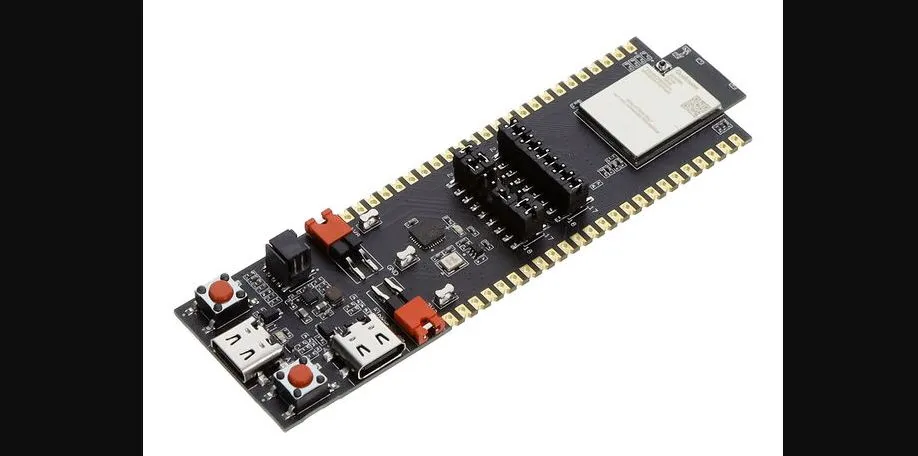
These days wireless microcontrollers featuring built-in WiFi and Bluetooth are all the rage, with Espressif’s range of ESP32 MCUs being the default option for commercial and hobbyist projects alike. This makes Qualcomm’s recently released QCC74x MCU rather interesting, as specification-wise it would seem to be placed firmly in ESP32 territory.
On the radio side you get 1×1 WiFi 6, Bluetooth 5.4, and IEEE 802.15.4 (e.g. Thread and Zigbee), coupled with a single-core 352 MHz RISC-V CPU with FPU and DSP features and 484 kB of SRAM. The SDK for this MCU is hosted on Codelinaro, featuring the typical FreeRTOS-based stack, though confusingly Bluetooth and Zigbee support are currently marked as ‘not supported’. This might still be in progress.
Where the competition with Espressif feels clear is in the pricing, with the highest-performance evaluation board (QCC748M EVK, pictured above) listed for $13 (before taxes/tariffs). This gets you 8 MB of PSRAM built-in with unspecified link speed, but likely the same QSPI as used for the NOR Flash. USB support is available on this higher-end tier, while absent on the QCC743. Development documentation is also available, and looks fairly complete based on first glance.
Advertisement
Overall the QCC74x looks to be an upgrade to the older and significantly less powerful QCC730 MCU. Depending on software support and final pricing it could make for an interesting competitor to some of Espressif’s modules like its ESP32-C series or ESP32-S2, though the upcoming ESP32-S31 would seem to have it matched or beat on all metrics.
An arrest is made in the Morgan McSweeney stolen iPhone case, a guilty plea in the Beyonce stolen music case, and an AirTag helps recover a stolen Lamborghini, all in this week’s Apple Crime Blotter.
The latest in an occasional AppleInsider series, looking at the world of Apple-related crime.
Apple product thieves were caught after one activated stolen Apple Watches
On May 7, the Justice Department announced indictments of three people for their parts in the “brazen daytime robbery” in January. That robbery entailed the hijacking of a truck near a Long Island Apple Store, and the theft of $1.2 million of MacBooks, iPhones, iPads, Apple Watches, and accessories.
Leads included fingerprints on paperwork, one of the accused thieves renting a storage unit in his own name, and another of them activating two stolen Apple Watches.
There has been an arrest in the highest-profile recent iPhone theft in Britain.
In October of 2025, a government-issued iPhone was stolen from Morgan McSweeney, who at the time was chief of staff for British Prime Minister Kier Starmer.
The loss of the iPhone meant that McSweeney could not produce messages between himself and Lord Peter Mandelson, the former British ambassador to the U.S., who was in hot water over his ties to Jeffrey Epstein. Mandelson was removed and later indicted, and McSweeney stepped down in February.
Advertisement
In late April, The BBC reported, a man was arrested for selling McSweeney’s stolen iPhone. The man is not believed to be responsible for the original theft.
Also, the phone itself has not been recovered.
Man pleads guilty to stealing MacBooks, Beyonce’s unreleased music
In the summer of 2025, a rental car belonging to a member of pop superstar Beyonce’s entourage was broken into in Atlanta. This led to the theft of hard drives and computers, including a MacBook Air, which contained the singer’s unreleased music.
An arrest was made in September, and just before a trial was set to begin, the man accused in the thefts pleaded guilty on May 12.
Advertisement
According to ABC 7, the 40-year-old defendant agreed to serve two years in prison followed by three more on probation. Before the plea was announced, prosecutors showed videos of the defendant approaching the vehicle and later driving it to an apartment complex.
The stolen items, per that report, included “two MacBook laptops, Apple headphones, luxury clothing and accessories,” and hard drives that investigators say contained unreleased Beyonce material.
Teens arrested for thefts of iPhone cases
A lot of thieves around the world, including in the U.K., steal iPhones. Two teenagers in that country were arrested in that country for stealing iPhone cases.
Eastern Daily Press reports the two teens were arrested in Attleborough, where officers say they were carrying 42 iPhone cases, worth 2,500 pounds, or about $3,382.
Advertisement
The cases, the reports said, were stolen from Apple Stores in Norwich and Cambridge.
Federal indictment for man accused of hacking into victims’ accounts on iCloud, other services
Federal prosecutors have announced the indictment of a Maryland man who they say accessed the private information of nearly 200 victims.
A 41-year-old employee of a Maryland medical system reportedly used “various cyber intrusion techniques” to access victims’ accounts with “online services such as Google Photos, iCloud Photos, Gmail, and Microsoft 365, and social media accounts.” The scheme, as announced by the Justice Department, lasted for eight years.
The man has been charged with two counts of unauthorized access to a protected computer and one count of aggravated identity theft.
Advertisement
AirTag helps in recovery of stolen Lamborghini, after chase
Police used an AirTag to recover a stolen 2021 Lamborghini Urus, valued at $300,000, in New Jersey in late April.
According to CBS New York, surveillance video caught thieves stealing the car from a custom auto body shop called MoeModz. However, the car’s owner had thought to place an AirTag inside the Lamborghini, which police were able to track.
This led to a chase that reached the Garden State Parkway, which ended when the car’s occupants got out and fled on foot. One of them, a 21-year-old, was charged with receiving stolen property and resisting arrest.
The Lamborghini suffered $15,000 in damage.
Advertisement
Couple follows AirPods to scrapyard to find stolen car
Another case of an owner using Apple technology to find a stolen car occurred in Milwaukee in early May.
TMJ 4 reported that a couple from that city had left their car on a street following a tire blowout. When they came back with a spare, the car was gone.
After calls to various towyards proved fruitless, the owner checked Find My iPhone and realized his AirPods had been left in the car.
Unfortunately, once they followed the signal, the car was in a scrapyard, “already crushed.” The Milwaukee Police Department is investigating the theft.
Advertisement
AirPods tracked after vehicle burglaries
In another case of AirPods being tracked to find stolen merchandise, two men were arrested after a series of car burglaries in Quad Cities, Iowa.
According to KWQC, there were more than 15 car break-ins between early March and early May, and after one, in which a credit card and AirPods were taken, police tracked the AirPods to an apartment building. There, they found the AirPods and other stolen items, leading to the arrests.
Two charged with series of Facebook Marketplace thefts
Two Miami men, aged 20 and 22, have been arrested and charged with a series of Facebook Marketplace thefts in which they’re accused of stealing iPhones, iPads, and MacBooks.
WSVN reports police say the two men arranged meetings to buy the products on Marketplace, and at the meetups, they would steal the items without paying.
Advertisement
One of the two faces charges of robbery by sudden snatching, strong-arm robbery, burglary of an occupied conveyance, and grand theft.
TV host in the Philippines gets stolen iPad back
Teddy Corpuz, a well-known TV host in the Phillippines, had his iPad stolen, among other items, in a break-in May. However, per GMA News Online, Corpuz announced on Facebook that he has recovered the iPad.
Among other stolen items were “cash, jewelry, [and] a charger.”






























































You must be logged in to post a comment Login