Connect with us
DAPA Banner

Tech

Google & Apple CEOs offer seemingly contradictory statements regarding AI partnership

Published

on

Apple will be using Google technologies to level up Apple Foundation Models, but the details of exactly how are still vague. While speculation is still wild, a true answer is emerging from the noise.

An iPhone with a dark wallpaper shows a colorful waveform around the edge, indicating a Siri summon. A rainbow star next to the device representing Google Gemini
Apple Intelligence will get a boost after training with Google Gemini

There is one concrete fact that we have about the Apple and Google partnership on artificial intelligence development, and it is that we’re not going to be told more publicly. Apple CEO Tim Cook did say that Apple won’t change its privacy stance while working with Google and indicated that Apple Intelligence and Siri will work on-device and via Private Cloud Compute (PCC).
That statement seems cut and dry on its own, but Google CEO Sundar Pichai and CBO Philipp Schindler shared seemingly contradictory statements during the Google earnings call. They both used the phrase “preferred cloud provider” when discussing Google’s relationship with Apple.
Continue Reading on AppleInsider | Discuss on our Forums

Source link

Continue Reading
Click to comment

You must be logged in to post a comment Login

Leave a Reply

Tech

Musical Fidelity Introduces M6xi Integrated Amplifier With HDMI ARC

Published

on

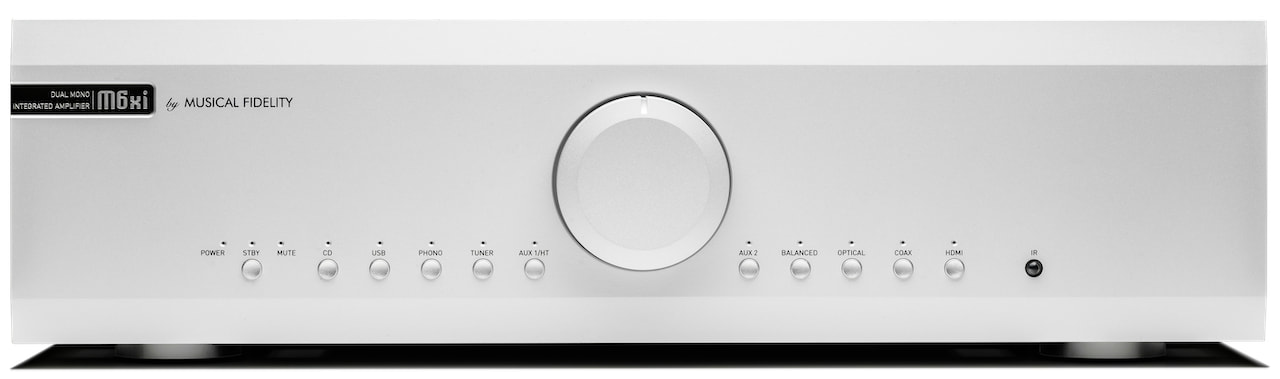
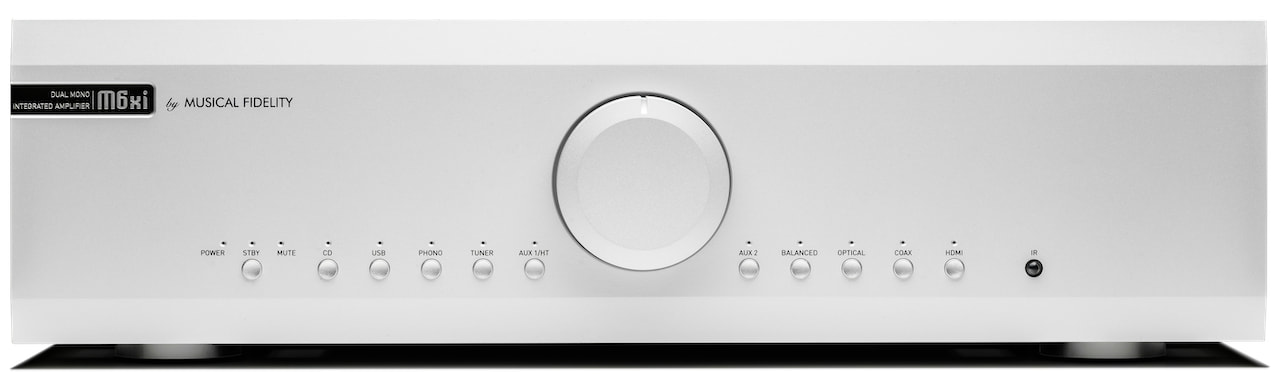
Musical Fidelity has introduced the M6xi integrated amplifier, a $3,799 USD model that builds on the proven analog circuit design of its award winning “si” series while adding expanded digital inputs and stronger system integration. The launch comes as the brand gains renewed momentum under Pro-Ject Audio Systems ownership, alongside a more stable and focused U.S. distribution strategy through Harmonia Distribution, signaling a more aggressive push into the competitive integrated amplifier category.

Industrial Design & Chassis Construction

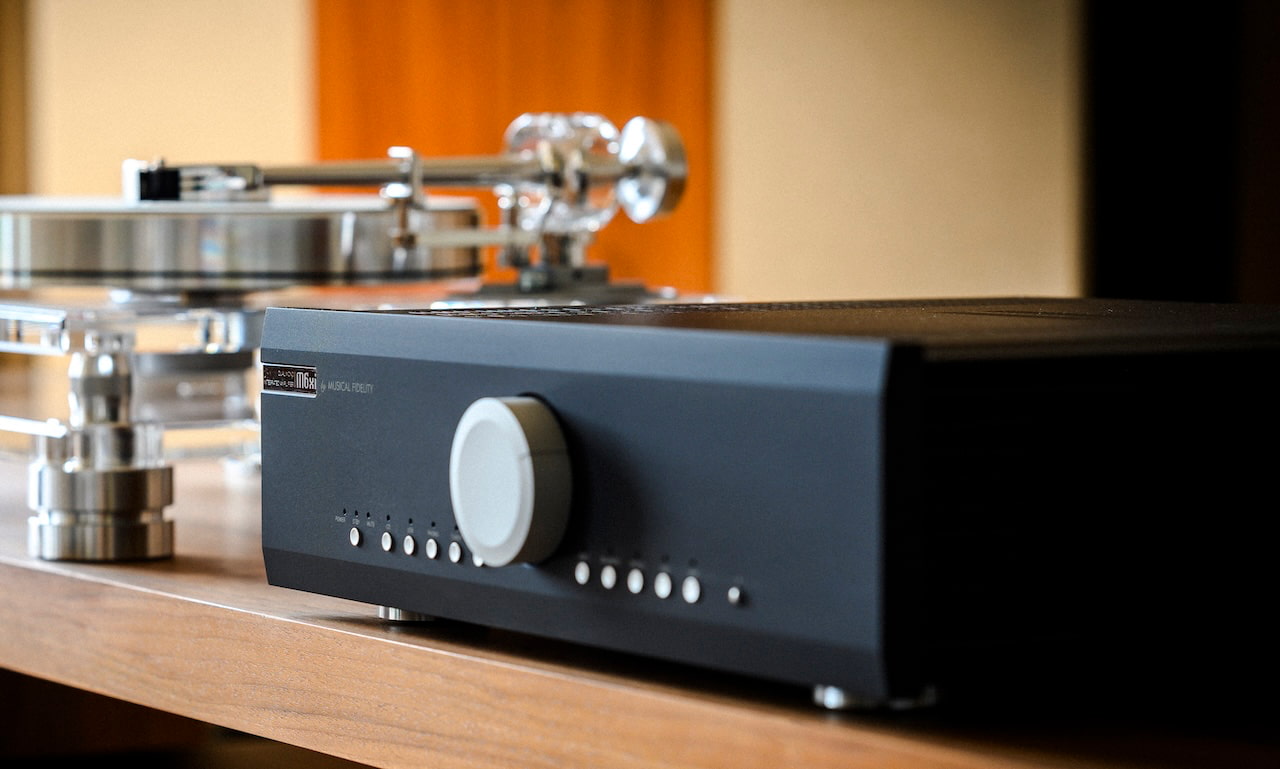
The M6xi is built around a rigid aluminum chassis, with the front, side, and top panels machined from extruded profiles. This all metal enclosure is engineered to reduce electromagnetic interference while providing a solid, well damped structure. The result is a clean, durable exterior that also supports consistent electrical performance.

m6xi-front-silver

Preamplifier Stage & Connectivity

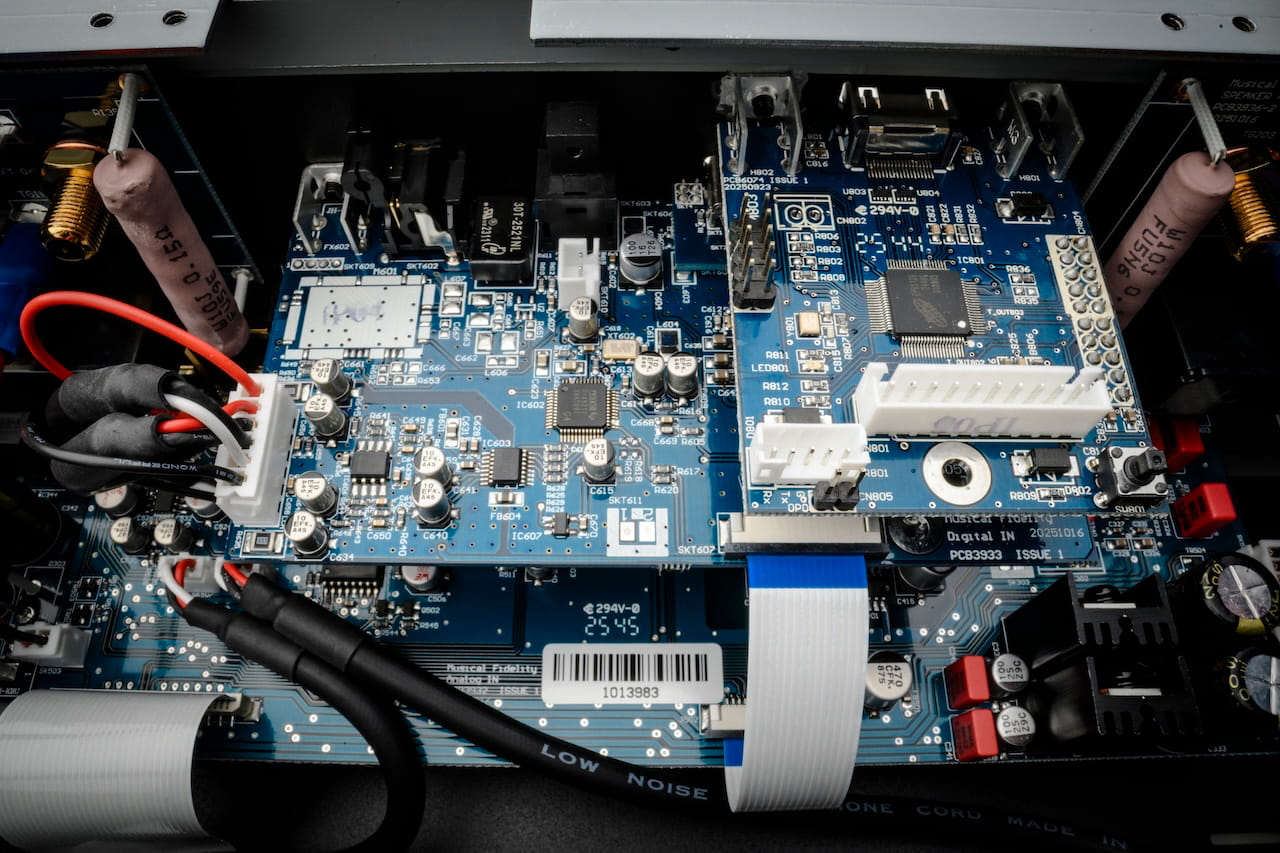
The M6xi’s preamplifier stage is designed for low noise and stable performance across a wide range of listening levels. It employs a Burr Brown stepped attenuator to ensure precise channel matching and accurate volume control. Connectivity includes a pre-out for bi-amping or subwoofer integration, along with a phono input that supports both MM and MC cartridges.

m6xi-internal

Amplifier Stage & Power Delivery

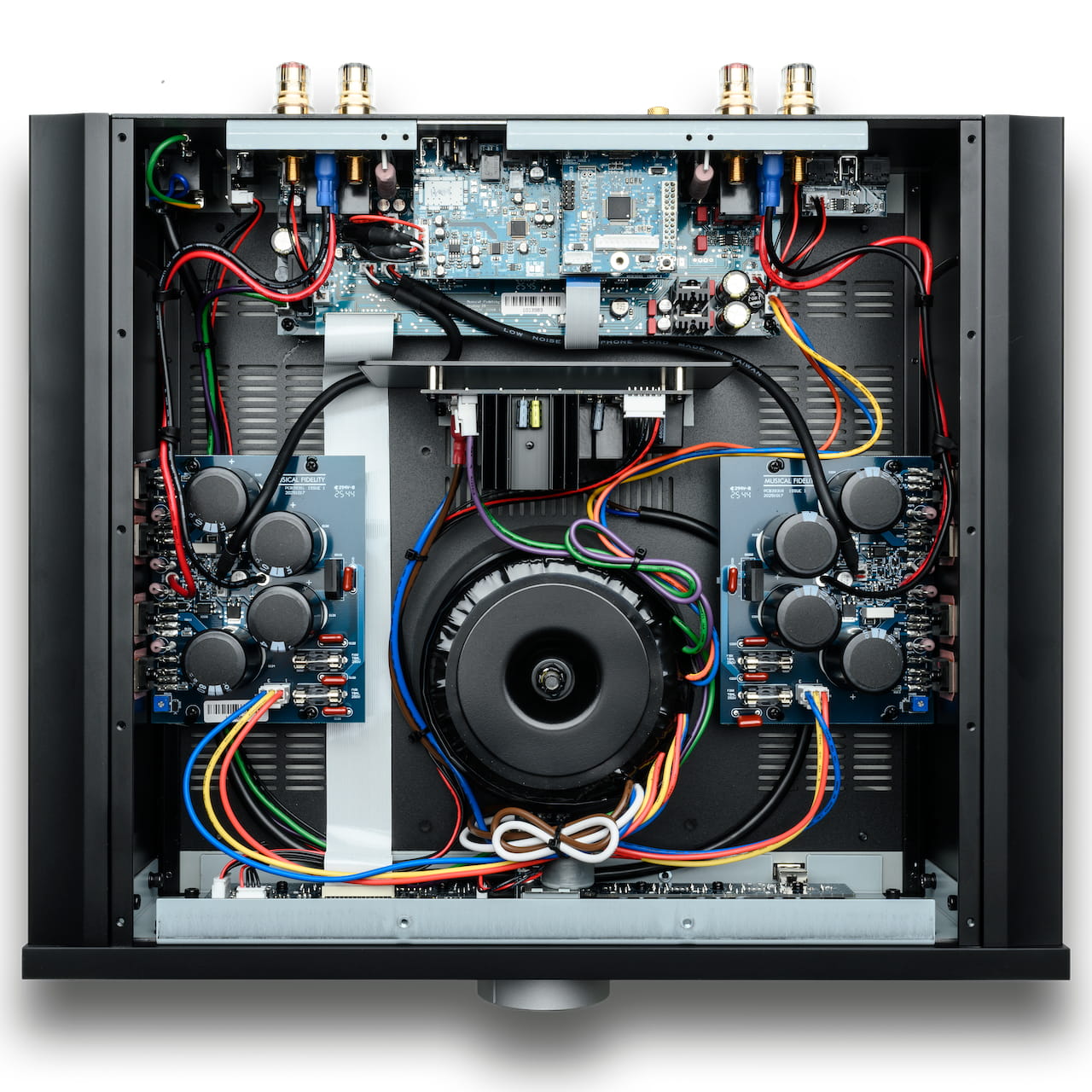
The M6xi’s amplifier section is based on Musical Fidelity’s TITAN platform, first introduced in 2008, and delivers a slight increase in power (10 more watts) over the previous M6si. It is rated at 230 watts per channel into 8 ohms and 390 watts per channel into 4 ohms, providing the current and headroom needed for a wide range of loudspeakers.

Advertisement

A low distortion Darlington output stage is employed to reduce crossover artifacts and residual distortion, while an optimized PCB layout helps maintain channel balance and stability. The use of dedicated analog power supplies further limits high frequency noise and electromagnetic interference, supporting cleaner overall performance.

m6xi-open-top

Connectivity 

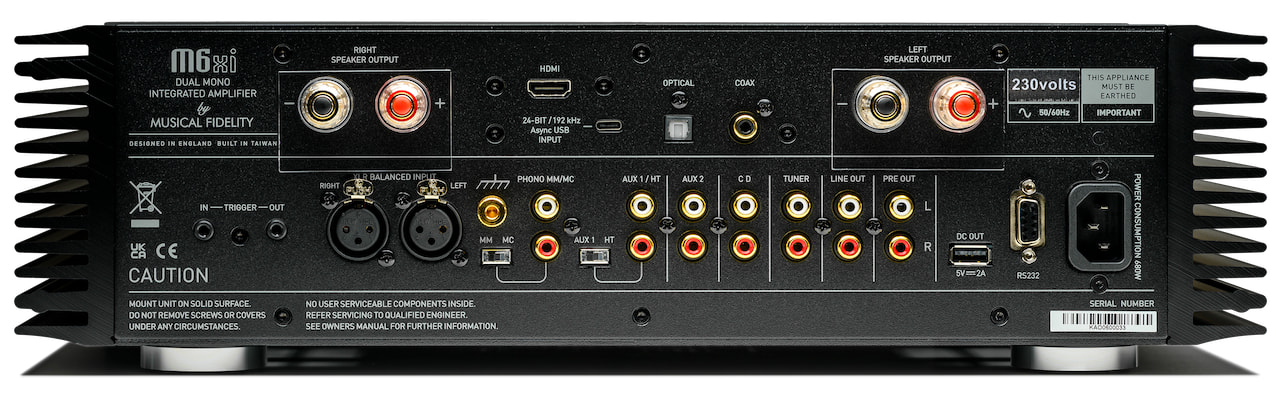
The M6xi provides a host of connections, including 

  • Optical, Coaxial, and HDMI-ARC inputs
  • USB-C input
  • 4 sets of RCA unbalanced  stereo Analog inputs 
  • One set of Analog XLR Balanced stereo inputs
  • One Line  output 
  • One Pre-Amp Output
  • Left and Right channel speaker terminals
  • 5 V, 2 A USB-A power output for external streamers
  • 12 volt Trigger
  • RS232 connector for custom integration control
m6xi-back

Another practical connection option is a home theater bypass input, allowing the M6xi to function as a dedicated two channel power amplifier within a multichannel system.

We are delighted that Musical Fidelity has introduced the new M6xi, adding important, listener friendly features without detracting from the performance the M6si was known for,” says Jeff Coates, Musical Fidelity Brand Lead and Director of Sales at Harmonia Distribution. “We look forward to listeners experiencing it in person.”

m6xi-black-lifestyle

The Bottom Line

Musical Fidelity knows exactly what it is doing here. The M6xi doubles down on traditional two channel design with serious power, a refined analog foundation, and just enough modern flexibility to make system building easier. The inclusion of a proper MM and MC phono stage, pre-out, and home theater bypass makes it more adaptable than it first appears, even without built-in streaming.

Advertisement

What is missing is just as clear. There is no Bluetooth, no Wi-Fi, and no onboard streaming platform. In a category where many competitors are racing to become all in one hubs, the M6xi stays firmly in the physical source camp. That is either a limitation or the entire point, depending on how you listen.

There are also gaps. Full specifications are not yet available, and without official documentation or extended listening, it is too early to draw firm conclusions about how it stacks up against rivals in this price range. That matters when you are asking close to $4,000.

Advertisement. Scroll to continue reading.

The M6xi is aimed at listeners who already have a source chain they trust and do not want an amplifier cluttered with features they will never use. If your system revolves around vinyl, CD, or a dedicated external streamer, and you want power, control, and a more traditional approach, this is exactly the kind of amplifier that makes sense.

Advertisement
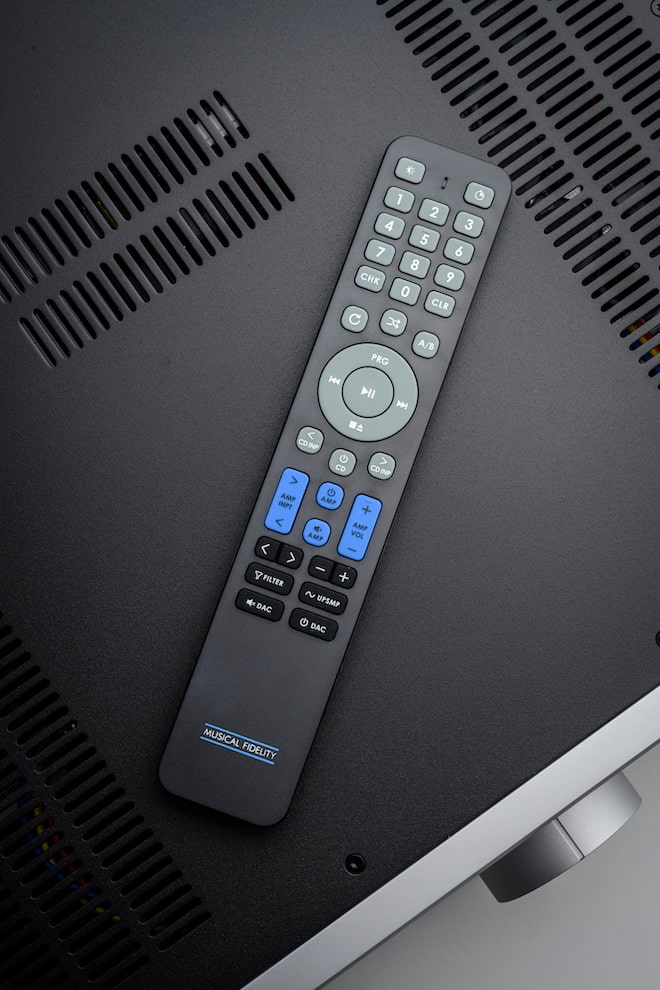
m6xi-remote-control

Price & Availability

The Musical Fidelity M6xi Integrated Amplifier is priced at $3,799 and is available through Authorized Dealers

Source link

Continue Reading

Tech

Anthropic has attracted investor offers at an $800 billion valuation

Published

on

In short: Anthropic has received investor offers valuing the company at approximately $800 billion, more than doubling its $380 billion valuation from a $30 billion funding round closed just two months ago. The surge follows an unprecedented revenue trajectory that has taken Anthropic from $1 billion in annualised revenue at the end of 2024 to $30 billion by early April 2026, alongside the release of its Claude Mythos model through Project Glasswing.

Anthropic has received investor offers valuing the company at approximately $800 billion, according to Bloomberg, a figure that would more than double the $380 billion valuation at which it closed a $30 billion funding round just two months ago. The company has so far resisted accepting the offers.

The number is remarkable even by the standards of a sector that has redefined what growth looks like. If Anthropic were to raise at $800 billion, it would rank among the most valuable private companies in history and place the Claude developer in direct valuation competition with OpenAI. It would also mean that a company founded in 2021 had reached a valuation that took Salesforce two decades and Microsoft three to achieve.

The revenue behind the number

What makes the $800 billion figure less absurd than it sounds is Anthropic’s revenue trajectory. The company ended 2024 at roughly $1 billion in annualised revenue. By the end of 2025, that had reached $9 billion. By February 2026, it was $14 billion. By March, $19 to $20 billion. In early April, Anthropic crossed $30 billion in annualised revenue, a figure that represents approximately 1,400% year-over-year growth.

Advertisement

The 💜 of EU tech

The latest rumblings from the EU tech scene, a story from our wise ol’ founder Boris, and some questionable AI art. It’s free, every week, in your inbox. Sign up now!

Axios described it bluntly: no company in American history has ever grown like this. Claude Code alone hit $2.5 billion in annualised revenue in February, more than doubling since the start of the year. The growth is being driven by enterprise adoption, with Anthropic’s Claude models now embedded in workflows across finance, legal, healthcare, and software development.

At $30 billion in annualised revenue and growing, an $800 billion valuation implies a roughly 27x revenue multiple. That is high by any conventional measure, but it is not obviously irrational for a company whose revenue is doubling every few months. The question is how long that trajectory can hold.

Advertisement

The funding escalator

Anthropic’s valuation history reads like a parabolic curve. In March 2025, the company raised $3.5 billion at a $61.5 billion valuation. By its Series F in September 2025, the implied valuation had reached $183 billion. In February 2026, it closed a $30 billion round, the second-largest venture funding deal ever, at $380 billion. Now, just weeks later, investors are offering nearly $800 billion.

The existing investors are sitting on extraordinary gains. Google owns 14% of Anthropic, a stake acquired through multiple investments totalling roughly $3 billion, and has reported $10.7 billion in net gains on those equity securities. Amazon, which has invested an estimated $8 billion and secured a position as Anthropic’s primary cloud and training partner, reported a $9.5 billion pretax gain tied to Anthropic’s rising valuation in its Q3 results. Both companies hold stakes that are now worth multiples of their original investments.

The company is also in early talks with Goldman Sachs, JPMorgan, and Morgan Stanley about a potential IPO that could come as early as October 2026, with an expected raise exceeding $60 billion. An $800 billion pre-IPO valuation would set the stage for what would be one of the largest public offerings in technology history.

What changed

Two things have shifted Anthropic’s position since February. The first is the revenue acceleration itself, which has exceeded even bullish projections. The second is Claude Mythos, the model Anthropic unveiled on 7 April through its Project Glasswing initiative.

Advertisement

Mythos Preview autonomously discovered thousands of zero-day vulnerabilities across every major operating system and web browser, including a 27-year-old OpenBSD bug and a 17-year-old FreeBSD remote code execution flaw. It succeeded on 73% of expert-level capture-the-flag cybersecurity tasks and was the first model to solve a 32-step simulated corporate network attack end-to-end. Anthropic made the model available only to 11 organisations, including Apple, Google, Microsoft, and AWS, under a $100 million defensive initiative.

The decision not to release Mythos publicly was itself a statement. It signalled that Anthropic possesses capabilities it considers too powerful for broad access, a claim that, whether justified or not, functions as a credibility marker for investors evaluating the company’s technical position relative to OpenAI and Google DeepMind.

The valuation question

An $800 billion valuation places Anthropic in territory where the usual venture capital frameworks break down. At this scale, investors are not pricing a startup; they are pricing a potential platform company, one that could become as foundational to the economy as cloud computing or mobile operating systems.

The bull case is straightforward: Anthropic’s revenue is growing faster than any company in history, its models are competitive with or ahead of OpenAI’s on multiple benchmarks, and enterprise demand for AI capabilities shows no sign of slowing. If Claude becomes the default AI layer for a significant portion of global knowledge work, the revenue ceiling is measured in hundreds of billions, not tens.

Advertisement

The bear case is equally clear. Revenue multiples of 27x assume sustained hypergrowth, and no company has maintained growth rates of this magnitude for more than a few quarters. The AI market is intensely competitive, with OpenAI, Google, Meta, and a growing roster of open-source alternatives all fighting for the same enterprise budgets. Anthropic’s costs are enormous: training frontier models, building infrastructure at scale, and competing for talent against companies with deeper pockets. The path from $30 billion in revenue to profitability at a level that justifies $800 billion in enterprise value is not guaranteed.

There is also the broader question of whether AI valuations have detached from fundamentals in ways that will eventually correct. The sector has absorbed hundreds of billions in investment on the premise that AI will restructure the global economy. If adoption curves flatten, or if commoditisation drives margins down faster than revenue grows, the companies that raised at peak valuations will face the most painful adjustments.

For now, though, the money keeps flowing. Anthropic has not accepted the $800 billion offers, which suggests either that it believes the price will go higher, or that it is holding out for terms that give it more control over its cap table ahead of a potential IPO. Either way, the fact that multiple investors are willing to write cheques at this valuation tells you everything about where the market thinks AI is heading, and how much it is willing to bet on that conviction.

Advertisement

Source link

Continue Reading

Tech

US Jobs Too Important To Risk Chinese Car Imports, Says Ford CEO

Published

on

In an interview with Fox News, Ford CEO Jim Farley warned that allowing Chinese vehicle imports could put nearly a million U.S. jobs at risk. He said China’s heavily subsidized auto industry has enough excess capacity to supply the entire U.S. market, while also raising serious cybersecurity concerns given how much data modern connected cars collect. Ars Technica reports: “First of all, the Chinese have huge direct support for their auto companies,” Farley said, while noting that China has the ability to build an additional 21 million vehicles a year on top of the 29 million that are expected to roll off Chinese production lines in 2026. “They have enough capacity in China to cover all the manufacturing, all the vehicle sales in the United States,” Farley said.

“Manufacturing is the heart and soul of our country, and for us to lose those exports would be devastating for our country,” he continued, before pointing out the cybersecurity worries about Chinese cars. “All the vehicles have 10 cameras. They can collect a lot of data,” he said.

Farley has praised Chinese EVs like the Xiaomi SU7, even going on podcasts to sing its praises. But he believes Ford’s forthcoming affordable Kentucky-built EVs, due to start hitting dealerships next year, have what it takes to be competitive. When asked about new car prices rising an average of 2 percent last year, Farley repeatedly said that Ford had “worked with the administration” so that there’s “essentially no big impact” of the Trump tariffs. The CEO justified the rising costs by pointing to the F-150’s sales as proof of its value.

Source link

Advertisement
Continue Reading

Tech

12 Of The Worst Cars Ever Made (Judged Solely By Aerodynamics)

Published

on


Among the ways to judge a car, there are a few metrics we are used to seeing. For the average consumer, one must consider how a car performs in everyday tasks. How much do you spend at the gas station? How many kids, and dogs can fit in the rear seats? How much does it cost? Will it break down after 20,000 miles, or will the infotainment glitch and play one song on repeat? For the gearhead, performance is the question. How fast can it get to 60? What’s the braking distance like? Will I embarrass myself at a red light revving with a soft limiter? The concerns vary, as do the measurements in how people judge a car. One area of study, though, is germane to almost every consumer—aerodynamics.

For the consumer, aerodynamics means efficiency. The more harmoniously a car can pass through the air, the less energy it has to burn, which translates to less cash for the owner to spend. For the gearhead, aerodynamics means confidence. Well-designed aero elements help performance cars stay stuck to the tarmac at high speeds, allowing the driver to sling and yank the car in and out of turns without the fear of spinning out. This can be measured by the drag coefficient, where the lower the number, the more aerodynamically efficient the car is. Most cars are good at making themselves slippery, but what about the ones that aren’t?

Advertisement

Tesla Cybertruck

One look at Tesla’s futuristic four-wheeled polygon, and you can expect the Cybertruck doesn’t exactly finesse through the air. The front fascia is flat and stands completely upright against the air hitting it. The body is made almost entirely of stainless steel alloy that Tesla calls “Hard Freaking Stainless.” That steel body is also rather large, with the Cybertruck measuring up at 18.6 feet long, 6.7 feet wide, and 18.6 feet long. This enormous body translates to curb weight of over 6,000 pounds. That’s a lot of substance to push for the car’s electric motors, and while most of the car seems to scoff at the mention of aerodynamics, it does have some tricks up its sleeve to manage its colossal weight.

One strength of an electric vehicle is the simplicity of the drivetrain under the hood. On gas-powered cars, there are only so many moving parts you can cover up on the underbody, but for an EV the entire exterior floor can be made flat. The Cybertruck does exactly this, which helps pass air through the underside without fuss and turbulence. Another clever addition is the bed cover. The open bed is a pain for most pickups aerodynamically, but the Cybertruck features a sliding cover which, accentuated by its extremely simple downward slope, helps feed air over the bed smoothly. Still, the shape and weight prove difficult to defeat, as the Cybertruck has a drag coefficient of 0.38.

Advertisement

2019 Land Rover Defender

The Land Rover Defender is perhaps one of the most famous nameplates in the world. The original Land Rover has been around since 1948, but it wasn’t until 1990 that the brand introduced a customer version, the Defender, to the masses. By that time, even though the Defender was a new nameplate, the brand’s reputation as Britain’s best off-roader was solidified. In 2019, Land Rover refreshed the Defender and brought their signature rugged 4×4 into the 2020s. The new Defender brought with it all the new tech you’d expect for a car of today, but one aspect seems pulled straight from the past. The Defender’s styling is incredibly reminiscent of the original Land Rovers, and does everything it can under modern safety regulations to bring back memories of the original shape.

The original shape in question, while pretty, is quite boxy, and boxy means poor aerodynamics. The Defender measures up at 6.7 feet tall, 6.6 feet wide, and 16.5 feet long. These measurements all come together at angles that are nearly 90 degrees across the body, making for an undeniably retro shape, but one that feels awkward in the wind tunnel despite the smooth rounding of its historically sharp edges. The Defender does what it can for its shape, but retains a drag coefficient of 0.39.

Advertisement

Volkswagen Beetle RSi

Besides the Porsche 911’s ancestral connection to the Volkswagen Beetle, there’s really nothing about the Beetle’s essence that screams performance. However, in the early 2000’s, Volkswagen decided they wanted to see what the Beetle would look like if it did. The answer was the Volkswagen Beetle RSi. The RSi took the look of the early 2000’s Beetles and slapped a spoiler, fender flares, and new bumpers to make for something that was very clearly a performance car despite its foundation. Powered by a 3.2 liter V6, the RSi was no joke, with its 221 horsepower and a redline of 6,200 rpm.

The RSi somehow morphed into a performance car in many ways, but this did not come without sacrifice. Although not boxy like many of the other entries on this list, the Beetle’s ballooning roundness was not exactly desirable for aerodynamics either. The addition of new aero parts for the RSi helped in stability, but increased drag too. All said and done, the RSi came out with a drag coefficient of 0.40 — an impressively poor number for a car of its size.

Advertisement

Porsche 911 SC

Derived from the aforementioned Beetle, the Porsche 911 became one of the most iconic sports cars of all time. Today, they boast the best of the best in everything performance. Their engines are powerful, their transmissions, such as the PDK, are lightning quick, and their aerodynamic abilities bring racing technology to the streets, as with things like the GT3 RS‘s DRS button. However, things weren’t always like this. While Porsche has always tried to make the ultimate sports car, that doesn’t mean they’ve always succeeded.

Built only from 1978 to 1983, the 911 SC is the classic 911 of yesterday. SC stood for Super Carrera which was fitting, as the car was impressive for the time with its 188 horsepower. The car weighed just over 2,500 pounds, which, combined with its flat-six, made for a lovely sports car. However, the time of its creation had its limits. The 911 SC’s body was fantastic to look at, but not so much in a wind tunnel. Despite its identity as a sports car, the 911 SC produced a drag coefficient of 0.40.

Advertisement

Lamborghini Countach

The Porsche 911 might be one of the most iconic sports cars of all time, but the Lamborghini Countach might be the most iconic supercar of all time. First presented at the Geneva Motor Show in 1971, the Countach would go on to father the future generations of Lamborghini’s flagship V12 supercars, and it started the lineage with a bang. The name itself, Countach, translates to plague or contagion, but it is colloquially used in Italian as an exclamation of wonder, which could not be more fitting.

Powered by a monstrous V12, the Countach produces 348 horsepower and a 5.4-second 0-60. You could talk numbers all day, but the real magic of the car is the package those numbers come in. The Countach is the poster boy of the wedge supercar. Its slab-like lowness, sharp angles, and unembarrassed excess are what have earned it its place as one of the all-time greats. Elements like its huge rear wing make it recognizable even under a showroom cover, but they also make a lot of drag. In classic Italian fashion, the form besets function, as most of the aero elements were made to cater to the heart and not the wind. This philosophy is what led the supercar to its drag coefficient of 0.42. A high number, but one that is forgiven after one look at the thing.

Advertisement

Original Volkswagen Beetle

In the quest for poor aerodynamics, we return back to the Volkswagen Beetle and its colorful history. Before the second world war, Ferdinand Porsche proposed a design for what he called a “people’s car.” This economic and ergonomic little thing was the Beetle, and just before the factory building them could ramp up production, the war began. Once concluded, production began again, and the Beetle would go on to become one of Volkswagen’s longest-standing nameplates.

The Beetle’s mission was to be the best car it could be at a low cost to both the customer and the manufacturer. It was small, underpowered, and lacking in anything unnecessary. The Beetle became loved, though, for exactly that Spartan attitude, and for its cuteness. Its shape is rounded and compressed, again in line with its utilitarian mission. However, its charming shape was not without issues, though, as the Beetle was poorly sculpted for aerodynamics. The curving roofline looks nice, but it does nothing to smooth airflow over the end of the body as its shape might suggest. The windshield is nearly upright, which allows for good visibility but makes for an uncalculated wall for oncoming air. Even so, you can’t blame it. The Beetle never promised to be some kind of aerodynamic whizz, which is apparent in its 0.48 drag coefficient.

Advertisement

Hummer H2

The Hummer H2 is a product of its time. Think back to its release in 2002 America. Halo, Mountain Dew, Tom Brady, Nickelback and Britney Spears. While the airwaves were full of bubblegum pop music and grating nu metal, the roads were full of many now archaic cars, such as the Hummer H2. The Hummer’s origins go back to 1983, when the Pentagon contracted AM General Corporation to build the Humvee. The Humvee was an enormous armored personnel carrier meant to be tough enough to take on any terrain. Later, in 1999, GM bought the rights to the Humvee, and somehow turned it into a civilian vehicle.

It was a civilian vehicle in name only, as the Hummer H2 looked like it had not been picked up from the lot, but from a C130 cargo plane. It was a gas guzzler if there ever was one, and its trademark personality trait was its size. The H2 was huge, almost obscenely large, and weighed just over 8,000 pounds. It wasn’t particularly concerned with efficiency, as evidenced by its 10 mpg rating, which was a good thing, because this hulking brick was anything but aerodynamic. Its huge surfaces and boxy angles were concerned only with presence. There was no effort to make it agree with the air, and it instead muscled through it. At the end of the day, the H2 had a drag coefficient of 0.52, which should come as no surprise after one look at the thing.

Advertisement

W463 G-Wagen

Although it predates the Hummer, the G-Wagen seems like Germany’s spiritual answer to the American colossus. Similar to the Hummer, the G-Wagen was derived from a German military 4×4, and was made into a civilian car in 1979. But, it wasn’t until the second generation, called the W463, that the G-Wagen became the off-roading luxury box that it is known as today.

The W463 premiered at the Frankfurt Motor Show in 1989. The W463 took everything its predecessor did well in the off-roading department, and souped up the creature comforts, further driving the G-Wagen into its place as the civilians’ favorite off-roader. It introduced things like interior wooden trims and bench seats while retaining its capabilities in the wilderness with things like standard four-wheel drive and electronic locking diffs. It also refreshed the exterior, but only slightly. The G-Wagen remained a very upright box on wheels, and this led to a predictably poor effect in aerodynamics. The wide-open underbody and nearly vertical windshield and front bumper made the W463 the antithesis of aerodynamic. The brash and upright edges and surfaces of the W463 means it has a drag coefficient of 0.54, but hey, beauty is pain.

Advertisement

Dodge Viper ACR Extreme

What happens when a brand known for muscle cars tries to make a supercar? The answer is the Dodge Viper. The Viper is truly the American idea of a supercar. In true American fashion, the Viper’s engine was a V10 that was originally intended for a Ram pickup truck. After some advice from Lamborghini, certified experts in the matters of 10 cylinders, Dodge altered the engine to make it more adept for performance on the track and not on the farm, and the original Viper was born. Since the first model in 1992, the Viper has gotten a lot faster.

At the end of its lifespan, Dodge decided to go all-out and see just how insane they could make the already insane Viper. The result was the Viper ACR Extreme. Some quick numbers help you get a sense of the car’s character. 8.4-liter V10 with 645 horsepower, 0-60 in 3.2 seconds, and a six-speed manual. The outside however, is where things get really crazy. If you opt for the Extreme package, your Viper ACR will come off the line with growths in the splitter, rear wing, and diffuser. These bits are enormous, and while they help keep the angry snake planted to the asphalt, they do a number on its aerodynamic efficiency. With the Extreme package, the Viper’s drag coefficient is 0.54, but remember, here, downforce is the name of the game.

Advertisement

Ford Bronco V

Before the Bronco returned in 2021, the 5th-generation Bronco was the last consumers ever saw of Ford’s iconic SUV. The Bronco 5 was effortlessly pretty, which was an impressive feat for its hulking bodystyle and the time it came from. The 5th generation brought an array of new technologies and features to the nameplate, such as new seating configurations with an optional front bench seat, a digital odometer, three-point safety belts, and more. Outside, the Bronco refreshed its face and cleaned up the lines and proportions of its predecessors, making for a sleeker look.

However, you can only be so sleek as an American SUV. Even as a two-door, the Bronco was still a huge car, and its size and heavy weight tipping the scales at 4,519 pounds meant that the Bronco was doomed to be another poor-performing subject in the wind tunnel. The Bronco 5 had all the hallmarks of an aerodynamically challenged SUV, with big, flat surfaces, tall panels and windows, and a wide-open underbody. All said and done, the Bronco had a drag coefficient of 0.60.

Advertisement

1993 Caterham Super Seven

The Lotus Seven is one of the most iconic sports cars of all time. The car is so well respected and loved, that today, even 54 years after Lotus stopped producing the Seven in 1972. Just one year after Lotus ended production of the Seven, Caterham acquired the rights to produce the car from Lotus’s lead man Colin Chapman. Since then, Caterham has produced the Seven the way it was intended by Chapman, all while keeping it up to date with the modern motoring world.

Although the Caterham Seven is a sports car, it ranks particularly low for its aerodynamic finesse. The upright windshield doesn’t help, but the real culprit is the open-wheel design, which has become so iconic for the Seven. The problem is a classic one for race cars, and one that can only be solved by covering the wheels, which eliminates drag but fundamentally changes the car’s character. Open-wheel designs offer no protection for the spinning wheels, creating a chaotic, turbulent airflow zone. A fender covering would be the quick fix for this issue, but then the Seven would no longer be a Seven. The Caterham Seven’s signature look means it has a drag coefficient of 0.62.

Advertisement

Ford Model T

The one that started it all, the Ford Model T is the grandfather of the modern automotive industry. Born in 1908, the Model T did not compete with other cars, but did compete with horse-drawn carriages. Henry Ford’s creation set the blueprint for the skeletal basics of the consumer car, with things like steering wheel placement, a tool kit, and a gas tank. The Model T had the barest of bones, and much of its look came from the Horse-pulled buggies before it, such as its tiny, bicycle-like wheels and its leather bench seats. The Model T was powered by a four-cylinder engine that had to be started via crank, and which produced a modest 22 horsepower. Those 22 horses could push the Model T up to 40 miles per hour, almost neighborhood speeds today, but vastly impressive for its time.

Given that Henry Ford’s goal was quite simply to make a car and nothing more, it feels unfair to critique his landmark creation for its aerodynamic capabilities. Still, Ford was extremely limited by his time, and by today’s standards, the Model T suffers from abhorrently poor aerodynamics. The upright windshield, open-wheel design, and exposed cabin make for a nightmare of chaotic air channels and haphazard flows, all of which give the Model T a drag coefficient of 0.79.

Advertisement


Source link

Advertisement
Continue Reading

Tech

Accel raises $5 billion AI fund after Anthropic and Cursor returns soar

Published

on

In short: Accel has raised $5 billion in new capital, comprising a $4 billion Leaders Fund V and a $650 million sidecar, targeting 20-25 late-stage AI investments at an average cheque size of $200 million. The raise follows standout returns from its Anthropic stake (invested at $183B, now valued near $800B) and Cursor (backed at $9.9B, now reportedly around $50B), and lands in a Q1 2026 venture market that deployed a record $297 billion.

Accel, the venture capital firm behind early bets on Facebook, Slack, and more recently Anthropic and Cursor, has raised $5 billion in new capital aimed squarely at AI. The raise, reported by Bloomberg, comprises $4 billion for its fifth Leaders Fund and a $650 million sidecar vehicle, positioning the firm to write average cheques of around $200 million into late-stage AI companies globally.

The fund lands in a venture capital market that has lost any pretence of restraint. Q1 2026 saw $297 billion flow into startups worldwide, 2.5 times the total from Q4 2025 and the most venture funding ever recorded in a three-month period. Andreessen Horowitz has raised $15 billion. Thrive Capital has closed more than $10 billion. Founders Fund is finishing a $6 billion raise. Accel’s $5 billion is substantial but not exceptional in a market where the biggest funds are measured in the tens of billions.

The portfolio that made the pitch

What distinguishes Accel’s fundraise is the portfolio it can point to. The firm invested in Anthropic during its Series G at a $183 billion valuation. Anthropic has since closed a round at $380 billion and is now attracting offers at roughly $800 billion, meaning Accel’s stake has more than quadrupled in value in a matter of months. Anthropic’s annualised revenue has hit $30 billion, a trajectory that no company in history has matched.

Advertisement

The firm’s bet on Cursor has been similarly well-timed. Accel backed the AI code editor in June 2025 at a $9.9 billion valuation. By November, Cursor had raised again at $29.3 billion. By March 2026, the company was reportedly in discussions at a valuation of around $50 billion. For a developer tool that barely existed two years ago, the appreciation is extraordinary.

Advertisement

Accel’s broader AI portfolio extends beyond these two headline positions. The firm has backed Vercel, the frontend deployment platform; n8n, an AI-powered automation tool; Recraft, a professional design platform; and Code Metal, which builds AI development tools for hardware and defence applications. In March 2026, Accel launched an Atoms AI programme in partnership with Google’s AI Futures Fund, selecting five early-stage companies from what it described as a global applicant pool focused on “white space” opportunities in enterprise AI.

The Leaders Fund model

Accel’s Leaders Fund series is designed for later-stage investments, the kind of large cheques that growth-stage AI companies now require. With an average investment size of $200 million and a target of 20 to 25 deals from the new $4 billion fund, the strategy is concentrated: a small number of high-conviction bets on companies that have already demonstrated product-market fit and are scaling revenue.

This is a different game from traditional venture capital. At $200 million per cheque, Accel is competing less with seed and Series A firms and more with the mega-funds, sovereign wealth funds, and corporate investors that have flooded into late-stage AI. The firm’s argument is that its early-stage relationships and technical evaluation capabilities give it an edge in identifying which companies deserve capital at scale, and in securing allocations in rounds that are massively oversubscribed.

Founded in 1983 by Arthur Patterson and Jim Swartz, Accel built its reputation on what the founders called the “prepared mind” approach, a philosophy of deep sector research before investments materialise. The firm’s most famous prepared-mind bet was its 2005 investment of $12.7 million for 10% of Facebook, a stake worth $6.6 billion at the company’s IPO seven years later. The question now is whether Accel’s AI bets will produce returns of comparable magnitude.

Advertisement

What the market is pricing

The sheer volume of capital flowing into AI venture funds reflects a market consensus that artificial intelligence will be the dominant technology platform of the next decade. The numbers are difficult to overstate. OpenAI raised $120 billion in 2026. Anthropic has raised more than $50 billion. xAI closed $20 billion. Waymo secured $16 billion. These are not venture-scale numbers; they are infrastructure-scale capital deployments that would have been unthinkable outside of telecommunications or energy a decade ago.

For limited partners, the investors who commit capital to venture funds, the logic is straightforward: the returns from AI’s winners will be so large that even paying premium valuations will generate exceptional multiples. Accel’s Anthropic position, where a single investment has appreciated several times over in months, is exactly the kind of outcome that makes LPs willing to commit $5 billion to a single firm’s next fund.

The risk is equally visible. Venture capital is a cyclical business, and the current fundraising boom has the characteristics of a cycle peak: record fund sizes, compressed deployment timelines, and a concentration of capital in a single sector. The last time venture capital raised this aggressively, during the 2021 ZIRP era, many of those investments were marked down significantly within two years. AI’s commercial traction is far stronger than the crypto and fintech bets that defined that earlier cycle, but the valuations being paid today leave little margin for error.

The concentration question

Accel’s fund also highlights a structural shift in venture capital. The industry is bifurcating into a small number of mega-firms that can write cheques of $100 million or more and a long tail of smaller funds that compete for earlier-stage deals. The middle ground, the traditional Series B and C investors, is being squeezed by mega-funds moving downstream and by AI companies that skip traditional funding stages entirely, going from seed round to billion-dollar valuations in 18 months.

Advertisement

For a firm like Accel, which operates across offices in Palo Alto, San Francisco, London, and India, the $5 billion raise is a bet that it can maintain its position in the top tier as fund sizes inflate and competition for the best deals intensifies. Its portfolio of 1,199 companies, 107 unicorns, and 46 IPOs provides a track record. But in a market where Anthropic alone could generate returns that justify an entire fund, the temptation to concentrate bets on a handful of AI winners is strong, and the consequences of getting those bets wrong are correspondingly severe.

The broader picture is that AI venture capital has entered a phase where the funds themselves are becoming as large as the companies they once backed. Accel’s $5 billion raise would have made it one of the most valuable startups in Europe just a few years ago. Now it is table stakes for a firm that wants to participate meaningfully in the rounds that matter. Whether this represents rational capital allocation or the peak of a cycle that will eventually correct is the question that every LP writing a cheque today is, implicitly or explicitly, answering in the affirmative.

Source link

Advertisement
Continue Reading

Tech

Haiku Isn’t Just For X86 Anymore, Boots On ARM In QEMU

Published

on

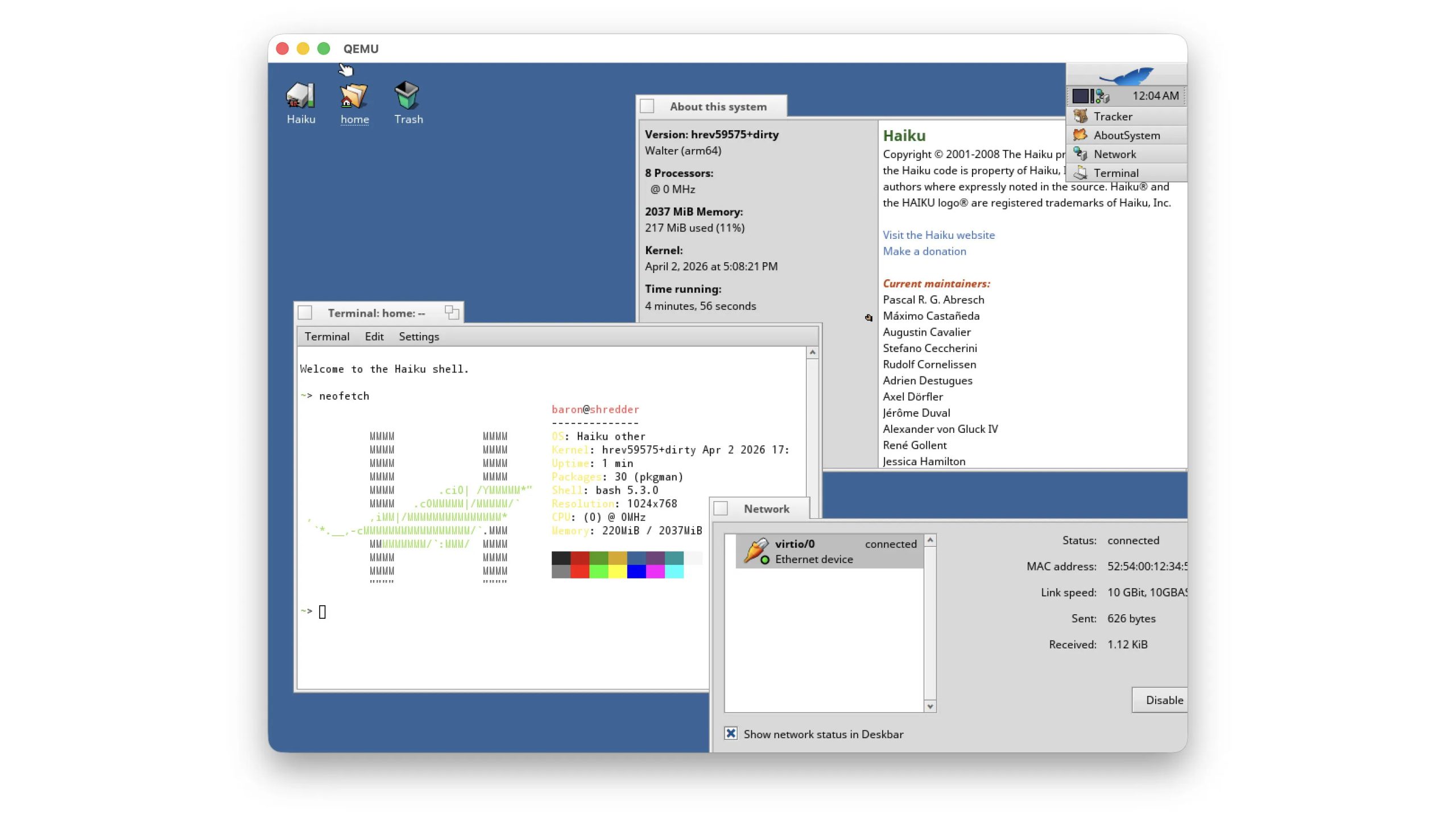
Ever since it was called OpenBeOS, Haiku has targeted the x86 platform. That makes good sense: it’s hard enough maintaining a niche system on ubiquitous hardware. But x86 isn’t the only game in town anymore. Apple’s doing very well on ARM, Linux runs on oodles of ARM SBCs, and even Windows uh, exists, on that architecture, so why not Haiku? That’s what [smrobtzz] figured, and thanks to his work you can now run Haiku on ARM, in QEMU.

There’s no image available as yet — you still need to bootstrap your own from a working system, and ironically that system cannot be Haiku. [smrobtzz] apparently used MacOS, which makes sense as his ultimate goal is apparently to go where only Aishi Linux has gone before and boot Haiku on his M1 MacBook. There had been previous efforts to get Haiku going on Raspberry Pi hardware, which seems logical considering how lightweight the operating system is, but they’re apparently nowhere near booting either. QEMU is a good start.

Interestingly, according to the ports page, Haiku is “functional” on both RISC V QEMU and the now-discontinued HiFive Unmatched SBC. We don’t seem to have covered it, but that milestone happened five year ago. Given how most RISC V boards currently available are a bit slow for modern desktop Linux, Haiku would likely be a breath of fresh air. The BeOS-descended system might be single user, but it’s snappy.

We reported a couple of years back that Haiku was daily-drivable on x86 ,it’s only gotten better since then, assuming you choose the right hardware. Hardware support is always the hard part about alternative OSes, but Haiku users are absolutely spoiled compared to fans of MorphOS, which still only runs on G4 or G5 PowerPC, and even then not only some hardware.

Advertisement

Source link

Continue Reading

Tech

You can now buy physical books in the Spotify app

Published

on

If you have ever finished an audiobook and wished you owned the book, Spotify has an easy solution. The company now lets you buy physical books directly from its app in the U.S. and the U.K.

How to buy physical books in the Spotify app?

Spotify has partnered with Bookshop for the sale of paper books. When you browse an audiobook on Spotify, you will now see an option to buy a copy. Once you tap it, Spotify redirects you to Bookshop’s website to complete the purchase.

This means Spotify does not process payments itself. Instead, it acts as a discovery layer that connects you to independent bookstores through Bookshop’s network.

The feature is currently limited to users in the U.S. and the U.K. For now, it works alongside audiobook listings, so you can easily switch from listening to owning a physical copy.

What else is new in Spotify audiobooks?

Spotify is also expanding its audiobook experience in other ways. The company has introduced Audiobook Charts that highlight top titles across genres. This gives you a better sense of what is trending, similar to how music charts work on the platform.

Advertisement

The company is also rolling out the Audiobook Recap feature, which gives you short audio summaries based on where you last stopped listening. These are designed to refresh your memory of the story so far, making it easier to jump back in without feeling lost.

Last February, Spotify introduced the Page Match feature, which lets you scan a page from a physical book and continue from the same spot in the audiobook. It now supports more than 30 additional languages, including French, German, and Swedish.

Why this matters

Spotify is slowly turning itself into a one-stop shop for stories. You can discover a title, listen to it, jump between formats, and even buy the physical book without starting over elsewhere. It still feels unexpected for a platform known for music, but once you use these features, you will come to appreciate their usefulness.

Source link

Advertisement
Continue Reading

Tech

Ford EV and tech chief leaving automaker

Published

on

Doug Field, the high-profile executive who shaped Ford’s electric vehicle (EV) and technology strategies over the past five years, is leaving the automaker. Field’s departure was announced Wednesday as part of a broader reorganization of the company’s leadership.

Field joined Ford in 2021 with a robust resume from Silicon Valley that included leading Apple’s special projects team and serving as senior vice president of engineering at Tesla. His hiring was more than just a return to his professional roots. (Field began his career at Ford as a development engineer from 1987 to 1993.) The hiring was meant to drive Ford CEO Jim Farley’s vision to turn the legacy automaker into a leader in software, EVs, and other advanced technology.

Field directly reported to Farley, tasked initially with overseeing the company’s embedded software and hardware operations, covering vehicle controls, enterprise connectivity, features, integration and validation, architecture and platform, driver assistance technology, and digital engineering tools. In practice, this made him responsible for the design, development, and implementation of the entire tech stack used in Ford and Lincoln vehicles, including infotainment, navigation, driver-assist technology, connected services, and vehicle cybersecurity.

Field was a visible figure at Ford whom Farley often praised on the company’s earnings calls. He was among the key leaders when the automaker split its business into three units: the EV and digital services division, the traditional internal combustion engine business, and the commercial vehicles unit. And he was behind Ford’s skunkworks program — a secretive internal team — to build a low-cost electric vehicle.

Advertisement

Under the reorganization laid out Wednesday, Ford has created what it calls a “product creation and industrialization” team to be led by COO Kumar Galhotra. Ford’s electric vehicle and design team, which Field led, will be folded into this new organization.

The new organization comes with ambitious targets, including an 8% adjusted profit margin for its Ford+ commercial business by 2029. The team will also oversee Ford’s plan to refresh 80% of its North American portfolio by volume and 70% of its global portfolio by 2029. This will include the Universal Electric Vehicle (UEV) platform, a mid-sized pickup, and the next-generation F-150 and F-Series Super Duty trucks.

The UEV platform is what the Ford skunkworks program — now known as the Advanced Development Projects team — developed. Alan Clarke, a former Tesla executive who has led that skunkworks program, is now vice president of Advanced Development Projects.

Techcrunch event

Advertisement

San Francisco, CA
|
October 13-15, 2026

Source link

Advertisement
Continue Reading

Tech

Teaching Showed Me Education Isn’t the Great Equalizer

Published

on

Reading my articles from the fellowship feels like reading diary entries. They’re raw, honest and they reflect how much I was struggling with teaching at the time. Overwhelm is apparent. So is frustration. As a teacher who was impacted by COVID-19 and the year of fully remote learning for students, the Voices of Change fellowship gave me the space to reflect and name the questions that had brought me to teaching in the first place. Since leaving the classroom almost two years ago, I’ve returned to writing frequently to work through the questions teaching left me with.

Having attended Title I public schools myself, I entered the classroom seeking a lens through which to understand my school experiences. As I became more interested in education as an engine of social mobility, I wanted to understand why some kids learned to read and some did not. I wanted to understand why some schools had more resources than others. I wanted to understand why some kids went to college, and some did not. Teaching felt like a way to move closer to those answers.

The process of learning these answers was swift and painful. The stark reality was playing out in front of me every day as I taught at a public charter school during the day and then drove to the suburbs in the evenings to tutor for extra cash. I quickly saw how rarely student success is the product of a single school or teacher, but rather an aligned system of supports that begins at birth.

So here’s what I learned: some kids can read because their schools taught phonics and screened for reading disabilities in kindergarten. Some schools have more resources because housing policy and decades of segregation shaped property values and neighborhood composition. Some kids go to college because they benefited from networks of financial and familial stability, giving them resilience through challenges like the SAT, the Common App and FAFSA. The questions I began with spun out into winding tangles of policy choices, zip codes, race and class.

Advertisement

I’ve come to understand that the grief I felt at leaving the classroom was more than being overwhelmed and overworked — it was the undoing of my belief that education was society’s great equalizer. It was also the realization that I had been lucky; my graduation from high school and matriculation to a four-year college was as much a function of my family’s assumption from birth that I would go to college as it was my academic performance or the opportunities my schools offered.

Achieving academically was easy because I had stable housing, good health care and a network of loving and supportive adults. Had I experienced any learning challenges, they would have been swiftly addressed by my white-collar parents, who are comfortable speaking with educated professionals. Students spend the vast majority of their lives before the age of 18 outside of school. Teaching revealed how profoundly the promise of education depends on systems beyond the classroom.

That isn’t to say that schools and teachers cannot move the needle for students. Teachers grow their students every day in ways that feel nothing short of miraculous. You’d be hard-pressed to find an adult who cannot name a teacher who made a difference in their life. But the biggest gains for students occur when the systems around schools align to support the work teachers are doing — when children arrive at school healthier, safer and more secure in their lives outside the classroom.

On this front, there are two movements I’ve been paying attention to, one that brings me hope and one that makes me nervous. In graduate school, I learned about place-based partnerships, initiatives that bring stakeholders in health care, housing, education, youth services, local government and philanthropy into alignment around shared goals for supporting children and families. The most famous example is the Harlem Children’s Zone, but the model has spread widely. Organizations like StriveTogether now support networks of communities working toward cradle-to-career outcomes. Partners for Rural Impact is helping rural communities coordinate services for children across schools and social supports. Here in Boston, the Boston Children’s Council is bringing together city agencies, nonprofits and schools to think more holistically about the conditions shaping children’s lives.

Advertisement

What gives me hope about these efforts is that they acknowledge something teachers already know: students do not arrive at school as blank slates each morning. They arrive carrying the cumulative effects of housing stability, health-care access, nutrition, family income and community safety. Place-based partnerships represent a policy approach that supports teachers by strengthening the ecosystems around them rather than asking schools to solve poverty alone.

What makes me more uneasy is the direction some of the frustration with public education has taken. If we spent decades telling ourselves that schools were the great equalizer, then the persistence of large racial and economic achievement gaps, especially in the wake of COVID frustrations, can feel like a failure of the institution itself.

In my home state of West Virginia, that frustration has helped fuel support for the Hope Scholarship, the nation’s only universal education savings account program, which has deleterious impacts on the public education system most students rely on. Policies like this are often framed as empowering families with choice, but I worry they also reflect a disillusionment with the project of public schools as engines of democracy. It is my belief that many of the inequities in public education were never fully within schools’ control to address.

My experience as a teacher, and now as a policy practitioner, has convinced me that the path forward is not to abandon public schools, but to surround them with stronger systems of support for children and families. The question I find myself paying closest attention to now is how policy can help build those systems: partnerships that allow teachers to do what they already do best, while ensuring the conditions outside the classroom make their work possible.

Advertisement

Source link

Continue Reading

Tech

Nintendo’s Haphazard ‘Mario Maker 2’ Takedown Process Rife With Abuse

Published

on

from the willy-nilly dept

We’ve talked for many years about Nintendo’s shotgun approach to IP enforcement, as well as its heavy-handed ToS enforcement policies that can include bricking customer consoles and/or banning their accounts if they do something Nintendo doesn’t like, even if it’s not strictly illegal. This has all set up an ecosystem where being a Nintendo fan and customer can feel like a dangerous prospect, where navigating a capricious company is supposed to be half the fun.

But when that same ecosystem is setup in a way that is wide open to abuse, the fun really begins. That appears to be what is happening right now as Nintendo is removing hundreds of Mario Maker 2 levels made by fans.

The common denominator for these level deletions appears to be the inclusion of a hashtag for “TeamShell,” which is a Discord server dedicated to sharing codes for levels made within the game. Notices about the removal from Nintendo indicate that they were deleted for including “advertising”, which is against Nintendo’s terms of service.

There is no indication that any money is changing hands here. Calling a hashtag to denote that a level was made with a specific Discord server in mind “advertising” is stretching the definition to the point of absurdity. On top of all of this, many of these levels are years old, causing the community to wonder why in the world this was suddenly happening now.

Then someone found this on another Discord server dedicated to the Mario Maker games.

Advertisement

So, who is LMT?

Turns out, the YouTube account linked to LMT’s Discord profile bears the pseudonym of someone called MT94. As explained in a post on AtWiki, MT94 was, at one point, the second-highest-rated Super Mario Maker player in the world.

Turns out that MT94 cheated their way to that ranking, and they achieved this by using three separate Nintendo Switch consoles. By consistently challenging their own accounts to co-op battles in the game, they managed to boost themselves up the rankings. After the community found out and reported them, MT94’s accounts were banned.

Now, I’ve seen some content out there indicating it was TeamShell that had a hand in exposing MT94’s alleged cheating, but nothing solid enough that I consider firm ground. But it’s clear that there is some kind of vendetta at work here. And, while most of you probably view the deletion of some Mario Maker levels as a tame story at most, it is having very real consequences due to how Nintendo conducts it business.

The truly sad thing is that Super Mario Maker users are also reporting that their Nintendo Switch accounts are being suspended as well, as there seems to be a sort of automatic system in place that suspends a Nintendo Switch account if it’s been associated with a certain number of reports.

Nintendo has a choice. It can remain heavy-handed in this manner when it comes to account suspensions for takedowns, but then it needs to actually investigate claims like this to ensure they aren’t falling for abusive takedown requests. Or it can ease up on the severity of its actions and allow for a counternotice system, or another manner for those falsely accused to avoid consequences.

What it should not be allowed to do is continue to let its own customers suffer severe consequences merely because the system it set up is so wide open for this kind of gleeful abuse.

Advertisement

Filed Under: fans, mario maker, takedowns, teamshell

Companies: nintendo

Source link

Advertisement
Continue Reading

Trending

Copyright © 2025