


Connect with us
DAPA Banner
DAPA Coin
DAPA
COIN PAYMENT ASSET
PRIVACY · BLOCKDAG · HOMOMORPHIC ENCRYPTION · RUST
ElGamal Encrypted MINE DAPA
🚫 GENESIS SOLD OUT
DAPAPAY COMING

Tech

Google has sold so much TPU capacity that its own researchers are queueing for the rest

Published

on

Alphabet runs the most enviable AI infrastructure stack in the industry. The success of the third-party deals with Anthropic and Meta is the reason internal access has become a competitive resource.

Google has spent a decade quietly building the most enviable position in AI infrastructure: a healthy cloud business, its own custom chips, and supply deals that make its TPUs the default alternative to Nvidia for major external customers.

The success of that strategy has produced an internal problem that the company did not anticipate.

Bloomberg’s Julia Love reported on Monday that Google’s own AI researchers, including teams inside Google DeepMind, are now jockeying for access to the computing resources their employer is also selling to Anthropic and Meta.

Advertisement

The 💜 of EU tech

The latest rumblings from the EU tech scene, a story from our wise ol’ founder Boris, and some questionable AI art. It’s free, every week, in your inbox. Sign up now!

The structural cause is straightforward. Google has agreed to invest up to $40bn in Anthropic on a deal that includes five gigawatts of TPU capacity over five years and access to up to one million seventh-generation Ironwood chips.

A separate, Broadcom-mediated supply line covers a further 3.5GW of TPU capacity for Anthropic from 2027, building on the 1GW the company is already receiving in 2026. Anthropic itself has publicly described the Google TPU stack as central to its training and serving roadmap.

Advertisement

Meta, the other commercial-scale TPU customer Bloomberg names, signed its own deal earlier this year. The capacity those commitments lock up is capacity not available to Google’s internal model teams without queueing.

DeepMind’s chief executive Demis Hassabis said earlier this year that the constraint cuts in two directions. Some of the bottleneck is hardware: ‘a few suppliers of a few key components’, as he put it, with high-bandwidth memory from Samsung, Micron and SK Hynix the most-cited choke point.

Some of it is research throughput, because, in Hassabis’s words, researchers ‘need a lot of chips to be able to experiment on new ideas at a big enough scale’. The hardware constraint is partly outside Google’s control. The internal-allocation constraint is not.

The arithmetic underneath this is large. Alphabet is on a guided capex range of $175bn-$185bn for 2026, inside a combined Big Tech AI infrastructure spend that has crossed $650bn this year. Google has, on its own commentary, been bringing well over a gigawatt of new AI compute capacity online in 2026.

Advertisement

The decade-long bet on TPUs is finally producing the kind of unit-economics advantage that lets the company sell its chips, host its competitors’ models, and run its own frontier research on the same fabric. The fabric is just no longer big enough for all three uses at once.

Bloomberg’s reporting names two specific signals of the tension. Researchers including Ioannis Antonoglou, a long-tenured DeepMind contributor, have departed for startup roles in the past 18 months, a pattern that has accelerated as compute access has become harder to secure inside Google.

Oren Etzioni, the former Allen Institute for AI chief executive cited in the piece, has framed the dynamic publicly as the predictable result of an internal market in which compute is rationed by managerial seniority rather than by the unit-cost economics that govern external customer contracts.

Google has spent the past 18 months in a delicate position: it needs its TPU programme to demonstrate volume traction with named external customers to validate the technology against Nvidia, while keeping enough internal capacity for Gemini training runs and DeepMind research.

Advertisement

The four-partner inference-chip supply chain with Broadcom, MediaTek and Marvell is a hedge designed to relieve the constraint by adding capacity downstream of TPU training. It has not yet shipped at the scale the demand curve requires.

Google did not dispute Bloomberg’s internal-allocation framing on the record; it pointed to its broader infrastructure investment posture and the fact that compute constraints are a category-wide condition rather than a Google-specific one.

That is true on the evidence: every major model provider is, on the cleanest reading of Q1 2026 earnings, compute-constrained relative to its own research aspirations.

What makes the Google version newsworthy is the side-by-side: the company has, at the same time, become its main competitors’ largest infrastructure supplier. If it can keep selling the asset and using it is the question the next several quarters will settle.

Advertisement

Source link

Continue Reading
Click to comment

You must be logged in to post a comment Login

Leave a Reply

Tech

NextEra agrees $67bn all-stock deal for Dominion in largest power acquisition ever

Published

on

The all-stock takeover, the largest power acquisition ever, gives NextEra the utility that runs Northern Virginia’s data-centre belt and consolidates the bidding power on the demand side of the AI-electricity trade.


NextEra Energy has agreed to acquire Dominion Energy for about $67bn in an all-stock deal, Bloomberg reported on Monday, in what would be the largest power-sector acquisition on record.

NextEra shareholders will own 74.5% of the combined company, Dominion shareholders 25.5%, with each Dominion share exchanged for roughly eight-tenths of a NextEra share.

The combined entity will trade under the NextEra name on the New York Stock Exchange and serve around 10 million utility customers across Florida, Virginia, North Carolina, and South Carolina.

Advertisement

The strategic logic is the one every utility-sector trade has been running on for 18 months. Dominion is the utility that powers Northern Virginia, which is the world’s largest data-centre market by a long margin and the regional grid most exposed to the AI-training and inference build-out.

The 💜 of EU tech

The latest rumblings from the EU tech scene, a story from our wise ol’ founder Boris, and some questionable AI art. It’s free, every week, in your inbox. Sign up now!

NextEra brings the largest US renewable-generation fleet, an existing nuclear position, and Florida Power & Light’s regulated customer base.

Advertisement

The combined company will, on the deal’s own claims, be the world leader in renewables and battery storage, the US leader in natural-gas generation, and the second-largest US nuclear operator.

The merged entity will be selling, in effect, every form of generation that an AI hyperscaler is now contracting for.

The macro thesis under the trade is a part of the AI infrastructure cycle that has become unavoidable. US utilities have, on the running aggregated capex guidance, committed roughly $1.4 trillion of electricity-infrastructure investment by 2030, almost all of it driven by AI data-centre load growth.

Northern Virginia is the densest concentration of that demand, and it is also the grid where the supply constraint has been most acute, with new data-centre interconnection queues running multiple years.

Advertisement

The cooling-driven AWS US-EAST-1 outage earlier this year was the most visible operational example of what happens when the load curve grows faster than the substations can absorb.

NextEra and Dominion combined become, by some distance, the single largest counterparty that hyperscalers will be negotiating new long-term power purchase agreements within the affected geographies.

NextEra chief executive John Ketchum will run the combined company; Dominion’s Robert Blue will run the regulated-utilities business and take a board seat. The combined dividend and rate-base footprint was not disclosed.

What is visible is that NextEra’s unregulated-generation arm and Dominion’s regulated-Virginia franchise are being put under one roof, the structural piece the AI-power thesis has been arguing for.

Advertisement

The deal also collapses a competitive dynamic that has shaped the past year of utility-sector valuations. Hyperscalers (Amazon, Microsoft, Google, and Meta most prominently) have been negotiating in parallel with multiple utilities across the same regional grids, playing demand-side bidders against each other for long-tenor contracts.

Consolidating two of the largest counterparts on the supply side narrows the negotiating field. Whether that translates into pricing power for the merged utility or into regulatory pushback from state commissions (Florida’s PSC, the Virginia State Corporation Commission, and the North Carolina Utilities Commission all have jurisdictional roles in the approval) is the question the next 18 months of regulatory-filing review will settle.

Antitrust exposure is the second question. Combining the largest US renewable-generation operator with the utility supplying the densest data-centre market is a profile FERC and the DOJ will both have to clear.

Pre-deal analyst commentary had flagged the regulatory path as the most material execution risk.

Advertisement

Amazon, Microsoft, Google, and Meta have committed combined power-procurement and self-build capacity into 2030 that requires roughly the entirety of new US utility-scale generation coming online over the same window.

A combined NextEra-Dominion is the natural single counterparty to coordinate those commitments across the Southeast US grid.

Bloomberg’s full-text coverage describes the deal as creating ‘a utility colossus’ calibrated against precisely that demand curve.

Completion timing has not been disclosed beyond a target close, subject to customary closing conditions, including regulatory approvals.

Advertisement

The merged dividend policy, the integration timeline for Dominion’s Virginia regulated franchise, and the disposition of overlapping renewable-development pipelines are the operational details that will determine whether the announced cost-synergy and growth assumptions hold.

The headline figure is the one that has been published. $67bn is the price tag on the largest power deal on record.

Source link

Advertisement
Continue Reading

Tech

Never Upload These 5 Files To Your Cloud Storage

Published

on


Before cloud storage, people’s digital lives stayed confined to their devices. If you needed a file from your work computer while on vacation, you’d have to hope someone was around to email it. Forgetting to back up your smartphone before buying a new one often meant losing years of photos and videos. When services like Dropbox and eventually Google Drive, iCloud, and more arrived, that all changed. We can now keep files synced across devices, and precious memories don’t die when your phone does.

Although cloud storage is convenient, it comes at a cost. The difference between cloud and local storage is primarily one of ownership. You should never think of your cloud storage as belonging to you. It’s the digital equivalent of renting a storage unit: your belongings are hosted on someone else’s property. The owner may give you a key, but you’re trusting them not to change the locks on you, and you aren’t there to protect your belongings from break-ins and theft. In both cases, your peace of mind when you store things there depends on how trustworthy the owner is and how robust the company’s security protocols are.

You probably wouldn’t store anything at a storage rental that you couldn’t live without, and the same rule of thumb applies to cloud storage. From sensitive personal documents that could lead to identity theft and doxxing to large files that will wastefully eat up your allotted storage, there are many file types worth keeping off your cloud drive. Here are five files you should never upload to your cloud storage.

Advertisement

1. Personally identifying documents create personal risk

We’ve all done it. You need to get some paperwork to your accountant, lawyer, or doctor, so you snap a photo of the documents or scan them into a PDF and send them along. There are already inherent security risks in doing that, since you never know how careful the other person will be with those scans. But if your device automatically backs up photos to a service like iCloud or Google Photos, you could be creating even more risk. For that reason, you should refrain from uploading personal files –such as government IDs and passports, tax returns, medical or legal records — to the cloud.

Notably, there’s the risk of being hacked. While you can take steps to secure your cloud accounts, no digital fortress is impenetrable. Whether you fall victim to a phishing attack, leave your phone unlocked at a busy bar during a moment of distraction, or simply neglect to change a non-unique password after it was discovered in a breach from another platform, there are innumerable ways for malicious actors to gain access to your account. Any personal information an attacker finds could be used against you to commit identity theft, doxx you, blackmail you, and more.

Advertisement

You additionally risk data loss when uploading anything to the cloud. Google any storage provider along with the phrase, “deleted my files without asking me,” and you’re likely to see pages of results from disgruntled users who lost irreplaceable files. Some of these instances may be due to user error  — some people simply don’t understand what a delete button does  — but many are not. Cloud architecture is far from infallible, and mistakes do occur. If you decide that uploading personally identifiable files is worth the risk, back up the files to an external drive.

Advertisement

2. Intimate media in the cloud can cause personal and legal headaches

Revealing photographs of yourself, or those consensually obtained from an intimate partner, should not be uploaded to cloud storage for several reasons. First, as with other file types discussed here, you can never assume complete privacy when uploading media to a cloud service. The risk that your account could be hacked is always present, which could lead to such media being leaked online. Despite “take it down” laws allowing you to seek recourse when revealing photos are uploaded without your consent, that’s a nightmare situation you’re best off avoiding by keeping such media stored locally.

But there’s one more reason to avoid uploading revealing media to the cloud. AI scans of your photos can get your account banned by Google or other providers, even if the media flagged by the system is entirely legal. In fact, your media can be flagged even if it is not prurient. In one case reported by The New York Times, a father who took photos of a medical issue his child was experiencing in order to consult with the child’s doctor had his account banned when the photos were mistaken for child sexual abuse material (CSAM). His details were even forwarded to law enforcement, making him the target of a police investigation. 

The New York Times reported on another case wherein a mother whose young child uploaded a video of himself innocently dancing naked found herself in a similar situation. While these tools have thankfully led to the prosecution of actual criminals, the risk of being caught in that dragnet for uploading completely legal material is severe enough that you should always err on the side of caution.

Advertisement

3. Don’t upload videos if you’re on a free cloud storage plan

If you use the free tier of Dropbox, Google, iCloud, or any other cloud provider, you’ll start with very limited storage. On the generous end, Google gives unpaid users 15 gigabytes of free storage (though it includes emails in your Gmail account), but others are more tightfisted. Dropbox, for instance, only provides 2 gigabytes to users who don’t cough up for a subscription. Apple gives free iCloud users 5 gigabytes.

Many users can make a free cloud storage option work, as long as they don’t have too many large files uploaded. Emails, documents, and similar files take up relatively little space. Photos take up slightly more, but if you’re only shooting from your smartphone on its default settings, they’ll take up just a few megabytes.

However, if you’re uploading videos  — especially at higher resolutions  — things can quickly get out of hand. A one-minute 4K-resolution, 60 frames-per-second video shot on a Samsung Galaxy S25 Ultra in automatic camera mode takes up just about 400 to 500 megabytes of space. If you’re uploading to Dropbox’s free plan, you’ll hit your limit after just four or five minutes of video at that rate. If you’re an avid smartphone videographer using free cloud storage, be sure to disable automatic backups on Google Photos, Dropbox, and other services.

As an aside, this is why high-resolution videos are the first files you should tackle if your cloud storage warns you that it’s running out of space. Videos, especially those shot at 1080p or higher, are the most likely to take up multiple gigabytes of space, and deleting large videos is the easiest way to reclaim storage space both locally and in the cloud.

Advertisement

4. Anything you wouldn’t want shown in court should stay offline

Many people don’t often consider how easy it is to end up in court. Sure, you might not be a hardened criminal, but that doesn’t mean you can’t be charged with a crime or have a suit filed against you. And if you do end up in front of a judge, the opposing party will be allowed to dig through your digital life for evidence relevant to the case in a process known as electronic discovery. Many cases are lost when a lack of digital hygiene meets the legal system, not to mention the personally harmful or embarrassing secrets that can be unearthed. And uploading files to the cloud can make it easier to argue for their discovery, including files that would otherwise have been off-limits thanks to attorney-client privilege.

The rise of AI has made this issue even more pressing. The U.S. District Court for the Southern District of New York ruled in 2026 that conversations held between a defendant and a publicly available AI chatbot regarding the legal defense strategy were not protected by attorney-client privilege, even though he had also shared those conversations with his lawyer. The FBI had seized the documents, and the judge cleared federal prosecutors to use them as evidence. Given that prominent cloud storage providers such as Google Drive can integrate with chatbots like Gemini, you may be waiving important privacy rights for any files that are scanned by a chatbot.

Advertisement

To be clear, this is not legal advice, and we are speaking in a personal context, not an enterprise one. But most people don’t hire a lawyer until they need one, and so it’s best to make their job as easy as possible before they even enter the picture.

Advertisement

5. Plaintext passwords and backup codes should never go in the cloud

If you’re anything like most people, you struggle to remember all your passwords. And since you should always enable 2-factor authentication on your accounts, you’ve likely got a bunch of 2FA backup codes meant for emergencies that you don’t know what to do with. It’s entirely understandable that many people may choose to upload passwords and backup codes to a cloud provider, but doing so is a mistake  — and it could cost you dearly.

As with other types of files we’ve discussed, there’s always the possibility that your cloud storage could be breached by a hacker. If they then find your unencrypted text files filled with passwords and backup codes, they’ll be able to access the rest of your accounts, potentially hijacking your identity beyond the point of recovery and even committing crimes in your name. Encrypting those files before upload so that they cannot be accessed without a password can offer a layer of protection, but it’s best to use a dedicated password manager.

Additionally, with so many cloud storage providers now offering AI integrations, you’ll essentially be feeding all of your passwords directly into a chatbot. If the provider uses your files for training data, the LLM could regurgitate your passwords to other users. Even if it doesn’t, your private interactions could accidentally be made public. In June 2025, WIRED reported that one of Meta’s AI apps had added a feature allowing users to see conversations other users had with LLMs, and in July of that year, TechRadar reported that using a simple “site:chatgpt.com” search operator in Google can unearth OpenAI users’ chats depending on their sharing settings. Those relied on users not understanding privacy controls, but in late 2023, Google researchers were able to make ChatGPT output other people’s personal information.

Advertisement


Source link

Continue Reading

Tech

Volvo Reveals $58,400 Starting Price For The EX60

Published

on

Between the Rivian R2, BMW iX3 and the Volvo EX60, there’s a bunch of appealing electric SUVs scheduled to hit the market soon. And now, Volvo is revealing official pricing for its upcoming family EV, which starts at $58,400.

While that price might seem a bit high considering it’s pretty much the same as a fully loaded R2 with Rivian’s top-spec Performance trim ($57,990), it’s not a far cry from the average cost of a new car in the US, which stands at right around $50,000. Furthermore, even a base EX60 P6 Plus packs solid specs such as an estimated range of 307 miles from a 83kWh power pack; a 10 to 80 percent charging time of 16 minutes at up to 320kW; and 374 horsepower from its single motor rear-wheel drive configuration. That’s enough oomph to provide a 0 to 100 km/h time of 5.9 seconds. Other standard components include Volvo’s Pilot Assist system, a 21-speaker sound system, 800-volt architecture, native NACS port and a 15-inch OLED main screen with Gemini and Google built-in. And if you have extra room in your budget, you can upgrade to a EX60 P6 Ultra for $65,000 that adds updated badging, ventilated leather seats, integrated heated seats for the second row and a dimmable electrochromic roof.

For those who want a more dynamic driving experience, you can move up to an EX60 P10 AWD Plus, which starts at $60,750 (or $67,350 for the P10 AWD Ultra), which bumps the EV’s battery size and range up to 95kWh and 322 miles respectively, while also increasing its max charging rate to 370kW. The P10’s overall performance also gets a sizable boost, with output rising to 510hp while its 0-to-100km/h time drops to 4.6 seconds.

Finally, at the top of the range, there’s the EX60 P12 AWD, which doesn’t have official pricing yet. That said, if you want a comfortable and safety-conscious five-seater with as much power as Volvo can put in an SUV, the P12 offers 680hp (10 more than a top-spec EX90) that’s good for a 0 to 100 km/h time of just 3.9 seconds. On top of that, a maxed out EX60 sports an even larger 117 kWh battery with up to 400 miles of estimated range, which Volvo notes is enough to drive from NYC to Montreal without stopping.

Advertisement

The one quirk to the EX60’s launch is that unlike, Rivian, which is kicking off sales with the most premium versions of the R2, Volvo is initially rolling out the P6 and P10 trims (which are ready to order now) before more the pricier P12 models become available sometime later. Regardless, for families looking for a premium and well-equipped EV SUV, the Volvo EX60 is already looking like a top contender. We’ll have more in-depth coverage soon.

Source link

Advertisement
Continue Reading

Tech

WHO Declares Ebola Outbreak a Global Health Emergency

Published

on

An anonymous reader quotes a report from the New York Times: The World Health Organization declared on Saturday that the spread of the Ebola virus in the Democratic Republic of Congo and Uganda was a global health emergency. The announcement was made a day after Africa’s leading public health authority reported that an outbreak in a province in the northeast of the country was linked to dozens of suspected deaths. By Saturday, cases had also been confirmed in Kampala, the capital of Uganda, the W.H.O. said.

In Congo’s Ituri province, where the outbreak was first identified, 246 suspected cases and 80 deaths attributed to the virus had been reported, although only eight cases had been definitively linked to the virus through laboratory testing. There is no approved vaccine and no therapeutics for the Bundibugyo species of Ebola behind the outbreak, according to the W.H.O. The scale of the outbreak could be far larger than has been detected and reported, the W.H.O. said in declaring a “public health emergency of international concern.” It added that there were “significant uncertainties” about the precise number of people infected and the “geographic spread.”

The W.H.O.’s declaration signals a public health risk requiring a coordinated international response, and is intended to prompt member countries to prepare for the virus to spread and to share vaccines, treatments and other resources needed to contain the outbreak. […] The risk of the outbreak spreading is exacerbated by a humanitarian crisis, high population mobility and a large network of informal health care facilities in the area, the agency said. Containing an Ebola outbreak depends on the speed and scale of the public health response. The virus is transmitted through direct contact with the bodily fluids of an infected person, putting family members and caregivers at particular risk. Tracing people who may have come into contact with sufferers, isolating and treating victims promptly and safely, and burying the dead properly are all viewed as critical steps.

Source link

Advertisement
Continue Reading

Tech

Apple Watch Ultra could get first major redesign for version 4

Published

on

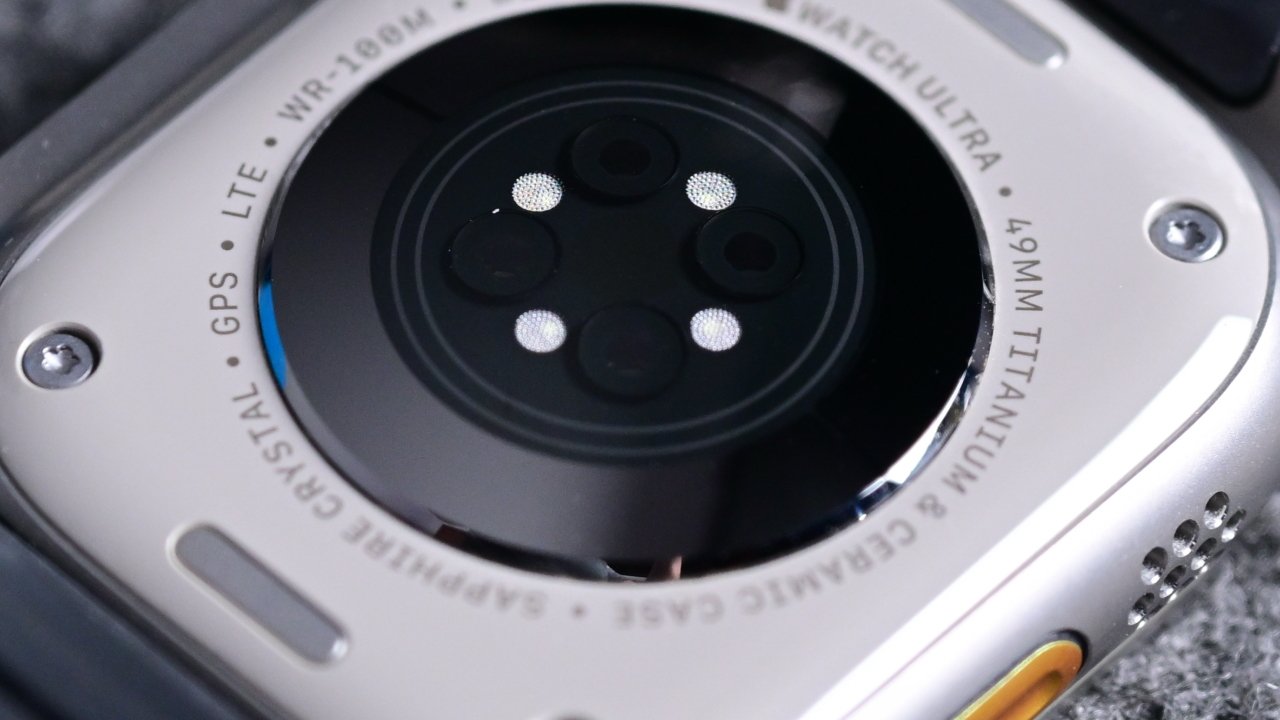
Sources within the supply chain back up previous reports that the forthcoming Apple Watch Ultra 4 will be a significant update that includes doubling its number of sensors.

Following reports that the regular Apple Watch Series 12 will not be a major update, there are now reports that the Apple Watch Ultra 4 will be. According to Digitimes, the new model will have a visible redesign that includes the addition of further unspecified sensors.

This fits with what the same publication said in August 2025, where it specifically said that the Apple Watch would double its number of sensors.

Neither report describes what those sensors are, but they will presumably be health-related. What this new report does say is that the update is a big deal for the Taiwan-Asia Semiconductor Corporation (TASC) firm, which makes the sensors.

Advertisement

It’s estimated that the new sensors and a redesign will lead the Apple Watch Ultra 4 to getting up to 30% more orders than its predecessor.

Apple has long worked with TASC, including on attempts to add glucose monitoring to the Apple Watch. Apple has been working to add this to all models of the Apple Watch, but the new report appears to be specifically and only about the Apple Watch Ultra.

If the claims are correct, this will mark the first major redesign of the Apple Watch Ultra since its original launch in 2022. A second generation did follow in 2023, which added a brighter screen.

For 2024, Apple made no changes to the Apple Watch Ultra, except for releasing it in black as well as silver. The 2025 Apple Watch Ultra 3 was also a minor update, except that it added 5G support.

Advertisement

Apple is most likely to announce the Apple Watch Ultra 4 at its iPhone event in September 2026. The new report says that TASC is expecting major orders from July, which approximately fits the schedule for final Watches to be ready in September.

Source link

Advertisement
Continue Reading

Tech

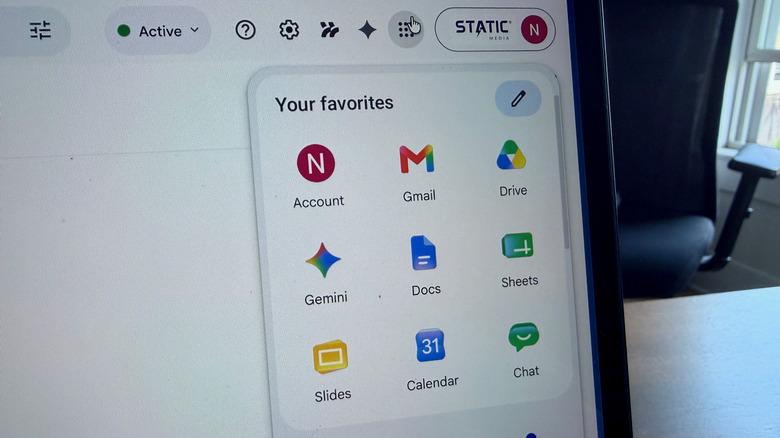
Google’s Much-Improved App Icons Are Rolling Out Now

Published

on

The old icons had very little to visually differentiate them.

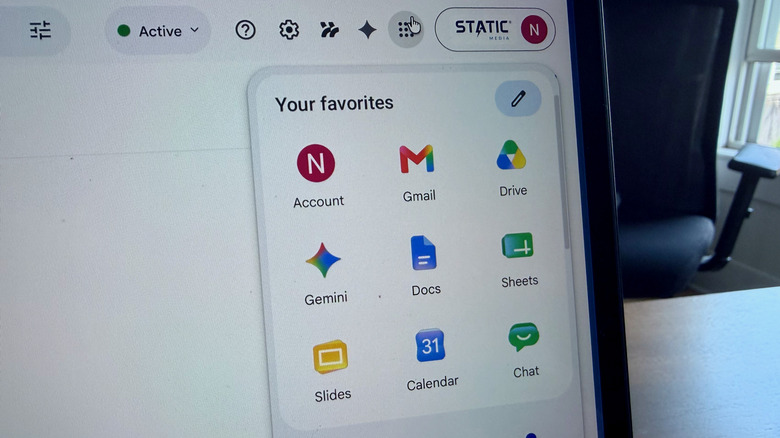
About five years ago, Google redesigned the icons for most of its apps and services, including widely-used tools like Drive, Meet, Calendar and so on. The internet’s response was not positive, and with good reason. Many correctly pointed out that Google removed the individual defining characteristics of its icons, replacing them with an outline made up of the company’s signature four colors. If you look closely, you’ll recognize the outline of a document for Google Docs, or a camera for Meet. But at a glance, the new icons were much harder to differentiate than the ones they replaced.

In a win for legibility, Google is changing course. It started with a more distinctive icon for Google Maps a few months ago, one that has more depth while still incorporating Google’s colors and the ubiquitous pin design. Then, a few weeks ago, 9to5Google revealed that a full-scale redesign was on its way. Now, with Google I/O just one day away, those redesigned icons are rolling out.

The first place I noticed them was in my personal Gmail account; the “app switcher” in the top right revealed new designs across the board. Those icons haven’t propagated everywhere yet; clicking into Drive or Calendar shows the old ones still. But a number of Google apps on my iPhone were also updated with new icons as well, so it seems safe to say that a full-scale launch is in progress. 

Advertisement

I personally got used to the last generation of icons, but there’s no doubt at all that these are major improvements that make it much easier to tell apps apart at a quick glance. These icons also call to mind the redesigned 3D emoji that Google introduced last week as part of Android 17.

If you’re not seeing them yet, be patient — they’ve arrived on my phone and across multiple Google accounts, so it seems like the company is doing a full-scale push. We’ll likely hear more about this at I/O tomorrow, as well. We’ll be live-blogging the keynote at 1PM ET; join us, won’t you? 

Advertisement

Source link

Continue Reading

Tech

Tubi Kicks Off 2026 World Cup Coverage With a New, Dedicated Hub

Published

on

Sports fans across the globe are getting ready for the 2026 FIFA World Cup, and Tubi has launched a centralized destination for all of its tournament content, the streamer announced on Monday. Viewers can find the 2026 FIFA World Cup Fox Hub on their screens, which will house highlights, Fox content, originals and two live games that will broadcast this year. 

The Fox-owned free streaming service has a dedicated section on its home screen to help fans navigate its World Cup content lineup. You’ll find it whether you’re watching Tubi on its mobile app, TV app or website, and the hub displays multiple rows of programming. 

What will World Cup fans see in the hub? It’ll be easy to access the live matches streaming free on the platform: Mexico vs. South Africa on June 11, and on June 12, US Men’s National Team vs. Paraguay. Additionally, there are original series from Tubi that will follow the games from start to finish. The Other Football, hosted by Rob Gronkowski and Jameis Winston, is a weekly show that blends comedy and pop culture to get into the sport. Destination World Cup 2026 takes fans inside the lives of players Harry Wilson, Weston McKennie and Marc Cucurella in the lead-up to the competition. 

Advertisement

Programming won’t be limited to live game simulcasts and Tubi originals. Viewers will also find a 24/7 feed of highlights and content from Fox Sports, replays and more. Deestroying the Pitch and Jesser’s Ultimate Kick Off from YouTubers Deestroying and Jesse “Jesser” Riedel are among the creator-led shows that are part of Tubi’s FIFA offerings. 

The 2026 World Cup runs from June 11 through July 19, and features 48 teams. This marks the first time Tubi has created a one-stop destination hub on its platform for the tournament. 

Source link

Advertisement
Continue Reading

Tech

10 Irish medtech start-ups innovating the game

Published

on

Grants, funding rounds and expansion plans – Ireland’s medtech sector is breaking records and setting the ‘gold standard’.

Click to see the full list of Future Health stories.

By all means, Ireland’s medtech industry is booming – with support from the Government and other groups, alongside a strong university-to-industry pipeline that keeps new talent flowing. The country exports around €15bn worth of medtech products annually to more than 100 international destinations.

Even the medtech start-up scene here is the envy of the world when it comes to early-stage funding, according to serial medtech founder and educator Rush Bartlett – despite the glaring funding gap scale-up firms in the country face.

Healthcare is a strong category with innovative start-ups emerging from across counties. In honour of Future Health month, SiliconRepublic.com has put together a list of strong players developing new medtech solutions.

Advertisement

Aerska

The young biotech emerged from stealth with a $21m round last October, bagging another $39m in a Series A raise in February led by EQT Dementia Fund and Age1. Aerska also got a mention on Tracxn’s ‘Soonicorn’ list of start-ups likely to reach the coveted ‘unicorn’ status.

The Dublin-headquartered company – co-founded by Jack O’Meara alongside David Hardwicke and Stu Milstein – is using brain shuttle technology to develop RNA medicines for central nervous system diseases.

It aims to leverage data science to integrate genetic, biomarker and patient data with the aim of bringing precision medicine to neurology – first starting with programmes in genetic forms of Alzheimer’s and Parkinson’s disease.

Amply

This Belfast-based company is using its own AI-driven drug discovery engine to fight aggressive cancers, such as triple-negative breast cancer, and drug-resistant pathogens.

Advertisement

Amply is a spin-out of Queen’s University Belfast and was founded by Dr Ben Thomas, Dermot Tierney and Prof Chris Creevey. Last May, it raised $1.75m led by Twin Path Ventures – a specialist AI investor – for its drug discovery platform, which followed a £1.4m raise from 2024.

The company said that its drug discovery platform analyses biological molecules, identifies potential treatment targets and bio-prints real molecules that can be quickly tested and improved in the lab.

Coroflo

This Dublin start-up made history at CES this year by bagging four awards for its breastfeeding monitor – the highest number of wins for one product at a CES show.

Founded by Rosanne Longmore, Jamie Travers and Helen Barry in 2017, Coroflo is an Enterprise Ireland high-potential start-up backed by the likes of Brian Caulfield of Scale Ireland and Shemas Eivers of the Boole Syndicate.

Advertisement

Coroflo’s flagship product – Coro – is a standard silicone nipple shield containing a patented microflow metre that allows mothers to keep track of exactly how much breastmilk their baby is consuming. Information is collected by Coro while the baby is breastfeeding, and this real-time data is sent to a smartphone app created by Coroflo.

CrannMed

Galway medical device manufacturer CrannMed recently won a €12.5m accelerator grant from the European Innovation Council to develop a chronic inflammatory pain therapy.

Its product, the ‘SakuraBead’ is a “resorbable embolic microsphere”, which works by stopping blood flow to the administrated inflamed site for a short period to reset the inflammatory process. The device is under evaluation for commercial approval in the US and EU. Commercial sales are expected to begin by the end of the year.

The company also received €6.6m under the Disruptive Technologies Innovation Fund (DTIF) programme for a joint health-tech project that it’s co-leading with the University of Galway, the Royal College of Surgeons in Ireland and Salaso Health Solutions.

Advertisement

Fortis Medical

Also from Galway, this Spiddal-based medtech secured €2.1m from the DTIF last October to develop a wearable device to help people suffering from gait problems after a stroke.

University of Galway spin-out Fortis Medical is now leading a consortium that includes RCSI University of Medicine and Health Sciences and Smart Electronics to further develop its ‘CueStim-Stroke’ device.

The medtech has designed the new product to provide home-based rehabilitation support for patients while also providing clinicians with real-time data on patient progress.

Fortis was founded in 2024, with Gearóid Ó Laighin retiring as professor of electronic engineering to take up the role of chief scientific officer in the new company.

Advertisement

Lia Eyecare

Last year, Lia Eyecare bagged a win at the Medical Device Development Centre competition hosted by the University of Massachusetts, winning $25,000 for its dry eye remedy ‘Nightleaf’, a headband that restores natural hydration to the eyes while sleeping.

The drop-free and drug-free device uses thermal modulation to regulate tear film production, which also supports the body’s own natural hydration mechanisms.

“We’re addressing a long-ignored but critical gap in the treatment of overnight dry eye disease, a condition that disrupts the sleep and quality of life of millions worldwide,” co-founder and CEO Breda O’Regan told SiliconRepublic.com in an interview. Lia was founded in 2021 by O’Regan and Sinéad Buckley.

Marama Labs

Marama Labs made a splash last November after being crowned the ‘most impressive deep-tech pioneer in Europe’ at the Deep Tech Demo Day.

Advertisement

The start-up had just launched its CloudSpec instrument for nanomedicine development a few months prior, which CEO Dr Brendan Darby said could set the “new gold standard” for spectroscopy devices.

CloudSpec develops on existing UV-vis spectrophotometers, which, put simply, analyse the chemical composition of liquids based on how they absorb light.

Traditional spectrophotometers, however, cannot be used to inspect cloudy liquids. CloudSpec tackles this by placing samples in a highly reflective spherical chamber, then detecting and eliminating the scattered light’s effects. According to Marama Labs, their device cuts down chemical measurement time from two hours to a mere 15 seconds.

The medtech, dually based in New Zealand and Ireland, was founded by Darby, Prof Eric Le Ru and Dr Matthias Meyer in 2019.

Advertisement

Meta-Flux

This Dublin-based biotech raised €1.8m in October for its AI-powered platform designed to conduct disease simulations in drug development. The round received support from senior executives from Pfizer, Merck and Gilead Sciences, along with tech leaders from Google, Amazon and Indeed.

It takes approximately $2bn on average for a successful drug to hit the market, CEO and immunologist Lee Sherlock told SiliconRepublic.com. But only around one in 100,000 drugs actually get through the entire funnel and successfully reach patients.

“The goal isn’t that we get more drugs to market – it’s that we get more accuracy on the drugs that we do bring to market,” he said. Meta-Flux was founded in 2021 by Sherlock and Brendan Martin. In its early pilot runs, the company successfully identified novel biomarkers and flagged preclinical risks, it said.

SymPhysis Medical

Galway’s SymPhysis Medical bagged $1.25m grant from last November to support the regulatory clearance for its ‘Releaze Drainage System’ in the US, right as it planned for a strong market launch in the country later this year.

Advertisement

Founded in 2018 by Tim Jones and Dr Michelle Tierney, SymPhysis is develops palliative care solutions for patients in the end stages of illness.

The funding is expected to help grow SymPhysis’ product – an at-home solution for managing malignant pleural effusion in late-stage cancer patients. Additionally, it will also enable the company to establish its first US base in Rhode Island.

The company’s headquarters will remain in Galway, with Jones stating in a press release: “Rhode Island gives us a bridge into the US market, not a replacement for what we are doing here.”

Tympany Medical

This Galway-based medtech is behind a new surgical device called Solascope, a variable angle and self-cleaning endoscopic tool.

Advertisement

The tool consists of a lightweight reusable handle combined with detachable single-use, sterile probe tips. “Our solution offers better visibility, improved ergonomics for surgeons and more sustainable practice,” said CEO Michael Gilmore. The start-up was founded in 2018 by Rory O’Callaghan and Elizabeth McGloughlin.

Last year, it opened €600,000 crowdfunding round to scale Solascope. The round has raised nearly €100,000 directly via the site Crowdcube.

The start-up was founded in 2018 by Rory O’Callaghan and Elizabeth McGloughlin. McGloughlin won the third spot in the 2025 European Institute of Innovation and Technology Women Leadership category at last year’s European Prize for Women Innovators.

Don’t miss out on the knowledge you need to succeed. Sign up for the Daily Brief, Silicon Republic’s digest of need-to-know sci-tech news.

Advertisement

Source link

Continue Reading

Tech

Amazon’s new Alexa+ powered feature can generate podcast episodes

Published

on

Amazon announced the latest update to Alexa+ on Monday: the ability to generate podcast episodes on demand.

The new feature, called “Alexa Podcasts,” is rolling out to customers in the U.S. today. Amazon describes the capability as a way to “turn any topic you’re curious about into a podcast episode, ready in minutes.”

To use the feature, all users have to do is ask Alexa+ to create a podcast about a topic they’re interested in. Users don’t need to upload documents, write scripts, or plan anything ahead of time. Instead, Alexa+ researches the request, gathers information, and generates a quick overview of what the episode will cover. From there, users can tweak things like the length, tone, and focus of the episode.

Once finalized, Alexa+ uses AI-generated host voices to narrate the podcast. When the episode is ready, users get a notification through their Echo Show device and inside the Alexa app. Episodes are also saved in the app’s “Music” and “More” sections so they can be replayed later.

Advertisement

The feature is another example of how Amazon is trying to turn Alexa+ into more than just a voice assistant. Instead of only answering questions or controlling smart home devices, Alexa+ is starting to act more like a personalized AI content creator.

At the same time, the launch is likely to spark some debate. AI-generated voices and automated content continue to raise questions around ethics, accuracy, and the future of traditional creators. There are also concerns about how reliable AI-generated podcasts will be, especially when covering news or complex topics.

Amazon emphasized its partnerships with major news organizations to improve content accuracy and reliability. The company says Alexa+ can access real-time information through agreements with outlets including the Associated Press, Reuters, The Washington Post, Time, Forbes, Business Insider, Politico, USA Today, Condé Nast, Hearst, and Vox Media, alongside more than 200 local newspapers across the U.S.

Beyond podcasts, Amazon says it is exploring additional forms of personalized AI audio, including custom news briefings and content generated from users’ own documents and shared information.

Advertisement

When you purchase through links in our articles, we may earn a small commission. This doesn’t affect our editorial independence.

Source link

Continue Reading

Tech

5 Harbor Freight Icon Tools Under $25 Users Say Are Worth Buying

Published

on


Harbor Freight is known for a wide range of tools that span affordable budget options to high-end equipment, like socket sets, power tool kits, and portable table saws. One of the best Harbor Freight brands you can buy, Icon has built a steady reputation for being a brand that even professionals can trust. On the Harbor Freight website, there are several Icon collections that you can choose from, such as hand tools, shop tools, lighting, storage, and diagnostics. Icon hand tools also have the benefit of lifetime warranty coverage, which means you can easily return it to Harbor Freight stores for a replacement if it breaks.

While they’re not the cheapest out of the bunch, Icon tools are generally more affordable than other comparable brands like Snap-On. Harbor Freight also regularly lists price comparisons on its product listings, which can be helpful if you’re on the fence about saving or splurging. Everyone’s favorite magnetic tool holder mat is just one of the highly rated Icon tools you can snag for under $25. So, if you’re looking to get started with your Icon tool collection on a budget, here are some things that you only have to buy once and never have to pay for again.

Advertisement

Icon Professional Scraper

While you can use your hands to remove things like dirt, adhesives, or paint, a scraper can help do the job without getting gunk under your nails. In some cases, a 3D-printed scraper may be enough, but if you need something a little more durable, the Icon Professional Scraper should be on your list. Designed for different hard surfaces, Icon’s scraper can be used for tile, metal, and glass, including those in high locations due to its shaft. It boasts an extended reach that goes up to 12.64 inches. Weighing 0.43 lbs (or a little less than an iPhone 17 Pro), the handle also has ergonomic comfort grips. The professional scraper comes with 10 high-carbon steel replacement blades, which you can switch out with its thumbscrew.

Advertisement

One of the cheapest Icon tools out there, you can get it for $13.99 at Harbor Freight, wherein it enjoys a mostly positive 4.6-star average rating from more than 400 people. With a pretty high 94% recommendation rate, you’re likely going to be in good hands, with several verified buyers saying that it works great for scraping everything from stickers to old window tint. That said, there were a few unhappy customers who rated it a single star, citing durability. While it can take different kinds of blades (plastic or metal), some customers noted that the ones that come with the kit tend to break easily.

Advertisement

Icon 12 in. S-Jaw Quick-Adjust Pliers Wrench

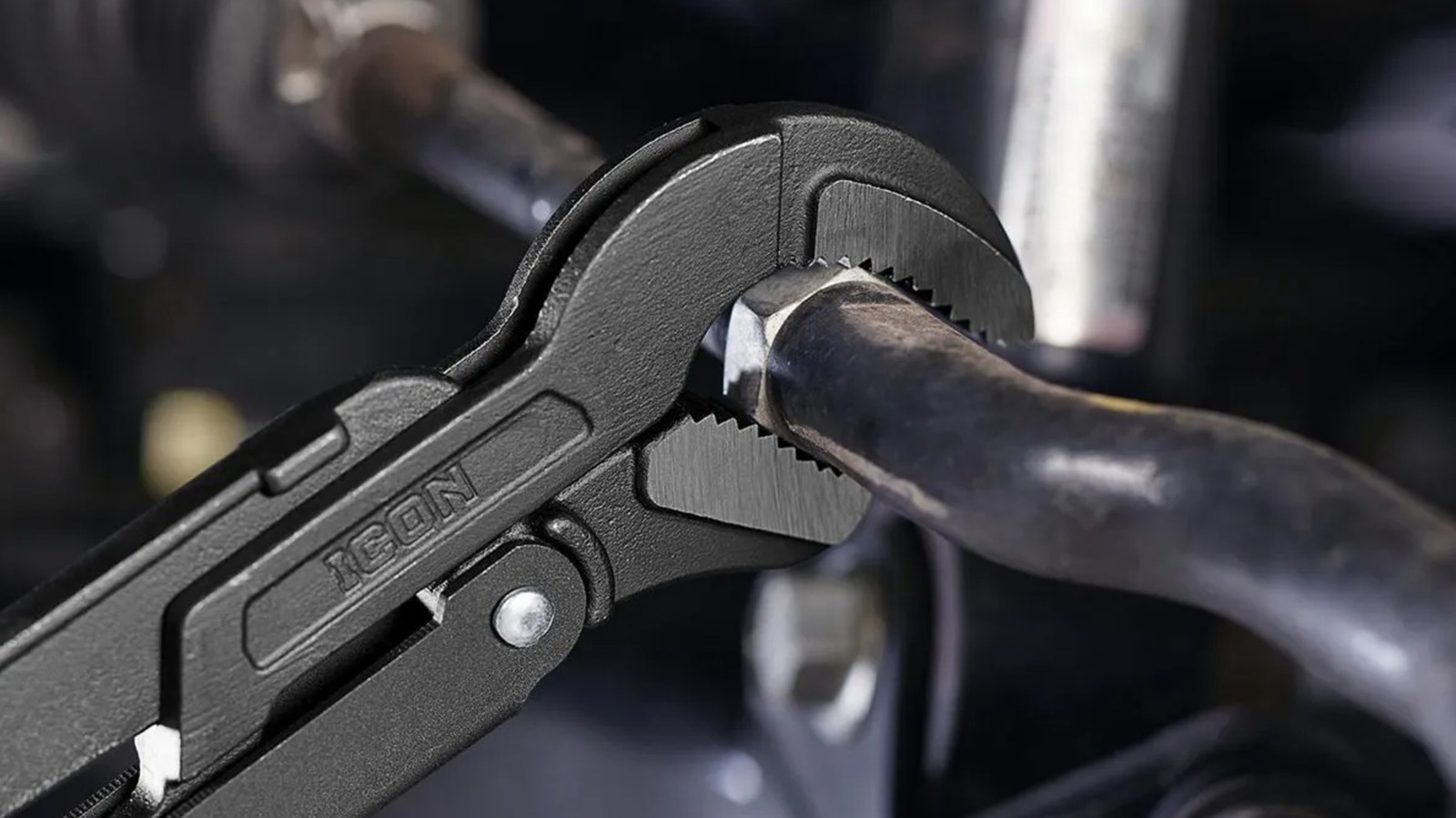
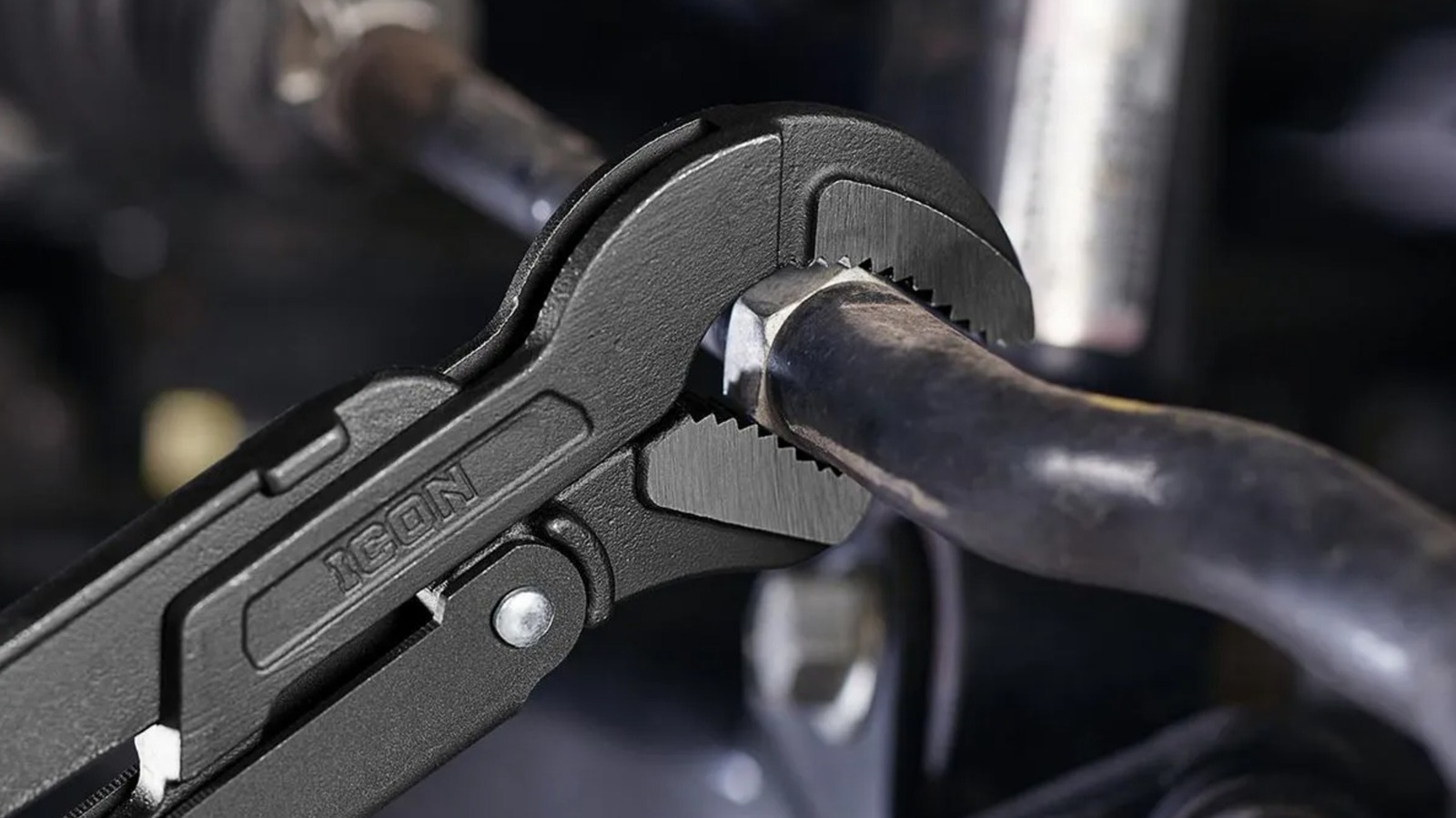
Designed to work with irregular surfaces, the $19.99 Icon S-Jaw Quick-Adjust Pliers can handle jobs that ordinary pliers may struggle with. According to Icon, it is great for tasks in confined spaces and ideal for automotive works with hex, round, or square shapes. Several reviews note that it can fulfill functions related to plumbing, too. The Swedish pipe wrench has features like angled teeth, hardened jaws, and mechanisms against unthreading. With a 1-⅞-inch throat depth and 3-inch jaw opening, the 12-inch model is the smallest offer in the line-up. But if you need a larger size, Icon also offers other S-Jaw Quick-Adjust Pliers models: the 17-inch ($29.99) and 21-inch ($39.99).

All together, the three sizes have been rated an impressive 4.7 stars by over 310 Harbor Freight customers. As of May 2026, 94% of customers recommend it, while 260+ people have rated it 5 stars. Most people said that it wasn’t just great at gripping, but that it is versatile. While people did mention a bit of a learning curve, one user claimed that it “Made the impossible possible, like a cross between vice grips and a pipe wrench.” Around 3% of reviewers, who rated it a single star, did note issues with slipping, locking, and the quick release feature.

Advertisement

Icon SAE Color-Coded L-Shape Ball End Hex Key Set

Hex keys (or Allen wrenches) are some of the most versatile tools out there that you can use for everything from furniture assembly, outdoor grills, to regularly adjusting bicycle parts. It’s no wonder that Icon manufacturers two highly-rated options under $25. Priced at $24.99, the 13-piece ICON Color-Coded L-Shape Ball End Hex Key Set is made of corrosion-resistant, premium steel construction and has two features that set it apart from other sets: color coding and the ball end, which offers more flexibility with 20-degree angle entry.

Available in both SAE or Metric, the colored hex key set boasts an average rating of 4.8 stars from 290+ people. Apart from 96% of customers recommending it, the large majority of Harbor Freight reviewers also gave it a perfect rating. Unsurprisingly, many users praised its colors, which they claimed helped them easily find what they needed. Some customers even love it so much that they recommended purchasing both sets. Although, there were a few people who mentioned that the paint did have a tendency to wear off after consistent use.

But if you want to slash $3 from the price and don’t really care about colors, ICON also sells the all black 13-piece L-Shaped Ball End Hex Key Set, which retails for just under $22. Although it is less popular, it did receive an average rating of 4.9 stars from 180 Harbor Freight customers with a 98% recommendation rate.

Advertisement

Icon 16 oz. Soft Face Dead Blow Hammer

Whether you’re joining some wood, working on cars, or installing some tires, a soft face dead blow hammer, like the Icon 16 oz. Soft Face Dead Blow Hammer can be incredibly useful. Unlike regular hammers, it’s less likely to damage delicate surfaces and create permanent dents. It also helps reduce the likelihood of injury from bouncing back. On its longest side, this Icon Dead Blow Hammer measures 13.63 inches (or about a little more than a standard ruler). It has a soft grip and wide flared handle with a 4-inch width, wherein there is structural steel shank. Made of Polyurethane, the Icon Soft Face Dead Blow Hammer head has a 2-inch rubberized striking face that is resistant to chemical damage.

Advertisement

Alternatively, if you need bigger hammers for the job, Icon also sells three other models with heavier head weights: 24 oz. ($24.99), 32 oz. ($29.99), and 48 oz. ($34.99). Collectively, the Icon Soft Face Dead Blow Hammers hold consistently stellar reviews on the Harbor Freight website. Out of more than 270 customers, every single one said that they’d recommend it. With an average rating of 4.9 stars, a large majority (90.5%) even gave a perfect 5 stars and not a single review went below 3 stars. Some of the common praises include how they’re both comfortable and versatile. One person even notes “I think they’re the best product Icon sells.”

Advertisement

Icon Professional Mini Soft-Grip Pick and Hook Set

Sometimes, your fingernails need some extra help, so a good pick and hook set can save you a lot of hassle. Available in two colors (red and green), the Icon Professional Mini Soft-Grip Pick and Hook Set contains four hand tools: a hook, awl, 90-degree pick, and 45-degree pick. Measuring 6 inches in length with a 3-inch shaft, each tool has a soft grip and precision tips. Designed to withstand various chemicals in your job site, it comes with a storage tray.

Priced at $21.99, the Icon Professional Mini Soft-Grip Pick and Hook Set has been rated 4.7 stars on average by 680+ Harbor Freight customers. Among the 94% of users saying that they recommend it, over 570 customers gave it a perfect 5-star rating. Despite its affordable price point, a reviewer claimed that they perform just as well as more expensive brands like Snap-on, Cromwell, and Mac. Among what people liked about it, reviewers noted that they found the handles durable and comfortable.

However, there were about 3% of users that rated it a single star, including some common negative feedback about how it doesn’t hold that well. In particular, several people noted how the 90-degree pick had a tendency to bend. Dissatisfied users described how the tip had broken when used on car door trim panels, cleaning gasket surfaces, and removing oil slip seals.

Advertisement


Source link

Advertisement
Continue Reading

Trending

Copyright © 2025