Kyrgyzstan-based cryptocurrency exchange Grinex has suspended its operations after suffering a $13.7 million hack attributed to Western intelligence agencies.
The funds were stolen from cryptocurrency wallets belonging to Russian users, as the platform enables crypto-ruble exchange operations between Russian businesses and individuals.
Launched early last year, Grinex has Russian links and is believed to be a rebrand of Garantex, a Russian crypto exchange whose admin was arrested and whose domains were seized over allegations of processing more than $100 million in illicit transactions and enabling money laundering.
In August 2025, the U.S. Department of the Treasury announced sanctions against Grinex, based on evidence that the exchange service was a continuation of Garantex activity, accepting the same actors, their funds, and facilitating an identical role as an illegal operations enabler.
Grinex continued to operate, providing Russia with some level of financial sovereignty and ability to bypass international sanctions that impacted banking and transactions, mainly through a Russian ruble-backed stablecoin named A7A5, which was directly adopted from Garantex.
Advertisement
The exchange says that the type of attack and the digital footprint indicate a threat actor associated with “foreign intelligence agencies” that have “an unprecedented level of resources and technology, accessible only to entities of hostile states.”
“According to preliminary data, the attack was coordinated with the aim of directly harming Russia’s financial sovereignty,” Grinex states.
Blockchain analysis firm Elliptic reports that the theft occurred on Wednesday at 12:00 UTC, and the stolen funds were sent to TRON and Ethereum addresses, then converted into TRX and ETH through the SunSwap decentralized trading protocol.
TRM Labs identified 70 attacker addresses and also discovered a second hack at TokenSpot, another exchange based in Kyrgyzstan with ties to Grinex.
Advertisement
TRM Labs links TokenSpot to Houthi-linked laundering operations, weapons procurement, and the InfoLider influence operation in Moldova, all aligning with Russian strategic goals.
Neither Grinex’s announcement nor Elliptic’s or TRM Labs’ reports provides any evidence pointing to a specific perpetrator, and no technical evidence or indicators were provided to support the exchange’s attribution to Western intelligence services.
BleepingComputer has contacted Grinex about attribution of the attack, but we have not received a response by publishing time.
AI chained four zero-days into one exploit that bypassed both renderer and OS sandboxes. A wave of new exploits is coming.
At the Autonomous Validation Summit (May 12 & 14), see how autonomous, context-rich validation finds what’s exploitable, proves controls hold, and closes the remediation loop.
The Orion spacecraft uses eight processors running identical instructions simultaneously
A fail-safe design prevents faulty computers from sending incorrect commands
Triple redundant memory corrects single-bit errors automatically on access
The NASA Artemis II mission relies on a computing system built to remain operational under extreme conditions and hardware faults.
Unlike the Apollo program, where onboard computers handled limited functions, the Orion spacecraft manages life support, navigation, and communication through integrated flight software.
The Orion capsule carries one of the most fault-tolerant computer systems ever built for spaceflight, operating 250,000 miles from Earth, where no repairs are possible.
Article continues below
Advertisement
From Apollo’s limits to Orion’s full system control
Apollo astronauts relied on a 1MHz computer with just 4 kilobytes of memory, but today’s spacecrafts need much more, considering the distance.
The Orion spacecraft uses two vehicle management computers, each containing two flight control modules.
Advertisement
Each module consists of a pair of processors that continuously check each other’s outputs, resulting in 8 processors executing the same instructions simultaneously.
If a processor produces an incorrect result, the paired design detects the mismatch immediately and prevents the output from being used.
Sign up to the TechRadar Pro newsletter to get all the top news, opinion, features and guidance your business needs to succeed!
“We still architect to cover for hardware failures,” said Nate Uitenbroek, Software Integration and Verification Lead in NASA’s Orion Program.
Advertisement
“Along with physically redundant wires, we have logically redundant network planes. We have redundant flight computers.”
Instead of relying on majority voting, the system selects outputs from available modules based on a defined priority order.
The system is designed to tolerate rapid failures during flight. Uitenbroek stated, “We can lose three FCMs in 22 seconds and still ride through safely on the last FCM… A faulty computer will fail silently, rather than transmit the wrong answer.”
Advertisement
Failed modules are reset and re-synchronized, allowing them to rejoin the system during the mission.
Orion uses a time-triggered Ethernet network that distributes a shared time reference throughout the system – so if a module fails to meet its execution deadline, it is automatically isolated, reset, and re-synchronized before returning to operation.
The computing system includes triple-redundant memory capable of correcting single-bit errors during every read operation.
Network interfaces use dual communication lanes that are continuously compared to detect inconsistencies, while the overall network is replicated across three independent planes.
Advertisement
Orion carries a separate Backup Flight Software system that operates on different hardware and software, running continuously in the background.
“It is intentionally different to ensure that a common mode software failure in the primary flight software isn’t also implemented incorrectly on the backup,” Uitenbroek said.
The spacecraft also includes procedures for full power loss scenarios, allowing systems to restart, stabilize, and re-establish communication once power is restored.
The system is overengineered by any commercial standard, but deep space offers no second chances.
Advertisement
Whether all 8 processors will perform as designed under real radiation conditions remains untested, and the backup software has never faced an actual emergency.
Still, for a mission where the nearest hardware store is 250,000 miles away, this architecture makes a brutal kind of sense.
Gamers seeking victory in any fast-paced game will want every frame they can get. Sony designed the INZONE M10S II with this specific purpose in mind, and they accomplished it by including two different modes. Switching between settings is simple on this 27-inch OLED panel. If you keep the resolution at 1440p, the display will run at a scorching 540 hertz. Drop the resolution to 1080p and you’ll be rewarded with an even faster refresh rate of 720 hertz.
That kind of flexibility is invaluable when you’re playing different games with varying demands on your screen. Some titles are all about the details, while others are simply about obtaining that speed, since every millisecond counts. Fortunately, the tandem OLED build of this display keeps the image quality sharp even while switching between modes. Sony also included a brilliant feature called motion blur reduction, which keeps fast-moving objects clear and prevents the screen from becoming too dim even when you’re in the thick of things.
【Epic QD-OLED 500Hz Monitor】 A new generation of gaming monitor is emerging, this new 27 Inch 1440p 500hz monitor adopts QD – OLED panel and…
【Rare 500Hz Refresh Rate & 0.03ms】INNOCN 2780M – Ultra-fast 500Hz OLED display. The faster speed lets you respond quickly to opponents and stay a…
【Powerful Connectivity】 2780M 2560 x 1440p 500hz gaming monitor delivers powerful connectivity: 2 x DP, 2 x HDMI, 1 x 3.5MM Audio Jack, wide…
The display itself is also quite forgiving in terms of placement, since the special anti-glare coating does an excellent job at maintaining visibility regardless of the lighting conditions in your room. With that level of control over reflections, your emphasis remains where it should be: on the game. For the competitive crowd, there is an extra tiny tool in the arsenal known as tournament mode. When you turn it on, the display basically shrinks to 24.5 inches, with black bars on the sides, but you still get the desired high refresh rate.
Ergonomically, the setup feels perfectly natural on almost any workstation. The stand can tilt from minus five to thirty-five degrees and adjusts in height by roughly five inches to maintain your screen at the ideal angle. Plus, it swivels left and right, allowing you to have a good perspective regardless of your preferences.
In terms of input, you have two HDMI 2.1 connections and one DisplayPort 2.1 connector to keep up with the latest graphics cards. Variable refresh rate support almost guarantees that you’ll never have to struggle with those annoying screen tearing bugs. As an added bonus, you get two pre-tuned picture settings for shooter games: one that gives you the familiar look of a regular display, and another that really shows off the OLED panel. Sony plans to sell the monitor for $1,099, with a release later this year. [Source]
A newly discovered live recording from Yusef Lateef arrives via Resonance Records for Record Store Day 2026, capturing the saxophone icon in an intimate club performance that stands out as one of the most compelling archival jazz releases of the year.
Yusef Lateef Alight Upon The Lake: Live at the Jazz Showcase captures the artist backed by a superb swinging quartet featuring Kenny Barron on piano, Bob Cunningham on bass, and Albert “Tootie” Heath on drums.
One of the better sounding of Resonance’ RSD new offerings, as with most of these shows from Chicago’s Jazz Showcase — a venue run by jazz enthusiast Joe Segal — the tapes used for creating this release are recorded in monaural, yet effectively document the sound of the band in the club.
Pianist Kenny Barron stands out as a featured performer, the band playing two of his compositions including the nearly 30-minute opening track “The Untitled”– almost half of it showcases Barron’s lush, wave-like solo explorations. Likewise, his “Inside Atlantis” stretches for nearly 20 minutes.
Lateef’s playing is, not surprisingly, beautiful and inventive. Yet he also takes time to let loose such as on the lighthearted boogie-woogie show closer “Yusef’s Mood.” This has the feel of a vintage 1940s–50s Jazz at the Philharmonic blowing session, driven by the same raw energy as Illinois Jacquet and Flip Phillips, with flashes of the R&B honk and swagger you’d hear from Joe Houston and Big Jay McNeely.
Advertisement
The vinyl quality is fine on this new RSD release as are the production elements as we’ve come to expect from Resonance. The 3LP set features liner notes by noted Yusef Lateef biographer Herb Boyd, plus interviews with musicians Bennie Maupin and Wayne Segal (son of the club’s found and the frontline person maintaining his father’s sizable tape archive).
Whether you need to own Alight Upon The Lake: Live at the Jazz Showcase on vinyl is a personal decision versus just getting the CD version. The 3LP version will likely run you upwards of $60 (estimated) on RSD, However, the 3CD set is available for pre-order for just $29.98 at Amazon.
Either way you go, this will be a fun listen for fans of Mr. Lateef’s music.
Mark Smotroff is a deep music enthusiast / collector who has also worked in entertainment oriented marketing communications for decades supporting the likes of DTS, Sega and many others. He reviews vinyl for Analog Planet and has written for Audiophile Review, Sound+Vision, Mix, EQ, etc. You can learn more about him at LinkedIn.
The crew of NASA’s Artemis II mission have safely returned to Earth, but if your Moon fever has yet to break, or you’re curious to get a big picture view of how the second of a planned five Moon missions was pulled off, PBS has a new documentary you’ll want to watch. The hour-long Return to the Moon was produced for PBS’ NOVA and aired on TV on April 15, but you can view the episode in its entirety on YouTube right now.
Return to the Moon covers the history of NASA’s Artemis program, and specifically the planning and preparation that went into Artemis II. Per the documentary’s official description:
Follow the four members of the Artemis II crew as they embark on a perilous 10-day journey to orbit the Moon, venturing beyond Earth orbit for the first time since Apollo and farther into the Solar System than any humans have gone before. And get an inside look at the preparations needed to overcome the extreme engineering challenges of human-crewed spaceflight, all the way from launch to splashdown.
The last Apollo mission was in 1972, so Artemis II getting a group of four astronauts anywhere near the Moon has naturally generated a lot of excitement. The crew flew further away from Earth than anyone has gone so far, captured some stunning photos of both the Moon and our home planet and managed to make everyone feel better about their dislike of Microsoft Outlook. Few Moon missions have been as well-documented or relatable.
The S’porean couple behind Freshio Gelato is proving that age has no limit
At 73 and 77, most people would be slowing down. But Tan Kian Tat (KT) and his wife, Zheng Yazhu, were just getting started again.
Once a “crawfish king” in China, the retired KT and his wife have returned to work life in Singapore—this time scooping out up to 500kg of gelato a month at Freshio Gelato, a homegrown gelato business they built without touching a cent of their retirement savings.
A path that began far from the kitchen
KT and Yazhu in Paris./ Image Credit: Freshio Gelato
KT’s path began far from any kitchen.
For 15 years, he dominated China’s crawfish export industry, running eight factories across different provinces and shipping US$40 million worth of frozen crawfish to Europe and the US in a single three-month season.
I was the biggest exporter—they called me the crawfish king in China.
Meanwhile, his wife, Yazhu, wasn’t idle.
Advertisement
She ran two cafes in Shanghai for four to five years, serving Singaporean food and acting as a distributor for Neapolitan coffee brand Izzo.
When they left China in 2011 to retire after more than 20 years, they simply handed their cafés to trusted workers, who later expanded those locations to five across the city.
The struggle with idle time
Retirement, however, felt suffocating for this couple wired for work.
After leaving the country, the couple travelled the world for three years before settling in Vancouver, where Uncle KT’s family lived. But the slow pace of retirement clashed with his personality.
Advertisement
“I’m a workaholic. I always loved working, moving here and there,” he said. “In Vancouver, it would be like, this week maybe we drive down to the USA, then next week we come back—where to go again? It’s too much of nothing to do and just spending money only.”
KT and Yazhu at Freshio Gelato’s Sunshine Plaza outlet./ Image Credit: Freshio Gelato
Seeking purpose, the elderly couple then chose to return to Singapore, where they were born, to spend their golden years.
To pass the time, KT drove for Grab while Yazhu worked as a McDonald’s barista, but two years of being pushed around by younger colleagues left her in tears. “They always bully me in McDonald’s,” she told him. “Ask me to throw rubbish, do this, do that.”
Taking a leap into entrepreneurship
In 2019, an HDB café lease opened in Sengkang North. Drawing on Aunty Yazhu’s café experience, they took the leap—this time with gelato.
The choice wasn’t random. KT understood that cooking at their age would be physically demanding and stressful. Gelato offered something different.
Advertisement
“Gelato is a dessert, it has timing—always after lunch or dinner. Before that big hour, you have a quiet period to prepare,” he explained. “You make them all in pans, and put them ready on display. When the order comes, just need to scoop and go.”
Initially, the couple adopted a supplier-based model, buying ready-made gelato to serve at Freshio Gelato. But it soon fell short of expectations.
“If you’re a big shop, they send you very fresh batches, maybe made just yesterday,” KT said. “But if you’re a small shop, sometimes they will send you old gelato that has a layer of ice over it. They don’t even put a date on it, so we don’t know when they were really made.”
At their first outlet, the business barely covered rent and operations. Worse still, supplier flavour options were limited. As such, in 2021, Yazhu encouraged KT to learn to make gelato from scratch and breathe new life into the business.
Advertisement
Learning how to make gelato from scratch
Freshio Gelato’s City Gate outlet./ Image Credit: Freshio Gelato
That same year, with the Sengkang North lease expiring and a tiny 300-square-foot unit available at City Gate, the elderly decided to shift to the latter unit.
Before opening, KT flew to Thailand’s Dream Cones school for a two-week gelato course. At 66, he became the oldest student.
The master didn’t believe that I myself was actually an enrolled student. He was thinking, “Am I visiting someone?” The other students were all in their 20s.
KT acknowledged that his food processing background and engineering knowledge gave him an edge. At the end of the course, when the instructor conducted a blind taste assessment, his pistachio gelato won hands down.
“[The master] praised me for the textures, the flavour and the smoothness, because I can understand some food science, the quick freezing and chilling, the infusion of the flavour.”
Back in Singapore, their cramped shop with just two tables became proof of concept. Customers immediately noticed the difference between house-made and ready-made gelato.
Advertisement
Word spread. Despite a limited social media presence, customers returned repeatedly, bringing friends.
By 2023, frequent overcrowding pushed them to relocate to a larger space at Sunshine Plaza on Bencoolen Street, strategically positioned near 5,000 to 6,000 students from nearby universities like Singapore Management University, Nanyang Academy of Fine Arts, and LASELLE College of the Arts.
Competition eventually arrived, with international brands marketing their “own farms” and “dairy heritage,” drawing long queues. But KT and Yazhu remained unfazed, content serving their S$4.50 gelato in their cosy spot.
The science of flavour and texture
KT and Yazhu have experimented with 35 flavours so far that have made it back on regular rotations of their menu./ Image Credit: Freshio Gelato
Making gelato in-house is where KT’s past expertise truly shines. As a trained refrigeration engineer, he repairs his own equipment and speaks with technical precision about freezing points.
“You must understand this to make gelato from scratch,” he insisted. “What are the contents of your ingredient, because it changes the textures and freezing point.”
Advertisement
The display freezer maintains -14 degrees Celsius, yet each of his 35 rotating recipes must remain perfectly scoopable. This is trickier than it sounds, especially with alcohol-based flavours.
(Left): KT making gelato in-house; (Right): Freshio Gelato’s vanilla gelato./ Image Credit: Freshio Gelato/ Sunny Side Up Eats
Making gelato also demands intense concentration. Blending generates heat, so the mixes have to rest on ice. Timing matters in everything, especially when infusing.
A moment’s distraction once burned a coconut base, but KT turned the mistake into a “roasted coconut” flavour customers loved. “Sometimes a mistake is actually a blessing in disguise,” he said. However, he could never replicate it consistently, so it left the menu.
His 16-flavour display always stocks the classics children demand: pistachio, hazelnut, vanilla, and strawberry. The remaining slots rotate based on customer requests, like the black grape flavour created for a regular whose son loved them.
When his Italian ingredient suppliers visit, KT makes them taste his current gelato first, before it joins the display refrigerator.
Advertisement
Throughout his life of running businesses, he has maintained strict financial discipline. His initial S$50,000 investment came from funds he could afford to lose.
I won’t stress myself out. This is just a very small token to keep myself active and busy. If it goes, it goes. If it doesn’t, let it close—it’s okay.
He cautioned other seniors against using retirement funds to start a business, noting that success is never guaranteed and that having savings to fall back on is essential.
Passing the torch and opening a second location
Freshio Gelato’s Sunshine Plaza’s outlet is now run by KT’s goddaughters Lee Qi (left) and Joey (right)./ Image Credit: Freshio Gelato
Today, the Sunshine Plaza outlet is led by KT’s goddaughters Lee Qi and Joey, recent graduates passionate about carrying forward the Freshio Gelato legacy and reviving its social media presence.
His son Alex also contributes with design ideas, new products, and demographic strategy.
But even with the next generation stepping in, the elderly couple are not ready to retire just yet.
Advertisement
In late Mar this year, they opened a new outlet at Kadayanallur Street near Maxwell Food Centre, employing a different strategy while Sunshine Plaza bets on students. The outlet instead targets Chinese and Taiwanese tourists who frequent the hawker centre’s famous chicken rice stall.
The new Freshio Gelato serves durian desserts and newly launched yoghurt and açai bowls on top of their regular gelato flavours, which KT shared that “customers photograph from every angle before eating.”
With its mobile gelato machine, Freshio Gelato is also able to supply gelato at any location and event. This includes corporate bookings handled through organisers serving both private companies and public sector clients, from Changi Airport to Sentosa hotels.
The business also partners with organisations such as The Foundry charity next door, the Photographic Society on Waterloo Street, and YMCA graduation events, serving hundreds of guests at a time.
Advertisement
In total, the business moves through roughly 500kg of gelato a month. Till this day, KT and Yazhu leave the shop at 2AM, and face peak crowds from 1-3PM and 8-10PM, timings they call the prime time for dessert.
Freshio Gelato has redefined the couple’s retirement
Freshio Gelato’s new outlet at Kada, which seats 20 pax, opened in late Mar and is run by the elderly couple./ Image Credit: Freshio Gelato
Running Freshio Gelato has redefined retirement for the elderly couple.
“It’s just keeping active and providing another kind of financial income every month,” KT said. But more than money, it means staying relevant through “intergenerational collaboration” with his grandchildren and his younger customers.
“If you TikTok, I can also do TikTok,” he said with a laugh. “I learn from younger people and enjoy working alongside them.”
His advice to elderly entrepreneurs stands in practicality. Find something that keeps you engaged, risk only what you can afford to lose, and never stop moving.
In mid-December 2020, federal officials responsible for protecting American elections from fraud converged in a windowless, dim, fortified room at the Justice Department’s downtown Washington, D.C., headquarters.
They had been summoned by Attorney General William Barr.
Advertisement
Over the preceding weeks, Donald Trump’s claims that the presidential election had been stolen from him had reached a crescendo. He’d become obsessed with a conspiracy theory that voting machines in Antrim County, Michigan, had switched votes from him to Joe Biden.
With each day, Trump ratcheted up the pressure to unleash the might of the federal government to undo his defeat.
Barr interrogated experts from the Cybersecurity and Infrastructure Security Agency, crammed in beside top FBI officials around a cheap table. He needed the group of around 10 to answer a crucial question: Was it really possible the 2020 presidential vote had been hacked?
ProPublica’s description of the previously unreported meeting comes from several people who were in the room or were briefed on the gathering. Everyone understood that the meeting represented an important moment for the nation, they said. Barr, who did not respond to requests for comment, had walked a delicate line with Trump, instructing the FBI to investigate allegations of election irregularities while declaring publicly there had been no evidence “to date” of widespread fraud.
Advertisement
The nonpartisan specialists from CISA, backed by their FBI counterparts, explained they’d unravelled what had happened in Antrim County. A clerk had made a mistake when updating ballot styles on machines, leading to a software problem that initially transferred votes from Republicans to Democrats, they said. There was no fraud, just human error — which would soon be publicly confirmed through a hand count of the county’s ballots.
Listening intently, Barr seemed to understand both the truth and that telling it to the president would almost certainly cost him his job.
At the end of the meeting, Barr turned to his top deputy, made hand motions as if he was tying on a bandana and said he was going to “kamikaze” into the White House.
What happened next is well known. When Barr met with Trump in the Oval Office on Dec. 14, the president launched into a monologue about how the events in Antrim County were “absolute proof” that the election had been stolen. Barr waited to get a word in edgewise before telling his boss what the experts from CISA had told him.
Advertisement
Then Barr offered his resignation letter, which Trump accepted. Barr left believing he’d done his part to preserve democratic norms.
“I was saddened,” Barr wrote of Trump in his memoir. “If he actually believed this stuff he had become significantly detached from reality.”
Barr was one of many federal officials — most of them Trump appointees — who refused to bend to the president’s demands, which only intensified after Barr was gone. Although rioters inspired by Trump managed to delay the certification of his defeat by storming the Capitol on Jan. 6, 2021, ultimately the institutional guardrails of American democracy held — barely.
But if faced with the same tests today, the guardrails and people that held the line would largely be missing, an examination by ProPublica found.
Advertisement
ProPublica scrutinized what happened the last time Trump lost a national election. Some of that happened in plain sight: After a cascade of defeats in court, Trump began pressuring state and local officials to overturn the results. But more happened behind the scenes, like the meeting that helped persuade Barr to hold the line.
Our reporting uncovered previously undisclosed aspects of a federal effort to safeguard the results of the 2020 vote, which involved at least 75 people across several agencies. Today, nearly all of those people are gone, having resigned, been fired or been reassigned, particularly in the departments of Justice and Homeland Security. That included the cybersecurity specialists who had established that the Antrim County allegations were false and reported their findings to Barr.
The people we identified as resisting attempts to overturn the 2020 results have been replaced by roughly two dozen people Trump has installed in positions that could affect elections. Ten of them actively worked to reverse the 2020 vote, and the rest are associates of such people. In some cases, ProPublica found, officials have been hired from activist groups that are pillars of the election denial movement. Experts warn that shows the movement has merged with the federal government.
These new officials could influence how Trump reacts to the upcoming midterms as polling shows Republicans are approaching what could be a significant electoral loss, with the president’s approval rating nearing record lows, and public concern growing about the weak economy, the administration’s mass deportation effort and the war on Iran. Seemingly in preparation to head off such a blow, Trump has stepped up his efforts to “nationalize” the 2026 elections, saying that Republicans need “to take over” the midterms. Democrats who monitored Trump’s attempts to block his 2020 loss have begun to question whether he will allow a “blue wave,” particularly if it flips control of a House of Representatives that impeached him twice in his first term.
Advertisement
ProPublica’s examination reveals new details on how the president has unleashed his loyalists to transform elections. This includes the background of this year’s FBI raid in Georgia to seize 2020 election materials and how they are using federal resources to search for noncitizens voting. Ultimately, ProPublica’s reporting shows how thoroughly and expansively the Trump administration has overhauled the federal government into what some fear is a vehicle for making sure elections go his way.
ProPublica’s reporting is based on interviews with roughly 30 current or former executive branch officials familiar with the work of Trump loyalists installed in election roles. Most spoke on condition of anonymity because they fear retribution, including those knowledgeable about the December 2020 Barr meeting.
The Trump administration maintains its actions will make U.S. elections fairer and more secure — and keep those prohibited from voting, such as noncitizens, from doing so.
“Election integrity has always been a top priority for President Trump,” White House spokesperson Abigail Jackson said in a statement. “The President will do everything in his power to defend the safety and security of American elections and to ensure that only American citizens are voting in them.”
Advertisement
Spokespeople for the DOJ and DHS emphasized that their departments are focused on ensuring elections are free and fair, and that they are working closely with the states to achieve those goals. Contentions to the contrary, they say, are false.
A few guardrails have endured, preventing Trump from fully realizing his agenda for elections. Judges have blocked key parts of a March 2025 executive order in which Trump attempted to exert greater federal control over aspects of voting, and some Republican state officials have fought back against Justice Department lawsuits demanding state voter rolls.
Late last month, Trump issued another executive order on elections that attempts to exert unparalleled federal control over mail-in voting and voter eligibility, which Democrats and voting rights groups are challenging in court.
Experts say 2026 will serve as an unprecedented stress test of the integrity of American elections.
Advertisement
“Our election system withstood” Trump’s “attacks following the 2020 election,” said Sen. Alex Padilla, a California Democrat who has led the pushback to the administration’s actions on elections, “but this will be an even tougher test, with more election deniers having access to federal power than ever before.”
The Dismantling
Barr has said that in the high-stakes days following the 2020 election, he felt like he was playing Whac-A-Mole with Trump’s “avalanche” of false election claims.
The investigators at DHS’ Cybersecurity and Infrastructure Security Agency supplied intelligence that disproved many of them, not just those involving Antrim County.
CISA was created by Trump in his first term to counter cyber threats in the aftermath of Russia’s efforts to influence the 2016 vote. It soon came to provide crucial expertise and support to thousands of local election officials grappling with increasingly sophisticated attacks.
Advertisement
After the 2020 election, it also played a crucial part in puncturing fallacies spread by Trump supporters, producing a “Rumor Control” website to rebut them. And it partnered with state officials and technology vendors to release a statement calling the election “the most secure in American history.” Trump swiftly fired Chris Krebs, whom he had appointed to lead CISA, but Krebs’ defense of the election’s soundness reverberated widely in the media and on Capitol Hill.
Among Trump’s first actions upon returning to the Oval Office was eviscerating CISA.
Starting in February 2025, DHS leadership put employees focused on countering disinformation and helping safeguard elections on leave. The leadership also froze the agency’s other election security work, which included assessing local election offices for physical and cybersecurity risks, and disseminating sensitive intelligence information on threats. Eventually, all three dozen or so CISA employees specializing in elections were fired or transferred to work in other areas.
“It took years of dedicated, bipartisan, cross-sector partnership to build the security infrastructure we’ve had, and dismantling CISA leaves a gaping hole,” said Kathy Boockvar, an elections security expert who served as Pennsylvania’s secretary of state from 2019 to 2021. “We are making the job of securing our democracy exponentially harder.”
Advertisement
A DHS spokesperson told ProPublica that the changes at CISA were in response to “a ballooning budget concealing a dangerous departure from its statutory mission,” which included “electioneering instead of defending America’s critical infrastructure.” The spokesperson said that CISA’s mission is still to coordinate protection of critical infrastructure, including by supporting local partners against cyber threats.
It isn’t just CISA that’s been gutted.
The Trump administration has discarded or diminished other federal initiatives with roles in protecting election integrity or blocking foreign interference. While many of these actions have been reported, together they reveal the full sweep of the changes.
First, the administration got rid of the National Security Council’s election security group, which convened departmental leaders to coordinate federal actions related to voting. Then in August, the administration dismantled the Foreign Malign Influence Center, a branch of the Office of the Director of National Intelligence that had stymied efforts by Russia, China and Iran to interfere in the 2024 election.
Advertisement
A spokesperson for ODNI said the center was redundant and that its functions were folded into other parts of the office’s intelligence apparatus in ways that “arguably makes our ability to monitor and address threats from foreign adversaries stronger, more efficient and more effective.”
However, former national security officials, including one who had worked at the center, told ProPublica that its functions had largely ceased. Caitlin Durkovich, who led the NSC’s election security work during the Biden administration, said that under Trump the federal government has “abandoned” its traditional role in preserving election integrity and security.
“Nearly every program and capability to stop bad actors and support election administrators has been dismantled,” she said. “Heading into the midterms, this leaves states and localities exposed, without the intelligence support or federal coordination they need to detect and respond to threats in real time — precisely when the stakes are highest.”
The early months of the second Trump administration also brought seismic changes to three parts of federal law enforcement with central roles in elections.
Advertisement
Kash Patel, the FBI’s new director, dismantled the public corruption team, which had been deployed in previous administrations to help monitor possible criminal activity on Election Day. The Foreign Influence Task Force, which aimed to combat foreign influence in U.S. politics, was also disbanded. (An FBI spokesperson said the bureau “remains committed to detecting and countering foreign influence efforts by adversarial nations.”)
Furthermore, the Justice Department substantially reduced the role of its Public Integrity Section, which had been responsible for making sure the department’s inquiries weren’t improperly influenced by politics.
After the 2020 election, senior lawyers in the section warned against having the FBI investigate fraud claims raised by Trump allies, saying that the agency’s involvement could damage its reputation and appear motivated by partisanship. In this instance, they were overruled by Barr and his deputies, but former officials said this was a rare case in which their guidance was ignored. The need to directly overrule the unit, they said, made it a roadblock — one that no longer exists.
A month after Trump returned to the Oval Office, the unit’s top staff resigned when agency leaders directed them to dismiss corruption charges against then-New York City Mayor Eric Adams. More resigned later or were transferred. The 36-person section was reduced to two. The administration no longer mandates that it review politically sensitive cases, according to multiple people familiar with the matter.
Advertisement
Another key DOJ office, the Civil Rights Division’s voting section, had enforced federal laws that protect voting rights, particularly those that combat racial discrimination. In December 2020, the assistant attorney general overseeing the Civil Rights Division was one of the many department leaders who said they would resign if Trump promoted Jeffrey Clark, a leader who supported Trump’s efforts to overturn the election results, to head the department after Barr’s resignation. This mass threat of resignation ultimately led Trump to not promote Clark.
But now, nearly all of the section’s roughly 30 career lawyers have resigned or been moved. This largely started last spring after Harmeet Dhillon, Trump’s assistant attorney general for civil rights, put out a memo saying their mission would shift from ensuring voting rights to enforcing Trump’s executive order on elections.
“It’s just a shocking and depressing reversal of the federal government’s role in making real the promise of nondiscrimination in voting and racial equality,” said Anna Baldwin, an appellate attorney for the Civil Rights Division who resigned last year and is now one of those litigating against the Justice Department in a new role at Campaign Legal Center.
Advertisement
The Justice Department didn’t respond to specific questions about the dismantling of the Public Integrity Section or the change in mission for the Civil Rights Division.
In all, at least 75 career officials who’d played important roles in elections work at DHS, DOJ and other departments have left or been fired, ProPublica found.
Team America
Late last summer, after the Trump administration had forced out most of the career specialists, a small group of political appointees began convening at the Department of Homeland Security’s headquarters.
The group — which once called itself “Team America,” according to sources familiar with the matter — looked for federal levers it could pull to make Trump’s March executive order about elections a reality, an effort that has not been previously reported.
Advertisement
They represented the new type of people running the show.
Its core members included David Harvilicz, a DHS assistant secretary tasked with overseeing the security of election infrastructure, including voting machines, and three of his top staffers. As ProPublica has reported, Harvilicz had co-founded an AI company with an architect of Trump’s claims about Antrim County.
Despite the setbacks the executive order had met with in court, there “was not a whole lot of discussion or disagreement” about acting on the directive from Harvilicz or one of his deputies, said a former federal official who interacted with group members. “It was just us saluting to do it.”
This small group was part of a wider team at DHS, DOJ and the White House seeking to push forward the president’s agenda. Some of Trump’s new guard are well known: After the 2020 election, Patel pressured military officials to help investigate a conspiracy theory about voting machines, according to a former Justice Department official. (Patel did not respond to a request for comment but claimed in congressional testimony that he did not recall the event.) Others, like Harvilicz, are more obscure but still wield consequential powers.
Advertisement
These newcomers are seeking to carry out Trump’s executive orders and are unlikely to push back against his false claims that American elections are rife with fraud.
Team America members have echoed or spread such material themselves.
Heather Honey, who serves under Harvilicz in a newly created position focused on elections, falsely asserted that there were more ballots cast in Pennsylvania than voters in the 2020 presidential election. Trump cited this claim, which has been traced back to her, while exhorting his followers to march on the Capitol on Jan. 6, 2021.
At least 11 administration appointees, including Honey, have ties to the Election Integrity Network, a conservative grassroots organization seeking to transform American elections. It is led by Cleta Mitchell, a lawyer who tried to help Trump overturn the 2020 election. Gineen Bresso, who holds a top job in the White House counsel’s office, coordinated with the network’s leadership in 2024 as the Republican National Committee’s election integrity chair, ProPublica has reported. Since moving into government, Honey has maintained close ties to Mitchell’s organization, and she and at least two other federal officials have given its members private briefings.
Advertisement
Experts say these former activists who helped forge a movement built on the idea that the 2020 election was stolen from Trump are seeking to make sure that does not happen again.
“The election denial movement is now interwoven within the federal government, and they are working together toward a shared goal of reshaping elections” in ways that undermine the freedom to vote, said Brendan Fischer, a director at the Campaign Legal Center, a nonpartisan, pro-democracy legal organization. “It’s not just last-minute slapdash attempts to overturn the results” as in 2020, “but more systematic efforts to influence how elections are run months ahead of time.”
In response to questions sent to DHS, Harvilicz and Honey, a DHS spokesperson disputed that they were seeking to use the department’s powers to advantage Trump, writing that its employees “are focused on keeping our elections safe, secure, and free” and working to “implement the President’s policies.” In response to questions about their ties to the election denial movement, the spokesperson wrote, “To meet the diverse and evolving challenges the Department faces, we hire experts with diverse backgrounds who go through a rigorous vetting process.”
Mitchell did not respond to detailed questions from ProPublica. The White House answered questions sent to Bresso about her connection to Mitchell’s network by reiterating its commitment to making American elections secure.
Advertisement
Through the fall and winter, as the Justice Department demanded that states turn over confidential voter roll information, Team America worked to solve problems hindering the use of digital tools to comb the lists for noncitizens who had illegally registered to vote. Honey and others ironed out the technical details of merging information from different agencies and crafted data-sharing contracts. When Honey or others hit roadblocks, they’d go to the White House or senior DHS leaders who “would come in hot” to clear her path, said officials who interacted with them.
Initially, the plan was to run voter information obtained by DOJ through a Homeland Security tool called the Systematic Alien Verification for Entitlements system.
More recently, according to two people familiar with the matter, Team America has worked to harness a more powerful tool used by another branch of DHS, Homeland Security Investigations, to increase its ability to search for noncitizen voters and bring criminal charges against them.
While DHS told ProPublica that SAVE has identified more than 21,000 potential noncitizens on voter rolls in the past year, officials who have checked those results in detail have found vast inaccuracies, as ProPublica has reported. Most states — including those with millions of voters — have eventually marked only a few to a few hundred potential noncitizens as registered to vote, and far less have ever voted. The DHS spokesperson also called SAVE “secure and reliable.”
Advertisement
As the election approaches, current and former officials and election security experts expressed concerns that Harvilicz and Honey, who’ve espoused debunked conspiracy theoriesabout elections, are in positions to control the narrative around the vote’s soundness.
It’s hard to debunk false claims “coming with the seal of the federal government,” said Derek Tisler, counsel and manager with the Brennan Center for Justice’s elections and government program. “I certainly worry what damage that could do to voters’ confidence.”
Red Flags
Perhaps nothing better reflects the breakdown of the guardrails that thwarted Trump’s rashest impulses in 2020 than his creation last fall of a special White House post reinvestigating his loss to Biden.
In December 2020, just days after Barr rebuffed Trump’s Antrim County claims, lawyers in the White House counsel’s office helped prevent the president from heeding activists’ call to essentially declare martial law to seize voting machines. This multihour shouting and cussing match has been called the craziest meeting of the first Trump administration.
Olsen’s work in the second Trump administration has breached the firewall between the White House and DOJ officials, established after Watergate to prevent law enforcement officers from making decisions based on political pressure, said Gary Restaino, a former U.S. attorney in Arizona.
“This is not a constitutional or even a statutory requirement,” Restaino said, “but it’s a democracy requirement to make sure that citizens throughout America understand that decisions about life and liberty are being made in an objective and consistent manner.”
In a previously unreported series of events, around the end of 2025, Olsen flew to Georgia to meet with Paul Brown, the head of the FBI’s Atlanta field office, according to people familiar with the matter.
Advertisement
Olsen wanted the FBI to seize 2020 ballots from Fulton County, a Democratic stronghold, and gave Brown a report he claimed would justify the extraordinary action. Brown and his team emphasized to Olsen that any investigation his team did would be independent and fair.
When Brown and his team examined the report, they found that Georgia’s election board had already looked into its allegations, dismissing many altogether, and concluding that others came down to human error, not criminal wrongdoing. The report had been assembled by a longtime ally of Olsen’s and participant in the Election Integrity Network who had a history of discredited claims, ProPublica has reported.
Based on their own investigation, Brown’s team submitted an affidavit to their superiors at DOJ that did not make a strong enough case to move forward with what Olsen wanted.
Soon after, Brown was offered a choice: retire or be moved to a new office, people with knowledge of the exchange told ProPublica.
Advertisement
Olsen did not respond to requests for comment.
An FBI spokesperson said that Brown “elected to retire” and that its “work in the election security space is entirely consistent with the law.”
Brown’s ouster after refusing to carry out the seizure of 2020 election materials has been reported, but Olsen’s involvement and the details of their interactions leading to Brown’s retirement have not been previously disclosed.
With Brown gone, the case moved ahead under his replacement.
Advertisement
Trump administration officials also took another step to keep control of the investigation.
Then-Attorney General Pam Bondi chose Thomas Albus, whom Trump had appointed as U.S. attorney for the Eastern District of Missouri, to prosecute the case even though it fell far outside his usual regional jurisdiction. Albus had been meeting with Olsen since around the time the White House lawyer was hired, ProPublica has reported. (Albus declined a request for comment.)
In late January, the FBI carried out an unprecedented raid in Fulton County — and the agency’s affidavit, put together by Albus and Brown’s replacement, cited a version of the report Olsen gave to Brown as evidence supporting the seizure. ProPublica was part of a news coalition that sued to unseal the affidavit.
An FBI spokesperson said that its agents “followed all procedure to ensure everything was in proper order, and FBI evidence team had the necessary court-authorized search warrant before they arrived on site.”
Advertisement
Ryan Crosswell, who worked in the Justice Department’s Public Integrity Section for around half a decade, handling a number of election cases, called Brown’s replacement and Albus’ involvement a “red flag” because of the unusual circumstances of their appointments.
“They’re just moving through people until they find someone who’s willing to do exactly what they want,” Crosswell said.
The Justice Department did not respond to a question about Crosswell’s comment.
The extraordinary raid was also enabled in a previously unreported way by the destruction of the DOJ’s Public Integrity Section.
Advertisement
Multiple former lawyers for the section said they likely would have tried to block the Fulton County investigation because it lacked strong evidence, had a clear political slant and went against department directives that actions should not be taken “for the purpose of giving an advantage or disadvantage to any candidate or political party.”
Crosswell said, “Based on everything we know, if PIN was still there, we’d say no.”
John Keller was principal deputy chief of the Public Integrity Section from 2020 to 2025 and was acting chief when he resigned in early 2025. He worries that allegations of irregularities in the upcoming election will be handled on a partisan basis.
“Without that review and without apolitical, objective, honest brokers involved in the process, there is a much greater risk for intentional manipulation or inadvertent interference,” Keller said.
Advertisement
“Dismantling the Brain”
The week the FBI seized Fulton County’s ballots, about half of the nation’s secretaries of state converged on Washington, D.C., for their winter conference.
They had urgent questions about elections for Bondi, then-DHS Secretary Kristi Noem and other luminaries who had promised to appear at the event. But none of the headline names showed, leaving conference attendees staring at an empty podium, until the session was abruptly canceled.
The breakdown was emblematic of a widening chasm between state officials and the parts of the federal government that had, until recently, worked with them to secure American elections.
Shenna Bellows, Maine’s Democratic secretary of state, said in an interview that the trust between the Trump administration and states is “absolutely demolished.”
Advertisement
This loss of trust reflects that election deniers have assumed so many top roles at federal agencies. Honey sometimes represents DHS on cross-departmental conference calls with state election chiefs, an unsettling reality for those who spent years countering the false claims she made from outside the government.
On a February call, state officials expressed confusion about whether the Cybersecurity and Infrastructure Security Agency would still assess their election systems for physical and cyber vulnerabilities. Honey said it would, but Bellows said she’d been told it wouldn’t.
Two DHS officials told ProPublica CISA’s remaining staff avoids election work, afraid they could lose their jobs if they engage with state and local officials. “In CISA, elections are a toxic poison,” one said.
A DHS spokesperson said state and federal officials are still working together “every single day” to protect elections and that “The claim that DHS has a broken partnership with states and made our elections less secure is simply false.”
Advertisement
The cuts to career election specialists and their divisions have eliminated information channels that spotlighted threats as voting took place, including Election Day command posts run by the Justice Department and FBI. Another information channel, which DHS used to fund, will still operate but will be available only to state and local election offices, not the federal government.
Jessica Cadigan, a former FBI intelligence analyst who investigated Election Day threats, said FBI headquarters’ command post was critical to her cases.
“That is dismantling the brain, if you will,” she said. “They are the ones that piece the whole thing together.”
An FBI spokesperson said the agency will still have capabilities to monitor the situation on the ground through designated election crimes coordinator experts in all its field offices.
Advertisement
Jena Griswold, Colorado’s Democratic secretary of state, has come to see the federal government as adversarial to elections and election administration, rather than a partner.
Colorado is one of around 30 states the Justice Department has sued for confidential voter roll information. At least four courts that have fully considered those cases so far have dismissed them, although the Justice Department has appealed most of the decisions. (The others are pending.) Griswold told ProPublica she has added another lawyer to her staff to fight whatever comes next from the Trump administration.
“Donald Trump,” she said, “has made American elections less safe.”
The Payouts King ransomware is using the QEMU emulator as a reverse SSH backdoor to run hidden virtual machines on compromised systems and bypass endpoint security.
QEMU is an open-source CPU emulator and system virtualization tool that allows users to run operating systems on a host computer as virtual machines (VMs).
Since security solutions on the host cannot scan inside the VMs, attackers can use them to execute payloads, store malicious files, and create covert remote access tunnels over SSH.
Researchers at cybersecurity company Sophos documented two campaigns where attackers deployed QEMU as part of their arsenal and to collect domain credentials.
Advertisement
One campaign that Sophos tracks as STAC4713 was first observed in November 2025 and has been linked to the Payouts King ransomware operation.
The other, tracked as STAC3725, has been spotted in February this year and exploits the CitrixBleed 2 (CVE‑2025‑5777) vulnerability in NetScaler ADC and Gateway instances.
Running Alpine Linux VMs
Researchers note that the threat actors behind the STAC4713 campaign are associated with the GOLD ENCOUNTER threat group, which is known to target hypervisors and encryptors for VMware and ESXi environments.
According to Sophos, the malicious actor creates a scheduled task named ‘TPMProfiler’ to launch a hidden QEMU VM as SYSTEM.
Advertisement
They use virtual disk files disguised as databases and DLL files, and set up port forwarding to provide covert access to the infected host via a reverse SSH tunnel.
The VM runs Alpine Linux version 3.22.0 that includes attacker tools such as AdaptixC2, Chisel, BusyBox, and Rclone.
Sophos notes that initial access was achieved via exposed SonicWall VPNs, while exploitation of the SolarWinds Web Help Desk vulnerability CVE-2025-26399 was observed in more recent attacks.
In the post-infection phase, the threat actors used VSS (vssuirun.exe) to create a shadow copy, then used the print command over SMB to copy NTDS.dit, SAM, and SYSTEM hives to temp directories.
Advertisement
More recently observed incidents attributed to the threat actor relied on other initial access vectors. The researchers say that in an attack in February, GOLD ENCOUNTER used an exposed Cisco SSL VPN, and in March they posed as IT staff and tricked employees over Microsoft Teams into downloading and installing QuickAssist.
“In both instances, the threat actors used the legitimate ADNotificationManager.exe binary to sideload a Havoc C2 payload (vcruntime140_1.dll) and then leveraged Rclone to exfiltrate data to a remote SFTP location” – Sophos
The strain employs heavy obfuscation and anti-analysis mechanisms, establishes persistence via scheduled tasks, and terminates security tools using low-level system calls.
Advertisement
Payouts King encryption scheme uses AES-256 (CTR) with RSA-4096 with intermittent encryption for larger files. The dropped ransom notes point victims to leak sites on the dark web.
Payouts King ransomware extortion portal Source: BleepingComputer
The second campaign that Sophos observed (STAC3725), has been active since February and exploits the CitrixBleed 2 vulnerability to gain initial access to target environments.
After compromising NetScaler devices, the attackers deploy a ZIP archive containing a malicious executable that installs a service named ‘AppMgmt,’ creates a new local admin user (CtxAppVCOMService), and installs a ScreenConnect client for persistence.
The ScreenConnect client connects to a remote relay server and establishes a session with system privileges, then drops and extracts a QEMU package that runs a hidden Alpine Linux VM using a custom.qcow2 disk image.
Instead of using a pre-built toolkit, the attackers manually install and compile their tools, including Impacket, KrbRelayx, Coercer, BloodHound.py, NetExec, Kerbrute, and Metasploit, inside the VM.
Advertisement
Observed activity includes credential harvesting, Kerberos username enumeration, Active Directory reconnaissance, and staging data for exfiltration via FTP servers.
Sophos recommends that organizations look for unauthorized QEMU installations, suspicious scheduled tasks running with SYSTEM privileges, unusual SSH port forwarding, and outbound SSH tunnels on non-standard ports.
AI chained four zero-days into one exploit that bypassed both renderer and OS sandboxes. A wave of new exploits is coming.
At the Autonomous Validation Summit (May 12 & 14), see how autonomous, context-rich validation finds what’s exploitable, proves controls hold, and closes the remediation loop.
BrianFagioli writes: Mozilla’s email subsidiary MZLA Technologies just introduced Thunderbolt, an open-source AI client aimed at organizations that want to run AI on their own infrastructure instead of relying entirely on cloud services. The idea is to give companies full control over their data, models, and workflows while still offering things like chat, research tools, automation, and integration with enterprise systems through the Haystack AI framework. Native apps are planned for Windows, macOS, Linux, iOS, and Android. Thunderbolt allows organizations to do the following:
– Run AI with their choice of models, from leading commercial providers to open-source and local models
– Connect to systems and data: Integrate with pipelines and open protocols, including: deepset’s Haystack platform, Model Context Protocol (MCP) servers, and agents with the Agent Client Protocol (ACP)
– Automate workflows and recurring tasks: Generate daily briefings, monitor topics, compile reports, or trigger actions based on events and schedules
– Work seamlessly across devices with native applications for Windows, macOS, Linux, iOS, and Android
– Maintain security with self-hosted deployment, optional end-to-end encryption, and device-level access controls
There are five Lexus models that qualify as the fastest-selling in the U.S., according to Toyota Motor North America’s First Quarter Sales Report. The more of each model that were sold, the faster a given car was selling. Buyers can use this information to act quickly on cars selling fast or to seek out slower-selling vehicles to get a better deal. We’ll start with the slower-selling Lexus vehicles in the top five, working our way up to the fastest-selling Lexus, and provide you with in-depth information on each Lexus’ size, price, performance, cargo capacity, and other factors.
Some highlights of the TMNA report were that, even though Lexus’ sales were down 2.5% overall, its sales of electrified vehicles, which include hybrids, plug-in hybrids, and EVs, totaled 34,907 units, an increase of 6.2%. The brand’s NX Plug-in Hybrid and RZ EV hit their highest sales ever during the first quarter of 2026.
Advertisement
To briefly recap the history of Lexus, the luxury nameplate of Toyota launched in 1989 with two sedans, the LS 400 and the ES 250, and a promise to pursue perfection. Lexus started with 121 dealers and has added numerous different types of vehicles to its lineup over the years, becoming the first luxury import brand to sell more than 20,000 vehicles in a single month, back in 2000. Notable vehicles from Lexus have included the Lexus SC 300 sport coupe in 1991, the Lexus RX 300 luxury crossover in 1998, and the Lexus LFA supercar in 2011. By 2019, Lexus had sold 10 million vehicles.
Advertisement
5. Lexus IS
The fifth fastest-selling Lexus on our list is also the only non-SUV, as the Lexus IS is a compact sports sedan. The Lexus IS also has the honor of being the Lexus with the best chance of reaching 250,000 miles. The IS sold a total of 5,045 examples during the first quarter of 2026. Our review of the Lexus IS appreciated its punchy engine and responsive ride.
For 2026, there is only one variant of the IS, called the IS 350. Its styling has been refreshed, and it comes standard with a 3.5-liter V6 engine that produces 311 horsepower, with your choice of rear-wheel drive or all-wheel drive. The transmission depends on the drivetrain you select, with an eight-speed automatic on the rear-drive version and a six-speed automatic with the AWD model. Car and Driver performance testing of the Lexus IS 350 produced results that included a 0-60 mph time of 5.6 seconds, with the quarter-mile going by in 14.2 seconds at 100 mph. Roadholding on the skidpad came out to 0.89g. Cargo volume in the smallish trunk comes out to 11 cubic feet. Pricing for the Lexus IS RWD starts at $46,795, including the delivery, processing, and handling fee.
We should also give a shoutout to the Lexus RZ battery electric vehicle, which claimed the sixth-highest sales spot with an impressive 4,456 units moved into consumers’ garages. This represented the highest sales mark ever achieved by Lexus’ only EV.
Advertisement
4. Lexus GX
The Lexus GX, which our review described as a serious SUV with big capability and a big price, is Lexus’ fourth fastest-selling vehicle. The GX came through for Lexus, with 8,565 units sold in the first three months of 2026.
The Lexus GX is a large body-on-frame SUV that features a rigid ladder frame, double-wishbone front suspension, and multi-link suspension in the rear. This provides excellent performance both on the road and off it. The GX is powered by a 3.4-liter twin-turbo V6 engine with an output of 349 hp, mated to a 10-speed automatic transmission with Torsen limited-slip locking center differential, driving all four wheels through a standard full-time 4WD system. While most versions of the Lexus GX have three rows of seating, the most hardcore off-road trim, the Overtrail, comes with a two-row setup and seating for five. 2026 Lexus GX pricing starts at $67,735 for the entry-level Premium trim and goes up to $82,845 for the top Overtrail+ model.
Advertisement
Performance testing by Car and Driver generated a 0-60 mph sprint that took 6.2 seconds, with a quarter-mile time of 14.7 seconds at 95 mph. Roadholding on the skidpad measured 0.75g. Cargo capacity is 10 cubic feet behind the third row, going up to 40 cubic feet with the third row folded, and 77 cubic feet with the second and third rows folded.
Advertisement
3. Lexus TX
The Lexus TX is Lexus’ version of the Toyota Grand Highlander. As such, it is a three-row, unibody SUV that will seat as many as seven in comfort. Lexus managed to shift 12,489 examples of the Lexus TX during the first quarter of 2026, landing the TX in third place among the fastest-selling Lexus models. Our review of the Lexus TX liked its adult-sized third row and refined cruising.
The Lexus TX gets its power from a 2.4-liter turbocharged four-cylinder engine that produces 275 horsepower, mated to an eight-speed automatic transmission. Drivetrain options include either front-wheel drive or all-wheel drive. There are also two hybrid versions — the conventional hybrid pairs a 2.4-liter four-cylinder with two electric motors making 366 horses driving through a six-speed automatic, while the plug-in hybrid uses a 3.5-liter V6 and two motors to make 404 horsepower, using a CVT. Both hybrids have all-wheel drive.
Car and Driver put the Lexus TX and Lexus TX Hybrids through their paces, getting a 0-60 mph time of 7.1 seconds with the standard version, dropping to 5.7 with the hybrid and 5.2 with the PHEV. Quarter-mile times were comparable, at 15.4 seconds at 93 mph for the standard, 14.5 seconds at 95 mph for the hybrid, and 13.7 seconds at 104 mph for the PHEV. The TXs pulled 0.82g-0.85g on the skidpad. The TX has plentiful cargo capacity, with 20 cubic feet behind the third row, expanding to 57 cubic feet with the third row folded, and maxing out at 97 cubic feet when both second and third rows are folded.
Advertisement
2. Lexus NX
The Lexus NX is a compact, two-row luxury SUV with seating for five and unibody construction. It’s the Lexus counterpart to the Toyota RAV4. Lexus moved a total of 13,219 NXs during the initial three months of 2026. Available in both non-hybrid and hybrid versions, our review of the Lexus NX Hybrid proved there’s more to life than MPG.
Non-hybrid 2026 Lexus NX models receive a 2.4-liter four-cylinder turbocharged engine with an output of 275 hp, mated to an eight-speed automatic transmission and sending power to all four wheels. The NX Hybrid is available as either a front-wheel drive or all-wheel drive model, combining a 2.5-liter four-cylinder engine with either two or three electric motors to generate a combined 240 hp, which flows through CVT automatic and direct-drive transmissions. Pricing for these vehicles starts at $47,120 for the 2026 Lexus NX 350 AWD in base trim, while the hybrid 2026 NX 350h FWD Base starts at $46,470.
Advertisement
Performance testing of this drivetrain setup in the Lexus NX by Car and Driver generated a 0-60 mph run of 6.6 seconds, a quarter-mile time of 15.0 seconds at 95 mph, and roadholding on the skidpad measured at 0.81g. Car and Driver also tested the performance of the Lexus NX Hybrid. Results included a 0-60 mph run of 7.6 seconds, making it through the quarter-mile in 15.8 seconds at 87 mph, with a skidpad roadholding number of 0.79g. Cargo capacity for the NX is 22 cubic feet behind the second row, expanding to 46 cubic feet when the second row is folded.
Advertisement
1. Lexus RX
The Lexus RX is Lexus’ unibody midsize luxury SUV, sharing its platform with the Toyota Highlander. Lexus sold 29,336 copies of the RX during the first quarter of 2026, more than any other Lexus model. Our review of the Lexus RX highlighted that even though the 500H F Sport Performance is good, we’d buy this instead. The Lexus RX has been in the Lexus lineup since 1998.
The Lexus RX comes in both non-hybrid and hybrid models. The non-hybrid version features Lexus’ trusty 2.4-liter turbocharged inline-four making 275 horsepower, going through an eight-speed automatic before powering the front wheels or all four. The hybrid has AWD standard and two different hybrid powertrains, with the RX350h’s 2.4-liter four-cylinder engine using three electric motors to produce a combined 246 horses, while the RX 500h adds a turbocharger and two electric motors, putting out 366 horsepower. An RX PHEV is also available. Pricing starts at $52,275 for the non-hybrid RX 350 FWD, $54,575 for the hybrid RX 350h AWD, and $66,680 for the RX 450h+ Premium AWD PHEV.
Testing of the RX350 FWD non-hybrid by Car and Driver provided a 0-60 mph time of 6.8 seconds and a quarter-mile time of 15.1 seconds. When Car and Driver tested the 366-hp RX 500h, it improved that 0-60 mph time to 5.5 seconds and the quarter-mile to 14.2 seconds. Roadholding on the skidpad hit 0.80g. RX cargo capacity was measured at 30 cubic feet behind the second row, with a total of 46 cubic feet when the second row seat has been folded.
Sony currently has the PlayStation 5 selling well and the PlayStation 5 Pro available for those who want the most powerful console, but what about the PlayStation 6? Initially, the next-generation console was rumored to launch in 2027 (later in the year), but the ongoing memory crisis seems to have pushed the launch further, not just by months, but by years.
As of April 2026, enthusiasts are more concerned about when the PlayStation 6 will actually arrive and how much more it will cost than the already-hiked PlayStation 5 prices, than how powerful it will be or what features it will offer. Even so, there are plenty of rumors surrounding all the aspects, including the latest leaks about a three-tier hardware strategy that includes the PS6 Lite, the PS6 Standard or Pro, and a dedicated handheld.
There’s plenty of ground to cover, so without any further ado, here’s everything we know about the PlayStation 6 so far, including the rumored “Orion” hardware architecture, and how bad the console has been hit by RAMmageddon or the global memory crisis fueled by the exponential growth of AI data centers.
Here’s everything we know about PlayStation 6 so far, including all we know about when you can play it.
Advertisement
PS6 at a glance
Feature
Details
Expected Release Window
Late 2028 or 2029; delayed from 2027 due to component shortages
Estimated Price
$350 (PS6 Lite) up to $999 (PS6 Pro/Orion model)
The Handheld Threat
A dedicated, native companion handheld (codenamed “Project Canis”) is heavily rumored to launch alongside the main consoles
Key Hardware
Custom AMD Zen 6 architecture, RDNA 5 graphics, dedicated “Neural Arrays” for built-in AI upscaling (PSSR 2.0). And 32GB of DDR7 RAM
January 15, 2026 Bloomberg’s Jason Schreier has suggested that there might not be a big market for the PlayStation 6 in 2026, suggesting the PS5 still hasn’t really got started.
November 4 Moore’s Law is Dead suggests Sony’s push for PS5’s ‘low power mode’ could be to help run PS5 games on a handheld
October 20 Moore’s Law is Dead reports the console will begin production in early 2027, and Sony will look to launch in late 2027
October 9 Sony and AMD have begun openly discussing what’s coming from their collaboration, which will likely come to PS6
September 12 Once again, Moore’s Law Is Dead has a bombshell of leaks, this time with all the PS6 specs
August 28 Moore’s Law is Dead leaks all the specs of the rumored PS6 handheld, plus gives a new price estimate for the PS6
August 22 Cloud Chamber delayed Bioshock 4 out of its late 2026/early 2027 release window, suggesting it could be a PS6 title
Will the PS6 cost $900? The 2026 “RAMmageddon” effect
Sony has recently implemented a significant price hike across its current lineup in the United States, effective April 2, 2026. Before we jump into the rumors about the PS6’s pricing and how it could go bonkers due to the ongoing memory shortage, have a look at the revised PS5 (with disc drive), PS5 Digital Edition, PS5 Pro, and the PlayStation Portal prices below.
Console Model
Previous Price
New Price (as of April 2)
Total Increase
PS5 (with Disc Drive)
$549.99
$649.99
+$100
PS5 Digital Edition
$499.99
$599.99
+$100
PS5 Pro
$749.99
$899.99
+$150
PlayStation Portal
$199.99
$249.99
+$50
Sony cited “continued pressures in the global economic landscape” and rising component costs as the primary factors behind the PS5 price hike. With the top-tier PlayStation console already hitting $900 in the United States, Sony might be testing the waters, setting a strong precedent for an equally high, if not higher, price tag for the upgraded PS6.
Speculations aside, Bloomberg reports that the explosive (and unchecked) growth of generative AI data centers has created a massive hole in the global supply of high-bandwidth memory (HBM) and DDR-class RAM chips, raising the prices for consumer-grade products. Because the PS6 is rumored to sport up to 30GB or 32GB of DDR7 RAM, Sony would be in direct competition with AI giants to procure it, effectively killing the baseline $600 console.
Triyansh Gill / Unsplash
To combat this, Sony is reportedly adopting a multi-device strategy with tiered pricing.
PS6 Lite: A slightly less powerful version of the mainstream console that could cost between $350 and $500.
The PS6 handheld (Project Canis): A highly rumored console to rival the Switch 2, could cost between $400 and $500.
The PS6 flagship (Project Orion): Standard PS6 with top-tier hardware might cost between $699 and $999 (the latter being more likely).
If Sony manages to keep the PS6’s price under $1,000, it could potentially undercut Microsoft’s “Project Helix,” the next-generation Xbox, which might cost between $1,000 to $1,200 and debut in late 2027 or early 2028.
Sony could use one hardware strategy to keep the PS6’s price in control: modularity. According to an Insider Gaming report, the PS6 could follow in the footsteps of the PS5 Slim, featuring a detachable disc.
This allows the company to keep the initial sticker price of the standard console down, while bringing in more revenue from media collectors, who would have to buy the drive separately. It could also be possible that the current PS5 detachable drives will work with the PS6.
Advertisement
The evolution of PS6 rumors: A timeline of leaks
Digital Trends
If we look at past generations, that time frame falls within their life spans. The PlayStation 4 had been around for seven years before the PS5 came out, and the PlayStation 3 was also around for seven years before its successor showed up. The PS5 launched in 2020, meaning 2027 would once again leave us with a seven-year console cycle. We wouldn’t put money on 2027 for sure, but anything from late 2027 onward feels like a safe bet.
Perhaps the biggest clue as to when a PS6 could come out, or at least may have been planned to at one point, points to 2027 or 2028. This information comes from an official Microsoft court document as part of the Activision Blizzard acquisition: “By the time SIE launched the next generation of its PlayStation console (which is likely to occur around [redacted]), it would have lost access to Call of Duty.”
The date is redacted here, but sleuths have connected the dots between this and the deal Microsoft offered Sony to keep Activision Blizzard games on PlayStation consoles until 2027. That would suggest that, at the earliest, Microsoft didn’t believe a new PlayStation would come before 2027.
Earlier estimates had the PlayStation 6 pegged at a 2027-2028 timeframe, but one rumored detail from an Insider Gaming report could indicate a 2027 release. Take this with a big grain of salt, as Insider Gaming’s track record for leaks is shaky at best, but it reports that a canceled, unannounced Blade Runner game was targeting a September 2027 release on both current and “Gen 10” platforms. The implication is that the PS6 would be out at that time, but we have a very hard time believing that to be true.
The silicon foundation: Sony and AMD’s “Project Amethyst”
Giovanni Colantonio / Digital Trends
While nothing substantial was revealed regarding release dates, Sony did host a business presentation on June 13 and did comment on both future hardware and handhelds. In regard to the next generation of hardware, Sony Interactive Entertainment CEO Hideaki Nishino stated, “Our console business has evolved into a multi-faceted platform, and we now have a large ecosystem of highly engaged players across both the PS5 and PS4 generations, so naturally, therefore, there’s a huge interest in our next generation console strategy. While we cannot share further details at this stage, the future of the platform is top of mind.”
If there was one person we trust most to know what that strategy looks like, it is the architect, Mark Cerny. Last year, he announced a major partnership with AMD for Project Amethyst, which would help improve upscaling on the PS5 Pro that is expected in 2026. Later on, in a new Tom’s Guide article, Cerny comments on AMD’s progress in designing the next generation of GPU hardware. While that new tech could be ready as early as next year, Cerny stated that “What I’m trying to do is prepare for the next generation of consoles, so my time frame is multi-year here.”
Advertisement
Digital Trends
Microsoft has also partnered with AMD, but Sony’s collaboration was discussed more openly by Cerny and AMD senior vice president Jack Huynh in a technical talk (thanks, Eurogamer). In terms of what could come from the partnership, there are three parts. Neural Arrays will work to link Compute Units to more efficiently leverage AI upscaling, acting as the dedicated silicon foundation for PlayStation Spectral Super Resolution 2.0 (PSSR 2.0). Huynh promising “dedicated innovations that bring cinematic rendering to an entirely new level” heavily implies Sony is building the PS6 as an AI-first console from the ground up.
Next up, Radiance Cores are dedicated hardware for lighting effects in games, similar to how NVIDIA uses RT cores for ray tracing. AMD is looking to catch up, and Sony will seemingly benefit with PS6, aiming for a staggering 6 to 12 times the ray tracing performance of the base PS5. Finally, Universal Compression could be an answer to NVIDIA’s Neural Texture Compression, potentially improving the efficiency of streaming compressed data to the GPU memory, lowering power demands, and potentially improving frame rates.
Mid-to-late 2025: The optimistic hardware leaks
In June 2025, KeplerL2 once again took to NeoGaf to talk more about possible PS6 specs and launch timing. First is that the PS6 and the next Xbox will both be using UDNA architecture for their GPUs. Compared to RDNA4, which is currently in use in the PS5 Pro, the UDNA could be 20% faster. When asked about launch timing, KeplerL2 is also in the 2027 camp. They claim both are “likely 2027” but suggest that Xbox may want to rush their console out to beat the PS6.
In July, Moore’s Law Is Dead released a video with leaked info about AMD’s Magnus APU, which he believes could be used in the PS6. To further add some credibility to this leak, at least in terms of accuracy, KeplerL2 also chimed in to corroborate the specs, but they believe this chip is intended for the next Xbox hardware, not the PS6. According to KeplerL2, “That is probably the next-gen Xbox, the codenames that AMD uses for PlayStation SoCs are from Shakespeare characters.”
Advertisement
On August 1, 2025, Moore’s Law Is Dead dropped another bomb of a leak. This time, they claim to have uncovered an AMD presentation from 2023 with possible specs for both the PS6 and PlayStation handheld. According to this document, the PS6 is codenamed “Orion” and was proposed to begin manufacturing in late 2027. The high-level information here is that the PS6 would have specs on par with an RTX 4080, be 3x faster than the base PS5, have enhanced Ray Tracing, and be able to output games at either 4K 120FPS or 8K 60FPS.
The real kicker, though, is MLID predicts Sony is keeping its specs conservative in an effort to launch the PS6 at just $500. Again, these are just leaks, but even if true, they are from 2023 and plans could easily change in two or more years. Given everything we’ve seen so far, 2028 sounds like the safer bet for a PS6 launch.
Moore’s Law is Dead, who you’ll see pops up a few times on this very page, thanks to a decent track record with hardware leaks, reported in October 2025, that Sony will begin manufacturing the PlayStation 6 in early 2027, with the intention that it launches late in that same year. A seven-year console generation would match up with the PS4’s life cycle, which ran from 2013 to 2020, when the PS5 launched.
Industry reality checks and the shift to 2028
Bloomberg’s Jason Schreier appeared on the Xbox Expansion Podcast to talk about the next console generation, and while he acknowledged a seven-year console cycle is essentially traditional at this point, he suggested it would be “insane” to start a new console generation, saying “it feels like the PlayStation 5 has barely even gotten started”.
Advertisement
On the other hand, former PlayStation executive Shuhei Yoshida spoke to VentureBeat about possible PS6 timing. When talking about the average console generation lifecycle, putting the end of the PS5 generation around 2027, which is what the previous leaker suggested, Yoshida replied, “I have no information about the next PlayStation, but it feels a bit too early for me to say.
The PS5 generation was slowed down because of manufacturing issues. If the next PlayStation comes out in 2028, that feels right to me.” It should be noted that Yoshida does not have any insider knowledge about when the PS6 will actually be released. That said, he had been working at PlayStation for over 30 years, previously acting as president of SIE, and would therefore have a good idea of what timescales the company works in and what the vision for a console launch would look like.
April 2026: Thermal management and the final chipset
Based on previous trends, the timeline between a chipset being finalized and entering fabrication and the console launching is about two years, leading to the 2027 estimate. As far as what chips the PS6 will reportedly be running on, KeplrL2 suggests that it will be a Zen6 running on N2 architecture and an early fork of gfx13, aka AMD RDNA5. Collectively called “Project Orion,” the new architecture isn’t just about increasing the raw performance or speed; it also represents a massive leap in thermal management, something that is key to the entire PS6 experience. By utilizing more efficient die sizes, Sony is trying to push extreme graphical fidelity while keeping the operating temperature under control.
Advertisement
Furthermore, according to Technetbook, reports claim that the SoC is in pre-silicon validation, which typically has a two-year lead time, ahead of a 2027 launch. For those who may not be so familiar with chipsets and simply want to know what this means for the PS6, the short version is that it will easily eclipse what the PS5 is currently capable of. However, as with all leaks, this should only be taken as a rumor and not necessarily indicative of reality until Sony itself releases official information. Even if some of this were true, there is still time for plans to change regarding the chips and release date.
Why is there so much confusion about the PS6 launch dates?
The reason is simple. It comes down to when the leaks surfaced on the internet. Those about the hardware from 2023 and early 2024 confidently pointed to 2027 as the PS6 launch year. They also aligned perfectly with the company’s seven-year launch cycle. However, the 2026 memory crisis has fundamentally changed everything.
Sourcing millions of units of high-bandwidth memory is currently a nightmare for the company’s bill of materials, making a late 2028 or even 2029 release much more realistic. The silver lining, however, could be the easement in the memory supply by the end of this year (we’re being highly optimistic based on what the situation currently is), in which case, the PS6 could realistically arrive sooner.
PlayStation release history: Will the PS6 break the 7-year cycle?
For reference, it can be helpful to look back and see the general cadence at which Sony releases its consoles. Keep in mind, however, that generations have been getting longer and longer as we go on, so we shouldn’t look at these gaps as perfect predictors for when the PS6 will come out, but rather some guiding data that could help us narrow down possible release windows. (We won’t be including other hardware like handhelds or VR headsets, and just look at proper PlayStation console hardware here).
Console
Release Year
PlayStation 1
1994
PlayStation 2
2000
PlayStation 3
2006
PlayStation 4/PS4 Pro
2013/2016
PlayStation 5/PS5 Pro
2020/2024
PlayStation 6
Late 2028 or 2029 (Estimated)
As we can see, the gap between all previous generations was either 6 or 7 years long, including the PS4 generation, which had a Pro model. If that trend were to continue, it would point to a 2027 release window for a PS6, but again, this data isn’t predictive.
Advertisement
Given the current 2026 memory crisis situation, there are solid chances of the PS6 breaking the historical launch cadence, even if it is by a year (if and when the situation gets better).
PS6 specs and power: Decoding the AMD leaks
Sony
Exact specifications for the PS6 are a bit scarce, but the silicon foundation is practically set in stone. Moore’s Law is Dead has stated that it knows “with 100% certainty that Sony will continue its partnership with AMD to power the PS6 and PS5 Pro.” This would make sense as this is the same chipset used in the PS5, so sticking with it would make things like backward compatibility and cross-generational games much easier.
In fact, Reuters reported in September 2024 that Intel lost out on a bid to design the PS6 chipset back in 2022 to AMD. Should the PS6 use AMD chips as is being reported, this would make backward compatibility much easier since the PS5 and PS5 Pro both run on custom AMD chipsets.
We suspect a new SSD will be included, as that was a major push in the PS5 to nearly cut out loading times, but no word has been leaked on that. By the time a PS6 comes out, we would also expect at least 2TB of storage, especially if the console ends up being digital-only.
A translated leak from Zhangzhonghao supposedly sheds light on quite a bit of the PS6 architecture. They claim that the PS6’s RDNA5 is now called UDNA, will have M1400 and RX9000 on the same architecture, with the GPU set to go into mass production in the second quarter of 2026.
Advertisement
MLID dropped a massive video detailing the rumored spec breakdown for the flagship PS6 console (Project Orion). Here’s a quick recap of what he claims the PS6 will bring to the table:
7-8 x Zen 6c + 2 x Zen 6 LP with 9-10 cores
Up to 32GB DDR7 memory (Some older leaks claimed 40GB, but April 2026 supply chain reality points to 32GB)
AMD 52-54 RDNA 5 CUs clocked between 2.6GHz and 3GHz with 10 MB of L2 cache and up to 40 TFLOPS of compute power GPU
Backward compatibility with PS4 and PS5
Rasterization to be 2.5 – 3x greater than PS5
Ray tracing performance to be 6-12x greater than PS5
The most crucial upgrade isn’t the raw TFLOPS; it’s the massive jump to 32GB of cutting-edge DDR7 RAM, which would provide a meaningful and noticeable upgrade from the PS5’s 16GB of GDDR6 RAM, which should fundamentally eliminate data-streaming bottlenecks.
For massive, open-world video games, like a theoretical Grand Theft Auto 6 expansion, assets can stream into the GPU’s memory instantaneously. But even so, the PS6 could be much, much faster than the PS5.
Next-Gen will be massive graphical leap. Over a 10-fold increase in Ray Tracing, and a multiple magnitudes increase in AI (BTW AI is used to directly improve graphics already with PSSR in the PS5 Pro).
We didn’t measure PS3’s performance based on how well it ran 2D sprites.
Sony has already launched PlayStation Spectral Super Resolution 2.0 (PSSR 2.0) globally for the PS5 Pro in March 2026. The feature enhances image clarity, reduces shimmer, and improves gameplay stability. It reduces visual artifacts, uses neural networks trained on billions of frames to predict pixel appearance, and supports numerous titles at launch.
PS6 is rumored to introduce hardware-level AI frame generation. PlayStation’s architect, Mark Cerny (in an interview with Digital Foundry), has recently confirmed that frame generation is coming to PlayStation, with better specifications and raw processing power, to minimize input latency. However, he didn’t confirm which consoles could get it.
Advertisement
In addition to the feature, Sony is actively working on developing an AI-based “ghost assistant” (via Outlook Respawn) that may monitor users’ gameplay in real-time and offer dynamic, on-screen tips, assistance, or help. For context, Xbox has already announced its Gaming Copilot (clever wordplay there, Microsoft) in beta on PC and mobile. Android phones also have the Google Play Games Sidekick.
Sony also seems to be experimenting with how people interact with the console, as a recent patent showcased a “buttonless” gamepad design, something we haven’t seen from the company before. However, given the force with which gamers often pound on their gamepads, we believe a touch-based gamepad is more ambitious than practical.
Project Canis: The rumored PS6 native handheld
Besides the PS6, there are plenty of rumors suggesting that there will also be a new PlayStation handheld released as part of the PS6 “family.” This is claimed to be a companion device to the PS6, so Sony isn’t abandoning the home console space.
This is backed by Metro, a UK site, which claims that Sony is developing two chipsets for the PS6 lineup (again, corroborating the multi-device strategy we discussed in the beginning). The prevalent industry belief is that the company is working on a brand-new handheld console alongside the standard PS6, to compete with the Steam Deck and Nintendo Switch 2.
Advertisement
This handheld, according to leaker KeplerL2, will have a 15W SoC on 3nm. For those of us who have no idea what that means, thankfully, they broke it down to mean that it won’t be anywhere near the level of a PS6 (based on what we suspect it to be), but “it can definitely run PS5 games, just not at the same resolution/FPS, mainly due to lower memory bandwidth.” KeplerL2 estimates its power to be somewhere between the Xbox Series S and X.
A recent leak from MLID claims that the PS5’s Low-Power Mode is linked to the PS6 handheld, as the feature could prove very useful for a compact gaming console.
New information has surfaced in the past months that suggests Sony could be using an AMD RDNA5-based GPU with 28-32 compute units paired with 16GB of LPDDR5X RAM and 20MB of cache (4MB L2 + 16MB MALL), and a more modest SoC for portable play. We’ve also heard that the handheld will feature support for advanced AI upscaling and ray tracing.
Advertisement
The new device wouldn’t just stream games like the PS5 Portal – it’s expected to run games natively on hardware similar to the scaled-down PS6. If this all comes true, the PS6 generation could mark a solid return to the kind of hybrid hardware ecosystem we saw with the PS Vita, and could give Nintendo a run for its money.
Jacob Roach / Digital Trends
Again, referencing the June 13 business meeting from earlier, Noshino was asked specifically about Sony’s handheld plans. After talking about the PlayStation Portal, he adds that “Sales [of the Portal] are progressing steadily and more importantly, it has unlocked additional engagement across our player base, so we remain committed to exploring new ways for players to access our content and services.” Again, nothing committal, but it does acknowledge that the Portal has done very well for the company, and it is interested in exploring ways beyond the home console for fans to engage with PlayStation.
Along with the PS6 specs and codename from Moore’s Law Is Dead leaked on August 1, they also revealed 2023 plans for a PlayStation handheld. Codenamed “Canis”, this handheld is supposedly being built with a USB-C port with output capabilities. This implies Sony is looking to utilize some sort of dock with the handheld, much like the Switch 2. The handheld would be manufactured alongside the PS6 for a simultaneous release, presumably in 2028, and have roughly half the power of the PS5. If true, this would still make it a more powerful handheld than the ROG Xbox Ally X, but priced closer to what the Switch 2 sells for.
Jacob Roach / Digital Trends
MLID returned with a huge PS6 handheld spec blowout. Some of the specs are the same as previously reported, but here’s the full breakdown from MLID:
Monolithic~135mm2 Die
4 X Zen 6c + 2 Zen 6 LP (6 core total) with 4MB of L3 for the Zen 6c CCX
192-bit LPDDR5X-8533 memory controller (targeting 16GB of unified RAM)
16CU RDNA 5 iGPU clocked at ~1.20GHz in handheld mode and ~1.65GHz in docked mode
Backward compatibility for PS4 and PS5 games
MicroSD slot
Haptic vibration, dual mics, and a touchscreen
Manufacturing is planned to begin in 2027, possibly releasing in 2028 alongside the mainline console.
This confirms Sony’s intention to make this handheld dockable like the Switch 2, but it would be far more powerful than any other handheld on the market. In fact, MLID claims that, while docked, the PS6 handheld would be at least on par with the power of a PS5.
In terms of price, MLID’s estimate is surprisingly reasonable at $400 – $500. They say the $450 Switch 2 is Sony’s main competition and wants to price its handheld competitively with it, rather than some of the very expensive PC-based handhelds on the market.
Other PS6 rumors and speculation
With so much talk about the PS6 hardware, there are massive rumors swirling around the games that could define the generation.
Advertisement
Let’s talk about GTA 6, for instance. The game is currently slated for a late 2026 launch, meaning it will arrive on the PS5 and PS5 Pro. Following the console launch, Rockstar Games could launch a dedicated PC version to tap into the mass market, and then, with the launch of the PS6, release another fully optimized version for the console, perhaps even selling it as a bundled game with the console.
With the Last of Us Online stands canceled, Naughty Dog has pivoted ahead. While we know that they are working on an Intergalactic title, as of April 2026, multiple insiders have claimed there’s a secret video game in development, which could either be a new Uncharted revival. The mystery game could arrive as a flagship PS6 launch title.
After learning that Cloud Chamber has delayed Bioshock 4 out of its original late 2026 or early 2027 window, some think that it could be slated to come to the PS6. If the PS6 is coming in 2028 as we suspect, this would make sense. However, this logic is taking a lot of liberty in assuming both the release of this game and the next-gen console.
Frequently Asked Questions (FAQs)
Will PS5 games work on PS6?
Advertisement
Yes, full backward compatibility is highly expected. Your existing library of PS4 or PS5 games should run well on the console, barring a few titles that might not be optimized at launch.
Is the PS6 going to be digital-only?
The base PS6 might launch as a digital-first console to keep the initial retail price down. However, it is heavily rumored to feature a detachable disc drive sold separately.
When is the PlayStation 6 coming out?
Advertisement
The PlayStation 6 is highly likely to launch in late 2028 or 2029, due to the ongoing memory crisis.
Is Sony making a PS6 handheld?
Leaks heavily suggest Sony is developing a dockable, native handheld companion alongside the PS6, internally codenamed “Project Canis.”












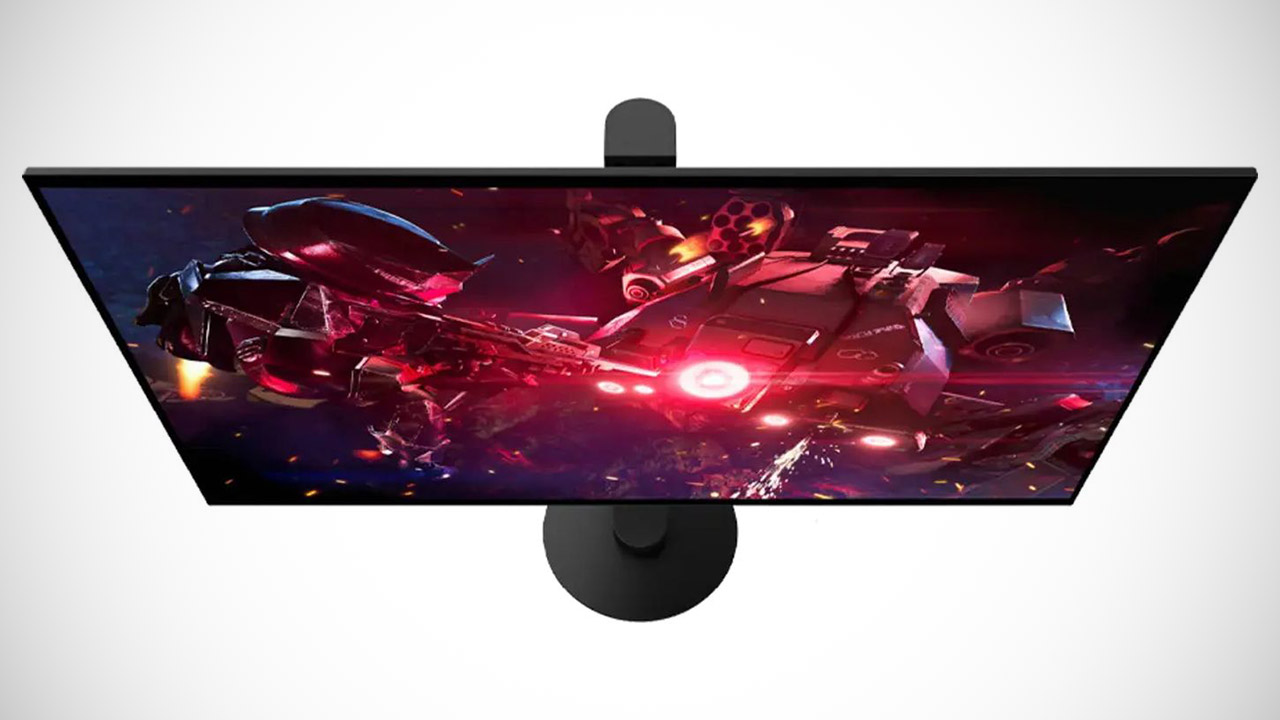











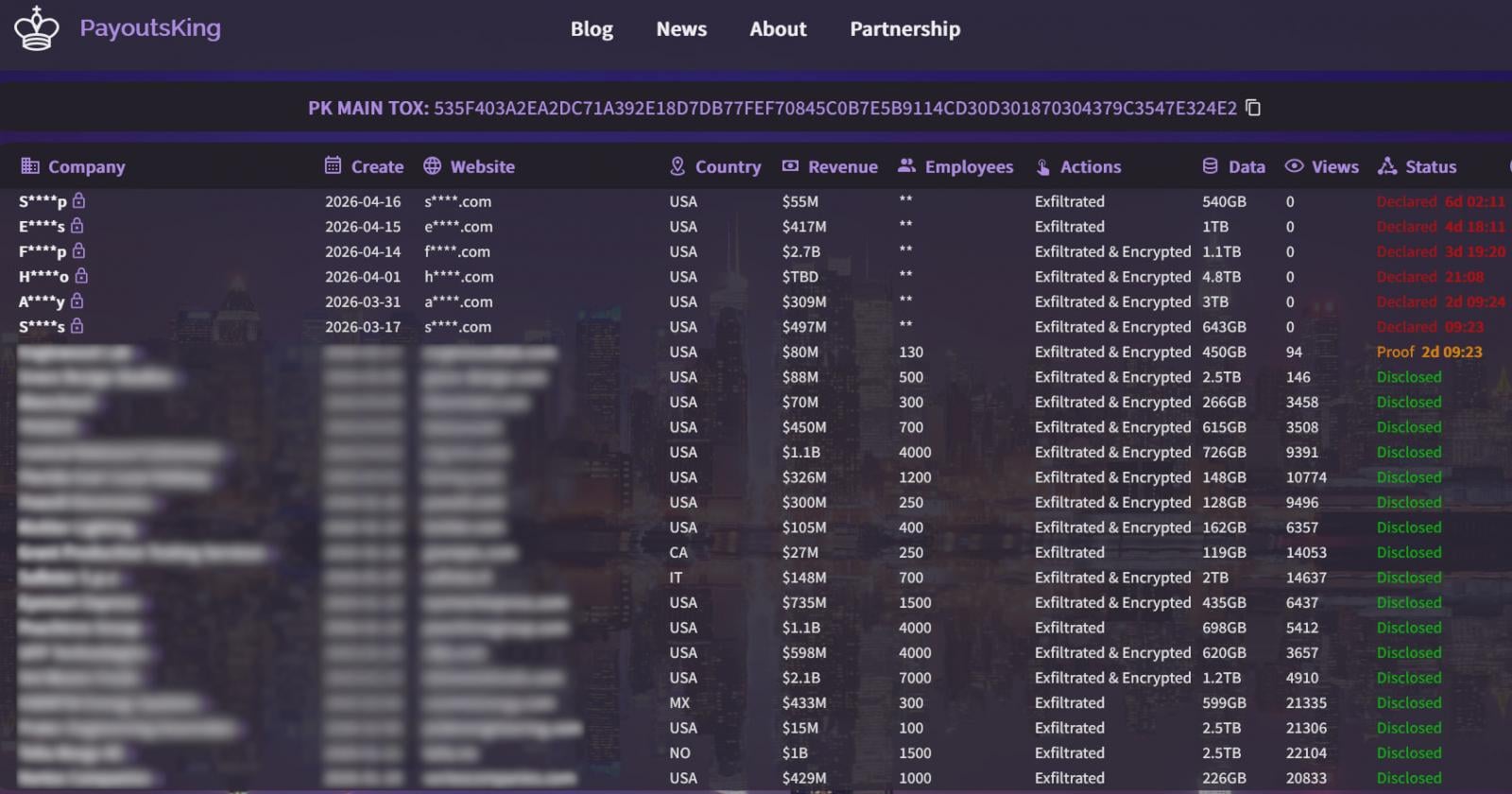






































You must be logged in to post a comment Login