

The only good data center is a canceled data center.
Tech
How a new data center could impact your town’s electric bills and environment


Or so a growing number of Americans seem to feel.
Throughout the United States, citizens are mobilizing against the construction of new data centers in general — and the massive, “hyperscale” ones that fuel artificial intelligence, in particular.
- Data centers can increase local air pollution, though their emissions vary widely between different contexts. Their impact on local water supplies, meanwhile, has been greatly exaggerated.
- Data centers often drive up an area’s electricity bills.
- But hyperscale campuses can deliver major economic benefits to their host communities, including job growth and tax revenue.
- In some cases, the benefits of data center development almost certainly outweigh the costs.
The past four years have witnessed an unprecedented boom in the construction of such facilities, driven by AI firms’ insatiable thirst for computing power. Between 2022 and 2025, annual spending on the creation of data centers in the United States jumped from $15 billion to over $35 billion, in constant dollars.
And many Americans have had enough.
At the local level, municipalities are nixing data center projects at a historic clip. Over the first three months of this year, plans for at least 20 such facilities have been shelved amid public backlash, according to an analysis by Heatmap Pro. Together, those canceled projects represent $41.7 billion in forgone investment.
In statehouses and Congress, meanwhile, lawmakers are pushing to freeze data center construction outright. Last month, Maine’s state legislature passed a moratorium on new data centers in the state. Gov. Janet Mills ultimately vetoed that legislation, but insisted that she too supported freezing all data center construction in Maine, except for a single, long-planned project in the economically challenged town of Jay.
At least 12 other states are entertaining data center moratoria, while four municipalities have imposed permanent bans. In the Senate, Bernie Sanders has introduced a bill that would pause the construction of AI supercomputing campuses nationwide, until a long list of regulations and social programs are enacted.
This rebellion against data centers is partly motivated by concerns about artificial intelligence. Some progressives, right-wing populists, and tech-wary centrists believe that unfettered AI development poses intolerably high risks — to workers’ economic security, the Earth’s climate, and/or humanity’s survival. From this perspective, the point of blocking new data centers is primarily to throw sand into the gears of AI progress. And if artificial intelligence really is on the cusp of wrecking civilization, then trying to choke off Big Tech’s access to computing power makes some sense.
That said, much of the resistance to data centers is rooted in anxieties about the buildings themselves.
Many Americans have come to think that these industrial complexes offer little to their host communities beyond economic burdens and ecological devastation. Judging by activist rhetoric and viral media accounts, data centers invariably slurp up localities’ water, pollute their air, despoil their landscapes, and poison their residents with “infrasounds” — all while driving up municipalities’ electricity bills and sponging off their tax dollars.
But the truth is more complicated.
If a large data center comes to your town, it could make the local environment slightly worse — and your electric bill somewhat higher. But it could also raise your municipality’s wages, while reducing its property tax rates.
The scale of these costs and benefits vary widely from place to place. Yet in areas with sound environmental regulations, relatively clean and robust electric grids, and progressive tax codes, data centers tend to be a “win-win” for both residents and large tech companies (assuming the latter don’t get the former killed in a robot apocalypse, anyway).
So, how do you decide whether your community should welcome hundreds of acres of computing hardware? Let’s examine the (real and imagined) environmental harms and material upsides point by point — and how the balance between them shifts with local conditions.
Data centers can be dirty
Data centers do come with some environmental costs. But the scale and uniformity of their local impacts are often exaggerated.
The most serious of these harms is air pollution.
A hyperscale campus can require as much electricity annually as a midsize American city, as such complexes must power tens of thousands of continuously running processors — and then dissipate the consequent heat with industrial-scale cooling systems.
In some places, data centers meet these gargantuan energy demands by spitting a ton of particulates into the sky. For example, xAI’s Colossus campus in Memphis is partly powered by 35 on-site natural gas turbines. All that combustion appears to have dramatically increased the concentration of nitrogen dioxide in nearby air, with peak levels jumping 79 percent since the facility opened in 2024, according to researchers at the University of Tennessee, Knoxville.
Elon Musk’s Tennessee operation is exceptionally dirty. But more typical data centers also tend to increase regional air pollution, at least marginally, by boosting the utilization of an area’s natural gas or coal plants and running backup diesel generators when their energy needs temporarily exceed the grid’s supply.
Nevertheless, in all these cases, the problem arises from the type of energy that a data center uses, not from some inextricable feature of all server farms.
Data centers sited in regions with abundant non-carbon energy sources produce relatively little air pollution, at least by the standards of industrial enterprises. According to Google’s official data, its Oregon cloud computing operations run exclusively on non-carbon energy sources about 87 percent of the time.
Water is less of a problem
On most other fronts, data centers’ environmental costs tend to be overstated.
Server farms do need substantial amounts of water. But this is true of almost all forms of industrial production. And modern data centers are not exceptionally water-intensive operations, in part because they typically use closed-loop cooling systems that recirculate the same pool of H2O repeatedly.
According to the calculations of AI researcher Andy Masley, as of 2023, 0.04 percent of America’s fresh water was being consumed inside data centers. For comparison, the nation’s golf courses churned through 33 times as much H2O that year.
To be sure, data centers don’t need to consume a significant share of the national water supply to burden especially arid regions. Fortunately, parched localities tend to already constrain the amount of local water available for industrial purposes.
Consider Box Elder County, Utah. There, investors are seeking to build a massive hyperscale campus over sagebrush in the state’s hinterlands. This has prompted furious pushback from local residents, driven partly by fears that the facility would deplete the rapidly declining Great Salt Lake. If that body of water continues losing volume, it will release plumes of toxic dust over Utah’s urban core.
In this context, it’s understandable that residents would fear a vast data center soaking up their region’s scarce reserves. And yet, to secure its H2O, the Box Elder project needed to purchase water rights from an existing agricultural user. This transaction did not increase the total amount of industrial water consumption in Utah, but merely transferred a small portion of a fixed pool from one business to another.
Critically, as City Journal’s Shawn Regan notes, that exchange is plausibly net-positive for the Great Salt Lake: When farmers use water to irrigate a field, much of it gets lost to evapotranspiration and never returns back to its source. By contrast, when water courses through a closed-loop data center, it retains far more of its volume, and then gets periodically flushed back into the local watershed. Therefore, shifting water rights from a farm to a data center conceivably reduces long-term depletion.
Finally, when sited too close to residential areas, some data centers generate noise pollution that meaningfully degrades their neighbors’ quality of life. But server farms located in far-flung, industrial zones do not have this problem. And contrary to some viral videos, there is no reason to think that data centers emit subaudible “infrasounds” that damage the health of those in their vicinity.
Data centers create more jobs than you might think
So, data centers come with some real environmental costs, which can be profound in certain circumstances.
It does not follow, however, that server farms are always bad for the localities that host them. An industrial enterprise can benefit a community, even if it imposes some ecological burdens. Or so most people — including most prominent data center skeptics — seem to believe.
After all, when a town loses a car plant or steel mill to offshoring, progressives and right-wing populists don’t typically cheer that municipality’s good fortune — even though such manufacturing facilities can be far worse for local air quality than a data center.
The key question, then, is how a given data center’s ecological harms stack up against its economic benefits. And the latter, like the former, vary widely from one situation to another.
Hyperscale campuses can enrich communities in two primary ways: by generating jobs and tax revenue.
Data center opponents often belittle their benefits to employment. And not without reason. Once built, a server farm is among the least labor-intensive industrial facilities one can find.
Nonetheless, data center projects can meaningfully benefit a region’s workers in both the short run (by creating a large number of temporary construction jobs) and in the longer term (by fostering a favorable ecosystem for tech sector development).
A recent study from the Brookings Institution spotlights the latter point. To gauge data centers’ impacts on employment, researchers examined labor market trends in 93 counties that welcomed their first data center between 2008 and 2024 — and 3,000 counties that never received one. After controlling for a variety of variables, the authors estimate that the arrival of a large data center raised private employment in the former counties by 4 to 5 percent over a five- or six-year period. Meanwhile, the data centers also appeared to lift wages for both existing workers and new hires by about 3 to 4 percent.
These gains are driven partly by temporary spikes in construction employment. But hyperscale data centers — the kind that powers AI — also yielded more durable jobs in the information sector. As the authors note, vast cloud computing campuses generate demand for local fiber installers, IT contractors, managed service providers, and other types of tech firms. And these businesses generally open near such campuses, so as to regularly service them.
This dynamic is most visible in counties that host data center clusters: When places welcomed at least four new data centers in the studied time period, their employment soared by 23 percent. By contrast, counties with a single, non-hyperscale data center saw boosts to construction employment, but little durable growth in IT jobs.
Servers will sometimes pay your taxes
But the biggest local benefit of data centers is typically fiscal.
Hyperscale campuses generate a lot of tax revenue without consuming much in the way of public services. In many jurisdictions, a data center doesn’t just need to pay taxes on its land or buildings, but also on its exceedingly valuable equipment — servers, networking gear, generators, etc. For this reason, such facilities can yield far more revenue per acre than a housing complex or office park.
What’s more, unlike the residents of a new subdivision, servers in a hyperscale facility do not send any children to a municipality’s public schools, drive around on its roads, crowd its parks, or use public transit.
For these reasons, data centers can sometimes deliver immense fiscal value. In Loudoun County, Virginia, they now provide nearly half of the county’s tax revenue — enough to cover all of its government’s functions beyond the school system. In other words, Loudoun County residents effectively get their local police departments, courts, parks, infrastructure maintenance, and many other social services provided free of charge — a fact that has allowed the county to slash its property tax rate by about 30 percent over a decade.
To be sure, northern Virginia’s experience is somewhat exceptional; Loudoun has been a major IT infrastructure hub for decades, and hosts 200 data facilities. Nevertheless, other jurisdictions enjoy similar fiscal benefits at a smaller scale.
Indeed, data center development can be especially valuable for economically declining rural towns. Such municipalities often struggle to attract highly profitable, labor-intensive industries, since they lack large numbers of knowledge workers. But a single data center’s direct labor needs are fairly light, even as its commercial value is high. They can therefore provide rural localities with a modicum of economic development and revenue, when few other enterprises will.
For precisely this reason, however, localities sometimes get caught in a race to the bottom to attract data center investment, showering exorbitantly wealthy tech companies in tax incentives, a phenomenon that has further embittered much of the public against hyperscale projects.
Fortunately, there’s reason to think that most communities could be driving a harder bargain, without chasing away investment. As Brookings notes, many of these tax breaks appear to be subsidizing projects that would happen even in their absence. When making siting decisions, hyperscalers tend to care more about the availability of power, land, and fiber infrastructure than fiscal favors.
When a data center comes to your town, it will probably — though not definitely — push up your electric bill
Of course, data centers also come with one infamous economic downside: Their gargantuan energy demands can push up nearby residents’ electricity bills.
The mechanism here is straightforward: If you abruptly add the equivalent of a midsize city to a region’s electric grid, power demand will probably rise faster than utilities can expand production. In the short term, this may force them to purchase more expensive electricity from wholesale markets. In the longer run, it can require them to finance new power plants and transmission infrastructure. In either case, ratepayers are liable to foot some of the bill.
Market analysts and economists have produced evidence that this is already happening in some markets.
Even on this front, however, context matters. Rising electricity demand does not automatically translate into higher prices. And data center development does not unfailingly correlate with electricity inflation.
Virginia is, again, a case in point. The Old Dominion saw a 14 percent increase in electricity demand between 2019 and 2024, due in part to data centers’ energy consumption, according to a study from the Lawrence Berkeley National Laboratory. And yet, over that same period, electricity rates in the state actually fell by 1 cent per kilowatt hour, in inflation-adjusted terms.
Trends in North Dakota were even more paradoxical. That state saw electricity demand skyrocket by almost 40 percent, amid a data center building boom. Nevertheless, its inflation-adjusted electricity prices fell by 3 cents per kilowatt hour.
These results are counterintuitive. But they are consistent with the (often odd) economics of power markets. Electric grids aren’t built to provide the exact amount of power a region requires. Rather, they generally maintain excess generation and transmission capacity.
For this reason, in systems with a lot of spare capacity, moderate increases in demand can lead to fuller utilization of existing resources, rather than major new capital expenses. In such circumstances, adding a data center to the grid may spread its fixed costs across a larger volume of electricity sales, lowering the amount that each individual household must contribute to sustain the system.
To be clear, more often than not, adding a bunch of hyperscale data centers to a region’s grid is likely to push up its electricity prices. But that result is not automatic. And governments can limit ratepayers’ burdens by forcing hyperscalers to meet the full costs of satisfying their power demands.
New data centers may end the world; but first, they’ll probably lower someone’s property taxes
Although this catalog of data centers’ effects may seem complicated, the upshot is simple: data center projects are neither intrinsically good nor bad for localities. Each offers a distinct mix of costs and benefits, depending on factors including how its operations are fueled, regulated, and taxed.
Put differently, policymakers have the power to make data center development pay off for more communities — by, among other things, decarbonizing electric grids, enforcing noise limits, and paring back tax breaks for Big Tech firms. Regardless, even under today’s flawed policy frameworks, ordinary people often benefit when a data center comes to town.
Hyperscalers might eventually trigger a robot apocalypse. But in the meantime, they’ll almost certainly make some municipalities a bit better off.

Continue Reading

An anonymous reader quotes a report from the New York Times: The World Health Organization declared on Saturday that the spread of the Ebola virus in the Democratic Republic of Congo and Uganda was a global health emergency. The announcement was made a day after Africa’s leading public health authority reported that an outbreak in a province in the northeast of the country was linked to dozens of suspected deaths. By Saturday, cases had also been confirmed in Kampala, the capital of Uganda, the W.H.O. said.
In Congo’s Ituri province, where the outbreak was first identified, 246 suspected cases and 80 deaths attributed to the virus had been reported, although only eight cases had been definitively linked to the virus through laboratory testing. There is no approved vaccine and no therapeutics for the Bundibugyo species of Ebola behind the outbreak, according to the W.H.O. The scale of the outbreak could be far larger than has been detected and reported, the W.H.O. said in declaring a “public health emergency of international concern.” It added that there were “significant uncertainties” about the precise number of people infected and the “geographic spread.”
The W.H.O.’s declaration signals a public health risk requiring a coordinated international response, and is intended to prompt member countries to prepare for the virus to spread and to share vaccines, treatments and other resources needed to contain the outbreak. […] The risk of the outbreak spreading is exacerbated by a humanitarian crisis, high population mobility and a large network of informal health care facilities in the area, the agency said. Containing an Ebola outbreak depends on the speed and scale of the public health response. The virus is transmitted through direct contact with the bodily fluids of an infected person, putting family members and caregivers at particular risk. Tracing people who may have come into contact with sufferers, isolating and treating victims promptly and safely, and burying the dead properly are all viewed as critical steps.

Sources within the supply chain back up previous reports that the forthcoming Apple Watch Ultra 4 will be a significant update that includes doubling its number of sensors.
Following reports that the regular Apple Watch Series 12 will not be a major update, there are now reports that the Apple Watch Ultra 4 will be. According to Digitimes, the new model will have a visible redesign that includes the addition of further unspecified sensors.
This fits with what the same publication said in August 2025, where it specifically said that the Apple Watch would double its number of sensors.
Neither report describes what those sensors are, but they will presumably be health-related. What this new report does say is that the update is a big deal for the Taiwan-Asia Semiconductor Corporation (TASC) firm, which makes the sensors.
It’s estimated that the new sensors and a redesign will lead the Apple Watch Ultra 4 to getting up to 30% more orders than its predecessor.
Apple has long worked with TASC, including on attempts to add glucose monitoring to the Apple Watch. Apple has been working to add this to all models of the Apple Watch, but the new report appears to be specifically and only about the Apple Watch Ultra.
If the claims are correct, this will mark the first major redesign of the Apple Watch Ultra since its original launch in 2022. A second generation did follow in 2023, which added a brighter screen.
For 2024, Apple made no changes to the Apple Watch Ultra, except for releasing it in black as well as silver. The 2025 Apple Watch Ultra 3 was also a minor update, except that it added 5G support.
Apple is most likely to announce the Apple Watch Ultra 4 at its iPhone event in September 2026. The new report says that TASC is expecting major orders from July, which approximately fits the schedule for final Watches to be ready in September.
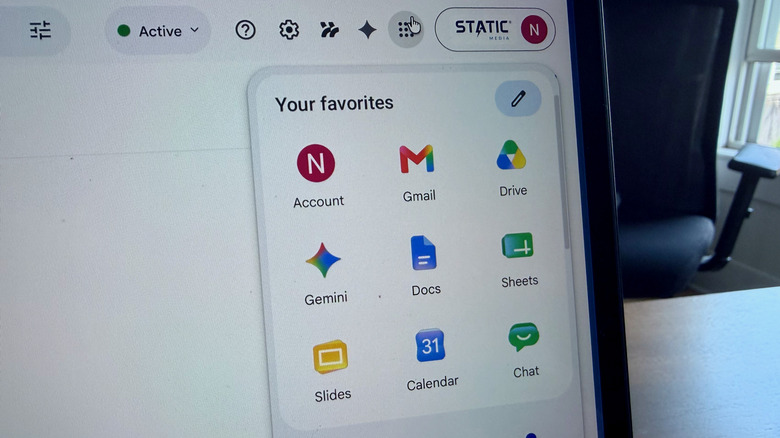
The old icons had very little to visually differentiate them.
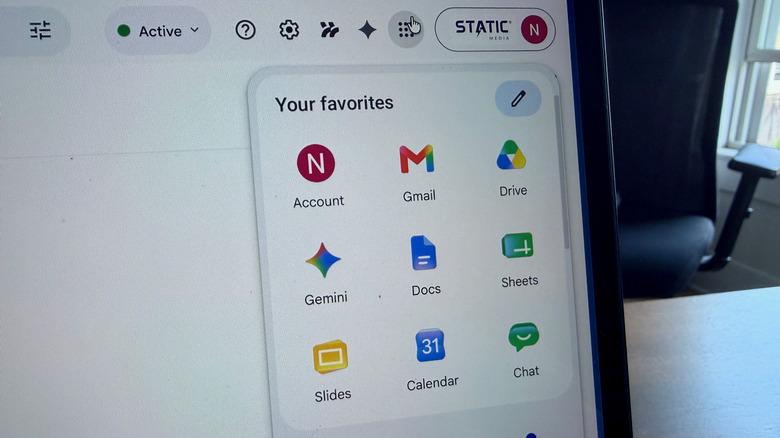
About five years ago, Google redesigned the icons for most of its apps and services, including widely-used tools like Drive, Meet, Calendar and so on. The internet’s response was not positive, and with good reason. Many correctly pointed out that Google removed the individual defining characteristics of its icons, replacing them with an outline made up of the company’s signature four colors. If you look closely, you’ll recognize the outline of a document for Google Docs, or a camera for Meet. But at a glance, the new icons were much harder to differentiate than the ones they replaced.
In a win for legibility, Google is changing course. It started with a more distinctive icon for Google Maps a few months ago, one that has more depth while still incorporating Google’s colors and the ubiquitous pin design. Then, a few weeks ago, 9to5Google revealed that a full-scale redesign was on its way. Now, with Google I/O just one day away, those redesigned icons are rolling out.
The first place I noticed them was in my personal Gmail account; the “app switcher” in the top right revealed new designs across the board. Those icons haven’t propagated everywhere yet; clicking into Drive or Calendar shows the old ones still. But a number of Google apps on my iPhone were also updated with new icons as well, so it seems safe to say that a full-scale launch is in progress.
I personally got used to the last generation of icons, but there’s no doubt at all that these are major improvements that make it much easier to tell apps apart at a quick glance. These icons also call to mind the redesigned 3D emoji that Google introduced last week as part of Android 17.
If you’re not seeing them yet, be patient — they’ve arrived on my phone and across multiple Google accounts, so it seems like the company is doing a full-scale push. We’ll likely hear more about this at I/O tomorrow, as well. We’ll be live-blogging the keynote at 1PM ET; join us, won’t you?

Sports fans across the globe are getting ready for the 2026 FIFA World Cup, and Tubi has launched a centralized destination for all of its tournament content, the streamer announced on Monday. Viewers can find the 2026 FIFA World Cup Fox Hub on their screens, which will house highlights, Fox content, originals and two live games that will broadcast this year.
The Fox-owned free streaming service has a dedicated section on its home screen to help fans navigate its World Cup content lineup. You’ll find it whether you’re watching Tubi on its mobile app, TV app or website, and the hub displays multiple rows of programming.
What will World Cup fans see in the hub? It’ll be easy to access the live matches streaming free on the platform: Mexico vs. South Africa on June 11, and on June 12, US Men’s National Team vs. Paraguay. Additionally, there are original series from Tubi that will follow the games from start to finish. The Other Football, hosted by Rob Gronkowski and Jameis Winston, is a weekly show that blends comedy and pop culture to get into the sport. Destination World Cup 2026 takes fans inside the lives of players Harry Wilson, Weston McKennie and Marc Cucurella in the lead-up to the competition.
Programming won’t be limited to live game simulcasts and Tubi originals. Viewers will also find a 24/7 feed of highlights and content from Fox Sports, replays and more. Deestroying the Pitch and Jesser’s Ultimate Kick Off from YouTubers Deestroying and Jesse “Jesser” Riedel are among the creator-led shows that are part of Tubi’s FIFA offerings.
The 2026 World Cup runs from June 11 through July 19, and features 48 teams. This marks the first time Tubi has created a one-stop destination hub on its platform for the tournament.
Grants, funding rounds and expansion plans – Ireland’s medtech sector is breaking records and setting the ‘gold standard’.

By all means, Ireland’s medtech industry is booming – with support from the Government and other groups, alongside a strong university-to-industry pipeline that keeps new talent flowing. The country exports around €15bn worth of medtech products annually to more than 100 international destinations.
Even the medtech start-up scene here is the envy of the world when it comes to early-stage funding, according to serial medtech founder and educator Rush Bartlett – despite the glaring funding gap scale-up firms in the country face.
Healthcare is a strong category with innovative start-ups emerging from across counties. In honour of Future Health month, SiliconRepublic.com has put together a list of strong players developing new medtech solutions.
Aerska
The young biotech emerged from stealth with a $21m round last October, bagging another $39m in a Series A raise in February led by EQT Dementia Fund and Age1. Aerska also got a mention on Tracxn’s ‘Soonicorn’ list of start-ups likely to reach the coveted ‘unicorn’ status.
The Dublin-headquartered company – co-founded by Jack O’Meara alongside David Hardwicke and Stu Milstein – is using brain shuttle technology to develop RNA medicines for central nervous system diseases.
It aims to leverage data science to integrate genetic, biomarker and patient data with the aim of bringing precision medicine to neurology – first starting with programmes in genetic forms of Alzheimer’s and Parkinson’s disease.
Amply
This Belfast-based company is using its own AI-driven drug discovery engine to fight aggressive cancers, such as triple-negative breast cancer, and drug-resistant pathogens.
Amply is a spin-out of Queen’s University Belfast and was founded by Dr Ben Thomas, Dermot Tierney and Prof Chris Creevey. Last May, it raised $1.75m led by Twin Path Ventures – a specialist AI investor – for its drug discovery platform, which followed a £1.4m raise from 2024.
The company said that its drug discovery platform analyses biological molecules, identifies potential treatment targets and bio-prints real molecules that can be quickly tested and improved in the lab.
Coroflo
This Dublin start-up made history at CES this year by bagging four awards for its breastfeeding monitor – the highest number of wins for one product at a CES show.
Founded by Rosanne Longmore, Jamie Travers and Helen Barry in 2017, Coroflo is an Enterprise Ireland high-potential start-up backed by the likes of Brian Caulfield of Scale Ireland and Shemas Eivers of the Boole Syndicate.
Coroflo’s flagship product – Coro – is a standard silicone nipple shield containing a patented microflow metre that allows mothers to keep track of exactly how much breastmilk their baby is consuming. Information is collected by Coro while the baby is breastfeeding, and this real-time data is sent to a smartphone app created by Coroflo.
CrannMed
Galway medical device manufacturer CrannMed recently won a €12.5m accelerator grant from the European Innovation Council to develop a chronic inflammatory pain therapy.
Its product, the ‘SakuraBead’ is a “resorbable embolic microsphere”, which works by stopping blood flow to the administrated inflamed site for a short period to reset the inflammatory process. The device is under evaluation for commercial approval in the US and EU. Commercial sales are expected to begin by the end of the year.
The company also received €6.6m under the Disruptive Technologies Innovation Fund (DTIF) programme for a joint health-tech project that it’s co-leading with the University of Galway, the Royal College of Surgeons in Ireland and Salaso Health Solutions.
Fortis Medical
Also from Galway, this Spiddal-based medtech secured €2.1m from the DTIF last October to develop a wearable device to help people suffering from gait problems after a stroke.
University of Galway spin-out Fortis Medical is now leading a consortium that includes RCSI University of Medicine and Health Sciences and Smart Electronics to further develop its ‘CueStim-Stroke’ device.
The medtech has designed the new product to provide home-based rehabilitation support for patients while also providing clinicians with real-time data on patient progress.
Fortis was founded in 2024, with Gearóid Ó Laighin retiring as professor of electronic engineering to take up the role of chief scientific officer in the new company.
Lia Eyecare
Last year, Lia Eyecare bagged a win at the Medical Device Development Centre competition hosted by the University of Massachusetts, winning $25,000 for its dry eye remedy ‘Nightleaf’, a headband that restores natural hydration to the eyes while sleeping.
The drop-free and drug-free device uses thermal modulation to regulate tear film production, which also supports the body’s own natural hydration mechanisms.
“We’re addressing a long-ignored but critical gap in the treatment of overnight dry eye disease, a condition that disrupts the sleep and quality of life of millions worldwide,” co-founder and CEO Breda O’Regan told SiliconRepublic.com in an interview. Lia was founded in 2021 by O’Regan and Sinéad Buckley.
Marama Labs
Marama Labs made a splash last November after being crowned the ‘most impressive deep-tech pioneer in Europe’ at the Deep Tech Demo Day.
The start-up had just launched its CloudSpec instrument for nanomedicine development a few months prior, which CEO Dr Brendan Darby said could set the “new gold standard” for spectroscopy devices.
CloudSpec develops on existing UV-vis spectrophotometers, which, put simply, analyse the chemical composition of liquids based on how they absorb light.
Traditional spectrophotometers, however, cannot be used to inspect cloudy liquids. CloudSpec tackles this by placing samples in a highly reflective spherical chamber, then detecting and eliminating the scattered light’s effects. According to Marama Labs, their device cuts down chemical measurement time from two hours to a mere 15 seconds.
The medtech, dually based in New Zealand and Ireland, was founded by Darby, Prof Eric Le Ru and Dr Matthias Meyer in 2019.
Meta-Flux
This Dublin-based biotech raised €1.8m in October for its AI-powered platform designed to conduct disease simulations in drug development. The round received support from senior executives from Pfizer, Merck and Gilead Sciences, along with tech leaders from Google, Amazon and Indeed.
It takes approximately $2bn on average for a successful drug to hit the market, CEO and immunologist Lee Sherlock told SiliconRepublic.com. But only around one in 100,000 drugs actually get through the entire funnel and successfully reach patients.
“The goal isn’t that we get more drugs to market – it’s that we get more accuracy on the drugs that we do bring to market,” he said. Meta-Flux was founded in 2021 by Sherlock and Brendan Martin. In its early pilot runs, the company successfully identified novel biomarkers and flagged preclinical risks, it said.
SymPhysis Medical
Galway’s SymPhysis Medical bagged $1.25m grant from last November to support the regulatory clearance for its ‘Releaze Drainage System’ in the US, right as it planned for a strong market launch in the country later this year.
Founded in 2018 by Tim Jones and Dr Michelle Tierney, SymPhysis is develops palliative care solutions for patients in the end stages of illness.
The funding is expected to help grow SymPhysis’ product – an at-home solution for managing malignant pleural effusion in late-stage cancer patients. Additionally, it will also enable the company to establish its first US base in Rhode Island.
The company’s headquarters will remain in Galway, with Jones stating in a press release: “Rhode Island gives us a bridge into the US market, not a replacement for what we are doing here.”
Tympany Medical
This Galway-based medtech is behind a new surgical device called Solascope, a variable angle and self-cleaning endoscopic tool.
The tool consists of a lightweight reusable handle combined with detachable single-use, sterile probe tips. “Our solution offers better visibility, improved ergonomics for surgeons and more sustainable practice,” said CEO Michael Gilmore. The start-up was founded in 2018 by Rory O’Callaghan and Elizabeth McGloughlin.
Last year, it opened €600,000 crowdfunding round to scale Solascope. The round has raised nearly €100,000 directly via the site Crowdcube.
The start-up was founded in 2018 by Rory O’Callaghan and Elizabeth McGloughlin. McGloughlin won the third spot in the 2025 European Institute of Innovation and Technology Women Leadership category at last year’s European Prize for Women Innovators.
Don’t miss out on the knowledge you need to succeed. Sign up for the Daily Brief, Silicon Republic’s digest of need-to-know sci-tech news.

Amazon announced the latest update to Alexa+ on Monday: the ability to generate podcast episodes on demand.
The new feature, called “Alexa Podcasts,” is rolling out to customers in the U.S. today. Amazon describes the capability as a way to “turn any topic you’re curious about into a podcast episode, ready in minutes.”
To use the feature, all users have to do is ask Alexa+ to create a podcast about a topic they’re interested in. Users don’t need to upload documents, write scripts, or plan anything ahead of time. Instead, Alexa+ researches the request, gathers information, and generates a quick overview of what the episode will cover. From there, users can tweak things like the length, tone, and focus of the episode.
Once finalized, Alexa+ uses AI-generated host voices to narrate the podcast. When the episode is ready, users get a notification through their Echo Show device and inside the Alexa app. Episodes are also saved in the app’s “Music” and “More” sections so they can be replayed later.
The feature is another example of how Amazon is trying to turn Alexa+ into more than just a voice assistant. Instead of only answering questions or controlling smart home devices, Alexa+ is starting to act more like a personalized AI content creator.
At the same time, the launch is likely to spark some debate. AI-generated voices and automated content continue to raise questions around ethics, accuracy, and the future of traditional creators. There are also concerns about how reliable AI-generated podcasts will be, especially when covering news or complex topics.
Amazon emphasized its partnerships with major news organizations to improve content accuracy and reliability. The company says Alexa+ can access real-time information through agreements with outlets including the Associated Press, Reuters, The Washington Post, Time, Forbes, Business Insider, Politico, USA Today, Condé Nast, Hearst, and Vox Media, alongside more than 200 local newspapers across the U.S.
Beyond podcasts, Amazon says it is exploring additional forms of personalized AI audio, including custom news briefings and content generated from users’ own documents and shared information.
When you purchase through links in our articles, we may earn a small commission. This doesn’t affect our editorial independence.

Alphabet runs the most enviable AI infrastructure stack in the industry. The success of the third-party deals with Anthropic and Meta is the reason internal access has become a competitive resource.
Google has spent a decade quietly building the most enviable position in AI infrastructure: a healthy cloud business, its own custom chips, and supply deals that make its TPUs the default alternative to Nvidia for major external customers.
The success of that strategy has produced an internal problem that the company did not anticipate.
Bloomberg’s Julia Love reported on Monday that Google’s own AI researchers, including teams inside Google DeepMind, are now jockeying for access to the computing resources their employer is also selling to Anthropic and Meta.

The 💜 of EU tech
The latest rumblings from the EU tech scene, a story from our wise ol’ founder Boris, and some questionable AI art. It’s free, every week, in your inbox. Sign up now!
The structural cause is straightforward. Google has agreed to invest up to $40bn in Anthropic on a deal that includes five gigawatts of TPU capacity over five years and access to up to one million seventh-generation Ironwood chips.
A separate, Broadcom-mediated supply line covers a further 3.5GW of TPU capacity for Anthropic from 2027, building on the 1GW the company is already receiving in 2026. Anthropic itself has publicly described the Google TPU stack as central to its training and serving roadmap.
Meta, the other commercial-scale TPU customer Bloomberg names, signed its own deal earlier this year. The capacity those commitments lock up is capacity not available to Google’s internal model teams without queueing.
DeepMind’s chief executive Demis Hassabis said earlier this year that the constraint cuts in two directions. Some of the bottleneck is hardware: ‘a few suppliers of a few key components’, as he put it, with high-bandwidth memory from Samsung, Micron and SK Hynix the most-cited choke point.
Some of it is research throughput, because, in Hassabis’s words, researchers ‘need a lot of chips to be able to experiment on new ideas at a big enough scale’. The hardware constraint is partly outside Google’s control. The internal-allocation constraint is not.
The arithmetic underneath this is large. Alphabet is on a guided capex range of $175bn-$185bn for 2026, inside a combined Big Tech AI infrastructure spend that has crossed $650bn this year. Google has, on its own commentary, been bringing well over a gigawatt of new AI compute capacity online in 2026.
The decade-long bet on TPUs is finally producing the kind of unit-economics advantage that lets the company sell its chips, host its competitors’ models, and run its own frontier research on the same fabric. The fabric is just no longer big enough for all three uses at once.
Bloomberg’s reporting names two specific signals of the tension. Researchers including Ioannis Antonoglou, a long-tenured DeepMind contributor, have departed for startup roles in the past 18 months, a pattern that has accelerated as compute access has become harder to secure inside Google.
Oren Etzioni, the former Allen Institute for AI chief executive cited in the piece, has framed the dynamic publicly as the predictable result of an internal market in which compute is rationed by managerial seniority rather than by the unit-cost economics that govern external customer contracts.
Google has spent the past 18 months in a delicate position: it needs its TPU programme to demonstrate volume traction with named external customers to validate the technology against Nvidia, while keeping enough internal capacity for Gemini training runs and DeepMind research.
The four-partner inference-chip supply chain with Broadcom, MediaTek and Marvell is a hedge designed to relieve the constraint by adding capacity downstream of TPU training. It has not yet shipped at the scale the demand curve requires.
Google did not dispute Bloomberg’s internal-allocation framing on the record; it pointed to its broader infrastructure investment posture and the fact that compute constraints are a category-wide condition rather than a Google-specific one.
That is true on the evidence: every major model provider is, on the cleanest reading of Q1 2026 earnings, compute-constrained relative to its own research aspirations.
What makes the Google version newsworthy is the side-by-side: the company has, at the same time, become its main competitors’ largest infrastructure supplier. If it can keep selling the asset and using it is the question the next several quarters will settle.


Harbor Freight is known for a wide range of tools that span affordable budget options to high-end equipment, like socket sets, power tool kits, and portable table saws. One of the best Harbor Freight brands you can buy, Icon has built a steady reputation for being a brand that even professionals can trust. On the Harbor Freight website, there are several Icon collections that you can choose from, such as hand tools, shop tools, lighting, storage, and diagnostics. Icon hand tools also have the benefit of lifetime warranty coverage, which means you can easily return it to Harbor Freight stores for a replacement if it breaks.
While they’re not the cheapest out of the bunch, Icon tools are generally more affordable than other comparable brands like Snap-On. Harbor Freight also regularly lists price comparisons on its product listings, which can be helpful if you’re on the fence about saving or splurging. Everyone’s favorite magnetic tool holder mat is just one of the highly rated Icon tools you can snag for under $25. So, if you’re looking to get started with your Icon tool collection on a budget, here are some things that you only have to buy once and never have to pay for again.
Icon Professional Scraper
While you can use your hands to remove things like dirt, adhesives, or paint, a scraper can help do the job without getting gunk under your nails. In some cases, a 3D-printed scraper may be enough, but if you need something a little more durable, the Icon Professional Scraper should be on your list. Designed for different hard surfaces, Icon’s scraper can be used for tile, metal, and glass, including those in high locations due to its shaft. It boasts an extended reach that goes up to 12.64 inches. Weighing 0.43 lbs (or a little less than an iPhone 17 Pro), the handle also has ergonomic comfort grips. The professional scraper comes with 10 high-carbon steel replacement blades, which you can switch out with its thumbscrew.
One of the cheapest Icon tools out there, you can get it for $13.99 at Harbor Freight, wherein it enjoys a mostly positive 4.6-star average rating from more than 400 people. With a pretty high 94% recommendation rate, you’re likely going to be in good hands, with several verified buyers saying that it works great for scraping everything from stickers to old window tint. That said, there were a few unhappy customers who rated it a single star, citing durability. While it can take different kinds of blades (plastic or metal), some customers noted that the ones that come with the kit tend to break easily.
Icon 12 in. S-Jaw Quick-Adjust Pliers Wrench
Designed to work with irregular surfaces, the $19.99 Icon S-Jaw Quick-Adjust Pliers can handle jobs that ordinary pliers may struggle with. According to Icon, it is great for tasks in confined spaces and ideal for automotive works with hex, round, or square shapes. Several reviews note that it can fulfill functions related to plumbing, too. The Swedish pipe wrench has features like angled teeth, hardened jaws, and mechanisms against unthreading. With a 1-⅞-inch throat depth and 3-inch jaw opening, the 12-inch model is the smallest offer in the line-up. But if you need a larger size, Icon also offers other S-Jaw Quick-Adjust Pliers models: the 17-inch ($29.99) and 21-inch ($39.99).
All together, the three sizes have been rated an impressive 4.7 stars by over 310 Harbor Freight customers. As of May 2026, 94% of customers recommend it, while 260+ people have rated it 5 stars. Most people said that it wasn’t just great at gripping, but that it is versatile. While people did mention a bit of a learning curve, one user claimed that it “Made the impossible possible, like a cross between vice grips and a pipe wrench.” Around 3% of reviewers, who rated it a single star, did note issues with slipping, locking, and the quick release feature.
Icon SAE Color-Coded L-Shape Ball End Hex Key Set
Hex keys (or Allen wrenches) are some of the most versatile tools out there that you can use for everything from furniture assembly, outdoor grills, to regularly adjusting bicycle parts. It’s no wonder that Icon manufacturers two highly-rated options under $25. Priced at $24.99, the 13-piece ICON Color-Coded L-Shape Ball End Hex Key Set is made of corrosion-resistant, premium steel construction and has two features that set it apart from other sets: color coding and the ball end, which offers more flexibility with 20-degree angle entry.
Available in both SAE or Metric, the colored hex key set boasts an average rating of 4.8 stars from 290+ people. Apart from 96% of customers recommending it, the large majority of Harbor Freight reviewers also gave it a perfect rating. Unsurprisingly, many users praised its colors, which they claimed helped them easily find what they needed. Some customers even love it so much that they recommended purchasing both sets. Although, there were a few people who mentioned that the paint did have a tendency to wear off after consistent use.
But if you want to slash $3 from the price and don’t really care about colors, ICON also sells the all black 13-piece L-Shaped Ball End Hex Key Set, which retails for just under $22. Although it is less popular, it did receive an average rating of 4.9 stars from 180 Harbor Freight customers with a 98% recommendation rate.
Icon 16 oz. Soft Face Dead Blow Hammer
Whether you’re joining some wood, working on cars, or installing some tires, a soft face dead blow hammer, like the Icon 16 oz. Soft Face Dead Blow Hammer can be incredibly useful. Unlike regular hammers, it’s less likely to damage delicate surfaces and create permanent dents. It also helps reduce the likelihood of injury from bouncing back. On its longest side, this Icon Dead Blow Hammer measures 13.63 inches (or about a little more than a standard ruler). It has a soft grip and wide flared handle with a 4-inch width, wherein there is structural steel shank. Made of Polyurethane, the Icon Soft Face Dead Blow Hammer head has a 2-inch rubberized striking face that is resistant to chemical damage.
Alternatively, if you need bigger hammers for the job, Icon also sells three other models with heavier head weights: 24 oz. ($24.99), 32 oz. ($29.99), and 48 oz. ($34.99). Collectively, the Icon Soft Face Dead Blow Hammers hold consistently stellar reviews on the Harbor Freight website. Out of more than 270 customers, every single one said that they’d recommend it. With an average rating of 4.9 stars, a large majority (90.5%) even gave a perfect 5 stars and not a single review went below 3 stars. Some of the common praises include how they’re both comfortable and versatile. One person even notes “I think they’re the best product Icon sells.”
Icon Professional Mini Soft-Grip Pick and Hook Set
Sometimes, your fingernails need some extra help, so a good pick and hook set can save you a lot of hassle. Available in two colors (red and green), the Icon Professional Mini Soft-Grip Pick and Hook Set contains four hand tools: a hook, awl, 90-degree pick, and 45-degree pick. Measuring 6 inches in length with a 3-inch shaft, each tool has a soft grip and precision tips. Designed to withstand various chemicals in your job site, it comes with a storage tray.
Priced at $21.99, the Icon Professional Mini Soft-Grip Pick and Hook Set has been rated 4.7 stars on average by 680+ Harbor Freight customers. Among the 94% of users saying that they recommend it, over 570 customers gave it a perfect 5-star rating. Despite its affordable price point, a reviewer claimed that they perform just as well as more expensive brands like Snap-on, Cromwell, and Mac. Among what people liked about it, reviewers noted that they found the handles durable and comfortable.
However, there were about 3% of users that rated it a single star, including some common negative feedback about how it doesn’t hold that well. In particular, several people noted how the 90-degree pick had a tendency to bend. Dissatisfied users described how the tip had broken when used on car door trim panels, cleaning gasket surfaces, and removing oil slip seals.

Grafana Labs, the maker of its eponymous popular open source web visualization software, confirmed it had been hacked but that it refused to pay the hackers who had threatened to release the company’s codebase.
In a series of posts on social media, the lab said its investigation found that the hackers had abused a stolen token credential that allowed access to the company’s GitLab environment, which it uses for code development. The token did not provide access to customer records or financial data, but allowed the hackers to obtain the company’s repositories of source code. The company has since invalidated the token and added additional security measures to prevent a repeat incident.
“The attacker attempted to blackmail us, demanding payment to prevent the release of our codebase,” the company said.
Grafana’s code is open source and public, meaning anyone can download the software and edit its code before running it on their own machines. It’s unclear if the hackers stole any proprietary code or information. A spokesperson for the company did not immediately return a request for comment.
The incident contrasts with the recent hack at education tech giant Instructure, which last week “reached an agreement” to pay the hackers who had compromised its network twice in recent weeks. The hackers had demanded an unspecified ransom, threatening to release stolen data about staff and students who use its software following a massive data breach and a subsequent website defacement.
While in Grafana’s case, no customer data was taken, the company cited the FBI’s long-standing advice urging victims not to pay hackers, as cooperating with hackers does not guarantee that they would return stolen data or refrain from publishing it later. Critics also say paying cybercriminals helps to fund future cyberattacks.
Grafana said its investigation was ongoing and will share its findings once its probe concludes.
When you purchase through links in our articles, we may earn a small commission. This doesn’t affect our editorial independence.


This presentation highlights recent efforts at the Johns Hopkins Applied Physics Laboratory to advance agentic AI for collaborative robotic teams. It begins by framing the core challenges of enabling autonomy, coordination, and adaptability across heterogeneous systems, then introduces a scalable architecture designed to support agentic behaviors in multi-robot environments. The talk concludes with key challenges encountered and practical lessons learned from ongoing research and development.
Key learnings

NewsBeat2 minutes ago
Cambridge student breaks fidget spinner world record with 30-minute spin

Crypto World4 minutes ago
Kraken parent Payward's Q1 revenue climbs despite crypto market slump

Politics5 minutes ago
Teenage girl sexually harassed by adult ‘influencer’ at Unite the Kingdom rally

NewsBeat2 months ago
Manchester United reach agreement with Casemiro over contract clause amid transfer speculation

Politics1 month ago
US brings back mandatory military draft registration

NewsBeat2 months ago
Steven Gerrard disagrees with Gary Neville over ‘shock’ Chelsea and Arsenal claim | Football


-

 Crypto World3 days ago
BloFin War of Whales 2026 Grand Prix opens registration for $5M trading championship
-

 Fashion3 days ago
Weekend Open Thread: Theory – Corporette.com
-

 Crypto World3 days ago
E-Estate Announces 1 Year Live: Washington DC Summit as Real Estate Tokenization Enters Its Next Phase
-

 Fashion7 days ago
Coffee Break: Travel Steam Iron
-

 Politics7 days ago
What to expect when you’re expecting a budget
-

 Tech3 days ago
Tech Moves: Microsoft AI leader jumps to OpenAI; former AI2 exec joins Meta; and more
-
Crypto World5 days ago
Bitcoin Suisse expands with Digital Asset License and Investment Business Act Registration Approval in Bermuda
-

 Tech7 days ago
GM agrees to $12.75M California settlement over sale of drivers’ data
-

 Politics6 days ago
Pakistan to enter Chinese capital market as war inflation bites
-

 Crypto World6 days ago
Bitcoin Suisse expands with Digital Asset License and Investment Business Act Registration Approval in Bermuda
-

 Crypto World4 days ago
Google’s Gemini AI Predicts Incredible Solana Price by the End of 2026
-

 Business3 days ago
H&R Real Estate Investment Trust (HR.UN:CA) Q1 2026 Earnings Call Transcript
-

 Tech3 days ago
Google reimburses Register sources who were victims of API fraud
-

 Sports3 days ago
Napoleonic enters 2026 Doomben 10,000 field via Abounding withdrawal
-

 Politics7 days ago
The geopolitics behind the UK’s South Atlantic hantavirus rescue mission
-

 Politics7 days ago
The Board of Deputies just smeared Polanski to suck up to Farage
-

 NewsBeat6 days ago
Comment on Keir Starmer surviving the day as Prime Minister like a turd that wont flush
-

 Fashion6 days ago
The Best-Kept Makeup Secret for a More Defined Face
-
 Entertainment4 days ago
Zara Larsson Has Blunt Response To Chris Brown Diss
-
 Tech5 days ago
Why AI is making typography a boardroom conversation
You must be logged in to post a comment Login