Connect with us
DAPA Banner

Tech

How can you make your memory work more effectively?

Published

on

Trinity College Dublin’s Elva Arulchelvan highlights five tips for improving both your working and long-term memory.

Click here to visit The Conversation.

A version of this article was originally published by The Conversation (CC BY-ND 4.0)

As a researcher investigating how electric brain stimulation can improve people’s powers of recollection, I’m often asked how memory works – and what we can do to use it more effectively. Happily, decades of research have given us some clear answers to both questions.

Memory essentially operates in three stages, with different brain regions contributing to each one.

Advertisement

Sensory memory, which can last only milliseconds, registers raw information such as sights, sounds and smells. These are first processed by the brain’s five primary sensory cortices (visual cortex for sights, auditory cortex for sounds and so on).

Working (short-term) memory holds and manipulates a small amount of information over several seconds or more. Think of this as your brain’s mental workspace: the system that lets you do mental arithmetic, follow instructions and comprehend what you’re reading. So it mainly involves the prefrontal cortex – the front part of your brain that supports attention, decision-making and reasoning.

Finally, long-term memory stores information more permanently, from minutes to a lifetime. This includes both ‘explicit’ memories (facts and life events) and ‘implicit’ ones (skills, habits and emotional associations).

For long-term memories, the hippocampus and temporal lobes – located deep within the brain, around the sides of your head near your temples – contribute largely to memories involving facts or life events, while the amygdala (near the hippocampus), cerebellum (at the back of the brain) and basal ganglia (deep in the brain) process emotional or procedural memories.

Advertisement

Working memory often acts as a conscious gateway to long-term memory – but it has its limits. In 1956, the American psychologist George Miller proposed that we can only hold about seven ‘chunks’ of information in our working memory at any time.

While the exact number is debated to this day, the principle holds: working memory is limited. And that limitation can shape how effectively we learn and remember things.

But you can also get your memory working more effectively. Here are five easy steps for improving both your working and long-term memory.

Put your phone away

Smartphones reduce your working memory capacity. Even just having a phone nearby – no matter if it’s face down and on silent – can reduce performance on memory and reasoning tasks.

Advertisement

The reason is that part of your brain is still subtly monitoring it. Even resisting the urge to check notifications consumes mental resources – which is why researchers sometimes call smartphones a “brain drain”. The solution is simple: put your phone in another room when you need to focus. Out of sight really does free up mental capacity.

Stop your mind racing

Stress and anxiety can take up valuable mental space. When you’re worrying about something or are distracted by racing thoughts, part of your working memory is already in use.

Relaxation training and mindfulness practices can improve both working memory and academic performance, probably by reducing stress levels. And if meditation feels intimidating, try breathing techniques such as ‘cyclic sighing’. Inhale deeply through your nose, take a second shorter inhale, then slowly exhale through your mouth. Repeating this for five minutes can calm the nervous system and create better conditions for learning.

Get chunking

Everyone can expand their working memory using the technique of chunking – grouping information into meaningful units. In fact, you probably already do it to remember some phone numbers or lists of words – breaking long sequences into bite-size chunks that your brain can recall as a mini-group.

Advertisement

The same principles apply if you’re delivering a presentation, to help your audience remember your key points more effectively. Chunking would involve grouping 10 case studies, say, into three or four themes, each with a short headline and single key takeaway.

Repeat this structure on each slide: one idea, a few supporting details, then move on. By organising information into meaningful patterns, you reduce cognitive load and make it more memorable.

Become a retriever

In the 19th century, German psychologist Hermann Ebbinghaus demonstrated how quickly we forget information after learning it. Within about 30 minutes, we lose roughly half of what we have learned, with much more fading over the next day. Ebbinghaus called this the forgetting curve. The light blue line on the chart below illustrates this.

The forgetting curve – and how to disrupt it

The forgetting curve. Image: Elva Arulchelvan (CC BY-SA 4.0)

Advertisement

However, there is a way of ensuring that more sinks in when you are trying to learn a lot of information in a short period of time: retrieval practice.

When preparing to give a talk or studying for an exam, rather than simply rereading your notes, keep testing how much you remember. Use flash cards, answer practice questions, or try explaining the material out loud without notes.

Memory works through associations. Each time you successfully retrieve information, you link the material to new prompts, examples and contexts. This builds more cues to accessing the information, and strengthens each memory pathway. Often when we ‘forget’, the memory isn’t gone – we just lack the right retrieval cue.

Give yourself a break

Research shows that memory is more effective when study or practice sessions are spread out, rather than massed together. If you are studying for an exam, build solid blocks of downtime into your revision schedule. The dark blue line on the chart above illustrates how spacing out your practice sessions can help you remember more information over time, by adjusting Ebbinghaus’s forgetting curve.

Advertisement

One study suggests leaving gaps between each revision session that equate to 10-20pc of the time left until your exam or presentation. So, if your deadline is five days away and you do hours of revision a day, you should still take between a half and full day off in between sessions. In other words, don’t overdo it – you probably won’t see the rewards!

If you only remember one thing from this article about improving memory, make it this. Memory isn’t just about intelligence, it’s about strategy. Small changes in how you study or work can make a real difference in how well, and how long, you remember crucial information.

The Conversation

By Elva Arulchelvan

Elva Arulchelvan is completing a PhD in psychology and neuroscience for the Lab for Clinical and Integrative Neuroscience in Trinity College Dublin (TCD), Ireland. She is also a lecturer in psychology for social work students in TCD. Arulchelvan’s PhD research focuses on memory and forgetting processes. In particular, her PhD research involves investigating peripheral nerve stimulation’s effect on memory and forgetting in both clinical and non-clinical groups. 

Advertisement

Don’t miss out on the knowledge you need to succeed. Sign up for the Daily Brief, Silicon Republic’s digest of need-to-know sci-tech news.

Source link

Advertisement
Continue Reading
Click to comment

You must be logged in to post a comment Login

Leave a Reply

Tech

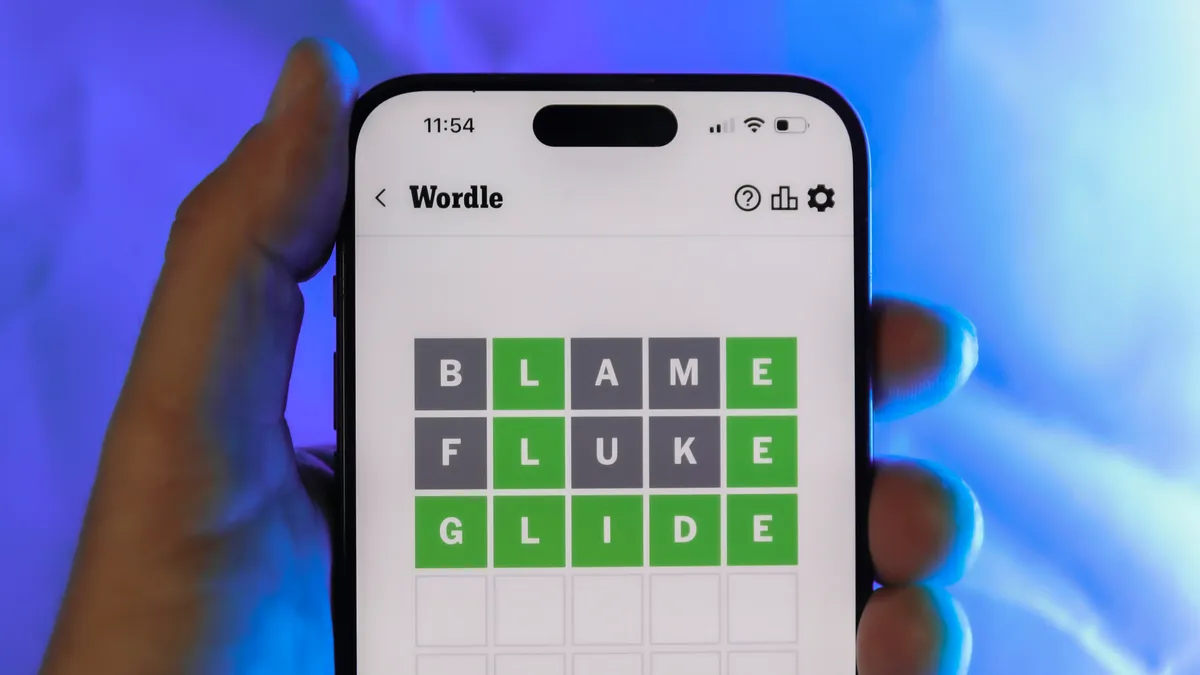
Today’s NYT Wordle Hints, Answer and Help for April 14 #1760

Published

on

Looking for the most recent Wordle answer? Click here for today’s Wordle hints, as well as our daily answers and hints for The New York Times Mini Crossword, Connections, Connections: Sports Edition and Strands puzzles.


Today’s Wordle puzzle is a bit tricky, with a repeated letter and only one true vowel. If you need a new starter word, check out our list of which letters show up the most in English words. If you need hints and the answer, read on.

Read more: New Study Reveals Wordle’s Top 10 Toughest Words of 2025

Advertisement

Today’s Wordle hints

Before we show you today’s Wordle answer, we’ll give you some hints. If you don’t want a spoiler, look away now.

Wordle hint No. 1: Repeats

Today’s Wordle answer has one repeated letter.

Wordle hint No. 2: Vowels

Today’s Wordle answer has one vowel and one sometimes vowel.

Wordle hint No. 3: First letter

Today’s Wordle answer begins with C.

Advertisement

Wordle hint No. 4: Last letter

Today’s Wordle answer ends with E.

Wordle hint No. 5: Meaning

Today’s Wordle answer can refer to a complete set of events. It can also be a shortened word for a pedaled vehicle that you ride.

TODAY’S WORDLE ANSWER

Today’s Wordle answer is CYCLE.

Advertisement

Yesterday’s Wordle answer

Yesterday’s Wordle answer, April 13, No. 1759, was ELFIN.

Recent Wordle answers

April 9, No. 1755: LADEN

April 10, No. 1756: CAROM

April 11, No. 1757: PRUDE

Advertisement

April 12, No. 1758: ALLEY

Source link

Advertisement
Continue Reading

Tech

ESP32 Weather Display Runs Macintosh System 3

Published

on

It seems like everybody takes their turn doing an ESP32-based weather display, and why not? They’re cheap, they’re easy, and you need to start somewhere. With the Cheap Yellow Display (CYD) and modules like it, you don’t even need to touch hardware! [likeablob] had the CYD, and he’s showing weather on it, but the Cydintosh is a full Macintosh Plus Emulator running on the ESP32.

Honey, I stretched the Macintosh!

The weather app is his own creation, written with the Retro68k cross-compiler, but it looks like something out of the 80s even if it’s getting its data over WiFi. The WiFi connection is, of course, thanks to the whole thing running on an ESP32-S3. Mac Plus emulation comes from [evansm7]’s Micro Mac emulator, the same one that lives inside the RP2040-based PicoMac that we covered some time ago. Obviously [likeablob] has added his own code to get the Macintosh emulator talking to the ESP32’s wireless hardware, with a native application to control the wifi connection in System 3.3. As far as the Macintosh is concerned, commands are passed to the ESP32 via memory address 0xF00000, and data can be read back from it as well. It’s a straightforward approach to allow intercommunication between the emulator and the real world.

The touchpad on the CYD serves as a mouse for the Macintosh, which might not be the most ergonomic given the Macintosh System interface was never meant for touchscreens, but evidently it’s good enough for [likeablob]. He’s built it into a lovely 3D printed case, whose STLs are available on the GitHub repository along with all the code, including the Home Assistant integration.

Advertisement

Source link

Continue Reading

Tech

Games Workshop brings seven classic Warhammer games to Steam for the first time

Published

on

Fans of miniature plastic soldiers, rejoice. Games Workshop has brought a host of older Warhammer and Warhammer 40K video games to Steam for the first time, alongside a dozen games that haven’t been available on Valve’s storefront for a few years. The new to Steam releases consist of three games from the Warhammer fantasy range — Shadow of the Horned Rat, Mark of Chaos – Gold Edition and Dark Omen — and four from its sci-fi 40K universe — Chaos Gate, Fire Warrior, Final Liberation and Rites of War.

If you’re a Warhammer fan of a certain age, some of these may be formative experiences for you. I know they are for me. I can’t count how many hours I spent playing Chaos Gate when I first discovered 40K at the age of 10. Yes, it was an XCOM clone, but by that point I didn’t know about the MicroProse original, and Space Marines were cool.

Years later and as a Tau collector at the time, I also loved Fire Warrior, even if it wasn’t the most polished or deep first-person shooter. I haven’t played the other five games included in today’s announcement, but I’ve heard Warhammer: Shadow of the Horned Rat and Warhammer 40K: Rites of War are pretty good if you’re into the setting or, in the latter case, a fan of the Eldar.

To celebrate the re-release of these old gems, Games Workshop is running a Classics sale on Steam, with discounts on all 19 re-releases. Plus, you can get discounts on some more recent releases, including the excellent Dawn of War – Definitive Edition and Dawn of War 2 – Anniversary Edition. If you’re new to the Warhammer 40K universe, and would rather avoid a plastic addiction, one of those would be my first port of call, along with the excellent Space Marine 2.

Advertisement

Source link

Continue Reading

Tech

Roblox boosts child safety with new account types limiting chat and game access

Published

on

Roblox is among the internet’s busiest digital playgrounds, but keeping it safe, especially for the youngest users, has been an ongoing challenge. 

Well, on April 13, 2026, the platform’s founder and CEO, David Baszucki, announced two new age-based account tiers, which will launch in June. 

So, What Exactly Is Changing For Young Players?

The platform is launching Roblox Kids for users between the ages of five and eight and Roblox Select for those aged between nine and 15.

Both categories are assigned automatically through the platform’s existing facial age-check mechanism, the system made mandatory for accessing the in-built chat feature in January 2026. 

For the youngest group, Roblox Kids, chat is completely disabled by default. Game access is also restricted to content carrying only Minimal or Mild maturity ratings. Selected users get more freedom with Moderate-rated games and chat that can be gradually enabled based on age. 

Advertisement

Once a user hits 16, they graduate to a standard account. 

What Does This Mean For Parents And Developers?

Parents gain sharper controls, including the ability to individually block or approve titles up to age 15. Meanwhile, developers face a tougher entry bar. To reach younger audiences, they must provide ID verifications, two-step authentication, and an active Roblox Plus subscription (which costs $4.99 per month). 

As mentioned in the beginning, the new age-based accounts will roll out globally at the beginning of June 2026. Users will also get a transition period to verify their age. 

If you’re wondering where the sudden strategic pivot comes from, it stems from the lawsuits by the attorneys general of Louisiana and Texas over child safety concerns.

It’s food that platforms can no longer keep child safety on the back burner, and if the platform does well, it could set a benchmark for age-appropriate access. 

Advertisement

Source link

Continue Reading

Tech

FBI Raids Texas Home of Man Suspected of Firebombing Sam Altman’s SF Mansion

Published

on

The FBI searched the Texas home of a 20-year-old man accused of throwing a Molotov cocktail at Sam Altman’s San Francisco residence. Authorities say the suspect also made threats at OpenAI’s headquarters, and reports indicate he had written extensively about fears over AI and opposition to AI executives.

The suspect reportedly authored a Substack blog and was a member of the Discord server PauseAI, an activist group focused on banning the development of the most powerful AI models to protect the public. In one post, they wrote: “These machines have already shown themselves to be unaligned with the interest of the people creating them. Models have often been found lying, cheating on tasks, and blackmailing their own creators whenever convenient; let alone the broader question of aligning them to whatever general ‘human interest’ may be.” The Houston Chronicle reports: The search happened hours before the Justice Department charged 20-year-old Daniel Moreno-Gama with possession of an unregistered firearm and damage and destruction of property by means of explosives. An FBI spokesperson on Monday morning confirmed agents were executing a search warrant in Spring, but provided no other information.

Around the same time, FOX News reported the search was being conducted at the home of Daniel Moreno-Gama, 20, who last week was arrested by San Francisco police suspicion of attempted murder, making criminal threats and possession of a destructive device. The charges were first reported by the Associated Press. When Moreno-Gama was arrested Friday, he was carrying a document that “identified views opposed to Artificial Intelligence (AI) and the executives of various AI companies,” the Associated Press reported. Moreno-Gama has no criminal history in Harris or Montgomery counties, according to public records. […] Agents had left the cul-de-sac by 1 p.m. It was unclear if they removed any items from the house. Another incident occurred outside Sam Altman’s residence early Sunday morning. “Early Sunday morning, a car stopped and appears to have fired a gun at the Russian Hill home of OpenAI’s CEO,” reports The San Francisco Standard, citing reports from the local police department. Two suspects were arrested and booked for negligent discharge.

Source link

Advertisement
Continue Reading

Tech

Today’s NYT Connections Hints, Answers for April 14 #1038

Published

on

Looking for the most recent Connections answers? Click here for today’s Connections hints, as well as our daily answers and hints for The New York Times Mini Crossword, Wordle, Connections: Sports Edition and Strands puzzles.


Today’s NYT Connections puzzle is rather tricky. Read on for clues and today’s Connections answers.

The Times has a Connections Bot, like the one for Wordle. Go there after you play to receive a numeric score and to have the program analyze your answers. Players who are registered with the Times Games section can now nerd out by following their progress, including the number of puzzles completed, win rate, number of times they nabbed a perfect score and their win streak.

Advertisement

Read more: Hints, Tips and Strategies to Help You Win at NYT Connections Every Time

Hints for today’s Connections groups

Here are four hints for the groupings in today’s Connections puzzle, ranked from the easiest yellow group to the tough (and sometimes bizarre) purple group.

Yellow group hint: Surfing the web.

Advertisement

Green group hint: Think Muhammad Ali.

Blue group hint: You might try to do this with a pinball machine.

Purple group hint: Not imprisoned.

Answers for today’s Connections groups

Yellow group: Things stored by a browser.

Advertisement

Green group: Boxing terms.

Blue group: Tilt.

Purple group: Free ____.

Read more: Wordle Cheat Sheet: Here Are the Most Popular Letters Used in English Words

Advertisement

What are today’s Connections answers?

completed NYT Connections puzzle for April 14, 2026

The completed NYT Connections puzzle for April 14, 2026.

NYT/Screenshot by CNET

The yellow words in today’s Connections

The theme is things stored by a browser. The four answers are bookmark, cache, cookie and history.

The green words in today’s Connections

The theme is boxing terms. The four answers are bell, gloves, ring and round.

Advertisement

The blue words in today’s Connections

The theme is tilt. The four answers are lean, list, pitch and tip.

The purple words in today’s Connections

The theme is free ____. The four answers are lance, mason, style and way.

Source link

Advertisement
Continue Reading

Tech

Xbox CEO called Game Pass ‘too expensive for players’ in a leaked memo

Published

on

Xbox’s new chief exec, Asha Sharma, has only been in charge for a few months but things already seem like they might be changing for the better. Or at the very least, they might be getting cheaper. The Verge reported that the new Xbox CEO wrote a memo to employees addressing the current pricing of the Game Pass subscription service.

“Game Pass is central to gaming value on Xbox. It’s also clear that the current model isn’t the final one,” Sharma allegedly said. “Short term, Game Pass has become too expensive for players, so we need a better value equation. Long term, we will evolve Game Pass into a more flexible system which will take time to test and learn around.”

After Microsoft upped the price for Game Pass twice within 15 months, many of us certainly felt that the service had gotten too costly to keep. Xbox is still offering a wide range of titles on Game Pass; the April update is adding indies like Hades 2 and new Double Fine project Kiln alongside AAA hits like the remake of Call of Duty: Modern Warfare. The Verge‘s sources suggested that the addition of the CoD franchise might have been a factor in some of the Game Pass price increases, since Microsoft would lose out on revenue by making the latest entries in the series available under the subscription.

It’s too early to say whether this memo from Sharma means Xbox is on the brink of a resurgence. And there are changes the company could make, like adding ever more complicated tiers, that would further hamper interest and uptake of Game Pass. But acknowledging the problem, even internally, is refreshing to see after so many baffling moves from Xbox in recent years.

Advertisement

Source link

Continue Reading

Tech

High earners quietly slow down AI usage as new data shows accuracy beating speed in real workplace decision making

Published

on


  • Top earners use AI tools to verify decisions before execution, not to create ideas
  • Executives now prioritize accuracy and error prevention over speed in AI workflows
  • Mid-level professionals rely less on AI for structured decision validation processes

The early narrative around artificial intelligence promised speed, scale, and unprecedented output.

A different picture is now emerging from recent survey data collected by Use.AI which found high-earning professionals are not racing to produce more content faster.

Source link

Advertisement
Continue Reading

Tech

Is Stardew Valley cross-platform? – Digital Trends

Published

on

Despite indie darling Stardew Valley only being built by a single developer, you certainly wouldn’t know it by the amount of support the game has received since its launch in 2016. Regular updates, ports to other platforms, and even a fully-fledged online multiplayer mode make the game feel essentially endless. In fact, it’s one of Digital Trends’ top 50 video games of all time.

With Stardew Valley’s 1.6 update adding that multiplayer mode, fans have been begging for cross-platform play, as well as cross-progression. So, if you’re looking to recruit some fellow agriculture enthusiasts or some farming friends, read on to find out whether or not you can pull them from across console, PC, and mobile.

Is Stardew Valley cross-platform?

While developer ConcernedApe has worked in an awful lot of new content, at the time of writing (October 2025) Stardew Valley still does not offer cross-platform support, so you’ll need to play with friends on the same platform.

One reason for this could be that, since it launched in 2016, Stardew Valley predates the big cross-platform push spearheaded by the likes of Fortnite.

Advertisement

As a result, you’ll need to play on PlayStation 4, PlayStation 5, Xbox One, Xbox Series X, Nintendo Switch, or PC with other players on the same system, but you can at least enjoy multiplayer thanks to the 1.6 update.

Back in 2018, one fan asked ConcernedApe if cross-platform play is likely to come to the farming sim.

“Unfortunately, there will not be crossplay. Apparently, the technical barriers are very high. It’s still something I really want to add and I promise to look into it more closely, but first priority is getting the update out there,” he responded, and the trail has gone quiet since.

As for cross-save, that’s not here either. You can’t save on your PC and pick up where you left off on your Xbox, for example, or jump between Nintendo Switch and PlayStation.

Arguably the closest you’ll get is using Steam’s Cloud Save functionality to play on PC and then pick up on a laptop or Steam Deck, but that won’t be a solution that suits everyone.

Advertisement

Haunted Chocolatier, the next game from ConcernedApe, is certainly looking promising, so here’s hoping cross-platform play and cross-save make it into that one at least. And hey, who knows? Maybe the dev will surprise us with crossplay and cross-save in the future.

Current status in 2026

The most relevant recent change is not full crossplay, but experimental multiplayer on mobile. Stardew Valley’s official mobile multiplayer guide confirms that Android and iOS now have a hidden experimental multiplayer feature tied to the 1.6 mobile release.

Which Stardew Valley platforms can play together?

  • Windows, Mac, and Linux: Yes
  • PlayStation with PlayStation: Yes
  • Xbox with Xbox: Yes
  • Switch with Switch: Yes
  • PC with console: No
  • PlayStation with Xbox or Switch: No
  • Console with mobile: No standard crossplay
  • Mobile with PC: Experimental only, with setup required

So if the goal is easy co-op with friends, the safest advice is still painfully boring: buy the game on the same platform.

What about Stardew Valley mobile multiplayer?

This is the one part of the answer that now needs nuance.

According to the official Stardew Valley mobile multiplayer guide, Android and iOS have a hidden experimental multiplayer mode. It isn’t enabled like standard multiplayer, and it comes with extra steps. Players need to be on the same game version, connect by IP, and often be on the same local network unless they’re using more advanced setup methods such as port forwarding. The official guide also warns that the feature is experimental and may have bugs or save-related issues.

Advertisement

That means mobile multiplayer exists, but it isn’t polished, full-featured crossplay. It’s closer to an official experimental workaround than a seamless “buy anywhere, play anywhere” system.

Does Stardew Valley have cross-save?

No. Stardew Valley still doesn’t offer broad, official cross-save or cross-progression across its major platform ecosystems. A save on Switch, for example, isn’t meant to flow neatly into Xbox, PlayStation, or PC in the way players now expect from fully connected live-service games.

Why doesn’t Stardew Valley have full crossplay?

Part of the answer is timing. Stardew Valley launched in 2016, long before full cross-platform support became an expected multiplayer feature for almost every popular co-op game. Multiplayer support expanded over time, and the current game supports up to eight players in multiplayer in supported environments, but that still doesn’t mean broad crossplay across every platform family.

In other words, Stardew Valley has multiplayer, but not the universal version modern players expect.

Advertisement

Stardew Valley cross-platform status in 2026

Stardew Valley still isn’t fully cross-platform in 2026. PC players can play together across Windows, Mac, and Linux. Console players generally need to stay within their own platform ecosystem. Mobile now has an official experimental multiplayer option, including the ability to connect in ways that blur the old boundaries a bit, but it’s still limited, hidden, and far from full crossplay.

If the goal is to start a farm with friends and avoid technical nonsense, everyone should still plan to buy the same version on the same platform. It’s not glamorous advice, but it beats discovering too late that your multiplayer plans were built on wishful thinking and turnips.

Source link

Advertisement
Continue Reading

Tech

Agentic coding at enterprise scale demands spec-driven development

Published

on

Presented by AWS


Autonomous agents are compressing software delivery timelines from weeks to days. The enterprises that scale agents safely will be the ones that build using spec-driven development.

There’s a moment in every technology shift where the early adopters stop being outliers and start being the baseline. We’re at that moment in software development, and most teams don’t realize it yet.

A year ago, vibe coding went viral. Non-developers and junior developers discovered they could build beyond their abilities with AI. It lowered the floor. It made prototyping much quicker, but it also introduced a surplus of slop. What the industry then needed was something that raised the ceiling — something that improved code quality and worked the way the most expert developers work. Spec-driven development did that. It laid the foundation for trustworthy autonomous coding agents.

Advertisement

Specs are the trust model for autonomous development

Most discussions of AI-generated code focus on whether AI can write code. The harder question is whether you can trust it. The answer runs directly through the spec.

Spec-driven development starts with a deceptively simple idea: before an AI agent writes a single line of code, it works from a structured, context-rich specification that defines what the system is supposed to do, what its properties are, and what “correct” actually means. That specification is an artifact the agent reasons against throughout the entire development process — fundamentally different from pre-agentic AI approaches of writing documentation after the fact.

Enterprise teams are building on this foundation. The Kiro IDE team used Kiro to build Kiro IDE — an agentic coding environment with native spec-driven development — cutting feature builds from two weeks to two days. An AWS engineering team completed an 18-month rearchitecture project, originally scoped for 30 developers, with six people in 76 days using Kiro. An Amazon.com engineering team rolled out “Add to Delivery” — a feature that lets shoppers add items after checkout — two months ahead of schedule by using Kiro and spec-driven development. Alexa+, Amazon Finance, Amazon Stores, AWS, Fire TV, Last Mile Delivery, Prime Video, and more all integrate spec-driven development as part of their build approaches.

That shift changes everything downstream.

Advertisement

Verifiable testing is what makes autonomous agents safe to run

The spec becomes an automated correctness engine. When a developer is generating 150 check-ins per week with AI assistance, no human can manually review that volume of code. Instead, code built against a concrete specification can be verified through property-based testing and neurosymbolic AI techniques that automatically generate hundreds of test cases derived directly from the spec, probing edge cases no human would think to write by hand. These tests prove that the code satisfies the spec’s defined properties, going well beyond hand-written test suites to provably correct behavior.

Verifiable testing enables the shift from one-shot programming to continuous autonomous development. Traditional AI-assisted development operates as a single shot: you give the agent a spec, the agent produces output, and the process ends. Today’s agents continuously correct themselves, feeding build and test failures back into their own reasoning, generating additional tests to probe their own output, and iterating until they produce something both functional and verifiable. The spec is the anchor that keeps that loop from drifting. Instead of developers constantly checking in to see if the agent is making the right decisions, the agent can check itself against the spec to make sure it is on the right path.

The autonomous agent of the future will write its own specs, using specifications as the mechanism for self-correction, for verification, for ensuring that what it produces matches the intended behavior of the system.

Multi-agent, autonomous, and running right now

The developers setting the pace today operate in a fundamentally different way. Developers spend significant time building their spec, as well as writing steering files used by the spec to make sure the agent knows what and how to build — more time than their agent may spend building the actual software. They run multiple agents in parallel to critique a problem from different perspectives, as well as run multiple specs, each written for a different component of the system they are building. They let agents run for hours, sometimes days. They use thousands of Kiro credits because the output justifies it.

Advertisement

A year ago, agents would lose context and fall apart after 20 minutes. Now, every week you can run them longer than the week before. Agentic capabilities have improved significantly in the last six months that genuinely complex problems are tractable. Newer LLMs are more token-efficient than the previous generation, so for the same spend, you get dramatically more done.

The challenge is that doing this well requires deep expertise. The tools, methodologies, and infrastructure exist, but orchestrating them is hard. The goal with Kiro is to bring these capabilities with deep expertise to every developer, not just the top one percent who’ve figured it out.

Infrastructure is catching up to ambition

Agents will be ten times more capable within a year. That’s the rate of improvement we’re seeing week over week.

The infrastructure to support that level of capability is converging at the same time. Agents are now running in the cloud rather than locally, executing in parallel at scale with secure, reliable communication between agent systems. Organizations can now run agentic workloads the way they’d run any enterprise-grade distributed system — with governance, cost controls, and reliability guarantees that serious software demands. Spec-driven development is the architecture of tomorrow’s autonomous systems.

Advertisement

Developers are no longer restricted by how they want to solve the problem. The developers who thrive in this world are the ones building that foundation now: using spec-driven development, prioritizing testability and verification from the start, working with agents as collaborators, and thinking in systems instead of syntax.

Deepak Singh is VP of Kiro at AWS.


Sponsored articles are content produced by a company that is either paying for the post or has a business relationship with VentureBeat, and they’re always clearly marked. For more information, contact sales@venturebeat.com.

Source link

Advertisement
Continue Reading

Trending

Copyright © 2025