Connect with us
DAPA Banner

Tech

I Was a First-Generation Elite Private School Graduate. My Kids Won’t Follow My Path.

Published

on

As we drove across the bridge that read, “Trenton Makes, the World Takes,” the red lights brightened my worried face. It took 20 minutes to drive back home from my admissions interview, but the Delaware River felt like the width of the Atlantic Ocean between the grassy farmlands in Bucks County, Pennsylvania, and my small concrete jungle in Trenton, New Jersey. My mom drove us quietly with a gentle smirk, knowing I’d aced that interview, until I finally broke my silence.

“I’m not going, Mom.”

She looked at me through the rearview mirror, her eyebrows lifted, open to hearing my opinion. I said, “I can’t go — it’s just too many white people.”

Third grade Mi had realized that this was the first time I’d been in a predominantly white space. I did a lot of observing and noticing. I didn’t yet have the words to articulate that this was the first time of my life that I’d felt viewed, not seen. I felt hyper-aware of the contrast of my Blackness — my African American vernacular English, my beef-and-broccoli colored Timberland boots, my Ecko Red hoodie and Girbaud jeans, and my gold name plate chain. I embodied a stereotype of “ghetto” that seemed antithetical to what I saw at the private school: the double-popped polo collars under blink-182 crewnecks, above-the-knee khaki shorts, and six-figure cars in the carpool line. This was the first time in my life that I felt othered. And it was overwhelming.

Advertisement

But I made a proposition. I agreed to attend the school — unbeknownst to me, I had no choice — and in return, I declared that I would not “act white,” to fit in like the other few Black students that I observed in the school. I refused to negotiate what I perceived as expressions of my Blackness.

I attended this predominantly white institution (PWI) from fourth through eighth grade. I wrote in my piece in the sixth-grade literary magazine, “Crossing the ocean from an all-Black public school to a white private school…it has its privileges, but sometimes, it’s a burden.”
While I was thankful for the opportunities presented, I silently carried the burden of the daily racist altercations at school. Most of the time, the psychological effects overshadowed the privilege.

Now, I’m a parent facing the same dilemma that my mom had more than two decades ago. With the best intentions for my children, knowing the assault to my self-concept in my formative years, do I put them in elite, predominately white spaces, or do I prioritize psychological safety?

The question might seem like a no-brainer, or maybe to you, it feels loaded, too. Can my wife and I offset their experiences at PWIs with culturally affirming enrichment at home and extracurricular activities, or are we repeating the cycle?

Advertisement

Before I became a dad, knowing my nonlinear path that’s been shaped by the residue of poverty, I’d ask myself: “Was it worth it?” Did I maximize the return on investment? Now, as a parent, the answer is much more nuanced.

Reading, Writing, ’Rithmetic, and [Civil] Rights

Whether to enroll or not in a PWI in secondary schooling is not just a race and class question, it’s a question of resources and approach. I’m still not wealthy, but I have more than what I started with. And being an education and social policy researcher, I know what data shows about who gets what and where. My own experiences and my knowledge of how policies and funding affect quality of experiences in American schooling adds a layer of complexity to my contemplation about my children’s schooling.

When I graduated from my PWI, I was adamant to reenter culturally affirming spaces. I’d rejected some of the highest- ranked high schools in the country because I was done suffering. In middle school, I had filled dozens of composition notebooks with rage and sadness that could only be expressed through poetry and raps, although symptoms of my deep inner conflict sometimes landed me in the Head of School’s office. I was ready to rise and become who I was meant to be, not the muted, abbreviated version of me.

Arisen from the suffocating smog of anti-Blackness and intersectional othering, I could really appreciate the incredible foundation my private school had provided. That’s when my survivor’s remorse was born.

Advertisement

I noticed the differences in the curriculum. My parochial high school was a breeze — it was a repeat of things I’d been exposed to in middle school, and seeing what was new to some of my friends enraged me. It’s what Zaretta Hammond calls “cognitive redlining” alongside the hyper-punitive approach to discipline, which seemed to be the greatest priority.

I came of age in a Quaker school where we called teachers by their first names (something I never got used to) and third graders could leave the classroom for a bathroom break at any time. So when I saw my Catholic high school principal every morning for the uniform compliance check line, I stood in line, arms crossed, muttering every expletive I could think of. To make matters worse, the school disciplinarian was my AP History teacher, and he suspended me for having a visible cell phone. At that point, I was already in full rebellion.

I was shocked — a culture shock in my own culture. But it wasn’t being immersed in my culture that was shocking. It was seeing another form of racism and discrimination take shape in a predominantly Black school. The caveat: this school, in a working- class Black city, was led by white administrators and teachers. From kindergarten to 12th grade, we had one Black teacher.

I realized how good I had had it all those years at the PWI middle school. This cemented me into an activist. I got into so much good trouble in high school because of it. I had not only gained advanced skills in reading, writing, and ’rithmetic in my “better” PWI, as my late great-grandma Ella often joked, I had also inadvertently learned the ABCs of inequity.

Advertisement

Was It Worth It?

How do we measure success?

Researchers have tried measuring the concept of success for a long time. Is it highest level of education? Type of degree? Does a medical doctor or engineering degree beat a gallery wall of social science and humanities degrees? Are power, notoriety, income, or wealth markers of success? It’s hard to measure success, because our definitions vary by personal beliefs and values.

The first time I heard my name and the word “successful” in the same sentence, in the present tense, my head tilted slightly, forehead wrinkled, and I listened as the panel moderator read my bio, introducing me as someone who they perceived as “successful.” I thought, “Hmm — I guess it does sound pretty good.” But I feel like I’m still grinding and hustling to reach my elusive goals.

If we measure success, achievement, or attainment by income or field of study, the goal post just keeps moving. A six-figure salary can’t buy what it did 10 years ago. In most states in the U.S., the definitions of poverty and low income have changed dramatically. And we tend to favor STEM degrees over others, for reasonable explanations, despite the rates of STEM graduates who work outside their field of study.

Advertisement

When I finished college, struggling to find meaning and a job with benefits and a salary — typical millennial quarter-life crisis — the compare and despair Googling of my middle school peers fueled my angst. People I’d grown up in school with, who were children of surgeons, Hollywood executives, and partners at big law firms, were taking unpaid internships, studying abroad, or on their way to law school or medical school.

The question resurfaced: Was it worth it?

I resented what appeared to be a linear, fluffy path. We went to the same school but didn’t get the same education.

Unlike my postsecondary hustle, I assumed theirs didn’t include clocking out 5 minutes early at the sales associate job to catch the bus to the server job, then ending the night around 2 a.m. with the security job just to afford shelter, food, and basic clothing while taking 18 credits in college. At one point, I was forced to quit one of my jobs because of pneumonia I couldn’t shake.

Advertisement

I intimately understand the consequences of being a first-generation college student. Without the social capital, mentorship, guidance, and financial security, I struggled for a long time to find stability. And still, stability is fleeting and relative. This significantly influenced my career path and makes my resume not make perfect sense to someone who doesn’t know this type of grind.

But I’m a parent now, facing the same decisions my mom had to make. The difference? My kids are second generation, and their mom and I, having tried it all, can offer pointed advice along with access to spaces, people, and insight that first-generation graduates learn from trial and error, or never learn at all.

My path to where I am now, still grinding and hustling, wasn’t linear, and it’s still a bit winding. Knowing what I know now, with my self-concept and confidence restored, with the wisdom of a 30-something-year-old still figuring out some things through trial and error, and the residue of poverty still showing up sometimes, I make micro-calculations every day for my children’s safety. I know I can’t shield them from every potential racist, sexist, or discriminatory interaction, but I’m always considering their Blackness, gender, perceived class, and who they are when selecting the spaces we occupy. That knowing — the wisdom that shows up in how I parent — was worth it.

Source link

Advertisement
Continue Reading
Click to comment

You must be logged in to post a comment Login

Leave a Reply

Tech

Are Electric Bag Resealers the Key to Chip Freshness? I Tested 2 to Find Out

Published

on

If you’re anything like me, a trip to the grocery store is a joy ride for the taste buds. As soon as I get home, I tear into my finds and determine what will take priority when the urge to snack or nosh strikes. 

The result, unfortunately, is a sea of open bags that quickly lose their crunch and freshness. Chips and pretzels, for example, become stale, while bagged produce begins to wilt and brown. 

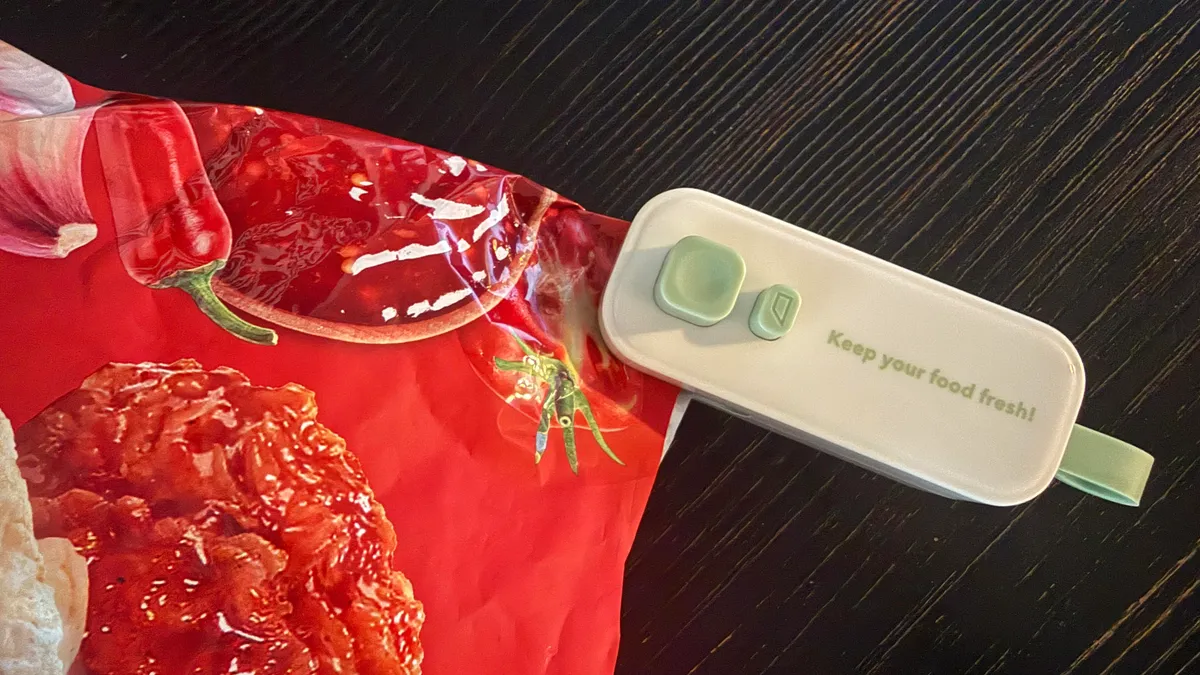
While there are vacuum-sealed bags and accompanying air-removal devices, nothing compares to the efficiency and ease of a handheld sealer. These simple gadgets are designed to fuse the open ends of plastic containers using quick heat to prolong food’s shelf life and general tastiness. 

Advertisement
bag sealers side by side

My small cohort of bag sealers, ready for testing. 

Joey Skladany/CNET

I tested two of the highest-rated models on Amazon to determine which deserves a permanent place in my kitchen. Here’s how they stacked up. 

The devices 

Upon opening each package, I was surprised to see that both models offer additional capabilities beyond sealing. Each uses USB-C for charging (with a cable included).

Advertisement

BBDYOY three-in-one mini bag sealer 

$12.99 on Amazon

bag sealer and charger on table

This cheaper bag sealer came to temperature almost immediately.

Joey Skladany/CNET

Special Features: Compact size, bag slicer, magnet

Advertisement

The good: 

  • Compact size: This was preferred over Aedicce, which felt a bit too bulky. It also takes up less space in a drawer or shelf.
  • The sealing surface area: The compartment where you insert the bag edge is deeper, which makes the device easier to use. 
  • No preheating: Unlike the Aedicce model, the BBDYOY heats up almost instantly. 
  • The cutter: It’s sharper than the Aedicce and opens bags with ease. 
  • Comes with two freebies: The company included two resealable, backpack-shaped bags, which are quite adorable for a kid’s school lunch. 

The bad: 

  • Instructions aren’t in English: While the illustrations were easy enough to decipher, the Mandarin characters can be a bit intimidating for anyone who considers themselves tech-averse. 
  • Difficulty sealing foil-lined bags: It had trouble sealing bags with metalized film-lined interiors. 

Aedicce four-in-one mini bag sealer 

$15.99 on Amazon

bag sealer on table

The Aedicce device took longer to heat up, but worked just as well once it did.

Joey Skladany/CNET

Special Features: Bag slicer, hanging hook/bottle opener, built-in light, magnet 

The good 

  • Multiple functions: Beyond sealing, this device hangs, opens bottles and provides an emergency light, giving customers more bang for their buck. 
  • A stronger seal: While it takes longer to heat up, I did notice the seal was ever so slightly stronger than BBDYOY’s. 
  • Power indicator light: You’ll know when the battery is running low, so it doesn’t die on you mid-use. 
  • High-quality: It feels and looks more expensive than the BBDYOY model. 
bag sealer sealing plastic bag of granola

Both devices worked well for sealing plastic bags.

Advertisement

Joey Skladany/CNET

The bad

  • It’s somewhat pricey: At $16, it’s certainly a significantly higher investment than a standard bag clip. 
  • Difficulty sealing foil-lined bags: It ran into the same issue as the BBDYOY and had trouble sealing this type of bag.
slightly open bag of chips shot from above

Both devices had trouble creating a tight seal on chip bags with a layer of vaporized aluminum. 

Joey Skladany/CNET

Final thoughts 

While both models worked well with fusing standard plastic, neither successfully sealed the metalized film commonly used in chip bags. My assumption is that this material is harder to melt and, ultimately, fuse together.

Though disappointing, it wouldn’t deter me from purchasing either product, as plastic clips can only do so much to keep open bags closed and free of air. That said, the aforementioned vacuum sealer will make any handheld device pale in comparison and should be the choice for bulky items or long-term freezer storage. 

Both bag releasers I tested performed equally well, creating a tight clamp on plastic bags but struggling to seal anything with a layer of vaporized aluminum. So, you can’t go wrong with either option. Splurge a bit more for the Aedicce if you want extra tools, but the BBDYOY works just as well and fits in smaller spaces when not in use. 

Advertisement

Source link

Continue Reading

Tech

Elgato Galleon 100 SD review: Mac productivity & streamer's dream

Published

on

The Elgato Galleon 100 SD combines a keyboard with the Stream Deck, producing a two-in-one productivity-focused peripheral that Mac users should really consider.

Black Corsair mechanical keyboard with teal backlit keys, integrated right-side macro pad with small screen and icons, two control knobs, on a light wooden desk.
Elgato Galleon 100 SD

Corsair subsidiary Elgato stands out as one of the leading manufacturers of peripherals and equipment tailored to the ever-growing market of streaming. From microphones to chairs to Stream Decks, Elgato is synonymous with top-tier equipment and streams across Twitch and YouTube.
Its latest offering, the Galleon 100 SD, sees Elgato taking a leap of faith. One to fully integrate the functionality of its rock-solid Stream Decks into a sturdy mechanical keyboard for work and play, bringing an all-in-one experience to streamers and multitaskers everywhere.
Continue Reading on AppleInsider | Discuss on our Forums

Source link

Continue Reading

Tech

A Single Strike Won’t Shut Off the Gulf’s Desalination System

Published

on

Across the region, facilities tied to water and power—including desalination plants—have been damaged or exposed to risk as Iranian strikes extend beyond traditional targets.

A single strike, however, is unlikely to shut off the gulf’s water supply. The system is designed to absorb isolated disruption, but sustained or multisite attacks would begin to strain supply far more quickly.

“In the Gulf, desalination is built with enough breathing room that losing one plant doesn’t immediately show up at the tap,” says Rabee Rustum, professor of water and environmental engineering at Heriot-Watt University Dubai.

In Kuwait, Iranian drone attacks have damaged two power and desalination facilities and ignited fires at two oil sites. Other sites, including Fujairah in the UAE, have been identified as potentially exposed.

Advertisement

“Striking desalination plants would be a strategic move, but it would also come very close to, and in some cases cross, a red line,” says Andreas Krieg, senior lecturer at the School of Security Studies at King’s College London.

Water infrastructure, Krieg explains, occupies a distinct category. “Water infrastructure is not just another utility. In places that depend on desalination, it underpins civilian survival, public health, hospital function, sanitation, and basic state legitimacy.”

Krieg notes that international humanitarian law gives special protection to civilian objects and to objects indispensable to the survival of the civilian population. “Which is precisely why attacks on water systems carry such grave legal and moral weight,” Krieg adds.

The incidents highlight a structural reality: Desalination is central to water supply in the gulf, and disruption carries immediate implications for daily life.

Advertisement

How the System Absorbs Disruption

At first glance, desalination appears vulnerable. Shut down a plant, and supply is reduced. In practice, the system is designed with layers of redundancy.

Plants operate across multiple locations, allowing output to be redistributed if one facility slows down. Water is also stored at different points across the network, including central reservoirs and building-level tanks, creating a buffer that delays disruption.

According to a statement to WIRED Middle East by Veolia, an environmental services provider whose technologies account for nearly 19 percent of desalination capacity in the region, “the region’s water supply is diversified thanks to a network of numerous facilities distributed along the coastline.”

The company adds that distribution systems are interconnected, allowing plants to “support and substitute for one another when necessary,” helping maintain continuity of service.

Advertisement

In the UAE, storage capacity typically covers around one week, while in other parts of the region it may be limited to two to three days, Veolia says.

In practice, this means the system can absorb disruption for a limited period. Once reserves are depleted, water supply depends on whether plants can continue producing enough water to meet demand.

The System That Produces Water

Unlike most regions, the Gulf does not rely on rivers or rainfall. It depends on a network of desalination plants along its coastline that convert seawater into potable water on a continuous basis.

Seawater is drawn into treatment facilities, filtered and processed either through reverse osmosis—forcing it through membranes to remove salt and impurities—or through thermal methods that evaporate and condense water. The resulting supply is distributed through pipelines, stored in reservoirs, and delivered to homes, hospitals, and industry.

Advertisement

This is not a flexible system. It is designed to operate continuously, producing water at a scale that sustains cities, industrial activity, and essential services. Gulf states produce roughly 40 percent of the world’s desalinated water, operating more than 400 plants across the region.

Dependence varies by country but is high everywhere. In the UAE, desalination accounts for 41 to 42 percent of total water supply, while in Kuwait, it provides around 90 percent of drinking water, and in Saudi Arabia, approximately 70 percent.

When Disruption Becomes Visible

For residents, disruption would not be felt immediately—water would continue to flow.

Rustum explains that buildings are supported by internal storage and pumping systems, meaning early changes in supply may not be apparent. In many cases, water pressure remains stable, even as the wider system adjusts.

Advertisement

Source link

Continue Reading

Tech

Days before giving birth, her boss cut her pay. She quit & opened her own clinic.

Published

on

Dr Michelle Ng turned a moment of loss into a new beginning for herself

On Jun 28, 2025, Dr Michelle Ng was 39 weeks pregnant, nine days away from giving birth.

That’s when she received an email from her previous employer, saying that they would pause her senior doctor incentives and deduct from her maternity pay to cover the commissions for doctors hired in her place. 

She read the email twice. Then she went on to draft her resignation letter with conviction.

What happened next would transform Dr Michelle’s and her family’s lives. Within a few months, she would open ARTÉ by Dr M, an aesthetic clinic that had built a waiting list stretching to Feb 2026 before it even opened its doors in Dec 2025. 

Advertisement

But that Jun morning, none of that was visible. All she could see was the uncertainty of her future with her four-year-old daughter and her soon-to-be-born son, a career ending where motherhood began.

This is Dr Michelle’s story—how she turned a moment of loss, on the brink of motherhood, into the start of something entirely new. Vulcan Post spoke with her and her husband, Vincent, to understand the challenges, the risks, and the decisions that led to ARTÉ by Dr M.

Facing “career suicide” for taking her maternity leave

An NUS Medicine graduate with dermatology rotations at public hospitals, Dr Michelle built a strong foundation in skin and facial anatomy. She is renowned for her ambidextrous injection skills, which are widely regarded as highly advanced.

Over more than a decade in the field, she moved between doctor-led and investor-owned clinics, generating S$200,000–S$300,000 in monthly revenue from her work alone, according to her husband, Vincent.

She joined her ex-employer in 2023. But when her second pregnancy came in early 2025, her employer’s support waned. At 12 weeks, tests confirmed a high-risk pregnancy. Despite mounting fatigue and medical complications, she continued showing up for her patients, even as her body signalled the need to slow down.

Advertisement
dr michelle ng aarte by M children familydr michelle ng aarte by M children family
(Left): Dr Michelle Ng at the hospital when she was pregnant with her son last year; (Right): Dr Michelle Ng with her children./ Image Credit: ARTÉ by Dr. M

With lessons learned from her first pregnancy—when she had little time to bond with her first child after opting for half-day arrangements despite being fully entitled to maternity leave—Dr Michelle decided to take her full entitlement for her second child.

She took 16 weeks of government-paid maternity leave plus six weeks of shared parental leave (three weeks from her husband), totalling 22 weeks (about five months) to recover and spend time with her family.

However, upon applying for leave, she was told by her ex-employer that going on maternity leave for that long is “career suicide.” Dr Michelle was disheartened and lost all hope in her career, but she knew that she had to prove otherwise.

The final straw came nine days before her son’s delivery in Jul 2025. Her ex-employer sent an email informing her of the temporary pause of her senior doctor incentives during her maternity period, and any commissions paid to covering doctors in her absence will be deducted from her maternity salary.

The next day, between prenatal appointments and birth preparations, she drafted her response. Dr Michelle informed them that the deduction was not allowed under the relevant laws, tendered her resignation, and began her four-month notice period—sacrificing her remaining shared parental leave in the process.

Advertisement

That same day, her son Louis was born, and the idea of ARTÉ then slowly took shape.

Navigating motherhood & ambition

ARTÉ by Dr. M opened its doors in the middle of Dec 2025, but the journey tested Dr Michelle in every way.

In the lead-up, she navigated one of the most demanding periods of her life: caring for a newborn, managing postpartum recovery, and simultaneously building a clinic from the ground up.

She secured a unit at Millenia Walk, negotiated with her landlord, Pontiac Land Group, coordinated with medical suppliers, and oversaw a complex renovation—all within the span of just a few months.

Advertisement
 ARTÉ by Dr. M interior dr michelle ARTÉ by Dr. M interior dr michelle
Shortly after giving birth, Dr Michelle went on to build ARTÉ by Dr. M, overseeing the interior design and daily operations./ Image Credit: ARTÉ by Dr. M

Then, just as things began to take shape, another challenge surfaced.

Her long-term domestic helper left abruptly, leaving Dr Michelle scrambling to arrange childcare while keeping the clinic’s construction on track. On top of that, as with any major project, renovation delays arose, pushing ARTÉ’s opening back by a month from the original Nov 2025 target.

Watching her hold everything together through that chaos, her husband left his 13-year career in commodities to support her. 

“I couldn’t bear to see her carry everything on her own,” he said. “The way she showed up for her patients during her maternity period, and for what she believes in. It made it clear to me that this was more than just a career. It was her calling, and she convinced me to give up my career to help her give her best for her patients.”

ARTÉ by Dr. M interior exterior storefrontARTÉ by Dr. M interior exterior storefront
ARTÉ by Dr. M’s storefront and vast corridors./ Image Credit: ARTÉ by Dr. M

The couple’s capital investment exceeded S$1 million for equipment and renovation alone in the 1,600 sqft unit, with monthly operating costs averaging between S$60,000 and S$100,000.

“Many people commented that I was crazy to start a business as soon as I gave birth, but it was this belief that I told myself that I wanted ARTÉ to be a beacon of hope for all women that anything is possible even in the most demanding seasons of life,” Dr Ng recalled. 

Advertisement

She runs the clinic supported by a team of four

ARTÉ by Dr. M specialises in non-surgical anti-ageing treatments with a focus on injectables (including botox, dermal fillers, and collagen stimulators), alongside lasers and Ultherapy Prime machines for skin lifting, tightening and rejuvenation.

non-surgical anti-ageing treatments with a focus on injectables (including botullinum toxin, dermal fillers, and collagen stimulators), alongside lasers and Ultherapy Prime machines
arte by dr mnon-surgical anti-ageing treatments with a focus on injectables (including botullinum toxin, dermal fillers, and collagen stimulators), alongside lasers and Ultherapy Prime machines
arte by dr m
Dr Michelle administering Ultherapy Prime machines and injectables to stimulate collagen./ Image Credit: ARTÉ by Dr. M

Dr Michelle is the clinic’s sole doctor, supported by a team of four.

Treatments led by her typically begin from S$800 up to S$2,000 per session, while non-doctor therapist treatments start from S$200. For patients looking for a more personalised approach, the clinic also offers customised programs tailored to individual needs and budgets.

Dr Michelle said transparency is a core principle of the clinic. “There are no hard-selling and no hidden fees,” she explained. Treatments are usually structured in three sessions, followed by a detailed review of progress.

The clinic’s reputation was evident even before its doors opened in Dec 2025: bookings were filled up to Feb 2026, reflecting the trust Dr Michelle had built with her patients over the years.

Advertisement

Beyond patient experience, Dr Michelle shared that ARTÉ represents a deliberate choice about how care should be practised. “The field has become increasingly commoditised, with price wars and the race to the bottom,” she said. More investors are setting up clinics with commercial priorities at the forefront, while medical risks become secondary to sales performance and treatment pricing.

“For us, every treatment, even for trials, is done with full intent, and we give our 100%,” she added.

“There are sacrifices that come with building something you believe in”

Today, Dr Michelle is not only an aesthetic doctor but also a speaker and trainer for leading global brands such as Merz, where she mentors and trains younger doctors. 

She also has plans to grow ARTÉ meaningfully, guided by the same patient-centric principles on which it was built. 

Advertisement
ARTÉ by Dr. M family dr michelle ngARTÉ by Dr. M family dr michelle ng
Dr Michelle and her family./ Image Credit: ARTÉ by Dr. M

Yet behind all this growth lies a reality she carries quietly. She sees patients six days a week, often skipping meals and returning home after her children have already fallen asleep. 

She shared, “There are sacrifices that come with building something you believe in. I don’t always get the time I wish I had at home, but when I am present, I make sure I am fully there for my children.”

For Dr Michelle, ARTÉ’s growth isn’t just about scale or revenue—it’s about building something meaningful, even if it demands more from her personally.

“Every time I look at my clinic,” she added, “I see blood, sweat and tears. But I also see that despite everything, we chose to keep going and to build something we could stand behind.” She also hopes her story shows other women that maternity is not a setback to overcome, but a source of strength to draw from.

Since her ex-employer challenged her maternity entitlements, Dr Michelle has engaged lawyers and attended multiple legal meetings.

Advertisement

As a mother and doctor in an industry built on empowering women, I couldn’t stay silent and accept what felt wrong. That day, I chose to stand for what I believe in.

Dr Michelle Ng

The matter remains unresolved to this day, yet she continues to focus on her patients, her clinic, and inspiring other women to find strength in their own journeys.

  • Find out more about ARTÉ by Dr. M here.
  • Read other articles we’ve written on Singaporean businesses here.

Featured Image Credit: ARTÉ by Dr. M

Advertisement

Source link

Continue Reading

Tech

AI is now taking over game servers, and Stormgate is the first casualty

Published

on


Stormgate, a free-to-play, StarCraft-style RTS developed by Frost Giant Studios, relies on a third-party “game server orchestration partner” to run its online modes. Frost Giant told players on Discord that the provider had been acquired by an AI company, forcing a planned outage that will take Stormgate’s multiplayer modes offline…
Read Entire Article
Source link

Continue Reading

Tech

Apps on the App Store are being updated by Apple, though there's no clear reason why

Published

on

A range of seemingly random apps in the App Store have been updated by Apple itself, though nothing has been shared about why, nor have there been changes in the codebases themselves.

App Store updates screen showing VLC media player update details, including stability improvements, UI changes, CarPlay crash fix, and an Open button on a dark background
VLC was updated by Apple to improve functionality

Apple has been known to push updates to apps in its App Store, though they’re usually to ensure legacy apps still work. On Monday, some users have noted both new and old apps have received an update direct from Apple.
According to a report from MacRumors based on a Reddit post, the updates don’t appear to change anything about the app itself. The changes could be related to something on Apple’s backend, or a specific API, but it is unclear.
Continue Reading on AppleInsider | Discuss on our Forums

Source link

Continue Reading

Tech

OpenAI Calls For Robot Taxes, Public Wealth Fund, and 4-Day Workweek To Tackle AI Disruption

Published

on

OpenAI is proposing (PDF) sweeping policy changes to help manage the societal disruption caused by advanced AI, including taxes on automated labor, a public wealth fund, and experiments with a four-day workweek. The company said the policy document offered a series of “initial ideas” to address the risk of “jobs and entire industries being disrupted” by the adoption of AI tools. Business Insider reports: Among the core policy suggestions is a public wealth fund, which would see lawmakers and AI companies work together to invest in long-term assets linked to the AI boom, with returns distributed directly to citizens. Another is that the government should encourage and incentivize employers to experiment with four-day workweeks with no loss in pay and offer “benefits bonuses” tied to productivity gains from new AI tools.

The policy document also suggests lawmakers modernize the tax system and shift the tax base to corporate income and capital gains, rather than relying on labor income and payroll taxes that could be hit by a wave of AI-powered job losses. It also recommends taxes related to automated labor. OpenAI also called for the accelerated expansion of the US’s electricity grid, which is already feeling the strain from a wave of data center construction and energy demand for training ever more powerful AI models.

Source link

Continue Reading

Tech

Seattle entrepreneur Robbie Cape’s lengthy job search takes unexpected turn with launch of new startup

Published

on

Robbie Cape is a tech veteran and serial entrepreneur. (File Photo via 98point6)

Robbie Cape, the Seattle tech entrepreneur who has dabbled in healthcare and fried chicken in recent years, has another new venture.

In a post on LinkedIn on Monday, Cape said his nine-month search for a new job led somewhere he didn’t expect — and he’s starting a company.

“We’re in stealth for now — the idea and the story behind it will come,” Cape wrote. “But right now, we’re imagining. We’re shaping the vision, building the team, defining the culture. The slate is clean. The sky is open. And we are having an absolute blast.”

Cape said the new venture incorporated in March, and a few weeks ago he welcomed CTO T Van Doren and chief product officer Matt Witcher as co-founders. Cape said Van Doren was employee No. 1 and Witcher was employee No. 8 at 98point6, the telehealth startup that Cape co-founded and ran as CEO for six years.

Cape previously spent 11 years at Microsoft and was the co-founder and CEO of Cozi, an app for managing family events, activities and schedules. After being forced out of 98point6, Cape helped launch the sustainable chicken restaurant Mt. Joy in 2022. The small chain has locations in Seattle’s South Lake Union and Capitol Hill neighborhoods.

Advertisement

Cape left Mt. Joy in May 2025, according to his LinkedIn. And in his post on Monday, he said he’d been searching for a job until last month. The process — in which he was looking for any size company, stage or title — took longer than he imagined it would as he connected with 200 people across nearly 2,000 interactions.

“It was hard in ways I didn’t expect,” Cape wrote. “But it gave me something I didn’t expect either — real empathy for a process most people dread but everyone eventually has to go through.”

GeekWire reached out to Cape for details on his new company, and we’ll update when we hear back.

Source link

Advertisement
Continue Reading

Tech

Epic vs. Apple lawsuit over App Store fees is moving to the Supreme Court, again

Published

on

The Apple vs. Epic Games saga over App Store fees continues, as Apple hopes the Supreme Court will rule in its favor the second time around and possibly stop previous punishments from being enforced.

iPhone Air in blue facedown on a cloth surface showing its camera bar and single lens
Apple’s control of the App Store on iPhone continues to be challenged in court

The Supreme Court will soon have to weigh in on Apple’s fees for app-related external purchases, after the United States Court of Appeals for the Ninth Circuit denied a request for a rehearing in March 2026.
Apple has been fighting a December 2025 decision that sought to lower its 27% fee on purchases made outside the App Store.
Continue Reading on AppleInsider | Discuss on our Forums

Source link

Continue Reading

Tech

Trump Administration Bans Chinese Routers. Phones and Cameras Could Follow

Published

on

The Federal Communications Commission continued its crackdown on Chinese tech on Friday, issuing a new proposal that would extend a ban on companies to products previously authorized.

In 2021, companies such as Huawei, Hikvision, Dahua, Hytera and ZTE were added to the FCC’s Covered List, a record of companies and products that the FCC believes pose a national security risk to the US, under the Secure Networks Act. The Chinese companies produce mobile phones, security cameras and other tech products.

But the 2021 ban applied only to new models that the FCC hadn’t authorized, and companies were free to keep selling models that had already received the FCC’s stamp of approval. If approved, the new proposal would ban these companies entirely, including those previously approved products. 

Advertisement

“Older models of covered equipment pose an unacceptable risk today when imported or marketed in the United States, not only when such equipment is new to the market,” an FCC report from October said.

The proposal will be open for comment until May 6, after which the commission will vote on whether to adopt the rules. The ban won’t affect devices already owned by Americans.

Read more: My Expert Advice: Don’t Buy a Router Until We Know More About the FCC’s Ban

Millions of consumers and businesses rely on Wi-Fi routers, telecommunications equipment and security cameras every day, making these devices critical links in both home and office networks. The Federal Communications Commission shocked the broadband industry on March 23 by effectively banning the sale of future foreign-made Wi-Fi routers (including some of the biggest router brands). 

Advertisement

In recent years, Chinese telecommunications companies have faced restrictions on operating in the US. In 2020, The Wall Street Journal cited US officials who reportedly said that Chinese companies, including Huawei, used backdoor access intended for law enforcement to track sensitive information.

But this ban could be implemented quickly. The FCC proposes that “all parties [will have to] cease all importation and marketing activities within 30 days of the effective date of the prohibition.”

This proposition doesn’t reflect a final legal ruling on telecommunications imports, but it does reflect how the Trump administration has been increasingly pressuring Chinese tech companies in recent months.

The foreign-made router ban was only the latest in a string of decisions that have placed restrictions on Chinese tech companies operating in the US.

Advertisement

In December, the FCC banned the importation of Chinese-made drones into the US. Just months before that, the agency voted to block new approvals for any device containing parts manufactured by companies on the Covered List.

Representatives from the FCC and Huawei didn’t immediately respond to requests for comment.

Source link

Advertisement
Continue Reading

Trending

Copyright © 2025