

Tech
IEEE TryEngineering OnCampus Now At 7 Universities



The OnCampus program, administered by IEEE Educational Activities, last year expanded its engineering experiences from two to seven universities.
Part of TryEngineering, the program is held at universities around the world, offering preuniversity students hands-on opportunities to solve engineering problems.
The IEEE Innovation Committee provided funding for the additional locations.
New participating institutions
The electrical engineering and computing faculty at the University of Zagreb, in Croatia, hosted a two-day program in June. Twenty-five children ages 10 to 14 participated in lectures and workshops on artificial intelligence, computer science, robotics, and astronomy. Tomislav Jagušt, an IEEE senior member and the chair of the IEEE preuniversity coordinating committee, led the program.
In September the Arab Academy for Science, Technology, and Maritime Transport’s engineering college held a two-day session at its Abu Kir, Egypt, campus. Fifty students participated in hands-on activities on Ohm’s law, radio communications, and circuit building. They also learned from professors about engineering careers and job opportunities.
Also in September, the Majan University College, in Muscat, Oman, hosted 40 high school students who competed in six challenges to design and build circuits. These include an IoT design and an LED brightness control using a potentiometer, a three-terminal, manually adjustable resistor that functions as a variable voltage divider.
The program also highlighted AI and quantum computing technologies and introduced students to job opportunities in the fields.
The workshop transformed curiosity into creation, empowering students with technical skills and confidence in emerging technologies.
In November at the Universiti Malaysia Perlis, in Arau, 50 students explored the fundamentals of quantum computational intelligence and AI through hands-on activities and interactive simulations. IEEE Senior Member Mohd Hafiz Ismail, a professor of electronic engineering and technology, gave an introduction about quantum computing intelligence technology.
The Hellenic Robotics Center of Excellence at the National Technical University of Athens hosted a two-day session in December. Twenty-five students explored robotics and AI through hands-on design challenges such as TryEngineering’s AI and machine learning methods. They also toured the university’s research facilities.
Hong Kong and Greek universities participate again
The City University and St. Francis University in Hong Kong, and the University of Ioannina, Arta campus, Greece, participated in the program for a second year.
Under the leadership of IEEE Senior Member Paulina Chan and volunteers from the IEEE Hong Kong Section, the City and St. Francis universities jointly held the program in July. They welcomed 55 students ages 12 to 18 from 41 schools.
The students attended tutorials on foundational concepts and theories of AI. They worked in small teams on projects using AI-generated images, voice, and music manipulations. They were coached by students from St. Francis and Imperial College London. The participants presented their projects to judges, teachers, and parents.
The students also visited a nearby semiconductor equipment manufacturer to learn about technology careers from engineers working there.
The results of a post-program survey showed strong satisfaction with OnCampus, with nearly 75 percent of participants giving it a rating of 4 or higher out of 5.
“I enjoyed getting to know about deep learning and its application,” one student participant said. “The content of the activity matched my interest, and I gained new knowledge.”
“OnCampus is led by a strong team with lots of experts in the field,” another said. “It’s a rare chance for students to use software, learn about the theory behind how deep learning works, and get a glance at future possibilities.”
The University of Ioannina hosted the program in Arta in July with support from IEEE Senior Member Stamatis Dragoumanos and IEEE members Nikos Giannakeas and Eleftheria Kallinikou. Nearly 50 students, ages 12 to 16, attended the seven-day event, supported by 17 instructors and six volunteers from the university’s IEEE student branch.
The students learned about AI, augmented reality, microchip design, microcontrollers, and 3D printing. They also attended presentations by engineers from the industry. To give the students exposure to real-world engineering, they visited two hydroelectric power plants and a green data center.
At the end of the program, students presented their projects and showcased the technical skills they had developed.
Those involved in the TryEngineering OnCampus program are proud of the impactful experiences students have gained. The opportunities are possible because universities open their doors, share their expertise, and invest in the next generation of innovators.
The University of Zagreb, the Arab Academy for Science, Technology, and Maritime Transport, the Majan University College, and The City University and St. Francis University will be participating again this year.
To learn how you can bring the OnCampus program to your educational institution, send a request to tryengineering@ieee.org.
From Your Site Articles
Related Articles Around the Web



At the Rocket League Championship Series Paris Major, Epic-owned studio Psyonix showed a version of Rocket League running on Unreal Engine 6, offering the first public look at updated visuals alongside the engine’s new purple logo.
Read Entire Article
Source link
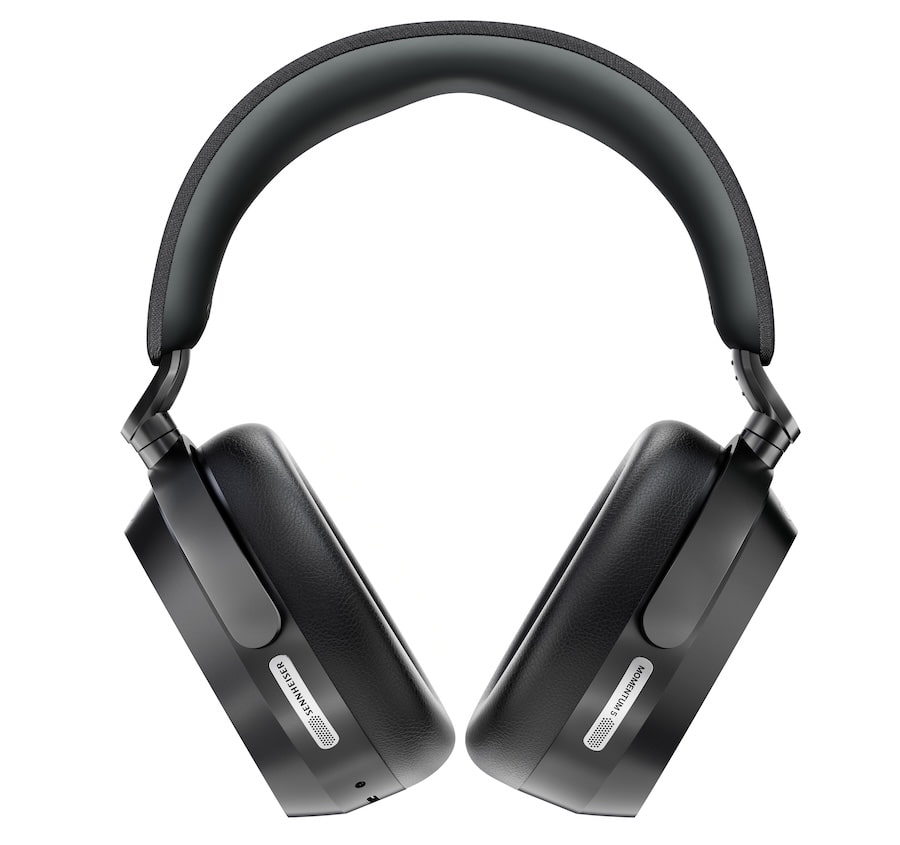
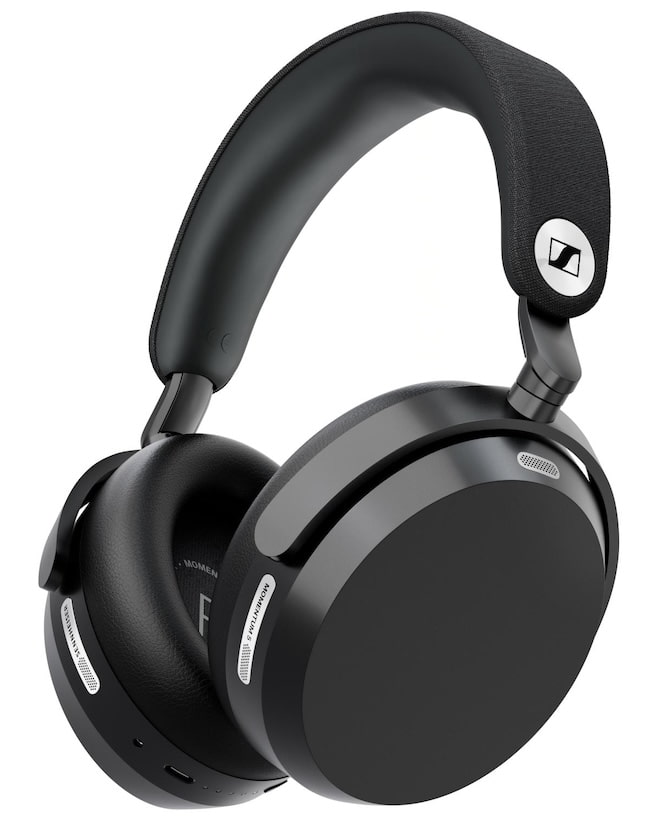
The Sennheiser MOMENTUM 5 Wireless arrives at a critical moment for every premium noise-cancelling headphone brand that likes sleeping at night. Sony has the new 1000X The ColleXion, Apple has finally pushed forward with AirPods Max 2, Bose is still leaning hard into noise cancellation with its latest QuietComfort Ultra Headphones, and Bowers & Wilkins Px7 S3 continues to court listeners who demand that their wireless headphones sound like high-end transducers.
That matters because Sennheiser has spent the past few years defending two different corners of the headphone market: the mainstream wireless category with the MOMENTUM 4 Wireless, and the more serious audiophile lane with the HDB 630, which we also reviewed as a higher-performance Bluetooth headphone for listeners who prioritise sound quality over ANC performance or call quality.
MOMENTUM 5 Wireless Keeps the MOMENTUM 4 Formula But Adds More Control
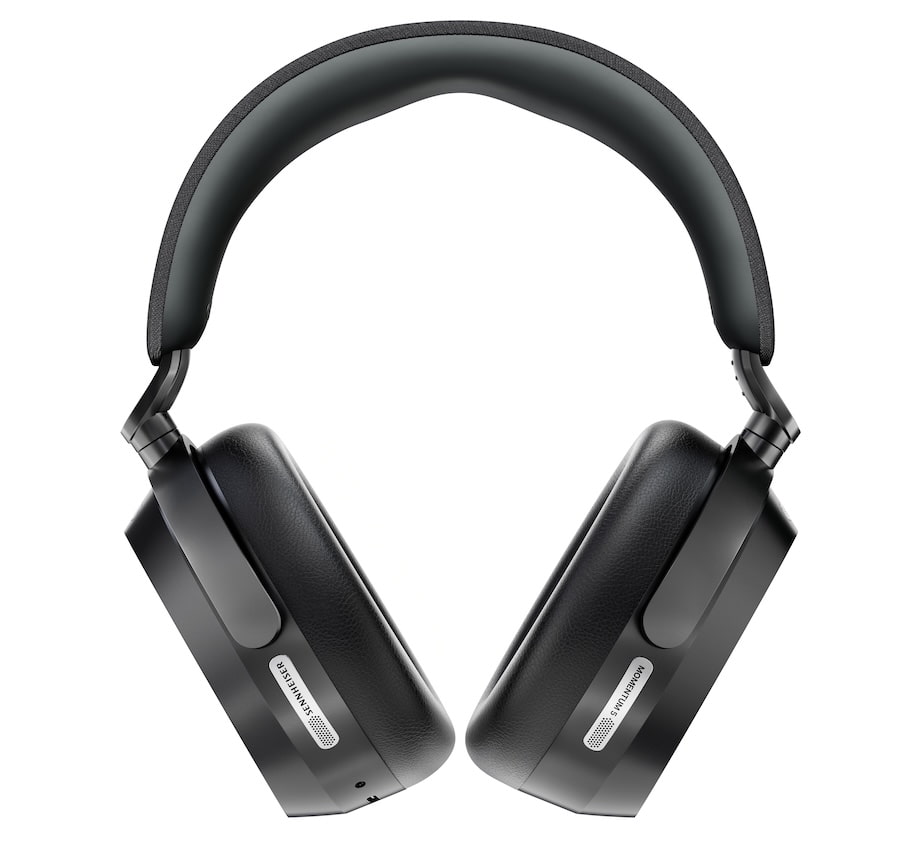
The Sennheiser MOMENTUM 5 Wireless builds on the MOMENTUM 4 platform rather than replacing the basic formula. The new model keeps the 42mm transducer from its predecessor, manufactured at Sennheiser’s Tullamore, Ireland facility, and uses tuning inspired by the company’s HD 600-series headphones. Sennheiser describes the sound as full-bodied with dynamic bass, which suggests continuity with the MOMENTUM line rather than a major sonic reset.
The more practical headline may be the user-replaceable 700 mAh battery, which gives the $399.99 MOMENTUM 5 Wireless a real longevity advantage over rivals that still treat batteries like a countdown timer to your next purchase. Sennheiser is giving owners a way to keep the headphones they already paid for instead of nudging them toward the next model the moment battery life starts to fade.
The codec and wireless story has also been updated. MOMENTUM 5 Wireless includes Hi-Res Audio certification, Snapdragon Sound, and Bluetooth codec support up to aptX Lossless. It ships with Bluetooth 5.4, but Sennheiser says the hardware is designed to support Bluetooth 6.0 through a future firmware update.
Noise cancellation has been revised with more microphones. Sennheiser says the MOMENTUM 5 Wireless uses four microphones per side for ANC and transparency functions, doubling the microphone count used for those duties. The company claims the new system is up to three times more effective at reducing distracting voice chatter, with improvements to airplane cabin noise reduction and voice quality on calls.
Spatial Audio Arrives, But the Replaceable Battery May Matter More
Spatial audio is included, but there are a few conditions. Dolby Atmos with head tracking will be enabled through a day-one firmware update in Sennheiser’s Smart Control Plus app, and it requires an Atmos-enabled source device plus supported Atmos content.
That should include popular devices such as recent iPhones, iPads, Macs, Apple TV 4K, many current Android phones, Fire TV devices, and other streamers or computers that support Dolby Atmos playback through services like Apple Music, Amazon Music Unlimited, TIDAL, Netflix, Disney+, or Max. The MOMENTUM 5 Wireless can handle the feature, but the phone, app, subscription tier, and content still have to line up. Naturally, audio remains a team sport whether we like it or not.
Support for Dolby Atmos-encoded content streamed through TIDAL worked properly out of the box, but head tracking was not yet enabled during my review period.
Battery life remains a major part of the story. Sennheiser rates the MOMENTUM 5 Wireless at up to 57 hours per charge with ANC engaged. The bigger practical change is the user-replaceable 700 mAh battery, which can be swapped with a small Phillips-head screwdriver.
That 60-hour battery claim looks great on paper, but real-world use landed a bit lower for me. Across several weeks of mixed listening, I averaged closer to 53 to 54 hours, depending on volume, source device, codec support, and whether I was streaming music from TIDAL and Qobuz or watching movies and TV on an iPad Pro.
Battery drain varied by device. My iPhone 14, iPhone 17, and iPhone X burned through the charge a bit faster, while a borrowed Samsung phone came closer to the upper end of Sennheiser’s rating. Streaming hi-res content from Qobuz and TIDAL pulled those numbers down slightly, which is exactly what you would expect when asking the headphones to do more than sip compressed audio through a straw.
With ANC engaged, especially in Adaptive or Custom modes, I would set realistic expectations closer to 51 to 52 hours. That is still excellent. I used the MOMENTUM 5 Wireless on NJ Transit, inside the walking migraine known as American Dream on Memorial Day Sunday with roughly 150,000 people trying to turn a mall into a survival documentary, and during a United Airlines trip home from Las Vegas that was delayed, rerouted through George Bush Airport in Houston, then Dulles in Northern Virginia, before finally reaching Newark about 17 hours later.
After seeing The Wizard of Oz at Sphere in Las Vegas, I thought Dorothy had the rough travel day. Turns out all she needed was a pair of ruby slippers and a unionized gate agent.
The practical takeaway is simple: the MOMENTUM 5 Wireless has more than enough stamina for a full week of commuting, travel, office use, and the kind of airport punishment that makes you question every life choice since booking basic economy. For anyone who treats wireless headphones like a daily workhorse rather than a delicate audio object, the battery life is one of the stronger reasons to consider them.

Build Quality, Comfort, and a Travel Case That Actually Saves Space
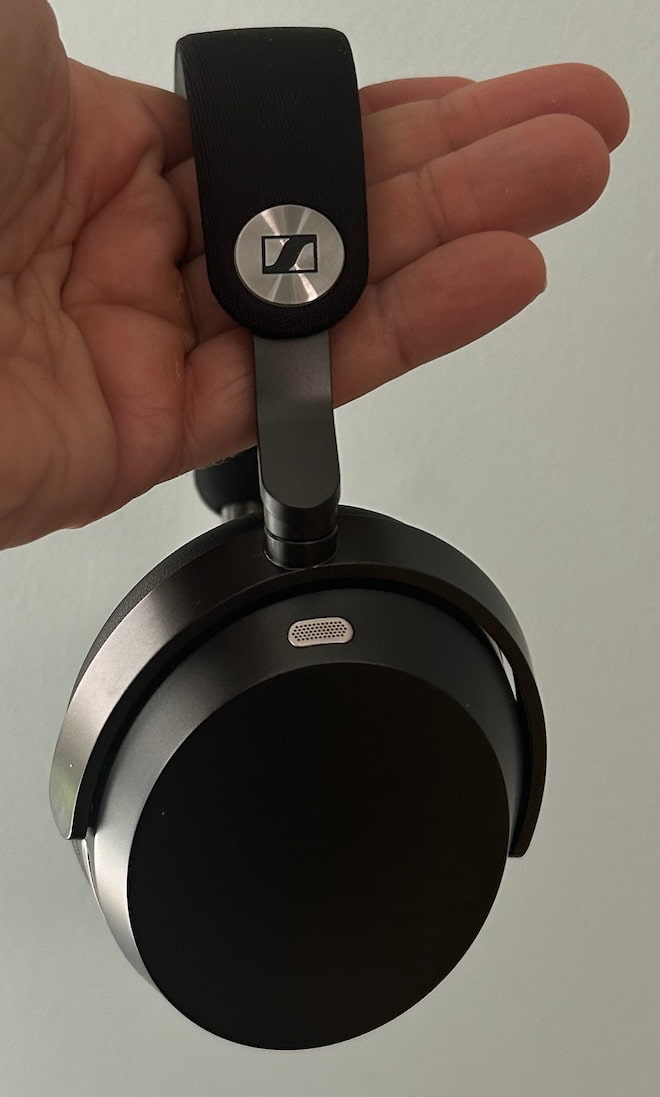
The MOMENTUM 5 Wireless fold flat for travel, which helps, although they do not feel quite as premium in the hand as the Bowers & Wilkins Px7 S3 or Px8 S2. Those remain part of my daily rotation along with the HDB 630, and Bowers still has the edge when it comes to materials and that more polished luxury feel. The Sennheiser build is still quite solid, just more practical than posh.
The headband uses braided cloth on the top side with padding underneath, and on my head, the MOMENTUM 5 Wireless feel very similar to the HDB 630. The difference is that the HDB 630 uses the same leatherette material on both the inside and outside of the headband, which gives it a slightly different tactile feel. Both are lightweight and easy to wear, and neither feels like it was designed by someone who thinks discomfort builds character.
The ear pads have the same basic issue I noticed with the HDB 630. They are soft and comfortable, but I would prefer them to be slightly firmer. They also get warm after about 30 minutes, especially during commuting or longer listening sessions. Not unbearable, not deal-breaking, but noticeable.
Clamping force is generally similar to the HDB 630 and less firm than the Bowers & Wilkins models. That matters because I have a huge head, move through trains with some force, and still somehow try to maintain the stealth profile of a ninja who has had enough of NJ Transit. The MOMENTUM 5 Wireless stayed secure without feeling tight, which is the balance you want from travel headphones that are going to see actual use rather than live in a review drawer.
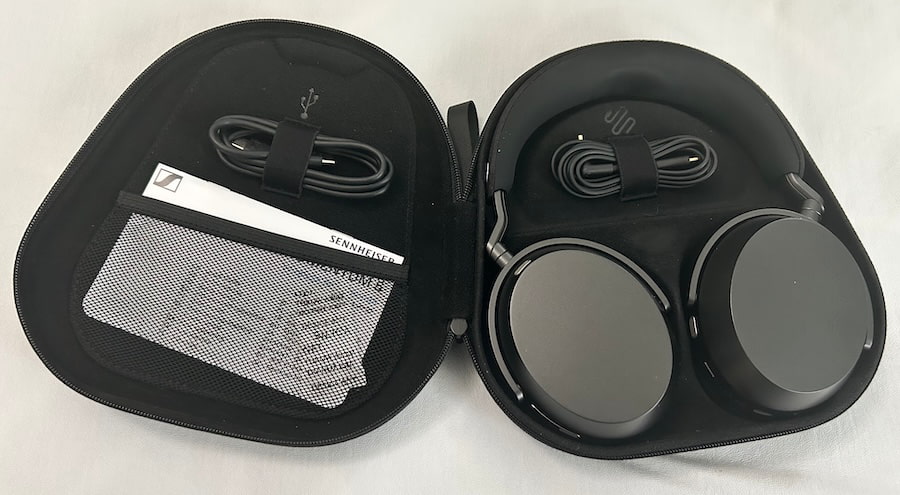
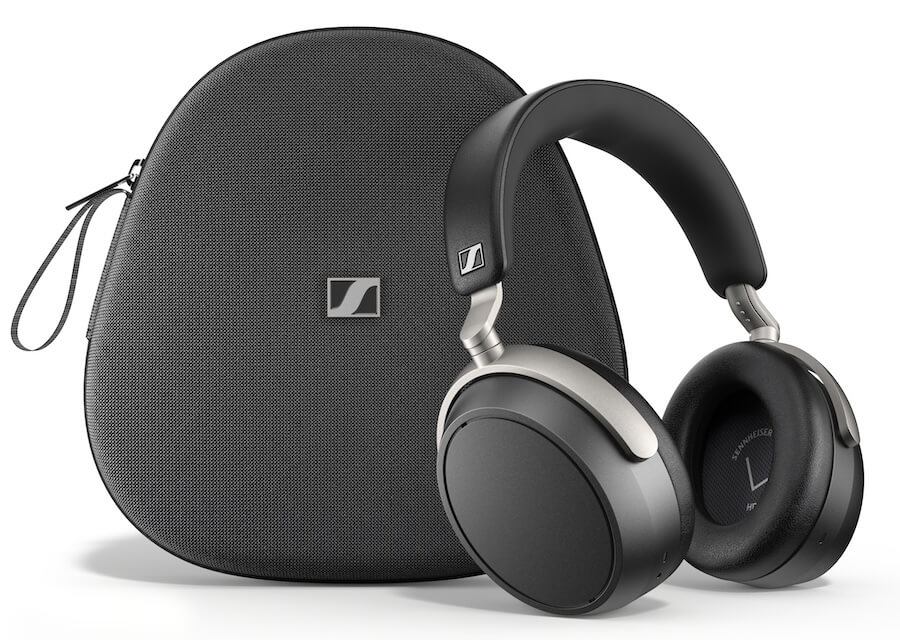
Sennheiser has also reduced the overall travel footprint. The MOMENTUM 5 Wireless carrying case is 20% smaller, and the packaging is now smaller and plastic-free. Inside the case, Sennheiser includes a USB Type-C charging cable and a 3.5mm analog audio cable, so wired listening is still available for laptops, in-flight entertainment systems, and the other legacy sources that refuse to die quietly.
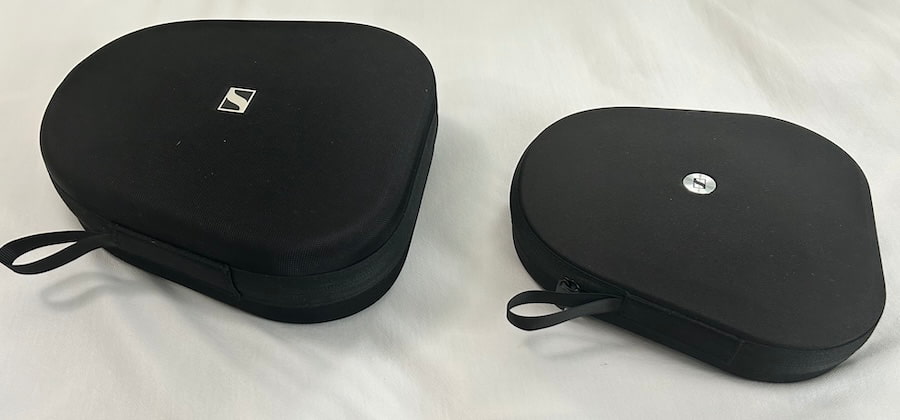
Compared to the case supplied with the more expensive HDB 630, the MOMENTUM 5 Wireless case is noticeably smaller, which matters when the headphones are going into a backpack, carry-on, or that personal item you are already pretending is not overstuffed. Both models fold, so neither is a travel disaster, but the MOMENTUM 5 Wireless is clearly the more compact option.
The accessory package is where the pricing difference starts to make more sense. The HDB 630 includes extras such as the airplane adapter and Sennheiser’s BTD 700 USB Adapter; the MOMENTUM 5 Wireless does not. That makes the HDB 630 the better-equipped package for listeners who want more connection options in the box, while the MOMENTUM 5 Wireless keeps things simpler, smaller, and more mainstream.
Smarter App, Stronger ANC
The companion app also gets more control. The new Smart Control Plus app includes an 8-band EQ, user presets, and Sennheiser’s Sound Personalization system. That should give listeners more flexibility than a few canned tuning modes, especially for those who liked the MOMENTUM 4 but wanted more precise adjustment.
One of the stronger parts of the MOMENTUM 5 Wireless experience is Sennheiser’s Smart Control Plus app. This was already one of the highlights with the HDB 630, and that carries over here. The app is comprehensive without feeling like homework, and it worked flawlessly with both Sennheiser models during my testing.
The level of control is the real win. You are not stuck with a crude choice between full ANC and transparency mode. The MOMENTUM 5 lets you adjust the level of noise cancellation, enable or disable Anti-Wind in ANC mode, manage multipoint connectivity, and turn the app’s individual tiles on or off depending on what you actually use. That last part sounds minor until you have used enough headphone apps that feel like they were organized by committee after a three-hour liquid lunch.
ANC performance is also very strong. The MOMENTUM 5 Wireless did an effective job reducing commuter noise, chatter, and the general low-level misery that comes with trains, airports, and crowded public spaces. More importantly, it does not wreck the sound. There is still a slight reduction in openness and detail with ANC engaged, and the presentation tightens up a little, but the damage is minimal.
I still prefer listening with ANC off when the environment allows it, because the MOMENTUM 5 sounds more open and natural that way. But Sennheiser has made the ANC useful without turning the music into a padded cell.
Buttons, Touch Sensors, and Real-World Use
The MOMENTUM 5 Wireless and HDB 630 are very similar when it comes to controls, and that is mostly a good thing. Sennheiser keeps the basics straightforward with a power button that also handles pairing, plus the expected USB-C connection and 3.5mm analog input for wired listening. Nothing exotic there, and nobody needs a treasure map to find the ports.
The touch controls are where things get more personal. Sennheiser’s system works, and I will give them full credit for that. Playback, volume, track skipping, calls, ANC, and transparency mode can all be handled from the ear cup, and the gestures responded reliably during my testing. Transparency mode can be activated with a double tap, which is useful when someone suddenly decides your headphones are an invitation to start talking.
That said, I am still more of an app person. The controls are not bad, but after rotating through multiple headphones and wireless earbuds, each with its own secret handshake of taps, swipes, pinches, holds, and “wait, was that two fingers or three?” routines, it becomes a lot to remember. At some point, you are not controlling headphones; you are auditioning for community theater mime work.
Sennheiser’s Smart Control Plus app makes more sense for how I actually use headphones. It is clean, comprehensive, and easier than trying to remember every gesture sequence while standing on a train platform or walking through a crowded terminal. The touch controls are there, they work, and plenty of users will like them. I just prefer opening the app and making the adjustment without playing finger Twister on the side of my head.
As for phone calls, the MOMENTUM 5 can handle them, but I remain fundamentally opposed to taking calls through earbuds or headphones unless absolutely necessary. That is not a Sennheiser problem. That is a “please stop making me listen to people conduct business next to the avocados” problem.
BTD 700 Dongle: Great Idea, Rough Landing With MOMENTUM 5
The MOMENTUM 5 Wireless has a stronger codec story than the HDB 630 in one key respect: it supports aptX Lossless in addition to the usual Bluetooth basics, but there is still no LDAC support. For Android users with the right hardware, that may not be a big issue. For Apple users, it gets more complicated because the iPhone and MacBook still do not support aptX natively. Naturally.
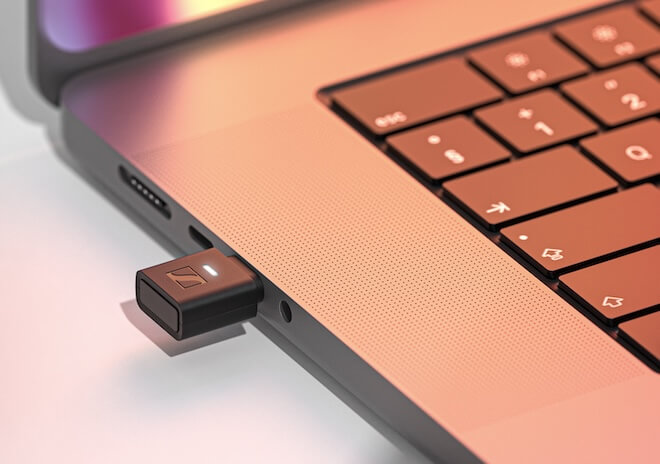
That is where Sennheiser’s BTD 700 USB-C dongle is supposed to help. It acts as an external Bluetooth transmitter, bypassing the device’s built-in Bluetooth stack and handling higher-quality codec support itself. In theory, that makes it a very useful add-on for getting better wireless performance from laptops, tablets, and phones that otherwise leave you stuck with more limited Bluetooth options.
The problem is that my experience with the BTD 700 and the MOMENTUM 5 Wireless was not clean. Using it with both my iPhone and MacBook, I heard audible distortion, which is not exactly the kind of “high-resolution” experience anyone is looking for. Sennheiser has confirmed that it is working on a fix, so this may be resolved through a firmware update, but as of my testing, the issue was real.
The MOMENTUM 5 Wireless still supports aptX Lossless, which is a meaningful feature on paper and potentially in practice. But the BTD 700 experience needs that fix before I would call it a slam dunk. Great concept. Right now, a little too much gremlin in the machine.
Listening
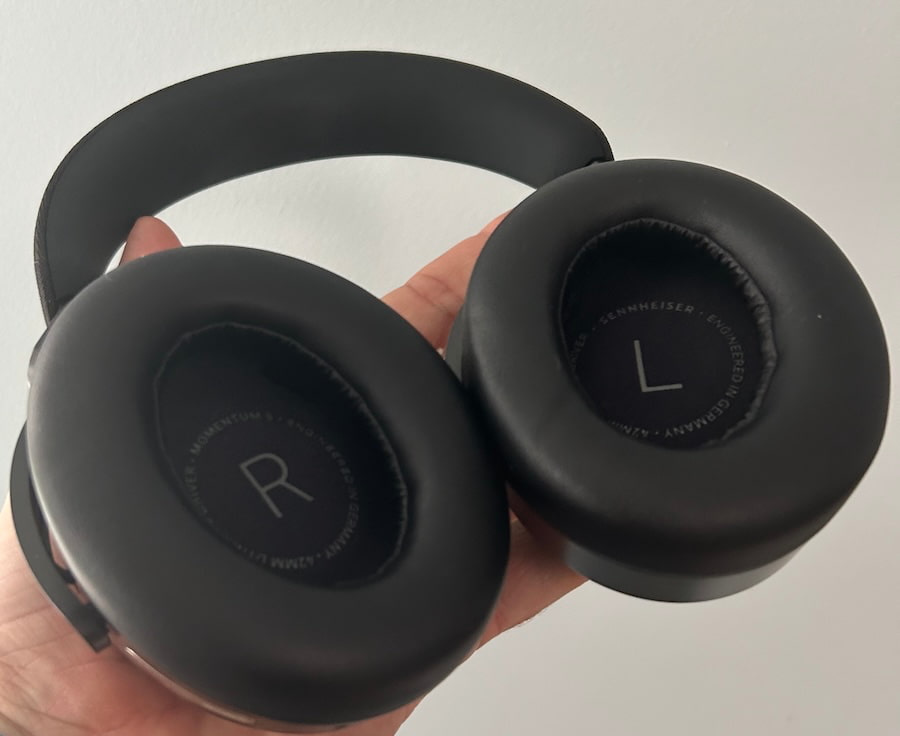
The MOMENTUM 5 Wireless and HDB 630 are cut from the same Sennheiser cloth, and anyone expecting two completely different headphones is going to be disappointed. Or relieved. They share a lot of the same DNA: excellent clarity, a largely linear tonal balance, strong midrange presence, and a presentation that favors detail and space over cheap bass tricks. Sennheiser did not turn the MOMENTUM 5 into a skull-rattling gym headphone, and thank you for small mercies.
But there are differences, and they matter.
Where the HDB 630 leans a little more restrained and studio-minded, the MOMENTUM 5 Wireless brings slightly more weight and impact in the bass range. It still will not rearrange your dental work, but there is more definition, punch, and low-end authority than I heard from the HDB 630. Green Day’s “Jesus of Suburbia” and “21 Guns” still had the clarity, imaging, and sense of space that made the HDB 630 so easy to like, but the MOMENTUM 5 added a little more drive underneath the guitars and drums. Not bloated. Not boosted into stupidity. Just more physical.
That difference became more obvious with Daft Punk’s “Get Lucky” and “Giorgio by Moroder.” The HDB 630 presents those tracks with a more open, almost studio-monitor sense of space, which is rare for a closed-back wireless headphone. The MOMENTUM 5 does not lose that Sennheiser clarity, but it adds more rhythmic grip and bass definition. The groove lands with more conviction, which matters when the entire point of the track is to make you forget whatever nonsense you were supposed to be doing for the next six minutes.
Sia’s “Unstoppable,” “Cheap Thrills,” and “Breathe Me” pushed the MOMENTUM 5 in a different direction. Those tracks are a cheerful little reminder that love, betrayal, and emotional wreckage can apparently come with solid production values. Her voice was cleanly centered and easy to follow, with enough texture to keep the emotional weight intact. “Breathe Me” in particular exposed the MOMENTUM 5’s ability to keep vocals intimate without turning the presentation syrupy. The HDB 630 is a touch more controlled and refined through the upper ranges, but the MOMENTUM 5 gives the material a bit more body.
Massive Attack’s “Teardrop” also favored the MOMENTUM 5’s extra bass definition. The pulsing low end had more shape and authority than it does through the HDB 630, while the vocal remained suspended in the mix with that slightly ghostly quality the track needs. Again, this is not bass-head territory. Sennheiser is not auditioning for a parking lot SPL contest. But the MOMENTUM 5 has more impact where the HDB 630 can sometimes feel a little polite.
Disturbed’s cover of “The Sound of Silence” was the track that really exposed the difference. David Draiman’s voice needs weight, control, and scale, and the MOMENTUM 5 gave it more physical presence than the HDB 630. The power in his delivery hit harder, especially as the arrangement builds. Draiman is also a total mensch and a personal hero, so I am not exactly coming into that track emotionally neutral. Still, the MOMENTUM 5 handled the vocal intensity well without smearing the edges or turning the whole thing into melodrama with Bluetooth attached.
The one tradeoff is the top end. On some of the same tracks I used with the HDB 630, the MOMENTUM 5 Wireless sounded slightly harder through the treble. Not bright enough to become a deal-breaker, and not sharp enough to make me start bargaining with my own ears, but it is there. The HDB 630 has a little more refinement and composure up top, while the MOMENTUM 5 trades some of that smoothness for greater bass impact and a more energetic overall presentation.
That is really the comparison in one sentence: the HDB 630 is the more restrained, refined, audiophile-leaning wireless headphone, while the MOMENTUM 5 Wireless gets very close in clarity and tonal balance but adds more bass definition, more punch, and a little more everyday fun. Sennheiser may have created a problem for itself here, because the less expensive headphone does not sound like the lesser one in every category.
The Bottom Line
The Sennheiser MOMENTUM 5 Wireless is not a dramatic reinvention, but it does not need to be. The upgrades that matter are practical and audible: Dolby Atmos with head tracking, stronger ANC with four microphones per side, aptX Lossless, Hi-Res Audio certification, an 8-band EQ, and a user-replaceable 700 mAh battery. That battery is the sleeper feature because it gives the $399.99 MOMENTUM 5 a real longevity advantage in a category where too many brands still treat worn-out batteries as your problem.
What is missing? There is still no LDAC, the BTD 700 dongle issue needs a fix, and the MOMENTUM 5 does not include the same accessory package as the more expensive HDB 630. It also does not feel quite as premium as the Bowers & Wilkins Px7 S3 or Px8 S2, even if the build is solid, comfortable, and travel-friendly.
Should you buy it over the HDB 630 and save some money? For many listeners, yes. The HDB 630 still has the more refined, audiophile-leaning presentation, but the MOMENTUM 5 gets surprisingly close while offering stronger bass impact, excellent ANC, a better travel footprint, and a lower price. That makes it one of the more compelling wireless headphones in the $350 to $450 range, and anyone shopping there should put it on the audition list before Sony, Bose, Apple, or Bowers get the automatic nod.
Pros:
- Strong clarity, detail retrieval, and linear tonal balance
- More bass impact and definition than the HDB 630, without turning into a bass-heavy mess
- Excellent ANC performance that does not seriously damage sound quality
- Smart Control Plus app is comprehensive, reliable, and genuinely useful
- Adjustable ANC, Anti-Wind mode, multipoint connectivity, and customizable app tiles
- Dolby Atmos support worked properly with TIDAL during testing
- aptX Lossless support gives it a stronger codec story than many rivals
- User-replaceable 700 mAh battery is a major long-term ownership win
- Real-world battery life remains excellent, even if below the claimed maximum
- Lightweight, comfortable fit with solid build quality
- Folds flat and comes with a noticeably smaller travel case than the HDB 630
- Strong value at $399.99 compared with the more expensive HDB 630
Cons:
- No LDAC support
- BTD 700 USB-C dongle produced distortion with iPhone and MacBook during testing
- Head tracking was not enabled during the review period
- Treble can sound slightly harder than the HDB 630 on some tracks
- Does not feel as premium as the Bowers & Wilkins Px7 S3 or Px8 S2
- Ear pads could be slightly firmer
- Pads get warm after about 30 minutes
- Does not include the airplane adapter or BTD 700 USB Adapter like the HDB 630
- Touch controls work, but remembering every tap, swipe, pinch, and gesture remains a pain
Our Ratings
★★★★★★★★★★ Sound Quality
★★★★★★★★★★ Comfort
★★★★★★★★★★ Usability
★★★★★★★★★★ Build Quality
★★★★★★★★★★ ANC
★★★★★★★★★★ Value

Price & Availability
The MOMENTUM 5 Wireless will be available in Black, White, and Denim finishes for $399.99 USD, with U.S. availability beginning June 16, 2026 through Sennheiser’s website and select retailers.
Related Reading:
We have been waiting for the Ferrari Luce for eight years.
It was January 2018 when, at the North American International Auto Show in Detroit, former Ferrari chairman and CEO Sergio Marchionne first hinted at a “prancing horse” EV to compete with Tesla.
“If there is an electric supercar to be built, then Ferrari will be the first,” Marchionne said. “People are amazed at what Tesla did with a supercar: I’m not trying to minimize what Elon, did but I think it’s doable by all of us.”
Well, Ferrari has not been the first. But it has certainly taken the award for most anticipated EV launch ever, what with the drip-feed strategy of an initial model “nickname” of Elettrica, then last October’s powertrain reveal, then, in February, the Apple-esque LoveFrom-designed interior spearheaded by Jony Ive and Marc Newson.
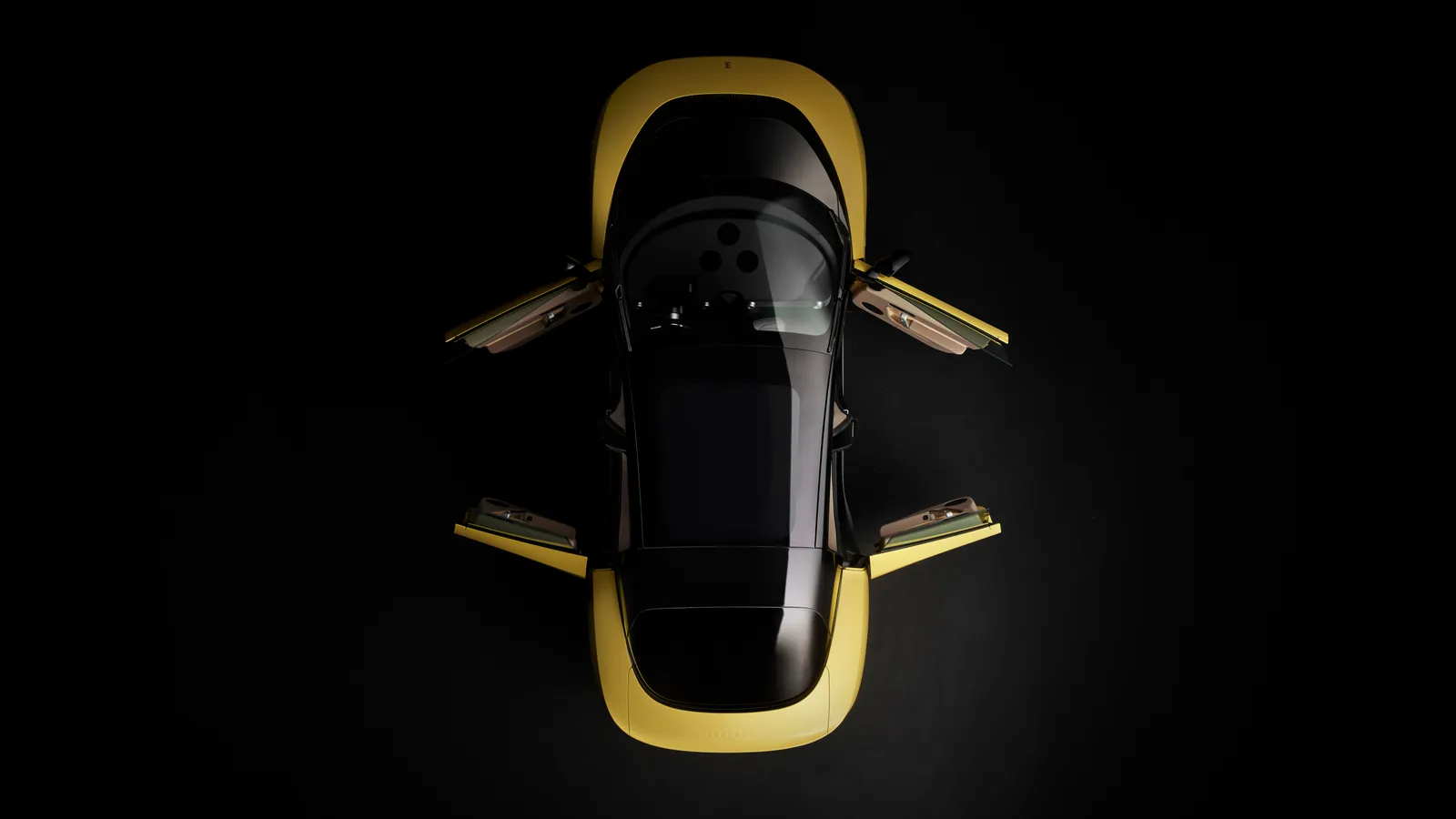
Today’s reveal of the exterior in Rome by Ferrari ends the secrecy and completes the process. This is the Luce (Italian for “light”), the most consequential thing Maranello has made in decades.
Courtesy of Ferrari

The numbers are suitably high-end. Four motors, one per wheel, have a combined output of over 1,000 horsepower in Boost mode. The rear axle puts out 832 hp and 7,750 Nm to the wheels. The front axle adds 282 hp and 3,400 Nm. Full power is available in less than a second. Zero to 62 mph is dealt with in 2.5 seconds, then on to a top speed of 192 mph. This is effectively a hypercar in a GT disguise with five seats (a first for Ferrari).
The 122 kWh battery—one of the largest in any production EV—charges at up to 350 kW on an 800-volt system. Ferrari is claiming this battery gives the Luce a range of more than 329 miles per charge. The all-wheel drive and steering are inspired by the Purosangue SUV. Ferrari has confirmed a curb weight of 4,982 pounds, or 2,260 kg, which is only around 200 pounds more than the Purosangue, despite that thumping great battery pack.
Courtesy of Ferrari


Oppo has launched a new phone accessory in China called the Oppo Bubble, and it’s surprisingly versatile. It functions like a selfie tool, while also being a tiny rear display, a playful phone add-on, and a fun accessory in general. All of this would have it dominate tech TikTok a few years ago.
Announced alongside the Reno 16 series, the Bubble is a compact magnetic circular display that attaches to the back of supported Oppo smartphones. The tiny gadget basically acts like a secondary screen that helps in taking better selfies, which is honestly handy. It is small, light, and customizable, while also upgrading your selfies or group photos thanks to the better rear cameras. You’d usually have to guess the framing with your rear cameras, but this just makes it work.

What all can it do?
The Oppo Bubble has a circular AMOLED touchscreen that can show static wallpapers, live photos, videos, emojis, decorative themes, and carousel-style media playback. Meaning, the gadget isn’t limited to just being a selfie accessory. Though, the wireless camera preview is undoubtedly the most practical feature.
When the Bubble is attached, users can preview framing, adjust angles, and trigger shots remotely. Oppo claims that the Bubble supports wireless live preview from up to 10 meters away, which could make it useful for tripod shots, group photos, or anyone who has ever done the awkward “set timer, sprint into frame, hope for the best” routine.

Useful and still light
The good news is that Oppo did not make this thing absurdly chunky. The Bubble measures about 7mm thick and weighs around 27.5 grams, so it should not turn a phone into a pocket dumbbell. It also has a built-in 550mAh battery, pairs without cables, and can be detected automatically by compatible Oppo phones when brought nearby.
You can even use it as a standalone hanging display accessory when paired with a compatible protective case. The Oppo Bubble is priced at 499 yuan, or roughly $75, in China. Current compatibility includes the Oppo Reno 16 series, Reno 15 series, Reno 14 series, Find X8 series, and Find X9 series.

Looking at how impressive some of its latest flagship camera phones have been, owners of those devices can have a really great experience with accessories like these. Not everyone needs a tiny magnetic selfie screen on the back of their phones, but vloggers, selfies addicts, and people who love fun tech would definitely see the appeal here.
Tech
New tune for Code.org’s Hadi Partovi: CEO of piano education venture with unique method and big ambitions


Hadi Partovi helped kids around the world learn to code. Next on the playlist: piano.
The Code.org founder, who earlier this year handed off the CEO role at the nonprofit, announced this weekend that he is the new CEO of Payam Music, a Bothell, Wash.-based piano school that he plans to expand nationally with backing from Mark Cuban, Uber CEO Dara Khosrowshahi (Partovi’s cousin), and Oscar-winning composer Hans Zimmer.
The news coincides with a 60 Minutes segment and a USA Today feature about the school and its teaching approach, known as the Payam Method. Instead of starting with sheet music and a classical repertoire, students learn to play using letters and numbers, choosing songs they already love. Traditional notation and theory come later as students progress through 18 levels.
“I’m taking my experience teaching computer science to hundreds of millions and connecting it to my lifelong love of piano,” Partovi wrote in a LinkedIn post on Sunday.
Partovi told USA Today that he and his twin brother Ali learned piano as children in Iran after the Islamic revolution, when the family was stuck at home. Their father cut out musical notes and taped them to the keys so they could teach themselves.
After immigrating to the U.S. and moving in with their grandmother, Partovi could no longer afford lessons but kept playing on his own. He still composes his own music.
Payam Music was founded by Payam Khastkhodaei, a 32-year-old piano teacher who developed the method while giving lessons out of a converted home in Bothell. Partovi discovered the school when his son Darius enrolled and saw rapid progress after years of struggling with traditional lessons.
On 60 Minutes, Partovi compared the approach to Code.org’s method of teaching coding with blocks and drag-and-drop elements instead of ones and zeros and semicolons.
Payam Music has eight locations, in Washington state, California, New York, and Maryland. It has raised seed funding in the single-digit millions to expand nationally, USA Today reported.
Khastkhodaei told paper that about 97% of his students continue beyond the first year, compared with 15% to 20% in traditional instruction. Lessons cost $75 to $100 per session.

Verdict
After testing so many air fryers, they tend to start looking and performing the same. However, the Typhur Sync Air Fryer stands out for several reasons. The built-in temperature probe ensures that meat reaches a safe temperature. The large display panel on the top is user-friendly, and there’s also an app that makes cooking even easier. And did I mention that the air fryer performs exceptionally well?
-
Six presets on panel, and three via app
-
Wireless probe with five sensors
-
User-friendly control panel
-
Typhur AI app adds functionality
-
Thermometer can only be used with Typhur Sync Air Fryer
Key Features
-
Wireless probe
Forget guessing if food is done. The wireless probe has 5 sensors to provide an accurate reading.
-
8-quart capacity
Make a whole 6lb chicken or 3lb of frozen French Fries in the generous interior.
Introduction
In the crowded field of air fryers, the Typhur Sync Air Fryer is in a class by itself. The appliance has several features that you won’t find on most other models (at least, not yet). For example, the Typhur Sync has a built-in wireless probe (meat thermometer) that sits in a cradle on top of the air fryer. The Typher app offers almost complete control of the appliance – and even includes three presets that are not on the control panel! The presets for wings, fries, and bacon can only be accessed via app. Keep reading to discover what else makes the Typhur Sync Air Fryer so special.
Design
- Magnetic case houses wireless probe
- Two control panels
- 6 presets on controls
The Typur Sync Air Fryer arrived in a brown, branded cardboard box. Everything was well-packaged to prevent damage.
The contents include the main air fryer body, basket (ceramic-coated and PFAS- and toxin-free), grill plate, wireless probe, probe case, and also documentation (user manual, quick start guide, and precautions before use).

The probe is made of stainless steel and has a high-density ceramic handle, and a safety notch. It has 5 internal temperature sensors in various locations. The probe needs to be charged for at least 30 minutes before using it for the first time. A 30-minute charge provides 12 hours of continuous usage, while a 10-minute charge will last for 8 hours, and a 3-minute charge will deliver 3.5 hours of continuous usage.

The thing about using probes is that you have to remember where you put them. However, there’s actually a cradle (magnetic case) on top of the air fryer, and this is where the probe is housed and where it charges.
There are actually two control panels. One is the general control panel and the other control panel is only displayed when in probe mode.

The general (or manual) control panel includes the power button, up and down arrows on the left to increase or decrease the temperature, and up and down arrows on the right to increase or decrease the time. The 6 presets (air fry, roast, bake, dehydrate, reheat, and preheat) are at the bottom of this section, along with the start button. However, the Typhur app provides access to 3 additional preset programs: bacon, wings, and fries. These presets cannot be accessed using the air fryer’s onboard controls.

When using the probe, a separate set of controls will appear at the top of the control panel. This is where you’d choose presets for beef, chicken, pork, and fish. This is also where you can select the doneness level (from rare to well done). The probe status is also displayed here, such as the charging status, and the disconnect option. Both the target temperature and the current temperature are shown in this section as well, along with the option to use the probe manually.
The air fryer has a temperature range of 105°F to 450°F.
Performance
- Typhur AI recipe generator
- App controls
- Probe makes cooking foolproof
Typhur recommends preheating the air fryer for optimal results. There’s also a flipping reminder (the words FLIP flash on the control panel). The appliance chimes when cooking cycles are complete.
For my first test, I made French Toast. I’m familiar with the process, but pulled up the recipe on Typhur AI, which generated ingredients and extensive directions.
I like Typhur AI because it doesn’t just provide general instructions. I can chose which Typhur device I’m using, and it customizes the instructions for that appliance.
I preheated the oven and then baked the French Toast at 370°F for 10 minutes, flipping at the halfway point. The French Toast was golden brown on the outside, and fluffy on the inside.

Since I’m not the type of person who cooks whole chickens, I did the next best thing and roasted 2 large chicken breasts for my next test. I used the probe in manual mode, so it did not open the probe control panel.
However, the chicken breasts turned out fine and it was slightly browned on the outside and juicy when I sliced into them.

When cooking the chuck roast, I used probe mode. I actually made the selections using the app on my smartphone, instead of using the onboard controls.
On the app, there’s an option to select timer mode or probe mode. Selections made via the app are displayed on the air fryer, so everything is synced.
I set the chuck roast for medium rare, and that’s how it turned out. It was flavorful, easy to slice, and retained plenty of juice to keep it from drying out.

I also used the probe when making pork chops in the Typhur Sync Air Fryer. This was another test that came out quite well. The pork chops were browned around the edges, and had a rich, hearty flavor. Sometimes, the texture or pork chops can be rather tough and dry, but that was not the case in this air fryer. The chops were juicy and mouthwatering.

I love making cookies in air fyers, and this one was no exception. The Nestle Tollhouse Cookies came out crunchy on the outside, and gooey on the inside.

French Fries also fared well in the Typer Sync Air Fryer. They were golden and crunchy on the outside, and soft on the inside.

On two separate occasions, I made wings. The first time I made regular wings, and the second time, I made whole wings. Each time, they were crispy and juicy.

Should you buy it?
You like to use wireless probes
There’s nothing worse than taking your food out and discovering it’s not properly cooked on the inside. This air fryer lets you set and monitor the temperature.
You don’t like the idea of dual control panels
The idea of a regular control panel, and a separate probe mode control panel might be a bit much for some people.
Final Thoughts
If you’re in the market for a new air fryer, I wholeheartedly recommend the Typhur Sync Air Fryer. The built-in wireless probe makes it easy to ensure food is cooked to the proper temperature. Presets on the control panel and the app also take most of the guesswork out of preparing meals – and the Typhur AI recipe generator provides more information than I ever thought I needed.
However, if you prefer a shallower basket, the Typhur Dome 2 is a futuristic-looking air fryer that costs twice as much, but has 15 settings, and can hold a 12” pizza, 10 pieces of bacon, or 32 chicken wings. Another option is the Ninja French Door Premium Air Fryer, Convection Oven, Toaster, which has 10 functions.
How we test
We test every air fryer we review thoroughly over an extended period of time. We use industry standard tests to compare features properly. We’ll always tell you what we find. We never, ever, accept money to review a product.
Find out more about how we test in our ethics policy.
- Used as our main air fryer for the review period
- We cook real food in each air fryer, making chips, frying sausages and cooking frozen hash browns. This lets us compare quality between each air fryer that we test.
FAQs
No, the probe is wireless, so easier to use.
This lets you remote control the air fryer, and it gives helpful cooking instructions.
Test Data
Full Specs
| Typhur Sync Air Fryer Review | |
|---|---|
| Manufacturer | – |
| Size (Dimensions) | 18.2 x 12.6 x 13.7 INCHES |
| Weight | 14 LB |
| Release Date | 2026 |
| First Reviewed Date | 09/04/2026 |
| Model Number | Typhur Sync Air Fryer |
| Accessories | Temperature probe |
| Stated Power | 1750 W |
| Number of compartments | 1 |
| Cooking modes | Air fry, roast, bake, dehydrate, reheat, and preheat. App only: bacon, wings, and fries. |
| Special features | Temperature probe |

The Web Serial API lets websites write to (and read from) serial devices using JavaScript, including USB and Bluetooth devices with virtual serial ports. And this week’s Firefox 151 release introduced support for the Web Serial API on desktop.
“Most folks won’t use this API,” acknowledges Mozilla’s blog, “but for our community of builders and tinkerers, it unlocks the ability to use Firefox to communicate directly with compatible hardware devices like microcontrollers, development boards, and other serial-connected devices…”
With Firefox’s browser engine, Gecko, now supporting Web Serial, users can now connect, code, configure, and control compatible hardware directly from the browser in many workflows, often without additional software or complicated setup…
As part of this week’s launch, Adafruit, one of the internet’s most beloved open-source hardware communities, is collaborating with us to test and validate what browser-based hardware development can look like in Firefox with Web Serial support… With Web Serial support in Firefox 151, Adafruit’s browser-based hardware workflows now work directly in Firefox as well, with no additional software or complicated setup required for many projects. We invite you to give it a try…
We want the web to be open, flexible, and shaped by the diversity of people building on it. If you’re wiring up your first board, experimenting with hardware projects, or dusting off an old electronics kit, give Adafruit and Web Serial in Firefox a try. Build something amazing. Make something useful. Tell us what works. Tell us what breaks. Most of all, make it your own.
Mozilla’s “Hacks” blog demonstrates with an Adafruit ESP32-S2 based board “where messages sent from web code can be directly displayed on the device over Web Serial.”
And Mozilla engineer Alex Franchuk even built a handheld device that changes a web page’s CSS properties.


“Social engineering” sounds like something out of a conspiracy thriller, charged with totalitarian control and fringe paranoia. More mundanely, it’s come to be associated with phishing and other scams, in which fraudsters manipulate people into disclosing personal information.
Yet the concept is older and more benign: it is the deliberate shaping of human behavior, often at scale. It predates silicon—and became pervasive, and ungoverned, especially once its practitioners learned to hide it. Authoritarian regimes and more recently scammers and big companies have profited from it. To defend ourselves from bad actors, and to benefit from social engineering’s good side, we need to reclaim the name, and govern it prudently.
The roots of engineering
In 1894, Dutch entrepreneur Jacques van Marken urged companies to hire “social engineers” to manage human systems such as insurance, education, and profit sharing for workers as carefully as they did mechanical ones. Fifteen years later, reformer William H. Tolman published Social Engineering, describing how U.S. industrialists optimized workers’ conditions alongside manufacturing methods. If industrialists could shape steel and electricity on demand, why not society itself?
By the 1920s, that confidence had spread. The architect Le Corbusier declared that dwellings were “machines for living in,” imagining cities as orderly lattices where people moved like parts on a conveyor belt. Civilization would run like a Swiss watch.
The idea soon darkened. Authoritarian regimes pushed it to extremes, promising to fashion “the New Man.” In Nazi Germany, engineer Fritz Todt founded Organization Todt, a vast state engineering enterprise that emerged from the autobahn highway system and later operated concentration camps using slave labor.
In the Soviet Union, leaders adopted U.S. scientific management techniques to plan factory-worker movements and classify populations through centralized records, feeding both rapid industrialization drives and the gulag system of forced labor. The same tools and managerial methods used to build highways and enact five-year plans worked for repression and mass control.
By the 1950s, “social engineering” had become a contaminated phrase. The revelations of Nazi and Soviet abuses, along with Cold War critiques of grand social planning turned the term from a progressive slogan into a warning label. Banishing the words pushed the practice underground, making it harder to recognize when it resurfaced in new forms—such as organizational psychology and systems management that still relied on classification and behavioral influence techniques but under softer, less loaded labels.
Social engineering’s more subtle spread
In the postwar years, the new social-engineering lexicon included “human factors” and “urban planning,” all promising integration rather than command. As computing advanced, the language shifted again: “customer journey mapping” to track interactions, “user experience” to script them. Engineering, which began as a means of reshaping physical space, set its sights on shaping behavior. Digital design features embedded in our smartphones now target our attention and desire.
Language helps conceal these modern forms of social engineering. “Data analytics” sounds neutral beside “surveillance.” “Personalization” flatters individuality while still sorting users into predictable categories. “Behavioral nudges” guide decisions without the sense of intrusion. We attach “social” as a favorable modifier to sciences, capital, and media, yet recoil when it meets “engineering.”
That discomfort is a clue. Engineering implies control, and control prompts us to ask who directs whom, toward what ends, and with whose permission.
Not all social engineering these days is hidden. Hackers don’t need to break a firewall if someone hands over their password. Romance scammers cultivate intimacy the way farmers cultivate crops. They succeed not through force but by exploiting trust. If even these obvious attacks work, the invisible kind, with roots in social engineering, are a shoo-in.
Most of the social engineering we encounter is proprietary and beyond our control. Firms build recommendation algorithms tuned to boost engagement and profit with no hearings or right of appeal. Browser and cookie defaults decide what data we surrender. A single autoplay toggle can cost users hours and build unhealthy habits. These are acts of engineering as deliberate as laying a road or redrawing an electoral district. They create a kind of curated itch by which boredom never settles, and satisfaction never arrives. The results are predictable—users click on targeted ads, make purchases, form habits, and lock in opinions.
Consent has transformed along with it. Once straightforward and revocable, it is now subtle and persistent, buried in defaults or opaque terms of service too quickly accepted. You remain free to opt out, much as you are free to refuse roads or electricity. Consent has become the preselected setting of modern life.
When social engineering operated more in the open, citizens could contest it, at least in societies with responsive government. Today’s invisible version diffuses accountability so thoroughly that scrutiny becomes hard to direct. Despite recent congressional hearings on social media’s impact on youth mental health and juries agreeing that firms are knowingly designing algorithms that cause harm, pinpointing responsibility remains elusive. When the mechanism is buried inside a system used by billions, we cannot easily point to a single decision-maker or trace the precise moment of manipulation.
Today’s social engineering is less overt and theatrical than its predecessors. Earlier versions arrived on public posters and loudspeakers for mass audiences. Today’s version is more intimate, delivered through personal devices and constant feeds tailored to the individual. The model succeeds because participation feels like freedom, not control.
Not all social engineering is dystopian. Well-kept parks foster community, accessible buildings extend dignity, vaccines and seatbelts save lives. Even in the digital realm, positive examples exist: browser extensions that automatically block hidden trackers, search engines that refuse to build personalized surveillance profiles, and decentralized social platforms that give users greater control over their own data and feeds.
The term “social engineering” still unsettles, though. But “asocial” engineering, which ignores human consequences entirely, is worse. Recognition of the human dimension to engineering is the beginning of repair. Only by seeing the machinery clearly and naming it honestly can we decide who engineers what and why. The machinery will not dismantle itself. Once named, it becomes subject to choice. That negotiation of purpose, power, and process are the defining political questions of any real democracy. We cannot ensure that social engineering serves and sustains society so long as we dodge the words.
From Your Site Articles
Related Articles Around the Web


Systems
PLUS: Huawei says it’s replaced Moore’s Law; Chinese mobile plans add token allowances; Singtel slinging Optus; And more!
ASIA IN BRIEF Workers at Samsung Electronics may score bonuses of well over $100,000 after calling off a planned strike.
Samsung’s profits recently shot into the stratosphere along with the price of memory and solid-state storage. Staff threatened to strike if the company did not share some of the largesse.
Last-minute talks saw the National Samsung Electronics Union (NSEU) agree not to strike, after Samsung agreed to create a fund that will share profits with workers. A Bloomberg report suggests some workers could be in line for payments of $340,000 under the scheme.
The Union is now running a vote on whether to approve the plan.
Workers appear to have mixed feelings about the plan, as on Sunday the Union published a post in which it tries to justify the settlement as benefiting workers from all divisions of Samsung Electronics, and its plan to create a fund that would see all employees granted around $17,000.
“Your anger must be directed not at us, but at the company,” wrote NSEU Acting Representative Woo Ha-kyung. “It must be directed at the company that is dividing us. I earnestly hope that workers will not thrust arrows of blame and criticism at other workers, but instead unite our strength to move forward.”
Huawei claims it’s leapfrogged Moore’s Law
Huawei on Monday proposed a new scaling law to replace Moore’s Law – which isn’t a law at all and postulates that the number of transistors in an integrated circuit doubles about every two years.
Speaking at the Institute of Electrical and Electronics Engineers (IEEE) 2026 International Symposium on Circuits and Systems, the president of Huawei’s semiconductor division He Tingbo proposed the Tau (τ) Scaling Law.
According to Huawei’s announcement, “This law proposes replacing geometric scaling with time (τ) scaling as a new guiding principle for the evolution of both semiconductors and electronic systems.”
This “law” seems to be tangled up with a technology Huawei calls the “LogicFolding architecture” which apparently represents an alternative to traditional semiconductor design by “significantly shortening critical-path wiring, effectively reducing the resistive and capacitive load of signal propagation, and ultimately boosting transistor density and circuit performance.”
Huawei will debut LogicFolding chips later this year and says “By 2031, the high-end chips Huawei designs based on the τ Scaling Law are expected to feature a transistor density that is equivalent to 1.4 nm processes.”
If accurate, that would mean Huawei is five years away from a manufacturing process that will be comparable to the most advanced tech offered by the likes of TSMC and Intel.
Chinese mobile phone plans now come with token allowances
Some mobile phone subscriptions in China now include a quota of tokens to use on AI services.
In the last ten days at least two Chinese telcos – China Telecom and Shanghai Telecom –launched plans that include a token allowance.
State media hailed the plans as representing “a shift in how China’s telecom sector hopes to profit from generative AI, as operators attempt to transform computing power and AI model access into a utility-like service resembling traditional mobile data packages.”
Telcos around the world have historically struggled to create new revenue streams from technology innovations – Google, Meta, and Apple have scooped most of the profits flowing from mass adoption of smartphones, leaving carriers to operate low-margin connectivity services.
APAC bit barn boom peaks in Australia, Malaysia
Commercial real estate outfit CBRE last week reported that datacenter investment in the Asia Pacific region hit a record US$11.6 billion in 2025, much of it going on neoclouds.
“For neocloud providers, access to power is increasingly outweighing traditional location advantages,” said Matt Madden, CBRE’s senior managing director for data center solutions in the region. “This is directing demand toward markets that can support high-density campuses at scale, particularly across India, Malaysia, and parts of Southeast Asia.”
Malaysia’s Johor saw a 53 percent year-on-year increase in live capacity last year, ahead of 37 percent growth in the Australian city of Melbourne.
“This underscores strong expansion momentum outside mature markets such as Singapore and Hong Kong SAR, with around 6-8 percent growth,” CBRE said.
$11.5 billion is a tiny fraction of the giant sums Big Tech is spending on datacenters and infrastructure. Last year we spotted $142 billion of spending in Q3 alone. The world’s most populous region clearly isn’t getting much of that.
In related news, IBM Cloud last week flicked the switch on a new region in the Indian city of Mumbai.
Singtel ready to sling Optus
Singtel last week published a filing [PDF] that declares it is open to offloading a substantial stake in its Australian telco operation, Optus.
Readers may recall that Optus has a long history of trouble, including failing to notice a breakdown of its emergency calling service that is thought to have cost at least two lives, a massive outage, and a major data breach.
Singtel hopes to court “potential Australian partners that align with its objectives of ensuring that Optus continues to be a strong alternative operator in the industry, providing a reliable and trusted critical service to all Australians. Singtel contemplates a like-minded long-term local partner owning a meaningful minority stake in Optus.” ®

Ferrari has officially entered the electric era with the unveiling of the all-new Ferrari Luce, the first fully electric production car in the company’s history. Revealed in Rome, the Luce marks one of the biggest shifts the Maranello-based automaker has made since the company was founded in 1939.
For years, Ferrari resisted going fully electric. The company repeatedly argued that emotion, sound, and driver engagement were core to the Ferrari experience, something enthusiasts believed could not exist without a combustion engine. Even when rivals like Porsche launched EVs such as the Porsche Taycan and brands like Lamborghini began discussing electrification strategies, Ferrari largely stayed focused on hybrids and traditional performance cars.
That changed as emissions regulations tightened globally and EV technology matured enough to support the kind of performance Ferrari customers expect. Ferrari first outlined its “multi-energy strategy” in 2022, confirming electrification would become part of the brand’s future without replacing combustion engines entirely.
The result is the Ferrari Luce, a car Ferrari says is not simply “an electric Ferrari,” but an entirely new type of Ferrari built around an all-electric architecture. The company worked alongside the design collective LoveFrom, led by former Apple design chief Jony Ive and designer Marc Newson, to create the car’s unusually minimalist design language.
And that design is already proving divisive
Unlike Ferrari’s traditionally aggressive and sculpted supercars, the Luce adopts a much smoother, cleaner appearance dominated by a massive glasshouse design and floating aerodynamic wings. Ferrari describes it as “shell-like,” while critics online have compared it to a futuristic crossover more than a traditional Ferrari.
The proportions are also different from what many expect from the brand. The Luce is Ferrari’s second four-door model and its first with five seats. It rides on enormous 23-inch front and 24-inch rear wheels, making it one of the largest road-going Ferraris ever built.
Underneath the controversial styling is an extremely ambitious EV platform. The Ferrari Luce uses four independent electric motors – one for each wheel – producing a combined 1,050 horsepower (772kW). Ferrari claims a 0-100km/h sprint in just 2.5 seconds, 0-200km/h in 6.8 seconds, and a top speed exceeding 310km/h.
Power comes from a large 122kWh battery pack developed in-house at Maranello using 800V architecture. Ferrari says the car supports charging speeds up to 350kW and can recover around 70kWh of charge in 20 minutes under ideal conditions. The estimated driving range is over 530km.
The Luce also introduces several technologies never before seen on a Ferrari road car. These include active aerodynamic grilles, four-wheel independent torque vectoring, active suspension derived from the Ferrari F80 hypercar, and Ferrari’s new “Torque Shift Engagement” system, which attempts to recreate progressive acceleration feel through paddle-controlled torque delivery.
Ferrari says it achieves the lowest drag coefficient ever seen on one of its road cars thanks to its smooth bodywork, active aerodynamic grilles, and adaptive ride height system that lowers the front by 10mm at higher speeds.
So, what’s up with the Luce – is it worth the hype?
Perhaps unsurprisingly, Ferrari has also spent considerable effort trying to address the emotional side of EV driving. Instead of fake engine sounds, the Luce uses accelerometers mounted inside the drivetrain to capture real vibrations and mechanical frequencies from the electric motors. Ferrari then amplifies and refines those sounds both inside and outside the vehicle to create what it calls an “authentic and functional” soundtrack.
Inside, the Luce looks more like futuristic consumer electronics than a traditional sports car. The cabin features OLED displays developed with Samsung Display, a rotating center control panel, extensive use of recycled aluminum and glass, and a 21-speaker 3,000W audio system.

The EV platform also enables a lower centre of gravity and improved weight distribution for sharper handling. Ferrari’s new Vehicle Control Unit manages power delivery and dynamics in real time, while the brand’s first electric all-wheel-drive system uses advanced torque vectoring for better responsiveness.
Whether Ferrari enthusiasts fully embrace the Luce remains uncertain. But one thing is clear: Ferrari is no longer treating electrification as a side experiment. The Luce represents the company’s clearest acknowledgment yet that the future of high-performance cars will include EVs — even if that future looks very different from Ferrari’s past.
CZ Denies Viral Rumors of Surfing Accident in Dubai

The stunning historic hall with ‘peaceful’ gardens where you can enjoy an afternoon tea
Lumentum Holdings Inc.’s SWOT analysis: optical stock positioned for AI data center growth


-

 Crypto World4 days ago
Blockchain.com files with SEC for U.S. IPO
-

 Fashion3 days ago
Holiday Weekend Open Thread – Corporette.com
-

 Business3 days ago
Dell Technologies DELL Stock Surges 15% on AI Server Momentum and Analyst Upgrades in 2026
-

 Crypto World4 days ago
Bitcoin Accumulation Weakens as BTC Realized Losses Hit $600M
-

 Crypto World3 days ago
Space X IPO Is ‘Bad News’ for Tech Stocks: But What About Bitcoin?
-

 Politics3 days ago
Makerfield: a tale of two social-media histories
-

 Crypto World3 days ago
Robinhood crypto COO Tanya Denisova exits
-

 Crypto World4 days ago
MicroStrategy’s Saylor Says Miners No Longer Set Bitcoin Price, Another Force Has Taken Over
-

 Business1 day ago
NYT Strands Answers May 24 2026 Revealed for Puzzle No. 812 Theme Summer Essentials
-
 Tech3 days ago
A 0.12% parameter add-on gives AI agents the working memory RAG can’t
-

 Crypto World3 days ago
AI infrastructure race heats up as IREN pitches full-stack strategy, WhiteFiber lands $160M deal
-

 Tech4 days ago
WhatsApp ads could make Irish debut after discussions with DPC
-

 Tech4 days ago
You Can Now Add ChatGPT To PowerPoint
-

 Business4 days ago
Trump Invests $1M-$5M in Kura Sushi USA Chain With 27 California Locations
-
 NewsBeat5 days ago
Charity run by Reform leader Malcolm Offord accused of ‘law breaking’ over Scottish registration
-

 Sports4 days ago
2026 CJ Cup Byron Nelson leaderboard: Brooks Koepka finds putting stroke in Round 1
-

 Crypto World5 days ago
Exa Labs raises $250 million in funding led by a16z
-
Business4 days ago
Goldman Sachs reinstates Ageas stock coverage with neutral rating
-

 Crypto World4 days ago
Trump Media’s Bitcoin Stash Shrinks Again as 2,650 BTC Lands on Crypto.com
-
 Crypto World3 days ago
Verus Bridge Hacker Returns $8.5M ETH, Keeps $2.8M as Bounty
You must be logged in to post a comment Login