Instacart is posing the provocative question: What if most of the work your engineers do today should, in fact, be done by machines?
At VB Transform 2026, CTO Anirban Kundu argued that dev teams continue to waste their time on draining, repetitive, high-volume work; this should be absorbed by AI agents so that humans can focus on problems that require judgment, intent, and exception handling.
In fact, in 97% of cases, Instacart’s builders don’t even read code anymore.
“In the past, the tactical level was the creation of the code,” Kundu said. “In the most tactical level going forward, it’s going to be, ‘How do you navigate around the AI system to give you what you want?’”
Advertisement
AI generating code, performing “pretty serious evals”
That doesn’t mean humans never look at code; agents handle the bulk of code generation and boilerplate, particularly with newer projects where code is generated or regenerated on a weekly basis.
“The benefit of that is we don’t care about tech debt anymore,” Kundu said. “Things that are not active just get dropped out and then it gets rebuilt, kind of like how we used to build assembly code or object code.”
So why not 100%? The remaining 3% is in legacy, compliance, and latency-sensitive systems and workflows, or driven by a “boatload of code” that is dead, not active, or half-active. These cases still need careful human attention.
Advertisement
Instacart is slowly “smoothing those parts out,” however, breaking systems down in an aptly-named project Atoms, then building them back up in a cleaner, more modular form. Kundu’s team started with the “monoliths” and is shifting to remote procedure call (RPC)-driven architectures.
But evaluation remains one of the overarching challenges. Code reviews aren’t as relevant when AI is generating code — as Kundu noted, “the lines of code are going to be correct, the syntax is going to meet your expectations” — so the goal is to move to an “intent model.” That is, training devs so they can ask different models the right questions from an intent perspective.
Evals are then performed independently: Roughly 7,000 automatic evaluations run each month, and the system answers 8,000-plus real-time developer queries with about 99.9% accuracy.
Identifying “hiccups” that human intuition might have missed
Dovetailing with this, Instacart has built an agentic site reliability engineering (SRE) system trained on years of the company’s own incidents and root-cause analyses rather than generic failure data. Instead of teaching a model how production outages work in the abstract, the team fed it the specific ways Instacart’s systems have broken over time, along with the ways humans diagnosed and fixed them.
Advertisement
As a result, the company has seen accuracy in detecting and mitigating production issues jump from roughly 60 to more than 90%.
Kundu pointed to one example with Instacart’s internal tool Blueberry. The AI SRE colleague watches 200-some-odd Slack channels, monitors signals, and looks for patterns across human conversations and alerts.
In one incident, a database shard backed by an EBS volume that had a “hiccup” for a period of time. The human team did not immediately suspect AWS disk issues and were “obviously scrambling” to figure out why this particular shard misbehaved.
But about 20 minutes in, Blueberry posted on Slack, pointing to a specific blip and tying it to a feature-flag-like system called “roulette” that had been inadequate. “It’s supposed to be rolling out in this cadence, [but] it had been too much,” Kundu said.
Advertisement
Blueberry figured it out, and the team resolved the incident. “Would have a human been as quick? I think the problem is human intuition would hold us back a little bit,” Kundu said.
Humans tend to default to patterns we’ve seen before, then resort to debugging; Kundu called this the “first brain-second brain kind of thing.” But Instacart’s agentic SRE is actually “more comprehensive in its ability to look at everything and then be able to decide what does or doesn’t matter.”
Redefining the engineer’s job
Looking ahead, the most tactical work for engineers will be navigating AI systems: Designing and supervising evaluation processes; coordinating multiple simultaneous experiments and features; managing constraints like limited top-of-funnel traffic for testing; figuring out when to escalate; identifying edge cases and where things might break.
Domain expertise is also being rethought in the age of AI. Instead of bottlenecking changes through a single “owner” team that touches the code, Instacart is embedding domain knowledge into definitions and specs that any team can use.
Advertisement
“We’ve lived in this world where this group or this engineering team is the one that can touch the code and make the modification,” said Kundu. “We’re trying to move into a world where the code becomes completely democratized across groups.”
Artificial intelligence is reshaping the skills employers expect from new graduates. In response, universities are scrambling to launch new courses, research centers, and industry partnerships that prepare students for today’s workforce. But building a cutting-edge AI curriculum demands funding and access to industry networks, resources that remain unevenly distributed across higher education.
At North Carolina Central University, Siobahn Day Grady is trying to change that equation.
“There used to be a time where people could say, ‘I don’t do tech,’ or ‘That’s not for me,’” Grady says. “But we’re in a stage now where you do need digital skills. Now it’s evolving into AI literacy.”
Advertisement
The approach reflects a broader shift in how many universities are thinking about AI education. AI skills are no longer confined to computer science and engineering departments—and at NCCU, they can’t be. The university does not yet have a dedicated computer science program, though it is developing one alongside a new AI minor.
The challenge of providing these resources is especially acute for historically Black institutions. Although HBCUs account for roughly 3 percent of four-year institutions in the United States, they receive less than 1 percent of federal research and development funding, according to a 2025 report by the Center for American Progress and the Thurgood Marshall College Fund. The same report found that 17 of the 43 federal agencies that distributed research funding to universities in 2023 awarded no funding to HBCUs.
Yet less than two years since its launch, IAIER has emerged as a powerhouse for interdisciplinary AI education. Backed by a US $1 million Google.org grant, the institute has engaged more than 2,800 students, faculty members, and community residents through research initiatives and training. Now the challenge is sustaining that momentum to keep up with rising demand.
“We have a guiding principle that we lead with on our campus,” Grady says. “AI is for everyone.”
Advertisement
Why one research group wasn’t enough
The mission to expand AI literacy grew out of Grady’s lifelong curiosity about technology. “I was born during a time [when] the internet did not exist,” she says. “Ever since the internet came to be, it’s changed our entire world.”
Grady was particularly drawn to the questions tech raises about privacy, identity, and human behavior. After receiving her bachelor’s degree in computer science and master’s degrees in AI and information science, Grady pursued a Ph.D. in computer science at the North Carolina Agricultural and Technical State University to dig into those questions.
Her dissertation focused on authorship attribution in social media, using machine learning and natural-language processing to determine whether a person’s writing style could reveal their identity. “I’ve always been intrigued by how much data we give for free,” Grady says. That work introduced her to the power of AI systems to detect patterns hidden within large datasets.
“We have a guiding principle that we lead with on our campus: AI is for everyone.”
Advertisement
After completing her doctorate in 2018, Grady joined NCCU as an assistant professor in the School of Library and Information Sciences. There, she researched machine learning applications for health care and autonomous vehicles. In 2020, she launched the Laboratory for Artificial Intelligence and Emerging Research at NCCU, giving students opportunities to participate in hands-on projects and explore AI beyond the classroom.
Then in 2024, an opportunity emerged to apply for a Google grant, and Grady began thinking beyond a single research group. Rather than building another faculty lab, she envisioned an institute that could serve the entire university during the AI boom. “We wanted to capitalize on the moment and make sure we don’t get left behind,” Grady says.
Since receiving the $1 million grant, Grady and her team have built a university-wide AI initiative, launched new academic programs, organized conferences, secured external support, and created research opportunities.
“We’ve really operated like a startup,” Grady says.
Advertisement
AI beyond computer science
As part of the institute’s goal of integrating AI education across disciplines, all NCCU freshmen are required to complete an introductory AI course, designed in partnership with IBM, to build foundational prompting skills. The institute has also worked with faculty development teams to help instructors integrate AI into their teaching.
Research is another part of the strategy. IAIER has awarded seed grants of up to $10,000 to faculty members exploring AI applications across departments. The first cohort funded 11 projects spanning social work, digital archiving, health care, and information science. One project, for instance, is creating an AI lab where students in social work courses can practice client interactions through simulations.
“It’s really interesting to see the lens that our researchers take in trying to solve complex problems and also bring our students along with them,” Grady says.
The institute’s growth has been fueled by a mix of workforce training, interdisciplinary research, and, especially important, industry engagement. “Industry is where the advancements are really moving at that very fast rate,” Grady says, “not necessarily higher ed.”
Advertisement
To bridge that gap, IAIER hosts events that connect students and faculty with researchers, employers, and technology leaders. It has held sessions with companies including Deloitte, FICO, and Anthropic. Partnerships with Google and IBM let students gain recognized certificates and credentials. And last year, the institute hosted the first OpenAI Academy Summit held at an HBCU, drawing 444 participants from more than 40 institutions.
Sustaining the vision
The institute’s rapid growth has created a new challenge: continuing its momentum.
“Funding right now is the biggest barrier for [IAIER] to remain sustainable,” Grady says. As interest in the institute continues to grow, demand for its programs is beginning to outpace its capacity. “People just want more,” she says.
The bottleneck reflects a broader tension across higher education. AI is evolving quickly, while developing new academic programs, training faculty, and building research capacity takes time. The uncertainty is compounded by a shifting political landscape. As a whole, U.S. universities are grappling with proposed cuts to federal research spending and increased scrutiny of diversity-focused initiatives under the Trump administration. However, in September 2025, the administration also announced a $500 million one-time investment in HBCUs and higher-ed institutions chartered by Native American tribal governments.
Advertisement
Meanwhile, NCCU has continued to attract new investment. Last September, in a collaboration with Howard University and two other institutions, IAIER received a nearly $500,000 award through a National Science Foundation research coordination network program to help define emerging AI jobs, identify in-demand skills, and inform future credentials and curricula. That work will continue this fall when IAIER opens its first dedicated physical space on campus, Grady says.
Over the next several years, Grady plans to expand academic programming, launch the university’s computer science major and its AI minor, increase faculty research opportunities, and integrate AI more deeply across campus operations. She also plans to deepen the institute’s collaborations with industry partners.
Beyond program expansion, Grady sees the institute’s long-term success as linked to building a model other universities can adapt. “We’re creating a framework that can help not only HBCUs,” she says, “but also help any university looking to do similar work.”
Verizon signs $1 billion dark fiber data center connectivity deal with Google
The telecoms company plans to use its fiber assets to connect AI data centers across the US
Fiber network growth is replacing copper lines and activating previously unused dark fiber lines
Verizon has completed a $1 billion deal with Google to provide data center connectivity using pre-existing dark fiber infrastructure. The move appears to be the first of several arrangements to leverage dark fiber and the desire for AI data centers to collaborate on compute tasks.
CEO Dan Schulman highlighted how copper is being ripped out of central offices to replace the outdated cabling with modern fiber to meet AI demand in workplaces. Verizon previously announced its AI Connect initiative, which aims to support AI infrastructure growth, and the Google deal appears to be the first step in that initiative.
Verizon expects its AI Connect deals to grow over the next decade.
Latest Videos FromTechRadar
Advertisement
Verizon’s renewed momentum
Verizon has made some strong moves in the past few months, completing the $20 billion purchase of Frontier Communications earlier in 2026, giving it an expanded fiber footprint across 31 states (up from 15), as well as Washington, DC.
Meanwhile, the company has also been experimenting with trials to support smaller AI-driven businesses, such as autonomous robotaxi fleets, where Schulman reported (during an earnings call) the company “sold out capability in 24 hours. So we’re seeing a large demand for that as well.”
Focusing on its existing dark fiber infrastructure, some of which was installed in the 1990s and early 2000s, allows Verizon to focus on deals with Google and other AI companies and reduce capital outlays.
Much of the dark fiber has remained largely untapped for years, ending up within Verizon’s portfolio as the result of acquisitions such as the MCI buyout in 2006.
Sign up to the TechRadar Pro newsletter to get all the top news, opinion, features and guidance your business needs to succeed!
Advertisement
Is a turnaround on the Verizon?
Verizon has undergone a transformation under Schulman, one that could put it in a strong position against T-Mobile and AT&T.
New Street Research’s David Barden observed that Verizon’s recent moves and Q2 results are “adding incremental pressure on T-Mobile and AT&T to defend share rather than take it. It also may suggest that cable’s wireless push and cable’s own broadband churn is where the next leg of competitive pressure is coming from.”
Beyond the churn of domestic and commercial mobile and broadband, Verizon’s strategy to support the growth of AI data centers seems to be a strong bet.
With more installations being approved and coming online with almost weekly regularity, the $1 billion Google deal would seem to be the first of many, with Verizon in a position to potentially dominate direct fiber links between AI data centers.
One mechanic does a lot of the daily work here, the Anti Hair Wrap brush roll, built to stop pet fur and long hair tangling around it the way they do on a standard bristle roller, saving you from cutting hair out with scissors.
That same head also carries Reveal Technology, using built-in LED lights to pick out the dust and ground-in dirt that ordinary daylight hides, along with FloorDetect sensors that automatically adjust suction and brush speed as you move between carpet and hard floor.
Advertisement
Shark also swaps the usual rigid bristles for flexible PowerFins that stay in constant contact with both carpet fibres and hard flooring, rather than leaving the small gaps that let dust slip past on a traditional floorhead design.
Advertisement
Flexology lets the whole vacuum bend flat to clean under sofas and beds, and it folds over for compact storage, while a quick conversion turns it into a lightweight handheld for stairs, upholstery and the car, all backed by up to 50 minutes of runtime.
A HEPA filter and an anti-allergen seal work together to trap 99.9% of dust and allergens inside the machine rather than blowing them back into the room, and the XL dust cup empties with a single push so hands stay out of the mess.
That said, the 50 minute runtime is measured in ECO mode with a non-motorised tool, so the motorised floorhead on higher power settings will drain the battery faster, and the compact 0.7 litre dust cup may need emptying more than once in a larger home.
Anyone still comparing options before committing can cross-reference the picks in our Best Vacuum Cleaner 2026 guide, though the PowerPro’s combination of anti hair wrap technology and this particular discount is hard to match at the moment.
Advertisement
Advertisement
Beyond the comparison shopping, the Shark PowerPro still carries a five year guarantee when registered and already holds a 4.5 star average from over 900 owners, making £169.99 a genuinely low price for a vacuum built around pet hair and everyday mess.
On Tuesday, the day after hundreds of thousands of Haitian migrants effectively lost their temporary protected status that allowed them to live and work in the US, Republican pundit Steve Bannon wasted little time in demanding their instant removal.
“I was under the assumption that when they pulled TPS and their eligibility for that program ended … they were going to be boarding planes or buses today … today, this morning at dawn to go back to Haiti,” said Bannon, a longtime ally of President Donald Trump, on his War Room podcast on Tuesday. “Why are they not out of the country?”
Mike Davis, a conservative political strategist agreed with Bannon: “The solution is to get these people the hell out of our country as fast as possible, and that includes these Haitians.”
White nationalist Nick Fuentes, who has been a vocal critic of Trump’s deportation policies because he doesn’t find them extreme enough, called Haitians “the worst of the worst” and “very low IQ people” on his Rumble show Tuesday night.
Advertisement
In a Telegram channel run by the Proud Boys of Columbus, one member posted a clip of the song “I’m Walking on Sunshine” alongside the news about the revoking of temporary protected status. “They gotta go back,” the member wrote.
It’s been a while since shock-and-awe tactics from Immigration and Customs Enforcement first gained national notoriety. For months, figures like former Border Patrol leader Greg Bovino terrorized cities like Minneapolis and Chicago. But since replacing former Department of Homeland Security secretary Kristi Noem with Markwayne Mullin—derisively referred to by Bannon as the “Kung fu plumber”—ICE’s operations have shrunk into the shadows, though the agency’s deportation and arrest numbers have remained astronomical.
In recent weeks, things are boiling over again.
Earlier this month, an ICE agent shot and killed Lorenzo Salgado Araujo in Houston, Texas. Araujo had lived in the country for 35 years, had three children, and owned his own business. Just days later, another ICE agent killed Johan Sebastián Durán Guerrero in Biddeford, Maine. Both men were shot while in their vehicles. ICE, as WIRED has revealed, is also tracking its critics online, using data brokers to “identify unaccompanied minors,” and working to prevent state health inspectors from reviewing its network of detention centers. On Tuesday, The New York Times reported that the Trump administration was now targeting immigrants at airports whose visas have expired, or are in a transition status, arresting spouses of American citizens.
Advertisement
Even so, Steve Bannon and the other Republican pundits aren’t alone: Support for ICE among Trump’s most loyal supporters remains incredibly high, with 74 percent of people who identify as MAGA Republicans professing confidence in ICE, according to a YouGov poll published last week. The same poll shows that 80 percent of MAGA Republicans oppose abolishing ICE.
The YouGov findings were backed up by another poll published last week by the Public Religion Research Institute , which found that three-quarters of Republicans had a positive view of ICE, would be in favor of more funding for the agency, and disagreed that ICE was making communities less safe. The poll also found that 73 percent of Republicans are in support of internment camps to hold “immigrants who are in the country illegally” until they can be deported.
The YouGov poll also found that just 51 percent of Republicans had, in the week of the shootings, read, seen, or heard anything about immigrants being shot and killed by ICE agents. What they may have seen however is Trump’s Truth Social post around the same time. In the post, Trump appeared to overrule an internal ICE memo telling agents to suspend vehicle stops, after a furious response from his MAGA base. He also told his supporters that ICE was “loved and respected in America.”
The company’s tech chief said a fix for the error will be arriving soon.
Sotiomake/Shutterstock
Xbox experienced a strange outage earlier this week. Not only were the platform’s online services unavailable for almost an entire day, but even games on physical discs stopped working for some players. The company’s technology chief, Scott Van Vliet, explained that the outage was caused by problems at an external licensing service. And if your gut reaction is that discs should still be playable even when web services are down, you’d be right.
Today, Van Vliet told The Verge that those license check issues should not have extended to discs. “We’re looking into reports that some players were unable to access games using discs as expected during the service interruption. Disc-based entitlement checks should not prevent players from accessing their games and this is by design,” he said. He went on to explain that disc entitlements should be saved locally to allow games to work when a console is offline, but the system that enables that did not work correctly. A fix will be arriving for the issue in an upcoming update.
It’s still an additional instance of bad press for Xbox when the company has been struggling for months. Xbox followed up a rough 2025 with new leadership, price hikes and plans to cut 3,200 jobs.
Data from the Singapore Department of Statistics also shows that cinema attendance has more than halved over the past decade, falling from over 20 million visits to fewer than 10 million.
But there’s one local brand that’s managed to hold its ground through the tumultuous years of pandemic lockdowns, Hollywood strikes, and the rise of streaming—and that’s Shaw Theatres.
Advertisement
We spoke with Mark Shaw, Director of Shaw Organisation, about the cinema chain’s playbook for staying relevant over the last 90 years and what it actually takes to survive Singapore’s evolving yet brutal cinema scene.
Cinema’s tumultuous years
Popular streaming platforms in Singapore include Netflix and Disney+./ Image Credit: Deadline
For decades, if you wanted to catch the latest movie, you went to the cinema.
The pandemic fundamentally changed that.
Streaming platforms, already growing before COVID-19, became the default entertainment choice overnight as audiences were confined at home due to lockdown restrictions. So when cinemas reopened, they faced a different kind of audience, one accustomed to the convenience of watching whatever they wanted, whenever they wanted, without leaving the couch.
Just as the industry was beginning to recover, the 2023 strikes by the Writers Guild of America and Screen Actors Guild disrupted Hollywood’s pipeline of blockbusters, delaying the cinema industry’s recovery back by another year, and there is no doubt that the effects rippled all the way to Singapore.
Advertisement
“The industry needs a constant lineup of quality content to fully recover, and we are only now discovering how tastes are changing,” Mark said.
Even so, he believes the worst is behind them. Since the Hollywood strikes ended and pandemic restrictions were lifted, cinema attendance has been steadily improving.
Some films, he added, continue to prove why cinemas remain relevant. Titles shot specifically for IMAX—such as Christopher Nolan’s The Odyssey—offer an experience that simply cannot be replicated at home.
“Cinema is an experience that you share with friends and family, and is something that can only be truly experienced on the Big Screen,” Mark said.
Advertisement
How Shaw held its ground
While other cinema operators shrank their footprints over the years, Shaw has stayed remarkably consistent. Today, it still operates eight outlets across Singapore, and its flagship Shaw House continues to stand prominently along Orchard Road.
Rather than pursuing aggressive expansion, the company has focused on reinvesting in its existing cinemas and giving audiences reasons to keep coming back.
Shaw House, which houses Shaw Lido, at Orchard Road./ Image Credit: mailer_diablo
One of its biggest bets came in 2011, when Shaw became the first operator to introduce IMAX to Singapore at its Lido flagship.
According to Mark, IMAX screenings have consistently outperformed regular halls, with tickets often selling out well ahead of standard screenings. Today, Shaw operates five IMAX theatres, each built to meet the format’s strict specifications for screen size and auditorium design.
But IMAX wasn’t the company’s only investment. Over the years, Shaw has continued experimenting with different cinema concepts tailored to different audiences.
Advertisement
The Premiere concept, which combines in-theatre dining with a more premium seat, launched in 2010 and first opened at the NEX outlet in Feb 2011. For more than a decade, it remained a single-location offering, since the kitchen infrastructure required for in-cinema dining meant it couldn’t simply be rolled out everywhere.
(Left): Shaw’s Lumiere concept; (Right): Shaw’s Dreamers family-friendly concept./ Image Credit: Shaw Theatres
Lumiere, which debuted at Jewel Changi Airport and Paya Lebar Quarter in 2019, was designed as a middle ground, offering the comfort of premium seating without the full dining experience.
That same year, Shaw also introduced Dreamers at Jewel: Singapore’s first and only cinema concept designed specifically for families with young children. Featuring lower seats and more spacious layouts, the concept aims to make moviegoing more comfortable for both parents and their kids.
“We look at our data, and we listen to our patrons’ feedback,” Mark said, explaining how Shaw develops new concepts.
Shaw has also noticed changing tastes beyond the cinema experience itself.
Advertisement
Demand for alternative content has grown significantly in recent years. Anime screenings, which were relatively ad hoc before COVID-19, have become a much bigger part of Shaw’s programming, growing from six titles in 2023 to 11 in 2024.
Meanwhile, special fan events, from K-pop concert films to anniversary screenings of cult classics, routinely sell out in under 15 minutes, he added.
The shift has changed how Shaw programmes its screens. Rather than relying solely on Hollywood’s release calendar, it has increasingly curated content for niche communities, giving audiences more reasons to visit the cinema beyond the latest blockbuster.
The Lido revamp
Shaw’s flagship Lido outlet./ Image Credit: Centro
The clearest expression of that strategy is Shaw’s flagship Lido outlet on Orchard Road, which has undergone a major transformation over the past two years.
As the first Shaw location to introduce IMAX in 2011, Lido has long served as the company’s flagship. And according to Mark, that isn’t changing anytime soon.
Advertisement
“Lido is our flagship venue, and there will always be an emphasis on this location. We will continue to invest in Lido with every bell and whistle that we have to offer.
The latest phase of investment saw the addition of a Premiere hall and Dreamers hall in March 2026, alongside Lumiere Grand—Shaw’s most premium cinema experience—which opened a month earlier in February.
But perhaps the biggest change isn’t inside the cinema hall at all.
In Apr 2026, Shaw launched Centro, a multi-concept dining destination that aims to transform Lido from somewhere people simply watch a film into a place where they spend an entire evening.
Advertisement
The newly renovated Shaw Lido now has a cocktail bar and a dining room as part of the Centro dining experience./ Image Credit: Shaw Theatres
Rather than developing the concepts in-house, Shaw partnered with Stephanie Hancock and Guy Wachs, co-founders of Wild Honey, drawing on their experience in building one of Singapore’s well-known café-restaurant brands.
“Partnering with them allows us to create something credible, enduring and well-executed from day one,” Mark said. “It’s very much a collaborative approach—they have the expertise to create an F&B brand from scratch while we provide the launching pad, locations, infrastructure, and core support.”
The collaboration resulted in four dining concepts designed to complement, rather than compete with, the cinema experience. The goal is to encourage guests to arrive before their movie, stay after it, or simply visit Centro without watching a film at all.
“Centro is open to everyone, not just moviegoers,” Mark noted. “It is a concept that we thought could add to the idea that going to the cinema is a night or day out.”
One size does not fit all
The rollout of Centro also reflects how Shaw approaches its different locations: rather than replicating the same concepts everywhere, it tailors each cinema to the audience it serves.
Advertisement
Lido, situated in the heart of Orchard Road, attracts office workers, tourists, and shoppers looking for a complete night out. There, the full Centro experience, comprising an espresso bar, cocktail bar, dining room, and grab-and-go concept, fits naturally alongside its premium cinema offerings.
Jem’s Centro’s offers a gelato & dessert bar./ Image Credit: Shaw Theatres
The newest addition to the Centro family is at Shaw’s Jem outlet in Jurong, where a Centro Gelato & Dessert Bar opened in Jun 2026. Paired with Dreamers halls for parents with young children, the concept is tailored to Jem’s family-oriented demographic rather than replicating the full Lido experience.
For moviegoers seeking something between a standard hall and the Lumiere experience, Shaw’s Premiere halls at NEX, Lido, and Jem offer another option, combining in-seat dining with premium seating in a more intimate setting. Selected screenings even begin with a cocktail reception before the film.
“Each location serves a different audience and context,” Mark explained. “Rather than applying a one-size-fits-all model, we believe in tailoring concepts to suit the environment and demographic.”
Giving S’poreans a reason to get out of their living rooms
Shaw is looking to increase its premium halls footprint to make up 40% to 50% of capacity at each of its locations, with the specific mix of concepts reflecting the demographics of each neighbourhood.
Regular halls will still remain a core offering of Shaw’s, with student and senior discounts remaining, and the group sees itself as serving all segments of the market.
Advertisement
But Shaw’s long-term strategy is evident in its planned investments.
Mark wants to make each Shaw outlet a one-stop destination for dining and entertainment, with Shaw Theatres Lido serving as the blueprint for what the rest of the network could eventually look like.
Getting there won’t be quick. Infrastructure investment is costly, and renovations can only be carried out periodically, which is why Mark stressed that it matters to continuously evaluate who the patrons are and what they actually need, rather than renovating for its own sake.
While patrons visit cinemas less, they are willing to spend more if they find the experience worthwhile. Looking at the data, this reflects an audience that hasn’t abandoned cinema but has raised the bar for what justifies a trip to the cinema.
Advertisement
“The role of cinema is no longer just to screen films, but to create moments, whether through storytelling, hospitality, or community,” Mark reflected. “That’s where we see the future.”
“We believe cinema can be a profitable business, and our aim is to give all our patrons a reason to get out of their living room and watch a movie, and we aim to entertain them for a long time to come.”
Today’s NYT Connections: Sports Edition puzzle is a real challenge, but also fun. If you’re struggling with the puzzle but still want to solve it, read on for hints and the answers.
Hints for today’s Connections: Sports Edition groups
Yellow group hint: Helps you identify a team.
Green group hint: Short for a hoops team.
Blue group hint: He shoots, he scores!
Advertisement
Purple group hint: Seventh letter of the alphabet.
Answers for today’s Connections: Sports Edition groups
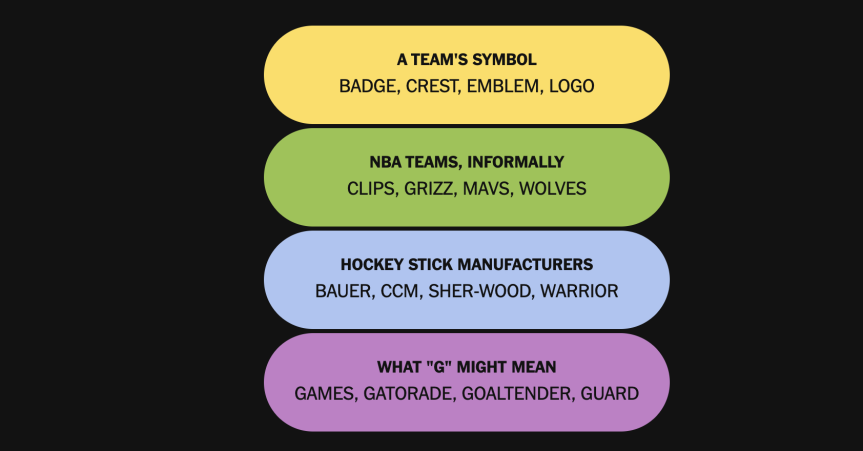
Yellow group: A team’s symbol.
Green group: NBA teams, informally.
Blue group: Hockey stick manufacturers.
Advertisement
Purple group: What “G” might mean.
What are today’s Connections: Sports Edition answers?
The completed NYT Connections: Sports Edition puzzle for July 30, 2026.
The yellow words in today’s Connections
The theme is a team’s symbol.
The four answers are badge, crest, emblem and logo.
The green words in today’s Connections
The theme is NBA teams, informally.
The four answers are Clips, Grizz, Mavs and Wolves.
Advertisement
The blue words in today’s Connections
The theme is hockey stick manufacturers.
The four answers are Bauer, CCM, Sher-Wood and Warrior.
The purple words in today’s Connections
The theme is what “G” might mean.
The four answers are games, Gatorade, goaltender and guard.
Advertisement
CNET editor Gael Fashingbauer Cooper, a journalist and pop-culture junkie, is co-author of “Whatever Happened to Pudding Pops? The Lost Toys, Tastes and Trends of the ’70s and ’80s,” as well as “The Totally Sweet ’90s.” She’s been a journalist since 1989, working at Mpls.St.Paul Magazine, Twin Cities Sidewalk, the Minneapolis Star Tribune, and NBC News Digital. She’s Gen X in birthdate, word and deed. If Marathon candy bars ever come back, she’ll be first in line.
See full bio
State-of-the-art home theater systems are surprisingly difficult for consumers to experience. CEDIA Expo may be where the custom installation industry gathers to see the latest projectors, processors, loudspeakers, and room correction technologies, but its exhibit floor is restricted to industry professionals. Audio Advice Live remains one of the few major shows where enthusiasts can walk into a properly designed room, take a seat, and experience what a cutting-edge home cinema can actually deliver.
Audio Advice Live 2026 will be held August 7 through 9 at the Sheraton Raleigh Hotel in downtown Raleigh, North Carolina, with more than 50 listening rooms and home theater demonstrations open to attendees. eCoustics will be there throughout the weekend covering the new products, systems, and demonstrations that deserve your attention.
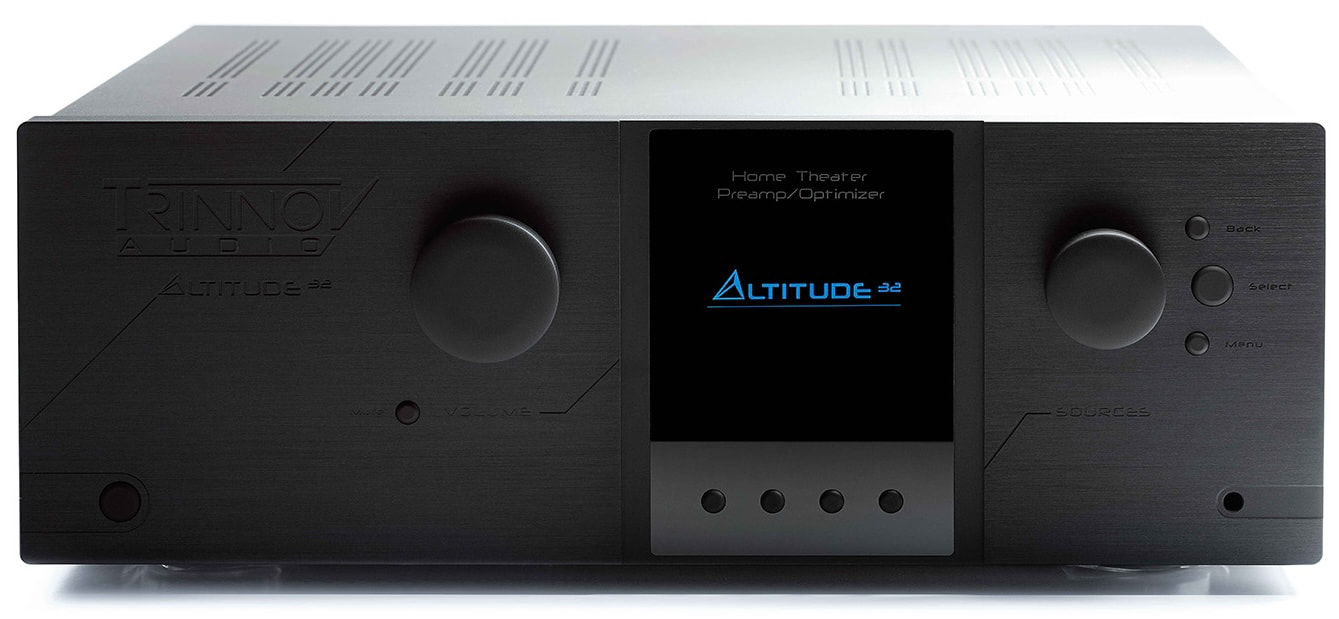
In our previously published Audio Advice Live 2026 preview, we briefly mentioned that ASCENDO, Trinnov Audio, and Christie would be joining forces for one of the show’s most ambitious home theater demonstrations. We now have additional details about the 9.7.4 channel system planned for the Magnolia II room, including ASCENDO immersive audio, dedicated infrasonic bass, Trinnov Cylindrical WaveForming, and Christie projection technology.
Ascendo and Trinnov
Building on the success of last year’s Audio Advice Live demonstration, which earned eCoustics’ award for Best Bass Response at the show, Trinnov and ASCENDO will showcase the next evolution in active room acoustics using Cylindrical WaveForming. The demonstration will focus on how exceptional bass performance can be achieved even in a square room.
Unlike conventional approaches that attempt to correct standing waves after they occur, Cylindrical WaveForming is designed to prevent them from developing in the first place. Using a floor-level front subwoofer array and strategically positioned rear subwoofers, the system is intended to deliver more consistent bass response, improved transient accuracy, and greater seat-to-seat uniformity while requiring less architectural complexity than a traditional planar implementation.
WaveForming can be implemented with as few as four subwoofers, but for Audio Advice Live 2026, Trinnov and ASCENDO are planning a considerably more ambitious demonstration.
The low-frequency system will showcase ASCENDO’s subwoofer technology, with four THE18 SUB PASSIVE VENTED subwoofers positioned along the front wall and two additional units along the rear wall to complete the Cylindrical WaveForming array.
THE32 SUB
ASCENDO will also deploy its THE32 infrasubwoofer to reproduce the deepest frequencies below WaveForming’s operating range, delivering low-frequency impact that will be difficult to ignore.
Rounding out the 9.7.4-channel system, 13 ASCENDO coaxial point-source loudspeakers designed specifically for home cinema will deliver a realistic, time-coherent presentation across the room while reducing the traditional limitations of a single listening sweet spot.
The complete system is intended to demonstrate how Trinnov’s advanced room optimization and ASCENDO’s high-output subwoofer technology can produce bass that is powerful, articulate, and consistent throughout the listening area.
Advertisement
Advertisement. Scroll to continue reading.
Christie
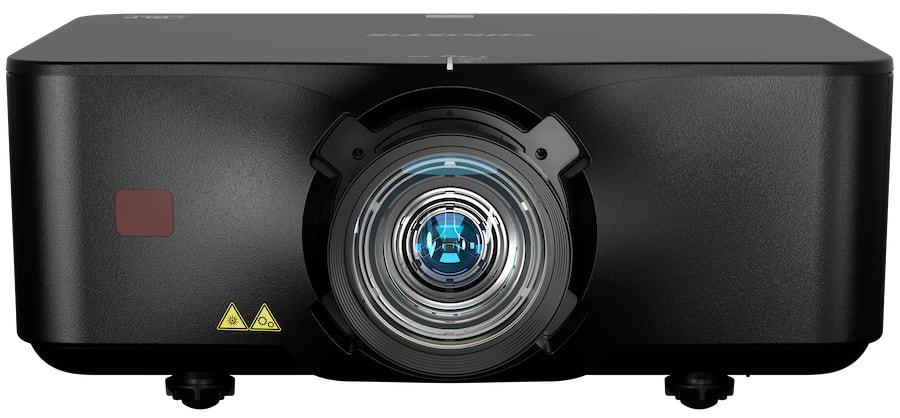
In addition to the ASCENDO and Trinnov Audio demonstration, the home cinema exhibit will feature Christie’s Korus 4K1000-KS laser projector. Best known for its substantial presence in commercial cinemas, Christie is bringing that professional projection pedigree to Audio Advice Live 2026.
The 4K1000-KS is a single-chip DLP projector built around a 0.8-inch HEP DMD imaging device. It delivers more than 10,000 ISO lumens, 4K UHD+ resolution, wide contrast, and accelerated color cycling intended to produce vivid, accurate, and lifelike images. A 1.25-2.0:1 zoom lens provides additional installation flexibility for premium residential cinema environments.
Pro Tip: Christie does not officially specify HDR format compatibility for the Korus 4K1000-KS.
Advertisement
For Audio Advice Live 2026, the Christie Korus 4K1000-KS will be paired with a 135-inch Stewart Wallscreen Deluxe featuring Harmony woven screen material.
Bonus Demo
In addition to their 9.7.4-channel home theater demonstration in the Magnolia II room, ASCENDO and Trinnov Audio will present a more “modest” 2.1-channel audio system in the Sheraton’s upstairs main lobby.
ASCENDO THE BLACK SWAN PRO ACTIVE EXT
Featured products in this demo will include ASCENDO’s flagship BLACK SWAN loudspeakers in a Carbon finish and THE28 SUB SQUARED flat panel subwoofer in combination with the Trinnov AltitudeCI and Amplitude16.
ASCENDO THE28 SUB SQUARED PRO
The Bottom Line
Audio Advice Live has become one of the more worthwhile stops on an increasingly crowded high-end audio show calendar. More importantly, it remains one of the few consumer-accessible events where enthusiasts can experience a state-of-the-art home cinema rather than merely stare at equipment, specifications, and carefully staged photographs. CEDIA Expo is built primarily for integrators, installers, designers, and other industry professionals; Audio Advice Live puts consumers in the seats.
That makes the ASCENDO, Trinnov Audio, and Christie showcase especially relevant for anyone designing a dedicated home theater, upgrading a projection system, or trying to understand what advanced bass management and room optimization can accomplish in a challenging space. Most consumers will never install a 9.7.4-channel system with seven subwoofers and a 10,000-lumen Christie projector, but hearing and seeing one properly configured provides a useful reference for what these technologies can deliver at any scale.
Audio Advice Live 2026 runs August 7 through 9 at the Sheraton Raleigh Hotel in downtown Raleigh, North Carolina. The ASCENDO, Trinnov, and Christie demonstration in Magnolia II should be considered a must-see and must-hear presentation, and the more approachable ASCENDO and Trinnov 2.1-channel system in the second-floor lobby should not be overlooked. eCoustics will be on-site, with our reactions and coverage following the show.
Advertisement
Price & Availability
All the products mentioned in this article are available through Authorized Dealers or Special Order at the approximate prices:
Trinnov Altitude CI: $11,000 to $26,000 depending on channel configuration
Trinnov Amplitude 16 Amplifier: $13,250
Ascendo THE18 Passive Sub: Starting at $2,450 (each)
Ascendo THE32 Infrasub: Starting at $26,500 (each)
Ascendo THE28 SUB SQUARED Flat Panel Subwoofer: $30,000 (each)
ASCENDO Coaxial Point-source Speakers: Starting at $1,550 to $3,550 (each)
Christie Korus 4K1000 KS Laser Projector: $12,500 to $14,800
The 2026 iPhone lineup could divest further from Qualcomm as Apple increases use of its in-house C-series modem, though Qualcomm blames supply constraints on a faster-than-expected transition.
Qualcomm and Apple’s relationship has been in question since Apple’s release of an in-house C-series modem. While a contract between the companies is set to end in March 2027, Qualcomm is looking to use AI data centers to replace the revenue provided by Apple.
According to a report from Reuters, Qualcomm CEO Cristiano Amon says that revenue from Apple will decline more quickly starting in the fourth quarter as due to supply constraints. The share of components used in the iPhone 18 will fall well below Qualcomm’s earlier estimate of 20%.
Amon is blaming this change on supply availability, which could be a boon for Apple. As the iPhone and other Apple products look to get away from Qualcomm modems, a supply chain shortage offers an excellent loophole for escaping a contract earlier than expected.
Advertisement
Qualcomm will also be raising prices due to supply chain shortages and component cost increases.
Bad for Qualcomm, great for Apple
While there is no way of knowing until the iPhone 18 lineup is announced in September, it seems these comments could suggest that Apple will have a C-series modem in more of the lineup than previously expected. The Apple in-house modems have only been used in the iPhone Air, iPad ProiPad Air, iPhone 16e, and iPhone 17e so far.
If Apple is able to include C-series modems in more of the iPhone 18 lineup than previously expected, that’ll be a big win for Apple. Qualcomm, on the other hand, is already looking at new revenue streams.
The Qualcomm CEO suggests that Apple’s revenue has been effectively replaced by its entry into the AI data center market. The company forecasts $5 billion in revenue from AI data centers by 2027 and $15 billion by 2029.
Advertisement
These incredible numbers are what has become the norm when companies forecast revenue from AI products. What isn’t mentioned here is how this might change if the AI bubble deflates or pops in the next year.
Meta is betting big on AI. But will CEO Mark Zuckerberg’s investment in the technology ultimately pay off? That’s one of the major questions lingering after Wednesday’s earnings call, which announced Meta’s second-quarter loss of over $4.6 billion in its Reality Labs sector.
Throughout the hour-long call, Zuckerberg spoke about Meta’s business across its slate of social media apps – Facebook, Instagram, Threads and WhatsApp – and the overall message he kept driving home was the role of AI within the company and for the people using Meta’s products daily.
At the center of all this is MuseSpark, the AI model created by Meta’s Superintelligence Labs. With it, Zuckerberg said Meta is hard at work on making a variety of AI agents to streamline workflows for small businesses and enhance the lives of individual Meta users.
“Soon we will have agents that can work 24/7 on your behalf to help you achieve your goals and improve your life, your health, your relationships, your finances, whatever you want,” Zuckerberg said.
Advertisement
If you’ve been paying attention to all the Zuckerberg news that’s fit to print, you may know that Meta’s CEO has been building a personal AI assistant for himself.
Considering his hardline stance on making AI available to all (see his New York Times interview for more on this), it makes sense that he’d extend this technology to the billions of people who use Meta’s apps worldwide.
Privacy is a major concern when it comes to AI models, whether for business or personal use. Zuckerberg said during the call that Meta is making “strong privacy and security a fundamental part of the agents” it is building.
In the same breath, though, he pointed to Meta’s Ray-Bans smart glasses as the ideal product to deliver this functionality to people — the same tech item that many on social media have begun calling “pervert glasses.”
Advertisement
Instagram is cracking down on content captured with the glasses, but this use case raises a broader concern about how people’s information will be used by these proposed AI assistants if Zuckerberg’s big bet on superintelligence for all pays off.
More than 1 million businesses have been using Meta business agents on WhatsApp and Messenger, Zuckerberg said Wednesday. Instagram is next for this type of agentic AI, which learns over time what customers need and delivers those insights back to the business to help shape overall strategies.
This is a “business-in-a-box service” that Meta is aiming to build, which can help you start and run your whole business using the service’s platforms.
The primary goal, repeated throughout the earnings call, is to put superintelligence directly into people’s hands rather than centralize it.
Advertisement
“We are focused on distributing it widely and giving everyone the ability to direct it towards what matters to them,” Zuckerberg continued. “That’s the way that society has always made progress, and I think these are the right values for building a positive AI future.”
What does that future look like, exactly? According to Meta’s CEO, billions of people will have a personal agent that is locked in on their goals and works nonstop to help you acheive them.
“I get that this is sort of a big bet across the industry,” he said, in what could be viewed as a bit of an understatement.
As part of Meta’s earnings report, Reality Labs — the part of the company that develops its VR headsets and smart glasses — generated $431 million in revenue, while its operating loss widened to $4.6 billion.
Advertisement
Since 2020, the division has racked up total operating losses of $80 billion. In response to this loss, which comes two days after Meta’s new investment to build a data center campus in El Paso, Texas, Meta’s stock price dropped by 10% by the end of Wednesday.
“There’s a bit of similarity to Meta’s metaverse missteps in that Meta is once again spending ahead of proven product demand,” Forrester Research Director Mike Proulx told CNET. “The difference is that AI adoption and value are real. The technology is different, but the market’s patience is starting to look familiar.”
Zuckerberg seemed unfazed by the loss during the earnings call, acknowledging the reactions to Meta’s spending push on AI.
“My personal bet is that the people who invest in this are going to be rewarded and feel very good over time.”
Advertisement
Overall for the second quarter, Meta announced revenue of $60.8 billion, up 28%, and net income of $15.8 billion, down 14% from a year earlier. Total costs and expenses were $42 billion, an increase of 55%.
Aaron covers what’s exciting and new in the world of home entertainment and streaming TV. Previously, he wrote about entertainment for places like Rotten Tomatoes, Inverse, TheWrap, Washington Post and The Hollywood Reporter. Aaron is also an actor and stay-at-home dad, which means coffee is his friend.
See full bio































































You must be logged in to post a comment Login