Connect with us

Tech

Japanese space tech startup Letara expands beyond satellite thrusters with $16M

Published

on

Japan is pouring billions of dollars into its burgeoning space industry and easing restrictions on defense exports, efforts designed to build a homegrown aerospace sector filled with domestic startups that have a global reach.

Letara, a Sapporo-based startup developing hybrid propulsion systems for spacecraft, is looking to capitalize on that push. After focusing on hybrid thrusters for small satellites, the company now plans to develop large rocket systems for the space, defense, and security markets, company’s co-CEO Shota Hirai told TechCrunch.

That expansion is being fueled by ¥2.6 billion (~$16 million) in new funding that comes as the startup tries to turn years of academic research and demonstrations into a commercial business. The round was co-led by Headline Asia, JIC Venture Growth Investment and Incubate Fund with participation from strategic investors including NES (Networked Energy Services) Corporation, an energy company; Toyoda Gosei, a Toyota Group supplier of rubber and plastic automotive components; and Frontier Innovations, a Greece-based IT company specializing in data analytics and business intelligence.

“With this round, we will go beyond demonstrating that thruster in space,” Hirai said. “We plan to explore a much wider set of use cases across both the space domain and the defense and security domain, and to develop and propose hybrid rocket systems suited to each of them.”

Advertisement

At the heart of Letara’s technology is a hybrid rocket design that keeps its solid fuel separate from the liquid oxidizer needed for combustion. Inexpensive, widely available materials such as plastic and rubber are used as solid fuel. The company has developed a proprietary manufacturing process that mixes, shapes, and compresses these materials to ensure they ignite reliably and burn consistently. the end result is a system that can deliver more thrust with less waste than traditional hybrid rockets that often use expensive paraffin wax.

The aim is to solve three problems that have so far, limited the use of hybrid propulsion: generating sufficient thrust, maintaining performance and controlling combustion, Hirai said.

There is considerable opportunity if Letara is successful. The global hybrid rocket propulsion market is projected to expand to $2.6 billion by 2032, up from $848 million in 2024, at a CAGR of 15% — a trajectory that points to growing demand for the technology.

Still, Letara isn’t alone in its pursuit. A number of companies are developing hybrid rocket technology, including Japan’s Interstellar Technologies, China’s Galactic Energy, South Korea’s InnoSpace, and Singapore’s Equatorial Space are advancing hybrid rocket technology. German startup HyImpulse and Australian Gilmour Space are also pursuing hybrid rocket technology, while other U.S. companies are developing competing propulsion and launch systems.

Advertisement

Academic roots

The idea for Letara emerged while co-CEOs Landon Thomas Kamps and Hirai were researching rocket propulsion at Hokkaido University. They believed the relative safety and simplicity of hybrid rockets could make the technology useful beyond traditional space programs, particularly as private companies expand into the industry.

The company’s ambitions have grown along with the market. When Letara was spun out of Hokkaido University in 2020, it was focused on developing satellite thrusters.

Since then, the global propulsion market has become more crowded as demand for launch and defense capabilities has grown. Letara is now pursuing opportunities in defense contracts and launch services, in an effort to position itself to compete not just with other Japanese startups, but with companies around the world.

“Large spacecraft need high thrust propulsion as well, especially when they need to go from LEO (low earth orbit) to GEO (geostationary orbit) and get through the high radiation Van Allen belt quickly,” said Hirai. “And of course, there is insane growing demand for launch vehicles.”

Advertisement

Letara is targeting satellite makers and operators, launch companies and governments. It sees commercial satellites as its biggest market for in-space propulsion, while government demand for rocket systems is growing, particularly in Japan. The company says it has already won orders from rocket and satellite companies as well as the Japanese government, although it did not disclose the value of those contracts.

Its next major milestone is an in-orbit firing test with an overseas partner, which Letara sees as a key step toward commercialization. It will also need to establish a repeatable manufacturing process, backed by quality controls, and a reliable supply chain for fuel and tanks that can support production at scale.

When asked whether recycled plastic could eventually be used as fuel, Letara said it was “very much a possibility” with its hybrid technology, though more testing and development would be needed.

When you purchase through links in our articles, we may earn a small commission. This doesn’t affect our editorial independence.

Advertisement

Source link

Continue Reading
Click to comment

You must be logged in to post a comment Login

Leave a Reply

Tech

The Unlikely Place at the Center of China’s AI Boom

Published

on

Travel just two hours west of Beijing by train, and you’ll find yourself surrounded by the rolling grasslands and ancient cinder cones of Inner Mongolia. This vast, arid land has long been China’s capital of sheep farming and coal mining, but over the last few years, it has become the hottest place in the country to build an AI data center.

In Ulanqab, a city in Inner Mongolia home to about 1.5 million people, nearly 100 data centers have been opened or begun construction since 2016. Chinese companies have pledged to build projects with a combined estimated capacity of 12.5 gigawatts in the city, and over 70 percent of the total commitments have been announced in just the last year, making it one of the fastest growing compute clusters in Asia, according to a research note published by Goldman Sachs last week. For comparison, OpenAI’s $500 billion Stargate Project is set to reach only 10 gigawatts of total capacity when it’s complete.

Chinese companies are flocking to Ulanqab for a number of reasons. The city sits at high elevation on the Inner Mongolian Plateau and has long, cold winters, which means data centers there don’t need to use as much energy to stay cool. It’s also relatively close to Beijing, so data can be transmitted to China’s populous regions with minimum latency. But the most enticing factor has to do with costs. Electricity is cheaper in Inner Mongolia than almost anywhere else in China, driven by both the strong growth of wind and solar energy and an abundant supply of coal.

What’s also interesting is who is building these data centers. For the first time, Chinese AI companies are making big investments in their own infrastructure, rather than renting compute from cloud companies. DeepSeek is reportedly building a massive AI data center in Ulanqab, as are ByteDance, Alibaba, and Xiaohongshu. For years, Chinese AI companies have spent far less on building physical infrastructure than their American peers, despite developing a number of popular AI models with impressive capabilities. The Ulanqab data center boom signals that now they are finally starting to catch up.

Advertisement

There’s just one problem: finding enough water. Ulanqab is about as dry as Denver, getting only roughly 14 inches of rain each year. The local government is already struggling to provide enough water to meet resident demand—before many of the planned data center projects are even up and running. Last month, the local water company in Ulanqab was forced to turn off several waterworks for seven hours each night to mitigate peak demand. The data centers being built in the city will need less water in the winter—weather data from the local government of Ulanqab shows they only require additional water for cooling during two months out of the year—but all of the new infrastructure could still pose a significant environmental challenge for the region.

The Boonies

Inner Mongolia has been a data center hot spot for at least a decade, long before the current AI boom. Huawei built its first one in Ulanqab in 2016, and Apple followed suit three years later. In 2021, the area was designated as one of the main hubs of a country-wide government project dubbed “Eastern Data, Western Compute,” which aims to build data centers in the Western hinterlands of China.

There was one major drawback, though. Because they are located far from China’s populous eastern coast, these data centers initially faced high latency rates when transferring data to the majority of users. As a result, they were initially largely relegated to backup storage—until AI gave them a new purpose. “With the rise of AI in 2022, there was the realization that actually, those remote data centers could be well-utilized for model training,” says Andrew Stokols, a professor at Singapore Management University who studies China’s compute infrastructure. A training run for an AI model can take months and doesn’t require much real-time tinkering, so latency is less of an issue.

Relatively speaking, Ulanqab is also not really that far away. Inner Mongolia is much closer to Beijing and other major metropolitan areas in China than any Western data center hub is. And it’s now connected by two dedicated fiber optics cables built in 2017 and 2019 that reduced average latency speeds to less than five milliseconds, fast enough to support real-time data exchanges like AI inference.

Advertisement

Source link

Continue Reading

Tech

AI companies are burning books, advocates complain to FTC

Published

on

ai and ml

Fahrenheit 203, the temperature GPUs stop gorging on literature

AI companies are buying loads of physical books, hoovering up the texts for model training, and then physically destroying the originals. A group of 18 advocacy organizations on Friday asked the US Federal Trade Commission to investigate the book butchering and knowledge hoarding.

Fresh details of the practice emerged earlier this year via document disclosures in Bartz v. Anthropic PBC, a copyright case brought by authors of books that the AI company used for training without permission. 

Advertisement

Anthropic’s book scan-and-destroy operation was known as “Project Panama.” It was described in a 2024 internal memo as “our effort to destructively scan all the books in the world.”

Anthropic gave the operation a codename “because we don’t want it to be known that we are working on this,” the court exhibit explains. “This document is visible to all Anthropic employees, but you should avoid talking about it in public areas, and the fact that we are working on this should not be shared with anyone outside Anthropic.”

Older books turn out to be valuable for AI training because they’re unpolluted by AI-generated text, which has been seeping into recent written work. And destroying books once they’ve been scanned avoids the cost of storage. 

In some circumstances, scan-and-destroy operations may support fair use claims. In the Bartz case, the district court accepted the argument that a physical book can be digitized and destroyed, substituting the electronic copy for the physical book in a transformative act of fair use. But that didn’t work out for the Internet Archive.

Advertisement

Anthropic, which did not respond to a request for comment, is not the only company consuming and trashing texts. A recent report found Amazon has been participating in book scanning and shredding. Amazon also did not respond to a request for comment.

The subject has become a public relations headache, in part because of the barbarism of book destruction and its association with authoritarian regimes, and in part because of the broad backlash against AI companies for pillaging public resources in pursuit of private gain.

Intermediaries appear to be feeling the heat. ISBNdb, which reportedly helped broker the acquisition of books for destructive scanning, recently disavowed the practice. The biz noted last month, “We’ve removed a recent landing page, ‘Printed Books Sourcing for Your AI LLMs Dataset Needs.’ It was part of exploring demand, and we’ve chosen to pivot away from that direction.”

In light of these revelations, civil society groups want the FTC to look into book buy-and-destroy operations on the basis that they prevent competing AI developers and the public from accessing those resources.

Advertisement

“The secretive and reckless way that major AI companies like Anthropic and Amazon are acting shows that there is real smoke here that the FTC needs to investigate,” Kate Oh, special advisor to the Demand Progress Education Fund, said in a statement provided to The Register.

The groups’ letter [PDF] casts scan-and-destroy operations primarily as anticompetitive – the FTC being notionally a competition watchdog – but it hints at the anti-democratic consequences of monopolized knowledge.

“Through their practice of permanently destroying books en masse and thus removing those non-renewable resources from broader access, AI companies are engineering a future where only the wealthiest incumbents can build high-quality AI models and operate as the sole holders of humanity’s written works – after having destroyed the originals to get there,” the letter says.

We’re unaware of whether any texts have been shifted entirely into AI models without leaving any physical copies. But then how would anyone verify that when AI companies refuse to divulge their training data?

Advertisement

The letter asks the FTC to answer that question: “What the public record does not establish – and cannot, from the outside – is how often the destroyed physical books are the last or among the last surviving copies of a given work.” ®

Source link

Continue Reading

Tech

Tech Moves: AWS data leader jumps to Oracle; Seattle Children’s names new CIO; Zillow’s new legal chief

Published

on

Mehul Shah. (LinkedIn Photo)

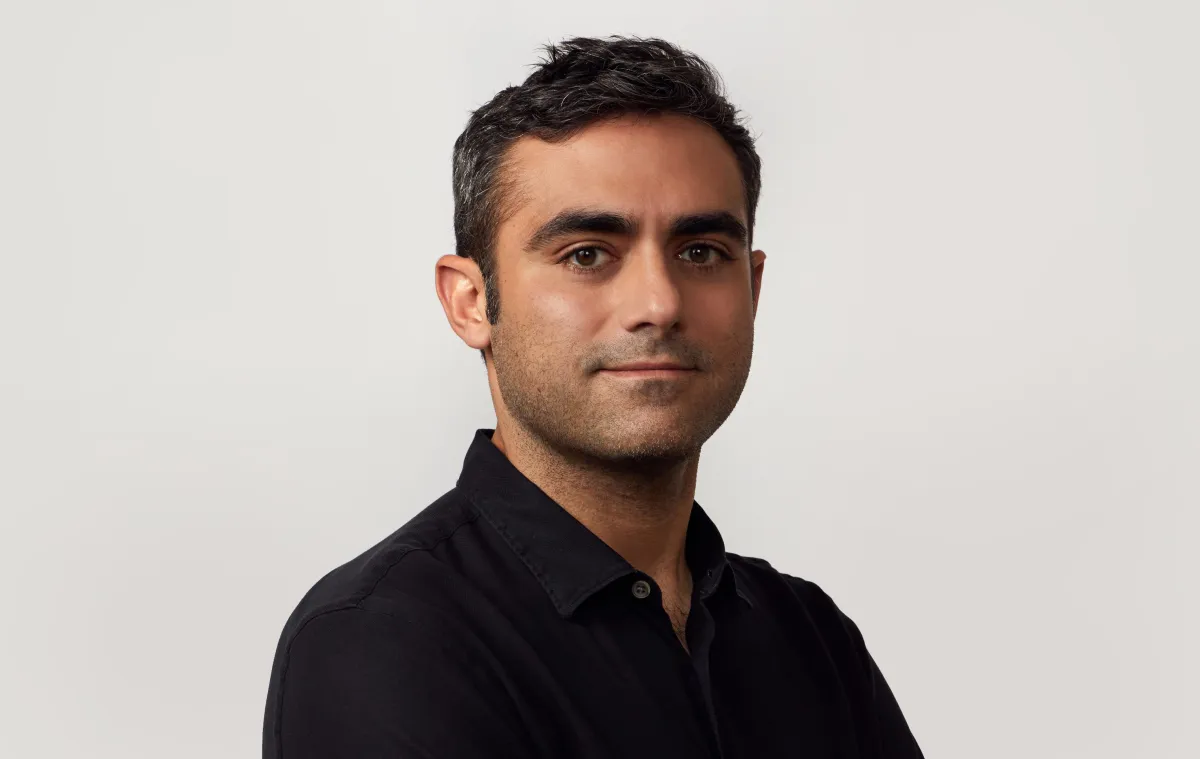
Mehul Shah joined Oracle as group vice president for OCI data and storage services, ending a 14-year run at Amazon and Amazon Web Services.

In his last role at AWS, Shah led engineering and product for Amazon RDS for SQL Server, Oracle and Db2, and ran the launch and expansion of Oracle Database@AWS, the partnership that put Oracle’s database inside Amazon’s cloud.

“Through that collaboration, I saw firsthand that OCI shares the same DNA that inspired me to join Amazon back in 2012,” Shah said on LinkedIn, citing “deep curiosity, a passion to innovate, the courage to make bold decisions, and relentless drive to excel.”

Shah, who is based in Seattle, spent more than eight years at AWS, earlier leading real-time data streaming services including Amazon Data Firehose and Kinesis Data Streams, and serving as director and general manager of Amazon EMR. He started at Oracle this month.

Dr. Natalie Pageler. (Seattle Children’s Photo)

Seattle Children’s named Dr. Natalie Pageler senior vice president and chief information officer, putting her in charge of digital strategy and IT operations for the pediatric hospital system.

Pageler comes from Stanford Children’s Health and the Stanford University School of Medicine, where she was division chief of clinical informatics and earlier spent a decade as chief medical information officer. She is a pediatrician and clinical informaticist with more than 20 years of experience.

Advertisement

Seattle Children’s CEO Dr. Christopher Longhurst followed a similar path. He was chief medical information officer at Stanford Children’s Health, the same role Pageler held, before spending a decade at UC San Diego Health, most recently as chief clinical and innovation officer.

Cassandra “Sandi” Knight. (Zillow Photo)

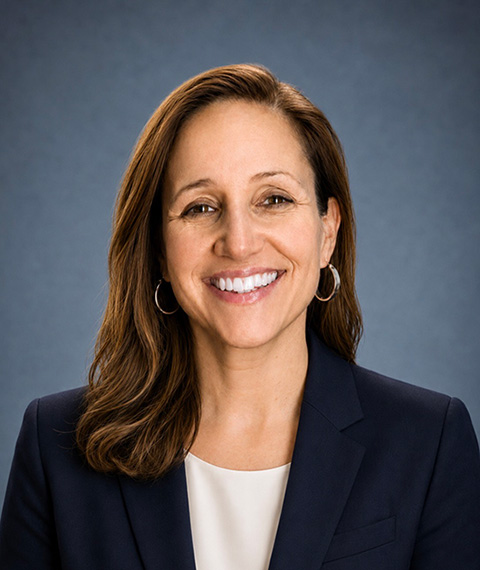
Zillow Group named Cassandra “Sandi” Knight its first-ever chief legal and policy officer, a role the Seattle company created this month as part of a broader leadership shuffle. Reporting to CEO Jeremy Wacksman, she oversees Zillow’s legal, compliance and government relations functions.

Knight joins from Google, where she spent four years as a vice president leading global civil litigation and discovery. She was previously vice president and chief litigation counsel at PayPal, and spent 11 years at Morgan Stanley in senior litigation and compliance roles.

She began her career as a trial lawyer at the San Diego Public Defender’s Office, the firm Keker & Van Nest and the San Francisco City Attorney’s office. She holds a law degree from Stanford and is based in the San Francisco Bay Area.

She arrives at a busy moment: Zillow and Redfin are set to go to trial Aug. 24 as defendants in an antitrust case brought by the FTC and five state attorneys general over the companies’ $100 million rental listings deal. Zillow has spent $26 million on the case so far this year.

Advertisement

Two longtime Zillow leaders are heading out:

  • Sara Bonert, vice president of industry engagement for Zillow Group and ShowingTime+, is leaving after nearly 20 years. One of Zillow’s earliest employees, she joined in the fall of 2006 as director of broker services, helped build Zillow’s first platform for taking in listing data, and signed the partner agreements that took the site from zero to a million listings in four months.
  • Jeff Tompkins, head of corporate real estate and operations, wrapped up almost five years with the company. Tompkins, who is based in Denver, ran Zillow’s workplace strategy across North America and beyond. He said he will share his next role soon.
Amir Pelleg. (Uber Freight Photo)

Amir Pelleg, a veteran of companies including Amazon and Convoy, is the new chief product officer at Uber Freight. He is based in Seattle, working out of the shared Uber and Uber Freight office on Second Avenue.

At Amazon, Pelleg was principal product manager for Kindle Fire, launched the Dash Button and initiated Alexa’s smart home controls, then incubated and launched Amazon Shipping in India, the U.K. and the U.S. as a director and general manager in Amazon Transportation.

He was a vice president on Convoy’s executive team until the Seattle freight startup shut down in 2023, then spent two and a half years at dental tech company Dandy.

“I’ve seen what works and what fails in digital freight,” Pelleg said in a Q&A posted by Uber Freight.

Advertisement

— Seattle’s Frazier Healthcare Partners added Wes Wheeler to its Growth Buyout team as an executive in residence, advising on diligence and on life science logistics and infrastructure.

Wheeler was most recently CEO of LabConnect, a central laboratory services company serving clinical trials, and before that president of UPS Healthcare, where he built a vertical of 10,000 employees across 35 countries. During Operation Warp Speed he was the primary industry interface to the U.S. government, overseeing distribution of more than 1.5 billion COVID-19 vaccine doses to over 100 countries.

Dr. Heather Cheng. (Fred Hutch Photo)

Dr. Heather Cheng was announced as the inaugural recipient of the Marty Lazarus Weiden Family Endowed Chair at Fred Hutch Cancer Center, which will fund her work detecting, preventing and treating hereditary cancers.

Cheng is clinical director of cancer genetics programs at Fred Hutch and directs its prostate cancer genetics clinic. In 2016 she was part of a team that found more than 10% of men with advanced prostate cancer carry inherited mutations in DNA-repair genes such as BRCA1 and BRCA2.

The chair is named for Marty Lazarus Weiden, who was diagnosed with breast cancer in 1993 and died in 2001. The family learned only later that some of its members carry a BRCA mutation.

Advertisement

— Microsoft corporate vice president Darryl Willis was named to the board of ONE Nuclear Energy, a natural gas and advanced nuclear developer going public this quarter through a merger with Hennessy Capital Investment Corp.

Willis has led Microsoft’s energy and resources group since 2019. He was previously a Google Cloud vice president and a BP executive who ran the company’s Deepwater Horizon claims process and testified before Congress. He will officially join the board when the merger closes, and he is expected to chair its compensation committee.

Jake Milstein. (LinkedIn Photo)

Jake Milstein was named head of healthcare solutions marketing at Zscaler, a return to healthcare cybersecurity. He joins from application security company Contrast Security and was earlier chief marketing and revenue officer at Critical Insight, the Bremerton, Wash.-based security firm acquired by Lumifi Cyber.

Before moving into technology, Milstein spent a decade at Seattle’s KIRO TV, including four years as news director.

Michele Mehl left Amazon Web Services after nearly two and a half years to become senior public relations manager at ALSO, arriving the same week the electric vehicle company announced a $150 million Series D round led by Prysm Capital.

Advertisement

ALSO builds the TM-B consumer electric bike and the TM-Q commercial delivery quad, and counts Amazon and DoorDash among its commercial partners.

Richard Van Bibber was named senior vice president of research and development at Verasonics, the Kirkland, Wash.-based maker of ultrasound research platforms used in fields including biomedical ultrasound, materials science and earth sciences.

Van Bibber has spent much of a 25-year medtech career in the Puget Sound region, including seven years as director of research at Kirkland’s Cardiac Dimensions and five years leading clinical affairs at Bellevue-based Aortica.

Dave Cotter joined the board of Nickson, the apartment-furnishing startup led by Cameron Johnson, alongside MarcyPen Capital Partners and Larry Braithwaite. Cotter is CEO of Greenwood and has previously worked at Amazon, Nordstrom, zulily, RealNetworks and Leafly.

Advertisement

PCC Community Markets president and CEO Krish Srinivasan will retire effective Jan. 29, 2027. Srinivasan was chief financial officer at Remitly and vice president of finance at Lyft before joining the Seattle grocery co-op as CFO, and earlier held leadership roles at Amazon and Microsoft.

Seattle Foundation named Elizabeth Wong as chief philanthropy officer, reporting to President and CEO Alesha Washington. Wong spent more than a decade at Foundation Source and earlier worked directly with the Gates family at the Bill & Melinda Gates Foundation.

And in case you missed it:

Jay Bartot, a co-founder of the airfare-prediction startup Farecast and former chief technology officer of Madrona Venture Labs, was named CTO of Lev, the Pioneer Square Labs spinout building an “AI co-founder” for entrepreneurs. Read more here.

Advertisement

Expedia Group is parting ways with at least eight vice presidents and senior vice presidents, and promoted five other leaders, as it reorganizes its product and technology groups around AI. Read more in this GeekWire story.

Source link

Continue Reading

Tech

Michael Polansky is training an AI model on skin that’s still alive

Published

on

Michael Polansky is remarkably unassuming for someone operating in a corner of the world known for outsize egos.

Seated at a leafy patio outside a popular bakery in Mill Valley, an affluent town about 15 miles north of San Francisco, Polansky — bespectacled, his fresh face framed by dark hair shot through with gray — has the look and the friendly demeanor of a young professor.

He is, in fact, both the founder of a buzzy AI and biology startup called Outer Biosciences and the creative, business, and romantic partner to Stefani Germanotta — better known as Lady Gaga. It’s an unlikely double life. On the one hand, the couple invariably moves in the world that comes with celebrity; on the other, he’s running an outfit that has spent years figuring out how to keep living human tissue alive outside the body — for over a month, so far — without anyone outside the company knowing.

He didn’t see any of it coming. Polansky grew up in Minnesota and went on to Harvard, where he studied applied mathematics and computer science, graduating in 2006. Afterward, he logged three years at the hedge fund Bridgewater Associates — “a very unique place,” Polansky says over coffee, and one where he had “a really good experience,” even if it wasn’t a place he was going to “wake up and be excited about . . .every day.”

Advertisement

His pilgrimage from Bridgewater to Silicon Valley ran through Minnesota. By coincidence, Sean Parker’s assistant at the time had been Polansky’s neighbor growing up. At a 2007 wedding in their home state, she mentioned that Parker was looking for someone to work with him. Polansky already knew who Parker was and was looking to move west. The two had dinner in New York, “hit it off immediately,” and, as Polansky tells it, he quit Bridgewater the next day and moved to San Francisco.

He first landed a role as a principal at Founders Fund when the firm was run by its four original partners — Peter Thiel, Sean Parker, Luke Nosek and Ken Howery – with Polansky and another young principal at the time, Brian Singerman, sharing an office. “It was a really, really great experience,” Polansky says.

When Parker left Founders Fund after becoming liquid in his Facebook stock and wanted to build out his own family office, he brought Polansky with him. Polansky ran that office — handling Parker’s business, investment, and philanthropic interests, including helping stand up the Parker Institute for Cancer Immunotherapy (where Polansky remains executive director) until COVID, when his life “moved in a different direction.”

That change had a lot to do with Germanotta. Polansky met her in late 2019 at one of Parker’s birthday parties. Charmingly, the meeting came at the urging of her mother, Cynthia Germanotta, president of the Born This Way Foundation, whom Polansky had come to know through his philanthropic work.

Advertisement

“She had said, you know, for months and months, ‘I want to set you up with my daughter,’” Polansky recalls. “I was like, I think you’re making fun of me.” She wasn’t. When their own mothers later met, he says, laughing, “it all made perfect sense.” (His mother and Germanotta’s mother are now close friends.)

Their relationship is a full partnership, professionally and personally. Notably, for Gaga’s most recent world tour, which began in July of last year and ended in April, the couple managed a massive operation across three 747s, something Polansky compares to running “a 200-person startup that travels around the world every day.”

It also includes Haus Labs, the cosmetics brand Germanotta initially built “on her kitchen floor,” Polansky says, instead of simply licensing her name to an existing company. That business, based in El Segundo, California, an operation with roughly 70 employees, is reportedly thriving.

Germanotta also sits on the board of Outer Biosciences, and the two companies collaborate at the margins. For example, Outer Biosciences’ chief scientist, Kyung-Jin Jang, sits on Haus Labs’ scientific advisory board, and the companies have run some joint projects.

Advertisement

Says Polansky, beaming as he talks about her from our sun-dappled table: “People really haven’t gotten to know a certain side of her publicly … She’s such a brilliant businessperson.”

From cancer to tissue in a dish

While Polansky is also a businessperson, he’s not a scientist. He got into life sciences “accidentally,” he says, through more than a decade spent alongside Parker in cancer immunotherapy, a field that was “very fringe” when they entered it.

Outer Biosciences, which Polansky founded in 2022 and where he is CEO, grew out of frustration that the pace of innovation in biology and chemistry has never matched software, in large part because there’s no ethical way to run experiments directly on people. Meanwhile, the proxies scientists rely on instead — animal models, simplified cell cultures, lab-grown organoids — are poor stand-ins for how a real human organ behaves.

So Outer Biosciences took a different approach. Instead of engineering a synthetic organ, the company sources human skin that would otherwise be discarded after surgery – mostly plastic surgery – through what it describes as vetted non-profit and commercial biobanks and brokers operating under “institutional review board oversight and documented donor consent,” principally the National Disease Research Interchange and the Cooperative Human Tissue Network. (Both outfits receive federal funding from the NIH and the National Cancer Institute without being federally operated.)

Advertisement

Polansky is careful to note that there is no single government tissue network that qualifies buyers. He says Outer Biosciences pays fees to these suppliers on a cost-recovery basis rather than purchasing tissue outright. He also says the company spent roughly two years on building that pipeline and handling the protocols required to receive that tissue “within hours” of surgery, while it’s still living.

Asked about the donors’ privacy, he says that every sample arrives already de-identified — stripped upstream by the supplying organizations of names, contact information and other direct identifiers. A proprietary support system developed by his team then feeds the tissue nutrients and removes metabolic waste, extending its viable life well past the industry norm.

That norm, by the way, is a matter of days. That’s enough time to test for acute toxicity, but not for slower biological processes like collagen remodeling, pigmentation change, or barrier repair that take weeks to unfold. (Dermatologists routinely tell patients to expect changes over a matter of weeks for this same reason.)

Outer Biosciences’ system meanwhile keeps tissue alive for up to a month, says Polansky, who says it retains its “day-zero architecture and preserves its day-zero epidermal, stromal and immune-associated molecular programs.” In plainer English, that means that 30-day-old tissue cared for by the company looks a lot like day-one tissue, but it isn’t fully indistinguishable from it.

Advertisement

Sunburn is one of the clearer examples of what that extra time buys Outer Biosciences. Polansky says that its researchers can induce UVB damage in living tissue, then track the stress, inflammatory, and recovery-related responses that follow over the following weeks as an information-gathering exercise. He says the team isn’t “healing” the skin but rather watching an injury happen and then watching the biology that follows it over time.

Perhaps anticipating pushback from the scientific community, Polansky is careful about how he frames the company’s achievements when this reporter asks questions about rival technologies. The startup’s value, he says, isn’t any one piece of what it’s doing but how the pieces fit together: human tissue that can be kept alive for weeks, a diverse donor pool that Outer Biosciences’ team can subject to controlled experimental conditions, and repeated molecular measurements taken along the way.

And it’s all fed into one, closed self-enforcing system. An AI model predicts which untested chemicals are likely to have a beneficial effect on a specific skin function. Those chemicals get run through the living-tissue system. Then the results, whether the prediction was right or wrong, get fed back into the model, improving the next round of guesses.

It’s a giant improvement from where things started, says Polansky. Early on, the company relied on a “brute force” approach, mining scientific literature and partnering with the National Cancer Institute on natural compounds from extreme environments. That phase produced a couple of leads over about 18 months, but with AI layered in, the company is now generating a new candidate roughly every six weeks, with six leads currently active in its pipeline and several dozen additional “hits” logged.

Advertisement

What makes that pace truly astonishing, Polansky says as the crowd around us thins out, is the size of the current universe of skin-active ingredients.

It’s almost impossible to know the exact number, but it’s small. “Active ingredient” means something different informally than it does formally. While the FDA maintains rules covering 13 categories of over-the-counter skin drugs (think sunscreen, antifungals), across all of them, only about 120 to 130 active ingredients are approved. Add cosmetic ingredients backed by actual research, says Polansky, and that number is closer to 200.

This, of course, presents opportunities.

Outer Biosciences is discovering cosmetic ingredients, not drugs, so there’s no FDA approval to seek out. Instead, the route runs through two steps: first, getting the ingredient a standardized industry name; then safety testing under guidelines set by the OECD, a Paris-based international body whose member countries agree to accept each other’s properly run studies — meaning a study done correctly in one participating country is accepted in the other 40-plus.

Advertisement

A partner outfit then commercializes the whole thing. Indeed, rather than build its own consumer brand, Outer Biosciences right now plans to license or sell its finished ingredients to beauty or pharma outfits that will then formulate these into actual products (a serum, a cream) and bring them to market under their own brands. Already, four of Outer Biosciences’ six current leads look likely to reach commercialization, Polansky says.

In the meantime, the company is generating money from collaborative research partnerships, including a pharmaceutical partner that’s studying why certain cancer drugs cause severe skin rashes, and consumer beauty brands that are testing whether Outer Biosciences’ data holds up against their own product-development and marketing needs.

If Polansky is raising more money for the company currently, he won’t say. To date, the company has raised roughly $23 million, with early backers including Calm Capital, Brighter Capital and Polansky’s own investing firm, Hawktail, among others. The company employs 19 people, with all but Polansky based just outside Cambridge, Massachusetts.

Asked why he’s chosen now to talk about the company after years of near-total silence — he says he barely discussed it even with close friends — Polansky points to the data the team is beginning to amass and the confidence that has given them. “Trying to do this in private is hard,” he says, as the wait staff start flipping chairs onto tabletops, signaling it’s closing time at the bakery. “We kind of want to start working in public now,” he adds, shrugging.

Advertisement

Outer Biosciences is not the only company chasing this idea, even if its use of real tissue, rather than synthetic, is distinctive.

Vivodyne — a Philadelphia-based competitor building lab-grown human organ tissue paired with predictive AI to replace animal drug testing — just this month announced it has raised close to $80 million to date, including a $38 million seed round and a $40 million Series A, both led by Khosla Ventures.

Other rivals are pursuing various flavors of organ-on-a-chip and microphysiological systems for preclinical testing.

Polansky doesn’t seem especially preoccupied with any of them — less, it seems, out of arrogance than because he seems to have his hands full. Besides, there’s plenty of room for everyone in this moment. Unlike AI companies training on scraping the internet, there is no “biology internet” to scrape.

Advertisement

And Outer Biosciences has two other reasons to focus on its own knitting. First, the data it generates doesn’t exist anywhere else, which, conceivably, makes the company’s position more defensible, if a lot slower, to build than “traditional” software-based AI startups. It’s also cheaper to run, with modest compute demands compared with training a large language model. In fact, all of the company’s AI work currently runs on-premise, not in the cloud, because “we don’t want the data in the cloud,” Polansky says.

Whether over time, Outer Biosciences becomes a standalone commercial-ingredients business, licenses its discoveries, or eventually reorganizes around a single breakout compound, Polansky says he hasn’t settled on – and the team doesn’t need to. The more important goal, he says, is a predictive model that’s accurate enough that the company can spot promising directions in skin biology without having to run every experiment physically first, opening up a rate of discovery in dermatology that doesn’t currently exist.

For now, instead, the work of turning a promising compound into a real product — the formulation, the manufacturing scale-up, the supply chain, the safety testing — is still done manually by the same scientists who discover the compounds in the first place. Building out a product-development team, with people who’ve done this kind of work before, is next on the roadmap.

“I think it’s going to be fun,” he says, “to have people know that this is what we’ve been doing.”

Advertisement

When you purchase through links in our articles, we may earn a small commission. This doesn’t affect our editorial independence.

Source link

Continue Reading

Tech

Bigger Scoops and Full Control is Why the Ninja Creami XL (NC601) Still Earns Its Place as Summer Lingers

Published

on

Ninja Creami XL 11-in-1 Ice Cream Maker NC601
Summer has persisted across the country, with high temperatures lingering far into the season’s last weeks. Cool food feel like a necessity rather than a luxury. Store-bought pints have escalating prices, fewer choices, and ingredient labels that frequently leave little room for personal preference. A machine that lets you decide every element of the frozen dessert starts looking practical rather than optional. Ninja’s Creami XL 11-in-1 (model NC601), priced at $186.99 after clipping the on-page coupon (was $250), builds on the earlier Creami formula with larger 24-ounce tubs that hold about 50 percent more than the original pints.


The box contains two tubs that serve as a good starting point. You make a base, freeze it for a day until it solidifies, and then put it in the machine. The Creamerizer, a special paddle that spins through the frozen block, swiftly converts it into a smooth, scoopable ice cream. You can respin it to make it softer. The approach is simple: prepare ahead of time, freeze, spin, and serve; however, with family-size capacity, the math changes slightly.

Sale


Ninja Creami XL 11-in-1 Ice Cream Maker with XL Capacity, NC601
  • NEW FUNCTIONALITY: Turn almost anything into crave-worthy ice cream, sorbet, frozen yogurt, and more. Now featuring dairy-free, smoothie bowl, and…
  • FAMILY-SIZE CAPACITY: Each 24-oz XL tub holds 50% more than the original Creami pint. Process both and make enough ice cream for the whole family.
  • TWO FLAVORS, ONE TUB: Process one frozen base with two different mix-ins to create two unique flavors in one tub. One for the chocolate lover, one for…


One tub is plenty for many servings. Process both tubs, and you’ll have enough for a small group or to stock the freezer for the week. Many people who have a high-protein dessert every afternoon after a workout or a long day remark that the larger amount allows them to avoid continuously prepping. When you keep two solid bases in the freezer at all times, meal planning becomes much easier.

Advertisement


Eleven one-touch programs cover the bases and then some. There are the traditional suspects, such as ice cream, low-fat ice cream, sorbet, gelato, frozen yogurt, milkshake, and frappe, but there are also more recent additions that tick a lot of boxes. Dairy-Free is ideal for using almond, oat, or coconut milk bases, and it really delivers. Smoothie Bowl produces thicker, spoonable fruit blends that are ideal for breakfast or post-workout nutrition, while CreamiFit deals with protein-rich mix-ins prepared from powder, Greek yogurt, cottage cheese, or ultra-filtered milk. Many customers believe that these applications are a must-have upgrade since they lessen the number of frozen spots and eliminate the need for further spins.

Ninja Creami XL 11-in-1 Ice Cream Maker NC601
The machine’s true power comes from its capacity to handle ingredients. You can choose milk or an alternative, sweetener, protein source, and flavor. It’s excellent for making low-sugar, dairy-free, keto-friendly, or completely indulgent versions all in one machine. You can also add other ingredients at the end, such as chocolate chips, almonds, fresh fruit, brownie pieces, or candies, without turning everything into mush. One frozen foundation can even hold two separate mix-in amounts in the same tub, allowing one person to enjoy chocolate peanut butter and another to have strawberry.

Ninja Creami XL 11-in-1 Ice Cream Maker NC601
Cleaning the thing is simple because all of the parts fit on the top rack of the dishwasher. The machine itself has a sleek, modern appearance with a blue finish and a footprint that fits beneath most cabinets once the spinning is completed. It isn’t precisely whisper quiet, but the quick processing time limits the noise to a minimal.

Ninja Creami XL 11-in-1 Ice Cream Maker NC601
Compared to purchasing a host of specialty pints for $6 to $9 each, the machine will pay for itself in one season of regular use. The ongoing expense is the freezer space; larger tubs take up a lot of space, so if you live alone or do a lot of solo cooking, the original size may be a better option, but for everyone else, it’s a game changer. Simply prepare a couple of bases this weekend, and by Monday, you’ll have a batch of ready-to-spin ice cream according to your preferences.

Source link

Advertisement
Continue Reading

Tech

Google is giving away a free year of Gemini AI Pro

Published

on

Google is giving students a free year of its Gemini subscription, although the exact plan students receive depends on where they live. US students can claim the more capable Gemini Pro plan, while students elsewhere can get Gemini Plus for 12 months.

The offer is available to students worldwide and runs until December 31, 2026. To claim it, students need to choose their preferred plan through Google’s promotional offer page, verify their student status through SheerID and add a payment method.

For students outside the US, Gemini Plus normally costs €4.99 per month. The subscription includes access to Gemini Omni, twice the Gemini usage limit and 400GB of Google storage. US students, meanwhile, get Gemini Pro as part of the offer.

There is also a discounted option for students who don’t qualify for the free Pro offer. Gemini Pro is available for €5.49 per month rather than its usual €21.99 price.

Advertisement

Google is also offering students the option to combine the subscription with YouTube Premium at a 70% discount. The bundle costs €10.99 per month, compared with the regular €21.99 price. Once the 12-month promotional period ends, the standard subscription prices will automatically apply.

Advertisement

One of the more useful parts of the subscription for students is Google’s Study Notebooks feature, which launched in June. Students can upload study materials and notes to Gemini and use them to create personalised quizzes or get additional explanations based on their coursework.

Google is planning further upgrades to Study Notebooks over the coming weeks, including graphics and images in lessons. Gemini can also create functional 3D models for certain topics, such as a model of a DNA strand, which could make the feature particularly useful for visual learners.

Advertisement

The main thing to remember is that this isn’t a permanently free Gemini subscription. Students who don’t want to start paying the standard price after the 12-month promotional period will need to cancel before the offer ends.

Source link

Advertisement
Continue Reading

Tech

4 super smart shifts proving privacy is software’s new killer feature

Published

on

TL;DR

Privacy is shifting from a settings toggle to a core selling point across four software categories: browsers (Brave, DuckDuckGo, Firefox blocking trackers by default), messaging apps (WhatsApp view-once, Signal growth), VPNs (independent no-logs audits, RAM-only servers), and AI tools (on-device processing, client-side encryption). The common thread: users now demand verifiable proof, not promises.

For the longest time, the tech industry’s unofficial motto was “if the product is free, you are the product.” Most of us just accepted it. But after a decade of data scandals, tracking revelations, and privacy blunders, that logic is starting to feel dated.

We’ve hit a tipping point. A quiet but powerful shift is happening across the software landscape, and in 2026, privacy is no longer a dusty toggle buried in the settings menu. It’s becoming the main event, a core selling point that companies are building their reputations on.

So where is this privacy-first shift most obvious? These are the software categories where the change is easiest to spot, and the clearest signs that your data is finally getting a bit more respect.

Advertisement

1. Browsers: Moving Beyond ‘Incognito’ Theater

Finally, a private window that’s actually more private.

Let’s be honest: everyone knew “Incognito mode” was limited. It never stopped your ISP, your employer, or the websites you visited from seeing what you were up to. Users are demanding more now, and browser makers are listening.

You’re seeing a surge in browsers like Brave and the DuckDuckGo browser, which block ads and trackers by default. Even the big players are changing course. Mozilla has kept expanding Firefox’s privacy tools, and the industry is exploring standards such as Private Access Tokens to verify legitimate users with less tracking. That’s a real step up from a feature that mostly hid your search history from whoever else used the same laptop.

2. Messaging Apps: Locking the Digital Diary

Your chats are increasingly for your eyes only.

Advertisement

Remember when private messages could be scanned to sharpen ad targeting? Creepy, right? The backlash against that model came fast, and it fueled the growth of private platforms like Signal.

That pressure has pushed bigger platforms to adapt. WhatsApp has rolled out stronger privacy controls, including view-once messages, while continuing to lean on end-to-end encryption. With governments still debating whether companies should scan private messages, secure communication has gone from a nice-to-have to a necessity.

3. VPNs: The New Gold Standard for Trust

Putting the “private” back in Virtual Private Network.

The VPN industry has long had a trust problem. For every strong service, there are plenty of questionable ones with vague “no-logs” claims that fall apart under scrutiny. Reports of VPNs handing user data to police and free apps leaking user data have left people understandably skeptical.

Advertisement

So how do you fix a trust problem? You stop saying and start proving. A new gold standard is emerging around verifiable evidence, and it’s pushing the market to clean up its act.

Top-tier providers are moving toward verifiable proof to regain user trust. Independent no-logs audits, such as those conducted for providers like IPVanish and ExpressVPN, are becoming mandatory baselines. At the same time, major services are actively transitioning to RAM-only server networks, where operational data is automatically erased upon every reboot rather than stored on persistent hard drives. Combined with regular transparency reports, this mix of third-party auditing and ephemeral infrastructure is becoming the benchmark users check when weighing up a secure VPN for privacy.

4. AI Tools: Personalization Without the Peeking

Smart assistants that don’t need your full life story.

With AI exploding, the next privacy battleground is already here. Can you get smart, personalized AI without it hoovering up every scrap of your personal data? A new wave of tools suggests the answer might be yes.

Advertisement

There’s a growing push toward on-device processing, where AI models run locally on your phone or laptop, as seen in Apple’s recent OS updates. Private AI platforms like Jatter use client-side encryption to offer personalized responses without storing conversation histories on remote servers. It’s still early, but it’s a promising sign that privacy-focused thinking is spreading to the next generation of software.

So, what’s the takeaway?

The overarching message is clear: privacy has evolved from a regulatory hurdle into a core product strategy and a primary competitive advantage. The software platforms built on unchecked data collection are now forced to compete on verifiable trust and structural transparency. In 2026, protecting user data is no longer just ethical, it’s good business.

Source link

Advertisement
Continue Reading

Tech

LG Display FLiPP OLED Could Make Future TVs Brighter, Longer Lasting, and Cheaper to Build

Published

on

OLED has spent the past few years getting substantially brighter while Mini LED and the newer RGB backlit LCD technologies have attacked it from the other direction with enormous screens, extreme brightness and increasingly impressive color performance. LG Display apparently has no intention of letting that become a one-sided fight.

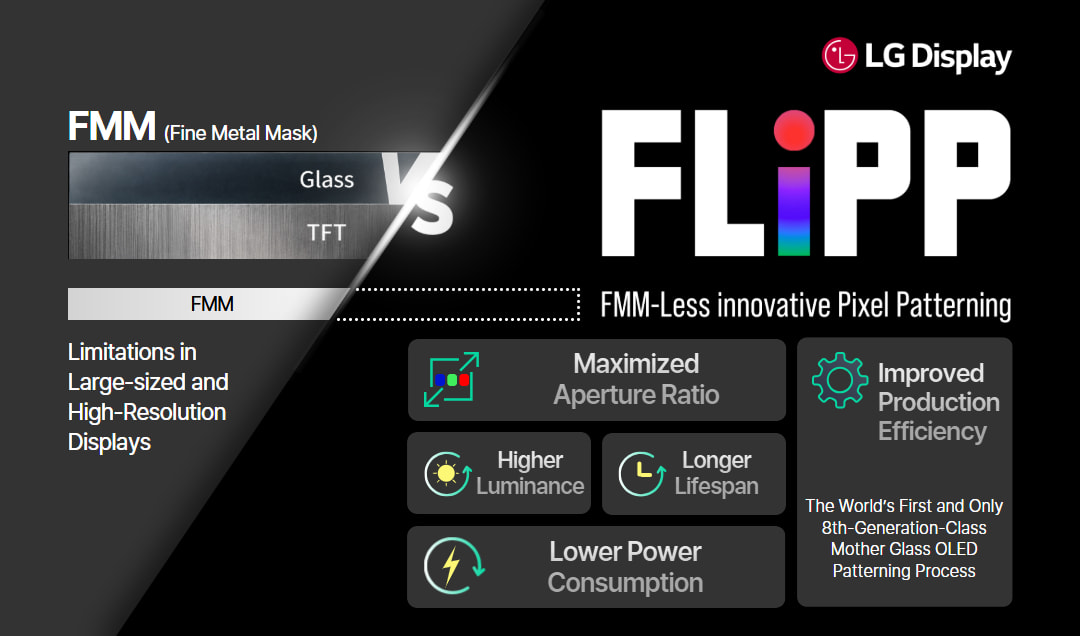
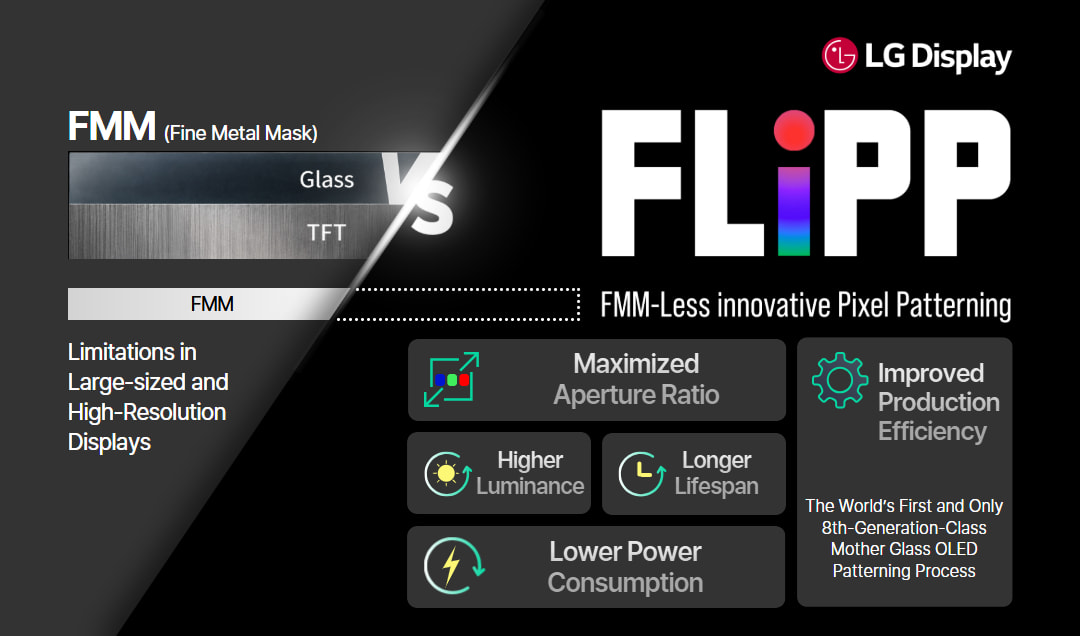
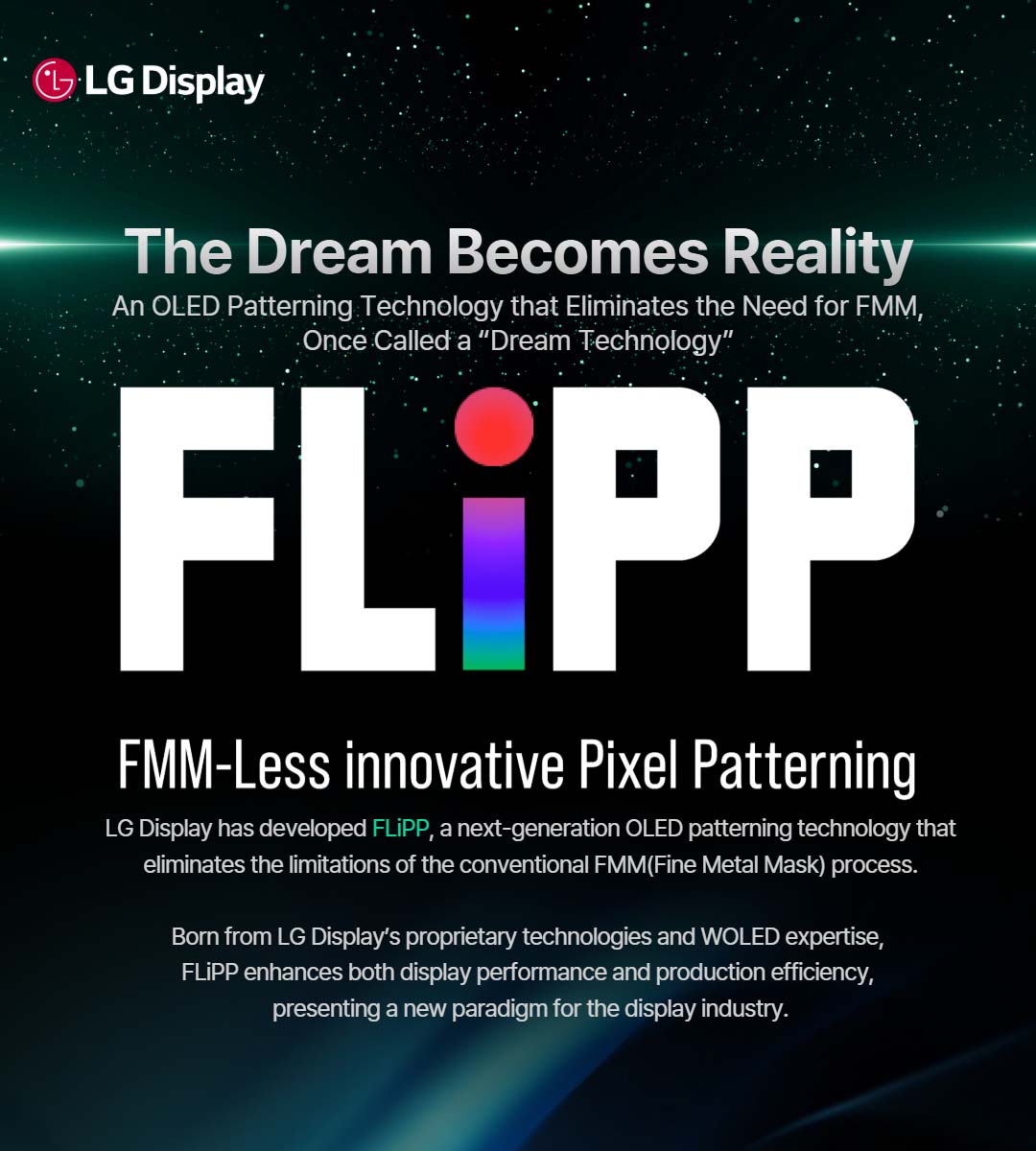
The company has unveiled FLiPP, short for FMM Less innovative Pixel Patterning, a new manufacturing process that eliminates the fine metal masks traditionally used to create red, green and blue OLED pixels. LG Display says the process can improve brightness, panel lifespan and power efficiency while also making OLED manufacturing more flexible and potentially less expensive.

Before anybody starts clearing wall space for a 100 inch FLiPP OLED, there is an important qualification: LG Display has not announced a FLiPP television or a commercial TV launch date. The company says the technology will initially target IT products including tablets and monitors before eventually expanding into everything from 1 inch wearable displays to ultra large TVs. So this is not your next LG OLED TV, but it could have a lot to do with what comes after it.

lg-display-flipp-vs-tft-features

What Is FLiPP?

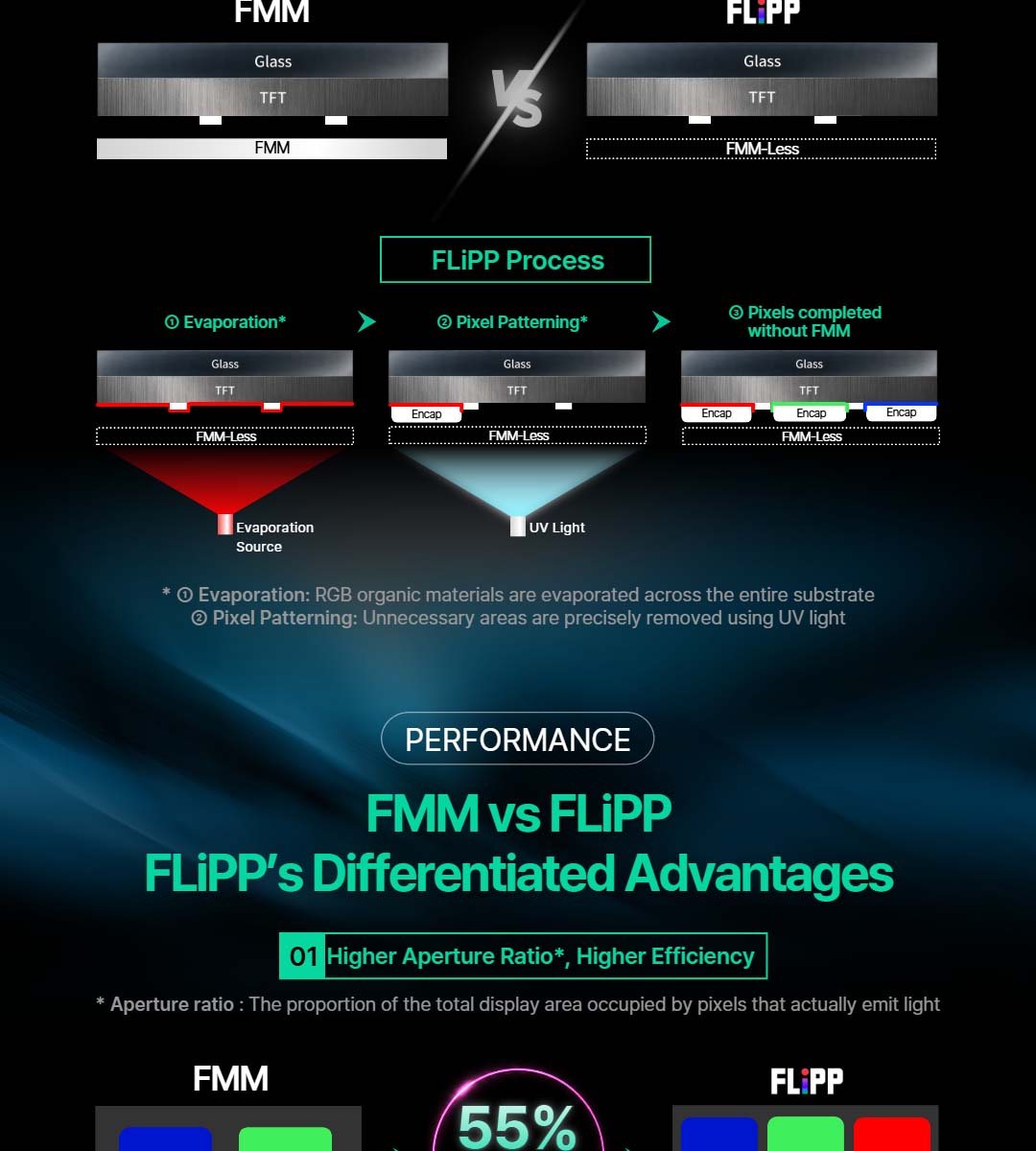
Conventional RGB OLED production commonly relies on a Fine Metal Mask, or FMM, during manufacturing. The easiest way to visualize it is as an extremely precise stencil: red, green and blue organic materials are deposited through microscopic openings in the mask so they land in the correct locations on the panel.

Advertisement

That approach works, but it comes with some expensive baggage. Different panel sizes and resolutions can require different masks, and as those masks become larger, gravity becomes an engineering problem. The metal can sag toward the center, making precise alignment more difficult and potentially creating defects including unwanted color mixing.

FLiPP removes the metal mask entirely. Instead, LG Display applies and positions the RGB OLED materials and then uses photolithography with precision ultraviolet light to remove material from areas where it is not required. The result is more usable pixel area and fewer of the physical limitations imposed by FMM manufacturing.

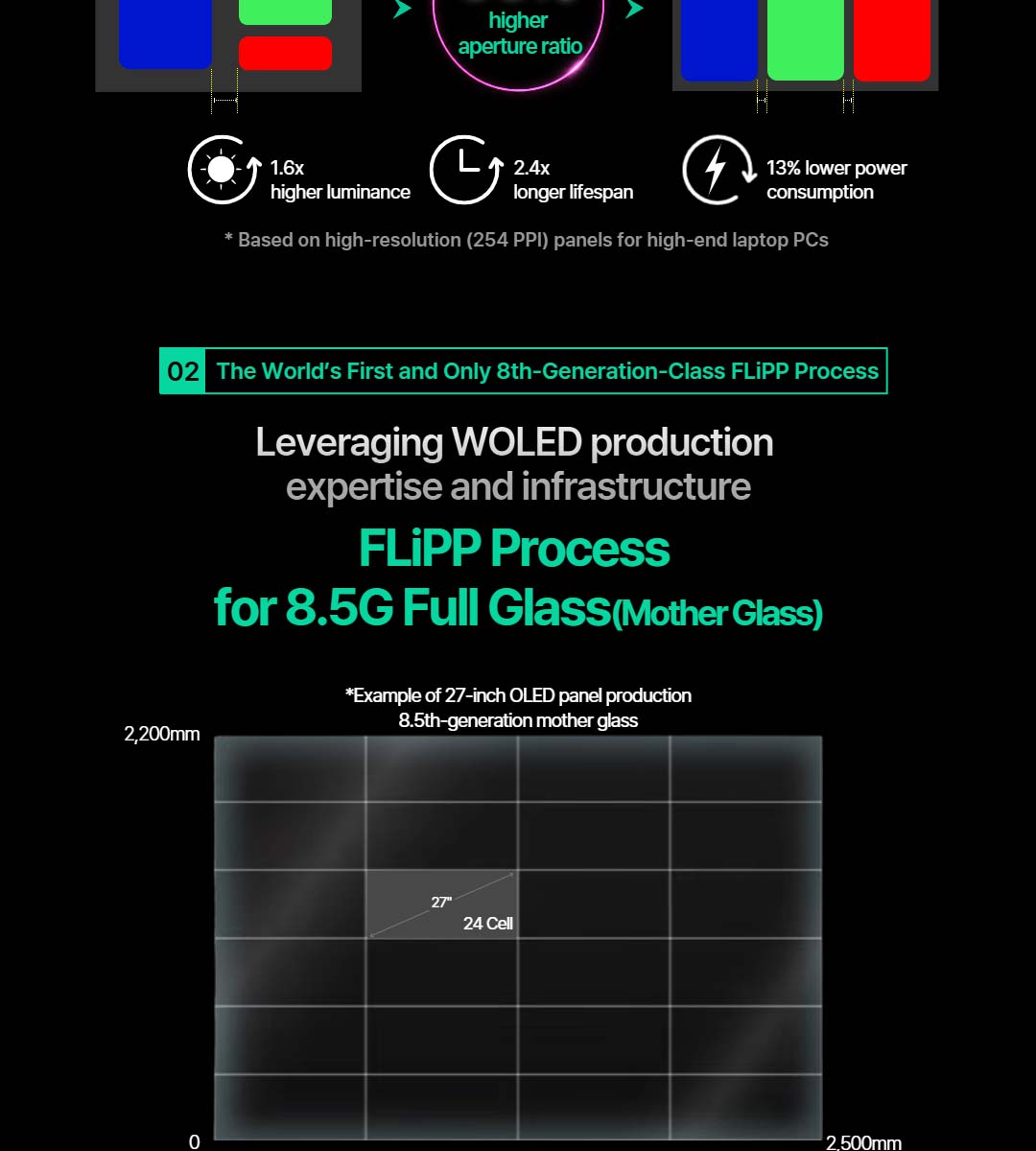
LG Display says FLiPP improves the aperture ratio by approximately 55 percent compared with conventional FMM manufactured OLED panels. Aperture ratio refers to how much of the display’s available surface is actually occupied by active red, green and blue pixels. More active emitting area gives engineers considerably more room to balance brightness, efficiency and longevity.

Advertisement

The Numbers Are Impressive, With an Asterisk

LG Display says FLiPP can enable OLED panels to deliver up to 1.6 times higher brightness, 2.4 times longer lifespan and 13 percent lower power consumption compared with panels produced using FMM under comparable conditions. Those are significant numbers, but they should not be interpreted as a promise that some future television will automatically be 60 percent brighter, last 140 percent longer and consume 13 percent less electricity simultaneously.

OLED panel designers can trade efficiency gains between brightness, power consumption and longevity depending on the product being developed. In other words, these are development and manufacturing advantages that give LG Display considerably more room to decide where that additional performance goes. That flexibility may ultimately matter more than any one headline specification.

lg-display-flipp-unveiled

Manufacturing May Be the Bigger Story

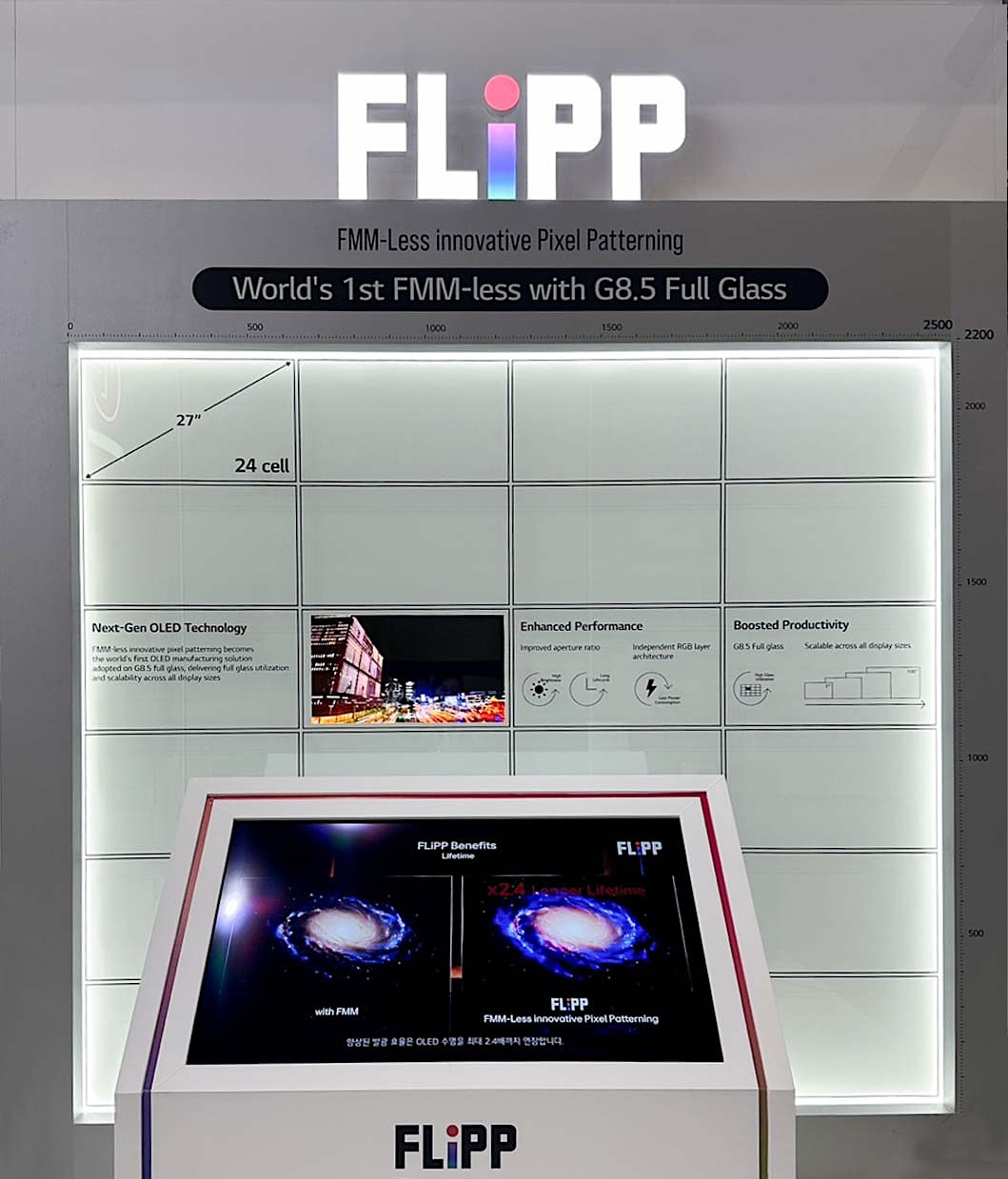
Brightness is going to grab the headline, but manufacturing efficiency could ultimately have a greater impact on consumers. LG Display says it has successfully produced FMM less OLED using an entire 8.5 generation mother glass substrate, rather than cutting the substrate into smaller sections to accommodate the physical limitations of metal masks.

For laptop sized OLED panels, LG says FLiPP can provide up to 64 percent higher mother glass utilization efficiency compared with FMM production or other FMM less methods that require divided substrates. That means less wasted material and potentially higher production output from the same basic sheet of glass.

Advertisement
Advertisement. Scroll to continue reading.

Lower manufacturing cost does not automatically mean lower retail prices. Anyone who has purchased a flagship television recently has probably noticed that manufacturers remain quite capable of finding somewhere else to spend the savings. But improved yields, fewer specialized masks, better substrate utilization and greater flexibility in panel size all create the conditions necessary for RGB OLED to scale more economically.

And scale has been one of OLED’s biggest problems.

Why This Matters for TVs

We recently looked at the increasingly complicated fight between OLED, Mini LED and RGB backlit LCD TVs, and 2026 has made one thing fairly obvious: premium LCD is not quietly going away. Hisense, Samsung, TCL, Sony and LG have all pushed RGB based backlighting as a way to extract higher brightness, broader color reproduction and very large screen sizes from LCD, while LG itself now sells Micro RGB evo televisions alongside its OLED lineup.

Advertisement

Meanwhile, LG Display’s current Tandem WOLED technology has pushed OLED brightness significantly higher. Its latest Primary RGB Tandem 2.0 TV panel is rated by LG Display for peak brightness of up to 4,500 nits under its specified test conditions, while retaining OLED’s pixel level light control and perfect black capability.

FLiPP attacks a different problem. Rather than adding another layer or changing the television’s processing, it changes how RGB OLED panels can be manufactured in the first place. LG Display says the technology is theoretically scalable from approximately 1 inch to 100 inches, without being tied to the same FMM size and resolution restrictions.

That could eventually make large format RGB OLED far more practical, which is important because the premium television battle increasingly comes down to compromises. OLED still delivers exceptional black levels, pixel level illumination and wide viewing angles, while RGB Mini LED and Micro RGB LCD televisions can push brightness considerably harder and scale to enormous sizes, but still require an LCD layer and local dimming system.

A manufacturing process that allows RGB OLED to become brighter, more efficient, longer lasting and easier to manufacture at much larger sizes would change that equation. LG still has to prove FLiPP can deliver those advantages at commercial yields and consumer friendly prices, but the potential is substantial.

Advertisement

What Happens Next?

LG Display demonstrated FLiPP at IMID 2026 in Busan, South Korea, where the company described it as a new OLED manufacturing platform rather than a single product technology. The first intended applications are tablets and monitors, with LG Display saying it plans to expand the process into additional display categories later, including wearables, VR and AR hardware and eventually ultra large televisions.

There is currently no announced FLiPP TV model, price or consumer availability date. That makes this considerably less exciting for anyone shopping for a television this weekend, but potentially far more important for where OLED goes over the next several years.

The Bottom Line

The television industry has spent the past two years making LCD technology behave more like OLED. RGB Mini LED and Micro RGB displays have dramatically improved color reproduction, brightness and local dimming while pushing screen sizes well beyond what most OLED buyers can currently afford.

FLiPP suggests OLED manufacturers may have another answer. By eliminating the Fine Metal Mask from RGB OLED production, LG Display believes it can improve usable pixel area, reduce manufacturing constraints and give panel designers significantly more flexibility with brightness, lifespan, power consumption and screen size.

Advertisement

The technology still has to make the jump from impressive manufacturing demonstration to high volume consumer product, but if LG Display can make FLiPP work economically at television scale, the next battle between OLED and RGB backlit LCD may look very different. Just don’t postpone buying a television because somebody put “100 inch OLED” in a headline. We are not there yet.

Advertisement. Scroll to continue reading.
01-lg-display-flipp
02-lg-display-flipp
03-lg-display-flipp
04-lg-display-flipp
05-lg-display-flipp

Reference: lgdisplay.com

Source link

Advertisement
Continue Reading

Tech

Beat the incoming Switch 2 UK price rise with this ridiculously good saving

Published

on

Nintendo has just confirmed an official price rise on the Switch 2 is coming on September 1, upping the RRP on the console to £419. However, we’ve found to beat the rise.

But right now, you can grab it before the price rise lands and get the Nintendo Switch 2 for £344.99, down from its £395.00 list price via a £20.01 site discount stacked with a £30.00 coupon, a saving that pushes the total reduction past £50.

Nintendo Switch 2 on a golden honeycomb backgroundNintendo Switch 2 on a golden honeycomb background

Nintendo Switch 2 price rising to £419 in September, grab it now for £344.99

The Nintendo Switch 2 is down to £344.99, saving over £50 before Nintendo’s confirmed price rise on 1st September.

Advertisement

View Deal

Nintendo has officially confirmed that the Switch 2 will jump from £395.99 to £419.99 in the UK from 1st September 2026, part of a wider set of regional price increases the company announced back in May.

Advertisement

That means buying now at £344.99 locks in a price that sits roughly £75 below where the console will officially retail from next month, turning what already looked like a solid discount into something closer to essential timing.

To give you more perspective, our tech expert Max Parker spent two weeks testing the Switch 2 across more than thirty games, both docked and on the move, and rated it a clear step up from the original console he still owns and uses regularly.

Advertisement

He singled out the bigger 7.9-inch display as one of the console’s biggest wins, noting that the extra screen space makes handheld sessions feel genuinely more immersive and even makes dense menus in games like Cyberpunk 2077 easier to read.

Advertisement

Parker also found the new Nvidia chip inside made a real difference in practice, with Mario Kart World running at a stable 60fps and even a demanding port like Cyberpunk 2077 holding up far better than anything the original Switch could manage.

The redesigned Joy-Con 2 controllers impressed him too, attaching with strong magnets instead of the old clip mechanism, which fixed the rattly, creaky feel that was one of his biggest complaints about the original console over the years.

The Whatsapp LogoThe Whatsapp Logo

Get Updates Straight to Your WhatsApp

Join Now

Advertisement

Between a sharper screen, faster performance and a sturdier build that Parker praised as an easy win over the 2017 original, this is the kind of upgrade worth having before Nintendo’s own price rise erases the gap on 1st September.

At £344.99 rather than its usual £395.00, and with an official rise to £419.99 confirmed for next month, the Nintendo Switch 2 is about as good value as this console has been, or is ever likely to be again, according to Parker’s own verdict.

Advertisement

Advertisement

SQUIRREL_PLAYLIST_10148964

Source link

Advertisement
Continue Reading

Tech

ASUS Launches VM240 AiO and New Accessories in India: Price and Features

Published

on

ASUS has expanded its desktop AiO lineup in India with the launch of the ASUS VM240 AiO, a new all-in-one PC designed for everyday work, learning, and entertainment. Priced at ₹66,990, the VM240 combines a 24-inch display, AMD Ryzen processors, and a space-saving design into a single desktop setup.

Alongside the VM240 AiO, ASUS has also introduced four new accessories in India: the Jelly75 mechanical keyboard, Wireless Mouse MD105, Marshmallow keyboard and mouse combo, and the ROG HDMI Cable LHR60.

ASUS VM240 AiO Specs

The ASUS VM240 is aimed at users who want a clutter-free desktop without sacrificing everyday performance. It features a 24-inch Full HD display with an adjustable tilt stand and a slim 22mm profile, making it suitable for home offices, classrooms, and entertainment setups.

Powered by up to an AMD Ryzen 5 processor, the desktop also includes up to 512GB PCIe Gen 4 SSD storage for faster app launches and multitasking. ASUS says the Ryzen 5 variant will become available in mid-September, while the VM240 officially goes on sale from August 20. For video calls, the AiO includes a 1080p webcam with a physical privacy shutter, dual front-facing 2W speakers tuned with Dirac audio, and AI-powered noise cancellation for clearer meetings and online classes.

Advertisement

Four New Accessories

Asus accessories

The VM240 launch is accompanied by a refreshed accessories lineup covering productivity, portability, and gaming. The standout product is the ASUS Jelly75 KD201, a gasket-mounted mechanical keyboard with hot-swappable switches, USB-C charging, and support for Bluetooth, 2.4GHz wireless, and wired connectivity across up to five devices.

The Wireless Mouse MD105 supports Bluetooth 5.0 and 2.4GHz wireless, offers adjustable DPI settings up to 2400, and can pair with three devices simultaneously. For users looking for a lightweight setup, the Marshmallow CW200 bundles a compact keyboard and mouse with multi-device support and a dedicated Copilot key. Meanwhile, the ROG HDMI Cable LHR60 supports 48Gbps bandwidth, enabling 8K at 60Hz and 4K at 144Hz output for gaming PCs and current-generation consoles.

The ASUS VM240 AiO and accessories will be available through ASUS eShop, ASUS Exclusive Stores, Flipkart, Amazon, and other retail partners.

Product Price Availability
ASUS VM240 AiO ₹66,990 August 20
ASUS Jelly75 Keyboard KD201 ₹8,999 August 31
ASUS Wireless Mouse MD105 ₹1,799 August 20
ASUS Marshmallow KB + Mouse Combo CW200 ₹4,199 August 20
ROG HDMI Cable LHR60 ₹999 August 20

Source link

Advertisement
Continue Reading

Trending

Copyright © 2025