Connect with us
DAPA Banner

Business

KeyBanc names 7 undervalued energy stocks amid Iran conflict

Published

on

Continue Reading
Click to comment

You must be logged in to post a comment Login

Leave a Reply

Business

Wales in danger of being more reliant on more imported gas and electricity from England

Published

on

Business Live

A new report from the Energy and Climate Intelligence Unit says Wales’ pipeline for renewables is less developed than in England and Scotland

Wales needs more renewable projects to ensure it is not depend on electricity from England says the ECIU(Image: Getty Images)

Wales is no longer a net exporter of electricity and unless it addresses a stalling in renewable projects is at risk of becoming more dependent on imported gas and electricity from England, a new analysis has found.

New research from the not-for-profit Energy and Climate Intelligence Unit (ECIU) comes as the conflict in the Middle East has sent gas prices soaring to a three-year high with independent analysts Cornwall Insight estimating that the average household energy bill could rise by nearly £300 when the energy price cap is revised in July.

Advertisement

The Welsh Government has set a target of meeting 100% of its electricity demand from renewable sources by 2035. The report shows that renewable generation has grown nearly eightfold since 2024 in Wales and now meets around a third of Welsh electricity demand.

READ MORE: Creo Medical agree sale of its manufacturing operationREAD MORE: The transformative impact of the South Wales Metro rail project

However, it highlights that growth has stalled since 2019 and experts have warned that Wales’s renewables planning pipeline, although still substantial, is smaller and less developed than in England and Scotland. Wales has lost its status as being a net electricity exporter – down from a peak of over 21 TWh (terawatt hour) in 2016 to near zero in 2024. Last year Wales was a net importer from England for the first time.

The ECUI report also shows that electricity generation has fallen by almost 50% from its 2016 peak, as growth in renewable capacity has not kept pace with the drop in generation from coal and nuclear. Gas now accounts for 58% of Welsh generation – a greater share than any other UK nation – leaving Welsh generators and their downstream customers across the UK heavily exposed to volatile international fossil fuel markets.

Advertisement

This recent slow progress in scaling up renewables capacity, coupled with a rising demand for electricity, which is forecast to double by 2050, means that renewables’ share of generation is currently forecast to fall, according to ECIU projections. This risks leaving Wales more dependent on gas generation, which already accounts for 58% of Wales’s power output – more than any other nation in the UK.

In the UK, the cost of gas dictates domestic electricity prices the vast majority (85%) of the time. As the price of gas is itself largely set by international markets, the ECIU said this leaves British consumers acutely vulnerable to global price shocks – with the IMF warning that the UK will be “especially exposed” to the fallout from the war in Iran as a result of its dependence on gas-powered generation.

The report says that accelerating the deployment of new renewables is essential to squeezing gas off the grid and shielding consumers from volatility in international markets – a position supported by organisations such as the International Energy Agency and Energy Crisis Commission.

Laura Dunn, senior associate at the ECIU, said: “The cost-of-living is voters’ number one priority heading into the Senedd elections, with growing fears of a repeat of the energy crisis which followed the Russian invasion of Ukraine. In an increasingly uncertain world, the best way to offer Welsh households and industry the long-term certainty they need is by untethering the cost of electricity from unstable international gas markets.

Advertisement

Wales has seen significant progress in rolling out new renewables and, across the UK, renewables are already helping to squeeze gas off the grid. With demand for electricity set to grow as homes and industry electrify, more action is urgently needed to speed up the pace at which new renewables are coming online if the Welsh government is to meet its clean energy targets and prevent Wales becoming more dependent on imported electricity”.

The crisis in oil and gas markets has accentuated concerns about the UK’s dependence on imported energy, with last year’s National Security Assessment stating that the UK needed to reduce its energy reliance on other nations. According to polling conducted by More in Common on behalf of the ECIU, seven in ten Welsh voters (70%) expressed concerned about Wales being dependent on energy imported from the United States and nearly as many (67%) about Wales being reliant on energy imported from the rest of the world.

In recent years, the United States has become the UK’s largest supplier of liquefied natural Gas, supplying 68% of UK imports. This has led experts to warn of the possibility of the Trump administration leveraging energy supplies to extract policy concessions from European governments.


Advertisement
Continue Reading

Business

Dodge & Cox Stock Fund Q1 2026 Commentary

Published

on

Dodge & Cox Stock Fund Q1 2026 Commentary

Dodge & Cox Stock Fund Q1 2026 Commentary

Continue Reading

Business

Sigma Lithium: Out Of The Fire (Upgrade To Hold From Sell) (NASDAQ:SGML)

Published

on

LITP: Global Lithium Demand Doesn't Support Fundamentals

This article was written by

I have more than 35 years of experience in the investment field, having worked as a sell &amp buy side analyst and portfolio manager for debt and equity funds. I am currently managing a high-yield Latam bond fund.My goal, as a Seeking Alpha contributor, is to provide a fundamental view and analysis of companies and funds in a streamlined version of institutional research. The operating and financial forecast, whether my own or based on consensus, drives the valuation and ultimate rating. I like numbers (financial statements) and use words to explain their meaning and potential consequences.For the most part, my selection choices reflect what I believe can offer long-term potential, and I frequently take positions in many ideas for my personal account.

Analyst’s Disclosure: I/we have a beneficial long position in the shares of ALB either through stock ownership, options, or other derivatives. I wrote this article myself, and it expresses my own opinions. I am not receiving compensation for it (other than from Seeking Alpha). I have no business relationship with any company whose stock is mentioned in this article.

Seeking Alpha’s Disclosure: Past performance is no guarantee of future results. No recommendation or advice is being given as to whether any investment is suitable for a particular investor. Any views or opinions expressed above may not reflect those of Seeking Alpha as a whole. Seeking Alpha is not a licensed securities dealer, broker or US investment adviser or investment bank. Our analysts are third party authors that include both professional investors and individual investors who may not be licensed or certified by any institute or regulatory body.

Advertisement
Continue Reading

Business

Prologis Stock: Solid Results & Outlook, But No Bargain (NYSE:PLD)

Published

on

Prologis Stock: Solid Results & Outlook, But No Bargain (NYSE:PLD)

This article was written by

The author has an honours degree in economics and politics with a focus on economic development. With 36 years of experience in executive management he has extensive knowledge of insurance/reinsurance, Global and Asia Pacific markets, climate change and ESG. He invests in his personal capacity.

Analyst’s Disclosure: I/we have no stock, option or similar derivative position in any of the companies mentioned, and no plans to initiate any such positions within the next 72 hours. I wrote this article myself, and it expresses my own opinions. I am not receiving compensation for it (other than from Seeking Alpha). I have no business relationship with any company whose stock is mentioned in this article.

The author is not an investment advisor and offers no advice here. He shares his own analysis solely for the interest of readers.

Advertisement

Seeking Alpha’s Disclosure: Past performance is no guarantee of future results. No recommendation or advice is being given as to whether any investment is suitable for a particular investor. Any views or opinions expressed above may not reflect those of Seeking Alpha as a whole. Seeking Alpha is not a licensed securities dealer, broker or US investment adviser or investment bank. Our analysts are third party authors that include both professional investors and individual investors who may not be licensed or certified by any institute or regulatory body.

Continue Reading

Business

Zip Co Shares Jump 7.73% to $2.51 as Buy Now Pay Later Giant Upgrades FY26 Guidance on Record Profit

Published

on

Zip Co Shares Jump 7.73% to $2.51 as Buy Now

SYDNEY — Zip Co Ltd shares climbed 7.73 percent to close at A$2.51 on Monday, extending gains for the Australian buy-now-pay-later provider after last week’s strong third-quarter results and an upgraded full-year profit forecast that highlighted accelerating growth in its key U.S. market.

Zip Co Shares Jump 7.73% to $2.51 as Buy Now
Zip Co Shares Jump 7.73% to $2.51 as Buy Now Pay Later Giant Upgrades FY26 Guidance on Record Profit

The stock added 18 cents in trading on the Australian Securities Exchange, reflecting continued investor enthusiasm following Zip’s April 17 announcement of record cash earnings before tax, depreciation and amortisation. Volume remained elevated as traders digested the company’s improving profitability and strategic momentum amid a recovering fintech sector.

Zip reported a record cash EBTDA of A$65.1 million for the three months ended March 31, 2026, a 41.5 percent increase from the prior corresponding period. Operating margin expanded sharply to 19.4 percent from 16.5 percent a year earlier, demonstrating strong unit economics and operating leverage as the company scales.

Total transaction volume reached A$4.0 billion, up 22.4 percent year on year, while total income rose 20.2 percent to A$335.2 million. Transactions increased 20.3 percent to 27.4 million, and the group ended the quarter with 6.5 million active customers, up 3.5 percent.

The standout performer was the U.S. business, where transaction volume surged 43.1 percent in U.S. dollar terms to US$2.12 billion. Active customers grew 9 percent, adding 375,000 accounts, while merchants on the platform rose 17.9 percent. Zip expanded its Pay-in-Z offering with the launch of Pay-in-2, giving customers greater flexibility for everyday purchases.

Advertisement

In Australia and New Zealand, the business delivered steady profitable growth. Revenue and Australian receivables increased 5 percent and 8.7 percent respectively. Zip also announced the upcoming launch of ZMobile in April 2026, a new capital-light mobile offering in partnership with TPG Telecom that is expected to diversify revenue streams.

Net bad debts stood at 1.9 percent of total transaction volume, in line with management targets. In the U.S., credit losses remained steady at 1.86 percent of TTV, with expectations for further improvement below 1.75 percent in the fourth quarter.

On the back of the robust third-quarter performance, Zip upgraded its full-year 2026 group cash EBTDA guidance to no less than A$260 million, up from previous expectations that second-half performance would be broadly in line with the first half’s A$124.3 million. On a constant currency basis, the figure equates to at least A$271 million.

The company reaffirmed its other key FY26 targets, including U.S. TTV growth greater than 40 percent in U.S. dollars, group revenue margin around 8 percent, cash net transaction margin between 3.8 percent and 4.2 percent, operating margin above 18 percent, and cash EBTDA as a percentage of TTV above 1.4 percent.

Advertisement

Group CEO and Managing Director Cynthia Scott highlighted the resilience of Zip’s business model. “Zip’s resilient business model continues to drive increased profitability at scale, delivering record cash earnings of $65.1m, up 41.5% year on year,” Scott said in the results update. “Operating margin expanded 292 bps to 19.4%, reflecting strong unit economics and significant operating leverage. Momentum continued across both markets, underpinned by deepened customer engagement and disciplined execution.”

Scott noted particular strength in the U.S., where the company is balancing rapid growth with credit discipline. She also pointed to innovation in the ANZ market, including the ZMobile launch, as a way to broaden the customer proposition.

The upgrade and solid metrics triggered a sharp rally on April 17, with shares surging as much as 24 percent intraday before closing up around 13-14 percent on exceptionally high volume exceeding 26 million shares. Monday’s further 7.73 percent gain brought the two-day advance to roughly 22 percent, pushing the stock well above recent lows and reflecting renewed confidence in Zip’s turnaround story.

Analysts and market observers viewed the results as evidence that Zip is successfully executing its strategy of profitable scaling, particularly in the competitive U.S. buy-now-pay-later space dominated by players like Affirm and Afterpay’s parent Block. The improvement in operating margins and steady credit performance helped alleviate earlier concerns about profitability and asset quality that had weighed on the stock in prior periods.

Advertisement

Zip has faced volatility in recent years, including a significant share price drop earlier in 2026 after a first-half earnings miss. However, the company has since demonstrated consistent progress through cost discipline, product innovation and focused growth in higher-margin segments.

The U.S. market now accounts for the majority of Zip’s transaction volume, and management continues to see substantial runway for expansion. Recent merchant additions and enhancements to the Pay-in-Z product are designed to capture more everyday spending rather than large-ticket purchases alone.

In Australia, despite a more mature market, Zip is returning to growth in receivables and exploring adjacent opportunities such as ZMobile to drive engagement and new revenue without heavy capital outlay.

Investors have also noted Zip’s ongoing capital management efforts, including an on-market share buyback program that has repurchased millions of shares in recent months, signaling management’s view that the stock remains undervalued.

Advertisement

Broader market sentiment toward fintech and growth stocks has improved modestly in April amid easing geopolitical tensions and hopes for stable interest rates, providing a tailwind for Zip’s recovery. However, the company’s own operational delivery appears to be the primary driver of the recent outperformance.

Looking ahead, all eyes will be on Zip’s full-year results scheduled for August 20, 2026. The upgraded guidance sets a high bar, but analysts suggest the company is well-positioned to meet or exceed it if U.S. momentum persists and credit metrics remain controlled.

Challenges remain, including competition, regulatory scrutiny in the BNPL sector and potential economic slowdowns that could pressure consumer spending. Zip’s ability to maintain low bad debts while growing aggressively in the U.S. will be a key test.

For now, the market is rewarding the progress. At A$2.51, Zip’s market capitalisation sits around A$3.1-3.2 billion, still well below peaks seen in the post-pandemic BNPL boom but reflecting renewed optimism.

Advertisement

Shareholders and potential investors will monitor upcoming trading updates and any further product launches closely. The ZMobile rollout in Australia could provide an early indicator of success in diversifying beyond core lending products.

Zip Co has transformed from a high-growth, loss-making disruptor into a more mature player focused on sustainable profitability. Monday’s trading and last week’s results suggest investors are increasingly buying into that narrative.

As the buy-now-pay-later sector matures globally, Zip’s emphasis on unit economics, geographic diversification and innovation positions it to compete effectively. Whether the current rally sustains will depend on delivery against the upgraded targets in the critical fourth quarter.

For Australian investors, Zip remains one of the more prominent pure-play fintech stories on the ASX. Its recovery path offers a case study in how disciplined execution and market adaptation can rebuild shareholder value after periods of turbulence.

Advertisement

With the stock up significantly in recent sessions, some traders may take profits, but underlying fundamentals appear supportive for those with a longer-term horizon. The coming months will reveal if Zip can convert quarterly momentum into consistent full-year outperformance.

Continue Reading

Business

Progressive Green Solutions’ Mid West solar, battery project to cost $1b

Published

on

Progressive Green Solutions’ Mid West solar, battery project to cost $1b

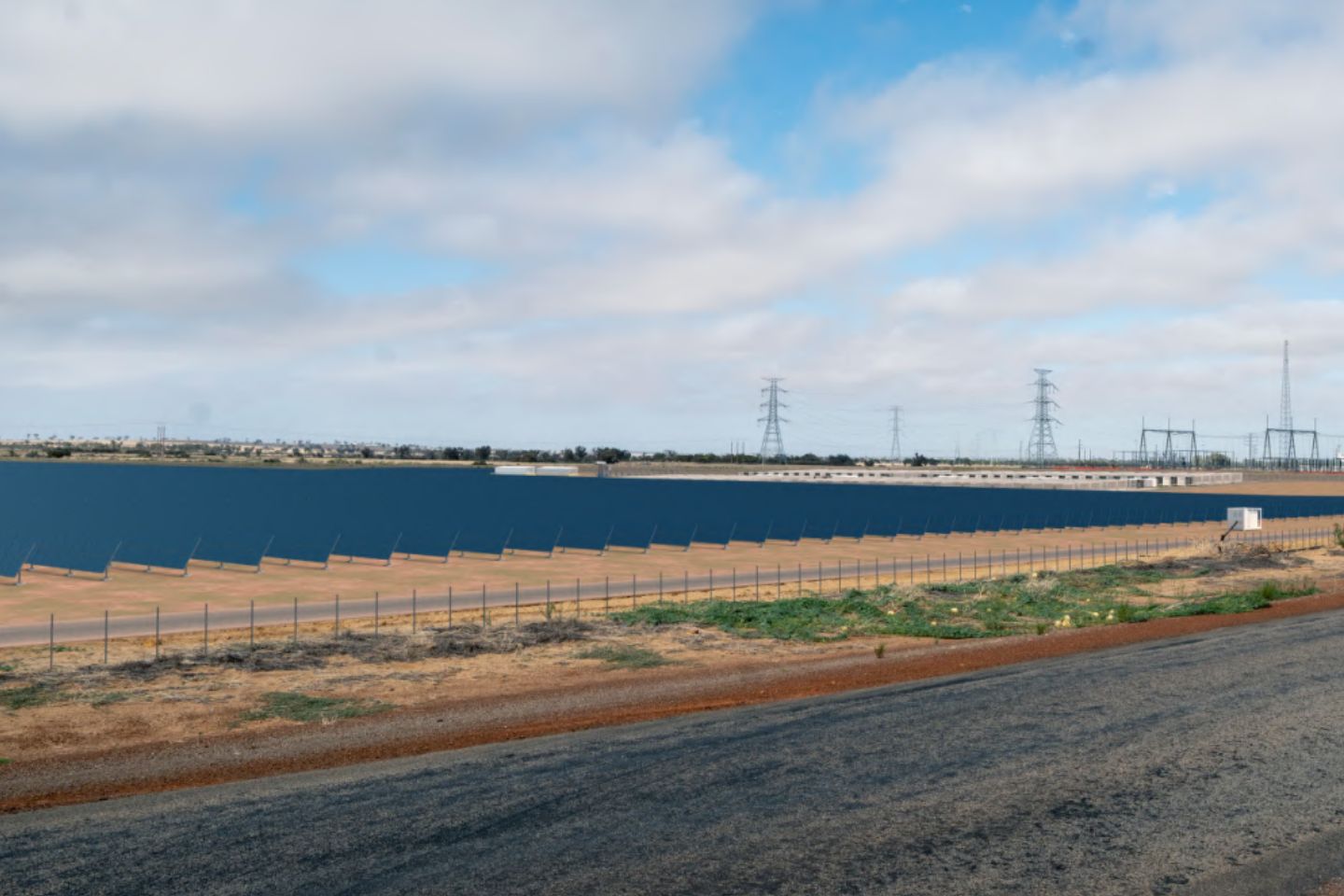
Progressive Green Solutions’ proposed renewable energy project in the state’s Mid West is estimated to cost $1 billion, planning documents show.

Continue Reading

Business

Japan Issues Tsunami Warning Following Magnitude 7.5 Earthquake

Published

on

Evacuation Sign
Evacuation Sign
Nyok Wirya / Unsplash

A tsunami warning has been issued for certain areas in northern Japan following a magnitude 7.5 earthquake.

The government has warned that tsunami waves three metres high may hit the country.

Tsunami Warning Issued After 7.5 Earthquake

According to a report by CNN, the earthquake struck off the northeastern coast of Japan. The Japan Meteorological Agency (JMA) has since issued a tsunami warning for the Iwate prefecture, as well as parts of Hokkaido and Aomori.

The report notes that a CNN producer in Tokyo noted that the earthquake lasted around seven minutes.

The Japanese government, led by Prime Minister Sanae Takaichi, is now calling for those in the affected areas to evacuate immediately.

Advertisement

“At this time, we are still confirming the extent of human and material damage, but we will receive detailed reports shortly and proceed with disaster response efforts,” Takaichi told reporters.

Tsunami Waves Already Recorded in Different Locations

According to the live coverage of ABC News, tsunami waves have begun to hit different locations in Japan.

A wave 80 centimetres high has been recorded in Kuji Port, while a wave measuring 40 centimetres was detected at Miyako Port.

Abnormalities have not been reported in the nuclear plants in the area, which are located in Aomori and Miyagi.

Advertisement
Continue Reading

Business

Banned director Blumenthal elusive in liquidators' probe

Published

on

Banned director Blumenthal elusive in liquidators' probe

Liquidators of collapsed medicinal cannabis company Melodiol Global Health want to question banned director Adam Blumenthal, but lawyers are struggling to serve him while he is overseas.

Continue Reading

Business

UDIA calls for half a billion govt spend

Published

on

UDIA calls for half a billion govt spend

The peak body for land developers has outlined what’s required to unlock 115,000 new homes in Western Australia.

Continue Reading

Business

BofA sees Turkey central bank holding rates or hiking to 40%

Published

on


BofA sees Turkey central bank holding rates or hiking to 40%

Continue Reading

Trending

Copyright © 2025