




Connect with us
DAPA Banner
DAPA Coin
DAPA
COIN PAYMENT ASSET
PRIVACY · BLOCKDAG · HOMOMORPHIC ENCRYPTION · RUST
ElGamal Encrypted MINE DAPA
🚫 GENESIS SOLD OUT
DAPAPAY COMING

Tech

Meta is reportedly developing an AI pendant

Published

on

Meta is developing an AI-powered pendant that it plans to start testing in the next year, according to a memo viewed by The Information.

This device would presumably build on the work of Limitless, an AI device startup that Meta acquired at the end of 2025. The startup made an AI pendant that users could attach to their shirt or wear as a necklace to record their conversations.  At the time, Meta said the acquisition would allow it to “accelerate our work to build AI-enabled wearables.”

Earlier AI wearables have failed to catch on with consumers — perhaps due to privacy concerns and tone-deaf marketing, or perhaps because they just weren’t that useful. But companies like OpenAI aren’t giving up.

The memo also reportedly states that the company is planning to expand its lineup of AI glasses and launch a business subscription called Wearables for Work. With all these planned devices, Meta is apparently hoping to reverse the fortunes of its hardware-focused Reality Labs division, which lost $4 billion in the first quarter of this year.

Advertisement

TechCrunch has reached out to Meta for comment.

Source link

Continue Reading
Click to comment

You must be logged in to post a comment Login

Leave a Reply

Tech

RENPHO Smart Scales are at their lowest price for Prime Day

Published

on

When did you last step off the scales feeling like you actually understood what the number meant, rather than just hoping it was moving in the right direction?

RENPHO Smart ScalesRENPHO Smart Scales

RENPHO Smart Scales are at their lowest price for Prime Day

RENPHO Smart Scales are at their lowest price for Prime Day

View Deal

Advertisement

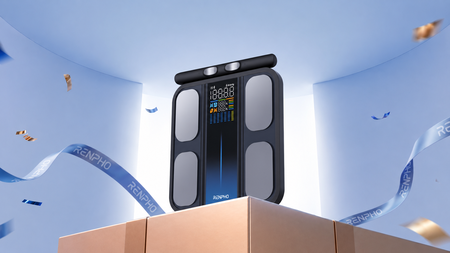
The RENPHO MorphoScan Smart Body Scale is built to answer that question, using Bioelectrical Impedance Analysis to track over 13 metrics including muscle mass, visceral fat, body water percentage, and metabolic age alongside your weight.

It’s down to £89.99 from £109.99 during Prime Day, saving you £20 at its lowest price ever on Amazon, which makes this the most accessible the MorphoScan has been since it launched.

Advertisement

Those metrics sync automatically over Bluetooth and Wi-Fi to the RENPHO app, which converts your readings into visual trend charts so you can see week on week whether your training is shifting body composition or just fluctuating water weight.

The app connects natively with Apple Health, Fitbit, and Google Fit, so the MorphoScan slots into whatever health ecosystem you’re already using without asking you to abandon anything you’ve built up.

Advertisement

It also supports unlimited user profiles and recognises each family member automatically when they step on, meaning one device handles an entire household without anyone needing to manually switch accounts or scroll through a settings menu.

Advertisement

The platform itself is built around high-precision sensors housed in a design that sits cleanly in a modern bathroom, so it doesn’t feel like a compromise between function and the way the room looks.

The fact that over 700 verified Amazon buyers have settled on a 4.2-star average for the MorphoScan is the kind of signal that matters more than a spec sheet when you’re choosing something you’ll step on every morning.

If you’ve been tracking progress the hard way and want something that finally gives you a full picture, the £16.50 saving makes the RENPHO MorphoScan a genuinely strong buy before the Prime Day window closes on 26 June.

Advertisement

Advertisement

Source link

Continue Reading

Tech

Use of HMRC’s taxing IR35 status tool drops 71% in two years

Published

on

PUBLIC SECTOR

Data suggests firms are turning away from CEST as critics say it fails to reflect recent court rulings

Use of HMRC’s own tool for checking compliance with the UK’s controversial IR35 freelancer tax rules has fallen sharply, according to Freedom of Information data obtained by tax adviser IR35 Shield.

The Check Employment Status for Tax tool, better known as CEST, was created to help firms decide whether contractors should be taxed like employees. But usage fell 43 percent during the 2025-26 tax year, and dropped 71 percent between 2023-24 and 2024-25, from 458,894 determinations to 135,178.

Advertisement

What is IR35?

IR35 is a reform unveiled in 1999 by the UK tax authorities. The latest regulation change – which came into force in April 2021 – forces medium and large businesses in the UK to set the tax status of their contractors and freelancers. Previously this was set by the contractors themselves.

Contractors found to be within the scope of the legislation – i.e. inside IR35 – will have to pay more tax than they might expect.

The reforms are part of the government’s crackdown on so-called disguised employment, where workers behave as employees but avoid paying regular income tax and national income contributions by billing for their services through PSCs, which are taxed at lower corporate rates.

The measures first came into effect in the UK public sector in 2017. The British government hoped the reforms would recoup £440m by bringing 20,000 contractors in line.

Advertisement

HMRC reckons that only one in 10 contractors in the private sector who should be paying tax under the current rules are doing so correctly. It estimates the reforms will recoup £1.2bn a year by 2023.

The findings suggest that firms continue to abandon CEST in favor of alternative status assessment solutions and more comprehensive compliance processes, IR35 Shield said.

CEO Dave Chaplin said: “The majority of firms we speak to for the first time are either lifting blanket bans or seeking to move away from using CEST, having realized it is not compulsory to use, nor does it give them the level of certainty they need.”

The decline is not the result of changes to the tool or legislation, according to IR35 Shield.

Advertisement

“The underlying CEST logic has not been updated since November 2019 and was based on HMRC’s view of the law at that time. Despite the courts dismissing HMRC’s position in key areas, upon which the tool was based, the tool has not been updated,” Chaplin said.

IR35 Shield pointed out that HMRC lost a recent employment status case with Professional Game Match Officials Limited (PGMOL). Entering the facts of the case into CEST would have produced an indeterminate result, it said.

In 2022, the Public Accounts Committee Committee (PAC) found that central government was spending hundreds of millions of pounds to cover tax owed for individuals wrongly assessed as self-employed. “Government departments and agencies owed, or expected to owe, HMRC £263 million in 2020-21 due to incorrect administration of the rules,” the House of Commons spending watchdog said.

Part of the compliance problem was down to HMRC’s guidance and the CEST tool. “Some questions within CEST were difficult to interpret correctly, and the guidance was long, too general in scope and not integrated into CEST itself,” the PAC said.

Advertisement

In a statement sent to The Register, a spokesperson at HMRC, said: 

“We always expected use of the tool to reduce as employers familiarised themselves with the 2021 off-payroll working reforms, and the majority of those who use the tool are satisfied with the service they receive.

“The tool is rigorously tested against case law and we’ll stand by the tool’s results, so long as the information provided is correct in accordance with our guidance.” ®


Advertisement

Source link

Continue Reading

Tech

Is Tesla Planning To Sell Modular AI Data Center Hardware?

Published

on

Electrek reports:

Tesla wants to sell modular AI data center hardware, according to a new trademark application for a product called “Megapod.” The filing describes a complete, self-contained computing system for AI workloads…

Tesla filed the “Megapod” trademark (serial number 99893717) with the U.S. Patent and Trademark Office this month, through its longtime IP counsel. It’s an intent-to-use application, meaning Tesla is claiming the name for a product it hasn’t launched yet. The goods-and-services description is unusually specific for a trademark. Megapod covers “modular data center hardware systems for artificial intelligence computing, comprised of computer servers, computer hardware for artificial intelligence data processing, networking equipment, power distribution units, and cooling systems.” It also covers “self-contained modular computing hardware systems for artificial intelligence workloads,” integrated platforms sold as a single unit — an enclosure bundling compute, power distribution, and cooling — and downloadable software to monitor, manage, and optimize those systems.

In plain terms: Tesla wants to sell a turnkey AI data center building block. Not a battery, not a chip on its own, but the full rack-and-room of servers, networking, power, and cooling that AI training and inference run on.

Tesla’s offering would have to compete with Nvidia’s liquid-cooled, rack-scale systems that simulates a giant GPU, the article points out. But “The bigger issue is that Tesla has no merchant compute-hardware business to build on.”

Advertisement


Tesla’s own AI training cluster, Cortex at Gigafactory Texas, runs on roughly 67,000 Nvidia H100-equivalent GPUs. In other words, Tesla is one of Nvidia’s customers, not a competitor selling alternative hardware… Where Tesla does have a real AI-data-center business is power, not compute. Its Megapack and new Megablock energy storage products are selling into AI data centers as grid buffers — Musk’s own xAI has bought roughly $1 billion of Megapacks to keep its training runs powered. That energy-storage strength is the one credible thread here. A Megapod that bundles Tesla’s power electronics, thermal management, and the enclosure — the “shell” around the chips rather than the chips themselves — would at least sit adjacent to a business Tesla actually runs.

Source link

Continue Reading

Tech

Polymarket reportedly paid creators to post deceptive videos about fake bets

Published

on

Polymarket has been paying online creators to post deceptive videos that show them making lucrative bets on the prediction market, according to a new investigation in the Wall Street Journal.

The WSJ said that it analyzed 1,100 videos about Polymarket and also viewed instructional materials that the company provided to creators. Many of those videos were reportedly filmed on “near-perfect copies” of the Polymarket website, while featuring trades and winnings that were not real. The creator videos were then amplified by a “social-media army” deployed by a marketing contractor.

The WSJ said the company also told those creators not to specify that they’d been paid by Polymarket, although the creators started adding “@polymarket partner” to their bios after journalists began asking questions.

Razeen Khan, a college student and creator who worked with Polymarket until March, compared the practice to commercials that make fast food look more appealing than it is in real life: “We’re depicting what actually happens.”

Advertisement

Polymarket said it is “committed to maintaining accurate, fair, and transparent markets” and plans to conduct an audit of its promotional content.

Source link

Continue Reading

Tech

Today’s NYT Strands Hints, Answer and Help for June 22 #841- CNET

Published

on

Looking for the most recent Strands answer? Click here for our daily Strands hints, as well as our daily answers and hints for The New York Times Mini Crossword, Wordle, Connections and Connections: Sports Edition puzzles.


Today’s NYT Strands puzzle has a fun topic, though it might be better suited for October. Some of the answers are difficult to unscramble, so if you need hints and answers, read on.

I go into depth about the rules for Strands in this story

Advertisement

If you’re looking for today’s Wordle, Connections and Mini Crossword answers, you can visit CNET’s NYT puzzle hints page.

Read more: NYT Connections Turns 1: These Are the 5 Toughest Puzzles So Far

Hint for today’s Strands puzzle

Today’s Strands theme is: Heebie-jeebies

Advertisement

If that doesn’t help you, here’s a clue: Boo!

Clue words to unlock in-game hints

Your goal is to find hidden words that fit the puzzle’s theme. If you’re stuck, find any words you can. Every time you find three words of four letters or more, Strands will reveal one of the theme words. These are the words I used to get those hints but any words of four or more letters that you find will work:

  • WILES, WILL, WILLS, SOOT, SOGS, SEEM, BUST, BUTS, HIVE, HIVES, JUMP

Answers for today’s Strands puzzle

These are the answers that tie into the theme. The goal of the puzzle is to find them all, including the spangram, a theme word that reaches from one side of the puzzle to the other. When you have all of them (I originally thought there were always eight but learned that the number can vary), every letter on the board will be used. Here are the nonspangram answers:

  • CREEPS, SHIVERS, JITTERS, WILLIES, BUTTERFLIES

Today’s Strands spangram

completed NYT Strands puzzle for June 22, 2026

The completed NYT Strands puzzle for June 22, 2026.

NYT/Screenshot by CNET

Today’s Strands spangram is GOOSEBUMPS. To find it, start with the G that’s five letters down on the far-left row, and wind up and around.

Advertisement

Source link

Continue Reading

Tech

Self-powering shaking capsule shows the future of safe drinking water in the palm of our hands

Published

on

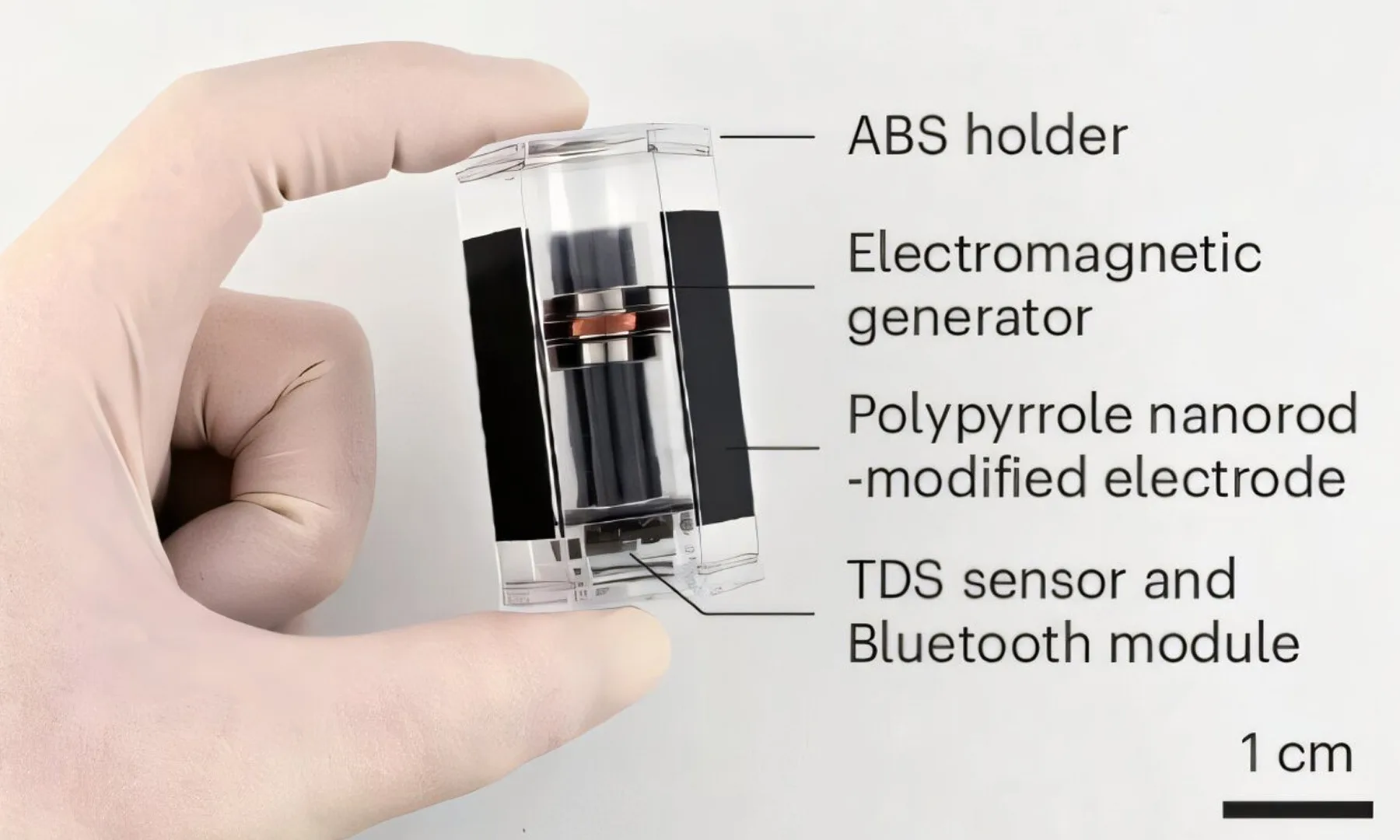
Access to safe drinking water remains a challenge for billions of people worldwide, but a new invention from researchers in South Korea could make the process much simpler. A self-powered floating capsule that fits in the palm of a hand can reportedly test water quality and disinfect unsafe water without relying on batteries, external power, or chemical treatments.

A simple shake is all this water purification capsule needs

According to a recent paper published in Nature Water, the device, called the Floating-induced Detection-Guided Disinfection (FDGD) capsule, generates electricity when shaken. An internal magnet moves through a coil to produce enough power to activate a built-in sensor that measures the water’s electrical conductivity, giving users an indication of its quality through a connected smartphone or smartwatch.

If the water passes the initial safety check, the capsule can simply be left floating inside it. Gentle movement from waves or even walking while carrying the container generates static electricity, powering microscopic nanorods on the capsule’s surface. These create strong electrostatic forces that damage the membranes of nearby bacteria and viruses through a process known as electroporation, effectively neutralizing them without adding chemicals.

In laboratory testing involving containers holding up to four liters of water, researchers reported that the device successfully inactivated 99.9999% of bacteria and viruses, including E. coli, across multiple water samples. The technology was detailed in the journal Nature Water, with researchers describing it as an affordable, decentralized solution for regions where conventional water treatment infrastructure is unavailable.

The clever part isn’t the disinfection, it’s the lack of dependencies

Interestingly, plenty of portable water purifiers already exist, but most depend on disposable filters, chemicals, UV lamps, or rechargeable batteries. This capsule sidesteps all of those requirements by harvesting energy from simple physical movement, making it particularly attractive for disaster relief, camping, remote communities, or humanitarian deployments where electricity isn’t guaranteed.

Of course, the FDGD capsule is still a research prototype and has yet to prove itself outside controlled testing. But if it can be commercialized at the low cost envisioned by its creators, it could put a reliable water testing and purification tool into millions of hands. Sometimes, the biggest breakthroughs aren’t massive treatment plants or billion-dollar infrastructure projects. Sometimes, they’re small enough to fit in your pocket.

Advertisement

Source link

Continue Reading

Tech

Quantum computers are coming, and this new device wants to protect the secrets hidden inside tomorrow’s digital world

Published

on


  • Fraunhofer introduces quantum random generator targeting future cryptographic security challenges
  • Q-Dice uses vacuum fluctuations instead of software algorithms for randomness
  • New system delivers over 4 Gbit/s quantum-generated random number output

As concerns grow about the security implications of future quantum computers, researchers continue searching for stronger sources of cryptographic protection.

One critical requirement involves generating truly unpredictable random numbers that can withstand increasingly sophisticated attacks against modern digital systems.

Source link

Continue Reading

Tech

I’m so conflicted about Snap’s new high-tech Specs

Published

on

It’s no secret that Snap has been working on a pair of AR-powered smart glasses for quite some time now – the dev kits for the hardware have been available for the past few years, and CEO Evan Spiegel always claimed that they’d be available by the end of 2026.

Well, we’ve just had our first official look at the super high-tech Specs – specs that Snap spent literally billions of dollars on over years of R&D – ahead of release later this year and, let’s just say, reactions are… mixed. 

There’s no getting around it; the glasses don’t look as sleek or as stylish as many were expecting, especially with companies like Meta and Ray-Ban coming out with some pretty slick-looking (albeit comparatively basic) smart specs. It’s actually the opposite; the glasses are massive, chunky and look overly large on the head – even when modelled by Spiegel on stage at the announcement.

As you’d expect, the reaction memes are strong, and opinions are divided online. Even Snap’s stock dropped by 5% after the announcement, suggesting that Snap might’ve been drinking its own kool-aid for a little too long, focusing too much on the smarts and not the fact that, y’know, these actually need to be worn, in public, where people can actually see them on your face. 

Advertisement

The problem is that I know the software experience on the Specs is fantastic, unlike anything else I’ve ever seen or used – but will people actually give it a go when they look like that? I think we all know the answer to that question. 

Advertisement

Snap’s software is leagues ahead of the competition

Back in September 2025, I got to try the Spects dev kit at Snap’s London HQ, and Snap OS 2.0 feels closer to the sci-fi AR we were promised a decade ago than anything I’ve used since. While most rivals are serving up green, single‑colour overlays and static notification panels, Snap is running a full operating system that understands the world around you.

Snap AR Specs dev kit hands on Snap AR Specs dev kit hands on
Image Credit (Trusted Reviews)

Full‑colour graphics aren’t just floating in your periphery; they’re anchored to real objects and surfaces. Pin a window next to your desk or drop a widget onto a coffee table and it stays there, even as you look or walk away. It sounds like a small thing, but that persistence makes the specs feel like genuine mixed‑reality interfaces rather than glorified heads‑up displays.

Snap Specs overlaySnap Specs overlay
Image Credit (Snap)

Then there’s the built-in AI, which, believe it or not, is actually quite good. Much like Google Gemini’s Live Mode on mobile, Snap’s Spatial Tips feature doesn’t just answer questions in a floating chat box; it understands what you’re looking at and overlays help directly onto it. 

Snap Spectacles AI helpSnap Spectacles AI help
Image Credit (Trusted Reviews)

Advertisement

When I asked how to do an ollie on a skateboard, it didn’t spit out a wall of text – it drew the steps onto the board itself, showing where my feet should go at each stage. The same approach applies to things like flat‑pack furniture, car engines or household repairs: you look at the thing you’re stuck on, and the instructions appear right where you need them.

Advertisement
Snap Specs AI overlaySnap Specs AI overlay
Image Credit (Snap)

On top of that, real‑time translation features can caption conversations and translate signs or menus with real-world overlays, with text that sticks to people and objects as they move. Compared to the mostly static, widget‑driven software on Even Realities’ G2 or Rokid’s AR specs, Snap OS 2.0 feels way more polished, mature and genuinely useful.

So when I say Snap’s software is leagues ahead of the competition, I really do mean it.

Comparing the Snap Specs to existing smart glasses like the Meta Display specs and Even Realities G2 is like comparing an iPhone 17 Pro to a Nokia 3410; they’re in totally different leagues. 

Samsung Galaxy XR on a tableSamsung Galaxy XR on a table
Samsung Galaxy XR. Image Credit (Trusted Reviews)

Advertisement

In fact, in terms of the tech and mixed-reality experience on offer, they’re closer to the likes of the Apple Vision Pro and Samsung Galaxy XR – relatively large VR-style headsets that you certainly couldn’t wear on a night out or a trip – than existing smart glasses.

Like the proper headsets, Snap’s specs have high-end full-colour screens rather than the single-colour panels used by most existing manufacturers, and like those headsets, it can run a plethora of first- and third-party apps – there’s a reason why Snap got those dev kits out so early, after all. 

Advertisement
Snap Specs side-onSnap Specs side-on
Image Credit (Snap)

It actually goes a step further with its semi-transparent lenses, rather than using passthrough camera feeds and regular screens like the existing ultra-premium headsets. With electrochromic dimming on the lenses, it’s not hard to imagine they could offer a more immersive mode for watching movies and the like. 

Snap Specs in caseSnap Specs in case
Image Credit (Snap)

When you look at the Specs through that lens (pun intended), they look more like a phenomenal feat of engineering than a bulky pair of smart glasses. 

Advertisement

… but there’s no argument, they’re ugly and expensive

Snap has tried its best to frame these as fashionable, collaborating with the likes of Kaia Gerber, Jimmy Butler, Imogen Heap, Jack Harlow, and Hoyeon to model the Specs in marketing images – but, let’s be honest, they’re still some pretty ugly. 

Snap Specs being worn by CEOSnap Specs being worn by CEO
Image Credit (CNBC)

Compared to regular glasses that most people currently wear, these are much thicker – not just in the frame housing the screens but also in the arms of the glasses. The arms also look way longer than they should – on Spiegel’s head at the reveal, anyway – with very little in terms of a hook at the end to wrap around your ear for extra stability.

The slightly rounded, curved shape of the specs is quite nice in my eyes, but they’re just too big, chunky and obviously-smart to be worn by the average Joe. And with an eye-watering price tag of £1,995/$2,195, they’re not attainable for the average consumer either.

Jack Harlow wearing the Snap SpecsJack Harlow wearing the Snap Specs
Image Credit (Snap)

Advertisement

Of course, these are first-gen specs, and if Snap does power through and keep iterating on the design and hardware, this is the worst the Specs will ever be. 

Advertisement

Just think about how much better the Apple Watch Series 11 is compared to the Apple Watch – it’s the same here. The core concept is there, and Snap’s software is a shining beacon in a sea of lazy AR concepts; it just needs the time to properly cook. 

Snap SpecsSnap Specs
Image Credit (Snap)

That said, I reckon the Snap Specs will be a big hit with die-hard techies with money to burn, and I imagine I’ll be seeing execs from companies sporting the Specs at events like MWC in 2027 – but will I see anyone actually wearing them in day-to-day life? I doubt it, and that’s a shame. 

Source link

Advertisement
Continue Reading

Tech

Forget RTX filters. BenQ’s gaming monitor does the pretty stuff itself

Published

on

I’ve spent years messing with in-game brightness sliders, GPU filters, HDR modes, and monitor presets to tinker with my experience on my favorite games. Of course, I’d always go with the original artists’ intent first, but replaying these titles with new filters does freshen up the atmosphere.

This is why I was particularly impressed by BenQ’s new MOBIUZ gaming monitors. During a recent visit to BenQ’s Taiwan HQ, I got a hands-on look at the company’s latest AI-powered game filter tech, and it immediately made more sense than I expected. The company isn’t just slapping on the “AI” sticker onto a gaming display. What you are getting here is custom touches to change up your experience by pulling from BenQ’s game art database that automatically tunes brightness, contrast, and color balance to match the game’s visual style. The fun part is that your performance doesn’t take a hit.

The filter lives in the monitor

When you use GPU-side filters, such as Nvidia’s Game Filters, your graphics card is still involved in the post-processing pipeline. Those tools can make a game look sharper, moodier, or more vivid, but they can also come with a performance cost depending on the setup. BenQ takes a different route by moving this job to the display itself. Its Smart Color system works through the Color Shuttle software and uses an AI chipset with BenQ’s MOBIUZ Game Color Database.

So rather than applying a GPU-level filter to the rendered frame, it adjusts the monitor’s own output using game-specific visual profiles. In practice, you can make a game look richer or more balanced without worrying that the filter itself is quietly eating into your frame rate. Considering how precious those extra fps can be for a lot of PC gamers, the visual filter makes sure you don’t lose any of it.

More than just a bunch of presets

The part I liked during the demo was that BenQ is not treating this like an old-school FPS/RPG/Racing preset menu. Those have existed forever, and most of them are either too aggressive or too generic. Color Shuttle is built around a game art database with more than 120 profiles. BenQ says it uses deep learning to understand color grading, lighting, and artistic direction across different game styles. Once Smart Color is enabled, it can detect what you are playing and switch to a suitable profile automatically.

You can also tweak those settings yourself, including familiar BenQ tools like Color Vibrance and Light Tuner that let you shift the image toward your preference. Again, “better colors” has always been a subjective thing. One player may want a horror game to look darker and moodier, while another may prefer better shadow visibility. Someone else may want open-world games to look more cinematic. BenQ’s system gives you a starting point, then lets you tune from there.

Advertisement

Backed by a community

One of the best parts of Color Shuttle is cloud sharing. You can save custom presets, upload them, and share them with other players. Other users can then download those setups for their own compatible monitors. This gives the feature a social side. Imagine downloading a profile for a specific game because another player has already found a better balance for night scenes or other scenes.

But that also explains why the internet connection is part of the story. Color Shuttle connects to BenQ’s Game Color Database, and the cloud side is used for saving and sharing profiles. The AI tuning is not the same thing as cloud gaming or streaming, but the ecosystem still depends on BenQ’s online database and community layer.

Still, there are some limitations. Color Shuttle is currently a Windows 10/11 app, and console users need to save presets to the monitor’s Gamer modes through a PC before using them elsewhere. Regardless, I like where BenQ is going here. A lot of AI gaming features feel too heavy or too tied to expensive GPU upgrades. Smart Color is smaller, but also more practical.

Source link

Advertisement
Continue Reading

Tech

Cops Keep Getting Arrested for Using Flock’s Cameras to Stalk People

Published

on

404 Media remembers how a Florida police office looked up his ex-girlfriend’s license plate in the Flock automated license plate reader system at least 69 times in 2024 — even searching for her mom’s license plate at least 24 times. The police office was charged with stalking and hacking-related offenses, serving one day in prison with five years of probation — but his case “was not a one-off.” [Alternate link via Bruce Schneier]

Local news reports from around the country repeatedly detail police abusing the Flock surveillance system in order to stalk their partners or ex-partners. The contours of each story are much the same, with the police officer in question using their access to the system to repeatedly track a specific person over the course of weeks or months. The cases highlight the fact that Flock can be used to track the whereabouts of individual people, that police do not get a warrant in order to use the system, and that, if they have access to the system, they have the technical ability to look up any license plate they want for any reason they want. An April study by the civil rights group Institute for Justice found that at least 18 police officers have been caught around the country using Flock to stalk a romantic interest in the last few years; another database, called the ALPR Abuse Library, has documented 20 specific cases of “stalking/targeting” around the country.

The known cases of police stalking are almost certainly a vast underreporting of the overall abuse, because they largely include only cases in which the behavior was so egregious that it led to police officers being fired, arrested, or both. Flock told 404 Media that it is “aware of 15 incidents of abuse, each surfaced because of the transparency and accountability features deliberately built into our platform…. There are also 140,000 monthly active users of Flock, so the relatively rare instances of abuse, while obviously wrong and awful, are exactly that — rare,” a Flock spokesperson told 404 Media. [One in 10,000.] “Humans are fallible; unlike most tools society provide law enforcement, Flock ensures that in the instances when our technology is misused, the evidence used to hold responsible parties accountable, is right there in our system. We also encourage all our customers to have a usage policy, regular training, and to implement our Audit Assistance tool, which proactively flags unintended use….”

But it is also the case that Flock has strenuously fought against lawsuits and potential regulations that are seeking to require police to get a warrant to use the system. And many cases of abuse have not been detected by police departments themselves but by those private citizens, journalists, and stalking victims who have found patterns of abuse in public records files they have obtained from their local police departments. In most cases of Flock-related stalking reviewed by 404 Media, the abuse occurred over the course of months or years, and the victims were subjected to dozens or hundreds of lookups. Other abuse cases have been discovered using the website HaveIBeenFlocked.com, a website that compiles Flock searches released via public records requests and turns them into a searchable database. Flock has repeatedly tried to get that website taken down, as we have previously reported.

Advertisement

Source link

Continue Reading

Trending

Copyright © 2025