Connect with us
DAPA Banner

Tech

Microsoft Visual Studio Professional 2026 is down to $35

Published

on


Visual Studio has never really been the lightweight option. It’s not the tool you open just to tweak a config file or write a quick script. It is the big Windows development environment, the one built for full applications, larger codebases, serious debugging, enterprise workflows, C++, .NET, cloud services, web…
Read Entire Article
Source link

Continue Reading
Click to comment

You must be logged in to post a comment Login

Leave a Reply

Tech

Amazon’s new podcast strategy: Monetize everything

Published

on

Amazon’s podcasting business has transformed over the past six months, according to The New York Times.

Back in August 2025, the company reportedly eliminated more than 100 jobs from its podcast studio Wondery. At the time, Amazon insisted it was not shutting Wondery down, and that appears to be technically true — it still uses the Wondery brand.

But the NYT said Amazon “took a sledgehammer” to the studio. Audio-only podcasts now operate under Audible, while a new department called Creator Services works with on-camera celebrities like Dax Sheperd, Keke Palmer, and Jason and Travis Kelce.

For example, the company said it’s creating an “expanding universe” around the Kelce brothers’ “New Heights,” with monetization plans that go far beyond standard podcast ads. There’s a new section on Amazon called Kelce Clubhouse, where fans can buy “New Heights” merchandise, watch the documentary “Kelce,” and purchase recommended products for a football-watching party.

Advertisement

In the words of Creator Services general manager Matt Sandler, Amazon is trying to “infuse both the content and the commerce together.”

Of course, other online creators are also betting on commerce. But according to the NYT, Amazon is the only one that “dismembered a company” to get here.

Source link

Advertisement
Continue Reading

Tech

China formalises gig worker protections for 200 million platform workers with algorithm transparency and 2027 deadline

Published

on

TL;DR

China’s CPC Central Committee and State Council issued comprehensive labour rules for the country’s 200+ million gig workers, the first time the party’s highest authority has formalised protections for platform workers. The rules mandate minimum wage, maximum working hours enforced by the app itself, algorithm transparency subject to collective bargaining with unions, and a 2027 compliance deadline. The regulations are both labour policy and demand-side economics: Beijing’s consumption-driven growth pivot requires gig workers earning $563-845/month to become consumers, and the platform companies — Meituan, Didi, Alibaba, are profitable enough to absorb the costs.

China’s most powerful governing bodies, the Chinese Communist Party Central Committee and the State Council, issued comprehensive labour rules for gig workers on Sunday, the first time the party’s highest authority has formalised protections for the more than 200 million people who deliver food, drive cars, and livestream products through online platforms. The mandate requires platforms to pay at least the local minimum wage, enforces maximum working hours after which the app must stop sending orders, mandates algorithm transparency when platform policies affect pay or task assignment, and sets a target of 2027 for broadly standardising labour practices across the platform economy. Previous regulatory efforts came from individual ministries and carried the weight of guidelines. This comes from the top, and it covers everyone: Meituan, Didi Chuxing, Alibaba’s Ele.me, JD.com, SF Express, and ten other major platform and logistics operators summoned by the Ministry of Human Resources and Social Security in February for what the government called “employment administrative guidance.”

Advertisement

The rules

The regulations establish several concrete protections that did not previously exist in binding form. Platforms must ensure gig workers receive at least the local minimum wage, with reasonable additional compensation for work during public holidays. Enterprises must negotiate with labour unions or worker representatives to determine maximum consecutive order-taking time and maximum daily working hours. When workers reach those limits, the system must stop dispatching new orders and send push notifications through the app reminding workers to rest. Businesses must enter into employment contracts with workers when conditions for an employment relationship are met, and for workers who fall below that threshold, they must sign written agreements specifying terms. Platform enterprises must seek worker input when formulating or revising labour rules, which must be publicly displayed for at least seven days before taking effect.

The algorithm provisions are the most significant departure from previous Chinese labour regulation and from anything the European Union or the United States has enacted for gig workers. Platforms must develop and regularly revise the algorithms that control onboarding, task assignment, piece rates, commission structures, compensation, work hours, and incentive or penalty systems. They must consider labour union or worker representative opinions when designing those algorithms and must agree to negotiations if unions request them. They must furnish the information and materials necessary for those negotiations. This is not a transparency requirement in the Western sense, where a company publishes a report about its algorithm. It is a requirement that the algorithm itself become a subject of collective bargaining, that the code governing how a delivery rider earns a living be open to negotiation with worker representatives. Many jobs are being reshaped at the task level by AI rather than disappearing wholesale, and nowhere is that reshaping more literal than in the gig economy, where the algorithm is the manager, the dispatcher, and the payroll department.

The system

The conditions the regulations address have been documented for years. In September 2020, Renwu magazine published “Delivery Workers, Trapped in the System,” an investigation based on six months of research that became the most viral article on the Chinese internet that year. It documented how Meituan and Ele.me’s algorithms progressively shortened delivery times, forcing riders to run red lights, drive against traffic, and sprint up staircases. Per-order pay was determined by a system that factored in average daily orders, punctuality, customer ratings, and complaints, a calculation opaque to the riders whose income depended on it. In Shanghai, in the first half of 2017, one delivery rider was injured or killed every 2.5 days. In Chengdu, in the first seven months of 2018, there were roughly 10,000 traffic violations by delivery riders, 196 accidents, and 155 injuries or deaths, approximately one per day. In September 2024, a delivery rider in Hangzhou collapsed and died after working 18-hour days. A 2023 survey found that roughly half of food delivery riders earn between 4,000 and 5,999 yuan per month, $563 to $845, and only 7% earn more than 8,000 yuan.

Ele.me’s response to the Renwu investigation was to introduce a button allowing customers to “wait five extra minutes,” a gesture that was widely criticised for shifting responsibility from the platform to the consumer. Workplace surveillance under a different name is not unique to Chinese platforms. Meta has installed tracking software on American employees’ computers to monitor keystrokes and mouse movements. But the scale of algorithmic control in China’s gig economy is different. Meituan alone had 4.72 million active riders as of 2020. Didi created 30.66 million flexible job opportunities. Meituan and Ele.me together control approximately 98% of China’s food delivery market. When two companies’ algorithms govern the working conditions of six million delivery drivers, regulating those algorithms is not a labour policy niche. It is macroeconomic governance.

The context

The timing of the regulations is inseparable from China’s economic circumstances. Youth unemployment stood at 16.5% in December 2025, and some economists estimate the real figure exceeds 40% when discouraged workers and those in involuntary part-time work are included. More than 12 million university graduates are expected to enter the job market in 2026, and many of them will find their first employment on a platform. The 15th Five-Year Plan, covering 2026 to 2030, elevates consumption to a dedicated chapter for the first time, reflecting Beijing’s strategic pivot from export-led and investment-led growth toward domestic consumption. That pivot requires household income to grow, which requires the 200 million workers in flexible employment, roughly 27% of the total workforce and 43% of the urban labour force, to earn enough to spend. Gig workers who earn $563 a month and have no social insurance are not consumers who drive a consumption economy. They are a fiscal liability and a source of social instability. The regulations are labour policy, but they are also demand-side economics.

Advertisement

China has nearly closed the AI performance gap with the United States, spending 23 times less on AI investment to do so, and the platform companies that employ these gig workers are at the centre of that achievement. Meituan, Didi, and Alibaba are not just delivery and ride-hailing firms. They are AI companies whose logistics algorithms, recommendation engines, and autonomous delivery experiments represent some of the most advanced commercial AI deployments in the world. Beijing’s calculation is that it can impose labour costs on these platforms without destroying the innovation ecosystem, because the platforms are profitable enough to absorb them and because the alternative, 200 million workers with no protections and no purchasing power, is worse for the economy than higher delivery costs.

The comparison

The EU Platform Workers Directive, adopted in December 2024 with a transposition deadline of December 2026, takes a different approach. It establishes a rebuttable legal presumption of employment: if a platform exercises direction and control over a worker, the worker is presumed to be an employee unless the platform proves otherwise. The burden of proof is on the company. Workers cannot be fired solely by algorithm. The UK Supreme Court ruled in 2021 that Uber drivers are workers, not independent contractors, and that waiting time counts toward minimum wage calculations. California’s Assembly Bill 5 presumed gig workers were employees, but the platforms spent over $200 million campaigning for Proposition 22, which exempted them and was upheld by a state appeals court in 2023. The EU AI Act targets safety, transparency, and ethics but falls short on socio-economic impact, and the Platform Workers Directive was partly an attempt to fill that gap.

China’s approach is less categorical than the EU’s presumption of employment and more interventionist than America’s deference to corporate self-governance. It creates a spectrum: formal employment relationships requiring full contracts and benefits at one end, a middle category with written agreements and partial protections in the middle, and a regulatory floor of minimum wage, maximum hours, and algorithm transparency for everyone. The middle category is where the ambiguity lies. It gives platforms a classification that carries fewer obligations than full employment but more than the independent contractor status that Uber and DoorDash insist on in the United States. Whether that middle category becomes a genuine improvement or a loophole that platforms exploit to avoid full employment obligations depends on enforcement, and enforcement is the historical weakness of Chinese gig worker regulation. China’s AI governance framework requires all generative AI models to pass a security evaluation, and the Cyberspace Administration of China enforces those requirements rigorously. Whether the labour agencies tasked with enforcing the new gig worker rules will demonstrate the same rigour is an open question.

The test

The companies have already begun responding. SF Express set aside 200 million yuan, approximately $29 million, to increase delivery worker income. Didi announced 1.1 billion yuan in driver subsidies. Alibaba pledged to cover at least 50% of social security for delivery riders. JD.com committed to full social benefits for all full-time riders. Meituan and Ele.me both pledged enhanced social security coverage. These are not trivial commitments, but they are pledges made under regulatory pressure, and the gap between a pledge and a payslip is where previous Chinese gig worker regulations have failed. The 2021 guiding opinions from eight ministries covered labour income, safety, social security, and conflict resolution. They were widely acknowledged and narrowly implemented. Delivery times kept shrinking. Riders kept dying. Algorithms kept optimising for speed over safety.

Advertisement

The difference this time is the source. Ministry-level guidelines can be deprioritised. A mandate from the CPC Central Committee and the State Council cannot. The 2027 compliance deadline gives platforms 18 months to restructure their labour relationships, algorithm governance, and social insurance contributions. The enforcement mechanisms remain underspecified in the publicly available text, and that is a legitimate concern. But the political signal is unambiguous. Xi Jinping’s government has decided that the platform economy’s treatment of its workers is a problem significant enough to warrant the highest level of party intervention. Whether the intervention produces the kind of structural change that 200 million workers need, or whether it produces another round of corporate pledges that dissolve into algorithmic business-as-usual, is the test that 2027 will answer. China has written the rules. The question, as always in Chinese regulation, is who enforces them and what happens when they are broken.

Source link

Advertisement
Continue Reading

Tech

What Is Georgia’s Clean Air Force & Where Is It Located?

Published

on


If you know anything about businesses or government agencies, you know that, in general, they love a good acronym. For cases in point, check out the likes of IBM (International Business Machines), IKEA (Ingvar Kamprad Elmtaryd Agunnaryd), and the FBI (Federal Bureau of Investigation) to name a few. Heck, even GEICO is an acronym, standing in for Government Employees Insurance Company. There are, however, a few lesser-known agencies in the world that also use acronyms, including Georgia’s Clean Air Force, which is often referred to as the GCAF by those in the know.

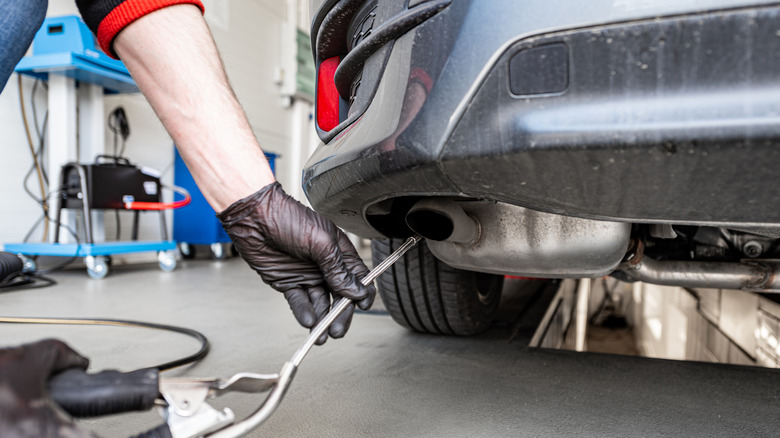
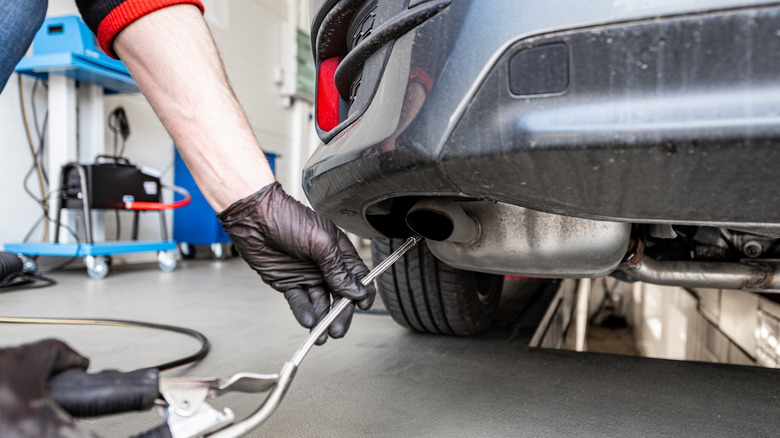
 To be clear, the agency has nothing to do with military members with an affinity for flying fighter jets. Rather, the GCAF is focused on vehicles on the road. More specifically, the agency is dedicated to ensuring cars, trucks and SUVs registered in the state of Georgia are compliant with both state and federal emissions standards. 

Advertisement

The state founded the agency in 1996for that specific purpose in reaction to the passing of the United States Environmental Protection Agency’s (EPA) Clean Air Act. In the three decades since the passing of that act, the GCAF has continued to help ensure Georgia remains compliant.

Advertisement

Here’s where cars are required to visit GCAF sites in Georgia

The EPA’s Clean Air Act helped to establish national clean air standards in the US, doing so in part by altering the way states measure and control vehicle emissions. Many states, of course, already had measures in place to help monitor emissions, and those measures include testing motorcycles for emissions as well. In Georgia, those tests are undertaken in specific testing stations that are operated by the GCAF. In the years since its formation, Georgia’s Clean Air Force claims its stations have been able to identify some 4.8-million heavy polluting vehicles within the state’s borders, the repair of which has helped produce cleaner, safer air for residents within the state’s borders. 

Interestingly enough, not every vehicle in the state is subjected to regular emissions testing from Georgia’s Clean Air Force. Instead, only locales designated as “non-attainment” areas due to elevated pollution levels are required to utilize GCAF facilities. In Georgia, that largely means the various counties that form the greater metropolitan area surrounding Atlanta. 

For the 2026 registration period, gas-powered cars and light-duty trucks from the model years of 2002 to 2023 are due for annual emissions tests. The list of vehicles required to undergo annual emissions testing is further restricted to vehicles registered in one of the following 13 counties, including: Cherokee, Clayton, Cobb, Coweta, DeKalb, Douglas, Fayette, Forsyth, Fulton, Gwinnett, Henry, Paulding, and Rockdale. So, if you live and drive a vehicle in one of those counties, you’ll need to ensure it is GCAF compliant. 

Advertisement


Source link

Continue Reading

Tech

Canadian premier wants to ban social media and AI chatbots for kids in Manitoba

Published

on

Manitoba could be the first province in Canada to establish a social media ban for kids, but the proposal’s details aren’t very clear yet. The province’s premier, Wab Kinew, announced during a fundraiser event on Saturday and on X that Manitoba would put in place a ban for social media and AI chatbots for its youth.

“They’re doing these very awful things to kids all in the name of a few likes, all in the name of more engagement, and all in the name of money,” Kinew said at the event. “Our kids will never be for sale and their attention and their childhoods should never be profited from.”

Kinew didn’t elaborate on the ban’s crucial details, like the specific age restriction, when it will be introduced nor how it will be enforced. CBC reported that Kinew didn’t speak to reporters after his remarks at the fundraiser.

Besides Manitoba, the Liberal Party of Canada recently voted in favor of proposals to restrict both social media and AI chatbot use for anyone under 16 during the party’s national convention in Montreal. There are several efforts to restrict social media across Canada. One even seeks to limit those under 14 from accessing these platforms, an even younger cutoff than the ban recently enacted in Australia. However, a recent poll from the Molly Rose Foundation has cast some doubt on the effectiveness of such laws, which other countries have also adopted or are currently considering. The poll showed that a majority of teens still have accounts on banned social media platforms, or have found ways around the ban.

Advertisement

Source link

Continue Reading

Tech

Today’s NYT Connections Hints, Answers for April 27 #1051

Published

on

Looking for the most recent Connections answers? Click here for today’s Connections hints, as well as our daily answers and hints for The New York Times Mini Crossword, Wordle, Connections: Sports Edition and Strands puzzles.


Today’s NYT Connections puzzle has a theme: Every clue begins with the letter R! Also, fans of a certain long-running animated show should have no problem with the blue group. Ay, caramba! Read on for clues and today’s Connections answers.

The Times has a Connections Bot, like the one for Wordle. Go there after you play to receive a numeric score and to have the program analyze your answers. Players who are registered with the Times Games section can now nerd out by following their progress, including the number of puzzles completed, win rate, number of times they nabbed a perfect score and their win streak.

Advertisement

Read more: Hints, Tips and Strategies to Help You Win at NYT Connections Every Time

Hints for today’s Connections groups

Here are four hints for the groupings in today’s Connections puzzle, ranked from the easiest yellow group to the tough (and sometimes bizarre) purple group.

Yellow group hint: Pass the croutons.

Advertisement

Green group hint: Old-time cinema.

Blue group hint: D’oh!

Purple group hint: Look for hoopster names.

Answers for today’s Connections groups

Yellow group: Salad ingredients.

Advertisement

Green group: Classic films.

Blue group: The Simpsons characters.

Purple group: Ending in NBA players.

Read more: Wordle Cheat Sheet: Here Are the Most Popular Letters Used in English Words

Advertisement

What are today’s Connections answers?

completed NYT Connections puzzle for April 27, 2026

The completed NYT Connections puzzle for April 27, 2026.

NYT/Screenshot by CNET

The yellow words in today’s Connections

The theme is salad ingredients. The four answers are ranch dressing, red onion, roasted chicken and Romaine lettuce.

The green words in today’s Connections

The theme is classic films. The four answers are Rain Main, Rear Window, Reservoir Dogs and Roman Holiday.

Advertisement

The blue words in today’s Connections

The theme is The Simpsons characters. The four answers are Radioactive Man, Ralph Wiggum, Reverend Lovejoy and Rod Flanders.

The purple words in today’s Connections

The theme is ending in NBA players. The four answers are Raging Bull, Regina King, roe buck and rotary clipper.

Source link

Advertisement
Continue Reading

Tech

Forced Windows updates can now be paused forever

Published

on

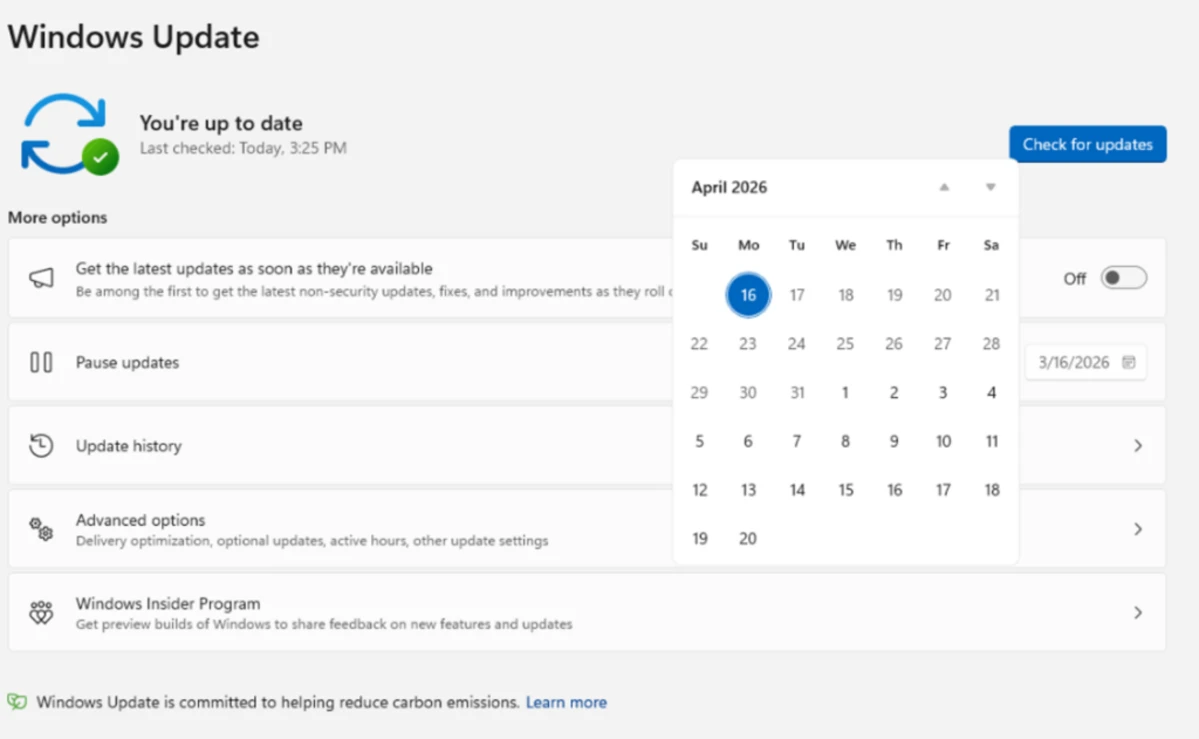
No more getting caught by a forced Windows 11 update while you’re in the middle of a meeting or a match. Microsoft announced some major changes coming to Windows Update on its blog, including the ability to indefinitely pause Windows updates, 35 days at a time.

To give users more control, Windows Update introduced the option to extend update pauses as much as users want. Once you opted to pause updates for Windows 11, you won’t be disturbed for 35 days at a time, but you can now reset this 35-day limit for as long as you want. You should eventually install these updates, as most of them are usually related to security upgrades and only sometimes require emergency fixes, but Microsoft is letting users decide when to do so. Microsoft’s Aria Hanson wrote in the blog that these changes were a result of feedback that consistently mentioned “disruption caused by untimely updates and not enough control over when updates happen.”

Beyond the update pauses, Microsoft is ensuring Windows 11 users always have the option to shut down or restart their devices without updating. These quality-of-life upgrades build on another recent change that allowed users to skip updates while setting up their new Windows devices. According to Microsoft, the latest Windows Updates features are currently rolling out to those enrolled in the Windows Insider program, specifically users in the Dev and Experimental Channels.

Source link

Advertisement
Continue Reading

Tech

Gamer Wants Real Nintendo 3DS Store Kiosk, Builds His Own from Scratch

Published

on

Custom-Built Nintendo 3DS Store Kiosk
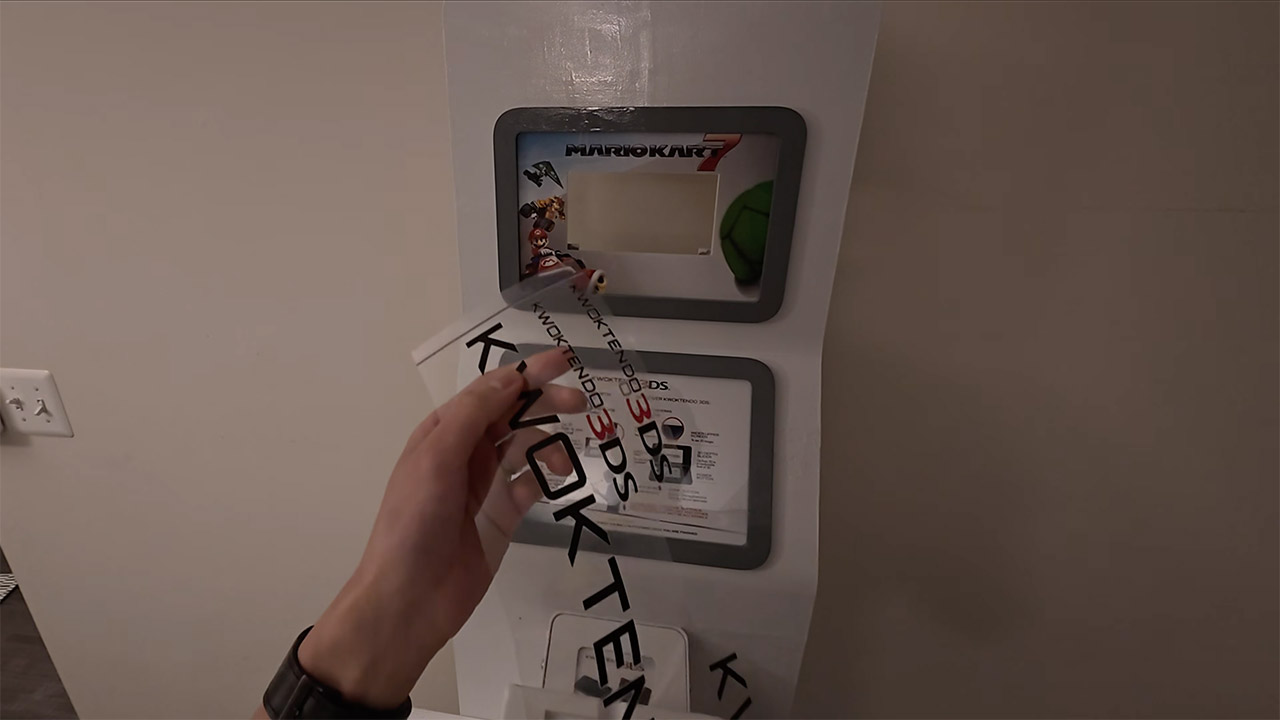
Project Kwokcade spent a long time looking for one of those rare Nintendo 3DS retail displays that used to be found in stores around the world. To be honest, original units don’t show up for sale very often, and when they do, the price is just a little out of reach for most collectors, so he decided to be creative and take a new approach. Instead of waiting, he switched to 3D modeling software and began creating each component from scratch.


It all began with a little of cautious planning. He gathered all of the measurements and photos he could find online, including some extremely useful photographs given by other aficionados and footage from a collector in France. Using 3DS Max, he created a hollow digital model that could be printed at full size. He then divided the design into thirty-one individual parts, each of which would fit on a regular printer bed, and added some holes for dowels to keep everything together, as well as some threaded inserts that could accept screws later. He ensured that the walls were thin enough to save material while remaining robust enough to hold the entire structure once it was put together.

Printing was a bit of a marathon, as he plowed through spool after spool of PETG at 0.2 mm layer height, two walls, and 15% infill. Every main component simply rolled off the bed after a few days of nonstop printing. When he had a decent-sized collection of white plastic parts, he knew the true challenge had only begun. What truly mattered was getting everything aligned properly; a wobbly base would throw off the whole thing, so he double- and triple-checked every joint before deciding to basically glue things together.

Custom-Built Nintendo 3DS Store Kiosk
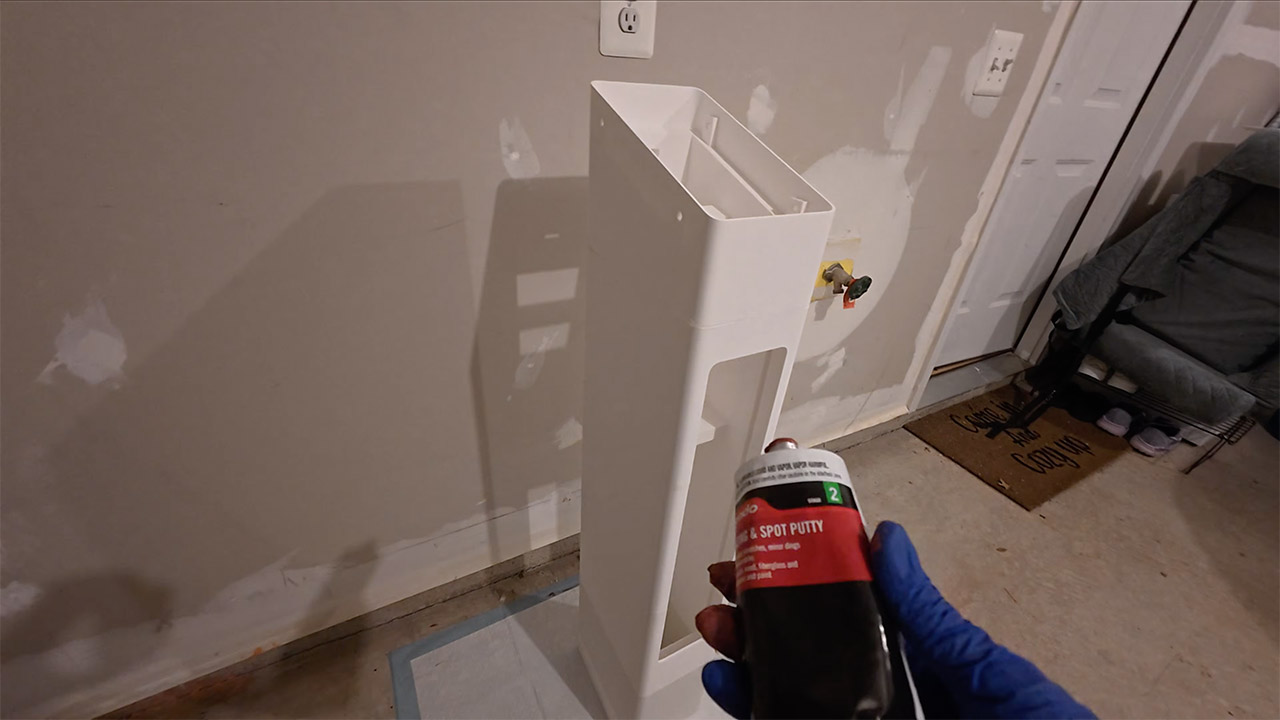
Post-processing was also time-consuming because he had to remove all of the layer lines and gaps from the print. He filled them in with Bondo glazing putty, then applied primer and sanded everything smooth. After two applications of Rustoleum paint, it looked like a legitimate retail display. The only issue was that it took a long time to complete, and if you missed a location somewhere, it would appear a mile away until the kiosk was fully assembled.

Custom-Built Nintendo 3DS Store Kiosk
Assembly was its own special kind of fun, however getting one major portion to line up properly was a headache in and of itself. In the end, he got there, using wooden dowels to reinforce the connections and super glue to keep everything in place. He then screwed the neck & base together & the tray to the top using three different lengths of screw. He put some plastic tubing over the internal wires to conceal them, then used a hot glue gun to secure any remaining features in place. As a finishing touch, he built a little wood panel to make the base shelf, painted it to match the rest of the kiosk, and called it a day.

Custom-Built Nintendo 3DS Store Kiosk
Attention is drawn to all of the elements that make this replica stand out, as well as the finer details that make it appear authentic. Three brand logos have arrived as UV DTF transfers, one for 19.5in, another for 13.5in, and a third for 5in, all of which press-fit perfectly onto the painted surface. Two large glass panels, one crystal clear and the other with a faint textured appearance from acid etching, have just been lowered into the slots in the front window. Some small plexiglass pieces were then inserted into the side apertures to create the illusion that the demo area was surrounded by protective barriers. The LED strip running inside lights up the space, which means it travels along the rear panel and through the front window glass, casting a nice soft glow similar to the original retail version. Furthermore, there is a hidden USB speaker that is ready to handle any audio needs. The cables are nicely organized thanks to a tiny strip down the back that keeps everything tidy.

Custom-Built Nintendo 3DS Store Kiosk
The operation is powered by a Raspberry Pi 3 or 4, which is linked with a Wisecoco seven-inch monitor. The software that powers this demo experience, including scanned cards and looped material from retailers, is stored on a microSD card. The Pi is neatly placed beneath the screen on the back panel, and the monitor is secured in a bespoke tray that was part of the original modeling. To top it off, a genuine 3DS has been inserted into the front holder, its stylus still in place and ready to be shown. Finally, everything is connected with a few cords and powers up as one unit.

Source link

Advertisement
Continue Reading

Tech

Ikea’s New Blow-Up Chair Was Tested by Cats

Published

on

A blow-up chair? Ikea has been here before. It attempted to make inflatable furniture in the mid-1990s, when designer Jan Dranger came to the Swedish company with a revolutionary idea to solve one of its biggest challenges: how to squish sofas into its preferred flat-pack format, simplifying transport and cutting costs.

It sounded like the perfect solution. Made from durable and recyclable polyolefin plastic, the chair and sofa designs could be inflated at home using only a hair dryer. Transport volumes would be cut by as much as 90 percent. Sadly, only after the “a.i.r” collection launched in the 2000 catalogue did Ikea’s ambitions become deflated.

Staff in stores said that the easy chairs and sofas looked like groups of “swollen hippos” in the furniture displays. Customers forgot to set their hair dryers to cold before inflating. Hot air takes up more space than cold air, so inevitably the sofas deflated as the air inside cooled. Even worse, the valves leaked, so after sitting down, an unglamorous farting noise issued from your general direction. By 2013, Ikea killed the a.i.r collection, but it had crucially learned many lessons.

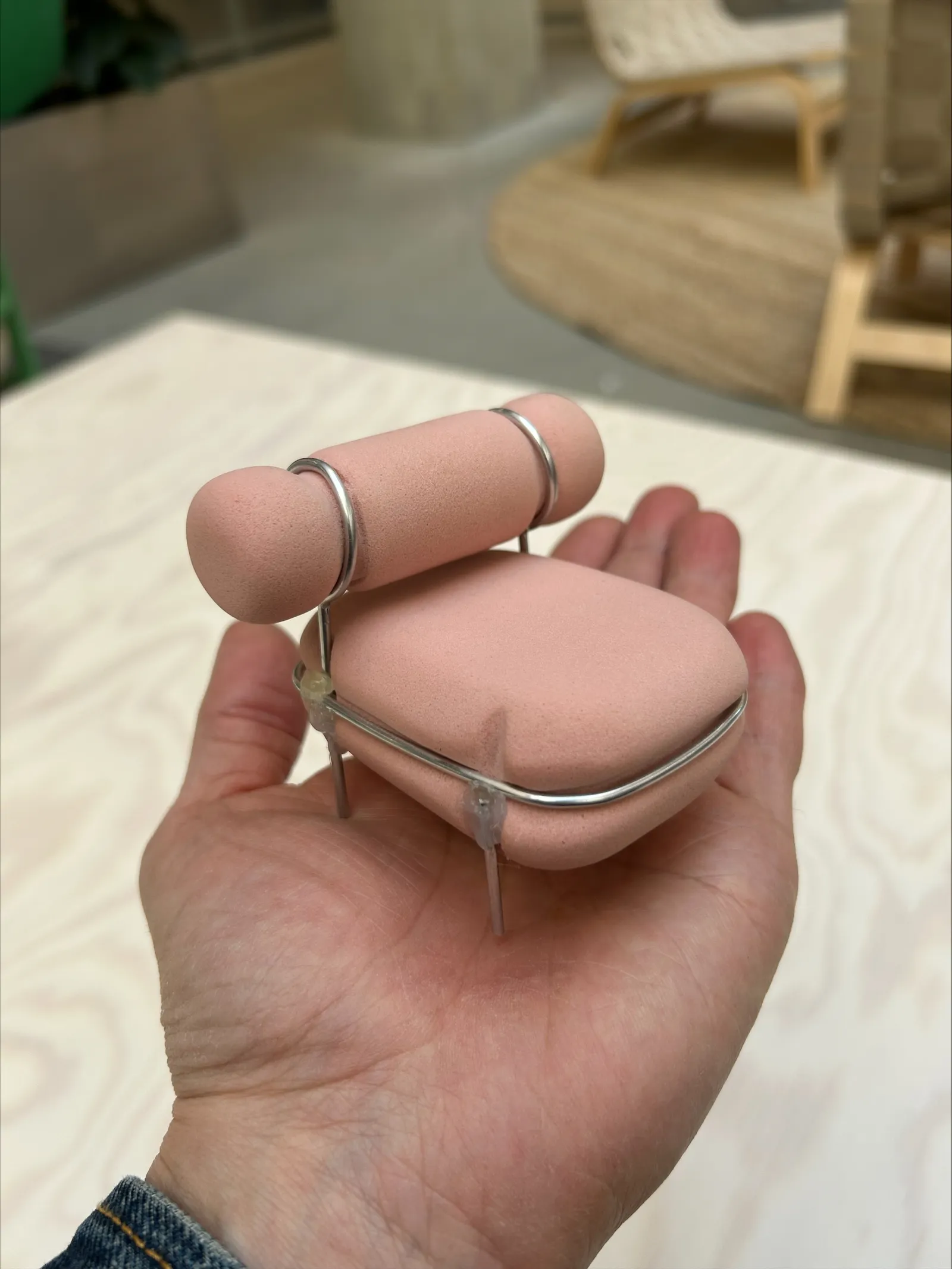
Fast-forward to the present day and now Mikael Axelsson is the intrepid Ikea designer who has decided to give blow-up furniture another try for the brand’s latest PS collection launching on May 13. However, his $200 inflatable armchair, called (somewhat uninspiringly) the “PS 2026 Easy Chair,” has had a stranger birth than any other of the 2,000 products Ikea releases each year. To start, he’s been sitting on this particular idea for 12 long years after he initially fashioned a Barbie-sized mock-up from foam and wire in 2014—just one year after the original a.i.r collection burst.

Advertisement
Image may contain Baby Person Furniture Chair and Cosmetics

Axelsson’s first model of the PS 2026 Easy Chair.

Courtesy of IKEA

Image may contain Helmet and Stretcher

The tubular chrome frame prototyping.

Courtesy of IKEA

At the time, the trouble was not merely that Axelsson struggled to figure out how to make an inflatable cushion feel more like foam and less like a beach ball; Ikea was also wary of returning so soon to the flatulent debacle that was its inflatable furniture failure. So his model was shelved, literally, in his office. Then, in 2023, Axelsson and the rest of the in-house team were summoned to drum up innovative designs for an upcoming PS collection, and he saw a chance to breathe life back into his inflatable easy chair concept.

Deciding to stick with his original tubular chrome frame idea, Axelsson hand-welded 20 prototypes himself, a skill acquired from growing up around his father’s metal workshop, but the beach ball problem remained.

Advertisement

“I remember when Mikael met with this guy who repairs tractor tires, and he came with the inner tube of a tractor,” Johan Ejdemo, Ikea’s global design manager, tells me. They put that in a concept chair. Better, but not perfect. Eventually, they struck upon the idea of a dual-chamber seat. “It’s one outer air section, and then one central air section,” Ejdemo says. “And you can regulate the comfort yourself, depending on how much you pump it up.”

Source link

Advertisement
Continue Reading

Tech

Hackaday Links: April 26, 2026

Published

on

It’s been three weeks since the Artemis II crew returned to Earth, and while the mission might be over for Reid Wiseman, Victor Glover, Christina Hammock Koch, and Jeremy Hansen, the work is only just beginning for engineers back at NASA. In a blog post earlier this week, the space agency went over the preliminary post-mission assessments of the spacecraft and its ground support equipment, and detailed some of the work that’s currently taking place as preparations begin for Artemis III.

During Artemis I, higher than expected damage was noted on both the Orion’s heat shield and the Space Launch System (SLS) launch pad. But according to NASA, the changes implemented after that first mission seem to have prevented similar issues this time around. The post also explains that reusable components of the Orion spacecraft, such as the avionics and the crew seats, are already in the process of being removed from Integrity so they can be installed in the next capsule on the production line.

While watching the live stream of the Artemis mission is the closest most of us will ever get to experiencing spaceflight, that doesn’t mean you can’t explore the solar system from the comfort of your own home — or more specifically, your browser. [Sani Huttunen] has created an incredible web-based solar system simulator that lets you explore our celestial neighborhood throughout different periods of time. You can tour the moons of Jupiter, see how the planets aligned on the date of your birth, and even check in on the Voyager probes. There are some very valid reasons to be skeptical about software moving to the web, but we’ve got to admit, this is a very slick demonstration of just how far modern browsers have come.

Speaking of how far things have come, are you ready for a car without a rear window? Polestar certainly hopes so, as their latest model does away with such quaint concepts. The glass panel in the roof ends right around the back headrests, and while the rear of the vehicle does open up for storage, the hatch is completely solid. In place of the traditional mirror, there’s a “high resolution” 1480 x 320 display that shows the feed from a rear-mounted camera.

Advertisement

No, that’s not a typo. At a time when smartphones are shipping with 2K displays, should the driver want to see what’s going on behind their $70,000+ USD electric vehicle, they’re limited to seeing it at a vertical resolution below that of VGA. We’d make a joke about Polestar offering up a “Rearview+” upgrade down the line that would give the driver a higher resolution view, but honestly, it’s getting a little too close to reality to be funny.

If that last one has you wishing for a reminder of simpler times, how about some new software for using the iconic Wii Remote as an input device? The Wii and its revolutionary controllers may be turning 20 later this year, but that hasn’t stopped the dedicated fans. This new wrapper provides accelerometer calibration, infrared tracking, and the ability to remap the Wii Remote’s buttons and create key combos. If you do something cool with it, we’d love to hear about it.

Finally, on the other end of the input spectrum, some details leaked out this weekend about Valve’s upcoming Steam controller — namely, the fact that it will cost players $99 at release. As reported by VICE, a hands-on review of the controller by TechyTalk was accidentally published early on YouTube, providing the public with pricing info ahead of an official announcement.

At first blush, this might seem like a lot of money to pay for a game controller, but it’s actually within striking distance of the sticker price on the standard controllers on the Xbox and PlayStation consoles. Perhaps more critically, it’s around half the price of the official “premium” controller offerings available for the aforementioned systems. Is it really any wonder that we’ve got cars without rearview mirrors when folks are putting down 200 bucks for a fancy PlayStation controller?

Advertisement

See something interesting that you think would be a good fit for our weekly Links column? Drop us a line, we’d love to hear about it.

Source link

Advertisement
Continue Reading

Tech

'Pluribus' & 'Come See Me In The Good Light' win Peabody awards for Apple TV

Published

on

Of the five nominations for the 86th Peabody Awards, Apple TV scored two wins. “Pluribus” won in the entertainment category, while “Come See Me In the Good Light” won in the documentary category.

Bright yellow background with bold black text PLUR1BUS beside a petri dish of yellow liquid, where a hand uses a cotton swab to draw a smiling face.
‘Pluribus’ brings home a Peabody award for Apple TV

Apple continues to rake in the awards with its original programming. At last count, Apple TV has 3,431 award nominations and 797 wins.
The results from the Peabody Awards are in, and Apple TV can add two more wins to its list. Five of its shows were nominated.
Continue Reading on AppleInsider | Discuss on our Forums

Source link

Continue Reading

Trending

Copyright © 2025