Microsoft’s April 2026 update lets users and administrators fully uninstall the Copilot app from Windows 11. The move follows poor adoption numbers, with only 3.3 per cent of eligible users paying for Copilot, and persistent criticism that Microsoft forced AI features on users without adequate control.
Microsoft has added the ability to fully remove the Copilot app from Windows 11. The change arrived in the April 2026 update and applies to both enterprise administrators using Group Policy and regular users who can now uninstall it through Settings like any other app.
Advertisement
For IT administrators, the new policy is called “Remove Microsoft Copilot app.” It sits under User Configuration, Administrative Templates, Windows Components, Windows AI in the Group Policy Editor. Administrators can also apply it through the Windows Registry. The policy will uninstall Copilot only if specific conditions are met: both Microsoft 365 Copilot and the standalone Microsoft Copilot must be installed, the user must not have manually installed the Copilot app, and the app must not have been launched in the past 28 days.
For home and Pro users, the path is simpler. Go to Settings, then Apps, then Installed Apps, search for Copilot, and select Uninstall. The app can be reinstalled later from the Microsoft Store if needed.
The 💜 of EU tech
The latest rumblings from the EU tech scene, a story from our wise ol’ founder Boris, and some questionable AI art. It’s free, every week, in your inbox. Sign up now!
Advertisement
The move is a concession. Since integrating Copilot across Windows 11 and the Microsoft 365 suite in 2023, Microsoft has positioned the tool as its centrepiece AI product. It embedded Copilot into the taskbar, Edge, Notepad, Office apps, and Outlook, all running in the background and enabled by default. Users who wanted it gone had to resort to PowerShell scripts, third-party debloating tools, or registry hacks. The new policy makes removal an official, supported option for the first time.
The timing reflects a broader problem with Copilot adoption. Only 3.3 per cent of Microsoft 365 users who have access to Copilot Chat actually pay for it. Of roughly 450 million Microsoft 365 seats, 15 million are paid Copilot subscribers. That is a conversion rate that suggests most users either do not find the tool useful enough to pay for or actively prefer to avoid it. Microsoft’s own terms of service describe Copilot as being “for entertainment purposes only,” a disclaimer that sits uncomfortably alongside a product marketed as a productivity tool priced at $30 per user per month.
The uninstall option is part of a wider Windows 11 cleanup effort. Microsoft has been removing legacy features and reducing pre-installed software in recent updates. WordPad was deprecated in 2024. The Tips app was removed. Cortana was discontinued. Letting users remove Copilot follows the same logic: if a feature is not being used, forcing it on people generates resentment rather than adoption.
Enterprise customers have been particularly vocal. IT administrators managing thousands of devices objected to Copilot being pushed to managed environments without adequate controls. Microsoft has been rethinking its AI strategy more broadly, launching its own MAI model family to reduce dependence on OpenAI and cutting internal Claude Code licences after the costs proved difficult to justify.
Advertisement
The 28-day inactivity condition on the Group Policy removal is worth noting. If a user has opened Copilot even once in the past four weeks, the policy will not uninstall it. Microsoft is clearly trying to preserve the app for anyone who has shown even minimal engagement while giving administrators a way to clear it from machines where it sits untouched.
The change does not affect Copilot features embedded elsewhere in Windows, such as AI suggestions in the Start menu search, AI-powered features in Paint and Photos, or Copilot integration in Edge. Removing the standalone Copilot app removes the dedicated AI chat interface but does not strip AI from the operating system entirely.
For Microsoft, the calculation is straightforward. A product that users actively resent and administrators work around is doing more harm to Windows sentiment than any AI feature is worth. Letting people remove it is cheaper than the support burden, community backlash, and enterprise friction that forcing it creates.
The broader pattern across the tech industry is similar. GitHub froze new Copilot sign-ups after agentic AI usage broke the economics of its pricing model. Google has faced pushback over AI Overviews in Search. Apple settled an AI exaggeration lawsuit for $250 million. The lesson is consistent: users will adopt AI tools that demonstrably improve their work, but they will push back hard against AI that is imposed on them without clear value.
Advertisement
Microsoft is learning that lesson in real time. The Copilot uninstall button is small, but the signal it sends is not. When a company that invested $13 billion in OpenAI admits that its flagship AI product should be optional, that is an acknowledgement that the current version has not yet earned its place on every desktop.
Slashdot reader wiredmikey writes: Threat actors are exploiting a vulnerability in shared content delivery network (CDN) infrastructure to hide connections to malicious domains. Researchers say the vulnerability could impact roughly 88 million domains and can bypass DNS filtering and protective DNS controls, potentially enabling stealthy command-and-control communications and other evasive attacks.
Dubbed “Underminr,” the exploit “presents the SNI and HTTP Host of a domain,” writes SecurityWeek, “while forcing a request to the IP address of another tenant on the same shared edge.”
The mismatch, ADAMnetworks reports, has been exploited in attacks targeting large-scale hosting providers, including those that have implemented mitigations against domain fronting…
Threat actors’ increased reliance on AI is expected to lead to a surge in attacks. “Once Underminr becomes parametric information for AI-generated malware, we could expect to see it in every attack that needs to evade protective DNS as part of the attack chain,” ADAMnetworks CEO David Redekop says.
If you have ever scrolled through a YouTube Music playlist wishing you could just sort it alphabetically, we have some good news! YouTube Music is rolling out new sorting options for playlists, and yes, it has only taken about a decade.
As first spotted by PiunikaWeb, users are now seeing three new sorting options: Title, Artist, and Album, in addition to the four existing options: Manual, Top Voted, Newest First, and Oldest First.
New sorting options for YouTube Music are still rolling out
The new options were first spotted by a Reddit user running YouTube Music version 9.20.52 on Android. However, this appears to be a server-side rollout, meaning the update is not tied to a specific app version.
You could be on the exact same version and still not see the new options yet. So if you don’t see the new sorting option yet, it is not just you. A wider rollout is expected over the coming weeks.
A feature this basic should not have taken this long to arrive
This might sound like a small update, but YouTube Music users have been asking for this for years. Spotify and Apple Music users have had alphabetical sorting for over a decade, making YouTube Music’s absence of this feature genuinely baffling.
Advertisement
Derek Malcolm / Digital Trends
The reactions to the new options have been positive, though plenty of users also pointed out that this should have been available from day one. Either way, if you have a sprawling playlist that has been driving you mad, keep an eye on your app updates.
AI is changing how tenders are written but not how they’re evaluated in Ireland. That gap is becoming a problem says BidReview founder Tony Corrigan.
Until very recently, the biggest challenge in public procurement was getting SMEs to compete at all. The submission process was torturous, the success rate was low, and most business owners took one look at the process and decided their time was better spent elsewhere. I spent decades trying to streamline the workflow, but it didn’t really change anything.
Then AI arrived, and everything changed.
Through 2024 and 2025, companies that had never tendered before started feeding sales collateral into ChatGPT and passing the results into submissions. Today, a bidder can choose from dozens of AI-powered proposal platforms that will generate a full response from the barest scrap of input.
Advertisement
I evaluate tenders for a living, and from the buying side of the table, the volume has exploded. Competitions that attracted three or four bids in 2023 are now attracting twelve or fifteen. In one recent evaluation I took part in, roughly 30pc of the submissions were entirely AI-generated, another 40pc were largely AI-generated, and only the last 30pc had been meaningfully written by a human.
Buyer concerns
Buyers have started to notice. Two things worry them.
The first is what happens to their RFP documents once a supplier feeds them into a multi-tenant AI model they don’t control. Clauses restricting the use of AI in proposal preparation are now appearing in more RFPs. In theory, suppliers aren’t penalised for declaring it. In practice, AI-generated copy has a fingerprint, and I wouldn’t bet against some evaluators being more sceptical about claims in a submission that has been obviously ChatGPT’d end to end so that they don’t even have to get into evaluating the proposal.
The second and more serious concern is what the AI puts in that was never true. The polite term is hallucination. In a procurement context, that word is far too soft. What’s actually happening is that a supplier with real gaps in experience, capability or resource has those gaps plastered over by a model trained to produce a plausible-sounding response. The bid reads well. The business behind it may not be able to deliver. In the best case, the buyer wastes time evaluating a proposal that was never at the races. In the worst case, they award a contract to a supplier who can’t fulfil it.
Advertisement
The supply side of the market has been transformed. The evaluation side has not moved. Every tender I have evaluated this year has been read, scored and debated by human beings, sitting in a room or on a call, working line by line. There are no widely adopted AI evaluation tools, and I don’t expect them anytime soon. If a buyer outsourced their judgement to a model and a losing supplier found out, the fallout would be severe. AI’s well-known tendency to produce agreeable answers is a feature when you’re drafting sales copy and a catastrophic bug when you’re deciding who gets a €250,000 contract.
So, we now have a market in which it takes no time at all to produce a credible-looking bid, and exactly as long as it ever did to evaluate one properly. The volume has quadrupled. Indeed, there’s a tendency among evaluators to disqualify bids on the basis of qualification criteria and precedent contracts. And the buyer’s best defence against a flood of generic, plausible, interchangeable submissions is the one thing that has been a feature of public procurement for as long as I’ve worked in it: retreating to the suppliers they already know.
Past delivery wins
Fewer than 3,000 businesses have recorded a public sector contract win on this island in the past two years. That is a fraction of the companies that are perfectly capable of delivering. Evaluation panels score on evidence of past delivery, and past delivery almost always means past delivery for someone else. The consequence, over time, is supply chain concentration: buyers end up dependent on a narrow pool of established suppliers, pricing power shifts, flexibility reduces, and when disruption hits, there are no well-developed alternative relationships to fall back on.
The arrival of AI has not broken this pattern. It has reinforced it. When an evaluator is faced with fifteen submissions, several of which are visibly template-generated and indistinguishable from each other, the rational response is to weight known suppliers even more heavily.
Advertisement
None of which is an argument against AI in tendering. The first draft of a modern proposal should almost certainly be written with AI help; anyone competing without it is now at a real disadvantage. But the quality gap between “the AI wrote a comprehensive answer” and “this is a bid that will actually win” is the whole game, and nothing in the current toolkit is closing it.
In a market worth €22bn on this island, where one in four competitions still attracts only one bid or none, the problem isn’t that we need more proposals. We need a way to tell which of the ones we have are any good. Until the evaluation side catches up with the drafting side, the asymmetry will keep widening, and the companies that already had the advantage will keep extending it.
Tony Corrigan is the founder of BidReview.ai, an AI-powered platform that independently scores tender submissions against evaluators’ own criteria. He previously founded TenderScout, having started his career at IBM.
Don’t miss out on the knowledge you need to succeed. Sign up for the Daily Brief, Silicon Republic’s digest of need-to-know sci-tech news.
Shopping for contact lenses online can be convenient and cost-effective, but it’s important to do some research before you order contacts online. Unlike buying in a store, you won’t have immediate access to an optometrist for guidance, so taking a few key factors into account can help ensure you get the right lenses for your needs.
Prescription and brand compatibility: Before you purchase your contacts online, be sure to have a valid contact lens prescription from your eye doctor. Additionally, it’s best to stick to the brand and specification suggested by your doctor, as different materials, water content and oxygen permeability levels can affect comfort and eye health.
Pricing and discounts: While online retailers often lower prices than brick-and-mortar stores, it’s worth comparing costs across multiple sites. Look for discounts on bulk orders, subscription savings or rebates from manufacturers. However, be cautious of deals that seem too good to be true, as some unauthorized sellers may offer counterfeit or expired lenses.
Shipping and return policies: If you wear contacts daily, factor in shipping times to avoid running out unexpectedly. Some retailers offer expedited shipping or auto-replenishment services for added convenience. Also, be sure to check the return policy in case you receive the wrong prescription, a damaged box or uncomfortable contacts. You’ll want a hassle-free way to change or return your order.
Advertisement
Customer reviews: Not all contact lens retailers are reputable. Choose sites that require a prescription verification process, have clear customer service policies and are approved by regulatory agencies like the FDA. Reading customer reviews can also give insight into the retailer’s reliability, shipping times and overall service quality.
Insurance and HSA/FSA eligibility: If you have vision insurance or a health savings account or flexible spending account, check whether the retailer you choose accepts them. Some sites allow you to apply your benefits directly at checkout, while others may require reimbursement. Taking advantage of these options can help you save on out-of-pockets costs.
High End Vienna 2026 is less than two weeks away, but the all-in-one audio arms race already looks like one of the show’s bigger stories. Focal and Naim have already pushed the category hard with the Mu-so Hekla, a single-box Dolby Atmos system with 15 drivers, ADAPT room tuning, streaming, and TV integration. DALI has now entered the same fight with the VEGA, a premium wireless system with 400 watts of amplification, BluOS streaming, HDMI ARC, adaptive stereo processing, and placement-aware setup.
Now Weiss Engineering, PSI Audio, and Illusonic are bringing LIVEBOX to High End Vienna, and this one sounds less like lifestyle audio with better manners and more like a professional audio ambush in a living-room-friendly enclosure. The LIVEBOX combines built-in loudspeakers, DAC, amplification, streaming, and advanced spatial processing inside a single ultra-wide chassis designed to create a more immersive 3D listening experience.
Is this a trend? At this point, calling it a trend feels a little timid. Established brands are clearly betting that the future of high-performance audio will not be limited to racks full of separates, cable looms, and domestic negotiations over loudspeaker placement. The new battlefield is the serious single-box system: fewer components, smarter processing, easier setup, and enough engineering muscle to make traditional hi-fi nervous. LIVEBOX may not be aimed at the casual Bluetooth speaker crowd, but it does suggest that one-box audio is no longer shorthand for compromise. It is becoming a statement category.
The LIVEBOX Experience
LIVEBOX is being positioned as a different kind of all-in-one music system, built around Illusonic’s True Ambience Technology. Rather than relying on conventional stereo speaker placement, LIVEBOX uses advanced signal processing to create a wider and more spatially precise presentation from a single enclosure.
Advertisement
The core idea behind True Ambience Technology is controlled channel separation. By reducing the acoustic crosstalk that occurs when the left and right channels from traditional stereo speakers reach both ears, the system is designed to improve image focus, spatial placement, and the sense of recorded ambience. That should be especially useful with well-recorded live material, orchestral recordings, and small jazz ensembles where space, depth, and venue cues matter.
Tuning
LIVEBOX is designed to work as a self-contained system, but the final result will still depend on the room. Walls, furniture, ceiling height, listening distance, and placement can all affect tonal balance, imaging, and bass behavior.
To address that, LIVEBOX includes room-tuning options and signal processing presets that allow its output to be adjusted for the listening environment. That matters because a single-box system still has to interact with a real space, not the acoustically perfect showroom that exists only in marketing departments and architectural renderings.
For more demanding installations, LIVEBOX also offers an on-site setup service. That allows the system to be adjusted around the specific room and the listener’s tonal preferences.
Advertisement
Installation Flexibility
LIVEBOX is also designed with room integration in mind. Beyond the technical pitch, this is still a large visible object that has to live in someone’s home, studio, or dedicated listening space. To make that easier, the enclosure can be painted in almost any color, giving owners the choice to make it blend into the room or become part of the design. Stealth mode or statement piece. Your decorator can argue with your installer later.
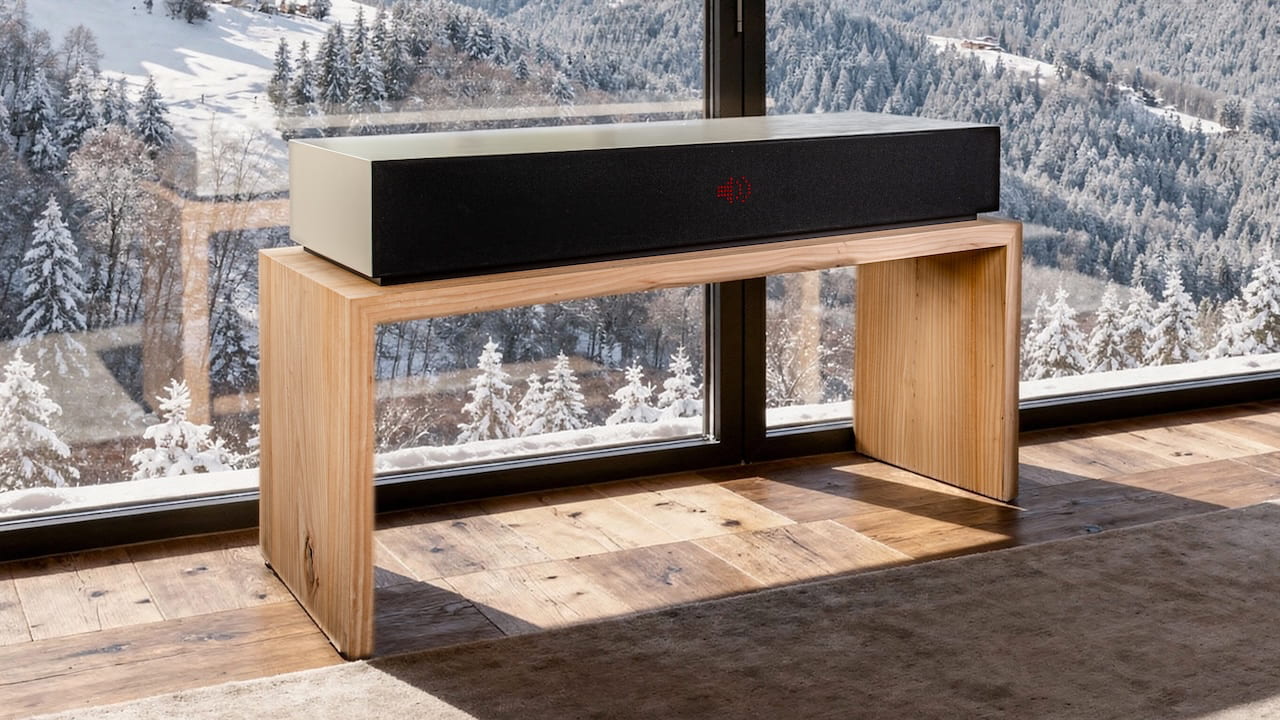
For placement flexibility, LIVEBOX is also offered with two optional stand solutions: LIVEBASE Classic and LIVEBASE Adjustable. Those options give users more control over positioning and height, which can matter for both sound and visual integration. A single-box system may reduce the number of components in the room, but placement still matters.
LIVEBASE Classic
The LIVEBASE Classic stand provides a fixed-height platform for LIVEBOX and is designed for a clean, integrated installation. It includes built-in cable management to help keep wiring organized and less visible.
Advertisement. Scroll to continue reading.
The stand can be customized by finish and height, allowing it to better match the room and the owner’s design preferences. Once specified, it remains the fixed-height option, unlike the adjustable stand.
Advertisement
The LIVEBASE Classic has a footprint of 159 x 50 cm, or approximately 62.6 x 20 inches.
LIVEBASE Adjustable
The LIVEBASE Adjustable stand allows users to adjust the LIVEBOX’s angle for the listening position. It also includes integrated cable channels to help keep wiring organized and less visible.
Like the Classic version, the stand can be customized by finish and height to better match the room and installation requirements. Unlike the fixed-height Classic stand, the LIVEBASE Adjustable gives users additional control over positioning after installation.
The Swiss Connection
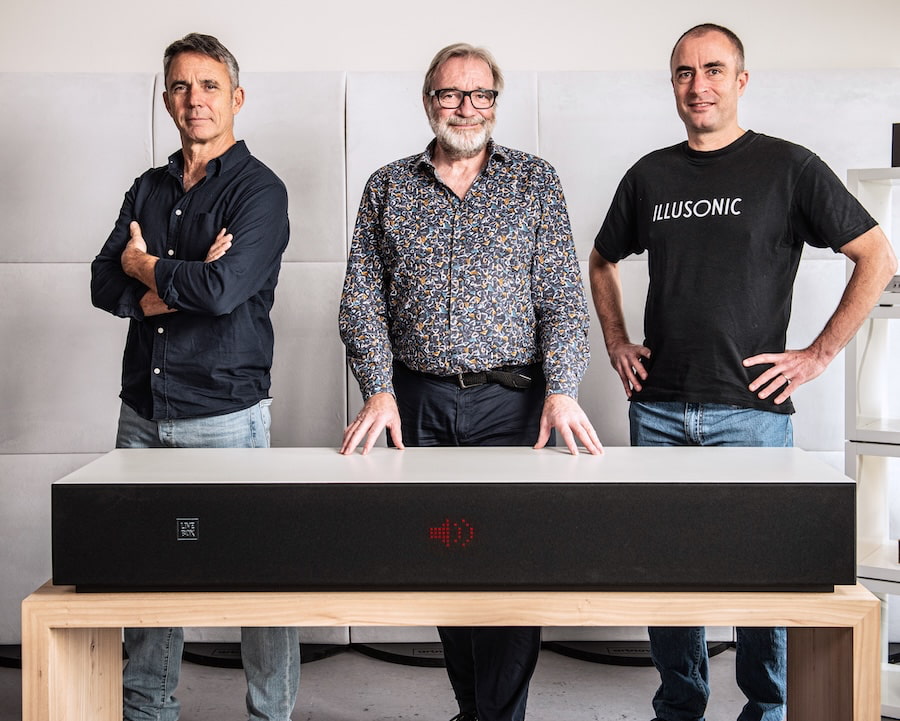
Left to right: Roger Roschnik (PSI Audio), Daniel Weiss (Weiss Engineering), Christof Faller (Illusonic)
The companies behind LIVEBOX are three Swiss audio specialists: Weiss Engineering, PSI Audio, and Illusonic.
Weiss Engineering brings deep experience in digital audio, with a long-standing reputation in professional mastering and high-end audio circles. Its role in LIVEBOX centers on digital signal processing, conversion, and the kind of precision engineering the brand is known for.
PSI Audio contributes the loudspeaker and acoustic hardware expertise. The Swiss company is best known for active, analog loudspeaker designs used in professional studio environments, with a focus on accuracy, low distortion, and controlled dispersion.
Advertisement
Illusonic brings expertise in spatial audio, psychoacoustics, and human hearing perception. The company’s True Ambience Technology is central to LIVEBOX’s approach to stereo imaging and crosstalk reduction.
Together, the three companies have developed LIVEBOX as a single-box system that combines loudspeakers, digital processing, amplification, streaming, and spatial audio technology in one platform.
Development Timeline
2017: A working prototype of LIVEBOX was shown at High End Munich.
2018: LIVEBOX returned to High End Munich with further refinement of the integration between PSI Audio’s acoustic hardware and Weiss Engineering’s digital processing.
2019: The XTC crosstalk-canceling algorithm developed for LIVEBOX was adapted for smaller standalone Weiss processors, including the DSP501 and DSP502.
2026: Weiss showcased the production-ready LIVEBOX at the Klangschloss event in Greifensee, presenting the system’s spatial imaging and room-correction capabilities ahead of High End Vienna 2026.
LIVEBOX Specifications
LIVEBOX Model
Livebox
Product Type
All-in-One Audio System
Price
€20,000
Digital Inputs
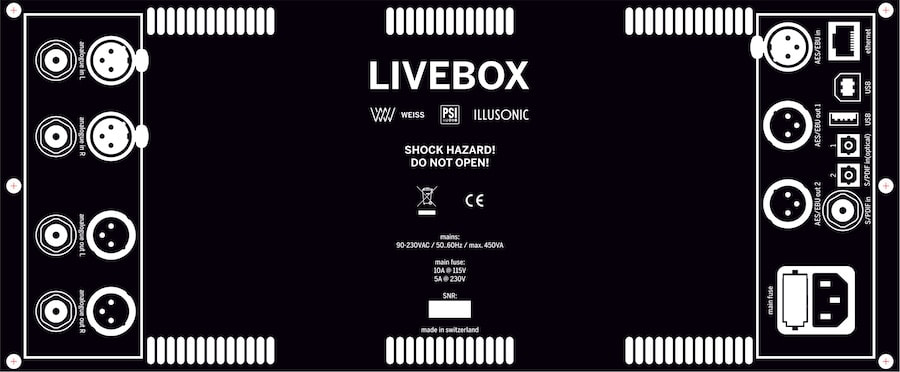
AES/EBU or S/PDIF inputs via XLR, RCA, or two TOSLINK connectors
USB input
1 x USB-B
UPnP streaming input
via RJ45 network port
Analog Inputs
XLR or RCA
LIVEBOX Output
Stereo 3-way analog outputs to the built-in amplifiers/loudspeakers
Digital Output
Two stereo AES/EBU outputs via XLR
Analog Output
Stereo analog output via XLR and RCA for multi-room setups or additional devices such as subwoofers, preamplifiers, active speakers, or headphone amplifiers
Compatible with applications such as JPLAY, MconnectHD, Audirvana, and others
Display
4-digit dot-matrix
Installation Options
On a sideboard Inside a sideboard Below a TV LIVEBASE Adjustable LIVEBASE Classic
Power Supply
Power via IEC mains connector
Dimensions (WDH)
150 x 43.x 22 cm
Advertisement
59 x 16.9 x 8.66 inches
Weight
14.8 kg / 32.6 lbs
Rear panel of the LIVEBOX with USB, AES/EBU and S/PDIF inputs, analog connections, and a network port.
The Bottom Line
Do not call the LIVEBOX a soundbar just because it has the general silhouette of one. That would miss the point. This is a €20,000 Swiss-built, all-in-one single-box audio system aimed at music listeners who want advanced spatial imaging, integrated amplification, DAC functionality, streaming, and room tuning without assembling a conventional system from separate components.
What makes LIVEBOX unique is the collaboration behind it. Weiss Engineering, PSI Audio, and Illusonic are not lifestyle audio brands looking for shelf space next to the television. Their pitch is built around serious digital signal processing, active loudspeaker engineering, and Illusonic’s crosstalk-limited True Ambience technology, which is designed to improve stereo imaging and recorded ambience from one enclosure. That makes LIVEBOX more of a high-end music system than a TV-first soundbar.
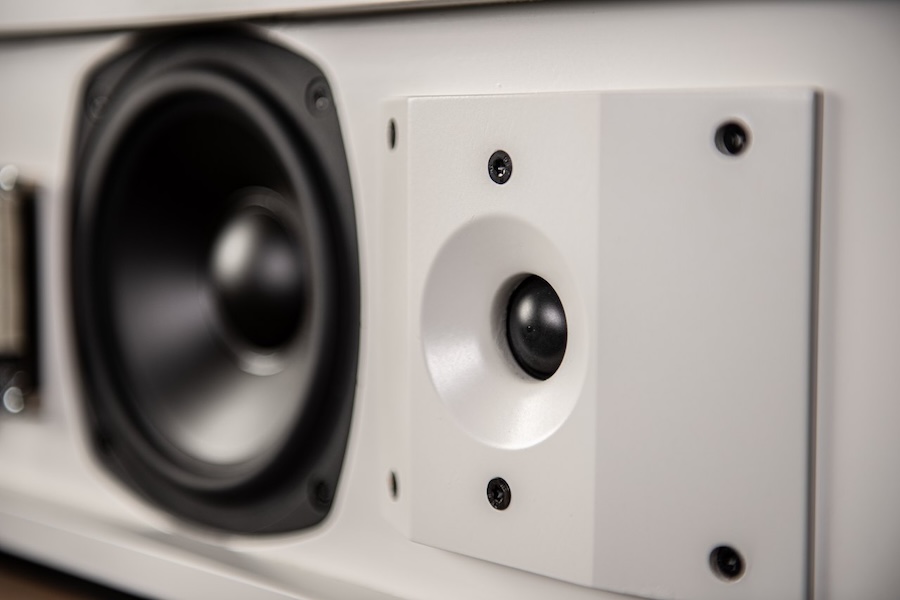
But the missing pieces matter. There is no HDMI support, no Bluetooth, and Roon Ready status is pending a firmware update. Weiss and its partners also have not provided full details on the driver configuration or system output power. At this price, those omissions will raise questions, especially when Focal’s Mu-so Hekla sells for $3,600 with Dolby Atmos, 15 drivers, TV integration, streaming, and ADAPT room tuning, and DALI’s VEGA comes in at $4,500 with 10 drivers, 400 watts of amplification, BluOS, HDMI ARC, Bluetooth, AirPlay 2, TIDAL Connect, and Spotify Connect.
Advertisement. Scroll to continue reading.
Advertisement
The price comparison gets even more uncomfortable when you look at the high-end soundbar category. Lyngdorf’s passive SB-75 is expected around $5,000 without required amplification, while the Steinway Lyngdorf Model S soundbar sits at $17,000. LIVEBOX is still more expensive than both, and it arrives without the same home theater positioning.
That does not make LIVEBOX irrelevant. It makes it very specific. This is for listeners who care more about spatial stereo playback, room-aware tuning, and Swiss engineering than HDMI switching, Dolby Atmos logos, or Bluetooth convenience. High End Vienna is the right place to make that case, but at €20,000, LIVEBOX has to do more than sound different. It has to prove that eight years of development created something the market actually wants, not just something the engineering department finally finished.
Price & Availability
The LIVEBOX has not been released for sale yet, but when it becomes available, the projected price is expected to be €20,000 (US pricing not available at this time).
In the meantime, the LIVEBOX will be demonstrated at High End Vienna 2026 from June 4 – 7 on Level 1, booth 1.70 of the Austria Center Vienna.
Studocu integrates course-specific Computer Science documents with advanced AI study tools.
The community-driven library provides verified technical roadmaps, algorithms, and code structures.
Studocu Ace brings frictionless AI quizzes, summaries, and practice exams directly to WhatsApp.
AI Mock Exams automate active recall testing for rigorous STEM and programming subjects.
Studocu is an educational platform that optimizes Computer Science exam preparation for students by combining advanced artificial intelligence with community-shared technical resources. A 2026 report by the Higher Education Policy Institute (HEPI) reveals that 95% of university students use AI for their studies. Computer Science (CS) students face unique academic hurdles, including dense technical documentation, complex algorithmic logic, and rigorous coding exams.
Studocu solves these problems by providing a massive database of over 50 million study resources that’s tailored to specific university syllabi. Trusted by over 60 million users globally, Studocu helps CS students optimize their study routines, grasp complex frameworks in a logical manner and maximize their academic performance.
A community-driven library prevents CS students from struggling with problems like isolated programming bugs and missing foundational logic. A meta-analysis published on Science Direct about peer tutoring in STEM found that collaborative, community-driven learning consistently improved academic performance over individual study. Computer Science courses like “Data Structures and Algorithms” or “Machine Learning Architecture” require highly specific problem-solving frameworks.
Studocu captures this collective technical knowledge inside a community-driven library housing over 50 million study resources. Students search Studocu for a specific university and course code to unlock verified, peer-reviewed code snippets, algorithmic breakdowns, and past exam summaries. This gives them immediate access to top-tier technical roadmaps, so you do not have to spend a lot of time trying to figure things out on your own, which can be really frustrating.
Advertisement
How do AI Notes synthesize dense technical documentation?
AI Notes synthesize dense technical documentation by instantly summarizing massive textbooks and complex API manuals. AI-assisted systems helped students complete study tasks 25% faster, according to research published by Middle Georgia State University. CS coursework requires students to digest hundreds of pages covering database management, networking protocols, or software engineering principles.
When a student uploads a lengthy PDF textbook or a community-shared technical guide, the Studocu AI Notes tool analyzes the text. Within seconds, the platform generates a clean, structured, bulleted outline of it. The Studocu AI Notes tool does this by finding the parts of the technical document like the main architectural concepts, syntax rules and primary use cases and putting them in a list that is easy to read. This helps computer science students understand the main logic in a lengthy technical document with 50 pages in just five minutes.
How does the Study Assistant decode complex programming jargon?
The Study Assistant decodes complex programming jargon by acting as an interactive, contextual tutor embedded directly within the document viewer. Computer Science relies heavily on abstract theories and dense terminology. A student can highlight confusing terms, like “polymorphism,” “asynchronous runtime,” or “Big O Notation”, and ask the Study Assistant for a simplified, beginner-friendly explanation.
The AI immediately breaks the concept down. Because the tool is grounded in the document the student is currently viewing, the explanation is tailored exactly to the specific programming language or framework taught in that specific course, preventing the AI from fetching irrelevant answers from the open web.
How do AI Mock Exams test algorithmic problem-solving?
AI Mock Exams test algorithmic problem-solving by automating active recall testing for highly technical STEM formats. Active recall techniques produce long-term retention that is two to three times greater than passive methods like re-reading notes, according to a study published by The National Society of Collegiate Scholars. Writing manual practice tests for Computer Science is exhausting and time-consuming.
Instead, a student can pick a summary from the Studocu library for the whole semester, and the AI generates a full-length, rigorous practice exam based exclusively on that text. The AI handles complex STEM formats, ensuring the generation of accurate questions regarding coding logic, database queries, and theoretical frameworks. The tool tells the student what they did wrong and shows them where in the text they made the mistake, helping them close the knowledge gap before the final exam.
Advertisement
What is Studocu Ace and how does it bring AI tutoring to WhatsApp?
Studocu Ace is a frictionless AI study companion that operates directly inside WhatsApp without requiring any app downloads or complex setup. Built on OpenAI technology and powered by the massive Studocu database of student-generated notes, Studocu Ace allows students to request study materials via simple text messages.
Students simply scan a QR code to link their WhatsApp account and start chatting with the AI. CS students use Studocu Ace to instantly generate quizzes on specific topics, request full practice exams on technical subjects like thermodynamics, or ask for plain-English topic summaries in under two minutes. It replies in the user’s own chat, making it feel like texting a highly intelligent study partner.
Why is Studocu a smarter way to navigate a Computer Science degree?
Studocu is a smarter way to navigate a Computer Science degree because it provides a comprehensive, technically accurate ecosystem for academic success. Relying solely on raw memorization to pass a difficult programming class is an outdated strategy. By combining the collective wisdom of 60 million students with advanced AI Notes, the Study Assistant, AI Mock Exams, and the WhatsApp-integrated Studocu Ace, the platform offers a targeted solution for every technical challenge. Equipping yourself with the Studocu digital toolkit eliminates coding guesswork and secures the grades you deserve.
Frequently Asked Questions (FAQs)
Q. Can the AI Mock Exam tool handle specific programming languages like Python or Java?
A. Yes. The Studocu AI generates questions based on the textual explanations, syntax rules, and code logic surrounding the concepts within the original uploaded document, making it highly effective for language-specific exams.
Advertisement
Q. Is Studocu Ace free to use on WhatsApp?
A. Yes. Studocu Ace is free and ready to use in under two minutes simply by scanning the QR code and linking your WhatsApp account.
Advertisement
Q. How does the Study Assistant prevent hallucinated code explanations?
A. The Study Assistant reduces hallucinated code explanations through contextual grounding. It answers questions based specifically on the verified community document or textbook that you are currently viewing, heavily restricting the AI from inventing non-existent syntax or incorrect programming paradigms.
Q. Can I organize community documents based on different Computer Science electives?
Advertisement
A. Yes, students can organize uploaded notes and community documents into specific folders or “Studylists” within their personal Studocu dashboard. This allows a student to keep Machine Learning resources completely separate from Web Development resources.
A brilliant 2K security camera, the Arlo Essential 3 2K Pan-Tilt Security Camera shoots excellent video day and night, while its pan-and-tilt system lets it capture more of what’s going on. It does need a subscription to get the most out of it, and Arlo is quite expensive; but if you want the best, this camera adds something different to very powerful security camera ecosystem.
Excellent image quality
Powerful and flexible app
Smooth motion tracking
Subscriptions are expensive
Key Features
Advertisement
Review Price:
£129.99
Pan-and-tilt
Advertisement
Track motion automatically
Cloud subscription
Advertisement
Needs a subscription for advaced features, such as object detection
Introduction
As good as the Arlo system is, the company has stuck with fixed cameras until recently, with the launch of the Arlo Essential 3 2K Pan-Tilt Security Camera. A wired camera that can go indoors or out, it has the same core features as the other models, but can also track subjects to capture more of what’s going on.
It’s good value for the features and adds an extra dimension to an existing Arlo setup, but the subscription costs are high.
Advertisement
Advertisement
Design and installation
Indoor and outdoor versions available
Permanently wired
To slightly confuse things, as well as the Arlo Essential 3 2K Pan-Tilt Security Camera, there’s also the Arlo Essential 3 2K Pan-Tilt Indoor Security Camera. As the name gives away, the Indoor model can only be installed inside, and it’s £40 cheaper.
Features are otherwise very similar, but the Indoor camera has a privacy mode where it tilts its camera all the way down, blocking its view.
With the Arlo Essential 3 2K Pan-Tilt Security Camera, you can install it indoors or out. Unlike the majority of the rest of Arlo’s range, this camera needs power, rather than running from a battery.
Although there’s a long cable in the box, you will need to put the mounting bracket somewhere close enough to a wall socket.
Advertisement
Image Credit (Trusted Reviews)
Advertisement
The cable runs up the back of the wall bracket, keeping it neat and out of the way, and then the camera clips into the bracket.
Image Credit (Trusted Reviews)
As with Arlo’s recent security cameras, such as the Arlo Pro 6, the 2K Pan-Tilt has Bluetooth onboard for easy discovery. It can connect directly to Wi-Fi, but you can also connect it to a Smart Hub if you have one.
Features
Lots of detection options via Arlo subscription
Can automatically track motion
Working through the Arlo home app, the Arlo Essential 3 2K Pan-Tilt Security Camera integrates with any cameras you might already have. I’m a big fan of the app and all the options it offers, but you do need a subscription to get the most out of this camera, and that’s where things can get expensive.
A basic Arlo Secure subscription costs £7.99 for a single camera and gives only seven days of recording history, which is very stingy. You also get Basic Person, Animal, Package & Vehicle Detection.
Advertisement
Arlo also has a multi-cam version of this plan for £11.99 a month (up to four cameras). It’s not clearly listed on the website, but you can find it in the app when you go to the subscription option.
Advertisement
If you want the more advanced AI features, you need Arlo Secure Plus, which is £19.99 a month for as many cameras as you want, with 14 days of video history and support for up to 4K resolution.
With the higher-tier subscriptions in particular, Arlo Secure is expensive compared to the competition, such as Ring, which starts at just £4.99 for one camera, while higher-priced tiers include additional features for the Ring Alarm.
I’d stick with the standard plan, particularly with a 2K camera, but I’ll explain the new AI features, too.
So, why pay more for Arlo? The simple answer is because the system is so good, and so flexible.
Advertisement
With a subscription, you can reduce motion alerts with activity zones and smart object detection, with your choice of motion detection for people, vehicles, packages, and animals.
Advertisement
Image Credit (Trusted Reviews)
Quickly ticking the options that you want dramatically reduces the number of alerts that you get, focusing on just the important ones. That level of flexibility is hard to find anywhere else.
Pay for a more expensive package and you also get facial recognition, with the camera able to learn names automatically as it spots people, but you can also feed in your own images to give the system a head start.
Image Credit (Trusted Reviews)
Oddly, only a single camera can be set to spot and recognise people, which seems oddly restrictive, particularly at this price.
Vehicle recognition is also available. Think of it as facial recognition but for cars – handy if you want to know if an unknown vehicle has turned up on your drive or your car’s being driven away.
Advertisement
Advertisement
Image Credit (Trusted Reviews)
Custom detection is a first-of-its-kind feature. Get the camera to record two frames with a difference in them, say a gate open, and the camera will alert you when it spots this in future. For this to work, I found that I needed a big enough difference for the camera to spot. Put outside in my garden pointing at my kitchen doors, I found that the camera struggled to spot when just the small glass door was open.
That’s all very clever, and under the right circumstances, Arlo cameras can spot and warn you of a lot more than the competition.
With the higher-tier subscription, you also get fire detection, where the camera can spot flames and warn you.
As this is a pan-and-tilt camera, there are some additional controls. In the live view, you get an on-screen joystick to move the camera around so you can take a wider look at what’s going on.
Advertisement
Image Credit (Trusted Reviews)
Advertisement
You can set multiple positions for the camera to jump to, for speedy looking, plus a home location that the camera returns to by default, which should be the area that you’re most interested in.
Image Credit (Trusted Reviews)
When motion is detected, the Arlo Essential 3 2K Pan-Tilt Security Camera will move and track the subject automatically, keeping it in focus. I find that this lets me see more of what’s going on, capturing footage that would otherwise be lost on a fixed camera.
Performance
Detailed 2K footage
Spotlight helps with nighttime shooting
Excellent motion tracking
Motion tracking on the Arlo Essential 3 2K Pan-Tilt Security Camera is very smooth. Some pan-and-tilt cameras can introduce jerkiness into the video or add tearing, but this camera avoids both problems.
Walking quickly past the camera during the day, the Arlo Essential 3 2K Pan-Tilt Security Camera caught me in full detail, and it was easy to find a frame with my face in sharp detail, with a nice amount of detail right to the back of the frame.
Advertisement
Image Credit (Trusted Reviews)
At night, the Arlo Essential 3 2K Pan-Tilt Security Camera defaults to black-and-white, using its IR LEDs to light the scene. However, when motion is detected, the camera can turn on its spotlight and switch to full colour video.
Image Credit (Trusted Reviews)
This does black out the video for a couple of frames, but the full-colour image soon returns.
Depending on where the camera’s pointing, it’s possible to lose some detail in the background, but I easily found a frame where I was in full detail, despite walking fast and the camera having to move to track me.
Advertisement
Advertisement
Should you buy it?
You want excellent video quality and tracking
The Arlo system is excellent and this camera’s pan-and-tilt helps it cover a bigger area.
Advertisement
You want lower subscription fees
Advertisement
Arlo is an expensive subscription system and you can get less-featured alternatives for less or subscription-free cameras.
Final Thoughts
If you want to cover a bit more ground and don’t want additional cameras, the Arlo Essential 3 2K Pan-Tilt Security Camera gives you the option to look around, and it can track motion automatically. Video quality is as good as I’ve come to expect from Arlo, and the app remains one of the best, offering more detection options than anywhere else.
Advertisement
The downside is that subscriptions are expensive. If you want a great pan-and-tilt camera and don’t mind paying a bit more, this is a great choice; otherwise, check out my guide to the best outdoor security cameras for alternatives.
How We Test
We test every security camera we review thoroughly over an extended period of time. We use industry standard tests to compare features properly. We’ll always tell you what we find. We never, ever, accept money to review a product.
Find out more about how we test in our ethics policy.
Used as our main security camera for the review period
We test compatibility with the main smart systems (HomeKit, Alexa, Google Assistant, SmartThings, IFTTT and more) to see how easy each camera is to automate
We take samples during the day and night to see how clear each camera’s video is
FAQs
Do you need a subscription to use the Arlo Essential 3 2K Pan-Tilt Security Camera?
No, you can live stream and get basic notifications, but you need a subscription if you want object detection and cloud storage.
Advertisement
Full Specs
Arlo Essential 3 2K Pan-Tilt Security Camera Review
Manufacturer
Arlo
Size (Dimensions)
80 x 80 x 148.25 MM
Weight
284 G
Release Date
2026
First Reviewed Date
22/05/2026
Model Number
Arlo Essential 3 2K Pan-Tilt Security Camera
Resolution
2304 x 1296
Battery Length
hrs
Smart assistants
Yes
App Control
Yes
Camera Type
Powered pan-and-tilt
Mounting option
Wall
View Field
130 degrees
Recording option
Cloud
Two-way audio
Yes
Night vision
Yes (full colour)
Light
Spotlight
Motion detection
Yes
Activity zones
Yes
Object detection
People, packages, animals, vehicles, custom and facial recognition (via subscription)
Other devices developed by the Northern Irish company for the treatment of insomnia, anxiety and weight management have previously received various levels of FDA approval.
Belfast health-tech company Neurovalens has received ‘de novo’ approval from the US Food & Drug Administration (FDA) for its prescribed treatment for symptoms associated with post-traumatic stress disorder (PTSD).
The treatment, a non-invasive medical device named ‘Modius Spero’, is specifically designed to help treat the symptoms of PTSD, according to the company.
It works by stimulating deep parts of the brain, associated with stress response and regulation of mental health, using small and safe electrical pulses – known as electrical vestibular system stimulation – delivered to the skin behind each ear for a period of 30 minutes daily, its maker said.
Advertisement
The device will become available on prescription from July to US military veterans, through their affiliated government department, following US clinical trials in which two-thirds of participants with PTSD using Modius Spero reported a significant and clinically meaningful improvement in symptoms, supporting the device’s effectiveness as a non-invasive treatment option for PTSD, Neurovalens said.
The Northern Irish company’s CEO Dr Jason McKeown said: “Neurovalens remains on a mission to offer low risk, non-invasive treatments for chronic health issues such as PTSD. By focusing on a treatment that addresses the underlying cause, we know this can have a transformative impact on the lives of patients.
“Being granted medical device regulatory approval for Modius Spero from the FDA validates it as a treatment for patients who suffer from PTSD, and is a significant milestone for the company.” Neurovalens also has European medical device regulation compliance certification to sell its products in the EU.
Other ‘Modius’ devices developed by Neurovalens for the treatment of insomnia, anxiety and weight management have previously received various levels of FDA approval, and use the same non-invasive approach to neurostimulation in targeting relevant areas of the brain.
Advertisement
The approach “allows the device[s] to operate non-invasively, and therefore we can avoid the need for surgical implantation”, McKeown told SiliconRepublic.com in 2024. “This allows the devices to be considered as much lower risk, and therefore can be offered much earlier in the treatment pathway.”
Neurovalens has been operating for more than a decade and is led by McKeown, chief project officer Iain Hendrick, chief regulatory officer Sinead Watson and chief technology officer Chris McCabe.
It said that to date, it has raised approximately £20m in equity and debt funding from UK investors including Wharton Asset Management, IQ Capital, Techstart Ventures, ACF Investors, Beltrae Partners, Investment Fund for Northern Ireland, Clarendon Fund Managers, Whiterock, Innovation Ulster Limited and the British Business Bank.
Don’t miss out on the knowledge you need to succeed. Sign up for the Daily Brief, Silicon Republic’s digest of need-to-know sci-tech news.
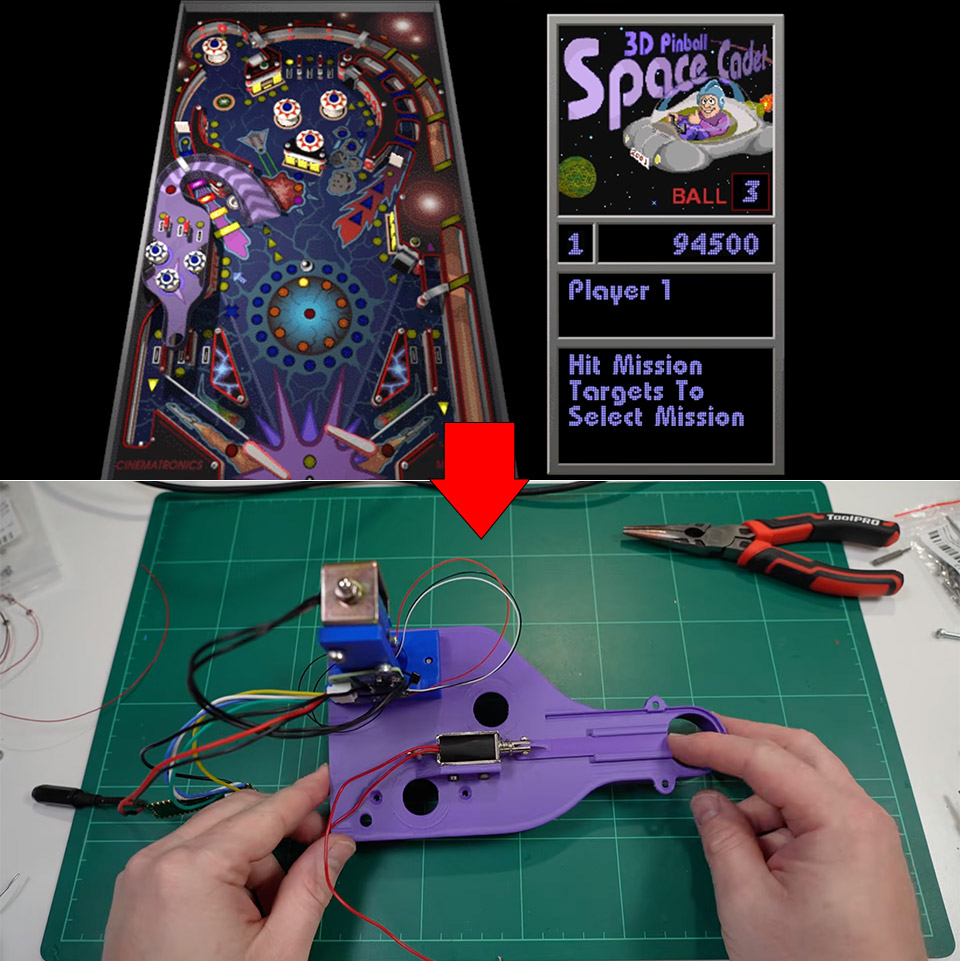
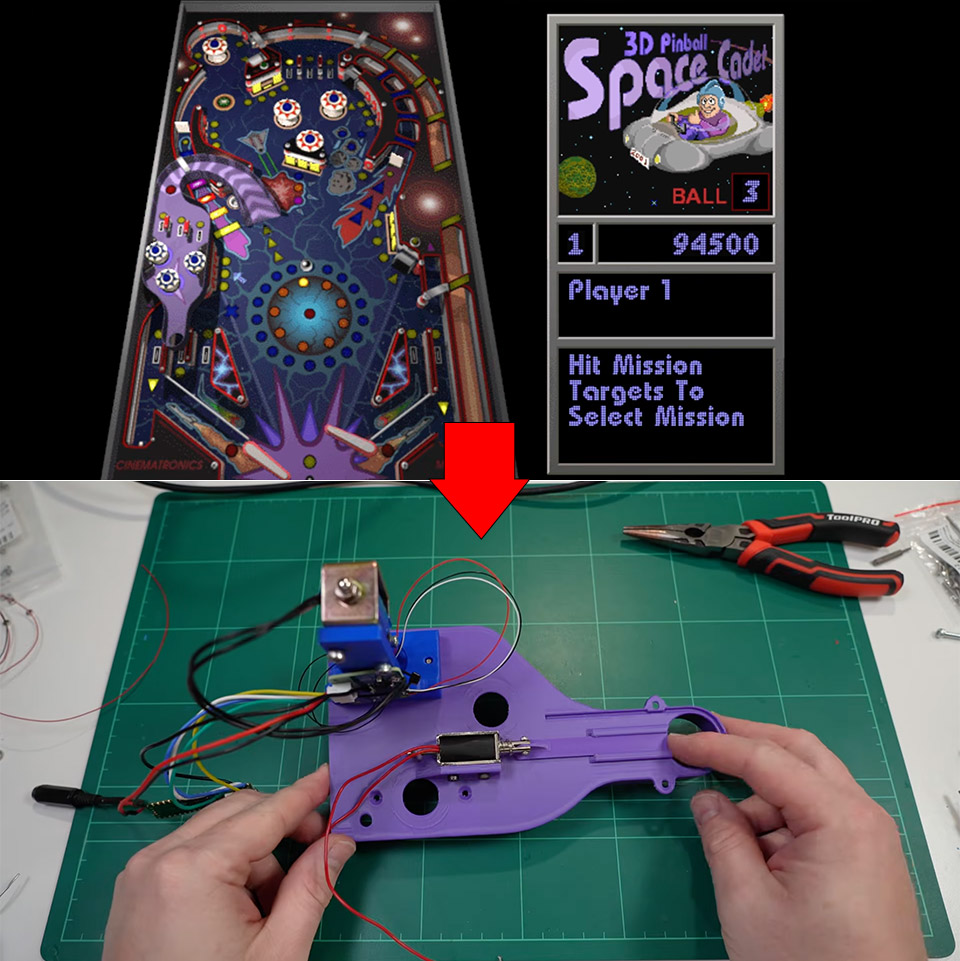
Childhood afternoons often included loading up Space Cadet Pinball on a family computer running early versions of Windows. That simple game with its space theme, ringing sounds, and satisfying flipper action left a mark on a generation. Years later, one determined builder decided the experience deserved a physical form. CNCDan took on the challenge of turning the digital table into a working mechanical pinball machine. He measured every element from the original game and scaled it precisely. Commercial pinball parts would not match those proportions, so nearly everything began as a 3D printed design.
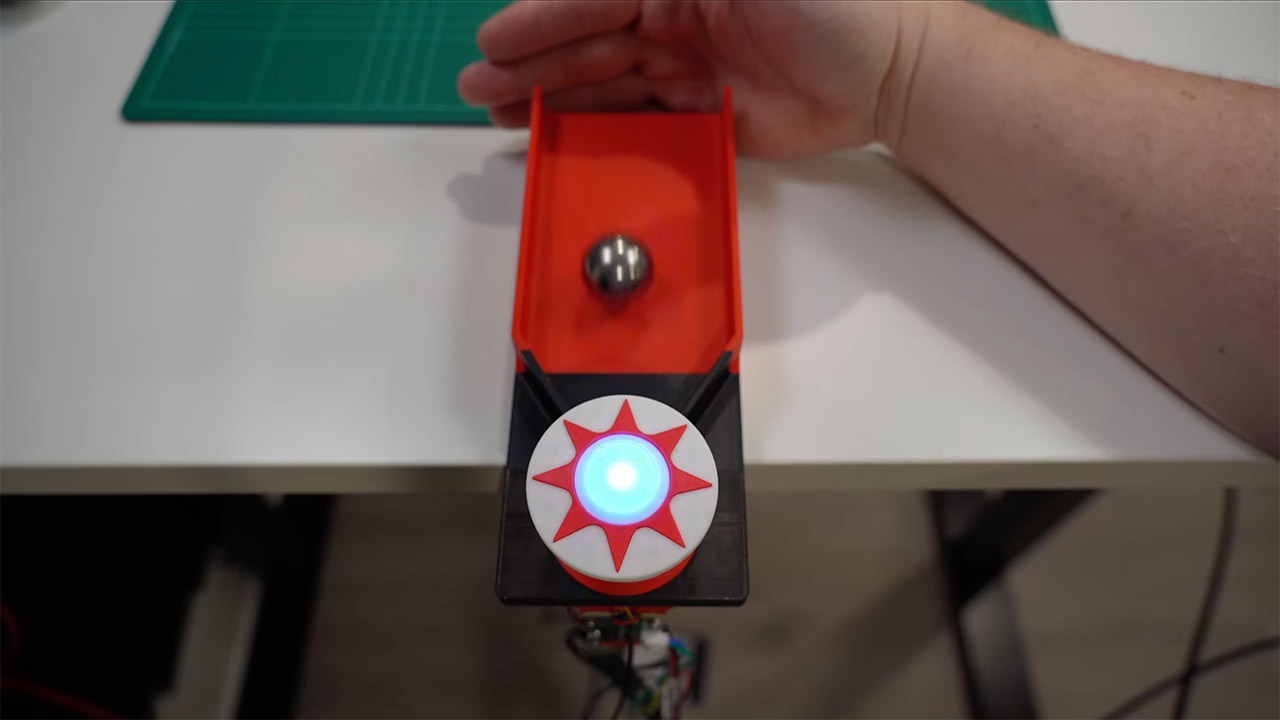
The finished machine measures one meter in length and 560 millimeters in width, making it a full-sized pinball machine in a compact box. Each component is given special attention before being assembled into the table. We began working on the pop bumpers first, because those circular activators needed to be precisely measured if we were to get them right. The initial attempt was to utilize basic switches, but they were extremely unreliable, so he abandoned them in favor of Hall effect sensors combined with magnets on the moving skirts. That’s when the solenoids kicked in, producing that strong kick that propelled the ball upwards, while bright LEDs beaming through frosted acrylic diffusers provided the iconic glow.
Next up were the drop targets, which were difficult to get to record every hit, but he eventually got them to function by employing printed bodies with springs and microswitches buried within. The simple hobby servos called in to reset the targets were a lifesaver because he didn’t want any of that heavy-duty hardware cluttering up the room. The testing rigs informed us that they fell and reset at a consistent rate. Slingshots were the next piece of equipment added to the table, and they had some serious grunt! A lever arm, microswitch, and stretched resistance bands complete the task, all working together to deflect the ball back into play. He adjusted the switch position to get the sensitivity exactly perfect, so even a glancing shot produces a significant response.
The smaller bumpers on the elevated areas required a bit more care, as threading rods into a single pull mechanism allowed the ball to slide through without jamming. He replaced the magnets with pogo pins and used clear resin diffusers to provide a wonderful even illumination. Then there’s the drop hole, which is a touch of wizardry that causes the game to pause for a little moment before releasing the ball. It all comes down to a solenoid pushing a printed slide after a two-second delay via a microswitch.
Flippers are still a work in progress; they’re printed in white PLA and lightened with hollow portions, with red TPU bands for grip and steel shafts and bearings for smooth operation. He still needs to fix the solenoid, since the current ones lack some power, but he’s looking for some stronger replacements to get them operating properly in future versions.
Custom circuit boards from PCBWay keep the wiring for solenoids, sensors, and lights organized, while laser-cut acrylic from an OMTech machine gives a unique touch to the lighted pieces. Of course, he keeps things honest by rolling a conventional metal ball around the field. One little element remains on the to-do list: the playfield artwork. He needs some high-resolution files that exactly match the original game, but the source material from the mid-1990s lacks the necessary detail. He’s looking for a professional artist to come in and perform some new handwork on the visuals. [Source]
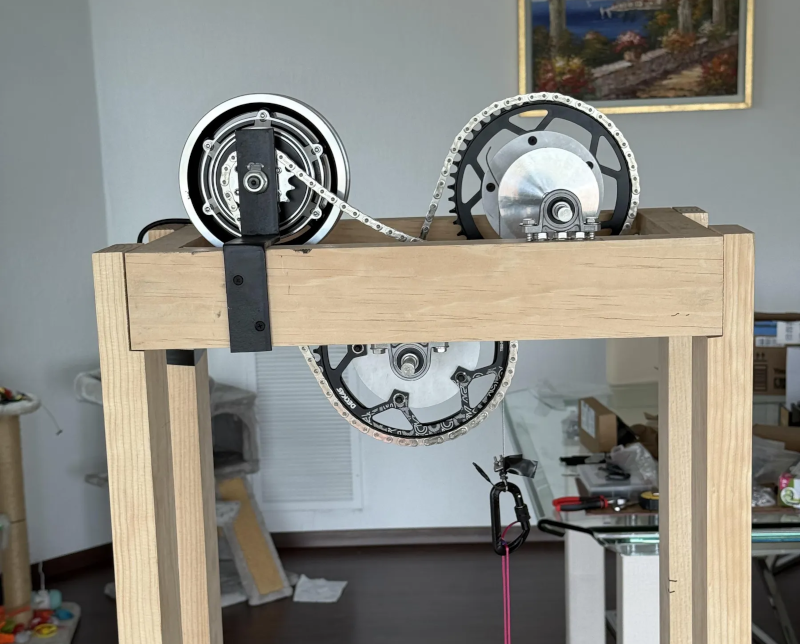
Gravity batteries aren’t exactly a new idea. You can store energy by lifting something heavy, converting kinetic energy into potential energy. To get it back, you let the mass fall and convert that motion to electricity. [Valeriamayara22] shows how to build a working demonstration model of such a system.
This isn’t free energy. Something has to lift the weight. In this case, the height is 1.8 meters, and the mass is 15.65 kg. Even so, the model achieves 13 W peak output and 58% efficiency, according to the post. Reportedly, it takes 394 drops of the weight to fully charge an iPhone 16, so this isn’t a practical project, but it does show how a gravity battery works. One nice thing is that the system stores as much energy on its 1,000,000 th charge as it does on the first one, especially if you keep the chain lubricated. Try that with a chemical battery.
The mechanical part uses a bicycle chain and some sprockets. There is a battery to even things out since, like wind power, when you make energy with a mechanical battery, you either use it now or lose it.
Advertisement
The cost of the build is about $400, and there’s a GitHub repo with all the files if you want to take your own shot at it. The energy efficiency number references the potential energy stored versus the energy produced. Obviously, if you are using some other energy source to lift the weight, that’s another calculation.
As you might expect, a practical system like this can be very large.



































































You must be logged in to post a comment Login