NASA Administrator Jared Isaacman says he expects China to fly taikonauts around the moon in 2027, “ratcheting up perceptions of a space race between China and the United States,” reports SpaceNews. He is using that prospect to argue for a revamped Artemis strategy and an accelerated path toward a U.S. lunar return. From the report: “The next time the world tunes in to watch astronauts fly around the moon, which will likely be sometime in 2027, they will be taikonauts, and America will no longer be the exclusive power to send humans into the lunar environment,” he said. While Isaacman has frequently discussed a race with China to be the next to land humans on the moon, this was one of the first times he predicted a 2027 Chinese crewed circumlunar mission. He repeated the comments later in the day at an industry reception.
China has not publicly announced plans for such a mission, which, as Isaacman described it, would likely be similar to NASA’s Artemis 2 mission in April. There have been rumors of a mission along those lines, though, and an expectation of a roadmap of missions leading to a Chinese crewed landing by the end of the decade. So far, all the crewed missions to fly around, orbit or land on the moon have been flown by NASA: nine Apollo missions from 1968 to 1972 and Artemis 2. All the astronauts on those missions have been Americans except for Canadian Space Agency astronaut Jeremy Hansen on Artemis 2.
Isaacman has used the threat that China could land astronauts on the moon before NASA returns there as a rationale for revamping the Artemis lunar exploration program. In February, he announced that Artemis 3, which was to be a lunar landing attempt in 2028, will instead be a test flight in low Earth orbit in 2027, followed by a landing on Artemis 4 in 2028. In March, he changed other elements of Artemis at the agency’s Ignition event, including effectively canceling the lunar Gateway to focus resources instead on a lunar base, while calling for a much higher cadence of robotic lander missions.
It’s on track to post $10.9 billion in revenue, according to The Wall Street Journal.
Chesnot/Getty Images
Anthropic is on track to post a revenue of $10.9 billion for the quarter ending in June, double the revenue it made for the first quarter, according to The Wall Street Journal. Out of that total, the company expects to post $559 million in operating profit, making it the company’s first profitable quarter since it was founded in 2021 if it hits that target. The company reportedly revealed those figures to a group of investors for its current funding round, which could boost its valuation past OpenAI’s.
Even though chances are high that it will reach profitability for the quarter, Anthropic doesn’t expect to be profitable in the quarters that follow. The company is planning to spend more money on computing and other expenses as it grows its operations further. Anthropic used to lag behind its peers and wasn’t quite as well-known as rivals like OpenAI, even though it sells its products to large enterprise customers. It has been steadily gaining popularity over the past months, however, with its chatbot Claude climbing to the top of the Apple App Store following the company’s clash with the Defense Department.
The company made headlines earlier this year when its CEO, Dario Amodei (pictured above), said that Anthropic can’t “in good conscience” comply with a Pentagon order to remove guardrails on its AI. Specifically, the company didn’t want to remove its AI’s safeguards around mass surveillance and autonomous weapons. As a result, the Defense Department labeled it a “supply chain risk,” a designation typically reserved for companies from countries like China and Russia. President Trump also ordered federal agencies to stop using Claude. Anthropic is trying to find a way to be re-accepted by the US government, however, and some federal agencies are still using its products. The NSA, in particular, is reportedly using Claude Mythos Preview, the company’s unreleased AI model for cyber defense.
Advertisement
It’s worth noting that, OpenAI, which is perhaps the most well-known name in generative AI technology, has yet to reach profitability. The company doesn’t expect to get there until 2029 or 2030. OpenAI is preparing to file for an initial public offering (IPO) and may go public as soon as September, The New York Times has just reported. Bloomberg previously reported that Anthropic is also considering an IPO and could go public in October.
With the FIFA World Cup 2026 tournament coming to the US in June, host cities are expecting an influx of international travelers. Mobile carriers are offering ways to help them stay connected during the games.
Three of the largest US carriers have recently introduced eSIM plans that can be activated on unlocked phones for between seven and 45 days of calling, texting and mobile data. Using an eSIM while traveling is often more affordable than international roaming charges with an out-of-country wireless service.
If you have family or friends traveling to the US for the World Cup (or for any reason), here are three options they can check out. Remember that pricing matters, but so do the strengths of each provider’s network in the areas where they’ll be. It’s worth scrutinizing the coverage maps for AT&T, T-Mobile and Verizon.
Advertisement
And if you’re thinking of jetting off to a country outside the US, be sure to check out our guide to the best travel phone plans.
eSIM by AT&T
AT&T’s offering includes unlimited data and 5GB of hotspot access for up to 30 days of coverage.
Pricing for the eSIM by AT&T plan breaks down like this:
1-Day Pass: $4 (US only)
7-Day Pass: $16 (US), $25 (US, Canada, Mexico)
15-Day Pass: $26 (US), $40 (US, Canada, Mexico)
30-Day Pass: $41 (US), $60 (US, Canada, Mexico)
Taxes and fees aren’t included in the cost of each pass.
One important detail is worth noting: The AT&T eSIM is a data-only plan, so calling and SMS texting aren’t included, and the subscriber won’t get a new number. Apps such as WhatsApp can offer those features. AT&T says the plan will expand to unlimited talk and text soon, but a timeline has not been announced.
Advertisement
Getting connected requires that the person download the Connect on Demand by AT&T app (for iOS or Android) on an unlocked 5G smartphone with an international phone number and an open eSIM slot, then purchase and activate the eSIM option within the app.
The company’s Turbo Live by AT&T service, which is supposed to improve connectivity in venues like sports stadiums, is also available as an add-on.
T-Mobile Prepaid US Pass eSIM
The T-Mobile Prepaid US Pass eSIM options include unlimited talk and text in the US, Canada and Mexico, as well as 50GB of high-speed 5G data, then unlimited data at a slower speed for the duration of the pass. They also include 5GB of high-speed data in Canada and Mexico. Fast mobile hotspot data amounts increase depending on which of the following plans are activated:
7-Day Pass: $25 (14GB hotspot data)
10-Day Pass: $30 (20GB hotspot data)
14-Day Pass: $35 (28GB hotspot data)
30-Day Pass: $50 (50 GB hotspot data)
Activation happens in the T-Mobile Prepaid eSIM app for iOS or Android. Taxes and fees are added to the cost of each pass.
Visible eSIM Travel Pass
Visible, Verizon’s prepaid arm, is offering a new Visible eSIM Travel Pass for the World Cup. The plans include unlimited high-speed data using Verizon’s 5G Ultra Wideband network, but there’s no hotspot data. When traveling in Alaska, Canada, Mexico, Puerto Rico and the US Virgin Islands, subscribers get unlimited talk and text, and 2GB of data each day.
Advertisement
Preordering through June 10 (the day before the tournament kicks off) will save $10 on the lineup of passes with the code FIFA10:
7-Day Pass: $15 preorder ($25 regular), 90 minutes of international calling
14-Day Pass: $25 preorder ($35 regular), 180 minutes of international calling
30-Day Pass: $35 preorder ($45 regular), 300 minutes of international calling
45-Day Pass: $45 preorder ($55 regular), 500 minutes of international calling
Each pass also includes unlimited texting to 200+ countries. Taxes and fees are included in the price of each pass.
To fuel World Cup fervor among Visible’s existing customers, it’s giving away two World Cup match tickets through May 31 via a sweepstakes.
Intuit is reportedly cutting about 3,000 jobs, or 17% of its workforce, as it restructures around AI and simplifies its corporate organization. TechCrunch reports: The layoffs come during a bad year for the tech workforce. The tech industry has already cut more than 100,000 jobs this year, per Statista, and is on track to outpace both 2024 and 2025 if the layoff trend continues. Companies such as Amazon, Block, Cisco, Cloudflare, Meta, Microsoft, and Oracle have let go of thousands of employees each, all of them citing a need to refocus expenditures around AI projects as a reason to cut jobs and restructure their organizations. […]
Intuit, however, hasn’t been perceived as a beneficiary of the AI boom, with its shares consistently underperforming in the broader S&P 500 over the past 12 months. The company has been caught up in the broader current of worries that traditional software-as-a-service firms will not be able to keep up or compete, as new and upcoming AI products and services threaten to change how software is developed and how it is used. In its fiscal second quarter ended January, Intuit reported revenue of $4.65 billion, a 17% increase, and net profit of $693 million, a 48% improvement compared to a year earlier. The company expects revenue to increase by about 10% in the third quarter, for which it will report results later today.
The rooftop park on Ocean Pavilion offers views of the Seattle skyline and Elliott Bay. (GeekWire Photo / Kurt Schlosser)
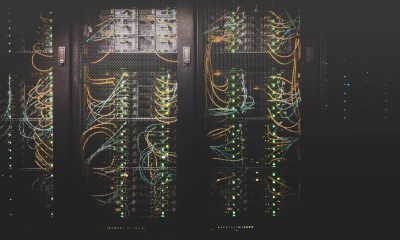
While tech companies including Microsoft and Amazon call the Seattle area home, residents are voicing opposition to the construction of new data centers that underpin their operations.
Seattle City Council is considering a one-year moratorium on the computing facilities, and on Wednesday heard a wave of public comments laden with concerns. Residents expressed fear about AI, called the data centers “gifts to the rich” and shared worries about rising utility bills, diminished water supplies, environmental justice and climate harm.
Councilmember Joy Hollingsworth, a bill sponsor, offered a more measured take. “We’re not trying to hinder growth in our city,” she said, but added that the city needs to slow down and understand data center impacts as the sector rapidly expands. City staff explained that the facilities vary in size and impact, and that Seattle’s government relies on the infrastructure for its own operations.
The data center issue blew up in April after The Seattle Times reported on proposals to build five large computing facilities in the city, prompting Mayor Katie Wilson to raise the possibility of a moratorium. Since then, developers have scrapped plans for two of the five.
Seattle is not alone in its resistance. A March Gallup survey found that seven in 10 Americans oppose the construction of data centers for AI applications in their local area, with nearly half strongly opposed. Separately, Pew Research Center reports that half of U.S. adults are more concerned than excited about the growing role of AI in daily life.
Advertisement
The city is considering a resolution and legislation that define which data centers would face regulation and lay out a work plan for next steps:
Seattle City Light and Seattle Public Utilities are directed to examine water and electricity usage and recommend policies and rate structures that shield customers from cost increases — with deadlines of July 1 and Oct. 30, respectively.
The Seattle Department of Construction and Inspections is directed to determine zoning and development rules to reduce data center impacts, with deadlines extending into 2027.
The city is also weighing a framework for voluntary data center agreements that could benefit surrounding communities by addressing noise, heat, air and water pollution, workforce protections, water and energy use, as well as directing funding toward affordable housing, childcare and other social programs.
Seattle already has about 30 data centers, but they’re relatively small. Larger facilities have historically gravitated to rural areas with more land and less expensive power. The five proposed urban projects would have collectively consumed up to 369 megawatts — roughly one-third of Seattle’s average daily energy use. Data centers also draw significant water for cooling their electronics.
Washington state leaders took a crack at data center regulations during this year’s legislative session but ultimately rejected a bill requiring utilities and operators to create agreements protecting ratepayers and disclosing environmental impacts. The city’s proposed measure revisits many of those same issues, with the added weight of a moratorium.
No state has enacted a data center ban, but local governments have been moving on their own. Jurisdictions including Denver, St. Charles, Mo., and a county near Dallas have all recently approved moratoriums.
The industry has taken some steps to ease public concern. Microsoft, for example, launched a community-focused initiative in January pledging to be a good neighbor where it operates data centers.
Advertisement
But the relentless push for AI infrastructure will likely keep straining public sentiment. Amazon spent $147.3 billion on capital expenditures over the past 12 months, ending in April. Looking ahead, Microsoft anticipates capital costs of $190 billion in capital in 2026, largely for AI.
The council committees will vote on the bill and resolution on June 3.
The Lenovo IdeaPad Slim 5x is a budget-friendly, 15-inch Copilot Plus PC built on the Qualcomm Snapdragon X2 platform. It’s a machine aimed squarely at people who want long battery life, whisper-quiet operation and dependable everyday performance in a slender chassis. To hit its sub-$1,000 price, the IdeaPad Slim 5x features Qualcomm’s entry-level Snapdragon X2 Plus chip and the minimum 16GB of RAM needed to meet Microsoft’s definition of a Copilot Plus PC.
For a budget laptop, the IdeaPad Slim 5x does a lot right. It’s a practical offering for a standard day at the office, including browsing, email, streaming and light productivity, and its Arm-based design helps keep it efficient and cool. What keeps it from being an easy recommendation for everyone is the same thing that holds back most Windows-on-Arm laptops: software compatibility remains a real consideration, at least in some specific use cases. And gaming performance is average at best from the integrated Qualcomm Adreno GPU.
The 15.3-inch display makes the IdeaPad Slim 5x a bit of a tweener, sandwiched between more commonplace 14- and 16-inch laptops. The Acer Aspire 16 AI offers a roomier 16-inch panel at a lower price and only a slightly heavier weight, and the HP OmniBook 5 14 is more compact and portable with its 14-inch display but offers even longer battery life. This trio of budget laptops features Snapdragon X series processors, but the IdeaPad Slim 5x has the advantage of being the newest of the three, and its Snapdragon X2 chip outpaces both the two older X1 machines.
Lenovo IdeaPad Slim 5x Gen 11
Advertisement
Price as reviewed
$850
Display size/resolution
15.3-inch 1,920×1,200 120Hz touchscreen IPS LCD
CPU
Snapdragon X2 Plus X2P-42-100
Memory
16GB LPDDR5X-9523
Graphics
Qualcomm Adreno X2-45
Storage
512GB SSD
Ports
2 x USB-C (10Gbps), 2 x USB-A (10Gbps), HDMI 2.1, microSD card slot, combo audio
Networking
Wi-Fi 7 and Bluetooh 5.4
Operating system
Windows 11 Home Arm64
Weight
3.1 pounds (1.4 kg)
The IdeaPad Slim 5x falls roughly in the middle of Lenovo’s broader IdeaPad lineup, which includes options with AMD and Intel processors, as well as the 3x and 7x Snapdragon X-based series, sized between 14 and 16 inches. Some of the 7x SKUs include the more advanced Snapdragon X2 Elite rather than the X2 Plus, which this model is built around.
The IdeaPad Slim 5x starts at $850 at Lenovo. We tested this entry-level model, but Lenovo offers a handful of upgrades. You can double the RAM to 32GB for an eye-watering $290 (thanks, RAMageddon) and bump the storage up from 512GB to 1TB for an also hefty $150.
Advertisement
Matt Elliott/CNET
Two other upgrades are much more attainable, and we recommend both. It costs only $30 to swap out the basic 1,920×1,20-pixel, 120Hz IPS display for a 2.5K (2,560×1,600), 165Hz OLED panel. That’s a no-brainer for the added pixels alone, to say nothing about the better contrast and faster refresh rate, unless you require a touchscreen. The IPS offers touch support; the OLED doesn’t. You can also outfit the laptop with a bigger battery, going from a 54.7-watt-hour unit to 70 watt hours for just $10. The IdeaPad Slim 5x we tested offers great battery life, but more is always better.
The processor at the heart of the IdeaPad Slim 5x, the Snapdragon X2 Plus X2P-42-100, is clearly tuned for efficiency first. That said, it manages to feel snappy in the ways that matter most for a mainstream productivity laptop. Apps open promptly, multitasking is smooth with 16GB of memory, and the machine feels comfortable handling a standard mix of browser tabs, Office work and streaming. It performed quite well against comparable machines in our benchmarks, and it should satisfy anyone looking for a reliable office notebook.
Its limitations show up when you push beyond that. The Adreno X2-45 integrated graphics are fine for light creative work, but this is not the laptop for serious gaming or any sustained graphics-heavy workloads.
Advertisement
Matt Elliott/CNET
Qualcomm leads the way with laptop battery life, and the IdeaPad Slim 5x continues its run of success. The IdeaPad Slim 5x lasted 20.5 hours on our online streaming battery drain test, which was a half an hour shorter than the Acer Aspire 16 AI and nearly eight hours shorter than the HP OmniBook 5 14, but much longer than similarly priced laptops such as the Intel-based Lenovo IdeaPad 5i 16 and AMD-based Dell 14 Plus 2-in-1.
Another important note here: While Windows-on-Arm has made vast strides in terms of software compatibility, there are still issues. I was unable to get my VPN client to function on the IdeaPad Slim 5x, for instance, which has been an issue on other Arm machines, likely because of driver problems. I also couldn’t run Valorant, because its kernel-level anti-cheat system, Riot Vanguard, is incompatible with Arm architecture. You can check the apps you use to see if they have native Arm versions with this Window-on-Arm compatibility tool.
Practical, not premium design
The IdeaPad Slim 5x keeps the design language simple and practical, which suits the price. It’s solid enough for daily use, though nothing about it stands out as especially premium. While it’s fairly lightweight for its size at just over 3 pounds, it’s not featherlight or ultra-slim like some other ultraportables. It sits in the middle of the 14-inch HP OmniBook 3 14 (2.85 pounds) and the 16-inch Acer Aspire 16 AI (3.45 pounds) in size and weight.
Matt Elliott/CNET
The 15-inch chassis gives the keyboard enough room to avoid feeling cramped, and it feels responsive for a chiclet-style, low-profile deck. The touchpad is generously proportioned and precise, though not luxurious in the way that glass alternatives feel.
For an IPS panel, the display is one of the strongest parts of this configuration. It delivers a bright, color-accurate picture and is what I’d call a “workmanlike” panel that reflects the price. I liked getting touch support at this price and the anti-glare finish that keeps glare and reflections away. Lab testing with a Spyder X Elite colorimeter showed a peak of 432 nits of brightness, which is very respectable for a budget laptop. Color performance was also solid, with full sRGB coverage and measured results of 77% AdobeRGB and 78% P3. It’s suitable for everyday photo work and media consumption, though it won’t rival a creator-grade panel.
Advertisement
Matt Elliott/CNET
Sound quality is something of an issue. The two 2-watt speakers sounded distractingly tinny at times, especially when the treble was peaking, and the volume was underwhelming. The FHD webcam also didn’t blow me away. It looked a bit grainy when video was full-screened, and didn’t hold up to fast motion particularly well.
The port allotment is relatively generous with two USB-C, two USB-A and an HDMI port along with a microSD card slot, but the USB-C ports are disappointingly slow. They are of the USB 3.2 Gen 2 variety, which offers just 10Gbps speed compared with the 40Gbps you’d get from Thunderbolt 4.
Matt Elliott/CNET
Should I buy theLenovo IdeaPad Slim 5x?
The Lenovo IdeaPad Slim 5x offers solid value for students or office workers looking for a portable, dependable daily driver. It’s wholly unobtrusive, in both the positive and negative sense, but it’s a good fit for those looking for a productivity machine and want to spend significantly less than $1,000.
The problem with the IdeaPad Slim 5x, insofar as there is one, is that it’s a middling package overall. While the lows aren’t cripplingly low, the highs aren’t particularly high. It’s got a strong battery, but not the best-in-class. The highlight is the bright, responsive touchscreen, and brighter still is the option to upgrade to a higher-res OLED panel (albeit without touch support) for only an extra $30.
Advertisement
Advertisement
The review process for laptops, desktops, tablets and other computerlike devices consists of two parts: performance testing under controlled conditions in the CNET Labs and extensive hands-on use by our expert reviewers. This includes evaluating a device’s aesthetics, ergonomics and features. A final review verdict is a combination of both objective and subjective judgments.
Photo credit: Notebookcheck Fresh details emerged today about the smartphone OpenAI has under development. The company wants this device to let AI agents handle daily tasks directly instead of forcing users to navigate grids of apps. Analyst Ming-Chi Kuo updated his findings on the project. Mass production now looks set for the first half of 2027. OpenAI hopes to move 30 million units between 2027 and 2028. That volume would position the phone as a serious option in the premium market alongside devices like the iPhone 18 Pro and the Galaxy S27 series.
So far, the processor has been the star of the show, since they are supposedly using a modified version of MediaTek’s Dimensity 9600 built on TSMC’s 2 nanometer technology. It has two independent neural processing units built-in, which divide the AI’s work between vision and language tasks, and the image signal processor has been updated to offer the AI a better view of what’s going on through the camera lens.
ACTIVATION REQUIRED: After purchase, users will select a monthly data plan. Starter plan: $29/mo. Wi-Fi only: $39/mo. 4GB: $49/mo. 8GB: $59/mo…
STATE-OF-THE-ART MONITORING: Get alerts for potential issues in your child’s texts, emails and 30+ social media platforms and apps. Scan for online…
APPROVE APPS AND CONTACTS: Manage the apps your child can install as well as who they can text and call.
Memory options are all about meeting the demands of having AI working at all times. LPDDR6 RAM will keep the bandwidth flowing smoothly, while UFS 5.0 storage will handle read and write rates, ensuring that you don’t experience lag during long chats with the AI.
Earlier, in late April, stories surfaced indicating that collaborations were in place. MediaTek and Qualcomm will handle the chip work, with Luxshare serving as the manufacturing partner. Despite the fact that the schedule is being hastened, everything remains the same. And it appears that Jony Ive’s design business may be helping to shape the appearance of OpenAI’s hardware ambitions.
Advertisement
Sam Altman has been outspoken about his belief that we need to rethink how we create operating systems and interfaces, and the phone will most likely run Android. The idea is to keep the foundations for calls, networks, and basic hardware drivers intact, but with the flexibility to customize to the needs of the AI, because, at the end of the day, full control is essential when it comes to getting AI agents to work properly, as they need to be able to tap into the camera, data, and permissions.
OpenAI already has hundreds of millions of users using chatbots like ChatGPT, and the plan is to bundle this phone with subscription services, giving consumers a device that is seamlessly linked with the tools they need to act on the information they get. It’s all about establishing a natural flow, not a forced connection. Google and Samsung are experimenting with agent features on their current phones using software alone, but OpenAI believes that designing everything from the ground up around these agents is the way to get seamless performance. [Source]
But many organizations are trying to adopt it on network connections that aren’t built to support it, all while costs continue to rise across the supply chain and technology stack.
Ben Allcock
Advertisement
Vice President of B2B, TP-Link UK&I.
For example, prices of consumer electronics are anticipated to increase by as much as 20 percent this year due to chipset shortages, while shipping prices are rising at the sharpest rate since 2022.
Latest Videos From
The challenge for business leaders is clear: how to keep investing in AI‑led productivity and growth without letting infrastructure costs spiral.
Advertisement
The answer is not to slow down AI adoption. It is to rethink connectivity.
AI is only as strong as the network beneath it
AI promises efficiency, automation and long‑term cost savings, and many organizations are already seeing benefits. In fact, research suggests 40% of organizations are using AI today to reduce costs.
However, as cloud AI drives sustained rather than burst traffic patterns, adopting AI requires a high-performance, reliable LAN, Wi‑Fi and switching infrastructure foundation. Without it, organizations face ongoing latency, reliability issues and higher operational risk; all of which quickly erode any return on AI investment.
Advertisement
Sign up to the TechRadar Pro newsletter to get all the top news, opinion, features and guidance your business needs to succeed!
In a cost-constrained environment, businesses can’t afford any additional risk. Advanced connectivity must be a top consideration. Choosing a strategy that prioritizes solutions that deliver resilience, scalability and long-term value without unnecessary complexity or cost, ensures organizations have the foundation needed for AI.
Practical priorities for cost‑effective connectivity
For organizations balancing tight budgets with rising performance demands, a few criteria matter most in decision-making:
Advertisement
Design for scale from day one. AI workloads increase network traffic, device density and performance requirements. Retrofitting later is almost always more expensive. Avoid performance degradation, hidden OPEX and delayed AI rollouts by thinking about scale from the outset.
Prioritize resilience and simplicity. Complex networks drive higher operational costs. Fewer points of failure mean fewer outages and less IT time spent firefighting.
Optimize, not over‑specify. Not every site needs the most premium solution, but every site does need reliability and consistency.
Advertisement
Optimizing IT infrastructure for connectivity today requires selecting the right networking partner that will mitigate risks. Vendors that own the manufacturing process end-to-end have greater control over pricing and availability, allowing efficiencies to be passed onto the customer. At the same time, local availability also matters.
Shorter supply chains reduce lead times and minimize exposure to shipping cost spikes, helping businesses plan AI adoption and upgrades with greater confidence. Ultimately, the right partner helps organizations invest once and invest well.
Smarter networking for AI-ready environments
With businesses managing increasingly complex networking environments, Wi-Fi is often stretched thin, spanning large and multiple sites, while powering an increasing number of devices.
Advertisement
This creates issues such as dead zones, interference and drop-outs – precisely the challenges that can derail AI-driven operations.
As organizations adapt to the AI evolution, their networking infrastructure must evolve too. This means adopting:
•Modern access points and switches built for the latest Wi‑Fi standards
• Consistent performance across sites, not just headline speed
Advertisement
• Cloud‑based management that gives IT teams full visibility and reduces operational overhead
This centralized management also allows issues to be identified and resolved faster, helping ensure AI systems stay available, reliable and secure without increasing headcount or complexity.
An investment in the future
In today’s economic climate, networking decisions are no longer just IT decisions; investing in advanced networking infrastructure can be a true competitive differentiator. So, it’s time to assess whether your current networks are designed for AI traffic patterns, device growth and centralized management at scale.
Advertisement
By selecting the right partners and adopting smarter networking solutions, organizations can absorb external pressures while still enabling the adoption of transformative technologies like AI. This will sustainably and securely unlock long-term value for both the business and its customers.
This article was produced as part of TechRadar Pro Perspectives, our channel to feature the best and brightest minds in the technology industry today.
The views expressed here are those of the author and are not necessarily those of TechRadarPro or Future plc. If you are interested in contributing find out more here: https://www.techradar.com/pro/perspectives-how-to-submit
Read the fine print. And even that might not help. A new report found some of the largest online platforms in the world — Google, Meta, Amazon and TikTok among them — are making it very difficult for people to opt out of their data being collected and used.
Many of these companies use “dark patterns” in their opt-out processes, the investigation found. That term refers to intentionally tricking, guiding or pressuring consumers to allow their data to be collected, shared and sold through deceptive or confusing methods on company websites and apps.
Advertisement
Too many companies deny their customers true choice over the use of their personal data, EPIC Counsel Caroline Kraczon said in a statement. “For individuals facing heightened risks, including stalking, doxxing, or targeted harassment, these barriers can have serious real-world safety consequences,” Kraczon said.
Asked by CNET for comment, a Meta spokesperson pointed to the company’s public privacy terms. “As we say explicitly in our Privacy Policy, we don’t sell any of your information to anyone and we never will.” However, that policy says Meta does share customer information with other companies and that “some information is required for our products to work. Other information is optional, but without it, the quality of your experience might be affected.”
Representatives for Google and OpenAI, both mentioned in the EPIC report, didn’t immediately respond to requests for comment.
The report noted the real-world consequences of personal information being widely available online due to the buying, selling and sharing of data by brokers and other businesses. Vance Boelter, the man charged in the murder of Minnesota lawmaker Melissa Hortman and her husband Mark last year, used “people search” data brokers to find out where they lived.
“For decades, abusive individuals have likewise used technologies and data to locate, hunt down, and harass, intimidate, assault, and even murder other people, predominantly impacting women, women of color, and LGBTQ+ people,” the report said.
There are 20 states — including California, Texas and Florida — that have laws requiring businesses to let customers opt out of data collection. used, shared and sold.
But deceptive opt-out processes hamper that legislation, the EPIC study found. Researchers identified eight patterns that companies use to make it hard to opt out, such as not including an opt-out link on the home page, requiring customers to fill out several forms, using confusing and/or misleading language and requiring customers to log in or pay for a subscription before opting out.
Advertisement
The report found that Meta, Google, TikTok, OpenAI, Whitepages and Tinder — among 15 companies — “did not clearly link their opt-out form from the homepage.” TransUnion, one of the “big three” credit bureaus, forces customers to submit several forms to opt out, as do people-search sites Whitepages and Spokeo.
EPIC also found that Whitepages — used by more than 30 million people each month — requires people to indicate the URLs of profiles containing their information. Fair enough, but you might need to pay for a Whitepages subscription to see those reports. EPIC also said Whitepages hides some pages behind a paywall.
Spokeo describes itself as “an industry leader in respecting consumers’ privacy preferences.” However, its opt-out page also states that “your information may reappear on Spokeo in the future without notice” and that people should keep checking the site in case new listings appear.
Spokeo COO and co-founder Harrison Tang told CNET that, even though his site harvests publicly available information from various sources, consumers “should have control over their data.”
Advertisement
Tang said that Spokeo “does its best to remember each consumer’s privacy preference so that, if Spokeo receives public information about the consumer in the future, it won’t automatically reappear or be available for sale.”
The investigation found that some companies have the “opt-in” checkbox selected by default on their opt-out pages, including ride-hailing companies Uber and Lyft and dating apps Grindr and Bumble, so “consumers must click the toggle or checkbox to opt out.”
EPIC’s Kraczon told CNET there are tools consumers can use now to prevent companies from using their data. One of those is called the Global Privacy Control — a Do Not Sell or Share request — that “sends an opt-out signal to every site you visit while browsing the web.” Kraczon said 12 states require companies to honor universal opt-out preference signals.
Kraczon said people in California can “submit a deletion request” with the state’s new Delete Request and Opt-out Platform, “which allows Californians to send one signal to all data brokers operating in the state to delete and stop selling their information.”
Advertisement
Justin Sherman, EPIC’s scholar in residence and an author of the report, said companies are degrading privacy rights and public trust with deceptive opt-out processes.
“Manipulative design has no place in privacy compliance,” Sherman said in a statement. “Companies must eliminate these barriers, and regulators must step up enforcement to ensure that consumers can meaningfully control how their personal data is collected, sold, and shared.”
Whirlpool is one of the most recognizable names in the world of appliances. The company traces its roots back to 1911 in Benton Harbor, Michigan, where one goal, to electrify the wringer washer, eventually grew into a leading global manufacturer of home appliances.
In 2026, Whirlpool was named one of the “World’s Most Admired Companies” by Fortune for the sixteenth consecutive year. The company offers a full range of appliances, including washers, dryers, ranges, cooktops, dishwashers and, of course, refrigerators. Anyone shopping for a new appliance knows the choices feel endless. Expert reviews provide an overview, and we have an idea as to how long a refrigerator should last, but consumer reviews often tell a more accurate and authentic story. No one wants to buy a refrigerator or other appliance that will fail after only a few years.
The brand is known for its refrigerators, which on average should last between 10 to 20 years. That being said, we urge shoppers to carefully read reviews. TrustPilot and the Better Business Bureau both offer numerous reviews that detail refrigerator repairs and even complete failures well before the appliances reach old age. While online feedback is certainly prone to negativity bias, many reviewers point out poor customer service experiences and expensive repairs. Common complaints include broken ice makers, cracked interior plastic, doors that do not seal properly, and burnt-out interior lights, along with more serious issues such as broken compressors and loud whining noises.
Advertisement
The perks of buying Whirlpool
Supersizer/Getty Images
Whirlpool undoubtedly suffers from some negative user reviews, but it’s tough to find an appliance that doesn’t. The company received top marks by the American Customer Satisfaction Index in its 2025 customer satisfaction study. If you’re interested in a side-by-side refrigerator, JD Power named Whirlpool as the second-most reliable company in 2025, behind GE. It also came in second for French door refrigerator reliability, again behind GE.
Whirlpool offers other perks as well. If you’re trying to avoid products made overseas, many Whirlpool appliances are still made in America. You may also already own a Whirlpool appliance and not even know it — its portfolio includes other iconic brands, including Amana, Maytag, JennAir and KitchenAid. Whirlpool also offers a free one-year warranty, and limited parts are covered for five years. Buyers have the option of purchasing an extended warranty. Overall, despite some notable setbacks in terms of customer service, but the company overall has earned a solid reputation as an appliance builder.
Over the Hollywood Forever Cemetery last night, sixteen hundred drones turned the night into a living tribute to Eternia. The display followed the world premiere of Amazon MGM Studios’ new Masters of the Universe film and lasted exactly ten minutes. Every formation glowed with a clarity and intensity that earned the event an official Guinness World Record for the brightest aerial image formed by drones.
Drones danced across the sky in perfect unison, framing the legendary He-Man, who held his sword aloft like a proud warrior. Then, in a flash of white light, the words “I HAVE THE POWER” appeared in the sky, flickering not once. Castle Grayskull also appeared, its turrets piercing the darkness. Next, we saw Skeletor’s skull face growing enormous, followed by the two of them, He-Man and Skeletor, locked in a ferocious struggle, the images playing in the sky like a dramatic movie poster.
Due to platform compatibility issue, the DJI Fly app has been removed from Google Play. DJI Neo must be activated in the DJI Fly App, to ensure a…
Lightweight and Regulation Friendly – At just 135g, this drone with camera for adults 4K may be even lighter than your phone and does not require FAA…
Palm Takeoff & Landing, Go Controller-Free [1] – Neo takes off from your hand with just a push of a button. The safe and easy operation of this drone…
The record-breaker here wasn’t simply the number of drones, but also their brightness. Each of those units was a powerhouse, outfitted with super-bright LEDs set to produce maximum light output, and the central control system kept the entire fleet in perfect rhythm. Earlier drone displays competed on size and height, but none could match this new milestone in terms of combined light output. Organizers from the production team confirmed the fleet size at sixteen hundred units, a figure that proved decisive in surpassing the previous benchmark
Advertisement
After a lengthy evening that began with the film’s premiere at the TCL Chinese Theatre the night before, Director Travis Knight received a large framed certificate from the Guinness representative, providing a sense of completion. Nicholas Galitzine plays Prince Adam/He-Man, while Jared Leto plays Skeletor. Idris Elba, Camila Mendes, Alison Brie, and Morena Baccarin round out the group. The live-action revival premieres on June 5, following a sneak peek on June 3.
The planners chose that cemetery area because it provided plenty of open room to work with and was close to the center of Los Angeles. People gathered on the streets and rooftops nearby, all holding their phones high to capture the changing patterns as the show progressed. The drone show required weeks of rehearsals since each unit had to be programmed to stay exactly in its allocated position while brightness levels were altered on the fly – and a safety crew was present to keep an eye out for wind and air traffic during the flight.





























































You must be logged in to post a comment Login