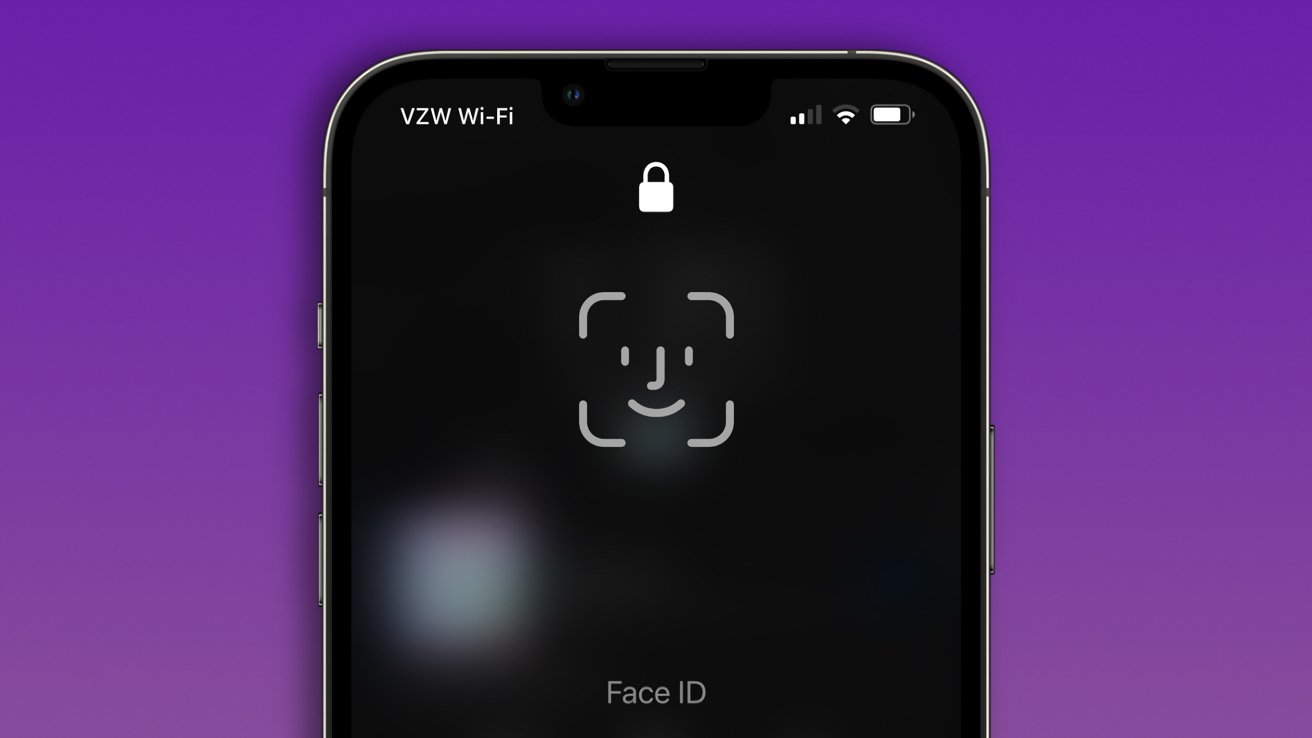
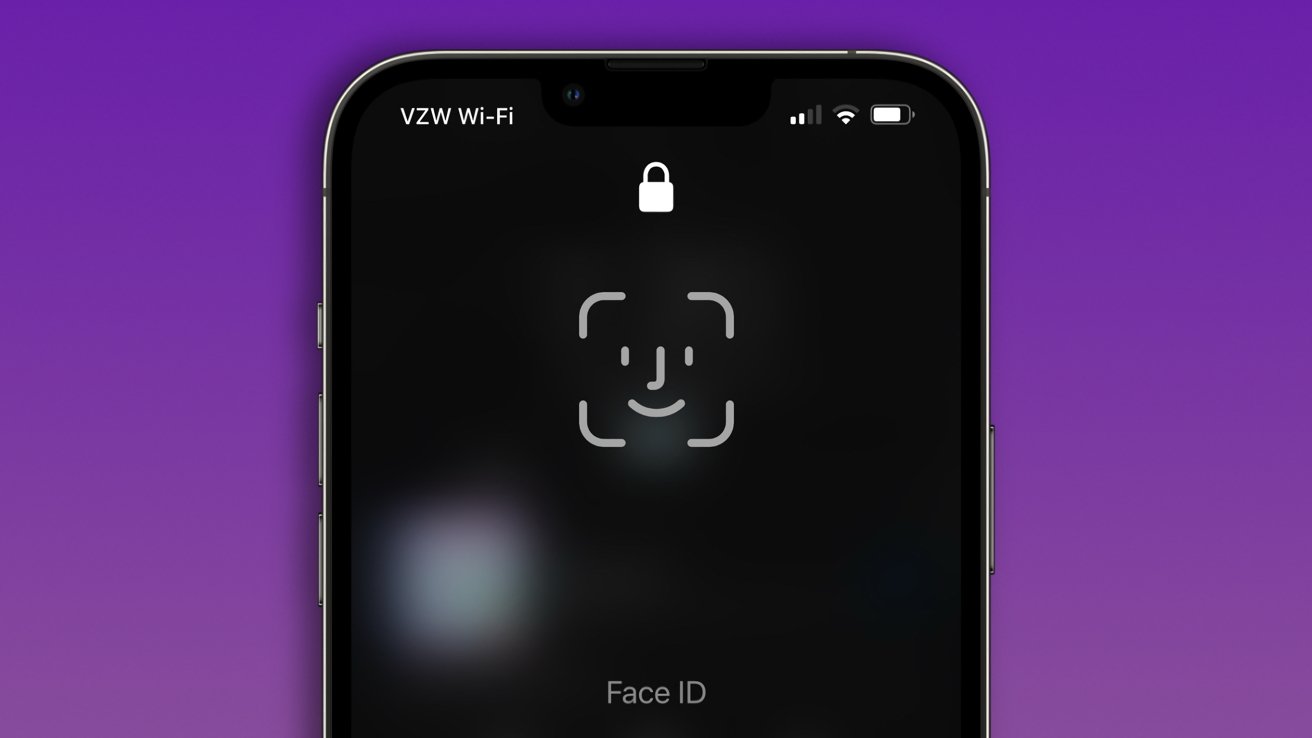
People being investigated by the FBI deleted Signal, but some messages were still retrievable from the iPhone’s notification database. The latest iOS update patches this vulnerability.
iPhones may be secure, but they aren’t invulnerable to bugs
Users should reasonably expect that deleting an app from their iPhone will remove all associated data. However, a recent case involving the FBI showed that some notification data was being retained by mistake. The iOS 26.4.2, iPadOS 26.4.2, iOS 18.7.8, and iPadOS 18.7.8 updates released on Wednesday address the notification database issue directly. The notes simply say that “a logging issue was addressed with improved data redaction.” Continue Reading on AppleInsider | Discuss on our Forums
A new NYT Strands puzzle appears at midnight each day for your time zone – which means that some people are always playing ‘today’s game’ while others are playing ‘yesterday’s’. If you’re looking for Wednesday’s puzzle instead then click here: NYT Strands hints and answers for Wednesday, May 13 (game #801).
Strands is the NYT’s latest word game after the likes of Wordle, Spelling Bee and Connections – and it’s great fun. It can be difficult, though, so read on for my Strands hints.
Want more word-based fun? Then check out my NYT Connections today and Quordle today pages for hints and answers for those games, and Marc’s Wordle today page for the original viral word game.
Advertisement
SPOILER WARNING: Information about NYT Strands today is below, so don’t read on if you don’t want to know the answers.
Latest Videos From
NYT Strands today (game #802) – hint #1 – today’s theme
What is the theme of today’s NYT Strands?
• Today’s NYT Strands theme is… Men in tights
Advertisement
NYT Strands today (game #802) – hint #2 – clue words
Play any of these words to unlock the in-game hints system.
CHEER
FROST
TOWN
GUIDE
YEAR
SHIN
NYT Strands today (game #802) – hint #3 – spangram letters
How many letters are in today’s spangram?
• Spangram has 9 letters
Advertisement
NYT Strands today (game #802) – hint #4 – spangram position
What are two sides of the board that today’s spangram touches?
First side: left, 4th row
Last side: right, 1st row
Right, the answers are below, so DO NOT SCROLL ANY FURTHER IF YOU DON’T WANT TO SEE THEM.
Advertisement
NYT Strands today (game #802) – the answers
(Image credit: New York Times)
The answers to today’s Strands, game #802, are…
ARCHERY
DISGUISE
FOREST
FRIAR
OUTLAW
SHERIFF
SPANGRAM: ROBINHOOD
My rating: Easy
My score: Perfect
“Men in tights” could only mean one thing surely? Superheroes and their sidekicks. It was with confidence therefore that I tapped out “robin” — the name of Batman’s sidekick back in the tights era. Alas, it was not to be.
Sign up for breaking news, reviews, opinion, top tech deals, and more.
Advertisement
Fortunately I spotted “hood” on the top row and realized that the “men in tights” we were seeking were from an era far beyond the 1960s.
From here on it was just a case of remembering the significant factors of the ROBIN HOOD tale — although the only version I’m familiar with involved a fox, a tortoise and a bear who was into jazz.
Advertisement
Yesterday’s NYT Strands answers (Wednesday, May 13, game #801)
SPUNK
PLUCK
GRIT
NERVE
GUMPTION
FIBER
HEART
SPANGRAM: WHATITTAKES
What is NYT Strands?
Strands is the NYT’s not-so-new-any-more word game, following Wordle and Connections. It’s now a fully fledged member of the NYT’s games stable that has been running for a year and which can be played on the NYT Games site on desktop or mobile.
I’ve got a full guide to how to play NYT Strands, complete with tips for solving it, so check that out if you’re struggling to beat it each day.
Computer memory architecture is set to undergo a significant structural transformation in the coming years.
A new design called Zero-Angle Memory (ZAM) stacks chips vertically rather than spreading them across a flat surface, a shift that could increase data transfer speeds while lowering power consumption.
Intel has thrown its weight behind this technology as a potential replacement for existing HBM memory.
Latest Videos From
Advertisement
Inside the nine-layer ZAM memory design
Technical diagrams from an upcoming VLSI conference paper have now revealed the internal details of this memory design.
Eight separate DRAM storage layers sit beneath a single control layer within each ZAM module built by the consortium.
That arrangement gives every module a total of nine functional layers stacked on top of one another vertically.
The images from the conference paper show how each of the eight DRAM layers contains exactly 1.125GB of storage capacity.
Advertisement
Sign up to the TechRadar Pro newsletter to get all the top news, opinion, features and guidance your business needs to succeed!
The basic math, therefore, delivers roughly 9GB of total memory per ZAM module before any overhead deductions.
Three Through-Silicon Vias (TSV) run through the entire vertical stack to connect every layer electrically from top to bottom.
Intel developed the fusion bonding method which creates these TSV connections with extreme precision and reliability.
Advertisement
Every DRAM layer is separated from its neighbour by a silicon substrate only 3 microns thick.
Those TSVs attach to either two or three metal rings on each layer for stable electrical flow.
Bandwidth estimates derived from earlier claims now place ZAM close to HBM4 performance figures from Nvidia‘s Vera Rubin platform.
Advertisement
(Image credit: HPC WIRE)
ZAM targets HBM4-class bandwidth
A Japanese company called Saimemory Corporation leads the commercialization effort for this Intel-backed technology.
Saimemory operates as a wholly owned subsidiary of SoftBank and has not yet released official data rates for this new memory design.
Earlier statements from the company suggested a two to three times speedup over current HBM3 memory standards.
Advertisement
HBM3 currently delivers 819 GBps (or 6.4 Gbps) of bandwidth in its standard configuration today – so a threefold increase from that baseline would give ZAM roughly 2.5 TBps of total throughput for AI processors.
Nvidia’s Vera Rubin AI platform reportedly relies on HBM4 for its highest bandwidth configurations available.
This performance parity puts Intel’s HBM-killer memory tech in direct competition with Nvidia’s preferred memory standard.
At the moment, no working prototype of ZAM has yet been shown to independent reviewers or third-party testing laboratories anywhere in the world.
Advertisement
Manufacturing eight bonded layers without introducing defects remains an unproven and difficult industrial challenge for this consortium.
HBM4 already benefits from Nvidia’s established production roadmap and existing global supply chains across multiple vendors.
A memory standard with superior technical specifications often fails without broad ecosystem adoption and industry backing over time.
The June VLSI conference presentation will determine whether Intel’s HBM-killer claims move beyond paper diagrams into physical reality.
Let’s hope the word “possibly” can be stricken from this headline in the near future. And while contempt charges don’t mean much to an administration that is openly contemptuous of anything that hints at checks or balances, it would, at the very least, encourage other judges to stop treating the Trump DOJ like it’s worthy of anything less than contempt.
A federal judge said Monday that the Trump administration had put her security at risk by posting a “patently false” allegation that she knowingly released an ICE detainee with an international warrant for murder.
Justice Department attorney Kevin Bolan profusely apologized to Rhode Island-based U.S. District Judge Melissa DuBose for the press release posted last week by the Department of Homeland Security, which Bolan acknowledged “simply was not true.”
Let’s go live (because — for whatever reason — the press release is still “live”) to the DHS website posting, which leads off with this headline because it’s operated by unserious people who have chosen to serve an autocratic megalomaniac rather than the nation itself:
A judge ordering the release of an arrestee on bail is rarely reason for a public statement by a federal agency. Normally, they’ve got better stuff to do that engage in personal attacks on judges who have done nothing more than interpreted the law and ruled accordingly.
Every alleged crime is noted in bold type in the press release, which also includes this statement from the DHS (emphasis in the original):
“Bryan Rafael Gomez is a criminal illegal alien from the Dominican Republic with an international warrant for homicide,” said Acting Assistant Secretary Lauren Bis. “An activist judge appointed by Joe Biden released this wanted murderer back into American communities. This is yet another example of an activist judge trying to thwart President Trump’s mandate from the American people to remove criminal illegal aliens from our communities. Under President Trump and Secretary Mullin, DHS will continue to fight for the removal of criminal illegal aliens who have no right to be in our country.”
Even if you choose to ignore the headline and the politically motivated attacks on the judge, you’re still left with something that isn’t normally the way the federal government does business. After all, judges are part of a co-equal branch, and there’s little to be gained by pretending normal court stuff is “activism.”
There’s even less to be gained when it’s discovered that the government’s lawyers didn’t bother to apprise the judge of this homicide warrant the DHS is now using to attack the judiciary. And what’s left of the DOJ appears to have realized this belatedly. There’s a lot of contrition in this short filing that Assistant US Attorney Charles Calenda (who oversees the affected jurisdiction) hopes will defuse the judge’s righteous anger.
Advertisement
Signed by Assistant US Attorney Kevin Bolan, the response to Judge DuBose’s order to show cause blames ICE for misleading the judge, even though it was Bolan who ultimately did the misleading:
Before the response was filed, I had been informed by ICE about the Petitioner’s pending arrest warrant issued on January 24, 2023, from a court in the Dominican Republic and that I could not disclose that information. I was not aware that ICE had previously disclosed that same information on April 16, 2026. In failing to disclose the information regarding Petitioner’s criminal history, I relied on ICE’s representation that I was not permitted to disclose that information and understood that a legitimate law enforcement reason prevented disclosure. Judge DuBose, therefore, lacked that information about the Petitioner’s criminal background when she granted the petition.
I sincerely apologize to Judge DuBose, personally, and to the entire Court for the consequences of this lack of disclosure.
Sure, contrition is welcomed. But it’s not quite as welcome when (1) ICE had already disclosed this fact, (2) the DHS continues to post an unwarranted attack on this “activist judge,” and (3) nobody in the government appears willing to act honestly until a court forces them to do it.
The DOJ may have some plausible deniability, but that relies on everyone assuming this administration is so disjointed some fingers may not even know what other fingers are doing, which is something that needs to be addressed before we get to larger questions vis-à-vis right hands and left hands knowing what each other are up to.
Advertisement
And while the DOJ may have some legitimate complaints about being both understaffed and overwhelmed by immigration cases, the problem lies with Donald Trump and his cabinet full of bigoted middle managers. The administration is still hoping to eject nearly a half-million more people by the end of the year. Meanwhile, the DOJ continues to bleed talent thanks to loyalty purges and prosecutors walking off the job because they can’t stomach what they’re being commanded to do.
The solution is contempt charges. It’s not a perfect solution, but it’s a start. Judge DuBose says she’s looking at both the DOJ and DHS. If any entity should bear the brunt of this, it’s the DHS, which continues to post misleading invective targeting this judge, as well as being instrumental in the burial of information the judge should have had access to while making a release determination.
And while I understand that contempt charges just mean taxpayers will continue to bail out an administration unworthy of its tax dollars, it will at least contribute to the steady drip of adverse rulings. When enough of those pile up, it becomes a flood this administration won’t be able to contain.
AI tools are everywhere, so why do most people still use them like it’s 2015? Artificial intelligence now sits inside almost every tool you open, from search engines and office apps to browsers, phones, and creative software.
Updates keep adding assistants, copilots, and generators, each one promising to change how work gets done.
On paper, adoption looks high. Millions of users already have these features available, often switched on by default, waiting inside menus most people rarely explore.
Actual behaviour moves more slowly. Many users still write documents line by line, search the web the same way they did years ago, and complete tasks manually, even when the software suggests another option.
Advertisement
The 💜 of EU tech
The latest rumblings from the EU tech scene, a story from our wise ol’ founder Boris, and some questionable AI art. It’s free, every week, in your inbox. Sign up now!
The goal was never to replace creativity or talent, but to augment it, and that only works when people understand where the new capability fits into what they already do.
In this article, we look at why AI tools are everywhere, yet everyday software use still feels stuck in the past. The real problem isn’t access to AI, it’s adoption.
Advertisement
Software vendors are not moving slowly. New AI features appear in updates almost every week, added to tools people already use for writing, coding, design, search, and communication.
Access is no longer the barrier. What’s missing is the moment when the user actually learns where the new feature fits into their existing workflow.
Most software still expects people to figure that out on their own, which is why tools like WalkMe Learning Arc focus on teaching features within the application rather than sending users to separate documentation or training portals.
The shift reflects a wider realisation across the industry that releasing functionality does not mean people will use it, a problem also discussed in debates around AI oversight and usability in clarity as a strategy.
Advertisement
Most learning still happens outside the tool itself. Users are expected to read guides, watch tutorials, or sit through formal sessions similar to traditional employee training programmes, even though the real difficulty only appears once they are back inside the software, trying to complete a task under time pressure.
In practice, people fall back on habits they already trust, ignoring features they never had time to explore properly. Innovation keeps moving forward, but user capabilities move at a different pace.
Feature overload is making modern software harder to use
Modern apps are not struggling because they lack capability. They struggle because every update adds another layer on top of what was already there. AI did not replace old interfaces; it stacked on top of them, which means users now face more options, more panels, and more assistants than before.
Even discussions about how AI analytics agents need guardrails, not more model size, reflect the same concern that adding intelligence does not automatically make software easier to use.
Advertisement
Open almost any tool today and the pattern looks familiar: office software with built-in copilots and sidebars, design tools filled with generators, templates, and prompts, productivity apps with chatbots inside every menu, and platforms that expect users to learn through guides similar to employee training.
When the interface becomes crowded, people stop experimenting and return to what they already know. More power sounds good in release notes, but in practice, it often means more decisions on every screen. That is why usage patterns often lag years behind the technology already available.
People don’t resist AI; they resist changing how they work
Most users are not against artificial intelligence. What they resist is changing the way they already know how to work.
Once a routine feels reliable, people repeat it without thinking, even when the software offers a faster method. Habit becomes the default, which helps explain why the gap is growing between AI availability and real capability.
Advertisement
While most employees are expected to use AI at work, only a minority feel properly trained to do so. Microsoft research shows that 66% of leaders say they wouldn’t hire someone without AI skills.
Many are learning on their own while job requirements move closer to the skill sets now associated with future new jobs developers rather than traditional roles.
Learning a new workflow sounds simple until it interrupts real work. Muscle memory takes over, deadlines get closer, and there is rarely enough guidance inside the tool itself to make the new method feel safe to try.
The gap between innovation and adoption is mostly human, not technical, which is why the next shift in AI will not come from better models alone.
Advertisement
The next wave of AI will focus on teaching, not just automating
The next phase of AI development is starting to move away from adding more features and toward helping users understand the ones already there.
Instead of expecting people to read guides or watch tutorials like it’s 2015, newer tools are beginning to guide actions directly within the interface, showing step-by-step suggestions as the task progresses.
Copilots that recommend the next command, walkthroughs that appear in the middle of a workflow, and interfaces that adapt to how the user works are becoming more common across productivity, design, and development software.
This shift is also why more teams are asking questions like how to choose a digital adoption platform, as learning is no longer something that happens before using software, but during it.
Advertisement
The tools that stand out will not be the ones with the longest feature lists, but the ones people can actually understand without stopping their work to figure them out.
Android Auto has been the standard for integrating your Android smartphone’s capabilities into your vehicle’s dashboard for quite a while now. The combination of clear GPS visibility, music control, and call and messaging interface capability is at the core of what makes it so useful, but there are dozens of applications and several useful hidden features built in that take Android Auto’s utility to the next level. What’s more, the company is constantly refining this technology and adding even more features to keep it at the cutting edge. This is a big part of the reason that over 250 million cars now feature dash displays that host the software.
Senior Director of Product and User Experience Guemmy Kim recently announced that the company is making some big changes in 2026. Android Auto is undergoing a significant redesign, with a focus on improving personalization and screen efficiency while also integrating several new AI features. If you use Android Auto or are looking to start, then you might be curious about the details of these changes. What are they, and how will they affect your daily drive?
Advertisement
Visual redesign
One of the biggest changes that is being made to Android Auto pertains to the way the interface looks on your screen. “Android Auto is getting a full refresh that brings personal design touches, widgets you can see at a glance, and edge-to-edge Google Maps to your dash,” says Kim. This is largely due to the integration of the Material 3 Expressive Google design system, which adds more expressive designs and animations to your phone, as well as specialized fonts and wallpapers, an expanded shape library, and new color schemes. This makes smart devices feel more responsive and customizable than past iterations. It uses a motion-physics system that emphasizes fluid feeling transitions and button activation. These elements will now also transfer to your Android Auto display, making it feel more ‘alive’ while also making it more personalized so that it feels like a natural extension of your smartphone.
Advertisement
The expansion of Maps is particularly interesting. Android Auto has sometimes struggled to adapt to the aspect ratios of certain screens and has left an abundance of unused, empty space around the interface window. This new modification promises a tailor-fit GPS design for any screen, including ultra-wide models, circular screens, and even uniquely shaped ones. Some aspects of the interface will still be confined to a sort of invisible box, but the expanded Google Maps background promises to give more visual navigation information while also making the screen look and feel more intentional.
Advertisement
Widget support
As Kim mentioned, widget support is coming to Android Auto as well. People have been able to add these miniature interactive applications to their home screens on their phones and tablets for a while, but they will now be able to add them to the dashboard display in their car. This serves as a useful way of providing shortcuts to the information and tools that you want to keep at the ready, but it’s also safer, as it will allow you to see and interact with these apps at a glance while driving rather than needing to navigate through a menu that might take your eyes off the road for an unsafe amount of time.
It’s unclear at this time if all the widgets that are on your phone will be supported by Android Auto or if it will be a limited selection. Kim specifically mentions that you can add shortcuts to your favorite contacts, garage door opening applications, and an overview of the weather. Google has also demonstrated a few other apps, including a clock, Google Home controls, and a photos widget. So, it seems like they already have a lot of the biggest utilities covered. These float at the top of the expanded map and can be organized in a scrollable stack (via 9To5Google).
Advertisement
Immersive Navigation
While having the map be able to stretch to the outer borders of your screen is certainly an improvement, it might not actually be the most exciting development for your car’s GPS. Android also announced that it would be integrating a new immersive navigation mode. Google Maps has a lot of great tricks hidden away, but this one is more than a little feature. Android claims that this is the company’s “biggest update to Google Maps in over a decade,” and it’s easy to see why.
Rather than viewing traditional 2-D maps from the top down, this gives you a 3-dimensional view with an isometric perspective. The screen displays buildings, overpasses, and bridges as 3-D structures that are shown in relation to ground roads, providing a more detailed visual of the terrain relative to the vehicle. This seems like it would be particularly useful for city driving, as it provides more nuanced information about complex environments.
Immersive Navigation also displays things like lanes, traffic lights, and stop signs so that the driver is aware of any stops, turns, and merges that they’ll need to make in advance and prepare accordingly. This appears to be much more intuitive than the standard top-down model, as it provides the driver with more information and a more practical perspective.
Advertisement
New audio and video features
If your car has a nice big screen and a decent sound system, then you might want to be able to use it to watch high-quality video. Adding this feature to Android Auto has been a struggle for a while now, as it can’t allow you to watch video while driving for obvious safety reasons. You used to need a third-party workaround to watch YouTube on Android Auto, but an official version of the feature is now finally on its way.
Advertisement
“For the first time in Android Auto, you’ll be able to sit back, relax, and watch videos on apps like YouTube,” says Kim. “Look for it in crisp 60fps full HD in supported cars later this year, starting with BMW, Ford, Genesis, Hyundai, Kia, Mahindra, Mercedes-Benz, Renault, Škoda, Tata and Volvo.” It’s unclear what this means in older or unsupported cars, however, and the announcement doesn’t clarify if the feature will simply be available at a lower resolution or if it won’t be available at all.
Android Auto tackles the safety issue in a unique way. Rather than shutting the video off altogether when the car is shifted out of Park, it instead transitions into an audio-only mode. This allows you to listen to things like video podcasts, news, and interviews, even when you need to keep your eyes on the road.
On top of this new feature, several media apps, including heavy-hitters like YouTube Music and Spotify, will be getting some visual updates that are designed to make them easier to see while driving.
Advertisement
Gemini Intelligence integration
Of course, it’s not a tech update in 2026 without a little AI thrown in there somewhere, and it looks like Android Auto is leaning further into Gemini integration. Those who have Gemini on their smartphones will now be able to access its adaptive and generative capabilities through their dash screens. This adds context recognition and suggested response capabilities that were not previously available.
Advertisement
One of the examples that Android provides is the Magic Cue system. “If you get a text from a friend asking for an address, Magic Cue will understand the context of the question, find the answer using information from your text messages, email or calendar, and offer to send a reply with the right information, all in a single tap.” Additionally, this can be used to verbally initiate tasks, such as ordering food from DoorDash without even needing to open the app.
Some newer cars also have Google built-in, and users will be able to use the Gemini interface in Android Auto to get information about the car itself, such as what dash symbols mean and how much storage space is in the trunk. It will also be able to use the cars cameras to provide lane guidance in Google Maps, and advise you when to change lanes or take an exit in real time.
“It’s like a community, right? And it’s a global community that people really love and identify with.”
That’s how Bobby Kim, Global Creative Director at Disney Consumer Products, describes Star Wars fandom. And it’s a framing that feels especially fitting as another May the 4th is behind us and we’re weeks out from a big-screen debut.
For millions of fans, myself included, it’s not just a set of films. It’s something more of a shared language — one that extends far beyond the screen into collectibles, toys, robots, video games, and all sorts of media from films and TV shows to books, comics, and shorts.
Advertisement
Latest Videos From
Inside Disney, that shift is increasingly shaping how Star Wars comes to life. It’s no longer just about the next movie or series, but rather it’s about how fans engage with the universe in between those major moments — and often, that starts with products.
(Image credit: Disney Consumer Products)
Over a year into his role at Disney Consumer Products, Kim is still adjusting to the scale. Coming from a background in entrepreneurship and underground culture, he’s used to building within tight communities. At Disney, though, the audience is global, multigenerational, and deeply invested.
That level of connection, he says, comes with responsibility. Fans don’t just watch Star Wars — they identify with it. And that changes what a product is supposed to do.
“What Star Wars taught folks like me and artists and designers and creatives is how to understand a story not just from the perspective of cinema, but through the perspective of product,” Kim explained shortly after leading a conversation with The Mandalorian and Grogudirector, co-writer, and producer, Jon Favreau.
Advertisement
Sign up for breaking news, reviews, opinion, top tech deals, and more.
It’s a simple idea, but it reframes everything from a product generation discussion to planning for a rollout. For decades, Star Wars has existed beyond the screen through toys, collectibles, and apparel, but nearly 50 years on, these products are becoming the experience itself.
From action figures to roleplay items, people can get closer and feel a connection to a specific character or legion – be it Rebel or Imperial – within the franchise. You don’t need to follow every film or series to feel connected. You can build a Lego Star Wars set, collect figures, or display memorabilia and still participate in the world in a meaningful way. Products aren’t just extensions of the story — they’re one of the main ways fans live with it.
(Image credit: LEGO)
That’s also why Disney is continuing to emphasize its internal design teams, ensuring that what it creates in-house reflects the same storytelling DNA as the films and shows.
Advertisement
Technology is pushing that even further, and no better example is Lego Smart Play, and the first wave of Star Wars sets.
“I love what Lego is doing. Smart Play is technology within a product that has enchanted collectors for, you know, eons. Literally.”
For Kim, the key isn’t reinvention — it’s expansion. “It doesn’t replace anything, it’s additive to me. And it’s just a new way that you can play with Lego Star Wars sets in a way that we maybe couldn’t have thought of before.”
Advertisement
That idea of “additive” design hints at where Star Wars products are heading. They’re becoming more interactive, more flexible, and more open to interpretation — less like static objects and more like platforms that fans can shape themselves.
(Image credit: Disney Consumer Products)
It’s a natural evolution for a franchise that has always thrived on participation. From collecting to cosplay to fan builds, Star Wars has long encouraged people to make it their own. Now, the products themselves are starting to reflect that same philosophy.
And as technology continues to blur the line between physical and digital, that connection is only getting stronger. At the end of April 2026, Hasbro showed off a fully electronic Grogu – one of the most highly detailed and expensive Baby Yoda toys yet.
“I cannot divorce the two: the creative process from technology. It’s always one and the same.”
Advertisement
For Disney, that means designing Star Wars as something that lives across formats — film, yes, but also objects, experiences, and tools for creativity. For fans, especially on May the 4th, it’s a reminder of why the franchise endures. Star Wars isn’t just something you watch.
It’s something you build, collect, and carry with you.
The Federal Communications Commission has banned the sale of new foreign-made routers in the US. The sweeping order applies to virtually every Wi-Fi router currently available in the US market.
After speaking with seven industry experts, I recommend holding off on buying a new router if you can.
Under the current rules, banned routers will no longer receive essential security firmware and software updates after Jan. 1, 2029.
The FCC’s action has effectively frozen the entire market while router companies scramble to gain approval.
More specific information on which router companies will be subject to the ban is expected to become clearer within the next month or two.
In my eight years of writing and reviewing broadband and routers, I’ve rarely seen news that I would describe as unprecedented. The FCC’s March 23 decision to ban foreign-made routers is absolutely unprecedented.
The sweeping order applies to any router in which any stage of “manufacturing, assembly, design and development” occurs outside the US — in other words, just about any router you can buy right now. The argument is that they pose “unacceptable risks” to national security. Ironically, the order also prevents existing foreign-made routers from receiving vital security updates after Jan. 1, 2029, an extension of the initial March 1, 2027, deadline.
The ban doesn’t apply to routers that were already authorized by the FCC — only new models that haven’t been approved yet. That means every router that was available before the order is still available today, and router companies can still restock them using their existing manufacturing processes. So far, both Eero and Netgear have received exemptions from the ban, and will be able to sell new models in the US going forward.
Essentially, the FCC is freezing the Wi-Fi router market. As William Budington, a technologist for the digital rights nonprofit Electronic Frontier Foundation, put it to me, “This is using an extremely blunt instrument.”
Advertisement
Where previous FCC bans have been limited to specific companies, such as last year’s push to ban TP-Link routers, this one affects an entire industry. So where does that leave someone who needs a new Wi-Fi router? Should you buy a model you’ve had your eye on in case it sells out? Or is it better to wait and see which companies the FCC considers foreign-made?
I know what I would do, but I gut-checked my advice with four cybersecurity experts. Turns out, we agree.
My advice: Hold off on buying a new router for now
When I first saw the FCC’s announcement, I couldn’t stop thinking about how much chaos this would introduce to the US router market. As I tried to tease out which manufacturers would count as “foreign-made,” it quickly became clear how deeply international the supply chains for routers are.
Advertisement
Understanding the scope of the ban
Take Netgear. While it’s a US-founded and headquartered company, it manufactures routers in Vietnam, Thailand, Indonesia and Taiwan. According to a recent report from the trade group Global Electronics Association, “Virtually no consumer router is manufactured entirely within the United States.”
I don’t have any issues recommending routers that were manufactured abroad. After all, they’d already gone through the FCC’s authorization process, and I haven’t seen convincing evidence that any one router brand has more hardware vulnerabilities than another.
Thomas Pace, CEO of cybersecurity firm NetRise, told me last year during an interview about the potential TP-Link ban: “We’ve analyzed an astonishing amount of TP-Link firmware. We find stuff, but we find stuff in everything.”
I just finished testing, reviewing and rating over 30 routers, and after years of resistance, I finally concluded that Wi-Fi 7 routers are worth the money for the speeds you get. While I stand by my recommendations, with this ban in place, the router you buy today may not be any good in a year.
Advertisement
The future-looking security risk
Then I saw the FCC’s Public Notice on the ban, which specifies that manufacturers can continue providing software and firmware updates “at least until March 1, 2027,” which has since been extended to at least Jan. 1, 2029. That means if you own a foreign-made router — if you own any router, in other words — it won’t be able to get security patches after that deadline.
That’s why I think the wise move here is to wait on buying one if you can. Keeping your router’s firmware up-to-date is an essential part of securing your home network. If you buy from a router company that doesn’t get an exemption from this ban, you risk having an unsecured device a year from now.
It’s an ironic side effect of an order that is ostensibly designed to keep Americans safer: They may no longer be able to get the latest security fixes.
“If you’re limiting the ability of people to get security updates, then you’re making the problem worse, not better,” Alan Butler, senior counsel at the Electronic Privacy Information Center, told me. “A lot of those routers are going to turn into pumpkins in a year unless they extend this waiver.”
Advertisement
By saying you can update your firmware “at least until Jan. 1, 2029,” the FCC does leave some wiggle room for an extension, and the Commission has suggested it could remove the deadline entirely. But until we know more about which companies the FCC considers foreign-made and which will be exempt, I wouldn’t feel comfortable recommending spending money on a new router right now.
“The risk is very real,” said Rik Ferguson, vice president of security intelligence at cybersecurity company Forescout. “If you find yourself in a situation where that update pipeline has been switched off, then you definitely have to consider whether you want to keep using that device.”
“The risk just keeps going the longer time passes, because chances are that there will be new vulnerabilities being found that you cannot patch,” added Daniel Dos Santos, vice president of research at Forescout.
Advice for immediate router needs
If your old router stopped working, I’m not going to tell you to wait for clarity from the FCC to get back on Wi-Fi — the timeline for concern is more in years than months. A good compromise might be to buy an older budget router rather than the latest Wi-Fi 7 model you’ve had your eye on. But if you can afford to wait a month or two, it’s worth exercising some caution.
Advertisement
“I do think this is going to become a mess very quickly,” Butler said.
This is the messiest point in the process we’re likely to see. As the dust settles in the coming weeks, we’ll likely have better information on which routers will still be safe to use a year from now.
TP-Link is one of the most popular router brands in the US, and the subject of several 2025 government investigations.
Advertisement
Gianmarco Chumbe/CNET
What if you rent your router from your ISP?
Where does this order leave the 70% of Americans who rent their internet equipment from their internet service providers? The FCC’s ban will impact them, too, as they also rely heavily on foreign-made routers.
Essentially, my advice is no different than it is for people who own their routers: Don’t panic, and wait to see how things shake out. If you haven’t upgraded your equipment in a few years, now might be a good time to call your ISP and ask them what options are available. But it’s not likely that they’ll proactively replace them on their own, says Doug Dawson, a veteran broadband analyst and author of the industry blog POTs and PANs.
“I don’t see any mass replacement of these things, because it’s just too much money,” Dawson told me. “I’d guess before any deadline on firmware updates, they’re going to issue those three days before that and then they’re going to cross their fingers that they don’t start seeing problems.”
Expert opinion: Is your current router still safe to use?
When I polled four cybersecurity experts, I was surprised to find that they were generally in favor of the FCC taking action to protect router security in theory, but critical of the execution.
Advertisement
“It’s going to impact many harmless products in order to stem a real problem,” Budington said. “It’s also not particularly well-targeted, since routers are only one part of the problem, along with IoT devices.”
The concern for national security risk
The FCC says that routers produced abroad were “directly implicated” in the Volt, Flax and Salt Typhoon cyberattacks. These attacks aren’t necessarily targeting an average person’s data, but they can turn your router into a tool to be used in malicious attacks.
“The individual user who owns the router probably doesn’t even know anything about it,” Butler said. “It’s happening in the background without their knowledge, and it’s not necessarily affecting them directly in any way that they can notice.”
In the Salt Typhoon attack, hackers gained access to data from millions of people through their internet providers, aiming to gain access to information from court-authorized wiretaps. It was a particularly bold instance of a tried-and-true hacker approach called “spray and pray”: Find default login credentials and try them on as many connected devices as you can.
Advertisement
“It can be only one router out of 5,000, but that one can be a bingo,” Sergey Shykevich, a threat intelligence manager at Check Point Research, told me about these types of attacks. “It’s mostly just easy. In many cases, you don’t have to be a very sophisticated actor, or even nation-state, in order to be successful.”
How you can secure your router right now
It’s just as easy for hackers to gain access through a router’s default credentials as it is for you to change your own settings. Most routers have an app that lets you update your login credentials from there, but you can also type your router’s IP address into a URL. These are different from your Wi-Fi name and password, which should also be changed every six months or so. It’s also a good idea to keep your firmware updated, which you can do automatically in your router’s settings or by manually downloading updates in your router’s app or web portal.
When will we know more?
I wish I could point to another time when the FCC ordered a blanket ban on an entire category of consumer products, but nothing like this has happened before. Manufacturers can apply for “Conditional Approval,” and they are likely scrambling behind the scenes to make the cut. When I reached out to the FCC for more clarity on the order, I was referred to the commission’s “Covered List” FAQ page.
My best guess is that we’ll learn more specifics on which companies are banned in the next month or so — an estimate that was echoed by two industry observers I spoke with. But the wait could be even longer. Budington told me he thinks router companies might wait until the ban is lifted rather than hustle to try to move their entire supply chains to the US.
Advertisement
No matter how it shakes out, we’ll likely look back on this as the most chaotic chapter of the router ban story. Unless you need a new router immediately, there’s a good chance you’ll be able to make a more informed decision a month from now.
Makers will always be chasing a dream, a wild concept, and few of those ideas come close to producing results as this one. The YapStopper 3000 is a device that can detect what someone is saying from across the room, add a tiny bit of delay, then fire that precise audio back at them, to the point that their brain can’t seem to put two meaningful sentences together.
Delayed auditory feedback results in a slight mismatch between what a person says and what they hear a split second later. The brain expects instant input from its own speech, so when there is a delay, the timing is completely thrown off. People stumble over their words, resulting in protracted pauses and fractured thoughts. Typically, getting that effect to work requires some sort of special setup, such as wearing headphones or being in a carefully controlled environment, but our small construct skips all of that and beams the delayed voice directly at the individual who refuses to quiet speaking.
Custom three-capsule array: This professional USB mic produces clear, powerful, broadcast-quality sound for YouTube videos, Twitch game streaming…
Blue VO!CE software: Elevate your streamings and recordings with clear broadcast vocal sound and entertain your audience with enhanced effects…
Four pickup patterns: Flexible cardioid, omni, bidirectional, and stereo pickup patterns allow you to record in ways that would normally require…
You can thank the high-frequency sound for the accurate targeting. The YapStopper emits sound waves at 40 kilohertz, which are far beyond what human ears can detect, but those waves transmit the delayed speech as a type of ‘hidden message’, similar to how a radio station wraps music inside the carrier frequency. Since the wavelength is so short, the sound beam simply zooms in on its target rather of spreading out all over the place, which is made feasible by an array of ultrasonic transducers that basically work together to enhance the beam, resulting in an acoustic spotlight effect. You simply point the built-in laser, turn the switch, and the delayed audio is precisely on target while everyone else hears nothing.
To collect the original audio on the other end, a shotgun mic works well because it listens in from a distance, picks up the speaker’s words clearly, and sends them to the delay circuit. After it has been modified and delayed, the signal is sent out through the transducer array via the ultrasonic carrier. This is powered by a cordless drill battery, which is charged to 24 volts using a boost converter. All of the driver chips, MOSFETs, oscillators, and tuning bits and bobs are housed on a single custom circuit board that fits snugly inside this handy small box. You can adjust the delay and volume on the fly using simple knobs, or flip a switch to turn it on/off.
Months of careful assembly went into every detail. The maker spent five full months debugging, soldering, and replacing parts. Short circuits would sometimes emerge out of nowhere at the worst possible time. Despite all of these obstacles, the underlying principle continued to work. With a simple test using a phone app and some standard headphones, they demonstrated that only the delay may throw speech off track. But what they did with this hardware version was to make it function without the requirement for headphones on the target, which is a real-world feat. More distance testing is still needed, but the prototype demonstrates that directed delivery works in practice once all of the electronics are in sync. [Source]
An anonymous reader quotes a report from 404 Media: On Reddit, Hacker News and other places where people in software development talk to each other, more and more people are becoming disillusioned with the promise of code generated by large language models. Developers talk not just about how the AI output is often flawed, but that using AI to get the job done is often a more time consuming, harder, and more frustrating experience because they have to go through the output and fix its mistakes. More concerning, developers who use AI at work report that they feel like they are de-skilling themselves and losing their ability to do their jobs as well as they used to.
“We’re being told to use [AI] agents for broad changes across our codebase. There’s no way to evaluate whether that much code is well-written or secure — especially when hundreds of other programmers in the company are doing the same,” a UX designer at a midsized tech company told me. 404 Media granted all the developers we talked to for this story anonymity because they signed non-disclosure agreements or because they fear retribution from their employers. “We’re building a rat’s nest of tech debt that will be impossible to untangle when these models become prohibitively expensive (any minute now…).” “I had some issues where I forgot how to implement a Laravel API and it scared the shit out of me. I went to university for this, I’ve been a software engineer for many years now and it feels like I am back before I ever wrote a single line of code,” the software developer at a small web design firm told 404 Media. “It’s making me dumber for sure,” the fintech software developer added.
“It’s like when we got cellphones and stopped remembering phone numbers, but it’s grown to me mentally outsourcing ‘thinking’ in general. I feel my critical thinking and ability to sit and reason about a problem or a design has degraded because the all-knowing-dalai-llama is just a question away from giving me his take. And supposedly I tell myself ill just use it for inspiration but it ends up being my only thought. It gives you the illusion of productivity and expertise but at the end of the day you are more divorced from the output you submit than before.”
A software engineer at the FAANG said: “When I was using it for code generation, I found myself having a lot of trouble building and maintaining a mental model of the code I was working with. Another aspect is that I joined late last year and [the company’s] codebase is massive. As a new hire, part of my job is to learn how to navigate the codebase and use the established conventions, but I think the AI push really hampered my ability to do that.”
B&H is blowing out M4 MacBook Air inventory with prices as low as $829. But supply is limited for this flash deal.
The $829 blowout special applies to the closeout M4 13-inch MacBook Air with an 8-core GPU, 16GB of unified memory, and 256GB of storage when ordered in the Sky Blue finish.
According to B&H, the deal is scheduled to end on May 15 at 5:05 p.m. Pacific Time, but supply is limited at the reduced price, so the deal may sell out before then.
Advertisement
With other retailers sold out, B&H’s flash deal delivers the lowest price available on the closeout model. And if you’re looking for the lowest price on the M5 Air that was released in March 2026, it can be found for as low as $998, although you do get 512GB of storage with the entry model.
B&H is also running a sale on MacBook Pros and upgraded M5 MacBook Airs, which you can jump to via our deal coverage below.































































You must be logged in to post a comment Login