Getty already struck a similar deal with Perplexity AI.
Samuel Boivin/Shutterstock
Getty Images has announced a multi-year partnership with OpenAI that will bring its licensed content libraries to the AI company. The agreement means Getty’s content will appear in OpenAI search and ChatGPT.
“High‑quality, licensed visual content makes AI‑powered search and discovery more useful and more trustworthy,” Getty CEO Craig Peters said in a statement. “This partnership with OpenAI reflects a shared recognition of that, and together we will deliver richer visual experiences to ChatGPT users.”
A year after its AI-generated art ban, Getty announced its own generative AI tool, trained on its library and powered by NVIDIA’s Edigy AI model. Each of the resulting images came with a royalty-free license.
But in October 2025, Getty signed a deal with Perplexity AI, allowing the latter’s AI search and discovery tools to access Getty’s library. Critically, the release stated that “Perplexity will be making improvements to how it displays imagery, including image credit with a link to source, to better educate users on how to use licensed imagery legally.” Perplexity has faced suits around alleged illegal use of copyrighted materials.
Notably, Getty hasn’t shared any details on whether its images will be used in AI training, although its deal with Perplexity doesn’t allow for it.
Refrigerators generally aren’t appliances that need to be replaced regularly. A high-quality fridge can have quite a long lifespan, and the best way to maximize that is to take care of it properly. The basics, such as cleaning the interior, being mindful of the temperature dial, and not leaving the door open for long periods, are pretty obvious, but there’s more that you can do. One essential maintenance step is cleaning the condenser coils — the elements responsible for dispensing heat pulled from the fridge — regularly, usually once or twice a year. Those with particularly dusty homes, or who own pets, may even want to clean them more frequently.
Fortunately, cleaning condenser coils is a reasonably easy task. Once you’ve located the coils, unplug the unit and move it so you can reach them. From here, use a screwdriver to remove any coverings. This will give you full access to the coils, and you can use a vacuum to suck away all the accumulated dust and debris. A hand brush can also be handy to loosen any stuck-on debris. Once the coils are as clean as you can get them, put the covers back on, plug the fridge back in, and slide it back into place.
As you can see, there’s really not a lot to cleaning your fridge’s condenser coils. That’s all the more reason to keep up with it, especially since failing to do so could lead to big problems.
Advertisement
The importance of condenser coil cleaning
No matter which of the major refrigerator brands you go with, or the state of your home, there are several good reasons to keep your fridge’s condenser coils clean. Condenser coils are essential for drawing heat from the fridge, keeping the inside nice and cool. Excess debris makes the coils less effective at their job, meaning the condenser has to work harder to draw the warm air out. This may shorten the condenser’s lifespan, leading to costly repairs sooner.
Advertisement
Dirty condenser coils can also lead to higher energy bills over time. Less-efficient cooling means the fridge has to work harder to reach the desired temperature, increasing energy use. This could be particularly noticeable in the summer months, as higher temperatures will already have your fridge working overtime to stay cool. There’s no need to risk failure by forcing a fridge to work harder than it already is during periods of high heat.
A fridge’s condenser coils are often out of sight — and out of mind. But being aware of the coils’ importance and cleaning them consistently is crucial to keeping a fridge operating at its best for as long as possible.
We’re halfway through 2026, and if there’s one thing we’ve all noticed this year, it’s rising tech prices. Everything is more expensive than last year, all thanks to AI, which has scooped up all memory production, driving prices to insane levels. This has almost killed the budget smartphone space, and the same is happening to laptops. Even Apple raised MacBook prices by well over ₹1 lakh in some configurations. Imagine this: you’re a student or a parent, and you need a budget-friendly laptop to complete schoolwork. Maybe it’s completing a project, or studying for the next exam on a bigger screen; you get the point.
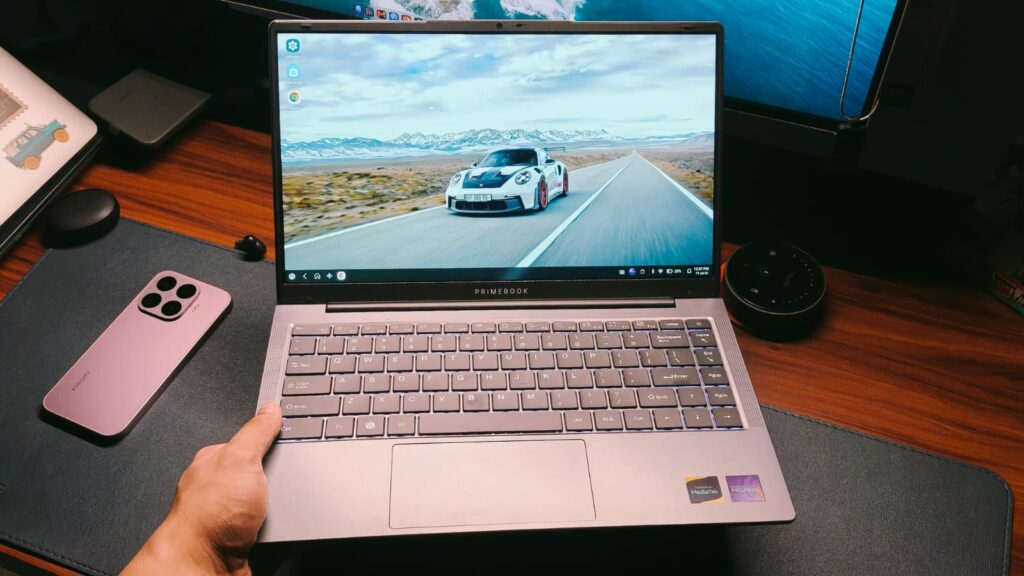
That’s exactly the problem PrimeBook aims to solve. For the uninitiated, it’s an Indian startup that focuses on making Android laptops, similar to Chromebooks, that help you write documents, study using online tools like YouTube, and don’t cost a bank. One example is the PrimeBook 2 Pro, which features a 14-inch full HD display and runs on the Helio G99 processor. Since you get all that for ₹26,999, I knew I had to test it. I’ve been using the Primebook 2 Pro for the better part of two weeks, and this review should help you decide whether it’s worth it.
Primebook 2 Pro Review
Hisan Kidwai
Advertisement
Summary
The Primebook 2 Pro is a unique machine. The design is way more premium than I expected. The keyboard is great to type on, and even the performance is serviceable. Where Primebook still needs to work on is the optimization. People shouldn’t need to request apps they want to install. Still, it’s a capable studying machine
Advertisement
Design & Hardware
It’s very hard to judge a laptop’s design on such tight budgets because, you know, brands simply don’t have the budget for extensive R&D. While this is what I’ve thought about many of the budget laptops I’ve tested, the PrimeBook 2 Pro is actually designed rather well. Don’t get me wrong, you won’t get the premium metal design, but for the price, the plastic build is excellent. The silver color mimics aluminum, which I quite like, and I observed no flex in the chassis, no matter the pressure. The top has a matte finish that looks sophisticated and doesn’t pick up any fingerprints. I could use the laptop in a trendy cafe without looking out of place.
Open the laptop, and you’re greeted by the same premium feel, except this time the keyboard deck has a MacBook-esque finish. The lid extends slightly below the chassis, making it easier to open. The hinge, however, isn’t much to write home about. It keeps the screen steady, but I found it to be quite stiff. I always had to use two hands to open the laptop, which is a nitpick. Still, the best part about the PrimeBook 2 Pro is the portability. The 14-inch form factor was perfect for slipping into any backpack, and the 1.38 kg weight was light enough to carry the laptop anywhere.
As far as ports are concerned, Primebook hasn’t taken the MacBook route. That’s because you get dual USB-A ports for connecting accessories, a USB-C port for charging, a microSD slot, and a 3.5mm headphone/microphone combo jack. While I couldn’t find the speeds for the mentioned ports, it’s hard to complain much at this price.
Keyboard & Trackpad
When making a budget laptop, the keyboard is usually first on the chopping board to cut costs. While I agree with this sentiment, the keyboard is one of the main ways to interact with the laptop, and I’m glad Primebook 2 Pro doesn’t follow the norm. Its keyboard is perfectly fine. There are no highlight features, but, most importantly, no glaring issues. I got used to the layout pretty quickly. The feedback, while not as tactile as my MacBook, was good enough for long typing sessions. There’s an extra row of shortcuts to get home, end task, and scroll the page, all of which were useful during my testing.
Where things went south was with the trackpad. First up, its sensitivity is way too high. A small flick raced the pointer from one end to the other when all I was trying to do was click the publish button on an article. The second issue is the gestures. Remember the extra row on the keyboard for page-up and page-down. Yeah, you’d be using that quite a lot since scrolling with two fingers moves the page by just an inch. I tried finding settings to adjust both of these things, but I couldn’t. So keep that in mind.
Display & Camera
The PrimeBook 2 Pro features a 14-inch FHD IPS display with a 60Hz refresh rate. For the price, it’s pretty serviceable. The text was easy to read, even the smaller fine print. The colors were decent, making it a good experience to watch YouTube. Even the viewing angles were quite good. There was some color shifting when viewed from an angle, but not as much as with TN panels. The anti-reflective coating also did its job well, keeping background reflection at bay. The only complaint regarding the display would be the brightness. It’s not enough to overcome the light on a sunny day inside a brightly lit cafe.
The best way I can describe the alleged 1440p webcam is that you can use it for video calls. Don’t expect it to represent how your face actually looks or to have any sharpness, and you’d be good to go.
Advertisement
Performance & Battery
Inside the Primebook 2 Pro is the MediaTek Helio G99 processor, which, I agree, isn’t the newest kid on the block. It’s paired with 8GB of LPDDR4X RAM and an unnamed 128GB UFS storage. PrimeOS runs smoothly on the hardware. I could open and close applications reasonably quickly without waiting long. Most of my work happens in Chrome, so I used the laptop for a bit of news writing, along with my usual suite of research tabs. It kept over 10 tabs in memory without stuttering, so I believe studying with the 2 Pro should work out fine.
Where I did notice the 4-year-old processor was when running YouTube. The UI loaded quickly and fine, but when I clicked to play a video, there was a brief hitch before it actually played. This was the case with every video I tried playing. The issue became even more noticeable when I opened WhatsApp Web, which I believe many students would. The laptop took a long while loading my messages, and navigating between the different message tabs was a less-than-ideal experience.
The PrimeBook 2 Pro is powered by a 60Wh battery. When coupled with the non-flagship internals, the laptop’s battery life is excellent. When working on Chrome, it lasted me two full days of use, with the screen on time hovering around the 9-hour mark.
PrimeOS
It’s time to talk about PrimeOS. It’s Primebook’s custom Android-based operating system that takes the big-screen Android experience and adds a few desktop-inspired features. It was my first time using PrimeOS, and it’s a decent take. Apps are neatly tucked away into a Finder-like place. The file manager is inspired by both macOS and Windows and does a very good job of organizing files into easily understandable tabs. App support, though, is a bit complicated. Primebook claims you get access to the “entire Android app ecosystem,” but I couldn’t find all the apps. Sure, most of the important apps like PowerPoint, Docs, and others are included, but it’s not a complete list. If you need more apps, you’ll need to request them specifically, which is a bit counterintuitive in my opinion. It’s worth checking that the apps you need are available before buying.
Beyond that, since not everything can run on Android, Primebook offers Cloud PC functionality. It lets users emulate Windows or Linux on their laptop, albeit with a fee. Subscriptions start at ₹99 for Linux and ₹499 for Windows. Sadly, I did not get the opportunity to test the functionality during my review period. There is also PrimeCoding, the brand’s own beginner-friendly coding platform. The implementation is simple but useful for beginners learning the basics of programming. Do I see PrimeOS becoming big in the next few years? Yes.
Verdict
At ₹26,990, the PrimeBook 2 Pro is a unique machine. It’s neither a traditional Windows laptop nor a Chromebook. It’s something in between, and there are a lot of good things about the laptop. The design is way more premium than I expected. The keyboard is great to type on, and even the performance is serviceable. Where Primebook still needs to work on is the optimization. People shouldn’t need to request apps they want to install. Everything that runs on Android should already be there. Still, the Primebook 2 Pro is a capable machine that, if you’re looking for something to study on, will work just fine and serve you for a few years.
Part of the Seattle skyline as seen from the waterfront. (GeekWire Photo / Kurt Schlosser)
For the first time in several years, there are indications that the worst may be over for the Seattle region’s battered office market — and artificial intelligence companies appear to be playing a leading role.
The regional office market (spanning Seattle, Bellevue and the surrounding Eastside) posted positive net absorption during the second quarter, meaning companies occupied more office space than they vacated, according to a new report from commercial real estate firm JLL. It’s a notable shift after years of downsizing driven by remote work, layoffs and corporate cost-cutting.
Technology companies accounted for 42.5% of all leasing activity during the quarter, easily outpacing every other industry. JLL said AI-related leasing is on track for a strong year as companies establish engineering hubs in the Seattle region to tap its deep talent pool while taking advantage of office costs that remain well below San Francisco and New York.
In fact, leasing by AI companies has accounted for 21.6% of activity in the Seattle and Eastside year to date, and now the entire AI footprint in the region is 855,000 square feet. That’s double the amount in 2024, according to JLL.
The Seattle-area office market turned a corner in 2026, with companies filling more space than they emptied for the first time in four years, as indicated by the positive net absorption for the quarter. (JLL Graphic)
The quarter’s largest deals reflected that trend.
Databricks signed a 142,000-square-foot lease at Four106 in downtown Bellevue, the biggest office transaction of the quarter.
DocuSign committed to 116,000 square feet at Seattle’s JPMorgan Chase Center.
Pokémon moved into The Eight office tower in Bellevue, taking 369,800 square feet of space.
The Pokémon deal helped push the region to 372,000 square feet of positive net absorption for the quarter — reversing a run of quarters in which tenants gave back more space than they took.
The numbers offer an encouraging change after years of gloomy office market reports, but they hardly signal a full recovery. Regional vacancy remains elevated at 23.9%, while overall availability sits at 25%.
Advertisement
Companies continue to consolidate space, landlords are still offering concessions, and asking rents remain under pressure as tenants retain significant negotiating leverage, JLL said in the report
Still, there are indications the market’s fundamentals are improving.
Availability has now declined for two consecutive quarters and has fallen from a peak of 26.5% a year ago. At the same time, JLL reports there is currently no new speculative office construction under way — buildings started without tenants committed — meaning even modest growth in demand could have a greater impact on occupancy than in previous years.
Advertisement
Rather than signaling a broad-based office comeback, the latest leasing data suggests a more nuanced story: AI companies and other fast-growing technology firms are helping stabilize a market that had spent years moving in the opposite direction.
The report reinforces a trend GeekWire has been tracking over the past year as AI companies expand their presence across the Seattle region. Alongside Microsoft and Amazon, companies including OpenAI, Anthropic, xAI, Armada and Anduril have been building engineering teams in the area, drawn by one of the country’s deepest concentrations of AI and cloud computing talent.
Whether that momentum continues will depend on how quickly AI hiring expands and whether more companies decide they need additional space for a new generation of engineers. But after several years defined by shrinking footprints and empty offices, the second quarter offered the first meaningful indication that Seattle’s office market may finally be finding its footing.
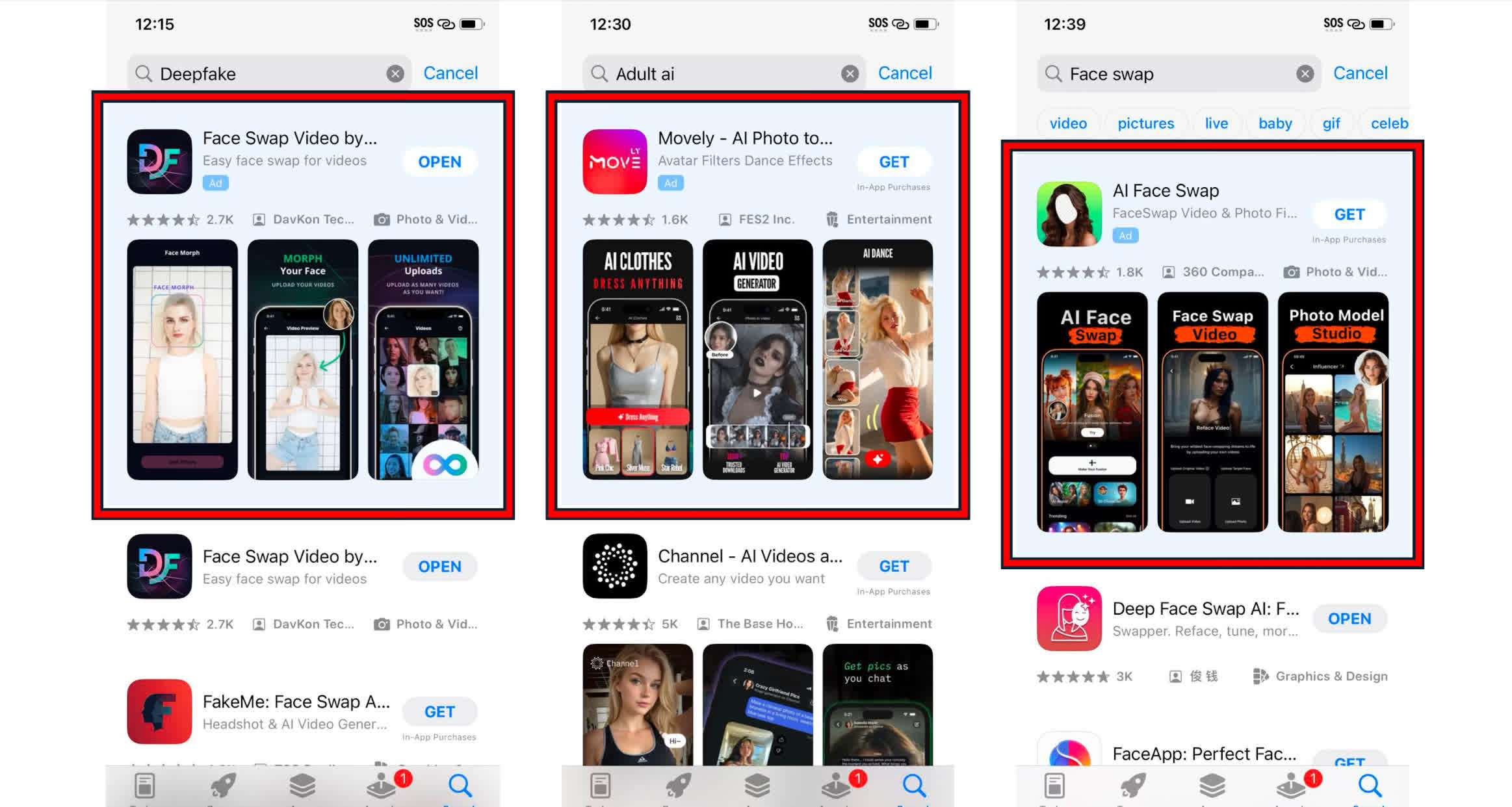
What just happened? San Francisco has demanded that Apple and Google remove 13 AI-powered apps capable of creating nonconsensual nude images. City Attorney David Chiu has accused the companies of profiting from technology overwhelmingly used to target women and girls.
Chiu sent cease-and-desist letters to the two tech giants on Thursday, demanding that they remove eight apps from Apple’s App Store and five from Google Play.
The programs are advertised primarily as face-swapping tools, but investigators found that they could also place people’s faces onto explicit images or generate fake nude content.
The letters accuse Apple and Google of “aiding and abetting” the sale of illegal deepfake pornography by hosting the apps, processing their in-app payments, and taking a cut of the proceeds. Chiu said the companies have likely earned millions of dollars in fees from theit cut of the apps’ sales.
Advertisement
San Francisco has given Apple and Google 28 days to explain how they will comply. The city could otherwise pursue civil enforcement carrying penalties of at least $25,000 per violation.
The demands also call on the companies to cut payment-processing ties with the developers and introduce recurring reviews designed to stop replacement apps from appearing.
Google said it had removed all five Android apps identified by Chiu’s office. The company added that it has suspended hundreds of apps containing nudification features and restricted related search terms such as “nudify.”
Advertisement
Apple said it removed three of the flagged apps and is terminating their developers’ accounts. Four other developers have been told to address policy violations or face removal. Both companies already prohibit pornography and abusive sexual content, which raises questions about how the apps made it through their review processes.
The problem isn’t limited to the named 13 programs. Two Tech Transparency Project investigations this year uncovered around 100 nudify-capable apps across both stores. They were estimated to have generated about $120 million in combined revenue and accumulated roughly 480 million downloads.
A separate Cornell and Georgetown study found 420 face-swap apps on the stores. Researchers tested 155 and discovered that 70% allowed users to place faces onto nude images without technical safeguards. None openly advertised itself as a nudification app, illustrating how seemingly ordinary photo tools can evade moderation.
San Francisco previously sued 16 of the most popular AI undressing websites in 2024, which had attracted 200 million visits during the first half of that year. Meta later sued the developer of Crush AI after more than 8,000 ads for the nudify service appeared on Facebook and Instagram in two weeks.
Advertisement
Last month, the Justice Department also seized two websites accused of publishing hundreds of thousands of deepfake nude images featuring famous women. Chiu warned that Apple and Google must become more proactive, adding that his office will consider further legal action if they fail to respond.
We dug into hours of his talks and interviews to answer the big questions: Who is this guy, why does he want an NFL team, and what does his track record tell us about the kind of owner he’ll be? Plus, the blind spot that could get him into trouble.
Featuring highlights from his 2015 talk at the Stanford Graduate School of Business.
Looking for the most recent Strands answer? Click here for our daily Strands hints, as well as our daily answers and hints for The New York Times Mini Crossword, Wordle, Connections and Connections: Sports Edition puzzles.
Today’s NYT Strands puzzle isn’t too tough, and it’s a fun topic. If you need hints and answers, read on.
Your goal is to find hidden words that fit the puzzle’s theme. If you’re stuck, find any words you can. Every time you find three words of four letters or more, Strands will reveal one of the theme words. These are the words I used to get those hints but any words of four or more letters that you find will work:
These are the answers that tie into the theme. The goal of the puzzle is to find them all, including the spangram, a theme word that reaches from one side of the puzzle to the other. When you have all of them (I originally thought there were always eight but learned that the number can vary), every letter on the board will be used. Here are the nonspangram answers:
GIANT, MAMMOTH, BEHEMOTH, COLOSSUS, LEVIATHAN
Today’s Strands spangram
The completed NYT Strands puzzle for July 19, 2026.
NYT/Screenshot by CNET
Today’s Strands spangram is SUPERSIZEIT. To find it, start with the S that is the last letter on the far-left vertical row, and wind up and over.
B&H has launched new markdowns on numerous 14-inch and 16-inch MacBook Pro laptops this week, with savings of up to $400 off M5, M5 Pro, and M5 Max models.
The latest sale at B&H includes numerous CTO MacBook Pro models that are up to $400 off. Some of the configurations have additional RAM, extra storage, a nano-texture display, or all three.
You can jump straight to the sale, but we’ve also rounded up top picks below. And if you don’t see your desired model, it’s also worth checking out our MacBook Pro Price Guide, which is broken down by screen size and Apple Silicon chip, to find deals on dozens of configurations.
FiiO will bring its forthcoming M25 and M25 R2R digital audio players to CanJam London on July 18 and 19, 2026, giving attendees an early opportunity to compare two versions of the same upper-tier portable player built around fundamentally different digital-to-analog conversion technologies.
Rather than changing the finish, attaching another anniversary badge, and hoping nobody notices, FiiO is developing the M25 in two genuinely different configurations. The standard M25 uses AKM’s flagship separated-DAC architecture, while the M25 R2R adopts the second generation of FiiO’s proprietary R2R PRO resistor-ladder technology.
That distinction matters in a high-end DAP market already crowded with expensive players from Astell&Kern, HiBy, iBasso, and Shanling, along with FiiO’s own M27 flagship. Buyers spending close to $1,000 are no longer impressed by another aluminum chassis, oversized volume wheel, and DAC-chip count designed to trigger arguments on Head-Fi. The M25 series offers something more useful: two versions of the same platform built around meaningfully different conversion technologies.
Both players remain unreleased, however, and FiiO has not yet published final international specifications, regional pricing, or a firm shipping date. Until those details arrive, the M25 and M25 R2R remain highly promising CanJam previews rather than finished products ready for a credit-card workout.
Advertisement
One Player Platform With Two DAC Choices
The central idea behind the M25 series is unusually straightforward for the high-end portable audio category: allow buyers to select their preferred DAC architecture without forcing them to purchase an entirely different player.
The standard M25 uses an AKM configuration consisting of one AK4191 digital filter and two AK4499EX DACs. The AK4191 handles digital processing separately from the AK4499EX conversion stage, creating the flagship separated-DAC system referenced by FiiO and recent Japanese show coverage.
The M25 R2R takes a very different route, replacing the AKM DAC chips with FiiO’s second-generation R2R PRO architecture. A resistor-ladder DAC reconstructs the analog waveform using a precisely controlled network of resistors rather than the delta-sigma conversion architecture used by most modern DAC chips.
That does not automatically make the R2R version warmer, smoother, or more “analog” sounding, regardless of how quickly those descriptions will appear in online forums. Implementation, amplification, filtering, power-supply design, and headphone matching remain equally important.
Advertisement
The real value of FiiO’s two-model strategy is that listeners should be able to compare both approaches inside players sharing most of the same processing platform and features.
Shared Hardware and Software
Both M25 models use Qualcomm’s Dragonwing QCS6490 processor with 8GB of RAM and 128GB of internal storage. They also support a 31-band parametric equalizer, Auto EQ, and FiiO’s Desktop Mode, which allows the player to operate from an external power supply rather than continually cycling its internal battery.
The latest Japanese show report also confirms a high-capacity FPGA, a FiiO-customized femtosecond crystal oscillator, balanced headphone amplification, and maximum output rated at 1,600mW. FiiO has not yet disclosed the connection, impedance load, gain setting, or distortion threshold associated with that figure, making direct output comparisons with existing players premature.
Advertisement. Scroll to continue reading.
Advertisement
Previous reports have listed a 5.5-inch display with 1080 x 2160 resolution, a 6,500 mAh battery, an aluminum-alloy chassis, and an XMOS XU316 USB interface. Those details remain plausible, but FiiO has not yet included them in a final international specification sheet. They should therefore remain in the “previously reported” column until the production models are formally announced.
Portable audio products have a habit of changing between prototype and production, usually after comparison charts have already spread across the internet like something requiring antibiotics.
FiiO M27
Where Does the M25 Fit?
FiiO is positioning the M25 family below the flagship M27 and above more affordable players such as the M33 R2R and M21.
That creates an interesting comparison with the M33 R2R, which already includes FiiO’s proprietary resistor-ladder DAC, a Qualcomm Snapdragon 680 processor, 8GB of RAM, 128GB of storage, Android 13, Auto EQ, a 10-band parametric equalizer, and a 5.5-inch 1080 x 2160 display.
Advertisement
The M33 R2R can deliver 1,100mW per channel into 32 ohms from its balanced output in Super High Gain Mode. That figure cannot be compared directly with the M25’s reported 1,600mW maximum until FiiO confirms whether the M25 rating applies per channel, combined, and under what operating conditions. Spec-sheet arithmetic without matching test conditions is how perfectly respectable numbers become internet fiction.
The confirmed M25 advantages currently include the faster QCS6490 platform, a more flexible 31-band PEQ system, and the second-generation R2R PRO architecture in the resistor-ladder version. Whether those upgrades deliver a meaningful performance advantage over the M33 R2R will depend on the finished amplification stage, battery life, operating system, and final price.
The standard M25 may prove even more interesting because it offers the more advanced processing platform without requiring buyers to select an R2R DAC. Listeners who prefer an AKM delta-sigma implementation, or who simply do not feel compelled to join the resistor-ladder revival, will have access to the same broader platform and software features.
FiiO M33 R2R
Pricing & Availability
FiiO has not confirmed final North American or European pricing. Japanese show coverage lists a tentative global price of approximately $1,000 before tax, although it is not yet clear whether both the M25 and M25 R2R will sell for the same amount. Both models are currently expected to arrive during the summer of 2026.
That tentative price would place the M25 family well above the M33 R2R but below the M27 flagship. It would also put both players into direct competition with premium DAPs from Astell&Kern, HiBy, iBasso, and Shanling, where faster processors and impressive DAC counts are merely the admission fee.
Advertisement
FiiO will need to demonstrate that the M25 is more than a quicker M33 with additional equalizer bands and a more elaborate DAC menu.
The Bottom Line
The M25 and M25 R2R were displayed as reference products at Potafes 2026 Summer in Akihabara on July 11 and 12. CanJam London will provide another major public demonstration before their anticipated release later this summer.
CanJam London takes place at the Park Plaza Westminster Bridge on Saturday, July 18, from 10 a.m. to 6 p.m., and Sunday, July 19, from 10 a.m. to 5 p.m. The 2026 event marks the tenth anniversary of CanJam London.
Advertisement. Scroll to continue reading.
Advertisement
Our London-based headphone columnist and reviewer, James Fiorucci, will be covering CanJam London 2026 for eCoustics. We will be looking for confirmation of final pricing, output power by connection and impedance, battery capacity and life, Android version, Bluetooth codec support, storage expansion, dimensions, weight, and the international shipping schedule.
The M25 story is not merely that FiiO has another expensive portable player on the way. The company is giving listeners a choice between two DAC technologies within the same product family.
Whether that choice produces genuinely different performance, rather than two slightly different routes into the same audiophile rabbit hole, is precisely what we intend to find out.
The two potential buyers want equal stakes in the US fintech, according to Reuters.
Stripe has made an offer to purchase PayPal in a joint deal with US private equity firm Advent International, Reuters reported on Tuesday (14 July).
Together, the companies have offered to acquire PayPal at $60.50 per share, valuing the fintech at more than $53bn, sources told the publication. PayPal is yet to respond to the offer, but the two buyers are seeking to advance discussions in coming weeks, sources said.
According to the proposal, Stripe – the Irish-founded fintech giant – and Advent want to hold equal stakes in PayPal rather than break up the company, Reuters reported. The offer is backed up by around $50bn in committed financing from banks.
Advertisement
The two have offered around a 28pc premium to the fintech’s shares as of Tuesday. PayPal shares fell marginally yesterday, but gained more than 13pc in after-hours trading.
Bloomberg first reported Stripe’s interest in acquiring PayPal in February. According to the publication’s reporting at the time, Stripe was looking to buy up parts or the whole of the company.
Commenting on the reported offer, Chris Jones, managing director at PSE Consulting, said that alongside benefits of scale, there would also be “clear strategic logic” to the potential acquisition.
“PayPal’s wallet could build on the early success of Link, Stripe’s consumer-facing accelerated checkout, which already counts more than 200m consumer accounts, and would create further opportunities to exploit Stripe’s $1.1bn investment in stablecoin infrastructure through its purchase of Bridge,” he told SiliconRepublic.com.
Advertisement
“Put Link and the PayPal wallet together and you’re looking at genuinely enormous reach at checkout – one of the largest combined pools of stored payment credentials anywhere in the world. That’s not a small thing in a market where reducing checkout friction is the whole game.”
PayPal posted a net revenue of $8.4bn in the first quarter of 2026, a 7pc increase from Q1 2025, and in February brought in a new CEO, tapping HP’s Enrique Lores for the job.
According to a company statement at the time, the “pace of change and execution [under former CEO Alex Chriss] was not in line with the board’s expectations”.
Lores told shareholders in May that redesigning processes around AI would enable growth at PayPal. He explained that removing duplicate management layers and accelerating AI adoption would create combined savings of at least $1.5bn over the next two to three years.
The Quantum 2030 Implementation Plan sets out how Ireland will deliver on the ambitions outlined in the Quantum 2030 Strategy.
The Irish Government has published the Quantum 2030 Implementation Plan, which explores how the country intends to deliver on the targets and ambitions set out in the Quantum 2030 Strategy, which was first announced in November of 2023.
Designed to be implemented over the course of a year, the implementation plan is a collaboration between the Government, academia and industry, with the shared goal of strengthening Ireland’s quantum research capabilities, developing talent, supporting innovation and enterprise engagement and maximising on opportunities arising from European engagement.
Government departments and agencies will improve policy delivery by reviewing current quantum activities and costs in order to generate a greater understanding of the ecosystem within Ireland.
Advertisement
In order to meet the targets set out by the plan, there are a number of key milestones to be reached, with a targeted start date of Q3 of 2026, including setting the Quantum 2030 online site to live; initiating the national skills mapping and gap analysis; establishing a quantum industry advisory group with a named chair; and securing Irish expert participation in at least three EU or ISO quantum standards bodies, among other goals.
The news was announced by the Minister for Further and Higher Education, Research, Innovation and Science James Lawless, TD, who said: “The Quantum 2030 Implementation Plan provides a practical framework for turning our ambitions into action.
“It reflects the commitment of stakeholders across industry, academia and Government to work together in building a vibrant and internationally competitive quantum ecosystem.
“While Ireland cannot match the scale of investment available in larger countries, our size brings about precious advantages, namely the agility and cohesiveness of our innovation ecosystem. By working together across sectors, we can maximise the impact of our investments and ensure Ireland remains at the forefront of emerging technologies.”
Advertisement
Ireland has a growing quantum sector in which there are a lot of moving parts. In early June, Irish-founded computing company Horizon Quantum announced it had chosen Dublin as the site for establishing a testbed for its second quantum computer.
Other organisations operating within the quantum space and with links to Ireland also had big announcements this year, including Equal1, Horizon Quantum and the Tyndall National Institute.
Don’t miss out on the knowledge you need to succeed. Sign up for the Daily Brief, Silicon Republic’s digest of need-to-know sci-tech news.





























































You must be logged in to post a comment Login