Washington state’s Legislative Building, which houses the Legislature. (GeekWire Photo / Brent Roraback)
Longtime Seattle investor and entrepreneur Chris DeVore is managing partner of Founders’ Co-op.
I have a confession to make. I’m a Democrat. And a capitalist. Both, at the same time.
This didn’t used to be a position that needed defending. But over the course of my adult life these two ideas have moved farther and farther apart. The bond is now at the breaking point, and if it snaps, the party I grew up in will abdicate its once-legitimate claim to the best of the American idea.
The belief in free markets is actually shared by the vast majority of Americans, and while it may anger the populist fringe, embracing capitalism would be a rallying cry to centrists from both parties who despair for our future and are hungry for a message that makes sense.
Today, the party that has labored to defend and perfect the American experiment — with opportunity, justice and equal treatment under the law for all — has either lost its mind, or its memory, for the motive force that makes those ideals possible.
Advertisement
Take away the promise of a better life (immigration), the means to achieve it (capitalism), and the certainty that the fruits of your labor won’t be arbitrarily confiscated (rule of law), and the engine that has made America the richest, most powerful and most admired country in the world grinds to a halt, and the whole grand experiment comes to an end.
One can acknowledge all the historical errors that mar the American project — the displacement and murder of indigenous people, slavery and Jim Crow, the creeping capture of government by corporations, rich people, old people, the list goes on — and not lose sight of the three essential ingredients that make our strange and complicated country possible: capitalism, the rule of law, and a welcome embrace of all who wish to make America their home.
But if you listen to Democrats at both the state and national level today, capitalism is the enemy. Billionaires and their current avatars, AI and data centers, have become the bogeymen that electeds and party leaders invoke to stir outrage in the base.
What’s offered as an alternative isn’t economically coherent (“tax the rich,” when the top 10% of earners already pay ~75% of all federal income taxes; “ban data centers,” industrial-scale NIMBYism that simply pushes development elsewhere), but the message behind the slogans is clear: American prosperity is not something to be conserved, much less promoted; it is a natural resource that we somehow lucked into and can harvest at will, an overflowing fountain of wealth that will never run dry.
Advertisement
How did we get here? How has capitalism, the incontrovertible powerplant of democracy, become anathema to the Democratic party?
Today’s apparent loss of faith is actually rooted in capitalism’s undefeated record of success, coupled with the fitful but now accelerating failure of our democratic machinery.
It’s strange that the centrality of capitalism to our national project requires explanation, but that’s actually the best evidence of its truth: we have been so rich for so long, so embarrassed with our abundance of material and experiential choices, that we have come to take it for granted. We blithely assume that the neighborhood business owners and global corporations that make abundance possible, depositing bi-weekly paychecks in the bank accounts of their millions of workers and filling store shelves with the bewildering array of goods and services we enjoy every day, have simply always been there, will always be there, like the air we breathe.
This is a tragic mistake.
Advertisement
I have made a career, or more truly, I have found a calling, in supporting entrepreneurs from their moment of inception. Every business that exists, from the most humble corner cafe up to and including General Motors and Amazon, only does so because a small number of unreasonable people overcame extraordinary obstacles over many years to create something from nothing.
Every paying job, every charitable gift, every nickel of tax revenue that finances the safe and convenient world we all enjoy, springs from that improbable act of creation. The machinery of capitalism works so well, allowing one person’s vision to be transformed into millions of jobs and billions of dollars of tax revenue, that we have simply forgotten how extraordinary it is, how dramatic a break it represents from thousands of years of autocracy, feudalism, injustice and inequality.
The engine of capitalism is so efficient that it also conceals the deepest truth of all organic systems: companies, just like people, are born, live a short time, and then decline and die. This is hidden by the irrepressible generative energy of well-regulated self-interest: new companies arise to fill the gaps and address the shortcomings of current incumbents, fueling an endlessly diverse and creative process of regeneration. Every company that falters is replaced by two more, eager to serve the customers no longer satisfied by the prior wave’s lackluster efforts.
To paint a picture of this cycle of renewal, of the top 100 most valuable companies in America today, 15 were founded in just the past 10 years, 30 didn’t exist 25 years ago, 45 didn’t exist 50 years ago, and less than a third (30 of 100) have been around for 100 years or more. Great companies can seem like they’ve always been here, but in fact they are dying and being born every day. New companies have to come from somewhere, and that somewhere is the solar energy of the capitalist biosphere: entrepreneurship.
Advertisement
If capitalism, and its essential generative act of entrepreneurship, are so great, how could we possibly have turned against them?
The answer is both democracy’s greatest failure, and its most obvious path to redemption.
For at least the past century, Democrats and Republicans have divided themselves by their views on the role of the state. Democrats see government as an essential partner in the national project: providing critical infrastructure like roads and airports, securing the national defense, providing basic education and health services, and ensuring that the rule of law is applied fairly and equally, both to the companies that help our economy thrive as well as to its individual citizens. Republicans share many of these same views, but where Democrats push for more, Republicans have generally wanted less: lower taxes, fewer regulations, and a generally less-generous redistribution of national income to those lower on the economic ladder.
But to obtain the levers of power needed to advance their respective goals, both parties have relied on the obvious carrot of legislative giveaways to secure blocs of electoral support: farmers, labor unions, business owners, real estate developers, the list is as endless and varied as the economy itself. The result is a regulatory and tax system so stuffed with incentives, tax breaks and special protections that any citizen, even and especially those favored by one set of legislated advantages, can point to those in another group and cry “unfair!”, “undemocratic!”, “corrupt!”
Advertisement
It is this general stench of favoritism and corruption, slowly accreted over 250 years of electoral back-scratching on both sides of the aisle, that has brought us to our present crisis. Each party is so captured by its crazy quilt of protected electoral blocs and aggrieved parties, and so credibly able to point to the injustices perpetrated by the other side, that it becomes plausible to question the entire free-market edifice.
Great wealth now has the taint of theft, with no fine distinctions between entrepreneurial success and a systematic looting of the Treasury.
Things tend to continue as they began. So the most likely, and most depressing, scenario is that we are witnessing the final throes of the American idea. Two centuries of bipartisan regulatory capture have so encrusted our legislative and fiscal infrastructure that equal treatment under the law is now a bitter punchline, not the proud aspiration that once bound us together as a nation. Each party is now fully captive to its donor base, its electoral security purchased with gifts of regulatory ledgermain and dollars siphoned from public coffers, that there is precious little oxygen left for the promises on which the nation was built.
But to use this bipartisan failure of democracy to make a villain of capitalism, to paint as enemies of the state the few founders who have reaped extraordinary gains from their entrepreneurial ventures, when the vast majority are lucky to keep their employees paid and the lights of their modest establishments lit, is to eat out the very heart of the American project.
Advertisement
This is already playing out in miniature at the state level. Traditionally Democratic states like Washington, Oregon and California are pursuing confiscatory tax policies that villainize entrepreneurial wealth. The net result is not the hoped-for increase in state tax revenue, but a highly visible and accelerating flight of entrepreneurial wealth and energy to more capitalist-friendly domiciles like Florida, Texas and Wyoming.
This is not to argue that the unexampled boon of living in a society where one can both earn and keep great wealth does not come with serious civic obligations. By all means use regulation to ensure fair and safe business operations and prevent abuse. Levy the taxes necessary to nurture our remarkable civic infrastructure, allowing entrepreneurs to build new companies from scratch without fear of expropriation, whether by criminals or the state itself. Unquestionably demand that corporations be positive civic actors, as if they were citizens themselves, with all the rights and obligations that entails.
But as a lifelong Democrat, and a passionate believer in the fundamental goodness of the American idea, I have one simple request for the party I still believe is most likely to carry our national experiment forward: recognize capitalist entrepreneurship as the motive force that has made our extraordinary success possible, and restore capitalism as one of the central pillars of our national promise.
By continuing to take our unprecedented prosperity for granted, you misunderstand both its source and its chances of survival. Worse yet, by demonizing the engine of our shared prosperity, you are sowing the seeds of our collective destruction.
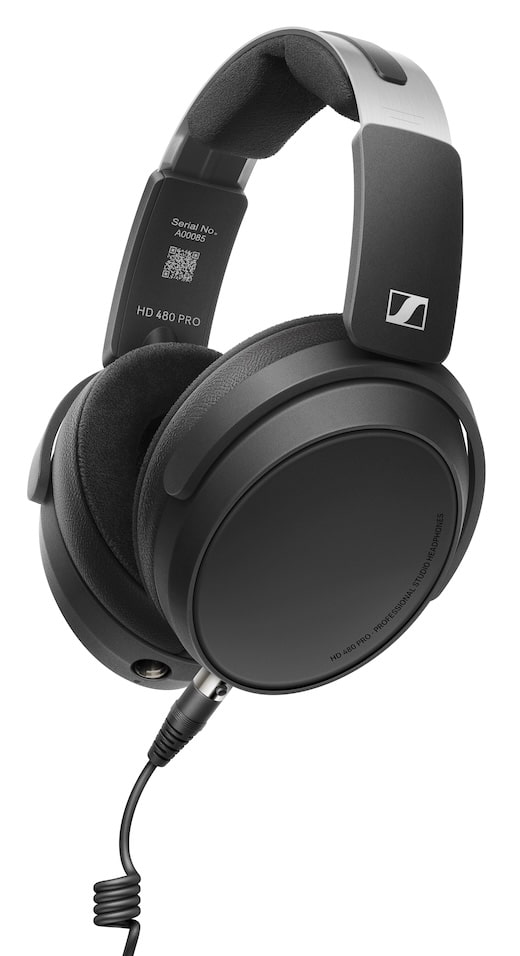
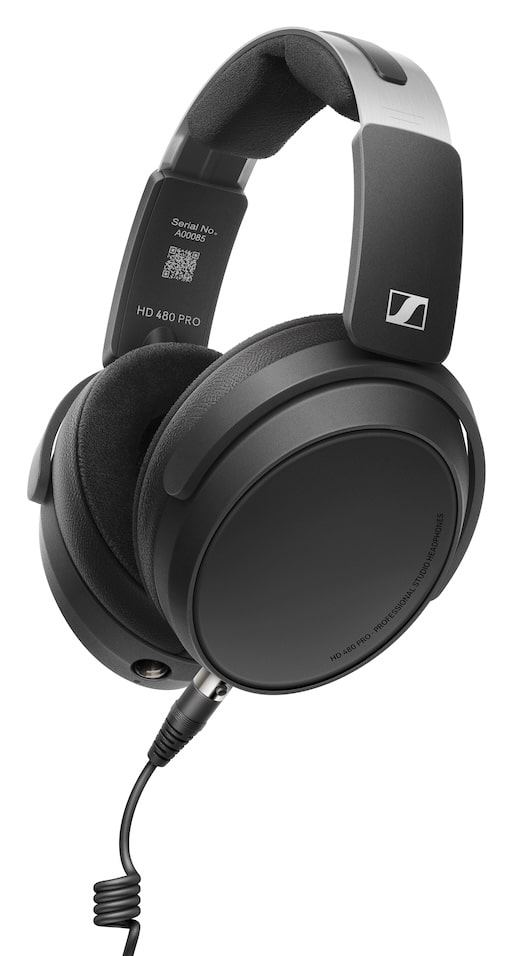
Sennheiser isn’t waiting around for its consumer business questions to get sorted out. In 2026, the brand is pushing forward where it still carries real weight, professional audio, with the launch of the $479 HD 480 PRO, a closed back studio headphone that builds on the open back HD 490 Pro introduced in 2024.
Positioned at the top of its 400 series closed back lineup, the HD 480 PRO is aimed squarely at working environments like tracking, monitoring, and live use where isolation actually matters. Sennheiser is framing it as its most versatile pro headphone to date, designed to handle recording and production duties while still being usable for critical mix decisions. Patents covering fit, comfort, and noise decoupling suggest this is more than a simple closed back variation.
More importantly, it’s a reminder that while the company’s consumer side direction remains uncertain, the pro division is still doing what it has always done, building tools that people in studios and on stages can rely on.
The HD 480 PRO is designed to address two common issues with closed back headphones: inconsistent bass accuracy and long term comfort. Sennheiser is aiming for controlled, reliable low end while keeping the fit comfortable enough for extended use in recording, tracking, and monitoring across studio, live, and mobile workflows.
Achieving accurate low-end performance in a closed-back design has always been a balancing act. Isolation helps with tracking, but it often comes at the expense of bass control and realism. That’s the gap Sennheiser is trying to close with the HD 480 PRO.
Advertisement
“With closed-back headphones, a good reproduction of the low-end is usually difficult to achieve. This is where the HD 480 PRO excels. Compared to other closed-back headphones, they are a lot tighter on the bass, their low-end is super-accurate and realistic,” notes Jimmy R. Landry, Category Market Manager, Music Industry at Sennheiser.
Who Is the Sennheiser HD 480 PRO For?
Whether used in the studio by producers, mixers, musicians, and recording engineers, or in live settings by FOH and monitor engineers, the HD 480 PRO is positioned as a flexible tool for monitoring, recording, and production, with the added claim that it can be used for mixing. Sennheiser is targeting users who need a consistent reference across different environments, including mobile use.
The tuning focuses on accuracy and a relatively neutral frequency response, with controlled low end intended to translate reliably across other systems, whether that’s home speakers, car audio, or PA setups.
“Knowing that you can rely on what you’re hearing is everything; that’s what you get with the HD 480 PRO.” Jim Kaufman, producer
Advertisement
“When I’m going to be mixing on headphones outside my studio, it’s imperative I have a pair that I trust. With the HD 480 PRO, to have this level of quality and accuracy in a closed-back headphone is amazing.” Will Brierre, mix engineer
“As producers, we have to receive the best sound to our ears that we can. Every detail is important. When you’re wearing the 480s, you’re immersed in the sound, completely undistracted by the outside world.” Young Chencs, artist and producer
Advertisement. Scroll to continue reading.
Drivers
The HD 480 PRO uses 38mm dynamic drivers with neodymium magnets, paired with lightweight voice coils intended to improve efficiency and overall responsiveness.
Advertisement
Comfort and Shielding
The HD 480 PRO uses a multi-stage passive isolation design to help reduce external noise and keep the focus on the signal. The ear pads include grooves to accommodate glasses, which helps maintain a more consistent seal, an important factor for stable bass and overall accuracy. Angled earcups position the drivers more precisely, with the goal of delivering a consistent listening experience.
“Comfort is of paramount importance when headphones are a work tool,” adds Gunnar Dirks, Senior Product Manager for professional headphones. “Engineers often spend hours on end in their sessions. They need a lightweight, ergonomically designed pair of headphones to keep focus and concentration up. The HD 480 PRO eliminates any pressure points and fit every head precisely and comfortably even if you’re wearing glasses.”
Connectivity
Like the open-back Sennheiser HD 490 PRO, the closed-back Sennheiser HD 480 PRO is a wired-only design. To add some flexibility, it includes input jacks on both earcups for detachable cables, allowing users to choose their preferred configuration or adapt to different studio setups. The earcups are also angled to position the drivers more precisely, with the goal of maintaining a consistent listening experience.
Vibration Attenuation System
A series of design features grouped under the term “Vibration Attenuation System” eliminates unwanted vibration, reflections, and distortion, preserving the clarity of the signal. Ultralight voice coils ensure authentic and dynamic reproduction.
Advertisement
Like its open-back counterpart, the HD 490 PRO, the HD 480 PRO benefits from several Sennheiser-patented features.
Special Axes Geometry: The mechanical design of the 480 enables the headphones to optimally adapt to the head and maintain an equal contact pressure no matter what the shape of the user’s head. The listening experience is consistent across users.
Comfort Zone for Glasses: The ear pads are designed to avoid excessive pressure on the temples, using a softer contact zone that helps maintain a proper seal while improving long-term comfort.
Blocking Cable-borne Noise: A coiled section near the earcup connector helps reduce cable-borne noise, limiting the transfer of mechanical vibrations from handling or contact with surfaces like a desk into the earcups.
Advertisement
Daily Professional Use
The detachable cable can be connected to either the left or right earcup, allowing for more flexibility depending on the setup and helping keep the cable out of the way during tasks like instrument tracking. The earcups are also braille-marked for easier identification. Designed by Sennheiser’s professional team, the HD 480 PRO is built with long-term use in mind and aimed at delivering consistent performance over time.
HD 490 PRO or HD 480 PRO?
The open-back HD 490 PRO and closed-back HD 480 PRO are at the top of the 400 series of purpose-built professional audio headphones. So which one is best for which application?
“Our developers have been working painstakingly to bring the sound of the closed HD 480 PRO as closely as possible to that of the open HD 490 PRO. Which model is the better choice for you really depends on how you work,” explains Gunnar Dirks. “The open HD 490 PRO will be ideal for mixing in quiet environments, while I would recommend the closed HD 480 PRO for applications where you need isolation, for example, when you’re tracking vocals in the room, when monitoring or using them as an FoH reference, or simply when you’re working in the same space as others.”
Advertisement. Scroll to continue reading.
Advertisement
Comparison
HD 480 PRO (2026)
HD 490 PRO (2024)
Product Type
Headphones
Headphones
Price
$479
$429 (MSRP)
Acoustic Principle
Closed Back
Open Back
Ear coupling
Circumaural
Circumaural
Transducer Principle
Dynamic
Dynamic
Transducer Diameter
38 mm
38 mm
Frequency Response
3 to 28,700 Hz (-10 dB)
5 Hz to 36, 100 Hz (-10 dB)
Sensitivity
107 dB SPL (at 1 kHz/1Vrms) 98 dB (at 1 kHz, 1 mW)
105 dB SPL (1 kHz/1 Vrms) 96 dB SPL (1 kHz/1 mW)
Max. SPL
130 dB (1 kHz, 5% THD)
128 dB SPL (1 kHz 5 % THD)
THD
<0.5% (at 1 kHz, 100 dB SPL)
<0.2 % (1 kHz, 100 dB SPL)
Impedance
130 ohms (1 kHz)
130 ohms (1 kHz)
Connection
Wired
Wired
Power rating
300 mW (100 h, noise as per IEC 60268)
300 mW (100 h, noise as per IEC 60268)
Temperature Range
0°C to +50°C for operation; -25°C to +70°C for storage
0°C to +50°C for operation; -25°C to +70°C for storage
Relative Humidity
10 to 80%, non-condensing for operation; 10 to 90% for storage
10 to 80% not condensing storage: 10 to 90%
Weight
272 g (w/o cable)
260 g (w/o cable)
Included Accessories
Coiled Cable (3m)
Headphone Bag
Quick Guide
Safety Guide
3.5 mm (⅛”) jack plug to 6.3 mm (¼”) adapter
Advertisement
1.8 m cable
Mixing ear pads
Producing ear pads
Quick Guide
Advertisement
Safety Guide
The Bottom Line
There’s some uncertainty around Sennheiser’s consumer business, but the professional side remains separate for now, which means products like the HD 480 PRO and HD 490 PRO are not directly affected.
The HD 480 PRO (and PRO Plus) stands out for its focus on flexibility within a closed-back design—dual-sided cable entry, attention to long-term comfort, and an effort to deliver more controlled low-end performance than is typical for this category. It’s clearly built as a working tool rather than a lifestyle product.
What’s missing is anything beyond wired connectivity and a broader feature set—there’s no DSP, no wireless option, and no attempt to blur the line into consumer use. That’s intentional, but it narrows the audience.
Competition is strong across multiple price points, including the Beyerdynamic DT 770 PRO X and Beyerdynamic DT 990 PRO X at the lower end, and models like the Final DX3000CL and Meze Audio Strada further up the ladder.
Advertisement
These are aimed at professionals and serious creators who need a consistent, reliable reference for tracking, monitoring, and potentially mixing, especially in environments where isolation matters. The decision ultimately comes down to fit and comfort as much as sound, which makes a hands-on demo less of a suggestion and more of a requirement.
Price & Availability
The Sennheiser HD 480 PRO retails at $479 USD (MSRP). These headphones come with recording earpads, a 9-foot coiled cable, and a carrying bag.
If you prefer, the HD 480 Pro Plus has the same features and accessories as the HD 480 Pro but includes a hard travel case for $519 at Amazon.
Alternatively the Sennheiser HD 490 Pro and Pro Plus open-back headphones are also available for $429 / $499 at Amazon.
Pro Tip: The Sennheiser HD Pro 480 PRO and 490 PRO are engineered in Germany and hand-assembled in Romania
Having molten aluminium interact with atmospheric water forms a source of hydrogen which can be rather problematic if you’re trying to cast aluminium parts. As the molten metal cools down, the dissolved hydrogen is forced out, creating bubbles and other flaws that make aluminium foundries rather upset. While you can inject inert gases to solve the problem, you can also lean into this issue to make some rather fascinating aluminium crystals and geodes, as [Electron Impressions] recently did.
The key here is to use a eutectic Al-Cu alloy at around 45% Cu by weight, as this alloy readily forms large crystals as it cools down. With hydrogen injected into the molten metal, this hydrogen forms large bubbles inside the cooling metal with crystals clearly visible.
A way to create proper geodes involves very slow cooling and pouring off the still molten metal before the eutectic point is reached. As can be seen in this video, this creates a rather impressive looking geode after it’s been smashed open. This also gives a good clue as to how these geological features form in nature, although one does not typically observe Al-Cu alloy geodes in the wild.
A set of 26 malicious apps on Apple App Store impersonate popular wallets, such as Metamask, Coinbase, Trust Wallet, and OneKey, to steal recovery or seed phrases and drain them of cryptocurrency assets.
The threat actor used multiple methods to imitate official products, including typosquatting and fake branding, to lure users in China into downloading them.
Because such apps are restricted in the country, the attacker published them as games or calculator apps, likely in the hope of being perceived by the users as a trick to bypass the bans in the country.
Kaspersky researchers say that all 26 fake apps are part of the same campaign, which they named FakeWallet, and associate them with the SparkKitty operation that has been running since last year.
Once opened, the apps redirect users to phishing pages designed to appear as legitimate portals for the crypto services.
These sites convince victims to download trojanized wallet apps using iOS provisioning profiles, a legitimate enterprise feature that is abused to sideload malware onto their devices. The same technique was also observed in SparkKitty.
Installing a provisioning profile Source: Kaspersky
The trojanized apps contain additional code that intercepts mnemonic phrases during wallet setup or recovery screens, encrypts them with RSA and Base64, and sends them to the attacker.
For cold wallets like Ledger, attackers rely on in-app phishing prompts that trick users into manually entering their seed phrases via fake security verification screens.
These phrases, which are only held by the rightful wallet owner, are intended for wallet porting/recovery to new devices and require no further confirmation or passwords.
Hence, threat actors can use them to restore the victim’s wallet on their own devices and drain the wallet without the possibility of recovering the funds.
Seed phrase phising screen Source: Kaspersky
Kaspersky noted that the campaign primarily targets users in China. However, the malware itself has no geographic restrictions, so it could affect users globally if the operators decide to expand their targeting scope.
Cryptocurrency holders are advised to double-check the publisher of the apps they download, even from official app stores, and use only the links provided on the official website.
Advertisement
Last week, it was uncovered that a fraudulent Ledger app that made it into Apple’s App Store stole $9.5 million worth of cryptocurrency from 50 macOS users.
Apple has removed all 26 FakeWallet apps from the App Store following Kaspersky’s responsible disclosure.
BleepingComputer has contacted Apple with questions about the threat actor’s process to bypass the company’s App Store verfications but we have not received a response by publication time.
AI chained four zero-days into one exploit that bypassed both renderer and OS sandboxes. A wave of new exploits is coming.
At the Autonomous Validation Summit (May 12 & 14), see how autonomous, context-rich validation finds what’s exploitable, proves controls hold, and closes the remediation loop.
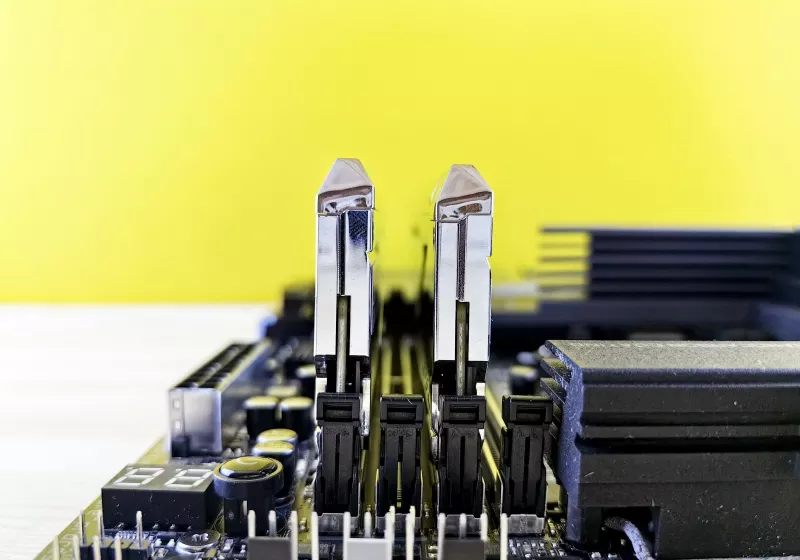
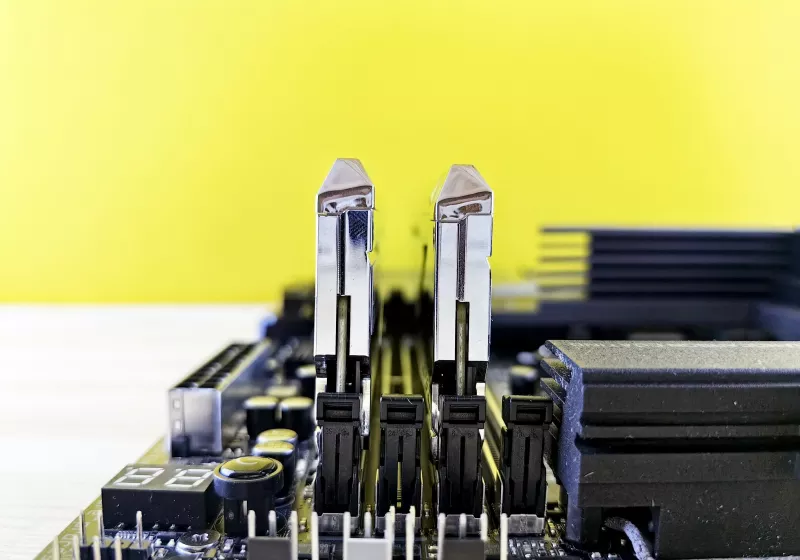
A recent report from Nikkei Asia yet again highlights how tight the market has become. It centers on the ongoing memory shortage, which is expected to persist until chipmakers have both the capacity and the facilities to meet demand for AI-focused components from hyperscale customers. Read Entire Article Source link
Artemis II’s recent launch filled the public with a sense of wonder and awe on the grandest scale. Not since 1972 (Apollo 17) has man attempted to travel to the moon for exploration, which adds even more excitement to this recent mission. While spectators — both in person in Florida and on TV — surely appreciated the historic nature of the mission, the most immediate takeaway is the raw, visceral punch of the explosive launch. Sending such a massive rocket to break free of Earth’s gravitational pull and punch through the atmosphere into space requires a staggering amount of power.
It takes 8.8 million pounds of thrust to be exact, which violently propelled the 322-foot NASA rocket into space. Just one of the liquid hydrogen and oxygen-powered rockets could power almost a million miles of streetlights. The Artemis II SLS (Space Launch System) topped out at a staggering 24,500 mph, the velocity required to reach the moon. This speed was in line with what the crew of the Apollo 13 mission experienced in 1970, which reached similar top speeds of 24,247 mph.
But this wasn’t the whole story. Artemis II didn’t simply thrust to the Moon in a straight line at a constant speed. The flight began with SLS launching Orion into Earth’s orbit, fighting hard against gravity, before passing through the atmosphere’s layers and into space.
As Artemis II ascended, it reached speeds in excess of 24,000 mph, though the exact speed depends on the frame of reference. At its closest approach to the Moon, the rocket hit 60,863 mph relative to Earth. However, relative to the Moon, the speed was measured at 3,139 mph. Either way, these speeds are hard to relate to, as even an F-35 Lightning II fighter jet tops out at around 1,200 mph.
Advertisement
As the Orion spacecraft re-entered Earth’s atmosphere, it reached speeds of roughly 25,000 mph before slowing dramatically in Earth’s atmosphere and safely parachuting into the ocean at splashdown. NASA’s coordination, planning, technical prowess, advanced engineering, and brainpower — to say nothing of the crew’s bravery — speak to mankind’s ingenuity and thirst for exploration.
The crew laid the foundation for future missions and lunar research. Who knows where modern space travel could go next? But what is certain is that we all got to watch history being made by some very brave people, at unbelievable speeds.
The global lactose-free products market is poised to grow from around $19.5bn in 2026 to $36.5bn by 2034.
Irish food giant Kerry Group has opened an expanded biotechnology manufacturing facility in Cork as it targets the growing global lactose-free market.
The facility, based out of Carrigaline, will help the company increase its capacity to produce lactase enzymes needed for lactose-free and sugar-reduced dairy products.
Lactase is a natural enzyme produced by humans to digest lactose, though a majority of adults worldwide cannot digest lactose efficiently. Market research suggests that the global lactose-free products sector is poised to grow from around $19.5bn this year to $36.6bn by 2034.
Advertisement
The Carrigaline site supports 200 clients across 80 countries. Lactase enzymes produced at the site are used to process more than 2m tonnes of milk annually, reaching around 28m consumers worldwide, Kerry said.
The expanded facility, alongside the company’s Kildare-based Global Innovation Centre and a biotechnology centre in Germany, established last year, are expected to help accelerate Kerry’s lab-to-commercial pipeline.
The company said it is “well positioned” to support the next phase of growth in the lactose-free market, with the expanded centre acting to link advanced enzyme engineering and strain development with large‑scale manufacturing.
“This investment translates decades of biotech research into scalable, real‑world capability,” said Shane McGibney, the president and CEO of biotechnology solutions and transformation at Kerry Group.
Advertisement
“By strengthening the link between enzyme engineering and industrial production, we’re able to move innovations more efficiently from the lab to the production line – helping customers access reliable supply and bring new products to market with greater speed and confidence.”
Minister for Enterprise, Tourism and Employment Peter Burke, TD added: “This facility demonstrates how industry, skills and innovation come together to support the future of Ireland’s food and biotechnology sectors.
“As a global leader in food, Kerry Group continues to play an important role in advancing high-value capability from its Irish base. Manufacturing sites like Carrigaline help move innovation towards scale and strengthen Ireland’s position in advanced manufacturing.”
Don’t miss out on the knowledge you need to succeed. Sign up for the Daily Brief, Silicon Republic’s digest of need-to-know sci-tech news.
State-sponsored North Korean hackers are likely behind the $290 million crypto-heist that impacted the KelpDAO DeFi project on Saturday.
The attack reportedly also impacted the lending protocols Compound, Euler, and Aave, with the latter announcing a freeze and blocking new deposits or borrowing using rsETH as collateral.
KelpDAO is a decentralized finance (DeFi) project built around liquid restaking on the Ethereum network. It accepts user ETH deposits, restakes them, and returns a liquid token named ‘rsETH,’ that represents the restaked position.
The rsETH token is meant to help users keep earning restaking yield, while it stays usable across DeFi, including cross-chain via LayerZero, an inter-blockchain communication protocol and interoperability layer.
On April 18, KelpDAO announced that it detected “suspicious cross-chain activity” involving rsETH, forcing it to pause rsETH contracts across the Ethereum mainnet and L2s.
Advertisement
The project launched an investigation with the help of LayerZero, Unichain, and other partners.
Blockchain activity showed that around 116,500 rsETH were stolen, around $293 million in USD value, and went through Tornado Cash to hide the trace.
According to additional details that LayerZero shared today, the attack targeted the verification layer (DVN) used to validate cross-chain messages for rsETH.
Specifically, the attackers compromised some RPC nodes used by the verifier, feeding it falsified blockchain data, while simultaneously DDoS-ing healthy RPC nodes to force the system to rely on the “poisoned” ones.
Advertisement
This allowed a fake cross-chain message to be accepted as valid. The system confirmed transactions that never actually occurred on-chain and enabled moving the rsETH without authorization.
Based on preliminary evaluation of the attack indicators, LayerZero believes that the infamous Lazarus hackers are likely responsible for the heist.
“Preliminary indicators suggest attribution to a highly sophisticated state actor, likely DPRK’s Lazarus Group, more specifically TraderTraitor,” stated LayerZero.
The protocol also noted that the incident was isolated to rsETH and that there’s no broader contagion across other apps or assets.
Advertisement
While the KelpDAO breach constitutes a major loss so far this year in terms of the stolen amount, the Lazarus Group has also been linked to another large theft, $280 million from the Drift Protocol.
According to a post-mortem report, that attack was the result of a six-month-long, carefully planned operation that involved malicious agents attending conferences and $1 million deposits into the project.
AI chained four zero-days into one exploit that bypassed both renderer and OS sandboxes. A wave of new exploits is coming.
At the Autonomous Validation Summit (May 12 & 14), see how autonomous, context-rich validation finds what’s exploitable, proves controls hold, and closes the remediation loop.
Tim Cook has announced that he will be stepping down as Apple CEO on September 1. Senior vice president of hardware engineering John Ternus, long seen as the company’s leading succession candidate, will take over following a summer transition period. Read Entire Article Source link
We spend hours testing every product or service we review, so you can be sure you’re buying the best. Find out more about how we test.
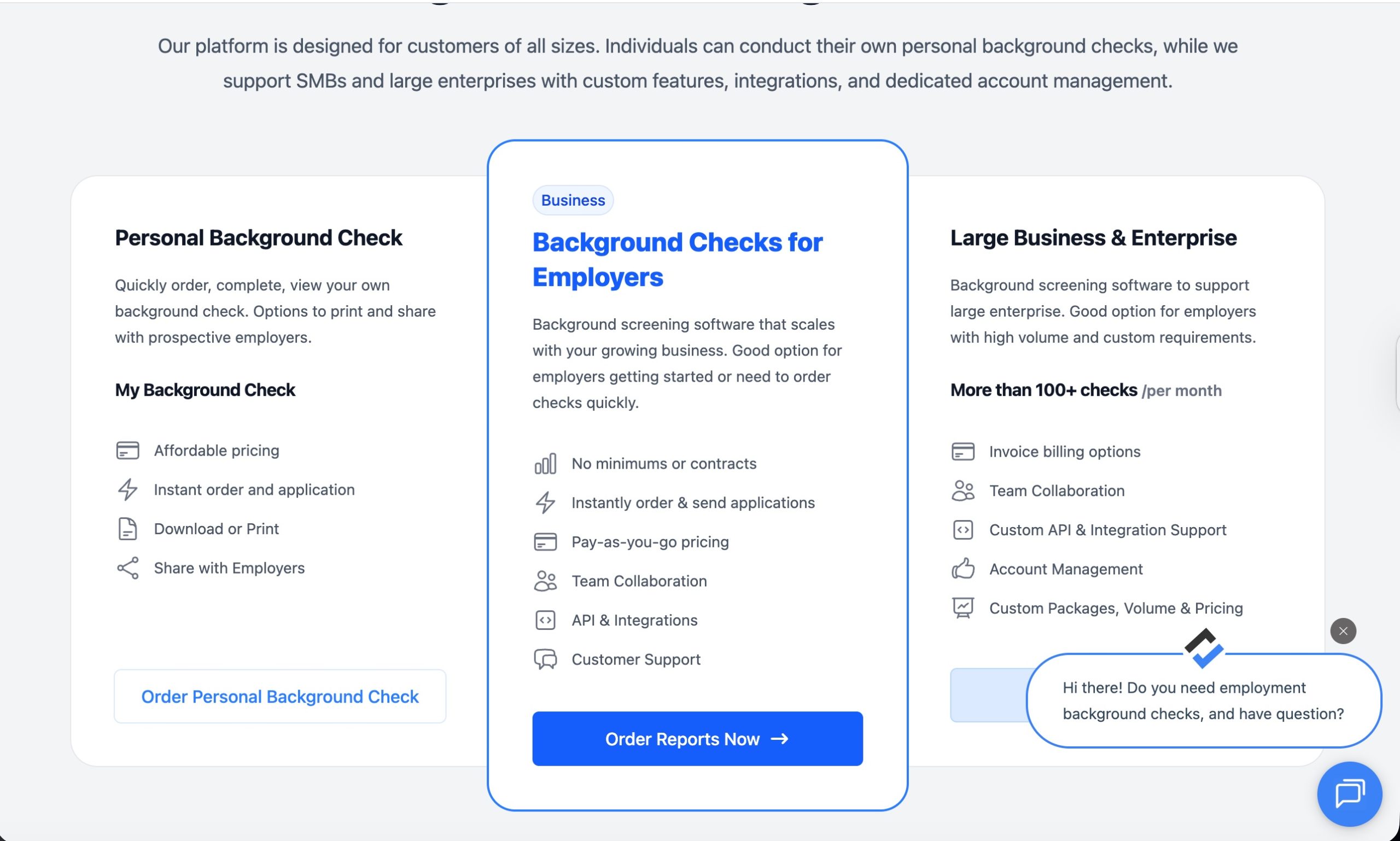
BackgroundChecks.com is a cloud-based background screening platform designed to streamline the hiring process by making it faster, safer, and more organized. Previously known as ClearChecks, the platform automates time-consuming verification tasks, helping employers confirm candidate details while maintaining legal compliance.
In a hiring landscape where speed must balance with accuracy, BackgroundChecks.com aims to deliver both efficiency and reliability.
Advertisement
This overview examines how the platform operates, its pricing model, key advantages and disadvantages, and the types of organizations that benefit most from its features.
BackgroundChecks.com: Pricing & plans
(Image credit: ClearChecks)
BackgroundChecks.com uses a tiered pricing model that scales with the depth of the screening. Basic checks start around $24.99 per individual report. More comprehensive searches—including multi-county criminal checks, professional license verifications, and drug screenings—typically cost between $49 and $ 100.
Advertisement
Standalone or à la carte options are also available, such as a basic arrest record search for about $7 or a sex offender registry search for around $5. These can be combined to create customized screening packages tailored to specific hiring needs. The “Elite” plan, the platform’s most comprehensive option, costs approximately $49 per report and includes all key checks from lower tiers, plus additional verifications for roles that require greater trust or clearance.
Despite clear starting rates, some users have raised concerns about pricing transparency. Employers occasionally encounter undisclosed county-level court access fees, which vary by jurisdiction and can increase total costs. These hidden fees make budgeting for large screening batches difficult, and some users report challenges in obtaining refunds or resolving billing issues in a timely manner. Prospective buyers are advised to review each plan carefully and confirm pricing details before proceeding.
Sign up to the TechRadar Pro newsletter to get all the top news, opinion, features and guidance your business needs to succeed!
Advertisement
BackgroundChecks.com: How it works
BackgroundChecks.com is an all-in-one screening hub for both small businesses and large employers. Setup is straightforward: after registering, employers can log into a secure dashboard accessible from desktop, tablet, or mobile devices. The interface is designed for ease of use, enabling administrators to select screening types, invite candidates to complete digital consent forms, and track progress in real-time.
The platform offers a wide range of background checks, including multi-jurisdictional criminal searches, scans of state and county court records, motor vehicle record lookups, and drug testing panels. Employers can also verify education credentials, employment history, and professional licenses—essential for positions requiring specialized certifications or regulatory compliance.
Advertisement
BackgroundChecks.com: Performance
(Image credit: BackgroundChecks.com)
Speed is one of BackgroundChecks.com’s standout features. Automated workflows consolidate data from multiple databases and official repositories, providing results in minutes for many checks. More complex verifications, such as education or employment history, may take longer since they rely on responses from third parties.
Compliance is another priority. The platform adheres to Fair Credit Reporting Act (FCRA) guidelines, ensuring responsible handling of consumer data while protecting applicants’ rights to dispute inaccuracies. Data transmission and storage use encrypted servers in line with data protection standards. Employers can also utilize audit logs and permission controls for enhanced oversight of report access.
For organizations managing high volumes of hires, batch processing enables multiple screenings to run simultaneously—a significant benefit for staffing agencies, seasonal employers, and rapidly growing businesses. Integration with HR systems and applicant tracking platforms enhances its flexibility, allowing screenings to begin directly within existing workflows without requiring a switch between platforms.
Advertisement
BackgroundChecks.com: Strengths and weaknesses
User feedback on BackgroundChecks.com highlights both strong performance and points for improvement. The platform’s intuitive interface and streamlined dashboard make initiating and monitoring screenings simple, even for first-time users. Many customers praise its speed, noting that standard checks often process within hours—an essential advantage for industries with constant hiring demands like retail or staffing.
The company’s focus on compliance and data security further enhances its reputation. Employers appreciate FCRA adherence, strong encryption, and customizable screening packages that avoid unnecessary costs. Many users also report positive experiences with customer support for resolving technical issues or account setup questions.
However, the recurring complaint surrounds inconsistent pricing transparency. Unexpected county-level fees and occasional billing discrepancies have led some employers to view the service as less predictable in terms of cost. Customer support experiences also vary: while some describe helpful, prompt service, others cite long response times—especially for billing disputes. A minority of users report occasional inaccuracies or incomplete results, which can delay hiring and require manual verification, thereby reducing the time-saving benefits.
Overall, BackgroundChecks.com offers a strong combination of efficiency, compliance, and convenience, though its transparency and support consistency leave room for improvement. For businesses focused on affordability and predictable pricing, these issues may outweigh their advantages. Still, for organizations seeking a fast, compliant, and secure screening solution, it remains a competitive option worth consideration.
Advertisement
BackgroundChecks.com: Who would benefit the most using this
BackgroundChecks.com caters to a diverse range of employers seeking an automated approach to background screening. It suits small business owners, HR departments, and large enterprises alike.
Industries with rapid hiring needs — such as hospitality, retail, and staffing — benefit most from its quick turnaround times. Highly regulated sectors, such as healthcare, education, and financial services, also benefit from its compliance-focused architecture and enhanced verification options.
For HR teams managing multiple candidates, batch processing and ATS integration help standardize workflows while minimizing manual data entry. This reduces administrative effort and potential errors.
Advertisement
The platform is equally useful for start-ups and small to mid-sized businesses without dedicated compliance teams, offering guided workflows that simplify legal adherence. However, employers conducting complex criminal background checks or operating across multiple jurisdictions may prefer supplementing their automated system with manual reviews to ensure accuracy.
BackgroundChecks.com stands out as a dependable screening solution that strikes a balance between automation, compliance, and accessibility. Its cloud-based design simplifies the complexities of background verification, enabling employers to complete checks quickly while maintaining compliance with FCRA regulations.
BackgroundChecks.com: Final verdict
By offering customizable screening packages and integrations with HR systems, the platform adapts well to a range of business sizes and industries. However, inconsistencies in pricing transparency and responsiveness to customer support may limit its appeal for organizations seeking absolute cost predictability. For most employers, though, its speed, data security, and compliance-driven structure make it a valuable tool for maintaining trust and safety throughout the hiring process.
Looking for the most recent Mini Crossword answer? Click here for today’s Mini Crossword hints, as well as our daily answers and hints for The New York Times Wordle, Strands, Connections and Connections: Sports Edition puzzles.
Need some help with today’s Mini Crossword? I thought that 4-Across, 7-Across and 3-Down were pretty fun — little puzzles inside of the puzzle. Read on for all the answers. And if you could use some hints and guidance for daily solving, check out our Mini Crossword tips.
If you’re looking for today’s Wordle, Connections, Connections: Sports Edition and Strands answers, you can visit CNET’s NYT puzzle hints page.
























.png)
















































You must be logged in to post a comment Login