


Connect with us

Tech

Qobuz Starts Labeling AI Generated Music and the Fraud Numbers Are Ugly

Published

on

Artificial intelligence has spent the past year learning how to write songs, create fake artists, imitate real ones, manufacture album covers, and upload music at a rate that would make Prince during his vault years look lazy. Qobuz would now like its subscribers to know when some of that music was made by a machine.

The French streaming service has officially rolled out an in-app tag identifying music that its proprietary system determines was generated by AI. That fulfills a promise Qobuz made earlier this year when it published its AI Charter and began scanning both new releases and its existing catalog for synthetic content.

The label itself is useful, but the numbers behind it are far more interesting. Qobuz says just 0.38% of streams on its service currently come from tracks identified as AI-generated, while 60% of streams from those tracks are deemed fraudulent by its anti-fraud systems and excluded from royalty payments.

Qobuz has also removed more than one-third of AI-generated albums with no listening activity from its search engine, representing roughly four million tracks. Those recordings have not necessarily been deleted from the catalog; Qobuz specifically says they have been removed from search.

Advertisement

That difference matters because the AI music problem is increasingly not about somebody using generative software to help finish a song. It is about enormous quantities of synthetic material being uploaded cheaply and rapidly, sometimes accompanied by artificial streams designed to siphon money away from the royalty pool.

Qobuz Logo

Why Qobuz Is Doing This

Qobuz has been heading in this direction since February. Its AI Charter states that editorial recommendations including playlists, Albums of the Week and Qobuzissimes remain selected by human editors, while its personalized discovery tools are designed to prioritize music drawn from those editorial selections and other trusted sources.

That philosophy now extends directly to AI-generated recordings. When Qobuz identifies music as AI-generated, subscribers can see that information instead of having to investigate whether the singer suddenly appearing in front of them has ever actually inhaled oxygen.

More importantly, Qobuz says identified AI-generated material is excluded from its editorial recommendations. That helps put the remarkably low 0.38% share of listening into context because synthetic content may exist on Qobuz, but the service is not deliberately placing it alongside human artists in its curated discovery channels.

That approach says a lot about how Qobuz views its role. It is not simply offering access to a gigantic catalog and leaving listeners to sort out the mess themselves; it is making an editorial decision about what deserves active promotion.

Advertisement

The 60% Number Is The Real Story

The most troubling figure is not how much AI music Qobuz subscribers are actually listening to. It is what appears to be happening around those streams.

Qobuz says 60% of streams associated with tracks it has identified as AI-generated are currently considered fraudulent by its systems. Those plays are excluded from royalty reporting and payouts, and Qobuz says content can also be removed when it detects fraudulent practices.

Advertisement. Scroll to continue reading.

That suggests the immediate threat is not that listeners are abandoning musicians for endless AI-generated albums. On Qobuz, at least, the available data suggests almost the opposite.

Advertisement

The larger problem is scale because generative systems can produce enormous quantities of music at almost no marginal cost. Upload enough tracks, manufacture enough plays, and even tiny payments can become meaningful when multiplied across millions of recordings.

Streaming was not designed for an environment where someone can effectively operate an automated record label containing more releases than entire generations of musicians could create. Qobuz is trying to prevent that volume from distorting discovery and pulling money away from legitimate rights holders.

For listeners, that makes the AI tag more than an ethical warning sticker. It is one visible part of a much larger effort to stop streaming catalogs from turning into digital landfill.

How Is Qobuz Different From TIDAL?

TIDAL has arguably taken the harder line when it comes to money. As we reported previously, the service labels recordings it determines are wholly AI-generated and does not attribute royalties to them.

Advertisement

Subscribers can also disable AI-labeled recordings entirely in Settings. Once enabled, that control prevents those recordings from playing and gradually removes them from personalized recommendations as those recommendations refresh.

TIDAL can also remove synthetic music tied to impersonation, deceptive behavior, high-volume uploads or fraudulent streaming. That gives its subscribers something Qobuz has not publicly announced: a direct “I don’t want AI music”switch.

Qobuz takes a somewhat different approach by combining its own detection technology with editorial curation, search controls and fraud enforcement. TIDAL gives listeners more explicit control over whether AI music enters their experience, while Qobuz is attempting to keep much of the questionable material from becoming prominent in the first place.

Neither service is simply banning AI. The distinction is how aggressively each one separates synthetic content from the normal machinery of discovery and payment.

Advertisement

Spotify Has A Different AI Problem

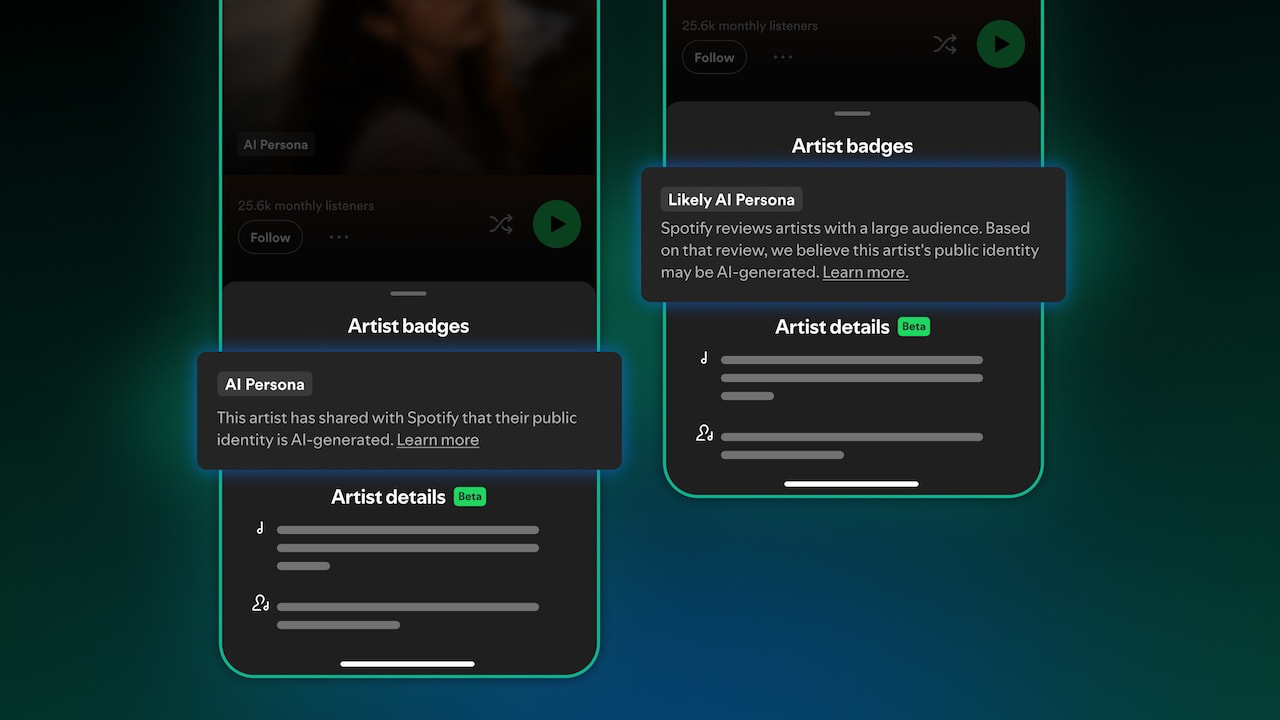
Spotify AI Persona Badges

Spotify’s approach has focused heavily on identity and disclosure. Its AI Persona system is designed to identify artist profiles whose public identity may represent an AI-generated person rather than an actual human being, while those profiles can be excluded from editorial and algorithmic recommendations unless listeners deliberately engage with them.

That is not quite the same thing as what Qobuz is doing. Spotify’s badge tells listeners something about who or what the artist supposedly is, whereas Qobuz is identifying the recording itself as AI-generated.

Spotify has also supported richer AI credits so artists, labels and distributors can disclose whether artificial intelligence contributed to vocals, lyrics, instrumentation or production. At the same time, it has tightened policies around impersonation, spam and other deceptive uses of generative technology.

Advertisement. Scroll to continue reading.

We have already covered the tension inside that strategy. Spotify wants stronger protection against synthetic impersonation and AI spam while continuing to explore licensed generative tools that could allow subscribers to manipulate commercially released music.

Advertisement

That makes Spotify’s position increasingly about authorization rather than opposition to AI itself. Synthetic deception is the problem; transparent, licensed and commercially useful AI remains very much on the table.

Apple Music Is Relying More On The Supply Chain

Apple Music is approaching the problem from another direction by leaning heavily on metadata supplied by labels and distributors. Its AI transparency framework can indicate when artificial intelligence materially contributed to artwork, a sound recording, a composition or a music video.

That model potentially provides more nuance than a single AI-generated label because Apple can distinguish where the technology was used. A recording created entirely by software is obviously a different proposition from an album where AI was used only for artwork or some element of post-production.

The weakness is equally obvious: much of that information depends on the people delivering the content reporting it accurately. Qobuz, by comparison, has built its own detection system rather than relying entirely on disclosure from the supply chain.

Advertisement

Apple’s approach may ultimately provide the most detailed metadata if everybody behaves. History suggests that last part deserves an asterisk the size of a record store.

Why Should Listeners Care?

Nobody should need a forensic-audio degree to determine whether the artist being recommended to them exists. Streaming services already exercise enormous influence over how music is discovered through playlists, recommendations, search placement and editorial promotion.

When synthetic music can be generated almost infinitely, allowing it to flow into those systems unchecked creates a basic mathematical problem. Human artists cannot release 10,000 albums before lunch, while software certainly can.

That makes transparency important, but discovery policy may matter even more. Qobuz’s most significant decision is not adding a small AI tag beside a recording; it is keeping identified synthetic content outside its editorial ecosystem while using fraud detection to prevent suspicious streams from entering royalty calculations.

Advertisement

That distinction matters directly to listeners because discovery is part of what they are paying for. A streaming service filled with endless automated uploads is not inherently more useful just because the catalog number keeps getting larger.

There is also a trust issue. If a recommendation engine places something in front of you, knowing whether it came from an actual artist or a synthetic production should not require investigative work after the fact.

The Bottom Line

Qobuz is not banning artificial intelligence from music, nor is it claiming that every use of AI is inherently fraudulent. It is drawing a much clearer distinction between AI used as a creative tool and synthetic content generated at industrial scale, while giving subscribers more information about what they are hearing.

Advertisement. Scroll to continue reading.
Advertisement

The most revealing statistic remains 0.38% because, despite the enormous volume of AI material being added to streaming catalogs, Qobuz subscribers appear to spend very little time listening to it. At the same time, the company says 60% of streams attached to identified AI-generated tracks are being flagged as fraudulent.

Those figures only describe activity on Qobuz, so they should not be treated as evidence for the entire streaming market. They do, however, raise an obvious question about the narrative that consumers are demanding an endless supply of machine-generated music.

If the listeners are barely listening and a large percentage of the plays are fraudulent, perhaps the machines are not only making the music.

They may be its biggest fans as well.

Advertisement

Source link

Continue Reading
Click to comment

You must be logged in to post a comment Login

Leave a Reply

Tech

Women still hold just one in eight AI leadership roles

Published

on

At a Workday-hosted roundtable in Dublin, four industry leaders – and guests – traded views on AI adoption, the reskilling race and why women are still locked out of AI’s best-paid jobs.

Earlier this month, I chaired a roundtable of women in technology hosted by Workday in Dublin, with an impressive panel of women leaders and an accomplished array of guests. We had around 90 minutes to share useful insights on AI before lunch, and what followed was one of the more thoughtful conversations I’ve chaired on the subject – less hype, more real-life application and human challenges.

The panel was made up of Claire Hickie, EMEA CTO at Workday; Terry O’Laoghaire, COO of technology infrastructure at State Street; Dympna O’Sullivan, VP of research and innovation at TU Dublin; and Sue Duke, LinkedIn’s managing director for EMEA and LatAm and its VP of global public policy.

Around the table were guests from Enterprise Ireland, IBM, Connecting Women in Technology (CWIT) among others, and their contributions added significantly to the dialogue.

Advertisement

The adoption curve

O’Laoghaire set the tone on adoption. State Street, she pointed out, is “responsible for trillions of the world’s financial assets”, so caution is not optional. “We have to be secure, we have to do this with governance and control,” she said, describing a roll-out where every employee now has Copilot but agents have not yet gone to the full workforce.

Rather than having push back, she was surprised at the appetite among staff . “I think they’re ready and eager,” she said of her own staff, “chomping at the bit” for more, even as a very real fear about job security sits alongside that enthusiasm.

“It’s more about jobs changing than a fear,” she said. “But that fear exists. You have to move people past the fear before they can be open to learning a new skill, before they feel safe doing that. So there’s an important psychological safety piece there.”

Duke, drawing on LinkedIn’s global workforce data, addressed that fear directly. The overriding question she gets asked, she said, is whether AI is displacing jobs. “What we see in the data is there isn’t job displacement,” she told the table. The real shift, she argued, is in what skills are in demand, not how many jobs exist.

Advertisement

Hickie made the same point from inside her own company, Workday. “People often forget that we’re employees too,” she said, describing an “everyday AI” programme Workday launched for its own staff nearly two years ago.

“What that did very early was to get us as individuals really adjusted and used to AI.”

Her favourite proof of how far that’s come? She now raises only one support ticket a year, and this year’s was on a personal tax query, she joked, adding that the reply came back in under 30 seconds. “I was like, oh, bring it on,” she said.

O’Sullivan offered the view from higher education. While on an operational level, the team is employing AI very effectively, the more challenging element of course is with the student body. TU Dublin now runs a five-point traffic-light system for AI use in student assessment, she says, from no AI through to full AI use.

Advertisement

The bigger question, though, has moved past academic integrity. “What are we actually trying to teach and what are we actually trying to assess?” she asked. “We don’t have it figured out yet.” Something that is echoed in conversations I have been having with other academic institutions in recent days.

Skills are the new currency, but the pipeline is broken

Duke put a number on how fast the ground is shifting: LinkedIn estimates the skills needed for most roles will have changed by 70pc by 2030. She grouped what’s needed into three buckets: hard technical AI skills, still held by only around one in 100 workers in developed markets; AI literacy, now a baseline expectation even in non-technical senior roles; and human soft skills, which she said are harder to build and increasingly what separates good leaders from the rest.

Sabrina Staunton, strategy lead at Connecting Women in Technology, raised the sharpest concern about where that leaves junior talent. She’s seeing developers today who are using AI and are “not willing to fail”, which makes it harder for them to build the critical thinking skills the job actually needs. “How do you become a senior engineer if you don’t have a junior engineer?” she asked, a question that landed hard around the table.

It’s a concern echoed by O’Sullivan, who drew a distinction between friction in the workplace and friction in the classroom. “Friction is friction” in operations, she said, “but I think in education, friction is the actual learning”.

Advertisement

“Learning is supposed to be difficult, supposed to be challenging. That’s how we all learn – by getting it wrong and then coming back to it. That’s where the real learning happens.” Strip too much difficulty out of how students learn, she suggested, and you risk stripping out the learning itself.

O’Laoghaire made the same case for the workplace. Even in infrastructure, a field she said is often assumed to be dying out, the skills are simply evolving rather than disappearing. “Instead of a physical data centre, we have a software-defined data centre. You still need to know what it is.”

Much of her team, she said, have moved from being makers to checkers. “But if you’re a checker, you still need to know how it works.” None of that happens, she added, unless companies actually protect the time given to it.

“We expect you to spend time upskilling, we’re going to provide it. It’s very hard to do that if you’re not given the room in your day job to do it, and know you’ll be rewarded for that time.”

Advertisement

O’Sullivan’s own worry showed up in the latest CAO numbers. Demand for computer science courses has fallen, driven, she believes, by anxiety among students and their parents about AI replacing coding jobs. Her counter to that was straightforward. “Technology has always been a net job creator, and skills like systems thinking, data governance and cybersecurity are becoming more important, not less, even as raw software engineering shrinks as a share of the job.”

The triple penalty for women

While the majority of the conversation tackled adoption of AI in the workplace, and in education, we inevitably came around to the dearth of women in senior AI roles.

Duke cited research LinkedIn had published just weeks earlier. Women, she said, make up only one in eight of AI leadership roles at AI companies. That figure comes from LinkedIn’s new report, ‘The Triple Penalty: Mapping the Gender Gap in the AI Economy’, which found women hold just 13pc of executive AI roles worldwide, the product of three gaps that compound each other – a leadership gap, an AI-role gap and an AI-company gap. The pattern holds in all but a handful of the 27 countries studied.

One figure from that same report puts it in even sharper relief: women make up 19.1pc of CEOs at traditional companies, but that share drops to 13.9pc at AI-native firms. In other words, the closer a company gets to the centre of the AI economy, the harder it gets for a woman to run it.

Advertisement

Duke called the overall picture “a good news, bad news story for women”. The bad news is that women remain underrepresented in exactly the technical roles now seen as prerequisites for senior jobs.

The good news? Soft-skills requirements for C-suite roles have risen sharply, and career paths to the top have become far less linear over the past five years, which favours women, who are 55pc more likely to take a career break. “A linear tick, tick, tick, tick is not working for women,” she said. “But we have got to recognise and valorise different skills and different career paths.”

Lauren Morrissey, Workday’s EMEA accessibility manager, extended that concern to the wider issue of diversity, and in particular disability. Almost 96pc of websites, she said, still have significant accessibility barriers, and AI risks widening that gap rather than closing it, unless disabled people’s needs are built in from the start. “But we’re moving too fast to even recognise it,” she argued.

AI’s trust problem

Possibly the most serious moment of the morning came when one of our guests put a tough question to the panel. With graduates already wary of the sector and a slowing hiring market feeding that anxiety, what is industry actually doing about AI’s toxic public image? “AI has become almost like the super villain,” she said. “It’s ending the world, it’s taking the jobs.”

Advertisement

“There’s no question that AI has a massive reputational problem,” Duke said, pointing to genuine safety incidents, the scale and speed at which harmful content can now spread, and a generation that feels the environmental cost of AI more acutely than any before it.

It was widely agreed at the table that there is a ‘black and white’ view out there among young people at the moment, where they either love or hate AI, and the latter camp dismiss the potential benefits. All the leaders present conceded that the industry has not done a great job of communicating the gap between data and perception, and that there’s much work left to do on this.

It was a sober note to end a panel discussion on, but an honest one. If there was a single line that stayed with me as we wrapped, it came from Hickie, almost as an aside. She became a grandmother two years ago, she told us, and her granddaughter is never far from her mind when this subject comes up.

“I just don’t know what her world is going to be,” she said. “But I do think it’s in the hands of technologists. It’s in the hands of leaders. And it’s in the hands of every decision-maker, and every person who has some level of influence at a human level today, to be able to frame that.”

Advertisement

It was an apt reflection of the entire morning’s conversation. The technology is moving on at pace and on its own terms, but who gets to shape it, and who gets left out of shaping it, is still very much a human choice.

Don’t miss out on the knowledge you need to succeed. Sign up for the Daily Brief, Silicon Republic’s digest of need-to-know sci-tech news.
Source link

Advertisement
Continue Reading

Tech

Honda’s Failing Rear-View Cameras Investigation Is Over, And Here’s What They Found

Published

on


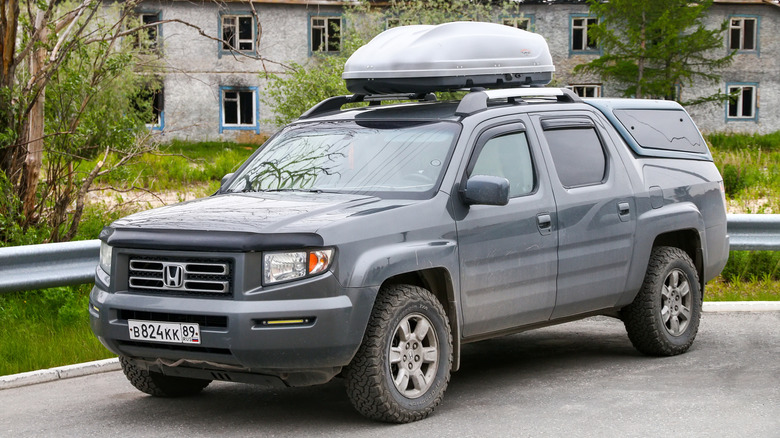
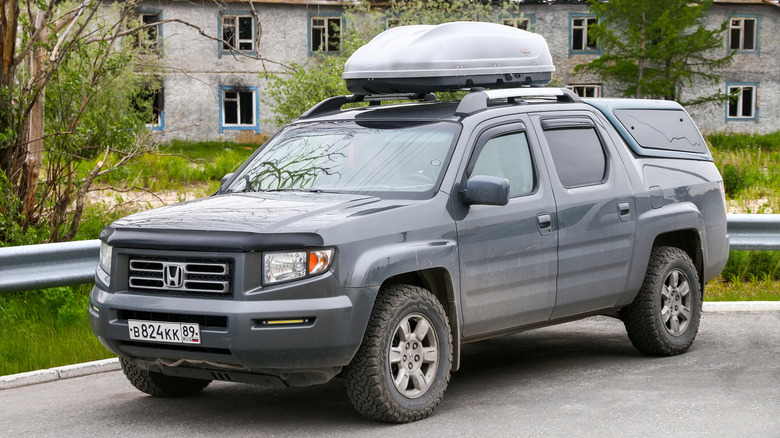
If you own a Honda that has been recalled in 2026, then you know how frustrating the situation can be, especially as the automaker’s problems continue to make headlines. But when it comes to one specific recall involving rearview camera failures, the NHTSA has finally closed its investigation. They found that the replacement wire harness installed under a 2022 recall was not expected to develop the same wear-related failure during a reasonable vehicle lifespan.

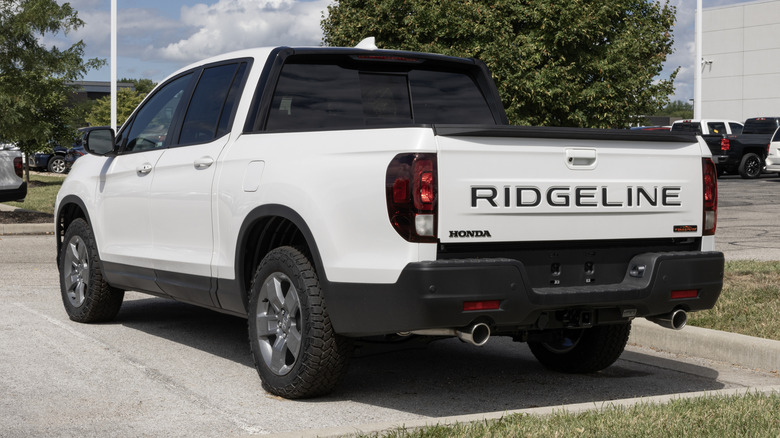
The NHTSA’s Engineering Analysis covered 129,092 trucks and was prompted by questions about whether the recall repair would hold up over time. That concern actually stemmed from the original problem, which could cause the rearview camera’s tailgate wire harness to wear down and break. This could happen after repeatedly opening and closing the tailgate. Honda’s 2022 recall covered over 117,000 Ridgelines and called for the harness to be replaced with an improved part.

The NHTSA didn’t open its own Recall Query until June 26, 2024, nearly two years after Honda’s original recall action. That review was upgraded to an Engineering Analysis on February 11, 2025, as the agency continued examining whether the replacement harness could eventually experience the same type of failure. The NHTSA’s findings mean that there is no additional action coming from this investigation, and it ultimately closed its Engineering Analysis.

Advertisement

What the recall means for owners

As part of its investigation into Honda’s rearview camera recall, the NHTSA took a closer look at the vehicles and the wire harness itself. The agency’s Vehicle Research and Test Center surveyed Ridgeline owners in Ohio, inspected select vehicles from those responses, and conducted durability testing to try and replicate the original failure. The NHTSA could not duplicate the problem, and it also found that most of the reported camera issues were caused by different problems unrelated to the harness.

Honda’s original 2022 recall perhaps wasn’t as straightforward for some Ridgeline owners in terms of correcting the problem. Honda initially told owners in January 2023 that the replacement parts needed for the repair were not yet available. That remained the case until August of that year when the automaker finally gave the greenlight, notifying customers to schedule a free repair at an authorized dealer. The repair itself involved replacing the RVC tailgate harness with an improved part, which Honda estimated would take about an hour and a half.

Advertisement

For Ridgeline owners who need to check the current status of the recall, the process is fairly simple. The Honda Service Center recall lookup allows vehicle owners to enter their 17-digit VIN to see if there are any active Honda recalls for their specific model. Owners can then schedule the repair through an authorized Honda dealer, where recall-related repairs are done at no charge. That gives Ridgeline owners a way to move forward and get the recall addressed.


Advertisement

Source link

Continue Reading

Tech

Which ASUS Radeon graphics card should you buy? A guide to finding the right fit

Published

on

A graphics card is rarely bought in isolation. It has to fit the case, the cooling system, the display, the games or applications that will run on it, and increasingly, the kind of work a PC is expected to handle. A compact 1440p gaming machine has little in common with a 4K enthusiast build, while a workstation running local AI models can make entirely different demands on its GPU.

ASUS’s Radeon range reflects those differences rather than trying to force every buyer toward the same specification. The lineup stretches from the Radeon RX 9060 XT through the RX 9070 GRE and RX 9070 XT, with different card designs addressing everything from compact systems and carefully matched white builds to demanding gaming and local AI workloads. All of the graphics cards covered here also come with a three-year warranty, which matters when a GPU is likely to remain one of the most substantial components in a PC for several years.

Choosing between them, then, is less about finding a universally superior card and more about understanding where each one makes sense. The RX 9070 XT is built for buyers who want serious 1440p and 4K gaming performance. The RX 9070 GRE occupies a more measured position for 1440p systems, while the RX 9060 XT makes a stronger case where size and compatibility carry more weight. The Turbo Radeon AI Pro R9700 sits outside that gaming hierarchy altogether, targeting users who need the memory and compute capability for local AI and other demanding workloads.

Start with the kind of PC you are building

A graphics card can be powerful on paper and still be the wrong choice for a particular PC. Case dimensions, cooling, noise, display resolution and the kind of software you use all matter once the card is installed.

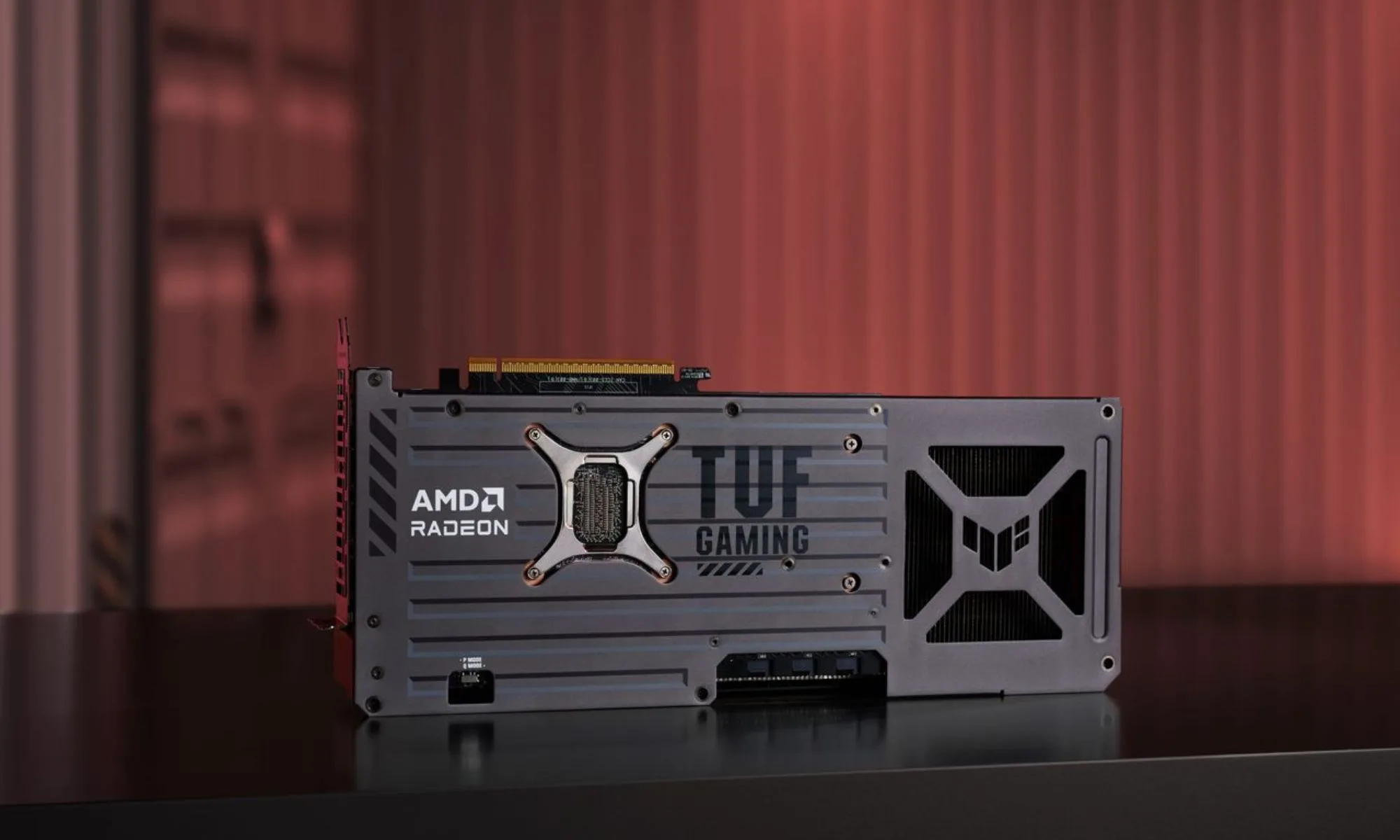
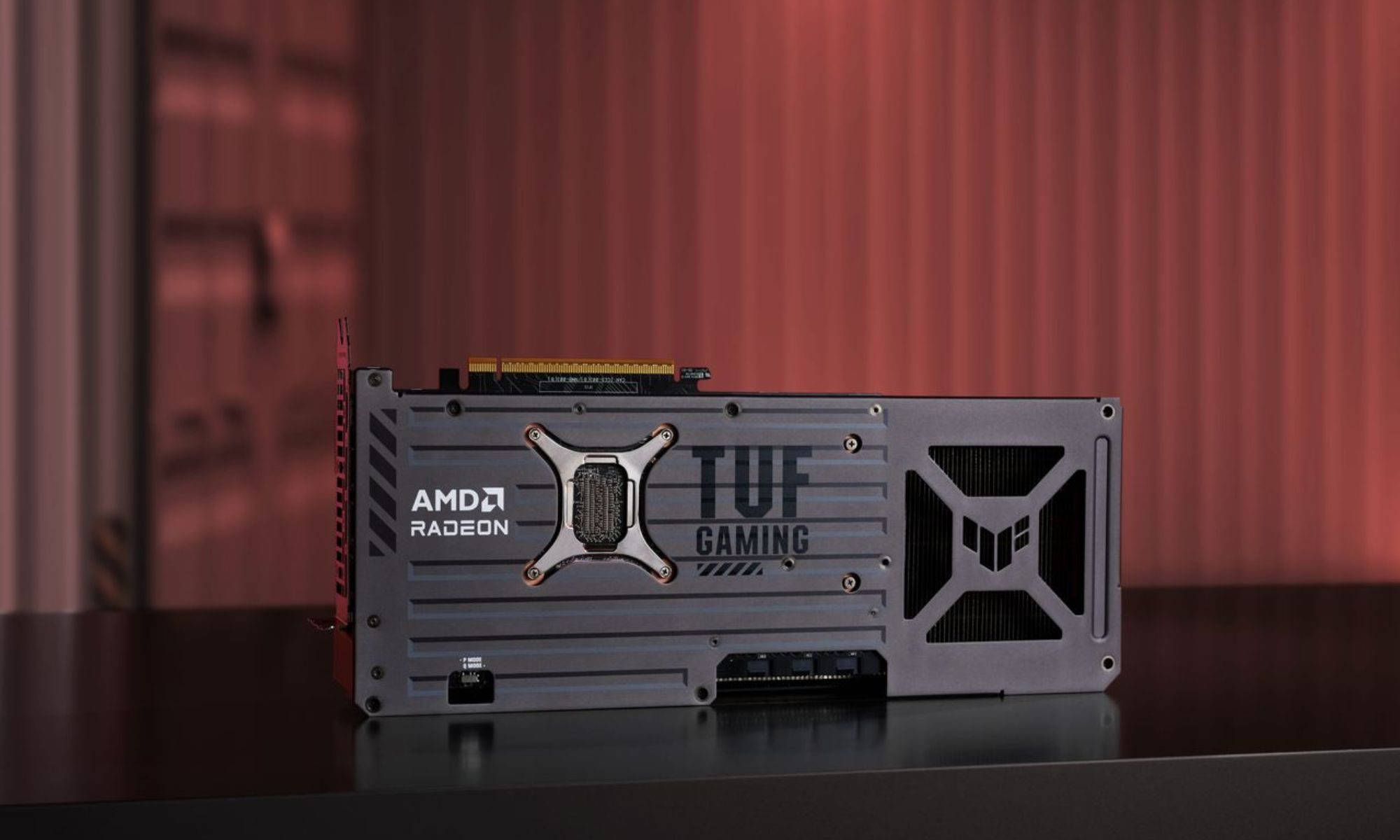
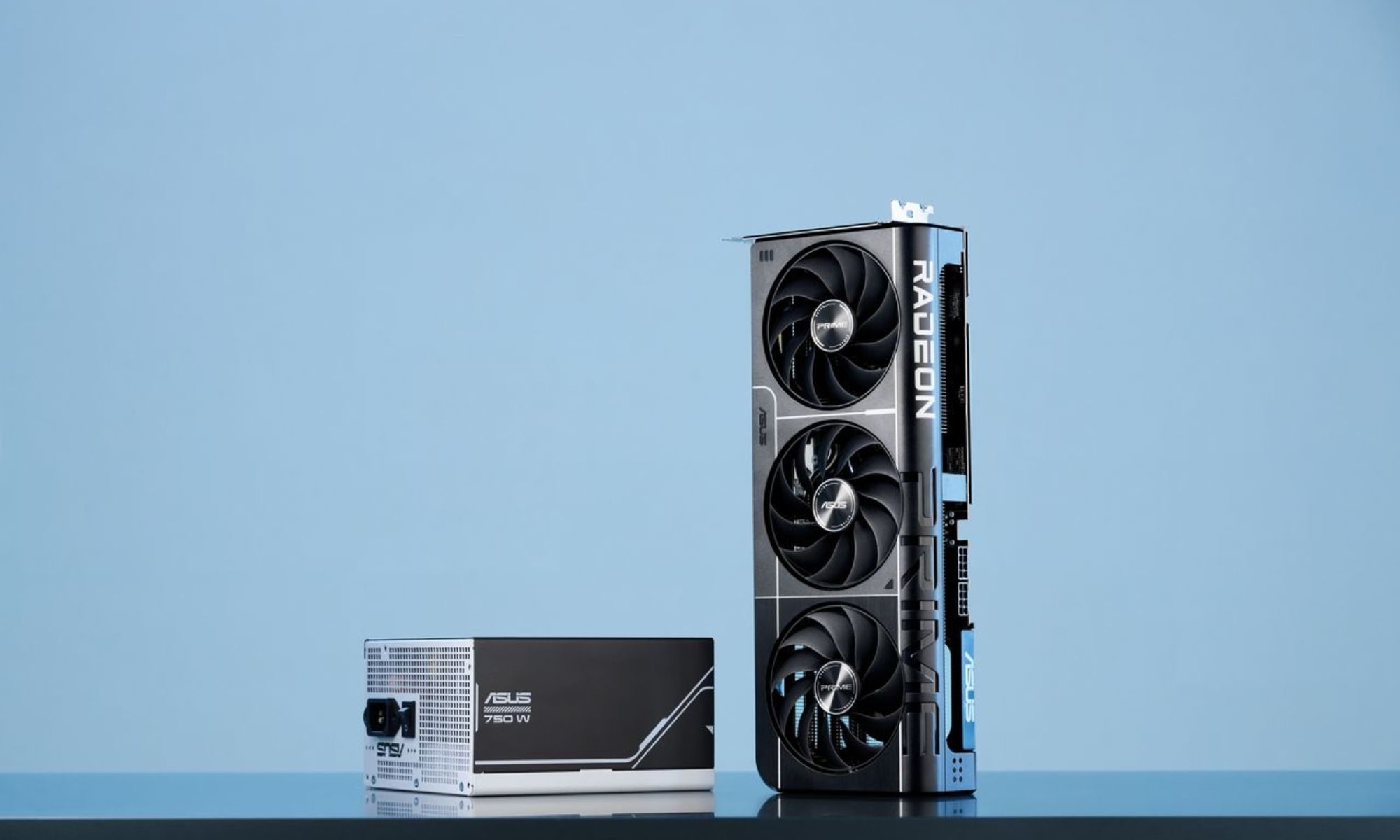
The ASUS TUF Gaming Radeon RX 9070 XT OC Edition is the straightforward choice for someone who wants to push gaming performance without treating the rest of the card as an afterthought. It is built around 16GB of GDDR6 memory and is designed for strong 1440p gaming as well as 4K, with an OC mode reaching up to 3080 MHz boost and 2540 MHz game clock according to ASUS.

The TUF’s cooling system is a major part of the card’s overall proposition. Its 3.125-slot design uses three Axial-tech fans, a large fin array and a phase-change GPU thermal pad, while dual-ball bearings are designed for long-term use. A metal exoskeleton adds rigidity while also allowing additional ventilation. The result is a card that makes sense when performance is the priority and the PC has enough room to accommodate a substantial cooler.

Advertisement

The TUF model also adds features not found on the Prime or Dual cards, including an illuminated TUF logo and a protective PCB coating designed to help guard against short circuits caused by moisture, dust and debris. ASUS also uses military-grade components designed to support long-term durability and reliable power delivery.

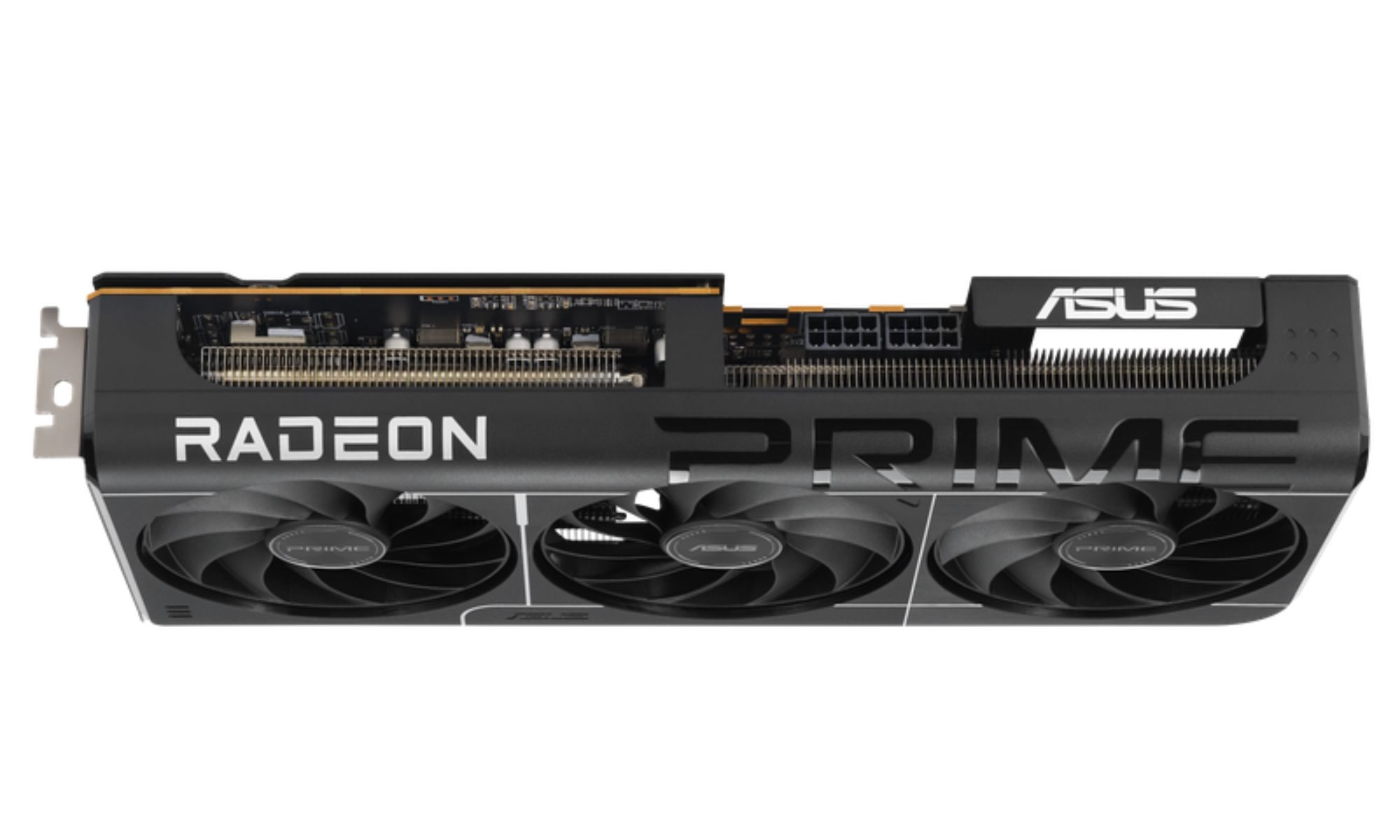
The ASUS Prime Radeon RX 9070 XT OC Edition takes much of the same performance proposition and puts it into a smaller package. It retains 16GB of GDDR6 and is built for 1440p and 4K gaming, but its 2.5-slot design gives compact builds more breathing room. Its OC mode reaches up to 3030 MHz boost and 2480 MHz game clock, while Axial-tech fans, a phase-change GPU thermal pad and dual-ball bearings handle the cooling.

The distinction between TUF and Prime is therefore less about raw performance than the space available inside the case. TUF gives the cooling system more room to work; Prime gives the builder more room to work around the GPU. For a large enthusiast build, TUF’s substantial cooler is an easy trade. In a more compact system, Prime’s smaller footprint can matter considerably more.

Gaming and AI workloads call for different priorities

Not every demanding GPU workload is a gaming workload. A card that makes sense for high-refresh 1440p or 4K gaming can have very different strengths from one designed to run large AI models locally, and the difference becomes particularly important once memory capacity enters the equation.

The ASUS Turbo Radeon AI Pro R9700 is built for that second category. Its 32GB of GDDR6 memory, 256-bit memory interface and bandwidth of up to 640GB/s are aimed at workloads that can quickly outgrow the memory available on a conventional gaming card. The card is designed for local LLMs, Stable Diffusion and Flux, AI development, content creation and other memory-heavy compute tasks.

Advertisement

Its specifications are tailored accordingly. The card uses RDNA 4 with 128 AI accelerators and up to 1,531 TOPS of INT4 performance, while PCIe 5.0 support and a 2-slot design make it suitable for dense multi-GPU workstation configurations. Its cooling system is also designed around sustained compute rather than short bursts of gaming, combining a diecast shroud and backplate with a wave-pattern design that ASUS says can reduce memory temperatures by up to 16%.

For a gaming PC, the RX 9070 XT and the other Radeon gaming cards make more sense because their strengths are aligned with that workload. The Turbo Radeon AI Pro R9700 becomes the more relevant choice when the machine is expected to handle local AI, large models or sustained GPU compute, where 32GB of VRAM and dedicated AI capability can matter far more than gaming-oriented specifications.

1440p gaming does not always require the biggest card

The step down from the higher-end gaming cards does not mean stepping away from serious 1440p performance. The mid-range options in this lineup are aimed at systems where smooth gaming matters, but power consumption, physical size and overall build balance deserve more attention.

With 12GB of VRAM and an OC mode reaching up to 2880 MHz boost and 2300 MHz game clock, the Prime Radeon RX 9070 GRE EVO OC Edition is built around that balance. Its 2.5-slot design measures 304 × 126 × 50mm, making it slightly smaller than the Prime RX 9070 XT. Lower power consumption within the 9070 tier also makes the EVO a practical fit for a build where the GPU does not need to dominate the entire system.

A similar approach carries over to the ATS Radeon RX 9070 GRE OC Edition, which reaches the same 2880 MHz boost and 2300 MHz game clock figures and measures 305 × 126 × 50mm. Both cards use Axial-tech fans, a phase-change GPU thermal pad, dual-ball bearings and 0dB technology, so there is little value in repeating the same cooling specification list for each model.

Advertisement

For a 1440p gaming PC, these cards occupy a useful middle ground. They offer the performance needed for that resolution without moving into the larger footprint and higher-end positioning of the RX 9070 XT, making them worth considering when the rest of the system needs to stay compact and balanced.

When size and design become part of the decision

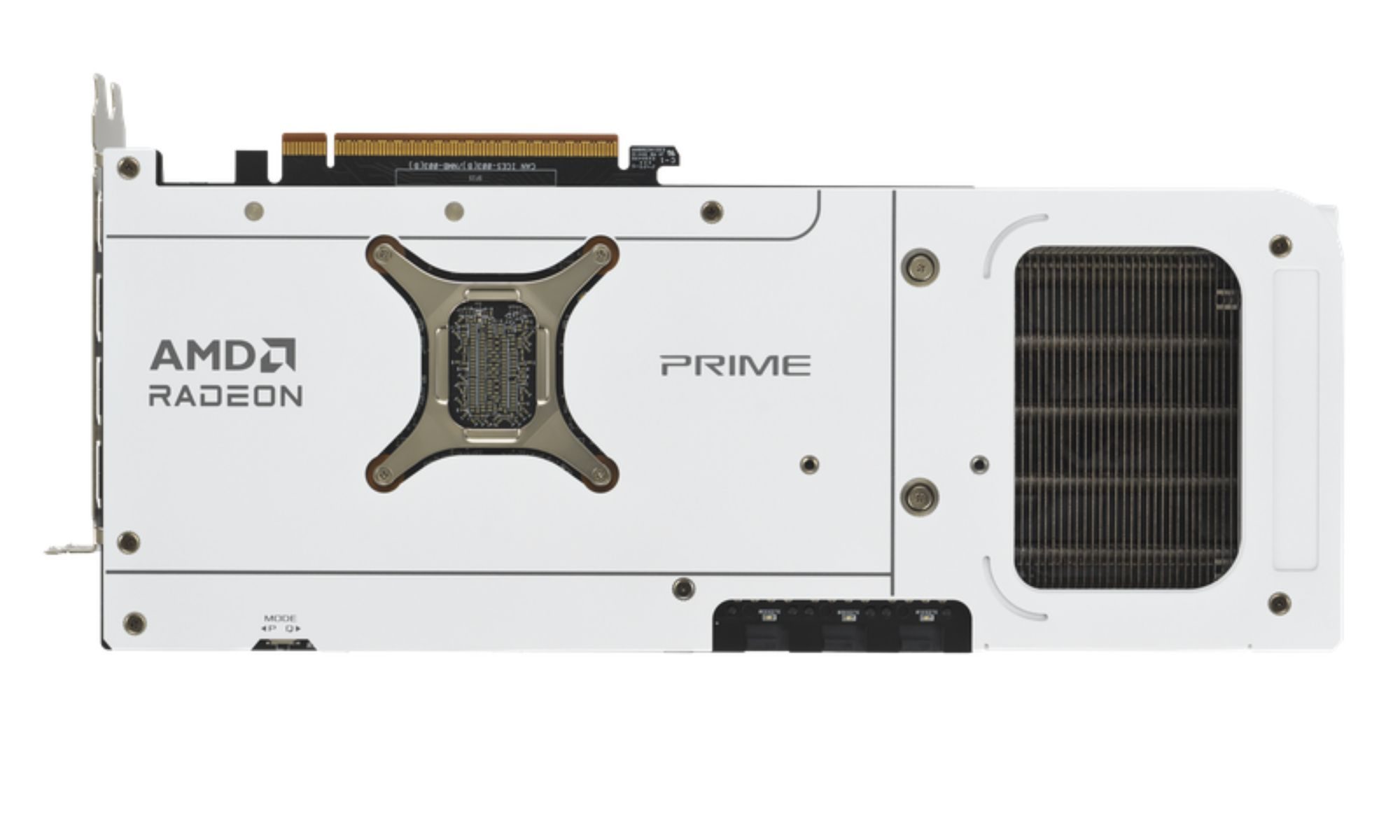
Physical compatibility is not always about fitting the largest GPU into the smallest case. In some builds, the graphics card also has to work with the visual language of the rest of the system. ASUS offers a white version of the Prime Radeon RX 9070 XT for precisely that kind of build, retaining the same 2.5-slot format as the standard Prime model.

There is no need to treat the white edition as a different performance tier. Its appeal is the white finish and sleek design, while the underlying cooling and performance proposition remains broadly aligned with the standard Prime RX 9070 XT.

A similar white edition is also available for the Radeon RX 9060 XT, giving buyers building smaller or more affordable systems another way to keep the graphics card consistent with an all-white setup.

Smaller builds still have options

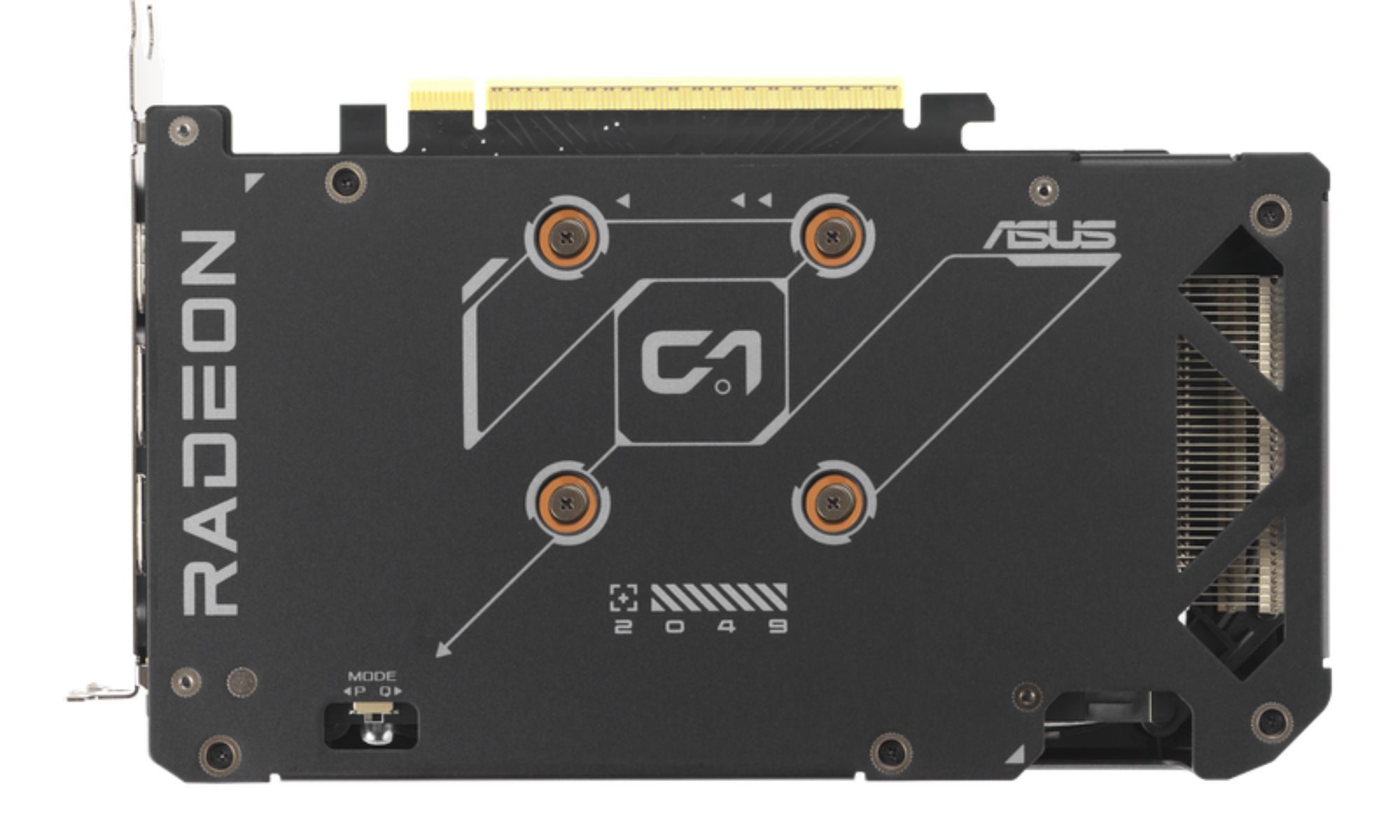
A compact PC does not necessarily mean settling for a compromised graphics card. The ASUS Dual Radeon RX 9060 XT 16GB GDDR6 is aimed at buyers who need to make better use of limited space, including those building in smaller form factor cases.

Its 2.5-slot design is intended to balance compatibility with cooling, while the Axial-tech fan design uses a smaller hub and longer blades to maintain airflow through the card. 0dB technology also allows the fans to remain off during lighter workloads, while dual-ball bearings are designed for long-term durability.

In a compact build, those dimensions can have consequences beyond the graphics card itself. A GPU that occupies less space leaves more room to work around adjacent components and makes overall component selection less restrictive. That makes the Dual Radeon RX 9060 XT a practical choice when building around a smaller chassis is the priority, rather than trying to squeeze a larger card into a case that was never designed for it.

Advertisement

GPU control does not end when the card is installed

ASUS also has a software layer that runs across much of this lineup. GPU Tweak III provides access to OC and Silent modes, fan controls, thermal settings and system monitoring, allowing users to adjust the behaviour of the card rather than treating its factory configuration as fixed. Profiles can store preferred voltage and clock settings, while the hardware monitor can track fan RPM and system power metrics.

Dual BIOS provides another level of control on the supported cards, allowing users to switch between Quiet and Performance profiles. The Turbo Radeon AI Pro R9700 is the exception in this lineup, with the supplied ASUS brief specifying that Dual BIOS is not available on that model.

The result is a lineup that is easier to understand when viewed through the PC being built rather than through a simple hierarchy of numbers. TUF is about substantial gaming performance and cooling. Prime RX 9070 XT makes high-end performance easier to fit into a compact build. Prime White is for buyers who want the graphics card to complement the rest of the system. The two RX 9070 GRE cards occupy the 1440p middle ground, while the RX 9060 XT brings dedicated graphics into smaller systems. Turbo AI Pro R9700 takes the conversation beyond gaming altogether.

Explore the ASUS Radeon graphics card range to compare the models and find the card that fits your build, workload and priorities.

Advertisement

Source link

Continue Reading

Tech

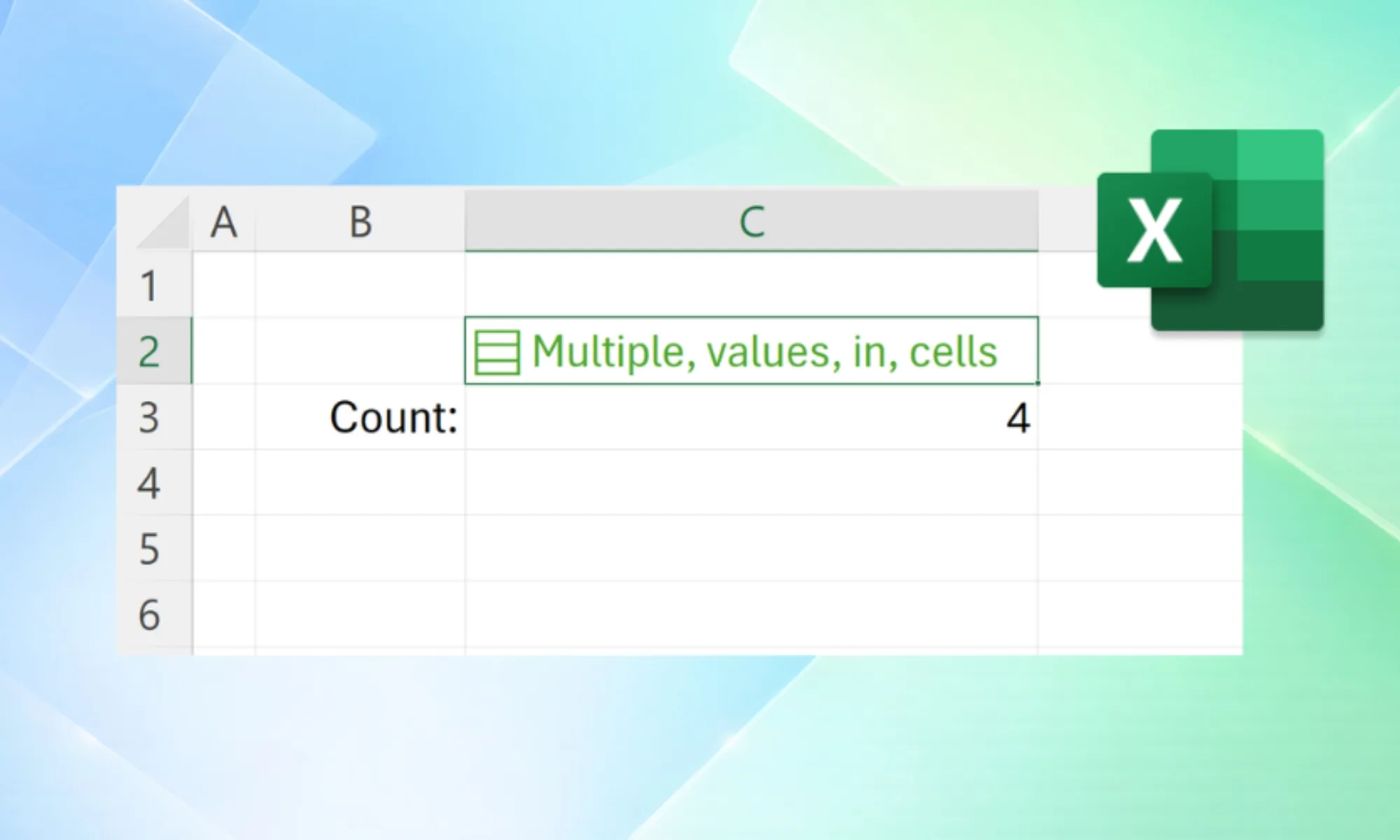
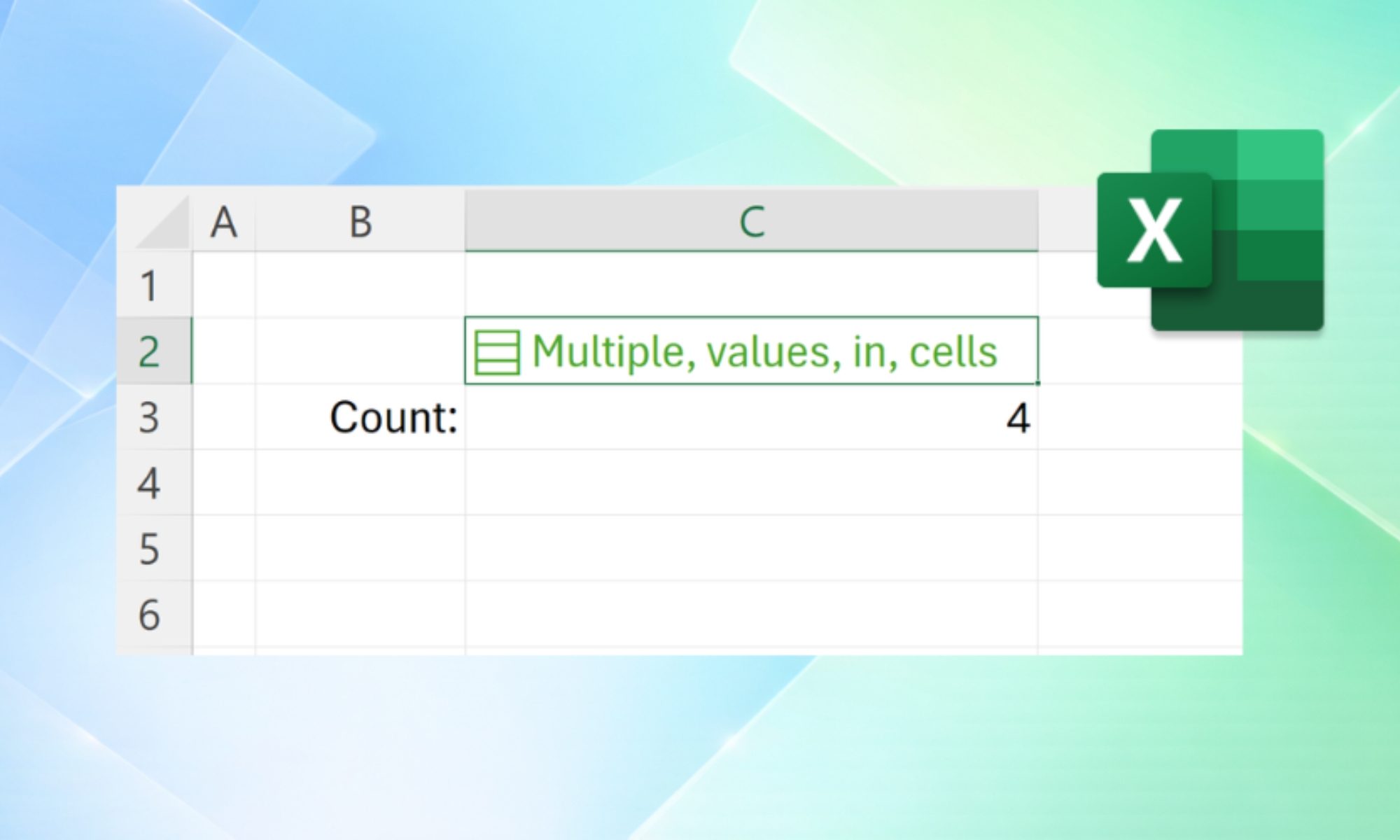
Microsoft Excel can now put multiple values in a single cell

Published

on

Microsoft is changing one of Excel’s most familiar rules: a cell no longer has to contain just one value. The company has introduced lists, arrays in cells and nested arrays, giving users new ways to keep multiple pieces of information together without turning them into a single block of text.

The features are currently rolling out as previews to Excel for Windows and Mac Beta Channels. Microsoft says the behaviour may change before general availability and recommends against using the features in important workbooks at this stage.

Excel lists make multiple values easier to manage

The simplest part of the update is the new Lists feature. Instead of putting several values into separate cells or combining them into ordinary comma-separated text, users can store multiple individual values inside one cell.

For example, a project could have several owners listed in a single cell, while a survey response could contain multiple appointment times. With lists, Excel keeps those entries separate internally, allowing users to filter individual values and use them in calculations.

Advertisement

Creating a list involves selecting Insert > List or pressing Ctrl+J, then entering or pasting items separated by commas or semicolons, depending on regional settings. Users can later edit individual entries by double-clicking the cell or pressing F2.

The feature also changes how filtering works. Instead of treating a comma-separated cell as one large piece of text, Excel can filter by individual items. Referencing a list can also return all its values, allowing them to spill into separate cells when needed.

That could make spreadsheets containing project assignments, survey responses or other multi-value data considerably easier to organise.

Arrays bring a much bigger change to spreadsheets

Microsoft is also introducing arrays directly inside cells, including nested arrays. Arrays can now exist as values or formula results inside a single cell and can have different sizes and shapes. Users can also wrap spilling formula results in braces to keep the entire result inside one cell.

Nested arrays take this further by allowing arrays to exist inside other arrays. Microsoft says formulas that previously returned truncated results or a #CALC! error in some array-of-array situations can now return the complete nested result.

Advertisement

To work with these structures, Excel is gaining four new functions: FLATTEN, HAS, HASANY and HASALL. FLATTEN can remove levels of nesting, while the HAS functions can check whether a particular value, some specified values or all specified values appear within an array.

For power users, the change could open up new spreadsheet designs. Microsoft demonstrates a run tracker where different numbers of kilometre splits can be stored in the same row while statistics are calculated alongside them.

There are still limitations. Conditional formatting, data validation, charts, PivotTables, Power Query and Find & Replace do not yet fully support list and array values. The features currently require specific Beta Channel builds, and nested-array calculations require Compatibility Version 3.

For now, Microsoft is treating this as a preview rather than a finished Excel feature. But if the rollout goes smoothly, the humble spreadsheet cell is about to become considerably more capable.

Related coverage:

Advertisement

What is Copilot? Everything you need to know about Microsoft’s AI assistant

How to use ChatGPT to write Excel formulas

Windows 11 tips and tricks: 10 hidden settings you need to try

The best alternatives to Microsoft Office

Advertisement

Source link

Continue Reading

Tech

This tiny Japanese laptop survived drop tests that would destroy most business notebooks built anywhere else

Published

on


  • Panasonic Let’s Note SC7 weighs just 919 grams but passed drop tests from both 76 and 30 cm
  • The chassis meets the US military’s MIL-STD-810H toughness standard
  • Battery testing returned nearly 23 hours of continuous everyday use

Japanese manufacturers have long built a reputation for producing remarkably light business notebooks, with some models weighing under a kilogram entirely.

Panasonic has now expanded that lightweight lineup with the Let’s Note SC7, a compact notebook weighing just 919 grams total.

Source link

Advertisement
Continue Reading

Tech

Microsoft wants Copilot to become an “OS” that writes your documents and manages your work

Published

on

Ripple effect: Microsoft may be backing away from the Copilot+ PC branding, but it’s doubling down on the bigger idea behind it: turning AI into a layer that actively runs your computer and gets work done for you. Its latest Copilot overhaul pushes that vision further than before, combining Office, coding tools, and autonomous agents into what CEO Satya Nadella calls a “new OS for work.” Public testing begins in the coming weeks.

Microsoft recently unveiled a major overhaul for Copilot’s business tools. The new suite hands the AI assistant more control in Office, embeds GitHub Copilot’s functionality into professional toolchains, and automatically coordinates tasks between team members.

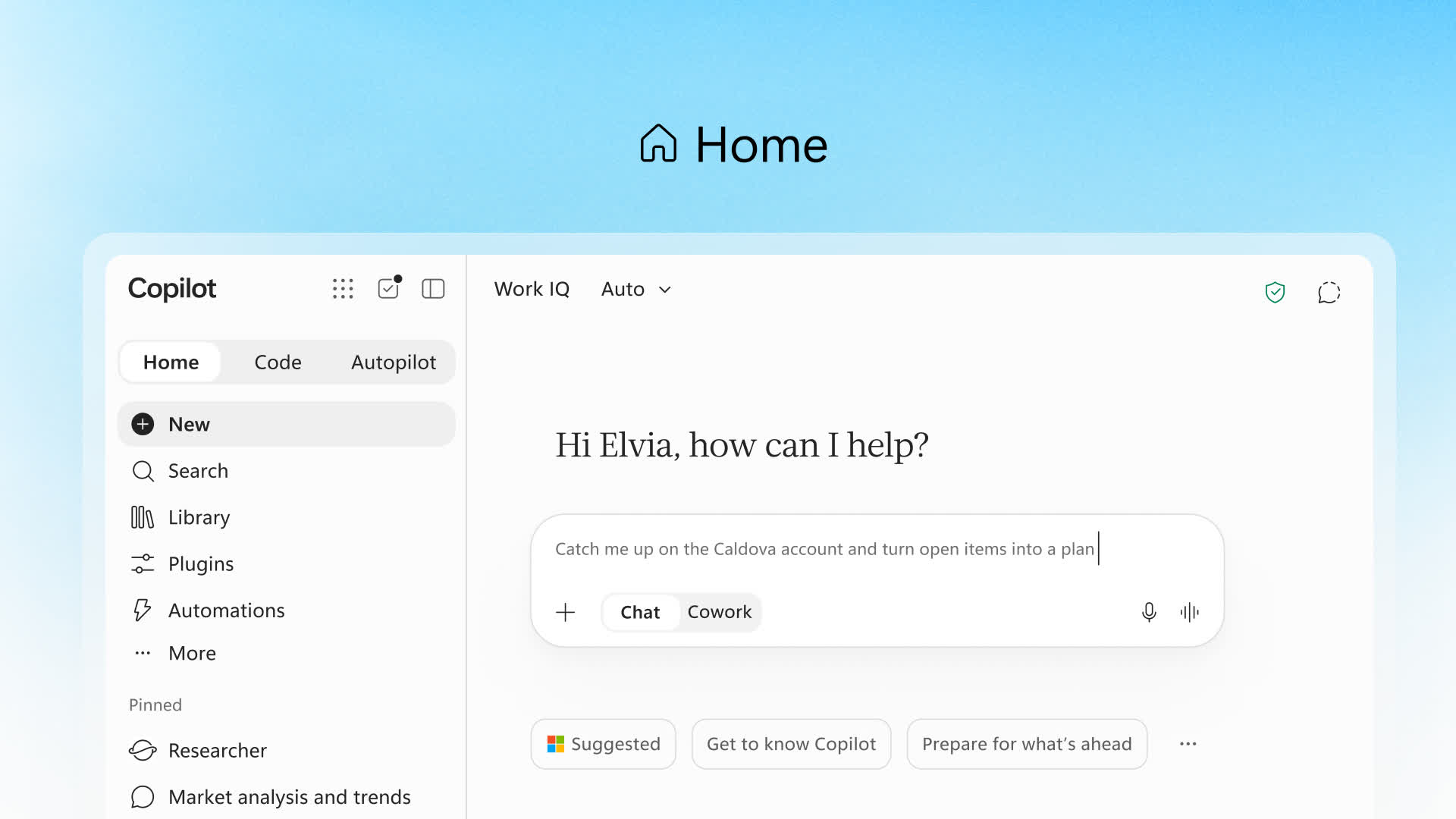
The new Copilot implementation, which Microsoft CEO Satya Nadella calls a “new OS,” consists of several parts. One of them, simply called Home, lets users chat with Copilot as it examines files to offer recommendations on how it can help. Home can also take over Office 365 apps such as Word, Excel, and PowerPoint to automatically draft files for users to edit.

Another tool, Code, builds apps based on natural-language prompts using the same tools as GitHub Copilot. Microsoft claims that Code uses Microsoft IQ to maintain contextual knowledge of users’ work environments beyond what it currently sees onscreen.

Advertisement

Lastly, Autopilot, a rebrand of Scout, offers the highest level of automation. After users provide it with a role and an objective, Autopilot handles various tasks such as scheduling meetings, following up with contacts, watching channels, starting and resuming projects, and more, all without further human input. The cloud-hosted feature also works 24/7, working across Teams, Outlook, documents, and other programs while remaining in constant contact with teammates.

Home and Code will enter Microsoft’s Frontier program in the coming weeks, while Autopilot will be available in private preview at the end of this month. Another aspect of Home, called Today, will enter private preview in October. Today aims to show users a unified information space with details from emails, Teams chats, meetings, and other sources while also drafting documents and proposing schedules.

Nadella’s “Copilot OS” claim sounds a lot like the supposedly defunct Project Aion, which would have become a separate OS built around Copilot running within an Edge shell. Users would operate apps and create documents by chatting with Copilot instead of controlling them directly. Although Microsoft might have shelved Aion, a video demonstration of the new Copilot update closely resembles certain aspects of it.

Advertisement

Notably, this latest push to embed Copilot in users’ systems follows an admission from Microsoft and Qualcomm that the Copilot+ PC brand has been abandoned, with the companies acknowledging that consumers simply don’t care about “AI PCs.” It remains unclear whether Home, Code, and Autopilot will be next in a growing trail of shelved AI initiatives such as Copilot+ PCs and Recall.

Source link

Advertisement
Continue Reading

Tech

Oxford let OpenAI train AI models on Bodleian texts, the Guardian reports

Published

on

Oxford has let OpenAI use old texts from its Bodleian Library to train its AI models, according to internal papers seen by the Guardian. Ethan Penny and Dan Milmo broke the story on Saturday.

The papers say texts that OpenAI scanned at the library went into the firm’s training data.

Oxford made its deal with OpenAI public in March 2025. At the time, it said OpenAI’s tools would help scan rare texts so more students and scholars could read them. It did not say the texts would be used to train AI.

By June 2025, the Bodleian had sent OpenAI 125,000 scans of old PhD theses, the Guardian reported. They include theses written at European and US universities in the 19th and 20th centuries.

Advertisement

Notes from staff meetings, which the Guardian got through a freedom of information request, show some staff had doubts. They worried about harm to Oxford’s name and about the energy use of AI.

However, Oxford said the scans were small in scale, out of copyright and not exclusive to OpenAI. The library keeps the rights and will start to post the scans online in the next few months, a spokesperson said.

The spokesperson also said the AI training side had not been hidden. Scanning was Oxford’s main goal, but staff had been open that the texts would also be used to train models.

“With more than a billion people using this technology in everyday life, it’s important it reflects different cultures, histories and perspectives,” an OpenAI spokesperson told the Guardian.

Oxford is the only UK member of OpenAI’s NextGenAI group. Other members include Boston Public Library, Caltech, MIT and the University of Michigan.

Advertisement

The deal comes as AI firms buy printed books for slop-free training data, since the web is now full of AI-made text. Some buyers cut books apart to scan them, which has upset secondhand booksellers.

In August, 404 Media tracked a box of rare books to an Amazon site that scans and destroys books for AI. The Bodleian’s books stay whole under its deal, the Guardian reported.

Source link

Advertisement
Continue Reading

Tech

Razer’s Kiyo V2 Pro webcam shoots 4K video at 60fps

Published

on

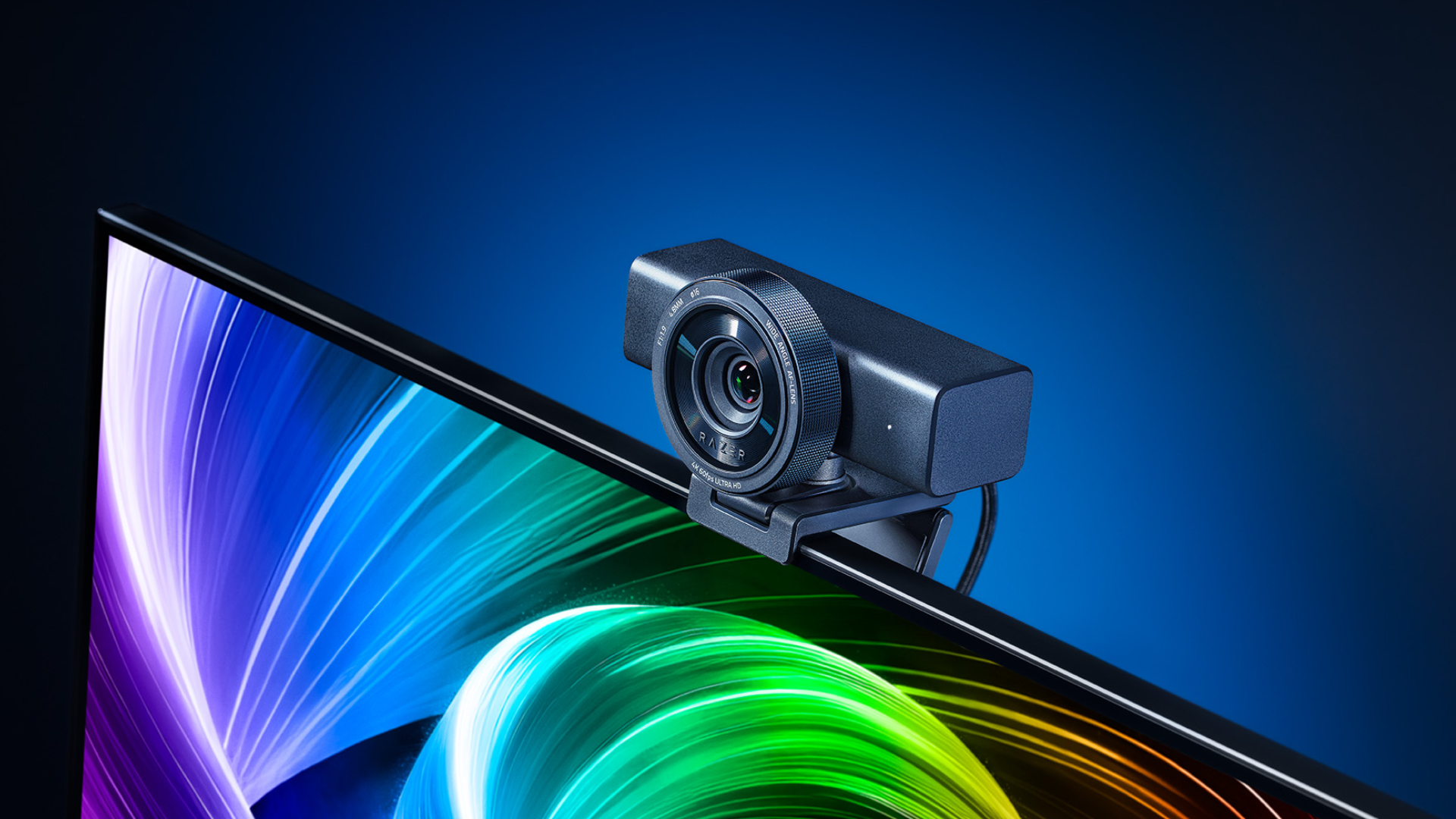
Razer’s new Kiyo V2 Pro webcam uses Sony’s 8.3-megapixel STARVIS 2 sensor and costs $300.

Sony’s STARVIS 2 sensor also enables the headline feature here: 4K video capture at up to 60fps, a specification most consumer webcams still limit to 1080p or 1440p once frame rates climb above 30fps.

Razer pairs that sensor with a lens capable of an f/1.9 aperture, a wider opening than most webcams offer and one that should improve low-light clarity while producing a stronger background blur behind the subject.

AI and imaging features

Beyond the optics, the Kiyo V2 Pro introduces automatic framing, a feature that uses pan, tilt and zoom to keep a speaker centred in the frame, similar to the tools Apple already offers on recent iPhones during FaceTime calls.

Advertisement

Razer has also carried over the one-click output enhancement feature from its microphone lineup, and the camera automatically adjusts exposure, white balance and noise levels to match whatever environment it sits in.

Advertisement

The Kiyo V2 Pro also captures ultra-high dynamic range footage that pulls out more shadow and highlight detail, and Razer has narrowed the field of view from 93 degrees on the original V2 to 86 degrees on the Pro model.

That narrower angle helps the sensor maintain sharper detail at the full 4K resolution and reduces the fisheye distortion that often appears at the edges of a wide-angle frame during video calls.

Advertisement

Software support for the webcam extends to Razer Synapse, which lets users manually fine-tune settings such as ISO and shutter speed rather than relying solely on the automatic modes built into the camera itself.

Razer ships the Kiyo V2 Pro with both a clamp for monitors and laptop lids and a universal tripod mount, alongside an integrated privacy shutter built to resemble a camera’s own shutter mechanism.

Availability and pricing

The webcam is available now through Razer.com and other retailers, and its $300 price places it among the pricier options in the current webcam market.

Razer has not confirmed a UK release date or local pricing for the Kiyo V2 Pro, though the webcam’s US launch suggests a wider rollout is likely to follow in the coming months.

Advertisement

Advertisement

Source link

Continue Reading

Tech

A Pocket-Sized Digital Fish Tank

Published

on

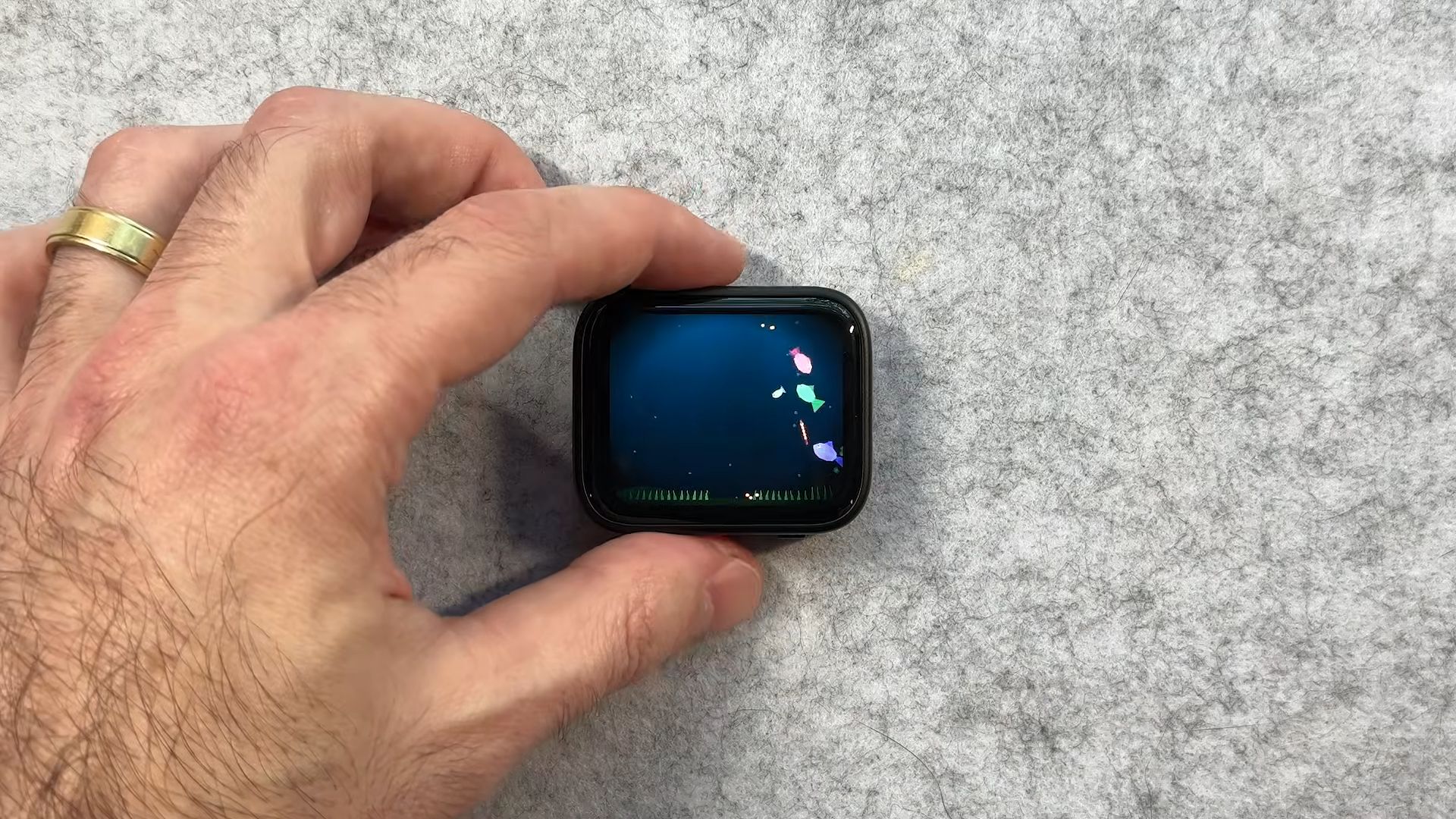
The problem with trying to make a fish tank fit in your pocket is that you’ll either end up with water everywhere or a bunch of dead fish. Perhaps that’s why [StratoBuilds] pursued a digital solution instead.

The concept behind Pocket Tank is relatively simple—it’s a small device that displays a virtual tank with a bunch of little fish swimming around inside. It’s based on the Waveshare ESP32-S3-Touch-AMOLED-1.8, which, if you’re wondering, is an ESP32-S3 with a 1.8″ screen attached, all wrapped up in a convenient plastic housing.

Thanks to the powerful microcontroller, there’s plenty of grunt on tap to run and display a small simulated fish tank. [StratoBuilds] whipped up a system wherein fish movement and animations are handled by regular code running at 25-30 fps, while the fish’s decision making is handled by a custom large language model that was condensed down to run on the ESP32 itself. As the fish swim around the tank, the situation is observed by the LLM and the fish’s current goals are changed accordingly depending on what’s going on. Much like a Tamogotchi, there are regular maintenance tasks for the user to handle, too, like cleaning the tank and feeding the fish to keep them alive.

Advertisement

The blog post and YouTube video do a great job of explaining the project; files are on GitHub for those that wish to tinker more directly. It’s funny, because when we normally look at fish tanks, we’re talking about real ones.

Thanks to [56k] for the tip!

Advertisement

Source link

Advertisement
Continue Reading

Tech

Kimera EVO37 Number Eighteen Brings Lancia Rally Glory to Zoute Auction

Published

on

1976 Lancia Kimera EVO37 For Sale Auction
Four decades after Walter Röhrl and Markku Alén drove Lancia’s Rally 037 to the 1983 World Rally Championship, a small Italian workshop in Cuneo has given that last rear-drive title winner a second life. Kimera Automobili, run by former rally driver Luca Betti from Villa Kimera about 100 kilometers south of Turin, limited the EVO37 to 37 cars. Number 018 now sits in Broad Arrow’s catalog as lot 158 for the Zoute Concours Auction on Friday, October 9, 2026, at Approach Golf in Knokke-Heist, Belgium.


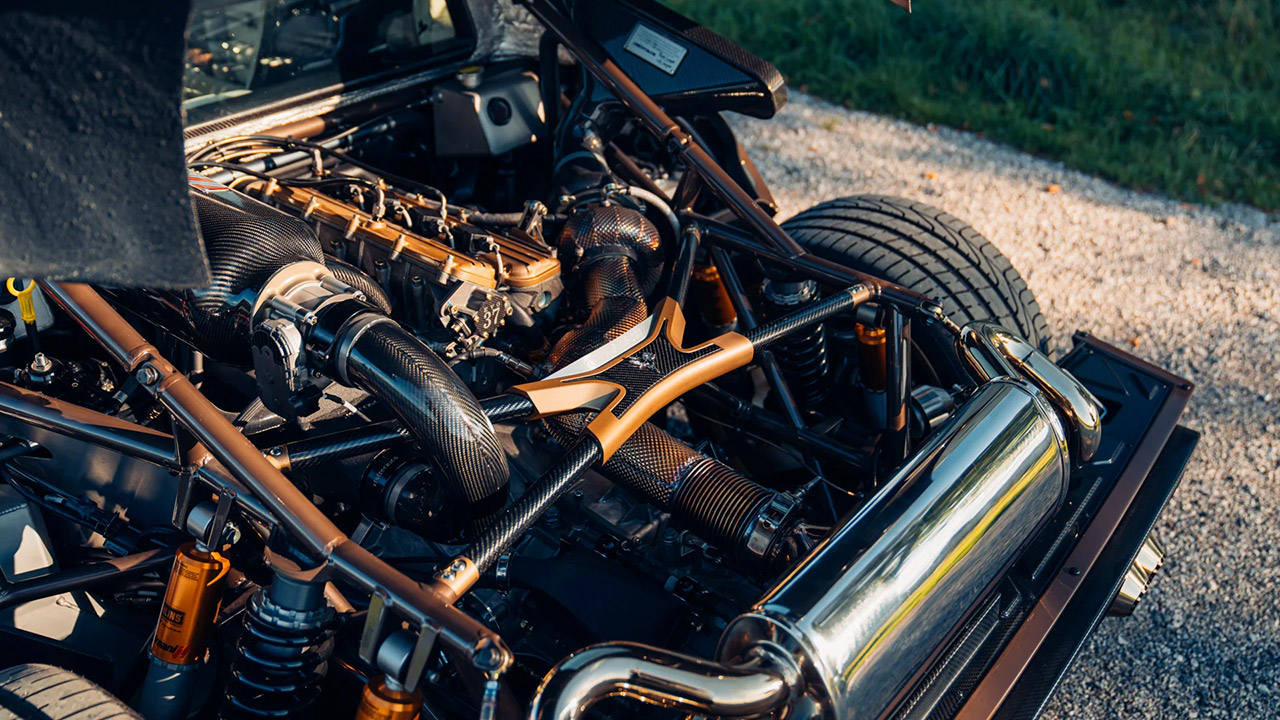
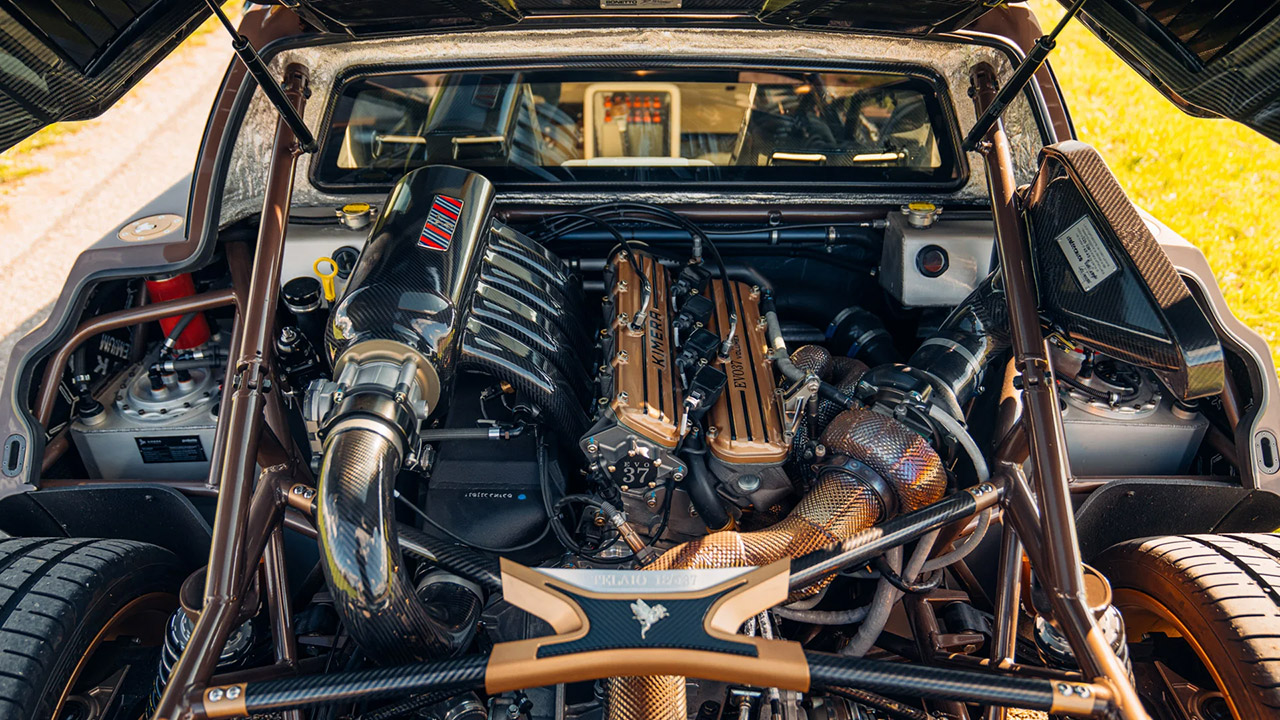
Kimera used the same starting point as the original manufacturer and ran with it: the donor Lancia Beta Montecarlo center section was stripped, reinforced, and improved with a glossy new carbon-fiber shell. Behind all of this was a crew that knew what they were doing, including Sergio Limone, the man who had led the 037 and Delta S4 to great success, and Claudio Lombardi, Lancia’s former rally engine designer who had gone on to do the same for Ferrari in F1, both of whom gave the project their approval. The bodywork was then bolted to the chassis, and Italtecnica created a brand new 2.1 liter, 16 valve four-cylinder engine from the ground up. They preserved the 037’s supercharged configuration but added a turbocharger, resulting in a snappy 505 PS and 550 Nm of torque sent to the rear wheels via a fast six-speed Dana Graziano manual gearbox. The top speed is rated as 310 km/h, with a 0-100 km/h time of just 3 seconds, which is not bad. The vehicle features Öhlins double-wishbone suspension and Brembo carbon-ceramic brakes with four-piston calipers for stopping power.


LEGO Speed Champions Ken Block’s ’65 Ford Mustang Hoonicorn V1 77262
  • CUSTOM MUSTANG RACE CAR – This LEGO Speed Champions Ken Block’s ’65 Ford Mustang Hoonicorn V1 (77262) building toy for boys and girls ages 9 years…
  • AUTHENTIC DETAILS – Builders will recognize cool features from the car’s debut in the 2014 Gymkhana SEVEN film, including exposed velocity stacks on…
  • KEN BLOCK MINIFIGURE – The included Ken Block minifigure features a Hoonicorn hat and jacket, plus an extra helmet accessory for added play value

1976 Lancia Kimera EVO37 For Sale Auction
This vehicle left the workshop in March 2025 and has since traveled a total of 237 kilometers. Kimera’s Luci del Bosco paint job is a deep, rich metallic brown inspired by the old Lamborghini Miuras and Countachs. The gold wheels and beige leather upholstery over carbon fiber chairs give the cabin a relaxed feel, while the exposed gearlever is adorned with a wooden gear knob. LEDs light the road up front, and there’s air conditioning, ABS brakes, a digital rear view camera, and parking sensors to keep things polite without interfering with the exposed carbon, which is exactly what you want to see.

1976 Lancia Kimera EVO37 Interior
When this project first got off the ground in 2021, the asking price ranged between €450,000 and €480,000. Since then, the market has moved on, and Broad Arrow thinks that this particular specimen, number 018, is now valued between $950,000 and $1,150,000. Kimera has informed the Broad Arrow team that they will gladly assist with import and registration if the future owner is in Europe or the United States, and will even adjust the specifications to suit the buyer if they prefer something different. The tax issue is equally easy; because this is a VAT-qualifying sale, both the hammer price and the buyer’s premium are subject to tax.

1976 Lancia Kimera EVO37 Engine
The auction of this car will take place on October 9, 2026 as part of the Zoute Grand Prix Car Week, with a public viewing on the 7th and 8th and bidding beginning in the afternoon of the ninth. It’s a rare opportunity to own an original 037 Stradale that is this new and in this condition, and if that’s not enough, Kimera is still willing to re-spec the thing if the buyer has any other ideas.
[Source]

Source link

Advertisement
Continue Reading

Trending