Samsung Electronics and its unions failed to reach a deal on Wednesday, leaving a threatened 18-day walkout set to begin on Thursday.
Last-ditch South Korean government-mediated talks collapsed today (20 May), leaving an 18-day strike at the world’s biggest memory chipmaker set to begin on Thursday. As SiliconRepublic.com reported on 18 May, Samsung Electronics and its unions had entered what prime minister Kim Min-seok described as a final round of negotiations to avert a walkout by over 45,000 workers.
Unions had accepted the Korean National Labour Relations Commission’s mediation proposal, but Samsung rejected it, reported CNBC, with shares falling by 4.4pc on the news, according to Bloomberg.
Samsung Electronics said it “deeply regrets” the breakdown in mediation talks, in a statement published by Korean financial outlet Money Today, adding that it “will not give up on dialogue until the last moment”.
Advertisement
The dispute centres on Samsung’s performance-based bonus system. Unions are seeking bonuses equivalent to 15pc of operating profit, the removal of a cap limiting payouts to 50pc of base salary and formal multi-year contractual guarantees. Samsung has consistently refused to meet those demands in full.
The economic stakes remain huge. The prime minister had estimated direct strike losses at 1trn won ($664.7m), potentially rising to 100trn won if chip production disruptions force Samsung to scrap wafers already in production.
Officials have so far declined to invoke emergency arbitration powers – which could suspend the strike for up to 30 days – with the labour commissioner saying mediation could still restart, according to Reuters.
A court injunction requires safety and facility staffing to remain at normal levels during any industrial action, which is expected to limit the immediate production impact.
Advertisement
The company accounts for 22.8pc of South Korea’s exports and revenue equivalent to 12.5pc of GDP. With talks over and the strike set to begin on Thursday, attention turns to whether Samsung management will make a fresh approach to the unions tonight – or whether the government will finally reach for its emergency powers.
Don’t miss out on the knowledge you need to succeed. Sign up for the Daily Brief, Silicon Republic’s digest of need-to-know sci-tech news.
AMD has announced a change to the way they are licensing Vivado, their FPGA development tool… Hidden between the lines of the announcement [of a new model starting with the 2026.1 release] is the change to the free of charge tier. AMD is adding more devices to be supported in this tier, which is supposedly the carrot. The stick, however, is the removal of certain debug features.
The thing that’s likely to hit the hobbist community the worst, however, is that the free tier will now not be available on Linux.
Advertisement
AMD are saying that old licenses are still in effect, so it appears that if you hurry to install Vivado now, you’d still be able to use it moving forward. It is not clear, however, whether it’ll still be possible to install Vivado 2025.2 after Vivado 2026.1 becomes available. “Almost all our surveys show… close to 70% of the customers are still using Windows,” explained AMD senior product application engineer Anatoli Curran on the tool’s support forum. “Vivado ML Standard Edition v2025.2 is going to be officially supported (I mean if there are any bugs found, these can be fixed) until v2026.3 release… Any release older than the current 3 released versions of Vivado then becomes unsupported (meaning no bugs will be fixed with Vivado Standard Edition v2025.2 after Vivado v2026.3).
“However, users can continue using V2025.2 forever, if they wish to do so… Also, Vivado ML Standard Edition v2025.2 is license-free… Users only need to obtain and use any IP Core related licenses, or Vivado Model Composer (for SysGen).”
Many years ago, the Samsung Galaxy Note 7 gained notoriety when its batteries caught fire in a series of incidents. There’s been a steady stream of similar, though isolated, incidents ever since. However, despite the high-profile coverage of batteries gone wrong, the vast majority of lithium-ion batteries are safe.
The chemical reaction that occurs inside a lithium-ion cell is complex, but as in any battery, there’s a negative and a positive electrode. In lithium batteries, the negative is a lithium-carbon compound, and the positive is cobalt oxide (though many battery makers are moving away from cobalt). These two compounds cause a reaction that is safe when controlled and delivers energy to your devices. When the reaction gets out of control, though, you end up with earbuds melting in your ears. What changes a safe reaction to an uncontrolled reaction can be any number of things: excess heat, physical damage during use, physical damage during manufacture, or using the wrong charger.
The three basic rules that have kept me safe through testing dozens and dozens of batteries are these:
Avoid cheap cords, chargers, and outlet adapters;
Make sure batteries aren’t exposed to excessive heat (above 110 degrees Fahrenheit);
Regularly inspect batteries for signs of damage.
Avoiding cheap wall-outlet adapters, cords, and chargers is the most important. These are your most likely source of problems. Those chargers you see on Amazon for $20 cheaper than the competition? Not worth it. They probably got the price down by skimping on insulation, leaving out power-management tools, and ignoring the basics of electrical safety. Price alone is no guarantee of safety, either. Buy from reputable companies and brands.
Then there’s heat. Too much of it can cause all manner of problems, both in terms of discharge and in terms of safety. Avoid heat, and pay attention to your batteries when they’re charging. If your device gets overly hot when charging, this can be a sign of problems. Similarly, beware of any swollen, bulging, or otherwise misshapen batteries.
A proposal to make daylight saving time permanent has advanced in the House, reigniting an age-old American debate around the twice-annual clock changes. And this time, the proposal has the president’s backing. President Donald Trump said Thursday that he will work “very hard” to sign the so-called Sunshine Protection Act into law after the House Energy and Commerce Committee overwhelmingly approved the bill by a 48-1 vote.
The bill still needs to pass the full U.S. House, and then the U.S. Senate would consider taking up the measure.
The bill would allow U.S states to decide whether to “exempt themselves” from Daylight Saving Time, according to the article.
The bill’s sponsor described the annual clock-switching as “inconvenient, unnecessary, and out of step with the needs of today’s families and economy,” while finally creating a permanent Daylight Saving would bring “more usable daylight hours throughout the year.”
Pet projects can be terrific, especially when they come from a legendary musician finally making the album he always had in his head. In the liner notes to Peregrine, drummer Peter Erskine puts it plainly: “This is the album I always wanted to make.”
He is joined by pianist Alan Pasqua, whose résumé includes the New Tony Williams Lifetime, Bob Dylan, and Santana, and bassist Scott Colley, who has worked with Herbie Hancock, Bobby Hutcherson, and Joshua Redman. Together offering a combination of heartfelt originals and choice covers, the group delivers a lush, beautifully recorded analog jazz experience.
Peregrine embraces post-bop to pop sensibilities in a jazz mode, opening with Pasqua’s soulful “Gumbo Time.” They then dive into Keith Jarrett’s title track from his 1978 Impulse Records LP “Bop Be” (the first Jarrett album I ever bought, by the way!). The group transforms some classic pop into compelling jazz voyages in a totally refreshing manner such as on Jimmy Webb’s iconic “Wichita Lineman.” Phoebe Snow’s “Poetry Man” features fine guest vocals by Kate Lamont and additional saxophone and percussion from Bob Shepherd and Brian Kilgore.
Peregrine significantly also pays homage to the recently departed Brian Wilson, covering his gorgeous, iconic composition “God Only Knows.” This performance is particularly special to me not only as a fan of Wilson’s music but because just last year I was utterly blown away by The Julian Shore Trio’s take on another Pet Sounds-era Wilson composition, “Don’t Talk” (found on their brilliant LP Sub Rosa, which I reviewed in case you missed it).
Seriously, between these two tremendously beautiful tracks, I can easily envision a super compelling, poignant jazz tribute album to Brian Wilson being assembled. (Just sayin’ to all you music-industry powers-that-be out there reading this!).
Advertisement
Perhaps my favorite tune on Peregrine, however, closes the album: a haunting hushed meditation by Erskine called “On The Lake” which beautifully captures the essence of stillness through music. A remarkably understated and beautiful performance, this is very much one of those tracks where less is clearly more.
Produced at Reelsounds Studio in Illinois, album liner notes reveal that the album is likely an all-analog recording, and pretty much captured in first takes. The recording has that kind of energy to it. Accordingly, the vinyl pressing delivers a very warm, rich and welcoming portrait of the band in the studio.
This music feels fluid, with particularly rich natural presence and decay on Erskine’s sensitive drum and cymbal work — listen for those crips rides and wave-like splashes on “Bop Be”! — and Pasqua’s piano (check out those long held single notes on “Wichita Lineman”). Even though Mr. Erskine is the most well-known member of the group playing arguably the (potentially) loudest instrument, unlike many vintage jazz albums led by drummers (ie. Krupa, Blakey, Jones, etc), Peregrine presents the music as very much a balanced group sound.
Mastered by Jeff Powell at Takeout vinyl in Memphis, Peregrine is pressed on dark, quiet, perfectly well centered standard weight black vinyl, so the music appears transparently, and naturally out of your speakers. Peregrine is the work of serious music professionals creating music from the heart. Well worth your attention.
Mark Smotroff is a deep music enthusiast / collector who has also worked in entertainment oriented marketing communications for decades supporting the likes of DTS, Sega and many others. He reviews vinyl for Analog Planet and has written for Audiophile Review, Sound+Vision, Mix, EQ, etc. You can learn more about him at LinkedIn.
If it’s summer in a warm, humid climate, bugs can be the bane of your existence. A natural solution is to place a passive bug zapper to catch bugs at night. But what if that isn’t fancy enough? [Nicolas Boichat] spices it up with a passive bug zapper that tracks its kill count.
But how exactly do you detect a bug zap? With an antenna, of course! When a bug gets caught, it arcs, creating an electromagnetic pulse. A small loop antenna on the backside of the zapper receives the signal. The final PCB, attached to the bug zapper.
It was also in part an experiment to see how good you can “vibe-EE” and, well, mixed results. Claude was able to correctly identify basic concepts of EE needed here, but was largely worthless at making schematics. After some manual circuit doodling, then building, [Nicolas] successfully got an ESP32-C6 to detect the voltage spikes.
Of course, where there’s data, there must be a dashboard. Using existing graphing libraries and a custom PCB, [Nicolas] has the ultimate bug zapping experience.
Looking for the most recent Connections answers? Click here for today’s Connections hints, as well as our daily answers and hints for The New York Times Mini Crossword, Wordle, Connections: Sports Edition and Strands puzzles.
Oof, the purple category in today’s NYT Connections puzzle is a real challenge. Read on for clues and today’s Connections answers.
The Times has a Connections Bot, like the one for Wordle. Go there after you play to receive a numeric score and to have the program analyze your answers. Players who are registered with the Times Games section can now nerd out by following their progress, including the number of puzzles completed, win rate, number of times they nabbed a perfect score and their win streak.
Here are four hints for the groupings in today’s Connections puzzle, ranked from the easiest yellow group to the tough (and sometimes bizarre) purple group.
Yellow group hint: Barn is another one.
Advertisement
Green group hint: Workers’ rights.
Blue group hint: Items for very specific events.
Purple group hint: Take a word, add a letter.
Answers for today’s Connections groups
Yellow group: Farm fixtures.
Advertisement
Green group: Labor protest actions.
Blue group: Objects used in ritual performances.
Purple group: Possessive adjectives plus a letter.
The union representing staff at Apple Towson Town Center has announced a public rally for May 27, 2026, protesting against Apple’s treatment of its workers.
Apple Towson is not the only store that Apple has decided to close, but it is the only unionized one. It was the first Apple Store to unionize, and the International Association of Machinists and Aerospace Workers (IAM) Union claims that its members are being discriminated against because of this.
Known as the Machinists’ Union for short, it has now announced a public protest.
“[Elected] officials, “labor allies, and community leaders will hold a #DoRightApple public solidarity rally on Wednesday, May 27,” says the union, “to demand accountability from Apple and support for the nearly 90 IAM Local 4538 members facing job loss.”
Advertisement
Apple has said that it is closing this store, and two others in June 2026, because of changes in the shopping malls where they are based.
“Following the departure of several retailers and declining conditions at Trumbull Mall, the Shops at North County, and Towson Town Center,” said Apple when the closures were announced, “we’ve made the difficult decision to close our stores at these locations.”
Local council members have objected to Apple’s decision to close the store. But the Machinists’ Union is calling out Apple over how it is treating its members differently from staff in the non-unionized stores.
Specifically, Apple has said that staff from those stores can continue in their jobs at other Apple Store locations. For the Towson store, it says those staff are “eligible to apply for open roles at Apple in accordance with the collective bargaining agreement.”
Advertisement
That agreement is the one established between Apple and the union. However, the Machinists’ Union claims that there is no clause in it which would prohibit Apple from relocating its staff.
The Machinists’ Union has previously filed an Unfair Labor Practice charge against Apple with the National Labor Relations Board (NLRB). The NLRB has previously been successful in accusing Apple of illegal union-busting activities.
This public protest rally on May 27 will start at 11 a.m. Eastern at Patriot Plaza, 400 E. Washington Ave., Towson, Md., just over half a mile away from the store. It will be streamed live on the Machinists’ Union’s Facebook page.
The $20B search engine preference deal with Apple was “fair and square,” Google insists in its antitrust appeal against the Department of Justice.
In August 2024, a court ruled that Google was a monopolist in the U.S. Department of Justice’s antitrust lawsuit against Alphabet. One that involved an investigation into Google’s $20 billion deal with Apple to make Google the preferred search engine of Safari.
On May 22, Google filed its appeal against federal rulings that it held illegal monopolies in search and advertising.
The filing posted byReuters covers many areas, including that Judge Amit Mehta made legal errors in his 2024 ruling. Google doesn’t believe that it had illegally blocked competitors with its search deal, but really, it’s because Apple chose it.
Advertisement
In the filing, Google claims that, whether the court believes Google has monopoly power or not, it “did nothing” to harm competition. Google didn’t block rivals to make their own offers, and it didn’t block Apple from choosing a better one either.
There is no evidence that Google’s customers would have chosen a rival, even if those agreements didn’t exist, it continues.
It even pointed to Apple’s conclusion that the Microsoft rival Bing was “inferior” and “horrible at monetizing advertising,”
“Google just prevailed in the marketplace fair and square,” it declares.
Advertisement
Apple could’ve promoted other engines, the filing explains, and that Safari also does list alternative options within its settings. Ultimately, Google says that the court interpreted there to be “exclusivity” when really it was for “sound business reasons” on Apple’s part.
Aiming for a reversal
While Google has managed to escape major injury from the lawsuit, it still has some duties to take care of.
The later ruling was in September 2025, when it was decided that Google didn’t have to sell off Android or Chrome. It was also permitted to continue its $20 billion search deal with Apple.
However, it was decided that Google had to share search data with its competitors.
Advertisement
The appeal is an attempt to go back on this and other remedies that Google was ordered to carry out. Reversing the ruling wouldn’t affect things like the Apple search deal, but it would stop the data-sharing requirement entirely.
A section of the appeal discusses how this applies to rival companies that, to Google, shouldn’t be classed as such. Specifically, companies that deal strictly with AI.
To Google, it has to share data with firms like OpenAI, which is behind ChatGPT, which doesn’t offer its own general search engine. They provide answers that reference what would normally be search results.
Google argues that it is wrong to be forced to supply data to OpenAI as a rival. Generative AI products didn’t really exist in a substantial way at the time, so the court couldn’t incorporate ChatGPT and others as rivals when considering its ruling.
Advertisement
AI companies are already massively succeeding, without any need to “free-ride on Google’s success,” it proposes. As such, Google believes that the data-sharing remedies shouldn’t apply to AI companies that don’t offer a general search engine.
At the time of publication, the court has not responded nor scheduled any further courtroom activity. Based on typical scheduling patterns, the case could continue in late 2026, or even in 2027.
A supply chain attack targeting the Laravel Lang localization packages has exposed developers to a sophisticated credential-stealing malware campaign after attackers abused GitHub version tags to distribute malicious code through Composer packages.
Security firms StepSecurity, Aikido Security, and Socket warned about the compromise on Friday, warning that attackers had rewritten GitHub tags across four repositories maintained by the Laravel Lang organization rather than publishing entirely new malicious versions.
The affected packages include laravel-lang/lang, laravel-lang/http-statuses, laravel-lang/attributes, and possibly laravel-lang/actions. The Laravel Lang packages are third-party localization packages and are not part of the official Laravel project.
According to Aikido, the attackers compromised 233 versions across three repositories, while Socket said roughly 700 historical versions may have been impacted.
Advertisement
What made the attack stand out is that the actual project’s source code was not modified to include malicious code, but instead the attackers abused a GitHub feature that allows tags to point to commits in forks of the same repository.
“Rather than publishing a new malicious version, the attacker rewrote every existing git tag in each repository to point at a new malicious commit,” explained StepSecurity.
“The rewrites started at 22:32 UTC against laravel-lang/lang (the flagship Laravel translations package, with 502 tags) and finished by 00:00 UTC against laravel-lang/actions. All four repositories share the same fake author identity, the same modified files, and the same payload behavior, which makes them almost certainly the work of one actor using one compromised credential with org wide push access.”
This allowed the attackers to publish what appeared to be legitimate release tags for the project, which actually led to malicious commits stored in an attacker-controlled fork of the repository.
Advertisement
When developers installed the package via Composer, it would download the malicious code while it appeared to install legitimate Laravel Lang releases.
Executes a credential-stealer
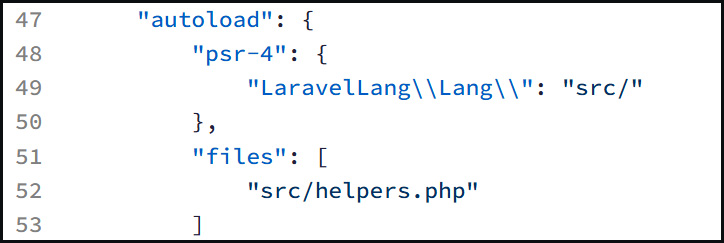
The researchers found that the malicious releases introduced a malicious file named ‘src/helpers.php’, which was automatically loaded by Composer.
helpers.php payload added to autoload section of composer.json
The injected code acted as a dropper that downloaded a second payload from the attacker’s command and control server at flipboxstudio[.]info.
The downloaded PHP payload [VirusTotal] was a large cross-platform credential stealer for Linux, macOS, and Windows that harvests cloud credentials, Kubernetes secrets, Vault tokens, Git credentials, CI/CD secrets, SSH keys, browser data, cryptocurrency wallets, password managers, VPN configurations, and local `.env` configuration files.
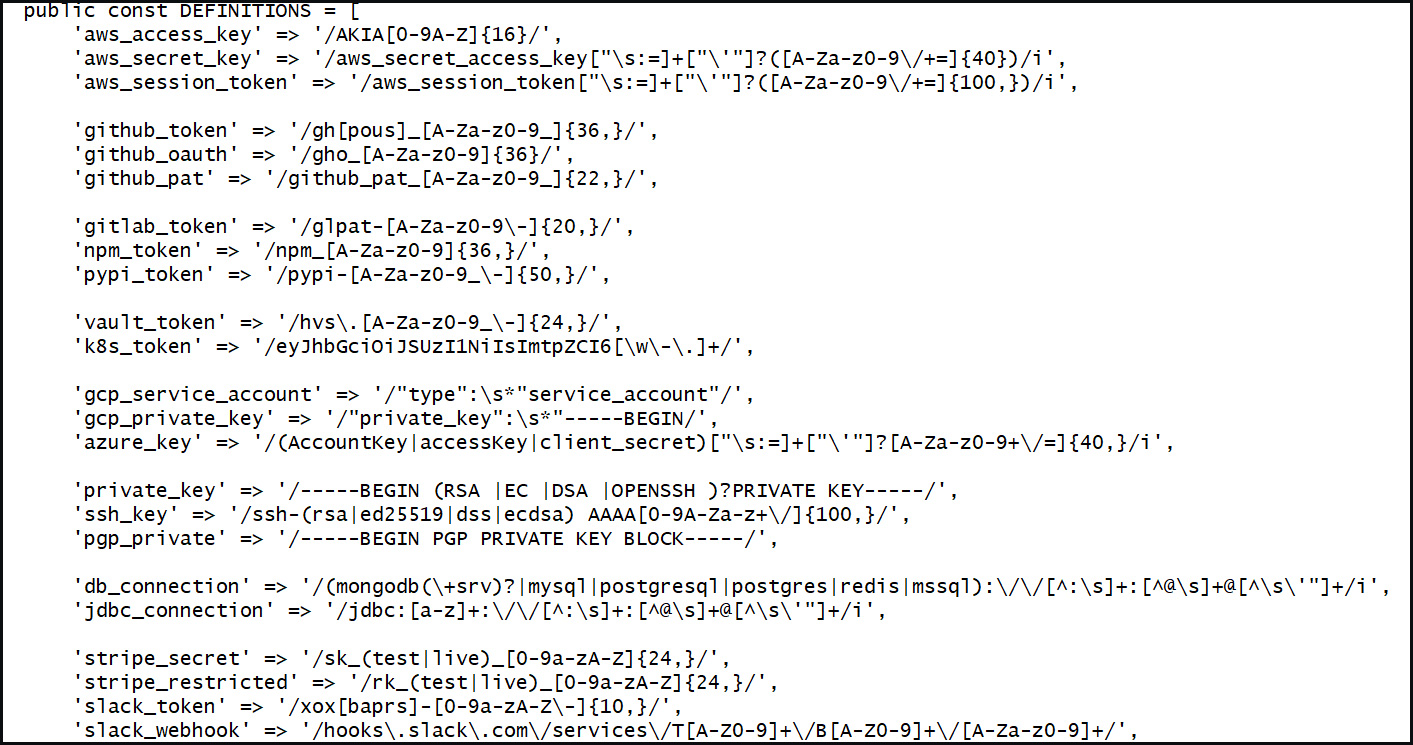
The malware also contains regular expression patterns used to extract AWS keys, GitHub tokens, Slack tokens, Stripe secrets, database credentials, JWTs, SSH private keys, and cryptocurrency recovery phrases from files and environment variables.
Advertisement
Regular expression patterns used to steal secrets Source: BleepingComputer
On Windows systems, the PHP payload also extracts a base64-encoded executable [VirusTotal] embedded within the file, which is written to the %TEMP% folder as a random .exe filename, and then launched.
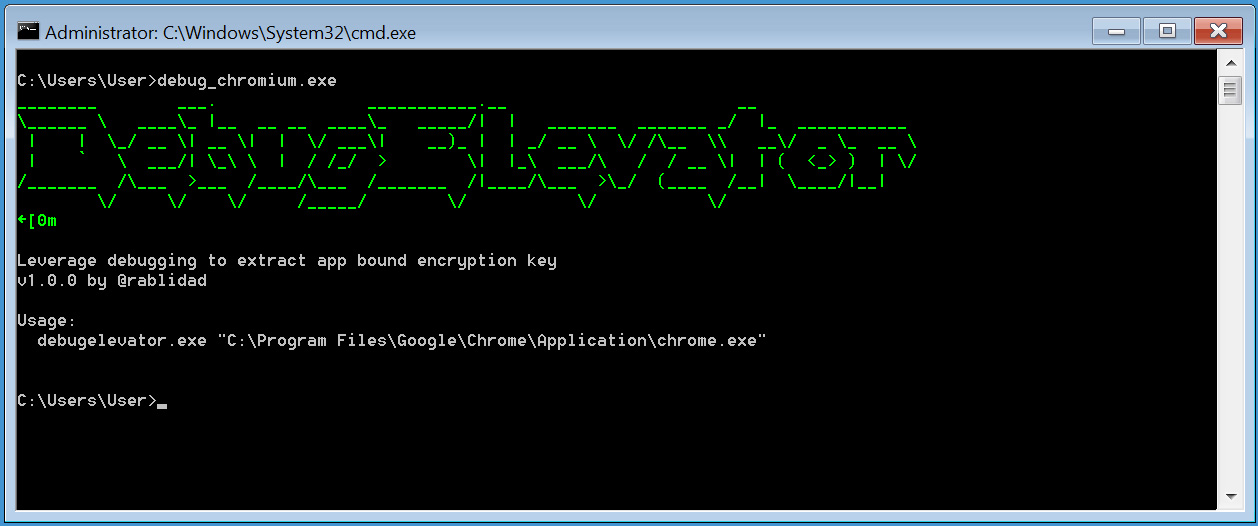
BleepingComputer’s analysis of the Windows infostealer shows it is named ‘DebugElevator’ and designed to target Chrome, Brave, and Edge, and extract App-Bound Encryption keys needed to decrypt stored browser credentials.
DebugElevator executable Source: BleepingComputer
An embedded PDB path also references the Windows account name ‘Mero’ and contains ‘claude,’ potentially indicating that AI was used to assist in developing the Windows malware.
The researchers say that once the sensitive data has been extracted, the malware encrypts it and sends it back to the C2 server.
Aikido says they reported the incident to Packagist, which responded quickly by removing the malicious versions and temporarily unlisting the affected packages to prevent additional installations.
Developers using Laravel Lang packages are advised to review installed package versions, rotate exposed credentials, inspect systems for indicators of compromise, and, if possible, check for historical outbound connections to flipboxstudio[.]info.
Advertisement
Automated pentesting tools deliver real value, but they were built to answer one question: can an attacker move through the network? They were not built to test whether your controls block threats, your detection rules fire, or your cloud configs hold.
This guide covers the 6 surfaces you actually need to validate.
Art lovers searching for a meaningful summer project will enjoy the LEGO Ideas Vincent van Gogh The Starry Night set, priced at $136 (was $170). This 2,316-piece model turns the 1889 painting into a three-dimensional display that captures the original’s swirling energy in brick form. The project began as a fan submission on the LEGO Ideas platform. Designer Truman Cheng translated the famous canvas into a build that uses clever layering instead of flat mosaics.
Every stage directs your hands through the painting’s composition, beginning with a peaceful village and a large cypress tree at the bottom. Small details such as rooftops and windows begin to appear. The big black tree begins to rise, using some care to give it true presence. These early stages go quickly enough to keep things exciting without distracting you from paying attention to all of the nuances that make the scenario appear authentic.
Starry Night LEGO – Channel the spirit of Vincent van Gogh to construct a 3D LEGO wall art homage to one of his most beloved paintings: The Starry…
Vincent Minifigure Display – This detailed home décor set comes with an adjustable display arm for the Van Gogh minifigure holding a paintbrush and…
Capturing Art Techniques – Capture Van Gogh’s colors and brushstrokes with clever building techniques that mirror the original swirling clouds and…
Once you’ve completed the lower sections, the spotlight moves to the sky. Layers of flat brick plates begin to rise and fan out in repetitive patterns resembling Van Gogh’s thick brush strokes. With each additional row, the arcs of the clouds and stars become deeper, resulting in an amazing three-dimensional texture rather than a simple outline. Fans describe this section as almost meditative because, while the action remains basic, the outcomes become far more amazing with each handful of bricks. The color palette is also spot on for the artwork, so you get the typical mix of blues, yellows, and whites developing gradually, which keeps you going till the end.
The set includes a detailed Vincent van Gogh minifigure. He’s holding a paint brush and palette and stands on an adjustable arm in front of a tiny printed easel displaying a miniature replica of the same artwork. The arm gives the impression that he is either working on the large model or simply inspecting it. That simple touch gives warmth to the entire exhibit, making it feel more personal than just a beautiful piece of decoration.
Advertisement
When all is said and done, the model measures about 12 inches tall, 15 inches wide, and 5 inches deep. You can either place it on a shelf or hang it on the wall with the provided hook. In either case, you’ll have a showcase that makes you want to stop and take a closer look, not just because it’s a really good LEGO model, but also because it looks exactly like the renowned painting.


































































You must be logged in to post a comment Login