

Tech
Samsung Union Suspends Strike After Reaching Tentative Deal On Bonuses


The strike would have impacted Samsung’s memory chip production.

Samsung’s largest labor union in South Korea has suspended the strike that was set to begin on May 21 after reaching a tentative deal with the company. Nearly 48,000 workers would have walked out for the strike, which was scheduled to last for 18 days. And since most of those workers belong to Samsung’s memory division, its biggest moneymaker, it could have had a huge financial impact on the company and on South Korea as a whole.
Union leader Choi Seung-ho has announced that the unionized workers will vote on the tentative agreement from May 22 to 27. A final agreement will only be reached after voting is done. “With a humble attitude, we will build a more mature and constructive labour-management relationship to ensure that such an incident never happens again,” Samsung said in a statement.
If you’ll recall, the workers decided to stage a walkout out after negotiations with Samsung fell through on the issue of bonuses. They wanted the company to remove the cap on their bonuses, which was equivalent to 50 percent of their annual salaries, like rival SK Hynix did for its employees. They were also pushing for Samsung to allocate 15 percent of its annual operating profit to the bonus pool. The union argued that SK Hynix, another South Korean semiconductor maker, gave its employees bonuses that were three times higher than what Samsung’s workers got last year. Some Samsung personnel even left for SK Hynix as a result.
According to Reuters, Samsung has agreed to abolish the cap and to set aside 10.5 percent of its annual operating profits for its employees. Yonhap News has reported that 40 percent of the bonus pool will go to memory chip division workers, while the rest of Samsung’s units will divide 60 percent among themselves. The agreed-upon percentage is lower than the union’s ask of 15 percent, but it’s higher than the 10 percent of profit SK Hynix is paying out to its people. Workers’ bonuses are contingent on the memory division making at least KRW 200 trillion ($133 billion) in profit from 2026 to 2028 and KRW 100 trillon ($66 billion) from 2029 to 2035. Samsung will pay part of those bonuses in company stock for at least 10 years.
It didn’t take long after the union announced its planned walkout for the government to step in. Talks restarted mere hours after the strike was announced, with South Korean Labor Minister Kim Young-hoon serving as mediator. Samsung, after all, accounts for 12.5 percent of South Korea’s GDP. The company is the world’s largest memory chip maker and made KRW 53.7 trillion ($35.63 billion) in operating profit for the first quarter of 2026 alone. South Korean Prime Minister Kim Min-seok previously said that direct losses from the 18-day strike could reach KRW 1 trillion ($669 million). The total economic impact of the walkout, however, could reach KRW 100 trillion ($66 billion) if Samsung scrapped the semiconductors already in production while the protest was ongoing.


Read the fine print. And even that might not help. A new report found some of the largest online platforms in the world — Google, Meta, Amazon and TikTok among them — are making it very difficult for people to opt out of their data being collected and used.
In its report, Good Luck Opting Out — Manipulative Design Patterns in Opt-Out Processes, the digital privacy and advocacy group Electronic Privacy Information Center examined the opt-out procedures for 38 major companies that collect customer data.
Many of these companies use “dark patterns” in their opt-out processes, the investigation found. That term refers to intentionally tricking, guiding or pressuring consumers to allow their data to be collected, shared and sold through deceptive or confusing methods on company websites and apps.
Too many companies deny their customers true choice over the use of their personal data, EPIC Counsel Caroline Kraczon said in a statement. “For individuals facing heightened risks, including stalking, doxxing, or targeted harassment, these barriers can have serious real-world safety consequences,” Kraczon said.
Asked by CNET for comment, a Meta spokesperson pointed to the company’s public privacy terms. “As we say explicitly in our Privacy Policy, we don’t sell any of your information to anyone and we never will.” However, that policy says Meta does share customer information with other companies and that “some information is required for our products to work. Other information is optional, but without it, the quality of your experience might be affected.”
Representatives for Google and OpenAI, both mentioned in the EPIC report, didn’t immediately respond to requests for comment.
Read more: A Guide to Data Removal Services: Should You Pay for Privacy?
The report noted the real-world consequences of personal information being widely available online due to the buying, selling and sharing of data by brokers and other businesses. Vance Boelter, the man charged in the murder of Minnesota lawmaker Melissa Hortman and her husband Mark last year, used “people search” data brokers to find out where they lived.
“For decades, abusive individuals have likewise used technologies and data to locate, hunt down, and harass, intimidate, assault, and even murder other people, predominantly impacting women, women of color, and LGBTQ+ people,” the report said.
There are 20 states — including California, Texas and Florida — that have laws requiring businesses to let customers opt out of data collection. used, shared and sold.
But deceptive opt-out processes hamper that legislation, the EPIC study found. Researchers identified eight patterns that companies use to make it hard to opt out, such as not including an opt-out link on the home page, requiring customers to fill out several forms, using confusing and/or misleading language and requiring customers to log in or pay for a subscription before opting out.
The report found that Meta, Google, TikTok, OpenAI, Whitepages and Tinder — among 15 companies — “did not clearly link their opt-out form from the homepage.” TransUnion, one of the “big three” credit bureaus, forces customers to submit several forms to opt out, as do people-search sites Whitepages and Spokeo.
EPIC also found that Whitepages — used by more than 30 million people each month — requires people to indicate the URLs of profiles containing their information. Fair enough, but you might need to pay for a Whitepages subscription to see those reports. EPIC also said Whitepages hides some pages behind a paywall.
Spokeo describes itself as “an industry leader in respecting consumers’ privacy preferences.” However, its opt-out page also states that “your information may reappear on Spokeo in the future without notice” and that people should keep checking the site in case new listings appear.
Spokeo COO and co-founder Harrison Tang told CNET that, even though his site harvests publicly available information from various sources, consumers “should have control over their data.”
Tang said that Spokeo “does its best to remember each consumer’s privacy preference so that, if Spokeo receives public information about the consumer in the future, it won’t automatically reappear or be available for sale.”
The investigation found that some companies have the “opt-in” checkbox selected by default on their opt-out pages, including ride-hailing companies Uber and Lyft and dating apps Grindr and Bumble, so “consumers must click the toggle or checkbox to opt out.”
EPIC’s Kraczon told CNET there are tools consumers can use now to prevent companies from using their data. One of those is called the Global Privacy Control — a Do Not Sell or Share request — that “sends an opt-out signal to every site you visit while browsing the web.” Kraczon said 12 states require companies to honor universal opt-out preference signals.
Kraczon said people in California can “submit a deletion request” with the state’s new Delete Request and Opt-out Platform, “which allows Californians to send one signal to all data brokers operating in the state to delete and stop selling their information.”
Justin Sherman, EPIC’s scholar in residence and an author of the report, said companies are degrading privacy rights and public trust with deceptive opt-out processes.
“Manipulative design has no place in privacy compliance,” Sherman said in a statement. “Companies must eliminate these barriers, and regulators must step up enforcement to ensure that consumers can meaningfully control how their personal data is collected, sold, and shared.”

NASA Administrator Jared Isaacman says he expects China to fly taikonauts around the moon in 2027, “ratcheting up perceptions of a space race between China and the United States,” reports SpaceNews. He is using that prospect to argue for a revamped Artemis strategy and an accelerated path toward a U.S. lunar return. From the report: “The next time the world tunes in to watch astronauts fly around the moon, which will likely be sometime in 2027, they will be taikonauts, and America will no longer be the exclusive power to send humans into the lunar environment,” he said. While Isaacman has frequently discussed a race with China to be the next to land humans on the moon, this was one of the first times he predicted a 2027 Chinese crewed circumlunar mission. He repeated the comments later in the day at an industry reception.
China has not publicly announced plans for such a mission, which, as Isaacman described it, would likely be similar to NASA’s Artemis 2 mission in April. There have been rumors of a mission along those lines, though, and an expectation of a roadmap of missions leading to a Chinese crewed landing by the end of the decade. So far, all the crewed missions to fly around, orbit or land on the moon have been flown by NASA: nine Apollo missions from 1968 to 1972 and Artemis 2. All the astronauts on those missions have been Americans except for Canadian Space Agency astronaut Jeremy Hansen on Artemis 2.
Isaacman has used the threat that China could land astronauts on the moon before NASA returns there as a rationale for revamping the Artemis lunar exploration program. In February, he announced that Artemis 3, which was to be a lunar landing attempt in 2028, will instead be a test flight in low Earth orbit in 2027, followed by a landing on Artemis 4 in 2028. In March, he changed other elements of Artemis at the agency’s Ignition event, including effectively canceling the lunar Gateway to focus resources instead on a lunar base, while calling for a much higher cadence of robotic lander missions.


Whirlpool is one of the most recognizable names in the world of appliances. The company traces its roots back to 1911 in Benton Harbor, Michigan, where one goal, to electrify the wringer washer, eventually grew into a leading global manufacturer of home appliances.
In 2026, Whirlpool was named one of the “World’s Most Admired Companies” by Fortune for the sixteenth consecutive year. The company offers a full range of appliances, including washers, dryers, ranges, cooktops, dishwashers and, of course, refrigerators. Anyone shopping for a new appliance knows the choices feel endless. Expert reviews provide an overview, and we have an idea as to how long a refrigerator should last, but consumer reviews often tell a more accurate and authentic story. No one wants to buy a refrigerator or other appliance that will fail after only a few years.
The brand is known for its refrigerators, which on average should last between 10 to 20 years. That being said, we urge shoppers to carefully read reviews. TrustPilot and the Better Business Bureau both offer numerous reviews that detail refrigerator repairs and even complete failures well before the appliances reach old age. While online feedback is certainly prone to negativity bias, many reviewers point out poor customer service experiences and expensive repairs. Common complaints include broken ice makers, cracked interior plastic, doors that do not seal properly, and burnt-out interior lights, along with more serious issues such as broken compressors and loud whining noises.
The perks of buying Whirlpool

Whirlpool undoubtedly suffers from some negative user reviews, but it’s tough to find an appliance that doesn’t. The company received top marks by the American Customer Satisfaction Index in its 2025 customer satisfaction study. If you’re interested in a side-by-side refrigerator, JD Power named Whirlpool as the second-most reliable company in 2025, behind GE. It also came in second for French door refrigerator reliability, again behind GE.
Whirlpool offers other perks as well. If you’re trying to avoid products made overseas, many Whirlpool appliances are still made in America. You may also already own a Whirlpool appliance and not even know it — its portfolio includes other iconic brands, including Amana, Maytag, JennAir and KitchenAid. Whirlpool also offers a free one-year warranty, and limited parts are covered for five years. Buyers have the option of purchasing an extended warranty. Overall, despite some notable setbacks in terms of customer service, but the company overall has earned a solid reputation as an appliance builder.
Tech
He-Man Commands the Los Angeles Sky in a Record-Setting Masters of the Universe Drone Spectacle


Over the Hollywood Forever Cemetery last night, sixteen hundred drones turned the night into a living tribute to Eternia. The display followed the world premiere of Amazon MGM Studios’ new Masters of the Universe film and lasted exactly ten minutes. Every formation glowed with a clarity and intensity that earned the event an official Guinness World Record for the brightest aerial image formed by drones.
Drones danced across the sky in perfect unison, framing the legendary He-Man, who held his sword aloft like a proud warrior. Then, in a flash of white light, the words “I HAVE THE POWER” appeared in the sky, flickering not once. Castle Grayskull also appeared, its turrets piercing the darkness. Next, we saw Skeletor’s skull face growing enormous, followed by the two of them, He-Man and Skeletor, locked in a ferocious struggle, the images playing in the sky like a dramatic movie poster.
Sale

DJI Neo, Mini Drone with 4K UHD Camera for Adults, 135g Self Flying Drone that Follows You, Palm Takeoff…
- Due to platform compatibility issue, the DJI Fly app has been removed from Google Play. DJI Neo must be activated in the DJI Fly App, to ensure a…
- Lightweight and Regulation Friendly – At just 135g, this drone with camera for adults 4K may be even lighter than your phone and does not require FAA…
- Palm Takeoff & Landing, Go Controller-Free [1] – Neo takes off from your hand with just a push of a button. The safe and easy operation of this drone…
The record-breaker here wasn’t simply the number of drones, but also their brightness. Each of those units was a powerhouse, outfitted with super-bright LEDs set to produce maximum light output, and the central control system kept the entire fleet in perfect rhythm. Earlier drone displays competed on size and height, but none could match this new milestone in terms of combined light output. Organizers from the production team confirmed the fleet size at sixteen hundred units, a figure that proved decisive in surpassing the previous benchmark
After a lengthy evening that began with the film’s premiere at the TCL Chinese Theatre the night before, Director Travis Knight received a large framed certificate from the Guinness representative, providing a sense of completion. Nicholas Galitzine plays Prince Adam/He-Man, while Jared Leto plays Skeletor. Idris Elba, Camila Mendes, Alison Brie, and Morena Baccarin round out the group. The live-action revival premieres on June 5, following a sneak peek on June 3.
The planners chose that cemetery area because it provided plenty of open room to work with and was close to the center of Los Angeles. People gathered on the streets and rooftops nearby, all holding their phones high to capture the changing patterns as the show progressed. The drone show required weeks of rehearsals since each unit had to be programmed to stay exactly in its allocated position while brightness levels were altered on the fly – and a safety crew was present to keep an eye out for wind and air traffic during the flight.

They’re direct shots at NVIDIA’s AI systems

AMD’s big pitch for 2026 seems to be: “Who needs cloud AI processing when you can do it all locally?” At CES this year, the company unveiled its Ryzen AI Halo PC, a Mac Mini-sized system that can crank out AI work. Today, AMD announced that it will start at $3,999 with Ryzen AI Max 300 CPUs, and we can also look forward to a future model with new Ryzen AI Max 400 chips, as well. Preorders start in June.
While pricey, AMD positions the Halo as a cost-effective alternative to paying high monthly AI computing fees. If you’re spending $773 a month to use 6 million daily AI tokens — which isn’t an unusual scenario for many developers — the Halo could pay itself off within six months. And for more demanding work, AMD says its $4,000 Radeon R9700 Pro GPU could break even within three months for people paying $2,253 a month to use 18 million daily tokens.
If it’s not clear already, these aren’t devices meant for regular consumers. Instead, AMD is directly competing with NVIDIA’s DGX Spark AI PC, which now goes for $4,699 after launching at $4,000. While NVIDIA’s AI PC can only run Linux, the Ryzen AI Halo can run either Windows or Linux, since it’s powered by an x64 chip. Another advantage? The Halo has a 50 TOPS NPU and a Radeon GPU with 40 compute units, whereas the DGX Spark leans entirely on NVIDIA’s Blackwell GPU for AI work. Both systems also have 128GB of unified system memory, which is essential for running large models. Notably, that’s also more memory than you can have in a Mac Mini or Mac Studio, which are both popular with AI developers.

As for those new Ryzen AI Max 400 chips, they’ll be led by the AI Max+ Pro 495, a 16-core chip with a 5.2GHz boost speed, 55 TOPS NPU and Radeon 8065S graphics. Those chips will also support up to 192GB of unified memory, allowing for 160GB of GPU VRAM. Spec-wise, it’s only slightly faster than the AI Max 395, which has a 5GHz CPU boost clock speed, but we’ve yet to see comparison benchmarks from AMD. The company says Ryzen AI Max 400 chips will be available in the third quarter of 2026.

As tensions between President Donald Trump and Europe continue to simmer, the continent is accelerating its moves to reduce its addiction to US technology. Cities and governments are ditching Microsoft Office for open-source alternatives, shifting to European cloud hosting for local AI, and moving defense data to systems without American involvement. Nowhere has this been more clear than in France.
Over the last few months, the French government has sped up its efforts to develop and deploy its own technology for government officials. The country has, arguably, emerged at the head of Europe’s growing digital sovereignty push, which aims to cut some reliance on US-based technology over concerns around data security, the Trump administration’s unpredictability, and changing prices. French budget minister David Amiel recently called for the state to “break free” from American systems and use those it can control.
“We are not just explaining what we want to do,” Stéphanie Schaer, the head of DINUM, France’s digital transformation ministry, tells WIRED over a call on the nation’s video-calling platform Visio. “We already did it in a few matters.” So far, more than 40,000 French government staff have started using the home-grown video platform, while the rest will move away from Zoom, Microsoft Teams, and others by 2027. “We are confident enough to use it every day and we are not dependent on just one actor that will tell us you have to use my video conference,” Schaer says.
Across France’s central government agencies and vast civil service, officials plan to shift to as many French, European, and open source technology alternatives as possible in the coming years. Schaer says it is important for the French government to be in control of the technology that it is using, with data being stored locally in the country, not abroad.
As part of this, DINUM has been developing a set of productivity tools, collectively called “LaSuite,” since at least 2023. As well as Visio, it includes instant messaging app Tchap, Messagerie instead of Gmail or Outlook, Fichiers for documents and file sharing, plus text editing software Docs, and Grist for spreadsheets. Some of the software is still in beta and has not been fully rolled out to French officials yet. However, Tchap already has 420,000 active users, Schaer says, with 20,000 civil servants adopting it each month.
“We are based on open source software. So we don’t develop all the code,” Schaer says. There are public plans for new features, although code is published on Microsoft-owned Github. All data handled by the alternatives has to be processed in France and stored with providers who have approval from the country’s cybersecurity agency ANSSI. Earlier this month, the Dutch government moved its open-source code off of GitHub and onto a Forgejo instance hosted on government-owned servers.
While open source is key, the French government is also working with other countries and private firms on the development of its tools. “We can reuse what has been developed by the community and we contribute to this community,” Schaer says. For instance, Visio, which can host calls of up to 150 people and has AI transcription of calls, is built on technology from French firms Outscale and Pyannote.
While Schaer’s department is aiming to lead by example, all of France’s central government agencies have to come up with plans to move away from US tech—across office software, antivirus, AI, databases, and more—by this fall. On April 23, French officials also announced the country will move its health data platform away from Microsoft to local cloud provider Scaleway, after a years-long decision process.
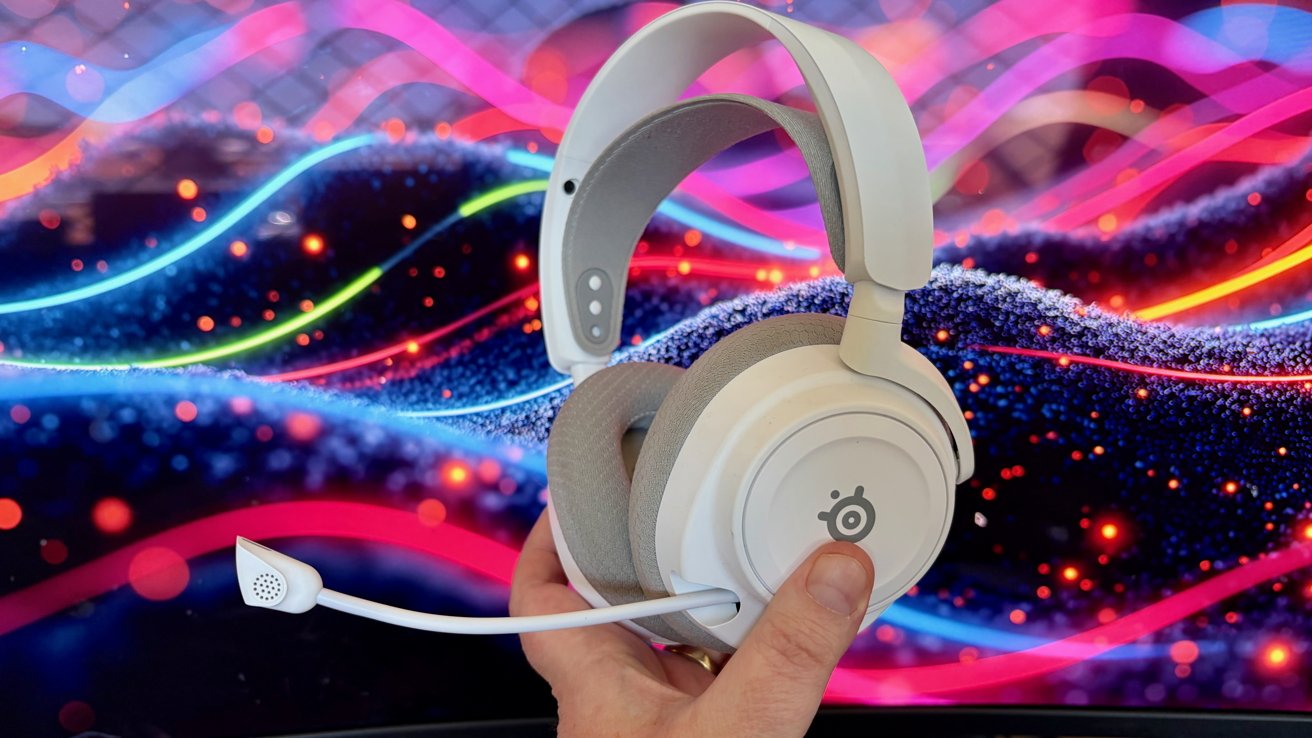
The SteelSeries Arctis Nova 7X Gen 2 is an updated version of a popular headset, adding Mac support for the first time, and it has immediately become the model that all other headsets need to beat.
SteelSeries is a mainstay of the gaming accessory market, making some of the most popular headsets. Its Nova 7 sits towards the top of its audio lineup, and while the X version adds Xbox support, it works with everything.
With this second-generation model, SteelSeries has iterated on a winning formula. The result is one of the best gaming headsets around right now, especially in its $200 price bracket.
With great audio, premium features, and some really well-thought-out additions, SteelSeries really hit the spot with this one. And now, for the first time, Mac gamers can officially get in on the action. And you really should.
Add support for every platform you can think of, and there’s so much to like here. Oh, and it even handles music with aplomb, too.
SteelSeries Arctis Nova 7X Gen 2 review: Design
Right out of the box, the Arctis Nova 7X Gen 2 makes an impression. It feels solid, but not too heavy, and gives the impression that SteelSeries isn’t messing around here.
The headset itself comes in three different colors: black, white, or magenta. I’ve been using the white model for a few weeks now, and it looks as it did when I unboxed it. It’s somehow spotless after hours upon hours of sitting on my head.
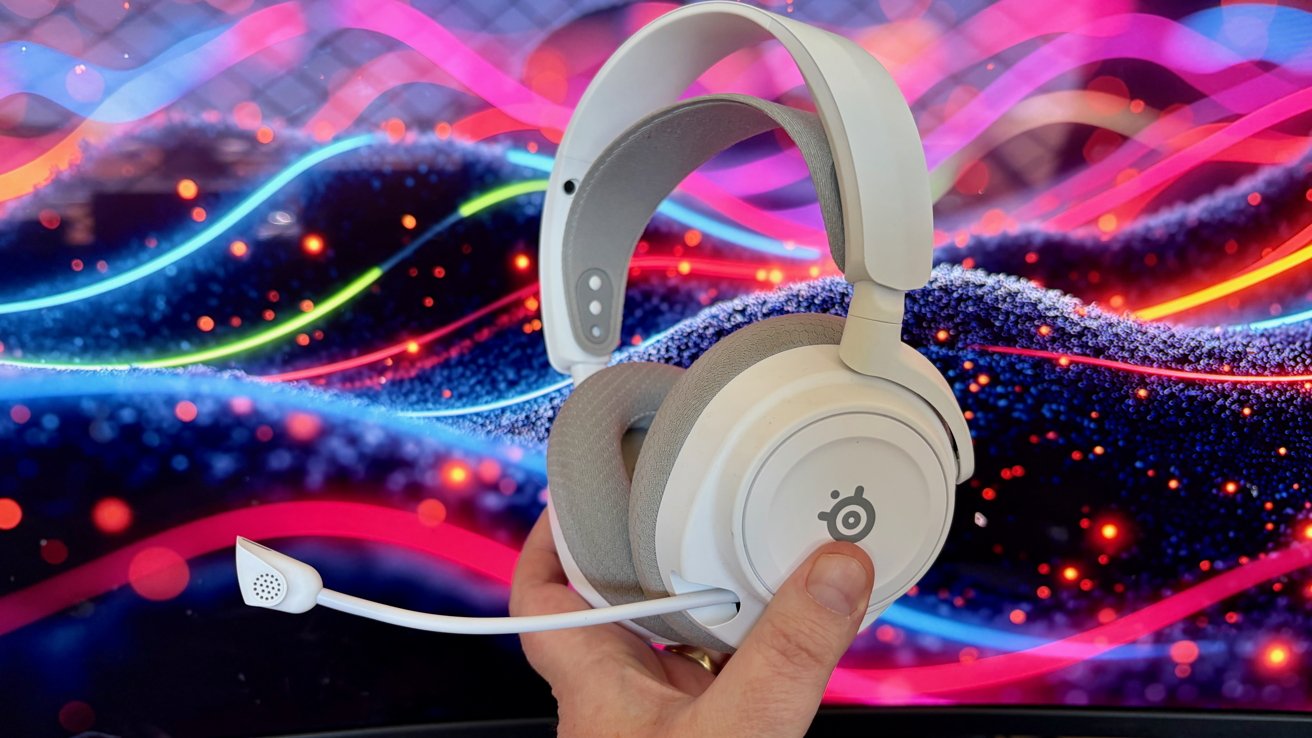
SteelSeries Arctis Nova 7X Gen 2 review: The mic is flexible and retractable
Up top, the Nova 7X Gen 2 comes with a ComfortMax suspension system that sits between your head and the metal-reinforced headband. It’s adjustable to allow for head sizes and acts as a soft cushion to help distribute the headset’s weight.
Moving to the earpads, SteelSeries uses AirWeave memory foam pads, which make for a comfortable fit. The breathability is welcome, while still helping keep outside noise away from your ears.
Each cup is laden with buttons and wheels that handle the headset’s various features. Over on the left, there’s a retractable microphone that disappears when you’re not using it.
Staying with the left cup, you’ll find a volume wheel and a mute button for the microphone. Press it, and a red light appears on the tip of the microphone so you know when it’s active. If it’s off, you’re live.
The power button can be found over on the right cup, as can the Bluetooth button. It’s also where the ChatMix wheel lives, a brilliant feature that I’ll get to in the next section.
As for connectivity, there’s a USB-C port for charging and wired connections under the right cup. There’s also space for a 3.5mm headphone cable beneath the left cup, too.
Speaking of the cups, they rotate so that you can find the perfect fit. But that rotation also makes them easy to place flat on a desk when you’re done playing. That’s something Apple’s AirPods Max and AirPods Max 2 could learn a thing or two from.
SteelSeries Arctis Nova 7X Gen 2 review: Specifications
Let’s kick things off with compatibility, because SteelSeries makes things more complicated than they need to be. Thankfully, there’s an easy fix.
I’ve been reviewing the Arctis Nova 7X Gen 2, but SteelSeries also makes the Arctis Nova 7 Gen 2. The only difference between the two is that the model with an “X” supports the Xbox Series consoles.
The oddity here is that the Nova 7X also supports all the same devices that the standard Nova 7 does. Which raises the question of why there are two versions at all.
I don’t have an answer for that, but I do know that it doesn’t matter. I recommend buying the Nova 7X just in case you ever want to use it with an Xbox in the future. They’re priced the same and come in the same colors, after all.
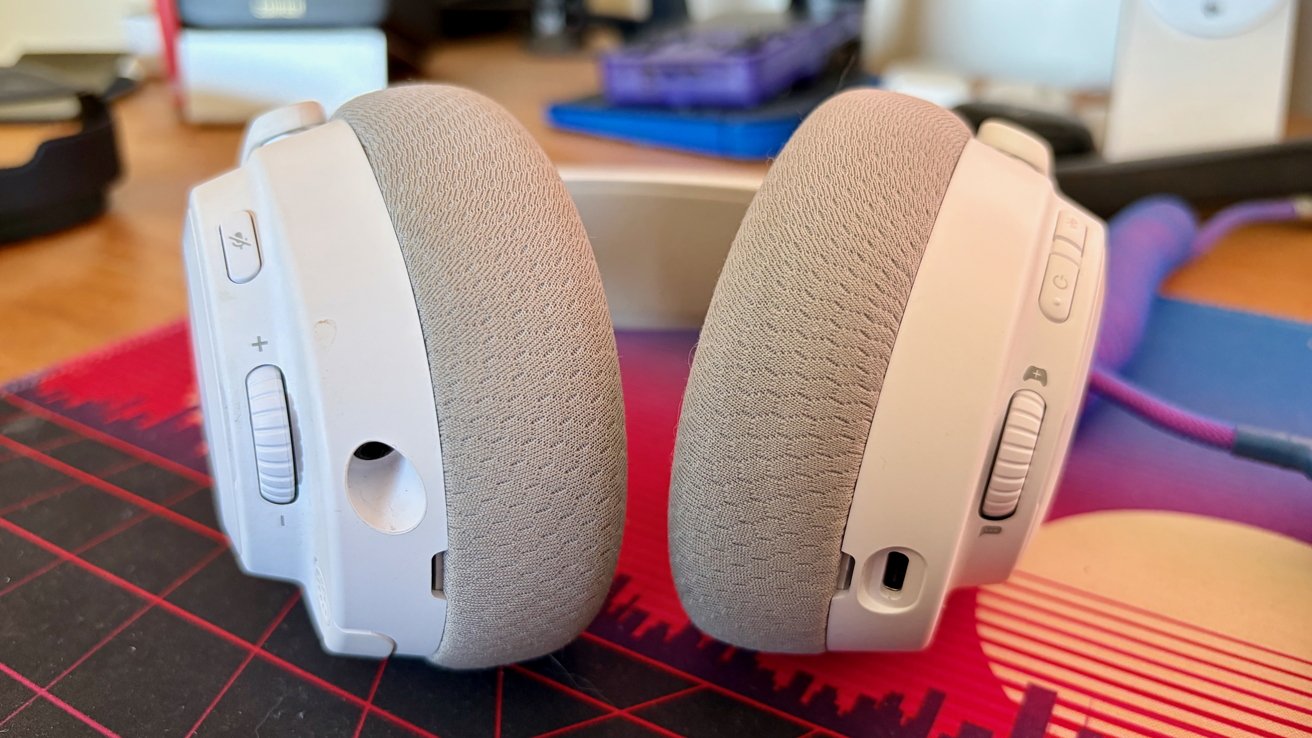
SteelSeries Arctis Nova 7X Gen 2 review: Controls can be found on the headset itself
The full list of devices that the headset works with includes: Mac, iPhone, Xbox, Windows PC, Nintendo Switch and Switch 2, Android devices, and basically anything that supports Bluetooth. But not all of the headset’s features will work on all of those devices, which is a shame.
Depending on the device you’re connecting to, you’ll use either Bluetooth, a cable, or the included 2.4GHz wireless dongle. The dongle is the way to go wherever possible, and it has a switch that enables the Xbox support when you need it.
On the Mac front, the headset works just fine, except there is no support for SteelSeries’ ChatMix feature. And that’s unfortunate, because it’s an excellent feature. Again, more on that in a moment.
Moving into cold, hard specs, the Nova 7X headset sports 40mm Neodymium drivers with a frequency response of 20Hz to 22,000Hz. They certainly pack a punch, that’s for sure.
A good gaming headset’s sound is just part of the equation, though. It needs to have a microphone so you can talk to your friends and talk smack at your foes.
In the case of the Nova 7X Gen 2, you get a retractable microphone that sits flush with the left earcup when it’s not being used. Pull it out, and you can adjust it however you like, ensuring you can place it in just the right spot.
The mic itself uses SteelSeries’ ClearCast Gen 2 technology so everyone can hear you well. That’s backed up by bidirectional noise-cancelling tech, so they don’t also hear your keyboard or surroundings. There’s even a mic EQ with preconfigured settings, should you need to reduce the bass, among other things.
Next, this is a wireless headset, which means it has a built-in battery. And, thankfully, you won’t need to reach for the USB-C charging cable too often.
SteelSeries says the headset can run for 54 hours when connected to the 2.4GHz wireless dongle. That drops to 42 hours when using Bluetooth, and you’ll get 38 hours if you use them simultaneously.
Yes, you read that right. The SteelSeries Arctis Nova 7X Gen 2 can connect to two devices at once; one via Bluetooth, the other via the dongle.
I’ve found that to be a great feature because it allows me to connect the headset to my Xbox and my iPhone simultaneously. That allows me to adjust the headset’s EQ mid-game, something that wouldn’t otherwise be possible.
SteelSeries Arctis Nova 7X Gen 2 review: Features
A headset’s specs mean nothing if they don’t allow its features to shine. Thankfully, the Nova 7X Gen 2 doesn’t have that problem.
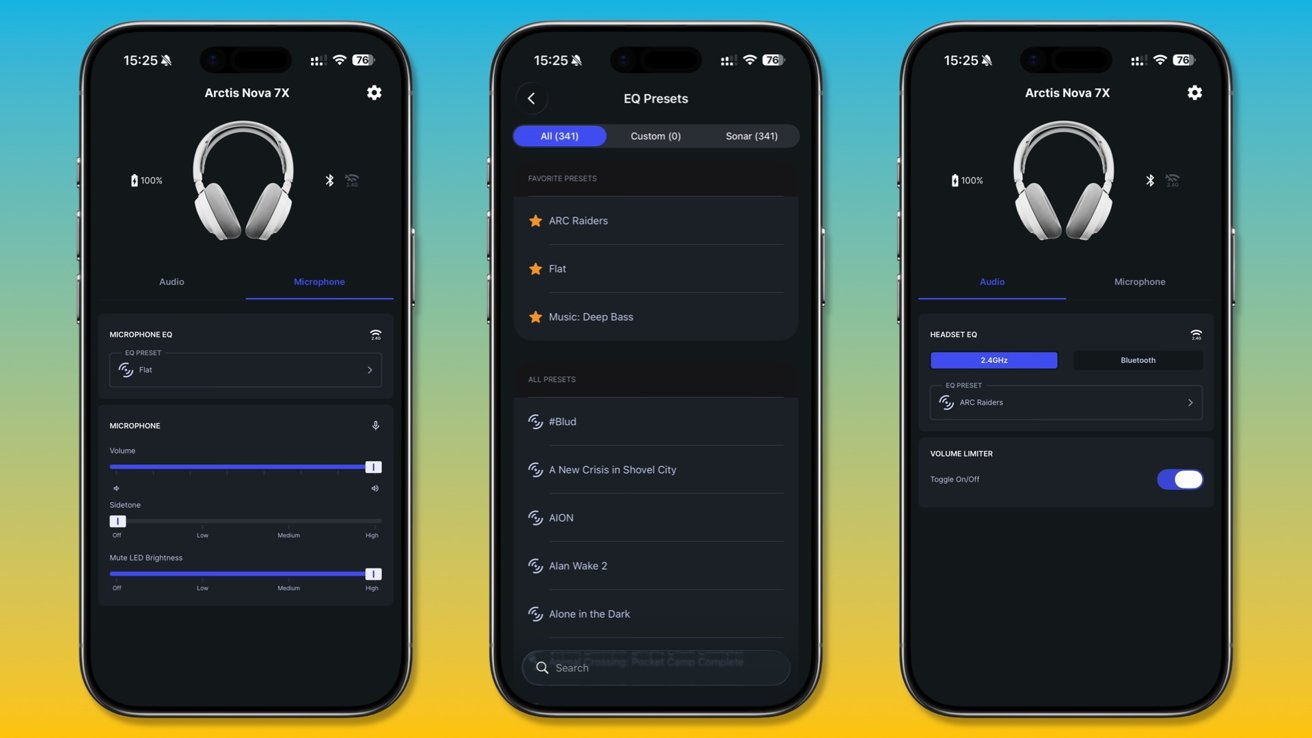
SteelSeries Arctis Nova 7X review: The headset’s companion iPhone app is excellent
We already mentioned that I sometimes change the headset’s EQ on the fly. But that’s only half of the story, because those EQ presets are the star of the show here.
The Nova 7X Gen 2 comes with over 200 presets for you to choose from, and you’ll find the usual suspects like Bass Booster there. But the real fun comes when you start using the game presets.
Choose the game that you’re playing, and the headset’s EQ adjusts to match. And, according to my testing, it makes a huge difference.
I’ve been testing the headset, largely playing “Marathon” and “Arc Raiders” on the Xbox Series X. And it sounded great right out of the box. And then I chose “Arc Raiders” EQ, and everything changed.
I could hear footsteps from further away. It was easier to tell where the enemy was coming from. And all without losing the thumping bass that I enjoyed with the out-of-the-box setup.
The same EQ has done wonders in “Marathon,” a game that relies heavily on using the sound stage to find foes. For a feature that I expected to be a gimmick, I can’t get enough of it.
Both the headphone and microphone EQs can be configured using an iPhone or a Mac. The latter’s more advanced SteelSeries GG app is truly awful, but it offers a custom EQ function the iPhone’s Arctis Companion can’t match.
Another winning feature is ChatMix, and it’s another I’ve made heavy use of when playing multiplayer titles.
ChatMix is a feature that allows you to change the balance of in-game audio and voice chat on the fly. There’s a wheel on the right ear cup so you can adjust ChatMix without ever leaving the action.
Turn the wheel one way, and you’ll hear more of your friends and less game audio. Turn it the other way, and your friends blend into the background as game volume increases.
This is hands down one of my favorite features of this headset, and it fixes a pet peeve I’ve always had with online gaming. It works great when I’m playing games on my Xbox Series X. I just wish it worked on the Mac as well.
SteelSeries Arctis Nova 7X Gen 2 review: Great sound, actually useful features
It should be clear by now that I’m a huge fan of the SteelSeries Arctis Nova 7X Gen 2. It’s my favorite gaming headset right now, and it’s going to take some beating.
Playing “Marathon” and “Arc Raiders,” I’ve found the headset to sound great. A wide sound stage helps pinpoint where individual sounds come from, whether booming gunshots or the pitter-patter of footsteps. And with gobs of bass, you’ll know when something explodes. Then you’ll reach up to turn the volume down before it happens again.
-xl.jpg)
SteelSeries Arctis 7X Gen 2 review: The headset is available in three colors, including white
I’ve had no complaints from my friends and teammates when using the built-in microphone, which is great. And when I’m playing alone, I like that I can stow it for a cleaner look.
I’ve also found that the battery life is just a little short of black magic. Using the 2.4GHz connection should give me 54 hours of battery life. I’ve charged this thing once since it arrived a few weeks ago, and I’ve played a lot of games in that time.
But with all this gushing, it’s important to note that the Nova 7X Gen 2 isn’t perfect. In fact, there’s one missing feature that could be enough to stop a lot of people from buying it.
That feature is active noise cancellation, or ANC. The Nova 7X Gen 2 doesn’t have ANC support and relies on its fit and comfy cup pads to keep the outside world where it belongs.
The good news is that I’ve found the headset to do a good job of just that. But I also tend to play in a quiet room when the rest of the household is in bed. Your mileage may well vary, and if you really need ANC, this headset probably isn’t for you.
And that would be a huge shame, because I really like this headset. I think it’s a great addition for gamers, whether playing on a Mac or elsewhere.
It’s earned a place atop my head for the foreseeable future. And it’ll take an exceptional headset to take its place.
SteelSeries Arctis Nova 7X Gen 2 review: Pros
- Almost never-ending battery life
- Comfortable to wear
- Custom and preset EQ
- Wide gaming sound stage
- ChatMix chat volume control
SteelSeries Arctis Nova 7X Gen 2 review: Cons
- Confusing Nova 7 and 7X lineup
- No active noise cancellation
- Not all features work with all devices
Rating: 4.5 out of 5
Where to buy the SteelSeries Arctis Nova 7X Gen 2
The SteelSeries Arctis Nova 7X Gen 2 costs $199.99 and is available from Amazon in multiple colors. Alternatively, you can also buy the same headset for the same $199.99 from SteelSeries’ website.


Security
Failing to disable a former employee’s account was a huge mistake
PWNED Welcome once again to PWNED, the column where security flubs are held up to the harsh, piercing red light of the vulture signal. This week’s sad story concerns a municipality that failed to perform basic account housekeeping and paid for it dearly.
Have a story about someone leaving a gaping hole in their network? Share it with us at pwned@sitpub.com. Anonymity is available upon request.
Our tale of tech missteps comes courtesy of Nicole Beckwith, who serves as the senior director for security engineering and operations at Cribl, an AI platform for telemetry. She used to work as a consultant, and at one point was hired to investigate breaches in an American city’s network.
A threat actor took a “leisurely tour” of the city’s online resources and had started messing around with conference room projectors and other relatively harmless endpoints. Then they realized that they could change settings with the water utility where they switched many controls off, potentially endangering the water supply.
When Beckwith investigated, she found that all of the mischief was performed by an account that belonged to “Greg from Auditing.” There was just one problem. Greg hadn’t worked for the city for many years.
Unfortunately, even though Greg was no longer around, his account was, and it retained extensive privileges, including domain admin rights, SCADA (Supervisory Control and Data Acquisition) operator access, and even the ability to perform help desk functions. It’s unclear if someone from auditing ever needed this level of access, but a former employee definitely did not.
It wasn’t Greg himself who hacked the network. But he had used his work email address to sign up for various online accounts, some of which may have been exposed in previous data leaks. She speculates the hackers saw an email address with a .gov in it and decided to try their luck with the leaked password that went along with it, and that Greg likely used the same password for work that he did for these outside services.
We have a few takeaways here. First, the people who ran IT security for the city should have both deleted Greg’s account when he left and done periodic audits to see who had access and whether they should still have it.
Second, Greg should have kept his work credentials separate from third-party services like shopping and social media sites. And he should not have used the same password in multiple places.
“The lesson, beyond the obvious ‘please, for the love of all that is holy, audit your dormant accounts,’ is that every forgotten user is an easy ticket to being on the 5 o’clock news,” Beckwith told The Register. “Quarterly access reviews should be mandatory because everyone seems to think when a user leaves, that is the end of it and someone surely terminated access, deprovisioned accounts, removed access to tools, mobile communications, email and other business critical systems, but sadly I’ve responded to way too many incidents like this one because of this simple control which is often overlooked.” ®

Colossal Biosciences says it has grown chickens inside 3D-printed artificial eggshells. “The company says the egg technology could help conserve at-risk bird species,” reports MIT Technology. “It could also play a role in a project to re-create the extinct giant moa, a flightless 12-foot-tall bird that once lived in New Zealand and laid four-liter eggs, larger than those of any living bird.” From the report: The biotech company today claimed it has developed a “fully artificial egg” as part of its effort to resurrect extinct avian species, including birds like the dodo and the giant moa. But “artificial eggshell” would probably be a better description for the invention. It’s an oval-shaped printed lattice, coated inside with a special silicone-based membrane that lets in oxygen, just as a real eggshell does. To generate birds, Colossal took recently laid chicken eggs and carefully poured their contents into the artificial shells, where they continued growing. A window on top lets researchers peek inside. “To see them all moving around in their artificial eggs was absolutely mind blowing,” says Andrew Pask, the company’s chief biology officer. “You really feel you can grow life outside of the womb.”
[…] The work on the artificial eggshell was carried out in Dallas by Colossal’s exogenous development team, or Exo Dev. That group is also trying to develop artificial wombs for mammals, starting with marsupials. “We’re looking at every single facet of what’s happening during a mammalian pregnancy to unpack exactly how we then go about recapitulating that,” says Pask. For that team, an artificial eggshell is a relatively quick and easy technical win. That’s because chickens are already an example of ex utero development. After an egg is laid, a small embryo sitting on top of the yolk starts growing, drawing nutrients from the yolk, the white, and even the shell, which provides calcium. (Colossal says it has to add ground-up calcium to the artificial eggs.)
In order to create a moa, Colossal will have to genetically alter another type of bird, changing potentially thousands of DNA letters. But so far, chickens are the only bird species that can be genetically engineered. And that’s via a tricky process of editing stem cells that produce egg and sperm. Scientists have to add or delete DNA letters from these cells and then inject them back into an egg. The resulting bird will carry the genetic changes in its gonads — and then be able to pass them on. Pask says Colossal’s idea is that it could modify avian stem cells enough to produce moa-like sperm or eggs. But then you might have the odd situation of a chicken laying an egg with a moa embryo inside it. “You would have chickens making moa egg and moa sperm. But it’s still a chicken egg,” he says.


CrystalDiskInfo 9.9.0 adds a new feature to help users spot counterfeit Samsung SSDs, an increasingly common problem as fake high-end drives are becoming more convincing. The utility can flag suspicious drives by checking hardware identifiers and firmware data.

EasyJet boss says summer flights won't be hit by jet fuel shortages

U.S. Treasury sanctions crypto wallets tied to Sinaloa Cartel fentanyl network

Snooki Says She ‘Couldn’t Breathe’ After Cosmetic Procedure


-

 Crypto World5 days ago
BloFin War of Whales 2026 Grand Prix opens registration for $5M trading championship
-

 Fashion6 days ago
Weekend Open Thread: Theory – Corporette.com
-

 Crypto World6 days ago
E-Estate Announces 1 Year Live: Washington DC Summit as Real Estate Tokenization Enters Its Next Phase
-

 Tech6 days ago
Tech Moves: Microsoft AI leader jumps to OpenAI; former AI2 exec joins Meta; and more
-

 Tech5 days ago
Google reimburses Register sources who were victims of API fraud
-

 Crypto World7 days ago
Google’s Gemini AI Predicts Incredible Solana Price by the End of 2026
-

 Business6 days ago
H&R Real Estate Investment Trust (HR.UN:CA) Q1 2026 Earnings Call Transcript
-
 Entertainment7 days ago
Zara Larsson Has Blunt Response To Chris Brown Diss
-

 Sports5 days ago
Napoleonic enters 2026 Doomben 10,000 field via Abounding withdrawal
-
 Crypto World5 days ago
BeInCrypto 100 Institutional Awards Nomination: KAST for Best Digital Assets Neobank and Best Digital Assets Fintech
-

 Crypto World5 days ago
Bitcoin Battles US Bond Nerves With BTC Price Dip Toward New May Lows
-

 Fashion4 days ago
On the Scene at Gucci’s Cruise Show in New York City: Mariah Carey, Kim Kardashian, Lindsay Lohan, Iman, and More!
-

 Crypto World5 days ago
Wall Street’s Boldest Gold Prediction Has Russians Rushing to Buy
-

 Crypto World5 days ago
ICE and CME urge US regulators to curb Hyperliquid energy trading
-

 Politics6 days ago
DWP PIP Timms review continues to be an absolute farce
-

 Fashion5 days ago
Trending Western Style Vests Perfect for Summer
-

 Entertainment6 days ago
David Letterman Returns to Late Show, Blasts Cancellation
-

 Crypto World5 days ago
IREN closes $3 billion convertible notes deal amid AI infrastructure expansion
-
 Crypto World6 days ago
Lido Finance Selects Chainlink CCIP as the Official Cross-Chain Infrastructure for wstETH Security
-

 Fashion4 days ago
Amazon Sundays: Memorial Day Hosting
You must be logged in to post a comment Login