




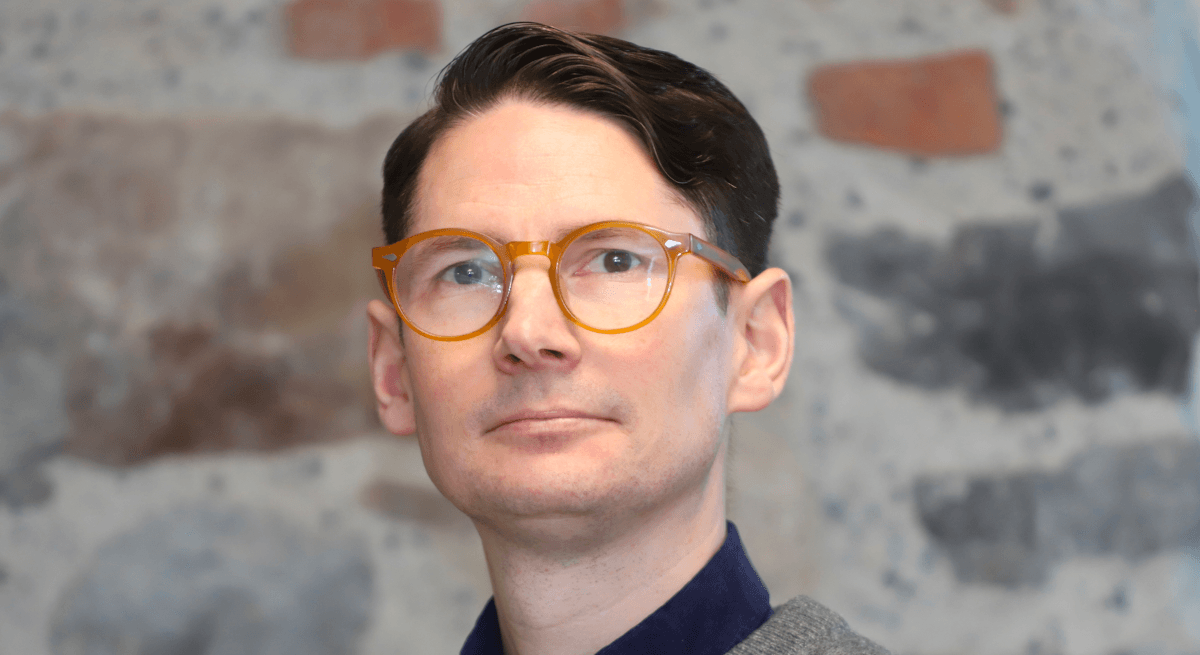

Rent the Runway’s Mark Walsh discusses the tech ecosystem in Galway and how he found himself in the role of director of engineering.
It was “half accidental and half strategic, with the accidental being the bigger half, as my kids would say”, joked Mark Walsh, when asked what led him to become the director of engineering at Rent the Runway’s Galway location.
“On the accidental side, I began my tech career in a start-up in Spiddal in Galway, and spent a decade working as a software engineer,” he said. “Then came the advent of DevOps and a wave of emerging technologies beyond Java, which pulled me into different areas, cloud, solution architecture and even product management-type roles.
“People management arrived completely by accident about six years ago, not as any great career strategy, and it has evolved from there into what I do today.”
Prior to joining the organisation he was commuting to a different role, four hours there and back, which he explained took a toll on his family life. Moreover, he had always planned on returning to Galway.
“I wanted to return to Galway. Crucially though, I was focused on a destination, not just another job. Rent the Runway was somewhere I already knew through former colleagues, it had the kind of opportunities that genuinely motivated me and it felt like somewhere I could add something meaningful rather than just fill a seat.”
What is the current engineering landscape like in Ireland?
I have to be honest and say I can’t speak adequately for the tech landscape much beyond Galway, as that would be overstepping what I actually see day to day. What I will say is that from a Galway perspective, the picture is more positive than the broader headlines might suggest.
There is a real depth of engineering talent here, and a sense that you don’t need to be in the capital city to work on interesting, complex problems at scale. The mix of homegrown companies maturing alongside international organisations that have put down genuine roots has created a stronger local ecosystem than people sometimes give it credit for. It is not without its challenges, but the opportunity feels real.
What does a typical day look like, if there is such a thing?
There genuinely isn’t one, which I think is part of what keeps it interesting. As a US company, our natural overlap with our US team members falls in the afternoon Irish time, so that tends to be where the collaborative work lands: cross-team meetings, planning sessions, working through anything that needs real-time conversation across time zones. Mornings are generally freer, which I try to protect for focused work, Galway-based one-to-ones, or anything that benefits from uninterrupted thinking time.
The nature of the work itself shifts depending on where we are in the cycle. We run quarterly planning and within that there are shorter-term operational necessities running alongside medium-term delivery work and longer horizon strategic efforts. As a platform team with an SRE mindset, that means BAU maintenance such as managing upgrades across our existing portfolio, future-looking initiatives addressing our strategic vision such as platform migrations and responding to emergent support or security issues as they arise.
What is the current focus of your work and its potential long-term impact?
The intent is always the long-term health of Rent the Runway as a platform and a business. In practical terms that means a few things running in parallel: reducing operational overhead and complexity where it has built up over time, managing risk and compliance thoughtfully and continuing to advance our existing capabilities while staying open to where new opportunities might emerge.
What I find genuinely motivating about engineering at this level is that the decisions you make about architecture, tooling and how teams are structured have a compounding effect. Good calls made now create headroom for the business to move faster later. Poor ones create drag that someone, usually a future version of your team, has to unpick.
So while the immediate focus is always on what needs to happen this quarter, the framing I try to bring to it is, what are we making easier or harder for ourselves two or three years from now?
How does the field of research impact your role at Rent the Runway?
When I hear the word research I tend to map it back to engineering practice as a whole. My teams are engaged in continuous research, whether we label it that way or not, because the technology landscape never stops moving.
The old saying that today’s problem was yesterday’s solution is as true now as it has ever been, arguably more so. My teams are always engaged in some form of discovery work: reducing technical uncertainty, evaluating emerging approaches, making sure that what we build is robust, secure and fit for purpose beyond the immediate delivery. That process of deliberate inquiry is baked into how our engineering teams operate, even when it doesn’t carry the formal title of research.
Have you any advice for professionals considering a research-oriented role in the engineering space?
My advice is, even if it sounds old-fashioned, given the pace of change right now, don’t abdicate your thinking completely to your tooling.
The engineers and knowledge workers I see navigating uncertainty well are those grounded in the fundamentals, reasoning through complex problems, communicating clearly about risk and sitting with ambiguity rather than rushing to the first solution. Those qualities are always in demand, at least with me.
Staying current matters and I am not suggesting otherwise. But understanding why you are reaching for a particular approach, rather than just something that appears to work, has always been important. Value your judgement and decision-making rigour first, the tools will follow.
Don’t miss out on the knowledge you need to succeed. Sign up for the Daily Brief, Silicon Republic’s digest of need-to-know sci-tech news.

























































You must be logged in to post a comment Login