









Connect with us

Tech

Smuggled $250 North Korean Smartphone Keeps a Secret Album of Your Screen

Published

on

Smuggled North Korean Smartphone
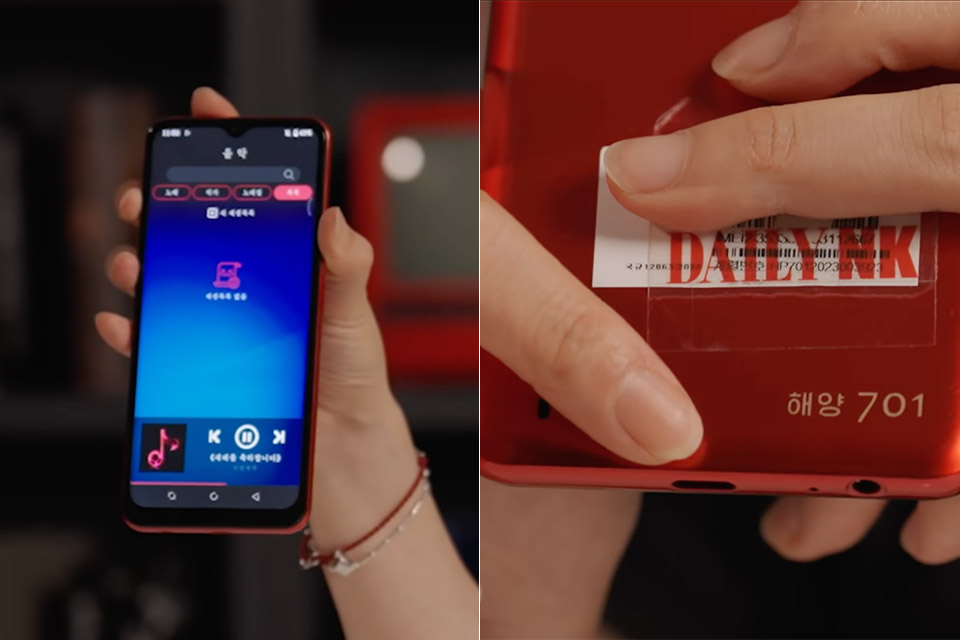
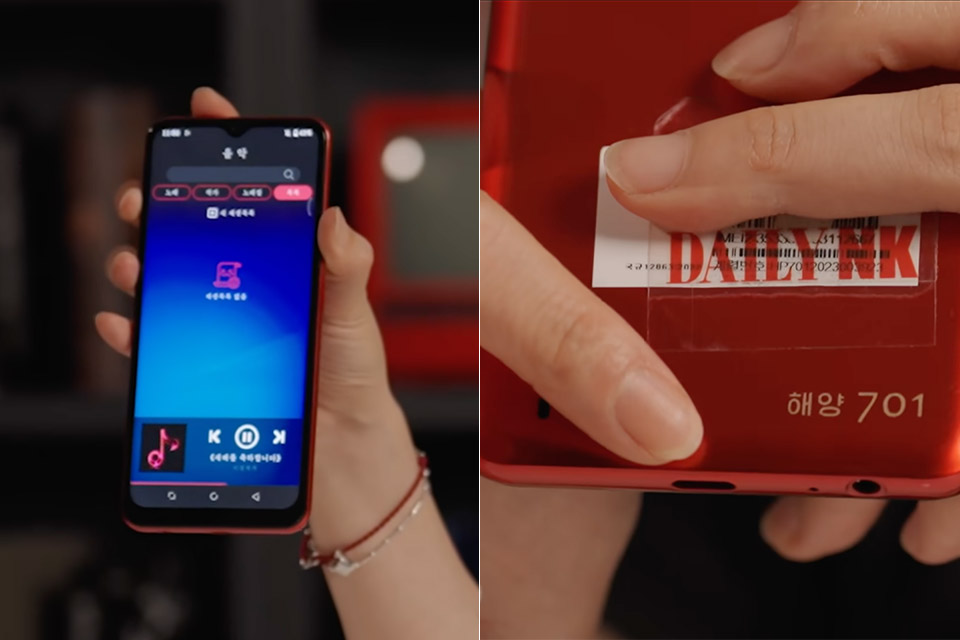
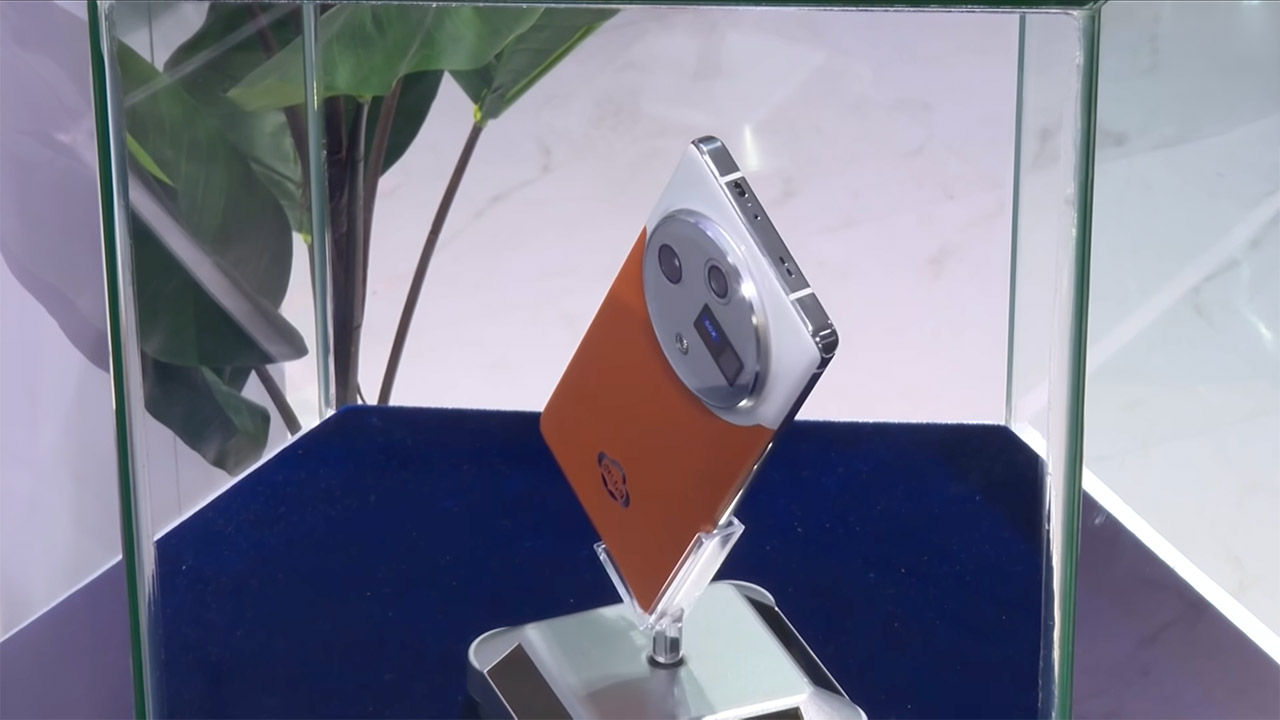
Daily NK, a Seoul newsroom that reports on the North, handed Wall Street Journal reporter Dasl Yoon a mid-tier smartphone carried out of the country in 2023. The device is a Hyang 701, built that same year, and it looks like any other Android phone until you start tapping. It handles voice calls, texts, and a full set of apps. It will not reach the open internet. Wi-Fi stays locked. The only network available is the state-run intranet.


When you open your home screen, you’ll see the usual suspects, such as music and documentaries, as well as a game whose logo looks suspiciously similar to NBC. One of the apps resembles China’s Alipay in that it allows you to scan a QR code to send or receive money in your local currency or USD, as well as call a taxi directly from the same page. As a shopper, you can browse stores, watch approved TV and movies, and play games. One of the games let you to run around as Lionel Messi in a soccer title. The country list is also quite long, with a variety of countries represented, however for some reason, the United States and South Korea are missing.

Sale


Samsung Galaxy S25+ Cell Phone, 256GB Smartphone, Unlocked Android, AI Night Mode Camera, Snapdragon…
  • MULTIPLE TASKS WITH ONE ASK: Streamline your day with an assistant that gets you. Ask it to Google search for a pet-friendly vegan restaurant nearby…
  • START THE DAY SMARTER: Stay one step ahead with a phone that gives you the info you need before you even know you need it with Now Brief.²
  • REDUCE THE NOISE. REVEAL THE MAGIC: AI Camera with Audio Eraser lets you capture vibrant videos in low light and minimize unwanted noises so you can…

Ryu, a former North Korean soldier who crossed across to the other side, recognized the layout right away, having purchased one of these phones on the illicit market. It cost him about $250, which is a lot when you consider that a military officer’s monthly salary is only slightly more than a dollar. So only the richest 10 percent of the population can afford one of these pricey phones.

Advertisement

Smuggled North Korean Smartphone
If you type Kim Jong Un into the search bar, the letters become bold; however, if you type the South Korean phrase for South, a warning flash will appear, stating ‘banned’. Trying to enter the South Korean slang for boyfriend, which is popular in K-dramas, will have auto-correct replacing it with the more innocent phrase “male buddy”. It’s all part of the regime’s efforts to prevent foreign culture, particularly that from across the border, from taking root.

Smuggled North Korean Smartphone
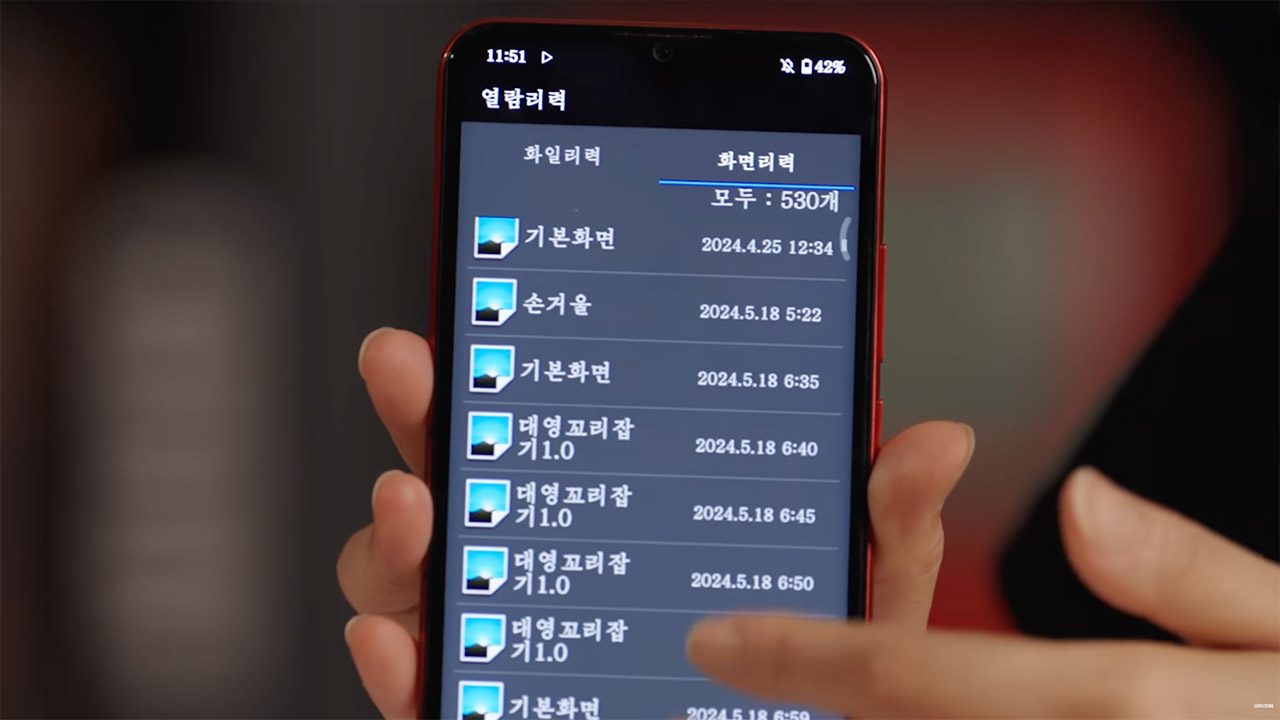
Ryu stated he never watched any American or South Korean films on his phone, which may not sound like a big deal, but according to the law back home, that carries a five-year prison term. Anyone caught distributing the files would be executed, and he had strong reason to be cautious. On his phone, there is a folder called ‘watch history’ that automatically fills up with screenshots of everything you are viewing. The strangest element is that the captures happen at random, and you can’t even uninstall the files or the software itself, as if the state had its talons around you. Officials can just return later to evaluate all of the pages you visited.

Smuggled North Korean Smartphone
Smartphone use has expanded far beyond Pyongyang, but the more things change, the more they remain the same, since every convenience comes with a cost, and the phone continues to monitor what you’re doing and who you’re talking to, as well as police the words you’re permitted to type.
[Source]

Source link

Continue Reading
Click to comment

You must be logged in to post a comment Login

Leave a Reply

Tech

Xylitol Linked To Strokes and Heart Attacks, Study Finds

Published

on

An anonymous reader quotes a report from The Guardian: A common sweetener used in products such as chewing gum, toothpaste, jam, yoghurts and ice-cream has been linked to an increased risk of strokes, heart attacks and death. Xylitol is a sugar alcohol present in some natural foods in very low amounts. It is also added — often in amounts 1,000 times higher — to artificially sweeten foods, beverages and oral care products. Despite its growing use, the long-term health impacts of xylitol have never been widely studied.

In the largest study of its kind, researchers found high blood levels of xylitol were associated with an increased risk of major adverse cardiovascular events. The findings were presented in Munich at the European Society of Cardiology (ESC) annual congress, the world’s largest heart conference. Researchers looked at 17,710 people and compared the 25% with the highest levels of xylitol in their blood against the 25% with the lowest. Those who had the highest amount were 57% more likely to die or suffer a heart attack or stroke, than those with the least, within six years. Even after 30 years, they were still 18% more likely to have suffered one of these cardiac events.

Taken with data from the middle quartiles, the results from both cohorts suggested a dose-dependent relationship: the higher the xylitol blood levels, the higher the cardiovascular event rate. Furthermore, the researchers showed that there was consistent increase in cardiovascular events with xylitol irrespective of baseline characteristics, such as age and sex. The researchers also highlighted that the association was independent of underlying factors such as body mass index, hypertension, diabetes and lipid levels, which might predispose people to low-calorie products.

Read more of this story at Slashdot.

Advertisement

Source link

Continue Reading

Tech

NESCD-001 Slides a Compact Disc Drive Under the Original Nintendo Entertainment System

Published

on

NESCD-001 Nintendo Entertainment System Mod
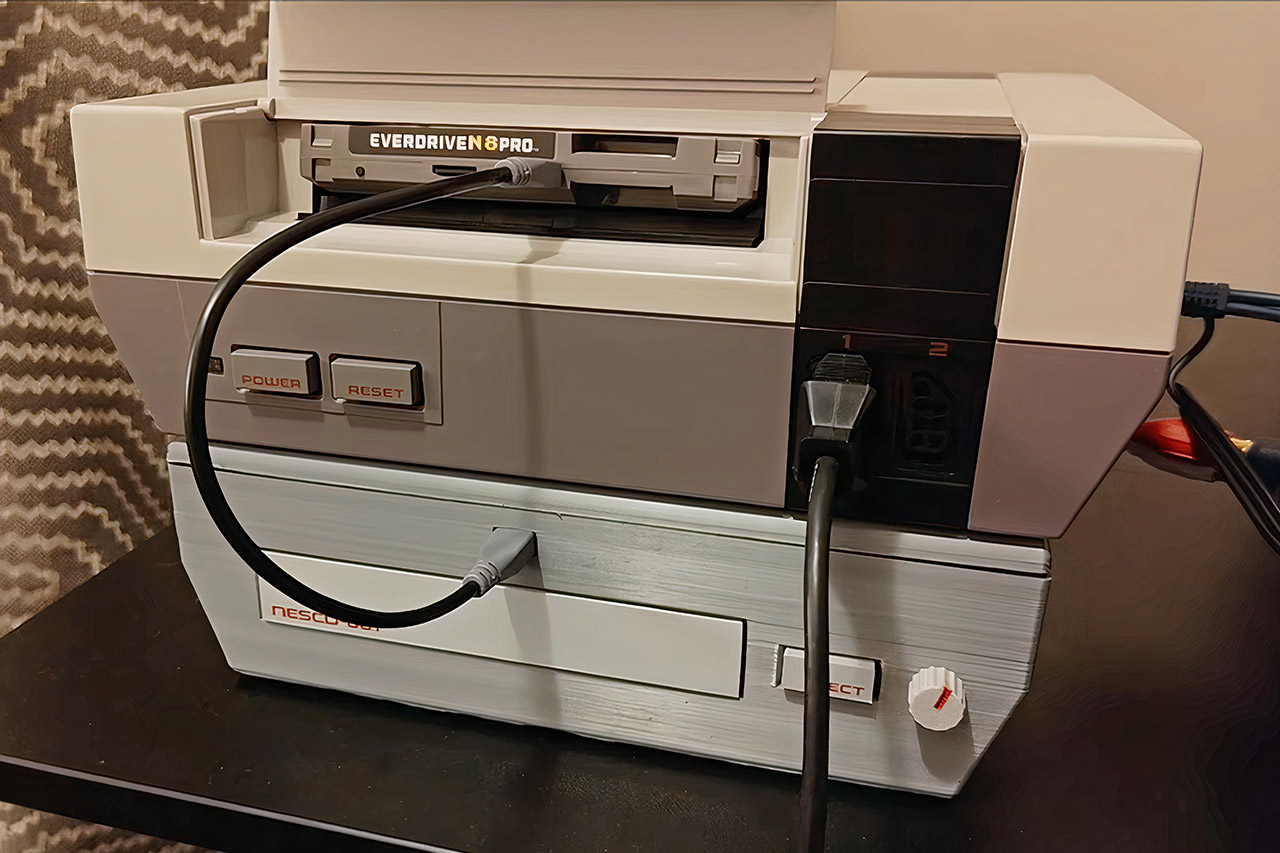
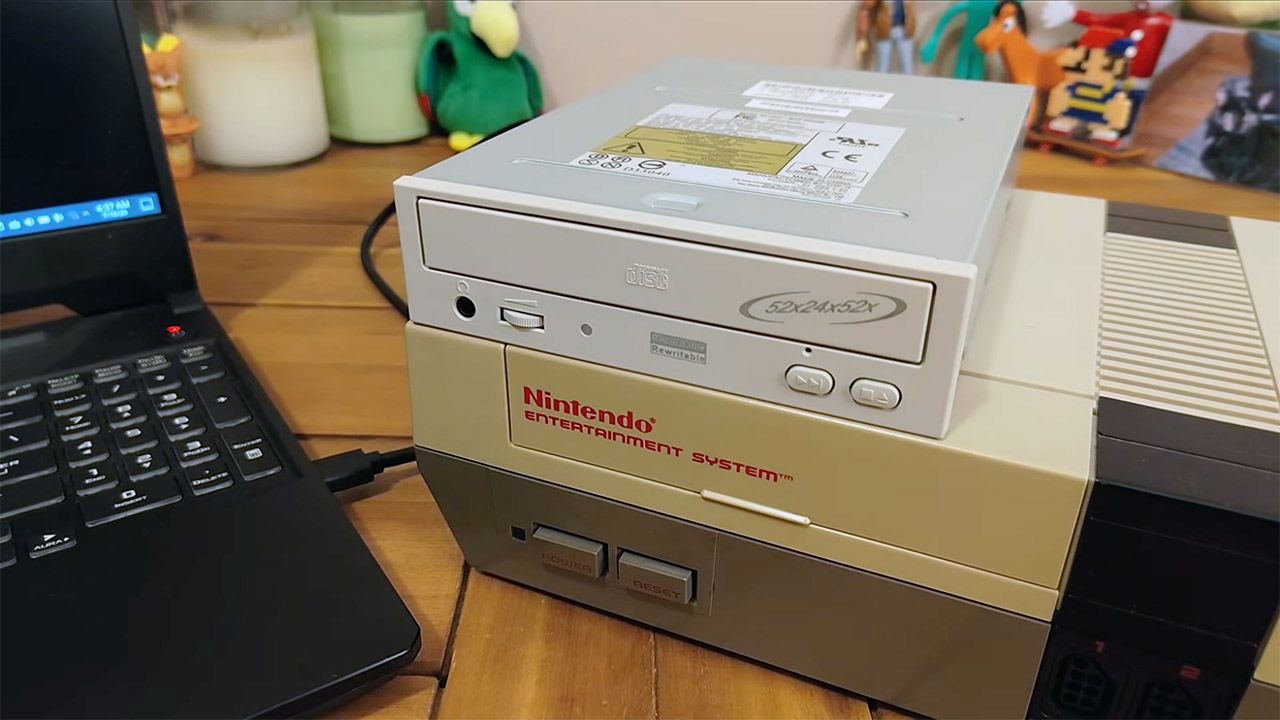
Nintendo and Sony spent the early nineties arguing over a Super NES compact disc attachment that never reached store shelves. Throaty Mumbo read that history and aimed lower, at the original front-loading NES, a console with no disc hardware and an expansion port that sat unused on the bottom of millions of gray boxes. His project page calls the result NESCD-001, an unofficial homemade compact disc add-on built for fun and documented in a build video plus a public GitHub repo.


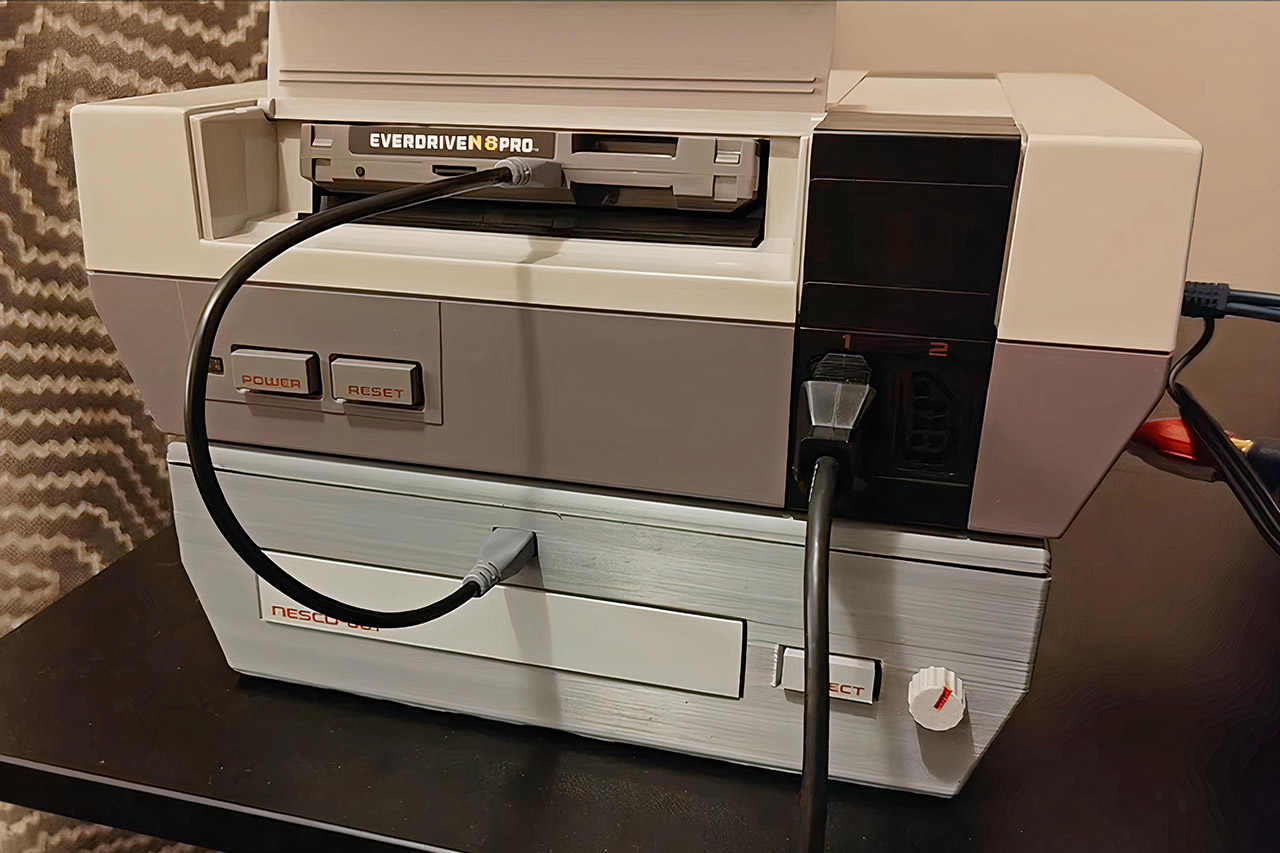
His finished unit is a gray 3D printed slab that fits under the console in the same way as the old Famicom Disk System did. A white disk tray with glossy red lettering faces forward, accompanied by an eject button and volume knob. Inside, there’s a conventional 40-pin IDE compact disk drive (the Pacific Digital Mach 52, as seen in the movie), a custom circuit board, a PCM5102 converter, and an RP2350B microcontroller that communicates with both the drive and an Everdrive N8 Pro flash cartridge. The printable shell files and sticker art for that board layout are available in the same source as the board layout itself.

NESCD-001 Nintendo Entertainment System Mod
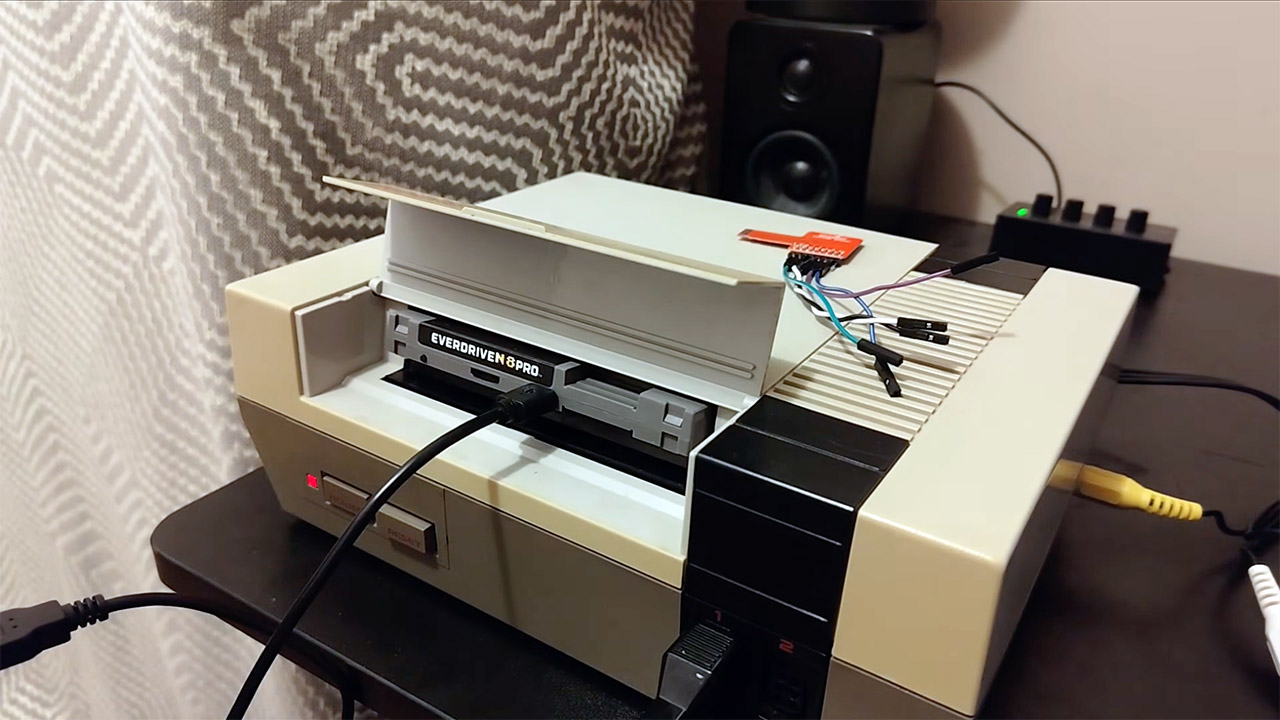
Games do not run directly from the disc in the same way as later CD consoles do. What happens is that the RP2350B reads the ROM from the disk, transfers it to the Everdrive over USB, and runs it. After things are up and running, the microcontroller monitors a CHR mailbox at memory address 0x21FF8 for any requests from the running game, which could be for additional audio or a chunk of full motion video. Frames of video are delivered over the same USB link and written into NES video memory using proprietary bitstream code from the Cyclone IV FPGA already installed on the Everdrive N8 Pro.

NESCD-001 Nintendo Entertainment System Mod
Then there’s the audio side, which has gone its own way on purpose. Compact disk sound exits the PCM5102 and enters the NES via the expansion port mixer pin, an input pin that Nintendo slipped onto American hardware but never seemed to use. That method prevents any additional sound from clogging the already congested USB link, while simultaneously allowing the front knob to do something. One Molex cable from a wall adapter supplies 5 and 12 volts to the drive and board. A buck converter then reduces the 12V to around 9.5V, allowing you to utilize a spare NES power plug to power the console from the top of the box, using only one outlet to power the entire stack. Of course, you can still use the original brick to power the NES.

NESCD-001 Nintendo Entertainment System Mod
Proof of concept can be found on a homemade disc labeled “Super Mario Bros. CD edition”. Yes, it’s still the 1985 platformer, but now the music comes from compact disc recordings and small cutscenes pop in. Mario and Luigi are talking about a picnic, while Bowser is checking into a local hotel. When you take the disk out, the extra layer stops working. Early tests also ran standard cartridge games through the Everdrive while the drive and board were being wired, including a sanity check to ensure Contra was still operational when some flash carts decided to cause problems.

NESCD-001 Nintendo Entertainment System Mod
The full motion video functionality is still very much in beta. Something Nerdy Studios already showed that an Everdrive N8 Pro can push Bad Apple across the full NES screen from an SD card by stuffing tiles into CHR RAM as fast as the machine will take them. Throaty Mumbo leaned on that work for a disc-fed version, then held the firmware back because parts of it were reverse engineered from that demo.

Source link

Advertisement
Continue Reading

Tech

5 New Milwaukee Packout Products Available In August 2026

Published

on


We may receive a commission on purchases made from links.

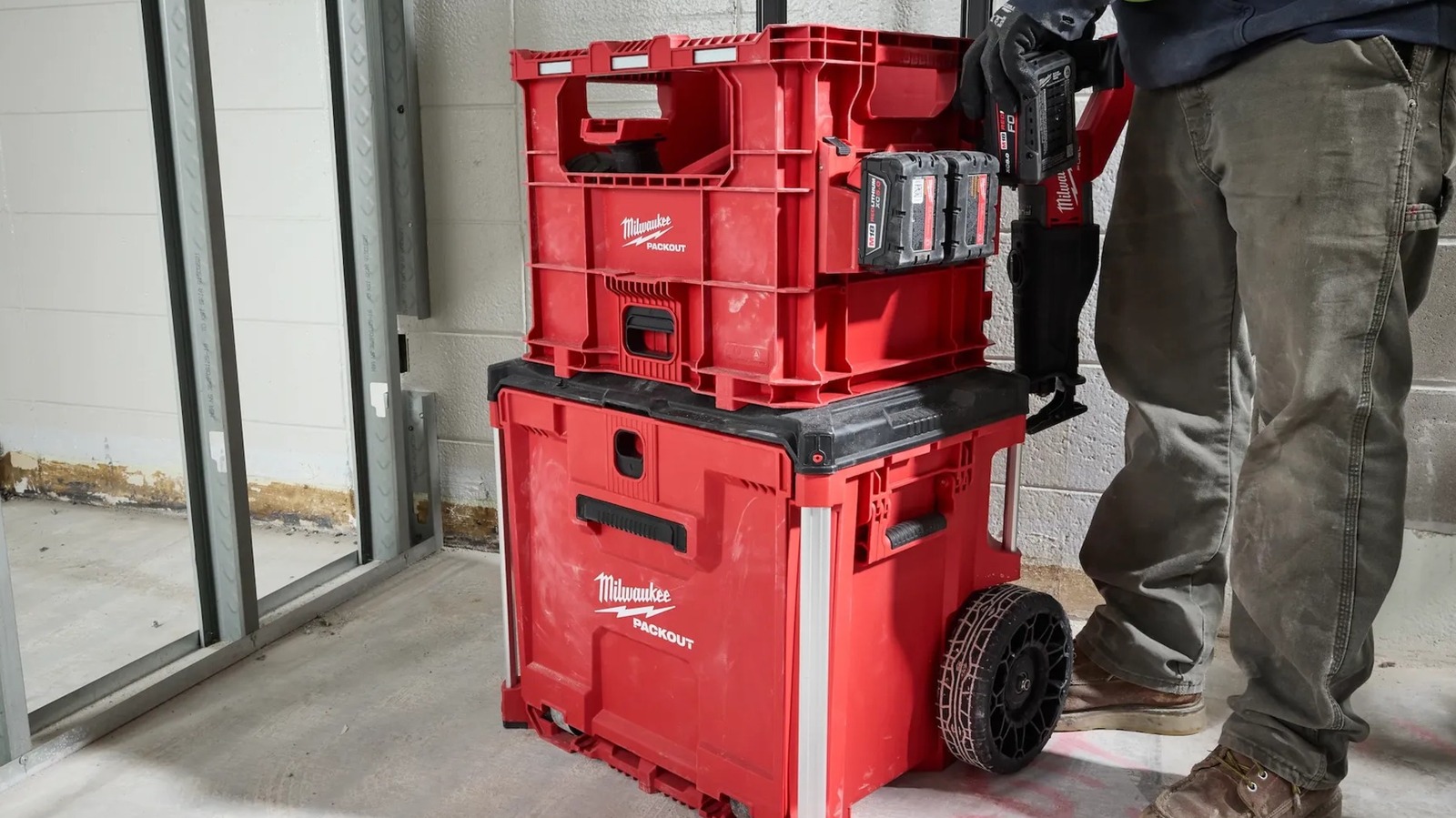
One of the Milwaukee hardware brand’s claims to fame is its Packout series of stackable storage options. These feature various types of storage crates and drawers, as well as add-ons like lights and lunch coolers to liven up your workspace, all of which can be stacked and locked into a mobile tool tower. Given that Packout is one of Milwaukee’s standby systems, the brand is always working on new additions, including both large and small storage boxes and crates to fit assorted use cases.

Advertisement

For the month of August 2026, most of Packout’s new developments are focused around various types of simple, quick-access crates. These include crates you can quickly pull tools from and place back, as well as relatively simple tool boxes with locking drawers for safety and security. All of these new products are available at participating retailers like Home Depot, Ace Hardware, and Acme Tools. If you’re a fan of the Packout system, consider perusing the latest offerings for new and interesting additions to your existing Packout stack.

Advertisement

Milwaukee Packout XL Crate

As good as Packout is at keeping your tool collection organized, sometimes you just want a reliable spot where you can quickly dump whatever you’re using and pull out something else without fussing with drawers and latches. To add such a spot to your Packout stack, that’d be a use case for the Milwaukee Packout XL Crate, available at Home Depot for $69.97.

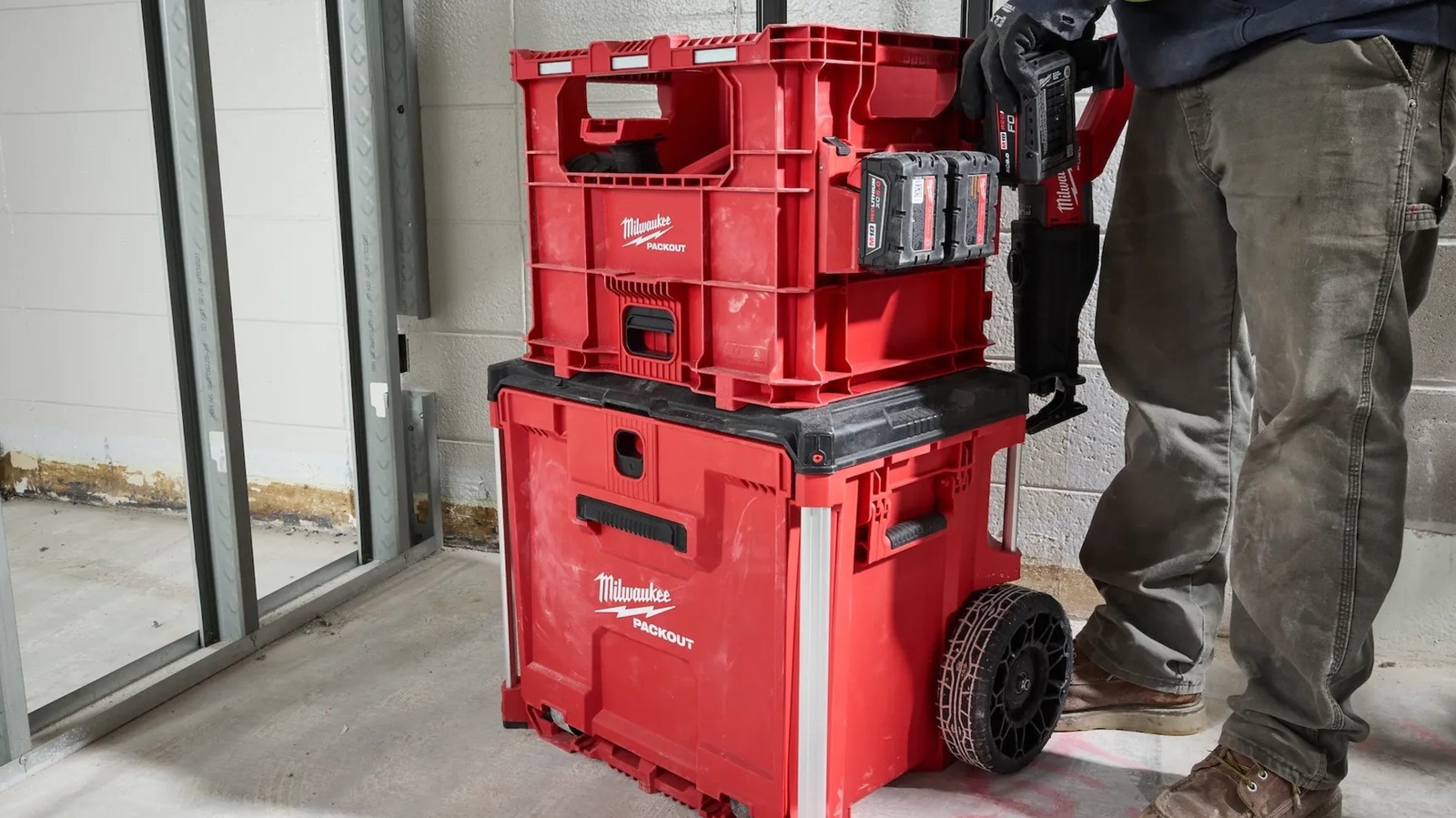
The Packout XL Crate is exactly what it sounds like: An extra-large crate with the necessary latches to snap onto a Packout stack, though it can also clip onto the side of a stack to hang freely. It has a 75-pound carry capacity for hauling assorted tools and accessories, as well as mounting spots for hanging tools like power drills or battery chargers. While you can reach right into the top of this crate to grab a tool, if there’s something else stacked on top of it, you can also reach into the large opening at the front, which still provides enough clearance for deposit and retrieval.

Advertisement

Milwaukee Packout Wire Pulling XL Crate

Depending on your line of work or crafting interest, you may need different types of modular storage to best suit your purposes. For example, if you’re an electrician regularly working with different types and lengths of wire, a regular storage crate may not be the optimal choice for storing your large wire spools. In this specific use case, Milwaukee offers the Packout Wire Pulling XL Crate, available at Home Depot for $119.00.

At a glance, this crate is very similar to the regular Packout XL Crate. It has several of the same features, including a 75-pound carrying capacity, an easy-retrieval front opening, and the ability to both stack and hang on a Packout stack. Where it differentiates itself is in the interior mounts specifically designed to hold up to six spools of 500 feet, 12-gauge THHN wire. The mounts allow the spools to spin when their wire is pulled, so you can grab all the wire you need without having to move the spools around. As an extra perk, the front opening has wire retention slots, which hold pulled wire in place and help keep everything organized.

Advertisement

Milwaukee Packout Low-Profile Crate

If you’ve already got a very tall Packout stack, adding more full-sized crates and drawers on top isn’t the best idea. At a certain point, it’s going to become too high to comfortably reach into, not to mention potentially at risk of toppling over. Rather than stacking another full-sized crate on top of everything, it may be better to add something a little smaller, such as the Milwaukee Packout Low-Profile Crate. It’s available at Home Depot for $44.97.

This Packout crate is best-suited for the top of your Packout stack, with an open top that you can reach into to grab whatever you need, as well as a body that’s about half the size of a regular Packout crate. It has a slightly reduced carrying capacity — 50 pounds versus the usual 75 pounds — but it still has all of the necessary latches to clip onto a stack, plus integrated side handles for easier carrying. It also comes bundled with a set of quick-adjust dividers, including eight short dividers, two long dividers, and one middle divider, which you can use to set up the interior of the crate to your liking.

Advertisement

Milwaukee Packout Compact Crate

The Packout Low-Profile Crate is designed to give you some extra storage space while reducing your Packout stack’s vertical profile. However, that’s not the only way you can reduce your stack, as you can also opt for a crate that slices down vertically instead of horizontally. Such is the design of the Milwaukee Packout Compact Crate, available at Home Depot for $39.97.

Advertisement

This crate is the inverse of the Low-Profile Crate, being approximately as tall as a regular crate while being half as wide. This means you can stack two of them at once on top of a regular crate if you want to keep two sets of tools or accessories separate from each other. Like the Low-Profile Crate, it comes with two customizable dividers, as well as a large front opening you can reach into to grab something. One noteworthy difference between this crate and others is that it has an integrated folding metal handle, which you can use to haul a handful of tools when you need to take a quick jaunt away from your main stack.

Advertisement

Milwaukee Packout Single Drawer Tool Box

While the majority of Milwaukee’s new Packout offerings for August 2026 are various forms of crates, there are some outliers. For example, if you want storage with a little bit of extra security in the form of a locking drawer, an open crate may not be the best choice. Rather, that may be a job for the Milwaukee Packout Single Drawer Tool Box, available at Home Depot for $164.00.

As opposed to the crates being primarily accessible from the top, the Single Drawer Tool Box conceals a sliding drawer that you can pop open and access from the front, even when it’s in the middle of a tall Packout stack. The box comes bundled with one large divider and two regular dividers for organizing the inside, and it has mounting points on the side for hanging tools and chargers, with a total carrying capacity of 50 pounds. That said, the most important feature is the locking metal security bar, which keeps the drawer firmly closed when not in use and in transit.

Advertisement


Source link

Continue Reading

Tech

What The Numbers On Your Chainsaw Chain Actually Mean

Published

on


The numbers stamped on your chainsaw chain are the shorthand that tells you exactly which replacement chain will fit your saw safely. But there’s no single universal code across all brands. Stihl, Husqvarna, Oregon, and all the other major chainsaw brands each use their own marking systems, and the placement of those numbers can vary from the chain’s drive links to the bar’s heel or even the packaging.

What almost every system conveys are three core specs: pitch, gauge, and drive-link count. Pitch is the chain’s “size,” defined as half the distance between any three consecutive rivets; common values are ¼”, .325″, ⅜”, and .404″. Gauge is the thickness of the drive links, typically .043″, .050″, .058″, or .063″. Drive-link count is simply how many drive links form the full loop; it determines overall chain length and must match the bar’s specified length.

On many of the best chainsaws, pitch and gauge are stamped directly on the side of each drive link on the chain. Guide bars often carry stamps near the powerhead end, listing bar length, pitch, and gauge; some also include the required drive-link count. For example, Husqvarna’s X-CUT chains show pitch and gauge as single digits on the drive link (e.g., “8” and “5” for ⅜” pitch and .050″ gauge), while Stihl encodes gauge as a final digit (1 = .043″, 3 = .050″, 5 = .058″, 6 = .063″). Oregon, by contrast, uses a two-digit “series” code on the drive link that maps to a specific pitch-and-gauge pair.

Advertisement

Reading the stamps without guesswork

Start by locating the markings. On the chain, look at the flat side of the drive links for small stamped numbers or codes. On the guide bar, check near the base where it meets the powerhead; you’ll often see a string like “16 3/8 .050 57DL” or a brand-specific code. The first number is usually bar length in inches, followed by pitch and gauge, and sometimes the drive-link count.

Decode pitch first: if you see “⅜” or “.375,” that’s ⅜” pitch; “.325” and “.404” are also common. Gauge will appear as a decimal like .050 or .063, or as a single digit in certain brand codes. Drive-link count may be shown as “57DL,” “57,” or embedded in a longer part number; it must match exactly, or the chain won’t fit the bar and sprocket properly. You can also measure manually. For pitch, measure across any three consecutive rivets and divide by two. For gauge, use calipers on the thickness of a drive link where it engages the bar groove. Then count the drive links around the full loop.

Advertisement

Finally, remember that matching all three specs — pitch, gauge, and drive-link count — is non-negotiable, and it critical for chainsaw maintenance. A chain with the right pitch but the wrong gauge can wobble or bind; the wrong drive-link count won’t wrap the bar correctly. When in doubt, use your saw’s model number and the bar’s stamps to look up the exact chain in the manufacturer’s chart rather than guessing from generic numbers.


Advertisement

Source link

Continue Reading

Tech

The World's Busiest Spaceport Is About To Get a Lot Quieter, At Least For Now

Published

on

SpaceX is significantly reducing Falcon 9 launches from Florida this year, ending the Space Coast’s decade-long run as the world’s busiest spaceport as more missions shift to Vandenberg Space Force Base in California. The slowdown is expected to continue until Starship begins flying regularly from Florida. Longtime Slashdot reader schwit1 shares a report from Ars Technica: A Falcon 9 launch early Tuesday was the last planned Starlink mission from Cape Canaveral until SpaceX begins flying Starship missions from Florida, according to Kiko Dontchev, the company’s vice president of launch. For at least the rest of the year, and maybe longer, this means the launch rate at the Florida spaceport will drop from eight or nine per month to perhaps two per month.
It wasn’t long ago when two launches per month was the norm, an indication of just how quickly SpaceX’s launch cadence has grown. Cape Canaveral and Kennedy Space Center sit on adjoining property and share the same range on Florida’s east coast, so it is worth considering them a single spaceport. The last time the Florida spaceport did not lead the world in space launches was in 2015.
“From here on, Starlink missions out of Florida will fly on Starship,” Dontchev wrote on X. “The West Coast team will continue regularly launching Starlink from Vandenberg.” “Yep, that’ll be louder — but everybody knows the real action will be in Louisiana, starting in 2029 or so,” writes schwit1. SpaceX on Tuesday announced plans to spend up to $100 billion building a new Starship launch facility in Vermilion Parish, Louisiana, which the state says could eventually “support thousands of launches annually.”

Further reading: Musk’s other unstated reasons for shutting down Falcon 9 in Florida (Behind The Black)

Read more of this story at Slashdot.

Advertisement

Source link

Continue Reading

Tech

AI Is Accelerating Vulnerability Discovery. Can Defenders Keep Up?

Published

on

AI pressing a button

Author: Gene Moody, Field CTO at Action1

AI can help us find vulnerabilities faster than ever. But what happens when the rest of the vulnerability management ecosystem can’t keep up?

When Vulnerability Volume Outpaces the System

In April, NIST released a statement regarding updates to NVD operations that reflects a necessary response to scale. CVE volume has grown beyond what the current enrichment model was designed to handle. As part of the change, roughly 30,000 vulnerabilities published before March 1, 2026, were reclassified as “Not Scheduled.”

Prioritization, automation, and selective processing are reasonable adjustments in principle. In practice, however, the shift introduces a set of risks that may not be fully understood, particularly for those responsible for defending enterprise environments.

Advertisement

The pressure is not theoretical. Action1’s 2026 Software Vulnerability Ratings Report found that disclosed vulnerabilities across the enterprise software categories analyzed increased 92% in 2025 compared with 2024. Critical and high-severity vulnerabilities increased 103% each, while vulnerabilities enabling remote code execution increased 128%. 

Today, the volume of disclosures that must be validated, enriched, prioritized, and ultimately remediated is likely to place even greater pressure on systems designed for a slower era of vulnerability discovery.

The core issue is therefore not simply the existence of a backlog. Backlogs are an expected outcome in any system operating under rapid growth. The concern is how that backlog is managed and, more importantly, what signals are created by the decision to prioritize newer vulnerabilities over older, unprocessed ones.

What Happens When Enrichment Falls Behind

By focusing enrichment efforts only on recent CVEs, the system implicitly deprioritizes vulnerabilities that may already be known, confirmed, and, in some cases, actively discussed by vendors or researchers but lack full NVD context. 

Advertisement

This creates an information asymmetry of a particularly difficult kind: partial intelligence without the second half that makes it readily actionable. Security teams that rely heavily on NVD as a normalized source of vulnerability information may see incomplete or delayed data.

Attackers, meanwhile, do not need to wait for standardized enrichment before correlating vendor advisories, security research, patch releases, exploit information, and public disclosures.

That gap matters because enrichment is not cosmetic. Structured metadata, affected-platform information, severity scoring, configuration details, and other contextual information allow defenders to determine whether a vulnerability actually applies to their environment and how urgently it should be addressed.

When that information is missing or delayed, organizations are often forced to either wait for additional context or make decisions using fragmented information. Neither outcome is ideal in a threat landscape where exploitation can move faster than internal validation and remediation processes.

Advertisement

But That’s Not All

There is also a second-order effect that is harder to quantify but equally important. A rolling backlog that is continuously fed while being selectively drained creates uncertainty about coverage. Without a clear commitment to processing older entries within a defined timeframe, the backlog becomes a semi-permanent condition.

Some vulnerabilities will be enriched quickly, others will remain in limbo, and there will be limited visibility into which category any given CVE falls into at a given moment.

For practitioners, this overly complicates prioritization. If affected-product information such as CPE data is incomplete or overly broad, organizations face a greater risk of false positives. Teams may spend time investigating vulnerabilities that do not apply to their environment while potentially overlooking risks that do.

Over time, this will certainly erode confidence in the dataset and push organizations to build alternative intelligence pipelines. That will lead to additional cost, tooling, and operational complexity. As well, as one may predict, increasing failure rates.

Advertisement

Action1’s 2026 Software Vulnerability Ratings Report found enterprise application exploitation surged 800% in the last year.

Explore which software categories saw the biggest shifts in vulnerabilities, severity, and attacker activity. 

Read the Report

Vulnerability Management Is Changing

None of this suggests that NIST is acting irresponsibly. The scale problem is real, and the existing model was not designed for the volume of vulnerability information now entering the ecosystem.But the introduced trade-off pushes more responsibility downstream.

Organizations will need to rely less on a single authoritative source and more on correlation across multiple sources, including NVD, vendor advisories, independent vulnerability-intelligence providers, threat intelligence platforms, and internal asset inventories.

Advertisement

Zoom out, and the view is that vulnerability management is becoming less about consuming a curated list and more about synthesizing accurate intel from incomplete data in near real time. That requires maturity, tooling, and process discipline that not all organizations currently possess. 

If this direction continues, the NVD will remain a critical component of the vulnerability-management ecosystem, but it will no longer function as a comprehensive baseline on its own. Instead, it becomes one input among many, and one that may lag significantly behind the realities of exploitation in the field.

The more important question then becomes not simply, “What vulnerabilities exist?” but “Which of them affect us, which represent the greatest risk, and how quickly can we act?”

How Defenders Should Adapt

The first lesson is that vulnerability management can no longer depend on any single source of enrichment. NVD remains enormously valuable, but security teams increasingly need to subscribe to cumulative works of vendors and organizations that aggregate the available data into usable intelligence

Advertisement

More importantly, collecting additional feeds is only part of the answer. More information can simply create another prioritization problem. The real objective is to turn fragmented vulnerability intelligence into a decision: Does this vulnerability affect us, how urgent is it, and what can we do about it now?

This is the model Action1 has adopted for vulnerability management. Rather than relying exclusively on NVD enrichment, Action1 combines intelligence from sources including VulnCheckNVD++, NIST NVD, CISA’s KEV Catalog, Microsoft’s own MSRC data, and vendor release notes, then scores each vulnerability based on CVE data, CVSS severity, CISA KEV status, and known usage in ransomware campaigns, providing initial prioritization in minutes.

That intelligence is correlated with real-time endpoint data so teams can determine which vulnerabilities actually affect software deployed in their environment and prioritize remediation accordingly.

Once an affected endpoint has been identified, remediation should not require another export, manual correlation exercise, or lengthy handoff before patching begins. 

Advertisement

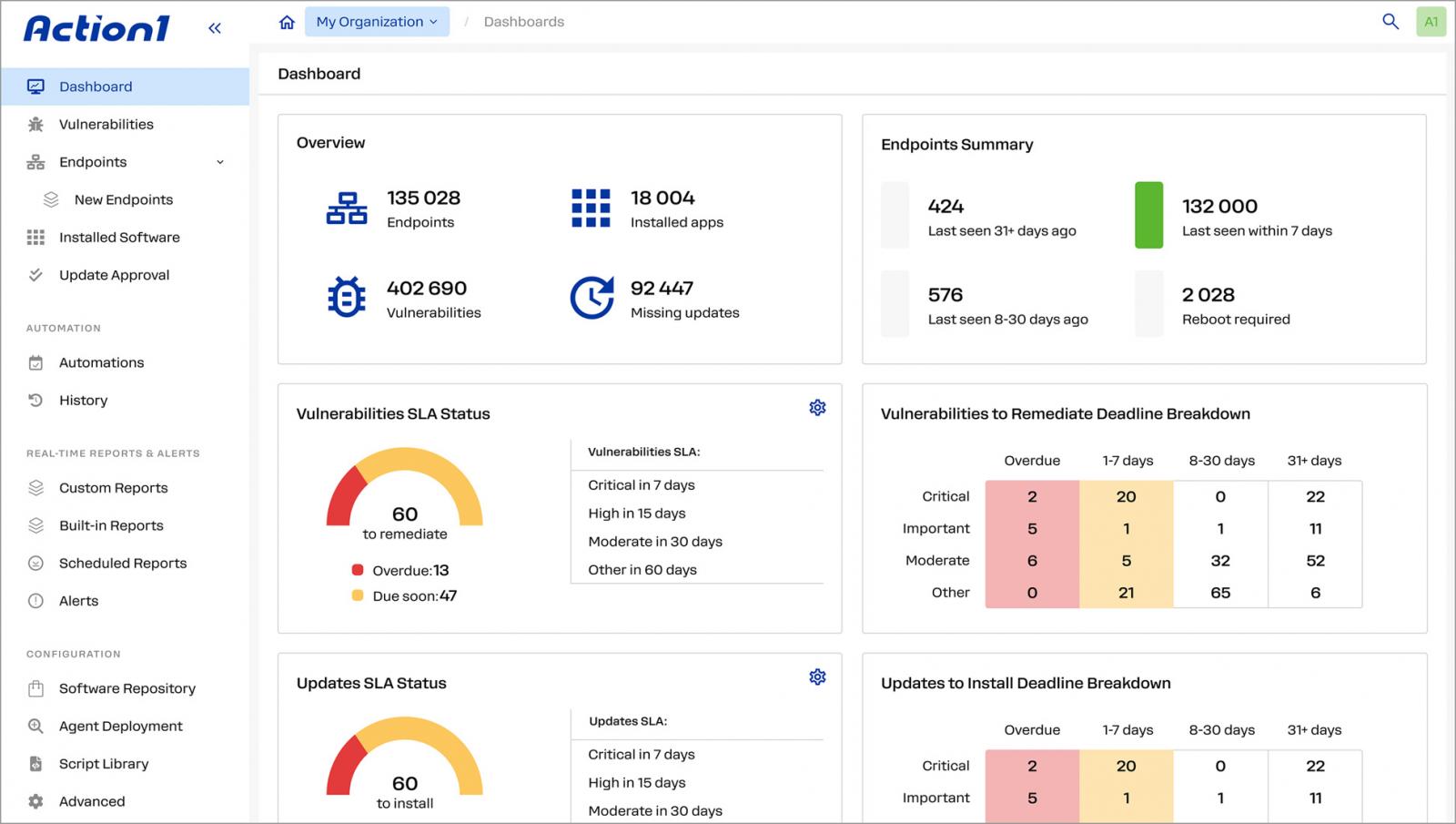
Action1 brings vulnerability assessment and remediation into the same workflow, allowingorganizations to move from learning that a vulnerability exists to reducing actual exposure much faster, all from a single console.

Action1 dashboard

The AI vulnerability era will not be defined by how fast IT and security teams can find flaws, but by how quickly they can understand, prioritize, and patch them. Discovery is accelerating, soremediation must accelerate with it.

See how Action1 connects real-time OS and third-party vulnerability intelligence with automated remediation to help your team reduce exposure faster. 

Start free and scale when you’re ready.

Advertisement

Sponsored and written by Action1.

Source link

Advertisement
Continue Reading

Tech

Watch Tottenham vs Newcastle: Live Streams, Team News & TV Channels

Published

on

The Tottenham vs Newcastle live stream involves two teams looking for their first wins of the new season. Tottenham were humbled by Brentford on matchday one, while Newcastle were denied all three points by a last-gasp Liverpool equaliser.

There were few positives for Roberto De Zerbi to take from this side’s display against Brentford. Spurs finished 17th last season, and their performance at the Gtech Community Stadium was worse than most of their showings in 2025/26. The only saving grace is that Tottenham’s starting XI will be significantly different going forward, starting with the visit of Newcastle.

Advertisement

Source link

Continue Reading

Tech

How to watch Apple’s iPhone 18 Pro and iPhone Ultra launch live

Published

on

Apple’s next big iPhone event is almost here, with the iPhone 18 Pro, iPhone 18 Pro Max and the company’s first foldable, the iPhone Ultra, all expected to make their debut.

The event will also mark the first major Apple product launch since John Ternus takes over as CEO on September 1. As with recent launches, Apple will combine an in-person gathering at Apple Park with a prerecorded presentation.

When is the iPhone 18 Pro/Ultra event?

The event will take place on Wednesday, September 9, starting at 10am PDT (1pm EDT). For other regions, the event starts at 6pm BST in the UK, 7pm CEST in Central Europe and 10:30pm IST in India. Viewers in China can tune in at 1am CST on September 10, followed by 2am JST in Japan and 3am AEST in Sydney.

Apple’s official event page also includes an Add to Calendar option, which automatically adjusts the event time for your location. It’s worth opening the stream a few minutes early, particularly if you want to catch the opening announcements.

Advertisement

How can I watch the event?

The simplest option is to watch through Apple’s official event website using Safari or another web browser. The stream is free, and you don’t need an Apple TV+ subscription to watch it. You can also use the Apple TV app on supported Apple devices.

Advertisement

If you have an Apple TV 4K, open the TV app and look for the event on the Home screen. If it doesn’t appear immediately, you can search for the event or open Apple’s website using another device. There’s also the option of watching on a larger screen with AirPlay. To do this, start the stream on an iPhone, iPad or Mac and send it to an Apple TV 4K or compatible smart TV. The devices must be connected to the same Wi-Fi network.

Windows PC and Android users aren’t left out. You can watch the presentation directly through Apple’s website or use the official YouTube livestream. The YouTube listing is already available, and selecting Set Reminder will send you a notification when the event begins.

Advertisement

If you miss the live presentation, Apple will make a replay available through its event website and Apple TV app. The YouTube stream will remain available too, so you can catch up later.

What will be announced?

The headline products should be the iPhone 18 Pro, iPhone 18 Pro Max and iPhone Ultra, with the latter potentially being Apple’s biggest iPhone change in years. The iPhone Ultra is expected to be Apple’s first foldable iPhone. Therefore, it puts the device directly into competition with foldable phones that Samsung, Google and other manufacturers have been producing for years.

Apple isn’t expected to unveil the entire iPhone 18 range at this event. The standard iPhone 18 is reportedly part of Apple’s new split launch strategy and should arrive later. This leaves September’s event focused on the company’s premium models.

Advertisement

Advertisement

The Apple Watch Series 12 and Apple Watch Ultra 4 are also expected to join the new iPhones. Together, these will round out Apple’s usual autumn hardware refresh.

Source link

Advertisement
Continue Reading

Tech

How Much Is A 1980 Toyota Corolla Worth Today & What Did One Cost Brand New?

Published

on


The Toyota Corolla is one of the Japanese automaker’s best-selling vehicles, coveted for its reliability and cost effective maintenance. The Corolla has been around since 1966, and it has taken a lot of shapes and forms to get where it is today? The 1980 Corolla is part of the fourth generation, costing just $5,208 for the base model, according to J.D. Power. That’s $22,352.76 in today’s money, which is surprisingly around the cost of buying a new 2026 Corolla. 

However, you can now buy a 1980 Toyota Corolla for as low as $1,600 — although the average price of sold Corolla from that year is around $10,500, per Classic.com at time of writing, as it becomes a more desirable collector car, especially for those with nostalgia for the ’80s. 

Advertisement

Despite being over 40 years old, the 1980 Corolla is, well, still a Corolla. Owners say it’s still reliable after all these years, even with high mileage. It’s low-maintenance, economical, and fuel efficient. “If you were going to buy a new car and keep it 41 years — or forever — it’s simply the best choice, whether that was in 1980 or 2021,” Curbside Classics‘ Paul Niedermeyer said while reporting on a man’s 40-plus years of ownership and 261,000 miles. During that time, the owner had done general maintenance himself, and paid a relatively low $500 for cheap replacement parts, including a radiator, water pump, and air filter kit. 

Advertisement

What engine did the 1980 Toyota Corolla have?

The 1980 Toyota Corolla is the second year of the fourth generation model, unchanged from 1979. The fourth generation model had an extended wheelbase and a sharper body design. There were also seven variations, including two- and four-door sedans, a hardtop, a coupe, a liftback, and a two- and four-door van. Every body type had a water-cooled, inline four-cylinder engine. 

The 1980 Corolla made 75 horsepower — not bad for a commuter vehicle weighing just 2,090 pounds. This allowed for top speed of 98 mph, and a 0-60 time of 12.4 seconds. Still, its engine wasn’t considered impressive in the 1980s, when horsepower was on the rise again and quarter mile icons like the 300 hp Buick GNX were coming back in style. With no performance versions to speak of, the fourth generation Toyota Corolla has been sort of forgotten compared to more popular generations.


Advertisement

Source link

Continue Reading

Tech

Judge strikes down Anthropic blacklist, says government retaliated over Pentagon criticism

Published

on

What just happened? A federal judge has ordered the Trump administration to rescind its designation of Anthropic as a supply-chain risk, ruling that the government violated the AI company’s First Amendment rights. The decision found the designation was not supported by evidence of a genuine national-security threat and instead stemmed from Anthropic’s objections to Pentagon plans for using its AI models.

US District Judge Rita F. Lin ruled late Thursday that the government failed to show Anthropic posed a national-security threat. Instead, she found that officials acted against the company after it publicly challenged the Pentagon’s plans for using AI.

“Defendants’ contemporaneous words and deeds confirm that the challenged actions were based on a desire to make a public example out of Anthropic for its ‘arrogance’ in criticizing the government,” Lin wrote.

The ruling requires the government to withdraw guidance, directives, and other communications that blacklisted Anthropic or labeled it a supply-chain risk.

Advertisement

Anthropic sued the administration in March after talks with the Pentagon over military use of its AI models broke down. The company had asked for limits on the use of its technology in fully autonomous weapons and domestic surveillance. The Pentagon wanted an agreement allowing the military to use Anthropic’s models for any legal purpose.

The dispute centered on whether Anthropic could place limits on how the government used its models after making them available to federal agencies. The Pentagon viewed Anthropic’s proposed restrictions as too narrow for military operations. Anthropic said the limits were needed for high-risk uses of AI.

Government lawyers argued that the Pentagon was allowed to choose vendors it considered reliable. They said Anthropic could make undisclosed changes to its models that might affect military operations.

“The Department of War needs to trust that its AI vendors are going to be forthright and honest with the department,” government attorney James Harlow said during court arguments.

Advertisement

Lin questioned that position during the case. At a July hearing, she called the government’s argument that it could retaliate against a contractor for criticizing the administration “really troubling” and “quite extreme.”

The designation had immediate business consequences for Anthropic. The company said the government action led to hundreds of millions of dollars in canceled, shortened, or delayed contracts. Documents filed in the case showed rivals, including OpenAI, were preparing to replace Anthropic in parts of the federal government.

The decision also comes as Anthropic’s technology remains in use across the US government. Claude has been used by the military, including in the January raid in Venezuela and the war with Iran. Other federal agencies continue to use Anthropic products, including Fable and Mythos.

Lin said that continued government use undercut the Pentagon’s claim that Anthropic was a national-security risk. She had previously issued a preliminary injunction in March that blocked parts of the designation while the case moved forward.

Advertisement

Anthropic and the administration reached a separate agreement in June that allowed the company to release Fable and Mythos following a shutdown tied to security concerns. That agreement did not resolve the lawsuit over the blacklist.

The Defense Department did not immediately respond to a request for comment. The administration could appeal Lin’s decision. A separate case involving Anthropic remains before a federal appeals court in Washington, which denied the company’s request in April to block other parts of the designation.

Source link

Advertisement
Continue Reading

Trending

Copyright © 2025