



Connect with us
DAPA Banner
DAPA Coin
DAPA
COIN PAYMENT ASSET
PRIVACY · BLOCKDAG · HOMOMORPHIC ENCRYPTION · RUST
ElGamal Encrypted MINE DAPA
🚫 GENESIS SOLD OUT
DAPAPAY COMING

Tech

SOLAI Launches $399 Solode Neo Linux AI Computer

Published

on

BrianFagioli writes: SOLAI has launched the Solode Neo, a $399 Linux-based mini PC designed for always-on AI agents, browser automation, and persistent developer workflows. The compact system ships with an Intel N150 processor, 12GB LPDDR5 memory, 128GB SSD storage, Gigabit Ethernet, WiFi, Bluetooth, and a Linux-based operating system called Solode AI OS. The company says the device supports frameworks and tools including Claude Code, OpenAI Codex, Gemini CLI, and Hermes, while emphasizing local control, automation, and privacy-focused workflows running directly from a home network.

While SOLAI markets the Solode Neo as an “AI computer,” the hardware itself appears aimed more at lightweight automation and cloud-assisted agent tasks than heavy local inference. The low-power Intel N150 should be sufficient for browser automation, scheduling, monitoring, containers, and smaller AI workloads, but the system is unlikely to compete with higher-end local AI hardware designed for running larger models offline. Even so, the idea of a dedicated low-power Linux appliance for persistent AI and automation tasks may appeal to homelab users and self-hosting enthusiasts looking for a simpler alternative to building their own always-on workflow box from scratch.

Source link

Continue Reading
Click to comment

You must be logged in to post a comment Login

Leave a Reply

Tech

Minecraft on a 1925 Spinning Disk is an Interesting Experience

Published

on

Minecraft 1925 Spinning Disk Mechanical TV
Smill sat down with a fresh idea and a kit that arrived in the mail. The British YouTuber had already beaten Minecraft on a receipt printer and on a vape, but this time he wanted something older and stranger. He picked a replica of John Logie Baird’s 1925 televisor, the kind of device that came before every modern screen. What followed turned into four attempts spread across hours of careful play, each one revealing just how far the limits could stretch before they snapped back.


https://www.youtube.com/watch?v=9-0OKkkqMc0
As it turned out, what he believed would be a fast job developed into four attempts over several hours, and it was a tremendous effort to get everything working together. The televisor kit arrived as a collection of dissimilar parts waiting to be slotted together, which is what Smill performed in the first segment of his movie. He carefully positioned the motor and balanced the circular bit that is meant to do all of the work. The Nipkow disk is a flat disk with 32 small holes arranged in a tight spiral design. When the motor spins it at the appropriate speed, those holes swoop across a single bright LED at the back of the disk, and as the brightness of that LED changes, so do the scan lines that comprise the image. Only one row at a time. The entire image is exhibited in magnificent black and white, with no color or extra features, and it all fits inside a tiny circular window about the size of a coaster.

Getting a modern game like Minecraft to function on that hardware, however, was a completely different challenge. It worked flawlessly on Smill’s computer, but the televisor lacks standard connectors such as HDMI, so it had to be done differently. He created a small program that takes the game’s images and chops them up into the exact pattern of brightness that the television expects. Then he sent that pattern, which I know seems strange, but just go with it, out as an ordinary audio signal via cable. The televisor simply treated it as if it were receiving a signal from an old radio. The LED lit up, the disk began spinning, and before you knew it, blocks and mobs were flying by on the whirling disk.

Minecraft 1925 Spinning Disk Mechanical TV
Even after he fixed the signal, the picture was still small and dark. You only have 32 lines, so everything becomes blurry and weird. The lag was also rather significant, with more than a second between when the action occurred and when it appeared on the screen. Quick reflexes were out of the question, and trying to comprehend any writing was nearly impossible. To make survival even remotely conceivable, he had to experiment with Minecraft itself, such as increasing the size of the cursor to make it stand out and creating a preview window that appears anytime you hover over something in your inventory. That allowed him to read labels and plan his next action without guessing.

Minecraft 1925 Spinning Disk Mechanical TV
The first run went quickly as Smill gathered wood, created tools, and began mining, but the delayed perspective caused him to walk directly into a creeper. The second attempt went well after Smill built a modest shelter and started knitting wool for some beds. He’d need them later, in case he needed a few extra hours of sleep after that exhausting conflict. The second attempt lasted longer after he built a small shelter and began farming wool for beds. He needed those beds later for the final fight. Each death forced a restart from the beginning because the world generated fresh each time. By the third try he had iron, flint, and enough arrows to feel ready for the Nether. He stepped through the portal, fought his way to the fortress, and collected the eyes of ender. The lag turned every blaze battle into a slow dance of careful clicks and patient waiting.

Minecraft 1925 Spinning Disk Mechanical TV
On the fourth run everything lined up. Smill farmed extra wool early, stocked arrows, and carried spare iron. He built the portal, entered the Nether, and reached the End without a single wasted step. In the dim circle of the televisor he located the dragon, destroyed the crystals one by one using the beds he had saved, and finally cornered the boss. When the dragon fell, the victory screen appeared in the same low-resolution glow.
[Source]

Source link

Advertisement
Continue Reading

Tech

Teardown: ChargeTab Emergency Phone Charger

Published

on

If you own a modern smartphone, there’s an excellent chance that its battery has run dangerously low on you at least a few times. Murphy’s Law dictates that this will naturally occur at the worst possible moment, say when you need to make an important phone call or when you’re lost and need to navigate home.
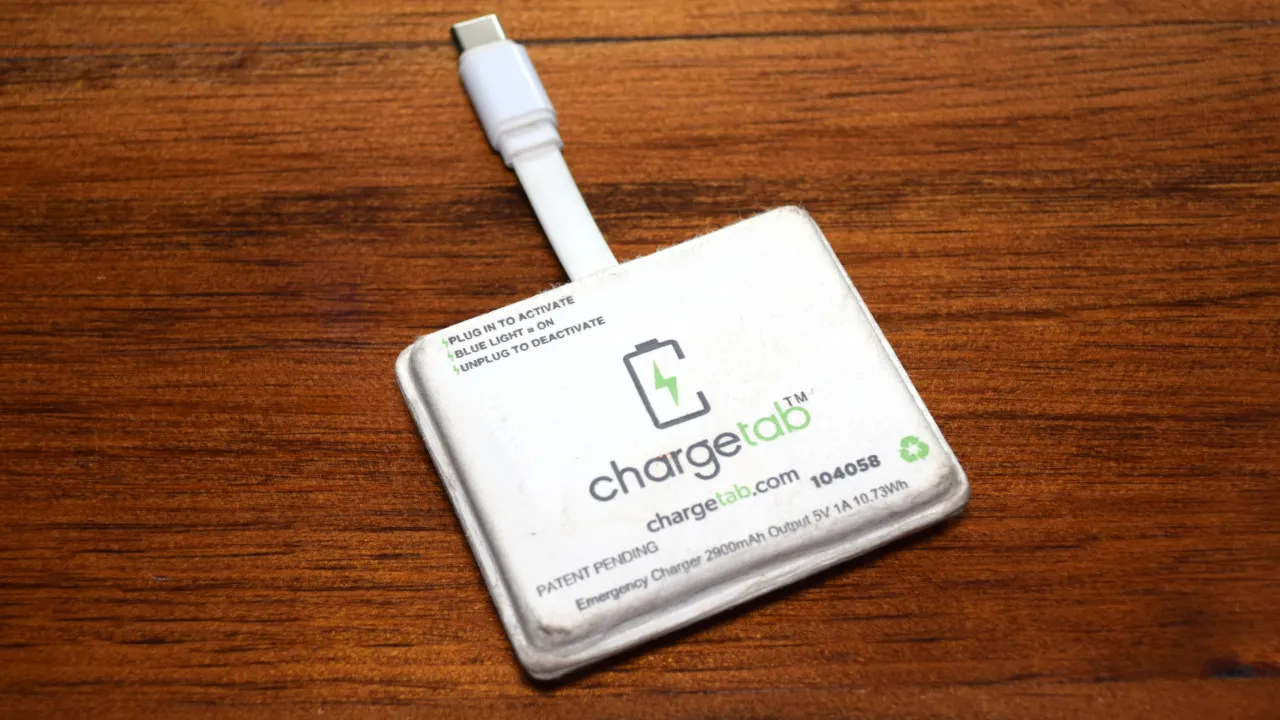
With this in mind, it’s not hard to see how a product like the ChargeTab would have a certain appeal. A small $10 USD device that you can keep in the car or pack in a bag that’s always available to charge your phone in an emergency.

Because it’s not meant to be used regularly — indeed it may never get used at all — it’s not completely unreasonable that such a device would only be good for one or two charges before its spent and must be replaced. It’s a bit like keeping a road flare in the car; it’s unlikely you’ll ever use the thing, but if you do, it only needs to work once.

But then what? According to ChargeTab, once the gadget has depleted its internal ~3,000 mAh battery it cannot be recharged and is no longer usable. Now to be fair, they specifically tell you to not throw it in the trash. They’ll send you a free return label to ship it back to them, at which point it will be refurbished and put back into circulation. The company argues that this recycling program, combined with the fact that the batteries inside the ChargeTabs were supposedly diverted from landfills in the first place, makes their entire operation eco-friendly.

Yet here we have a pair of ChargeTabs that were thrown in the regular garbage and would have taken a one-way trip to the local landfill if it wasn’t for the fact that I habitually dig through garbage cans like a raccoon. So let’s take a look at what’s inside one of these emergency phone chargers and if the idea is as green as the company claims.

Advertisement

Paper, Not Plastic

If nothing else, the enclosure of the ChargeTab is pretty unique. As part of the whole eco-friendly shtick they have going on, the device is encased in a biodegradable paper shell. Usually I wouldn’t approve of a device that’s sealed up rather than put together with fastners, but it’s hard to complain when you can cut the thing open with a pair of scissors. Of course reassembly would be tricky, but clearly that’s not something they were concerned with.
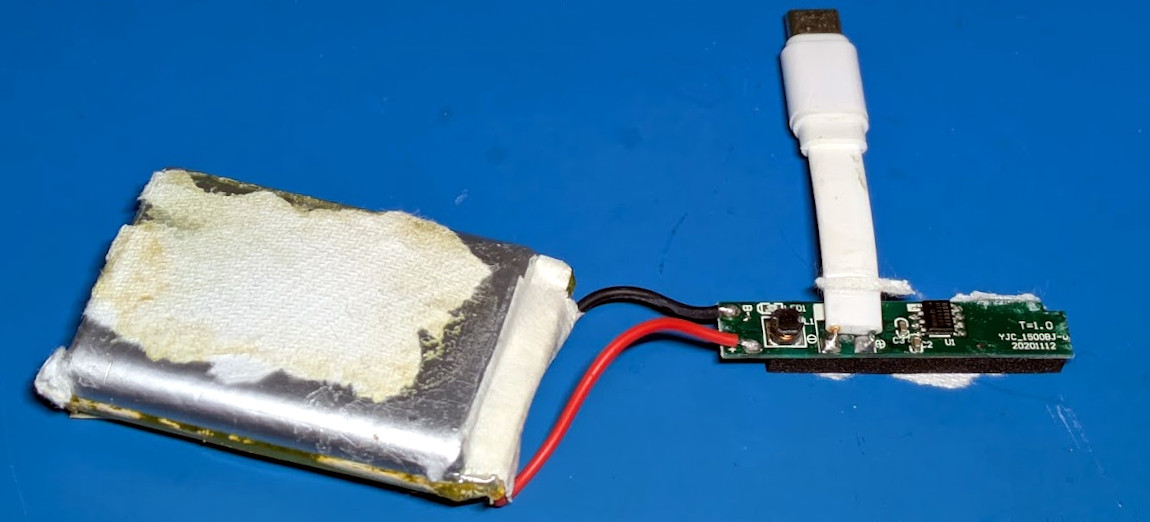
As for the internals, there’s really not much going on. Just a chunky LiPo pouch battery and a thin PCB with an SOIC8 IC, an inductor, a couple of capacitors, and a single LED.
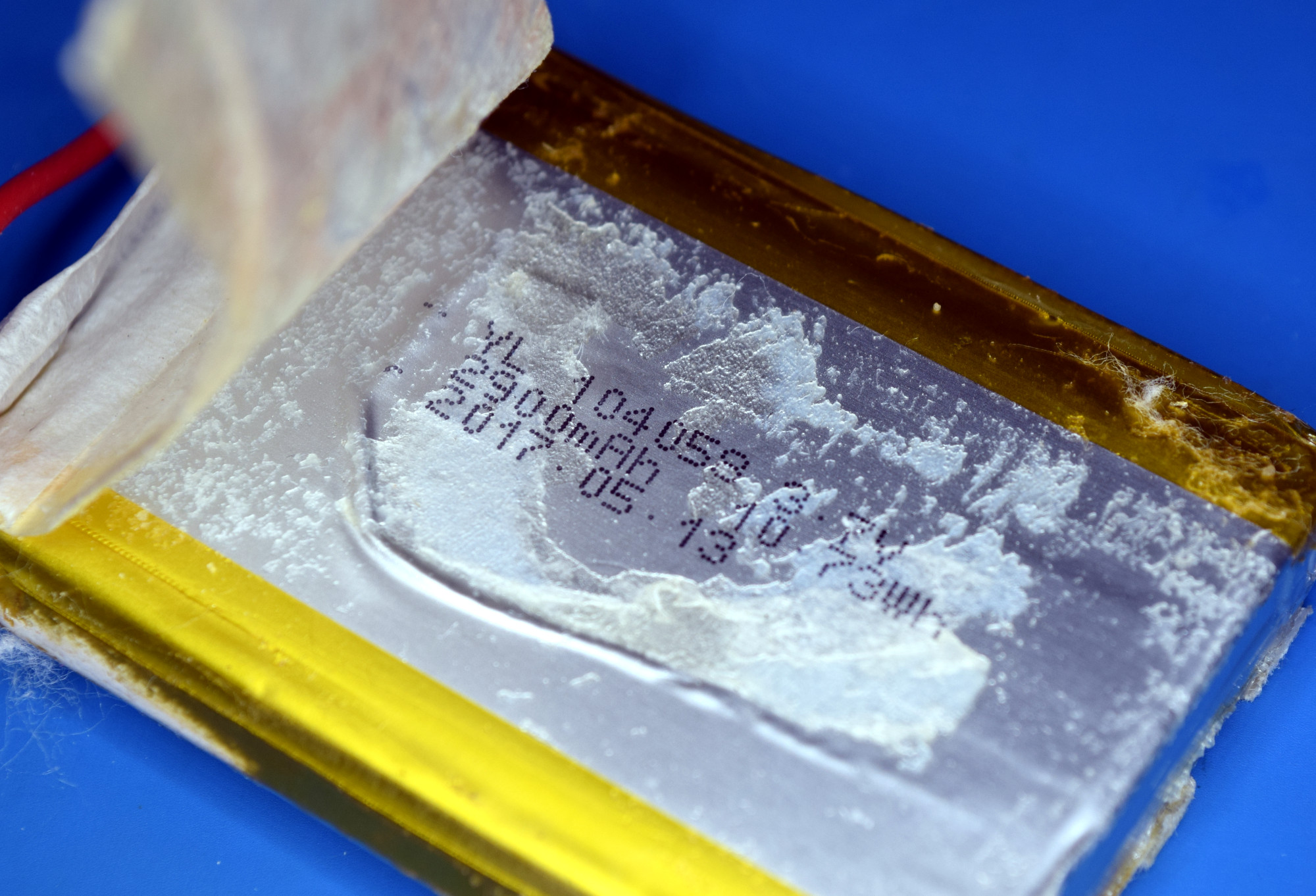
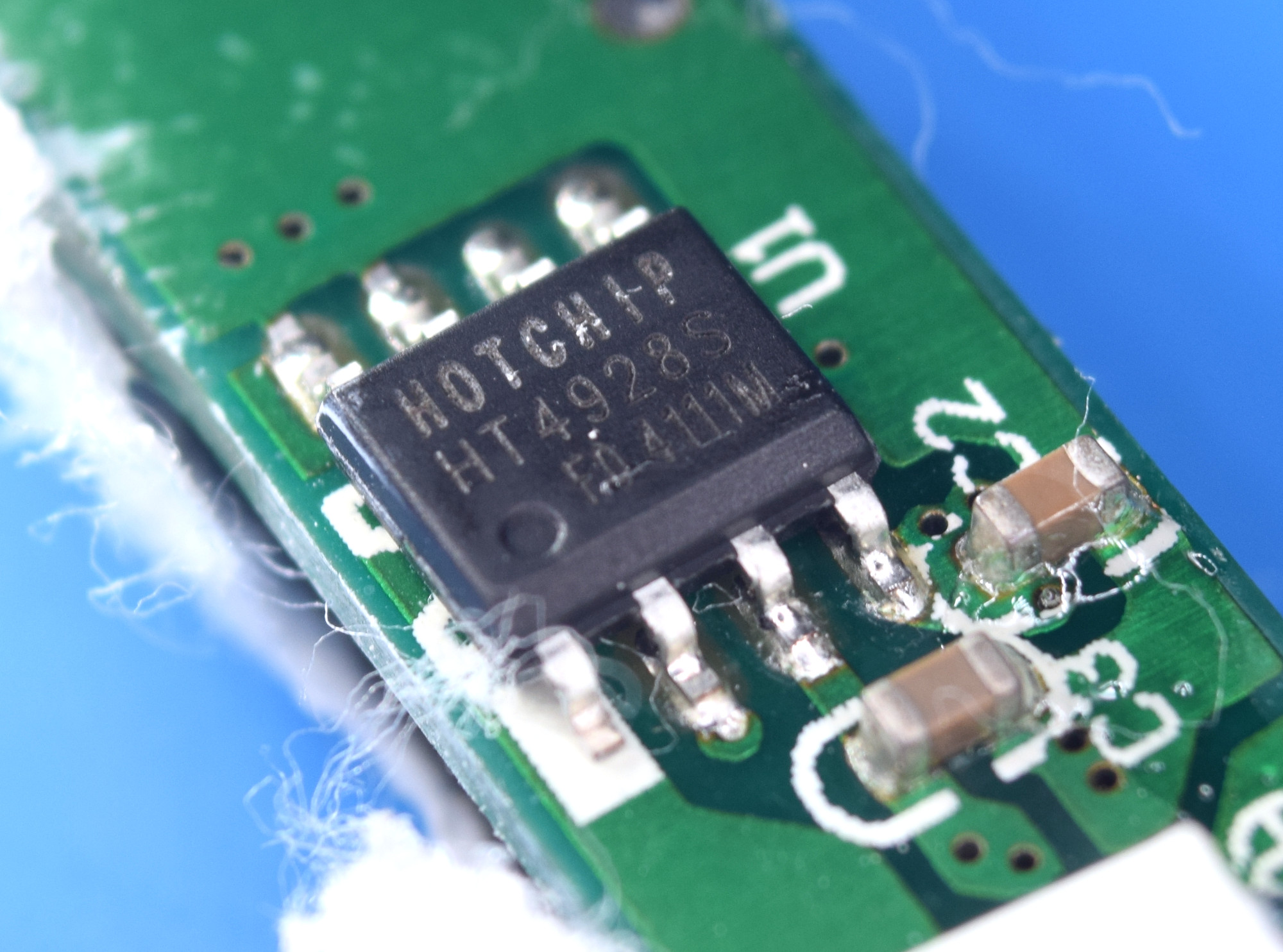
The battery is marked YL 104058, has a capacity of 2,900 mAh, and a date code of 2017. Somewhat surprisingly a close inspection of the IC shows that its markings are intact, identifying it as a HotChip HT4928S.

Advertisement

Chips Ahoy

Being able to positively identify a chip when taking a consumer gadget apart is great, but actually being able to look it up and find a proper datasheet is a real treat. Turns out that the HT4928S is a very popular IC commonly used in USB power banks. It’s a highly integrated solution that offers battery management as well as 5 V boost with only a few support components.
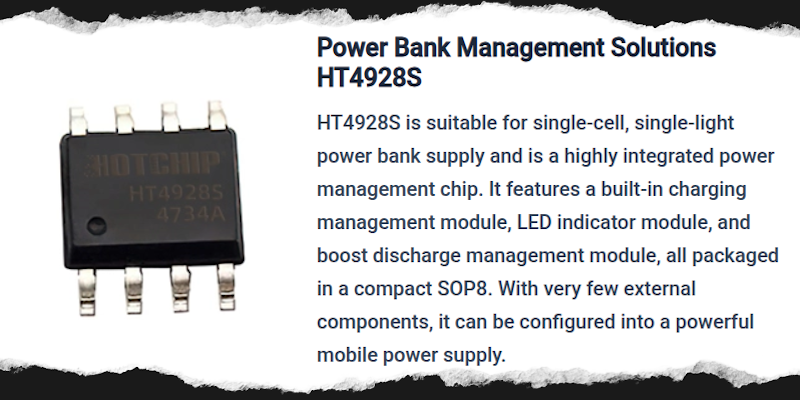
At first, I found this somewhat surprising. Given the unusual single-use nature of the ChargeTab, I had expected a more bespoke solution. But of course it makes perfect sense to use one of these power bank ICs. They can be had for pennies, and functionally, the device is pretty much a USB power bank anyway, it just doesn’t recharge.

Truth be told, the HT4928S seems like a pretty slick part to have around. It’s unusually hacker-friendly: the SOIC8 package is easy to work with, and compared to the venerable TP4056 you get integrated battery protection, not to mention 5 V boost. All for about $1 USD a piece in quantities of ~10. I plan on ordering a few to go into the parts bin for sure.

But wait…if this chip has a charge controller, why is the ChargeTab single-use? What about the design prevents the user from simply charging it up like any other USB power bank that uses the HT4928S?
Advertisement

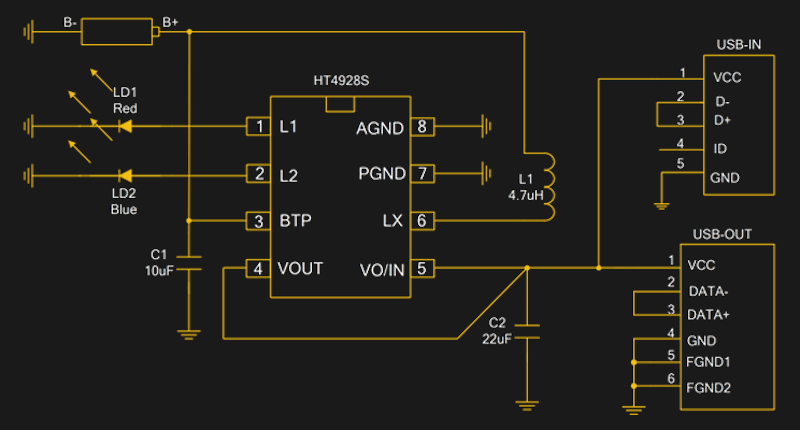
A look at the application diagram from the datasheet shows that the HT4928S uses the same pin for both power input and output. That is, the same pin that puts out the boosted 5 V from the battery will also charge said battery if you apply power to it. In the old days, the input would have been a female USB-A port, but in the era of USB-C you could simply have a female port that does double duty.

But the ChargeTab only has a male USB-C connector. Technically you could plug that into something that’s providing power, but the HT4928S doesn’t talk USB Power Delivery and the PCB doesn’t have the necessary resistors to enable legacy mode.

Security Through Obscurity

The only differences between the application circuit and the PCB in the ChargeTab is the missing LED and USB port. So unless they are using some custom modified version of the HT4928S, it stands to reason that injecting 5 V into the male USB-C connector should flip the chip over to charging mode.

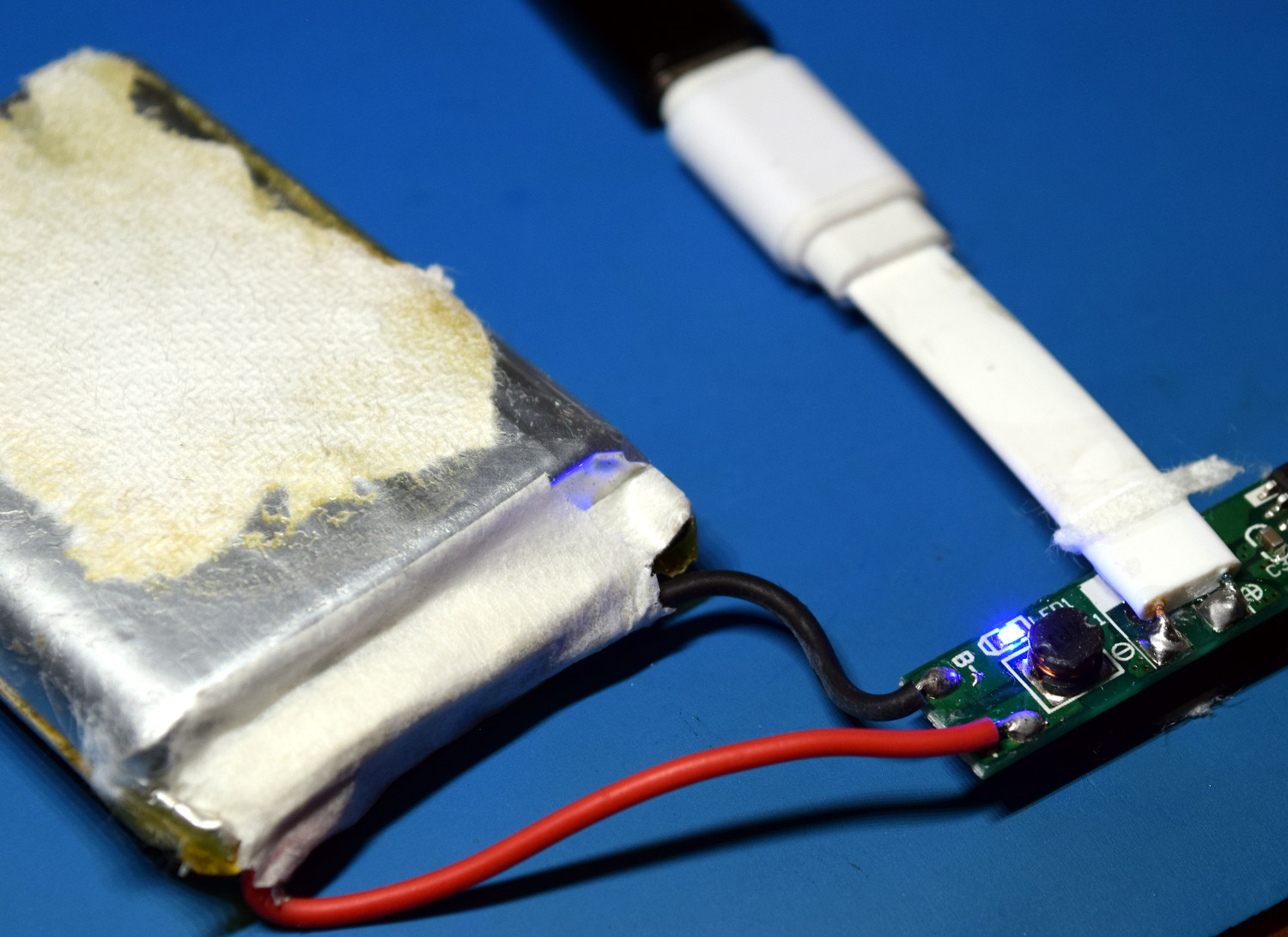
As mentioned previously, it won’t work with proper USB-C devices and cables. But through the magic of Amazon Prime, you can have all manner of shady adapters delivered to your door in just a few hours. So if we combine a USB-A to USB-C cable with a female-female USB-C coupler, we can stick 5 V where the ChargeTab least expects it. According to the HT4928S datasheet, a blinking LED will indicate the charging process has started.
Advertisement

Well, so much for that whole single-use thing.

Charging as a Service

So in the end, the only thing that’s keeping you from reusing the ChargeTab is a cheap USB-C coupler and an old cable. No return label, no sending it off to the mothership to get “refurbished.” It’s quite simply a USB power bank in a paper enclosure and with intentionally obtuse connectivity.

A devil’s advocate might argue that the recycling program makes it more likely the batteries inside the ChargeTabs will actually stay out of the waste stream compared to normal power banks. Rather than dropping them off in some random battery recycling box and having them go who knows where, the returned ChargeTabs are guaranteed to be put back into use properly. (On the other hand, I fished these out of the trash.)

But let’s be clear, this isn’t some benevolent initiative — the company ends up selling the recycled ChargeTabs again at full price. So if you really think about it, they are essentially just renting them out to the consumer. Is that a service worth $10? Regardless of how we might feel about it personally, the fact that these things are being sold would seem to indicate a not insignificant number of people feel it is.

Advertisement

All I know is that if you end up seeing one of these in the trash, you should definitely take it home and charge it up yourself.

Source link

Advertisement
Continue Reading

Tech

Windows Update Is Getting Automatic Rollbacks For Faulty Drivers

Published

on

Microsoft is adding a Windows Update feature called Cloud-Initiated Driver Recovery that can automatically roll back faulty drivers to a previously known-good version without waiting for hardware makers or users to fix the problem manually. PCWorld reports: The way faulty drivers work today is that the hardware partner is responsible for pushing an updated driver, or the end user is responsible for manually uninstalling the problematic driver. “This creates a gap where devices may remain on a low-quality driver for an extended period,” says the blog post. With Cloud-Initiated Driver Recovery, Microsoft will be able to remotely trigger a rollback of the faulty driver to a previously “known-good” version of the driver via the Windows Update pipeline. Microsoft says that testing and verification of Cloud-Initiated Driver Recovery will continue until August this year, aiming to deliver this feature to Windows PCs starting in September.

Source link

Continue Reading

Tech

LiDAR Matrix Sensor Sees In 3D

Published

on

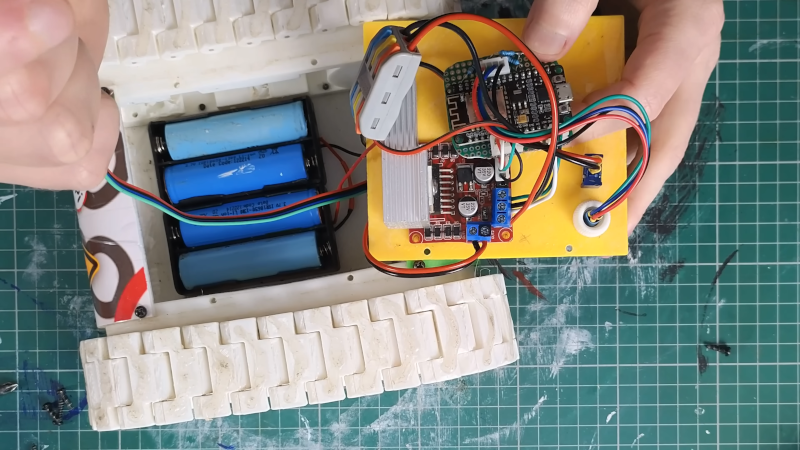
[Mellow_Labs] picked up a few LiDAR matrix sensors and found them very exciting. While a normal time-of-flight sensor can accurately determine a range,  the matrix sensor is like an array of 64 sensors that can build a 2D map of distances from 2 cm to 3.5 m. [Mellow] wanted to add the sensor to his robot to help it see what was in front of it. You can see how it worked out in the video below.

The robot in question is Zippy, a 3D printed tank-like robot with an ESP32. By default, the robot requires control inputs, but using the sensor will enable autonomous operation. For good or ill, the sensor mounted to Zippy was seeing the floor with about half of the rows. That means about 50% of the data went to waste. However, we think having a robot be able to see the floor in front of it might be a good thing.

[Mellow] used an LLM to write most of the code, so there were a number of iterations required to get things working. This required decimating even more of the data from the sensor. Still, pretty impressive.

Advertisement

Want to learn more about ToF sensors? Or if you want to focus on the practical, there’s code you can borrow.

Advertisement

Source link

Continue Reading

Tech

Amazon Leo aims to double its pace as it gets set to roll out its satellite broadband network

Published

on

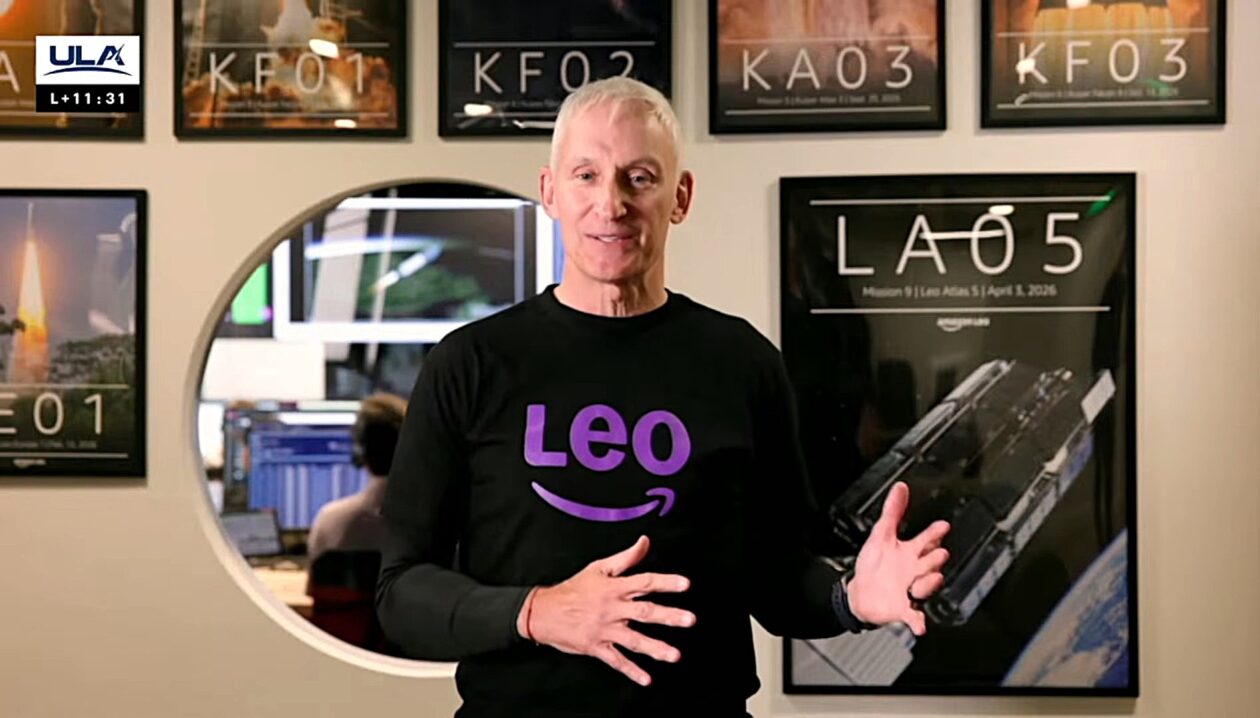
Chris Weber, vice president of consumer and enterprise business for Amazon Leo, sports a T-shirt bearing Amazon Leo’s logo in the project’s signature krypton shade of purple during countdown coverage for an April satellite launch. (Credit: United Launch Alliance)

REDMOND, Wash. — Chris Weber isn’t ready to say yet exactly when Amazon Leo will start letting individual customers sign up for satellite broadband service, but when it happens, he’ll have the right wardrobe for the debut.

During a recent interview at Amazon Leo’s Mission Operations Center in Redmond, Weber sported running shoes in a shade of purple with the Leo brand emblazoned on the back.

“It’s not purple, it’s krypton,” Weber, who came over from GitLab in 2024 to become Amazon Leo’s vice president of consumer and enterprise business, told GeekWire. “Krypton is the color when our thrusters fire in space, so we picked that. It was obviously available in the Amazon palette. … There’s a lot of meaning and thought that went into our brands, and we’re quite excited about that.”

It’s been a year since Amazon Leo, formerly known as Project Kuiper, began its multibillion-dollar campaign to send up thousands of satellites to provide broadband internet access across the globe. So far, 304 satellites have been deployed over the course of 11 launches — and Weber said the Amazon Leo team will be running twice as hard in the year ahead.

“The theme moving forward is acceleration,” he said. “What we’ve said is that over the next 12 months, we’ll double the number of launches, satellites, et cetera, so everything is about accelerating that.”

Advertisement

Amazon Leo has already been making its service available to a select group of enterprise customers on a preview basis, and Weber signaled that the official launch of commercial service isn’t all that far away. But Amazon Leo won’t be available everywhere all at once.

“What we’ve said publicly is that in the coming months — so it’s not years away — we’ll launch, and that’ll be in the northern and southern hemisphere, because you need enough satellites to have coverage where your customer terminal is seeing a satellite,” he said. “And so we’ll launch that in the next couple of months, our fixed service. And then as we get more and more satellites up, that coverage will expand inward geographically.”

There’s a lot of catching up to do: Even if Amazon Leo doubles its pace over the next year, it’ll still be far behind SpaceX’s Starlink network, which currently has more than 10,000 satellites in orbit and more than 12 million subscribers.

Closing the gap with Starlink isn’t the only factor motivating Amazon Leo’s speedup: Under the terms of its license from the Federal Communications Commission, Amazon was supposed to deploy half of its planned 3,232 first-generation satellites by the end of July. The company is seeking a two-year extension; last month, FCC Chairman Brendan Carr said the agency was still “reviewing the paperwork” for Amazon’s request.

Advertisement

Even assuming the FCC grants the extension and Leo’s pace doubles by mid-2027, Amazon would have to increase its pace further to get to 1,616 satellites by mid-2028, and then speed up even more to get all 3,232 satellites in low Earth orbit by mid-2029.

Waiting for rockets

Amazon Leo’s brand adorns the fairing of a United Launch Alliance Atlas 5 rocket for a satellite launch in December 2025. (Amazon Photo)

In its filings with the FCC, Amazon said it had to slow down its deployment schedule due to the limited availability of launch vehicles. It doesn’t help that Amazon founder Jeff Bezos’ Blue Origin space venture — one of the launch providers for Amazon Leo — had to ground its heavy-lift New Glenn rocket temporarily due to an unrelated launch failure last month.

The rocket shortage forced Amazon to throttle back from its target production rate of five satellites a day at its Kirkland manufacturing facility. Weber said hundreds of satellites are in storage at Amazon’s processing facility in Florida, waiting for liftoff.

“The last I heard, we have like the next six [batches] stacked in the dispensers, ready to go for the launch providers to pick up,” he said.

Weber voiced confidence that heavy-lift rockets from Blue Origin, United Launch Alliance and Arianespace will support a higher launch rate in the year ahead. Amazon is even buying launches from SpaceX to accelerate satellite deployment.

Advertisement

“We’ve contracted for 100 rocket launches, the largest in space history,” he said. “And so, obviously, the commitment is there. We continue to look for ways to acquire additional launches and move launches up.”

Back in 2020, Amazon said it planned to spend more than $10 billion to get Amazon Leo off the ground. Since then, some industry observers have estimated the cost could amount to as much as $20 billion. But the projected costs would be more than matched by the expected payoff.

Just this week, a market study commissioned by Amazon and conducted by Oxford Economics estimated that broadband services provided by satellites in low Earth orbit could add between $32 billion and $863 billion to global GDP by 2035, and support between 800,000 and 21 million jobs worldwide. By 2035, somewhere between 78 million and 421 million people could be using satellite broadband, depending on which of the scenarios analyzed by the British-based advisory firm actually plays out.

Inside Mission Control

Controllers are on duty at Amazon Leo’s Mission Operations Center in Redmond, Wash., for the first launch of production-grade satellites on April 28, 2025. (Amazon Photo)

Amazon has been careful about protecting the “secret sauce” of its satellite operation — which means you’d be hard-pressed to find full-frontal photos of its fully deployed satellites, or pictures showing the display systems inside its Mission Operations Center in Redmond.

Suffice it to say that the MOC is laid out much like NASA’s Mission Control in Houston, but on a smaller scale. Most of the time, satellite operations are monitored by a handful of controllers, but that number can swell to about 20 team members for a launch.

Advertisement

The current center is larger than the facility that Amazon used for putting a couple of prototype satellites through their paces starting in 2023. It opened for business not long before the first launch of operational satellites. A corporate-style snack bar is around the corner from the rows of computer consoles, and a porthole installed on the center’s back wall lets visitors peek in from the lounge outside the doors.

Amazon has also been careful when it comes to discussing pricing for satellite broadband. In last month’s annual letter to shareholders, Amazon CEO Andy Jassy promised that Leo’s services would come “at a lower cost than alternatives.”

The company has described three tiers of service:

  • Nano: 7-by-7-inch portable antenna for download speeds up to 100 megabits per second.
  • Pro: 11-by-11-inch antenna supporting 400 Mbps downloads.
  • Ultra: 20-by-30-inch antenna, delivering up to 1 gigabit per second for downloads and 400 Mbps for uploads.

“We showed a downlink video of 1.3 gigabits and above the 400 on the uplink, which is quite stunning,” Weber said. “So we feel really good on the design. The stability of it, the quality is job one for us as we’re putting that up.”

Even though Amazon isn’t quite ready to reveal its pricing, either for the terminals or for the subscriptions, Weber said his team has a good handle on what the price should be.

Advertisement

“That’s a lot of work we’ve been doing over the years that looks at lots of different external metrics and internal metrics,” he said. “The good news is, particularly on the government and business side, you get demand signals every day, and we’ve been talking to customers every day. … We get incredible signals in order to be able to forecast our demand by not only customer terminal, but what’s the service plan they would need, the speeds they would need on the downlink and uplink.”

Satellite synergies

Amazon Leo satellites are folded up in their dispenser, ready for deployment in low Earth orbit. (Amazon Photo)

Amazon is also fine-tuning its strategies for taking advantages of synergies between Leo and its other business lines, starting with Amazon Web Services.

“We’ve announced our private networking option via AWS, where if you’re a business or a government customer, you can go from your customer terminal to the antenna into your AWS data estate or computing estate or your own private data center without ever touching the internet,” Weber said. “That’s incredible value. And boy, does that resonate significantly with business and government customers.”

Regular consumers will see synergies as well, potentially involving Prime Video, Fire TV, Ring, Zoox and even Amazon delivery services. “Without announcing anything, I would say we’re very excited about bringing differentiated new value to our customers across the Amazon set of products and services,” Weber said.

Like SpaceX, Amazon Leo is nailing down deals for in-flight connectivity with the likes of Delta and JetBlue — and exploring the latest frontier in connectivity: direct-to-device satellite service.

Advertisement

“We just announced the acquisition of Globalstar and our partnership with Apple on direct-to-device,” Weber said. “That’s been part of our strategy from the beginning, but it really starts to expand the use cases.”

Amazon is expected to follow through on Globalstar’s expansion plans and take them to the next level, but it won’t fold its direct-to-device service into Amazon Leo’s broadband offerings. The way Weber sees it, the direct-to-device market is different from the satellite broadband market, at least in the short to medium-long term.

“What direct-to-device does is open up brand-new scenarios where people simply don’t have connectivity today, and now you’re taking these billions of mobile handsets and making those connected so you can do voice messaging, those types of things,” he said. “The way I think about it is that they’re pieces of a puzzle and expanded use cases, with broadband and direct-to-device versus one replacing the other.”

Some connectivity customers may want both. “You could foresee something in the automobile where they want broadband coverage, but also the ability to have direct-to-device, which is lower speed but gives you broader connectivity,” Weber said.

Advertisement

What else does Weber see in his crystal ball? What will Amazon Leo look like a year from now?

“Well, I will tell you, we’ll be in service, and we’ll have a lot more satellites up, and so we’ll have broader geographic coverage,” he said. “The thing that I talk to our team about all the time, and it’s the thing we’re focused on, is building a service that customers love. That is job number one, two and three for us — because if we get that right, then as we expand, everything else can happen.”

As Weber said, Amazon Leo is likely to be available initially to customers in mid-northern and mid-southern latitudes. Internet users can plug their postal code and email address into an online form at Leo.Amazon.com to get updates on the project’s progress and availability in their area.

Source link

Advertisement
Continue Reading

Tech

Chinese brands are bringing their brutal F&B wars to S’pore

Published

on

Imported competition is causing local pressure

Walk through any Singapore mall today, and something about the atmosphere has quietly changed. The bubble tea shop is from Chengdu. The hotpot place is backed by a 700-outlet chain you’ve never heard of. The coffee queue is for Luckin, not Starbucks.

Chinese F&B brands are suddenly everywhere, and they are expanding rapidly. Molly Tea, for instance, arrived less than two months ago and has already opened its second store.

This isn’t a coincidence, but part of a larger phenomenon—and understanding why requires looking at what’s happening inside China first.

The price wars back in mainland China

In 2024, three million food businesses closed in China.

Advertisement

The cause wasn’t a single recession or policy shock, but something more structural: a market so competitive that it began consuming itself.

Economists call it involution (neijuan), a cycle of excessive internal competition where companies fight harder for the same or shrinking demand. Instead of expanding the market, everyone competes on price, driving margins down until survival, not growth, becomes the goal.

lucky cup coffeelucky cup coffee
Image Credit: Lucky Cup

In F&B, this dynamic shows up most clearly in price undercutting. When Luckin already pushed coffee to RMB¥9.9 (S$2) lattes, newer entrants like Lucky Cup went even lower, selling RMB¥6.6 (S$0.90) coffees. The logic wasn’t to build premium positioning, but to win attention and volume in an overcrowded market where differentiation had collapsed into price.

Lucky Cup, backed by tea and ice cream giant Mixue, scaled rapidly on this model, becoming China’s fourth-largest coffee chain with over 10,000 stores across 300+ cities, despite not even entering first-tier markets like Beijing or Shanghai.

The same dynamic shows up in electric vehicles. In China’s increasingly crowded EV market, BYD has been actively cutting prices to defend its share against intensifying competition. The result is a sector-wide squeeze on profitability: despite record sales volumes, BYD has faced sustained downward pressure on margins, culminating in its first annual profit decline in four years by March 2026.

Advertisement

Even BYD’s chairman Wang Chuanfu has acknowledged that the industry has reached a “boiling point,” where competition is no longer translating into proportional gains. In this environment, sales growth alone no longer guarantees sustainable profits—companies are effectively trading margin for volume just to maintain position in an oversupplied market.

China’s F&B market saw over 1 million businesses shut in just the first half of 2024, and that’s a 70% increase from 2023. With the home market saturated, the obvious move was outward beyond one of the most (if not the most) competitive domestic markets.

And increasingly, Singapore emerged as a consistent destination.

Why Singapore?

singapore retail shoppingsingapore retail shopping
Image Credit: Jack Hong via Shutterstock

Singapore is not just a market for Chinese brands but a legitimacy stamp for these businesses. If they can make their businesses work in Singapore, they can succeed anywhere in Asia.

The city-state has the highest per-capita GDP in the world in terms of purchasing power parity (PPP) and a food culture that is both demanding and well-documented, as seen from being the first Southeast Asian city to receive a Michelin Guide. Reviews travel, queues get photographed, and openings make regional news.

Advertisement

A brand that earns its place here is perceived as having cleared a meaningful bar.

Traditionally a bridge between Eastern and Western cultures, Singapore has also become an attractive gateway for expansion, with its 6.1 million predominantly Chinese population.

As executives at several Chinese firms noted in interviews, the city-state is seen as “wealthy and fashionable”—a place where simply having a presence carries branding value, even beyond immediate sales potential.

The executives are not shy about revealing the larger ambitions Singapore has for their brands. ChaPanda’s Singapore manager told Inside Retail Asia:  “If we can build up our brand in Singapore, the brand awareness can go to Malaysia and Vietnam, even Indonesia.”

Advertisement

This sentiment is echoed by Luckin’s CEO Guo Jinyi, who shared that Singapore serves as a “critical testing ground” for building the brand, refining operational systems, and understanding overseas business models. The city-state serves as Luckin’s launchpad into other Southeast Asian countries.

There are also precedents of Chinese brands using Singapore as a stepping stone toward more global expansion. Tea brand Tai Er, for instance, leveraged its Singapore operations as part of its regional push before eventually entering the US market by 2023.

The pattern is consistent across many Chinese brands that went global. Singapore is not the destination. It’s the launchpad, a stamp of legitimacy that makes the next ten markets easier to enter.

Losses that don’t matter

Image Credit: Sethlui.com

This reframes everything about how these brands operate here, including the rents they’re willing to pay.

Consider the scale some of these chains are operating at. Pang Pang, the claypot crab restaurant at Bugis, has over 600 outlets in China and sells 50 million pots a year. Xiao Yu Hao at Raffles Place—known for its suan cai yu—runs 800 outlets back home. Xita Lao Tai Tai at Bugis+, a charcoal clay stove BBQ chain, operates 600 outlets and is named China’s number one BBQ chain. Yeah Gelato in Tampines has 168 outlets in China.

Advertisement

These brands draw on lean business models honed in China’s intensely competitive market and apply them to operations in Singapore to withstand high costs. Many rely on vertically integrated supply chains, where companies control multiple stages of production in-house—a sharp contrast to many Western rivals, which tend to depend on outsourced suppliers.

Since 2021, Luckin has been building more of its production capabilities. Its low-value consumables, such as packaging materials and straws, cost the company just RMB¥210 million (S$39 million) across its entire 30,000-store network. This translates to roughly S$1,307.64 per store per year, or about S$3.58 per store per day.

luckin coffee qingdao smart roasting centre shandongluckin coffee qingdao smart roasting centre shandong
Luckin’s newest US$440 million smart roasting centre in Qingdao, Shandong Province, China./ Image Credit: Luckin Coffee

When a brand of this scale opens in Singapore, the individual outlet’s profit-and-loss is almost beside the point. If you view the 81 stores here in proportion to the over 30,000 stores that Luckin Coffee has in China, the Singapore stores are a marketing expense—a flagship that generates press coverage, attracts franchise interest from regional partners, and signals to investors that the brand is global.

This is why they can outbid local tenants on rent without flinching.

Andy Hoon, chairman of Bosses Network, a local business networking group representing SME and retail operators, described the dynamic: if a Singaporean tenant offers S$36 to S$38 per square foot when the market expectation is S$30 to S$40, a Chinese brand might offer S$45—above what even the landlord anticipated.

Advertisement

Industry observers echo this shift. Ethan Hsu, head of retail at Knight Frank, noted that large-scale Chinese investment has contributed to rising rents in high-traffic locations, while TungLok Group CEO Andrew Tjioe added that some brands are less driven by immediate profitability than by securing overseas presence and building global brand visibility.

Luckin’s financials are a great example of this business strategy. In financial year 2024, Luckin’s Singapore operations reported losses of RMB¥47 million (S$8.8 million). But in the same year, Luckin generated over RMB¥34.5 billion (S$6.4 billion) in total revenue, with an operating profit of approximately RMB¥3.5 to 3.9 billion driven overwhelmingly by its China business.

Yet, it has been expanding by around 30 stores every year here since 2023. 

Against that scale, Singapore’s losses are effectively marginal and absorbed without much consequence by China’s much bigger operations. Singapore is not treated like a profit centre but a line item in a longer-term international expansion strategy.

Advertisement

So what happens when the strategy stops working?

haidilao singaporehaidilao singapore
Image Credit: Haidilao

The model has a vulnerability that doesn’t show up until later: it assumes the China business stays strong enough to keep subsidising overseas losses.

Haidilao is a key example. The hotpot chain opened its first Singapore outlet at Clarke Quay in 2012, making it its first international outlet outside mainland China. Following its success, Haidilao expanded to more than 20 outlets across Singapore at its peak.

Then the rationalisation began. The Clarke Quay flagship closed in August 2025, following earlier shutdowns at Downtown East and Bedok Mall.

A Haidilao spokesperson cited labour costs, outlet locations, and rental pressures as reasons for closing underperforming stores, as the chain moved to optimise operational efficiency. The closures highlight a familiar constraint: when overseas expansion is no longer easily justified to public markets, consolidation tends to follow.

Unlike Haidilao, most of the newer brands entering Singapore aren’t publicly listed—meaning they don’t yet have shareholders demanding quarterly results. Many are venture capital or private equity-backed, operating on deep pockets with capital that is explicitly patient. But patient capital still has expectations.

Advertisement

If a brand cannot demonstrate a credible path to profitability in Singapore within two to three years, investor expectations begin to shift. Sustaining prime locations while keeping prices low ultimately depends on continued financial backing—either from a strong parent company or successive funding rounds—that can support the broader supply chain and scale these brands rely

singapore f&b chinese foodsingapore f&b chinese food
Image Credit: Daniel Food Diary

The broader Singapore F&B picture adds pressure. Some 3,047 businesses shut in 2024—the highest figure in nearly two decades. The casualties so far are mostly local: Ka-Soh, an 85-year-old heritage restaurant, and the Privé Group, after 18 years of operation. 

Knight Frank has described the environment as “a very Darwinian retail landscape,” noting that rising competition from Chinese entrants has intensified pressure on incumbents. Unlike many local players, these new entrants have largely been insulated from closures, underpinned by scale advantages that domestic operators struggle to match.

But insulation is not immunity.

The question is not whether Chinese brands will keep entering Singapore. As of Aug 2025, some 85 Chinese F&B brands were operating around 405 outlets in Singapore, more than double the 32 brands and 184 outlets recorded just a year earlier. 

Advertisement

There’s no doubt that they will keep coming. The more pressing question is what happens when these brands have been in Singapore long enough to be judged on standalone performance, and whether the China-based ecosystems quietly subsidising their expansion can continue absorbing pressure of their own.

  • Read other articles we’ve written on Singaporean businesses here.

Featured Image Credit: Molly Tea, Strike Gundam via Google Reviews, Sentosa, Entree Kibbles

Source link

Advertisement
Continue Reading

Tech

British Street Addresses, When Licenses Collide

Published

on

The world of open source — and in particular open source licenses — is something we cover regularly here at Hackaday with respect to hardware and software, but it’s not so often we find open source data stories. Today’s case of the open British address data then is a bit of an outlier, but it may have implications for open source data further than British counties.

UK government data is released under the Open Government Licence, which is why we Brits can peer into all sorts of datasets our taxes paid for. This includes data from local government, so English counties release data sets of local addresses as part of their auditing of council taxes under the licence.

This is a picture of Barbra Streisand, who might almost be the patron saint of unintended consequences. Unknown author / Public domain
This is a picture of Barbra Streisand, the patron saint of unintended consequences.

[Owen Boswarva] has been collating these databases in order to produce a national open source address database, but has found himself at the receiving end of a legal threat from the Ordnance Survey, the UK mapping agency. They claim the data is theirs, not open.

British address data is in a sense open to all, in that there’s nothing to stop anyone walking down Acacia Avenue and noting the position of Number 1, Number 2, Number 3, and so on. This is what happened with OpenStreetMap worldwide, as people with GPS devices contributed their data and mapped the UK and everywhere else. The Ordnance Survey used to have a nice little earner charging top dollar for UK geospatial data which has been slashed by the arrival of OpenStreetMap, and we’re guessing that the prospect of losing another income stream to an open source equivalent has them worried.

The question of whether the councils should have released the data is one which will no doubt be settled at some point by the courts, and [Owen] goes into some detail on the subject in his analysis. There’s a good case to be made that the mapping agency are pushing it a little, but whatever the outcome it could set a dangerous precedent for open source data. We’ll keep you posted if there’s more on this story.

Advertisement

British street: Bill Harrison, CC BY-SA 2.0

Barbra Streisand: Unknown author, Public domain

Source link

Advertisement
Continue Reading

Tech

Sony Xperia 1 VIII Keeps Its Xperia Flagship Alive With a Phone That Actually Shoots Like One

Published

on

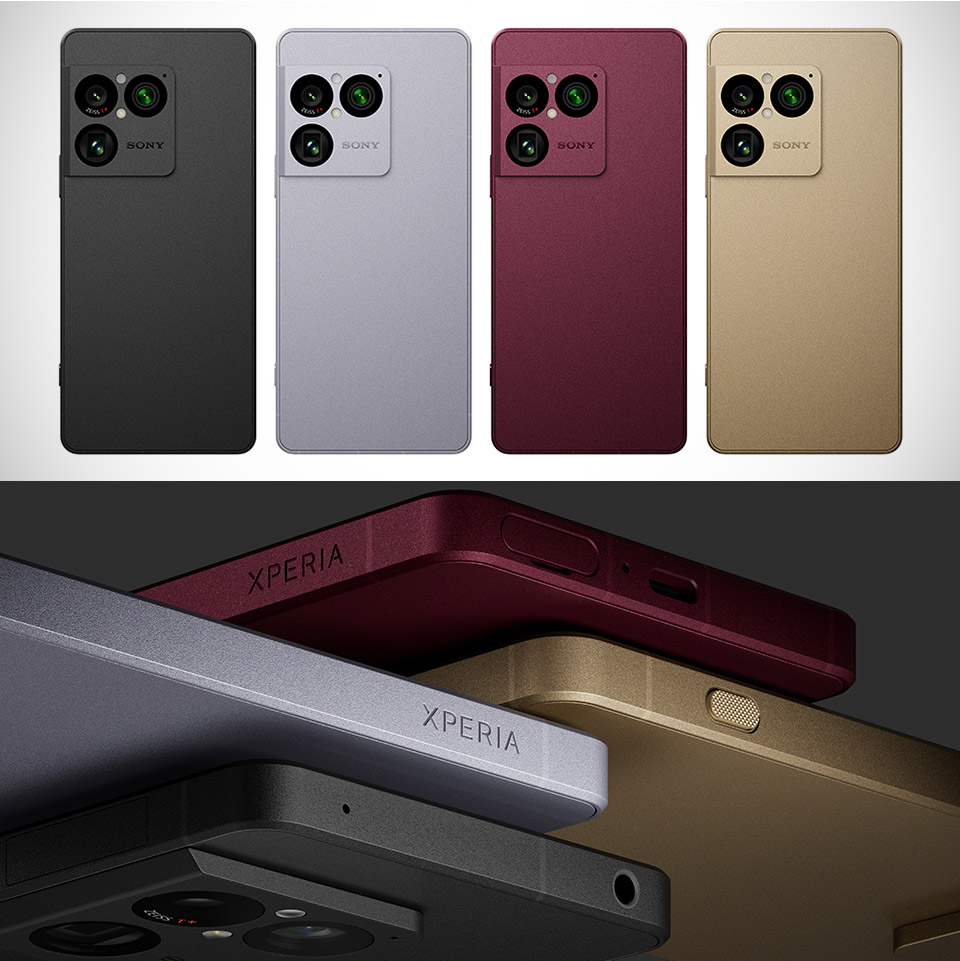
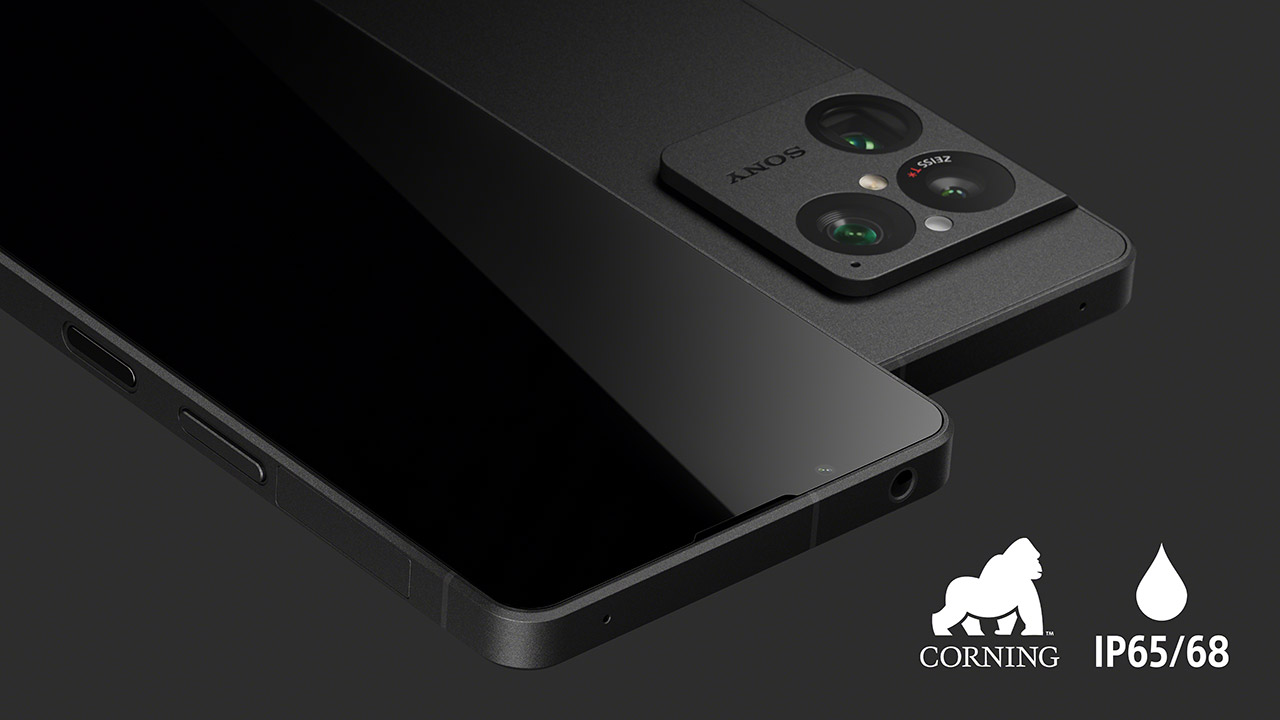
Sony Xperia 1 VIII Smartphone
Sony just dropped its newest top-tier phone, the Xperia 1 VIII, and it arrives at a moment when most people have forgotten the company even competes in this space. Announced today, the device brings a complete visual refresh after years of the same tall, narrow shape. At first glance the changes feel subtle, yet they add up to something that finally stands apart from the sea of glass slabs everyone else sells.


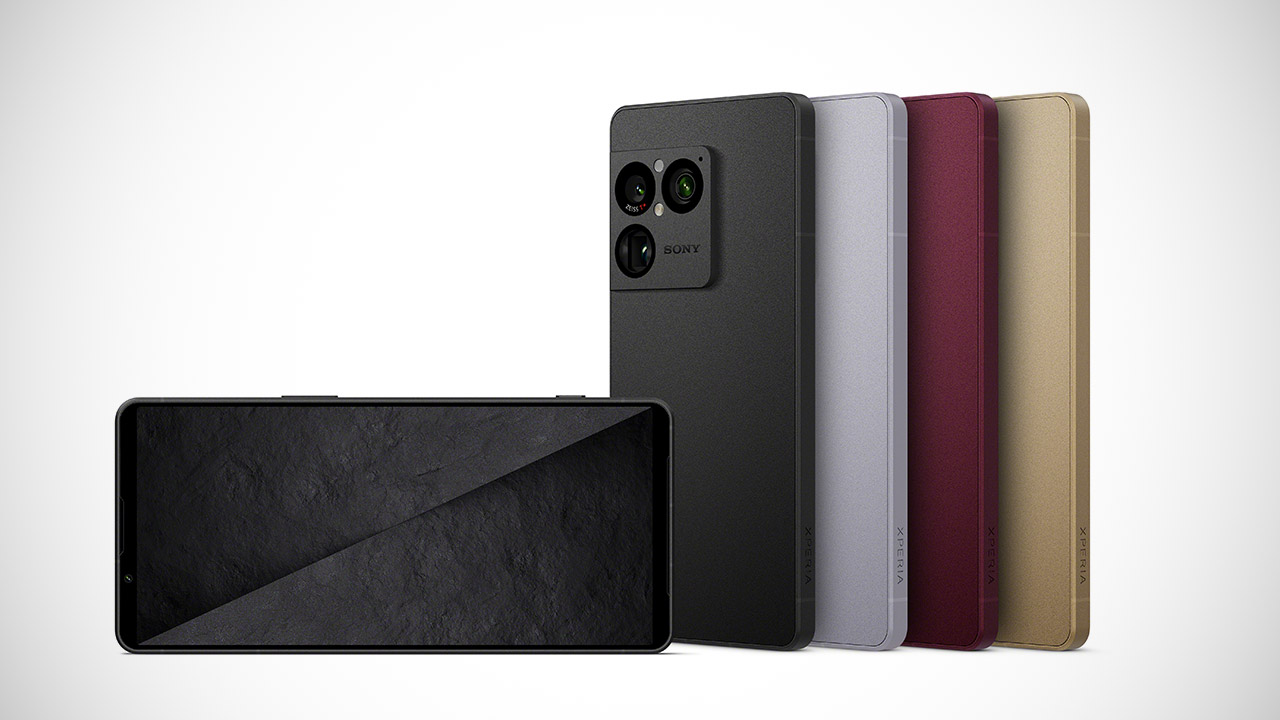
Start with the body, which Sony refers to as the ORE appearance, which is unsurprising given that it is inspired by the rough textures of raw gemstones and natural stone right from the ground. The rear of the phone has a frosted glass finish with a fine grain that makes it a pleasure to handle, as opposed to the typical slick sheen found on other phones. There are four new colors to pick from: graphite black, iolite silver, garnet red, and a gorgeous Native Gold that is exclusively available on the higher-capacity models. The rear features a redesigned elevated camera block wrapped in metal and housing the lenses in a flush layout along the left edge. We no longer see the former vertical strip. The phone appears to have undergone a growth spurt, as it now boldly displays its camera system for all to see.

Sale


Samsung Galaxy S26, Unlocked Android Smartphone, 256GB, Powerful Processor, Galaxy AI, Immersive Viewing…
  • TYPE IT IN. TRANSFORM IT FAST: Enhance any shot in seconds on your smartphone by using Photo Assist¹ with Galaxy AI.² Add objects, restore details…
  • MAKE IT. EDIT IT. SHARE IT: Turn everyday moments into something personal with creative tools built right into your mobile whether it’s a special…
  • FAST. POWERFUL. AI-READY: Power through your day with AI-accelerated performance from our fastest, smoothest and most powerful Galaxy processor yet…


Flip it around, and the 6.5-inch screen is a stunning piece of OLED with a 120 hertz refresh rate and the same 1080 by 2340 quality we’ve come to expect. The thick borders above and below the display are a good touch, keeping the front of the phone looking clean and clutter-free, with no notch or hole-punch cutouts visible. Even with the larger screen, the phone fits neatly into a pocket and provides plenty viewing space. Qualcomm’s latest and best Snapdragon 8 Elite Gen 5 chip powers everything, and it comes with either 12GB of RAM and 256GB of storage or a more significant 16GB with a whole terabyte to play with. Both variants will accept a microSD card if you run out of space, which is a function that most other phones have long abandoned.

Advertisement


The real magic happens with the cameras, which includes three 48-megapixel sensors on the back: a regular lens, an ultrawide that can capture a vast 104-degree view, and a telephoto that can now extend to a useful 70 millimeters. The telephoto sensor is four times larger than the one in last year’s model, which makes a huge impact in low light circumstances, as detail is no longer compromised even when the sun drops below the horizon. Sony has also incorporated RAW multi-frame processing to all rear lenses, which discreetly but significantly increases dynamic range, reduces noise, and protects highlights and shadows without requiring users to actively switch settings.

Here’s the real kicker: an AI assistant named Xperia Intelligence monitors what you’re shooting and makes suggestions in real time. It’s also not some unpleasant automated feature, since you can aim the phone at a subject and it will offer a different lens, a touch of bokeh, or a color tone from Sony’s professional photographic pedigree, all with a simple tap. If none of that appeals to you, there is still a real shutter button on the side, just where committed camera enthusiasts want it to be. Selfies, meanwhile, are courtesy of a 12 megapixel front camera, which, let’s be honest, handles everyday photos with ease.

Sony Xperia 1 VIII Smartphone
Sony claims that the battery capacity (5,000mAh) is enough for two full days of mixed use, including browsing, streaming, gaming, and the occasional phone call on a single charge. Of course, your mileage may vary, but the business has also implemented some intelligent power management, which should prevent things like high-drain apps from draining the battery when they are not needed. You get quick charging at 30 watts and wireless charging for good measure, as well as a projected battery life of 4 years with repeated use.

Sony Xperia 1 VIII Smartphone
Sound, meantime, has received the same level of attention. A true old-fashioned 3.5mm headphone jack returns, which is fantastic news for people who still prefer to listen to music with wired headphones and recall Sony’s Walkman legacy. Stereo speakers now have matched drivers on each side, which should result in tighter bass, crisper highs, and a lot more immersive sound, as this is the type of thing that truly brings music and film to life. The phone ships with Android 16 out of the box and will receive four major updates and six years of security patches.

Sony Xperia 1 VIII Smartphone
The pricing is a touch surprising, with the base 256GB model costing about £1,399 in the UK and €1,499 almost everywhere else in Europe. If you want the 1TB model, it will cost £1,849 or €1,999. Pre-orders are currently open, and if you place one, you will receive a free set of Sony’s good WH-1000XM6 headphones. They will begin shipping in the middle of June. Sorry, Xperia 1 VIII fans in the United States, but your region has been missed yet again, which must be disappointing for those who are expecting to get their hands on this phone.

Source link

Advertisement
Continue Reading

Tech

The Smartest Way To Upgrade Your Home Office Without Upgrading Everything

Published

on


We may receive a commission on purchases made from links.

The number of people who work from home has leveled off since the pandemic, but in 2026, it’s still high  — 22% of the American workforce, or 34.3 million workers, according to data compiled by Remotive. For some, it’s a welcome change. You get to sleep in or hit the gym rather than commute, you don’t have to make awkward small talk with coworkers (no, Janet, I do not have a “case of the Mondays,” I simply have other things to do than talk to you), and then there’s the most underrated aspect of a home office: getting to use your own bathroom. But after you’ve adjusted to these newfound perks, you start to notice the downsides. Most notably, your employer isn’t going to furnish your home office space, so you’re left to fend for yourself when putting one together.

A full home office makeover is prohibitively expensive for most workers, so it’s often a smarter idea to focus on a few productivity-boosting gadgets and upgrades that make a noticeable difference to your workflow. There’s really no right or wrong here. Your needs are likely somewhat unique, so choose whichever upgrades make the most sense to you based on what slows you down the most. What I can offer are some of the most helpful upgrades I’ve made over my many years of working from home as a writer. From adding a monitor to expand your digital workspace to getting things organized in the physical world, I’ve rounded up five of the most impactful work-from-home upgrades that took me from unfocused and unproductive to… well, much better in both regards. So, here are some of the best ideas to consider if you’re looking to improve your home office but don’t want to upgrade everything in it.

Advertisement

A good monitor will transform your workflow

Among the most impactful additions you can make to your home office is a good monitor. Especially for those working from a laptop, a monitor will increase your productivity by giving you room to view multiple applications and switch between them with ease. It can also improve ergonomics, which is essential for long hours in front of a screen.

Which monitor to pick is a more personal quandary. If you’re trying to get some office work done, look for a high-resolution display that will render work documents in great detail to avoid straining your eyes. 1440p usually strikes a good balance between cheaper 1080p models and high-priced 4K displays. For panel technology, look for IPS, which is a type of LCD technology known for great viewing angles and low glare. A high refresh rate matters less on a work monitor, but a rate of 75Hz or greater will make most actions feel smoother. Some popular brands for work monitors include Dell, Asus, and HP, and there’s a cheap monitor we actually recommend.

Advertisement

If you’re a visual creative, such as a photographer or video editor, it’s worth shooting for a 4K resolution to ensure you’re able to see every detail of your work. Color accuracy is crucial, so pick a monitor with support for the Rec. 709 and DCI-P3 color spaces, preferably with factory calibration. Companies, including BenQ and Apple, have long catered to this segment.

Lastly, if you want to kick back and game after a hard day’s work, prioritize frame rate, resolution, and VRR features. 1440p is the sweet spot if your graphics card doesn’t handle 4K well, but you should ensure a refresh rate of at least 144Hz for modern games, and look for Nvidia G-Sync or AMD FreeSync capabilities to prevent tearing.

Advertisement

Desk storage keeps your work sprawl contained

Recently, I got fed up with the state of my desk. Documents had turned into a paper explosion, with various gadgets and knickknacks dotting the landscape like rubble. The mess was beginning to affect my productivity, my mind mirroring the disorganization of my environment. So I embarked on a mission to impose order on the chaos. In other words, I bought a bunch of desk storage on Amazon.

Your individual needs may vary, but here’s what I bought for my situation. First, a Westree monitor riser with drawers, which freed up space under the monitor and allowed me to put small items like staplers and USB-C dongles out of sight. Next, a Nordik by Design valet tray gives me easy access to my wallet, phone, and keys. Important documents I’m actively using go in the paper tray (pilfered from a family member, so I have no idea which brand it’s from), while older ones get filed in a Sooez accordion binder instead of cluttering up the desk.

These simple changes, which collectively cost me under $100, were the best upgrades I’ve made to my home office in years. When I need something, I know exactly where it is, so I never have to break out of my flow state to hunt down a USB drive or notepad. Rather than purchasing the same products I did, you’ll be better off identifying your own friction points and finding the best products to solve them. For instance, a filing cabinet may make more sense than an accordion binder for someone who works with a large number of physical documents.

Advertisement

A mechanical keyboard makes typing a pleasure

One item many remote workers consistently neglect in a home office setup is a good keyboard. Maybe you’re still pecking away at the oily, plastic keys on your laptop, or perhaps you picked up a keyboard at Best Buy or the Apple Store. Either way, you’re probably using a membrane keyboard, meaning it relies on a squishy silicone layer under the keys to accept inputs. For some workers, that might be fine, especially if their job doesn’t involve a large amount of typing. If it does, though, you should consider upgrading to an increasingly popular mechanical keyboard, which uses individual key switches to create a precise and consistent typing experience with tactile feedback.

The good news is that some of the best mechanical keyboards can be had for under $100 these days, whereas companies like Apple and Logitech routinely charge far more for membrane keyboards. Among my personal favorites is the Leobog Hi75, which I configured with Nimbus linear switches. It not only has a striking pastel color theme that spruces up a drab desk, but I find its comfort to be unparalleled for the price. Each keystroke bottoms out firmly but gently with a creamy clack, and the deck has an admirable amount of flex considering the rock-solid aluminum chassis.

A close runner-up has been the Leobog A75, an Alice-style ergonomic keyboard with a split layout. Though made of plastic, it feels almost every bit as sturdy as the Hi75 and comes with some extra features compared to that model, including wireless Bluetooth and 2.4 GHz modes as well as a nub in the center that acts as a D-pad for quick editing. Lastly, I’ve been a big fan of my NuPhy Air75 V2, a low-profile keyboard that slips easily into a backpack.

Advertisement

A mighty mouse makes mincemeat of mundane tasks

If your job isn’t keyboard-centric, it’s probably mouse-dependent. If you’re still clicking and scrolling with a built-in laptop trackpad, or with the cheapest mouse you could find at a big-box store, you may not even realize how much productivity you’re leaving on the table. The best productivity mice reduce friction in your workflow and save you time by making computer navigation less tedious. Even when I’m working from a cafe or airplane, I make sure to have a mouse on me. That means I have two mice, one for use at home and one for travel.

My main mouse is the Logitech G502 Hero, which is a gaming mouse. If you don’t game, you should instead consider the Logitech MX Master 4, which I tested late last year. Either way, the main benefit I find in these mice is their programmability. One of the thumb buttons is assigned to copy, the other to paste, since a large portion of my newswriting work involves in-line sourcing for articles such as this one. Yet another button is assigned to minimize all windows on my desktop, allowing me to quickly perform other tasks without cluttering up my desktop. Other features of this mouse are gaming-related and not relevant here. If you opt for the MX Master 4, you’ll find that it has far more productivity features, including the ability to use programmable “swipe” gestures, haptic feedback, and pre-made macro modes for creative software, including Adobe Creative Cloud applications.

Advertisement

On the go, I pack a Logitech MX Anywhere 2S. Mouse-savvy readers may note that the Logitech MX Anywhere 3S has been out for some time, packing an upgrade from Micro-USB to USB-C. However, it loses the side-scroll feature, which I use frequently on the 2S.

Advertisement

Don’t neglect your charging setup

For longer than I care to admit, I only had a single USB-C fast charger hooked up near my workstation for device charging. That meant I had to rotate it between my phone, tablet, earbuds, and more, and often forgot to charge some of my devices. But thanks to some practical charging tech, those woes are in the rearview. I was even able to route my charging cables into my desk setup, creating a place for each of my most important gadgets to live while I work.

The most important piece of the power puzzle is your charging brick. I recommend a multi-port brick with at least 100W of total output, which will allow you to comfortably charge multiple devices quickly. If you own the latest iPhone, Galaxy, or Pixel smartphones, 100W will enable you to fast-charge a phone and tablet, as well as lower-power accessories like a watch or earbuds. A charger that uses gallium-nitride (GaN) technology is also a bonus, as GaN is more thermally efficient and more compact than traditional chargers.

The best bricks I’ve tested are the Anker GaN Prime 150W A2340 and Anker GaN 100W B121B. The former has more power output but lacks the built-in status display of the latter, which tells you how many devices are connected, how much power is being sent to each, and whether there are thermal issues. There are higher or lower priced variants of each, all with different wattages, but these hit my sweet spot thanks to their relative affordability and rock-solid performance. I notice significantly better charging times compared to the official chargers for my connected devices.

Advertisement


Source link

Advertisement
Continue Reading

Tech

Why Costco Isn’t The Best Place To Shop For Oversized Tires

Published

on


Buying a new set of tires first means choosing the brand you want, getting the right size, then having them installed. But some drivers prefer to buy oversized tires, due to a vehicle modification, or just because they like the look. For drivers shopping at Costco, where there are perks for buying tires, they may be out of luck. That’s because Costco tire centers will only install tires that match manufacturer specifications.

Costco cites safety concerns as the reason for this policy, which recommends that customers know what they need beforehand. Not only must the tires be the right size, but they must also have the same or greater Original Equipment (OE) Speed Rating, if existing tires carry a rating. The speed rating of a tire refers to the top speed a tire can safely maintain under specific conditions. Tires also need the same or greater OE Load Index as existing tires as well, which is the maximum amount of weight a tire can support when it’s properly inflated.

Some customers may prefer to install tires themselves, but Costco’s ordering system must still be used. When selecting tires online , users enter the make, model, and trim of their vehicle. Matching sizes offered by available brands are displayed and the purchase price typically includes installation. When tires are shipped to a local Costco Tire Center, a representative will verify that the tires match the vehicle. If there is a mismatch, Costco may not move forward with installation.

Advertisement

The drawbacks of using oversized tires

Using oversized tires can be a stylistic choice that some drivers want, but there are a number of problems that can occur. It begins with perhaps the most important factor: driver safety. Running the wrong size tire can prevent a vehicle from performing as it’s designed to do, which can make for a dangerous situation. This includes braking distance, steering response, and the overall stability of the vehicle.

Then there’s the issue of reduced fuel efficiency, as bigger tires affect MPG. They usually add weight and increase rolling resistance, causing the engine to work harder to keep the vehicle moving. That means more trips to the gas pump, which can get very expensive. 

Advertisement

Using oversized tires can also cost drivers more money beyond the pump. That’s because some vehicles require a lift or leveling kit to create the necessary clearance. This can lead to alignment problems, which can cost even more money later on. Larger tires may also require new rims, along with adjustments to systems like the speedometer, or the existing tire pressure monitoring system. Insurance rates can be affected, and vehicle warranty coverage may be impacted if the tires contribute to any claims due to mechanical problems.


Advertisement

Source link

Continue Reading

Trending

Copyright © 2025