There are a few possible ways to do a teardown of new electronics like the Apple AirTag 2 tracker, with [electronupdate] opting to go down to the silicon level, with die shots of the major ICs in a recent teardown video. Some high-resolution photos are also found on the separate blog page.
First we get to see the outside of the device, followed by the individual layers of the sandwiched rings of the device, starting with the small speaker, which is surrounded by the antenna for the ultrawide band (UWB) feature.
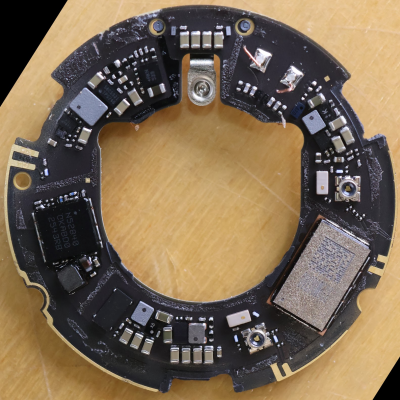
Next is the PCB layer, with a brief analysis of the main ICs, before they get lifted off and decapped for an intimate look at their insides. These include the Nordic Semiconductor nRF52840 Bluetooth chip, which also runs the firmware of the device.
The big corroded-looking grey rectangle on the PCB is the UWB chip assembly, with the die shot visible in the heading image. It provides the localization feature of the AirTag that allows you to tell where the tag is precisely. In the die analysis we get a basic explanation of what the structures visible are for. Basically it uses an array of antennae that allows the determination of time-of-flight and with it the direction of the requesting device relative to it.
Advertisement
In addition to die shots of the BT and UWB chips we also get the die shot of the Bosch-made accelerometer chip, as well as an SPI memory device, likely an EEPROM of some description.
As for disabling the speaker in these AirTag 2 devices, it’s nestled deep inside, well away from the battery. This is said to make disabling it much harder without a destructive disassembly, yet as iFixit demonstrated, it’s actually fairly easy to do it non-destructively.
A new NYT Connections puzzle appears at midnight each day for your time zone – which means that some people are always playing ‘today’s game’ while others are playing ‘yesterday’s’. If you’re looking for Monday’s puzzle instead then click here: NYT Connections hints and answers for Monday, April 6 (game #1030).
Good morning! Let’s play Connections, the NYT’s clever word game that challenges you to group answers in various categories. It can be tough, so read on if you need Connections hints.
What should you do once you’ve finished? Why, play some more word games of course. I’ve also got daily Strands hints and answers and Quordle hints and answers articles if you need help for those too, while Marc’s Wordle today page covers the original viral word game.
Advertisement
SPOILER WARNING: Information about NYT Connections today is below, so don’t read on if you don’t want to know the answers.
Article continues below
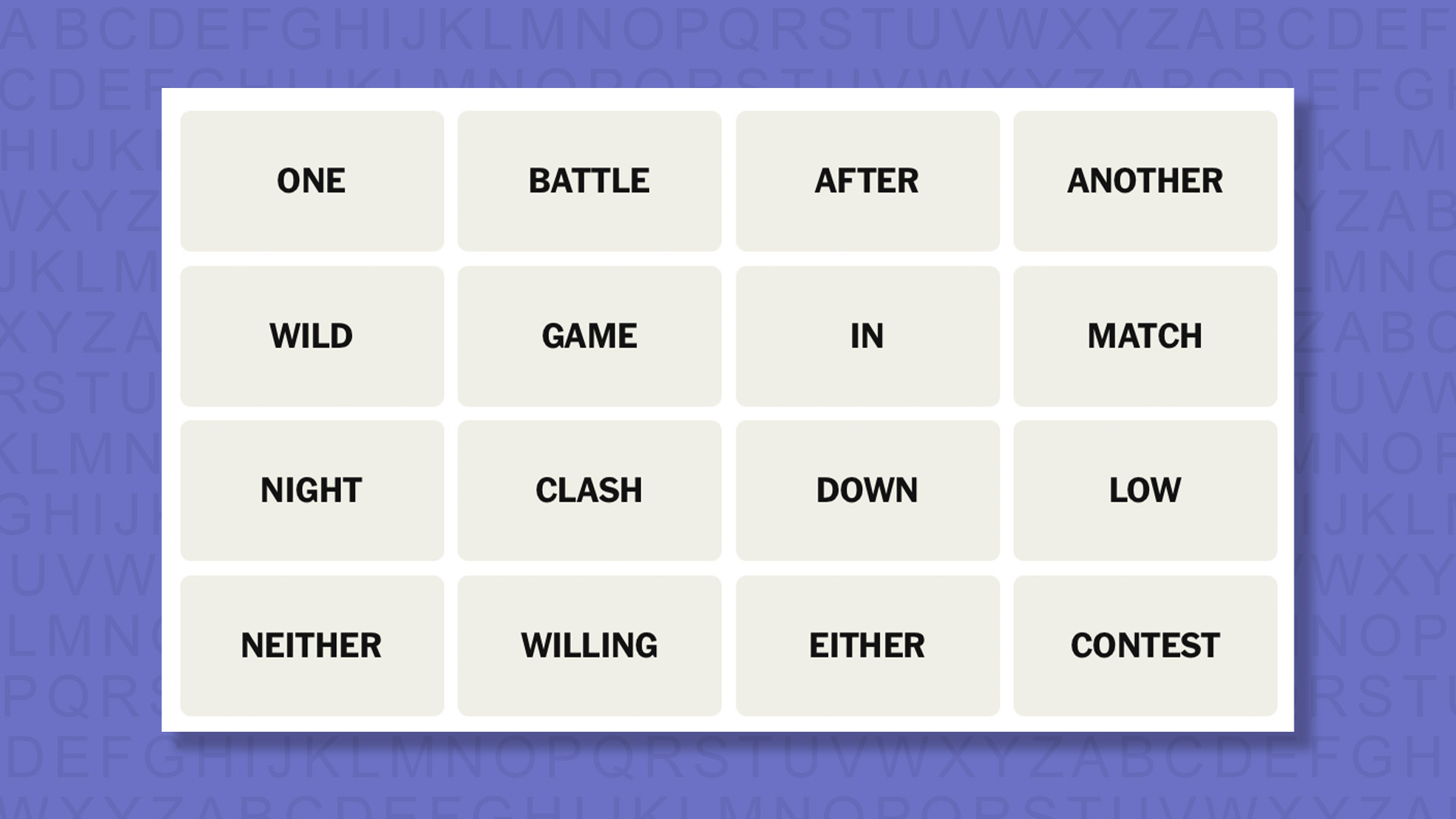
NYT Connections today (game #1031) – today’s words
(Image credit: New York Times)
Today’s NYT Connections words are…
ONE
BATTLE
AFTER
ANOTHER
WILD
GAME
IN
MATCH
NIGHT
CLASH
DOWN
LOW
NEITHER
WILLING
EITHER
CONTEST
NYT Connections today (game #1031) – hint #1 – group hints
What are some clues for today’s NYT Connections groups?
YELLOW: Games
GREEN: Fully committed
BLUE: Vague selections
PURPLE: Add a word that rhymes with “wife”
Need more clues?
We’re firmly in spoiler territory now, but read on if you want to know what the four theme answers are for today’s NYT Connections puzzles…
Advertisement
Sign up for breaking news, reviews, opinion, top tech deals, and more.
NYT Connections today (game #1031) – hint #2 – group answers
What are the answers for today’s NYT Connections groups?
YELLOW: COMPETITION
GREEN: ON BOARD
BLUE: WORDS FOR UNSPECIFIED CHOICES
PURPLE: ____LIFE
Right, the answers are below, so DO NOT SCROLL ANY FURTHER IF YOU DON’T WANT TO SEE THEM.
Advertisement
NYT Connections today (game #1031) – the answers
(Image credit: New York Times)
The answers to today’s Connections, game #1031, are…
YELLOW: COMPETITION BATTLE, CLASH, CONTEST, MATCH
GREEN: ON BOARD DOWN, GAME, IN, WILLING
BLUE: WORDS FOR UNSPECIFIED CHOICES ANOTHER, EITHER, NEITHER, ONE
PURPLE: ____LIFE AFTER, LOW, NIGHT, WILD
My rating: Easy
My score: Perfect
In Saturday’s Connections game the tiles ‘let’, ‘sleeping’, ‘dogs’ and ‘lie’ became the group “let sleeping dogs lie” so ONE, BATTLE, AFTER, ANOTHER could very well have been a group in honor of the brilliant award-winning movie of the same name, rather than a red herring.
I decided not to risk it and instead linked BATTLE with MATCH, CLASH, and CONTEST and pressed submit, happy that I had not fallen for this most obvious of traps.
Advertisement
With eight tiles left I was uncertain about any connection, so took a gamble with EITHER and NEITHER — and then, thinking that they sounded like vague selections, picked ANOTHER and ONE. And just like that I’d completed a game in difficulty order for the second day in a row.
Yesterday’s NYT Connections answers (Monday, April 6, game #1030)
YELLOW: EVENTS WITH DANCING BALL, HOEDOWN, HOP, RAVE
GREEN: INTEREST CLAIM, CONCERN, SHARE, STAKE
BLUE: COMPONENTS OF WHAC-A-MOLE HOLES, MALLET, MOLE, TIMER
PURPLE: MUSICALS WITH LAST LETTER CHANGED CAROUSER, EVITE, OLIVES, WICKET
What is NYT Connections?
NYT Connections is one of several increasingly popular word games made by the New York Times. It challenges you to find groups of four items that share something in common, and each group has a different difficulty level: green is easy, yellow a little harder, blue often quite tough and purple usually very difficult.
On the plus side, you don’t technically need to solve the final one, as you’ll be able to answer that one by a process of elimination. What’s more, you can make up to four mistakes, which gives you a little bit of breathing room.
Advertisement
It’s a little more involved than something like Wordle, however, and there are plenty of opportunities for the game to trip you up with tricks. For instance, watch out for homophones and other word games that could disguise the answers.
It’s playable for free via the NYT Games site on desktop or mobile.
Early editions of the index were a tabbed notebook. “I still have some of the original versions of it,” Boyer says. “You would go through, laboriously, by hand, turning the pages, and it would say ‘see page 27,’ like one of those find-your-own-ending books, and then you would put in a phone call, because the last section in the Antivenom Index was the home phone numbers of zookeepers.”
In 2006, Boyer and Steven Seifert, then a medical toxicologist at the University of Nebraska, partnered to bring the index online, where it remains today. Now, nearly 90 zoological organizations list their wares.
When Chris Gifford was bitten by his deadly green mamba, he was lucky to receive antivenom from South Carolina’s Riverbanks Zoo.
Courtesy of Chris Gifford
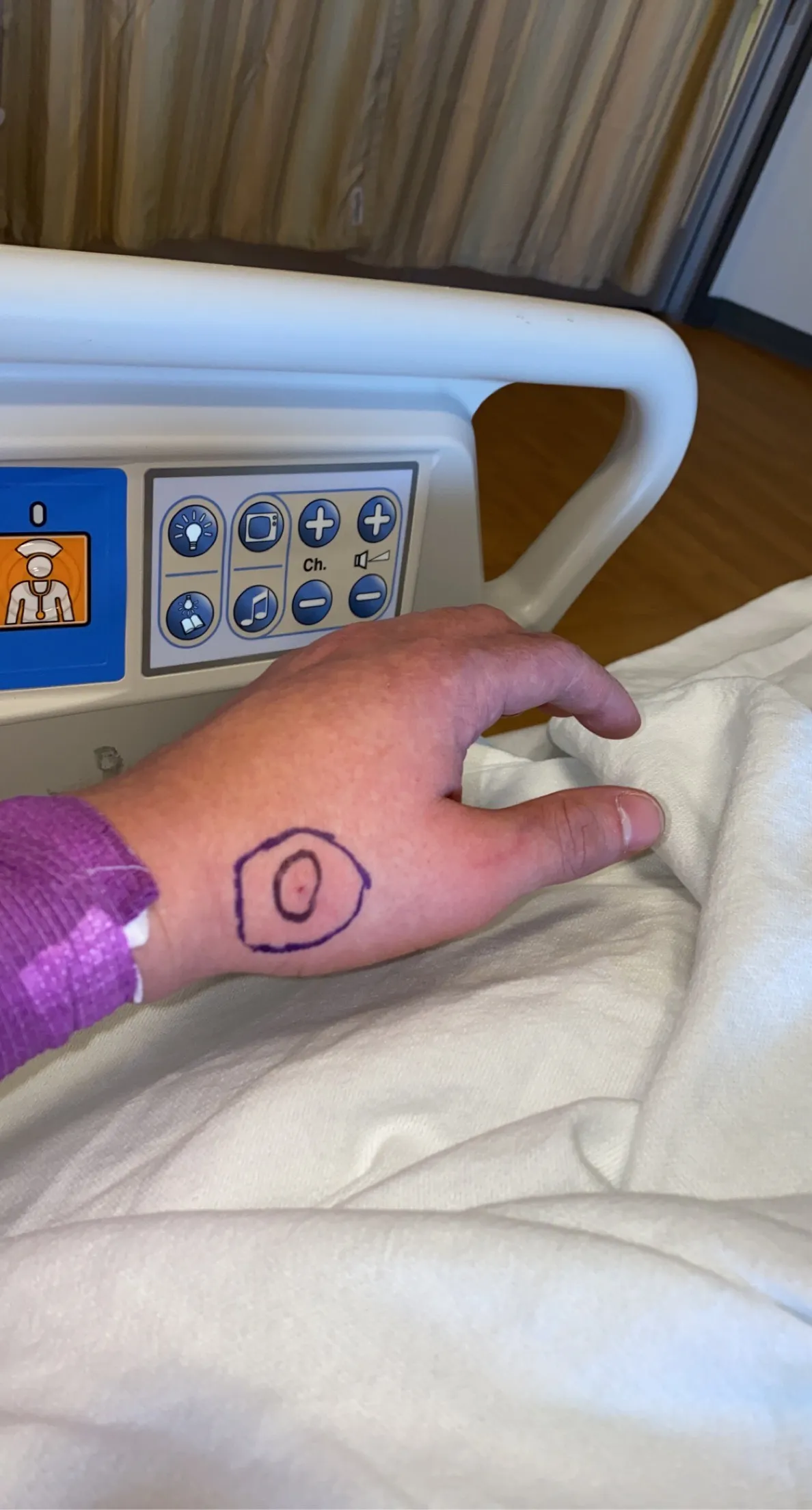
Gifford, the North Carolina man, had been comparatively lucky, as only one of his mamba’s fangs had pierced his skin. By the time he reached a nearby hospital, Gifford’s hand was swelling and creeping paralysis was causing his eyelids to droop. The Antivenom Index was activated, and South Carolina’s Riverbanks Zoo, about 200 miles to the southwest, had the antivenom he needed. Just 30 minutes after the mamba’s bite, Gifford was struggling to breathe as the paralysis started to affect his diaphragm.
Advertisement
“It feels like you’re drowning,” he says.
Keepers at the Riverbanks Zoo packed 10 vials of antivenom on ice and sent them on a helicopter. Just as Gifford’s timer hit the six-hour mark, the hospital began administering the first of the vials. “Almost immediately, I could feel myself breathing,” Gifford says. He left the hospital some two days later.
If you’re bitten by a venomous snake in the northeastern United States, odds are good that you’ll be treated with vials of antivenom nestled in a refrigerator in the back room of the Bronx Zoo’s reptile house. The zoo collaborates with the nearby Jacobi Medical Center, whose dedicated snakebite response team makes it a rarity among US hospitals.
Inside the refrigerator are boxes, bins, and bags of the delicate glass vials that are often the difference between life and death. Shelves are lined with jars full of antivenom for Indian species and the North American coral snake, and lavender cartons with images of a poised king cobra. In all, the Bronx Zoo stocks 25 different antivenom varieties, many of which are polyvalent, meaning applicable to multiple species.
Waymo’s driverless taxis are making their way to London, starting with a pilot this month (April 2026), with a full launch coming in September, but what does that mean for the UK’s capital?
Will the city’s notoriously difficult-to-drive streets become a chaotic mess of robot carnage? Well, hopefully not — in fact, if the London experience is anything like the Waymos I’ve ridden in San Francisco, it might be the Uber replacement you’ve been waiting for.
These robocabs might even make London’s streets a bit safer.
Advertisement
Article continues below
(Apologies for the over-enthusiastic start to the video)
Waymo has been operating its robotaxis for years and, as of March 2026, has 3,000 vehicles in its fleet — so it knows how to make the rider experience smooth.
Advertisement
The Waymo app is essentially the same as Uber or Lyft; you choose where you want to go and be picked up from, request a ride, and wait for your car to arrive.
In some ways, I’ve found Waymo easier because when the car arrives, it flashes your initials on top of the vehicle — meaning you don’t have to do the awkward dance of cross-checking license plate numbers.
Sign up for breaking news, reviews, opinion, top tech deals, and more.
To unlock the car, you have to push a button in the app, so no random person can get in before you. Once everyone is in and has their seat belt on, you just push a button in the car to set it off.
Advertisement
When you arrive at your destination, Waymo will let you know and park somewhere safe. It’ll also give some safety guidance, like checking for traffic before opening your door into the road — yes, it’s obvious, but if you’re coming from a party or a long day at work, a safety reminder is handy to ease the mental load.
(Image credit: Waymo)
It’s easy, but is Waymo safe?
The whole user experience is superbly smooth, and that’s true for the ride as well.
Driving is inherently risky — more risky than many of us realize —, but according to Waymo itself, the company’s vehicles have 91% “fewer serious injuries or worse crashes,” 83% “fewer airbag deployment crashes,” and 82% “fewer injury-causing crashes” than regular human drivers.
This is all thanks to the tri-sensor technology used by Waymo cars. They rely on cameras, radar, and LiDAR to create an incredibly accurate 360-degree map of everything around the vehicle — including pedestrians, obstacles, other cars, cyclists, trams, road signs, basically everything.
It’s a heck of a lot more data and understanding than we humans with just our two eyes can provide, and we also have to contend with a few blind spots while we drive. So it’s no wonder that Waymo is much safer.
Now, you might see some driverless vehicles have worse safety records, but that tends to be for rivals who rely solely on cameras and AI. Cameras alone aren’t yet as accurate as a system with LiDAR and radar, as the technology seems to be more prone to error due to environmental interference — for example, cameras, like our eyes, can struggle in fog, whereas the triple sensor setup doesn’t.
Advertisement
From my own experience, I felt perfectly safe inside the Waymos I rode in — the driverless car drove smoothly, merged with the right balance of caution and confidence, and stuck to the speed limit.
(Image credit: Myriam Joire)
What about my privacy?
Lastly, let’s touch on privacy. In some ways, Waymo is more private than a regular Uber or cab, as while the vehicle has mics, the company says they’re only switched on when you’re speaking with support — otherwise they’re muted.
However, there are internal cameras on all the time inside the car’s cabin — with social media full of stories of folks who didn’t realize.
Advertisement
Remember, other people have to use these taxis, and if Waymo catches you doing stuff you shouldn’t be — including trying to drive the car — you’ll get in trouble, which could see your account penalized or suspended entirely. So don’t be weird.
Treat it like a driver is in the car with you, and I’m sure your rides will be smooth.
Apple’s supply chain partners have been warned that mass production of iPhone Fold components could be pushed back if current setbacks aren’t overcome. “More time is needed.”
iPhone Fold runs into snags in production testing
The iPhone Fold has been rumored since Samsung foldables first hit the market in 2019. Even though the expensive category never grew out of a select niche, vocal Apple fans have hoped for such a product from the company for years. It seemed that 2026 would finally be the year Apple unveiled an iPhone Fold, but that hope may be misplaced. According to a report from Nikkei Asia, Apple’s supply chain has been warned of a potential mass production and shipment delay. Rumor Score: 🤯 Likely Continue Reading on AppleInsider | Discuss on our Forums
According to Telegram CEO Pavel Durov, the Kremlin’s increasing efforts to control and censor the global internet are causing widespread problems for Russian users. The Russian-born entrepreneur confirmed that Telegram is now banned in the country, yet more than 50 million Russians continue to use it daily via VPNs. Read Entire Article Source link
You’re never safe when you’re working for Trump. That much was obvious in Trump’s first term, when he fired Attorney General Jeff Sessions, Secretary of State Rex Tillerson, National Security Advisor John Bolton, and FBI Director James Comey. They were all fired for the same reason: failing to be completely loyal to Trump.
This time around even die-hard MAGA loyalists are being fired. DHS head Kristi Noem was dismissed from her position, despite being the enthusiastic figurehead of anti-migrant cruelty Trump definitely wanted in that position. Now, she’s cooling her heels and watching the dust settle on her political hopes as the doesn’t-sound-made-up-at-all “Special Envoy for the Shield of the Americas.”
In recent weeks, Ms. Bondi tried to shore up her position by moving more aggressively against investigative targets singled out by Mr. Trump, including the former Obama official John O. Brennan and a former White House aide, Cassidy Hutchinson, whom the president has accused of lying about his actions on Jan. 6, 2021, according to officials briefed on the effort.
It is not entirely clear if any specific action or event finally tipped the balance for Mr. Trump, who had been reluctant to fire senior officials to avoid reprising the chaotic turnstile personnel turnover of his first administration.
Advertisement
But with the dismissal of Ms. Noem and now Ms. Bondi, that might be changing. His calculus appears to have shifted after the quick confirmation of Markwayne Mullin as Ms. Noem’s replacement.
Bondi’s head may have been destined for the chopping block months ago, when Trump (in what appeared to be a personal message accidentally posted on main) berated Bondi for not doing all the impossible stuff he wanted done right now, like engaging in vindictive prosecutions that were (1) obviously vindictive, and (2) didn’t have enough evidence to support the hallucinatory charges dreamed up by Trump and his DOJ enablers.
Nothing has improved since then. Lots of prosecutors have left the DOJ, refusing to engage in Trump’s overt politicization of the department. Others have been dismissed for the same reason. A handful of handpicked prosecutors have been sidelined by judges because they were never formally appointed. And grand juries are frequently refusing to buy what the government’s selling, terminating prosecutions before they can even get off the ground.
Not that we should expect anything better (or more ethical) from her replacement. Todd Blanche is a true Trump loyalist. But he’s taking over a DOJ that’s short on experience, long on MAGA loyalty, and whose reputation has been completely destroyed by this administration and its actions.
The stuff Bondi failed to get done will continue to not happen. Anyone stepping into this position should know it’s only going to be temporary. The president who thinks he’s a king will continue to see courts stifle his worst impulses. Changing the name on the letterhead isn’t suddenly going to make vindictive, politically motivated prosecutions any more legal or feasible.
Advertisement
But I don’t have any sympathy for anyone being shit-canned for failing to satisfy the whims of a megalomaniac who thinks he’s a king, rather than a temporarily elevated politician. They’re far more than merely complicit. They’re fully supportive of destroying America and its institutions to usher in a new age of white Christian nationalism. So, fuck ’em. They got what they deserved.
On day six of its mission, Artemis II is closing in on the far side of the moon. Meanwhile, the historic journey has not been without fascinating and curious stories, from the images and videos that its four crew members have shared with the world to the inevitable unforeseen events—including a tricky toilet situation.
A few hours before the crew begins its lunar flyby, here’s how things are going on Artemis II.
When Will They Reach the Far Side of the Moon?
While Artemis II won’t actually land on the moon (that won’t happen until Artemis IV), that does not make this mission any less compelling. Once the Artemis II astronauts finish flying over the dark side of the moon, they will have the historic distinction of being the humans who have traveled the farthest from Earth.
They will also test all the systems needed for future lunar missions, validating life support, navigation, spacesuits, communications, and other human operations in deep space.
Advertisement
But when are they supposed to reach this far-off point? First, the Orion capsule reached what is known as the moon’s “sphere of influence” on Sunday night. This is the point where the moon’s gravitational force is stronger than the force of the Earth.
At present, Orion is circling the moon. Once the capsule is on the dark side of the moon, approximately 7,000 kilometers from the surface, communications with Earth will be interrupted. For six hours, they will be able to view the far side of the moon, something no human being has ever seen with their own eyes—not even the astronauts of the Apollo program, as this region of the moon was always too dark or difficult for them to reach.
That six-hour flyby of the dark side of the moon is expected to begin Monday, April 6, at 2:45 pm EDT and 7:45 pm London time.
After that, the capsule will use the moon’s gravity to propel itself back to Earth. Splashdown, when the astronauts reach Earth, is scheduled for April 10 in the Pacific Ocean, not far from the coast of California, the 10th day of the mission.
Advertisement
Remember that you can follow the live broadcast of the Artemis II mission from NASA’s official channels.
What Has Happened so Far?
Since its successful launch on April 1 from Kennedy Space Center, the Artemis II crew has shared several spectacular photos, such as the featured image in this post, which shows mission specialist Christina Koch looking down at Earth through one of Orion’s main cabin windows.
This incredible photo of a Earth, taken on April 2, went viral on social media, referencing the famous “Blue Marble” image captured by the Apollo 17 astronauts in 1972.
View of Earth taken by astronaut Reid Wiseman from the window of the Orion spacecraft after completing the translunar injection maneuver on April 2, 2026.Photograph: Reid Wiseman/NASA/Getty Images
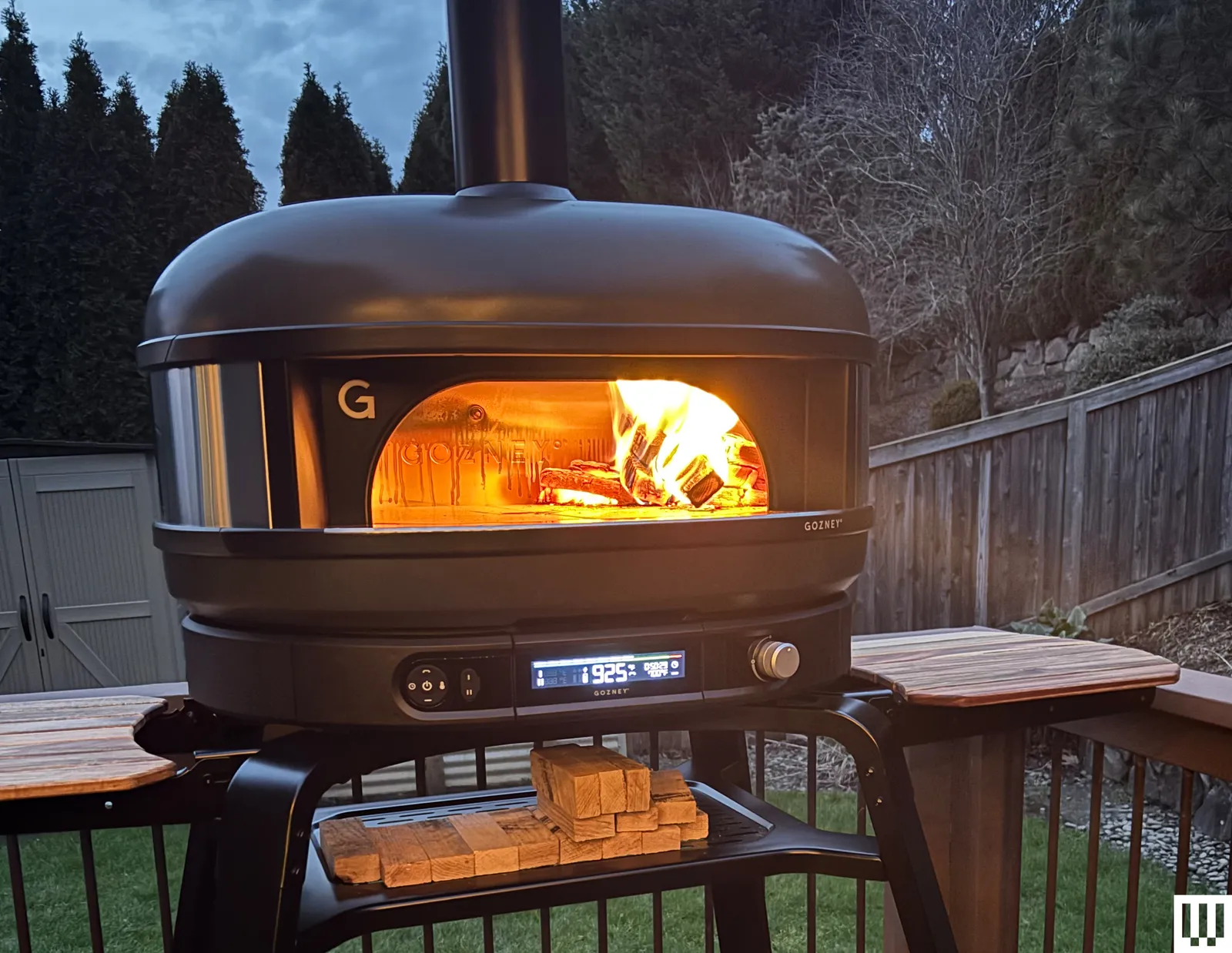
(One word on the arch, though—it reduces the oven mouth width from 16.5 inches to about 13 inches. I learned the hard way one night that many pizza peels will no longer fit, including Gozney’s own large-size models. Make sure you have a peel that’s 12 inches or smaller.)
Also, thanks to the generous ceiling height, the Dome is a more versatile oven than its competitors in that it can be used for cooking meals other than pizzas. Steaks, fish, or other skillet meals are safe not to splatter on the ceiling, and two included meat probes can be connected to show real-time temps on the Gozney’s display. (Among the Dome’s accessories is a mantel designed to extend the cooking surface for things like skillets and dutch ovens, as well as a wood-handled door to enclose the oven for baking.)
King of the Road
Photograph: Kat Merck
While the Gozney isn’t a permanent install, unless you spring for the wheeled stand ($500), you will want a sturdy, semi-permanent space where it can live, as well as moving help. The stainless steel body and 30-millimeter corderite stone weigh a total of 150 pounds in the packaging—instructions recommend four people to lift the box, though my husband and I were able to lift it ourselves onto a Gorilla wagon to carry it to its testing location on our deck.
There are straps on the bottom of the oven for maneuvering, but the Dome really should only be lifted once; you will not be carrying it in and out of the garage like an Ooni. There is a cover for either the oven by itself or on its stand, but like all of the accessories, it’s not included.
Advertisement
Speaking of Ooni: Like the Koda Max, the Dome heavily touts its size as being ideal for cooking “up to two pizzas at once.” However, if you’re buying a dedicated pizza oven, you probably want high heat, and if you want high heat, this requires frequent turning of a pie—usually every 30 seconds—to ensure it cooks evenly. (Gozney turning peel: $80.) Multiple pies in the oven will complicate access, to say nothing of the logistical issues. You will also likely find yourself needing to move the pie to the side farthest away from the flame at times, to avoid charring your cornicione.
The Federal Police in Germany (BKA) has identified two Russian nationals as the leaders of GandCrab and REvil ransomware operations between 2019 and 2021.
According to BKA’s disclosure, 31-year-old Daniil Maksimovich Shchukin and 43-year-old Anatoly Sergeevitsch Kravchuk acted as the heads of the two ransomware groups “from at least the beginning of 2019 until at least July 2021.”
Shchukin hid behind the monikers UNKN/UNKNOWN for years, posting on cybercrime forums and speaking as a representative of the ransomware operation.
The German authorities say that Shchukin and Kravchuk participated in at least 130 extortion cases targeting companies in the country specifically.
Following these attacks, at least 25 victims paid Shchukin and his co-conspirators $2.2 million in ransom, while the total financial damage caused by them is estimated in excess of $40 million.
Advertisement
GandCrab started in early 2018, and its leader at the time decided to retire in June 2019, after claiming to have earned $2 billion from ransom payments. The leader, however, cashed out with $150 million, which they claimed to have invested in legal businesses.
Soon after, a new operation called REvil emerged, following the affiliate model established by GandCrab through advertising and building partnerships with cybercriminals.
REvil, also known as Sodinokibi, was formed from previous GandCrab affiliates and operators who had already learned the successful tactics and started to apply them to their operations.
Multiple infrastructure disruptions were recorded at the time, and in mid-January 2022, Russia arrested more than a dozen REvil gang members, who were released in 2025 after time served on carding charges.
It is unclear if either Shchukin or Kravchuk joined other ransomware operations following REvil’s demise in 2021.
BKA believes that Shchukin and Kravchuk are now in Russia and asks the public to share any information that could lead to their whereabouts. Relevant entries were also created on the EU’s Most Wanted portal.
The police shared several images, including tattoo photos, to help track down the two threat actors and bring them to justice.
Advertisement
Automated pentesting proves the path exists. BAS proves whether your controls stop it. Most teams run one without the other.
This whitepaper maps six validation surfaces, shows where coverage ends, and provides practitioners with three diagnostic questions for any tool evaluation.
Tired of taking your action camera on an adventure, only to get home and find out you missed the action with a bad angle? One option is to switch to a 360-degree action cam, so you can capture all of the action and then edit down to just the good stuff later. One of our favorite options, the DJI Osmo 360, is currently available for just $390 on Amazon, a $209 discount from its usual price, and it comes with a selfie stick and an extra battery.
The DJI Osmo 360 achieves its impressive all-around video quality by leveraging a pair of 1/1.1-inch sensors, larger than some other offerings, and by supporting 10-bit color. You can really see that in the camera’s output, with colors that are vivid and bold, to the point that you may need to dial them back a bit in post if you want something more natural. With support for up to 50 frames per second at 8K when recording in 360 degrees, or 120 fps at 4K when shooting with only one sensor, you’ll have plenty of material to work with. In our testing, it ran for just shy of two hours at 30 fps, which is also around the time the internal storage had filled up anyway.
If you plan on catching any serious discussions with your Osmo 360, you’ll be pleased to know it connects directly to DJI’s line of wireless lavalier microphones, including the excellent and frequently discounted DJI Mic 2 and Mic Mini. If you want to mount it to something other than the included 1.2-meter selfie stick, it has both DJI’s magnetic attachment system and a more traditional ¼”-20 tripod mount. The DJI Mimo app lets you control the camera and adjust any settings, and there’s even a simple editor for on-the-fly production. For desktop users, DJI Studio has even more in-depth settings and editing options, in case you don’t want to pay for Premiere.


 There are a few possible ways to do a teardown of new electronics like the Apple AirTag 2 tracker, with [electronupdate] opting to go down to the silicon level, with die shots of the major ICs in a recent teardown video. Some high-resolution photos are also found on the separate blog page.
























































You must be logged in to post a comment Login