

Tech
TechCrunch Mobility: Robotaxi reality check


Welcome back to TechCrunch Mobility — your central hub for news and insights on the future of transportation. To get this in your inbox, sign up here for free — just click TechCrunch Mobility!
Robotaxis are here! And yet, they’re not.
That contradiction neatly captures Waymo’s current reality. Anyone walking around San Francisco could reasonably declare that robotaxis have arrived. But arrival, even at scale, doesn’t guarantee permanence. Such is the dogged threat hanging over every company trying to commercialize autonomous vehicles.
Waymo paused operations in Atlanta, Dallas, Houston, and San Antonio because its robotaxis are struggling to deal with heavy rain and flooded roads — and specifically knowing when not to enter them. As I prepared to send this newsletter, we learned the company extended that to Austin and Nashville as well. It’s been a persistent problem for Waymo, which prompted the company to issue a recall last week.
In the same week, Waymo halted robotaxi operations on freeways in San Francisco, Los Angeles, Phoenix, and Miami as it works to improve performance in construction zones.
For now, the arrival of robotaxis is conditional. That doesn’t mean this conditional status will last forever, but it’s a reminder that launching commercially is not mission accomplished. Waymo — arguably the leader in commercial robotaxi ridership and fleet size — is in the thick of that process. For every new city it enters or capability it unlocks, a new edge case is discovered.
Situationship or corporationmaxxing?
I’m ditching my “Little bird” section this week to dive into SpaceX, its IPO, and the situationship in the Elon Musk business universe.
I typically don’t dedicate too much space in this newsletter to space. Heh. But the SpaceX IPO filing dropped this week, and the man at its helm is also deeply tied to Tesla. So, here we are, talking about space and, more specifically, how Elon Musk uses resources from one company to service another.
The interconnected nature of Tesla and SpaceX isn’t a secret; Tesla is a publicly traded company and does disclose financial transactions with other Musk-affiliated entities. This new IPO filing does the same and with a bit more detail. And now that Musk’s company xAI has merged with SpaceX, the IPO puts all of these transactions under one company.
For example, SpaceX purchased $506 million of Tesla’s commercial energy storage products, called Megapack, in 2025 — nearly a threefold increase from the previous year. SpaceX also bought $131 million of Cybertrucks last year. SpaceX paid Musk’s infrastructure firm, The Boring Company, $1 million to construct tunnels in Bastrop, Texas. Musk’s social media company X, which was acquired by xAI last year and has since merged with SpaceX, also spent $1 million leasing space from The Boring Company.
Then there is Tesla’s investment in xAI. Following SpaceX’s acquisition of xAI, that investment was converted into an equity interest in SpaceX.
These costs will likely be eclipsed by two future SpaceX-Tesla projects: building Terafab, a chip-manufacturing facility, and Macrohard, an AI platform the two companies are developing that will use autonomous agents to augment the work of humans.
All of this leads to my question for you. Will SpaceX and Tesla merge?
To participate in our polls, sign up here to get TechCrunch Mobility directly in your inbox!
For other SpaceX coverage, check out these stories:
Everything in the SpaceX IPO filing
A breakdown of how Elon Musk increased his power
Who will benefit most?
xAI burned through $6.4B last year
xAI keeps turning to gas turbines to power data centers
Deals!

Aboard, a Southern California-based startup developing extended-range electric travel trailers, raised $13 million in a pre-Series A round led by Ondine Capital and Llama Ventures. Fun fact: The company hired Richard Kim — an automotive designer known for his work on the BMW i3 and i8 and as co-founder of the defunct EV startup Canoo — as a consultant.
Quartermaster, an Arlington, Virginia-based startup developing a distributed sensing network for ships, raised $43 million in a Series A funding round co-led by First Round Capital and Quiet Capital.
May Mobility, an autonomous vehicle technology startup, formed a strategic agreement with Ecarx, an automotive tech company backed by Geely founder Li Shufu. Under the deal, Ecarx will supply May Mobility with thousands of purpose-built robotaxi vehicles. The companies plan to partner with a third party to initially deploy the AVs next year and scale to commercialization by 2028. The total value of the project is estimated to be about $750 million over its entire duration.
Scapia, an Indian travel booking startup, raised $63 million in a funding round led by General Catalyst, with existing investors Peak XV Partners and Z47 also participating.
Uber increased its stake and now owns 19.5% of German food delivery company Delivery Hero, Bloomberg reported.
Notable reads and other tidbits

Bryan Reimer, a research scientist at MIT, shared his recent presentation on AI and how its future depends on human behavior, governance, and trust.
The global EV economy is K-shaped, and this is the country that is being left behind.
Lyft published a blog that lays out the company’s position on autonomous vehicles. In its view — and one that is similar to rival Uber — a ride-hailing service requires human drivers and robot ones. This makes sense politically; Lyft doesn’t want to rattle its human gig workers. It also reflects the realities of where robotaxis are, in terms of scale. The upshot: Robotaxis are not a part of daily life for most people in the United States.
Self-driving tech startup Nuro hired Michael Mancini as its chief financial officer. Mancini was previously CFO at Energy Recovery, Astranis Space Technologies, and Aerion Supersonic.
Stellantis, the automaker behind the Jeep and Ram brands, has tapped self-driving startup Wayve to bring hands-free driving to its vehicles in 2028. Meanwhile, Stellantis unveiled its $70 billion turnaround plan, which includes 11 new models for North America — and even some Chryslers!
Tesla’s Full Self-Driving (Supervised) driver-assistance software is now available in Lithuania. This is the second European country to approve its use. Reminder: Making FSD available in Europe is critical to Tesla’s and CEO Elon Musk’s ambitions. It’s also financially important for Musk, whose $1 trillion pay package is tied to hitting a number of product goals, including hitting “10 million active FSD subscriptions” by 2035.
A San Francisco doctor who sued Waymo because its identity-verification system misidentified him as a terrorist dropped the lawsuit after the company resolved the issue.
One more thing …

The last time I was in a Nissan Leaf was two years ago when I test drove a 2024 Nissan Leaf SV Plus, which cost $37,815 (including the destination fee). And at the time, I described the experience as a mixed bag. I recently got back in one, this time a 2026 Nissan Leaf Platinum+, priced at $42,635, including destination charges and some special add-ons like two-tone paint and the floor mat package.
This model, the third generation of the Leaf, had an improved EPA estimated range of 259 miles (and some versions go above 300 miles). But that wasn’t the first upgrade I noticed. This new Leaf had a lighter, more modern, dare I say upscale, interior cabin. I won’t quite say “sleek,” but it was enjoyable and a notable upgrade. (Notice the cool lighting at night in the picture above?) My version, which should be noted was the top trim, came with a wireless phone-charging pad, dimming panoramic roof, a heads-up display, and a long, curved 14.3-inch central screen.
Last time, I complained about the lack of tech for a vehicle priced above $30,000 — like a backup camera with high resolution. There are several notable improvements that come standard and correct my previous criticism, including a 360-degree camera, wireless Apple CarPlay or Android Auto, and adaptive cruise control. This time around, I was happy to get back in a Nissan Leaf.
Got a tip for us? Email Kirsten Korosec at kirsten.korosec@techcrunch.com or my Signal at kkorosec.07, or email Sean O’Kane at sean.okane@techcrunch.com.
When you purchase through links in our articles, we may earn a small commission. This doesn’t affect our editorial independence.


As we get out of the house, the gear-obsessed WIRED Reviews team is writing about our favorite bags and EDCs. Today, reviewer Boutayna Chokrane raves about her love for her Lululemon gym bag. You can also check out other Bag Check stories where WIRED writers share their carryall of choice.
I have long had a soft spot for messenger bags. There’s a retro Silicon Valley vibe to the crossbody that I respect: It implies you move fast, travel light, and keep your world compartmentalized. The unfortunate practical reality of many a messenger bag, though, is chronic neck and shoulder pain. With all of its weight relying on one strap, a single shoulder is left to bear all the burden. After a few blocks adorned with a messenger, you may feel that your style choice has transformed into a full-on punishment. After years of testing various incarnations of messenger bag—including micro slings and cavernous totes—I’d made peace with this trade-off. Beauty is pain, after all.
Then I met the comfort-forward, durable, and compact-yet-cavernous Lululemon 3-in-1 Duffle.


Lululemon
3-in-1 Gym Duffle Bag 30L
True to its name, it’s a multi-use transport system that is easy to reconfigure when my commute demands a different carry. You can grab it by the top handles, sling it across your body when you need your hands, or detach the shoulder strap and wrap it around your yoga mat to use it as a stand-alone mat carrier. No matter how you task it to carry your stuff, rest assured the bag’s design promises utility and comfort: The strap is cushioned enough to spare your shoulder, resilient enough to handle the load of your gym gear, and springy enough to double as a stretching strap. Every component of the duffel has a reason to exist, and some of them even have two.
I’ve been toting this duffel for the gym four days a week since January 2025, which is about as real-world a test as it gets. It has endured Chicago at its most extreme: sleet, wet snow, and torrential rain. The water-repellent nylon shrugs off all elements without any fanfare. The bag dries fast, resists grime, and—most impressively to me—doesn’t hold onto odor. Trust me, I’ve pushed that boundary more than once with sweaty clothes after hot Pilates and have found the included drawstring pouch effectively quarantines everything.
It’s also low-maintenance: After a trip to the beach, a couple of quick shakes cleared out any memory of sand. This duffel requires blessedly minimal upkeep, save for the occasional spot clean, making it a refreshingly low-effort option for commuters who don’t need another chore on their to-do list.
The design is deceptively compact. Externally, it presents as a modest and understated gym bag. But peek inside, and you’ll immediately see that this duffel, with its shocking 30-liter capacity, is Poppins-esque. There’s a dedicated shoe compartment on the side that accommodates up to a men’s size 14, though I prefer to use the bottom section for footwear to keep the main cavity flexible. There’s a slot for a 24-ounce water bottle, interior pockets for keys, AirPods, and other small essentials that tend to disappear into bag voids, and there’s still room for a change of clothes, a Theragun, and a dopp kit. Nothing about this bag feels over-engineered, but nothing feels missing, either.
Tech
Ericsson is leaving Kista for central Stockholm, in the largest office lease in Swedish history


The 71,000-square-metre Hagastaden campus, signed with Atrium Ljungberg and Castellum, ends more than two decades in the suburb once branded Sweden’s Silicon Valley.
Ericsson is moving its global headquarters out of Kista. The Swedish telecoms-equipment maker said on Monday that, starting in 2028, it will gradually relocate its Stockholm operations, including the HQ, R&D functions, group functions, and the Imagine Studio showcase space, to a new city campus in the Hagastaden district, north of central Stockholm.
The numbers attached to the move are substantial. Across new leases with Atrium Ljungberg and Castellum, plus a Castellum agreement Ericsson signed earlier for the Infinity property, the company will occupy roughly 71,000 square metres in Hagastaden across six buildings.
Atrium Ljungberg’s portion alone, three buildings totalling 58,000 square metres on a 15-year contract, is described by the landlord as the largest office lease in Swedish history and the largest known office deal in Europe so far this year.
Annual rent to Atrium Ljungberg lands at about 360m kronor ($39m) at 2026 levels.
Castellum’s new pieces, the 9,500-square-metre Emerald House and the 3,500-square-metre Jubileumshuset, carry an annual rental value of roughly 80m kronor, according to the company’s release.
That sits on top of the 24,000-square-metre Infinity contract Castellum signed previously, expected to be ready by late 2027.
Börje Ekholm, Ericsson’s chief executive, framed the move in talent terms.
“With a vibrant location in the heart of the city’s technology collaboration and innovation community, including easy access to our changing business ecosystem, partners and decision makers, Hagastaden is clearly best-placed to address our future operations,” he said in the company’s statement.
“A thriving city campus will also strengthen our attraction for the top talent of the future.”
The translation is that the Kista calculation no longer works. The suburb in northern Stockholm has spent thirty years marketing itself as Sweden’s Silicon Valley, with Ericsson’s presence as the central evidence.
That story has been deteriorating for several years. Office vacancy rates in Kista ran at 26.7% in the first quarter of 2026, more than double the central Stockholm rate, according to Colliers data cited by Bloomberg.
The facility-management firm Coor Service Management announced its own departure from Kista in late 2024, citing security concerns; reports of organised-crime activity in the surrounding area have become a recurring feature of Swedish business coverage.
Ericsson’s lease did not name those factors, but the campus calculus is unmistakable.
The deal is a clear positive for the two landlords. Atrium Ljungberg shares rose as much as 5.1% on Monday, the most since April 8, and Castellum gained 2.1%.
Pareto Securities analyst Viktor Byrenius told Bloomberg the agreements were “a sign of strength” for Atrium Ljungberg, which has been working through elevated vacancy across the Stockholm region.
The Hagastaden lease materially shifts that occupancy story for the next decade and a half.
For Ericsson, the move comes against a quieter recent set of financial prints. The company narrowly missed Q1 profit estimates in April, as the North American 5G upgrade cycle that drove 2024 and early 2025 began to unwind.
Headcount in Sweden has been declining; the company cut roughly 1,200 jobs locally last year.
The Hagastaden campus is being designed for a smaller, denser, more central operation than the sprawling Kista footprint it replaces, which is its own form of strategy statement.
Move-in is phased and slow. Ericsson said the process will begin in early 2028 and run for several years.
The Infinity building is due late 2027; the rest of the Hagastaden campus is still under construction, on a deck built above one of the city’s major highways. By the time the relocation is complete, Ericsson’s last fixed link to Kista will, in practical terms, be gone.

On the Find X9 Ultra, the primary camera has a 200-megapixel 1/1.28-inch sensor. With a low f/1.5 aperture possible, this is an incredibly versatile camera, built to take in light and work well even in difficult shooting conditions. There’s also a pair of telephoto cameras. The first has a 200MP sensor and can zoom up to 3x (70mm equivalent) for portrait photos and general-purpose shots, while the showstopper is an ‘ultra’ telephoto, capable of 10x zoom at 50MP.
It’s rare, but we’ve seen 10x zoom in smartphones, including, briefly, Samsung’s Galaxy S23 Ultra. However, they weren’t paired with such high-resolution sensors. This offers more detail in shots, as well as the ability to digitally crop down to get even closer to the subject — although you won’t need to nearly as often. The Find X9 Ultra also has a 50MP ultra-wide camera and a 3.2MP multispectral sensor to strengthen white balance and color accuracy.
 Mat Smith for Engadget
However, Oppo’s innovative 10x telephoto is the most thrilling part of the phone’s penta camera setup. The 10x optical zoom also opens up the possibility of 20x lossless zoom, all before we start attaching Oppo’s teleconvertor lens. It also has sensor-shift stabilization to improve clarity and reduce the chances of blur. (Vivo has its own solution, which we’ll get to in a minute.)
The 3x telephoto camera is a convenient midpoint between the main camera and its huge sensor and the incredible range of the 10x telephoto. However, Oppo gets a little too keen on computational photography boosting here and I’d often get shots with ghostly outlines, especially of human subjects. Overly aggressive digital sharpening also made some images look unnatural.
 Mat Smith for Engadget
Within the camera app (and arguably too many shooting modes), Oppo’s collaboration with Hasselblad gives shooters a Master Mode that blissfully strips away the computational AI tricks and augmentations. This means that while you won’t get that AI nip-tuck on telephoto shots, you also won’t get nightmarish low-res faces or scrambled alien lettering. I broadly preferred it, though I occasionally missed the better low-light performance of the AI-boosted basic photo mode.
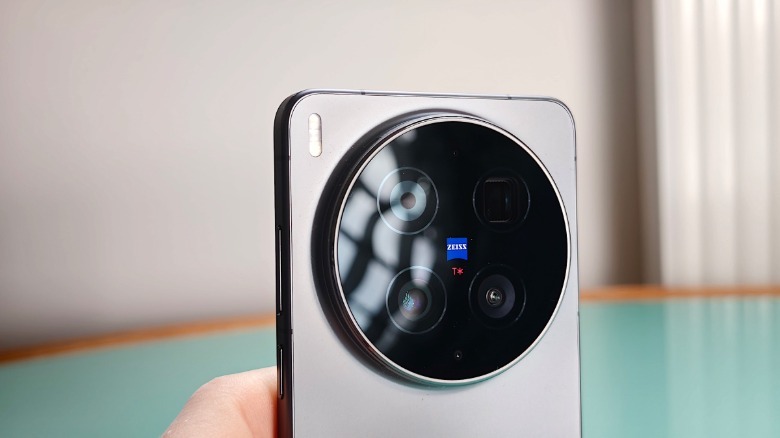 Mat Smith for Engadget
The Vivo X300 Ultra has the exact same 1/1.12-inch 200MP main camera sensor, although it has a narrow 35mm focal length, which could be argued to be more “cinematic’. Its aperture can go as low as f/1.85, losing again to its Oppo rival.
The X300 Ultra ultrawide camera, however, performs head and shoulders above the Find X9 Ultra’s version. Unlike most smartphone ultra-wide cameras, which I cynically view as a lazy effort by companies to add another camera to their smartphones, Vivo went to town. To start, Vivo added optical image stabilization (OIS), which is rare for this focal length. This, combined with a 50MP sensor, means images look crisper and more detailed than those from rival devices, which typically use lower-res sensors.
To Oppo’s credit, its ultrawide camera isn’t bad. The Find X9 Ultra also has a 50MP camera sensor and a lower f/2.0 lens. However, the sensor isn’t as big (the X300 Ultra’s 1/1.28-inch sensor is nearly twice the physical size of the Find X9 Ultra’s 1/1.95-inch sensor ) and it lacks built-in OIS. There’s also a lot less lens flaring on light sources with the Vivo phone, likely due to Zeiss’ anti-reflective lens treatment.
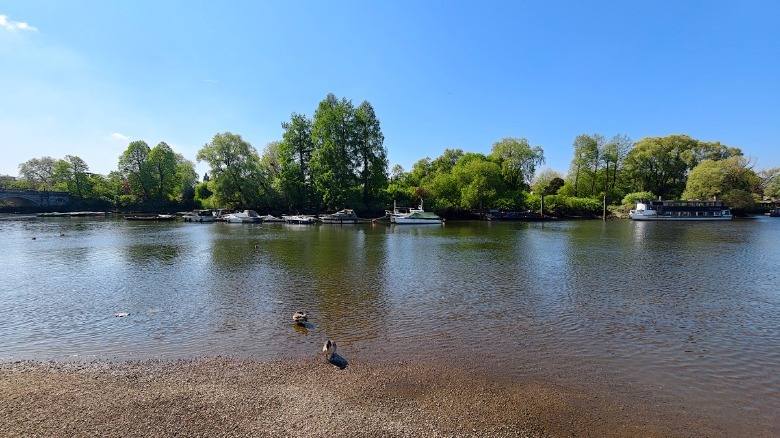 Mat Smith for Engadget
The X300 Ultra’s telephoto (another 200MP sensor) maxes out at 3.7x zoom without a teleconverter and while you can crop down from that for more ‘zoom’, it loses a lot of detail and adds a lot of artifacts in the process. Fortunately, for those looking to punch in further, Vivo has you covered.

Save $200 on Apple’s 15-inch MacBook Air for Memorial Day weekend.
Amazon’s $200 discount delivers the lowest price ever on the 2026 15-inch MacBook Air with Apple’s M5 chip.
Amazon’s early Memorial Day deal knocks $200 off the standard M5 MacBook Air 15-inch laptop in your choice of Starlight or Sky Blue.
Buy 15″ MacBook Air M5 for $1,099.99
This deal delivers the lowest price we’ve seen on the new 15-inch MacBook Air that was released in March 2026. Equipped with Apple’s M5 chip with a 10-core CPU and 10-core GPU, the standard configuration also has 16GB of unified memory and 512GB of storage.
In our hands-on M5 MacBook Air review, we found that although the 2026 release is an incremental update, it’s still an excellent buy for most.
And for those wanting the extra screen real estate found in the 15-inch model, picking it up at the lowest price ever is always a plus.
If you’re looking for additional power and a larger port selection, Amazon is also knocking $250 off every 2026 16-inch MacBook Pro configuration it sells. You can read more about the sale in our deal article.
Tech
Jeff Bezos describes his $38B startup Prometheus for the first time: ‘Nothing to do with robotics’
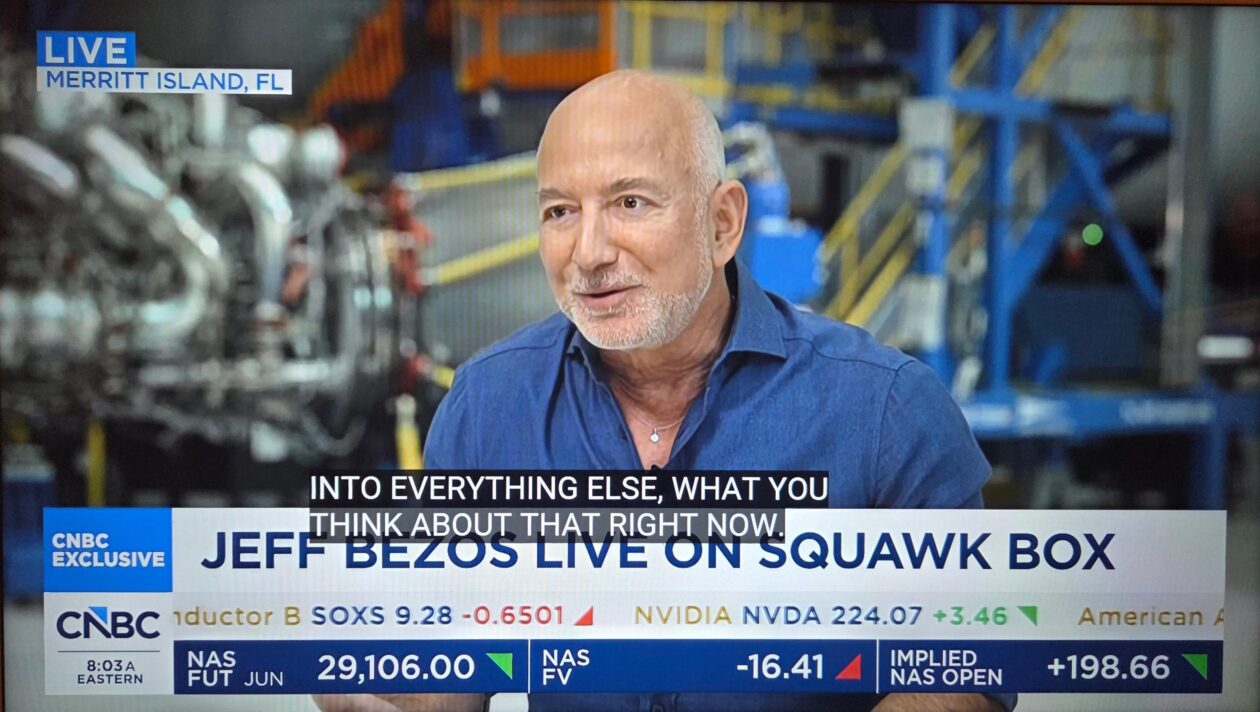

When CNBC’s Andrew Ross Sorkin described Jeff Bezos’ startup Project Prometheus as being “really about AI robotics” in an interview on Wednesday, the Amazon founder interrupted with a correction.
“It’s a little premature for me to talk about it, but we are not — we have nothing to do with robotics,” Bezos said. He went on to offer the most detailed public description yet of the secretive startup, for which he is co-CEO: Prometheus is developing an “artificial general engineer,” he said, building next-generation tools for designing physical objects.
Bezos called it “a very, very modern version” of CAD, or computer-aided design, adding that he is “really oversimplifying here,” and reiterating that it’s premature for him to give much detail.
He said Prometheus is “something I got so excited about that I became the co-CEO of the company, putting a lot of time into it, a lot of energy into it.”
The tools Prometheus is building will “help companies like Blue immensely,” Bezos added, referring to his space venture Blue Origin. However, he said, the company “deserves its own special focus” as “its own big idea” rather than being housed inside Amazon or Blue Origin.
His comments mark a rare hint of what’s happening inside a company that has operated almost entirely in stealth since news of its formation was reported in November 2025.
Project Prometheus launched with $6.2 billion in funding, led by Bezos and Vik Bajaj, a former Google X executive. Bloomberg reported in April that the company closed a $10 billion round at a $38 billion valuation, with JPMorgan and BlackRock among the investors.
The company has hired roughly 120 employees from firms including OpenAI, DeepMind, Meta and xAI, and operates out of San Francisco, London and Zurich.
Much of the outside reporting on Prometheus has characterized it as focused on robotics and manufacturing automation, which came in part from analyzing LinkedIn profiles of its hires. Bezos’ description Wednesday as a design-tools company focused on engineering physical objects suggests a different ambition, or at least a more specific one.

Rhode Island joins other states that have taken similar legal action.

Rhode Island is the latest state to challenge prediction markets on the legality of sports betting within its jurisdiction. As reported by The Providence Journal, opposing lawsuits from the state’s attorney general, Peter Neronha, and Kalshi were filed against each other earlier this week. Neronha sued both Kalshi and Polymarket, accusing the platforms of circumventing the state’s regulations that only allows sports gambling through a singular state-sponsored platform.
However, Kalshi proactively filed its own legal action against Rhode Island arguing that its event contracts, including those predicting the outcomes of sports events, can only be regulated on a federal level by the US Commodity Futures Trading Commission (CFTC). Still, Rhode Island’s attorney general is looking for a permanent court-ordered ban that prevents Kalshi and Polymarket from offering “sports-related events contract” in the state.
“There is no substantive difference between sports betting and ‘events contract’ in this context,” Neronha said in a press release. “Kalshi and Polymarket know that, and we know that.”
While the dual lawsuits only cover the legality in Rhode Island, its eventual ruling could create a major precedent on how prediction markets operate in other states. Before Rhode Island’s lawsuit, Nevada and New Jersey also sent cease-and-desist letters to prediction market platforms, only to end up in similar legal battles. More recently, Minnesota passed a bill that includes a ban on prediction markets operating in the state, which will likely be contested by the CFTC.

“Think Olympics on steroids. Literally,” quips the BBC, describing Sunday’s controversial Enhanced Games event in Las Vegas featuring dozens of athletes “using performance-enhancing drugs to try and break world records in track, weightlifting and swimming.
Some $25m (£18.6m) in prize money is up for grabs — with cash prizes for winners… The drugs they use must be legal, and approved by the Federal Drug Administration. But substances like testosterone and human growth hormone — banned by the World Anti-Doping Agency — are not only celebrated here, they’re encouraged and for sale…
Health experts warn that anabolic steroids and growth hormones can cause strokes and cardiovascular damage, among other risks. Event organisers claim Enhanced will push the limits of human performance while critics, especially in the Olympic movement, dismiss it as an affront to the spirit and founding principles of competitive sport…
Earlier this month, the Enhanced Group — the company behind the competition — began trading on the New York Stock Exchange. And the competition is seemingly being treated as an opportunity for Enhanced to sell performance-enhancing medicine and supplements online.
“The project was founded by entrepreneurs Aron D’Souza and Maximilian Martin in 2023,” the artidcle points out, “and has attracted backing from prominent investors including billionaire Peter Thiel and Donald Trump Jr.”
And NPR adds that “Most of the participating athletes trained for the competition in Abu Dhabi, as part of Enhanced’s own study.”
Enhanced did not break down what specific athletes used which drugs, but they announced on Wednesday in the lead-up to the event that 91% of the athletes competing used testosterone or testosterone esters, 79% used human growth hormone, and 62% used stimulants, such as adderall…
The games have been largely panned by outside medical experts and sports governing bodies. Multiple recent studies assess the harm surrounding the Enhanced Games. Travis Tygart, the CEO of the U.S. Anti-Doping Agency, called the games a “dangerous clown show that puts profit over principle” in a statement. The International Olympic Committee said the games are a “betrayal of everything that we stand for.” The World Anti-Doping Agency (WADA) last year urged U.S. authorities to stop the games. The International Federation of Sports Medicine said in 2024 that they see the medical oversight as “insufficient” to support the
athletes.
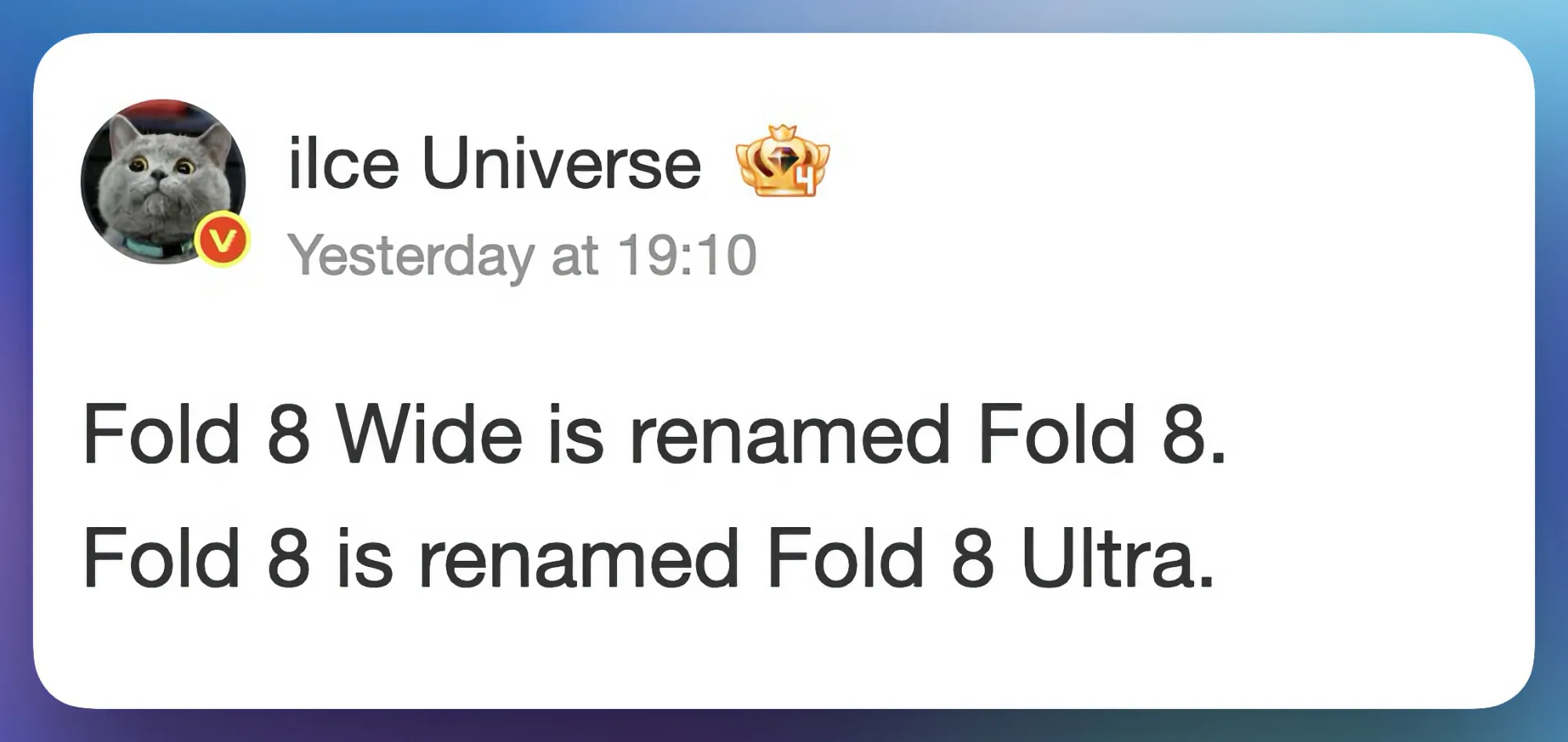
Samsung is getting ready to launch two new foldable phones in July, and if a recent leak is accurate, the company is about to flip its naming convention completely, and it’s going to confuse a lot of people.
Tipster Ice Universe has claimed on Weibo that the phone we have been calling the Galaxy Z Fold 8 Wide will actually launch simply as the Galaxy Z Fold 8. The device we expected to be the standard Galaxy Z Fold 8 will instead become the Galaxy Z Fold 8 Ultra.

While I can see why Samsung is considering the new naming scheme, there’s no denying it’s going to cause a whole lot of confusion.
Does the name change actually make sense?
I don’t think so. Yes, the wider Galaxy Z Fold 8 Wide is supposedly packing only dual rear cameras and a 4,800mAh battery, and the regular Fold 8 (which will be renamed to Ultra) will pack a triple rear camera system and a bigger battery. So on paper, the better-specced device getting the Ultra name is logical enough.
But the problem is that anyone who has followed the Galaxy Z Fold lineup will walk into a store expecting the Galaxy Z Fold 8 to be a direct successor to the Galaxy Z Fold 7. Instead, they are getting a wider, passport-style device that is a completely different form factor. That is not an upgrade; that is a different product wearing a familiar name.

Samsung is essentially asking buyers to unlearn years of brand familiarity, and that rarely goes smoothly. Many people will be confused at the point of purchase, and that confusion could easily cost Samsung sales.
Is the Galaxy Z Fold 8 Ultra worth the name?
The Ultra name carries serious expectations, and Samsung better deliver. Rumors only suggest a small spec bump with better cameras and a bigger battery. In fact, leaks suggest that the Galaxy Z Fold 8 will miss out on a number of new features, so Samsung will have to surprise us with something extraordinary to earn the Ultra moniker.


Networks
After making a medical clinic’s network rather ill, she ‘kept working until I somewhat knew what I was doing’
WHO, ME? Welcome once again to “Who, Me?” –
The Register’s Monday column in which we celebrate the
things you get wrong at work, and your skill at emerging unscathed.
This week, meet a reader we’ll
Regomize as “April,” who told us that early in her career, she worked for a
company that operated several medical clinics.
April admitted she did not feel
she was a great candidate for the job as she had recently completed her CompTIA
A+ certification – one of the most entry-level certs – and had only tangential experience
supporting doctors as they struggled to use a single application.
That résumé was enough to score a
job imaging new PCs, deploying them, and handling whatever other tasks popped up.
“One day I received a task to
convert an unused space into offices, so I loaded an armload of PCs and a dozen VoIP
phones into my car and drove the 45 minutes to the clinic,” April wrote.
“The deployment went
smoothly – or so I thought – because at each of the desks one of the people who
knew what they were doing had already put two network drops, one for the phone
and one for the PC.”
April was therefore able to
methodically get through the job, then slow down to tackle the slightly tricky
elements.
“Some of the desks needed two
computers,” she wrote. “On those, I was expected to use the secondary Ethernet
port on the phones to get internet to those PCs.”
April hooked everything up with time
to spare and decided to put her feet up for the 15 minutes that remained until 5pm – meaning she would glide into an unusually early end to her working day.
“My paid respite was interrupted
quickly by a nurse who found me and let me know none of the computers in the
entire clinic could access the internet,” April wrote.
“I wasn’t trusted with any tasks
that could actually break anything, so I was convinced that something major had
happened like a fiber line getting cut, or an outage with our ISP,” she told
Who, Me?
She investigated anyway and found
pings produced no results, so in a panic called head office and hoped
colleagues hadn’t already left for the day.
“I spent maybe an hour running
around frantically searching for anything with one of my superiors giving me
commands over the phone until someone who knew what they were doing could get
to the site and take a look in person,” she wrote.
That person eventually arrived and
quickly spotted the problem: April had made a single mistake by plugging both of
one phone’s Ethernet ports into the network, which disrupted every other
connection.
“They unplugged one and everything
came back up almost instantaneously,” she confessed. “I was genuinely surprised
they weren’t absolutely furious. They just clapped me on the back and said: ‘Well,
you won’t do that again.’”
April was so upset by her mistake
that she amended her timesheet to record that she finished work at 5pm. “If
anyone deserved an hour and a half of OT, it wasn’t me,” she wrote, adding that
she soon took it upon herself to acquire a networking certification at her own
expense.
“I kept working there for a few
more years until I became one of the people who at least somewhat knew what
they were doing,” she said.
Have you been asked to
tackle a task you weren’t properly trained to complete? Or been hired without
all the necessary skills? In either case, feel free to demonstrate your
storytelling competence by clicking here to share your tale with Who, Me? Let’s shine a light on the shoddy bosses who dumped
you into these messes! ®
The €33-per-share proposal lands at a slight discount to Friday’s price, but with Uber already sitting on a quarter of the company and DoorDash circling, the bid is the start of the negotiation, not the end of it.
Delivery Hero confirmed on Saturday that Uber has tabled a formal takeover offer for the Berlin-based food-delivery group, at €33 a share.
The price is, awkwardly for Uber, a 1.76% discount to where Delivery Hero closed on Friday, and it arrives roughly a month after Uber almost tripled its stake in the company to 19.5%, with another 5.6% held through derivatives. On any reasonable measure, this is the opening bid.
The numbers, according to the company’s statement, are an indicative proposal of €33 per share to all shareholders. The Financial Times put the implied price tag at about $11bn (€10bn). Uber’s chief executive Dara Khosrowshahi flew to meet Delivery Hero’s supervisory board chair Kristin Skogen Lund in person before the bid was filed, the FT reported.
Delivery Hero, for its part, said only that it remains “fully focused” on the strategic review already underway and declined to disclose further terms.
The strategic review is the reason any of this is happening on this timeline. Several of Delivery Hero’s largest shareholders have been pressing for it for months, and chief executive Niklas Östberg, who co-founded the company in 2011, announced last week that he would step down once a successor is in place.
The succession is targeted for the end of 2026, no later than March 31, 2027. The board has appointed advisors and opened the process; Uber has now put a number on the table inside it.
It is not the only number. DoorDash, sources told the FT, has explored a full takeover of its own and has separately expressed interest in Delivery Hero’s Middle Eastern business, Talabat.
Some shareholders have been arguing for a price closer to €40 a share. The combination of a slight-discount offer, a sitting blockholder, a parallel competing approach, and an ongoing succession review is the structural setup of a deal that gets renegotiated in public over the next several weeks.
For Uber, the logic for going hostile-adjacent is straightforward. Delivery Hero operates in more than 60 countries across Europe, the Middle East, Asia, Africa, and Latin America, through brands including Foodpanda, Glovo, Talabat, and South Korea’s Baedal Minjok.
It is the largest non-US food-delivery footprint in the world and, with DoorDash already absorbing Deliveroo last year and Just Eat Takeaway having sold to Prosus for $4.3bn, it is also the last one of scale that has not been claimed.
A full acquisition would give Uber Eats a delivery network across the markets where DoorDash now competes most directly with it.
Uber’s capital allocation in 2026 has otherwise been pointed elsewhere. The company has committed roughly $10bn to its robotaxi programme, including a $1.25bn investment in Rivian for a fleet of up to 50,000 autonomous R2 vehicles, alongside partnerships with Wayve, Nissan, Lucid, Nuro and MOIA.
Khosrowshahi has framed the strategy, in successive earnings calls, as building “everyday utility” across mobility, delivery, and commerce.
Q1 2026 results showed gross bookings up 25% year on year and autonomous trips up tenfold. Bolting Delivery Hero onto the delivery leg fits the framing.
Whether it fits at €33 is the open question. Uber shares slipped 1.6% on Friday after Bloomberg first reported the talks. The 1.76% discount to Delivery Hero’s Friday close gives investors arguing for €40 a clear rhetorical wedge, and gives the German board cover to ask for more.

The Utter Irony Of Financial Responsibility In Modern Society

Scarborough – 16-year-old caught speeding in North Bay area

Commonwealth Bank Shares Fall 0.65 Percent to $164.60 Amid Banking Sector Caution

US brings back mandatory military draft registration

Steven Gerrard disagrees with Gary Neville over ‘shock’ Chelsea and Arsenal claim | Football

Register Renaming | Hackaday
The Utter Irony Of Financial Responsibility In Modern Society

The Man Behind Britain’s RAREST Number Plates & His 70 Car Garage – Nick Sahota

Ripple XRP: Binance Founder Predicts 2026 SUPERCYCLE Starting Now!? (BREAKING CRYPTO NEWS)
-

 Crypto World4 days ago
Blockchain.com files with SEC for U.S. IPO
-

 Fashion3 days ago
Holiday Weekend Open Thread – Corporette.com
-

 Crypto World3 days ago
Bitcoin Accumulation Weakens as BTC Realized Losses Hit $600M
-

 Business3 days ago
Dell Technologies DELL Stock Surges 15% on AI Server Momentum and Analyst Upgrades in 2026
-

 Crypto World3 days ago
Space X IPO Is ‘Bad News’ for Tech Stocks: But What About Bitcoin?
-

 Politics3 days ago
Makerfield: a tale of two social-media histories
-

 Crypto World2 days ago
Robinhood crypto COO Tanya Denisova exits
-

 Crypto World3 days ago
MicroStrategy’s Saylor Says Miners No Longer Set Bitcoin Price, Another Force Has Taken Over
-

 Business17 hours ago
NYT Strands Answers May 24 2026 Revealed for Puzzle No. 812 Theme Summer Essentials
-
 Tech3 days ago
A 0.12% parameter add-on gives AI agents the working memory RAG can’t
-

 Crypto World3 days ago
AI infrastructure race heats up as IREN pitches full-stack strategy, WhiteFiber lands $160M deal
-

 Tech3 days ago
WhatsApp ads could make Irish debut after discussions with DPC
-

 Tech3 days ago
You Can Now Add ChatGPT To PowerPoint
-

 Business3 days ago
Trump Invests $1M-$5M in Kura Sushi USA Chain With 27 California Locations
-
 Crypto World7 days ago
Revolut Launches Dogecoin Debit Card Across UK and EU
-
 NewsBeat4 days ago
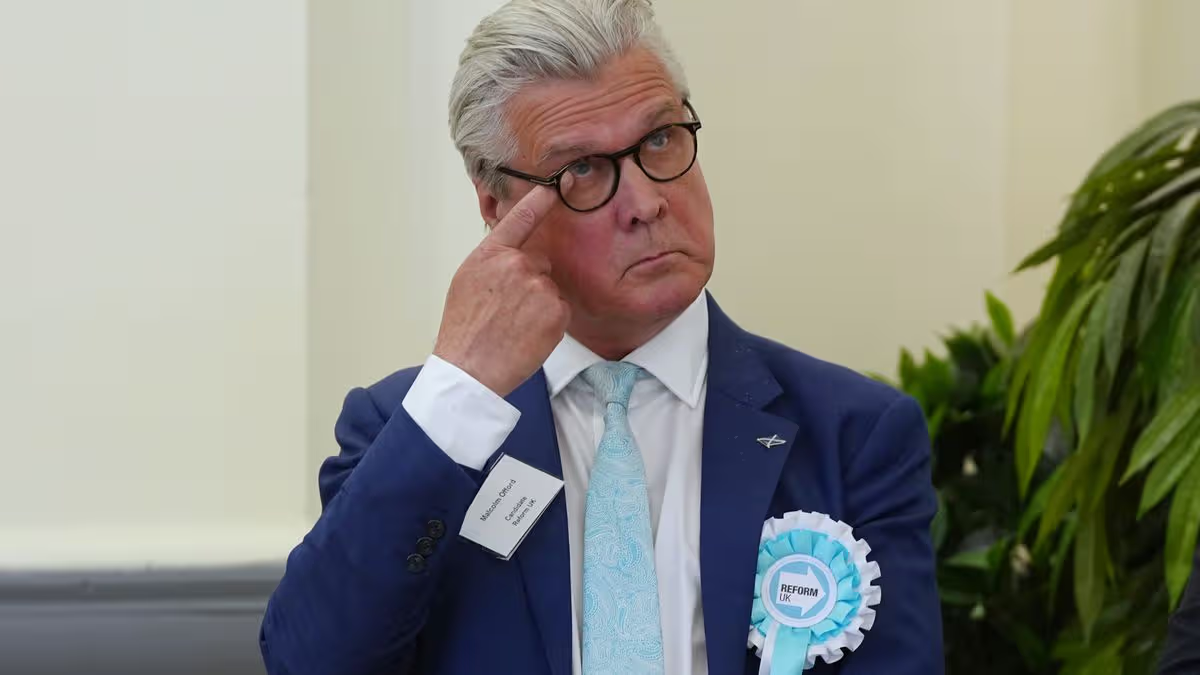
Charity run by Reform leader Malcolm Offord accused of ‘law breaking’ over Scottish registration
-
 Sports3 days ago
2026 CJ Cup Byron Nelson leaderboard: Brooks Koepka finds putting stroke in Round 1
-
Business3 days ago
Goldman Sachs reinstates Ageas stock coverage with neutral rating
-

 Crypto World5 days ago
Exa Labs raises $250 million in funding led by a16z
-

 Crypto World3 days ago
Trump Media’s Bitcoin Stash Shrinks Again as 2,650 BTC Lands on Crypto.com
You must be logged in to post a comment Login