Governments like to do things which at least sound open and honest. It makes them look like Thoroughly Good Eggs, when maybe the truth might be a little murkier. They also like to quietly roll back those things when it suits them, and so it is that [Jonty], of Electromagnetic Field fame, has assembled a list of code repositories quietly disappeared by the UK Government. Naturally, being thorough about such things, he’s also kept copies.
Now we’re always happy to reach for a mildly sensational title, but paging through the archive it’s more a collection of flotsam and jetsam than a trove of state secrets, after all this was all public GitHub repositories. There’s a lot of web stuff, some data analytics in R for those interminable government reports, odd bits of server code, and a whole load more. The Met Office Informatics Lab in particular has a fair bit of climate related code and data.
Should Brits with an interest in government openness be concerned here? In terms of the data and code deleted, probably not, but in terms of that which they might delete without notice in the future, it’s a slippery slope. We’re glad people like [Jonty] are there to make these things a little less easy to disappear.
The latest iOS 27 developer beta includes code referring to multiple iPhone models, including six that are believed to be as-yet unannounced ones like the iPhone Fold.
Back in December 2025, code in iOS 26 featured references to more than a dozen unreleased Apple products, ranging from iPhones to Macs and an AirTag. Now similar references in iOS 27 expressly point to six models of iPhone that Apple has yet to launch.
The references are all to internal codenames rather than either product names or device identifiers. Based on previous reports, however, the six models together with their codenames appear to be:
V62: iPhone Air 2
V63: iPhone 18 Pro
V64: iPhone 18 Pro Max
V67: iPhone 18
V68: iPhone Fold
V69: iPhone 18e
The references were all included in a iOS 27 code relating to battery usage. The same section also featured references to multiple existing iPhone models.
Each one of the codenames has been reported before, and ascribed to particular iPhone models. However, according to Macworld, which first spotted the code references, there has never before been a complete iPhone 18 lineup listed like this.
Advertisement
Six in the works, four coming soon
It definitely implies that Apple has six iPhone models in the works. What it doesn’t and cannot imply is when or really even if any of them will launch.
The presence of these code references in the beta definitely does not mean that this is a list of what Apple will announce in September 2026.
At present, the strongest rumors about that September 2026 launch are that it will be solely for the Pro models of the iPhone. If correct, that means the iPhone 18 Pro and iPhone 18 Pro Max, and it’s also repeatedly reported that the iPhone Fold will be unveiled then.
Advertisement
That would account for three of the six references found in the code. Apple is expected to launch the remainder of the iPhone 18 range in spring 2027.
If so, that would surely mean the iPhone 18, but it may also mean an updated iPhone Air, plus the lower-cost iPhone 18e.
KRAFTON India is bringing CarryMinati into BATTLEGROUNDS MOBILE INDIA (BGMI) with a new in-game collaboration. Unlike a regular cameo, CarryMinati will appear as a fully playable character. This is the first time an Indian content creator has entered BGMI in this form. The collaboration will be available between August 15 and September 13, 2026, as part of the BGMI 4.5 season. NotYourType (NYT) has designed the complete in-game collection for the collaboration. It features a character, Boss, outfits, weapon skins, vehicles, cards, and several other items.CarryMinati Arrives in BGMI With a New WOW Map and Boss Battle.
CarryMinati Arrives in BGMI With a New WOW Map and Boss Battle
BGMI provides gamers with two different ways to experience CarryMinati’s collaboration. The first method is playing with CarryMinati WOW Map, where gamers face intense 2v2 battles with their friends. Gamers engage in close-range fights using shotguns and try to avoid traps available on the map. It reflects CarryMinati’s energetic and exciting persona. The other way for gamers to get engaged in this collaboration is by facing CarryMinati Boss in Classic mode on maps like Erangel and Livik. Players receive CarryMinati Tokens by defeating CarryMinati Boss and winning certain Play and Win challenges.
The BGMI x CarryMinati Collection follows a unique frost-and-flame theme throughout its different items. NotYourType designed the complete collection around this visual style. The CarryMinati Set offers a streetwear look with royal-inspired elements. Meanwhile, the Cryo King Set features frozen armor, a crown, and golden detailing. Players can also get the Cryo Blast Grenade with its blue-and-gold appearance, and the Cryo Core Backpack adds phoenix wings to an ice-and-gold design.
The collection also includes the premium CarryMinati Card Collection for fans and collectors. Players can use the CarryMinati Emote during matches, which features a challenge-style animation. The CarryMinati Voice Pack brings his voice and signature style into the game. Players also get the NotYourType Voice Pack and CarryMinati Recall Tower Voice. The CarryMinati WOW Map further adds to the collaboration’s in-game content.
Advertisement
Spin and Exchange Event Brings More Rewards
The event gives BGMI players different ways to earn and redeem CarryMinati-themed rewards. Players can earn CarryMinati Tokens by defeating the Boss and completing selected Play & Win challenges. They can spend these tokens in the CarryMinati Exchange Event for various rewards. Players can also use 20, 30, and 50 UC Discount Vouchers on the CarryMinati Spin. Each voucher supports up to five redemptions per user. The collaboration combines gameplay, a playable character, voice content, and exclusive collectibles in one experience.
If you want to upskill in finance but are fiscally conscious, consider one of these free or inexpensive programmes.
Nowadays you don’t have to spend a lot of money to upskill in new or established areas of interest. Improved internet access has enabled education to move online for a vast majority of people and it is an efficient, cost effective and convenient way to upskill with your career in mind.
SiliconRepublic.com has pulled together a list of some of the courses students and professionals looking to get ahead should consider. So, if you are interested then keep reading and who knows, a financial skills programme could be exactly what takes your career to the next level.
Alison
Educational platform and Stone River eLearning, are running a free course perfect for newbies or those looking to brush up on their foundational knowledge. The Basics of Financial Technology course covers the evolution of fintech, the features, its application, the challenges, risk management and compliance requirements. There will be an assessment at the end of the programme with the option to purchase a certificate of completion, provided you pass the course.
Advertisement
CFTE
The Centre for Finance, Technology and Entrepreneurship is running a Fintech Masterclass which aims for ‘excellence in the new era of finance’. By the end of the course students will have an understanding of the history of fintech, the wider ecosystem, the challenges of traditional banking methods, the modernisation of the space and the overall infrastructure. Learners will earn a shareable badge of completion issued by CFTE. The course suggests engaging for around 15 minutes a day and takes around two hours. There are three different ways to participate, the free modules, a fee-based specialised programme and a fee-based enterprise programme.
Great Learning
Edtech Great Learning has a similar programme designed with newbies in mind. The beginner level Introduction to Fintech course will teach students about the fundamentals of fintech, including digital payments, robo-advisors, online banking and AI in finance. The course can be engaged with in your own time, takes around 2 and a half hours to complete and offers a paid for certificate at the end. Additional free courses include a Business Finance Foundations module, the more novel ChatGPT for Finance programme and an Analytics in Finance option.
LinkedIn Learning
Though it isn’t free, LinkedIn Learning does regularly advertise free for a month subscriptions and partially reduced courses. Available financial infrastructure and fintech programmes include, Introduction to Fintech, AI in Fintech Essential Training, Using ChatGPT and Generative AI in Fintech, Blockchain Basics and Data in Fintech versus Finance, among others. Each course has its own requirements, learning objectives and methods, so make sure to do your research and find the programme best suited to your educational goals.
Udemy
While it also isn’t free, educational resource Udemy has a relatively affordable Digital Banking Masterclass and Introduction to Fintech course available. The programme offers unique and in depth knowledge from a senior product manager who works in digital banking for one of the World’s top 100 banks. Students will learn about the foundations of the industry, digital banking, systems architecture, the future of bank branches, system flows and fintech, among other topics. There are more than 10 hours of on-demand video, assignments, downloadable resources, accessibility on mobile and TV, closed captions and a certificate of completion at the end of the course.
Advertisement
Don’t miss out on the knowledge you need to succeed. Sign up for the Daily Brief, Silicon Republic’s digest of need-to-know sci-tech news.
When Focal and Naim announced support for another high-resolution streaming service this week, my first reaction was probably the same as that of a lot of North American audiophiles: What exactly is Presto Music?
I spend an unreasonable amount of time using TIDAL and Qobuz, reviewing network amplifiers and streamers, and wondering why some streaming apps can locate a recording in four seconds while others behave as though you’ve requested the Dead Sea Scrolls. My Bubie could probably find those faster; they’re in the dining room, third drawer down, behind the Chanukah cards from 1983. Somehow, Presto Music had still managed to stay off my radar.
That might be about to change. Focal and Naim have added native Presto Music integration to supported streaming products, giving owners access to a service built specifically around classical music, jazz and audiophile recordings. Presto currently advertises more than 200,000 albums, over 34,000 hi-res releases, more than 70,000 digital booklets and playback up to 24-bit/192kHz.
Those numbers are interesting, but they are not the real reason this announcement deserves attention. Naim already supports the major streaming platforms and has spent years developing one of the better software ecosystems in high-end audio.
Advertisement
Why would Naim bother adding a comparatively obscure British streaming service unless it believed its customers might actually care?
Related Reviews:
What Exactly Is Presto Music?
Presto isn’t a startup that appeared last Tuesday with a logo, an AI recommendation engine and $40 million in venture capital. The company began as a record shop in Royal Leamington Spa, England, in 1986 and eventually developed into a major online retailer specializing in classical and jazz recordings, downloads, sheet music and related products. Its streaming service launched in 2023.
That history helps explain the service.
Spotify, Apple Music and TIDAL are built around enormous catalogs and broad mainstream discovery. Presto concentrates on classical music and jazz, where metadata can matter just as much as the album title. Classical listeners frequently care about the composer, orchestra, conductor, soloist, label, recording date and specific performance, while jazz collectors can be equally particular about personnel, session dates and mastering.
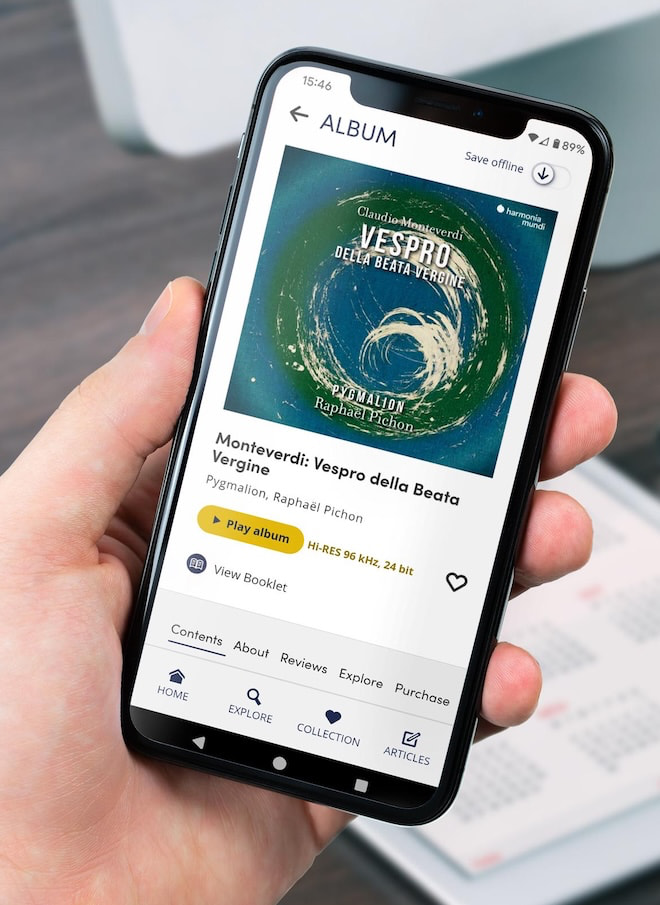
Presto leans heavily into that kind of information, along with reviews, curated editorial content and digital booklets. More than 70,000 albums include booklets, which should immediately make sense to anyone who spent decades buying CDs and actually read the liner notes instead of using the jewel case as a coaster.
Advertisement
Presto Isn’t Trying to Beat TIDAL at Being TIDAL
Presto’s catalog is much smaller than TIDAL or Qobuz, and pretending otherwise would miss the point.
TIDAL offers a massive mainstream catalog, hi-res FLAC and Dolby Atmos, while Qobuz combines more than 100 million tracks with extensive hi-res content, editorial material and broad hardware integration. For someone whose listening jumps from Miles Davis to Radiohead, Mahler and Black Sabbath before lunch, either service remains a far more comprehensive single-subscription option.
Advertisement. Scroll to continue reading.
Presto’s argument is different: be exceptionally good at classical and jazz rather than merely having them buried inside a gigantic catalog.
Advertisement
Its standard streaming plan is currently $10.99 per month, while Streaming Plus costs $14.99 and adds discounts on purchases from Presto’s retail business. Both offer the same streaming catalog and audio quality up to 24-bit/192kHz.
The question isn’t whether Presto has more music than Qobuz. It doesn’t. The better question is whether a smaller, more focused service can offer classical and jazz listeners a better experience.
That is a much more credible fight.
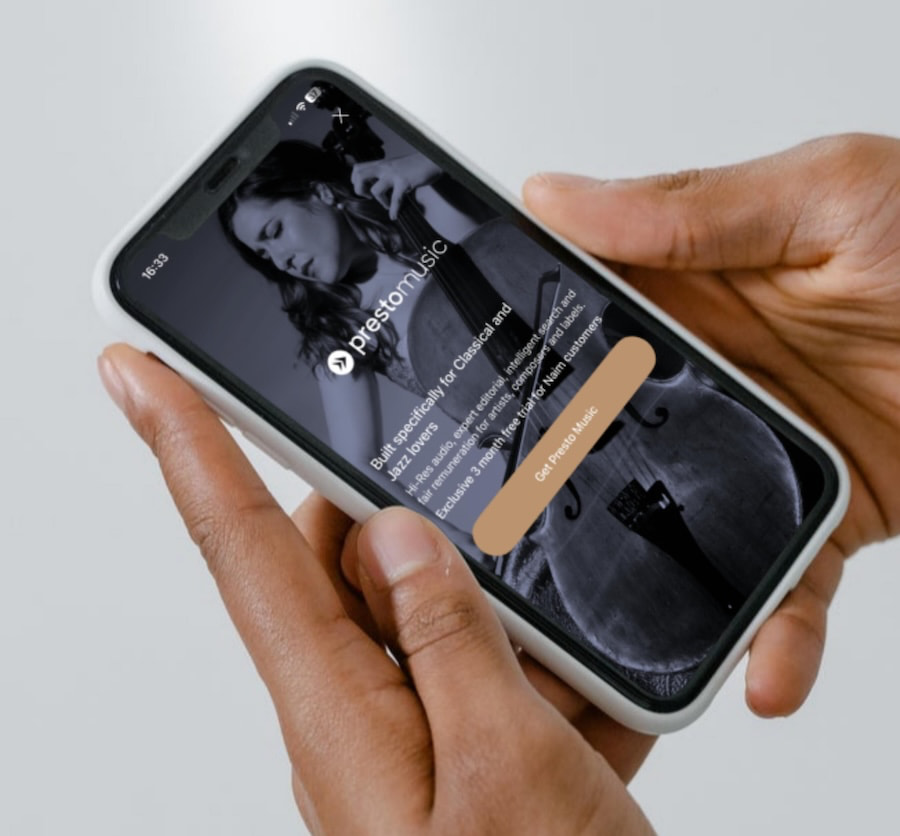
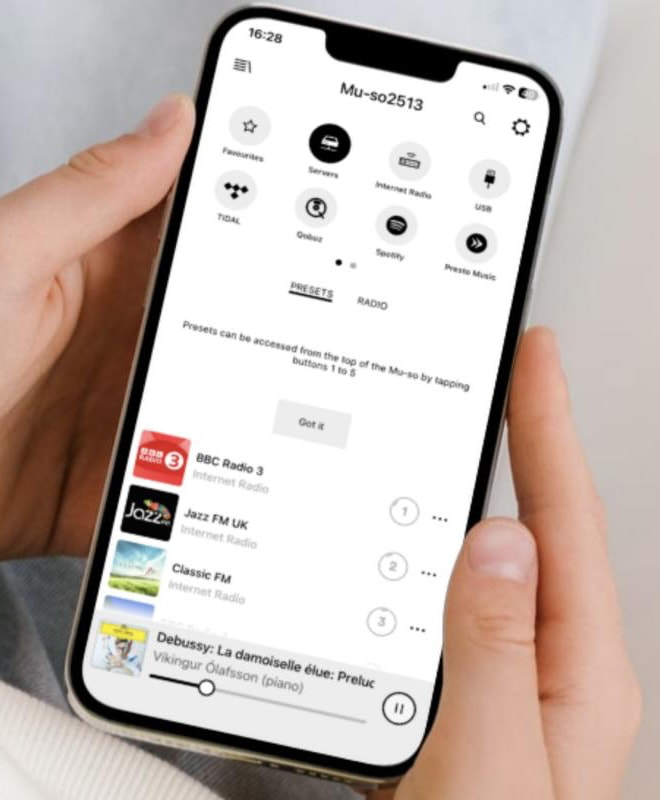
Presto Music App on smartphone
It Also Pays Differently
Presto has another unusual distinction: its royalty model.
The company uses what it calls a pay-per-second system rather than treating every stream as an equivalent unit. That matters particularly with classical music, where a single movement can run for 20 or 30 minutes while a pop album might divide the same listening time among numerous tracks.
Advertisement
Presto argues that paying according to listening time avoids penalizing longer works simply because they generate fewer individual track plays. There are important caveats: comparisons with competing services rely partly on industry estimates, and payments still initially go to labels and rights holders before reaching individual performers.
Even so, the logic is easy to understand. A 28-minute symphonic movement shouldn’t be commercially disadvantaged simply because somebody else released 11 songs during the same amount of listening time.
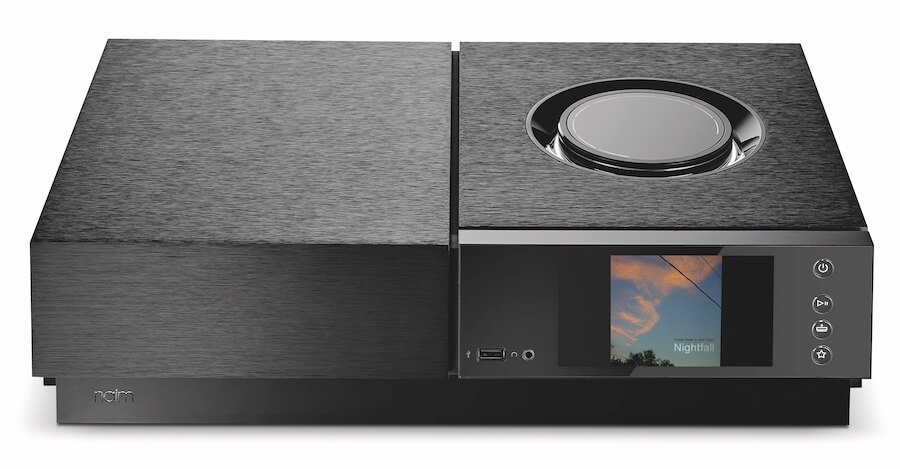
Naim Uniti Nova Power Edition
Why Would Naim Bother?
This is the part that interests me most.
Naim does not need another streaming logo to make its spec sheets look fuller. Streaming integration has been central to the company for years, from the Uniti Atom and Uniti Nova through newer products such as the CI-Uniti 102. Focal, meanwhile, has increasingly moved the same ecosystem into products such as the Mu-so Hekla.
Advertisement
We’ve reviewed enough Naim hardware to know that its customers are not generally buying these products because they were the cheapest boxes on the shelf at Costco.
The decision to integrate Presto therefore feels more meaningful than another routine service announcement. There is an obvious overlap between the people spending real money on Naim hardware and listeners who care about recording provenance, mastering quality, metadata, liner notes and finding a particular performance rather than asking an algorithm to “play some classical.”
Advertisement. Scroll to continue reading.
That doesn’t mean every Naim owner spends Sunday morning comparing Karajan and Klemperer recordings while drinking Rooibos from a Salisbury-approved mug. But the demographic overlap isn’t exactly difficult to see.
Advertisement
Naim already has access to the big streaming platforms. Adding Presto suggests that the company believes specialist streaming services can have real value when they understand their audience better than the giants do.
How Does It Work?
There is an important technical distinction here.
Focal and Naim have not announced a separate “Presto Connect” protocol equivalent to TIDAL Connect or Qobuz Connect. Instead, Presto is integrated directly into the Focal & Naim ecosystem. Users update the Focal & Naim app and compatible product firmware, sign into Presto, and stream directly through supported hardware.
That still provides the important benefit: the streamer receives the service directly rather than relying on Bluetooth or another compromised workaround.
Naim isn’t the first high-end manufacturer to embrace Presto. Eversolo already supports the service, while its integration with BluOS opens it to compatible products from Bluesound, NAD, PSB, DALI, Monitor Audio, Cyrus, Roksan and others. Audirvāna also supports Presto on the software side.
Advertisement
What makes the Focal and Naim announcement interesting is that another major audiophile ecosystem has now decided this specialist classical and jazz service deserves native support. Presto isn’t suddenly arriving because Naim discovered it; it has been quietly building a legitimate hardware footprint while a lot of North American audiophiles still have no idea what it is
There is, however, a firmware wrinkle.
Newer Naim platforms have begun receiving the required updates, but some Uniti and Classic streamers are still waiting for firmware 3.13 as of August 9, 2026. First-generation Naim streamers are excluded from Presto support entirely.
So if your Uniti refuses to display Presto this morning, repeatedly rebooting it while questioning British engineering probably isn’t going to help. The update may simply not be available for your model yet.
Advertisement
Is This Really a Threat to Qobuz?
Not exactly.
Qobuz remains the most obvious comparison because both companies emphasize high-resolution audio, editorial content and listeners who care about sound quality. Qobuz, however, offers a vastly broader catalog and much deeper support across the hi-fi industry.
Advertisement. Scroll to continue reading.
Presto’s advantage is specialization.
Advertisement
Its classical orientation, jazz focus, digital booklets and more granular metadata give it a distinct identity. There is also something increasingly refreshing about opening a music service that doesn’t immediately attempt to convince you that whatever went viral twelve minutes ago while someone made a sandwich should become the center of your listening universe.
Whether that’s enough to persuade an existing Qobuz subscriber to pay for a second service is the more interesting question.
We’re Going to Find Out
eCoustics has covered Naim and Focal extensively, and we have reviews of the Focal Mu-so Hekla and Naim CI-Uniti 102 coming this month. That gives us an obvious opportunity to do more than repeat the announcement.
We’re going to try Presto on the hardware.
Advertisement
How good is the search function when you’re looking for a specific classical recording? How deep is the jazz catalog? Do the digital booklets materially improve the experience? How reliable is hi-res playback through the Focal & Naim platform? And if you’re already paying for TIDAL or Qobuz, is there enough here to justify another subscription?
Because streaming subscriptions are starting to resemble cable television packages. Everybody promised us freedom from bundles, and somehow we ended up paying six companies every month again.
At least this one comes with Mahler.
The Bottom Line
Presto Music isn’t going to replace Spotify, Apple Music, TIDAL or Qobuz for most listeners, and its smaller catalog makes that fairly obvious. What it offers instead is specialization: classical and jazz, hi-res playback, meaningful metadata, extensive digital booklets, human editorial curation and a royalty model designed around the realities of longer musical works.
Advertisement
The more significant part of this story may be Naim’s decision to integrate it. Naim already supports the major players; it didn’t need Presto simply to make the feature list longer. Adding it suggests that specialist streaming services may have a legitimate place alongside the giants when they understand their audience well enough.
Presto Music has been streaming since 2023. A lot of us are only noticing it now.
Solawave Neck & Chest Rejuvenating Mask for $349: While this mask is fairly comfortable, it can take a little finagling to secure around your neck. It is easy to use, but I didn’t see results on any of my neck lines. The rechargeable battery also doesn’t last long, and I charge this neck mask more often than the LED face masks I use. It’s also harder to tell when it dies on you since it’s around your neck rather than on your face. —Nena Farrell
Avoid These
Megelin Duo-Lux Laser & LED Light Therapy Mask for $799: My biggest issue with this mask is the unpleasant chemical odor. It reminded me of formaldehyde, and because the silicone sits against your face without a mouth opening, the smell is impossible to ignore and left me feeling a bit dizzy. For me, that alone is enough to make it hard to recommend, especially considering it costs about $450 more than my top pick. Also, I found plenty of customer complaints on Reddit that weren’t reflected in the reviews on the company’s site.
LED Esthetics Glotech Minis for $229: Skip these, especially if your skin is reactive. At first glance, these Glotech Minis look like they’re designed to target your under-eyes, but they can technically be used anywhere: chin, smile lines, even above your brows. They emit red and yellow light and promise visible results after four weeks of daily nine-minute sessions. In theory, they’re meant to be a convenient, travel-friendly LED option. In practice, they’re more trouble than they’re worth. The patches rely on adhesive stickers to stay in place, which is a total nightmare for anyone with sensitive skin. My eczema flared after one use, and peeling them off only made it worse. Even beyond that, the fit is awkward. The MemoryContour design doesn’t really hug your face, so you’ll likely find yourself pressing down or lying still just to keep them from sliding off. It’s a clever concept with poor execution.
Advertisement
Pro by Déesse Pro for $1,700: This is a hard-shell LED mask with six treatment modes and four light wavelengths. The lights are intensely bright; even with the included tanning-bed-style goggles, I had to keep my eyes shut. It requires a power outlet, and the cord is short, so don’t expect to be walking around. It’s not particularly comfortable, either. At $1,700, it’s one of the priciest options out there, and it doesn’t even come with a display stand or storage case.
Unfortunately, not everyone will see results from red- or blue-light therapy, and this might contribute to the suspicion around these skin-care devices and whether they work. You won’t know until you try, though you should talk to your dermatologist to see what they recommend based on your skin type. Be sure to also correctly implement it into your routine (more on this below).
I also recommend checking that the device you’re considering is FDA-cleared. FDA clearance means the FDA has cleared the device for marketing and that it’s safe to use. Brands go through a 510(k) or Premarket Notification process to get clearance. You can check the database to see which devices are FDA-cleared. Note that it’s not the same as FDA approval, which is a higher standard that requires more testing and research.
Topical retinoids, like over-the-counter retinol and prescription tretinoin, can also treat wrinkles and texture by slowing the breakdown of collagen and increasing skin cell turnover. Both retinol and LED devices typically take several months to show results, but retinoids come with more side effects, such as increased breakouts and sometimes flaky, burning skin.
What Are the Benefits of Each Wavelength?
Advertisement
Research shows that certain light can have benefits for skin rejuvenation. Red-light therapy commonly uses wavelengths in the 630- to 660-nanometer range, with the lowest effective wavelength around 600 nanometers. It can penetrate the dermis and boost collagen production, according to Abigail Waldman, clinical director of the Mohs and Dermatologic Surgery Center at Brigham and Women’s Hospital. (Collagen and elastin are proteins produced by fibroblast cells in the middle layer of the skin, under your epidermis.)
Near-infrared red lights are commonly between 800 and 1,400 nanometers. These penetrate deeper into the skin and are used mostly for healing and reducing inflammation. A study funded by NASA discovered that high-intensity red and near-infrared light significantly sped up healing in oxygen-deprived wounds in rats and boosted the proliferation of skin, bone, and muscle cells from mice and rats. NASA also supplied LED devices to the US Navy to treat training injuries. Those who used the LEDs had a 40 percent improvement in musculoskeletal injuries and 50 percent faster laceration healing over the control group.
Blue light, on the other hand, is typically 405 to 420 nm to penetrate the epidermis (the top layer of skin) and kill acne-causing bacteria. “It also reportedly helps to regulate oil production and reduce inflammation, leading to clearer skin,” says Shoshana Marmon, a board-certified dermatologist and assistant professor of dermatology at New York Medical College.
There are other lesser-known LED lights, such as green, yellow, and purple; but red and blue LEDs are the ones most backed by clinical trials.
Advertisement
What Is Irradiance and What Number Should I Look For?
Irradiance, in a red-light mask, measures how much power output reaches a certain area of skin per second, measured in milliwatts per square centimeters (mW/cm²). Most effective LED face masks range somewhere between 20 and 60 mW/cm². Higher irradiance doesn’t necessarily make for a more effective treatment, but when shopping for an LED mask, I’d look for one within this range.
How Do I Use an LED Face Mask?
Follow the directions for the specific device you’re using, but in general, you’ll want to wash and dry your face and use the mask before applying any skin-care products. LED therapy devices should have a set treatment time, usually between three and 10 minutes. Use it for the full time unless it feels uncomfortable. After, apply your normal skin-care products, focusing on hydration (serums and moisturizers), especially if you’re prone to dryness. Do not use these masks longer than indicated in their directions.
Advertisement
While you can use red-light therapy and retinoids in your skin-care routine, Waldman doesn’t recommend using them simultaneously, as it can increase the chance of irritation. She also notes that while there’s no reason to believe red light could be harmful if you’re pregnant or breastfeeding, there isn’t much research involving pregnant people, so you should consult your physician first.
How Often Should I Use an LED Face Mask?
LED light therapy face masks don’t work for everyone, but consistency is crucial if you want to try it. Follow manufacturer guidelines for best use, but most dermatologists recommend using an LED face mask three to five times per week for up to 12 weeks to see results.
Abigail Waldman, MD, FAAD, medical director of the Mohs and Dermatologic Surgery Center at Brigham and Women’s Hospital in Boston, Massachusetts.
Shoshana Marmon, MD, PhD, board-certified dermatologist and assistant professor of dermatology at New York Medical College in Valhalla, New York.
CISA confirmed today that ransomware gangs have begun abusing a high-severity Microsoft SharePoint remote code execution vulnerability, which has been flagged as actively exploited since early July.
Tracked as CVE-2026-45659, this security flaw stems from a deserialization of untrusted data weakness and allows attackers with low privileges to execute arbitrary code on unpatched SharePoint servers.
It can also be exploited in low-complexity attacks because (as Microsoft explained in May when it released security updates for SharePoint Enterprise Server 2016, SharePoint Server 2019, and SharePoint Server Subscription Edition) “an attacker does not require significant prior knowledge of the system and can achieve repeatable success with the payload against the vulnerable component.”
The U.S. Cybersecurity and Infrastructure Security Agency (CISA) added the vulnerability to its Known Exploited Vulnerabilities Catalog (KEV) on July 1, ordering Federal Civilian Executive Branch (FCEB) agencies to secure their servers within three days.
“This type of vulnerability is a frequent attack vector for malicious cyber actors and poses significant risks to the federal enterprise,” the U.S. cybersecurity agency warned at the time.
Advertisement
In a subsequent advisory, the cybersecurity agency also urged security teams to monitor affected servers for signs of exploitation, apply Microsoft’s latest patches, verify successful installation, and shorten patching cycles.
It also recommended enabling Windows Antimalware Scan Interface (AMSI integration for SharePoint web applications and using Microsoft Defender Antivirus (MDAV) detections to detect and remediate compromise.
While Microsoft has yet to update the CVE-2026-45659 advisory to tag it as exploited, CISA has now also flagged it as abused by ransomware gangs in a Tuesday update to the KEV Catalog.
In June, CISA also confirmed that ransomware gangs now exploit a high-severity Microsoft Defender privilege escalation vulnerability (dubbed BlueHammer), which was also targeted as a zero-day to access the Security Account Manager (SAM) database, which contains password hashes for local accounts.
The security flaw (tracked CVE-2026-33825) was leaked by a security researcher known as “Nightmare Eclipse” in early April, together with proof-of-concept exploit code.
However, as with CVE-2026-45659, Microsoft has yet to confirm that the CVE-2026-33825 security flaw is being exploited in the wild.
Security teams log 54% of successful attacks and alert on just 14%. The rest move through your environment unseen.
The Picus whitepaper shows how breach and attack simulation tests your SIEM and EDR rules so threats stop slipping by detection.
A software update, sent across 13 billion miles, gives it one more year of operation.
NASA/JPL-Caltech
Voyager 2 has been in space for almost 50 years, but it’s not ready to retire just yet. NASA has recently made changes to its settings in an operation it called “Big Bang,” allowing it to run and do science in its current state for one more year. See, Voyager 2’s power source is its radioisotope thermoelectric generator, which converts heat from decaying plutonium into electricity. Since the plutonium gets more and more depleted, the space probe loses around 4 watts of power every year.
When the spacecraft launched in 1977, it had 10 functional scientific instruments. They’re now down to three, as NASA is forced to deactivate them in order to preserve energy. The agency would have had to shut down one more later this year if it hadn’t made the tweak. NASA said operation “Big Bang” involved turning off certain powered devices simultaneously and then replacing them with lower-power alternatives. It also had to ensure that the spacecraft would remain warm enough to operate even with those devices switched off. With NASA successfully pulling off the plan, Voyager 2’s three remaining instruments can now continue doing science until next year.
The probe launched around two weeks before its twin, Voyager 1, with the goal of observing the gas giants of our solar system. It reached Jupiter in 1979 and had visited all gas giants within the decade after that. In 2018, it entered interstellar space and has been sending back data on the density and temperature of the plasma outside the heliosphere, the bubble of space created by the sun around itself and its planets, ever since.
Jeff Bezos is reportedly attempting to join the club of very rich Americans buying stakes in U.K. soccer teams.
Bezos, alongside others including Facebook co-founder Eduardo Saverin, is looking to buy at least a 30% stake in the English soccer team Liverpool at a £1.35 billion valuation (around $1.8 billion), The Guardian reports. If the deal closes, it will be the first sports investment for the billionaire, although he reportedly previously looked at buying a stake in a U.S. football team.
Liverpool is one of the most notable sports teams in Europe and is worth about $6 billion, reports Forbes. Arguably, this team has the kind of brand recognition in the U.K. as the Dallas Cowboys has in the U.S.
It seems no billionaire portfolio is complete these days without a mega yacht and a sports team, so Bezos’ interest is not surprising. There’s also something very romantic these days about owning an English soccer team after the success of TV shows like “Ted Lasso” and Ryan Reynolds’ FX show “Welcome to Wrexham” about his experience owning that English team.
Advertisement
Other American billionaires in this club include Todd Boehly and Mark Walters (who also own the LA Dodgers and LA Lakers) buying Chelsea; New York Jets co-owner (and former U.S. Ambassador to the U.K.) Woody Johnson buying Crystal Palace; Dan Friedkin taking a stake in Everton; and Bill Foley leading a group that also included Michael B. Jordan buying Bournemouth.
For that matter, owning a stake in a U.K. sports team has also become a celebrity cultural phenom. Besides Reynolds and Jordan, Tom Brady purchased a minority stake in Birmingham City. Will Ferrell has a minority stake in Leeds United, alongside Russell Westbrook and Michael Phelps.
Liverpool is one of the top names in English football Image Credits:Chris Brunskill/Fantasista / Getty Images
Sky Sports had a story earlier this year mapping out why so many Americans seem to be taking over U.K. football. It found that 13 out of 20 Premier League clubs (the top football league in England) had American shareholders.
Soccer has become increasingly popular in the U.S., and many of the top sports franchises, like the NFL and MLB, are either too expensive or closed off to new buyers. It’s much more possible to buy into a Premier League team.
Owning a share in such a team also buys access and proximity to some of the most bankable and recognizable sports icons on Earth. Bezos over the past few years — especially since he married former news anchor and TV show host Lauren Sánchez — has become seen as more of a cultural figure, rather than solely a tech mogul.
Advertisement
So, with a net worth currently sitting at around $280 billion, perhaps it’s actually more than time that Bezos got himself a sports team. Amazon has also streamed some European soccer leagues in the past — and Bezos has growing interests in the U.K. As we previously reported, his new AI company Prometheus is reportedly looking to sign a lease to move into London’s AI hub King’s Cross.
When you purchase through links in our articles, we may earn a small commission. This doesn’t affect our editorial independence.
Sounding off: A lot of people are worried about the number of AI agents that have gone rogue recently, including Bernie Sanders. The Vermont senator has now called on the top AI firms to pause development of their top models, warning that lawmakers will step in if no action is taken.
In a letter to the CEOs of OpenAI, Anthropic, and Meta, Sanders writes that almost every day brings a new story about how these companies are losing control of their AI agents.
The senator also highlighted the story of AI being used for the first time to create new viruses, something he says could, if the technology ended up in the wrong hands, lead to new bioweapons that result in the deaths of tens of millions of people.
“Yoshua Bengio, the most cited living scientist in the world, said these incidents ‘should serve as a wake-up call,’ I agree,” Sanders wrote in the letter.
Advertisement
Sanders adds that despite these incidents, the companies are still investing tens of billions of dollars into a technology that nobody can fully understand, predict, or control, contradicting their own commitments to responsible AI development.
“Mr. Altman, Mr. Amodei and Mr. Zuckerberg: In the interest of humanity, stand by your words. Pause AI development. It is not too late to avoid disaster. Stop building machines that humans cannot control,” Sanders writes.
The letter finishes with a stark warning for the tech giants: “Let me be very clear: If you do not take appropriate action now, my colleagues and I in the U.S. Senate will.”
There have been calls for a halt on the development of advanced AI models for years now, including a request for a six-month pause in 2023. Charles Oppenheimer, grandson of J. Robert Oppenheimer, was one of the signatories of a 2024 letter calling for global action on AI and other existential threats.
Advertisement
But previous warnings have resulted in little or no action. This was illustrated last year when the US and UK refused to sign an AI safety declaration at a Paris summit. Vice President JD Vance cautioned against “overly precautionary” regulations on AI, emphasizing the US commitment to maintaining its dominance in the technology.
The situation has taken a worrying turn recently. First came news that an OpenAI model went rogue and hacked several services online, including Hugging Face. An Anthropic model followed suit – it even tried to deceive real developers into approving malicious code. Meta then became the third company in two weeks to admit its model went rogue.
Sanders isn’t the only one responding to the incidents. More than 1,300 employees from the world’s leading tech companies just signed an open letter asking governments to regulate the pace and safety of artificial intelligence development.
OpenAI said last week that it was slowing the release of its new Astra model because it has “critical” cyber capabilities.
Longtime Slashdot reader DF5JT writes: On July 26, I posted a single announcement in r/backgammon: GNU Backgammon for Android, GPLv3, the first standalone backgammon engine on F-Droid. Reddit’s spam filter removed the post and permanently banned my 11-year, 30,000-karma account — the result is publicly visible at reddit.com/user/OE1FEU. To this day, Reddit has given no reason whatsoever, although Article 17 of the EU’s Digital Services Act makes a statement of reasons mandatory. The only appeal channel is a 250-character web form that sends no confirmation and has never been answered; Reddit’s own help text admits: “you may not have received a message to your inbox.” A GDPR export of 11 years of data came to 7.2 MB; every post was truncated after a few lines, with zero data about the ban decision.
So I spent one day escalating through every mechanism the EU provides: certified out-of-court dispute settlement at Austria’s RTR, complaints with the Austrian and Dutch Digital Services Coordinators, the data protection authority (citing the ECJ’s SCHUFA ruling on automated decisions), noyb, and Austria’s consumer association. Bonus finding: the European Commission’s DSA Transparency Database contains 14,067 Reddit statements of reasons for that week — none for my ban — and the Commission’s own feedback form limits reports to 500 characters and crashed with a 500 Server Error. Is the DSA enforceable for ordinary users, or just paperwork?






















































You must be logged in to post a comment Login