


Connect with us
DAPA Banner

Tech

The US Government Will Ask Data Centers How Much Power They Use

Published

on

The US federal government’s central energy information agency is planning to implement a mandatory nationwide survey of data centers focused on their energy use, according to a letter seen by WIRED. This survey would be the first effort of its type to collect basic information about data centers.

The letter was sent to senators Elizabeth Warren and Josh Hawley on April 9 by the head of the Energy Information Administration, Tristan Abbey, and comes in response to a previous inquiry from the senators about the EIA’s plans to get more information about data centers. WIRED reported on Hawley and Warren’s letter last month.

“Americans deserve to know how much energy data centers are sucking up and what that’s doing to their utility bills,” Warren told WIRED in a statement. “The EIA’s mandatory survey is an important first step towards holding data centers accountable, but people are hurting right now. I’m pushing EIA to collect and share this data as soon as possible.”

The EIA told WIRED that it doesn’t have any specifics to share beyond what is in the letter to the senators.

Advertisement

The explosion of data centers across the US has caused an outpouring of public concern and proposed legislation to rein in their resource use, as well as put moratoriums on their construction. But there’s surprisingly little official data collected on the industry.

Most details about data centers’ energy use—a particular worry for many voters in the face of mounting utility bills—are considered proprietary business information, and are usually not made public. In response to encouragement from the Trump administration to protect ratepayers, many data center developers are now turning to building their own power sources, known as behind-the-meter power. These facilities—many of which are gas-powered—introduce new concerns around air pollution and climate change. (On Tuesday, the NAACP filed a lawsuit against xAI alleging it was running behind-the-meter gas turbines on a data center in Mississippi without a permit and polluting the community around it. xAI did not immediately reply to a request for comment.)

The EIA conducts mandatory surveys of providers of various types of energy generation, including oil and gas production, electric generation, and renewables, as well as their industrial customers. In late March, a day before the senators sent their letter, the EIA announced that it would conduct a pilot survey in three areas of the country that have heavy data center development: Texas, Washington state, and the northern Virginia/DC metro area.

In the April 9 letter, Abbey says that the agency will announce a second tranche of pilot surveys “covering at least three more states.” Both surveys would be complete by late September. These two pilot studies, Abbey writes, are “a necessary step in the methodical development of a nationwide mandatory survey.”

Advertisement

Information being collected by the EIA from data centers in these pilots, according to the letter, includes not just information on annual electricity use, but also information on behind-the-meter power generation. The surveys, Abbey writes, will also include questions on the classification of different types of data centers; cooling systems; facility characteristics, like square footage; and IT specifications, including metrics on how efficiently a data center uses energy.

The letter still leaves a lot of questions unanswered about the structure of the pilots.

According to the letter, the pilot won’t ask every respondent for the full set of metrics, but will rather tailor questions “to the particular location of each data center facility.” The current pilot also asks the 196 companies identified across the three regions to choose just one location to report metrics on. The EIA did not answer questions about how it determined which locations should receive which questions, or if it provided any requirements to survey respondents about how to go about choosing which data center location to provide information about.

The EIA also did not answer questions from WIRED about when it plans to launch the second set of pilot surveys, the states that will be included, or the possible timing of a national mandatory survey.

Advertisement

Source link

Continue Reading
Click to comment

You must be logged in to post a comment Login

Leave a Reply

Tech

Apple users are getting scary iCloud deletion emails, and the real danger starts when you click the fake upgrade link

Published

on


  • Fake iCloud deletion emails are pressuring Apple users into dangerous clicks
  • Poor grammar in iCloud alerts remains a clear sign of fraud
  • Clicking fake iCloud upgrade links can expose banking and personal data

A wave of deceptive emails is attempting to pressure Apple users into believing their iCloud data is at immediate risk of deletion, using increasingly aggressive language to force quick reactions.

The messages often claim a user’s storage limits have been exceeded or that an account has been blocked, followed by threats that photos and videos will be permanently erased on a specified date.

Source link

Advertisement
Continue Reading

Tech

ACAB: Cops Are Bringing ‘Delinquency Of A Minor’ Charges Against Adults Who Assist Students During Anti-ICE Protests

Published

on

While the Trump administration’s extremely aggressive, thoroughly bigoted attempts to eliminate as many non-white people from this country as possible have resulted in some periodic push back from law enforcement officials, we can never forget that federal law enforcement officers are still just law enforcement officers. And, more often than not, they’ll always have the support of their brothers in blue, even though most federal officers prefer camo and face masks these days.

Law enforcement is self-selecting. The people who feel drawn to law enforcement are generally the last people you would want to become law enforcement officers. It’s rarely about being given the chance to serve, protect, and be an active part of your community. It’s almost always about having a badge, a gun, and accountability that’s inversely proportional to the amount of power you immediately obtain.

So, it comes as no surprise that cops who shouldn’t have any skin in the anti-ICE game are stepping up to punish people for daring to criticize the actions of those federal officers. And there’s probably a bit of backlash involved here as well, as this following report details the actions of California law enforcement officers who (one assumes) aren’t thrilled the state’s residents have managed to reclaim much of the power that has always been owed to the people.

Despite the administration’s on/off surges in “blue” states, the furor over ICE and its actions hasn’t died down, not even in California, where the administration rolled out its martial law beta test. At first, it was easy to pretend people protesting ICE were “woke radicals” or “antifa” or “paid organizers” or “lazy trans everywhere college students” or whatever. But it just kept going and expanding, clearly demonstrating a significant portion of the population wasn’t on board with roving kidnapping squads and murders of activists by jumpy recruits recently introduced to the wholly domestic War on Migrants.

Advertisement

Now that it’s everyone rather than just the usual left-wing agitprop cliches federal and local officers expected to confront during protests, cops in California are deciding it’s time to start arresting everyone.

The Clovis Police Department on Tuesday referred Alfred Aldrete, 41, for one count of contributing to the delinquency of a minor for his role in a February high school student walkout. 

“During the investigation, Aldrete was identified as being present during the walkout and allegedly involved in directing student activity and entering the roadway, which impacted traffic flow,” Clovis police said in a press release. “Investigators also identified Aldrete as being present during a separate student gathering in Clovis on Feb. 5 that occurred outside of school hours.”

Yep, that’s what the Clovis PD actually did: it equated an adult ensuring students made it to their planned protest safely with the sort of horrors — harboring runaways, providing drugs and alcohol to minors, etc. — people usually associate with the crime of “contributing to the delinquency of a minor.” Those would be the sorts of crimes actually prosecuted by county prosecutors under this statute.

This stat may explain why the Clovis PD thought it should explore the fringes of this statute for the sole purpose of punishing someone for speech they (and they people they serve, apparently) don’t care for:

Advertisement

[C]lovis, population 128,000, where Donald Trump won every precinct in the 2024 presidential election — some with more than 70% of the vote. 

That tracks. Fortunately, it doesn’t track as far as the District Attorney’s office:

A representative for Fresno County District Attorney Lisa Smittcamp in a written statement said prosecutors would not file charges against Aldrete.

Hooray for prosecutorial discretion, but in the non-pejorative sense! It’s an unexpected twist that only makes this further twist even more inexplicable:

Within a day of the walkout, Clovis police said they were considering charges against up to six adults under Section 272 of the California Penal Code, which is most often used to prevent chronic truancy. The Los Angeles Police Department has also said it’s considering charges against people who joined immigration-related protests under the same penal code section. 

At the beginning of Trump’s first martial law-esque surge, the LAPD (and the Los Angeles Sheriffs Department) were opposed to the insertion of National Guard units and other federal officers into the mix. Stating that they were capable of handling whatever minimal “violent protests” they had actually encountered, law enforcement officials made it clear that this federal interloping would only make a manageable problem unmanageable.

More than a year later, the LAPD has flipped the script from blue to red, declaring it’s willing to charge students for truancy (along with the adults who assist them) for participating in walkout that, at best, lasts a few hours. It’s not like these kids are quitting school to pursue a career in protesting. And it’s not like these adults are harming kids by helping them engage fully with their First Amendment rights.

Advertisement

It’s one thing to be the main characters in a pro-Trump town. It’s quite another to be part of the second-largest police force in the United States and decide it’s worth your time, money, and attention to punish people for peacefully protesting. Fuck right off, LAPD. And take the Clovis PD with you.

Filed Under: 1st amendment, acab, alfred aldrete, california, clovis pd, free speech, ice, lapd, mass deportation

Source link

Advertisement
Continue Reading

Tech

Snap cuts 16pc workforce to prioritise AI and savings

Published

on

AI advancements allow workers to reduce repetitive work and ‘increase velocity’, Spiegel said.

Snap is laying off 16pc of its workforce to cut costs and veer towards long-term profitability. The Snapchat parent company is cutting around 1,000 employees, including 300 open roles.

In a memo sent to employees today (15 April), company CEO Evan Spiegel said that Snap is prioritising investments with the potential for long-term growth. He said that AI advancements allow workers to reduce repetitive work and “increase velocity”.

The layoffs are expected to reduce the company’s annual costs by more than $500m by the second half of the year, according to Spiegel. Snap shares rose more than 7.75pc in pre-market trading, but have overall been down nearly 30pc since last year.

Advertisement

Snapchat, alongside other major social media platforms, has been under regulatory scrutiny over the past few years over issues surrounding child safety and access to content. The platform has been banned for those under 16 in Australia.

Snap last laid off 500 jobs in 2024. At the time, the company said that the layoffs would “reduce hierarchy and promote in-person collaboration”. Two years prior, it cut around 20pc of the company to improve business performance.

Spiegel is the latest in a growing list of company leaders linking layoffs to AI advancements. In his memo, he said small teams leveraging AI tools have already had a positive impact on Snap’s ad platform performance.

In February, Jack Dorsey cut 4,000 jobs at Block in preference for AI tools and flatter teams. Since then, Atlassian cut 10pc of its workforce, Meta laid off several hundred, and Oracle cut thousands, reportedly over AI.

Advertisement

Dorsey, at the time, said that a “majority of companies” will reach similar conclusions around smaller teams, and make similar structural changes “within the next year”.

Journalist Alex Heath, meanwhile, has reported that Snap’s $400m deal with Perplexity has also been axed.

Announced last November, the deal would have seen Perplexity deploy its conversational search tool into Snapchat. The one-year partnership was expected to rebrand Snapchat into a platform where AI companies could connect with the platform’s community.

Don’t miss out on the knowledge you need to succeed. Sign up for the Daily Brief, Silicon Republic’s digest of need-to-know sci-tech news.

Advertisement

Source link

Continue Reading

Tech

One year after its rocky launch, Microsoft’s Windows Recall still raises security red flags

Published

on

  Windows Recall, originally available to all users of Copilot+ PCs in April 2025, stores screen caps of user activity. (Microsoft Photo)

Microsoft says its Recall app — which captures and stores screen shots every few seconds — is safe. Security researchers keep saying otherwise.

Recall was originally billed as a “photographic memory” to store everything Windows users do on their computers. People could then see some of those screen shots at a later time by searching AI with plain-text queries such as red barn. (See illustration above.)

Select members of Microsoft’s exclusive Windows Insider program have had access to Recall for more than a year. Users of AI-enabled Copilot+ PCs started receiving Recall as an opt-in feature in April 2025, one year ago this month.

But since its debut, experts have repeatedly demonstrated that hackers can access the data Recall stores. This raises questions about whether a tool that records your entire digital life can ever be adequately secured. The situation is creating uncertainty about Microsoft’s plans to make Recall more widely available on all PCs.

Alexander Hagenah, executive director of SIX — a Zürich-based technology company that operates infrastructure for stock exchanges in Switzerland and Spain — described Recall’s security weaknesses in a LinkedIn post in April 2025. He also released an app he called TotalRecall that could “extract all captured windows and images taken by Recall … nothing encrypted, no rocket science needed.”

Advertisement

Joining other researchers, the University of Pennsylvania’s Office of Information Security released a warning on Apr. 14, 2025, about the version of Recall that was then available. The university’s announcement stated that Recall “introduces substantial and unacceptable security, legality, and privacy challenges” [emphasis in the original]. The statement added that administrators of “Windows environments at Penn are strongly urged” to disable Recall.

In response to criticisms such as these, Microsoft — to its credit — pulled back on its plans to roll out Recall to all Windows 11 PCs that met fairly high system requirements (including a neural processing unit and eight logical processors, according to an MS Learn document). Instead, the company announced in a blog update on June 13, 2024, that Recall would become available only to participants in the company’s much smaller Windows Insider program.

In the time since that decision, the fate of Recall has become even murkier. Journalist Zac Bowden wrote in a Windows Central blog post on Jan. 30, 2026, that Microsoft is “pulling back its Windows 11 AI push with a major Copilot and Recall rethink.”

The problem is that it’s tough for software engineers to make data ultra-convenient for end users to access while simultaneously securing it so it’s impervious to hackers.

Advertisement

It’s hard to remember that the company’s original goal was ease of use, now that Microsoft’s focus has changed to making the security of its screen-cap app impenetrable.

Microsoft says Recall blurs images of credit-card numbers, bank passwords, and other personal data — or doesn’t store them at all. But security experts are still not convinced.

After testing the latest version of Recall, Swiss technologist Hagenah recently issued a new proof-of-concept called “Total Recall Reloaded” on a GitHub page. In his comments, Hagenah said any malware running on a user’s PC can copy every Recall screen shot as it passes through in-process memory: “No admin required. Standard user. No kernel exploit.”

Hagenah has not publicly disclosed some security holes, saying he’s reported them to Microsoft and won’t release the technical details until the Redmond company has fixed the problems.

Advertisement

Already, malicious hackers have written code to take advantage of Recall’s screen shots. The malware can access Recall’s own memory to copy screen caps and send them to a faraway server. Hackers no longer need to write such code from scratch. (The procedure is described in a technical overview by cybersecurity writer Kevin Beaumont.)

At this writing, fewer than 10% of Windows 11 PCs can enable and run the current version of Recall. Microsoft representatives responded to my inquiries about plans for the app’s future availability by pointing to a Sept. 27, 2024, security update and an Apr. 25, 2025, blog post.

Source link

Advertisement
Continue Reading

Tech

ASUS Launches Next Gen ZenBook S14, Duo, A-series & VivoBook Lineup In India

Published

on

The Asus VivoBook and ZenBook laptops are quite the hotcakes in the Indian market, simply because they strike the right balance between portability and performance. Keeping up that momentum, the Taiwanese laptop maker has opened pre-orders for its latest premium Zenbook lineup in India, introducing a range of new laptops focused on design, portability, and AI-powered performance. The lineup includes the Zenbook S14, Zenbook DUO, Zenbook A14, and the upcoming Zenbook A16, alongside refreshed Vivobook models. Prices for the ZenBook series start at ₹1,79,990, while the Vivobook lineup begins at ₹98,990. Here’s everything you need to know about them.

What’s New with the ZenBooks & VivoBooks?

Asus Zenbook

ASUS is doubling down on its “Design You Can Feel” philosophy with this launch. One of the key highlights is Ceraluminum, a proprietary material that aims to combine durability with a lightweight, premium finish. The flagship Zenbook S14, for instance, features an ultra-slim profile of around 1.1cm and weighs roughly 1.2kg, making it highly portable. It also gets a 14-inch 3K OLED display and a claimed battery life of up to 27 hours. Under the hood, the ZenBook S14 series packs Ultra Series 3 processors, with the highest tier going to the Ultra 9.

Meanwhile, the newest version of my favorite ZenBook Duo takes things to another level by packing dual 14-inch 3K 144Hz ASUS Lumina Pro OLED touch displays. It’s powered by Intel’s latest Core Ultra 7-series processors and offers 32 hours of claimed battery life. Lastly, there’s the Zenbook A Series (A14 & A16), which targets more casual, yet premium users. It’s made from the same Ceraluminum material and focuses primarily on portability, weighing under 1 kg. On the power side, the ZenBook A series uses the Snapdragon X2 series processors. While this should pay pretty big dividends in the battery life department, we have yet to test the laptops, so stay tuned for a full review.

The next-gen VivoBook classic series will be powered by the updated Intel Core Ultra 5 Series 3 processors, delivering 47 TOPS of NPU performance for all your AI tasks. On the other hand, the Vivobook S14 and S16 will feature sleeker metallic designs and Ultra 7 Series processors with up to 49 TOPS of NPU performance. Battery life for these is rated for 29 hours.

Source link

Advertisement
Continue Reading

Tech

OPPO F33, F33 Pro Launch in India with IP69K Rating, Dimensity 6380 Max and 7,000 mAh Battery

Published

on

OPPO has finally taken the covers off its popular F-series, bringing a strong focus on selfie photography, durability, and long battery life. The lineup includes the OPPO F33 5G and F33 Pro 5G, both of which feature a 50MP ultra-wide front camera, AI-powered editing tools, and a massive 7,000mAh battery, as well as high durability ratings. Here’s what you need to know about them.

Big Focus on Selfies and AI Photography

The highlight of the OPPO F33 series is its 50MP ultra-wide front camera with a 100° field of view, which aims to capture more people in a single frame without distortion. The Pro variant also introduces auto-switching to 0.6x zoom when multiple faces are detected, making group selfies more seamless. OPPO has also added a multicolored front fill light for better low-light selfies, along with features such as autofocus and electronic image stabilization.

On the rear, the phones feature a 50MP main camera paired with a depth sensor for portrait shots. The camera system is backed by a wide range of AI tools, including object removal, scene enhancement, portrait lighting, and more. We are currently putting all these claims to the test, so keep an eye on our review dropping pretty soon.

New Design and Performance

OPPO F33 series

The OPPO F33 Pro 5G introduces a redesigned camera module called the Starry Sea Lens, giving the phone a more premium look. The devices also feature a one-piece unibody design with a mix of glossy and matte finishes. On the front, both models come with a 6.57-inch AMOLED display with a 120Hz refresh rate and high brightness levels.

Under the hood, both devices are powered by the MediaTek Dimensity 6360 MAX processor, paired with up to 12GB RAM. As always, durability is another highlight. The OPPO F33 series comes with IP69K, IP68, and IP66 ratings, offering protection against dust, water immersion, and even high-pressure water jets. The phones also feature a 360-degree armor body with aerospace-grade materials and shock-absorbing internals, along with military-grade certifications for harsh conditions

Advertisement

The F33 series runs on ColorOS 16, bringing AI features like document scanning, writing assistance, and system-wide optimizations. It also integrates Google Gemini for smart assistance across apps. Connectivity is another area OPPO is focusing on, with the F33 series being positioned as India’s first Jio-certified 5G++ smartphone. Battery life is handled by a 7,000mAh unit with 80W fast charging, which OPPO claims can fully charge the phone in around 69 minutes.

Price and Availability

F33 price

The OPPO F33 series will be available via Flipkart, Amazon, OPPO’s online store, and offline retail outlets.

  1. OPPO F33 Pro 5G
    • 8GB + 128GB: ₹37,999
    • 8GB + 256GB: ₹40,999
  2. OPPO F33 5G
    • 6GB + 128GB: ₹31,999
    • 8GB + 128GB: ₹34,999
    • 8GB + 256GB: ₹37,999

The F33 Pro goes on sale from April 23, while the standard F33 will be available starting April 26.

Source link

Continue Reading

Tech

Large solar farms in the UAE may accidentally create rainstorms that could reshape how deserts manage water shortages

Published

on


  • Dark solar panels turn desert heat into rain clouds, not just electricity
  • A 20 square kilometer solar farm produces more rain than a year of cloud seeding
  • The Persian Gulf’s moist winds are what the desert solar needs to make rain

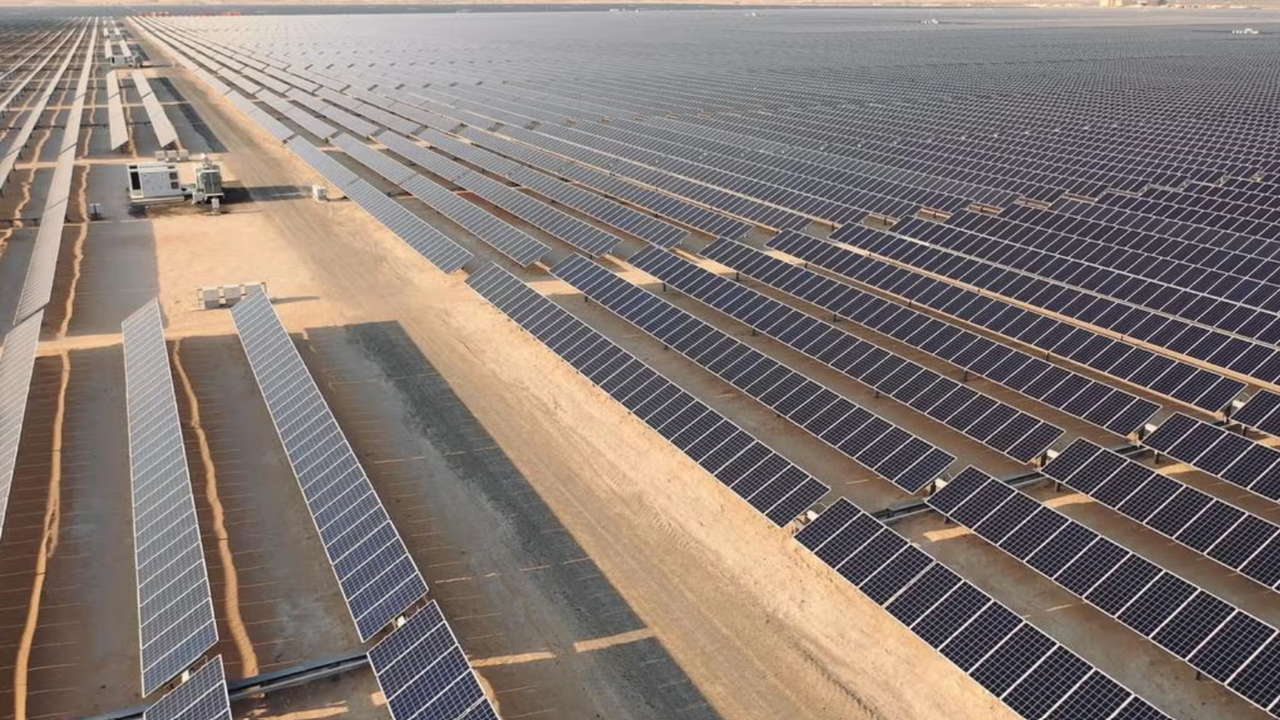
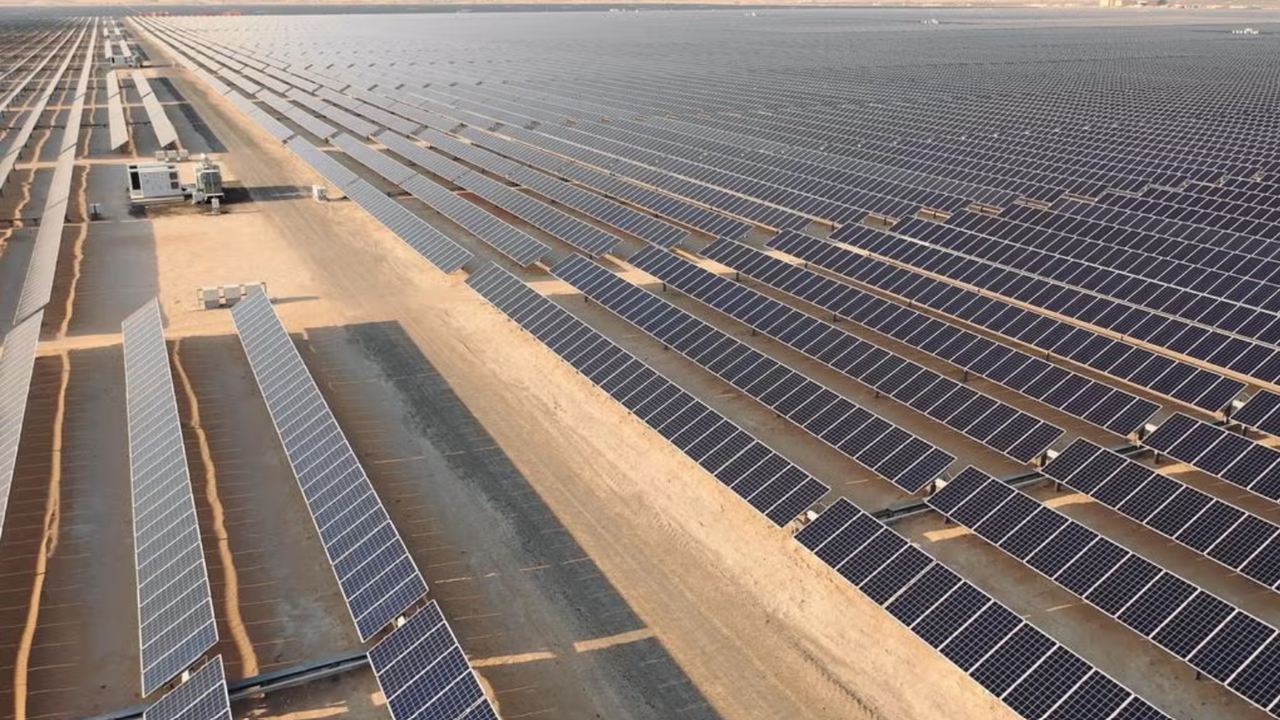
In the United Arab Emirates, where water is more valuable than oil, new research suggests large solar farms could trigger their own rainstorms.

A modelling study led by climate scientist Oliver Branch at the University of Hohenheim found dark solar panels absorb more heat than the surrounding reflective desert sand.

Source link

Continue Reading

Tech

Thieves Posing As Apple Support In Texts & Phone Calls, Company Warns

Published

on


iPhone users around the world are encountering an Apple Pay scam that could lose you thousands of dollars if you fall victim. According to Consumer Affairs, there is currently a widespread scam going around that looks like a text from Apple regarding Apple Pay fraud. The text is actually not from Apple at all, but from a scammer wanting to get a hold of your bank account or credit card information. 

The scam is simple and relies on victims feeling a sense of urgency and panic, making these fraudulent text message schemes quite common. The text will read that a purchase was attempted with your Apple Pay, resulting in your account being locked. It will then say that immediate action is required to get the account back or reverse the charges. If you end up calling the provided number, you will be speaking to a scammer who wants access to your money. They may also send a link to a website that will prompt you to enter sensitive information that hackers can later use. 

Advertisement

How to protect yourself against scammers on your iPhone

If you have received a message like this from someone claiming to represent Apple, it’s more than likely a scammer. Apple does not reach out for private information or request that customers call, text, or email them. Don’t click on any links or call any provided numbers. Apple provides this advice to its customers: “If you get an unsolicited or suspicious phone call from someone claiming to be from Apple or Apple Support, just hang up.” You can check Apple Pay right on your iPhone, and you’ll be able to tell if it’s frozen or if a suspicious transaction was made. You can also call your bank to see if anyone’s made any purchases. 

If you believe that you may have already been in contact with a scammer, don’t panic just yet. Notify your bank or credit card issuer to let them know that the recent transaction was the result of a scam. You should then report the incident to Apple by taking a screenshot of the text and sending it to reportphishing@apple.com) and the Federal Trade Commission (FTC). 

Remember, since you authorized the transaction, it may be difficult to get the money back. Many victims have reported that they haven’t been able to. It’s best to recognize the red flags to avoid being in contact with the scammers at all. These scams are quite common since they are easy to pull off, so you’ll also see them pretending to be from Amazon or other popular companies. Apple customers have been targeted by these types of scams multiple times.

Advertisement


Source link

Advertisement
Continue Reading

Tech

Comparing the latest action cameras

Published

on

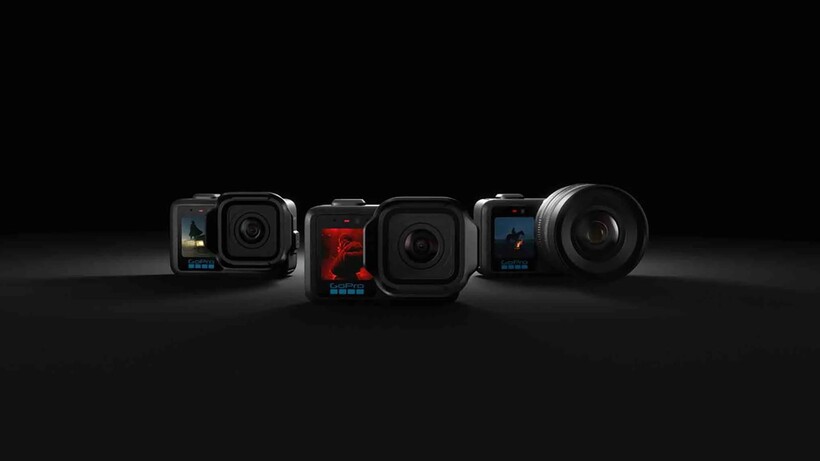
The Mission 1 series is the latest range of GoPro action cameras, flanked by the Mission 1 Pro and Mission 1 Pro ILS. 

So, how does the Mission 1 Pro ILS compare to the Mission 1 Pro? Why should you opt for the ILS model over the “standard” Pro iteration?

While we’re yet to review any of the Mission 1 series, we’ve looked closely at the specs of both the Mission 1 Pro and Mission 1 Pro ILS to see what really separates the two. Keep reading to learn more about the new Mission 1 line-up.

Check out our GoPro Mission 1 Pro vs Mission 1, where we’ve compared the flagship to the more entry-level model. Otherwise, our list of the best action cameras includes all our favourite models from the past year or so.

Advertisement

Price and Availability

At the time of writing, GoPro is yet to reveal the exact prices of any Mission 1 camera. However, we can expect more information between April 19-22, and we’ll be sure to update this versus once we find out the pricing.

Advertisement

In terms of availability, GoPro explains that customers will be able to pre-order the Mission 1 Pro from May 21st ahead of its official launch on May 28th. As for the Mission 1 Pro ILS, GoPro has stated that it will be available from the beginning of Q3 2026.

Both have a 50MP sensor and GP3 processor

We’ll start with a key similarity between the two cameras. Both the Mission 1 Pro and Mission 1 Pro ILS are equipped with a 50MP, one-inch sensor and sport GoPro’s GP3 processor. It’s also worth noting that these are the same specs as the GoPro Mission 1.

Advertisement

The 50MP sensor features a larger surface area, native 1.6µm pixels and 3.2µm fused pixels which GoPro promises ensures both cameras are able to capture more light in darker and trickier environments. Plus, thanks to the 5nm GP3 processor, the Mission 1 series should see “category-leading battery runtimes and thermal performance” too. 

Finally, both the Mission 1 Pro and Mission 1 Pro ILS sport an AI Neural Processor Unit for “next-generation” video pixel processing and better low-light image performance.

We’ll have to wait until we get our hands on either of the cameras to confirm GoPro’s claims, but it’s fair to say at this early stage, the Mission 1 series certainly looks promising.

GoPro Mission 1 line upGoPro Mission 1 line up
Image Credit (GoPro)

Advertisement

GoPro Mission 1 Pro ILS is mirrorless

One of the key differences between the Mission 1 Pro and the Pro ILS is that the latter is mirrorless. In a nutshell, this means the ILS model uses electronic viewfinders (EVFs) to display images digitally, rather than using a mirror to reflect its image onto an optical viewfinder. The ILS model also has an interchangeable lens mount that supports Micro Four Thirds (MFT) lenses and adapters which, according to GoPro, allows a “virtually limitless range of lenses to be paired with the camera”. 

Advertisement

With this in mind, if you want a more versatile camera that allows you to play around with different lenses and adapters, then the ILS is the more suited option out of the two.

GoPro Mission 1 Pro ILSGoPro Mission 1 Pro ILS
Image Credit (GoPro)

GoPro Mission 1 Pro ILS supports in-camera HyperSmooth stabilisation

A feature first introduced on the Hero 7 Black, the Mission 1 Pro ILS supports GoPro’s in-camera image stabilisation technology, HyperSmooth. This feature works by cropping a small amount from the edge of the frame to help reduce camera motion, so recordings aren’t wobbly or jittery. 

GoPro also states that the ILS’ HyperSmooth works with “any rectilinear, prime focal length lens” for added versatility too.

GoPro Mission 1 Pro is water resistant

Even without housing, which is sold separately, the Mission 1 Pro can survive in up to 20m (66 feet) of water. However, if you opt for a protective case then the Mission 1 Pro will be water resistant down to a whopping 60m (196 feet), plus the case’s built-in mounting fingers will allow you to capture content both horizontally and vertically too.

Advertisement

Advertisement

In comparison, GoPro states that the Mission 1 Pro ILS is “weatherproof”, but doesn’t actually expand on what that means. Perhaps it might not be as water resistant as the Mission 1 Pro without a case, but we’ll have to wait for GoPro’s confirmation. 

Early Verdict

Promised to be the world’s “smallest, lightest, and most rugged 8K and 4K Open Gate cinema cameras”, the Mission 1 series is undoubtedly one of the most exciting camera launches of the year so far – although we’ll have to wait and see how they really perform in everyday use.

At this early stage, the Mission 1 Pro ILS is best suited for those who want the flexibility and versatility that comes from swapping out lenses. On the other hand, the Mission 1 Pro is a great choice for those looking for a compact action camera that will see them through most uses.

We’ll be sure to update this versus once we review both the cameras.

Advertisement

Source link

Continue Reading

Tech

Signed software abused to deploy antivirus-killing scripts

Published

on

Signed software abused to deploy antivirus-killing scripts

A digitally signed adware tool has deployed payloads running with SYSTEM privileges that disabled antivirus protections on thousands of endpoints, some in the educational, utilities, government, and healthcare sectors.

In a single day, researchers observed more than 23,500 infected hosts in 124 countries trying to connect to the operator’s infrastructure, with hundreds of infected endpoints present in high-value networks.

More than just adware

Security researchers at managed security company Huntress discovered the campaign on March 22, when signed executables viewed as potentially unwanted programs (PUPs) triggered alerts in multiple managed environments.

Wiz

PUPs, or adware, are regarded more as a nuissance than malicious, as their role is typically to generate revenue for the developer by showing advertisement pop-ups, banners, or through browser redirects.

Huntress researchers say that the software was signed by a company called Dragon Boss Solutions LLC, involved in “search monetization research” activity and promoting various tools (e.g., Chromstera Browser, Chromnius, WorldWideWeb, Web Genius, Artificius Browser) labeled as browsers but detected as PUPs by multiple security solutions.

Advertisement
The Chromnius tool website
Source: Huntress

Beyond annoying users with ads and redirects, Huntress researchers say the browsers from Dragon Boss Solutions also feature an advanced update mechanism that deploys an antivirus killer.

Deactivating security

Huntress researchers discovered that the operation relied on the update mechanism from the commercial Advanced Installer authoring tool to deploy MSI and PowerShell payloads.

Analyzing the configuration file for the update process revealed several flags that made the operation completely silent and with no user interaction. It also installed the payloads with elevated privileges (SYSTEM), prevented users from disabling automatic updates, and checked frequently for new updates. 

According to the researchers, the update process retrieves an MSI payload (Setup.msi) disguised as a GIF image, which is currently flagged as malicious on VirusTotal by only five security vendors.

The MSI payload includes several legitimate DLLs that Advanced Installer uses for specific tasks, such as executing PowerShell scripts, looking for specific software on the system, or other custom actions defined in a separate file named ‘!_StringData‘ that includes instructions for the installer.

Advertisement

Huntress says that before deploying the main payload, the MSI installer conducts reconnaissance by checking the admin status, detecting virtual machines, verifying internet connectivity, and querying the registry for installed antivirus (AV) products from Malwarebytes, Kaspersky, McAfee, and ESET.

The security products are disabled using a PowerShell script named ClockRemoval.ps1, which is placed in two locations. The researchers say that installers for the Opera, Chrome, Firefox, and Edge browsers are also targeted, likely to avoid potential interference with the adware’s browser hijacking.

Attack overview
Compromise overview
Source: Huntress

The ClockRemoval.ps1 script also executes a routine when the system boots, at logon, and every 30 minutes, to make sure that AV products are no longer present on the system by stopping services, killing processes, deleting installation directories and registry entries, silently running vendors’ uninstallers, and forcefully deleting files when uninstallers fail.

It also ensures that the security products cannot be reinstalled or updated by blocking the vendor’s domains through modifying the hosts file and null-routing them (redirecting to 0.0.0.0).

During the analysis, Huntress found that the operator did not register the main update domain (chromsterabrowser[.]com) or the fallback one (worldwidewebframework3[.]com) used in the campaign, presenting them with the opportunity to sinkhole the connection from all infected hosts.

Advertisement

As such, they registered the main update domain and watched “tens of thousands of compromised endpoints reach out looking for instructions that, in the wrong hands, could have been anything.”

Based on the IP addresses, the researchers identified 324 infected hosts in high-value networks:

  • 221 academic institutions in North America, Europe, and Asia
  • 41 Operational Technology networks in the energy and transport sectors, and at critical infrastructure providers

  • 35 municipal governments, state agencies, and public utilities

  • Advertisement
  • 24 primary and secondary educational institutions

  • 3 healthcare organizations (hospital systems and healthcare providers)

  • networks of multiple Fortune 500 companies

BleepingComputer tried to reach out to Dragon Boss Solutions but could not find contact infor as their site is no longer operational.

Huntress warns that, while the malicious tool currently uses an AV killer, the mechanism to introduce far more dangerous payloads onto infected systems is in place, and could be leveraged at any time to escalate the attacks.

Advertisement

Additionally, since the main update domain was not registered, anyone could claim it and push arbitrary payloads to thousands of already infected machines with no security solutions protecting them, and through an already established infrastructure.

Huntress recommends that system administrators look for WMI event subscriptions containing “MbRemoval” or “MbSetup,” scheduled tasks referencing “WMILoad” or “ClockRemoval,” and processes signed by Dragon Boss Solutions LLC.

Additionally, review the hosts file for entries blocking AV vendor domains and check Microsoft Defender exclusions for suspicious paths such as “DGoogle,” “EMicrosoft,” or “DDapps.”

Automated pentesting proves the path exists. BAS proves whether your controls stop it. Most teams run one without the other.

This whitepaper maps six validation surfaces, shows where coverage ends, and provides practitioners with three diagnostic questions for any tool evaluation.

Advertisement

Source link

Continue Reading

Trending

Copyright © 2025