Connect with us
DAPA Banner
DAPA Coin
DAPA
COIN PAYMENT ASSET
PRIVACY · BLOCKDAG · HOMOMORPHIC ENCRYPTION · RUST
ElGamal Encrypted MINE DAPA
🚫 GENESIS SOLD OUT
DAPAPAY COMING

Tech

Theory Professional Unveils P9 Pendant Speaker at InfoComm 2026 With 9-Inch Coaxial Driver

Published

on

Theory Professional arrived at InfoComm 2026 with two new loudspeaker products, but the SR-221.3 was the one that made it difficult to ignore the company’s booth. The extreme output, full range sound reinforcement loudspeaker is the latest addition to Theory Professional’s SR Series, designed for installations and portable applications that require serious scale, wide coverage, and the kind of dynamic headroom that makes most conventional commercial speakers sound rather polite.

Do not confuse Theory Professional with Theory Audio Design. The two brands share the same corporate umbrella and the engineering vision of founder Paul Hales, but they serve different masters. Theory Audio Design is focused on premium residential and custom installation systems, while Theory Professional takes that same emphasis on compact form factors, high output, advanced drivers, and refined voicing into commercial venues, hospitality spaces, houses of worship, entertainment installations, and live sound reinforcement.

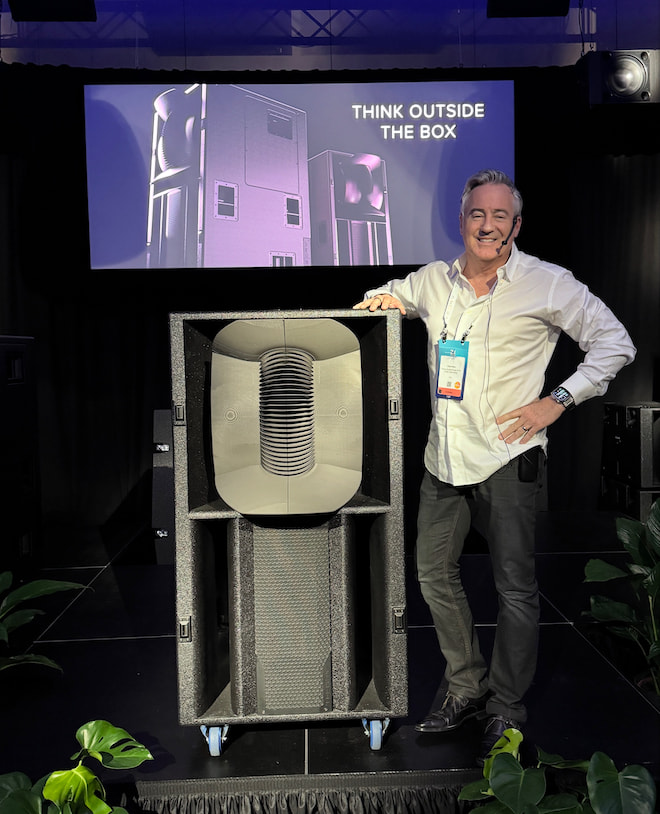
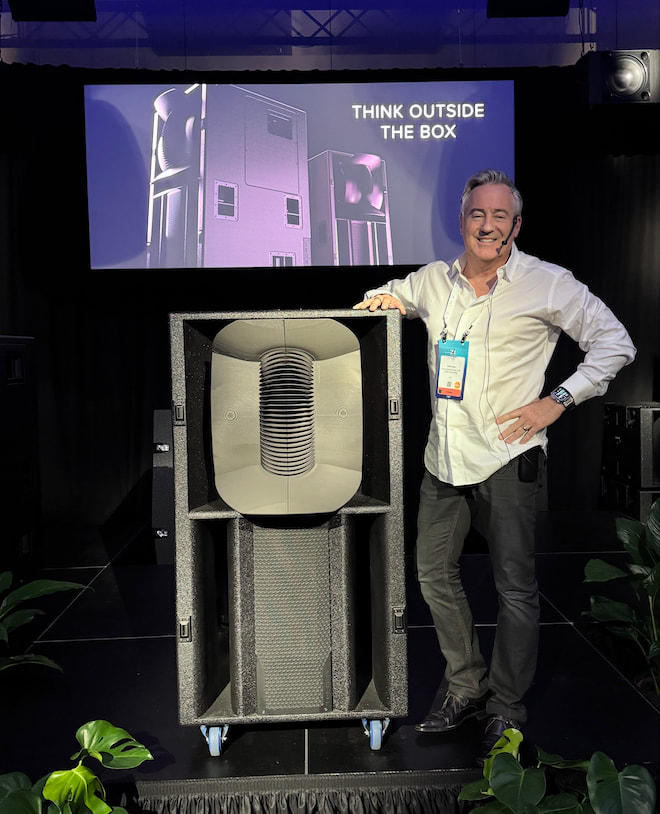
Paul Hales at ISE 2026
Paul Hales with Theory Professional SR-221.3 Loudspeaker at ISE 2026

First previewed at ISE 2026 in Barcelona, the SR-221.3 made its InfoComm debut as the flagship statement piece in that strategy. With dual 21 inch low frequency drivers, four 10 inch carbon fiber midrange drivers, and a 5 inch ring radiator compression driver, it is essentially Theory Professional’s argument that a single enclosure can deliver rock concert scale without requiring a small army of boxes and a spreadsheet to deploy them. For a deeper look at the SR-221.3 and the wider SR Series, refer to our report from ISE 2026.

At InfoComm 2026, Theory Professional also debuted the p9 Pendant Loudspeaker, a second new product shown alongside the SR-221.3.

Theory Professional p9 Pendant Loudspeaker: What We Know So Far

The p9 expands Theory Professional’s pendant loudspeaker lineup, building on the existing ic6 PENDANT. With this new model, Theory is targeting premium commercial spaces that require more output, wider bandwidth, and greater placement flexibility than a conventional compact pendant speaker can typically provide.

Advertisement
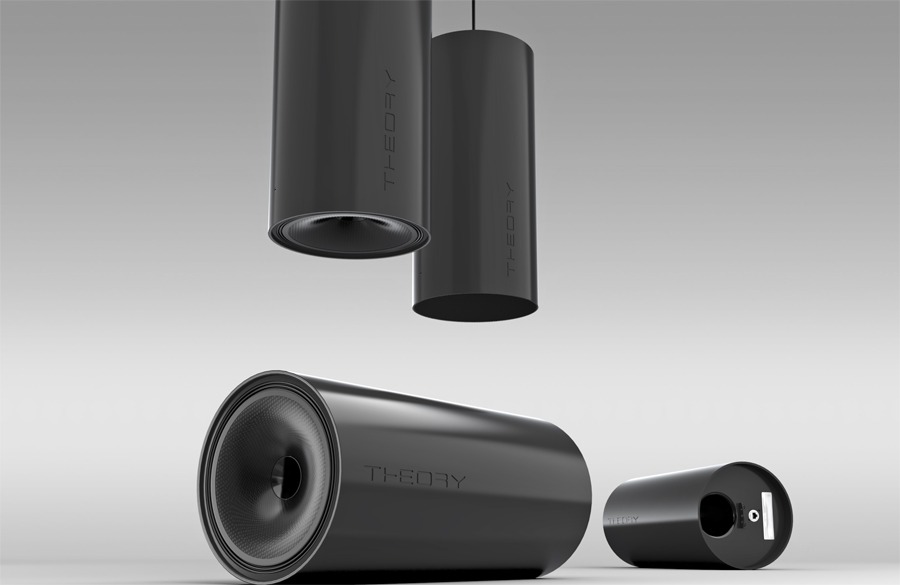
theory-p9-pendant-speakers-group
Theory Professional p9 Pendant Speakers

The p9 combines high output capability and dynamic range with a slender, design-conscious form factor. Inside its black anodized aluminum enclosure is a 9-inch driver system featuring Theory’s Theorem axi-symmetric waveguide and a carbon fiber sandwich low-frequency diaphragm. Theory specifies a frequency range of 45Hz to 20kHz, which means that many foreground music installations may not require a separate subwoofer.

The p9 is also designed to maintain 120-degree dispersion through the upper frequencies, creating broad and consistent coverage in spaces where listeners may be spread across a wide area. That could prove particularly useful in restaurants, hotels, retail environments, and other installations with lower ceilings, where fewer loudspeakers and broader coverage can simplify system design.

Its driver provides the radiating surface area of a 9-inch unit while fitting within an 8-inch chassis, helping Theory keep the overall enclosure compact. The bezel-free industrial design further minimizes its visual footprint, allowing the p9 to blend more naturally into hospitality, wellness, retail, and other architecturally sensitive environments.

Theory Professional positions the p9 as an answer to a growing mismatch in commercial AV: increasingly refined spaces are still too often fitted with loudspeakers that prioritize utility over both sound quality and appearance. The p9 is intended to give dealers, integrators, architects, and designers a more upscale pendant option without sacrificing output or coverage. It is expected to ship in Q4 2026 in passive 16-ohm/70V and PoE versions.

Advertisement

The Bottom Line 

Under Paul Hales, Theory Professional continues to pursue a very specific corner of the market: compact loudspeakers that do not surrender dynamics, bandwidth, or intelligibility simply because the installation needs to look civilized.

The p9 is not aimed at projects that require the cheapest possible 70V pendant speaker. Its appeal is the attempt to combine wide 120-degree coverage, useful low-frequency extension, high output capability, and a compact, architecturally friendly enclosure in one product. For restaurants, hotels, retail spaces, spas, clubs, and premium residential or light-commercial projects with exposed ceilings, that could mean fewer speakers, less visual clutter, and potentially no subwoofer for foreground music systems.

Advertisement. Scroll to continue reading.

Theory has confirmed that the p9 and SR-221.3 will be shown and demonstrated at CEDIA Expo 2026 in Denver, giving the eCoustics team a chance to hear both products in person. That matters, because the specification sheet is promising, but the real question is whether the p9 can deliver the scale, tonal refinement, and broad coverage Theory is claiming without becoming another expensive pendant speaker that looks better than it sounds. We also expect CEDIA to bring clearer details regarding final specifications, availability, and pricing.

Advertisement

Price & Availability

The p9 will be available in Q4 2026 in both passive (16-ohms/70V) and PoE versions through Theory Professional commercial and residential partners. 

Source link

Advertisement
Continue Reading
Click to comment

You must be logged in to post a comment Login

Leave a Reply

Tech

Fixing A Warped Paperback Spine With Gentle Heating

Published

on

Although paperbacks are a much-loved aspect of the literary world, they are not really intended to last the decades the way that hardcover books are. Beyond the typical ravaged covers, paperbacks also tend to suffer from a warped spine, where the formally flat spine gets a definite inwards curve due to the ravages of moisture, temperature, failing glue and the passing of time in general. If this bothers you, then [Book Care Studio] shows a simple technique using which these spines can be flattened again.

All that you need for this approach are two cutting boards and two clamps to provide some clamping force on the book, along with a heat gun and some patience.

The book is clamped between the two boards with the spine sticking out. By putting said spine flat on e.g. a table and pushing on the opposite side while alternatingly briefly releasing the clamps, the spine can be forced into a flatter state. Without forcing this and then flipping the paperback sandwich around to heat the spine with the heat gun, the glue of the binding in the spine can then be softened sufficiently that a few of these push-heat cycles should be enough to straighten the spine.

Other than rebinding the book as for example public libraries are wont to do with a hardcover conversion of flimsy paperbacks, this simple approach should clean up a ratty-looking paperback collection. While one can definitely argue that half the charm of old paperbacks are the wrinkles, curves and intense smell of acidifying paper, it’s always good to have options like this at one’s disposal.

Advertisement

Source link

Advertisement
Continue Reading

Tech

Trump Administration Asks OpenAI To Stagger Release of New Model

Published

on

The Trump administration has reportedly asked OpenAI to stagger the release of GPT-5.6 over security concerns. The model will initially be offered to a small group of partners, with the government “approving access customer by customer during this preview period,” reports The Information. The request came from conversations with the Office of the National Cyber Director and the Office of Science and Technology Policy, the report said.

Source link

Continue Reading

Tech

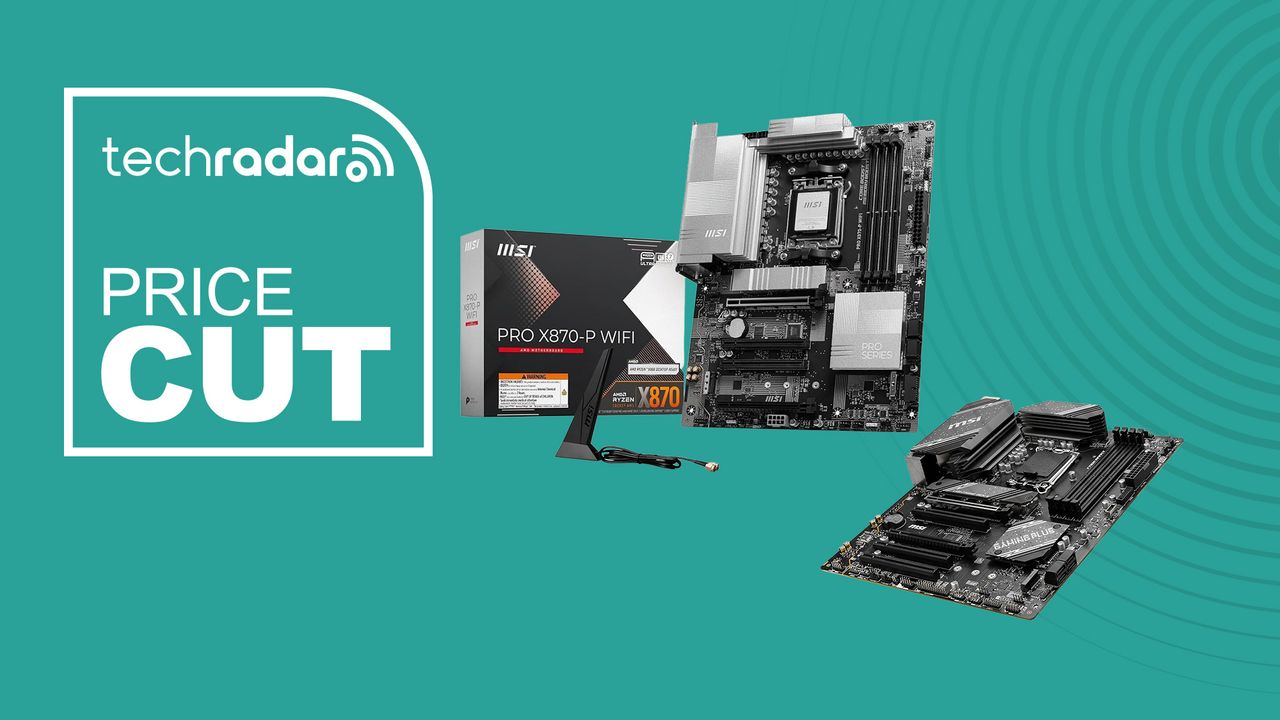
Building a PC? MSI has two top motherboard deals for Prime Day

Published

on

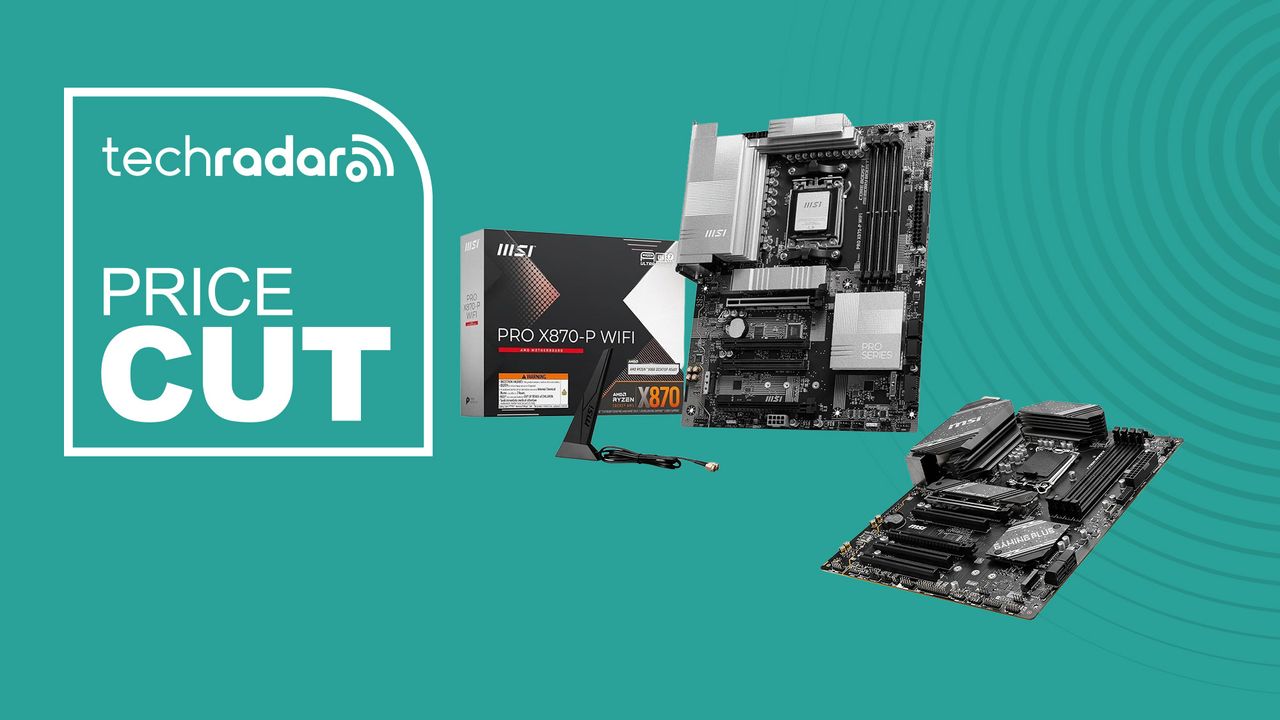
Motherboard deals at this level of discount don’t come around that often. Right now, Amazon has the MSI PRO X870-P WiFi at $152 (was $170) for AMD Ryzen and the MSI B760 Gaming Plus WiFi at $133 (was $200) for Intel in the Prime Day sale.

Both are well-regarded ATX boards with built-in Wi-Fi, and both represent meaningful savings if you’re mid-build or planning an upgrade. And both punch above their discounted price.

The two boards target different platforms entirely — one is AMD AM5, the other Intel LGA 1700 — so this isn’t a true apples-to-apples comparison. Think of them as two separate opportunities: one for Ryzen 7000/8000/9000 builders, and one for 12th/13th/14th Gen Intel builders.

Advertisement

Today’s top computer deals

More on the PRO X870-P WiFi — AMD AM5

At this price, the PRO X870-P Wi-Fi sits in an interesting spot: it’s the X870 chipset — AMD’s current-gen platform with full PCIe 5.0 support — at a price that previously would have bought you a mid-range B650 board. The X870 chipset brings wider PCIe 5.0 support and Wi-Fi 7 as a platform requirement (rather than an optional add-on), and AMD has committed to AM5 support through at least 2027, which means whatever Ryzen processor you pair with this board today will have a clear upgrade path for several years.

The connectivity package at this price is genuinely impressive. Wi-Fi 7 with its 320MHz channel width delivers noticeably lower latency and higher throughput than Wi-Fi 6E — the kind of upgrade you notice on a busy home network. The 5Gbps Ethernet port, USB4 at 40Gbps, and Thunderbolt 4 are the kind of specs that usually appear on more expensive boards. Three M.2 slots (including one Gen5) gives you flexibility for fast SSDs now and room to expand later.

MSI’s PRO series is positioned more toward productivity and professional use than the flashier gaming-branded boards, which means the design is restrained — minimal RGB, clean silver heatsinks, no aggressive aesthetics. Whether that’s a positive depends entirely on what you want your build to look like. Best Buy reviewers have praised it as straightforward to install and stable from the first boot, with multiple builders noting it’s working well with everything from Ryzen 7700X to the 9800X3D.

Advertisement

One honest note: the PRO X870-P is tuned more for stability and accessibility than aggressive overclocking. If you’re planning to push DDR5 kits to their absolute limits or run a flagship Ryzen 9 chip at sustained all-core maximum TDP, a higher-end X870E board would give you more VRM headroom. For the majority of builds — including enthusiast setups — it handles everything without issue.

More on the B760 Gaming Plus WiFi Gaming Motherboard

The B760 Gaming Plus WiFi is the more straightforward recommendation of the two — it’s a well-established board with a substantial real-world track record. The 840+ reviews on Amazon at 4.4/5 tell a consistent story: this board works reliably, installs without drama, and delivers good performance across a wide range of Intel builds.

Intel’s LGA 1700 platform supports 12th, 13th, and 14th Gen Core processors, which means there’s a wide choice of CPUs available at various price points — everything from a budget Core i3 to the Core i9-14900K. It’s worth noting that Intel has moved on to the LGA 1851 socket for its newest Arrow Lake generation, so this platform won’t support 15th Gen CPUs. That said, for builds centered on a 13th- or 14th-Gen processor, the B760 remains a very solid foundation.

Advertisement

Wi-Fi 6E built-in is a practical inclusion at this price — it saves you from buying a separate wireless adapter and keeps the build clean. 2.5 Gbps Ethernet provides fast wired connectivity for those who prefer a cable. Two M.2 Gen4 slots comfortably handle primary and secondary NVMe SSDs, and PCIe 4.0 x16 is more than adequate for any current GPU.

Reviewers have specifically praised the B760 Gaming Plus WiFi for its stability across sustained workloads — one reviewer noted it handled “AAA applications and multitasking effortlessly” over ten months of use without a single stability issue. The reinforced PCIe slots and robust VRM heatsinks contribute to a build quality that feels more substantial than budget Intel boards at a similar price.

Also consider: Pre-built PC deals

Source link

Advertisement
Continue Reading

Tech

why privacy, transparency, and human oversight matter

Published

on

Artificial intelligence is becoming an increasingly visible part of healthcare. From administrative workflows and clinical decision support to remote monitoring and wellness technologies, organizations are exploring how AI can help process information more efficiently and provide greater visibility into health-related data. Yet as adoption accelerates, one challenge continues to influence whether these technologies gain meaningful acceptance.

Trust has become a central issue in the broader conversation around artificial intelligence. The World Economic Forum’s Global Risks Report 2026 ranked misinformation and disinformation as the second most severe short-term global risk, while concerns about the adverse outcomes of AI technologies rose significantly in the report’s long-term outlook. As organizations introduce AI into increasingly sensitive areas, including healthcare, the findings underscore the importance of transparency, governance, and accountability in building public confidence.

Doug Benoit, CEO of FacialDx, believes trust begins with clarity. FacialDx is an AI-powered wellness intelligence company that uses facial analysis technology to identify visual biomarkers associated with wellness indicators and provide structured observations intended to support awareness. Benoit explains that users increasingly want to understand how conclusions are reached rather than simply receiving results.

Doug Benoit

Doug Benoit, CEO of FacialDx

Advertisement

People want access to the information behind the outcome,” Benoit says. “Trust grows when organizations are willing to show the methodology, the data, and the reasoning that support what the technology is presenting.

That expectation reflects a broader shift taking place across healthcare and technology. Organizations are facing growing pressure from regulators, providers, employers, and consumers to demonstrate how AI systems function, how data is managed, and where human judgment remains involved. “Transparency is no longer viewed as a supplementary feature,” Benoit notes. “For many stakeholders, it is becoming a prerequisite for adoption.

Privacy represents an equally important consideration. Benoit explains that healthcare information remains among the most sensitive categories of personal data, which places significant responsibility on organizations developing AI-enabled solutions. Research shows that AI systems handling sensitive health information raise significant concerns around privacy, data protection, and the risk of data breaches, while also highlighting the importance of ensuring that AI supports rather than overrides the judgment of healthcare professionals. Benoit believes those considerations reinforce the need for strong governance, security safeguards, and clearly defined human oversight as AI becomes more integrated into health-related environments.

Benoit notes that conversations around AI have evolved considerably during the past several years. According to him, many organizations have moved beyond asking whether AI should be used and are now focused on understanding how it can be implemented responsibly within existing workflows.

The concern we hear most often is not whether AI exists,” Benoit explains. “Organizations want to know how it integrates into what they already do, how information is protected, and whether the technology supports the people responsible for making decisions.

Advertisement

Human oversight remains central to that discussion. He explains that while AI can help identify patterns, organize information, and improve efficiency, healthcare decisions often involve context, judgment, and interpersonal considerations that extend beyond data analysis alone.

Benoit believes AI should be viewed as a support tool rather than an autonomous authority. “Technology can help surface information faster and more consistently,” he says.But people still need people. Human oversight provides accountability, interpretation, and the ability to apply professional judgment in ways that technology alone cannot.

This distinction is becoming increasingly important as organizations define governance frameworks around AI deployment. “Successful implementation often depends on clearly establishing what a system is designed to do, what it is not designed to do, and how outputs should be interpreted within existing professional processes,” Benoit says.

For FacialDx, that philosophy shapes the company’s position within the healthcare ecosystem. Benoit emphasizes that the platform is intended to provide wellness intelligence and observational insights rather than diagnostic conclusions. According to him, maintaining clearly defined boundaries helps support responsible adoption while reinforcing the role of healthcare professionals in evaluating information and determining appropriate next steps.

Advertisement

He also points to governance and controlled access as important components of trust. “The goal is to make information accessible, understandable, and secure,” Benoit says. “People should know who can access their information, how it is being handled, and what safeguards exist around it.

As AI continues to expand across healthcare, enterprise wellness, and telehealth environments, trust may ultimately become the factor that separates short-term experimentation from long-term adoption. Innovation remains important, but sustained success will likely depend on whether organizations can balance technological advancement with accountability, transparency, privacy protection, and human oversight.

Benoit believes the future of AI health intelligence will be shaped by that balance. “The organizations that earn trust will be the organizations that remain transparent, stay focused on their purpose, and use AI to support better decisions,” he says. “When innovation and accountability move forward together, people gain confidence in the technology and confidence in how it is being used.

Advertisement

Source link

Continue Reading

Tech

Here We Go Again: Microsoft Raises Xbox Prices Amid Memory Shortage

Published

on

Microsoft announced yet another price increase for the Xbox Series X and S consoles, starting Aug. 1. This is the third time Microsoft has hiked the price of its Xbox consoles since May 2025, another example of gaming hardware increasing in price due to the ongoing global memory shortage.

Xbox console prices are jumping $100 for the 512GB model and $150 for the 1TB models. Microsoft says it will discontinue the 2TB version of the Xbox Series X. Here’s the new breakdown of prices:

  • Series S 512GB: $500
  • Series S 1TB: $600
  • Series X 1TB digital: $750
  • Series X 1TB disc drive: $800

Microsoft’s blog post said the company spent several months working with suppliers, hoping to avoid another price increase. “Unfortunately, console storage and memory prices have increased by more than 2.5x, and we expect another doubling by the fall of 2027.” It noted that the the components crisis — which was also behind the latest price hike for Apple products — is hitting consoles particularly hard.

That same blog post introduced buy now, pay later and zero-interest financing options, which the company framed as “programs to make XBOX consoles more accessible.” 

Advertisement

Microsoft initially raised the price of the Xbox Series X|S back in May 2025, shortly after President Trump instituted new tariffs on products manufactured in other countries. The company raised the prices again last October, likely due to the beginning of the current memory shortage

Both Nintendo and Sony also re-evaluated the pricing of their respective consoles due to the tariffs and the cost of memory. The PS5 saw its price jump twice: The first came last August, followed by another in March. Nintendo will increase the price of the Switch 2 in September, and it already hiked up the price of the original Switch last August. 

New products aren’t immune, either. On Monday, Valve revealed the price of its PC gaming console, the Steam Machine, which starts at $1049. The price tag shocked many gamers, as the company had telegraphed that its new hardware should be similarly priced as other home consoles when it was first revealed last November. Instead, it’s $150 more expensive than the PS5 Pro. Valve also hiked the price of its Steam Deck portable console last month.

For more, check out our best budget laptops and whether iPhones might be next on the price hike list.

Advertisement

Source link

Continue Reading

Tech

The hidden cost of complacency and Jay Roland’s mission against corporate America’s technical debt crisis

Published

on

Corporate America is hemorrhaging money through inefficient IT business processes, and Jay Roland, founder of Varex Solutions, believes that the industry is complacent about it. Technical debt, which is the accumulated cost of deferred IT fixes, misconfigurations, and other operational inefficiencies, is projected to cost US enterprises $2.41 trillion a year, costing $1.52 trillion to fix. With numbers this staggering, Roland argues that awareness, however, remains precariously low.

The numbers projected only tell part of the story,” he says. “The struggles companies are going through are far greater than any figure on a slide. I’ve walked into organizations spending $251 million a year on IT and found $51 million of it being wasted, year over year, on problems they didn’t even know existed.

Jay Roland

Jay Roland

To address the bottlenecks he witnessed, Roland launched Varex Solutions. The company functions within a specific pressure point, in the gap where enterprises believe their IT is costing them, and what it is actually costing them. Headquartered in Nashville, Tennessee, Varex offers a suite of consulting services spanning ITSM (IT Service Management) platform implementations, maturity assessments, health optimization, and SLA practice guidance.

Advertisement

According to Roland, the company’s key commitment is to uncover bottlenecks, technical debt, misconfigurations, and workflow inefficiencies and then turn those findings into actionable improvements that help increase ROI. This is achieved by Varex’s proprietary technical debt calculator. The tool, he explains, requires just three inputs from a company: industry, employee headcount, and annual revenue.

From those three data points, Roland’s algorithm, which he notes is built on years of archetypal industrial modelling, is designed to autofill an entire financial landscape. The output is intended to encompass a cohesive analysis of expenditure, wasted resources, action steps, and return on investment.

Roland explains, “There’s no AI involved in this entire process. This is all algorithmically structured technical debt assessments. There’s no point in telling someone they’re wasting money unless you can show them how to stop. Otherwise, it’s just noise. When I give you a number, I can show you exactly how I arrived at it, and your own IT team can verify it.

While most paths follow a direct pipeline shaped by education, Roland’s entry into the industry came through a side door, literally. In November 1999, he tagged along with a friend to a local internet service provider in Pontiac, Michigan, intending to play video games on the T3 line. Someone placed a broken computer on his desk and walked away. He started fixing it. “Ten minutes later, a manager walked by, glanced at the screen, and told me they’d put me on the payroll,” he recalls. “That was my entry into IT.

He carried that resourcefulness through a career that moved in and out of the industry, through the dot-com crash, through a tech support subscription startup he co-founded, and through a chapter advancing a popular role-playing game that handed him the exact spreadsheet modeling skillset he would later need to build Varex. Roland identifies this as his defining professional trait.

Advertisement

No matter what I do, I bring everything with me,” he says. “What started as projective analysis on character leveling in a Dungeons and Dragons-style game converted into using a spreadsheet software to optimize a quoting process, and eventually into the algorithms behind Varex Solutions. You never know when you’re going to need it.

Roland recalls growing up with modest means, without the cushion of inherited privilege, and he frames that experience as the source of his refusal to accept inefficiency as simply the cost of doing business, which now shapes his work. “The same water that boils the egg softens the potato,” he says. “Different people react differently to the same circumstances. It was sheer will and determination that got me here, to make something, to give my children something.

He rejects the common notion of walking into a boardroom with abstract consulting promises. Instead, Roland believes in handing executives a specific, verified number. He explains, “I show them: this is what you’re wasting, this is the proof, and this is how to fix it.” The calculator, he says, was built to close the distance between vague projections and hard accountability.

The resistance he often encounters tells its own story. “I once asked a CIO if I could help uncover $25 to $40 million a year in unnecessary IT spend,” he recalls. “But the response I received was one of indifference.” Roland believes this dynamic exists because uncovering decades of avoidable waste is a conversation most executives would prefer never to have. “Would you want to tell your CFO that you have been wasting tens of millions of dollars annually for all these years?” he asks.

Advertisement

The question Roland keeps returning to is a direct one: how bad does a problem have to get before the people responsible for it decide it’s actually a problem? How many misconfigurations have to stack up before the cumulative damage becomes unsustainable? That is the conversation Varex Solutions exists to propel forward, and on Roland’s timeline, it is already overdue.

Source link

Advertisement
Continue Reading

Tech

Polestar Banned From Selling Cars In US From Model Year 2027

Published

on

Longtime Slashdot reader schwit1 shares a report from autoevolution: The U.S. Department of Commerce’s Bureau of Industry and Security denied Polestar an authorization under the Connected Vehicle Rule. Polestar will continue to sell its existing inventory of Polestar 3 and 4 crossovers in the United States and will continue to offer support to customers and access to its service network. But no new 2027 models will set wheels on American soil.

The Connected Vehicle Rule is a regulation that restricts the import and sale of vehicles equipped with Vehicle Connectivity Systems (VCS) and Automated Driving Systems (ADS) tied to foreign adversaries, primarily from China and Russia. Polestar is owned by Chinese auto giant Geely, which has also been the parent company of Swedish brand Volvo since 2010. However, Volvo has recently been granted authorization to sell connected vehicles in the United States.

The rule, set out by the Bureau of Industry and Security (BIS), classifies modern vehicles as mobile data centers and is designed to protect national security by keeping sensitive driver data and vehicle control systems out of the hands of foreign governments. Michael Lohscheller, Polestar CEO, confirms that the company is well aware that the automotive industry is entering a new phase, based on regional dynamics. So, Polestar will shift its strategy to its biggest market as it is preparing its exit from the U.S. market. The report notes that Polestar sold 5,384 cars in the U.S. in 2025, with 60,119 units sold globally.

Source link

Advertisement
Continue Reading

Tech

Building community is as important as building a career, finds engineer

Published

on

Rent the Runway’s Mark Kenny discusses his role in software engineering and his experiences of working abroad.

“I’m born and bred in Kilkenny and went to college in UL where I studied computer systems followed by a masters degree and I left Ireland in 2005 after finishing college and moved to London,” Mark Kenny told SiliconRepublic.com.

Having moved in his 20s, Kenny, who is a software engineer at Rent the Runway, explained initially the plan was only to stay for a few short years. However, he said he was drawn in by “everything the city had to offer” and ended up staying for a total of nine years.

“At the time, there simply weren’t any jobs in graduate roles,” he said. “I finished my initial undergraduate degree just as the dot-com bubble burst and no one was taking on graduate positions. In order to buy time, I did a master’s degree but the tech sector was still barely in recovery, especially in Ireland. 

Advertisement

“Most of my classmates were either heading abroad or taking roles unrelated to what we had studied. For me, London was the obvious option since it was close to home, a diverse job market, and a chance to explore different career options.  It’s important to note that at the time, I didn’t think of it as emigrating, but just being a few years away from home before I came back.”

Here he discusses his return to Ireland and his current day to day.

What made you decide to come back?

My kids, mainly. My wife and I had our first child and spent a year in London and found it difficult. There was no safety net, no-one to pick up children in an emergency or help out in any other way.

Don’t get me wrong, London is a fantastic place to live, especially in your 20s, but we found it to be a different proposition once we were trying to put down roots and raise children. At the time renting, never mind purchasing a house in a decent area, was well beyond our means.

Advertisement

We wanted our children to grow up around family and to be in an environment where they could stay kids for as long as possible.

How did your current role come about?

After several years of running my own business, I was ready for a new challenge when I joined Rent the Runway last year.

Moving from a start-up environment into a larger corporate company was a significant change, but I have to admit, the people at Rent the Runway made the transition very smooth. During the interview process, it was refreshing to meet a team that really understood my somewhat diverse background and experience.

What does your work involve on a day-to-day basis?

My day to day involves working as a full-stack engineer within a small Ireland-based team. It’s great having the entire team here in Ireland, as it helps foster strong collaboration and close working relationships.  I work as part of the larger growth pod that has teams both here in Galway as well as our head offices in Brooklyn, New York. 

Advertisement
What do you like most about your job?

The role itself is very varied, which is something I really enjoy. On any given day I might be working on front-end user experiences, back-end services, integrations, or improving internal tooling and performance. A big part of the role also involves collaborating with product managers, designers and other engineers to plan features and refine requirements, which gives me valuable insight into different areas of the business and how other teams operate.  

Working in a smaller team also means there’s a strong sense of ownership. We’re involved throughout the full development life cycle from discussing ideas and technical approaches, to implementation, testing, deployment and monitoring after release. That level of involvement keeps the work interesting. What really stands out though is the people. 

How did your employer make it easier for you to move back?

My case is slightly unusual as by the time I joined Rent the Runway, I’d already been back in Ireland for a few years, running my own company. So the practical move home was something I’d organised for myself.

When I moved back I worked remotely so now having flexibility around hybrid working is amazing.  There are other nice perks of the job too like half-day Fridays during the summer.

Advertisement
How did your time working abroad make you better suited for your job?

While living in London I had the opportunity to explore several different career paths.

I worked as a recording engineer, which involved dealing with some very interesting, and often complex personalities. I also worked as a lecturer and managed a college campus before eventually starting my own business, where I designed and built software systems from the ground up.

Each role brought its own unique challenges and learning experiences. During that time, I worked alongside some extraordinarily talented people and learned how to adapt to a wide range of environments and industries. That combination of hands-on engineering experience and real commercial exposure has been genuinely valuable in a role like this, where thinking beyond just the code itself is an important part of the role.

What is the best thing about being back in Ireland?

99s and curry chips.

Advertisement

But beyond that, it’s definitely the lifestyle, without question. Raising children close to family and old friends, having more space, a sense of community, these are things you really notice once you’ve lived without them for a while.

The tech scene has also transformed beyond recognition since I left. Now Ireland has some of the best engineering opportunities in Europe, with major global companies based here and a thriving start-up ecosystem alongside them. With the rise of hybrid and remote work, you also have the freedom to live in some of the most beautiful parts of the country while still building a strong career.

What advice would you give to others thinking about moving back to their home country?

Don’t wait for the perfect moment, it doesn’t exist.

It’s also much easier to move home when you have fewer ties, so before kids start school or before you become more established in the housing market. If possible, keeping your existing job and negotiating remote work can make the transition much smoother too.

Advertisement

It’s also important to understand the cost of living changes, when we moved back, USC was a completely new tax for us.

Don’t miss out on the knowledge you need to succeed. Sign up for the Daily Brief, Silicon Republic’s digest of need-to-know sci-tech news.

Source link

Advertisement
Continue Reading

Tech

Cheap 80s Keyboard Gets Modern Brain Upgrade

Published

on

The 1981 Casio VL-1 was a fine cheap keyboard. It had a robust build, though an admittedly limited sound palette. [Max Vega] had one of these charming instruments, and decided to use modern tech to rebrain it for the modern world.

The original electronics of the VL-1 were largely surplus to requirements for this build. The original interface and speaker were kept in service, while the rest of the monophonic sound synthesis hardware was removed. [Max Vega] enlisted an ESP32-C3 to run the show, turning the VL-1 into a ROMpler instead. If you’re unfamiliar with the term, it refers to a keyboard or other instrument that relies on hardcoded sample playback instead of raw synthesis. The ESP32 loads its samples from a microSD card, which provides an enormous amount of storage for different sound packs. Selecting different instruments is handled with a simple interface built around the original buttons and a OLED screen.  Playing the instrument is still the same using the simple keyboard, though [Max] also implemented some extra fun modes that play chords at a single touch.


If you want a fun, versatile keyboard instrument that fits perfectly in a backpack, it’s hard to go wrong with a build like this. We’ve seen similar Casio keyboard hacks before, too. Video after the break.

Advertisement

Source link

Advertisement
Continue Reading

Tech

The Best And Worst-Selling SUVs Of 2026 (So Far)

Published

on


SUVs and pickup trucks continue to dominate the car market in the United States, with drivers seemingly preferring larger vehicles that offer reliability and capability. The reasons for SUVs’ continued popularity aren’t surprising. First, Americans feel safer inside these boxy beasts, which often have higher safety ratings than smaller vehicles. Safety is especially important for families looking to protect their children — and SUVs also offer more room for kids (and all their stuff). 

However, not every SUV is made equal. American buyers have their preferences, and data from Good Car Bad Car shows that these buyers are putting their money where their mouth is. The two best sellers are no surprise — they are all-around capable SUVs that can do it all — but the bottom two points are made for a niche market without the usual broad appeal that SUVs have. Here are the best and worst-selling SUVs of 2026. We explain how we selected these cars at the end.

Advertisement

Best: Honda CR-V

The Honda CR-V is the best-selling SUV of 2026 so far, with 187,255 units sold. This is actually more than last year’s sales, which were at 182,656 by June 2025. Starting at $32,370 MSRP (plus a $1,395 destination fee), it’s one of the most cost-effective vehicles in its segment while still remaining a comfortable, roomy all-rounder. 

The base model’s turbocharged 1.5-liter four-cylinder engine makes 190 horsepower, which is enough to get you to work and school on time, but it isn’t the most exciting. Hill-descent control and traction-management programming ensure a smooth ride, and extra legroom adds comfort even during longer drives. Speaking of which, the CR-V has an EPA-estimated 28 mpg city and 33 mpg highway, which is pretty good for a gas-powered SUV. The hybrid will get you farther, however. Our review of the 2025 model stated: “It offers an impressive balance of capability, efficiency, and fun, all in a package that’s reasonably priced.” 

Advertisement

Best: Toyota RAV4

The Toyota RAV4 Hybrid is the second-best-selling SUV, another name you probably expected to see. What’s interesting, however, is that the 121,605 sales in 2026 thus far represent a nearly 40% decline compared to last year to date (202,641). This doesn’t mean American families don’t want the RAV4: the biggest reason for the drop in sales is due to a massive RAV4 shortage. Toyota claims it will likely lose 55,000 sales due to this shortage. “Our turn rate was 97.6% last month — that means 97.6% of RAV4s available for sale in May were sold,” the VP of Sales for Toyota Motor North America told Automotive News in June 2026. “It just speaks to the demand we’re seeing for [our] bestselling vehicle in the United States.” 

Advertisement

If you’re lucky enough to get your hands on the steering wheel of a RAV4, it’s $33,495 MSRP (and a $1,450 destination fee). Like the CR-V, it’s smooth and efficient, with a 2.5-liter four-cylinder engine and two electric motors that make a combined 226 hp. The base RAV4 also boasts 47 mpg in the city and 40 mpg on the highway, a big upgrade from the previous year.

Advertisement

Worst: Subaru Trailseeker

The Subaru Trailseeker is essentially an electric Outback — and it’s often acknowledged for its pretty impressive performance. It’s an all-wheel-drive SUV that reaches 60 mph in 3.9 seconds, can tow a small camper, and can handle light off-roading. However, this wasn’t enough to make the Trailseeker a popular SUV option in 2026 — so far, it has only sold 1,655 units. 

There are a few possible sore spots for the Trailseeker. First, it’s an all-new electric vehicle. EVs are having a tough time in the United States as policies continue to change and incentives are removed. It’s possible that Americans are opting for the Outback instead — it had 48,884 sales in comparison. When it comes to off-road adventuring, the Trailseeker’s lower ground clearance and unimpressive range are big pain points. Our review concluded: “Now if Subaru could just improve its range and charging a bit…” The $41,445 starting price (including a $1,450 destination fee) is also not the most competitive when you’re not getting the best range in the category.

Advertisement

Worst: Genesis GV60

At the bottom of the list for 2026 models is the Genesis GV60 with 338 sales (down nearly 68% from last year’s 1,050 sales by June 2025). Starting at $54,029 (with a $1,495 destination fee), it’s a more expensive SUV option — and Americans are growing tired of the rising average cost of new vehicles. Despite the higher price point, the GV60 struggles to keep up with the competition. You get a good range and plenty of features, but a cramped cabin and underwhelming driving performance.

Still, you’ll get the luxury you desire from an electric Genesis. Our review of the 2025 model stated: “Compared to the other interiors in Genesis’ range, the cabin of the GV60 is far more whimsical.” This includes a center-console gear selector that resembles a colorful crystal ball, a 27-inch infotainment screen that spans the dashboard, a heated steering wheel, and a wireless charging pad. Still, it may not be enough to deter drivers from choosing the GV60’s cheaper siblings, like the Hyundai Ioniq 5 and Kia EV6, both built on Hyundai’s Electric-Global Modular Platform.

Advertisement

How we chose the best and worst-selling SUVs of 2026

When putting this list together, we started with the sales figures gathered from Good Car Bad Car. The Year to Date column showed the number of sales made in 2026 as of June, six months into the year. The two top sellers were in the lead by a good amount (although the Ford Explorer was holding its own). 

However, the worst-selling SUVs were not as straightforward to select. At the very bottom of the list were the Ford Edge with 0 sales, the Toyota Venza with 6 sales, and the Acura ZDX with 85 sales. It doesn’t get lower than zero sales, but the Ford Edge still didn’t make it onto the list. Why? It wasn’t sold in the United States for 2026 (it’s over in China). The discontinued Venza and ZDX also didn’t have 2026 models in the U.S. market. The sales figures were from previous years’ models selling, which didn’t seem like a very fair comparison to the top sellers. For that reason, we went with the two worst sellers that have a 2026 model in the United States.

Advertisement


Source link

Advertisement
Continue Reading

Trending

Copyright © 2025