Connect with us
DAPA Banner

Tech

These Are The US’ Fastest-Selling Lexus Models In 2026 (So Far)

Published

on


There are five Lexus models that qualify as the fastest-selling in the U.S., according to Toyota Motor North America’s First Quarter Sales Report. The more of each model that were sold, the faster a given car was selling. Buyers can use this information to act quickly on cars selling fast or to seek out slower-selling vehicles to get a better deal. We’ll start with the slower-selling Lexus vehicles in the top five, working our way up to the fastest-selling Lexus, and provide you with in-depth information on each Lexus’ size, price, performance, cargo capacity, and other factors.

Some highlights of the TMNA report were that, even though Lexus’ sales were down 2.5% overall, its sales of electrified vehicles, which include hybrids, plug-in hybrids, and EVs, totaled 34,907 units, an increase of 6.2%. The brand’s NX Plug-in Hybrid and RZ EV hit their highest sales ever during the first quarter of 2026.

Advertisement

To briefly recap the history of Lexus, the luxury nameplate of Toyota launched in 1989 with two sedans, the LS 400 and the ES 250, and a promise to pursue perfection. Lexus started with 121 dealers and has added numerous different types of vehicles to its lineup over the years, becoming the first luxury import brand to sell more than 20,000 vehicles in a single month, back in 2000. Notable vehicles from Lexus have included the Lexus SC 300 sport coupe in 1991, the Lexus RX 300 luxury crossover in 1998, and the Lexus LFA supercar in 2011. By 2019, Lexus had sold 10 million vehicles. 

Advertisement

5. Lexus IS

The fifth fastest-selling Lexus on our list is also the only non-SUV, as the Lexus IS is a compact sports sedan. The Lexus IS also has the honor of being the Lexus with the best chance of reaching 250,000 miles. The IS sold a total of 5,045 examples during the first quarter of 2026. Our review of the Lexus IS appreciated its punchy engine and responsive ride.

For 2026, there is only one variant of the IS, called the IS 350. Its styling has been refreshed, and it comes standard with a 3.5-liter V6 engine that produces 311 horsepower, with your choice of rear-wheel drive or all-wheel drive. The transmission depends on the drivetrain you select, with an eight-speed automatic on the rear-drive version and a six-speed automatic with the AWD model. Car and Driver performance testing of the Lexus IS 350 produced results that included a 0-60 mph time of 5.6 seconds, with the quarter-mile going by in 14.2 seconds at 100 mph. Roadholding on the skidpad came out to 0.89g. Cargo volume in the smallish trunk comes out to 11 cubic feet. Pricing for the Lexus IS RWD starts at $46,795, including the delivery, processing, and handling fee.

We should also give a shoutout to the Lexus RZ battery electric vehicle, which claimed the sixth-highest sales spot with an impressive 4,456 units moved into consumers’ garages. This represented the highest sales mark ever achieved by Lexus’ only EV.

Advertisement

4. Lexus GX

The Lexus GX, which our review described as a serious SUV with big capability and a big price, is Lexus’ fourth fastest-selling vehicle. The GX came through for Lexus, with 8,565 units sold in the first three months of 2026. 

The Lexus GX is a large body-on-frame SUV that features a rigid ladder frame, double-wishbone front suspension, and multi-link suspension in the rear. This provides excellent performance both on the road and off it. The GX is powered by a 3.4-liter twin-turbo V6 engine with an output of 349 hp, mated to a 10-speed automatic transmission with Torsen limited-slip locking center differential, driving all four wheels through a standard full-time 4WD system. While most versions of the Lexus GX have three rows of seating, the most hardcore off-road trim, the Overtrail, comes with a two-row setup and seating for five. 2026 Lexus GX pricing starts at $67,735 for the entry-level Premium trim and goes up to $82,845 for the top Overtrail+ model.

Advertisement

Performance testing by Car and Driver generated a 0-60 mph sprint that took 6.2 seconds, with a quarter-mile time of 14.7 seconds at 95 mph. Roadholding on the skidpad measured 0.75g. Cargo capacity is 10 cubic feet behind the third row, going up to 40 cubic feet with the third row folded, and 77 cubic feet with the second and third rows folded.

Advertisement

3. Lexus TX

The Lexus TX is Lexus’ version of the Toyota Grand Highlander. As such, it is a three-row, unibody SUV that will seat as many as seven in comfort. Lexus managed to shift 12,489 examples of the Lexus TX during the first quarter of 2026, landing the TX in third place among the fastest-selling Lexus models. Our review of the Lexus TX liked its adult-sized third row and refined cruising.

The Lexus TX gets its power from a 2.4-liter turbocharged four-cylinder engine that produces 275 horsepower, mated to an eight-speed automatic transmission. Drivetrain options include either front-wheel drive or all-wheel drive. There are also two hybrid versions — the conventional hybrid pairs a 2.4-liter four-cylinder with two electric motors making 366 horses driving through a six-speed automatic, while the plug-in hybrid uses a 3.5-liter V6 and two motors to make 404 horsepower, using a CVT. Both hybrids have all-wheel drive.

Car and Driver put the Lexus TX and Lexus TX Hybrids through their paces, getting a 0-60 mph time of 7.1 seconds with the standard version, dropping to 5.7 with the hybrid and 5.2 with the PHEV. Quarter-mile times were comparable, at 15.4 seconds at 93 mph for the standard, 14.5 seconds at 95 mph for the hybrid, and 13.7 seconds at 104 mph for the PHEV. The TXs pulled 0.82g-0.85g on the skidpad. The TX has plentiful cargo capacity, with 20 cubic feet behind the third row, expanding to 57 cubic feet with the third row folded, and maxing out at 97 cubic feet when both second and third rows are folded.

Advertisement

2. Lexus NX

The Lexus NX is a compact, two-row luxury SUV with seating for five and unibody construction. It’s the Lexus counterpart to the Toyota RAV4. Lexus moved a total of 13,219 NXs during the initial three months of 2026. Available in both non-hybrid and hybrid versions, our review of the Lexus NX Hybrid proved there’s more to life than MPG.

Non-hybrid 2026 Lexus NX models receive a 2.4-liter four-cylinder turbocharged engine with an output of 275 hp, mated to an eight-speed automatic transmission and sending power to all four wheels. The NX Hybrid is available as either a front-wheel drive or all-wheel drive model, combining a 2.5-liter four-cylinder engine with either two or three electric motors to generate a combined 240 hp, which flows through CVT automatic and direct-drive transmissions. Pricing for these vehicles starts at $47,120 for the 2026 Lexus NX 350 AWD in base trim, while the hybrid 2026 NX 350h FWD Base starts at $46,470. 

Advertisement

Performance testing of this drivetrain setup in the Lexus NX by Car and Driver generated a 0-60 mph run of 6.6 seconds, a quarter-mile time of 15.0 seconds at 95 mph, and roadholding on the skidpad measured at 0.81g. Car and Driver also tested the performance of the Lexus NX Hybrid. Results included a 0-60 mph run of 7.6 seconds, making it through the quarter-mile in 15.8 seconds at 87 mph, with a skidpad roadholding number of 0.79g. Cargo capacity for the NX is 22 cubic feet behind the second row, expanding to 46 cubic feet when the second row is folded. 

Advertisement

1. Lexus RX

The Lexus RX is Lexus’ unibody midsize luxury SUV, sharing its platform with the Toyota Highlander. Lexus sold 29,336 copies of the RX during the first quarter of 2026, more than any other Lexus model. Our review of the Lexus RX highlighted that even though the 500H F Sport Performance is good, we’d buy this instead. The Lexus RX has been in the Lexus lineup since 1998. 

The Lexus RX comes in both non-hybrid and hybrid models. The non-hybrid version features Lexus’ trusty 2.4-liter turbocharged inline-four making 275 horsepower, going through an eight-speed automatic before powering the front wheels or all four. The hybrid has AWD standard and two different hybrid powertrains, with the RX350h’s 2.4-liter four-cylinder engine using three electric motors to produce a combined 246 horses, while the RX 500h adds a turbocharger and two electric motors, putting out 366 horsepower. An RX PHEV is also available. Pricing starts at $52,275 for the non-hybrid RX 350 FWD, $54,575 for the hybrid RX 350h AWD, and $66,680 for the RX 450h+ Premium AWD PHEV.

Testing of the RX350 FWD non-hybrid by Car and Driver provided a 0-60 mph time of 6.8 seconds and a quarter-mile time of 15.1 seconds. When Car and Driver tested the 366-hp RX 500h, it improved that 0-60 mph time to 5.5 seconds and the quarter-mile to 14.2 seconds. Roadholding on the skidpad hit 0.80g. RX cargo capacity was measured at 30 cubic feet behind the second row, with a total of 46 cubic feet when the second row seat has been folded.

Advertisement


Source link

Advertisement
Continue Reading
Click to comment

You must be logged in to post a comment Login

Leave a Reply

Tech

How One Builder 3D Printed a Complete Algae Production System

Published

on

3D-Printed Photobioreactor Algae Production
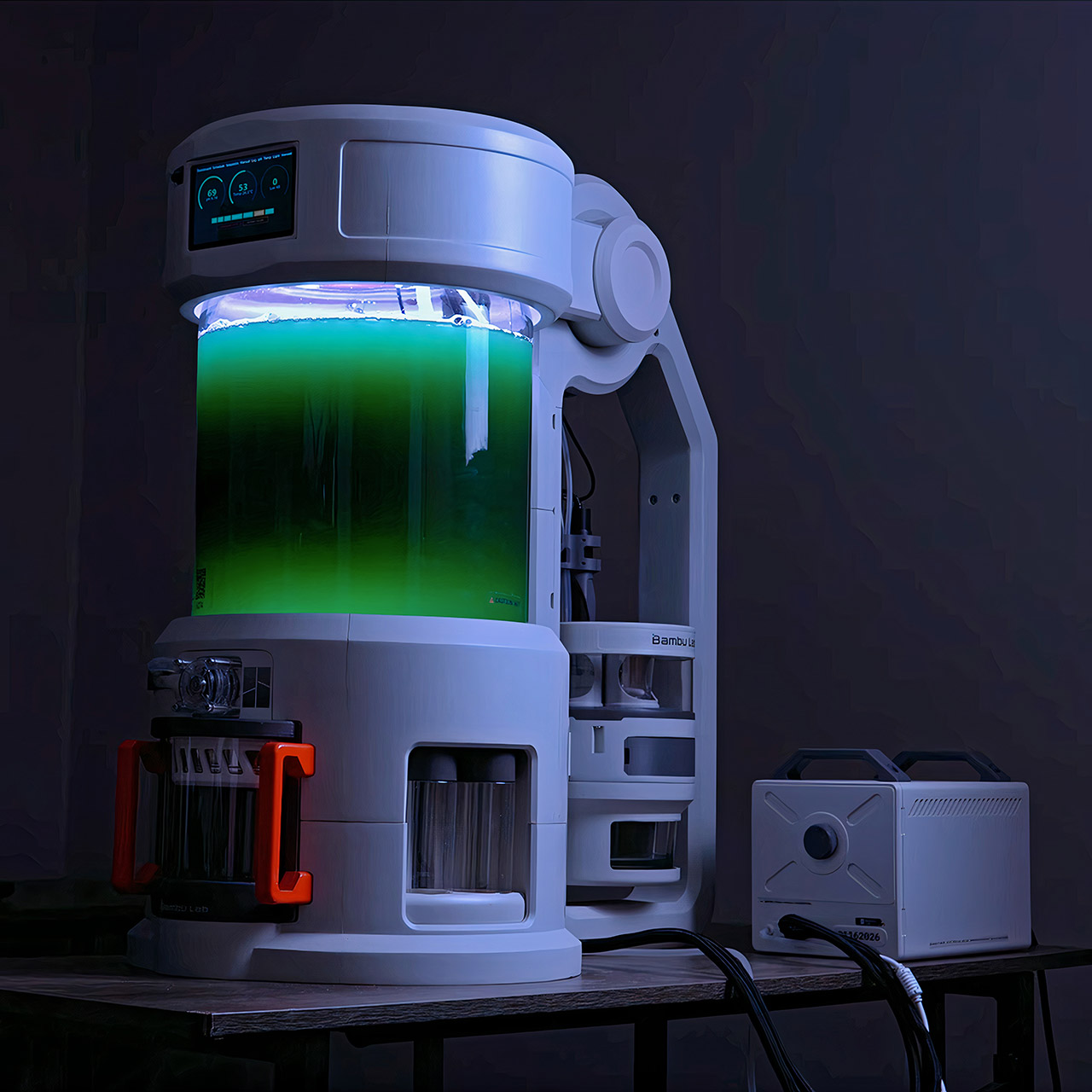
One builder showcases custom-built photobioreactor from start to finish, having printed the majority of its components on a conventional 3D printer sitting on a work surface. The final machine simply sits there silently day after day, converting water and light into useable biomass without the need for anyone to pay attention to it.


Spirulina fills the main chamber since the design ensures a consistent temperature, light, and air supply around the clock. A small initial amount of culture, roughly a gallon, expands over the next few weeks when fresh water and nutrients are introduced. The light enters from the sides, and there’s an air bubbler to keep everything mixed up and full of oxygen. Sensors are on the job, keeping an eye on things to ensure that the algae has enough to grow and reproduce swiftly, providing a few grams of dried biomass per week after the culture is fully established.


Bambu Lab A1 3D Printer, Support Multi-Color 3D Printing, High Speed & Precision, Full-Auto Calibration…
  • High-Speed Precision: Experience unparalleled speed and precision with the Bambu Lab A1 3D Printer. With an impressive acceleration of 10,000 mm/s…
  • Multi-Color Printing with AMS lite: Unlock your creativity with vibrant and multi-colored 3D prints. The Bambu Lab A1 3D printers make multi-color…
  • Full-Auto Calibration: Say goodbye to manual calibration hassles. The A1 3D printer takes care of all the calibration processes automatically…

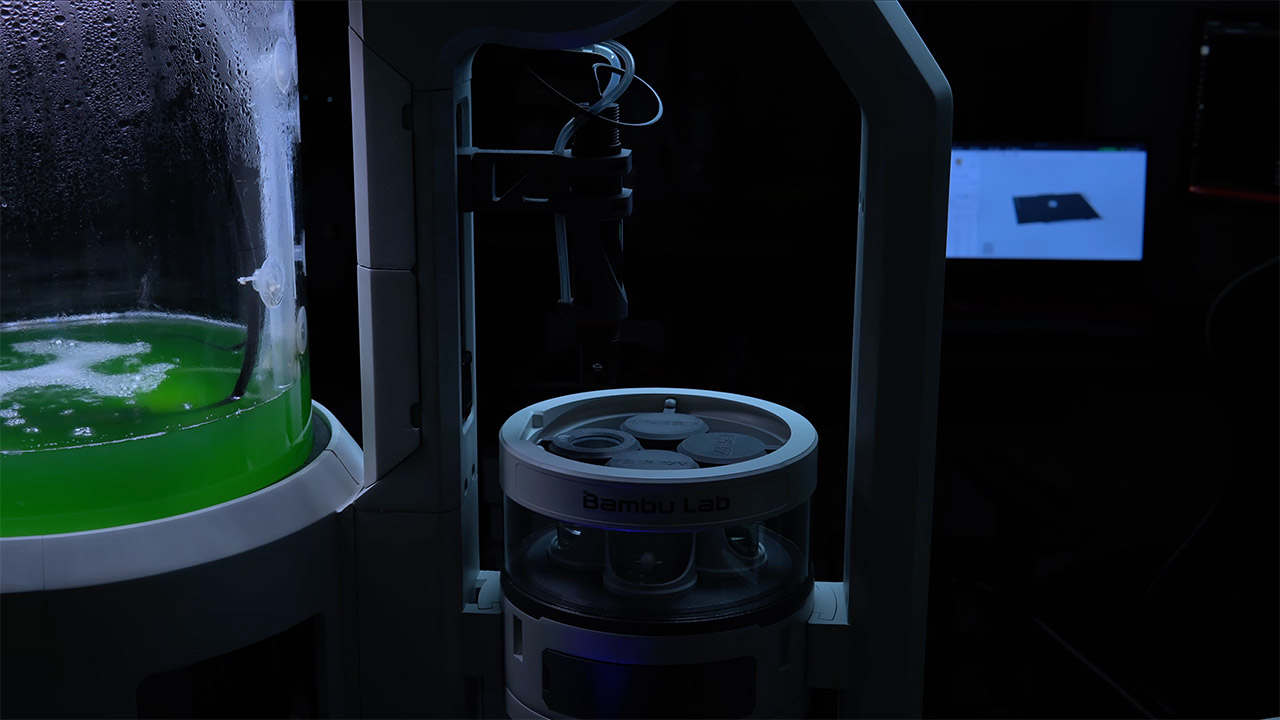
Things begin with the Bambu Lab A1 printer laying down thermoplastic layers for the frame, tank supports, and custom fittings. Large pieces come together quickly due to automated calibration and the printer’s rapid speeds. The printed parts fit together nicely and snugly, requiring little more than a touch of tidying before assembling the entire device. Off-the-shelf pumps, lighting, and tubing are then inserted into the plastic skeleton, changing it into a sealed environment that retains the liquid inside without leaking everywhere.

3D-Printed Photobioreactor Algae Production
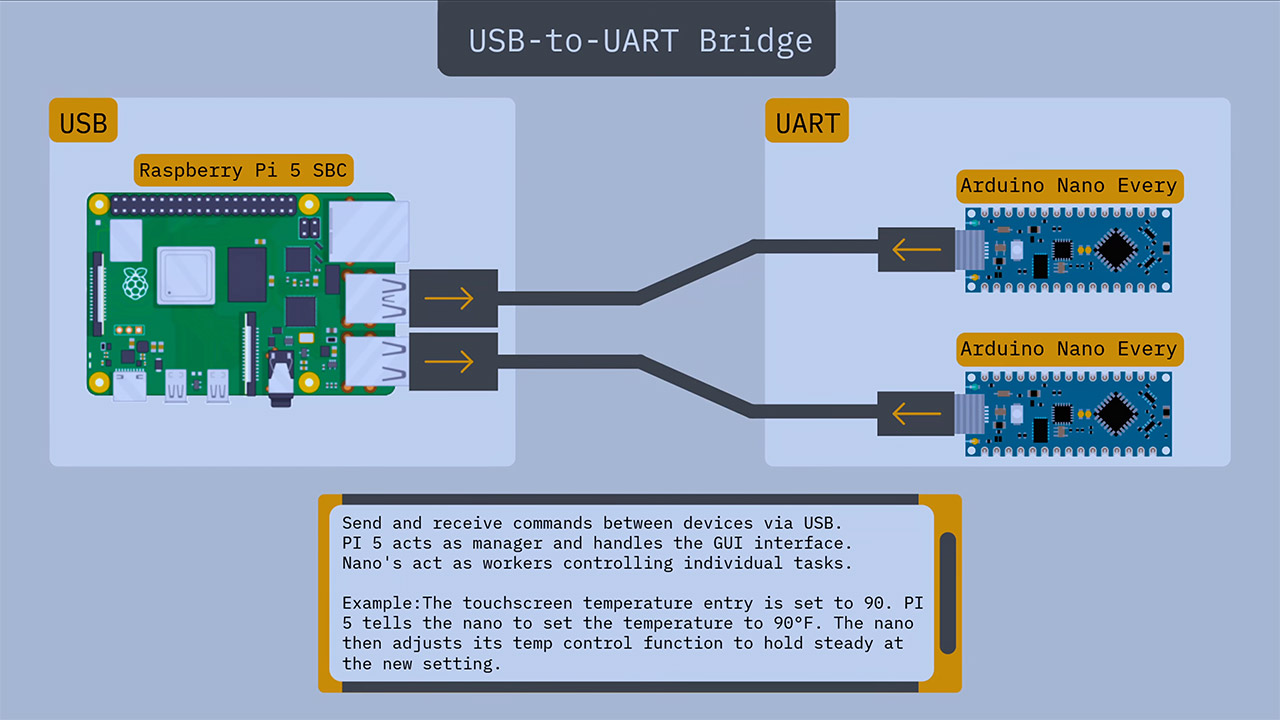
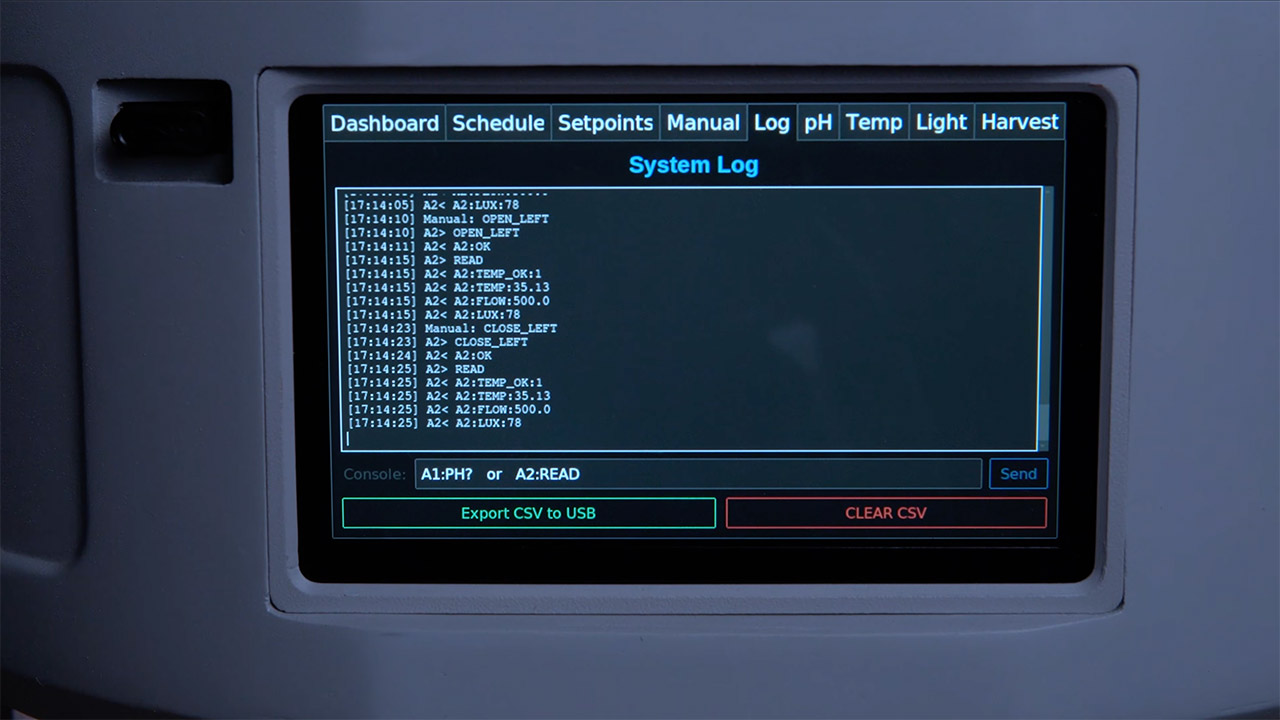
When everything is more or less upright, the electronics take over. A Raspberry Pi 5 serves as the main controller, with two Arduinos acting as task specialists. One Arduino is responsible for running the lights, heating, and bubbler on a regular basis. The second only handles the automated sampling procedure, which checks the acidity levels without allowing the sensors to run dry or deviate off course. A series of USB wires transmit basic text commands back and forth to keep the entire arrangement in sync.

3D-Printed Photobioreactor Algae Production
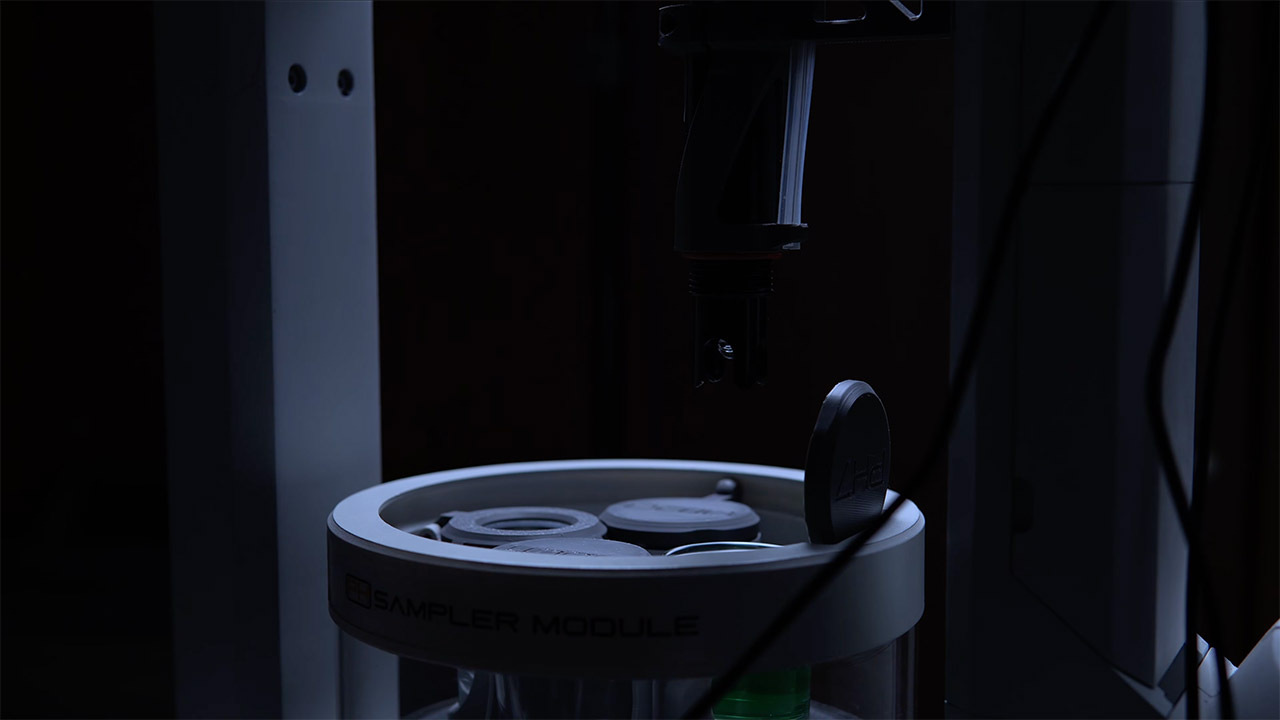
Measuring pH is particularly difficult since the probe must remain wet and clean between readings. So there’s a small rotating part that removes the lids off the storage vials, rinses the sensor in deionized water, and then moves it to grab a sample from the culture before returning it to the vial. A spinning pill inside a silicone tube attached to magnets to provide gentle stirring and minimize residue buildup. As a bonus, the same motion shuts up the vial, preventing evaporation. This all runs on its own tiny schedule and logs each outcome in case somebody wants to look it up later.

3D-Printed Photobioreactor Algae Production
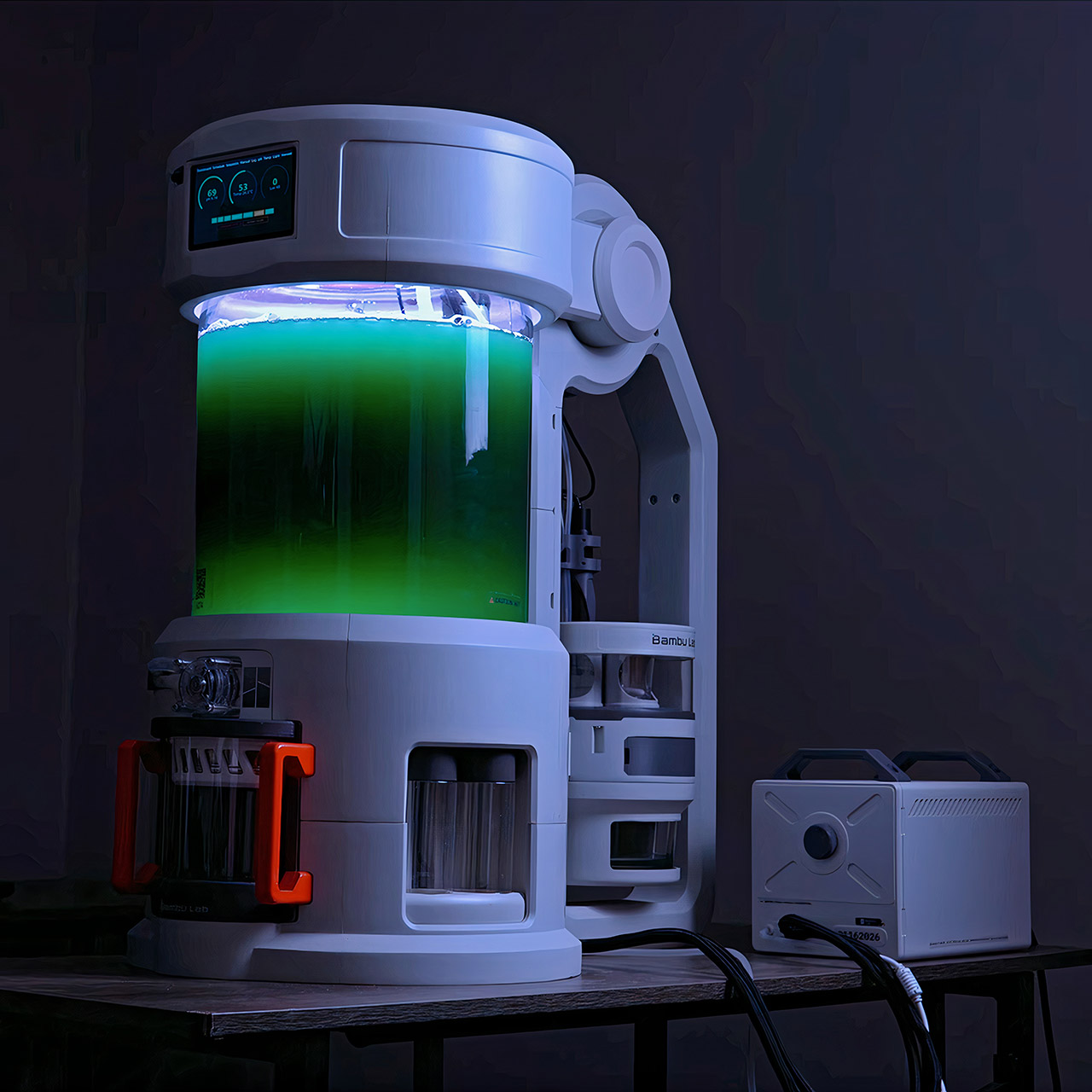
Data appears on a touchscreen that looks like a control panel. At a glance, graphs indicate how light intensity decreases at the bottom of the tank as algae density increases and blocks more light. The temperature readings are always displayed directly in front of you. When harvest time approaches, when the light curve finally flattens out, signaling peak concentration, the system drains a section of the culture, filtering out the good stuff while allowing the remainder to continue growing. Once harvested, the material is spread out on trays, dries in a few hours, and is pulverized into a fine green powder that can be stored or used immediately as fish food.

3D-Printed Photobioreactor Algae Production
The biomass yield is currently around eight grams per week, which is sufficient to support a small aquaponic setup and reduce the need to purchase as much feed. Dried spirulina can also be stored for up to two years, providing a shelf-stable protein source right from your own backyard. And when your algae feed your fish, your fish waste fertilizes your plants, and your plant trimmings return to the algal culture, the entire system just keeps cycling round and round without any external assistance. Once the first culture is established, there is no need for additional inputs.

Advertisement

Source link

Continue Reading

Tech

India won't force Apple to preinstall its state-run app on iPhone after all

Published

on

India’s government has abandoned its proposal that would require smartphone manufacturers to preinstall the state-owned biometric identification app, Aadhaar, on phones.

Two rounded square app icons on a teal gradient background: left shows iOS text over abstract blue and teal shapes, right shows the App Store stylized A on bright blue.
India drops proposal mandating Apple preinstall national ID app

In November, India’s Ministry of Communications issued a directive ordering smartphone producers to preload Aadhaar on any phone sold within the country. The order would have affected Apple, Oppo, Vivo, and Xiaomi.
According to Reuters, India’s IT ministry has since reviewed the proposal and “is not in favour of mandating the pre-installation of the Aadhaar App on smartphones.” The ministry said the decision came after it held a “consultation with stakeholders from the electronics industry.”
Continue Reading on AppleInsider | Discuss on our Forums

Source link

Continue Reading

Tech

Making A Bronze Mirror From Scratch

Published

on

Although modern-day silvered glass mirrors have pretty much destroyed the market for bronze mirrors, these highly polished pieces of metal once were the pinnacle of mirror technology. Due to the laborious process required these mirrors saw use essentially only by the affluent. That said, how hard would it be to make a bronze mirror today with all of the modern technologies that even a hobbyist can acquire for their shed? Cue [Lundgren Bronze Studios] giving it a shot, starting by casting something flat-ish to start polishing.

Just getting that initial shape to start polishing is a chore, with hammering out the shape possibly being also a viable method. When casting metal it’s tricky to avoid having air bubbles and other defects forming, though using a sand mold seems to help a lot.

After you have the rough shape, polishing using power tools seems like cheating, but as you can see in the video even going from 50 to 8000 grit with a rotating disc left countless scratches. Amusingly, hand sanding did a much better job of removing the worst scratches, following which a polishing compound helped to bring out that literal mirror finish.

A quick glance at the Wikipedia entry for bronze mirrors shows that a tin-bronze alloy like speculum metal was used for thousands of years as it was much easier to polish to a good mirror finish. The metallurgy of what may seem like just a vanity item clearly goes deeper than just polishing up a metal surface.

Advertisement

Source link

Advertisement
Continue Reading

Tech

OpenAI Executive Kevin Weil Is Leaving the Company

Published

on

Kevin Weil, OpenAI’s former chief product officer who was recently tapped to build a new AI workspace for scientists, Prism, is leaving the company, WIRED has confirmed. Weil was previously an early executive leading product at Instagram.

“Today is my last day at OpenAI, as OpenAI for Science is being decentralized into other research teams,” Weil said in a social media post on Friday, shortly after WIRED reported his departure. “It’s been a mind-expanding two years, from Chief Product Officer to joining the research team and starting OpenAI for Science.”

Weil did not immediately respond to a request for comment from WIRED.

OpenAI is also sunsetting Prism, which the company launched as a web app in January to give scientists a better way to work with AI. The company is folding the roughly 10-person team behind it under OpenAI’s head of Codex, Thibault Sottiaux, and aims to incorporate Prism’s capabilities into its desktop Codex app. An OpenAI spokesperson confirmed the changes and tells WIRED this is part of the company’s effort to unify its business and product strategy. OpenAI has broader ambitions to turn Codex, its AI coding application, into an “everything app.”

Advertisement

Weil, who joined OpenAI in June 2024, announced last September that he would be starting a new initiative inside of the company called OpenAI for Science. Now, OpenAI is dispersing those employees throughout the company’s product, research, and infrastructure teams. An OpenAI spokesperson reiterated the company’s commitment to accelerating scientific discovery and says it’s one of the clearest ways AI can benefit humanity. Earlier on Friday, the company announced a new series of AI models—GPT-Rosalind—built to help life sciences researchers work faster.

OpenAI is trying to refocus the company around a few key areas, such as enterprise offerings and coding, as the company faces increasing pressure from rivals like Anthropic and gears up to file for an IPO later this year. In March, OpenAI’s CEO of AGI deployment, Fidji Simo, told staff that the company needs to simplify its product offerings. The push to divert resources to more consequential efforts resulted in OpenAI discontinuing its Sora video-generation app.

Unrelated to Weil’s news, two other executives announced on Friday that they are departing OpenAI. OpenAI’s chief technology officer of enterprise applications, Srinivas Narayanan, announced internally that he is leaving the company to spend time with his family. Narayanan had joined OpenAI as the company’s VP of engineering. And Bill Peebles, head of Sora, posted on X that he was done at OpenAI as well.

The exits of Weil, Peebles, and Narayanan are just the latest in a series of executive shake-ups at OpenAI. The company recently announced a major reorganization of its executive team as Simo took a medical leave to focus on her health. In the same announcement, OpenAI said cofounder and president Greg Brockman would oversee the company’s products in the interim, and the company’s chief marketing officer, Kate Rouch, would take a leave of absence due to medical issues. Chief operating officer Brad Lightcap transitioned to a “special projects” role as part of the restructuring as well.

Advertisement

OpenAI CEO Sam Altman seemed to acknowledge the various upheavals in a recent blog post. “I am also very aware that OpenAI is now a major platform, not a scrappy startup, and we need to operate in a more predictable way now,” he wrote. “It has been an extremely intense, chaotic, and high-pressure few years.”

Source link

Continue Reading

Tech

Nearly 75pc of AI’s economic value captured by just 20pc of companies

Published

on

PwC research found that Irish companies are somewhat lagging behind their global peers where AI implementation and benefits are concerned.

Professional services company PwC has released data exploring how organisational leaders are navigating AI gains across a range of areas, such as growth, revenue, investment, workflows, autonomous decisions, reinventing business models and governance, and analysing where the AI leaders are driving results.

PwC collected data for a survey from 1,217 senior executives around the world, including from Ireland, at a director level or above, at companies across 25 sectors and multiple regions worldwide. 

From that information, PwC found that nearly three-quarters (74pc) of AI’s economic gains are being utilised by only 20pc of companies. According to the findings, this is indicative of a “stark and widening divide between a small group of AI leaders and the majority of businesses still stuck in pilot mode”.

Advertisement

Commenting on the report, David Lee, the chief technology leader for PwC Ireland, said, “Many companies are busy rolling out AI pilots, but only a minority are converting that activity into measurable financial returns.

“The leaders stand out because they point AI at growth, not just cost reduction, and back that ambition with the foundations that make AI scalable and reliable.”

Is Ireland keeping pace?

Ireland specifically was found to be falling behind its global peers when it comes to AI implementation and benefits.

Lee said: “Based on our previous studies, Irish companies do somewhat lag global peers where AI implementation and benefits are concerned.”

Advertisement

He added that “PwC’s 2026 Irish CEO survey reveals fewer Irish CEOs (8pc) report AI application across a range of business areas compared to global counterparts (18pc), including demand generation, products, services, experiences and strategic direction-setting”.

He noted: “Some of the benefits from AI are also taking longer to come through compared to global peers, with Irish organisations seeing the opportunities from AI, but are not yet grasping the transformative powers.

“17pc of Irish CEOs say that AI has delivered increased revenues in the past 12 months, behind global peers (29pc). Nearly a quarter (23pc) say that AI has delivered cost reductions in the past 12 months, also behind global peers (26pc).”

The companies that are leading were found to be roughly two to three times more likely to use AI to identify and pursue growth opportunities or reinvent their business model. They are also twice as likely to redesign workflows to incorporate AI rather than simply adding new AI tools.

Advertisement

They are nearly three times more likely to have increased the number of decisions made without human intervention and were shown to be going further in relation to AI governance. Within high-performing companies, trust at scale models were found to be effective. 

The report said, “AI leaders are more likely than other companies to have mechanisms such as a responsible AI framework (1.7 times as likely as other companies) and a cross-functional AI governance board (1.5 times). As a result of their efforts, their employees are twice as likely to trust AI outputs.”

Time for a change

PwC’s report suggested that a failure to shift the current approach to the implementation of artificial intelligence by the majority would likely widen the performance gap between AI leaders and “laggards”, particularly as leading organisations continue to learn, grow, and automate safely and speedily.  

Commenting on the results of the research, Martin Duffy, the head of AI and emerging technologies at PwC Ireland, said: “AI return on investment comes down to execution discipline – clear metrics, fast stop-or-scale decisions and designs built for reuse. Value shows up when AI is embedded in everyday workflows, not isolated pilots.”

Advertisement

Don’t miss out on the knowledge you need to succeed. Sign up for the Daily Brief, Silicon Republic’s digest of need-to-know sci-tech news.

Source link

Advertisement
Continue Reading

Tech

Weekend Apple Watch Series 11 deals deliver prices as low as $299

Published

on

Save $100 on numerous Apple Watch Series 11 styles this weekend, including aluminum and titanium options.

Two Apple Watch Series 11 models, one gold with white band and one silver with metal mesh band, with bold red Best Price label on dark geometric background
Grab an Apple Watch Series 11 from just $299 this weekend – Image credit: Apple

Amazon’s Apple Watch deals have ramped up for the second half of April, with the 42mm Series 11 returning to $299, the lowest price on record, for the weekend.
Buy Apple Watch S11 for $299
Continue Reading on AppleInsider | Discuss on our Forums

Source link

Continue Reading

Tech

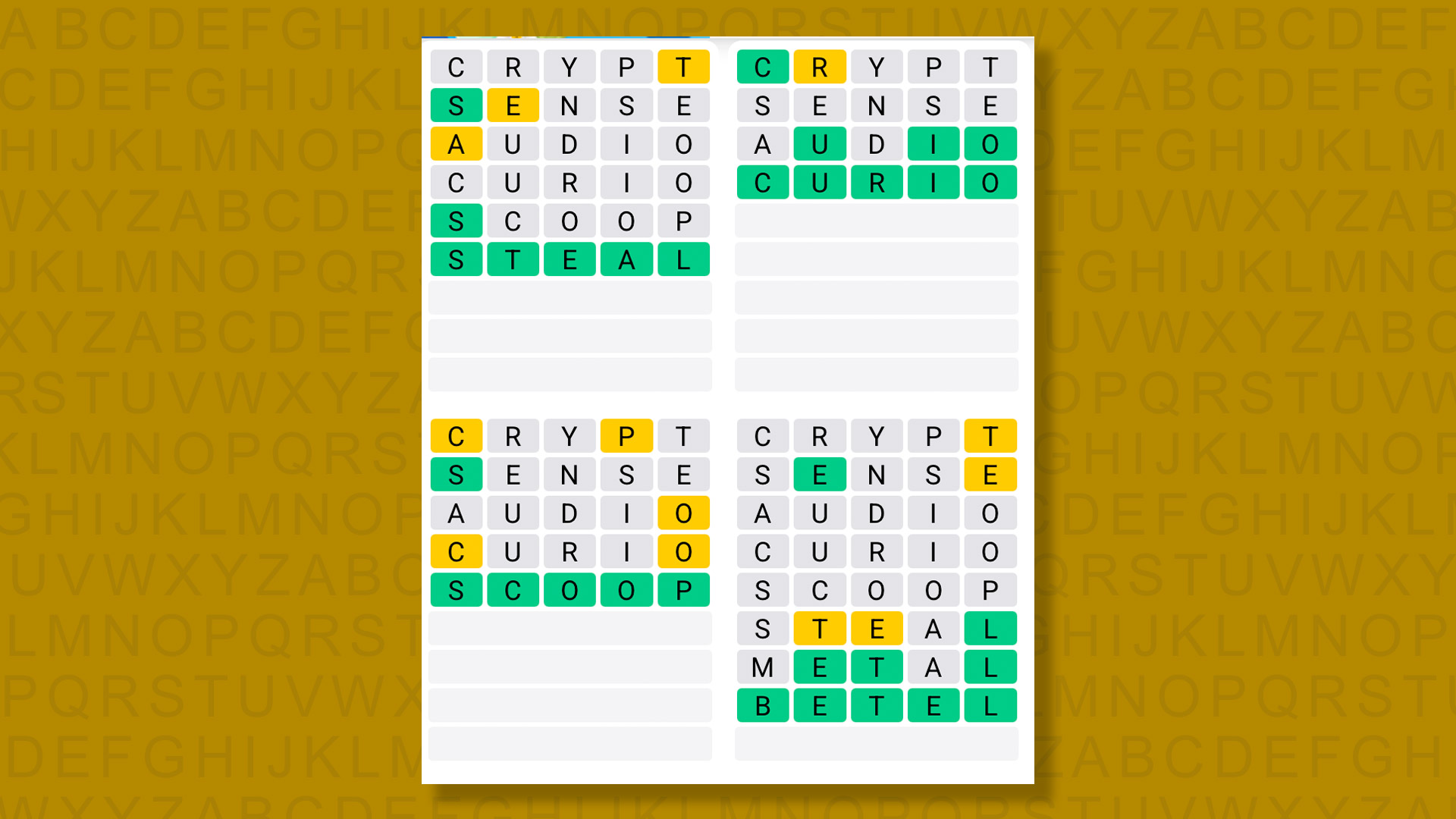
Quordle hints and answers for Saturday, April 18 (game #1545)

Published

on

Looking for a different day?

A new Quordle puzzle appears at midnight each day for your time zone – which means that some people are always playing ‘today’s game’ while others are playing ‘yesterday’s’. If you’re looking for Friday’s puzzle instead then click here: Quordle hints and answers for Friday, April 17 (game #1544).

Quordle was one of the original Wordle alternatives and is still going strong now more than 1,400 games later. It offers a genuine challenge, though, so read on if you need some Quordle hints today – or scroll down further for the answers.

Advertisement

Source link

Continue Reading

Tech

Amazon payments to Bezos’ Blue Origin reach $1.8B as shareholders cite conflicts of interest

Published

on

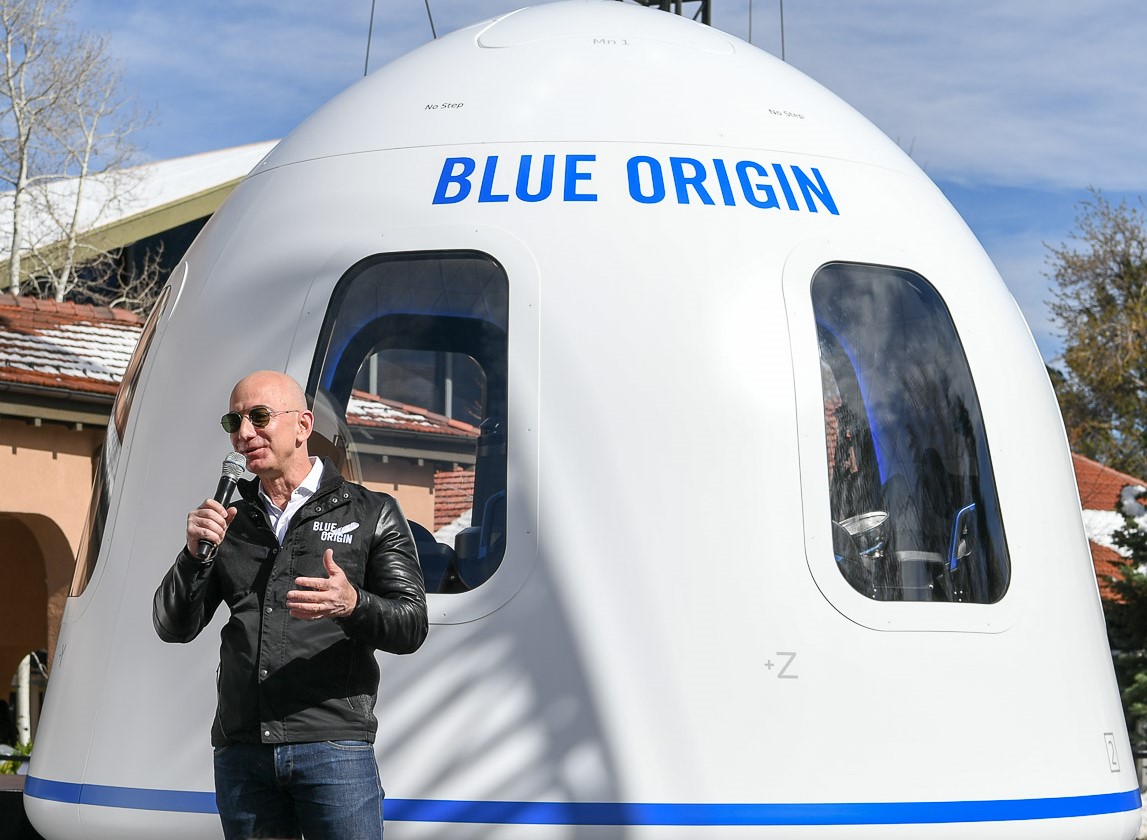
Jeff Bezos
Jeff Bezos, the billionaire founder of Amazon and Blue Origin, shows off a mockup of the New Shepard suborbital space capsule during a 2017 conference in Colorado. (GeekWire Photo / Kevin Lisota)

Amazon paid about $1.8 billion last year to Blue Origin, the space company owned by its founder and board chair Jeff Bezos — nearly triple the amount the year before — as the tech giant prepared to ramp up deployment of its own low-Earth orbit satellite constellation. 

The increase comes as shareholders weigh a proposal calling for a mandatory independent board chair, citing Bezos’ business interests outside Amazon as potential conflicts of interest. 

Bezos stepped down as Amazon’s CEO in 2021 but remains executive chairman.

According to the filing, the company paid approximately $2.2 billion total under satellite launch agreements during the past fiscal year, with an estimated $1.8 billion going to Blue Origin. The prior year’s proxy showed Blue Origin receiving about $578 million out of $1.7 billion total. 

Amazon is building a constellation of 3,236 low-Earth orbit satellites under the Amazon Leo program, formerly known as Project Kuiper, to beam broadband internet to consumers and businesses. The company has deployed 243 satellites so far and has asked the FCC for a two-year extension on a July deadline to launch roughly half of the fleet. 

Advertisement

The company this week also announced a $10.8 billion deal this week to acquire Globalstar, a satellite operator that has used SpaceX as its primary launch provider. 

Blue Origin’s New Glenn rocket made its debut flight in January 2025 but has not yet reached the launch cadence needed for the rollout. In addition to Blue Origin, Amazon has launch agreements in place with United Launch Alliance and Arianespace, and has also tapped Blue Origin rival SpaceX’s Falcon 9 for some launches, as Reuters reported this week

Bezos is also co-founder and co-CEO of AI startup Project Prometheus, a venture focused on applying AI to manufacturing and engineering across a variety of commercial sectors. 

The shareholder proposal calling for a mandatory independent chair, submitted by the AFL-CIO Reserve Fund, points to Bezos’ expanding role outside Amazon as cause for concern. 

Advertisement

“As a technology company, Project Prometheus could be a potential competitor or a business partner with our Company, raising potential conflicts of interest,” the proposal states, also citing Amazon’s multibillion-dollar launch agreements with Blue Origin as a potential conflict.

It notes that Amazon also has done business with the Bezos-owned Washington Post.

Amazon’s board recommends voting against the proposal, arguing that its lead independent director structure provides sufficient oversight. The role is currently held by Jamie Gorelick, a former U.S. Deputy Attorney General. The company’s annual meeting is set for May 20. 

The Blue Origin contracts have drawn scrutiny before. A shareholder lawsuit filed in 2023 alleged Amazon’s board spent less than 40 minutes approving the launch agreements without considering SpaceX as an alternative. Delaware’s Court of Chancery dismissed the case, and the state Supreme Court affirmed that ruling in November 2025.

Advertisement

Source link

Continue Reading

Tech

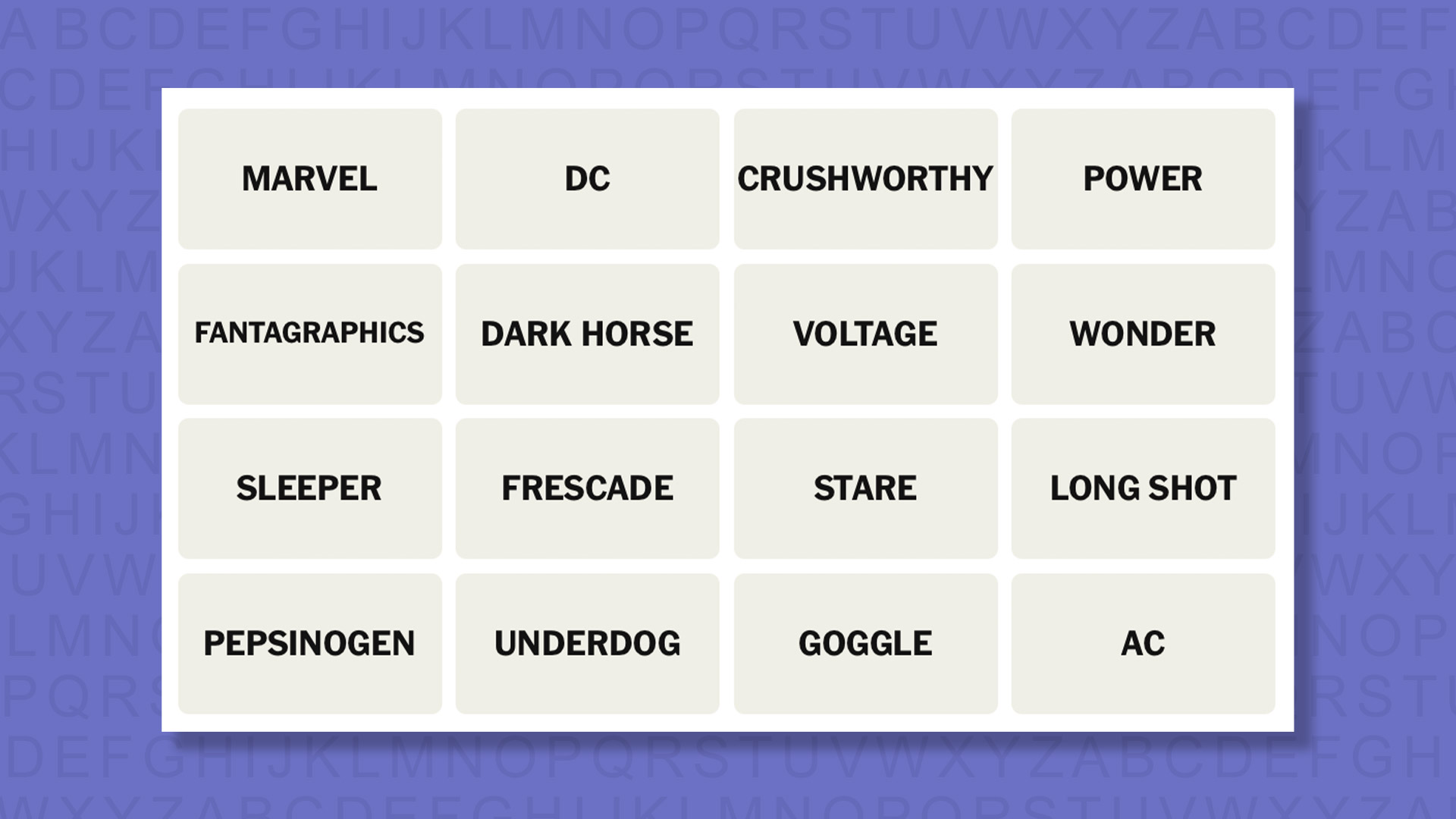
NYT Connections hints and answers for Saturday, April 18 (game #1042)

Published

on

Looking for a different day?

A new NYT Connections puzzle appears at midnight each day for your time zone – which means that some people are always playing ‘today’s game’ while others are playing ‘yesterday’s’. If you’re looking for Friday’s puzzle instead then click here: NYT Connections hints and answers for Friday, April 17 (game #1041).

Good morning! Let’s play Connections, the NYT’s clever word game that challenges you to group answers in various categories. It can be tough, so read on if you need Connections hints.

Advertisement

Source link

Continue Reading

Tech

US-sanctioned currency exchange says $15 million heist done by “unfriendly states”

Published

on

Grinex, a US-sanctioned cryptocurrency exchange registered in Kyrgyzstan, said it’s halting operations after experiencing a $13 million heist carried out by “western special services” hackers.

Researchers from TRM, which has confirmed the theft, put the value of stolen assets at $15 million after discovering roughly 70 drained addresses, about 16 more than Grinex reported. Neither TRM nor fellow blockchain research firm Elliptic has said how the attackers slipped past Grinex’s defenses. Grinex said it has been under almost constant attack attempts since incorporating 16 months ago. The latest attacks, it said, targeted Russian users of the exchange.

Damaging “Russia’s financial sovereignty”

“The digital footprints and nature of the attack indicate an unprecedented level of resources and technology available exclusively to the structures of unfriendly states,” Grinex said. “According to preliminary data, the attack was coordinated with the aim of causing direct damage to Russia’s financial sovereignty.”

“Due to the attack, the Grinex exchange is forced to suspend operations,” Grinex continued. “All available information has been transferred to law enforcement agencies. An application has been submitted to the location of the infrastructure to initiate a criminal case.”

Advertisement

TRM said that TokenSpot, a second Kyrgyzstan-based exchange, was also breached. Two of the exchange’s addresses sent funds to the same consolidation address used by the affected Grinex-linked wallets. What’s more, both exchanges became inoperable on Wednesday, suggesting they were hit by the same attacker.

TRM said TokenSpot was a front for Grinex, which the US Treasury Department sanctioned last year. The department’s Office of Foreign Assets Control said that Grinex, in turn, was a rebrand of Garantex, an exchange it had sanctioned in 2022. The department said then that Ganantex had “directly facilitated notorious ransomware actors and other cybercriminals by processing over $100 million in transactions linked to illicit activities since 2019.” Last year’s sanctions against Grinex came a few months after TRM said that the exchange was likely a front for Ganantex.

Source link

Advertisement
Continue Reading

Trending

Copyright © 2025