Christopher Quek invested S$250K to launch Spike Durian
Singapore is not short of durian sellers. From roadside stalls piled high with husks to dedicated cafes serving Musang King tarts, the King of Fruits has never been hard to find—during season, at least. But for the other eight months of the year, your options run dry.
That seasonal gap is exactly what Christopher Quek, 48, built Spike Durian to fix. And the origin story? It began with pregnancy cravings—but not his wife’s.
“15 years ago, my wife was pregnant, and ironically, I was the one with the pregnancy cravings,” he said with a laugh. “I was searching desperately for Mao Shan Wang and just couldn’t find it. I ended up at a durian cake shop just to survive on the durian.”
The experience stayed with him for years. So when technology eventually made year-round premium durian possible, Chris decided to take the leap and start Spike Durian, which sells premium Mao Shan Wang every day of the year.
Advertisement
After 10 years of funding others, he wanted in
Chris and Marcus at one of their supplier’s plantations in Pahang, Malaysia./ Image Credit: Spike Durian
Chris is, by trade, a venture capitalist. He founded TRIVE, a Singapore-based venture capital firm with roughly US$30 million (S$38.37 million) in assets under management, and has backed notable companies, including ride-hailing app Tada and Charge+, one of Singapore’s largest EV charging networks.
It was through TRIVE that Chris first encountered Agrifreeze, a food tech startup pitching an advanced freezing technology that uses electromagnetic field (EMF) waves to control ice crystal formation.
Unlike conventional blast freezing, which creates large, sharp ice crystals that rupture a food’s cellular structure and degrade texture, aroma, and flavour upon thawing, Agrifreeze’s process produces small, rounded crystals that are three times smaller. The result is what Chris calls “as good as fresh”—food that, once thawed, is largely indistinguishable from its fresh state.
“I looked at them and said, can you blast-freeze durians? Can you make sure you give me fresh durian?” he recalled. “And that was when Agrifreeze said, okay, let’s try.”
It took 18 months of research and development to perfect the Agrifreeze blast-freezing process for durian. Once they did, Chris invested in Agrifreeze and then went a step further by founding Spike Durian in Dec 2024 as a direct-to-consumer delivery venture. His partner, Marcus Choy, 32, who had previously worked at TRIVE, joined him to run operations.
Advertisement
The total investment in Spike Durian was approximately US$200,000 (S$255,810), which Chris describes as one of TRIVE’s smallest bets, against a fund that typically writes cheques of US$5–10 million (S$6.4-12.8 million) for incubators.
For a firm that has backed mobility platforms and EV infrastructure, a premium durian e-commerce shop seems like an unlikely portfolio addition. But Chris sees it as more than a business.
I’ve been seeing and helping so many startup founders for the last 10 years. I realised I’d been missing out on the action.
Christopher Quek
From Pahang to your doorstep
Mao Shan Wang durians from Pahang./ Image Credit: Spike Durian
Spike Durian sources exclusively from six plantations in Pahang, Malaysia, which Chris considers to be the home of gold-standard Mao Shan Wang.
Pahang sits at a higher elevation than other durian-producing states, meaning trees get the precise balance of sunlight and rainfall they need, without waterlogging. The trees there are also among the oldest, ranging from 20 to 30 years. “The older the tree, the better the flavour, the more complex,” Chris explained.
Advertisement
The harvesting method matters too. Unlike farms in Thailand and Vietnam, where fruits are cut from the tree early to extend shelf life, Pahang’s plantations wait for durians to fall naturally into nets strung below.
“The farmers know that the best durians are the ones that drop, not the ones that you pre-cut,” Chris said. He added that this natural ripening produces the stronger, more complex flavour profiles that Singaporeans and Malaysians prize, as opposed to the lighter, sweeter taste of Indochina varieties.
Once harvested, the durians are husked and vacuum-sealed in a clean room environment within hours, then transported by a chiller truck to Agrifreeze’s facility in Selangor, where they are blast-frozen for four hours using EMF technology. From there, they are trucked to Spike Durian’s modest 200–300 sqft facility in Singapore—a nine-hour journey with the durians maintained at -28°C—and stored until orders come in.
Spike Durian keeps most of its stock at a shared Agrifreeze facility in Selangor and only transports a fixed volume of shipments to Singapore per week to keep costs low./ Image Credit: Spike Durian
To keep costs down, Spike Durian holds most of its inventory in Malaysia, only trucking in about a week’s worth of stock at a time to the Singapore facility.
“The cost of actually keeping it in Singapore is quite high, so we only bring sufficient stock for the week itself,” Chris explained. “If it’s sold out, unfortunately, we’ll tell them we have to wait for the next shipment.”
Advertisement
That said, the company benefits from sourcing durians that traditional sellers often reject. Misshapen or “ugly” fruits—those with irregular shapes or fewer chambers—are typically passed over by vendors who rely on displaying whole durians to customers.
But because Spike Durian sells only the flesh in vacuum-sealed boxes, the appearance of the husk makes little difference. This allows the team to negotiate lower prices for fruits that are cosmetically imperfect but otherwise identical in quality.
Spike Durian’s stocks in Singapore are usually adequate for customers to pre-order for next-day delivery. When an order is placed, frozen durians are transferred to a chiller to thaw for approximately 20 hours, then delivered within a four-hour window. By the time the box arrives, the durian is ready to eat—no different, Chris insists, from what you’d get at a stall mid-season.
Each 400g container of Mao Shan Wang comes in sweet or bitter variants and starts at S$45.
Advertisement
Convincing Singaporeans that frozen can be fresh
Durians that undergo Agrifreeze’s proprietary freezing process retain their fresh texture and taste./ Image Credit: Spike Durian
Overcoming the stigma of “frozen food” was Spike Durian’s first real test.
To test the market, Chris sent 100 boxes to friends and family in Dec and asked them to eat without knowing what they were tasting.
“95% said it was fresh durian,” he recalled. “When we told them it was frozen, they were astounded.”
Soon enough, word of Spike Durian’s Mao Shan Wang spread.
Spike Durian has since sold over 4,000 boxes in its first five months, with its biggest sales days coinciding with Chinese New Year, Hari Raya, and Mother’s Day—occasions that fall entirely outside the durian harvest window and where customers would often get the three-container bundle.
Advertisement
Chris shared that repeat customers now average about 20% of their total customer demographic.
“For the first time, people could finally bring durians to their Chinese New Year table or their Hari Raya spread,” Chris said. “That was really heartwarming to hear.”
Durian seeds are carefully selected in a hygienic environment and packed by suppliers into containers before being transported to Agrifreeze’s Selangor facility for freezing. / Image Credit: Spike Durian
One of Spike Durian’s most surprising discoveries has been who is actually buying.
According to Chris, about 25% of its customers are non-Chinese-speaking Singaporeans, many of whom told the company they found traditional durian-buying experiences intimidating or unfamiliar.
“They told us they felt threatened going to a durian seller. The uncle comes out with a cleaver, shouting, and they don’t speak Chinese,” Chris said. “They love that we’re entirely in English, and everything is handled for them.”
Advertisement
The premium packaging has also resonated with customers far more than Chris anticipated.
Traditional durian arrives in cling-wrapped polystyrene boxes stuffed in a red plastic bag—functional, but hardly appears gift-worthy. Conversely, Chris shared that Spike Durian’s presentation targets customers hosting guests or bringing durian as a dessert to a dinner party.
Hard lessons in the cold chain
Each container of durian is vacuum sealed before freezing./ Image Credit: Spike Durian
Running a premium frozen durian business from a 300-square-foot facility is not without its chaos.
Three weeks into launching, a restock shipment from Malaysia arrived on a public holiday. The driver, unable to access the cold chain facility, placed the stock in a conventional freezer out of goodwill, but that instantly compromised the cellular structure of the durian.
We had to throw away 300 boxes because of that. I learned the hard way to cross-check every regional holiday before any truck leaves the plantation.
Christopher Quek
Advertisement
Quality control remains a persistent challenge, too.
Farmers visually inspect each durian before packing, but, by their own admission, are only about 70% accurate as they work through hundreds of durians a day with no automated assistance. When shipments arrive in Singapore, Chris and his team do a second round of visual checks, looking for discolouration or cracks in the vacuum-sealed boxes.
Increasingly, Chris has seen a surge in last-minute buyers. As Spike Durian operates on a pre-order model, he is now building a system to handle on-demand orders—a shift that comes with its own operational challenges.
Looking beyond Singapore
Every step of the durian delivery process is kept frozen until it reaches Singapore and thawed for 20 hours upon order./ Image Credit: Spike Durian
Six months in, Spike Durian is already fielding serious overseas interest.
There are some instances where customers would go the extra mile to enjoy Spike Durian.
Advertisement
Some of its most enthusiastic customers have personally carried frozen durian onto international flights, packing the boxes in insulated bags with dry ice and clearing customs.
One customer even flew to the US on a 20-hour journey and arrived home to find the durian still frozen. Chris helps coordinate these as bespoke concierge requests, talking through timing, packaging, and sealing with customers before they travel.
“They promoted it to their friends around them, and they were so stunned,” he said. “They were like, oh wow, this is from Malaysia.”
Beyond individual customers, Spike Durian is also exploring larger international opportunities.
Advertisement
Chris recently brought Agrifreeze durians to Taiwan, transporting them in dry-ice-packed styrofoam boxes and distributing samples to potential distributors over five days. The response, he said, was overwhelmingly positive.
One Taiwanese distributor told Chris they move 20,000 boxes of Malaysian Mao Shan Wang every month — a figure that genuinely surprised him.
“I thought the Taiwanese may be a little more restricted in their taste,” he admitted. “But no, they are very open-minded.” Given the scale of demand, Spike Durian sees significant potential in supplying Taiwanese brands through a white-label model.
China, by contrast, wants to carry the Spike Durian brand directly—in Mandarin packaging—drawn partly by the trust associated with a Singapore-origin product. Other territories have made enquiries, though Chris is not yet naming them publicly just yet.
Advertisement
The upcoming Jul to Aug harvest peak is where Spike Durian plans to potentially introduce Blackthorn durian—a variant Chris describes as more palatable and beginner-friendly than Mao Shan Wang, and one that beginner durian eaters may actually find more approachable.
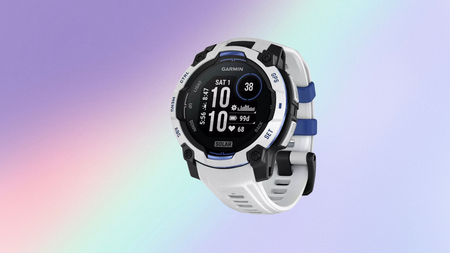
Most GPS watches make you choose between rugged durability and genuinely useful health tracking, which is exactly why the Garmin Instinct 3 Solar stands out.
The solar charging lens is the detail that separates this watch from the rest of the field, because it means battery anxiety simply stops being part of the conversation on longer adventures and multi-day expeditions.
Advertisement
With up to 28 days in typical smartwatch mode and up to 40 days in low-usage mode, you are dealing with a device designed to outlast your plans rather than dictate them from a low-battery warning.
That endurance would mean little without the hardware to back it up, and the Garmin Instinct 3 Solar delivers a metal-reinforced bezel, scratch-resistant lens, and a construction built to survive the kind of conditions that would retire a lesser watch permanently.
The health tracking suite is equally serious, covering wrist-based heart rate, advanced sleep monitoring, Pulse Ox, fall and crash detection, and activity tracking across running, cycling, swimming, and hiking, all feeding back through Garmin’s own operating system.
Advertisement
NFC connectivity means you can also use the watch for contactless payments, which matters on runs or rides where carrying a phone or wallet isn’t an option.
The built-in LED flashlight with variable intensities rounds things out in practical terms, giving you a genuinely useful tool rather than a novelty feature when visibility drops during early-morning or evening sessions.
At 30% off, the Garmin Instinct 3 Solar is a serious offer for anyone who trains hard, travels far, or simply refuses to babysit a charger every other night just to keep their wrist tech alive.
I don’t know how much of my life has been spent hovering over a grill, stove, smoker or oven trying to figure out if the thing I’m cooking for family and friends is actually ready, but I can tell you it’s more than it needed to be. Last year, I picked up one of these Chef iQ wireless probes for a big dinner I was hosting, and now I pull these things out to use them at least once a week. Today, you can get them for way less than I did.
This kit is a pair of Chef iQ probes in a charging case, which, in my experience, will fully charge both probes twice before it needs charging itself. You pop the probes into whatever you’re cooking, and you can either check the temperature in the app on your phone or set an alert when the thing you’re cooking reaches its desired temp. No opening the oven or smoker to let all the heat out, leading to a more efficient and balanced cook. These genuinely improved my cooking, and now I’ve given them to my brothers to improve theirs.
Memorial Day just dropped this set to $100, and I’ve only ever seen it cheaper once before. Get yourself one of these, or give them as a gift, and we can all end the act of hovering over the grill.
Salesforce has closed 29,000 Agentforce deals and reports $800 million in ARR, but its stock is down 30 per cent in 2026 amid the SaaSpocalypse selloff. Showcase demos from Williams-Sonoma, UChicago Medicine, and SharkNinja turned out to be works in progress rather than live deployments.
Salesforce has a problem that no amount of marketing can fix. The company has built its entire narrative around Agentforce, its AI agent platform, and the numbers look impressive on paper: 29,000 deals closed, $800 million in annual recurring revenue, and a roadmap that promises to replace entire categories of human work. But Wall Street is not buying it, and the gap between what Salesforce shows on stage and what customers actually use keeps getting wider.
Advertisement
The stock tells the story. Salesforce shares fell nearly 21 per cent in 2025 and have dropped another 30 per cent so far in 2026. The decline tracks a broader selloff in software-as-a-service companies, an event the market has taken to calling the SaaSpocalypse. Roughly $285 billion in SaaS market capitalisation evaporated in a single 48-hour window in February. The logic is simple: if one AI agent can do the work of ten employees, why would a company pay for ten seats?
Salesforce has tried to get ahead of that question by positioning itself as the company that sells the agents rather than the seats. CEO Marc Benioff has called Agentforce a “digital labour platform.” On earnings calls, the company cites the 29,000 deals and the ARR figure as proof that enterprises are buying in.
The 💜 of EU tech
The latest rumblings from the EU tech scene, a story from our wise ol’ founder Boris, and some questionable AI art. It’s free, every week, in your inbox. Sign up now!
Advertisement
The trouble is that the showcase examples keep falling apart under scrutiny. At Dreamforce, Salesforce demonstrated a Williams-Sonoma AI agent called Olive that was supposed to act as an agentic sous chef, helping customers plan meals and find products. In practice, Olive struggled with specific questions and recommendations. The agent’s more advanced capabilities were described using future tense, “will soon be able to,” rather than as features that were live.
A similar pattern appeared with the University of Chicago Medicine. Salesforce presented the hospital system as a flagship Agentforce for Health deployment. The reality was more modest: UChicago Medicine’s first AI agent launched on web chat to handle basic questions like parking directions and clinic availability. The more ambitious features, including voice-based patient support, were still in development.
SharkNinja, the maker of Shark vacuums and Ninja kitchen appliances, was another headline customer. Salesforce said the company would use Agentforce to streamline customer service. Bloomberg reported a 20 per cent reduction in support calls as part of the pitch. But the deployment described was forward-looking, with agents expected to “guide customers through the buying process” and “manage returns,” not a report on outcomes already achieved.
This matters because Salesforce is not the only company overselling AI capabilities. Apple agreed to pay $250 million in May to settle a class action lawsuit alleging it had exaggerated what Apple Intelligence and a smarter Siri would deliver when it launched the iPhone 16. The settlement covered claims that the company’s marketing went well beyond what the technology could do at launch.
Advertisement
Salesforce’s financial trajectory adds another layer. Revenue growth has slowed from roughly 25 per cent a few years ago to about 10 per cent in fiscal 2026, when the company reported $41.5 billion in total revenue. That is still a large business, and the company delivered a strong fourth quarter with 12 per cent growth. But the deceleration is exactly what investors fear when they hear that AI agents will compress the number of human users who need software licences.
The company has tried to address the pricing question. Agentforce uses a consumption-based model rather than traditional per-seat pricing, charging for what Salesforce calls “agentic work units.” It has consumed nearly 20 trillion tokens and converted them into more than 2.4 billion such units. Whether that model can grow fast enough to offset the structural threat to seat-based revenue is the central bet.
Smaller customers illustrate both the promise and the cost. The city of Kyle, Texas, deployed Agentforce to run its 311 service, handling more than 12,000 resident requests since March 2025 with nearly 90 per cent first-call resolution. Bloomberg reported the city doubled its Salesforce spending to $300,000. For a fast-growing municipality, that may be a reasonable investment. For enterprise customers weighing the same calculus at scale, the economics are less clear.
The competitive pressure is real. SAP unveiled its Autonomous Enterprise with more than 200 AI agents and an Anthropic partnership at Sapphire 2026. ServiceNow, Google, and Microsoft are all building agent platforms. The question is no longer whether AI agents will reshape enterprise software but whether Salesforce can maintain its position as the market reprices around it.
Advertisement
Benioff has responded with characteristic confidence, announcing a new revenue target of $60 billion by fiscal 2030. He has also committed $50 billion in share buybacks, a signal to investors that the company believes its stock is undervalued. Slack’s transformation into an agentic platform, with more than 30 new AI capabilities and mandatory bundling with every new Salesforce account from this summer, is part of that push.
None of this resolves the core tension. Salesforce is asking customers to pay for a future that its own demos have not yet delivered, while asking investors to trust that consumption-based AI revenue will replace the seat-based model that built the company. The 29,000 deals are real. The $800 million in ARR is real. But the agentic AI market rewards outcomes, not announcements, and the gap between the two is where Salesforce’s credibility will be tested.
Americans can’t reliably distinguish real from AI-generated content, and that’s not just a media literacy problem; it’s a direct threat to how businesses verify identity online.
New research finds that while many people are aware of deepfakes, their ability to distinguish them from reality is barely better than a coin flip. A 2026 survey conducted by Veriff and Kantar among 3,000 respondents in the United States, the United Kingdom, and Brazil shows Americans scoring just 0.07 on a scale where 0 represents random guessing.
If people can’t distinguish authentic visual content, they can’t reliably distinguish authentic identities. In practice, that means the same users interacting with digital services are often unable to tell whether the person on the other side of a screen is real.
Advertisement
That ineffectiveness has direct consequences for every digital business that relies on image- and video-based identity verification to confirm who is on the other side of a screen. That includes everything from customer bank onboarding and account recovery to marketplace seller verification, high-value ecommerce transactions, social platform authentication, and enterprise access control.
In the U.S., those consequences are already material — synthetic identity fraud now accounts for billions in annual losses, and the tools to generate convincing fakes are now widely accessible.
The report also identifies a small but high-risk cohort: the roughly 7% of users who perform poorly at detecting deepfakes, yet remain confident in their ability and rarely verify what they see. While this is small as a percentage, at scale it represents millions of accounts that are highly exploitable targets for fraud.
If users can’t reliably distinguish real from synthetic identities, then any system that depends on visual verification is fundamentally exposed. Identity verification can no longer be treated as a compliance function; instead, it has to be built as core digital infrastructure.
Advertisement
“Now that AI-generated content is becoming indistinguishable from reality, the human eye alone is no longer a reliable line of defense,” says Ira Bondar-Mucci, fraud platform lead at Veriff. “Businesses and policymakers in the U.S. need to close this awareness gap urgently, while simultaneously investing in automated verification technologies that can catch what humans simply can’t.”
The U.S. deepfake awareness gap is wider than expected
The United States might be the global epicenter of generative AI development, but American consumers demonstrate the lowest familiarity with deepfakes among the three surveyed markets. Only 63% of U.S. adults are familiar with the term, compared to 74% in the UK and 67% in Brazil.
“There’s a paradox at play,” Bondar-Mucci says. “The U.S. is the global epicenter of AI development, yet American consumers are the least familiar with one of its most dangerous byproducts. Historically, consumers have had higher baseline trust in digital content, with the conversation about fraud centered more on data privacy than on content authenticity. The problem is that low awareness doesn’t reduce risk, it amplifies it. If you don’t know what a deepfake is, you’re far less likely to pause and verify whether you’ve encountered one.”
Human deepfake detection is barely better than a coin flip
In practice, the randomness that characterizes consumer’s ability to distinguish real from fake is evident across the ways people assess different types of content. Video content proved to be especially difficult to assess, with fake videos frequently identified as authentic and real videos often flagged as fake. Even in side-by-side comparisons, respondents split their judgments close to evenly, another indication that visual inspection alone is no longer a reliable method for verifying authenticity.
Advertisement
Overconfidence in deepfake detection creates a dangerous vulnerability
Roughly half of U.S. respondents say they are confident in their ability to identify deepfakes, but that confidence far exceeds actual performance, demonstrating that self-assessment is effectively meaningless.
Within that population, there’s that small but high-risk cohort: the approximately 7% of users who are inaccurate, yet overconfident in their ability and rarely verify suspicious content.
“This confidence-competence gap creates a false sense of security that fraudsters are primed to use,” says Bondar-Mucci. “When people believe they can’t be fooled, they stop looking for the signs. That’s precisely when they’re most vulnerable, whether to a synthetic identity used in financial fraud or a fabricated video designed to manipulate trust.”
For businesses, the implication is clear: any organization that still relies on manual review processes or customer self-attestation is inheriting this vulnerability directly. Human judgment is an increasingly unreliable safeguard, and verification needs to be built into systems by default. This means automated, technology-led, and not dependent on the end user’s self-assessment of their ability to tell real from fake.
Advertisement
Americans are worried about deepfakes but trust platforms to handle them
Concern about deepfakes is high across the U.S., with 79% of respondents reporting they are rather or extremely concerned about personal fraud and impersonation.
The U.S. diverges from other markets in where that concern gets directed. Americans are more likely than UK or Brazilian respondents to trust social media platforms and digital services to identify and manage AI-generated content. That delegation of responsibility may be reducing individual vigilance at exactly the moment the threat is accelerating.
“We’re seeing synthetic identities used to open fraudulent accounts and authorize transactions, and deepfake videos deployed to bypass basic verification checks,” he explains. “What makes this particularly urgent is the combination of great concern with relatively high platform trust. That gap between perceived and actual protection is exactly where fraud thrives.”
The business case for automated identity verification has never been stronger
The gap between what Americans believe they can detect and what they actually can is not a knowledge problem that awareness campaigns will resolve, but a design flaw in any system that places the burden of identity verification on unassisted human judgment.
Advertisement
The effective response is not to remove humans from the verification loop, but to stop assigning them tasks that human perception can no longer perform reliably. Organizations that persist in relying on manual review processes or customer self-attestation are absorbing this vulnerability into their operations.
The alternative is automated, AI-powered identity verification that operates at the point of interaction, detects synthetic media before a human decision is required, and does not depend on the end user’s ability to distinguish real from fake.
“Seeing is no longer believing,” says Bondar-Mucci. “The companies that build verification infrastructure around that reality, rather than around the assumption that it will be otherwise, are the ones best positioned to sustain customer trust as the synthetic media landscape continues to evolve.”
Sponsored articles are content produced by a company that is either paying for the post or has a business relationship with VentureBeat, and they’re always clearly marked. For more information, contact sales@venturebeat.com.
Power grid operators and datacenter developers in the United States are in a bind, and energy analysts can’t see an easy way out.
The American power grid is old, outdated, and in desperate need of upgrades. Add in a growing number of gigawatt-scale AI datacenters demanding stable access to power that doesn’t disrupt service-level uptime agreements and things start to look even worse.
Energy costs have already skyrocketed in the nation’s largest energy market mainly thanks to the bit barn bonanza, leading to a new chorus of calls for datacenters to bring their own power generation if they want reliable supplies not bound by grid constraints.
According to energy analysts at Wood Mackenzie, datacenter operators have a choice to make, and neither option is great.
Advertisement
They can wait the five to 10 years it’ll take for grid operators to upgrade their transmission and generation capabilities to account for their demands.
Or they can accept deals with power companies that supply them with power but require curtailment during peak loads, and then install their own on-site power generation to make up the difference. This is the far riskier option, but it’s one that many operators are going with.
“With more than 90 GW of collocated generation in US interconnection pipelines, it is clear that the need to scale up at speed has sent many data centre developers down the riskier path,” WoodMac explained in the report. “Collocating volatile AI workloads with power generation has scarce precedent, though, and is far more difficult than most in the industry understand.”
What the grid wants, the grid gets
Many datacenter operators are only thinking about generator megawatts, say the analysts, leaving engineers frustrated at having to explain the technical complexities of building colocated power generators. Multiple grid operators have passed rules that, as key stakeholders understand them, could give utilities priority rights over colocated power generators during shortages, potentially forcing datacenters to reduce demand while supplying power back to the grid, WoodMac said.
Advertisement
“This effectively makes the model unworkable,” the analysts said. “Few data centre developers would invest in baseload generation if it could not be utilised when it was most needed.”
Near-instantaneous swings in AI power demand can damage reciprocating engines and gas turbines, while batteries may not respond fast enough to every spike and can degrade over time. The rapidly fluctuating power demanded by hyperscale AI datacenters could even damage the grid itself.
“These loads can also cause sub-synchronous oscillations, which pose fundamental stability risk to not only local generators but also to distant ones on the transmission system,” the analysts note. “Technology providers are only beginning to come to terms with this challenge, the mitigation of which is site specific, making solutions hard to scale.”
In other words, on-site generation might solve one problem while introducing a whole host of new issues.
Advertisement
“While hyperscalers are likely to successfully operationalise some projects with collocated resources, it will come at considerable cost,” the report concludes. “This cost, along with the technical risk and project-specific mitigation required, will prevent collocation from emerging as a scalable model.”
So, what’s the alternative? Well, building out the grid, obviously. WoodMac said that grid operators largely don’t consider conditional interconnection with curtailment requirements to be a long-term solution, and are all investing billions in modernization. But those modernization initiatives are going to hit everyone in the wallet.
Improving grids to serve AI datacenters “has profound implications for affordability … regional network upgrades necessary to support local large-load connections will be spread among all ratepayers,” WoodMac said. “This may trigger a political outcry.”
Rates are already increasing across the US, said Ben Hertz-Shargel, WoodMac’s global head of grid transformation and large loads, and no presidential decree can slow that down.
Advertisement
“As the data center buildout eclipses existing utility capacity and more infrastructure must be built, we’ll see that increasingly become a driver of customer rates,” Hertz-Shargel told us in an email.
The study doesn’t present a solution for the current situation, forecasting uncertainty as grid operators hurry to come up with some solution, as datacenter operators’ plans blow past their ability to meet demand. Hertz-Shargel didn’t have much comfort to offer here, either.
“With utilities and grid operators reforming their load interconnection processes, we’re likely to see more capacity made available through utilities,” Hertz-Shargel said. Not everyone is going to be able to secure that utility capacity, though, and the organizations that are left out will be stuck with the same choice: Wait for the grid to catch up, or rely on colocated generation and conditional grid connection deals, Hertz-Shargel explained.
“When the current wave of transmission capacity completes, though, the industry will be in a position for quick acceleration,” Hertz-Shargel added – as long as the numbers continue to work out. “That presumes that investors like what they see in terms of AI’s return on investment by that time, however, and remain comfortable deploying massive capital into digital infrastructure.”
The only thing that the report sees for certain in the current situation is a quick division into winners and losers in the AI race. Big players who are able to absorb the costs will emerge as victors.
“The challenges facing [energy] collocation are surmountable for the most experienced and deep-pocketed developers,” Wood Mackenzie said. “Companies capable of operating reliably without firm grid service will be able to scale their AI business faster than others, positioning them to outcompete.”
In other words, expect the big guns to further entrench their dominance as the little guys are starved to death or are gobbled up by the competition. There’s nothing like the American dream, eh? ®
A malware-spreading scumbag swimming through GitHub pushed malicious commits to more than 5,500 repositories on Monday as part of an automated campaign called Megalodon.
Similar to the earlier TeamPCP attacks that poisoned about 3,800 GitHub repositories, this new campaign has so far infected 5,561 repos with CI/CD credential-stealing malware, according to SafeDep researchers, who uncovered the predatory commits and published a full list of the compromised repositories.
Advertisement
If a repository owner merges the commit, the malware executes inside their CI/CD pipeline and propagates further, Ox Security lead researcher Moshe Siman Tov Bustan said in a Thursday blog post.
Megalodon steals AWS secret keys and Google Cloud access tokens. It also queries AWS, Google Cloud Platform, and Azure metadata for instance role credentials, reads SSH private keys, Docker and Kubernetes configurations, Vault tokens, Terraform credentials, and scans source code for more than 30 secret regex patterns. Then it exfiltrates GitHub tokens, including secrets used to authenticate with cloud providers, thus allowing attackers to impersonate developers’ cloud identities, along with Bitbucket tokens.
In other words: consider ALL of your CI/CD variables pwned.
“We’ve entered a new supply chain attack era, and TeamPCP compromising GitHub was only the beginning,” Bustan told The Register. “What’s coming next is an endless wave, a tsunami of cyber attacks on developers worldwide.”
Advertisement
Plus, he added, hacking GitHub “compromises the security of every company with a private repository hosted on the platform.”
Malicious code is still reaching their servers, and nothing is stopping it before it does
This new wave of supply chain attacks hitting developers’ environments won’t stop until “companies like npm and GitHub take serious action against the spread of malicious code on their servers,” Bustan said.
He noted npm’s statement on X saying it “invalidated npm granular access tokens with write access that bypass 2FA” to prevent additional supply-chain attacks like Mini Shai Hulud.
Advertisement
“That could help a little with account hijacking, but it doesn’t solve the actual problem,” Bustan said. “Malicious code is still reaching their servers, and nothing is stopping it before it does.”
npm … but not TeamPCP
SafeDep spotted Megalodon hidden inside a legitimate package: Tiledesk, an open source live chat and chatbot platform. The attacker backdoored versions 2.18.6 (May 19) through 2.18.12 (May 21), and the same npm maintainer published the last clean version, 2.18.5, before unknowingly publishing these newer compromised versions.
“The attacker never touched the npm account,” the open source supply-chain security startup researchers said. “They compromised the GitHub repository, and the maintainer published from the poisoned source without realizing it.”
While publishing malicious packages on npm is a TeamPCP signature move, Bustan said there’s no threat-intel or code-analysis evidence that connects Megalodon to the crew behind the Trivy, Checkmarx, and other recent supply-chain attacks. “Our best guess now is that it’s a different threat actor copying their behavior and style, but not much of the code itself,” he told us.
Advertisement
And despite TeamPCP open sourcing its Shai-Hulud worm and announcing a supply-chain attack competition on BreachForums, Ox doesn’t believe Megalodon is a contest entry.
“We have indications that they are not participating in the TeamPCP contest due to the contest having a specific rule to add a public encryption key that the actor behind the malware could match with his private key to prove his involvement,” Bustan said.
Who is built-bot?
SafeDep’s threat hunters traced the malicious commit (acac5a9) to an author “build-bot,” connected to the email address build-system[@]noreply.dev with the message “ci: add build optimization step.”
The author name and noreply email mimic automated CI commits, and there’s no GitHub account linked to the author and committer user fields. “Someone pushed the commit to master with no PR and no merge commit, using a compromised PAT or deploy key,” according to the researchers.
Advertisement
They searched GitHub for other commits authored by the same email address and found 2,878 results, plus a second email, ci-bot@automated.dev, with an additional 2,841 commits. All landed May 18 during a six-hour window (11:36 to 17:48 UTC) and targeted 5,561 repositories.
This includes nine compromised Tiledesk repositories: tiledesk-server, tiledesk-dashboard, tiledesk-telegram-connector, tiledesk-llm, tiledesk-docker-proxy, tiledesk-community-app, tiledesk-campaign-dashboard, tiledesk-helpcenter-template, and tiledesk-ai. Others include Black-Iron-Project with eight compromised repos, WISE-Community, and hundreds of smaller repositories. ®
For professionals in the medtech space, there are a number of industry events that offer networking opportunities and the chance to learn something new.
Regardless of your role within STEM, networking and industry events are an ideal way to meet like-minded people, share ideas, keep up to date with advancements and even meet potential future employers or co-workers.
It isn’t always clear which events you should attend to ensure you get a well-rounded experience. So why not have a look at what is currently on offer for the year? Here are five upcoming medtech events that could be worth engaging with.
Future Health Summit
Next week, from 27-28 May at the Dublin Royal Convention Centre, medtech enthusiasts and professionals can check out the Future Health Summit. The event will bring together some of the most creative minds in the healthcare sector, as well as an audience of more than 600 senior‑level delegates and c‑suite leaders from across the industry. The event will welcome speakers from Ireland, the UK and wider Europe, as well as the US and Asia.
Advertisement
The summit will also host 50 healthcare and associated industry exhibitors, creating a valuable opportunity for networking, partnership building and commercial engagement. A key highlight of the programme is the Innovation Award, where an international field of entrants will be narrowed to eight finalists, each pitching their ideas to the audience and judged by an expert panel.
AI Forward – Future Health
Initially scheduled to go ahead on 30 June, the date for the AI Forward – Future Health event has yet to be confirmed, as it is currently expanding its line of speakers. Held at the Dell Technologies Customer Solution Centre in Limerick, the event aims to explore how AI is transforming healthcare, from reactive care to intelligent, connected health systems.
Via real-world use cases, technology deep dives and practical insights, the event will seek to identify and examine how AI is already improving clinical outcomes, accelerating life sciences innovation, strengthening resilience and enabling safer, more efficient healthcare delivery. Make sure to keep an eye open for the new date so you can get registered.
Next-Gen MedTech Exchange Ireland 2026
On 22 September, the Clayton Hotel in Galway will host the Next-Gen MedTech Exchange Ireland 2026. The goal of the event is to present disruptive and enabling technologies to those who are creating within medtech. The event will focus on innovation and global collaboration, connecting today’s technologies with the disruptive ideas shaping the future, strengthening international industry connections and supporting the next generation of medtech talent.
Advertisement
Attendance comes with a fee, which goes towards supporting the SOLS programme that delivers free, hands-on medtech and life sciences workshops to schools across Ireland.
Medical Technology Ireland Expo and Conference 2026
From 23-24 September, the Galway Racecourse will host the Medical Technology Ireland Expo and Conference 2026. Free to enter, the event is “Europe’s second largest and fastest growing medical device design and manufacturing show”, so is well worth a visit for those in the medtech industry or anyone with an interest in this area.
The two-day conference will include 350 exhibits across four floors – including a ‘women in medtech’ forum – with more than 2,000 attendees expected overall.
MPP Ireland 2026
Also in September (a busy month for medtech professionals), Galway’s Galmont Hotel is hosting MPP Ireland 2026, a medtech conference “built for deeper insight, meaningful connections and the ideas shaping what’s next in medical device development and manufacturing”. Throughout the day, attendees can listen to key speakers, attend panels, network and learn about advancements in the evolving medtech sector. The afternoon concludes with a post-event reception.
Advertisement
Medtech is a vibrant, rapidly transforming industry that offers plenty of opportunities for professionals to explore, learn and evolve. Industry events such as the ones listed are one such opportunity and should be embraced where possible. So, why not give it a go and see what comes of it?
Don’t miss out on the knowledge you need to succeed. Sign up for the Daily Brief, Silicon Republic’s digest of need-to-know sci-tech news.
What’s happening now is even more disturbing. We’re killing people simply because they happen to be in boats spotted exiting certain shores and headed towards international waters.
The War on Drugs has always been evil. It has always relied on the ends justifying the malicious means, especially when the means usually meant the killing or incarceration of non-white people.
Under Trump, it’s gotten even worse. Trump has pretended the mere existence of a drug trade — something that involves the exchange of money for goods by consenting adults — justifies the wholesale slaughter of people in boats in international waters.
Advertisement
The Defense Department and Trump himself have posted clips of boat strikes on social media, almost always accompanied by self-serving statements about protecting Americans from foreign-based drug cartels.
But the government has offered very little in support of its social media postings and public statements. Almost no documentation exists to buttress assertions about the at-sea execution of alleged drug traffickers. Almost nothing connects these random murders to cartel activity.
The government has shown absolutely no interest in identifying the victims of its extrajudicial murder program. And why would it? Identifying drone strike victims might undercut the government’s unproven assertions. Worse, it might expose it for what it is: small-scale genocide meant to kill non-white people whose ultimate destination might be the United States.
It’s up to everyone else to do what this government and its historically large deficit won’t do: address the human cost of its antagonism towards any nation located south of the US border. Those doing this heavy lifting don’t have the benefit of billions of dollars of funding or internal pressure to discover the truth. They’re doing it because our government won’t.
Advertisement
Twenty journalists involved with the Latin American Center for Investigative Journalism (CLIP) have managed to identify 13 victims of Trump administration drone strikes. And even though it’s only a small percentage of the nearly 200 people our nation has murdered in open waters since Trump took office, it still matters.
This administration may prefer these people to remain faceless and nameless, since it makes their killing that much easier to shrug off. But anyone with an operating conscience shouldn’t pretend this effort is too small to matter. It does, and these are the names of a small portion of the people this administration has presumably straight-up murdered — an assumption that should stand until the administration is willing to produce evidence that says otherwise.
Of the 16 victims now identified, eight are Venezuelans: Juan Carlos Fuentes, 43; Luis Ramón Amundarain, 36; Eduard Hidalgo, 46; Dushak Milovcic, 24; and Robert Sánchez, Jesús Carreño, Eduardo Jaime and Luis Alí Martínez, whose ages are unknown. Three are Colombians: Alejandro Andrés Carranza Medina, 42, and Ronald Arregocés and Adrián Lubo (ages unknown). Two are from Ecuador: Pedro Ramón Holguín Holguín, 40, and Carlos Manuel Rodríguez Solórzano, 34; two are Trinidadians: Chad Joseph, 26, and Rishi Samaroo (age unknown); and one is from Saint Lucia: Ricky Joseph (age unknown).
Some of the people murdered by Trump’s Defense Department were simply going from one country to another to secure employment. Some of them may have been transporting drugs, but they were mules, rather than key members of international drug cartels. What’s actually known about the nearly 200 people the administration has killed is minimal. And the one entity that could provide more insight on its drone strike targets isn’t interested in sharing this information with anyone.
In the eight months since the airstrikes began, the US has not provided any evidence that any of the 194 victims were involved in drug trafficking.
Read that again: the US government has not provided evidence about any of its 194 murder victims. Instead, it has produced a steady stream of baseless invective meant to persuade the stupidest of Americans that these killings were justified.
Advertisement
What is being said by government officials doesn’t erase its refusal to provide evidence backing its claim, much less justify killings it’s unwilling to honestly discuss with the US public or its congressional oversight.
A spokesperson for US Southern Command said that all the strikes were “deliberate, lawful and precise, directed specifically at narco-terrorists and their enablers. We have full confidence in the operations and intelligence professionals who inform our missions.”
This is not evidence of anything. This statement is conclusory, which is the exact opposite of evidence, as any court will tell you. It simply says the government is in the right because the government says it’s in the right. That’s not justification. That’s someone representing entities swallowing up billions of federal officers telling the people paying its outsized paycheck “because I said so” and expecting that to be the end of the discussion.
The American public is not the government’s child. It’s actually the other way around. The government is reliant on the public, which makes the general public the adult in this conversation. That far too many MAGA enablers refuse to be the adults in the room makes it that much easier for the government to pretend it owes the public nothing. But that doesn’t change how this actually works. The government works for us, rather than the other way around. And when it doesn’t, it’s up to the public to remind it of its place.
In this case, it took people in other countries to generate the modicum of accountability this nation — under Trump — appears unwilling to do itself. That’s just fucking sad.
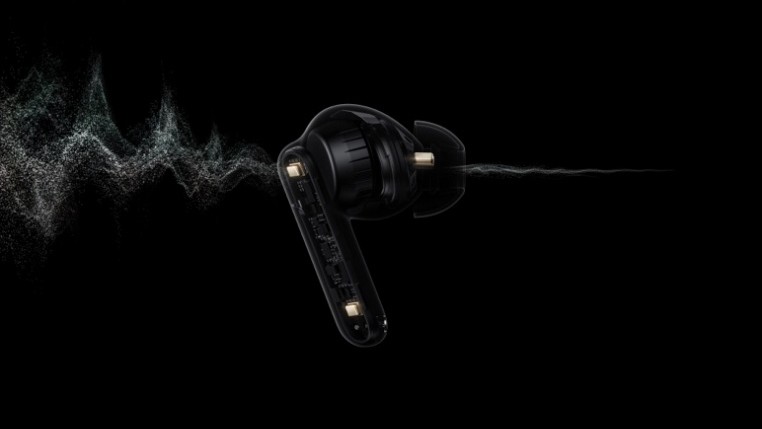
Oppo has officially launched the Enco Air 5 Pro TWS earbuds in India, featuring premium audio, robust active noise cancellation, and long battery life. The new earbuds are designed for users who listen to music, attend calls, travel frequently, or stream content daily. Oppo is offering the earbuds in Matte Black and Pearl White.
Oppo Enco Air 5 Pro Specifications and Features
The Enco Air 5 Pro earbuds feature up to 55dB of Active Noise Cancellation for a quieter, more focused listening experience. Oppo claims the earbuds can reduce noise across a broad 5,000Hz frequency range, helping block voices and background sounds more effectively. Adaptive ANC automatically adjusts noise cancellation based on the user’s environment. The earbuds have also received TUV Rheinland certification for high-performance noise cancellation.
Oppo has added a triple-mic system to the earbuds for better call quality. The AI-backed noise cancellation feature focuses on the user’s voice while lowering unwanted environmental sounds. The earbuds are claimed to deliver clearer calls even in windy conditions or busy outdoor areas.
For audio performance, Oppo uses the Enco Air 5 Pro with 12mm titanium-coated drivers to deliver deeper bass, balanced vocals, and detailed sound. Hi-Res Audio certification, as well as the LHDC 5.0, ensure high-quality audio signal transmission. Oppo also features Alive Audio, which provides a broader, richer sound experience for music, streaming, and gaming.
The Enco Air 5 Pro offers up to 54 hours of combined battery life along with the charging case. The earbuds alone can run for up to 13 hours on a single charge with selected settings. Fast charging support is also available, and a 10-minute charge can deliver enough power for long listening sessions. Oppo notes that battery life may vary depending on whether ANC or high-resolution LHDC audio is enabled.
Advertisement
Price and Availability
Oppo has launched the Enco Air 5 Pro in India at a price of Rs 4,999. The earbuds are currently available for pre-order on Oppo India’s official website, with official sales beginning on May 28, 2026.
Purported Apple clear cases for (L-R_ iPhone 18, iPhone 18 Pro, iPhone 18 Pro Max – image credit: MyDrivers
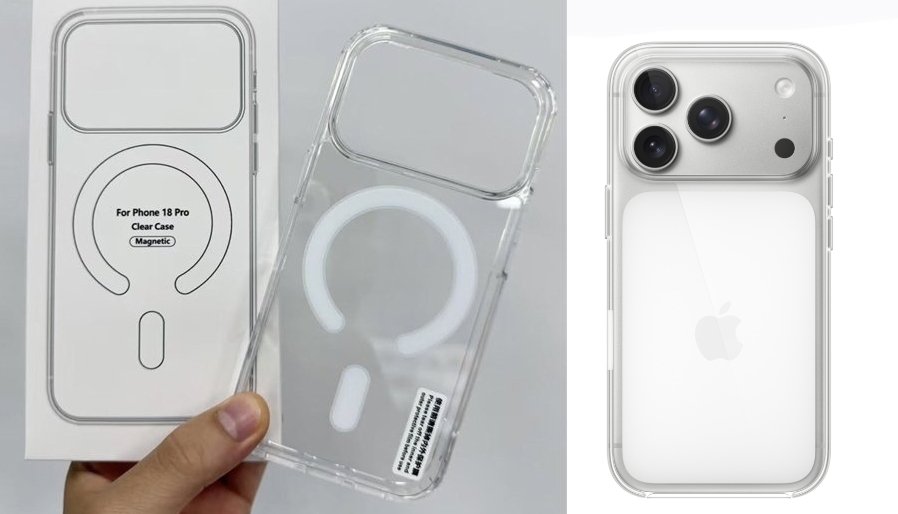
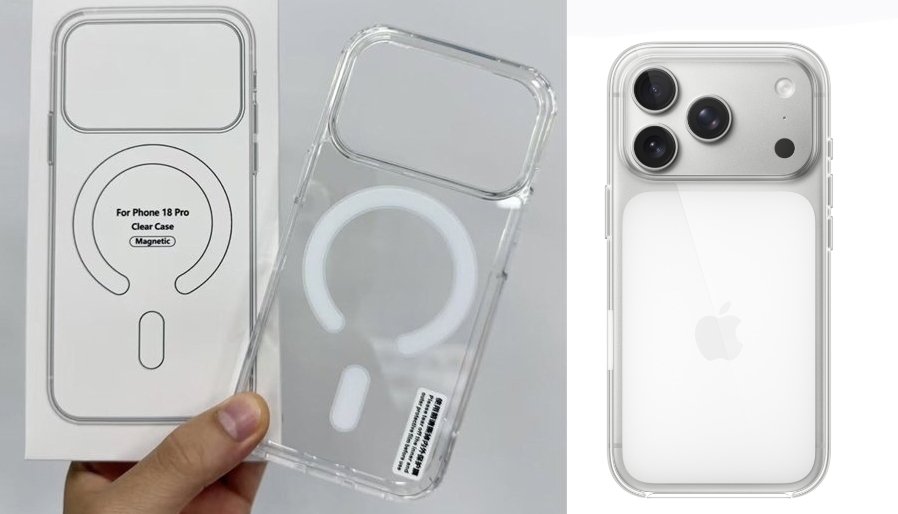
Purported images of Apple’s clear cases for the iPhone 18 range are causing unfathomable excitement for how different the MagSafe markings are.
There’s a strong chance you never noticed this, and perhaps quite a strong one that you’d now have to look at these images to spot the difference. Yet if you cared about this, you apparently cared a great deal and the latest clear-case leaks may be making you happy.
While there’s no confirmation of this at the time of writing, it’s claimed that images of the new cases have been circulating on Chinese social media. But wherever they are being shown or circulated, there are images that claim to be of the new Apple clear cases.
Advertisement
Previously on Apple’s clear iPhone cases… the company had a circle image on the back to show you where to position the phone for MagSafe charging. For the iPhone 17 range’s clear cases, Apple scrapped that in favor of nothing very much.
Instead of a circle or a sometimes broken circle, the clear cases had a large white region. It was mostly rectangular, though since this is Apple, the corners were neatly rounded.
Left: a new purported iPhone 18 range clear case. Right: Apple’s current model. Image credits: MyDevices (r) and Apple (l)
It made no difference to how MagSafe works, and there was no special reason it had to happen just because the MagSafe magnets were lowered.
Advertisement
Only, it did mean that if you had this clear case, it wasn’t really all that clear at all. Whatever color iPhone you had bought, it was chiefly covered by that white region.
This is why new reports showing the iPhone 18, iPhone 18 Pro, and iPhone 18 Pro Max clear cases have gotten some attention. The large white panel is seemingly gone, and the old circle or broken circle is back.
Reports of the new images were first spotted by MacRumors via Chinese news siteMyDrivers.
There is the argument that a clear case ought to actually be clear, and it’s true the one for the iPhone 17 range was not.
Advertisement
But perhaps Apple was saving users from revealing they’d bought the horrible orange, or perhaps pink, color iPhone.


























































You must be logged in to post a comment Login