
Tech
Trump Administration Moves to Allow Intelligence Agencies Easier Access to Law Enforcement Files


from the seems-bad dept
This story was originally published by ProPublica. Republished under a CC BY-NC-ND 3.0 license.
The Trump administration is loosening restrictions on the sharing of law enforcement information with the CIA and other intelligence agencies, officials said, overriding controls that have been in place for decades to protect the privacy of U.S. citizens.
Government officials said the changes could give the intelligence agencies access to a database containing hundreds of millions of documents — from FBI case files and banking records to criminal investigations of labor unions — that touch on the activities of law-abiding Americans.
Administration officials said they are providing the intelligence agencies with more information from investigations by the FBI, Drug Enforcement Administration and other agencies to combat drug gangs and other transnational criminal groups that the administration has classified as terrorists.
But they have taken these steps with almost no public acknowledgement or notification to Congress. Inside the government, officials said, the process has been marked by a similar lack of transparency, with scant high-level discussion and little debate among government lawyers.
“None of this has been thought through very carefully — which is shocking,” one intelligence official said of the moves to expand information sharing. “There are a lot of privacy concerns out there, and nobody really wants to deal with them.”
A spokesperson for the Office of the Director of National Intelligence, Olivia Coleman, declined to answer specific questions about the expanded information sharing or the legal basis for it.
Instead, she cited some recent public statements by senior administration officials, including one in which the national intelligence director, Tulsi Gabbard, emphasized the importance of “making sure that we have seamless two-way push communications with our law enforcement partners to facilitate that bi-directional sharing of information.”
In the aftermath of the Watergate scandal, revelations that Presidents Lyndon Johnson and Richard Nixon had used the CIA to spy on American anti-war and civil rights activists outraged Americans who feared the specter of a secret police. The congressional reforms that followed reinforced the long-standing ban on intelligence agencies gathering information about the domestic activities of U.S. citizens.
Compared with the FBI and other federal law enforcement organizations, the intelligence agencies operate with far greater secrecy and less scrutiny from Congress and the courts. They are generally allowed to collect information on Americans only as part of foreign intelligence investigations. Exemptions must be approved by the U.S. attorney general and the director of national intelligence. The National Security Agency, for example, can intercept communications between people inside the United States and terror suspects abroad without the probable cause or judicial warrants that are generally required of law enforcement agencies.
Since the terror attacks of Sept. 11, 2001, the expansion of that surveillance authority in the fight against Islamist terrorism has been the subject of often intense debates among the three branches of government.
Word of the Trump administration’s efforts to expand the sharing of law enforcement information with the intelligence agencies was met with alarm by advocates for civil liberties protections.
“The Intelligence Community operates with broad authorities, constant secrecy and little-to-no judicial oversight because it is meant to focus on foreign threats,” Sen. Ron Wyden of Oregon, a senior Democrat on the Senate Select Committee on Intelligence, said in a statement to ProPublica.
Giving the intelligence agencies wider access to information on the activities of U.S. citizens not suspected of any crime “puts Americans’ freedoms at risk,” the senator added. “The potential for abuse of that information is staggering.”
Most of the current and former officials interviewed for this story would speak only on condition of anonymity because of the secrecy of the matter and because they feared retaliation for criticizing the administration’s approach.
Virtually all those officials said they supported the goal of sharing law enforcement information more effectively, so long as sensitive investigations and citizens’ privacy were protected. But after years in which Republican and Democratic administrations weighed those considerations deliberately — and made little headway with proposed reforms — officials said the Trump administration has pushed ahead with little regard for those concerns.
“There will always be those who simply want to turn on a spigot and comingle all available information, but you can’t just flip a switch — at least not if you want the government to uphold the rule of law,” said Russell Travers, a former acting director of the National Counterterrorism Center who served in senior intelligence roles under both Republican and Democratic administrations.
The 9/11 attacks — which exposed the CIA’s failure to share intelligence with the FBI even as Al Qaida moved its operatives into the United States — led to a series of reforms intended to transform how the government managed terrorism information.
A centerpiece of that effort was the establishment of the NCTC, as the counterterrorism center is known, to collect and analyze intelligence on foreign terrorist groups. The statutes that established the NCTC explicitly prohibit it from collecting information on domestic terror threats.
National security officials have spent much less time trying to remedy what they have acknowledged are serious deficiencies in the government’s management of intelligence on organized crime groups.
In 2011, President Barack Obama noted those problems in issuing a new national strategy to “build, balance and integrate the tools of American power to combat transnational organized crime.” Although the Obama plan stressed the need for improved information-sharing, it led to only minimal changes.
President Donald Trump has seized on the issue with greater urgency. He has also declared his intention to improve information-sharing across the government, signing an executive order to eliminate “information silos” of unclassified information.
More consequentially, he went on to brand more than a dozen Latin American drug mafias and criminal gangs as terrorist organizations.
The administration has used those designations to justify more extreme measures against the criminal groups. Since last year, it has killed at least 148 suspected drug smugglers with missile strikes in the Caribbean and the eastern Pacific, steps that many legal experts have denounced as violations of international law.
Some administration officials have argued that the terror designations entitle intelligence agencies to access all law enforcement case files related to the Sinaloa Cartel, the Jalisco New Generation Cartel and other gangs designated by the State Department as foreign terrorist organizations.
The first criterion for those designations is that a group must “be a foreign organization.” Yet unlike Islamist terror groups such as al-Qaida or al-Shabab, Latin drug mafias and criminal gangs like MS-13 have a large and complex presence inside the United States. Their members are much more likely to be U.S. citizens and to live and operate here.
On Sept. 22, the Trump administration also designated the loosely organized antifascist political movement antifa as a terrorist group, despite the lack of any federal law authorizing it to do so. Weeks later, the administration named four European militant groups said to be aligned with antifa to the government’s list of foreign terrorist organizations.
Those steps were seen by some intelligence experts as potentially opening the door for the CIA and other agencies to monitor Americans who support antifa in violation of their free speech rights. The approach also echoed justifications that both Johnson and Nixon used for domestic spying by the CIA: that such investigations were needed to determine whether government critics were being supported by foreign governments.
The wider sharing of law enforcement case files is also being driven by the administration’s abrupt decision to disband the Justice Department office that for decades coordinated the work of different agencies on major drug trafficking and organized crime cases. That office, the Organized Crime Drug Enforcement Task Force, was abruptly shut down on Sept. 30 as the Trump administration was setting up a new network of Homeland Security Task Forces designed by the White House homeland security adviser, Stephen Miller.
The new task forces, which were first described in detail by ProPublica last year, are designed to refocus federal law enforcement agencies on what Miller and other officials have portrayed as an alarming nexus of immigration and transnational crime. The reorganization also gives the White House and the Department of Homeland Security new authority to oversee transnational crime investigations, subordinating the DEA and federal prosecutors, who were central to the previous system.
That reorganization has set off a struggle over the control of OCDETF’s crown jewel, a database of some 770 million records that is the only central, searchable repository of drug trafficking and organized crime case files in the federal government.
Until now, the records of that database, which is called Compass, have only been accessible to investigators under elaborate rules agreed to by the more than 20 agencies that shared their information. The system was widely viewed as cumbersome, but officials said it also encouraged cooperation among the agencies while protecting sensitive case files and U.S. citizens’ privacy.
Although the Homeland Security Task Forces took possession of the Compass system when their leadership moved into OCDETF’s headquarters in suburban Virginia, the administration is still deciding how it will operate that database, officials said.
However, officials said, intelligence agencies and the Defense Department have already taken a series of technical steps to connect their networks to Compass so they can access its information if they are permitted to do so.
The White House press office did not respond to questions about how the government will manage the Compass database and whether it will remain under the control of the Homeland Security Task Forces.
The National Counterterrorism Center, under its new director, Joe Kent, has been notably forceful in seeking to manage the Compass system, several officials said. Kent, a former Army Special Forces and CIA paramilitary officer who twice ran unsuccessfully for Congress in Washington state, was previously a top aide to the national intelligence director, Tulsi Gabbard.
The FBI, DEA and other law enforcement agencies have strongly opposed the NCTC effort, the officials said. In internal discussions, they added, the law enforcement agencies have argued that it makes no sense for an intelligence agency to manage sensitive information that comes almost entirely from law enforcement.
“The NCTC has taken a very aggressive stance,” one official said. “They think the agencies should be sharing everything with them, and it should be up to them to decide what is relevant and what U.S. citizen information they shouldn’t keep.”
The FBI declined to comment in response to questions from ProPublica. A DEA spokesperson also would not discuss the agency’s actions or views on the wider sharing of its information with the intelligence community. But in a statement the spokesman added, “DEA is committed to working with our IC and law enforcement partners to ensure reliable information-sharing and strong coordination to most effectively target the designated cartels.”
Even with the Trump administration’s expanded definition of what might constitute terrorist activity, the information on terror groups accounts for only a small fraction of the records in the Compass system, current and former officials said.
The records include State Department visa records, some files of U.S. Postal Service inspectors, years of suspicious transaction reports from the Treasury Department and call records from the Bureau of Prisons.
Investigative files of the FBI, DEA and other law enforcement agencies often include information about witnesses, associates of suspects and others who have never committed any crimes, officials said.
“You have witness information, target information, bank account information,” the former OCDETF director, Thomas Padden, said in an interview. “I can’t think of a dataset that would not be a concern if it were shared without some controls. You need checks and balances, and it’s not clear to me that those are in place.”
Officials familiar with the interagency discussions said NCTC and other intelligence officials have insisted they are interested only in terror-related information and that they have electronic systems that can appropriately filter out information on U.S. persons.
But FBI and other law enforcement agencies have challenged those arguments, officials said, contending that the NCTC proposal would almost inevitably breach privacy laws and imperil sensitive case information without necessarily strengthening the fight against transnational criminals.
Already, NCTC officials have been pressing the FBI and DEA to share all the information they have on the criminal groups that have been designated as terrorist organizations, officials said.
The DEA, which had previously earned a reputation for jealously guarding its case files, authorized the transfer of at least some of those files, officials said, adding to pressure on the FBI to do the same.
Administration lawyers have argued that such information sharing is authorized by the Intelligence Reform and Terrorism Prevention Act of 2004, the law that reorganized intelligence activities after 9/11. Officials have also cited the 2001 Patriot Act, which gives law enforcement agencies power to obtain financial, communications and other information on a subject they certify as having ties to terrorism.
The central role of the NCTC in collecting and analyzing terrorism information specifically excludes “intelligence pertaining exclusively to domestic terrorists and domestic counterterrorism.” But that has not stopped Kent or his boss, intelligence director Gabbard, from stepping over red lines that their predecessors carefully avoided.
In October, Kent drew sharp criticism from the FBI after he examined files from the bureau’s ongoing investigation of the assassination of Charlie Kirk, the right-wing activist. That episode was first reported by The New York Times.
Last month, Gabbard appeared to lead a raid at which the FBI seized truckloads of 2020 presidential voting records from an election center in Fulton County, Georgia. Officials later said she was sent by Trump but did not oversee the operation.
In years past, officials said, the possibility of crossing long-settled legal boundaries on citizens’ privacy would have precipitated a flurry of high-level meetings, legal opinions and policy memos. But almost none of that internal discussion has taken place, they said.
“We had lengthy interagency meetings that involved lawyers, civil liberties, privacy and operational security types to ensure that we were being good stewards of information and not trampling all over U.S. persons’ privacy rights,” said Travers, the former NCTC director.
When administration officials abruptly moved to close down OCDETF and supplant it with the Homeland Security Task Forces network, they seemed to have little grasp of the complexities of such a transition, several people involved in the process said.
The agencies that contributed records to OCDETF were ordered to sign over their information to the task forces, but they did so without knowing if the system’s new custodians would observe the conditions under which the files were shared.
Nor were they encouraged to ask, officials said.
While both the FBI and DEA have objected to a change in the protocols, officials said smaller agencies that contributed some of their records to the OCDETF system have been “reluctant to push back too hard,” as one of them put it.
The NCTC, which faced budget cuts during the Biden administration, has been among those most eager to service the new Homeland Security Task Forces. To that end, it set up a new fusion center to promote “two-way intelligence sharing of actionable information between the intelligence community and law enforcement,” as Gabbard described it.
The expanded sharing of law enforcement and intelligence information on trafficking groups is also a key goal of the Pentagon’s new Tucson, Arizona-based Joint Interagency Task Force-Counter Cartel. In announcing the task force’s creation last month, the U.S. Northern Command said it would work with the Homeland Security Task Forces “to ensure we are sharing all intelligence between our Department of War, law enforcement and Intelligence Community partners.”
In the last months of the Biden administration, a somewhat similar proposal was put forward by the then-DEA administrator, Anne Milgram. That plan involved setting up a pair of centers where DEA, CIA and other agencies would pool information on major Mexican drug trafficking groups.
At the time, one particularly strong objection came from the Defense Department’s counternarcotics and stabilization office, officials said. The sharing of such law enforcement information with the intelligence community, an official there noted, could violate laws prohibiting the CIA from gathering intelligence on Americans inside the United States.
The Pentagon, he warned, would want no part of such a plan.
Filed Under: 4th amendment, cia, criminal records, domestic surveillance, fbi, intelligence community, law enforcement, odni, ron wyden, tulsi gabbard


Apple has run into “more issues than expected” with its foldable iPhone that may set back its release, according to Nikkei. The engineering problems reportedly cropped up during the device’s early test production phase and may delay first shipments by months, according to multiple sources briefed on the matter.
“The current situation could put the mass production timeline at risk,” one of the sources said. “April will mark a crucial stage of the engineering verification test, and this month till early may is extremely critical.” Component suppliers have supposedly been notified that the foldable iPhone’s production schedule will be delayed, and Apple is working to address the problems.
A foldable iPhone has been rumored since 2017, and Apple’s biggest rival, Samsung, released its first one back in 2019. According to multiple sources, Apple was aiming to launch its debut foldable iPhone in fall 2026 alongside the iPhone 18. However, as we detailed in an explainer last month, “the project could slip into 2027 if Apple runs into manufacturing or durability issues, particularly around the hinge or display.”
Apple was reportedly prioritizing the foldable iPhone and other premium models for its September event this year due to constrained supplies of components like memory chips. However, the foldable’s engineering issues could throw a wrench into those plans. “Apple and the supply chain are working under a pressured timeline and the current solutions are not enough to completely solve the engineering challenge… more time is needed,” Nikkei’s source stated.
The problems reportedly arose during Apple’s production verification tests. That’s the fourth of six steps the company’s new products must go through before shipping, prior to the key pilot production and mass production phases. Since the foldable would be an all-new design, it would have to pass each stage with flying colors before proceeding to the next.
Though likely to account for less than 10 percent of iPhone production, the foldable will be a key product for Apple designed to boost interest in iPhones across its range. Apple reportedly plans to produce seven to eight million of the devices initially, Nikkei reported. Apple has not yet officially announced the device and declined to commented on the reported engineering issues.

Longtime Slashdot reader walterbyrd shares a report from Fuel Cells Works: China says the AEP100, a megawatt-class hydrogen-fueled turboprop engine developed by the Aero Engine Corporation of China, has completed its maiden flight on a 7.5-ton unmanned cargo aircraft in Zhuzhou, Hunan. The 16-minute test covered 36km at 220km/h and 300 meters altitude, with the aircraft returning safely after completing its planned maneuvers. State media described it as the world’s first test flight of a megawatt-class hydrogen-fueled turboprop engine. […] The Aero Engine Corporation of China (AECC) says the result shows China now has a full technical chain for hydrogen aviation engines, from core parts to system integration, which is the kind of capability needed before any industrial rollout can begin. You can watch a video of the test flight here.


Photo credit: Volodymyr Lenard via Yanko Design
According to the most recent leaks, the iPhone 18 Pro will give users a more noticeable increase in their day-to-day use than the jump from the 16 to the 17, particularly for those who prioritize a silky smooth experience. This week, we’ve learned more about key upgrades including processor speed, screen layout, and battery life, but the overall appearance and feel will remain consistent with previous Pro versions.
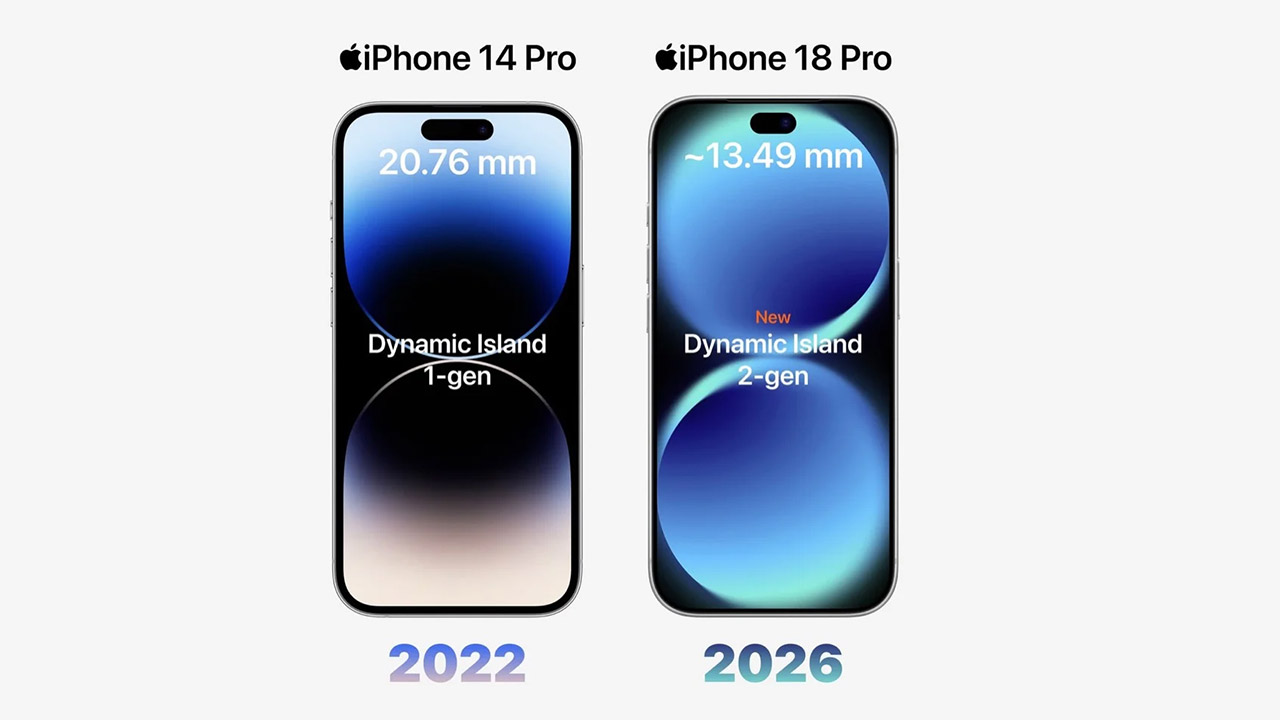
The design improvements are mostly focused on cleaning up the front and delivering a new look at the back. The notch at the top of the screen has dropped by nearly 35% in width, from 20.7 millimeters to 13.5 millimeters. The Face ID infrared flood illuminator has been placed beneath the display, leaving only the camera lens and sensor visible on top in a somewhat slimmer pill shape. For the first time in a Pro mode, the back will feature a striking deep red finish that is more reminiscent of a rich burgundy than some of the brighter reds we’ve seen before. Don’t anticipate the black finish to resurface anytime soon, while the purple and brown tones that some people have been gushing about appear to be variations of the same red theme. The Pro Max version is somewhat larger (8.8 millimeters), allowing for a few extra battery cells, but the titanium frame and Ceramic Shield keep it feeling light and robust as ever.

Belkin MagSafe Charger Compatible, 3-in-1 Charging Station, Qi2.2 25W w/Cooling Fan (On/Off Control…
- FAST CHARGE W/ THE LATEST Qi2 TECHNOLOGY: Conveniently fast charge your iPhone or Qi2 devices up to 25W on the magnetic charger. Fast charging is…
- ULTRA-FAST CHARGING FOR ALL YOUR DEVICES: With wireless charging now as fast as wired, you can charge iPhone from 0-50% in 25 minutes** and Apple…
- SIMULTANEOUS CHARGING, EASY ALIGNMENT: Wirelessly charge your iPhone, Apple Watch, and AirPods at the same time to quickly and conveniently prepare…
That narrower notch will work well with the display, which will remain at 6.3 inches on the standard Pro and 6.9 inches on the Pro Max, complete with LTPO+ technology providing even more precision to the refresh rate, ensuring that power is only used when needed. This implies that even the simplest operations will feel silky smooth, and scrolling, which is already fluid, will become even more so. It’s a little more immersive because the top bar is less noticeable.
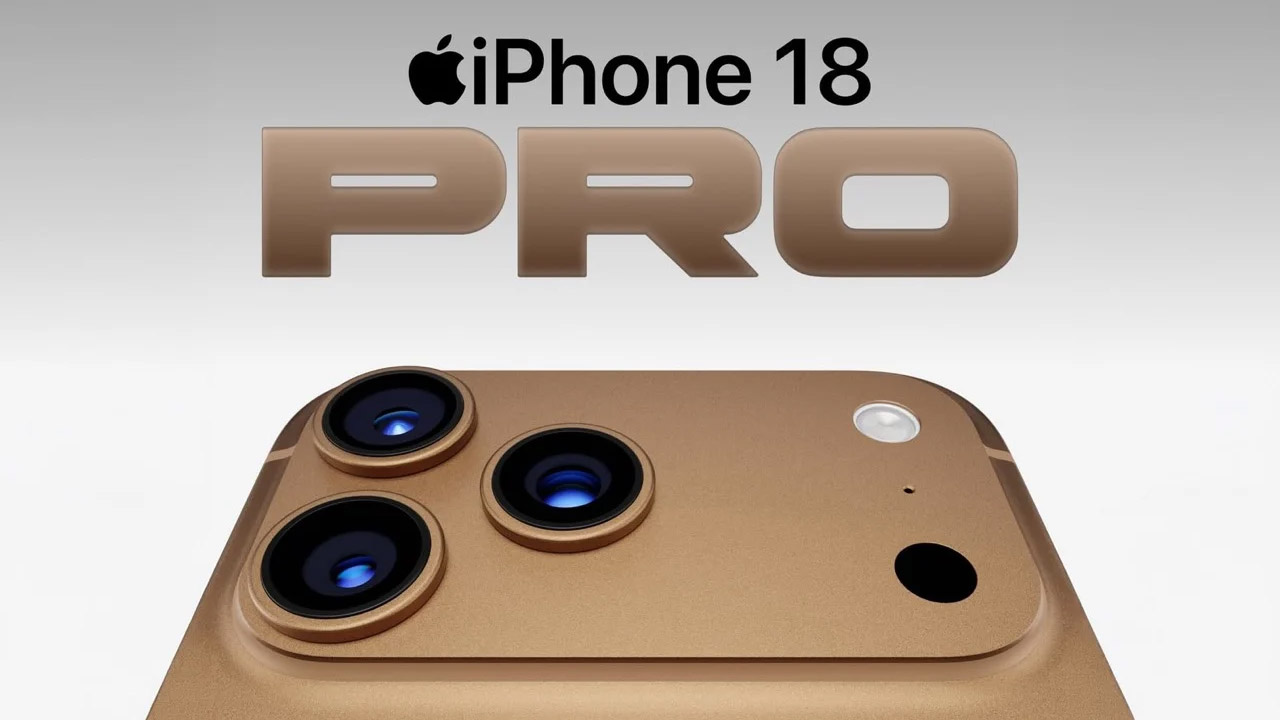
In terms of performance, the new iPhone 18 Pro will be powered by a chip made from TSMC’s 2-nanometer process, known as the A20 Pro, which promises roughly 15% more oomph and up to 30% better efficiency than the 3-nanometer chip in last year’s iPhone 17 Pro. Apple is teaming it with 12 gigabytes of RAM in both models, which should make a significant improvement for all those on-device AI workloads and multitasking in general. On the camera side of things, you can expect a practical upgrade with a variable aperture system on the main lens, which allows the phone to manage the amount of light that enters, resulting in better depth of field and lower light clarity than fixed aperture systems. The 48-megapixel Fusion sensor is being tweaked to provide even clearer details, and the lenses remain in their usual position at the back. A new Camera control button allows you to experiment with all of those capabilities without having to jump through hoops, and the entire rear glass now blends in much more seamlessly with the frame.

Connectivity is the new iPhone 18 Pro’s strong suit. Apple has replaced their own C2 5G modem with the Qualcomm one that was previously used, with the goal of providing significantly stronger mmWave signals as well as a lot more satellite coverage thanks to NR-NTN standards. To top it off, a few of extra chips bring Wi-Fi 7 and Bluetooth 6 to the mix, which should result in faster local transfers and much more stable pairing, according to reports.
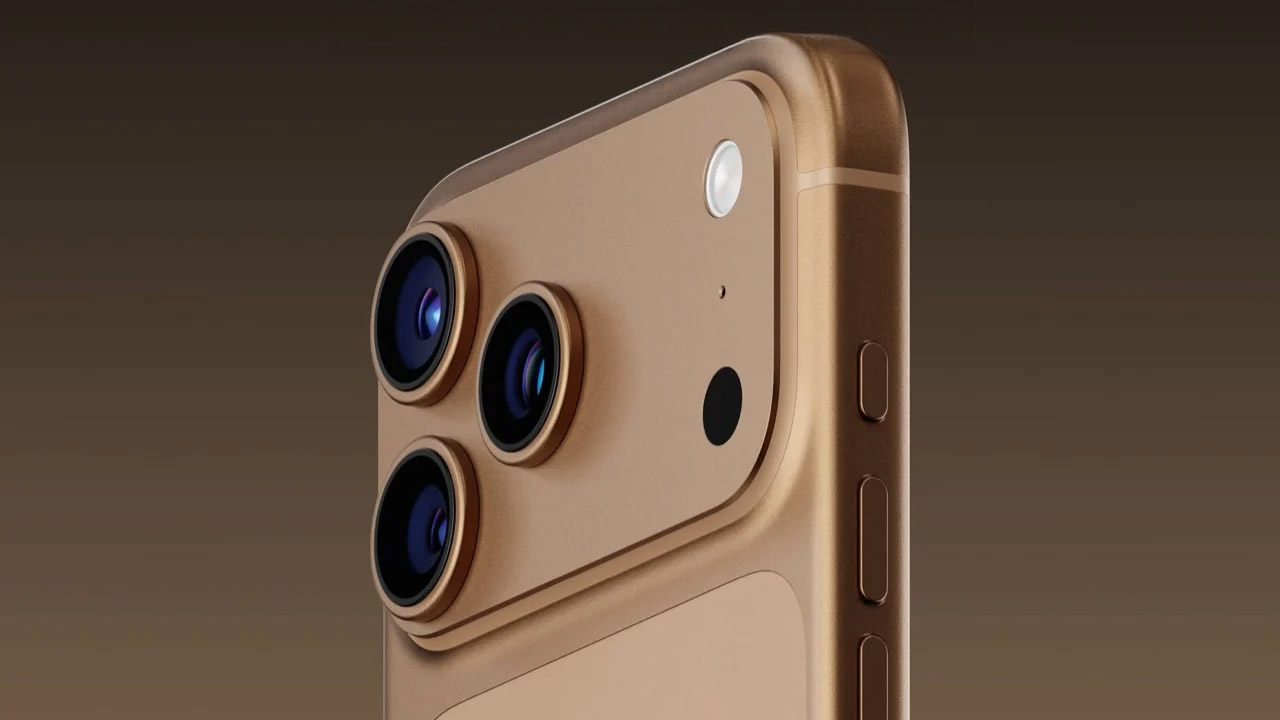
Battery life is also significantly improved, thanks to the more efficient chip and greater space in the Pro Max variant. Battery capacity ranges from 5,100 to 5,200 milliamp-hours, setting a new record for an iPhone. When you add in the power savings from elsewhere, it’s expected that even the larger model will run for up to 40 hours on a single charge, and that’s not just for watching cat videos all day. People who simply use their phone as a regular phone will notice that you get a lot more out of a charge on lengthy journeys or hectic workdays before you have to scramble for a power outlet.
All of these signs point to an official launch in September 2026, just in time for an autumn release. Insiders believe that this generation of iPhones will be the last to employ Apple’s current design language, which has been in use for roughly a decade, and that it will pave the way for a significant facelift in 2027.
[Source]

Looking for the most recent Mini Crossword answer? Click here for today’s Mini Crossword hints, as well as our daily answers and hints for The New York Times Wordle, Strands, Connections and Connections: Sports Edition puzzles.
Need some help with today’s Mini Crossword? Read on for all the answers. And if you could use some hints and guidance for daily solving, check out our Mini Crossword tips.
If you’re looking for today’s Wordle, Connections, Connections: Sports Edition and Strands answers, you can visit CNET’s NYT puzzle hints page.
Read more: Tips and Tricks for Solving The New York Times Mini Crossword
Let’s get to those Mini Crossword clues and answers.
The completed NYT Mini Crossword puzzle for April 7, 2026.
Mini across clues and answers
1A clue: Informative commercial, for short
Answer: PSA
4A clue: Something you trace to draw a Thanksgiving turkey
Answer: HAND
5A clue: ___ Johnson, former Prime Minister of the U.K.
Answer: BORIS
6A clue: Opposite of include
Answer: OMIT
7A clue: Crosses (out)
Answer: XES
Mini down clues and answers
1D clue: City with the Notre-Dame Cathedral
Answer: PARIS
2D clue: Bad mood
Answer: SNIT
3D clue: About eight minutes of the average half-hour sitcom
Answer: ADS
4D clue: Remote worker’s office, perhaps
Answer: HOME
5D clue: Word that can follow each group of circled letters (and hints at its shape)
Answer: BOX


For many gadget enthusiasts, it’s a badge of honor to have a large collection of old tech, such as an assortment of old smartphones. Others may keep old phones around because they don’t know what else to do with them, or because they have important data that may be useful in the future. But if you’ve got a phone or two shoved into a drawer, out of sight and mind, you should probably be aware that they can pose risks both physical and digital.
For one, the lithium-ion batteries in them can degrade and become prone to spontaneous combustion over time. In the digital realm, old smartphones can be the virtual equivalent of an unlocked window, the perfect point of entry for malicious actors to breach the security of your private work and personal data.
That doesn’t mean you should never hold on to an old smartphone, even if disposing of old electronics by recycling or donating them is probably the better move. It does, however, mean that you should never chuck old phones in a drawer and forget about them. To lower those associated risks as much as possible, old smartphones should be properly stored and maintained. So, here’s a deeper look at what can go wrong when you keep an old phone around, and how you can reduce the chances of something going wrong.
Old lithium-ion smart phone batteries can be a ticking time bomb

Old smartphones mean old smartphone batteries. These degrade over time, and when they do, they become volatile. In some cases, they can spontaneously catch fire and cause a minor explosion. This can cause injuries and start fires. Even new batteries aren’t entirely safe: In September 2024, for example, Boston 25 News reported a house burned down after a charging smartphone’s battery exploded and started a fire.
Incidents of that severity are rare, but minor catastrophes are more common. In 2022, popular tech YouTuber Arun Maini, who posts under the moniker Mrwhosetheboss and maintains a vast collection of old phones he’s reviewed over the years, reported that three Samsung phones from his smartphone menagerie had exploded during the record-breaking heat wave that afflicted the U.K. that summer. Maini claimed he had spoken to other popular tech creators, Austin Evans, Marques Brownlee, and Zack Nelson, all of whom had experienced the same issue at one time or another.
If you insist on keeping old phones around, you should store them in a cool, dry environment to minimize the risk of a battery-related incident. You should also charge the phone to around 50% every so often to help the battery stay healthy. If the phone has an easily removable battery, you should pop that battery out. Note that you should not dispose of lithium-ion batteries in your household trash. Many tech stores, such as Best Buy, have on-site battery disposals, and there are often battery recycling services you can search for in your area.
Old smartphones are an additional cybersecurity threat surface to manage

Your mileage may vary when it comes to old batteries, and many people hang onto old technology without incident. However, old phones also pose a tangible threat to your cybersecurity. All your old messages, photos, and app data remain on phones, even after you stop using them. Unless you factory reset a phone, it remains a treasure trove of personal data that cybercriminals would love to get their hands on. You’re keeping an unnecessary attack surface exposed, a major no-no in the cybersecurity world.
Making matters worse, phones eventually stop receiving security updates; when a phone is no longer updated, it becomes more vulnerable to attacks, and new exploits go unpatched. You may think you’re safe because the phone is turned off while it languishes in your drawer, but you should never entirely discount the risk of physical access. If, for instance, your home were to be robbed and the phone stolen, the robbers would have a much easier time gaining access to that old, insecure phone than they would to a new one.
At the very least, you should occasionally check for and install any updates for that phone while it remains in your possession. Once it stops getting updates, you should move any important data to another device or USB storage drive and perform a factory reset. You should also make sure that the old phone remains disconnected from your home network so that it cannot become an attack vector for the rest of your devices.
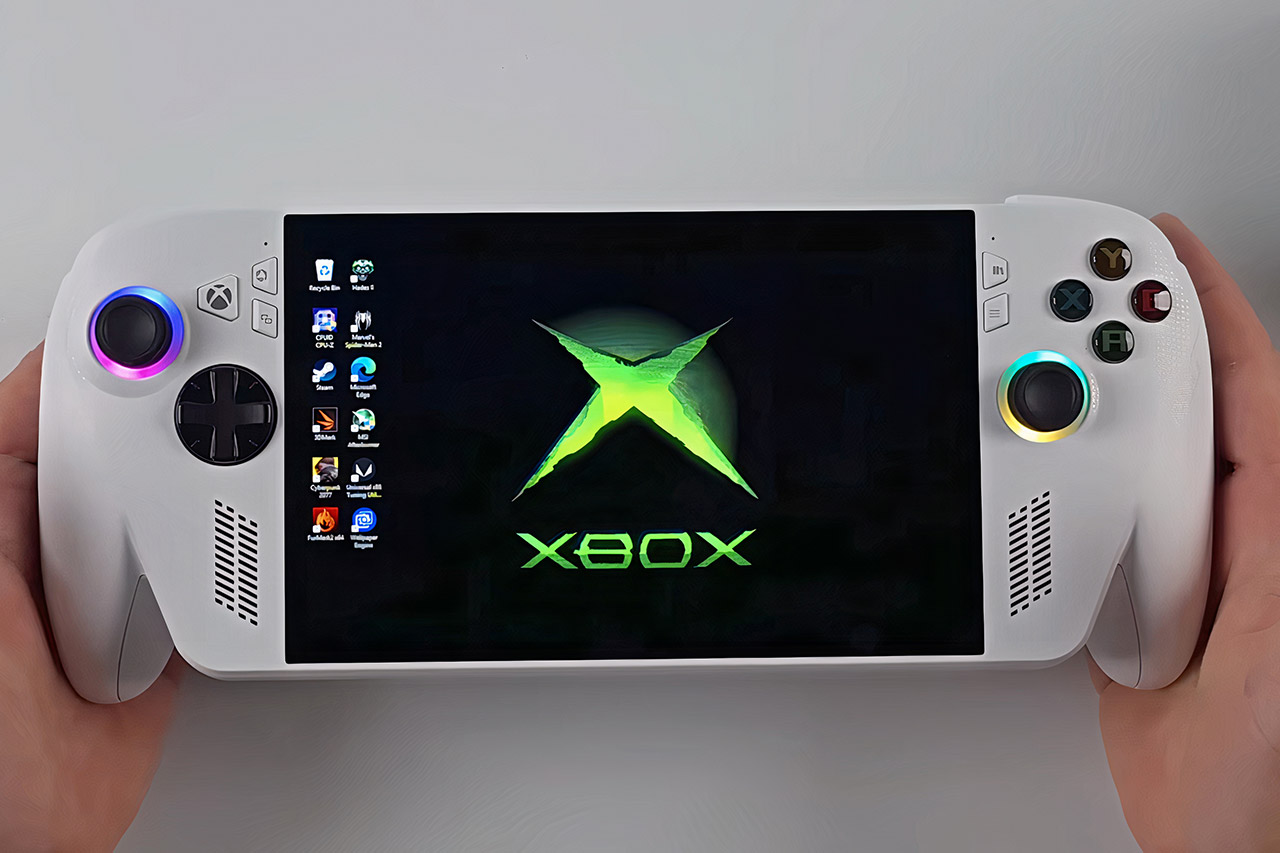
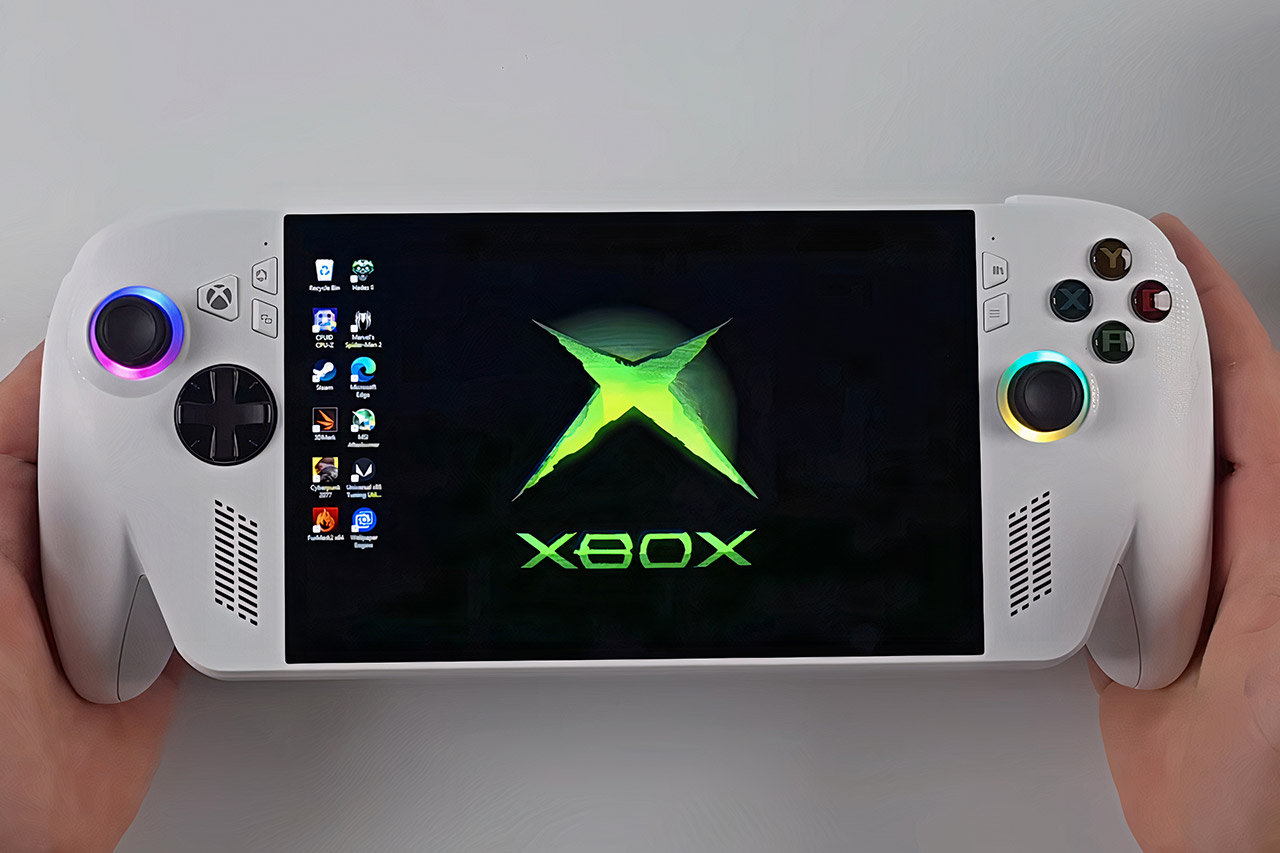
Costs for PC parts are skyrocketing, and I’m sure you understand the frustration of attempting to construct a gaming system when graphics cards and RAM are so expensive. Watching the price continue to rise is enough to put you off even the most basic upgrades right now, but a device like the ASUS ROG Xbox Ally, priced at $499.99 (was $600), steps in and saves the day, as you simply open the box and you have a whole gaming system right in your hands.
This portable is powered by an AMD Ryzen Z2 A processor, 16GB of RAM, and 512GB of storage. Indie games and old favorites run smoothly on the 7-inch screen, with consistent and snappy frame rates. Newer releases will still function properly on lowered settings, allowing you to enjoy playing games on the move or when you simply want to relax. For example, Forza Horizon 5 manages about 40 frames per second on medium detail, and Hollow Knight keeps the pace nice and fast with no drop off at all. Don’t worry if there are some titles that don’t run natively on the device, because cloud streaming comes to the rescue, allowing you to pull high-quality visuals straight from the cloud without putting a strain on the device.
Sale

ASUS ROG Xbox Ally – 7” 1080p 120Hz Touchscreen Gaming Handheld, 3-month Xbox Game Pass Premium…
- XBOX EXPERIENCE BROUGHT TO LIFE BY ROG The Xbox gaming legacy meets ROG’s decades of premium hardware design in the ROG Xbox Ally. Boot straight into…
- XBOX GAME BAR INTEGRATION Launch Game Bar with a tap of the Xbox button or play your favorite titles natively from platforms like Xbox Game Pass…
- ALL YOUR GAMES, ALL YOUR PROGRESS Powered by Windows 11, the ROG Xbox Ally gives you access to your full library of PC games from Xbox and other game…
Let’s start with the screen, which is immediately noticeable as something special. When throwing the items about quickly or in fast action, 1080p at 120 Hertz provides silky smooth motion. The colors appear natural, and the touch layer responds instantly as you tap through menus. It’s bright enough to watch in most rooms, even with daylight streaming in from a nearby window. It comes down to more than just the numbers, though, because the grips on this thing are curved like an Xbox controller, so it feels natural in your palm. Even if you play for an extended period of time, the textured surfaces remain in place. The buttons and triggers are in the proper locations, so you don’t get tired after an hour or two. At just over a pound and a half, you may easily throw it in a bag or slide it into your pocket and go.
The software is also fairly sleek, with a clean interface that has the Xbox things up front. Your game pass library is right there, as are all of the other games you have access to. There is a button on the controller that allows you to quickly access power modes and display modifications without having to go through all of the options. Throw in three months of Game Pass Premium for free, and you’ll get access to dozens of games without having to deal with downloads and the like.

Unlike those inflated lab tests, battery life lasts fairly well in everyday use. Demanding games will slog along for roughly two hours on a single charge, whilst more casual titles may coast along for six to seven hours with settings reduced to a manageable level. That offers you plenty of time to complete your daily commute or spend a relaxed Sunday afternoon on the couch. Furthermore, the sixty-five watt charger performs admirably, quickly replenishing juice anytime you connect it. The side ports also have you covered, taking a microSD card for a bit more storage and two USB-C connections so you can plug it into a bigger screen whenever you want.


Most drivers have in mind a pure British roadster from the early 1990s, the Lotus Elan, but only a small group of fans are aware of the strange story of the Kia Vigato that followed. After the original Elan M100 run ended in 1995, Kia bought the whole production tooling from Lotus. The company then assembled the car in Korea and shipped examples to Japan under the Vigato name.
It’s a strange footnote in Kia history, and one of the decade’s most underappreciated sports cars. The Lotus Elan M100 was built around a lightweight front-wheel-drive chassis with double-wishbone suspension at all four corners, giving it the crisp, confident handling that we all enjoy. When Kia took over the molds, the chassis remained almost unchanged. The end result was a car that still seemed perfectly balanced and drove smoothly, but with a few adjustments to suit their new owner.
Sale

LEGO Speed Champions Porsche 911 GT3 RS Super Car Toy – Model Kit & Pretend Play Toy for Boys & Girls…
- BUILD A RACING LEGEND – Boys and girls ages 9 years old and up can construct the LEGO Speed Champions Porsche 911 GT3 RS Super Car (77239) building…
- AUTHENTIC PORSCHE DETAILS – Young builders can recreate the real-life vehicle’s signature elements including the famous rear wing, air intake…
- 1 PORSCHE DRIVER MINIFIGURE – Kids can place the driver minifigure with helmet and red Porsche Track Day Experience outfit behind the wheel to stage…

The 1.8-liter four-cylinder engine, a naturally aspirated beast, produces 151 horsepower and delivers it to the front wheels via a five-speed manual. It accomplishes the job well, with sprightly acceleration that never goes overboard. Drivers can simply shift easily and experience a direct connection between pedal and road. Brakes are discs all around, and the suspension absorbs bumps while remaining rooted even when making abrupt direction changes. In terms of fuel economy, it’s quite decent for a convertible with a hint of sportiness.


Visually, the car retains the original Elan lines, with a low wedge shape, clean surfaces… you get the idea. Pop-up headlights are a nice feature because they sit flush when switched off and spring up nicely when you turn the switch. The rear spoiler is small, and the fenders are filled with nice16-inch OZ Racing wheels. The current example features a sleek white paint job, a black soft top that folds over by hand, and Yokohama tires to keep everything in place on the road. Oh, and one more thing: previous owners had some fun with the badges, replacing them with Lotus emblems… despite the fact that the chassis plate still proudly states that it is a genuine Kia Vigato from 1997.
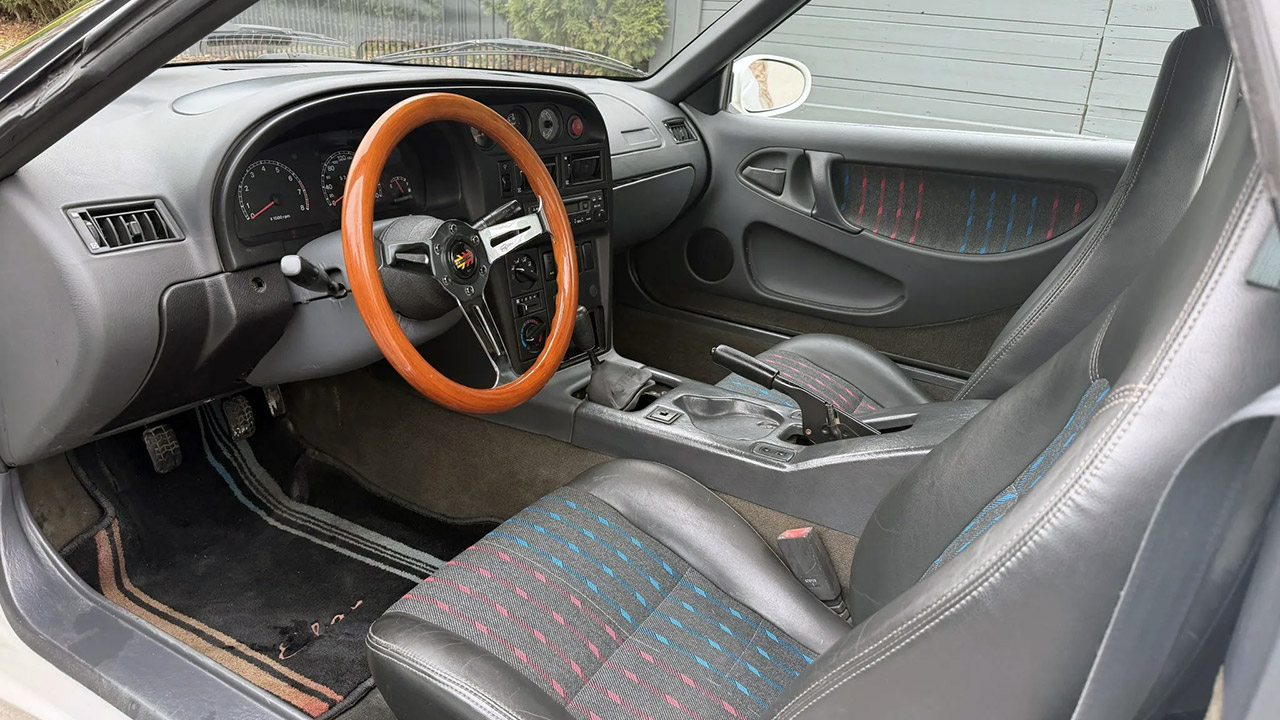
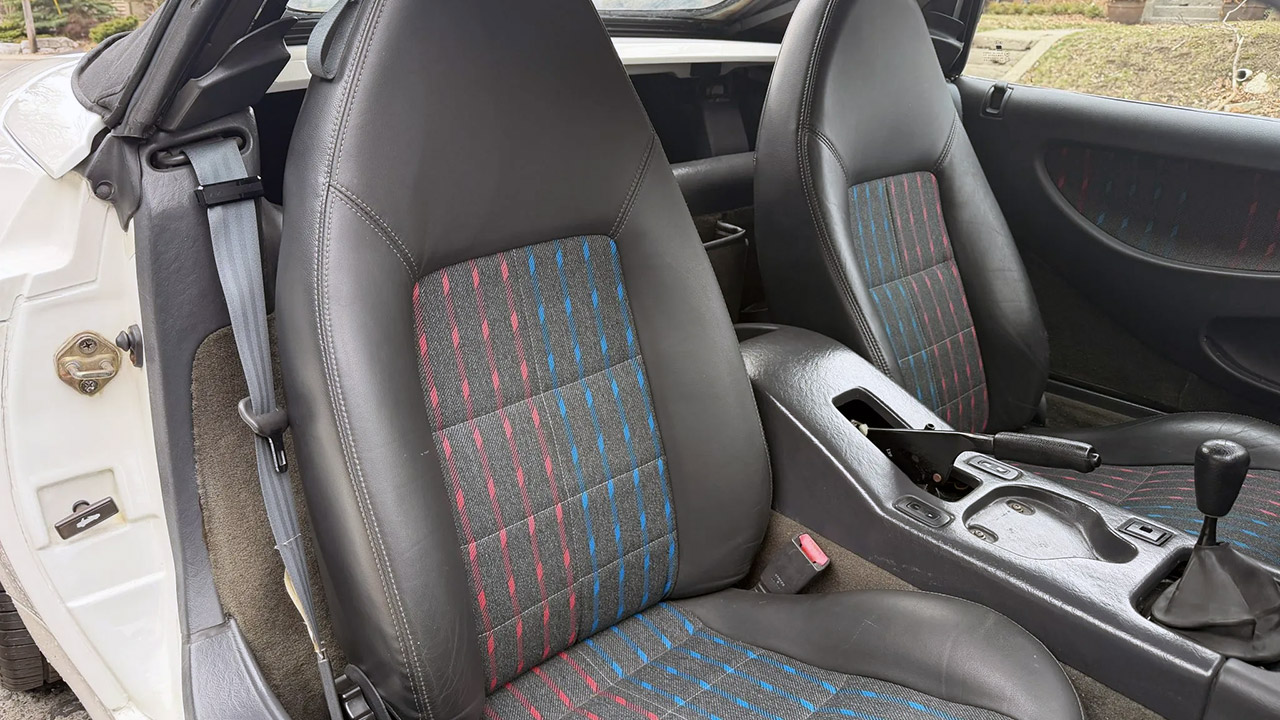
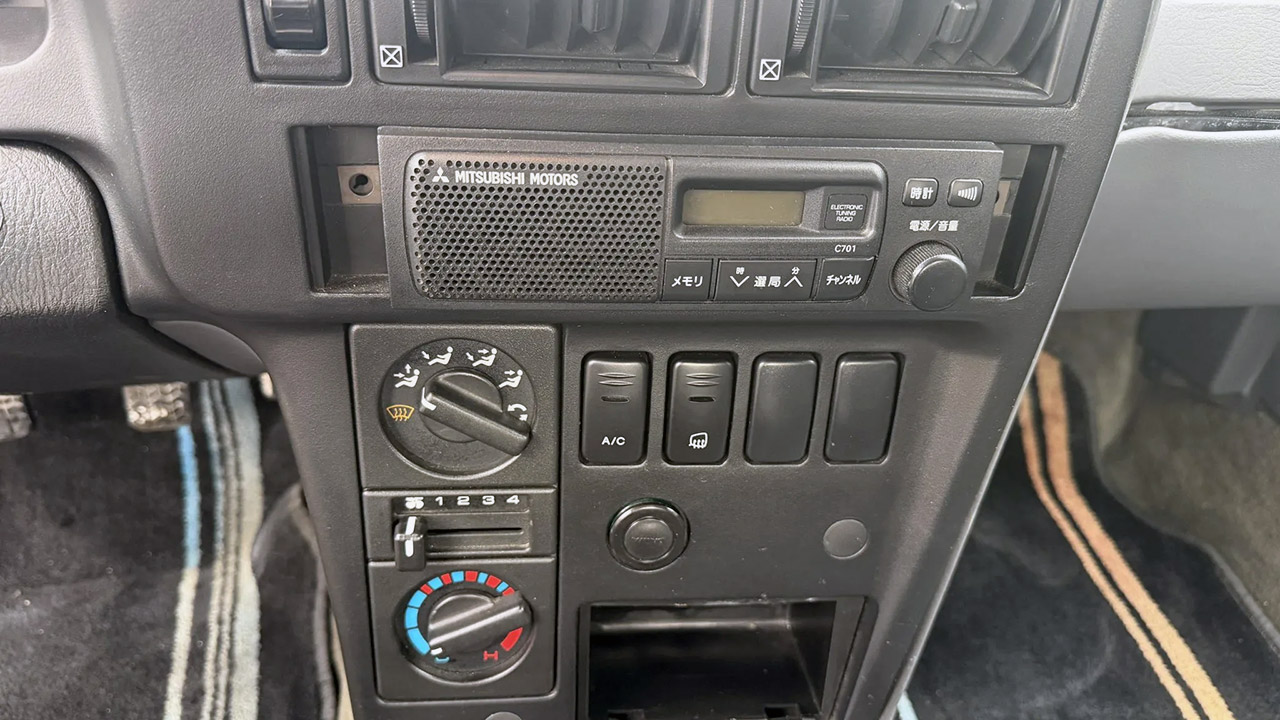
Inside the cabin, colorful textile inserts that match the door panels add a splash of color to the black vinyl seats. A Mitsubishi head unit handles the audio, and a wonderful old-fashioned analog clock sits to the side of the gauges. Standard features include power windows and mirrors, as well as air conditioning to keep you comfortable. The instrument cluster displays a speedometer with a maximum speed of 240km/h and a tachometer with a maxes out at 6500rpm. An upgraded wood-rimmed steering wheel with a cool MOMO horn button gives it a nice personal touch. Even with two adults in the car, space isn’t a problem on longer excursions, and there’s still room behind the seats for a few items.

It appears that practically all of the Vigatos that rolled off the assembly line never made it out of Japan, where they just blended in with the traffic. A few made their way to North America via private imports, no less. The 1997 Vigato now offered for auction on Bring a Trailer has only 53,000 kilometers on the clock. This Canadian import arrived in late 2022, complete with an Ontario registration and a clean history report. Some of the underbody pieces show rust, but the main body and all mechanicals appear to be in fine condition. Bidding began modestly and will continue through April 9th.
[Source]


Exploit code has been released for an unpatched Windows privilege escalation flaw reported privately to Microsoft, allowing attackers to gain SYSTEM or elevated administrator permissions.
Dubbed BlueHammer, the vulnerability was published by a security researcher discontent with how Microsoft’s Security Response Center (MSRC) handled the disclosure process.
Since, the security issue has no official patch and there is no update to address it, the flaw is considered a zero-day by Microsoft’s definition.

It is unclear what triggered the public release of the exploit code. In a short post under the alias Chaotic Eclipse, the researcher says “I was not bluffing Microsoft, and I’m doing it again.”
“Unlike previous times, I’m not explaining how this works; y’all geniuses can figure it out. Also, huge thanks to MSRC leadership for making this possible,” the researcher added.
On April 3rd, Chaotic Eclipse published a GitHub repository for the BlueHammer vulnerability exploit under the alias Nightmare-Eclipse, expressing disbelief and frustration at how Microsoft decided to address the security issue.
“I’m just really wondering what was the math behind their decision, like you knew this was going to happen and you still did whatever you did ? Are they serious ?”
The researcher also noted that the proof-of-concept (PoC) code contains bugs that may prevent it from working reliably.
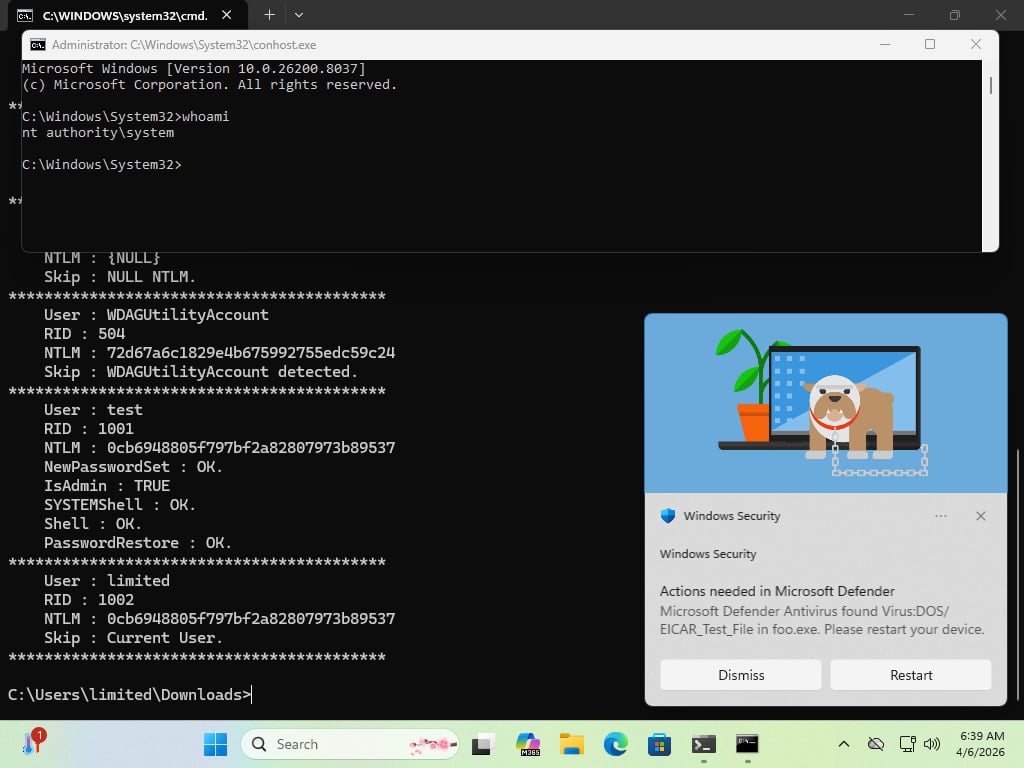
Will Dormann, principal vulnerability analyst at Tharros (formerly Analygence), confirmed to BleepingComputer that the BlueHammer exploit works, saying that the flaw is a local privilege escalation (LPE) that combines a TOCTOU (time-of-check to time-of-use) and a path confusion.
He explained that the issue is not easy to exploit and that it gives a local attacker access to the Security Account Manager (SAM) database, which contains password hashes for local accounts.
Given this access, attackers can escalate to SYSTEM privileges and potentially achieve complete machine compromise.
“At that point, [the attackers] basically own the system, and can do things like spawn a SYSTEM-privileged shell,” Dormann told BleepingComputer.
Source: Will Dormann
Some researchers testing the exploit confirmed that the code was not successful on Windows Server, confirming Chaotic Eclipse’s statement that there are bugs that may prevent it from working properly.
Will Dormann added that on the Server platform, the BlueHammer exploit increases permissions from non-admin to elevated administrator, a protection that requires the user to temporarily authorize an operation that needs full access to the system.
While the reason behind Chaotic Eclipse/Nightmare-Eclipse’s disclosure remains uncertain, Dormann notes that one requirement from MSRC when submitting a vulnerability is to provide a video of the exploit.
Although this may help Microsoft sift through reported vulnerabilities more easily, it adds to the effort of submitting a valid report.
Despite BlueHammer requiring a local attacker to exploit it, the risk it poses is still significant, as hackers can gain local access through a variety of vectors, including social engineering, leveraging other software vulnerabilities, or through credential-based attacks.
BleepingComputer has contacted Microsoft for a comment on the BlueHammer flaw, and a spokesperson sent us the below statement:
“Microsoft has a customer commitment to investigate reported security issues and update impacted devices to protect customers as soon as possible. We also support coordinated vulnerability disclosure, a widely adopted industry practice that helps ensure issues are carefully investigated and addressed before public disclosure, supporting both customer protection and the security research community.” – a Microsoft spokesperson
Article updated on 4/7 to add Microsoft comment

Automated pentesting proves the path exists. BAS proves whether your controls stop it. Most teams run one without the other.
This whitepaper maps six validation surfaces, shows where coverage ends, and provides practitioners with three diagnostic questions for any tool evaluation.

An anonymous reader quotes a report from Reuters: A federal appeals court ruled on Monday that New Jersey gaming regulators cannot prevent Kalshi from allowing people in the state to use its prediction market to place financial bets on the outcome of sporting events.
A three-judge panel of the Philadelphia-based 3rd U.S. Circuit Court of Appeals ruled 2-1 (PDF) in finding that the U.S. Commodity Futures Trading Commission has exclusive jurisdiction over the sports-related event contracts that Kalshi allows people to trade on its platform. The ruling marked the first time a federal appeals court has ruled on what has become the central issue in an escalating battle over the ability of state gaming regulators to police the activity of prediction market operators.
Kalshi and companies like it allow users to place trades and profit from predictions on events such as sports and elections. States argue that firms like Kalshi are operating without required state licenses, in violation of gaming laws, including bans on wagers by those under 21. Those states include New Jersey, which last year sent Kalshi a cease-and-desist letter stating that its listing of sports-related event contracts on its platform violated state gambling laws that prohibit betting on collegiate sports. Kalshi sued the state, arguing its event contracts qualify as “swaps,” a type of derivative contract, that under the Commodity Exchange Act can only be regulated by the CFTC, which had granted the company a license to operate a designated contract market (DCM).
A lower-court judge had sided with New York-based Kalshi and issued a preliminary injunction, prompting New Jersey to appeal. But a majority of the judges on the 3rd Circuit panel concluded the Commodity Exchange Act likely preempted state law. “Kalshi’s sports-related event contracts are swaps traded on a CFTC-licensed DCM, so the CFTC has exclusive jurisdiction,” U.S. Circuit Judge David Porter wrote. The ruling was in line with the position advanced in other litigation by the CFTC under President Donald Trump’s administration. The regulator last week sued Arizona, Connecticut and Illinois to prevent them from pursuing what it called unlawful efforts to regulate prediction markets.


Handheld console fans have long praised Nintendo’s Switch Lite for its compact size and low price, but many have wished for a variant that included those fancy premium features without sacrificing portability. Fortunately, Tito from Macho Nacho Productions stepped up and created exactly that type of machine through a series of painstaking modifications that transformed a regular Switch Lite into something far more capable.
The parts selection was the foundation of this entire project, since Tito began with Retro Remake’s Super5 OLED kit, which replaces the stock LCD with a high-quality OLED panel with touch capabilities and HDMI output, which no regular Switch Lite has ever had. The Hall effect joysticks came next, and they are meant to prevent stick drift over time. The transition was completed with an aluminum shell machined to ultra-precise specifications, which replaced the original plastic body and gave the console a solid, high-quality build that appears to be from a high-end electronics brand.

Nintendo Switch 2 System
- The next evolution of Nintendo Switch
- One system, three play modes: TV, Tabletop, and Handheld
- Larger, vivid, 7.9” LCD touch screen with support for HDR and up to 120 fps
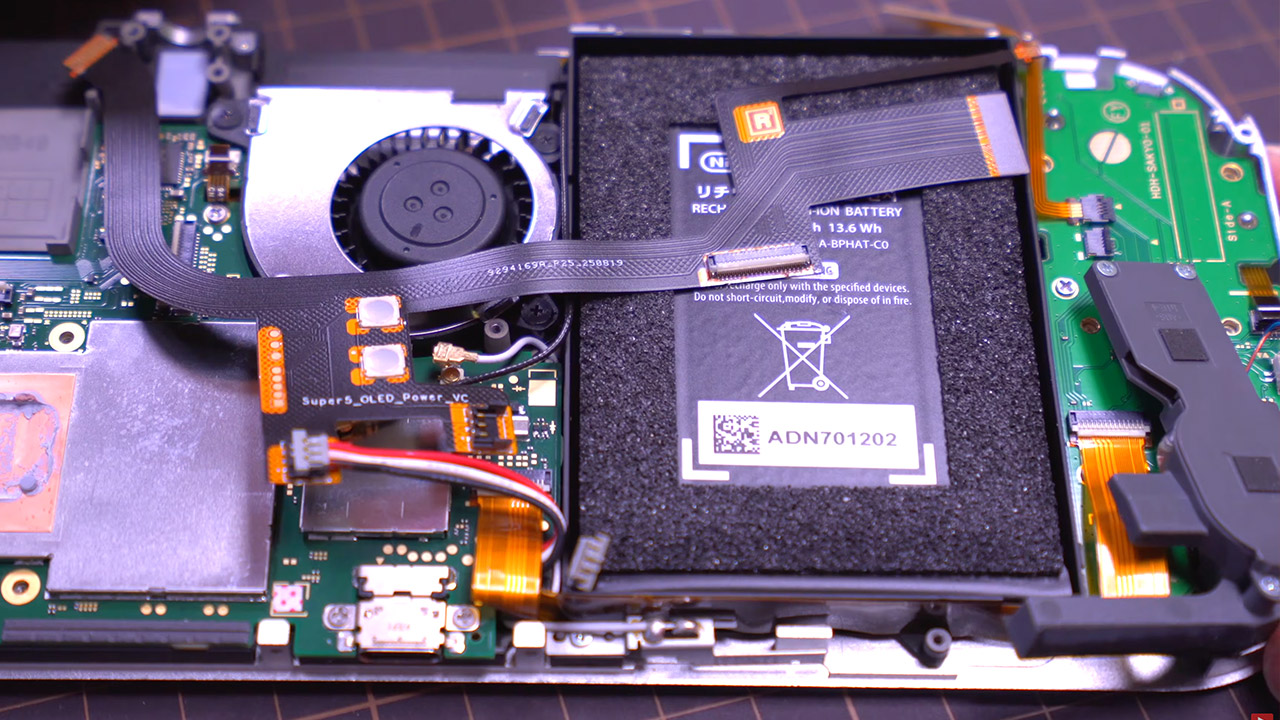
Putting it all together was a lot easier than Tito expected, but you’ll need to be familiar with the hardware components to feel comfortable. Once you’ve opened up the casing and removed the original screen and control bits, you simply slot in the new OLED assembly and an HDMI enabled board, and the stick drift-proof Hall effect sticks simply go in the places they were meant to occupy, and then the aluminium shell slams on in with no room for error, using the original screws. If you’ve done something like this previously, the entire procedure takes about an hour, and the finished product appears factory fresh on the outside.

Once you’ve put everything together, the Switch Lite Pro showcases what all of the upgrades can achieve in everyday use. Gamers may now connect the console to a large TV or monitor via normal HDMI and play in docked mode on the big screen, something the base Lite cannot do. The OLED screen has deeper blacks, richer colors, and greater contrast than the LCD it replaced, making the games stand out even in the brightest environments. The touch input allows you to play games that rely on it, while the Hall effect sticks provide silky smooth control that stays precise for years. The aluminum body adds weight and durability without making the device feel clunky, and it stays cool over long sessions thanks to much enhanced heat dissipation.

When compared to the standard Switch Lite, the enhancements make a significant difference. Tito compared the hacked unit to a stock Switch Lite, and the OLED screen was noticeably brighter and more color correct across a variety of titles, even in light surroundings. The blacks are truly black, rather than some dark grey, and the dark scene elements come out. The HDMI output is rock solid at full quality, and switching between handheld and TV modes is a breeze.

Milei call logs raise new questions over Libra token promotion

5 AI Agent Use Cases I’d Start Today to Make Money Online

Cyclist seriously injured after bus crash in Cambridge


-

 NewsBeat5 days ago
Steven Gerrard disagrees with Gary Neville over ‘shock’ Chelsea and Arsenal claim | Football
-

 Business4 days ago
No Jackpot Winner and $194 Million Prize Rolls Over
-

 Fashion4 days ago
Weekend Open Thread: Spanx – Corporette.com
-

 Crypto World5 days ago
Gold Price Prediction: Worst Month in 17 Years fo Save Haven Rock
-

 Business1 day ago
Three Gulf funds agree to back Paramount’s $81 billion takeover of Warner, WSJ reports
-
Crypto World7 days ago
Dems press CFTC, ethics board on prediction-market insider trades
-

 Sports2 days ago
India men’s 4x400m and mixed 4x100m relay teams register big progress | Other Sports News
-

 Business3 days ago
Expert Picks for Every Need
-

 Business5 days ago
Login and Checkout Issues Spark Merchant Frustration
-

 Tech7 days ago
EE TV is using AI to help you find something to watch
-

 Sports7 days ago
Tallest college basketball player ever, standing at 7-foot-9, entering transfer portal
-

 Tech7 days ago
How to back up your iPhone & iPad to your Mac before something goes wrong
-

 Tech7 days ago
What Are The Biggest Limitations Of Supercomputers?
-

 Crypto World6 days ago
Bitcoin enters the public bond market as Moody’s gives a first-of-its-kind crypto deal a rating
-
Crypto World6 days ago
Bitcoin stalls below key resistance as technical signals skew bearish
-

 Tech5 days ago
Commonwealth Fusion Systems leans on magnets for near-term revenue
-

 Politics7 days ago
Transform Your Space with Stunning Small Works
-

 Politics6 days ago
Starmer’s centre has collapsed, and the left was right all along
-
Business2 days ago
No Jackpot Winner, Prize to Climb to $231 Million
-

 Business7 days ago
Matrix Composites shares up 50pc on new takeover bid
You must be logged in to post a comment Login