As Sonos has added the Play to its speaker line-up, we’re keen to see how it measures up to the 4.5-star Era 100.
To help you decide which of Sonos’ offerings will suit you best, we’ve compared our experiences with the Play to the Era 100 and noted the key differences below.
The Sonos Play is available to buy now and has an RRP of £299/$299.
Advertisement
Advertisement
The Sonos Era 100, on the other hand, is slightly cheaper with an RRP of £199/$199. Not only that, but the speaker has seen various price drops since its launch, which means it’s not impossible to find a bargain.
Design
Both come in just two colour choices: Black or White
Sonos Play is lighter, at just 1.3kg compared to 2.02kg
Sonos Play has an IP67 rating
Although the Sonos Era 100 has a thicker, more squat design than the Sonos Play, when the two are put next to each other there’s no denying they’re part of the Sonos family. Both retain that classic Sonos design, with a mesh surrounding and flat-top that houses the buttons. Plus, both come in just two colour choices: Black or White.
The Sonos Play, however, is designed specifically for both indoor and outdoor use and weighs just 1.3kg compared to the Sonos Era 100’s 2.02kg. Sure, the Play isn’t as light as the Roam 2, but aided by its carry loop at the back, it’s fairly easy to carry around from room to room.
Advertisement
Advertisement
As the Sonos Play is designed for both indoor and outdoor use, it comes with a reassuring IP67 rating which means it’s dust-tight and can survive short-term water immersion. In comparison, the Sonos Era 100 doesn’t have a specific IP rating, and instead just promises to be “humidity resistant”.
Otherwise, both speakers have a simple button layout on top and a button to turn the microphone off too – although doing so will stop Trueplay tuning from working.
Winner: Sonos Play
Features
Sonos app is better but still not as good as it once was
Although both support Stereo pairing, the Sonos Era 100 is better suited
Both have built-in Alexa and Sonos Voice Control
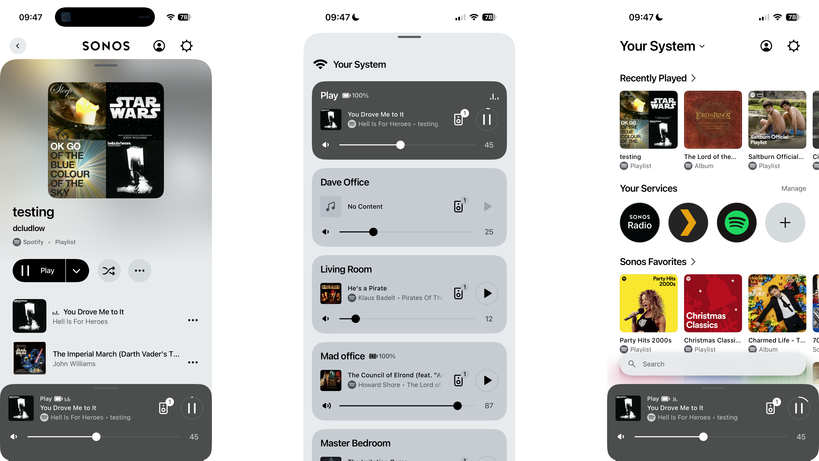
Sonos has fortunately fixed its disastrous app revamp of 2024, and it’s now more reliable and faster to load too. Sure, it’s not as good as the old app but there aren’t any major issues to report.
In fact, the Sonos app does boast numerous useful features including the ability to use a single music subscription to play music on different speakers at the same time, and the ability to sync music across multiple rooms for a party.
Advertisement
Advertisement
Sonos app. Image Credit (Trusted Reviews)
While both the Play and Sonos Era 100 support stereo pairing, we noted a few issues with the former as both speakers to be connected to the same Wi-Fi. In addition, both speakers need to be kept together at all times or the audio won’t sound quite right. With this in mind, if you want speakers specifically for stereo pairing, we’d recommend opting for two Sonos Era 100s instead as they’re fixed.
Otherwise, both are fitted with Amazon Alexa and Sonos Voice Control, and support Automatic Trueplay too which uses the integrated microphone to adjust the audio according to where the speaker is located.
Winner: Sonos Era 100
Sound Quality
Sonos Era 100 handles bass levels brilliantly
Sonos Play sports a balanced audio with solid stereo pairing
Trueplay works well with both speakers
Although Sonos is notoriously secretive when it comes to revealing the specs of its speakers, what we do know is the Play is fitted with three Class-H amplifiers, two angled tweeters and a mid-range woofer. The Era 100 is almost the same, except it has three Class-D amplifiers instead of Class-H.
Advertisement
Advertisement
The difference is that although the Class-H is less power-efficient, it does promise to provide a finer audio experience.
Sonos Play. Image Credit (Trusted Reviews)
We found that the Play performs well, with tightly balanced audio but does sometimes suffer with distortion. In addition, we found its bass isn’t quite as powerful as the likes of the Move 2. While its stereo pairing is also solid, do keep in mind the issues we mentioned earlier.
In comparison, the Era 100 has a weightier performance across the frequency range with more hefty bass and thicker treble too. We also found that although its bass levels are powerful, it’s not at the expense of vocal clarity either.
Sonos Era 100. Image Credit (Trusted Reviews)
Having said that, we’d still recommend you play around with the EQ to alter the bass and treble levels as, out of the box, we noted the Era 100 sounded rather limp. However, this was adjusted quickly.
Advertisement
Winner: Sonos Era 100
Advertisement
Verdict
Deciding between the Sonos Play and Sonos Era 100 will come down to your preferences. If you want a speaker that can easily be carted between rooms and outdoors, then the Sonos Play is a great choice for most. Plus, with a promise of up to 24 hours of battery life, you can even take it on camping trips and the like with relative ease.
In comparison, if you want more of a fixed speaker set-up at home, and don’t plan on moving the speakers around too much, then the Sonos Era 100 will likely suit you better.
TikTok points to capacity constraints and slow infrastructure development as the deciding factors in shelving its planned second data centre, but leaves door open to future opportunities.
The need for greater capacity, and the infrastructure development environment – these were the two key factors behind TikTok shelving a planned second data centre in Dublin, a company spokesperson told SiliconRepublic.com today (2 April) while confirming the reported decision.
Instead, the ByteDance-owned company will focus its European data storage expansion in some of its other locations – in particular, sites in Norway and one in Finland.
TikTok said that when looking at its various sites across Europe, it considered where could best meet its growing capacity demands as regards infrastructure and the speed of development, and that the Nordic countries were a better fit for those considerations.
Advertisement
The company said Ireland remained one of its biggest and most important strategic sites in Europe and, should future opportunities arise that did meet its capacity needs in particular, it would remain open to exploring them.
The spokesperson emphasised that the existing data centre operation in Ireland, which came online in 2023, remains fully operational as an important part of its Project Clover, and that TikTok is still very much committed to Ireland.
Project Clover is the Chinese-owned platform’s initiative designed to update its data security practices across Europe, so as not to fall foul of strict European data privacy regulations.
TikTok had originally planned to lease data centre space at Echelon’s campus in Clondalkin, Dublin, as part of a three-site strategy. However, as Irish newspaper the Business Post was first to report earlier this week, plans for the second Irish data centre have been shelved.
Don’t miss out on the knowledge you need to succeed. Sign up for the Daily Brief, Silicon Republic’s digest of need-to-know sci-tech news.
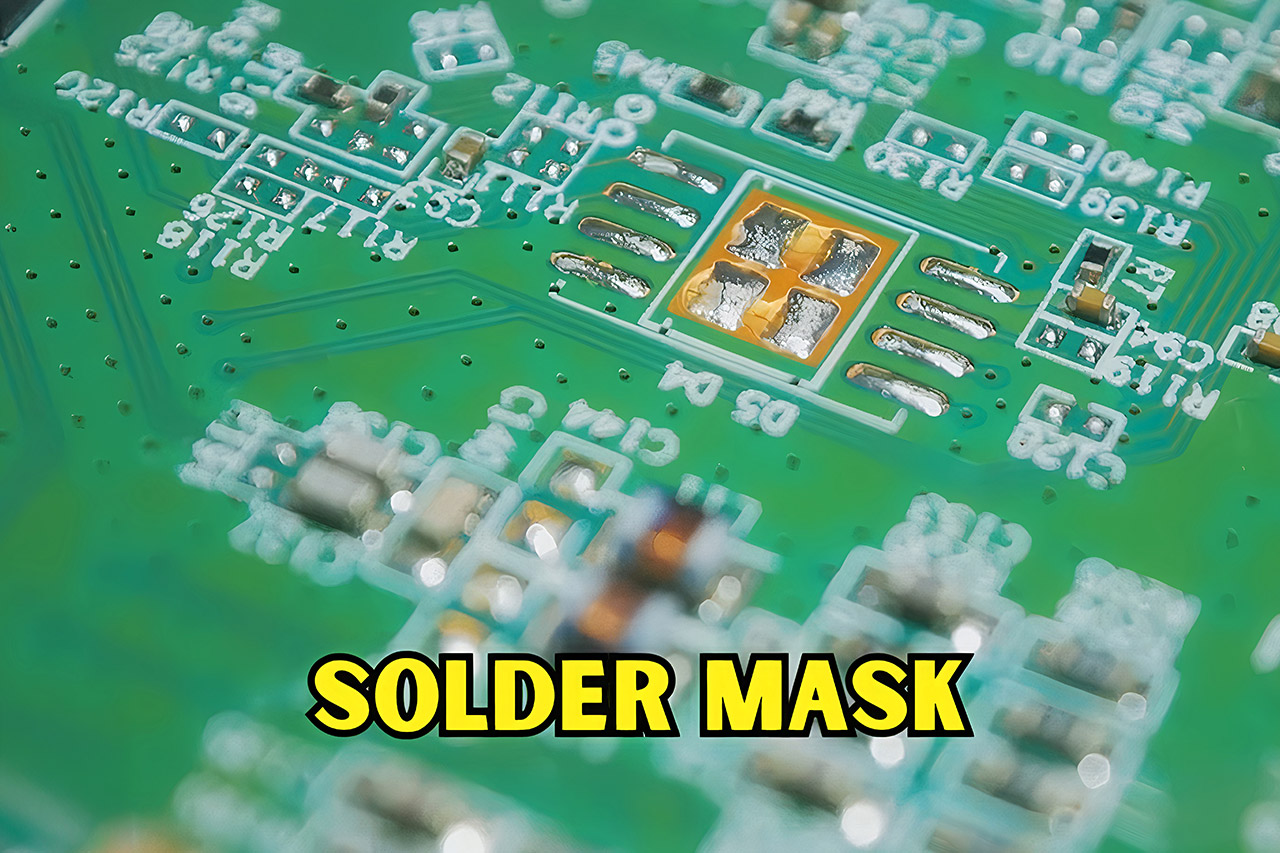
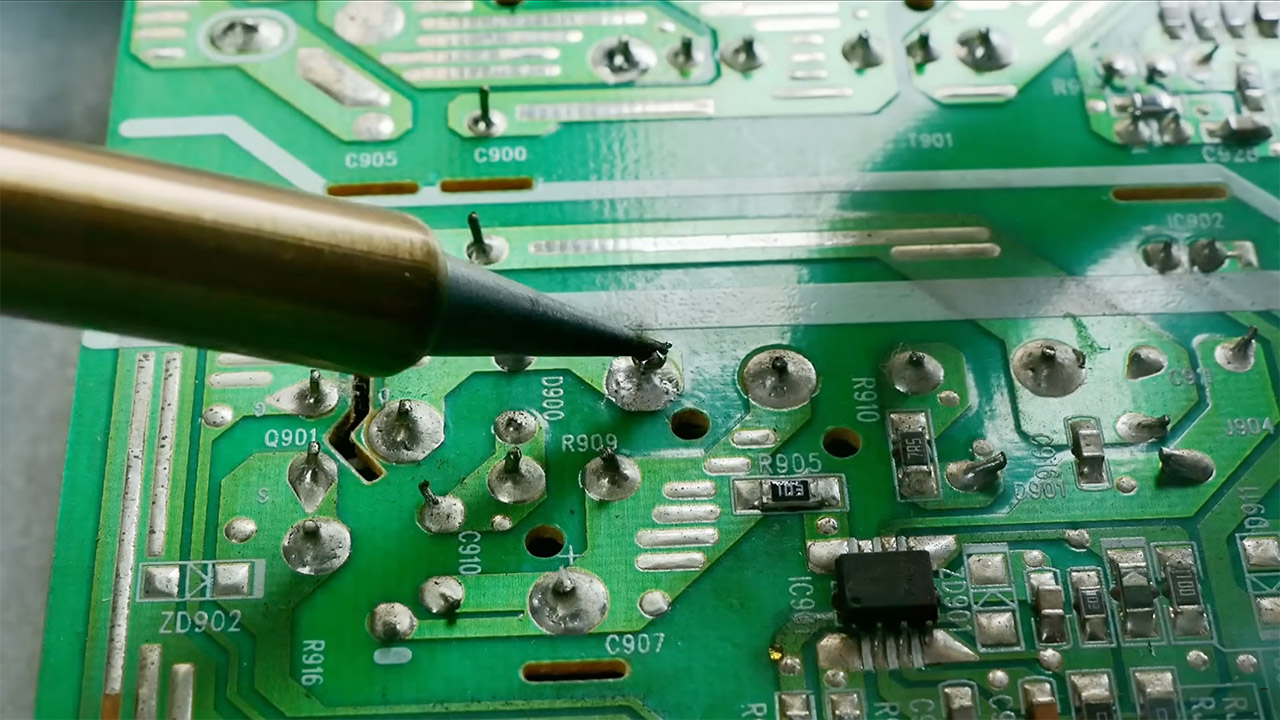
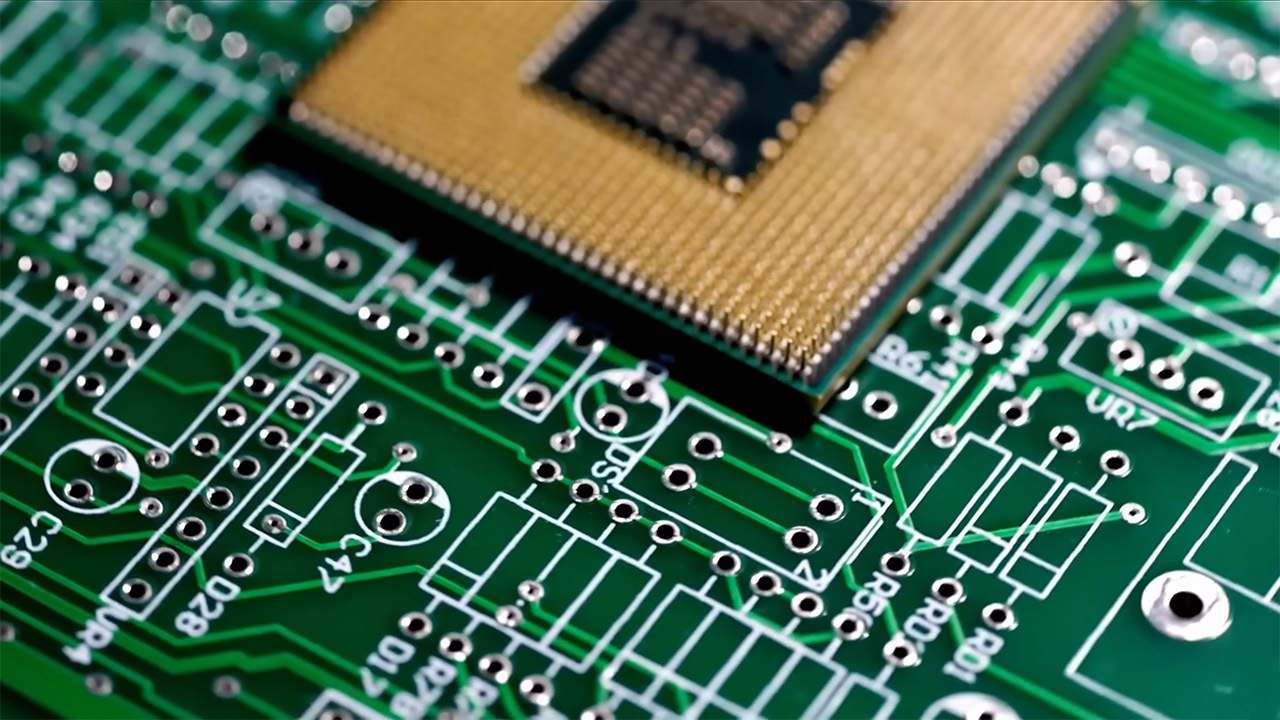
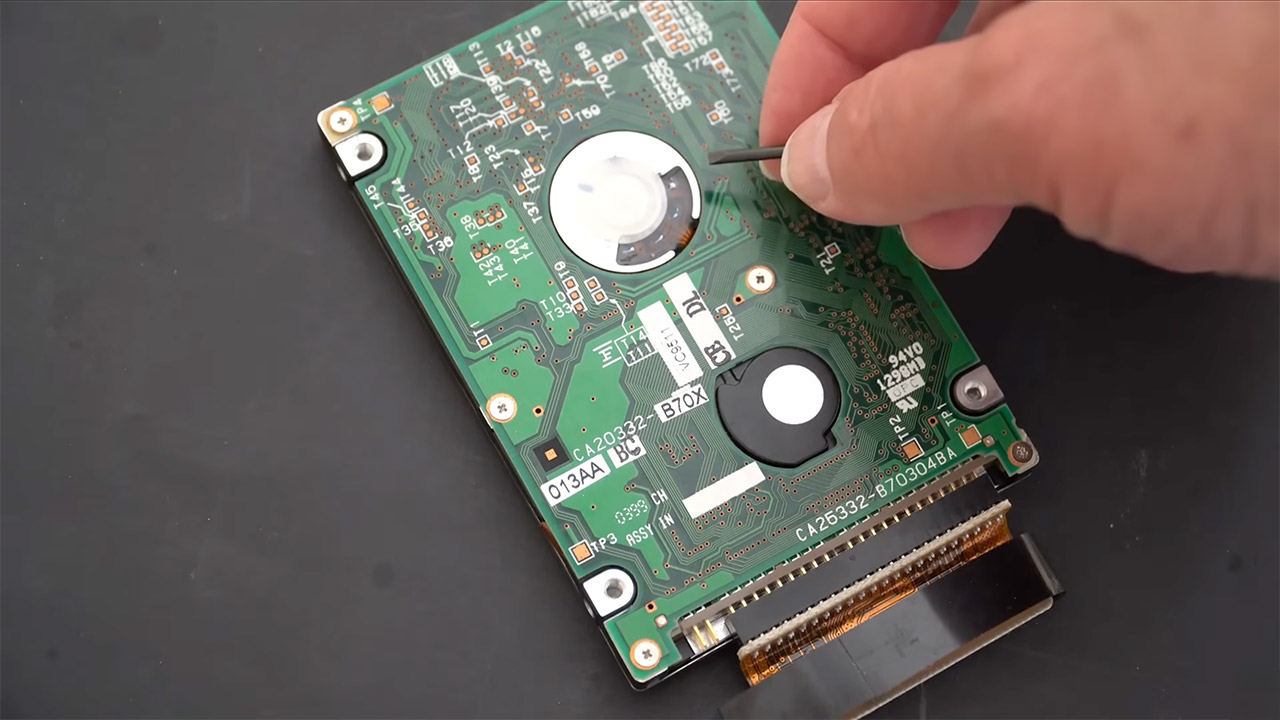
Circuit boards are found in almost every electronic device that consumers use today. When you open your phone, computer, or a basic remote control, green is the first thing you notice. That famous green hue, however, does not come from the board material itself; it is due to a special coating known as solder mask, which covers the copper traces and gives them a green tint.
The solder mask is an essential tool for any board. After etching the copper paths onto the fiberglass basis, they apply a thin layer of polymer. The mask serves two important functions: it protects the copper from oxidation and moisture, which could cause harm, and it prevents solder from bridging between close connections while you’re assembling the item, which can result in short circuits. Without the mask, fragile circuitry could easily be damaged by regular handling or exposure to the environment.
【AMD Ryzen 4300U Processor】KAMRUI Pinova P2 Mini PC is equipped with AMD Ryzen 4300U (4-core/4-thread, up to 3.7GHz), Based on the advanced Zen…
【Large Storage Capacity, Easy Expansion】KAMRUI Pinova P2 mini computers is equipped with 16GB DDR4 for faster multitasking and smooth application…
【4K Triple Display】KAMRUI Pinova P2 4300U mini desktop computers is equipped with HDMI2.0 ×1 +DP1.4 ×1+USB3.2 Gen2 Type-C ×1 interfaces for…
Green became the go-to color all those years ago, when reliable solder masks first started rolling off the assembly line. The early ones used a combination of certain resins and hardeners that gave out a green tone, and it just so happened that there was an abundance of the green material available at the suppliers. So that became the industry norm. Over time, the industry has developed its entire process around this uniform green colour.
The human eye can tolerate green fairly well, especially when individuals stare at boards for hours on end under strong lighting. Green offers a fantastic contrast against the glossy copper pads and the white letters on top, reducing eye fatigue caused by staring at them for an extended period of time, since other hues have been found to be less durable. Automatic optical inspection equipment also operate better with green boards because their cameras and software have been tuned to work best with that color over time.
The cost of changing colors is also not high enough to make a significant difference. The green mask material requires less pigments in some formulations, making the production process easier because they don’t have to complicate the imaging and development procedures. The tighter design requirements associated with the conventional green color also provide them with more accurate control when exposed to ultraviolet radiation. [Source]
The researchers said that both the RTX 3060 and RTX 6000 cards are vulnerable. Changing BIOS defaults to enable IOMMU closes the vulnerability, they said. Short for input-output memory management unit, IOMMU maps device-visible virtual addresses to physical addresses on the host memory. It can be used to make certain parts of memory off-limits.
“In the context of our attack, an IOMMU can simply restrict the GPU from accessing sensitive memory locations on the host,” Kwong explained. “IOMMU is, however, disabled by default in the BIOS to maximize compatibility and because enabling the IOMMU comes with a performance penalty due to the overhead of the address translations.”
A separate mitigation is to enable Error Correcting Codes (ECC) on the GPU, something Nvidia allows to be done using a command line. Like IOMMU, enabling ECC incurs some performance overhead because it reduces the overall amount of available workable memory. Further, some Rowhammer attacks can overcome ECC mitigations.
GPU users should understand that the only cards known to be vulnerable to Rowhammer are the RTX 3060 and RTX 6000 from the Ampere generation, which were introduced in 2020. It wouldn’t be surprising if newer generations of graphics cards from Nvidia and others are susceptible to the same types of attacks, but because the pace of academic research typically lags far behind the faster speed of product rollouts, there’s no way now to know.
Advertisement
Top-tier cloud platforms typically provide security levels that go well beyond those available by default on hobbyist and consumer machines. Another thing to remember: There are no known instances of Rowhammer attacks ever being actively used in the wild.
The true value of the research is to put GPU makers and users alike on notice that Rowhammer attacks on these platforms have the potential to upend security in serious ways. More information about GDDRHammer and GeForge is available here.
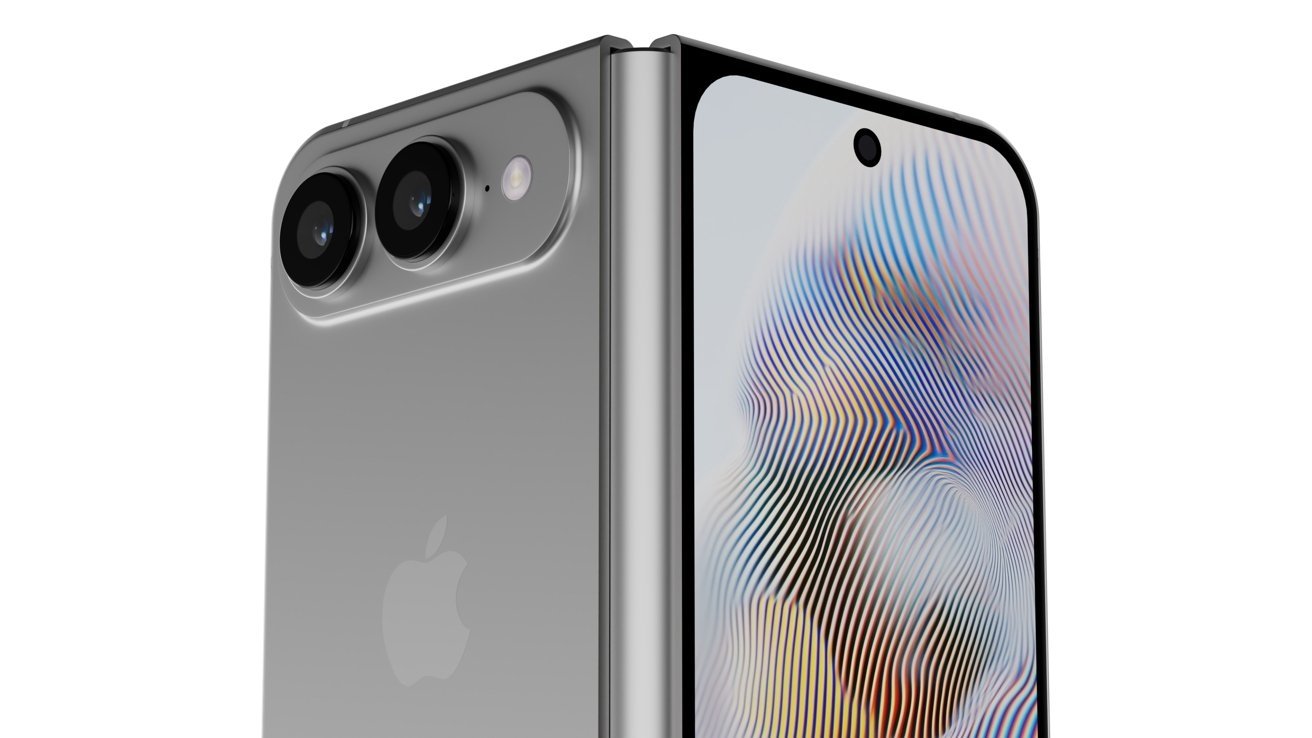
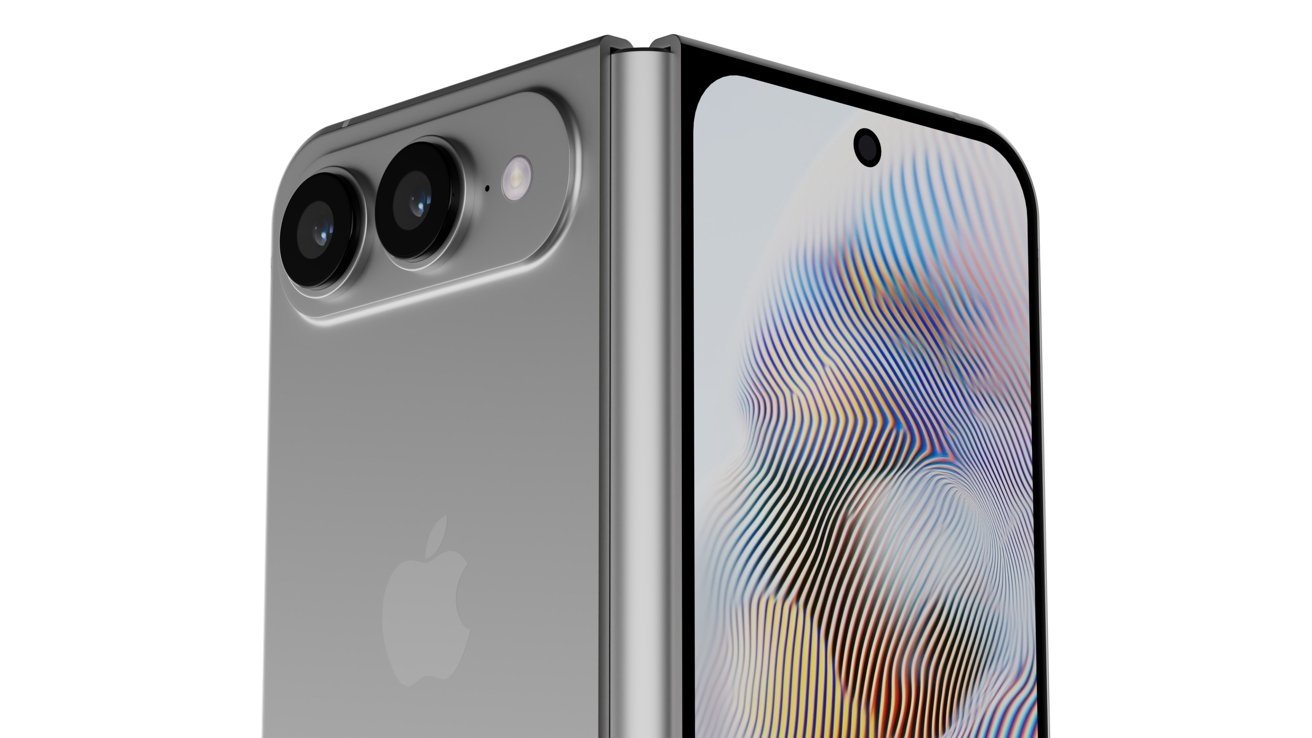
A new leak suggests that the hinge of the iPhone Fold will use “chip-level polymer printing 3D technology” and the iPhone 18 upgrades will be limited to color changes.
The iPhone Fold will allegedly feature a 3D-printed hinge.
With Apple’s first foldable expected to debut in late 2026, we’re now seeing more and more claims about its hardware. Following multiple rumors suggesting Liquid Metal would be used for the hinge of the iPhone Fold, another tipster has provided a new tidbit about the component. To be more specific, a translated post from leaker Fixed Focus Digital on Weibo said that Apple is putting considerable effort into its foldable iPhone. This reportedly “involves chip-level high-molecular 3D printing technology, with further developments in the hinge design still to be revealed.” Rumor Score: 🤔 Possible Continue Reading on AppleInsider | Discuss on our Forums
IBM and Arm are teaming up to let Arm-based software run on IBM Z mainframes. Network World reports: The two companies plan to work on three things: building virtualization tools so Arm software can run on IBM platforms; making sure Arm applications meet the security and data residency rules that regulated industries must follow; and creating common technology layers so enterprises have more software options across both platforms, IBM said in a statement.
IBM has not said whether the virtualization work will happen at the hypervisor level, through its existing PR/SM partitioning technology, or via containers — a question enterprise architects will need answered before they can assess the collaboration’s practical value. IBM described the effort as serving enterprises that run regulated workloads and cannot simply move them to the cloud, the statement said. IBM mainframe customers have largely missed out on the efficiency and price-performance gains Arm has already delivered in the cloud. “Arm says close to half of all compute shipped to top hyperscalers in 2025 runs on Arm chips, with AWS, Google, and Microsoft deploying their own Arm silicon through Graviton, Axion, and Cobalt, respectively,” reports Network World.
That gap is precisely what IBM and Arm’s collaboration intends to address. “This is a mainframe adjacency play,” says Rachita Rao, senior analyst at Everest Group. “The intent is to extend IBM Z and LinuxONE environments by enabling Arm-compatible workloads to run closer to systems of record. While hyperscalers use Arm to lower their own internal power costs and pass savings to cloud-native tenants, IBM is targeting the sovereign and air-gapped market.”
HP EliteBook 6 G2q delivers up to 85 TOPS for local AI tasks
Always-connected 5G experiences require specific hardware and preinstalled eSIM modules
Service works only on compatible commercial PCs running Windows 11
HP has unveiled the EliteBook 6 G2q, an ultraslim AI PC that relies on Snapdragon X2 Elite or X2 Plus processors to deliver up to 85 TOPS of NPU performance for local AI tasks.
This lightweight laptop, up to 15% thinner than its predecessor, claims to offer always-connected experiences through HP Go 5G service.
This service is advertised as offering unlimited 5G data by automatically switching between carriers for optimal coverage.
Article continues below
Advertisement
Connectivity through HP Go 5G
However, reading through the fine print, some major restrictions and throttles undermine the promise of truly unlimited, seamless 5G broadband.
One key limitation is that HP Go 5G requires specific hardware, including an embedded WWAN 5G module and a preinstalled eSIM.
Advertisement
Unfortunately, it only works on compatible commercial PCs running Windows 11 and is activated through zero-touch deployment via HP’s management console.
Another restriction is that access is limited to the United States, which prevents users from relying on the device for continuous connectivity while traveling internationally.
Sign up to the TechRadar Pro newsletter to get all the top news, opinion, features and guidance your business needs to succeed!
For this reason, international users must return to the United States at least once every 90 days to maintain roaming eligibility.
Advertisement
The service itself is structured around tiered plans, with Lite offering domestic unlimited data, Premier adding 1GB for international use monthly, and Premier Plus promising unlimited global access.
All of these plans are prepaid and non-refundable, requiring 3-, 6-, or 12-month commitments purchased directly through HP sales representatives, which reduces flexibility for many users.
A further limitation appears in the data speeds, which throttle progressively after 5GB per month, eventually slowing to 100Kbps after 100GB.
Advertisement
Tethering and hotspot usage are also explicitly prohibited under all plans, restricting users from sharing the connection with additional devices or coworkers.
Taken together, these conditions reveal that the so-called WiFi-killing broadband carries notable constraints that can complicate practical usage.
HP embeds Wolf Pro Security Next Gen Antivirus directly into the EliteBook 6 G2q to protect against modern threats.
The device also includes HP TPM Guard, which defends BitLocker-encrypted data from physical attacks and unauthorized access.
Advertisement
Additional protections come from the Wolf Connect cellular card, improving asset tracking and data management across multiple endpoints.
These security measures extend across HP’s commercial portfolio, offering consistent defense for AI workloads deployed at the edge.
The HP EliteBook 6 G2q will be available starting in July 2026 on HP.com, with pricing announced closer to launch.
An anonymous reader quotes a report from Bloomberg: Amazon will start charging sellers who use its shipping services a 3.5% “fuel and logistics” surcharge later this month, joining the ranks of shipping companies raising prices as the war in Iran pushes oil prices higher. The fees take effect on April 17 for customers of the company’s Fulfillment by Amazon service — which is used by many of the independent sellers who list their products on Amazon’s retail sites — in the US and Canada. Items shipped by Amazon on behalf of merchants who sell on their own sites or at other retailers will carry the surcharge beginning May 2. “Elevated costs in fuel and logistics have increased the cost of operating across the industry,” Ashley Vanicek, an Amazon spokesperson, said on Thursday. “We have absorbed these increases so far, but similar to other major carriers, when costs remain elevated we implement temporary surcharges to partially recover these costs.”
Vanicek notes that the fee will apply to the sum Amazon charges to ship an item, not the product’s sale price.
Soma Energy’s co-founders, from left: CEO Ath Caramanolis, Chief Technology Officer Mario Souto and Chief AI Scientist Henrique Hoeltgebaum. (Soma Energy Photos)
Soma Energy, a startup founded by former Amazon energy managers, emerged from stealth Thursday with $7 million in funding.
The Vancouver, B.C.-based company has built an AI platform serving power producers and data centers, helping both optimize their energy assets in real time to save money and extend their available power. The technology coordinates resources including wind, solar and batteries and the management of energy demands such as data center workloads.
CEO Ath Caramanolis said you can visualize an electrical system as a complex network of roads and highways on which electrons — instead of cars and trucks — are traveling.
“Our software is sort of a control plane that helps provide the self-driving for electrons on these highway systems,” Caramanolis said in a GeekWire interview.
More efficient routing of electron traffic can bring more power to bear for the grid’s competing needs.
Advertisement
“There is low hanging fruit everywhere, and the opportunities for large energy users like data centers to better utilize the grid exist all across North America,” Caramanolis said.
Industries, utilities and elected officials worldwide are racing to expand energy supply as data centers and electrification of transportation, heating and other sectors drive surging demand. Data centers alone are expected to more than double their power draw — from 82 gigawatts in 2025 to 219 by 2029 — with most of that growth fueled by AI, according to McKinsey.
Amazon hired Caramanolis in 2018 to create the energy optimization team at AWS, which managed about 10 gigawatts of renewable energy across its global network of data centers. Seattle City Light, by comparison, has a generation capacity of about 2 gigawatts.
Caramanolis then recruited Mario Souto, Soma Energy’s co-founder and chief technology officer, to build the machine learning platform AWS used to optimize its renewable portfolio. The startup’s third co-founder, Chief AI Scientist Henrique Hoeltgebaum, is an expert in AI-driven forecasting and anomaly detection for energy systems.
Advertisement
Soma Energy launched in February 2024 and has 18 employees. The startup has deployed 2 gigawatts of assets in the U.S. with customers including several independent power producers and five data center companies — among them H5 Data Centers, whose sites include a large facility in downtown Seattle.
“By coordinating existing resources, we were able to access capacity significantly sooner than expected, accelerating our time to power and removing a critical constraint on expansion,” said Josh Simms, CEO of H5 Data Centers, in a statement.
The seed round was led by Category Ventures, with participation from Haystack, Panache Ventures, RRE Ventures, TO.VC, Uncork Capital and Walter Kortschak. The investment will allow the team to hire new employees in engineering and commercial roles and expand its reach across North America.
“Having managed hyperscale power systems firsthand, the founders built Soma Energy as if they were the customer themselves,” said Villi Iltchev, partner at Category Ventures.
Supercapacitors turn charging time from hours into mere seconds
Fast charging exposes the real limits of lithium-ion battery chemistry
Supercapacitor technology lacks sufficient energy capacity for practical electric vehicles
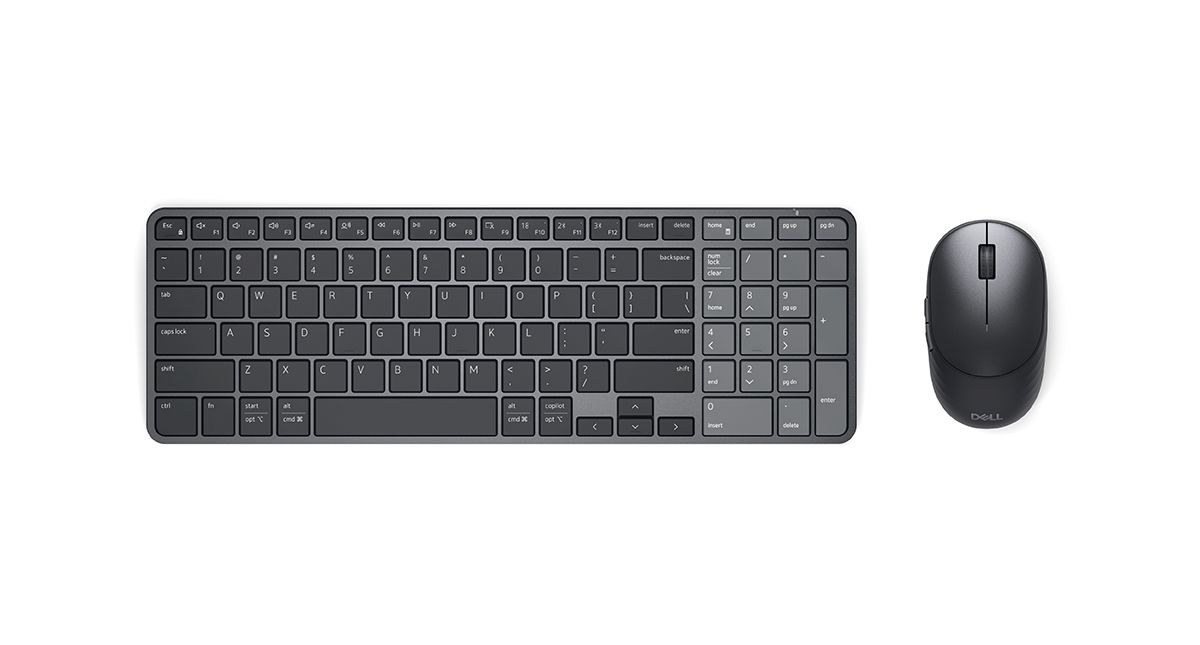
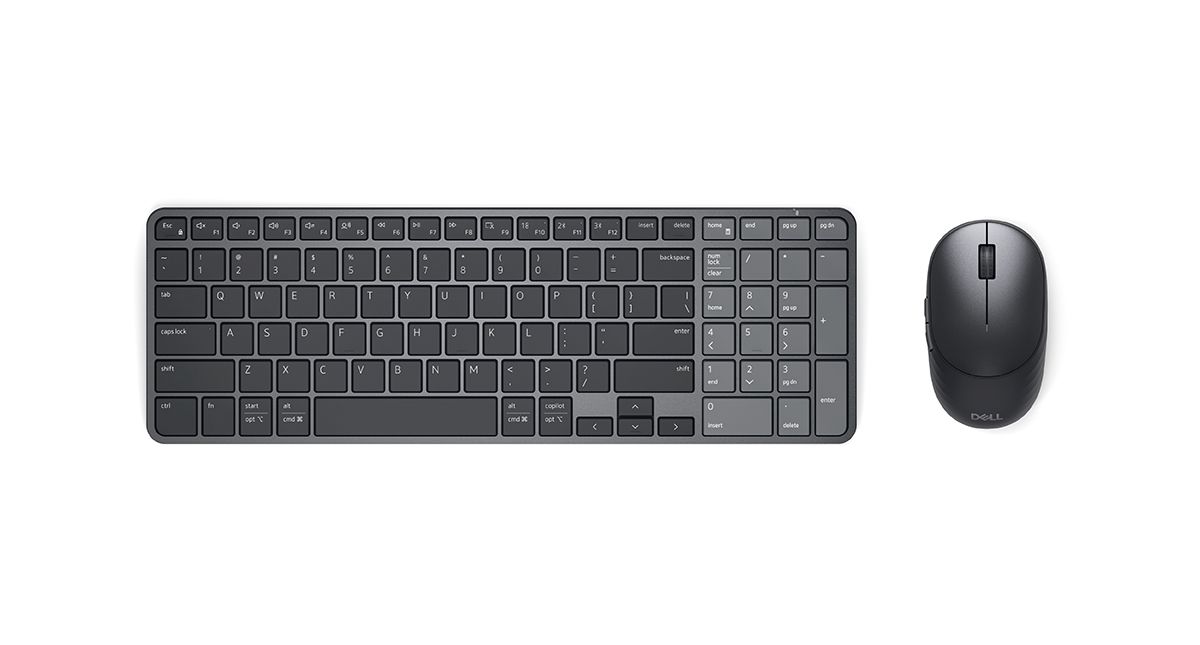
Dell has introduced a keyboard and mouse combo that charges in five seconds and delivers a full day of use.
The new Dell Pro 7 Rechargeable Compact Keyboard and Mouse relies on supercapacitor technology rather than traditional lithium-ion batteries.
This system delivers unprecedented charging speeds, with a full recharge in under 5 minutes, powering the keyboard for up to 3 months and the mouse for 1.5 months.
Article continues below
Advertisement
How supercapacitors change the charging equation
Supercapacitors differ fundamentally from conventional batteries in how they store and release energy.
Unlike lithium-ion cells that rely on chemical reactions to store power, a process that inherently limits charging speed, supercapacitors store energy electrostatically.
Advertisement
By combining high-speed charging with moderate energy storage, Dell enables a system where devices are ready to use almost immediately.
Dell’s implementation of this technology in the Pro 7 peripherals eliminates the need to leave devices plugged in overnight or carry spare batteries for critical moments.
Sign up to the TechRadar Pro newsletter to get all the top news, opinion, features and guidance your business needs to succeed!
The company also claims the mouse is the world’s lightest rechargeable pointing device that does not use a lithium-ion battery.
Advertisement
The compact design makes the devices ideal for mobile professionals, consultants, or anyone moving between hot desks, conference rooms, or home offices.
The keyboard offers quiet keys for minimal disruption, while the mouse delivers precise tracking without requiring heavy batteries.
This technology could reshape the electric vehicle (EV) industry within the next few years.
Advertisement
EVs rely almost entirely on lithium-ion battery packs that store energy through chemical reactions, and in a typical EV, full charging takes about 30 minutes on fast chargers or several hours using home setups.
That process typically delivers a driving range between 300 and 500 km, depending on the vehicle, but the limitation involves not only charger speed but also the underlying battery chemistry that governs energy storage.
Pushing energy too quickly into lithium-ion cells generates heat, accelerates degradation, and reduces long-term performance reliability.
In theory, an EV powered by supercapacitors could recharge in a few minutes rather than hours under current systems.
Advertisement
Such systems can also handle rapid bursts of energy more efficiently, improving acceleration and regenerative braking performance.
However, there is a trade-off because supercapacitors currently store far less energy than lithium-ion batteries.
This limitation means vehicles would experience reduced driving range if supercapacitors were used on their own.
Supercapacitors also tend to discharge stored energy more quickly over time, especially when the vehicle remains idle.
Advertisement
A more practical solution involves combining lithium-ion batteries with supercapacitors in a hybrid energy storage system.
This approach could improve charging speed, extend battery lifespan, and enhance performance without sacrificing overall driving range.
The same principle seen in Dell’s accessories suggests future EV systems may better balance charging speed and endurance.
If you’re an American and you use the Internet at home, it seems probable that routers are going to be in short supply. The US government recently mandated all such devices be home grown for security reasons, which would be fine were it not that the US has next-to-no consumer-grade router manufacturing industry.
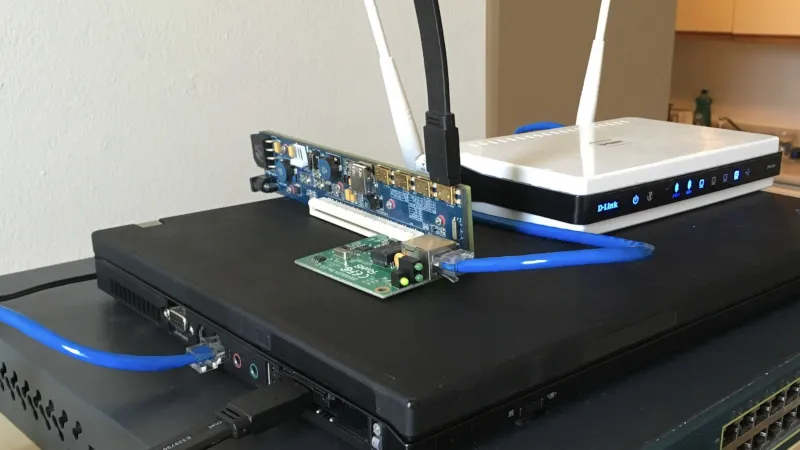
The piece is really a guide to setting up a Linux router, which he does on a small form factor PC and a hacked-together assembly of old laptop, PCI-express extender, and scrap network kit. In its most basic form a router doesn’t need the latest and greatest hardware, so there exists we’re guessing almost two decades of old PCs just waiting to be pressed into service. Perhaps it won’t help the non-technical Man In The Street much, but maybe it’ll inspire a few people to save themselves a hefty bill when they need to connect.


















































You must be logged in to post a comment Login