Connect with us
DAPA Banner
DAPA Coin
DAPA
COIN PAYMENT ASSET
PRIVACY · BLOCKDAG · HOMOMORPHIC ENCRYPTION · RUST
ElGamal Encrypted MINE DAPA
🚫 GENESIS SOLD OUT
DAPAPAY COMING

Tech

Why delivering on infrastructure projects requires a broad approach

Published

on

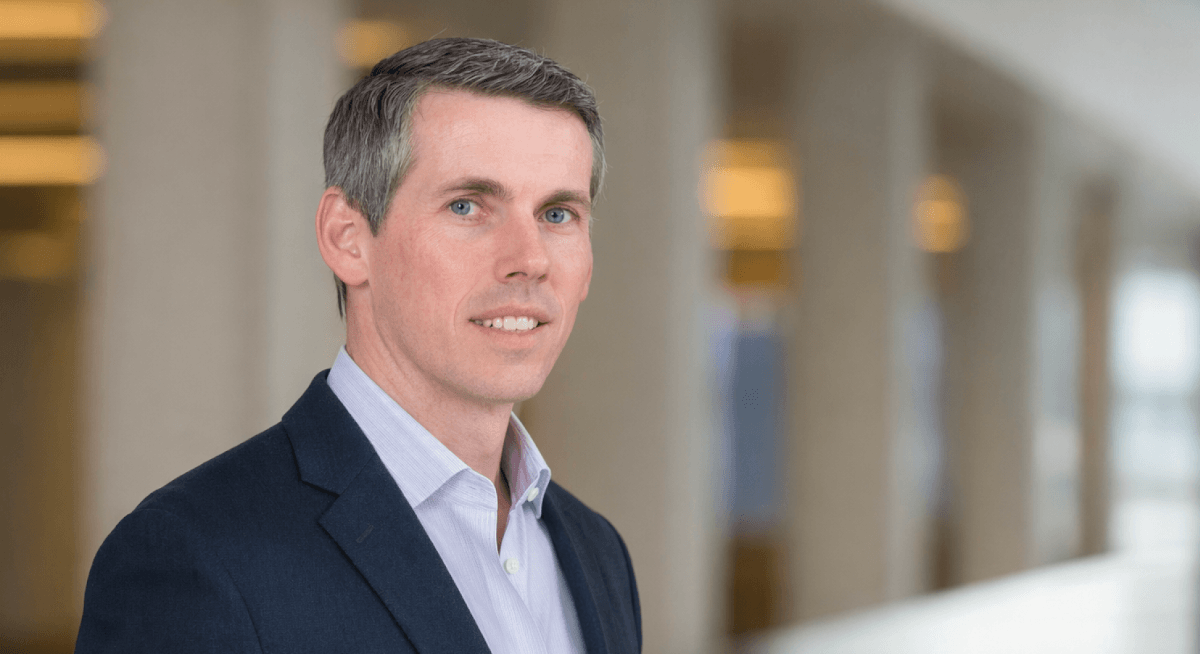
Accenture’s Paraic Rattigan explores his role as an infrastructure and capital projects manager in a space that looks vastly different to when he first started out.

“I’ve always been interested in engineering and the built environment and enjoyed solving technical problems,” explained Paraic Rattigan, an infrastructure and capital projects manager at Accenture. 

He told SiliconRepublic.com that, as was common with his generation growing up in Ireland, he saw first-hand the career opportunities created during the building boom of the Celtic Tiger – leading him to pursue civil engineering studies.

“I did my undergraduate degree in civil engineering at UCD, back when the faculty was one of the few remaining based in Earlsfort Terrace in Dublin. I was relatively young when I finished my undergrad and was enjoying student life, so I opted to pursue a postgraduate degree immediately after and eventually graduated with a PhD.”

Advertisement
What educational and work experiences led you to the role you have now?

Since then, I have worked for international engineering consultancy firms, both in Ireland and in Canada. During my time in Canada, I felt the urge to broaden my professional knowledge, so I pursued an MBA at the University of British Columbia and moved into more strategy and consulting-type roles.

Eventually the draw to return to Ireland proved too strong and I moved back with my partner (now wife) Jackie in 2019. Since settling back in Ireland, I have held public sector roles supporting research, policy and economic development, across sectors such as renewable energy, transportation, sustainability and manufacturing. I joined Accenture’s growing Infrastructure and Capital Projects team in early 2024.

What were the biggest surprises or challenges you encountered on your career path and how did you deal with them?

I think the diversity and breadth of the roles required to deliver large capital projects was something many, including myself, underestimated.

It requires moving from a narrow perspective that focuses on engineers, architects and contractors, to an understanding that to successfully deliver large infrastructure requires an experienced community of practitioners including legal, commercial, governance, technology, alongside the more traditional construction professionals and trades. I think the role and importance of local and national government, from a long-term strategic, planning, policy and budgetary perspective is commonly underestimated in the delivery of long-term major projects and programmes, although this now seems to be changing.

Advertisement

Also, looking back, the scale and speed of technological advancement across society and the workplace is remarkable.

When I started in UCD, mobile phones were only just becoming commonplace and laptops were a rarity at undergraduate level, but within a few short years they were the norm and quickly became essential from both personal and business perspectives.

Since then, it seems like every few years there is a change in ways of working, from a pivot to digital tools, through to cloud solutions, to hybrid and remote working and now the adoption of artificial intelligence. The modern workforce must be much more agile and open to change and disruption.

What do you enjoy about your job?

Construction has traditionally been a slow adopter of technology and project teams are often cited as the barrier to change. But the reality is that complex projects come with significant time and cost pressures.

Advertisement

What’s exciting now is that a tipping point is being reached, where building more quickly, more sustainably and with greater control means any efficiency advantage really counts. Accenture has embraced that shift, combining its history of tech delivery and digital transformation with specialist capital project expertise and being part of that effort to reinvent the construction sector is what I find most energising about my role.

What aspects of your personality do you feel make you suited to this job?

Since no two days or assignments are ever the same, having the ability to solve problems, be organised and understand how to prioritise tasks is particularly beneficial. I also take a logical approach to most projects and like to work back from the intended outcome and plan accordingly.

Complex problems need to be broken down early into component parts, otherwise they can quickly become overwhelming. My career to date has taught me that an up-front investment in planning (no matter how small the task), alongside adequate interim check-points, tends to pay off in the long run.

How did your current company support you on your career path?

There are always interesting opportunities, whether that be in areas in which I’m already experienced or in new emerging areas.

Advertisement

Since joining Accenture, I’ve been involved in projects across energy generation and transmission, transportation, healthcare and most recently data centres. I have benefited greatly from working alongside international industry experts across these projects. Also, I think that hybrid working has been a game-changer for many including myself. Living outside the Dublin commuter belt and with a young family, the ability to work seamlessly with our local and international teams has been a big plus for me.

What advice would you give to those considering a career in this area, or just starting out in one?

Be curious, ask questions and do your research. There are so many diverse and interesting skillsets required to deliver capital projects and with such strong current demand there really is an opportunity in the sector for everyone, regardless of where you see your strengths or interests.

Also, remember that careers are never linear or pre-determined. I constantly meet people from a variety of backgrounds and educational pathways who have evolved and changed direction multiple times before ending up in a role they love. Most importantly, be proactive about shaping the direction of your own career. Like life, your career is a journey, not a destination.

Don’t miss out on the knowledge you need to succeed. Sign up for the Daily Brief, Silicon Republic’s digest of need-to-know sci-tech news.


Advertisement

Source link

Continue Reading
Click to comment

You must be logged in to post a comment Login

Leave a Reply

Tech

Digital resilience compounds when AI and human expertise scale together

Published

on

Presented by Splunk


Agentic AI is making IT and security teams dramatically more efficient. But it’s also removing the apprenticeship that has long produced experienced operators.

As organizations automate more of the work once performed by junior analysts and engineers, they’re confronting a challenge that’s as much about workforce design as architecture design: how to build the next generation of experts when AI handles the work that once trained them.

What the junior workforce has been doing

For two decades, the path to becoming a world-class SecOps analyst, SRE, or NetOps engineer ran through repetition.

Advertisement

Triaging false positives. Hunting through dashboards for context. Reading logs at 2 a.m. that turned out to be benign. The industry treated this work as drudgery, and in many ways it was.

But it also served as the apprenticeship.

The thousands of hours an analyst spent staring at traffic patterns built the intuition that made them invaluable when a real attack arrived. That intuition was not taught in a single course or captured in a runbook. It was accumulated through exposure, pattern recognition, failure, and escalation. Over time, this is how people earn deep analytical experience.

However, agentic AI is now beginning to automate the very tasks that once served as the training ground for that expertise. That is not a reason to slow down. The drudgery was costly. The burnout was real. Organizations should use agents to reduce toil wherever they can.

Advertisement

At the same time, as we remove that apprenticeship loop, we need to provide operators something better in its place. How organizations approach this issue today will determine the winners for the future.

Organizations that approach this deliberately will produce the operators skilled to succeed in the next decade. Organizations that punt on this may find themselves with faster systems today, but with fewer people who understand them deeply enough to govern them tomorrow.

When automation hollows out accountability

There is also a second dimension to this conversation that gets less attention than it should.

In regulated environments, the drudgery of apprenticeship is part of the accountability layer. Frameworks from SOX to PCI DSS to HIPAA to NIS2 assume there is a chain of human judgments behind a control decision.

Advertisement

Auditors do not interview models. They interview people who can explain why a system did what it did, why the decision was sound, and whether the right controls were in place.

When the population of professionals who can explain that chain begins to thin, the risk may not appear immediately. The control may still pass. The workflow may still be executed. The dashboard may still look green.

But the underlying organizational memory begins to hollow out.

This is not simply a tooling problem. It is also a workforce skill and design problem. And for organizations moving quickly on agentic adoption, the risk is closer than many think.

Advertisement

Building human expertise to govern AI

When we lose part of the accountability layer to agents, humans will step into a different type of governance role. Governing an agentic system means implementing automated guardrails that adapt to non-deterministic agent behavior and ensures agents behave appropriately under conditions no one fully anticipated. It means designing escalation criteria that catch the right anomalies without overwhelming humans with the wrong ones. It means implementing dynamic tools, alerts, and processes to review machine decisions to detect drift, bias, and reasoning failures that no individual case would reveal.

The ability to evaluate and respond to these exceptions requires judgment built over years of experience, learning pattern recognition that the old apprenticeship model used to produce.

That is why the workforce question and the architecture question are now the same question. If we expect humans to govern increasingly autonomous systems, we need intentional pathways that help people manage the scale and speed of AI systems while building the intuition and judgment in human operators required to do that work.

In the AI era, the most valuable platforms will not simply automate the most tasks. They will help people become more capable, more credible, and more essential as the systems around them become faster and more intelligent.

Advertisement

That means organizations need to invest in the full ecosystem of expertise for operators: communities that spread shared practices, certifications or other proofs that make expertise visible, and human-oriented explanations and verifications in the AI along with learning paths that build capability. Empowerment is an architecture design choice

Human empowerment is a critical part of the conversation around the practical use of AI. However, without an intentional strategy to back this up, it risks becoming the kind of phrase that means nothing because it can mean anything.

Empowerment for agentic systems cannot just be a conceptual requirement. It has to be a set of design choices baked into how systems behave. An agentic system that empowers its human operators and grows their professional skillset does four things:

1. Exposes reasoning, with the data lineage behind it

Every recommendation an agent makes should be traceable to the data it considered, the logic it applied, and the provenance of the inputs it used. Operators who can see reasoning develop judgment about when to trust it. Operators handed only conclusions do not.

Advertisement
2. Tiers authority by confidence and impact

Familiar, low-risk patterns can be handled autonomously. Novel situations or actions with meaningful blast radius should escalate by default. The boundary should be explicit and configurable by the teams that own the consequences.

3. Treats disagreements as a correction signal

When an experienced engineer overrides an agent, they are doing more than disagreeing. They are correcting the system with judgment the model did not have: a fragile dependency, a quirk in the environment, a constraint the data never saw. A system that registers the override but ignores the reasoning behind it learns nothing from the one moment a human knew better.

4. Captures resolutions as cross-domain knowledge

How an incident gets resolved is a lesson that rarely stays in one lane. A SecOps incident may expose an ITOps weakness. A network issue may trace back to business impact. When that connection lives only inside a closed ticket, the next team to hit it starts from zero. Resolutions should travel across domains, not die where they were filed.

These are not aspirational qualities. They are testable product capabilities. Leaders evaluating agentic systems should be able to identify where these capabilities live, what happens when they fail, and whether operator skill improves after deployment.

Advertisement

The next advantage is when human and AI scale together

For AI systems to be practical, trusted, and work at scale, the critical design point is for the AI to work deeply alongside and empower human operators.

As such, the agentic era is not a story about replacing humans. It is a story about redesigning the systems humans operate so that these operations can happen at machine speed and scale, while human expertise grows at the same time. Together, rather than at each other’s expense.

That outcome is not a given. It will happen only where leaders treat operator development as a priority, not an afterthought. To achieve this, agentic systems have to be intentionally designed to expose reasoning, capture learning, and route work back to humans in ways that build skill and career rather than erode both.

The agents will keep getting smarter and faster. The ability of operators who work alongside them to learn and grow in lockstep, will determine whether the next decade of digital resilience is something organizations truly own, or something they rent from a shrinking pool of expertise.

Advertisement

Learn more about how Cisco Data Fabric powered by the Splunk Platform is helping teams accelerate agentic operations.

Kamal Hathi is SVP and GM of Splunk, a Cisco Company.


Sponsored articles are content produced by a company that is either paying for the post or has a business relationship with VentureBeat, and they’re always clearly marked. For more information, contact sales@venturebeat.com.

Source link

Advertisement
Continue Reading

Tech

Anthropic launches Claude Science app for researchers and scientists

Published

on

The company said it wanted to remove the tedious procedural aspects inherent to scientific research by uniting fragmented tools, resources, file formats and databases.

Anthropic, the AI company behind Claude and Mythos, has unveiled its ‘Claude Science’ offering, which it described as “an AI workbench for scientists”.

Classified as a “public beta app” that runs using existing Claude models, Anthropic said its new product would “integrate the tools and packages that researchers most commonly use” in order to produce “auditable artifacts”, and provide “flexible access to computing resources”.

The company said it aimed to remove the tedious procedural aspects inherent to scientific research by uniting fragmented tools, resources, file formats and databases “into a single research environment where scientists can conduct all stages of their work”.

Advertisement

The app, which is now available in beta via Claude Pro, Max, Team and Enterprise plans, can help scientific users analyse literature, execute multi-step research, produce detailed artifacts, and iteratively refine figures and manuscripts prior to publication, according to its maker.

Anthropic, in a blogpost detailing the release, said that Claude Science can natively render “rich scientific artifacts, including 3D protein structures, genome browser tracks, chemical structures and more”, alongside generated plain-language descriptions of how such figures were created, to be used for later validation, record-keeping and reproduction.

The app can also handle planning and resource allocation for large-scale analyses that would typically require separate monitoring and computing capacity decisions to be made by a researcher or team, according to Anthropic.

“As the pipeline runs, a reviewer agent inspects the outputs, flagging incorrect citations, untraceable numbers and figures that don’t match their underlying code, and self-correcting as it goes,” the blogpost read.

Advertisement

The app is also said to be capable of synthesising answers to user questions through consultation of a wide range of databases and trusted sources of scientific information, which can be customised to user preferences.

Anthropic noted that in recent months, researchers have used Claude Science in beta for tasks such as single-cell RNA sequencing analysis, protein structure prediction, cheminformatics and more.

Meanwhile, Bloomberg reported that Anthropic has started to work on in-house, preclinical drug discovery schemes outside of the traditional scope of biotech and pharma research.

Earlier this week, Google Cloud Marketplace said it would begin offering two ‘large quantitative models’ (LQMs) developed by SandboxAQ later in 2026 with the aim of driving AI-assisted developments in materials science, healthcare and drug discovery.

Advertisement

SandboxAQ is already integrated with Anthropic’s Claude AI model. It claims its LQMs can offer “critical advances” in sectors such as life sciences, financial services and navigation.

In other Anthropic news, after weeks of uncertainty around the status and availability of Claude Fable 5 and Mythos 5 due to an impasse between the US government and Anthropic, the AI models had their export bans lifted by the country’s Department of Commerce yesterday (30 June).

Don’t miss out on the knowledge you need to succeed. Sign up for the Daily Brief, Silicon Republic’s digest of need-to-know sci-tech news.

Advertisement

Source link

Continue Reading

Tech

Study finds humans will talk to AI ghosts of the dead as reincarnations, and it’s pretty grim

Published

on

A new study from the University of Colorado Boulder confirms something that sounds both impressive and concerning. People find interacting with AI simulations of their dead loved ones deeply meaningful, and most will come away wanting to do it again.

The researchers call it a “generative ghost,” which is a clear reference to generative AI, but I’d still prefer to call it unsettling.

So what did the study actually find?

Doctoral candidate Jack Manning and associate professor Jed Brubaker recruited 16 participants aged 22 to 50, all of whom had lost someone close to them. 

During individual Zoom sessions, a second researcher quietly used an LLM to build a ghost of the deceased (in real time) from details provided by the participant, an AI-based reincarnation, if you will. 

Each participant chatted with two versions of the generative ghost: one that spoke in first person (“I remember going to the beach together”) and one that used third person (“She loved going to the beach with you,” where you is the participant). 

Advertisement

Participants unanimously preferred the first-person “reincarnation” over the third-person “representative,” which, I’ll admit, is the part I find most unsettling.

So who is building these, and why does it matter?

Small factual inaccuracies were forgiven during the interaction. However, wrong terms of endearment were not. For instance, when one stepfather’s ghost called his stepson “champ,” a word he’d never used, the participant nearly ended the session. 

This is the first user experience research on AI ghosts, published by the Association for Computing Machinery (via CU Boulder). And if you don’t already know, commercial services like Project December and HereAfterAI are already selling AI ghosts as a product

The study’s own participants flagged a significant concern. While everyone said they’d use a ghost again, almost all worried people who’ve lost their loved ones would become addicted to one. The lab has already initiated a follow-up study with mental health professionals to assess the psychological benefits and risks of generative ghost interactions.

Advertisement

Source link

Continue Reading

Tech

Somebody told DeepSeek to build in-browser ransomware and it gleefully complied

Published

on

You can’t ask most models to help you make “ransomware” directly, but many will be more than willing if you give them the right prompt. DeepSeek and other LLMs with fewer safety and security controls make theoretical cyberthreats – like browser-only ransomware – much more likely to be used in real-world infections, according to Check Point researchers.

The Israeli cybersecurity company analyzed a DeepSeek-generated sample in a Wednesday report that its threat hunters describe as in-browser ransomware.

Over the past year, the team has tracked almost 3,000 files attributed to DeepSeek, and classified nearly half (1,383 files) as malicious or dangerous using VirusTotal or static source analysis.

“Within this dataset, we found a sample that implemented a dangerous browser-native technique we have not observed exploited in the wild,” researcher Alexey Bukhteyev wrote

Advertisement

And while the sample was incomplete, and unable to pull off an in-the-wild infection, the security shop’s testing showed “little effort” would be required to make it attack-ready.

“Our research shows that the original incomplete DeepSeek sample can be transformed into a fully functional attack with minimal effort,” Pedro Drimel Neto, malware analysis team leader at Check Point Research, told The Register

“Very little effort is needed,” Neto said. “Low-level expertise is sufficient. You don’t need to be a sophisticated cybercriminal or advanced persistent threat group. In fact, we’ve already observed evidence of actual threat actors attempting this attack using straightforward LLM prompts.”

Known threat gets an AI boost

The risk ransomware poses to browsers isn’t a new idea. The File System Access specification lists ransomware as a security consideration, and a 2023 USENIX Security paper on Ransomware over Modern Web Browsers described how File System Access API could be abused to encrypt local files from a malicious web application.

Advertisement

The File System Access API is a browser capability, primarily supported by Chrome and Chromium-based browsers, that allows developers to build web applications, such as editors, IDEs, and creative tools, that can read, write, and manage files on the user’s local device.

“Even though it can be used to develop rich web applications, it greatly extends the attack surface, which can be abused by adversaries to cause significant harm,” Google’s Güliz Seray Tuncay and Florida International University researchers Harun Oz, Ahmet Aris, Abbas Acar, Leonardo Babun and Selcuk Uluagac wrote in 2023, long before LLMs could develop working malware and attack chains.

What’s new, according to Check Point, is that an AI model put these previously documented ideas into a “realistic and enforceable attack scenario leveraging a method that defenders had originally thought was unfeasible due to browser sandboxing limits: a DeepSeek-attributed malicious sample, generated as an all-in-one malware fantasy, connected this documented platform risk to a realistic phishing-style web application, demonstrating a viable end-to-end attack chain.”

This technique is especially appealing to attackers because it doesn’t require a native payload, APK installation, browser exploit, or root access to a compromised device. Instead, it uses social engineering – tricking a user into clicking on a malicious button – combined with a legitimate permission prompt exposed by the File System Access API in Chrome.

Advertisement

Meet InfernoGrabber 9000

This particular sample that Check Point uncovered is a Python Flask application that targets Android users. It’s named InfernoGrabber 9000, and VirusTotal calls it a “fully functional information stealer and ransomware toolkit.”

While the security sleuths don’t have the prompt submitted to DeepSeek to produce the malware, they speculate it was something along the lines of: “create a universal malicious tool that runs through the browser and collects as much victim data as possible, encrypts files, and demands ransom. In a single front-end, the generated code assembled routines and stubs for keylogging, clipboard monitoring, form and network-request interception, Discord-token collection, crypto-wallet and payment-card discovery, geolocation requests, webcam and microphone access, screenshots, local-file access, Chrome exploit stubs, ‘persistence,’ and a ransomware-style overlay.”

To be clear: the sample doesn’t actually do all of this. “A more accurate reading is that it is an AI-generated blueprint in which the model tried to translate familiar capabilities of native stealers and ransomware tools into a web page opened in the browser,” Bukhteyev wrote.

The code presents a victim-facing lure disguised as a Discord avatar AI upscaler. Clicking on the lure is intended to execute a slew of silent, harmful actions that run entirely inside the browser process. These include stealing Discord tokens, harvesting credit card numbers and cryptocurrency seed phrases, logging keystrokes, and capturing unauthorized webcam and microphone feeds. The code also includes specific routines for browser exploitation (such as targeting CVE-2023-4863), uses a hardcoded Discord webhook for data exfiltration and displays a ransomware WinLocker screen demanding Bitcoin.

Advertisement

The good news for defenders is that the sample was incomplete, and the browser’s built-in security model successfully prevents most of this functionality.

However, Check Point was able to create a working proof-of-concept for the browser-native attack using the latest DeepSeek model V4. The team had to remove some of the more explicit terms – like ransomware – from the prompt, but ultimately produced the same functionality: “a web page that asks the user for access to local files, processes them inside the browser, and leaves the user unable to recover the original content.” AKA: browser-only ransomware.

Neto told us that this type of LLM-generated code and in-browser attack is “likely happening now.”

“We expect to see this activity in the short term, if we haven’t already,” he added.

Advertisement

While traditional ransomware and extortion groups target enterprises and critical infrastructure organizations, as opposed to Android-device users, which was the focus of this research, “we have seen increased end-user ransomware activity recently,” Neto said. “What’s most concerning is that code obfuscation used in these attacks makes them difficult to spot, so there’s a real possibility that attacks using this technique are already occurring in the wild but going unnoticed.” ®

Source link

Continue Reading

Tech

Goose, a New Gay Dating App, Appears to Be a Psyop

Published

on

The Instagram Close Friends Story for @miles.sumrall shows an affable-looking guy with curly dark hair and an expertly groomed mustache beaming as he floats on the water. “You’re receiving this because you’re exactly the type of person we’re building this for,” the caption reads, accompanied by a code for an invite to a “members only community.”

The link leads to a login for Goose, a dating and friendship app for gay men with the slogan, “for the boys,” which allows users to “meet guys through the life you already have,” according to its website.

The problem is that @miles.sumrall does not appear to be real. Neither does @danielmmulugeta, the cute dark-haired influencer who shared the above caption, with the exact same verbiage, on his Close Friends’ Stories. Both accounts were created in May 2026, and have fewer than 10 posts, as well as a high following-to-follower ratio. And both of their Instagram avatars were determined with greater than 90 percent confidence to be AI-generated, according to the AI Image Detector software. A SynthID check on Google Gemini, which can help identify AI-generated images, also found that “most or all of” Miles and Daniel’s profile photos were created using Google AI.

Created by the model-influencer Derek Chadwick, as well as former BeReal growth and community manager David Aliagas, Goose positions itself as a Grindr alternative for gay men who want to build lasting relationships. At the time that it was announced, many scoffed at the idea that the app would be used for anything other than finding casual hookups. “Goose is basically Pokémon Ho,” one X user joked.

Advertisement

Still, user interest was apparently high enough that when the app launched last Thursday, it rose to #4 in the App Store’s free lifestyle downloads category, and is now ranked 33rd in lifestyle app downloads globally. And promotional content by creators like @miles.sumrall likely played a role in driving so many to download the app.

Miles and Daniel appeared in screengrabs shared on X by user @pspthe2nd, whose post alleged that the app “use[s] AI models to promote fake interest #goose.” But both of the accounts appear to be part of a much larger network of comely, seemingly AI-generated male influencers promoting the app, either by reaching out to gay men via DM or adding them to their Close Friends Stories.

Ryan Cheam, an account executive in marketing and public relations, says he first noticed a strange new Instagram account belonging to someone named @alistaircrombbie about a week ago. His bio says he works in PR at a well-known art gallery, so “I thought he was just a normal gay guy,” Cheam tells WIRED. He became suspicious, however, after Alistair DMed him inviting him to join a “curated network of guys” at Goose, sending him an invite code. A SynthID check found that “most or all” of Alistair’s profile photo was generated using Google AI.

In addition to Miles, Alistair, and Daniel, WIRED was able to identify more than two dozen similar accounts, all of which were created in May or June 2026 and featured just a few posts—a typical indication of inauthentic accounts. Many of the accounts also frequently comment on each other’s photos, including the same heart and fire emojis.

Advertisement

Often, the accounts followed potential members and added them to their Close Friends Stories, but sometimes, they directly DMed them to encourage them to sign up, as was the case with Dalton Bauer, who works in marketing and received a DM from a user named @lucalepkowski. “Hey! Okay this might feel random but felt you’d be interested :),” the message begins before inviting Bauer to the Goose community, using language identical to that of the one Cheam received from Alistair.

Source link

Advertisement
Continue Reading

Tech

The iPhone 18 Pro could launch in these three colors, and black still isn’t one of them

Published

on

iPhone Pro fans who were hoping Apple would bring back a dark color option this year might not be happy after reading this.

According to a new leak from Weibo tipster Instant Digital, the iPhone 18 Pro could launch in just three colors: Dark Cherry, Light Blue, and Silver-Gray. You see? Black or dark gray is not on the list.

So what exactly is being claimed here?

The three-color lineup would follow the same pattern as Apple’s iPhone 17 Pro. For those catching up, last year’s Pro iPhone launched with three options: Cosmic Orange, Deep Blue, and Silver, despite pre-launch rumors of up to five colors. 

This new leak suggests Apple may be doing it again. Instant Digital characterizes Dark Cherry as the standout marketing color, taking the role that Cosmic Orange plays in the current lineup. 

Light Blue might replace Deep Blue, and Silver-Gray would be similar to last year’s Silver, but with a potentially different shade (via 9to5Mac).

Advertisement

Is a three-color lineup actually confirmed?

Not quite. iPhone 18 Pro color rumors have shifted considerably this year. In February, a Deep Red finish was tipped as the phone’s signature color. In retrospect, it could be referring to the Dark Cherry shade.

In April, a separate leak pointed to four new finish options. For me, the lack of consensus means the colors haven’t been decided yet, though Instant Digital’s track record lends this claim some weight. 

Most recently, the drop-test footage of the iPhone 18 Pro surfaced on June 30 via a Tata Electronics data breach and showed the device in what appeared to be a gray colorway, which lines up with the Silver-Gray finish in the leak. 

The absence of black has become a running sore point for iPhone Pro customers. The iPhone 17 Pro was the first Pro model in recent years to skip black entirely, and it looks like there’s no relief in sight for the 18 Pro either.

Advertisement

Source link

Continue Reading

Tech

Gemini Spark can now clean up your Mac while you’re away

Published

on

Google has expanded Gemini Spark to the macOS app, adding computer-use capabilities that let the AI agent complete tasks on a Mac without user involvement.

The expansion follows Google’s broader rollout of Spark across web, Android, and iOS for AI Ultra subscribers in the United States. The agent first launched in May as an always-on background assistant capable of handling multi-step workflows on a user’s behalf without requiring manual input at each stage.

Building on that foundation, the macOS version extends Spark’s reach to desktop automation, covering tasks such as sorting files into designated folders or generating budget spreadsheets from invoice documents stored in a Downloads folder. The agent executes the workflow independently rather than waiting for step-by-step instructions.

Beyond local automation, Google is adding remote task assignment to Spark on Mac, which will allow a user to delegate a multi-step workflow from their phone and have the agent complete it on the desktop without any direct interaction once the task is set in motion.

Advertisement

Alongside the Mac expansion, Google is broadening Spark’s third-party integrations to include Canva, Dropbox, Google Keep, Google Tasks, Instacart, and Zillow Rentals.

Advertisement

Those connected app integrations will become available on the web and mobile platforms from next week, with support for the macOS app arriving in the weeks that follow.

More significantly for developers and power users, Google is rolling out Model Context Protocol support for Spark, a standard that allows the agent to connect with a wide range of third-party tools beyond the officially integrated applications already confirmed for the platform.

Advertisement

Spark is also gaining real-time topic tracking, which lets users configure the agent to monitor specified subjects and surface relevant updates the moment they become available, covering use cases from sports results to financial alerts triggered by a stock reaching a defined threshold.

Gemini Spark remains exclusive to AI Ultra subscribers in the United States across all supported platforms, with Google yet to confirm a timeline for broader regional availability.

Source link

Advertisement
Continue Reading

Tech

FLOSS Weekly Episode 873: Wait, That’s Not Open Source!

Published

on

This week Jonathan chats with Andy Gryc and Aaron Basset about QNX, and the interesting Open Source history and future of that embedded OS. Why does QNX Everywhere feel more open, and why do you need to register an account to download images? All that and more — Watch to find out!

Did you know you can watch the live recording of the show right on our YouTube Channel? Have someone you’d like us to interview? Let us know, or have the guest contact us! Take a look at the schedule here.

Advertisement

Direct Download in DRM-free MP3.

If you’d rather read along, here’s the transcript for this week’s episode.


Theme music: “Newer Wave” Kevin MacLeod (incompetech.com)

Advertisement

Licensed under Creative Commons: By Attribution 4.0 License

Source link

Advertisement
Continue Reading

Tech

The Supreme Court Upholds The Constitution. Barely.

Published

on

from the and-perhaps-not-for-long dept

Look, 5-4 Supreme Court decisions count just as much as 9-0 ones, and a 5-4 decision getting it right is still a win, but for a number of reasons, the 5-4 decision in Trump v. Barbara, regarding the issue of birthright citizenship is terrifying.

This isn’t a complicated issue. This isn’t an issue that should even be before the Supreme Court at all. The text of the Fourteenth Amendment is crystal clear:

All persons born or naturalized in the United States, and subject to the jurisdiction thereof, are citizens of the United States and of the State wherein they reside.

The history of the Fourteenth Amendment and every single damn case about this particular issue from after it was added to the Constitution until now has been abundantly, ridiculously clear: anyone born in the US is a US citizen. The only exception is kids of diplomats who are not considered “subject to the jurisdiction thereof.” The whole question of whether a child born in the US to foreign-born parents is a citizen was settled clearly in 1898 in US v. Wong Kim Ark and literally no one has seriously questioned this issue at all since then.

Until a group of freaking racists took over the White House and wanted to drum up hatred of foreigners and anyone not white. The Stephen Miller-led White House issued a hilarious/terrifying executive order pretending to overrule the clear meaning of the Fourteenth Amendment. That executive order was quickly challenged, and a year and a half later, the Supreme Court has ruled that the Fourteenth Amendment means what everyone knew it meant from the beginning. But just barely.

Advertisement

Chief Justice John Roberts, joined by Justices Amy Coney Barrett, Sonia Sotomayor, Elena Kagan, and Ketanji Brown Jackson, issued what should have been a 9-0 one page ruling saying “yes, we can fucking read the plain text of the Fourteenth Amendment, and it says exactly what it says, and no, the President can’t overturn that by executive order, no matter how racist he is.”

Instead, in the past 17 months or so, a whole industry of grifting academics came out of the woodwork to manufacture, from absolutely nothing, made up claims that the interpretation of the Fourteenth Amendment was in dispute. Justices Gorsuch, Thomas, and Alito used that shoddy scholarship, among other things, to justify their arguments that Stephen Miller is somehow right about the Fourteenth Amendment not applying to a situation where it clearly applies.

Justice Kavanaugh “concurred” in part on the judgment, but not on the basic Constitutional interpretation, which is the whole ball game.

Kavanaugh’s faux-concurrence is particularly insane, given that one of the reasons we hear from the conservative wing of the Supreme Court regarding things like the Second Amendment and abortion rights is that due to “history and tradition,” we have to interpret these parts of the Constitution as they were originally interpreted, not based on any changes in the world. Except, here, Kavanaugh is suddenly, magically, stupendously, a believer in the “living Constitution” where he gets to rewrite the meaning based on different circumstances.

Advertisement

Could you imagine Kavanaugh writing this in a case about gun control, for example:

The original constitutional principles do not change absent a constitutional amendment, but the relevant principles— both the rules and exceptions alike—must be faithfully applied not only to circumstances as they existed in 1787, 1791, and 1868, for example, but also to modern situations that were unknown or unanticipated by the Constitution’s Framers.

Kavanaugh now insists that these “modern situations” include the rise in undocumented immigration to America that means we need to completely revise our understanding of the Constitution. Somehow “modern situations” don’t apply to things like assault weapons as compared to muskets when we’re talking about the Second Amendment.

Jay Willis at Balls and Strikes gets the situation exactly right:

The fact that Trump’s nakedly xenophobic attack on birthright citizenship earned four votes—four fucking votes—is a national embarrassment, and a heart-stoppingly frightening signal about what may lie ahead if Trump (for any reason) gets to replace Roberts or one of the liberal justices in 2027 or 2028. The upshot of Barbara is that, as a country, we are but one MAGA dead-ender away from a Court that is willing (and maybe excited) to undo Reconstruction, just as soon as Republican politicians bring a case that will allow them to do it. 

For more than two centuries, the Court has proclaimed itself to be the ultimate authority on the law, with the unreviewable power to say what it means, no matter how unpopular its rulings might be. These days, what passes for “courage” from the Court is an opinion that makes clear to Trump that there is a limit to the justices’ willingness to allow him to unilaterally amend the Constitution, but that he is really, really close to persuading them to get rid of it.

Advertisement

Willis also points out that, even if the majority ruling got this correct, tons of people had to suffer for a year and a half waiting for what should have been dismissed out of hand:

Trump v. Barbara is the stupidest Supreme Court case in recent memory: the nation’s nine fanciest lawyers spending God knows how many hours pondering a question about the Fourteenth Amendment’s meaning that a bright sixth-grader could have answered without difficulty in roughly 30 seconds. The fact that a bare majority of the Court eventually arrived at the howlingly obvious, so-simple-it-feels-like-a-trick-question result—and only after months of forcing noncitizen parents to wonder if their children would soon be rendered stateless—is not evidence of the justices’ boundless intellect or analytical rigor. It is a damning indictment of an institution that is teetering on the brink of stuffing the entire enterprise of constitutional governance in the garbage.

And, there is fear among many that this 5-4 ruling is just a prelude to something way worse. Elie Mystal at The Nation makes this point clearly:

Trump tried to change the definition of citizenship by executive fiat in clear opposition to the text of the 14th Amendment, and he almost got away with it. This time. And we know there will almost certainly be a next time; the Supreme Court loves to give Trump multiple bites at the apple whenever he is trying to graft bigotry onto the Constitution.

As has happened in the past, the dissents laid out the road map for how Trump or future bigots might get around the Citizenship Clause. Trump tried to take out both children of people with temporary status (like people on work visas) and children of people without proper status (like people who have overstayed travel visas or crossed the border in secret), and that appears to have been his mistake. The dissenters have different arguments for why the children of people who have temporary status should be denied rights than for why children whose parents are out of status (or never had status) should be denied those rights. It’s possible, even likely, that if Trump attacks these two groups separately, he’ll squeak his way to five votes on one or both fronts.

Yes, a 5-4 decision is still a win and it still counts in the books as a win, but the fact that Republicans like JD Vance are already salivating about how they just need to put one more MAGA-brained Justice on the Court and they get to overturn the Fourteenth Amendment as soon as possible should be a warning to everyone who actually believes the Constitution should be seen as saying what it clearly says.

Advertisement

In that video, JD Vance admits that MAGA is just salivating about getting another vote on the Supreme Court to try again on this issue. He literally says, if they can get one of the five Justices who signed onto the majority off the Supreme Court before Trump leaves office, he hopes they can get someone else on instead who will flip the vote.

As Moira Donegan notes, a “5-4 ruling on birthright citizenship is an invitation to try again.” And they will try.

This kind of ruling is why the entire judicial system needs a radical rethink, and quickly. As we’ve seen this week, the Supreme Court is clearly broken. And a 5-4 decision, while still a win for common sense and the plain reading of the Constitution, feels like a hollow victory — one that is likely not long for this world without a radical change to the way the Supreme Court functions.

Advertisement

Filed Under: 14th amendment, birthright citizenship, brett kavanaugh, donald trump, jd vance, john roberts, stephen miller, trump v. barbara

Source link

Advertisement
Continue Reading

Tech

Taiwanese AI startup sets up North American HQ in Bellevue, with potential for 500 employees

Published

on

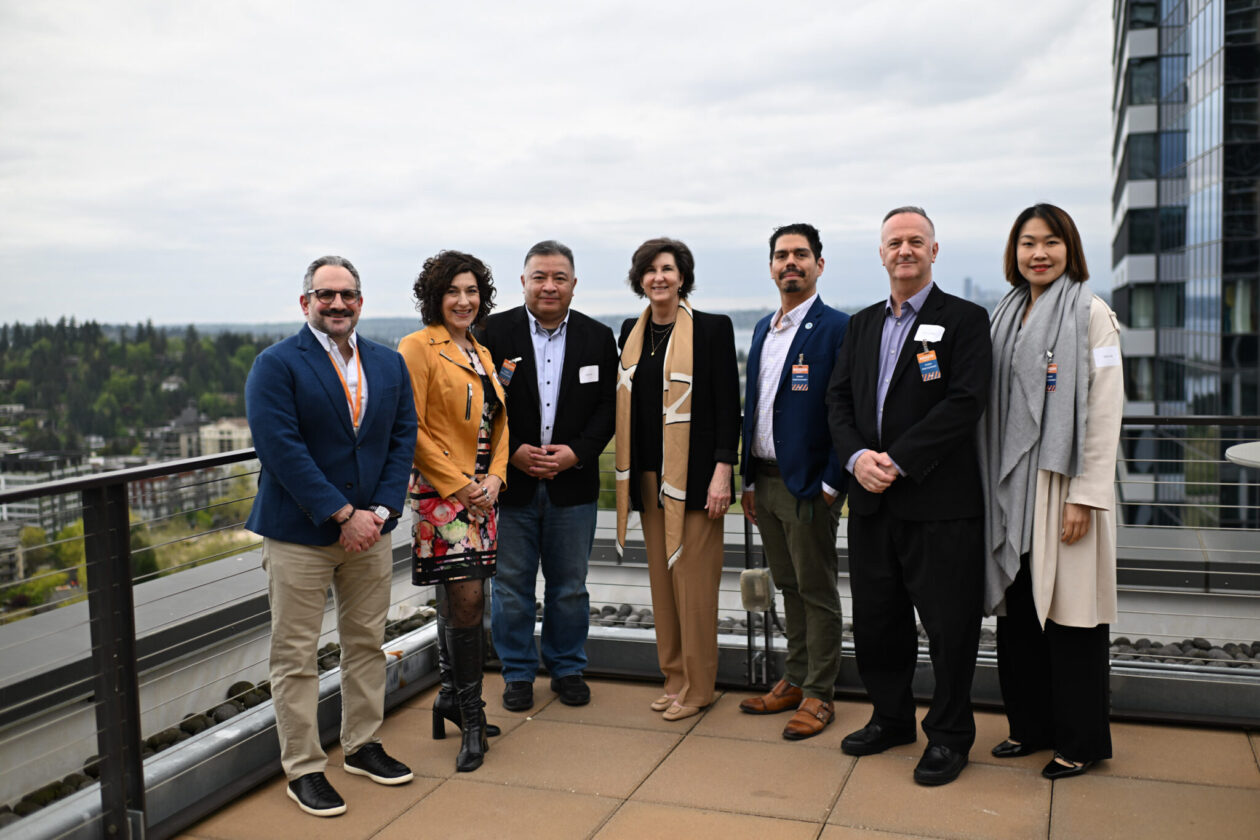
eNeural Technologies gets the lay of the land in Bellevue during a Greater Seattle Partners Spinoff program reception at Amazon’s Everest building in Bellevue. Pictured from left: Tom Florino, director, Worldwide Economic Development, Amazon; Rebecca Lovell, COO, Greater Seattle Partners; David Kou, SVP sales and marketing, eNeural Technologies; Lynne Robinson, City of Bellevue councilmember; Jesse Canedo, chief economic development officer, City of Bellevue; Eric Crowley, commercial section deputy chief, American Institute in Taiwan; Kelly Lee, commercial specialist, American Institute in Taiwan. (Photo courtesy of Greater Seattle Partners)

Add another name to Bellevue’s growing list of AI tenants.

Taiwan-based eNeural Technologies is setting up its North American headquarters in the city, joining a wave of AI companies — from CoreWeave to xAI to OpenAI — that have staked out office space east of Seattle over the past year.

eNeural plans to invest $3.5 million in the Seattle region over the next three years and create about 30 jobs, more than 20 of them AI engineering positions, according to Greater Seattle Partners, the regional economic development group that announced the expansion.

The company said it eventually envisions its Bellevue office growing into a core edge AI research and development center with more than 500 employees over the next decade.

The company builds lightweight, low-power AI software and chips that let devices — logistics equipment, vehicles, smart city infrastructure — run AI directly on-site rather than relying on the cloud. eNeural says its portfolio spans model optimization tools, self-learning edge platforms, and neural processing unit silicon IP, along with vision-language and large language model tools built for private, secure deployments.

Advertisement

@media (max-width: 600px) {
aside.callout { float:none !important; max-width:100% !important; margin-left:0 !important; margin-right:0 !important; }
aside.callout .callout-img { display:none !important; }
}

eNeural founder and Chairman Jiun-In Guo called the region “one of the most innovative technology ecosystems in the world” and said establishing an HQ in Bellevue gives the company access to “a unique combination of world-class AI talent, global technology leadership, and proximity to key enterprise customers.”

eNeural’s path to Bellevue ran through Greater Seattle Partners’ SelectUSA Seattle Spinoff program, which introduced the company to the region’s AI and tech ecosystem in 2025.

eNeural’s arrival adds to a run of AI companies moving in alongside tech giants Amazon and Microsoft and staking claims on the Eastside over the past year:

  • CoreWeave recently doubled its footprint to 36,000 square feet at One Bellevue Center, expanding its engineering hub with dozens of open roles in the region.
  • Elon Musk’s xAI unveiled a 25,000-square-foot office in the former Epic Games space at Lincoln Square South.
  • OpenAI moved into a new engineering office at City Center Plaza, a space built for 250 employees with room to grow to as many as 1,400.
  • Denver-based Crusoe opened a 7,400-square-foot office in the Key Center building.

Seattle did notch a win of its own this week with the news that Anthropic is leasing 113,000 square feet of space across multiple floors in a South Lake Union development.

The Bellevue office will serve as the eNeural’s primary hub for customer engagement, strategic partnerships, business development, and advanced AI engineering across North America.

Advertisement

Source link

Continue Reading

Trending

Copyright © 2025