Archangel Lightworks has successfully tested the world’s smallest deployable operational optical ground station, demonstrating secure, rapid data transfer with low Earth orbit satellites
The UK government has praised the achievement, with UK Space Minister Liz Lloyd highlighting its contribution to strengthening global connectivity, economic growth, and national security
The system ran multiple tests to conform to the U.S. Space Development Agency’s laser communication standard while retaining its portability with a 1.1m tall and 0.7 diameter form factor, while forgoing the need for a protective dome
Archangel Lightworks, a UK-based optical and laser communications company, has recently announced the successful conclusion of its testing of the world’s smallest deployable operational optical ground station, the TERRA-M.
Clocking in at just 1.1m in height and a 0.7m diameter, the TERRA-M enables mobile deployment while enabling secure, rapid communications with low Earth orbit satellites.
It is a considerably more efficient option, effectively addressing size, weight, and power (SWaP) constraints that plague older ground stations.
Latest Videos From
A potent, portable peak at the future of communication
The TERRA-M made multiple runs to verify that it conformed to the U.S. Space Development Agency’s laser communication standard over a multi-day trial. This achievement is doubly impressive given its small size.
Advertisement
The portable nature of the TERRA-M was emphasized by Archangel Lightworks’ CEO: “The TERRA-M is uniquely capable of rapid, secure data transfer with satellites while also being small enough to be deployed and redeployed at the point of need.”
Accolades also flowed from multiple industry giants and government officials, including, most notably, an acknowledgment from the UK’s Space Minister, Liz Lloyd, who called Archangel Lightworks achievement a “prime example of British innovation leading the world in next-generation space technology.”
The TERRA-M’s size and ability to deploy rapidly make the underlying technology applicable to both commercial and defense industry applications, allowing it to address issues such as long deployment timelines, temporary needs, and internet coverage for communities that are otherwise difficult to support.
Advertisement
Sign up to the TechRadar Pro newsletter to get all the top news, opinion, features and guidance your business needs to succeed!
Archangel Lightworks has plenty of storied investors that have now invested as much as $20 million into the venture, including, most notably, Santander Alternative Investments, National Security Strategic Investment Fund, Blackfinch Ventures, Oxford Capital, Lycka Limited, and Oxford Science Enterprises, with a recent Series A funding round bringing in $13.5 Million.
It also enjoys support from the UK’s Space Agency, the Department of Science and Technology (DSIT), and the Ministry of Defense, further strengthening its multi-pronged industrial and government connections.
With the underlying tech also attracting overseas buyers, including Omantel from the Sultanate of Oman, which signed a 2025 agreement to fast-track solutions such as the TERRA-M, there are plenty of interested parties beyond domestic investors for the bleeding-edge technology in play, even as it continues to mature from a proof-of-concept to a readily available solution with Archangel Lightworks stating that units are available for purchase and service contracts are now in play.
Microsoft CEO Satya Nadella published a sweeping essay on Sunday laying out what he describes as the defining economic challenge of the AI era: the risk that a handful of frontier models will absorb the expertise of entire industries and commoditize it, leaving businesses stripped of their competitive moats.
“The last thing any of us want is a world where every company across every sector is ceding value to a few models that eat everything they see,” Nadella wrote in the piece, titled “A frontier without an ecosystem is not stable,” which he posted on X. “If all the value is accrued by only a few models, the political economy will simply not tolerate it. There is no societal permission for an AI future that hollows out entire industries.”
The essay is unusually philosophical for a sitting CEO of a $3 trillion technology company. But it arrives at a moment when the theoretical risks Nadella describes are becoming tangible — and, critically, when Microsoft itself is grappling with the very dynamics he warns about.
Nadella introduces “token capital” as the new currency of enterprise AI strategy
At the center of Nadella’s essay sits a conceptual framework built on two pillars he calls “human capital” and “token capital.” Human capital, he writes, “comprises the knowledge, judgment, relationships, ingenuity, and pattern recognition of its people,” while token capital refers to “the firm’s AI capability it builds and owns.”
Advertisement
The two are not in tension, he insists. “Importantly, human capital does not become less valuable as token capital grows. It only becomes more valuable!” he writes. “I believe human agency will be the driver of token capital growth. Humans will set ambitious goals, connect dots across domains, build relationships, and recognize patterns that matter most. Without human direction, you have compute running in circles.”
This framing is a deliberate counterweight to the narrative that AI will simply replace human workers or, at the enterprise level, dissolve the intellectual property that differentiates one company from another. Nadella is arguing that the real danger is not AI’s capability but its tendency to centralize — and that the solution requires a fundamentally new architecture for how businesses interact with the technology.
He describes the real opportunity as “not in picking the best model but instead in building a learning loop on top of models where human capital and token capital compound.” The key test of a company’s sovereignty in this new era, he writes, is whether it can “switch out a ‘generalist’ model without losing the ‘company veteran’ expertise built into their learning system.”
This is the essay’s most actionable claim — and its most provocative. Nadella is telling enterprises they need to decouple their institutional intelligence from whatever frontier model they happen to be running, creating portable knowledge systems that survive vendor changes.
Advertisement
Why Nadella is comparing AI concentration to the outsourcing crisis that gutted industrial economies
Nadella draws a pointed historical parallel to make his warning concrete. “Think about what happened in the first phase of globalization where entire industrial economies were hollowed out by outsourcing,” he writes. “The GDP numbers looked fine on the surface, but the displacement was real and the consequences are still being felt. Let us not bring that dynamic into the AI era, with a small number of AI systems capturing all the economic returns, while entire industries find their knowledge commoditized right out from underneath them.”
The globalization analogy is not accidental. It reframes the AI concentration debate from a narrow technology question into a political-economy argument — one that regulators, policymakers, and voters can grasp. By invoking the social costs of offshoring, Nadella is signaling that the stakes extend well beyond the enterprise technology stack. He is warning that if the AI industry fails to distribute value broadly, the political system will intervene to force the issue.
“In my view, our priority has to be building a frontier ecosystem, not just a frontier model, so value flows broadly across every company, every industry, and every country,” he writes. He grounds this in an older platform philosophy: “This is the ethos I’ve grown up with where platforms enable more value on top than is captured inside, and where every company can continuously innovate and build value of its own.” It is a direct echo of the Windows-era argument, updated for the age of inference — and it carries a similarly self-interested subtext, given that Microsoft’s cloud business sits squarely in that platform layer.
Microsoft’s own runaway AI costs reveal the gap between Nadella’s vision and operational reality
What makes Nadella’s essay so striking is its timing. He published it on a day when Reuters reported that Microsoft shareholders filed a proposed class-action lawsuit in Seattle federal court, accusing the company of inflating its stock price by failing to disclose slowing growth in its Azure cloud business and the need to spend billions of dollars on AI infrastructure. The suit names Nadella and Chief Financial Officer Amy Hood among the defendants.
Advertisement
As the Yahoo Finance report on the lawsuit noted, Microsoft allegedly “aggressively promoted its AI developments, specifically its ‘Copilot’ assistant and close financial alliance with ChatGPT creator OpenAI, to artificially boost investor optimism,” while understating infrastructure strain and capital risks. Microsoft also reported $37.5 billion of capital spending in its second quarter, up nearly 66% from a year earlier and above the $34.3 billion that analysts projected.
Microsoft’s internal cost pressures around AI have surfaced in other concrete ways this year. The company is canceling the majority of its internal Claude Code licenses in its Experiences and Devices division, effective June 30, 2026. Monthly usage rates reached 84 to 95% by April 2026, and per-engineer API costs ranged between $500 and $2,000 monthly, according to Windows Forum. The cancellation came after Microsoft exhausted portions of its annual AI budget due to token-based billing, as Fortune had reported in May.
The Claude Code episode illustrates, at the micro level, the exact dynamic Nadella describes at the macro level. When a company’s AI usage is metered by the token — the fundamental unit of compute that powers model inference — the more productive the tool becomes, the more expensive it gets. The term “token capital” in Nadella’s essay carries a double meaning: it refers both to a firm’s proprietary AI capability and, implicitly, to the actual tokens consumed in running it. Building a learning loop that compounds is aspirational. Paying the bills for that loop is operational reality.
Uber, Meta, and Amazon are all hitting the same AI spending wall — and it validates Nadella’s warning
Microsoft is not alone in this bind. Uber burned through its entire 2026 AI coding tools budget in just four months after incentivizing employees to adopt the technology through an internal leaderboard ranking teams by total AI tool usage. Uber has since instituted a monthly $1,500 cap per employee per agentic coding tool, according to TechCrunch. At Meta, an employee created a leaderboard called “Claudeonomics” to track which workers consumed the most AI tokens. Amazon, meanwhile, has pushed employees to “tokenmaxx” — use as many AI tokens as possible.
Advertisement
The emerging pattern is clear: enterprises adopted AI coding tools aggressively, saw genuine productivity gains, and then discovered that the consumption-based economics of frontier models created budget crises that traditional software licensing never would have. Bryan Catanzaro, vice president of applied deep learning at Nvidia, captured the tension bluntly in an interview with Axios: “For my team, the cost of compute is far beyond the costs of the employees,” he said.
These cost dynamics land differently in the context of Nadella’s essay. He prescribes a three-layer architecture — evaluation, reinforcement learning, and retrieval — designed to sit between a company’s workforce and whatever frontier model it subscribes to. Companies, he argues, need to build “private evals” that “capture whether a model is actually improving against outcomes that matter to the business (not just external benchmarks!),” alongside “private reinforcement learning environments” that “let models grow stronger on real traces from inside the organization” and a knowledge base that “makes institutional memory queryable and use of tokens more efficient.” He calls the resulting system “a hill climbing machine” that, “unlike most assets, it compounds.”
Other Big Tech CEOs are echoing Nadella’s fears about AI models devouring enterprise knowledge
Nadella’s concerns do not exist in isolation. Other technology leaders have been raising similar warnings throughout 2026, though none have offered as prescriptive a response.
Snowflake CEO Sridhar Ramaswamy warned in a February podcast that the biggest software companies risk being reduced to mere data sources. “The big model makers want to create a world in which all of the data for all of the enterprises is easily available to them,” Ramaswamy said, describing everything else as “a dumb data pipe that feeds into that big brain.” He added that Snowflake needs to operate with a “fear” that enterprises would abandon software-specific AI agents in favor of all-inclusive agents that hoover up data from everywhere.
Advertisement
Box CEO Aaron Levie struck a similar note in a January LinkedIn post. AI models can now perform high-level knowledge work across nearly every profession, from law to strategy to scientific research, he argued. “The question that we will have to wrestle with is, in a world where everyone has access to the same expert intelligence, how does a company differentiate?” he wrote.
The combined effect of these statements is a shared diagnosis from three very different corners of the enterprise technology market: the current trajectory of AI development threatens to collapse competitive differentiation across entire industries. Nadella’s essay stands apart from the others because it moves beyond diagnosis and proposes a specific architectural remedy. But the prescription is impossible to separate from the prescriber’s interests.
Microsoft sits in precisely the platform layer that Nadella’s framework would make indispensable — the company builds its own frontier models, operates the cloud infrastructure those models run on, and maintains deep partnerships with the leading independent AI labs. A world in which every enterprise builds a proprietary learning loop on top of commodity foundation models is, conveniently, a world in which Microsoft sells the picks and shovels to all of them.
Nadella’s Scout controversy and shareholder lawsuit reveal the tension inside Microsoft’s own AI strategy
The essay also arrives just ten days after Nadella publicly rebuked one of his own executives for outlining a plan to “make people addicted” to a new AI tool called Scout.. Microsoft corporate vice president Omar Shahine had written an internal memo describing a three-phase plan to transform Scout “from addictive app to agentic platform,” with the first phase focused on features that “make people depend on it daily.” Nadella responded on an internal message board: “This is absolutely a non-goal! If anything we are doing the exact opposite. We want to make sure AI empowers and adds real value to human endeavor and broad economic growth!”
Advertisement
The Scout incident and Sunday’s essay together suggest Nadella is actively constructing a public philosophy of AI that emphasizes broad value creation over extractive engagement — whether or not every corner of Microsoft has internalized that message. One anonymous Microsoft employee told 404 Media, as the Post reported, that the leaked Scout document was “very troubling,” adding: “It feels like one of those ‘saying the quiet part out loud’ moments.”
For technical decision-makers evaluating Nadella’s essay, the practical implications are significant. He is arguing that choosing an AI model matters less than building the learning infrastructure around it. He is arguing that the ability to swap models without losing institutional intelligence is the critical test of AI sovereignty. And he is warning that companies that fail to build these systems will find their expertise absorbed and commoditized by the models themselves. “You can offload a task, or even a job, but you can never offload your learning,” Nadella writes. “The future of the firm is the ability to compound that learning across people and AI.”
The question Nadella’s essay cannot answer is whether Microsoft will practice what its CEO preaches
Whether Nadella’s vision materializes depends on a question his essay carefully sidesteps: whether the platform providers who build and host the frontier ecosystem will resist the temptation to capture the value flowing through it. Nadella insists that “platforms enable more value on top than is captured inside.” But Microsoft’s own trajectory this year — the ballooning capital expenditures, the Claude Code budget crisis, the shareholder lawsuit alleging concealed costs, the internal memo about making users addicted — suggests the economics of restraint are harder than the philosophy of restraint.
Nadella ends his essay with the claim that broad value distribution “is the stable equilibrium we should build together.” He may be right. Ecosystems have historically outperformed walled gardens over long time horizons. But stable equilibria require every major player to forgo short-term extraction in favor of long-term compounding — and right now, the AI industry is burning through budgets in four months and spending 66% more on infrastructure than analysts expected. The CEO of the world’s most valuable technology company has written an eloquent argument for why the AI economy needs to work differently. The open question is whether his own company’s balance sheet will let him prove it.
In 2024, I chaperoned field trips two days in a row, for two different grade levels, and came back to roughly 450 ungraded assignments.
I knew what to do, I’ve done it before, mark them credit or no credit and move on. Students get something out of that. They did the practice. But if any of them were practicing it wrong, nobody catches it, nobody tells them, and the misunderstanding rides along into the next unit.
That pile of work led me to build an AI grading assistant. And this past April, I removed its most automated feature: the one that could return an AI-generated grade and comment to a student before I had reviewed it.
Advertisement
Building that feature was easy to justify. Removing it taught me which part of grading a teacher can’t hand off.
Most of what students turn in to me isn’t a clean essay. I teach engineering, and my students submit designs, schematics, code, and photos of physical work. That’s part of why many teachers I know still don’t grade with AI. They’ll use it to scaffold a unit or soften an email to a parent, but grading with it usually means pasting work into a chatbot one assignment at a time, which is so slow I can grade it faster myself. So, I built my own tool.
I teach mechatronics, and if mechatronics teaches you anything, it’s that efficiency matters. You optimize the system and eliminate friction. I brought that mindset to the product I built, and the logical endpoint was auto-return. The AI could evaluate the work, draft the grade and comment, and send it back to the student without another click from me, late submissions included. I had spent hours tuning it to grade against my assignment, handouts, instructions, and rubric.
Then a student came up to me one day, happy about the encouraging comment on an assignment. The comment had motivated him to redo the work and resubmit it.
Advertisement
When AI Takes Control
The problem was that I didn’t write the comment. I hadn’t even seen it.
If it had passed by my eyes and I’d confirmed it, edited it, or decided it belonged there, this would be a different story. But in that moment, the student thought the encouragement came from me, and I wasn’t actually in the exchange.
Nothing about the feedback was inaccurate. That almost made it harder to explain. After more than two decades in a classroom, I couldn’t put words to what felt wrong. I just knew it did. The issue wasn’t whether AI could draft useful feedback. It could. The issue was whether a student should receive a teacher’s judgment when the teacher hadn’t made one.
Advertisement
So, I removed auto-return, and the automatic grading of late work went with it. What replaced it is a review dashboard: the AI drafts every grade and comment against my rubric and lays it out in front of me. I can edit, override, reject, or return the feedback in one pass. It’s still fast. But now my eyes and my judgment touch every grade before a student sees it.
That changed how I think about human review. It can’t mean glancing at a score and clicking approve. It must mean checking the student’s work against the rubric and owning the result.
The software can propose a judgment. It cannot own one.
Policy is starting to move the same way. New York City’s public school guidance now says AI must not replace educator decision-making, and other states are weighing rules on human review and student data. The rules will keep changing. The principle shouldn’t; a student’s grade needs a person who is accountable for it.
Advertisement
When I walked one of my administrators through the tool, what he liked most wasn’t the time savings. It was that it requires a rubric. Teachers write rubrics for big projects, but the daily, low stakes work rarely gets one, and that’s exactly the work that gets marked credit or no credit and never comes back with feedback. The trade runs both ways: students get clearer expectations up front and comments on work that used to get a checkmark.
He had two concerns, both fair. Parents and students should know when an AI-assisted tool is grading, so it belongs in the syllabus. And if a student contests a grade, the teacher should re-grade it by hand. We agreed the second should happen anyway, with or without AI. Humans make grading mistakes too.
My students know I built the AI tool. What they care about isn’t the technology. It’s whether the feedback is fast, the rubric is clear, and the grade is fair. A few times the tool has docked points for work it missed, almost always because a screenshot cut off the edge of the page or the writing was too faint to read. Those students came up to me, I looked at the work, and I gave the points back. I want that. A grade should be something a student can question.
What surprised me is that a student will challenge the AI long before he’ll challenge me. A kid will walk right up and say, “The AI got this wrong, I should have full credit.” That same kid won’t tell me, to my face, that I made the mistake and owe him ten points. Both of us can be wrong, but the machine is easier to push back on than the teacher, and that’s good for the student. The grade still passes through me. The draft between us just makes it easier to speak up. If a grading system makes students afraid to challenge the result, the system is wrong.
Advertisement
AI Grading Advice
If your school is wrestling with AI grading, start with the disclosure. Don’t say “AI may be used.” Say what that means: comments and grades are drafted by AI and reviewed by the teacher. Then answer the harder questions. Where does student work go? Is it stored, or used to train models? How secure is the platform, and has anyone independent reviewed it?
We are teachers, not graders. We grade, yes, but we also sit in IEP meetings, call parents, design lessons, and try to notice the student who is quieter than usual. If a grading assistant hands me back the hours I spent marking daily work, and I spend them on better lessons and better feedback, everyone wins.
But when a student asks, “Why did I get this grade?” the answer cannot be, “Because the system said so.”
I slipped under the wire and got a demo of “Character Limit” submitted to Steam just in time. Now for the stressful part: It’s live in Steam Next Fest.
In April, the development of Character Limit had reached a point where it could be tested by actual players. It did fantastically well at Dreamhack Birmingham, and I had also started doing testing on iPhone and iPad with Testflight.
However, later that month, registration for something known as Steam Next Fest was coming to a close. It’s a promotional festival held a few times a year, focused on getting players to try out demos for games that have yet to be released.
Since I want the game to be completed long before the busy fall iPhone season, that meant the next Next Fest I could take part in was in the middle of June. I figured there was plenty of time to get the Dreamhack demo to a better and more robust state, so it could be downloaded to players’ computers to try out.
Advertisement
But, since WWDC was also happening the week before Next Fest, that meant I would face a busy time here at AppleInsider, which would impact any development.
So, the decision was made to leave the Testflight build ticking along on iPhone, and to return to it when the game is in a much better place. Instead, I allocated my time to focus just on the Mac and PC demo.
It was both a very good and very stupid decision.
Fixing the demo
Getting the demo working as perfectly as possible for Next Fest wasn’t just to ensure the game got more promotion through a major digital storefront. It also forced me into shoring up the demo so it could be used by the actual public.
Advertisement
So far, the game was made with my hardware and setups in mind. To make it work for practically any player in the world, I had to make sure anything that would break or be an edge case was handled gracefully, since any combination of hardware would be thrown at it.
Cue a few weeks of fixing bugs in number distribution, making an actual tutorial screen, and localization foibles that I had missed before.
It was then sent to some colleagues and friends for testing. And I’m glad that I did.
An edge case I didn’t consider, and the fix. Image credit: William Gallagher
Advertisement
William Gallagher of this very site tried the game demo out. Partly because I had to work out how Xcode notarization worked, which was tricky but not difficult.
It turns out that William has an insane display ratio because he uses an ultrawide screen. Due to the way the game functioned, playing full-screen meant you missed the bottom and top sections of the interface.
For a word game, it helps if you can see the letters you’re turning into words. Or even just see the Quit button on the main menu.
This was fixed quickly by making a floating section of the interface that was the correct aspect ratio, that would be visible in the middle of the screen when viewed by an ultrawide. All the content of the game would then be put into that box, similarly anchored to the center.
Advertisement
This worked surprisingly well and was practically the last stumbling block for the demo itself.
While not everything has been fixed, it’s just got enough “done” to be usable as a proper demo.
As a consequence, I have many changes to transfer from the demo into the full game. It’s work I would’ve had to do anyway before release, so doing it all now rather than later was a good move.
Steam pains
While making the game and working with Apple’s Notarization system is one battle, Steam is quite another.
Advertisement
The tricky process of setting up a Steam page for the game has already been done. While you can set up a separate store page for a demo, you could also just add the demo download button to the main sales page.
There are reasons to go either way, but I went with the one main sales page approach. Partly because it would focus traffic onto that one page, partly from laziness.
However, for some reason, Steam requires you to submit effectively everything you would need for the separate store page for the demo, even if it doesn’t exist. That includes the text for the page, which I had to write.
Other elements make sense, like platform specifications, capsule art images, and the name, since they would be used elsewhere.
Advertisement
Then it came time to upload the demo, which led to a multitude of problems.
The first issue was administrative, as I previously had to transfer the game from one Steamworks account to another, due to having signed up wrongly to begin with.
A personal account and one owned by a limited company differ in many ways, which meant a second account had to be made and the store listing transferred over.
It turns out that you can transfer the game as one listing, but the demo is a separate listing and doesn’t necessarily get transferred over with the main title. I spent so long failing at uploading the demo because of this missing element, and then I had to wait most of a week for it to transfer.
Advertisement
There’s a graphical SteamPipe interface for Windows, but you’re stuck with the Terminal on macOS for some reason…
The second problem is Steam’s uploading system. There is an option to do so from the website, but there’s no documentation explaining how to use it properly, so it was a no-go.
The usual way is a SteamPipe upload, using the Steam SDK. This is a process that involves a ton of work, including installing a command-line version of Steam, constructing a build and an upload script, and then setting the launch options.
I understand fully that this is a system designed more for the big developers with massive teams and people who truly know what they’re doing. For a first-time indie, this is massively intimidating.
Advertisement
That is, until you realize that the SDK download includes a graphical interface that does a lot of the heavy lifting for you. Except it’s Windows-only and not available on the Mac.
I had a Windows PC nearby, so it wasn’t a difficult procedure. But it is disheartening that there’s not a macOS graphical interface available from Valve.
After getting the game demo uploaded, both it and the store details were submitted for review. The demo was apparently fine and dandy, but the store section was not.
Apparently, while you’re encouraged to make the images of the capsule art be different so that players can tell the demo apart from the main game, you also cannot add more words to the art other than your game name.
Advertisement
They objected to me using the words “Demo Edition” in the art. Also, my logo was being covered by a demo corner banner that wasn’t really mentioned previously.
Sure, my mistake for not fully understanding. It meant some tweaks and a few more days of waiting for a re-review and eventually being accepted.
On June 9, the second day of WWDC, Steam’s email confirmed that the store page met its requirements, and that the demo could be published. That evening, Character Limit became available to play in demo form on Steam.
Happiness and trepidation
I have written before about how Steam is a big deal for me. As a gamer with a Steam account value that could buy a reasonably priced car at current prices, I am very familiar with Steam,a nd have used it for many, many years.
Advertisement
Registering and having a Steam listing for something that I made was an emotional experience. Just that hit hard.
I didn’t expect putting the demo live to hit even harder.
I can now open my Steam library on my Mac and see “Character Limit Demo” on the long list of (mostly unplayed) games. I can now click it and open the game on my Mac or my PC.
Seeing it on there did actually make me weep a little bit. A stupid little game that I have been noodling on for most of a year is now in an application I regularly open up.
Advertisement
Seeing the demo in Steam was a big deal.
It’s probably a feeling that authors get when they see their work on Amazon or in their local bookstore. Except it’s a game and I can’t walk into a physical location and hold the game in amazement.
After walking around the block for some air, I checked it ran OK, and it does.
This was an extremely big and happy moment for me. But it was cut short with the daunting realization that this isn’t the finish line.
Advertisement
The rest of the game has to be put into place for the final version. Research into more languages and modes for future updates, too.
Then there’s the ever-continuing slog of marketing and promotion before the game’s release. That’s an inevitability.
But, more immediately, there’s the fear that the demo will not be well received by anyone. The last thing anyone creating anything needs is for people to complain about your baby, even if it’s entirely justified.
Writing on the Internet for over a decade certainly gives you a thick skin for criticism of your words. But this is a level of apprehension and worry that I’ve not had to deal with in a very long time.
Advertisement
That’s not even taking into account the eventual battle to get the finished product in the App Store. That’s next.
Here’s hoping Gabe Newell’s money-generator audience is somewhat kind during this week’s all-important Steam Next Fest.
Xbox is preparing to shut down or sell at least three of its studios — Double Fine, Ninja Theory and Compulsion Games — according to reports from The Verge and Bloomberg on Monday.
Ninja Theory employees were informed on Monday that the studio would be closing, according to The Verge, but the team is attempting to find a buyer that can keep them operational. Ninja Theory is the studio behind the Hellblade series and it was featured in the recent Xbox Summer Game Fest showcase, revealing a new entry due in 2027.
Double Fine is the legendary studio behind the Psychonauts games, Brütal Legend, Broken Age, Keeper and all manner of LucasArts adventures, founded by Tim Schafer and friends in 2000. Double Fine leaders are in active negotiations to buy themselves back from Xbox rather than be closed altogether, Bloomberg said.
Compulsion Games is in a similar position, according to the report. Compulsion is the Montreal studio behind the uber-stylish games Contrast, We Happy Few and South of Midnight, the latter of which came out in April 2025.
Advertisement
Bloomberg reported that several other studios under the Xbox Game Studios banner are also negotiating for their futures and are at risk of being shut down. As it officially stands, the Xbox Game Studios umbrella covers dozens of studios, including Arkane, Bethesda, Halo Studios, id Software, Obsidian, Playground Games, ZeniMax and Activision Blizzard King. We have contacted Xbox for clarification on the reported closures and buyout talks.
Microsoft’s modern game-studio acquiring spree kicked off in 2018 with the purchase of Undead Labs, Playground Games, Ninja Theory and Compulsion Games, plus the formation of The Initiative. This momentum continued building at a concerning pace in 2020 and 2021, when Xbox acquired eight more studios under ZeniMax Media, including Arkane, Bethesda and id. Everything came to a head in 2022 with the announcement that Xbox planned to purchase Activision Blizzard for $69 billion, the largest acquisition in video game history. That deal finally went through at the end of 2023, after a lengthy battle with regulators.
Longtime Xbox division head Phil Spencer stepped down this year and was replaced by new CEO Asha Sharma, alongside other executive-level changes. Also on Monday, Xbox Game Studios head Craig Duncan left the company; he first took the role in October 2024. Employees across Xbox are bracing for more layoffs in 2026 after an ominous public memo from Sharma dropped in mid-June, just as the glow of Summer Game Fest fully faded.
Compact SUVs are the largest market segment in America according to a 2025 study by S&P Global, and competition within the segment is fierce. Long-standing favorites from the likes of Toyota and Honda go head-to-head against upstart competitors, with the best of the bunch offering a winning mix of practicality, comfort, and affordability.
With so many small SUVs on the market to pick between, buyers can afford to be choosy. There are many different factors that influence a buyer’s final decision, with depreciation being a particularly important factor for many. Most buyers would strongly prefer that their shiny new SUV doesn’t plummet in value during their ownership, although some do exactly that.
Advertisement
Using data from two trusted sources, we’ve compared depreciation rates from a wide range of small SUVs to pick out the models that lose value at the fastest and slowest rates. There are some common themes between models at each end of the spectrum: For example, the highest depreciating models tend to hail from luxury brands, feature electric powertrains, or both. At the other end, the models with the best value retention are offered by mass-market brands with good reputations for long-term reliability. If you’re in the market for a new budget-friendly small SUV and want to know which models to stay away from, you’ll find the answers here.
Advertisement
Loses value: Lexus RZ
EV technology is rapidly evolving, and as a result, the spec sheets of cars that are just a few years old are already starting to look a little dated. A good example is the Lexus RZ, which arrived in 2023. Even at launch, its 220-mile range was far from exemplary, but today, it’s even further behind its rivals. To its credit, Lexus has managed to boost the RZ’s range slightly in the intervening years, and a 2026 RZ now achieves between 264 and 301 miles, depending on trim. However, that’s still low by today’s standards: For context, a base-spec 2026 Nissan Leaf offers 303 miles between charges.
Add in the effects of battery degradation and a used RZ will offer a range that’s simply too small to be appealing to most buyers. It depreciates heavily as a result, with CarEdge estimating that RZ owners can expect to lose 60% of their initial investment after a period of five years. Meanwhile, KBB is even less positive about the RZ’s future resale value, predicting a 66% drop in value over the same period of time.
Advertisement
Holds value: Honda CR-V
Honda unveiled the CR-V TrailSport Hybrid trim for the 2026 model year, but even without the added dose of all-terrain capability, it’s easy to see the appeal of the popular SUV. The CR-V is affordable to buy, starting from $32,370 (including a $1,450 destination charge) for 2026, but buyers with larger budgets can spring for the top-spec Sport Touring Hybrid. The latter offers a premium audio system, a 204 horsepower hybrid powertrain, and a long list of other additional features.
As well as being more powerful than base trims, the hybrid CR-V is also more efficient. The all-wheel drive hybrid CR-V hits an EPA-estimated 37 mph combined, while the front-wheel drive version achieves 40 mpg. Add in the durable materials in the cabin, the intuitive infotainment, and Honda’s strong reputation for reliability, and the result is a car that’s a sensible choice for a huge range of buyers. That wide-ranging appeal helps keep used values high, with CarEdge estimating that a new CR-V will depreciate just 29% after five years and KBB predicting a 46% reduction compared to the original sticker price.
Advertisement
Loses value: Chevrolet Blazer EV
It isn’t just luxury EVs that lose value fast. The Chevrolet Blazer EV might wear a humble bowtie logo on its hood, but current data suggests that owners can still expect to lose money at the kind of rate that you’d usually see from a premium or luxury car. CarEdge puts the Blazer EV’s depreciation rate at 60% over five years, while KBB estimates that the car will be worth 67% less than it was when it was new.
The Blazer EV has proven to be unpopular with buyers from the get-go, taking the unenviable title of Chevy’s least-sold SUV in America. Even its electric sibling, the Equinox EV, has proved to be significantly more popular. That’s despite the 2026 Blazer EV featuring a range of up to 312 miles and starting from $46,495 (including a $1,795 destination fee), which is a few thousand dollars less than the price of the average new car. If you move up the trim range, things quickly get pricier, with the all-wheel drive SS trim costing north of $60,000.
Advertisement
Holds value: Subaru Crosstrek
The latest Subaru Crosstrek is far from perfect, but it’s an appealing option, especially in hybrid form. Its combination of affordability and all-conditions capability make it a great alternative to rivals from the likes of Honda and Toyota, and the Subaru offers similarly strong value retention to small SUVs from those brands.
Advertisement
Estimates for exactly how much owners can expect to receive for their 5-year-old Crosstrek vary between sources, with CarEdge suggesting the car will only depreciate 34% over that time. Meanwhile, KBB predicts a 48% depreciation after half a decade. Either way, that puts the Crosstrek towards the front of the pack for holding its value, and given its sub-$30,000 starting price, buyers will be losing very little in dollar terms.
Unlike many of its rivals, the Crosstrek is also made in America at Subaru’s Indiana assembly plant. It’s not the brand’s only American-made model either, with the Outback and Ascent SUVs also being built in the same facility.
Advertisement
Loses value: Land Rover Range Rover Evoque
It’s made by a luxury brand with a poor reputation for long-term reliability and it’s far from cheap when it’s new, so it’s natural that the Range Rover Evoque depreciates fast. Accelerating that value loss is the fact that it’s also not very efficient, and despite its rapid depreciation, it isn’t all that rapid on the road either. The typical owner of a new Range Rover won’t mind any of those things, but for many used buyers, an aging Evoque isn’t going to be an easy sell.
Despite its somewhat limited appeal, a 5-year-old Evoque won’t have lost quite as much value in percentage terms as some of its rivals. Still, with predicted depreciation rates of 52% and 63% from CarEdge and KBB respectively, it’s among the poorest performers for value retention. Buyers who do decide to roll the dice on a used Evoque can at least enjoy one of the nicest cabins in the segment and a top-tier sound system, even if the threat of wallet-bruising repair bills might loom large.
Advertisement
Holds value: Toyota RAV4
Toyota redesigned the RAV4 for the 2026 model year, but it follows the same core formula as before. Efficiency is still one of its key selling points — in fact, it’s even more of a focus with the latest generation, which is only available as either a hybrid or plug-in hybrid. A range of trims are also available to cater to a wide spectrum of buyers, with the base trim starting from $33,495 (including a $1,595 destination fee).
Further up the trim range, the Woodland trim beefs up the RAV4’s appearance with Rigid Industries fog lights, roof rails, and all-weather floor mats. At the very top, the Limited trim offers the most comfortable, premium experience. A 2026 RAV4 Limited costs at least $44,895 before optional extras are factored in.
Advertisement
Buyers of all trims will be able to take comfort in the fact that the RAV4’s perennial popularity has helped earn it strong value retention rates. CarEdge and KBB are notably split on exactly how far ahead of its rivals the RAV4’s value retention falls, with the former predicting only a 28% drop in value after 5 years but the latter saying that the car will lose 51% of its sticker price. Regardless of which estimate proves more accurate in the long run, the RAV4 remains among the best SUVs in its class for holding its value.
Advertisement
Loses value: Jaguar F-Pace
By now, most enthusiasts will already be well aware of Jaguar’s impending all-electric relaunch. The brand’s upcoming EV has not yet hit the road at time of writing, but Jaguar dealers are still busy selling off the last of their old stock. The F-Pace SUV can still be found at dealers, with the cheapest 2026 trim starting just under $60,000 and the SVR 575 Final Edition trim costing close to six figures.
The gas engine in the base trim is slightly underwhelming given its asking price, offering 246 horsepower and a 6.9 second 0-60 mph time. The mild hybrid variant bumps those numbers up to a more respectable 395 horsepower and 5.1 seconds, but both lag far behind the Final Edition. It might be significantly more expensive, but the top-spec trim does receive a supercharged 5.0-liter V8 engine making 567 horsepower and propelling the car from 0-60 mph in just 3.8 seconds.
No matter whether they pick a base example or a top-spec Final Edition, buyers of the 2026 F-Pace can expect to lose most of their investment after 5 years of ownership. CarEdge predicts that the SUV will depreciate 65% after half a decade on the road, and KBB forecasts a very similar 66% depreciation rate.
Advertisement
Holds value: Toyota Corolla Cross
Slotting below the RAV4 in Toyota’s SUV lineup, the 2026 Corolla Cross is an entry-level crossover for buyers who want the style and practicality of an SUV but don’t want to spend a fortune. It’s equipped with a competitive amount of standard tech and offers cargo space and legroom that’s on par with most of its rivals.
It’s efficient too, with the EPA estimating that the Corolla Cross Hybrid should be capable of hitting 42 mpg on a combined cycle. In the real world, our testing saw the car average slightly less than that claimed figure, averaging around 39 mpg over the course of the test period. Prices for the non-hybrid variant start at $26,830 (including a $1,595 destination fee), while the hybrid costs around $30,000.
Advertisement
The Corolla Cross doesn’t win any points for driver engagement, but as a sensible, wallet-friendly runaround, it ticks all the right boxes. That sensibility appeals as much to used car buyers as it does to new car buyers, and as a result, the small SUV holds its value well. Estimates for exactly how well a new example will hold value differ, with CarEdge predicting a 30% drop in value over 5 years but KBB suggesting a 50% drop is more likely.
Advertisement
Loses value: Land Rover Discovery Sport
Compared to the Range Rover and Defender lines, the Discovery is the forgotten child of the Land Rover stable. Bosses have been on record discussing how the next generation of the Discovery and its smaller relative, the Discovery Sport, need to be better differentiated from the Defender. For now though, the current generation soldiers on. The 2026 model year has seen the launch of some new trims and additional options, but fundamentally it’s still the same SUV that’s been in Land Rover’s lineup for years now.
Until its relaunch, both the Discovery and Discovery Sport are stuck with high depreciation rates that reflect the fact that they’re overlooked by many buyers. Land Rover’s reliability record is also patchy at best, which doesn’t help matters. The Discovery Sport is the smaller of the two Discovery SUV models, and it’s expected to depreciate 59% after 5 years according to CarEdge and 65% over the same time according to KBB.
Advertisement
Holds value: Hyundai Venue
Compact SUVs don’t get much smaller than the Hyundai Venue. It’s one of the cheapest new cars you can buy in 2026, with a starting price that only just surpasses the $20,000 mark. Depreciation estimates for the car differ in their assessment of how much of its value it’s likely to retain 5 years after it leaves the lot, with CarEdge being more positive about its value retention than KBB. The first says buyers can expect to lose only 36% of their original investment, while the second predicts a 54% depreciation rate.
In dollar terms, the Venue’s depreciation is among the lowest of any small SUV even if KBB’s less optimistic depreciation rate is assumed to be true. Owners won’t spend a lot at the fuel pump either, with the EPA estimating that the SUV should hit 31 mpg combined. That translates to a fuel savings of $1,000 compared to the average new vehicle over the course of 5 years.
Advertisement
Loses value: Cadillac Optiq
As previously mentioned, luxury cars tend to depreciate fast, as do electric vehicles. The Cadillac Optiq is both a luxury SUV and an electric vehicle, and so it’s no surprise that it sheds value pretty rapidly. It’s still a relatively new model, but estimates generally agree on how much it can be expected to lose over five years. CarEdge predicts a 57% drop in value, while KBB forecasts a slightly larger loss, at 61%. That’s not shockingly bad for an EV, but it’s still more than most other small SUVs.
We tested the Optiq shortly after it was launched and found it to be a typical Cadillac in all the ways that matter: It was quiet, comfortable, and well appointed inside, without much of the over-the-top gadgetry that some of its rivals offer. Like virtually all new cars, it still has a prominent infotainment screen, but we found it generally straightforward to operate and not too intrusive. Aside from the odd omission, like the Optiq’s lack of Apple CarPlay compatibility, we didn’t find much to dislike about the smallest Cadillac EV.
Advertisement
Holds value: Honda HR-V
The HR-V is Honda’s SUV equivalent of the Civic, with shared underpinnings and a similarly affordable price tag. We spent time with the car at the launch of the current generation and liked its interior and standard equipment levels, although we found the sound of its CVT to be grating when the SUV was driven on the highway. Noisy transmission aside, the HR-V is a good entry point into Honda’s SUV lineup, and as a bonus, it looks less cheap than its price tag would suggest.
Advertisement
Buyers can expect the HR-V to hold its value well over its first 5 years on the road, but like many of the top performing small SUVs here, estimates differ on just how much it will be worth. According to CarEdge, the HR-V will lose 31% of its sticker price over that time, while KBB suggests that a deprecation rate of 48% is the more likely scenario. Individual factors like mileage and condition can also play a significant part in resale value, but overall, the HR-V remains towards the top of its class.
Advertisement
How we selected these small SUVs
Every platform uses a slightly different methodology and different datasets to predict how fast a new vehicle will lose value, so to gain a balanced overview of predicted depreciation rates, we averaged data from two trusted sources. We based our picks for this list on the mean average of predicted depreciation rates from CarEdge and KBB, with each of our fast depreciating picks losing 55% or more of their initial value over their first five years on the road. Our top picks for value retention are each forecast to depreciate an average of 45% or less, putting them towards the very top of their segment.
What’s most disturbing about Trump’s “Restoring Truth and Sanity to American History” executive order isn’t its fully-blinkered, jingoistic take on American history where America does no wrong and is almost always white right. I mean, that’s pretty awful on its own, but it’s the flip side of pretending whites do no wrong: pretending any victims of whites or any contributors of other races/colors/creeds simply don’t exist.
We no longer have the high ground. But we might be able to start making our way back to the top of the hill. It’s not because Trump et al are getting better or smarter or simply a bit less hateful. It will be because the courts are doing what they’re supposed to be doing: slowing this budding fascist’s roll.
A federal judge in Massachusetts has ordered the Trump administration to reinstall displays it removed from National Parks sites over the past year as part of a crackdown on diversity, equity and inclusion (DEI) content and climate change information.
[…]
Advertisement
Judge Angel Kelley sided with the challengers on Friday, finding that the federal government’s action “sets a dangerous precedent of censorship and sanitization” while undermining the “integrity” of the National Parks system.
The decision [PDF] leads off with the ideal this nation and its national parks are supposed to embody…
Often referred to as “America’s largest classroom,” National Parks serve in that spirit by telling the stories both of those who write history and those who go unheard. The beauty of history is the unvarnished storytelling of a time gone by and the delivery of undeniable truths. The Government’s stewardship of these park sites thus carries a responsibility to present history in full rather than in favored fragments.
… before detailing the hideous destruction being perpetrated by the Trump administration:
Unfortunately, the Government has disregarded these principles. Under the guise of promoting American dignity, this Administration seeks to share a limited history by ordering the removal of all signs, displays, and interpretive exhibits at National Parks that do not align with its preferred narrative, thereby telling half-truths. In recent months, the Government has torn down exhibits in Philadelphia’s Independence National Historical Park memorializing the legacy of people enslaved by the country’s first President; removed signage detailing climate threats at Fort Sumter in South Carolina, one of the most environmentally endangered sites in the country; and wiped away descriptions of history and science at countless National Parks across the United States. Not only does this undermine the integrity of the National Parks; it sets a dangerous precedent of censorship and sanitization.
Dozens of instances of censorship and erased history are listed in the lawsuit. And it’s all the sort of thing you’d expect from this administration:
Advertisement
By the date of the filing of this action, Defendants had removed dozens of signs related to climate change, civil rights, and diverse communities.
[…]
In addition, Defendants have removed multiple signs involving slavery, abolition, immigration, labor, women’s suffrage, and civil rights…
The court says the order violates the law repeatedly. Not only does it steamroll existing laws governing the National Park Service and its congressional oversight, it fails to justify its own existence with even the briefest nod to serving the public’s interest. Most damningly, the executive order ignores the facts in favor of pushing the administration’s preferred version of US history:
[T]he Order fails to rationally connect any facts to the action taken. It claims that the removals will “restore Federal sites . . . to solemn and uplifting public monuments that remind Americans of our extraordinary heritage.” However, the Order fails to explain how unearthing and displaying the historical contributions of marginalized groups detracts from celebrating “our extraordinary heritage.” Indeed, the NPS’ purpose in installing these materials in the first instance was to attract new audiences to National Parks by celebrating diverse experiences.
In other words, this executive order is basically just a Truth Social rant pretending to be a lawful directive.
Advertisement
[T]he Order fails to rationally connect any facts to the action taken. It claims that the removals will “restore Federal sites . . . to solemn and uplifting public monuments that remind Americans of our extraordinary heritage.” However, the Order fails to explain how unearthing and displaying the historical contributions of marginalized groups detracts from celebrating “our extraordinary heritage.” Indeed, the NPS’ purpose in installing these materials in the first instance was to attract new audiences to National Parks by celebrating diverse experiences.
The order concludes by using Trump’s self-serving rationalizations against him, which is exactly the sort of thing I’d love to see more of in future court orders rejecting this administration’s fascist advances:
Because Defendants deemed it important to strip the parks of these undeniable truths in anticipation of the 250th Anniversary of our great Nation, it is equally important that our shared history be honestly told and fully restored by the 250th Anniversary to properly honor the remarkable achievements of the United States.
LOL. Stick that in your White House lawn MMA fight, you asshat. Restore what’s been destroyed, says the court: that would be “truth and sanity,” rather than this steady stream of atrocities this administration continues to inflict on the US.
Huawei has unveiled HarmonyOS 7 at its developer conference in China.
Theupdate introduces a redesigned interface with glass-inspired visual effects and new AI-powered features, some of which look quite similar to Apple’s often criticised Liquid Glass design that continues in iOS 27.
The company also claims there is a noticeable performance boost over the previous version. The update is set to roll out across Huawei’s ecosystem of smartphones, tablets, PCs, wearables and smart home devices.
HarmonyOS 7 introduces a more transparent, layered design language, with glass-like buttons, sliders and interface elements appearing throughout the operating system. Furthermore, Huawei has also added new 3D effects that can transform lock screens and other parts of the interface into more dynamic scenes.
Advertisement
Beyond the visual refresh, Huawei is putting AI front and centre – because, of course, it is. The company says its upgraded assistant can now handle more in-app actions and complete a wider range of requests. Crucially, this does not require users to jump between apps. New AI-powered photo editing tools are also on the way, alongside an updated Intelligent Agent Framework. The framework aims to make automated tasks more reliable.
Advertisement
Huawei is also promising a performance improvement. According to the company, HarmonyOS 7 delivers a 15% uplift compared to HarmonyOS 6.1. However, it has yet to provide detailed benchmarks showing exactly where those gains will be most noticeable. In practice, users can likely expect smoother app launches and improved responsiveness across the system.
The developer beta for HarmonyOS 7 is available from today for eligible devices, while the finished version is expected to arrive later this year.
Advertisement
While the new AI features will attract plenty of attention, the redesigned interface could end up being the bigger change for everyday users. The glass-inspired look gives HarmonyOS 7 a noticeably different feel. Meanwhile, the promised performance improvements suggest Huawei is focusing on substance as well as style.
We spend hours testing every product or service we review, so you can be sure you’re buying the best. Find out more about how we test.
OneOdio Studio Max 2: Two-minute review
Despite the number in the name, I’ve taken to considering the OneOdio Studio Max 2 to be more like a ‘pro’ version of the originals rather than a completely new pair of headphones. I’ve been testing them for several weeks, and the experience doesn’t feel hugely changed (even though the price is).
The originals upon which they are based were released in early 2025, and after I finished my review, I found myself using them daily. They’re always plugged into my guitar amp or keyboard for when I want to do some music practice; a few select features made them uniquely handy for making music.
Advertisement
The OneOdio Studio Max 2 are, mostly, a very similar proposition. They’re not designed for audiophiles so much as DJs, studio musicians and other music-makers — but they have enough of a consumer-friendly bent that they’re not just for the studio. If you’re an amateur musician or music producer, and want cans for the task in hand but also for general use, you’re the target audience.
Latest Videos From
Like their predecessors, I wouldn’t strongly recommend these for general use, though. They’re big and chunky, so I felt self-conscious wearing them in public, and the fit was unreliable, so they shook when I was walking. On top of that, the audio quality is pretty poor, and you won’t get noise cancellation. There’s a reason the old pair stayed tethered to my instruments.
That sounds like a deluge of criticism, and an odd one given the score above, but the Studio Max justify themselves with their tools for professionals or music creators.
These puppies connect to other devices in four ways: there’s both a 3.5mm jack and a 6.35mm one, so you’ve got more cable versatility than most other cans. Of course, you’ve got Bluetooth, but there’s also an audio transmitter included in the box that can connect to any analog source.
Advertisement
With the transmitter, you can get 9ms latency between the headphones and audio source. This is OneOdio’s pitch for why they’re great DJ headphones — with no transmission delay, you won’t miss your bass-dropping cue. OneOdio isn’t the only brand to offer this feature, but crucially, its headphones are the cheapest to do so.
Sign up for breaking news, reviews, opinion, top tech deals, and more.
Upgrades to this transmitter also form the main upgrades over the original Studio Max. The latency has been halved from 20ms and the bitrate has been increased, but the transmission distance has been halved to 10m. Given that the price has increased, though, it might not be a tempting upgrade for many buyers of the original.
For music producers or performers, the foldable form factor is appreciated, as is the massive 120-hour battery life over Bluetooth (and the battery life when using the transmitter has been doubled to 50 hours in this model). I can see it being particularly useful for touring musicians for this reason, who can’t charge regularly — although IEMs will still rule supreme for that.
Advertisement
More so than most headphones I test, the OneOdio Studio Max 2 are situational, and niche. I wouldn’t recommend them to people on the market for the best headphones for general use, nor would I suggest professionals buy them over specially-designed studio kit.
But there’s a small overlap in the Venn Diagram between those groups, in which the cans may find appreciative buyers. That’s included me, as a dedicated user of the original model — but check the price of the original OneOdio Studio Max 1 before you buy, though, because if it gets price drops, it might be the better-value buy.
OneOdio Studio Max 2 review: Price and release date
(Image credit: Future)
Released in May 2026
They sell for $189 / £179 (about AU$360)
Come with carry case as well as cables and transmitter
The OneOdio Studio Max 2 were unveiled on May 11, 2026 — that’s a year and three months on from the release of their predecessors.
The official price of the Studio Max 2 is $189 / £179 (about AU$360, but they don’t seem to have enjoyed an Australian release at the time of writing).
Advertisement
In the box you get the headphones, transmitter, various cables (loads of cables) and a handy carry case. It’s the complete package, and I’ve never felt the need to root around in my drawers for other wires.
For context, the original Studio Max released for $169 / £135 / AU$275, so there’s been a price hike here, which varies quite a bit by region.
OneOdio Studio Max 2 review: Specs
Swipe to scroll horizontally
Drivers
Advertisement
45mm
Active noise cancellation
No
Battery life
Advertisement
120 hours
Weight
353g
Connectivity
Advertisement
Bluetooth 6.0, 3.5mm, 6.35mm, 2.4Ghz transmitter
Frequency response
20Hz to 40kHz
Waterproofing
Advertisement
NA
OneOdio Studio Max 2 review: Features
(Image credit: Future)
No noise cancellation, and basic phone app
Massive 120-hour battery over Bluetooth
Many connection options including low-latency transmitter
Let’s address the elephant in the room, or lack thereof: there are some features missing here, which some music listeners might miss. There’s no active noise cancellation, for example, and the app is quite barebones. It has three EQ presets (normal, monitoring and bass), and a 10-band custom mode, as well as a few extras such as wear reminders, volume limiters, and a way to pan the sound to the left or right ear cup only.
What you do get is pretty rocking though. Take the battery life: 120 hours equates to five straight days of music playback. No, not five hours. Five days. That figure matches the original pair, and I can’t name another option which lasts that long.
Another key feature is the range of connection options. Naturally, you can connect them via their 3.5mm port, or the 6.35mm jack so they can connect to professional audio kit easily. The Studio Max 2 support Bluetooth 6.0, allowing for more reliable wireless connection than the old pair.
Advertisement
But perhaps the key selling point here is the transmitter, which comes included in the box. Using OneOdio’s RapidWill+ 3.0 technology, this transmitter lets you cut the response time between your source and the Studio Max 2 to just 9ms. It uses 2.4GHz connectivity, and all you need to do is plug it into your output device, and your headphones can pick it up.
All the cables you need are included in the box, so it’s a plug-and-play style situation. The transmitter needs to be charged via USB-C, and lasts for 50 hours per charge.
OneOdio Studio Max 2 review: Sound quality
(Image credit: Future)
Uses 45mm drivers
Music is muffled and tinny
EQ doesn’t help fix things
OneOdio has used a 45mm driver in each Studio Max 2 cup, and the headphones are certified for Hi-Res Audio and Hi-Res Audio Wireless, with LDAC compatibility too. Unfortunately it’s not quite the recipe for success it would appear to be on first glance.
The Max 2 sound muddy and muffled, with rumbly and ill-defined bass stomping over over lines of a song. Any semblance of a soundstage is forgotten, instead presenting your music as one amorphous sonic boulder.
Advertisement
Glorious by The Hoosiers is presented like a confused mush of synths, and the bass in Charlie Mars’ She Ain’t Coming Back veers between drowning out everything else, and being inaudible.
They also offer a sound that’s tinnier than anything else at this price point, with noticeably compressed hi-hats and distorted guitars that really shouldn’t be distorted. I’d usually cite a song here as an example, but you can basically insert any song that has instruments here.
Usually I’d turn to an equalizer to try to fix problems like this, but you’ve got three options: the default, a Bass Mode (that’s not going to fix the problem), a custom EQ and Monitoring Mode. Those latter two both gave music a crunchier feel, so I stayed far away.
It’s worth noting that criticism I levelled here, I also put against the Studio Max 1. As far as I can tell, the sound hasn’t changed much.
Advertisement
OneOdio Studio Max 2 review: Design
(Image credit: Future)
Industrial look
Rotatable cups and foldable arms
Plenty of ports and dials
Don’t buy the Studio Max 2 if you’re looking for svelte, lightweight or fashionable over-ear headphones. They’re bulky and large, with a design that’s quite industrial. You’ve seen the pictures, you know what they look like, and I felt self-conscious wearing them outside the house.
The cups and headband are pretty soft, yet they weren’t too comfy to wear, perhaps because of their 353g weight. At least they’re good at at catering for different shapes of head, thanks to how versatile they are: the cups rotate around different angles. This also makes them easily-foldable for bags, and handy to form for review pictures.
However, and likely as a natural side-effect of the size, they didn’t stick in place reliably. If I was walking, they’d sway a tiny bit, and I imagine they’ll wobble if you’re an active DJ enjoying your own set.
Adorning each Studio Max 2 cup is a range of buttons and ports. The left cup has a 6.35mm port, while on the right you’re getting volume up, volume down and power buttons, a 3.5mm jack, a slider to toggle between Bluetooth and ultra-low latency, and a USB-C port for charging too.
Advertisement
Two things to point out that images don’t convey. Firstly, these things creak quite a bit; I’m used to this being a symptom of cheap plastic used in the design, but it doesn’t feel like the case here. I think the many moving parts are to blame. Secondly, the back of the cups are grooved to resemble vinyl records; a neat touch, but if my previous pair are any indication, they can be huge dust magnets.
OneOdio Studio Max 2 review: Value
(Image credit: Future)
Too expensive to be consumer cans
Value for money if you need transmitter
If you’re looking at the OneOdio Studio Max 2 as consumer-friendly headphones, it’s hard to argue that they offer you good value for money. There are great cans for music fans at a third of the price — from OneOdio itself, as well as other brands.
That’s also true if you’re looking for general studio headphones, for that matter.
What you’re paying for is the transmitter, to allow for low-latency wireless music from any source, including instruments. If you need a gadget like it, the Studio Max 2 undercuts its rivals — if not, then these aren’t the cans for you.
Advertisement
Should I buy the OneOdio Studio Max 2?
Swipe to scroll horizontally
Cleer Arc 5 score card
Attributes
Notes
Rating
Advertisement
Features
The app may be barebones, but the fantastic battery life and useful connection modes are a winner.
4 / 5
Sound quality
Advertisement
Don’t buy them if you want good-sounding headphones.
2.5 / 5
Design
It’s not a look that’ll appeal to many, and it’s not very comfy, but at least it’s versatile.
Advertisement
3 / 5
Value
The affordable transmitter makes these good value (if that’s a feature you need).
I used the OneOdio Studio Max 2 for roughly a month before writing this review.
During the testing process, they were connected to a wide variety of devices including my guitar amp, my keyboard, my PC and my smartphone. Across this board, I used every connection option possible.
Advertisement
Mostly, the testing was done for music playback, but I also used it for a variety of other tasks including audio mixing, video editing, playing my own music and, for one weekend, audio recording alongside a field recorder and boom mic.
I’ve been reviewing gadgets for TechRadar since early 2019, and in that time have tested plenty of audio products including the original Studio Max 1 (the number is in the name, I’ve not added it!).
The U.S. Department of Justice announced Friday that it has seized the CFAKE.com and SOCFAKE.com websites, which allegedly hosted nonconsensual AI-generated nude images and videos of women, in what appears to be the first publicly announced domain seizure under the TAKE IT DOWN Act.
According to the DOJ, the sites shared sexually explicit digital images, or deepfakes, depicting politicians, celebrities, athletes, musicians, and even royalty from multiple countries.
“According to the probable cause affidavit supporting the seizure warrants, the digital forgeries were made to appear to be sexual images of famous women, including politicians, first ladies of multiple countries, royalty, journalists, television presenters, athletes, entertainers, and others,” reads the DOJ announcement.
A deepfake is AI-generated or AI-manipulated media that depicts a person saying, doing, or appearing in ways that never occurred. Deepfake images and videos can be created from existing photos, videos, or audio recordings and are commonly used to generate nonconsensual nude content, impersonation scams, phishing attacks, and cryptocurrency fraud.
The CFAKE.com and SOCFAKE.com domains were seized on Thursday by the DOJ and Homeland Security Investigations after a federal judge found probable cause that they were being used to violate the TAKE IT DOWN Act.
Advertisement
The domains now display a seizure notice stating they were taken offline pursuant to a seizure warrant as part of an operation involving the US, Italy, and France.
“THIS DOMAIN HAS BEEN SEIZED by the United States Department of Homeland Security, Homeland Security Investigations (HSI) New Jersey Field Office pursuant to a seizure warrant issued by the U.S. District Court for the District of New Jersey as part of coordinated law enforcement actions by HSI, French National Police, the Paris Prosecutor’s Office, Italy’s Polizia di Stato – Postal and Cybersecurity Police, United States Department of Justice’s Computer Crime and Intellectual Property Section and the United States Attorney’s Office for the District of New Jersey for violations of 47 U.S.C. § 223,” reads the seizure banner on the websites.
“The TAKE IT DOWN ACT (47 U.S.C. § 223) prohibits the nonconsensual publication of intimate imagery and digital forgeries (i.e., deepfakes). Violators are subject to fines, imprisonment or both.”
Seizure banner on cfake.com Source: BleepingComputer
The investigation began after Italy’s Postal and Cybersecurity Police alerted US authorities to the websites.
According to Italian media reports, investigators opened an inquiry in October 2025 after receiving complaints regarding AI-generated sexually explicit images depicting women from politics, sports, entertainment, and other public-facing professions.
Advertisement
Italian authorities later obtained a court order blocking access to the websites within Italy while continuing their investigation. The DOJ says evidence gathered by US law enforcement was later shared with French authorities.
French prosecutors and investigators then conducted an investigation that led to the arrest of a suspect in Nice, France, on June 10, along with the seizure of cryptocurrency allegedly connected to the operation.
The bipartisan TAKE IT DOWN Act was signed into law in May 2025 to combat the spread of nonconsensual imagery, including AI-generated deepfake pornography. The legislation was championed by First Lady Melania Trump as part of her “Be Best” initiative.
The law makes it a federal crime to publish sexually explicit altered images depicting identifiable individuals without their consent. The legislation also requires online platforms to remove reported intimate images and deepfakes within 48 hours of receiving a valid request from a victim.
Advertisement
“These domain seizures mark a significant victory in the fight against deepfake pornography,” Acting Attorney General Todd Blanche said in Friday’s announcement.
“The TAKE IT DOWN Act, championed by First Lady Melania Trump, gives us the tools we need to combat the abuse and exploitation of women and children through these fabricated images.”
However, the seizure of CFAKE.com and SOCFAKE.com appears to be the first publicly announced use of the law to target websites allegedly used to distribute deepfake pornography.
Advertisement
Security teams log 54% of successful attacks and alert on just 14%. The rest move through your environment unseen.
The Picus whitepaper shows how breach and attack simulation tests your SIEM and EDR rules so threats stop slipping by detection.
From left: Allen School Director Magdalena Balazinska, alumni award recipients David Dawson and Nodira Khoussainova, and Allen School Vice Director Dan Grossman. (UW Photo / Matt Hagen)
Two University of Washington alumni who built companies out of everyday frustrations — hard-to-recycle household waste and the struggle to focus while working alone — have been recognized with the Allen School’s 2026 Alumni Impact Awards.
David Dawson, co-founder of Ridwell, and Nodira Khoussainova, co-founder of Focused Space, received the award at the Allen School’s graduation celebration on June 12.
The goal is not only to recognize accomplished alumni but to “show all of you, our new graduates, that you’re joining a long line of individuals who are changing the world,” said Dan Grossman, Allen School vice director and professor, introducing Dawson and Khoussainova at the school’s graduation ceremonies Friday evening.
Dawson, who received his bachelor’s from the Allen School in 2006, has been involved in Seattle startups for nearly two decades. After serving as an early Zillow engineer, Dawson went on to co-found a string of Seattle startups across hospitality, food delivery and recycling.
In 2018, with two startups already launched, he turned his attention to a problem right in front of him. Frustrated that recycling something as common as a battery was so hard, he co-founded Ridwell, a subscription service that offers home pickup and mail-in collection of waste that municipal recycling systems didn’t support. Last year, the service announced that it had surpassed 130,000 customers, and it has since surpassed 150,000.
Advertisement
Dawson credited the computer science program for helping him become resilient, personally and professionally. His mentors emphasized that setbacks were part of the process, a lesson that became invaluable in the unpredictable world of early-stage startups:
“It’s okay to fail some and pick yourself up and ask for help,” he noted in a UW announcement about the award. Mentorship and community connections he built on campus ultimately empowered him to take risks and build meaningful companies.
Most recently, alongside fellow tech veterans Marius Ciocirlan and Wesley Yun, Dawson co-founded MarkOS, an AI tool that lets companies continually audit marketing media to ensure that content is compliant and up to date with their latest messaging as soon as it comes out.
Grossman, in his remarks, noted that Dawson “has spent the two decades since graduating building technology companies rooted in community, purpose, and the people around him.”
Khoussainova received her PhD from the Allen School in 2012. After a tenure as a software engineer at Twitter, leading its product insights & experiments team, she went on to co-found Streamlit in 2018, an open-source front-end framework for machine learning models. The company was acquired by Snowflake in 2022 for $800 million.
Those experiences gave her front-row seats to the daily realities of tech work, allowing her to see how technology was impacting human behavior and mental health. In 2021, she co-founded Focused Space, a platform that lets people, particularly ADHD or neurodivergent remote workers, be more productive using neuroscience.
By providing on-demand virtual “body doubling” sessions, users can find accountability and motivating effects by intentionally working in parallel with others, helping people enter a “flow state” more easily, according to the company’s website.
She credited the Allen School’s focus on systems thinking for helping her as an entrepreneur, noting that “running a company is basically a systems problem.”
Nicki Dell, who received the award in 2025, is a Cornell Tech associate professor and co-founder of the Clinic to End Tech Abuse, a nonprofit that helps survivors of intimate partner violence navigate digital safety and stalkerware. Her research earned her a 2024 MacArthur Fellow “Genius Grant.”
Karen Liu, who received the award in 2024, is a Stanford University professor and co-principal investigator at Stanford’s Movement Lab, researching physics-based character animation, biomechanics, as well as assistive robotics for people with physical disabilities.










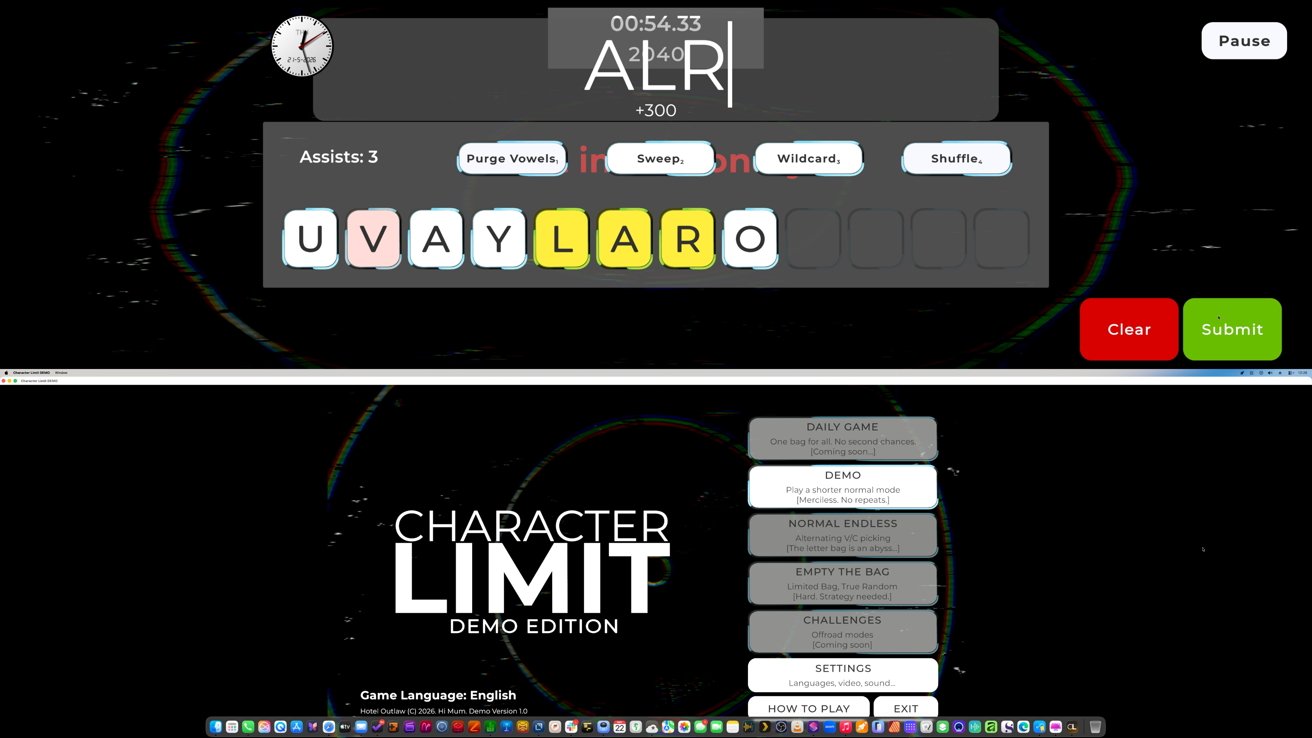


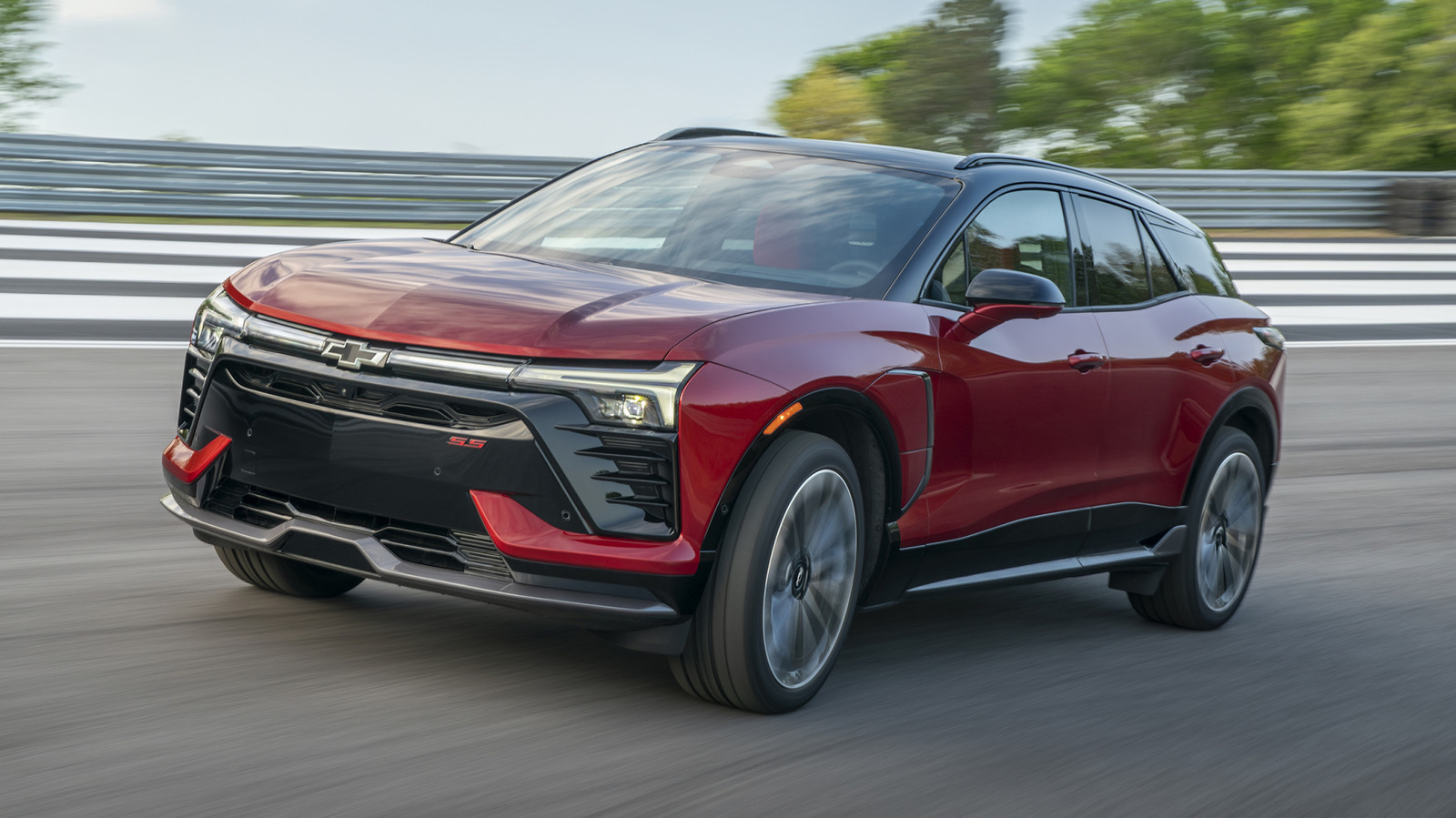
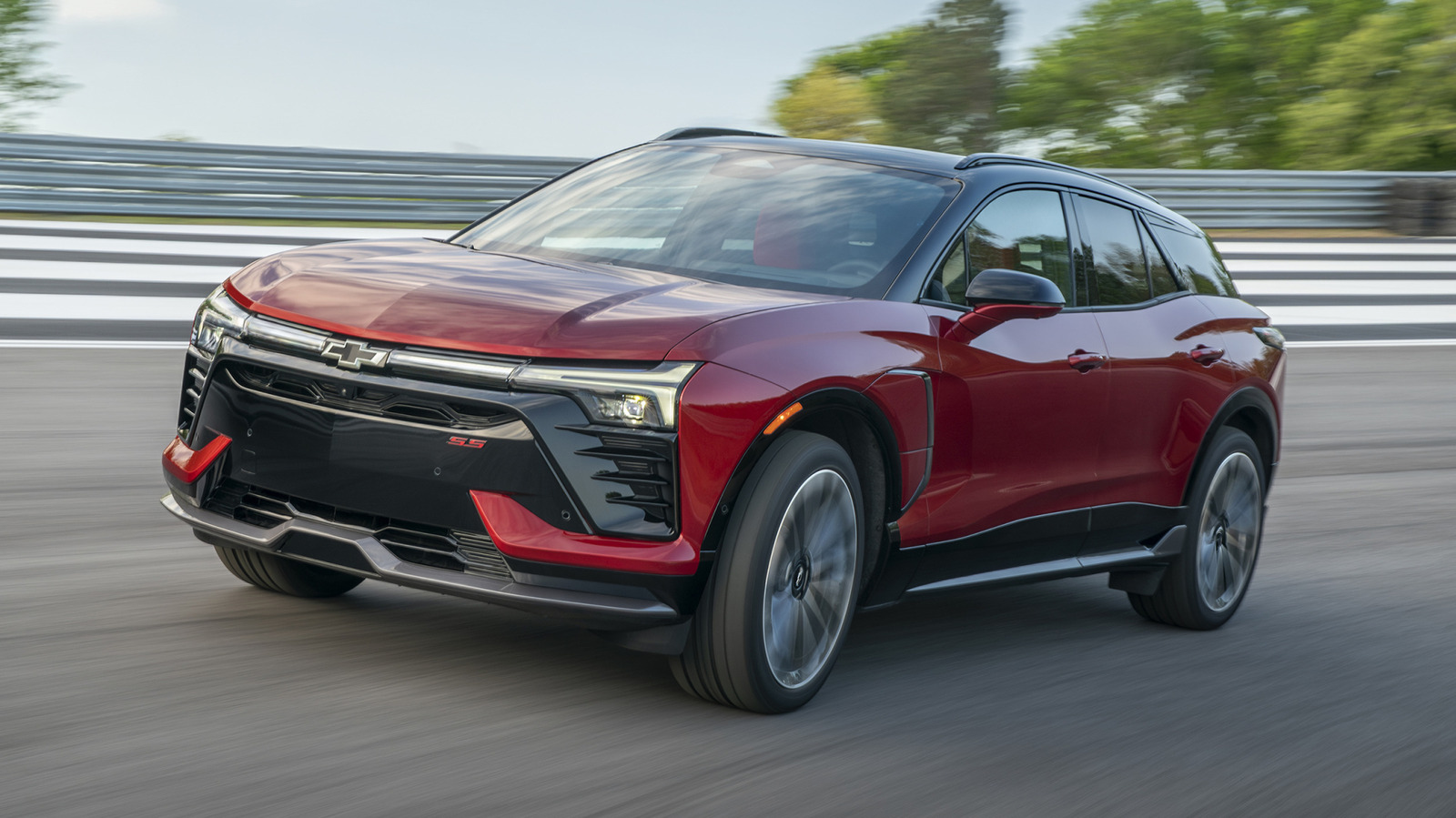













































You must be logged in to post a comment Login