However, not all Android devices have the hardware to support Quick Share-AirDrop compatibility, which means not all Android smartphones can access this feature. To solve this problem, Google announced a new QR code-based file-sharing system, which allows any Android device to transfer files to iPhones.
How does it work?
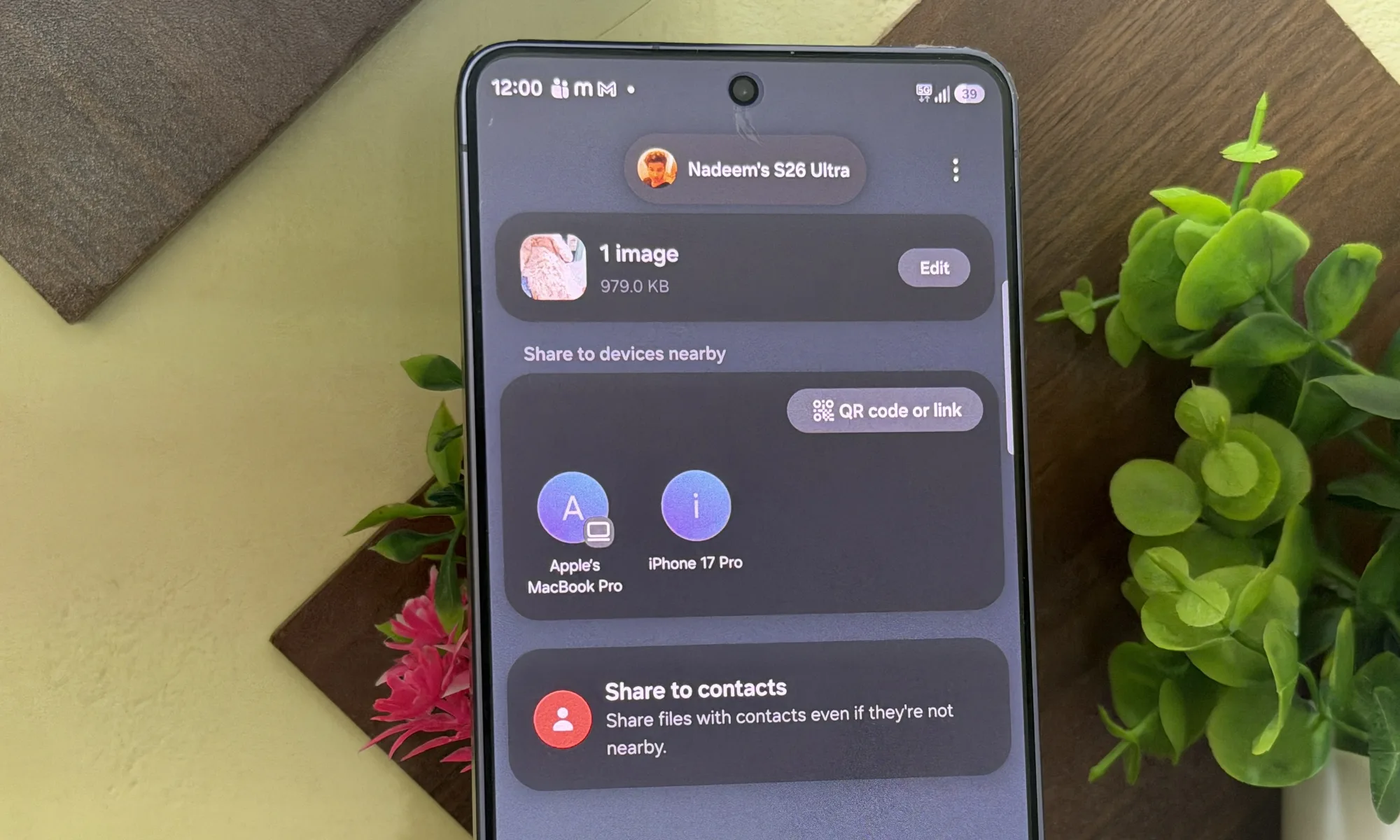
With this new method, an Android phone generates a QR code for sharing files. The iPhone user scans it with the default Camera app, and the file is uploaded to the cloud and transferred to the recipient.
Nadeem Sarwar / Digital Trends
Note that anyone with access to the QR code can download the file without requiring any permission. So ensure that you only share the QR code with people you trust. I like that the whole experience is surprisingly smooth for something that has historically required third-party workarounds.
Nadeem Sarwar / Digital Trends
Who is this for?
This feature is specifically designed for Android phones that don’t yet have native Quick Share-AirDrop compatibility built in. Instead of relying on a direct device-to-device connection, it uses QR codes and cloud transfers to move files between Android and iOS.
Nadeem Sarwar / Digital Trends
If you don’t see the feature on your device yet, don’t panic. Google said it will be fully available across all Android phones within the next month. On the native AirDrop compatibility front, Google also confirmed that it’s expanding support beyond Pixel and Samsung phones to include OPPO, OnePlus, Vivo, Xiaomi, and HONOR devices this year.
Google is also planning to bring Quick Share inside third-party apps like WhatsApp soon. Between the QR code sharing and the expanding AirDrop compatibility, cross-platform file sharing is finally getting the attention it deserves.
According to the researcher, YellowKey appears unusual for a previously unknown security bug. Nightmare-Eclipse explained that the flaw can be reproduced by copying an attached “FsTx” folder to a USB drive formatted with a Windows-compatible file system such as NTFS, FAT32, or exFAT. Read Entire Article Source link
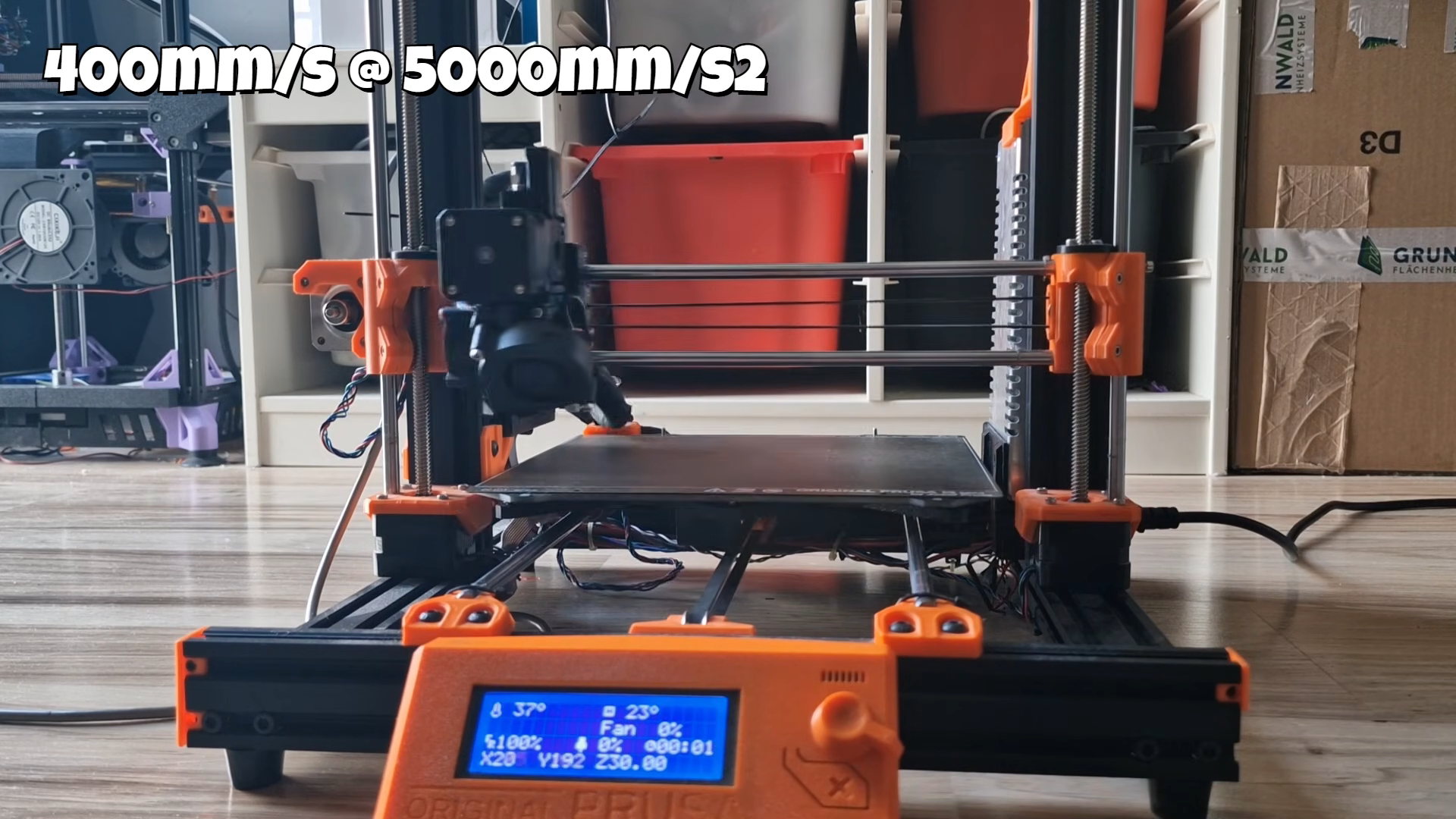
3D printers are almost never fast enough. [Cocoanix] had a Prusa MK3S with this very problem. He found it to be disappointingly tedious when completing even simple prints, and sought a way to make it faster. Thus, he grabbed a Nintendo Switch and got to work.
It might sound like an odd choice, and that’s because it is. There’s no special magic inside a Nintendo Switch that makes 3D printers faster – it’s just that the handheld console was a useful platform on which to run Klipper. As [Cocoanix] explains, Klipper is designed to run on faster general-purpose computers compared to the more limited microcontrollers used in some printers. It’s designed to off-load complex motion processing tasks to a faster CPU, while the printer’s onboard microcontrollers are freed up to simply handle the low-level tasks of driving the motors and so on. An older printer equipped with Klipper can often print faster, while implementing techniques like input shaping to further improve speed as well as print quality.
It’s worth noting that you don’t have to use a Nintendo Switch for this. It’s just a good hook for the YouTube video. Typically you’d use a Raspberry Pi or some other computer instead, but the fact it runs on a jailbroken console is amusing nonetheless. It’s also cool to see the results – in this video, [Cocoanix] got the Benchy printing time down from 90 minutes to just 8.
Samsung’s upcoming wide-screen foldable may end up making a surprising compromise in the camera department.
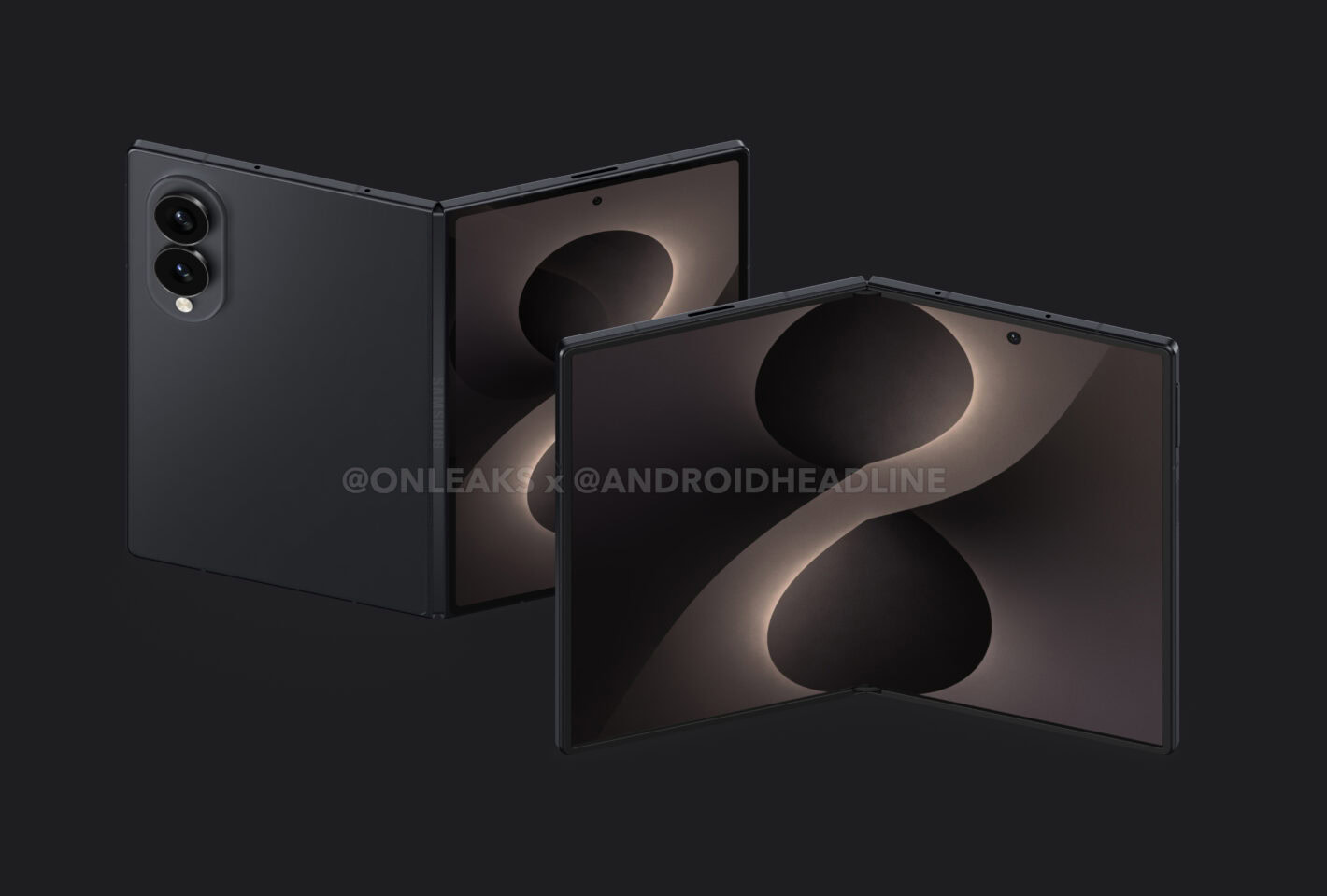
According to a new leak, the rumoured Galaxy Z Fold 8 Wide could launch with just two rear cameras instead of the triple-camera setup Samsung typically reserves for its premium foldables.
The device has already appeared in several leaks ahead of its expected July unveiling. This includes official-looking renders reportedly pulled from an early One UI 9 build. Those renders hinted at the simplified camera layout. Furthermore, new details from GalaxyClub and SamMobile now appear to confirm it.
According to the latest report, both rear cameras on the Z Fold 8 Wide will use 50MP sensors. The main camera will feature an f/1.8 aperture, while the secondary sensor will reportedly use an f/1.9 lens. Both cameras will also support 8K video recording at 30fps.
Advertisement
That setup feels fairly modest compared to Samsung’s usual foldable ambitions, and is especially notable considering devices like the Galaxy Z Fold series traditionally push heavier camera hardware.
Advertisement
The move also mirrors Samsung’s more experimental Galaxy S25 Edge that also adopted a similar dual-camera approach. However, unlike the S25 Edge — which features a massive 200MP primary sensor — the Z Fold 8 Wide appears to prioritise simplicity over outright camera power.
Elsewhere, the phone will include two 10MP selfie cameras, one on the outer display and another on the folding inner screen. Battery capacity may also differ from the standard model. The Z Fold 8 Wide is tipped to feature a 4,800mAh battery, slightly smaller than the 5,000mAh cell expected on the regular Galaxy Z Fold 8.
Advertisement
Taken together, the leaks suggest Samsung could position the Z Fold 8 Wide as a more affordable alternative within its foldable lineup. A reduced camera setup and slightly smaller battery would help explain a lower price point, especially if the company wants to make wider foldables more accessible.
The handset will also launch in several colours, with Dark Green reportedly acting as the signature finish.
Samsung is expected to officially reveal the Galaxy Z Fold 8 Wide alongside the standard Galaxy Z Fold 8 and Galaxy Z Flip 8 sometime in July.
SpaceX has detailed major Starship V3 upgrades ahead of a launch targeted as early as May 19. The changes are meant to move Starship closer to its core goals: rapid reuse, Starlink deployment, orbital refueling, and eventually Moon and Mars missions. Longtime Slashdot reader schwit1 shares a report from Teslarati: Here is an explicit, broken-down list of the key changes, first starting with the changes to Super Heavy V3:
– Grid Fin Redesign: Reduced from four fins to three. Each fin is now 50% larger and stronger, repositioned for better catching and lifting performance. Fins are lowered on the booster to reduce heat exposure during hot staging, with hardware moved inside the fuel tank for protection. – Integrated Hot Staging: Eliminates the old disposable interstage shield. The booster dome is now directly exposed to upper-stage engine ignition, protected by tank pressure and steel shielding. Interstage actuators retract after separation. – New Fuel Transfer System: Massive redesign of the fuel transfer tube — roughly the size of a Falcon 9 first stage — enables simultaneous startup of all 33 Raptors for faster, more reliable flip maneuvers. – Engine Bay/Thermal Protection: Engine shrouds removed entirely; new shielding added between engines. Propulsion and avionics are more tightly integrated. CO? fire suppression system deleted for a simpler, lighter aft section. – Propellant Loading Improvements: Switched from one quick disconnect to two separate systems for added redundancy and reduced pad complexity.
Next, we have the changes to Starship V3:
– Completely Redesigned Propulsion System: Clean-sheet redesign supports new Raptor startup, larger propellant volume, and an improved reaction control system while reducing trapped or leaked propellant risk. – Aft Section Simplification: Fluid and electrical systems rerouted; engine shrouds and large aft cavity deleted. – Flap Actuation Upgrade: Changed from two actuators per flap to one actuator with three motors for better redundancy, mass efficiency, and lower cost. – Faster Starlink Deployment: Upgraded PEZ dispenser enables quicker satellite release. – Long-Duration Spaceflight Capability: New systems for long orbital coasts, orbital refueling, cryogenic fluid management, vacuum-insulated header tanks, and high-voltage cryogenic recirculation. – Ship-to-Ship Docking + Refueling: Four docking drogues and dedicated propellant transfer connections added to support in-space refueling architecture. – Avionics Upgrades: 60 custom avionics units with integrated batteries, inverters, and high-voltage systems (9 MW peak power). New multi-sensor navigation for precision autonomous flight. RF sensors measure propellant in microgravity. ~50 onboard camera views and 480 Mbps Starlink connectivity for low-latency communications. “Believe it or not, there’s more,” writes schwit1. “Two years ago, the biggest and most powerful rocket ever flown was Starship V1. Last year, it was Starship V2. V3 is about to become the biggest and most powerful rocket ever flown — but don’t worry, the company already has plans for V4.”
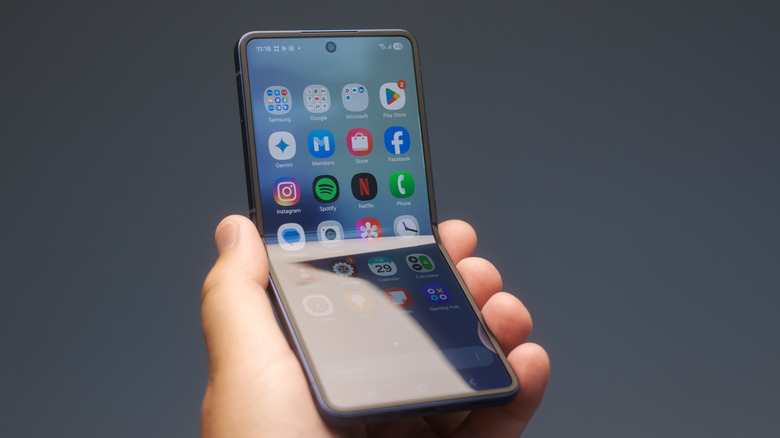
Displays have come a long way, from monstrous CRT televisions to thin, lightweight LCDs and the portable smartphone displays we have now. The transition to wearable displays, however, has been thwarted by the annoying habit of OLED displays to break instead of bending. That might not be a problem anymore, as South Korean researchers, in collaboration with counterparts at Philadelphia-based Drexel University, claim to have developed a new type of OLED display that is both bendable and stretchable.
Flexible OLED displays have been around for more than a decade, but current foldable smartphones have serious drawbacks, such as significantly reduced display durability. Repeated folding and unfolding cause micro-fractures in the conductive traces and the gradual degradation of the organic layers of the OLED substrate. This manifests as visible damage and reduced image quality. The same weakness also makes it extremely difficult to integrate the current generation of flexible OLED displays into wearables that will likely be subject to repeated stretching and folding cycles.
The new flexible OLED display, described in the journal Nature, uses nanomaterials that allow it to be safely stretched to a whopping 1.6 times its original size. While contemporary wearable displays lose a significant amount of their brightness upon stretching, this nanomaterial-enhanced OLED display can allegedly retain 83% of its light output after 100 cycles rated at 2% strain. Let’s take a look at what makes this new technology tick.
Advertisement
Leveraging nanotechnology to improve brightness and durability
Ipeggas/Getty Images
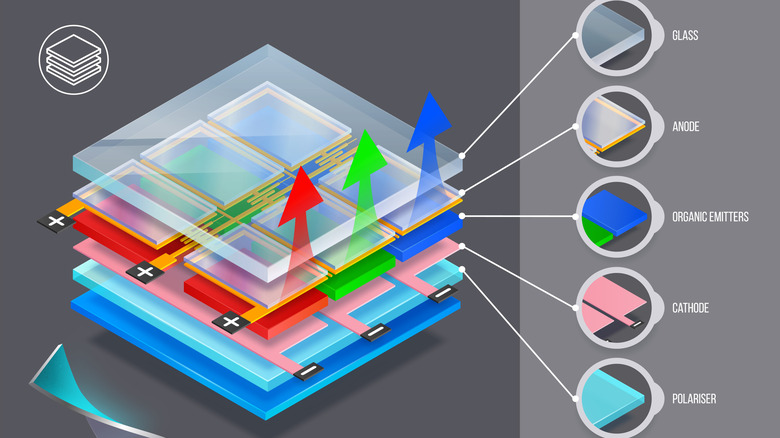
Traditional flexible OLED displays cannot endure many bending and stretching cycles due to the fragility of the conductive electrodes and organic layers that make up the panel. The electrical underpinnings wear out over repeated strain cycles, while the stretchable polymer layers introduced to enhance flexibility and durability reduce the display’s brightness and energy efficiency.
The new flexible OLED design overcomes those shortcomings by using a nanomaterial dubbed MXene to create transparent and stretchable electrodes. Developed by Drexel University’s College of Engineering in 2011, the nanomaterial combines excellent electrical conductivity, mechanical strength, stretchability, and transparency. This allows for a bendable display that claims to retain almost 90% of its performance and efficiency when stretched up to 60% of its maximum strain limit.
Advertisement
The researchers’ claims of impressive light efficiency stem from a new stretchable organic layer, called an exciplex-assisted phosphorescent (ExciPh) layer, that essentially alters the energy level of the OLED system to produce light more efficiently. An OLED pixel produces light by combining the positive and negative charges generated by the electrodes, which eventually unite to form an exciton. The subsequent decay of these excitons generates the electroluminescence driving individual OLED pixels. The new ExciPh layer lets more than 57% of excitons produce light, much higher than the 12% to 22% of traditional flexible OLEDs. This makes for a flexible display that’s not only more durable but also significantly brighter.
Advertisement
Will these lab experiments mature into consumer applications?
Cherdchai Chawienghong/Getty Images
While the publication of research papers on high-tech displays and other promising phone-related technologies doesn’t always translate into consumer products, this joint US–Korean research endeavor did at least result in displays that offer a glimpse of the future. Drexel University researchers demonstrated the efficacy of their stretchable OLED display technology with two green monochrome displays: one depicted a heart icon, while the other showed a set of numbers.
Their counterparts at Seoul National University went one step further, developing a full-color stretchable display, replete with stretchable passive-matrix OLEDs. In other words, this flexible OLED technology already seems relatively mature, and deploying it in low-power wearable display solutions is not out of the realm of possibility.
The authors of this research paper list real-time health care monitoring and wearable communications technology as the potential applications of the stretchable OLED display prototypes demonstrated in their journal publication. Meanwhile, contemporary research into stretchable batteries, as discussed in ACS Energy Letters, seems to herald a future where wearable displays are the norm rather than science fiction.
The pharma has four locations in Ireland, employing more than 1,000 professionals.
Japanese pharmaceutical company Takeda has announced plans to cut 4,500 people from its globally dispersed workforce, as a means of restructuring and reducing costs. Reportedly the cuts will start in early July and could extend to December 2027.
According to a recent investor presentation, the company’s restructuring plans will include consolidating its departments for efficiency, cutting management layers and automating operations, all in the name of generating the necessary funds to support upcoming drug launches.
Current hiring plans will not be impacted however, as Takeda intends to fill 2,200 vacant roles. Some of which will go to internal candidates. With more than 50,000 workers worldwide, in more than 80 global locations, it is unclear which regions will be most impacted.
Advertisement
It is unknown how the cuts might affect Ireland. The pharmaceutical company has had a presence in the country since 1997 and has four locations. In Dublin there are facilities at Citywest, Grange Castle and Baggot Street. There is also a premises in Bray, Wicklow.
The Bray facility was previously chosen as Takeda’s first European OSD facility, allowing expansion into global markets and in 2004 Takeda chose Grange Castle as its first active pharmaceutical ingredient facility outside of Japan. Currently, the company employs more than 1,000 people in Ireland.
SiliconRepublic.com has reached out to Takeda regarding how the layoffs might impact employees based in Ireland.
Earlier this week coding platform GitLab announced plans to cut an undisclosed number of jobs, with additional plans to reduce its global operational footprint by up to 30pc. Carmaker GM also announced layoffs, with around 30 Ireland-based employees expected to be affected in the layoffs.
Advertisement
Don’t miss out on the knowledge you need to succeed. Sign up for the Daily Brief, Silicon Republic’s digest of need-to-know sci-tech news.
‘This must be engagement farming’: Nothing CEO pokes fun at Sony for ‘awful’ Xperia 1 VIII social post showing its AI Camera Assistant tool making photos look worse
Sony has posted an advert for the Xperia 1 VIII’s AI Camera Assistant tool
But all the images using this feature look worse than the ‘before’ shots
It’s unclear how this could have happened without Sony realizing
AI is a controversial tool, but even those against the technology would probably admit that it has some utility. One such use case is to improve photos, but Sony’s recent attempt to advertise AI’s skills in this area has very much backfired.
You see, the Sony Xperia 1 VIII has just launched with an ‘AI Camera Assistant’ tool, which, on paper, sounds promising. It can make suggestions about settings you might want to change, such as exposure, bokeh, and color, based on what you’re pointing the viewfinder at, in order to get the best version of a photo. Except, its suggestions are seemingly absolutely terrible.
In a post on X, the official Sony Xperia account has shown some before and after photos aimed at advertising the capabilities of this tool, but the improved shots basically just seem to be overexposed to ludicrous levels, washing out colors and details, and leaving the photos looking pale and unnatural.
Latest Videos From
The new AI Camera Assistant* with Xperia Intelligence brings stories to life. Using subject, scene and weather, it suggests expressive options with adjustments of colour, exposure, bokeh, and lens for breathtaking photos*.https://t.co/zgSQ9MLWFP#SonyXperia #Xperia1VIII pic.twitter.com/1dsBeCNvhEMay 14, 2026
Advertisement
An accident or an intentional gamble?
An example of Sony’s AI Camera Assistant tool in action, as provided by Sony itself (Image credit: Sony)
Even if the feature really is this bad, it’s bizarre that Sony would highlight its failings like this, so there’s some debate online about what’s going on. Nothing’s CEO Carl Pei even weighed in, suggesting “this must be engagement farming??” But if it is, it’s quite the gamble given just how terrible this makes the feature look.
Other replies have described the results as “awful” and noted that “all the originals look better”, with one poster saying, “If this is intelligence, I’d prefer my phone dumb.” Another simply asks, “Is this satire?”
The response is almost universally negative, and it seems hard to believe that Sony didn’t realize the adjusted photos look worse. But it’s also hard to imagine the company would intentionally post bad images for engagement.
Perhaps, then, the before and after shots have accidentally been mislabeled, but the post has been up for quite a while now, so you’d think it would have been taken down if that was the case.
Advertisement
Sign up for breaking news, reviews, opinion, top tech deals, and more.
We’ll be interested to give the AI Camera Assistant feature a try for ourselves when we get our hands on the Sony Xperia 1 VIII, but for now, based on Sony’s own images, it looks like something you might want to steer well clear of.
LinkedIn is laying off workers across engineering, product and marketing, Bloomberg reported Wednesday, as the tech sector continues shedding roles.
CEO Daniel Shapero disclosed the cuts in an internal memo cited by Bloomberg. The professional networking platform, which is owned by Microsoft, did not say how many of its 17,500 employees would be affected or where they are based. A report from Reuters put the cuts at 5% of the workforce.
“As part of our regular business planning, we’ve implemented organizational changes to best position ourselves for future success,” a company spokesperson told GeekWire via email.
Shapero took the helm at LinkedIn last month after serving as chief operating officer since 2021. He succeeded Ryan Roslansky, who was elevated to executive vice president overseeing both LinkedIn and Microsoft Office.
The cuts come despite strong financial performance. In January, LinkedIn reported crossing $5 billion in quarterly revenue for the first time, and last month said its annual revenue grew 12% year-over-year. Microsoft acquired the company a decade ago for $26.2 billion.
Advertisement
The layoffs are the latest in a string of workforce reductions at Microsoft. The tech giant cut 6,000 employees, roughly 3% of its global workforce, about a year ago, then trimmed an additional 9,000 jobs last July. It recently offered voluntary retirement to thousands of employees for the first time in its 51-year history, targeting workers whose age plus years of service total 70 or more, and has flattened management layers while overhauling its compensation structure.
Microsoft has repeatedly denied a direct link between the cuts and its growing use of artificial intelligence to automate coding tasks. But as AI efficiencies expand and the company invests billions in data centers, it continues trimming its payrolls.
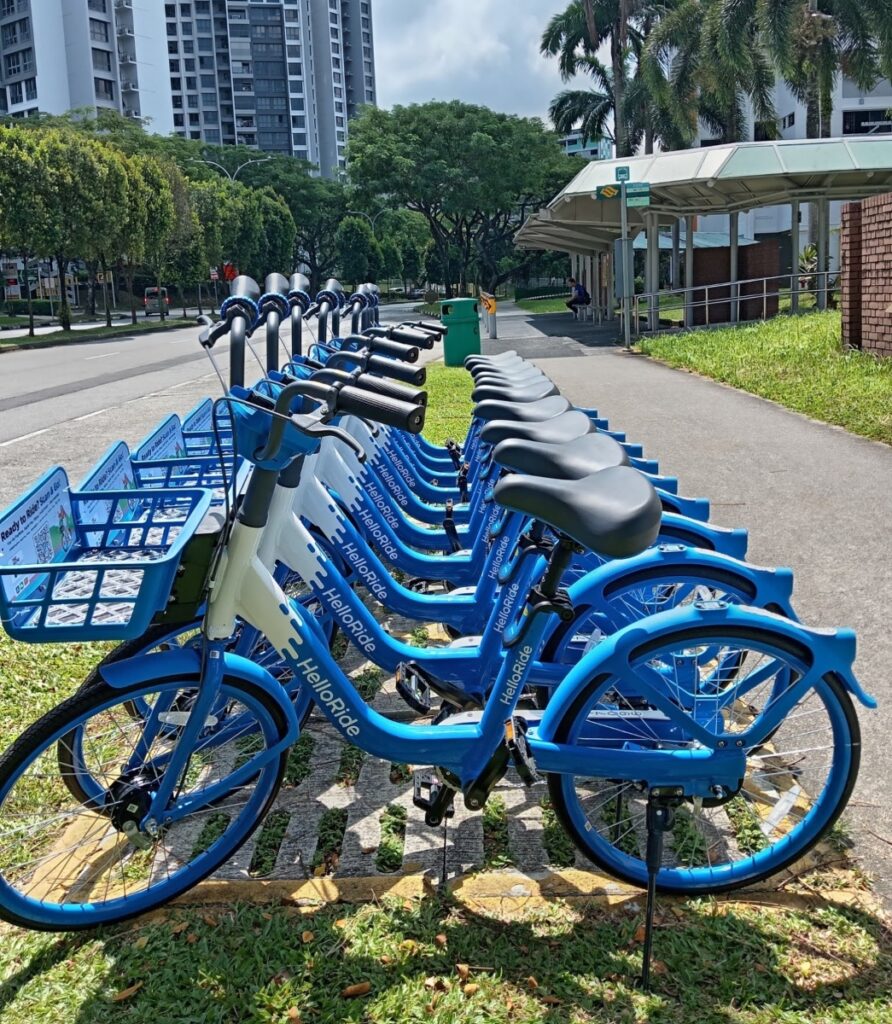
Walk around your estate, MRT station, park connector, or even the CBD, and chances are you’ve come across these bright blue shared bicycles—HelloRide has quietly become part of everyday life in Singapore.
Launched in Singapore in 2022, the firm has grown to become one of the largest in the city-state, with a fleet of 20,000 shared bicycles here.
So what’s actually behind its growing presence?
Advertisement
It’s not just about putting more bikes on the road, but how the service has been designed from removing common user frustrations to constantly improving the bicycles and working with partners across Singapore’s mobility ecosystem.
No top-ups, no deposits, no friction
One of the first things HelloRide focused on was removing some of the biggest friction points that riders commonly face.
Instead of requiring users to top up their wallets or place deposits before they can start riding, the platform allows users to simply unlock a bike and pay after the ride.
It is currently the only shared bicycle operator in Singapore offering this pay-after-ride model, with rides starting from S$1. There’s also no minimum balance to maintain and no locked funds sitting in an account.
Advertisement
For many riders, especially those who have used bike-sharing services in the past, this addresses a very real pain point, from needing to top up S$10 just to start a ride, to dealing with unused balances or delayed deposit returns.
At the same time, HelloRide also offers subscription passes for more regular users. With passes priced from as low as S$0.22 per day, riders can enjoy unlimited free usage for the first 30 minutes of every ride, making it a cost-effective option for daily commuting.
Overall, HelloRide makes bike-sharing more accessible for both casual riders and daily commuters.
Keeping the fleet fresh
Another factor that often goes unnoticed is the condition of the bicycles themselves.
Advertisement
HelloRide operates on a relatively aggressive fleet renewal cycle, replacing its bicycles approximately every 1.5 years. As part of its ongoing upgrade efforts, the company will be replacing around 9,000 older bicycle models this year alone.
This ensures that riders are consistently using newer bicycles that are better maintained, more reliable, and designed with improved safety features.
Image Credit: HelloRide
For users, this translates into something simple but important: peace of mind when riding. Whether it’s a short trip to the MRT or a longer ride across the park, having a well-maintained and up-to-date bicycle makes a noticeable difference in both comfort and safety.
Rather than maximising the lifespan of each bicycle, HelloRide’s approach prioritises rider experience and operational reliability, ensuring that the fleet on the ground remains in optimal condition.
Moreover, the firm also continuously iterates and develops new bicycle designs based on how people actually ride in Singapore. Over time, it noticed recurring user feedback requesting features such as shared e-bikes and bicycles with gears, particularly for users travelling longer distances or riding in leisure areas such as East Coast Park and Marina Bay.
Advertisement
However, while fully shared e-bikes are currently not permitted under Singapore regulations, traditional external geared bicycles can also create significant maintenance and operational challenges when deployed at large fleet scale.
To bridge this gap, HelloRide has developed a new hybrid bicycle concept featuring automatic internal gearing, designed to provide a smoother and more comfortable riding experience while maintaining operational sustainability and maintenance efficiency.
As part of this effort, the company is preparing to roll out the new hybrid bicycle model under a pilot programme in selected areas such as East Coast Park and Marina Bay in June. The bicycles are designed with enhanced ergonomics and improved riding posture, catering to users who spend more time on the bike and require a more comfortable riding experience over longer distances.
HelloRide’s hybrid bicycle model./ Image Credit: HelloRide
“Our approach has always been to build and refine our bicycles based on real user behaviour, rather than forcing a single model across all scenarios,” said Hayden Choo, the 32-year-old Managing Director of HelloRide Singapore.
“Singapore is an important market for us, and we see it as a place where we can continuously test and introduce better riding experiences.”
Advertisement
Integrating into everyday platforms & brands
Beyond its core bike-sharing service, HelloRide has been expanding into a broader, more integrated mobility ecosystem—not just through transport platforms, but also through lifestyle and brand collaborations.
Instead of requiring users to download yet another standalone app, HelloRide has embedded its services into the platforms people already use in their daily lives. This includes the Grab miniapp ecosystem, allowing users to locate and unlock bicycles directly within the Grab platform, as well as collaborations such as bundled mobility passes with partners like Ryde.
Image Credit: HelloRide
At the same time, the company has also moved into advertising and brand partnerships, working with names such as Razer, ClassPass, and ZUS Coffee. These collaborations turn HelloRide bicycles into moving touchpoints across the city, allowing brands to reach users in a visible and contextual way.
HelloRide’s collaboration with Razer./ Image Credit: HelloRide
Together, these efforts position HelloRide not just as a bike-sharing operator, but as part of a wider urban lifestyle ecosystem.
Supporting gig workers
HelloRide’s expansion has also extended into partnerships with gig economy platforms, particularly in supporting delivery riders who rely on mobility for their daily income.
In collaboration with partners such as foodpanda, HelloRide is providing premium foldable and road bicycles to new delivery riders as part of their onboarding process. These bicycles offer a higher-performance alternative for riders who may not yet own their own equipment, allowing them to get started more quickly and operate more efficiently.
Advertisement
Image Credit: HelloRide
At the same time, through ongoing engagement with riders on the ground, HelloRide has identified additional challenges, particularly around battery limitations for power-assisted bicycles (PABs), which may not always last a full working day.
To address this, the company is exploring battery swapping infrastructure aimed at reducing downtime and enabling riders to maximise their earning potential.
Taken together, these initiatives reflect a broader approach: not just serving riders, but actively supporting the ecosystem that depends on them.
Beyond shared bicycles
Looking ahead, HelloRide is exploring the possibility of expanding into physical retail, bringing premium bicycle experiences closer to everyday users. This includes well-known brands such as Brompton and Canyon, which are typically associated with high-quality, performance-oriented bicycles.
By introducing these models through rental or leasing options, HelloRide aims to give users the opportunity to test ride premium bicycles without the pressure of committing to a full purchase upfront.
Advertisement
In other words, this could be your chance to try before you buy, whether you’re curious about upgrading your ride or simply want to experience a higher-end bicycle, without worrying about buyer’s remorse.
HelloRide’s growing presence in Singapore isn’t driven by just one thing, but a combination of deliberate choices, from simplifying the user experience and keeping the fleet fresh, to continuously improving its bicycles and working with partners across everyday platforms.
Leading this growth is Hayden, who has spent years in Singapore’s mobility and ride-hailing ecosystem. Under his leadership, HelloRide Singapore’s focus on ecosystem integration and operational localisation is an approach that has paid off.
Hayden Choo./ Image Credit: HelloRide
“Anyone can deploy bicycles. But building a sustainable mobility platform in Singapore requires understanding local user behaviour, maintaining operational discipline, and continuously improving the rider experience,” said Hayden.
It’s an approach that we believe has paid off in the form of increasingly visible ridership across Singapore.
Hayden Choo, the 32-year-old Managing Director of HelloRide Singapore
Mira Murati still wants to build AI superintelligence. But the ex-CTO of OpenAI sees human intelligence as a critical part of the equation.
At a time of rising worry over AI eliminating jobs and increasing the power of few big companies, Murati’s startup, Thinking Machines Lab, offers a radically different vision of the technology.
“At some point we will have super-intelligent machines,” Murati tells WIRED. “But we think that the best way to actually have many possible futures—good futures—is to keep humans in the loop.”
Murati says AI doesn’t need to automate humans out of the equation. A more optimistic approach, she suggests, is to let people build and customize their own frontier AI models, then work with those models to achieve their goals.
Advertisement
This week, Thinking Machines previewed a new kind of AI model that it says points toward a more human-inclusive reality. The company’s “interaction models” are trained to communicate with a person through a camera and microphone. Unlike many existing voice-mode interfaces, the new models do not simply capture and transcribe speech, then feed it into a language model that processes it in the same way as a chatbot. The interaction models natively understand continuous, messy, human communication—meaning they are better able to grasp the meaning of pauses, interruptions, and changes in tone. This allows them to adapt on the fly when someone clarifies a point or changes the subject. The company showed off several videos demonstrating these capabilities, though the models have not been released publicly.
Murati’s approach stands in contrast to how most big AI companies seem to be pursuing superintelligence today. OpenAI, Anthropic, Google are developing large models that do increasingly complex work, including writing entire software applications from scratch, via a text prompt. This requires little help from a human.
Thinking Machines is not the only startup to envision a more human-inclusive future. Other labs, including Humans&, also aim to develop AI systems that prioritize human collaboration. Some prominent economists have called for AI researchers and companies to build systems in this way, focusing on human empowerment rather than replacement.
Murati left her role as the chief technology officer of OpenAI in 2024, cofounding Thinking Machines with several prominent engineers. Thinking Machines has raised billions of dollars to build frontier AI.
Advertisement
So far, however, the company has released only one product. Tinker, launched in October 2025, makes it possible to refine a frontier AI model using custom data. Today, it is available as an API that researchers and engineers can use to fine-tune open source models.
Alexander Kirillov, a founding team member of Thinking Machines and an expert on multimodal AI, meaning models that handle audio and video as well as text, says the lab’s new interaction models also have the potential to enable more customized and personalized AI.
“The model constantly perceives what you’re doing and is constantly there to be able to reply and give you information or search for information or use other tools,” Kirillov says. “This is something that none of [today’s other] models can actually do. The turns [in a conversation] are determined by a much less intelligent system.”
Mira says it’s all part of a bigger AI vision.
Advertisement
“This is showing the first bet on human collaboration,” she explains. “Where this is going is really amplifying people’s own preferences and values, with AI actually understanding intent and predicting intent.”




























































You must be logged in to post a comment Login