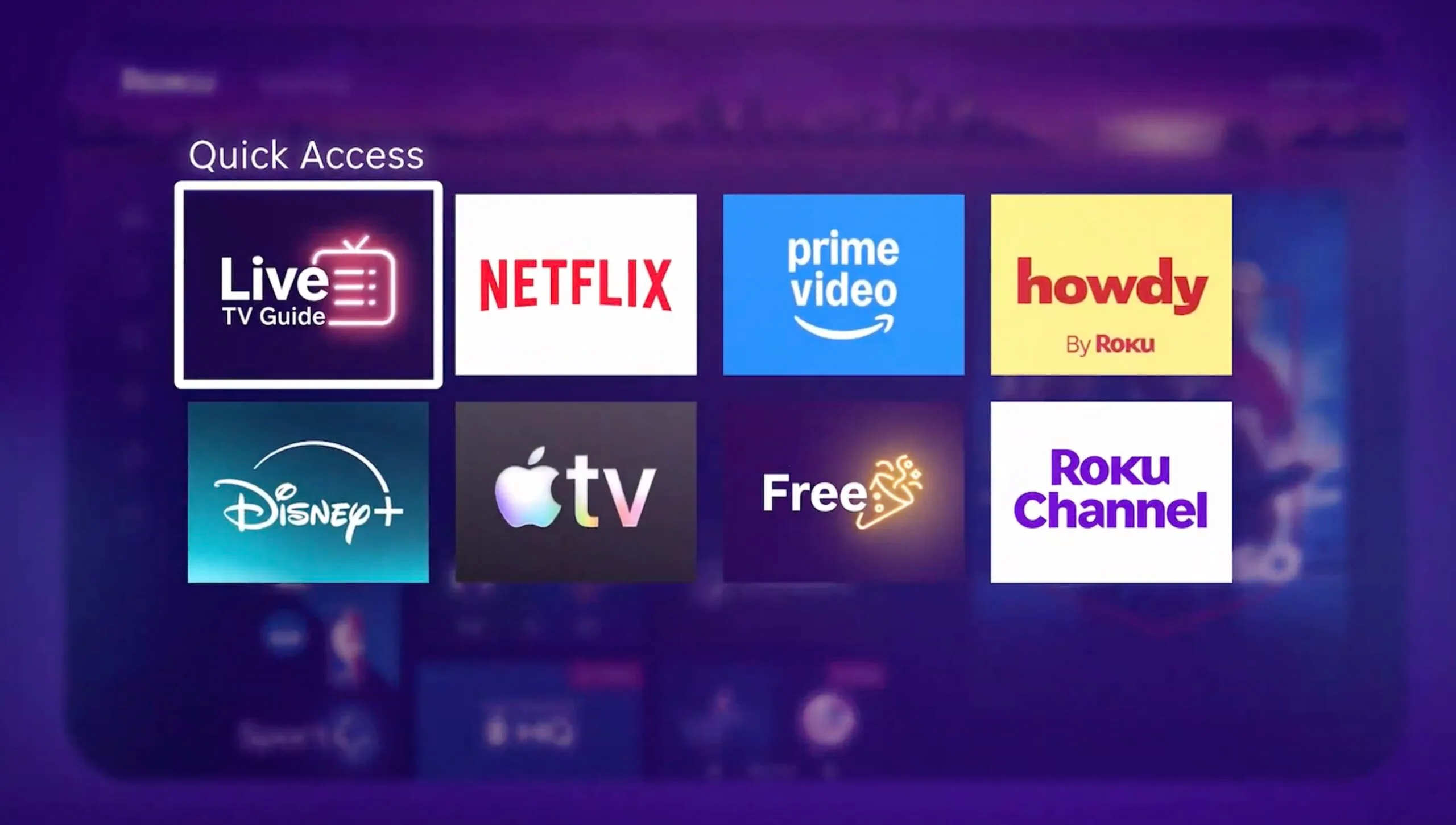
If you own a Roku TV or streaming device, your home screen is about to look very different. Roku just unveiled its most significant home screen redesign in over ten years, rolling out today across all Roku TVs and streaming devices in the US.
Here is everything that is new on your Roku home screen
Roku TV
The redesign introduces several new features built around getting you to content faster. The Quick Access section your most-used apps front and center, powered by AI that continuously adapts to your habits. You can also manually add or remove apps if you prefer to be in control.
At the top of the screen, Top Picks for You is an expanded, personalized content section showing what you love to watch, what is trending on Roku, and the biggest entertainment of the moment.
Roku TV
A new For You destination goes deeper, pulling fresh personalized picks based on your interests. The Subscriptions destination brings together content from all your paid streaming services in one place, so you are not hunting across apps.
Destinations are genre and mood-based hubs spanning comedy, movies, sports, and more, with context-aware search that adapts depending on where you are browsing.
Your Daily Scoop is a real-time AI-powered row that surfaces breakout shows and cultural trends updated hourly. The home screen menu is now collapsible, keeping the interface clean until you need it.
Advertisement
Roku TV
Shortcuts like Continue Watching, Sleep Timer, and Save List are also easier to reach. There is even a new Roku City tile that takes you into an interactive version of the iconic screensaver, complete with Daily Trivia, Roklue and retro games like Roku City Dash.
When will your Roku get the new home screen?
Roku TV
The update rolls out automatically starting today in the US, so just wait for your device to update itself. Roku founder and CEO Anthony Wood says every change was grounded in what users actually do and need, shaped by extensive viewer feedback and behavioral data. Last month, Roku also added six free channels covering classic sitcoms, reality TV, and films.
When Marathon’s second season kicks off on June 2, Bungie will give new players a chance to try the game for free for a full week. In blog post published today, the studio said the preview, which is slated to run through June 9, will be available on Steam, PlayStation 5 and Xbox Series X/S, with any progress players make carrying over to the full game if they decide to purchase it afterward.
As previously announced, existing players will see their item vault and armory reset at the end of the current season, making this a great time to try the game since everyone will be on equal footing when it comes to weapons and upgrades. In Wednesday’s blog post, Bungie also shared new information about season two’s biggest additions: the new Sentinel class, nighttime Dire Marsh map and Cradle customization system. The reimagined zone will see Marathon lean into more of its cosmic horror inspirations.
“This new zone introduces new mechanics, new combatants, and locations to explore on Dire Marsh,” Bungie explains. “It’s built to be slower-paced than Day Marsh and plays more like a survival horror experience, with slightly fewer players and extra environmental challenges with navigating the darkness and threats within.”
Advertisement
As for the Sentinel shell, Bungie describes it as defensive specialist, with a kit built around controlling space. Its prime ability, Defender System, allows it to deploy a point-defense drone that can briefly protect you and your crew against grenades and missiles. If I had to guess, the new shell will be popular at high levels of play where grenades of all types fly thick and fast. In a call back to the Halo series, one of the Sentinel’s other abilities allows it to activate a short-range, motion-tracking system. “Use this to gather a bit of extra intel on who or what’s moving around you, and set up your defenses accordingly,” Bungie suggests.
Lastly, there’s the Cradle, which will allow players to convert extra weapons and other equipment into experience they can put towards stat upgrades and perks. Bungie says this system is designed to give players a way to progress their character separate from the game’s faction system, which can get tedious when you need to find (and exfil) specific high-level salvage to buy a single upgrade. The studio also notes players can tweak their Cradle builds at any time to encourage experimentation.
Earlier this month, Bungie outlined its plan for Marathon’s future, saying it would make the game’s onboarding experience better for new players, and that new PvE modes would arrive during season two. Less than a week later, the studio announced it was ending development onDestiny 2. Thena day laterBloomberg’s Jason Schreier published a report claiming Sony was planning “significant” layoffs at the developer. It’s probably fair to say a successful preview week would do a lot to boost morale at Bungie.
Soundbars are popular because they’re easy to set up and provide a sonic upgrade over TV speakers, sometimes a huge upgrade. But as TVs have gotten larger – and wider – every year, soundbars have basically stayed the same size. This means the little bar may not be able to match the audio to the on-screen action in terms of its soundstage width and immersion.
Most soundbars measure in at anywhere from 2 feet wide for the compact ones to around 4.5 feet wide for the larger ones. Sony’s flagship BRAVIA Theater Bar 9 is around 52 inches wide and SONOS’ flagship ARC Ultra is around 46 inches wide. Even the average 65-inch TV is wider than both at 57 inches. And if you’re opting for a 100-inch TV, those are around 88 inches wide – that’s over seven feet wide. This means the edges of your TV may each be up to two feet or more beyond the soundbar’s outermost speakers. And this can lead to the sound seeming much smaller than the picture.
Soundbars can’t always keep up with the on-screen action when they are dwarfed by a giant flat panel TV or projection screen.
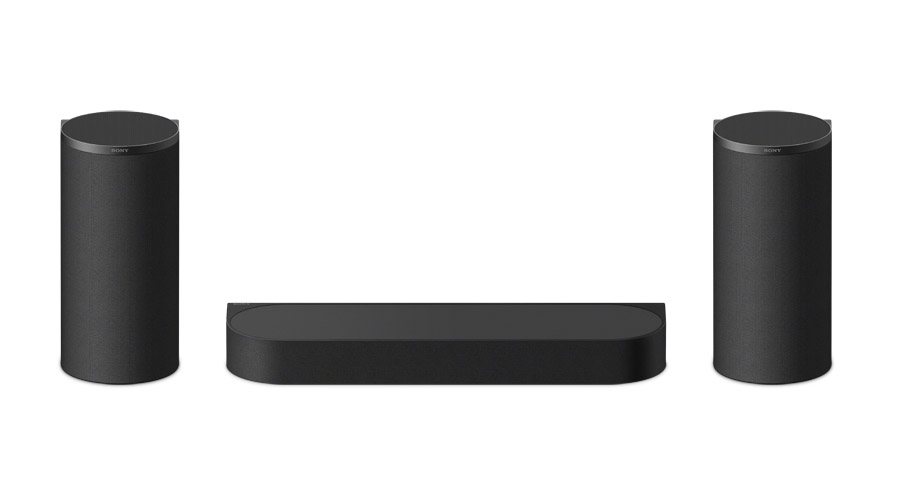
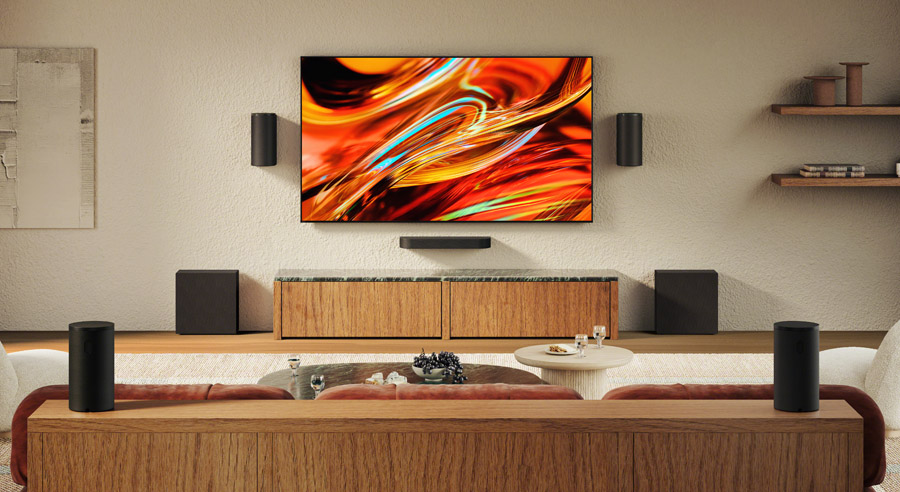
Sony just addressed this problem with their new BRAVIA Theater Trio. Also known by model number HT-A8, the Trio is a powered three-speaker system with dedicated left, center and right speakers that allows you to place your main speakers on either side of your TV or projection screen for a wider, more immersive soundstage even with the largest TV or projection screens.
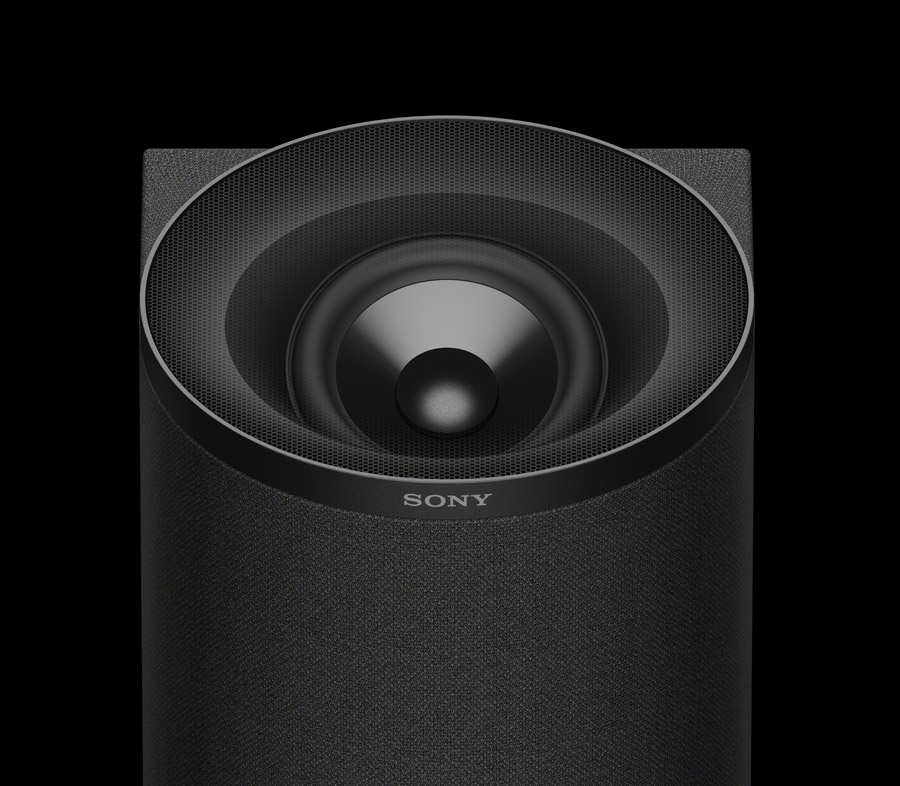
The Sony BRAVIA Theater Trio comes with a dedicated center channel speaker and a pair of front speakers with front-firing and up-firing drivers.
You may say, “But wait! Doesn’t Sony already offer the BRAVIA Theater Quad for just this reason?” And the answer is “YES!” But the new Trio has something the Quad doesn’t have: a dedicated center channel speaker. And this heps to improve dialog intelligibility compared to the phantom center created by the Quad system. The Trio also supports up to two powered subwoofers, while the Quad currently only supports one.
Based on our listening tests in events in Japan and New York, we’d say the BRAVIA Theater Trio works well on its own to improve the dynamics and immersiveness of TV sound, thanks to its high quality front and up-firing drivers. But it can also be upgraded with rear speakers and one or two powered subwoofers for much more immersive surround sound with deep extended bass.
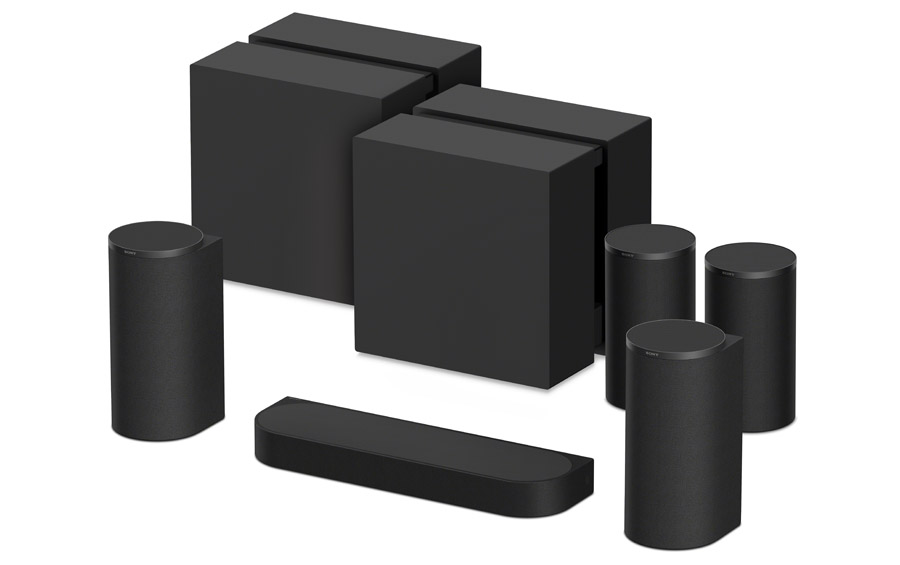
The BRAVIA Theater Trio is compatible with all of Sony’s current rear speakers and subwoofers including the Bravia Theater Rear 8 and Rear 9 surround speakers and the BRAVIA Theater Sub 7, Sub 8 and Sub 9 powered subwoofers. For best effect, we recommend adding the Rear 9 speakers as they include both front firing and top-firing drivers as well as an integrated swivel stand that allows you to point the front drivers toward your listening position.
Advertisement
The sound of the Trio system can approach cinematic levels when upgraded with a pair of rear speakers and powered subwoofers.
Which subwoofer you pick will depend on room size and how much you love that low bass. The entry-level Sub 7 would be fine in a small apartment or listening space to fill in that bottom end without shaking the walls. But in a larger room, you may want to consider the larger Sub 8, with one 8” driver or the flagship Sub 9 which features two force-balanced 8-inch bass drivers in a larger cabinet for deeper bass extension. To even out the bass response in all parts of your room, and provide the most substantial bottom end, the BRAVIA Theater Trio supports the addition of a second subwoofer.
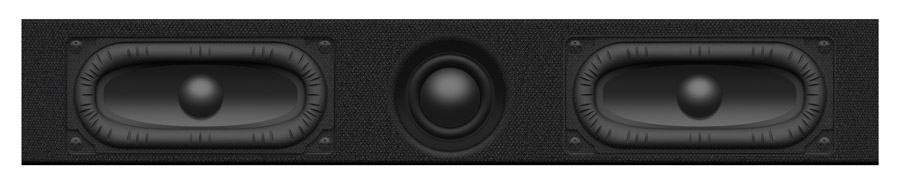
The BRAVIA Theater Trio center channel features a two-way design with a center tweeter, flanked by dual bass/midrange drivers for clear dialog reproduction.
Like a soundbar, the Trio needs no separate amplifier or receiver as it’s got the power built in. Just connect one HDMI cable from the TV or projector’s HDMI ARC/eARC port to the center channel speaker and plug it into wall power and that center speaker unit communicates wirelessly with the rest of the speakers in the system. The front speakers, and any optional rear speakers and subwoofers do need their own power connections, however, as they need electricity for both the built-in amplifiers and wireless connectivity.
All Hype? Or Is There Some Merit Here?
We got to hear a demo of the full BRAVIA Theater Trio system at Sony’s headquarters in Tokyo earlier this year. It was matched with two of the company’s flagship BRAVIA Theater Sub 9 subwoofers and a pair of the BRAVIA Theater Rear 9s in the rear. The system provided excellent, dynamic sound overall, which was more than a match for the 115-inch BRAVIA 9 II True RGB TV it was paired with. Bass was deep and extended, thanks to the dual subs, and dialog was clear and crisp. Music and effects extended nearly the full width, height and depth of the room, giving the whole experience a dynamic cinematic feel.
The front left and right speakers that come with the Trio system featured high quality angled up-firing drivers to reflect height channel effects off the ceiling.
The Trio isn’t replacing the Quad. It’s just providing another option for those who like the idea of variable width front left and right speakers and a dedicated center channel, without the wiring complexity of an A/V receiver and passive speakers.
Keep it in the Family (BRAVIA Family)
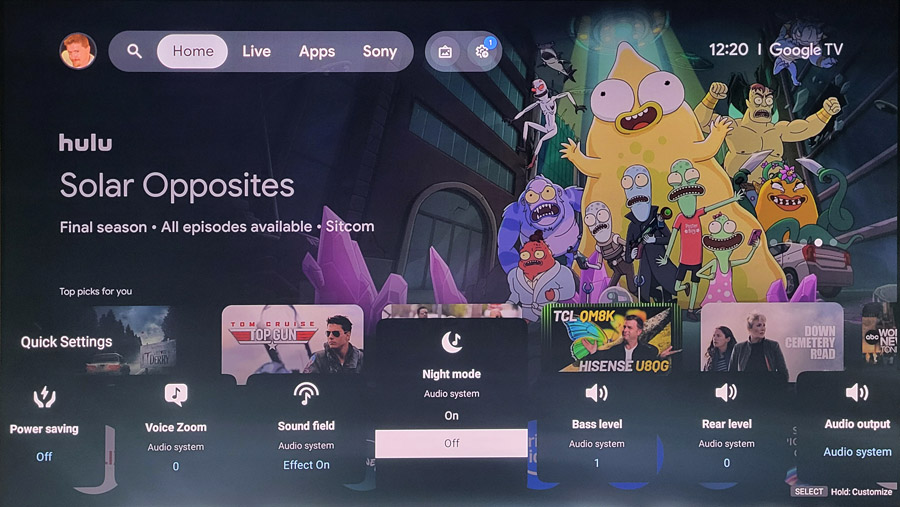
If you match the Trio up with a Sony TV, then you’ll be able to make all your audio adjustments right in the TV’s quick settings menu, and you’ll be able to take advantage of Sony’s AI-enhanced Voice Zoom 3 feature which elevates dialog without impacting the rest of the soundtrack.
Advertisement. Scroll to continue reading.
When connected to compatible Sony BRAVIA TV, you can make audio adjustments to the BRAVIA Theater Trio from the TV’s Quick Settings menu.
The Sony BRAVIA Theater Trio system can decode Dolby Atmos and DTS:X immersive surround sound, in both lossless and lossy versions. However, unlike the BRAVIA Theater Bar 8 and Bar 9 as well as the QUAD system, the Theater Trio does not support 360 Reality Audio, an immersive format for music which competes with Dolby Atmos. To be fair, the catalog of music titles available in 360RA format is pretty limited, so this omission is not likely to be a deal breaker for most buyers.
The BRAVIA Theater Trio can decode IMAX Enhanced DTS-X soundtracks like “Queen Rock Montreal” on Disney+ on select devices (including most recent Sony TVs).
The BRAVIA Theater Trio is certified IMAX Enhanced, which means it can decode the IMAX Enhanced DTS-X soundtracks on Blu-ray Disc, UHD Blu-ray and in streaming services including Disney+ and Sony Pictures Core, applying the necessary EQ to the soundtrack for maximum impact.
Advertisement
For wireless connectivity, the Theater Trio supports WiFi 6e network for high reliability as well as Bluetooth and Apple AirPlay 2.
New Improved Calibration Microphone
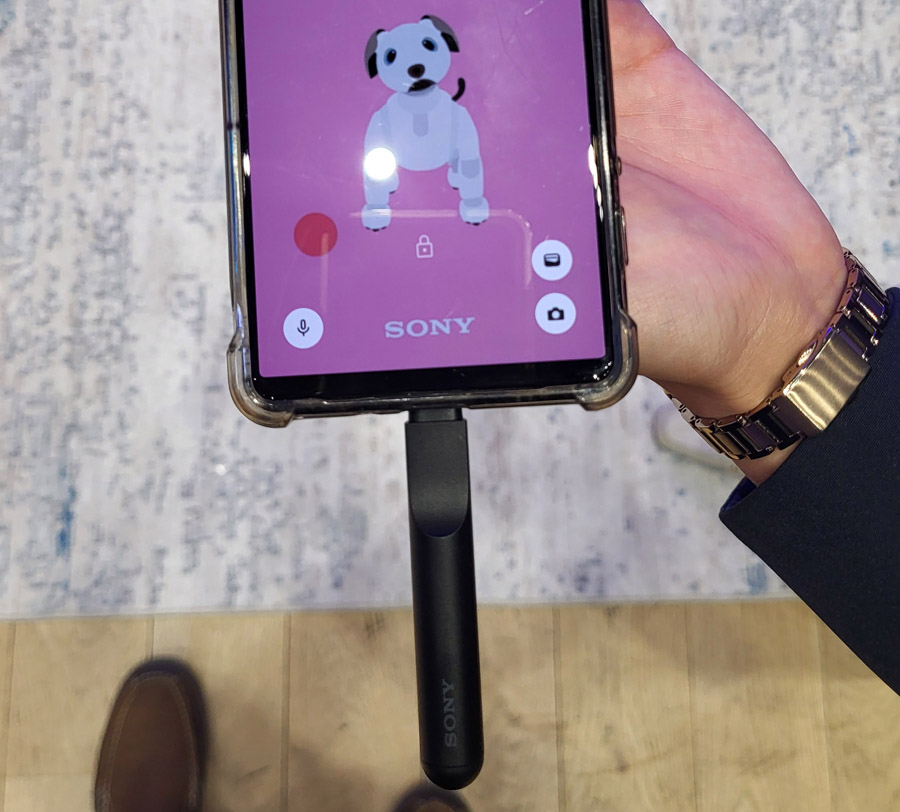
While previous Sony home theater products have used the microphone built into your phone for calibration, the BRAVIA Theater Trio comes with a dedicated high quality mic that plugs into your phone’s USB-C port for greater accuracy. This helps the system to better identify speaker positions and compensate for less-than-perfect speaker placement and room anomalies.
The BRAVIA Theater Trio comes with a new calibration microphone which plugs into the USB-C port on most recent Android and Apple phones.
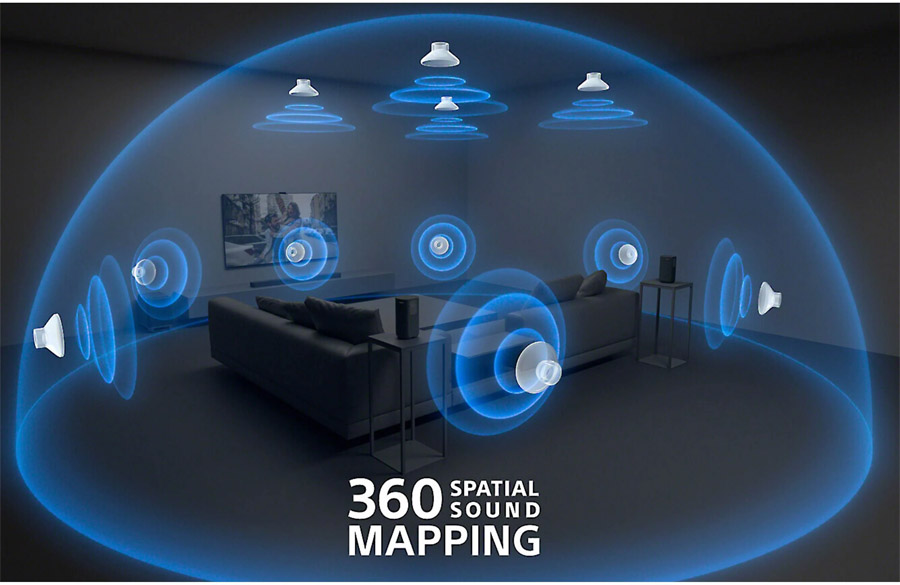
Speaking of speaker placement, the BRAVIA Theater Trio also has Sony’s 360 Spatial Sound Mapping (360 SSM) on board. This system compensates for imperfect speaker placement by creating phantom speaker channels all over the room in order to reproduce a more cohesive and expansive dome of sound.
Sony 360 Spatial Sound Mapping can compensate for less than perfect speaker placement by generating virtual speaker channels where no physical speakers exist.
What’s The Catch?
At $2,199, Sony’s BRAVIA Theater Trio is significantly more expensive than Sony’s flagship soundbar, the BRAVIA Theater 9 ($1,198 at Amazon). And if you opt for the fully loaded system, with a pair of BRAVIA Theater Sub 9 subwoofers ($899 each) and BRAVIA Theater Rear 9 speakers ($748/pair), the list price of the full TRIO system gets pretty close to $5,000 (MSRP). At that price point, you might consider putting together a full home theater system with receiver and external speakers. You’ll be able to get better bang for your buck this way, though the set-up and wiring will be more complicated.
The Trio can be upgraded with rear channel speakers and up to two powered subwoofers. Shown here are the Trio with a pair of BRAVIA Theater Rear 9 speakers and two BRAVIA Theater Sub 9 subwoofers.
The Bottom Line
Apparently Sony likes to give its customers options. While soundbar-based systems offer simple set-up, the soundstage can be a bit narrow, simply due to the size of the bar. By offering an option to widen that stereo separation and keep a dedicated center channel for dialog reproduction, Sony is now giving buyers of extra large TVs and projection-based systems another potential solution. And it’s one we haven’t seen other companies match.
The Sony BRAVIA Theater Trio offers the wireless simplicity of a soundbar system with a hint at the performance of home theater separates. Its option to add not only rear speakers with up-firing height drivers but also up to two powered subwoofers gives buyers a clear upgrade path toward an audio system that can keep up with the visuals on a plus-sized TV screen. If you already own or are planning to purchase an extra large TV or home theater projection system, and the price point is within your budget, then the Sony BRAVIA Theater Trio is definitely worth a look and a listen.
Pricing & Availability
The Sony BRAVIA Theater Trio is available June 1, 2026 for $2,199.99 at authorized Sony dealers, with pre-orders being accepted now.
When a trailer popped up at last year’s Summer Game Fest for 007: First Light, fans breathed a sigh of relief when they saw that studio IO Interactive was behind it. Gamers thought that IOI’s beloved Hitman infiltration and assassination games would provide good groundwork for a game about the world’s most famous spy. And you know what? They were right — at least for the three hours of 007: First Light I got to play.
At an Art Deco-themed Los Angeles restaurant space, I tried out three chapters of the game, giving me a sense of what’s in store for prospective players curious about the first James Bond game to come out in 14 years. While the 1995 game GoldenEye was wildly popular, subsequent Bond games were far less successful in adapting the spy’s adventures to the medium. From the preview, 007: First Light looks like it could be a confident and inspired take on the James Bond franchise. We’ll know for sure when it launches on May 27.
Advertisement
Bond’s handful of gadgets have varied uses depending on the situation.
IOI Interactive
A lot of that comes from how heavily 007: First Light draws on the Hitman gameplay it’s built on, to the point that it feels like a spy narrative wrapped around the games IO Interactive has already made. That’s not inherently a bad thing, but there were several moments where I felt like Bond was just another disguise that Hitman protagonist Agent 47 wore. Much of 007: First Light’s individuality will depend on the strength of its overarching narrative — not just to distinguish it from the story-light Hitman games, but also to live up to the globetrotting, high-society and high-octane adventures of the James Bond films and books.
And as a wholly new version of Bond, complete with a unique origin story, 007: First Light has a lot to prove. I’m not surprised, then, that the first of the three chapters I played began at the start of the game, with Bond as a Navy airman. That was followed by a peek at his training as an MI6 agent and finally a slice of the game after plot intrigue (and tragedy) kicks him into high gear, infiltrating a fancy gala.
What I played probably wasn’t representative of the whole game, and there are plot twists and turns I’ve been forbidden to write about. But I can say that it seems like it’ll be a unique 007 adventure that doesn’t retread the territory of any of the films. It offers something they don’t: In this game, Bond has close friends, and their impact on him changes the story. Perhaps he’ll grow into the womanizing lone wolf agent fans know so well, but at least in the early parts of 007: First Light, he’s more social — and human — than we’ve come to expect of the superspy.
Advertisement
IOI Interactive
How 007: First Light retells the James Bond story
As the game kicks off, we’re shown a young James Bond, portrayed by actor Patrick Gibson, as a Navy crewman on a routine mission who’s about to have a very bad day. En route to a training exercise near Iceland, his helicopter is shot down over open water. He barely manages to make it to shore. Bedraggled and cold, Bond — just a humble serviceman in a flight suit, for now — evades patrols of unknown gunmen and snags a radio to call for help.
An MI6 agent responds, relaying instructions and pressganging the unarmed Bond into reconnaissance of what turns out to be one of the British intelligence agency’s secret research bases that’s been hijacked by a mystery mercenary outfit. Part tutorial and part introduction, the first mission shows the seeds of potential the young aircrewman has for skulduggery. He clocks key details to identify mercenaries, bluffs his way past gunmen and sneaks around to free imprisoned MI6 researchers, guiding them to safety during a hectic gunfight before finally blowing up the base.
Like any good Bond prologue, it’s followed by the story’s signature theme song, First Light, sung by Lana Del Rey.
The second segment I played was more freeform. After such a promising debut, Bond is inducted into MI6 agent training on the sun-dappled Mediterranean island of Malta, culminating in a mock infiltration obstacle course to test each prospective spy’s mettle. As Bond, I snuck in under the guise of instructors tracking my performance and fellow agent trainees cheering me on or taunting me with light banter as I made my way through.
Advertisement
IOI Interactive
Here’s where I learned the basics of 007: First Light’s infiltration system, which is very much like Hitman’s. I crept through tall grass and shadows, performing stealthy takedowns of guards as I worked toward the exit. I also got my first taste of the game’s simple but essential gadget system, using a watch to disable cameras and other electronics, then recharging it by snagging batteries from the occasional phone or car battery I came across. (Later, you can pick up chemicals to disorient and drug targets from a distance.) When I accidentally alerted a guard, Bond’s trusty fists — along with a decently deep fighting system featuring parries, dodges and throws — helped handle enemies. Guns will do the trick, too.
The third section was where things went sideways — and Bond starts to become 007.
007: First Light gives Bond relationships he doesn’t run from — for once
Sometime after presumably graduating training, Bond heads into a mission that goes awry and his whole team is suspended. Recuperating, he returns to the apartment in Kensington, London, that he shares with fellow 00 agents he’s grown close to. Going room to room, Bond muses over the silly little things that crop up when you share a home and a life with close friends: restaurant menus and little notes that speak to human connections. It felt like the boldest departure 007: First Light makes. The young, orphaned Bond has his own little family.
And as he realizes after finding a fake suicide note in his room, he has enemies. Bond fights off several assassins and dashes across rooftops while trying to evade a sniper, using his gadget watch to distract them and buy time. He tracks the last one to a gala thrown by a tech mogul — which, naturally, he must infiltrate.
Advertisement
IOI Interactive
Hitman fans know what comes next, and the mission plays out much like it would in those games. Bond pickpockets a ticket, then must finagle a way upstairs to track the last assassin. How you do it is up to you: Do you pretend to be a photojournalist showing up for an interview? Bluff your way past security guards? Steal a security pass? This part of the preview — finding a way through glitzy gala attendees and fooling or fighting my way past layers of security — felt like the perfect blend of Hitman and James Bond.
Less so the subsequent boss fight with the final assassin, since Bond’s gadget vision outlines enemies through walls, draining tension as I snuck around to ambush my foe again and again until a climactic finish. I then ran through some tedious back rooms before emerging back into the gala to find Agent Roth, a beautiful and mysterious woman who had apparently appeared earlier in the game, setting her up as a classic Bond girl-style femme fatale. Before long, both she and Bond are locked up by the game’s antagonists (whom, again, I can’t reveal).
IOI Interactive
After narrowly escaping death and sneaking around for a while, Bond runs a climactic gauntlet through a video art gallery — a long hall where screens glow a moody red as dozens of armed and armored gunmen file in. Here we go: peak Bond moment. While the previous encounters felt like quizzes on how to use your full array of guns, grappling tools and gadgets, this was the final exam. I hacked an electronic art installation to make a smokescreen, tackled guards, stunned foes and shot them dead. Exiting under gunfire from yet more enemies, I stole a garbage truck and careened through the streets as the 007 theme played. Fin.
007: First Light is promising, though not perfect, with issues such as misaligned footstep and voice audio pointing me in the wrong direction as enemies snuck up on me — something crucial in a stealth game that I hope gets fixed before release. Hitman fans may be split on how much of their favorite gameplay is repackaged for Bond’s adventure — a great tonal match that could still feel too familiar. Those new to IO Interactive’s games will likely enjoy it.
Advertisement
But despite how polished the stealth gameplay was, a lot hinges on the plot IO Interactive is building out, one that marks a novel departure from other Bond narratives by telling the story before the spy became super, yet one that’ll be tricky to get right. We’ll know soon enough when 007: First Light comes out May 27.
Poppulo’s AI platform aims to help organisations deliver relevant and measurable employee communication.
Cork- and Colorado-based software company Poppulo has acquired French employee engagement platform Sociabble for an undisclosed value.
Poppulo’s AI platform aims to help organisations deliver relevant, measurable and governed employee communication.
The addition of Sociabble into its portfolio, the company said, would add an innovative social intranet, enhanced mobile and front-line support, and solutions for employee advocacy and recognition.
Advertisement
The combined platform will strengthen Poppulo’s AI capabilities by helping communicators improve targeting and optimise content performance, the company said.
“Organisations need clearer ways to connect communication to action,” said Ruth Fornell, the CEO of Poppulo.
“With Sociabble, we’re delivering a unified platform that works with the rest of their work tech, so leaders can reach every employee, understand what resonates and drive meaningful outcomes across the business.”
The company said that internal communications and human resources departments are struggling to keep up with the pace of change, with the result that “AI is often layered onto disconnected processes without the insight or accountability needed to drive real impact”, and cited research suggests that only 20pc of employees are actively engaged.
The acquisition would help Poppulo improve communication and engagement across the complete digital employee experience and simplify work, insights and automation of internal communication workflows, it said.
“Together with Poppulo, we bring a unique value proposition to the employee experience market, with the ability to reach and engage more than 50m employees worldwide,” said Jean-Louis Bénard, the CEO of Sociabble.
“This scale gives us the strength to continue investing ambitiously in AI and innovation, two areas deeply rooted in the DNA of both companies.”
Advertisement
Don’t miss out on the knowledge you need to succeed. Sign up for the Daily Brief, Silicon Republic’s digest of need-to-know sci-tech news.
An anonymous reader quotes a report from TechCrunch: There is a certain wildness in the tech industry these days that both mimics previous eras of large changes, like cloud computing (runaway costs in the early days), and is like nothing we’ve ever seen before (record revenues accompanied by mass layoffs). One possible explanation: tech executives, especially CEOs, are collectively suffering from delusions of AI grandeur. And at least one tech CEO has said as much out loud: Box founder Aaron Levie.
“CEOs are uniquely prone to AI psychosis because they’re sufficiently distant from the last mile of work that still has to happen to generate most value with AI,” Levie wrote on X. CEOs “play with AI,” develop a prototype, or generate a contract, to use Levie’s examples, and then make the leap to believing agents can do the work. But these top-level executives aren’t the people who have to review code, discover bugs, and identify calls to hallucinated libraries before software is deployed. They aren’t responsible for training AI models on a company’s idiosyncratic contract terms, nor do they have to spend days combing through contracts to find sneaky terms, as Levie indicates.
In other words, Levie’s theory posits, CEOs don’t really understand processes well enough to know what really can and can’t be automated. But that lack of knowledge doesn’t stop them from acting on their beliefs. […] So what are CEOs to do instead? Levie advises CEOs to use AI “a ton” to really see what it can and can’t do, “and come out the other side with an appreciation for both the upside and the real work.”
Taiwanese prosecutors detained three individuals last week for allegedly falsifying export documents for Super Micro Computer servers. Investigators also seized about 50 servers they believe were being prepared for export using similar paperwork. However, officials suspect that at least one shipment had already slipped through. Read Entire Article Source link
Roku is rolling out its first major homescreen update in a decade. The UI doesn’t look too dramatically different, but users will notice more personalization-driven changes, including frequently used apps, “top picks,” household-specific layouts, and recommendations based on viewing habits. Rest assured, Engadget adds, “Everything is still in various shades of purple and Roku City is still available as a screensaver.” From the report: Today’s update certainly brings more clutter into the mix, including a new “marquee” ad spot that takes up a large chunk of the screen. It’s worth remembering that Roku makes most of its money on ads and not its hardware. “More than 100 million households will feel the difference the moment they turn on their TV — and it opens up a better, more powerful experience for our partners as well,” CEO Anthony Wood wrote in a blog post.
The update does bring one novel feature, according to The Hollywood Reporter. The company says the new homescreen platform will adapt to how households use Roku devices. This is to accommodate “multiple people living in homes.” For instance, a child’s bedroom TV might have a different homescreen than TV in the living room, and so forth. This expansion is rolling out right now to US-based customers, though it might take a while to reach every user. Roku says “additional countries will follow in the coming months.”
SiliconRepublic.com spoke with experts from Yahoo Mail about standing out in a competitive field and the opportunities open to jobseekers.
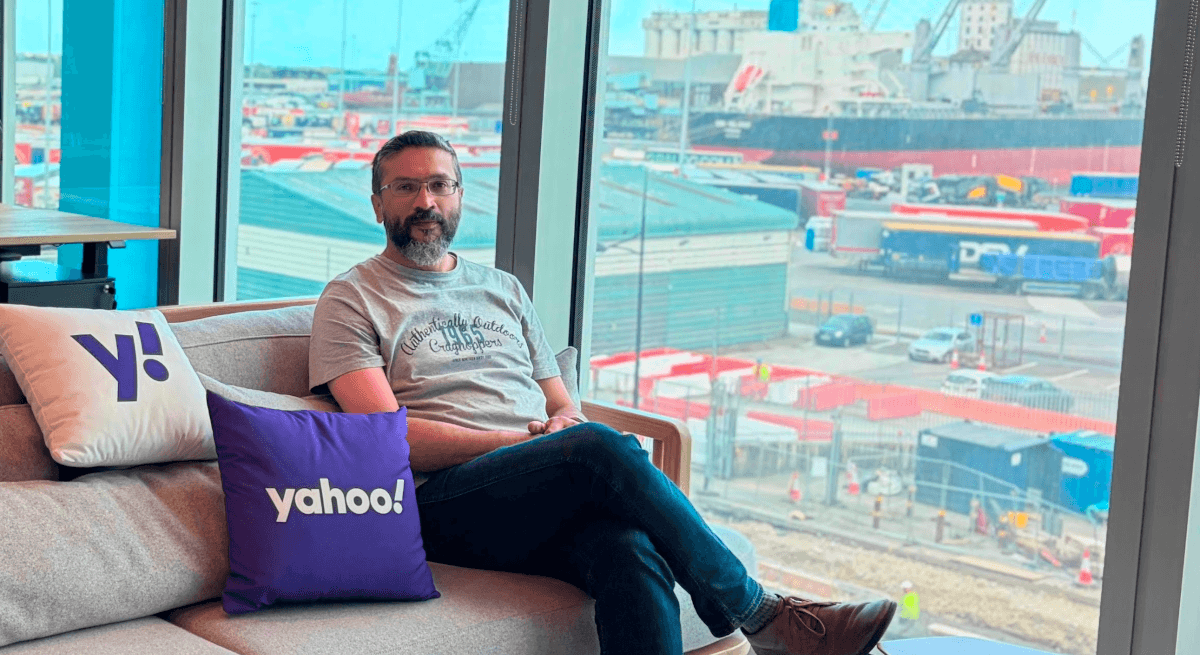
“Yahoo Mail is in the midst of our most significant engineering transformation in over a decade,” said Nikhil Gandhi, the senior vice-president of engineering at Yahoo Mail.
“We’re building a ground-up mobile redesign and a modernised desktop experience and embedding unique AI experiences across the product,” he said. “The team in Ireland plays a critical role in continuing to scale our work globally and the engineers we’re hiring have an opportunity to work on products with real reach and impact.”
Kiran Krishna Hegde, a senior manager and systems engineer at Yahoo Mail, explained that for now at the company, the focus is on the intelligence engineering hub in Ireland and moving from team build-out to delivery, making the right key hires and getting new team members onboarded and contributing.
Advertisement
To meet those needs, he said: “We are looking for engineers with strong fundamentals, sound judgement and real ownership. Coding and system design are the table stakes, but we are not just looking for people who can ship features. We want people who understand scale, reliability, trade-offs and the difference between getting something working and building it properly.”
He is of the opinion that the most suitable candidates for roles in this area are typically the ones with real production experience, who have seen how systems can fail and who have learned how to build more resilient systems as a result.
“A back-end engineer should understand platform and data concerns,” he said. “A data engineer should think like a software engineer, not just a workflow builder. Above all, we want people who care about engineering craft, can work through complexity and are comfortable being accountable for outcomes.”
He noted that collaboration and a one-team mindset also wouldn’t go amiss, as the Ireland-based team works closely with a larger US-based team, as well as colleagues across the globe, making engineers “who are low-ego, generous with context and motivated as much by collective progress as they are by individual success” valuable to the organisation.
Advertisement
Standing out
Of the potential challenges or pitfalls Hegde finds too many candidates list responsibilities, rather than explaining the outcomes. Those looking to stand out in a positive way should identify the problems they have solved, what changed and why it mattered in the broader scheme of things.
“Specific examples always carry more weight than broad claims,” he said. “We also pay attention to how candidates work with others. In a distributed environment, strong engineers do not just produce good individual work, they create clarity, collaborate across teams, share context early and help move the wider group forward. That combination of technical strength and a genuine one-team mindset stands out.”
Often, he explained, the biggest challenge for organisations when considering applicants is not the volume of candidates but rather the quality and whether or not their technical depth, practical experience and engineering judgement match the level required.
Hegde said: “Titles also do not always translate cleanly. In a market like Dublin, role scope in non-tech-first companies can be quite different, so a senior title on paper does not always mean the person has operated at that level in practice. We see this particularly in data and machine learning engineering, where there is often strong exposure to tools or theory, but less experience building production-grade systems under real scale, latency and reliability constraints.
Advertisement
“AI has made this harder as well, across the industry. Applications are more polished, but it now takes more effort to separate presentation from substance. That said, getting hired right is never a solo effort, and strong partnership with our recruitment team has been a big part of helping us navigate the local market, calibrate roles properly and keep momentum.”
Take a chance
“For early-career engineers, strong fundamentals matter most,” agreed Karim Al Srag, a director of engineering at Yahoo Mail. “Data structures, algorithms, problem-solving and, depending on the role, systems, data or machine learning basics. A degree helps, but it is only one part of the picture.”
For Al Srag, what matters is evidence of a body of work showing your interest and skill, via side projects, internships, open-source contributions, research and other practical work. “So yes, there are alternatives to traditional education, but whatever route someone takes, they still need to show strong fundamentals and real hands-on ability.”
Once situated, he noted the best support an organisation like Yahoo Mail can offer to new hires is in helping them become productive early on, while also giving professionals the context needed to grow into the role properly.
Advertisement
“In the Yahoo Mail intelligence hub in Ireland, we use structured onboarding plans for back-end, data and machine learning engineers. These combine targeted reading with practical, evidence-based tasks, so people can get set up properly and start contributing quickly.”
For Hegde, as the Yahoo Mail intelligence hub in Ireland is still being built, he explained it is not an environment where people can disappear into narrow roles or hide behind processes. Instead, he said: “It is a nimble, high-accountability team, which means every hire matters and every meaningful contribution has visible impact.
“If someone wants a very comfortable role with narrow ownership, this is probably not the right fit. But if they want to work with strong engineers, solve meaningful problems and help shape both the systems and the team while it is still taking form, it is a rare opportunity.”
For anyone interested in applying, there are currently openings for two professionals, a principal, senior data engineer and a principal, senior back-end engineer.
Advertisement
Don’t miss out on the knowledge you need to succeed. Sign up for the Daily Brief, Silicon Republic’s digest of need-to-know sci-tech news.
While Sony was technically first to market with an RGB backlit LCD TV in 2005, they’re just about last to the party in the new generation of RGB-lit LCD TVs. With models available from TCL, Hisense, LG and Samsung, Sony has taken its time in developing and perfecting its own offerings. They say, “good things come to those who wait” and the wait is over today with the release of not one but two models in Sony’s new True RGB line-up, the BRAVIA 7, Mark II and the BRAVIA 9, Mark II.
85-inch Sony BRAVIA 9 II.
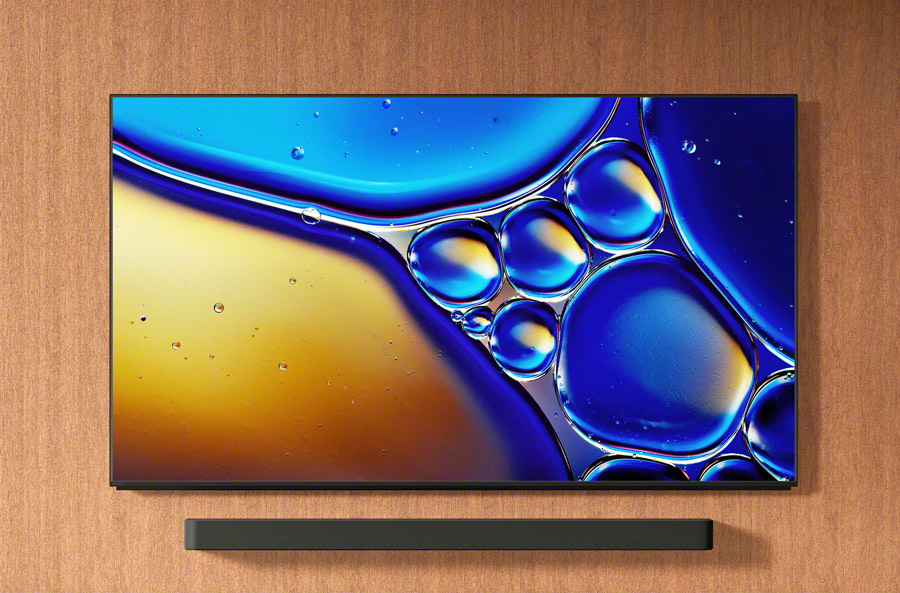
Replacing their Mini-LED predecessors, the BRAVIA 7 and BRAVIA 9, the new Mark II models feature an entirely new backlighting system which uses individual lighting elements for each of the primary colors: red, green and blue. With RGB backlights, Sony is able to reach higher peak brightness levels, improve both color accuracy and saturation and extend the color gamut so that more of the colors available in the real world can be captured by the TV.
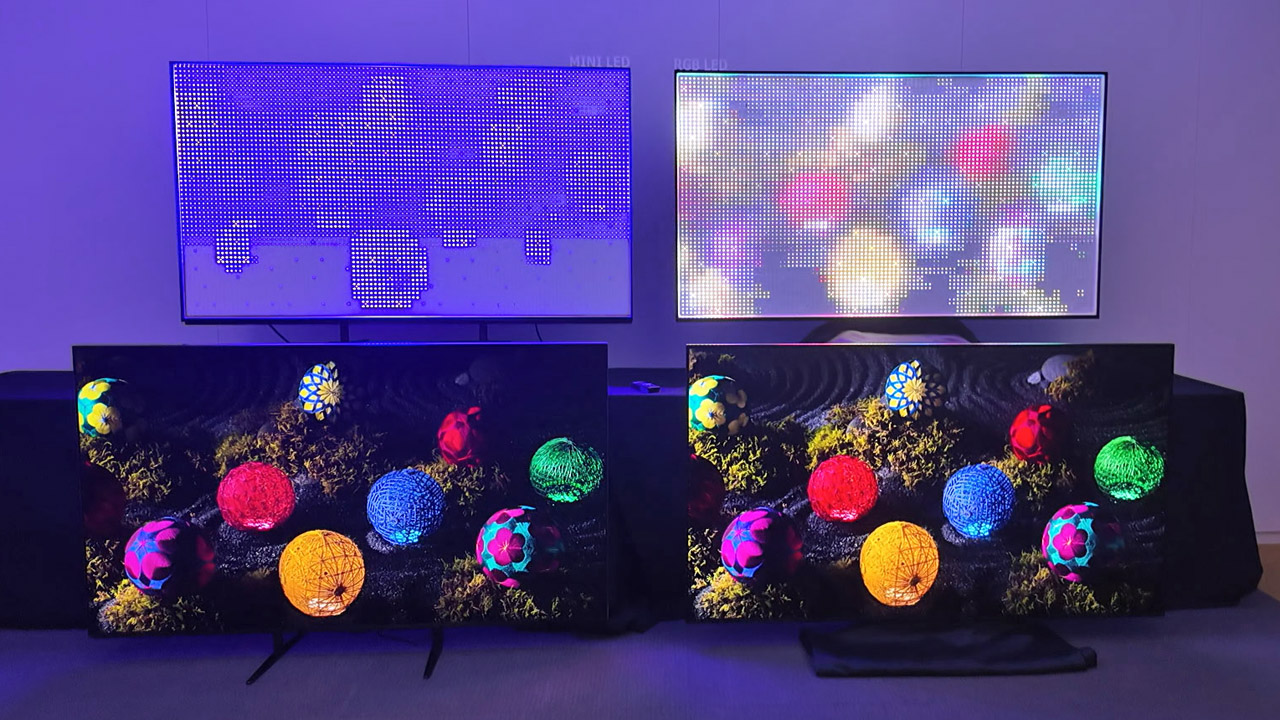
We’ve been able to check out the new TVs up close against their predecessors and against competitive models, both in final production form but also with their backlighting system exposed so we could get a look at their inner workings. Unlike some competitive models, the BRAVIA 7 II and BRAVIA 9 II maintain their full RGB backlighting system even when multiple colors are on-screen at the same time, preserving their extended color gamut while avoiding the color crosstalk artifacts we’ve seen on some competitors’ sets.
This shows color crosstalk on an RGB backlit TV (not a Sony). The dots should all be white, but they are showing a color tinge which bleeds over from surrounding areas of the screen due to RGB color crosstalk.
Compared directly to the BRAVIA 9 Mini LED TV, the BRAVIA 9, II TRUE RGB TV exceeded the performance of that set in just about every measurable (and subjective) way, with wider color gamut reproduction, impressive peak brightness — over 4,000 nits peak brightness on a 5% window — freedom from artifacts like aliasing and color banding and black levels and contrast that will give an OLED TVs a run for their money.
The BRAVIA 9 II also offered excellent off-axis viewing with minimal dimming and color shift when viewing it from well off to the sides. And it did all this while actually using less power than its predecessor, thanks to highly efficient power management and precise control over its RGB backlighting system.
BRAVIA 9 II comes in screen sizes from 65 inches to 115 inches (pictured here).
Mini LED TVs like the earlier BRAVIA 9 had and easier job when it came to color reproduction. The backlighting unit generated a single color, which means each pixel on the LCD panel itself created colors by adjusting the opaqueness of each LCD pixel’s red, green and blue subpixel. Because the backlight is uniform in color, the color filter process is entirely predictable and uniform from LCD pixel to LCD pixel. But with that simplicity came a narrower color gamut – that meant they simply couldn’t reproduce certain colors, at least not with useful brightness.
Sony BRAVIA 9 Mini LED (left) and backlight unit compared to BRAVIA 9 II True RGB TV and backlight unit (right).
With an RGB backlit TV like the BRAVIA 9, II, the image processor has to decide how to adjust both the intensity of each individual red, green and blue diode in the backlight unit and do further adjustment at the pixel level adjusting each of the red, green and blue LCD subpixels. This two-step process can lead to better color accuracy, wider color gamut reproduction and higher overall brightness, but at the expense of more processing power and complexity. It is just this complexity that has led to Sony taking its time in releasing its first RGB-lit TVs of the new era.
BRAVIA 9 II, Optimized for Any Room Lighting
Brand new on the BRAVIA 9 II flagship TV is Sony’s Immersive Black Screen Pro – an integrated screen treatment which absorbs and disperses ambient room light such as open window shades, overhead lighting and lamps. Unlike some competitors’ matte screen coatings which can sacrifice black tonality, Immersive Black Screen Pro provides exceptional reduction of reflections without any color shift in the black levels. In Japan, we got to observe a BRAVIA 9 II which had half of its screen coating removed. This allowed us to see exactly what impact the screen coating had on the incoming video signal when faced with high ambient room lighting like an open window or even a bright spotlight.
Advertisement
This BRAVIA 9 II had its Immersive Black Screen Pro coating removed from the left half so we could see a comparison of how a bright spotlight was reflected with and without the screen coating applied.
Off-axis viewing and glare reduction were both exceptionally good on the True RGB TV, with the new TV able to maintain rich black levels when in a brightly lit room. While there was occasionally some mild blooming on brightly colored images set against a black background, the use of RGB lighting elements made these faint artifacts nearly imperceptible. On traditional LCD TVs, the bloom or halo around a bright object is typically white, while on a True RGB TV, the light bloom matches the color of the on-screen object, making it much less noticeable. While the BRAVIA 9 II couldn’t quite match an OLED in this regard, it wasn’t far off.
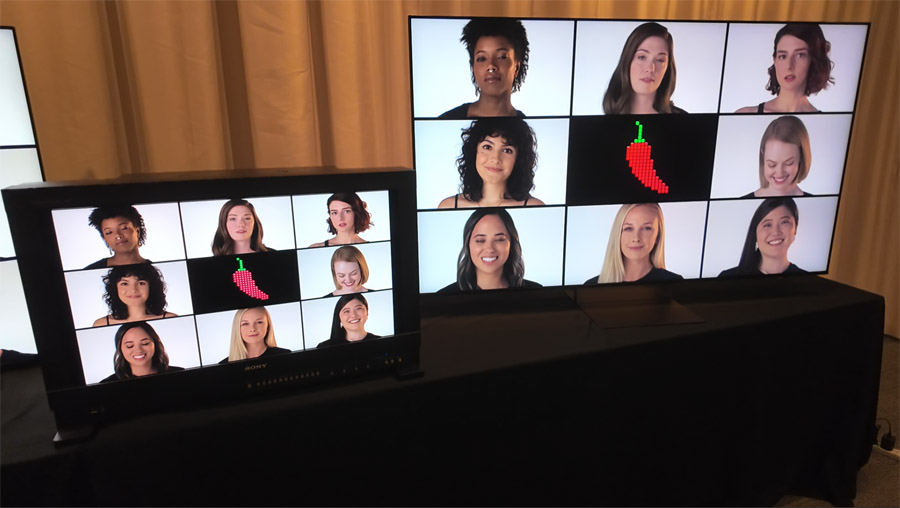
The BRAVIA 9 II (right) proved to be a close match to the professional broadcast monitor on challenging color reproduction tests like this skin tones test clip from the Spears and Munsil UHD Benchmark disc.
Color reproduction on the BRAVIA 9 II was outstanding. We did comparisons among the original BRAVIA 9, the BRAVIA 9 II and a Sony BVM-HX3110 professional broadcast monitor which sells for $30,000. The BRAVIA 9 II proved to be a very close color match to the BVM on most content and definitely edged out the Mini LED BRAVIA 9 for color saturation and wide color gamut coverage.
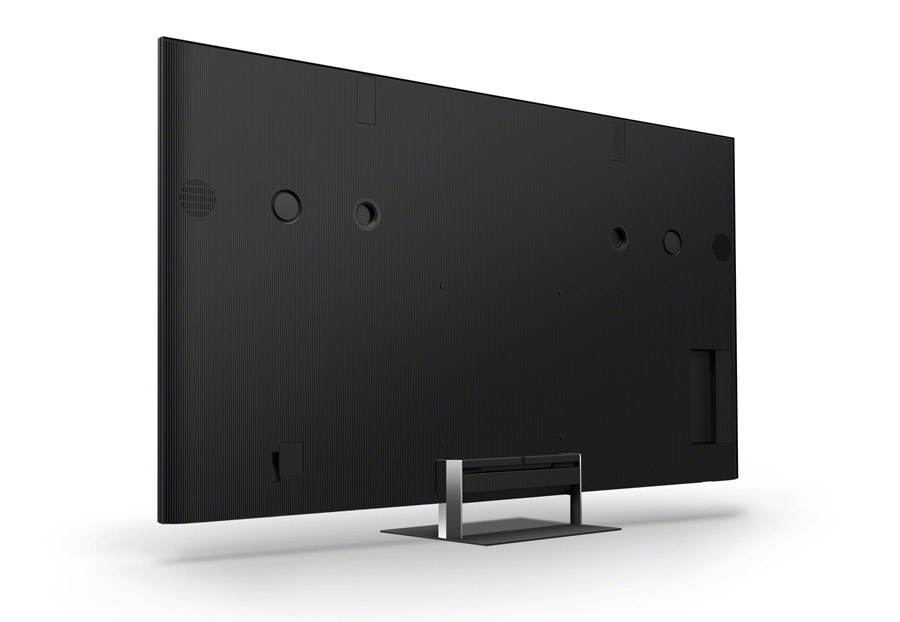
Sony BRAVIA 9 II rear view (85-inch).
We also viewed several challenging 4K/HDR clips highlighting HDR tone mapping and found that the new True RGB set outperformed the BRAVIA 9 MiniLED TV in both specular highlights and shadow detail. And the BRAVIA 9 is already a strong performer for tone mapping, so this was a pretty impressive feat. The 65-inch BRAVIA 9 II measured over 4,000 nits of peak white brightness at a 5% window which makes it a strong performer with HDR content, even in a bright room.
Advertisement. Scroll to continue reading.
A Unique Floating Look – the Mirage Stand
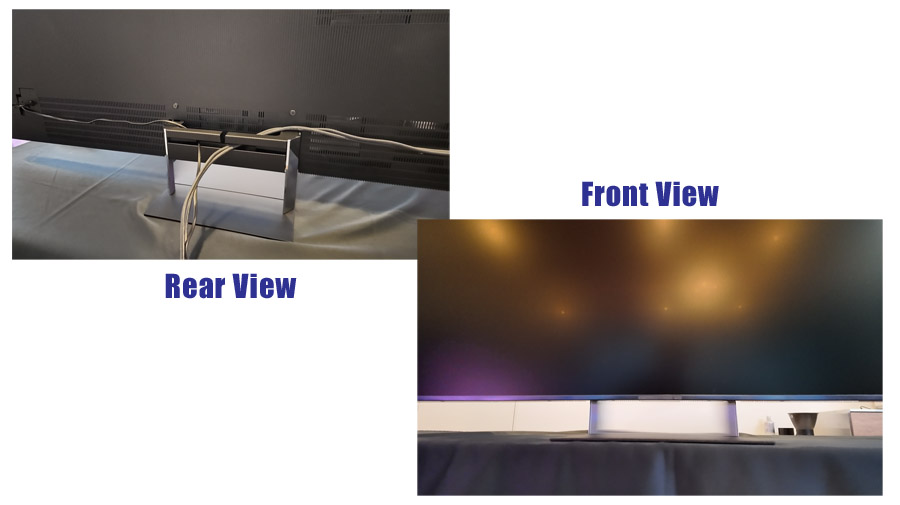
Both the BRAVIA 7 II and BRAVIA 9 II offer a new “Mirage” stand at sizes up to 85 inches. This base uses a lenticular translucent panel that allows light to pass through while power and HDMI cables that dangle behind the TV effectively disappear.
Thanks to a lenticular panel in the stand that lets light pass through but makes thin cables disappear, the BRAVIA 7 II and BRAVIA 9 II offer a “floating” look.
What’s The Difference? BRAVIA 7 II vs. BRAVIA 9 II
The BRAVIA 7 II and BRAVIA 9 II are more similar than they are different. They both include Sony’s TRUE RGB backlighting with RGB Backlight Master Drive Pro technology, the floating “Mirage” stand, four HDMI 2.1 inputs and similar ergonomic designs. However the BRAVIA 9 II features three times as many dimming zones compared to the BRAVIA 7 II for higher peak brightness, enhanced picture precision, reduced blooming and better image uniformity. The BRAVIA 9 II also includes the more powerful “Pro” version of Sony’s Luminance Booster processing (Luminance Booster Pro) for enhanced peak color and white brightness.
BRAVIA 7 II in 65-inch size with included mirage stand.
The Immersive Black Screen Pro screen coating is exclusive to the BRAVIA 9 II. The audio on the BRAVIA 9 II is also upgraded from the BRAVIA 7 II with Acoustic Multi -Audio+ technology which uses a Beam Tweeter at the top of the screen to make sure the sound perfectly matches the on-screen action.
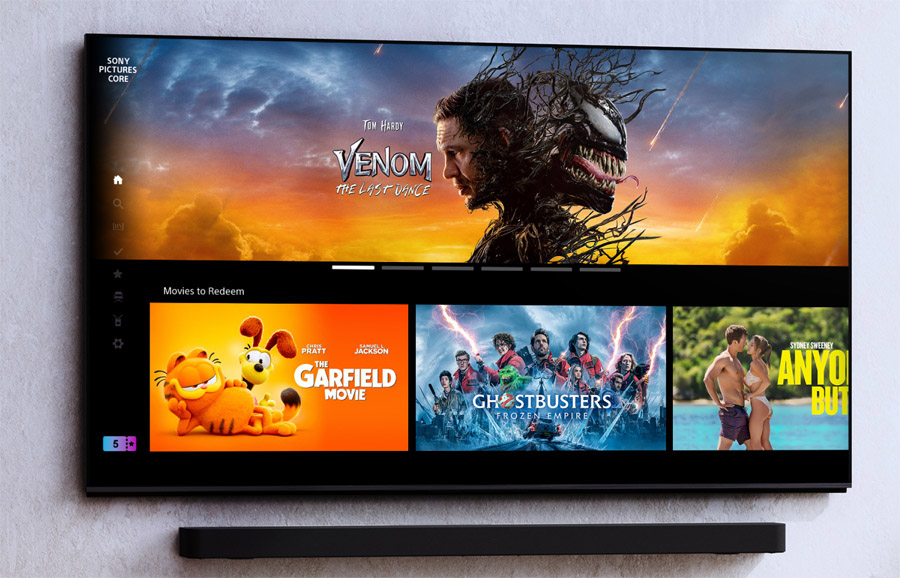
Sony’s BRAVIA 7 II and BRAVIA 9 II both include access to Sony Pictures Core.
Both sets are built on the Google TV operating system, with access to thousands of audio and video streaming apps, including Sony’s exclusive Sony Pictures Core streaming app which can compete with physical media like Blu-ray Disc in both video and audio quality. Both models feature Google’s Gemini AI on board for enhanced content recommendations and natural language interaction with viewers.
The BRAVIA 7 II is available in screen sizes from 50 inches for $1,599 to 98 inches for $8,999. The BRAVIA 9 II is available in sizes from 65 inches at $3,599 to 115 inches at $30,999. Complete size and pricing details are included below.
“Reports of My Death Have Been Greatly Exaggerated” – OLED TV
While some manufacturers are positioning their RGB-backlit TVs as “OLED Killers,” Sony has not announced any intentions to phase out their current OLED TVs, namely the BRAVIA 8 and BRAVIA 8, II. There are still some areas of picture performance, like black level reproduction, blooming and contrast, where OLED TVs are difficult to match. Instead, Sony is positioning their True RGB TVs as being ideal for bright room viewing and for those who want screen sizes beyond what OLED can currently deliver.
Advertisement
Sony will continue to offer the BRAVIA 8 and BRAVIA 8 II OLED TVs for the foreseeable future.
Based on Sony’s own research, 87% or more of TV viewing is done in non-ideal lighting conditions, e.g., rooms with open drapes with sunlight streaming in or moderate to bright room lighting. And, in these conditions, True RGB’s higher peak brightness and wider color gamut, as well as the Immersive Screen Pro light rejection tech on the BRAVIA 9 II, provide a superior overall viewing experience.
The Bottom Line
Sony has been working on its RGB backlighting system for several years and we’ve witnessed its path from prototype to production. They may be late to the RGB party, but from what we’ve seen so far, the wait has been worthwhile. By offering two lines of True RGB TVs at launch, starting at just under $1,600, Sony is hoping to appeal to TV buyers who are looking for the picture quality benefits of RGB backlighting without necessarily having to take out a home equity loan to pay for the privilege (unless you opt for the massive 115-inch model).
Having spent a fair amount of time with both the BRAVIA 7 II and the BRAVIA 9 II at events in New York City and Tokyo, my initial impression is that Sony’s TRUE RGB TVs will be among the top performers of 2026, of any TV technology. We’re looking forward to spending more quality time with both TVs over the coming weeks.
Pricing/Sizes of Sony’s 2026 True RGB TVs
Most models are available for pre-order now with expecting shipping dates as noted.
The data processing agreement (DPA) — the bedrock contract companies use to evaluate how vendors handle personal data — can no longer be trusted at face value. That is the central, and arguably most alarming, conclusion of DataGrail’s Privacy and AI Trends Report 2026, released today.
The San Francisco-based privacy platform analyzed 2,400 popular business software providers and found that 63.6% of vendors that prominently advertise AI capabilities do not disclose a third-party AI subprocessor in their legal documentation. The implication: the majority of companies purchasing AI-enabled software may be unknowingly exposing their customers’ data to AI models and pipelines they never reviewed, never approved, and may not even know exist.
“All software vendors are trying to move to become AI vendors, which makes sense, but the technologies are moving faster than AI governance can actually keep up,” DataGrail co-founder and CEO Daniel Barber told VentureBeat in an exclusive interview ahead of the report’s release. “The DPA should be the reliable document that teams use to evaluate AI risk, but based on that number, that’s not enough in 2026.”
The finding drops into an enterprise landscape where organizations with high levels of shadow AI already experience average breach costs of $4.63 million — $670,000 more than those with low or no shadow AI, according to IBM’s 2025 Cost of Data Breach Report. And it arrives in a year when U.S. states gave out $3.425 billion in privacy-related fines — more than the last five years combined — a trend Gartner expects to accelerate through 2028.
Advertisement
How researchers uncovered the growing gap between AI vendor contracts and reality
DataGrail’s methodology for arriving at the 63.6% figure goes well beyond reading contracts. The company’s research team cross-referenced DPA disclosures against product documentation, GitHub environments, API connections, and marketing materials for each of the 2,400 vendors in its tracking universe.
Barber walked VentureBeat through the process: “We looked at the DPA as the baseline, but then what we also looked at is the GitHub environment, the API connections that a particular vendor has, the product documentation, the marketing documentation, and triangulate that information to discern — okay, so the DPA document says use OpenAI, but actually you’ve got these three AI subprocessors over here in your product documentation outlining features and functionality, but that is not reflected in your DPA.”
When asked directly about how confident he was that these gaps represent actual shadow AI risk rather than vendors using proprietary technology, Barber was unequivocal. “Very confident, because we looked at the sample of the 2,400 systems, and we spent a substantial amount of time actually looking at product documentation, GitHub environments, looking at actual API connections, because we integrate with these systems as well, so we know how they process personal information. It is from primary research.”
The disclosure gap matters because it undermines the entire chain of trust that privacy programs rely on. Consider a scenario Barber described: A company invests in an AI recruiting tool. The tool’s DPA lists Claude as its foundational model. The company dutifully performs a security review of Anthropic’s AI. But the recruiting tool also quietly uses OpenAI and Gemini behind the scenes — models the company never evaluated.
Advertisement
Those undisclosed models then process thousands of resumes and execute automated hiring decisions. The company, without knowing it, has exposed sensitive personal information — home addresses, financial data, possibly Social Security numbers — to AI systems it never vetted, potentially violating FTC regulations on automated decision-making in employment. “How those vendors are evaluating and performing that automated decision making could be really disastrous for a business,” Barber said.
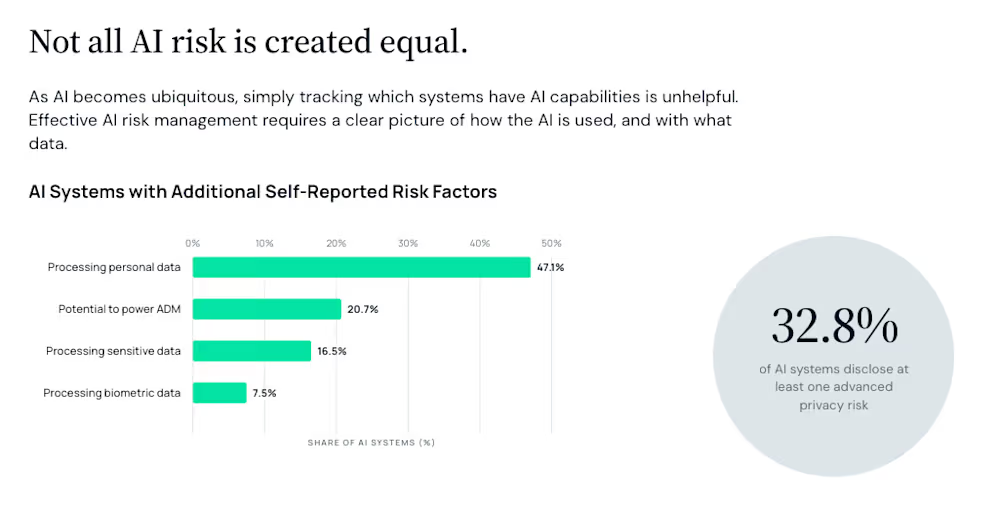
Nearly a third of AI systems acknowledge at least one advanced privacy risk in their disclosures — but with most vendors failing to update their data processing agreements, the actual figure is almost certainly higher. (Source: DataGrail Privacy and AI Trends Report 2026)
One-third of AI systems also process sensitive data, and the true number is likely higher
The disclosure gap alone would be concerning enough. But DataGrail’s report layers on another finding that makes the problem materially worse: 32.8% of AI systems that disclose AI capabilities also disclose at least one other high-risk activity, such as processing sensitive personal information or powering automated decision-making. Among AI systems with self-reported risk factors, 47.1% process personal data, 20.7% have the potential to power automated decision-making, 16.5% process sensitive data categories like health or financial information, and 7.5% process biometric data.
The report argues these figures almost certainly undercount actual exposure, since they reflect only what vendors have formally disclosed. Vendors could underreport access to personal data, and the inherent flexibility of AI means even good-faith vendors might not predict riskier user applications of their tools.
Advertisement
This has immediate regulatory implications. The CCPA’s new risk assessment requirement, effective January 1, 2026, requires businesses to conduct and document risk assessments for processing activities that present significant privacy risks — and will require submission to CalPrivacy by April 2028, with executive attestation under penalty of perjury.
Processing sensitive personal information with AI, or using AI for automated decision-making, are precisely the activities that trigger this obligation. The report finds that 42% of companies abandoned AI initiatives in 2025 with data privacy concerns cited as a primary obstacle — a statistic sourced to S&P Global research. Privacy teams that engage early with AI projects, Barber argues, can prevent that waste by ensuring safeguards are in place before launch, with AI risk assessments serving as the right starting point.
Gambling and consumer technology companies face the heaviest privacy assessment workloads, conducting roughly four times the annual reviews required in the entertainment industry. (Source: DataGrail Privacy and AI Trends Report 2026)
Why consent management became 2025’s most punished privacy failure
While shadow AI is still a newer category of threat, the report makes clear that traditional privacy challenges have not eased — they have intensified. Consent management was the busiest enforcement topic of 2025. California alone publicly reported $4.3 million in CCPA consent settlements, and 2025 saw over 1,400 class action wiretapping suits driven by private firms investigating tracking pixels and session replay software.
Advertisement
Despite this enforcement wave, 63% of the 5,000 websites DataGrail audited still fail to comply with universal opt-out mechanisms such as the Global Privacy Control signal. While that figure represents an improvement from 75% non-compliance in 2023, the pace of improvement is slow relative to the acceleration in enforcement.
Barber pointed to the case of Todd Snyder, the menswear retailer that the California Privacy Protection Agency fined $345,178 in May 2025, as evidence that enforcement is no longer reserved for big tech. “This is a business that has two or three stores across the U.S. They have 300 employees,” he said. “They run tight margins because they’re a consumer menswear clothing store.”
The California Attorney General also reached a $2.75 million settlement with Disney over failures to honor opt-out signals, while the California Privacy Protection Agency has brought enforcement actions against PlayOn Sports and Ford — a pattern that demonstrates both the breadth and depth of regulatory activity. Among the trackers that fire even after a user sends a GPC signal, the report found that 27.1% come from Google Analytics and 43.8% are for targeted advertising via platforms like Meta and Microsoft.
For users who do engage with consent banners, 48.3% click “Accept all,” while only 12.4% select “Essential only” and 2.3% customize their preferences. A full 37% simply exit the banner without making a selection. The practical takeaway: less than 15% of users make a conscious choice to opt out of tracking, which means consent banners present relatively low business risk when properly configured — but enormous regulatory risk when they are not.
Advertisement
Nearly half of users simply accept all cookies when a consent banner appears. Fewer than 15 percent actively choose to limit tracking — a pattern that makes proper banner configuration a high-stakes compliance question. (Source: DataGrail Privacy and AI Trends Report 2026)
Data deletion requests surge 567% as the cost of manual processing hits $1.5 million a year
Data subject request volume hit an all-time high for the fifth consecutive year. Deletion requests have surged 567% since 2021 and now represent 87% of all data subject requests. Access requests, by contrast, have gradually declined as consumers skip visibility and reach straight for the delete button.
The cost is staggering. For a mid-sized organization receiving 5 million annual web visitors, the report estimates manual DSR management now runs approximately $1.5 million per year, based on Gartner’s estimated cost of $1,524 per manual DSR. The average cost has climbed from $238,000 in 2021 to $1.51 million in 2025 — a trajectory that makes manual processing not just inefficient but, as the report argues, “irresponsible.”
Barber emphasized that these numbers reflect verified human requests with bot and spam traffic excluded, and that data broker scenarios — which will see their own massive influx of requests under California’s Delete Act — are reported separately. “That is a natural increase,” Barber told VentureBeat. “If you’ve now got 20-plus U.S. states with privacy regulation, it’s unlikely that we see a federal bill passed, even though we’ve seen one proposed. And while we don’t see federal awareness and regulation, we do see at the state level over 20 states, and that may actually increase awareness for the consumer even more.”
Advertisement
He added a telling detail about how businesses are responding in practice: “99% of DataGrail customers do process that deletion” even for residents of states without privacy laws, “simply because it’s too hard at this point. Discerning and even communicating to the person, ‘Hey, you live in Montana, sorry, you’re just in an unfortunate state without regulation’ — you just can’t do that.” Data brokers felt the impact most acutely, with a 398% increase in deletion requests compared to 2024 and an average of over 2,000 deletion requests handled per month.
The cost of handling consumer privacy requests by hand has risen more than sixfold since 2021. (Source: DataGrail Privacy and AI Trends Report 2026)
State regulators issued $3.4 billion in privacy fines last year, and both parties want more
The regulatory landscape underpinning all of these trends has fundamentally shifted from education to punishment. Nearly half of U.S. states now have a comprehensive privacy law in effect, plus over 160 AI-specific laws. State legislatures enacted 145 AI-related laws in 2025 alone, with another thousand introduced or reworked. According to Gartner, over 50% of the U.S. population is now covered by a comprehensive state privacy law, with 24 additional states expected to pass laws within five years. States have also begun pooling their resources, with ten forming the Consortium of Privacy Regulators last year and pledging to coordinate investigations across state lines.
Barber argued that privacy enforcement is fundamentally bipartisan, which insulates it from the shifting political winds of the current administration. “Privacy overall is a pretty bipartisan issue,” he said. “It’s easy to pass privacy regulation because constituents somewhat expect privacy in their day-to-day living. If you were flying on an airline and they said, ‘Okay, this seat, if you want your privacy, you’re going to have to pay $6 more,’ you’re like, ‘I’m going to go to another airline.’ It’s an expected part of a transaction at this stage.”
Advertisement
He predicted that other states will replicate California’s enforcement model. “California has their enforcement division, CalPrivacy. That group has one task: to ensure enforcement of privacy throughout businesses. Is it likely that we see other states get funding and support to fund these types of groups? Highly likely. The enforcement fines — the actual payments — go back to us as constituents. That type of model, you could imagine, being very popular across the country.”
Privacy teams are losing a third of their staff just as AI governance demands explode
Perhaps the most paradoxical finding in the report is that privacy teams lost as much as 33% of their headcount last year, even as their workloads expanded across every metric the report tracks. Cisco data cited in the report shows that 90% of privacy programs expanded in 2025 due to AI, while only 12% of AI governance programs are considered mature. Meanwhile, 74% of privacy teams planned to apply AI to privacy-related tasks in 2026, according to ISACA’s State of Privacy 2026 survey.
Barber sees this as part of a broader macroeconomic pattern rather than a sign that organizations do not value privacy. “It’s actually a fascinating macro trend, and probably one you’ve seen across all functions,” he said. “Businesses are driving more efficiency in all parts of the business. Privacy teams, five years ago, we would have said, ‘Well, there’s more regulation, the volume of deletions have increased 500%, we need more humans.’ It’s become clear that AI provides capabilities that can do the work for privacy individuals.” He drew an analogy: “They might have had a design team of 20 people five years ago, now they have a design team of five, courtesy of Claude Design or Gamma or whatever the tool may be. I think that’s what we’re seeing here as well.”
DataGrail has positioned its own AI agent, Vera — launched in March 2026 — as part of the answer. Vera is embedded within DataGrail’s existing platform and aims to automate privacy workflows across multiple jurisdictions. The company was also named the first production-ready Model Context Protocol server for privacy, using the standard created by Anthropic to enable customers to launch DataGrail tools from whatever application they are already working in, whether Slack, email, or Claude.
Advertisement
Can a vendor-produced report be trusted to diagnose the problems that vendor sells solutions for?
DataGrail is, of course, a company that directly benefits from the problems its report identifies. The company has raised a total of $84.2 million over five rounds, with its largest being a $45 million Series C in October 2022 led by Third Point Ventures. Its platform addresses precisely the data mapping, DSR automation, consent management, and risk assessment challenges the report spotlights.
Barber acknowledged the tension directly. “It’s a fair statement,” he said when asked about potential skepticism. “DataGrail doesn’t provide a service to keep DPAs up to date — that’s on a business to evaluate how they work with a vendor. What DataGrail does help to do is assessments, and automate those assessments using our AI agent, Vera, to assess that increased risk.”
He argued that the more neutral reading of the data is structural: “This is evidence to show that the DPA unfortunately is not keeping up with technology and the speed at which technology is innovating. That’s both exciting but also we need to accept that’s where we are.” The methodology does lend some credibility to this claim.
The report draws on anonymized privacy operations data from hundreds of enterprise customers, the 2,400-system AI tracking database, and the 5,000-website consent audit — sources that are at least partially independent of DataGrail’s commercial interests. And the broader findings on enforcement spending, DSR volume trends, and regulatory expansion align closely with independently published data from Gartner, Cisco, and state enforcement agencies.
Advertisement
The next frontier: agentic AI could spread unvetted data across entire organizations autonomously
When asked about the most important trend that did not make it into the report, Barber pointed to a next-generation risk that extends the shadow AI problem into far more dangerous territory: agentic AI workflows. Gartner predicts 40% of enterprise applications will feature task-specific AI agents by end of 2026, up from under 5% in 2025 — a pace of adoption that could rapidly outstrip the governance mechanisms companies are only now beginning to build.
“Where we go next with this research is agent processing,” Barber said. “How are agents then leveraging that information? Because the downstream ramifications would be far more concerning for a business. One particular system is using shadow AI, the business has no idea that that’s happening, and then an agent is propagating that information across a whole bunch of other places. The guardrails of you and I checking the system will be lower than maybe what we’ve seen in the past with agentic workflows.”
He framed the distinction in human terms: “The identity of an agent is different than a human. There is thought that goes into what am I about to use here, where did this information come from, how was it collected — that may not be considered in the same way for an agentic workflow. We need to solve the root of the problem, which is how are these businesses leveraging AI subprocessors. But this quickly becomes an agentic problem that could be far more concerning.”
For the enterprise privacy and security leaders absorbing this report today, the uncomfortable truth is that the foundational documents and processes they have relied on to manage vendor risk for years are decomposing in real time. The DPA is breaking down as a reliable instrument. State enforcement is accelerating on a bipartisan basis. Privacy teams are shrinking even as their mandates expand. And the next wave of agentic AI systems threatens to distribute unvetted data processing across networks of autonomous agents that operate with even less human oversight than today’s tools.
Advertisement
Five years ago, when DataGrail published its first trends report, deletion requests were a fraction of what they are today, only a handful of states had privacy laws on the books, and the phrase “shadow AI” did not exist. Every year since, the report has warned that the problem was getting worse. Every year, the data has proved it right. The companies that survive the next chapter will not be the ones with the biggest compliance teams or the thickest policy binders. They will be the ones that accept a disorienting new reality: in 2026, the contracts you signed may not describe the AI that is already processing your customers’ data — and by 2027, autonomous agents may be deciding what to do with it.































![PSquare - Taste the Money (Testimony) [Official Video]](https://wordupnews.com/wp-content/uploads/2026/05/1779914517_maxresdefault-80x80.jpg)





































You must be logged in to post a comment Login