
Business
ETMarkets Smart Talk | FII comeback will be key trigger for next rally in Indian markets: Saibal Ghosh


In an interaction with Kshitij Anand of ETMarkets, Ghosh highlighted that while FY26 has been marked by volatility due to geopolitical tensions and global uncertainties, India’s long-term structural story remains intact.
He added that a moderation in global themes such as the AI-led rally, along with improving earnings visibility and easing macro headwinds, could bring foreign investors back in a meaningful way, setting the stage for renewed bullish momentum in Indian equities. Edited Excerpts –
Q) FY26 returns have turned negative due to geopolitical concerns around West Asia. How do you sum up the financial year?
A) This has been a challenging year for the market. Just as synchronized fiscal and monetary policies were beginning to restore growth traction, geopolitical conflict disrupted the momentum.

While our forex reserves remain a core strength, we are navigating a capital account deficit; first since the Global Financial Crisis (GFC). This problem is now further exacerbated by the energy crisis and making the currency vulnerable.
However, it’s important not to lose sight of the bigger picture. If we look past the immediate noise, India’s track record is stellar.
We’ve seen 15%+ returns over the last 10 years, proving that while the short term is bumpy, the long-term Indian equity story is still one of the best in the world.
Q) As we head towards FY27, what are the key triggers investors should keep in mind that could lead to a market reversal or return of bullish sentiment?
A) I believe the backdrop will improve quickly once the geopolitical situation settles and we get clearer earning growth visibility. That said, the real ‘engine’ for a sustained rally will be the return of FIIs in a big way.
India is still one of the best long-term growth stories out there, but we lost the AI theme. Our market has recently been overshadowed by global AI hype.
Now that the AI and AI connected play is looking a bit overdone, a valuation correction there could be exactly what brings foreign investors back to our market.
Q) Which sectors should be on investors’ radar for FY27?
A) Our overarching theme remains centered on the domestic growth story. However, at this juncture, it is prudent to integrate a direct inflation proxy within the portfolio.
We simply cannot afford to ignore the sectors acting as the primary source for the high inflationary cycle that is expected to accelerate in the coming days.
Within the domestic framework, we maintain a strong preference for the banking and financial services sectors as our primary growth play.
Q) How should one approach gold and silver in the new financial year?
A) While gold is outside my primary area of expertise, its role as a hedge during periods of heightened uncertainty is undeniable.
However, current valuations are exceptionally stretched, which complicates tactical entry and suggests that traditional empirical prudence may not apply in the short term.
Looking further ahead, I believe a structural allocation to gold is justified as U.S. fiscal dominance faces headwinds and gold increasingly replaces U.S. Treasuries as the premier global risk hedge.
Q) Do you think there are certain sectors that have already corrected and are now available at attractive valuations?
A) While I believe the banking and real estate sectors have reached to a point where measured positions are warranted, the broader market remains expensive.
When we subject our investment universe to terminal growth rate modeling, we find very few opportunities priced under reasonable assumptions.
The fundamental wisdom of these models suggests that current valuations are pricing in a level of growth that is difficult to justify despite India remaining one of the best structural growth stories in the world.
(Disclaimer: Recommendations, suggestions, views, and opinions given by experts are their own. These do not represent the views of the Economic Times)


CoreWeave: Why I Am Reiterating A Buy

ABU DHABI, United Arab Emirates — Zayed International Airport (AUH) in Abu Dhabi is open and operating on Thursday, April 2, 2026, but continues to run on a significantly reduced schedule as the hub gradually recovers from weeks of airspace restrictions and security-related disruptions tied to the ongoing regional conflict in the Middle East.

Etihad Airways, the primary carrier at AUH, is currently operating a limited commercial flight schedule serving around 80 destinations, with approximately 80 to 98 daily departures reported in recent days as part of a phased resumption. Passengers are strongly advised not to travel to the airport unless they have a confirmed booking and have been contacted directly by their airline, as many services remain suspended or heavily adjusted.
Real-time flight tracking and airport data show a mix of departures and arrivals, primarily on Etihad-operated routes, with some additional flights from partners like Air Arabia Abu Dhabi and select international carriers. However, overall capacity remains well below normal levels, with many long-haul and regional services still limited or rerouted.
The airport’s three terminals remain accessible for passengers with operating flights. Security screening and check-in processes continue, though with potentially longer wait times due to heightened protocols and variable passenger volumes. Duty-free shops, lounges and dining options are available in active areas, but some facilities may have reduced staffing aligned with lower flight numbers.
This limited operation follows multiple full or partial ground stops in late February and early March 2026, when regional airspace closures linked to escalating tensions involving Iran forced widespread cancellations. Etihad suspended most commercial flights until early March before beginning a cautious restart on March 6, initially focusing on key routes such as Cairo, Delhi, London, Frankfurt, New York and others. By early April, the airline has expanded its daily schedule further, though full restoration is not expected until conditions in the broader region stabilise.
Foreign carriers have taken varied approaches. Some European and Asian airlines extended suspensions into April or later, while others operate limited services where approved corridors allow safe passage. Travelers holding tickets issued before late February with travel dates up to mid-April may be eligible for free rebooking or refunds under Etihad’s flexible policies.
The disruptions have affected hundreds of thousands of passengers, with ripple effects across the Gulf and beyond. Many have been forced to reroute through alternative hubs or delay travel plans. Abu Dhabi Airports and Etihad have urged customers to keep contact details updated and check flight status frequently via the official Etihad website, the AUH airport site or airline apps.
Weather has occasionally compounded issues, with heavy rain in late March causing additional delays across UAE airports, including AUH. However, as of April 2, conditions in Abu Dhabi are stable, with no major new incidents reported overnight.
For those flying today, current conditions indicate manageable operations for confirmed flights, though delays remain possible due to variable airspace availability and ground handling constraints. Passengers should allow extra time for security and connections, and monitor gate information closely once inside the terminal.
The situation at Zayed International Airport highlights the vulnerability of major Gulf hubs to geopolitical developments. Abu Dhabi’s strategic location makes it a key connector for traffic between Europe, Asia and Africa, so any sustained limitations create worldwide knock-on effects for business, tourism and family travel.
Airport officials continue coordinating with the UAE’s General Civil Aviation Authority and international partners to restore safer, more predictable services. No new major closures have been announced for April 2, and operations are proceeding on the current limited basis.
International visitors or transit passengers should note that entry requirements for the UAE remain unchanged for eligible nationalities, though additional screening or documentation checks may apply amid the heightened security environment.
Business and leisure travelers are reminded that flexibility is essential. Those with non-urgent plans may wish to postpone or explore rebooking options, many of which remain available without penalty for affected tickets.
Etihad has emphasised that it is monitoring the situation continuously and will expand the schedule responsibly as conditions permit. The airline has repositioned some aircraft and prioritised safety in all decisions.
For the most accurate information, passengers should visit zayedinternationalairport.ae or etihad.com, or contact their specific airline directly. Real-time flight status tools and departure/arrival boards inside the airport provide the latest updates.
The resilience of airport staff, air traffic controllers and airline crews has been widely acknowledged during this challenging period. Even with constrained capacity, essential connectivity has been maintained where possible.
Looking ahead, full recovery of operations at AUH will likely extend into late April or beyond, depending on regional airspace normalisation and de-escalation signals. Travelers planning trips in the coming weeks should build in extra buffers and stay informed through official channels.
In the meantime, Zayed International Airport remains open today, April 2, 2026, for those with confirmed flights. With careful planning and direct verification, passengers can still complete their journeys, albeit with added patience required in the current environment.
Safety and clear communication remain the top priorities for Abu Dhabi Airports and its airline partners as the hub works through this period of constrained but ongoing operations.

TotalEnergies and Masdar form $2.2bn Asia renewables venture
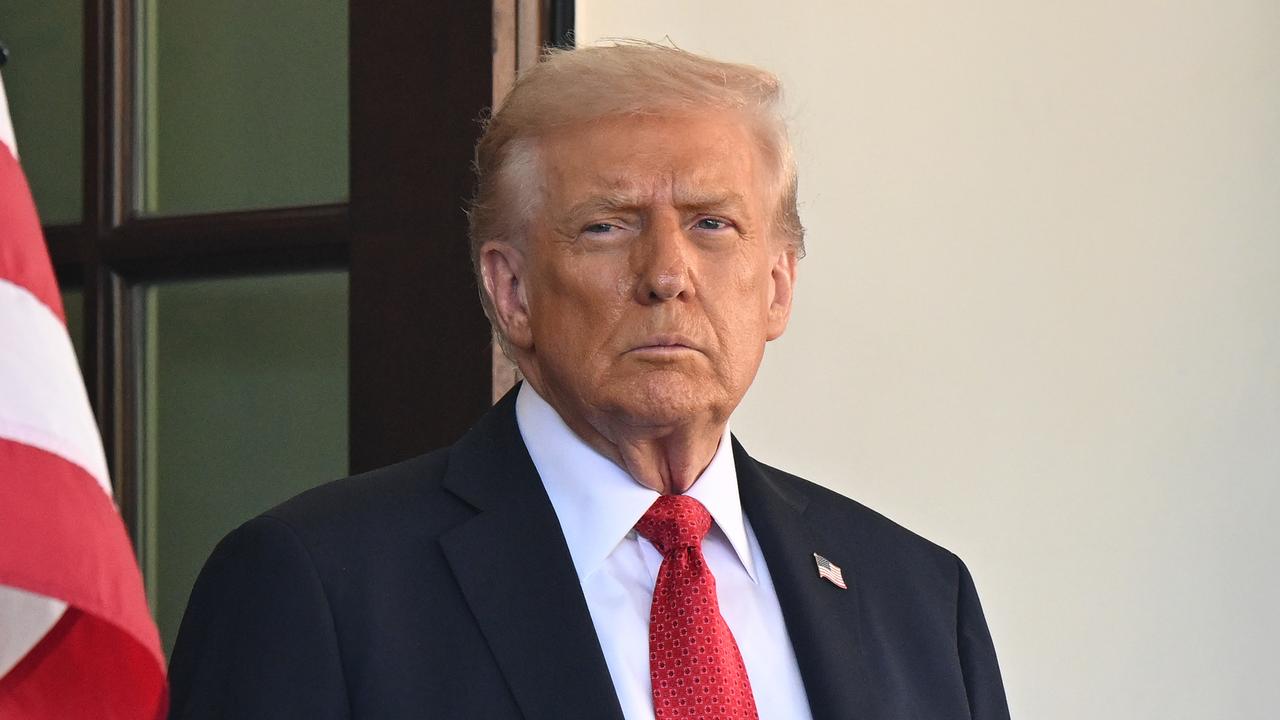
Aussie shares have tumbled and oil is surging, after US President Donald Trump threatened to send Iran “back to the Stone Ages” while declaring his military campaign nearly complete.


McCormick will buy Unilever’s food business for a combination of cash and equity, in a deal that values the Unilever unit at nearly $45 billion, the two food companies announced.
To purchase most of Unilever Foods’ portfolio, including Hellmann’s mayo and U.K. favorite Marmite, McCormick will pay $15.7 billion in cash. Unilever shareholders will own 55.1% of the combined company, while Unilever will hold a 9.9% stake.
The deal will add billions of dollars in annual sales for McCormick and expand the spice giant’s portfolio further into spreads and condiments. It already owns Frank’s RedHot and Cholula hot sauces and French’s mustard and mayo. About 70% of Unilever Foods’ sales come from Hellmann’s and Knorr, a food brand known for its seasonings, stock cubes and soups.
For Unilever, divesting much of its food business allows the company to focus on its personal-care segment, which is growing faster. In December, Unilever spun off its ice cream business, now trading separately as Magnum Ice Cream Co.
The merger with McCormick does not include Unilever’s food business in India.
The two companies expect that the deal will close in mid-2027, pending shareholder and regulatory approval. McCormick is projecting sustainable organic sales growth of 3% to 5% after the two businesses merge.
“This is a combination of two companies already with the support and the discipline and the knowledge of running the business, coming together to execute this integration,” McCormick CEO Brendan Foley said on a joint investor call with Unilever on Tuesday.
He later said on a call with reporters that McCormick had been thinking about a potential deal with Unilever’s food business for “a number of years.”
When the deal closes, Unilever will appoint four out of the 12 members on the combined company’s board. For the first two years, one of those directors will be a Unilever executive.
McCormick plans to maintain its global headquarters in Hunt Valley, Maryland, and to add an international headquarters in the Netherlands, the long-standing home for Unilever Foods. The combined company will also have a secondary stock listing in Europe.
The deal follows a broader trend among Big Food. Many packaged food and beverage companies have been getting leaner through divestitures and spinoffs as consumers buy less of their products. In 2024, nearly half of mergers and acquisitions activity in the consumer products industry came from divestitures, according to consulting firm Bain.
Shares of McCormick fell 6% in morning trading, while Unilever’s stock down 4%, reflecting investors’ hesitance about the mega-merger. Historically, the industry has a mixed record when it comes to such deals — for example, Kraft Heinz or Keurig Dr Pepper.
“We acknowledge the significant strategic merit and likely compelling [earnings per share] accretion from this potential transaction but also concede the hefty likely deal value, execution risk and resultant majority ownership of the combined entity by Unilever shareholders could dampen initial investor enthusiasm,” Barclays analyst Andrew Lazar wrote in a note to clients on March 20, after The Wall Street Journal reported the initial talks between the two companies.

The combination will create a company with approximately $20 billion in sales.


For brokers and business owners alike, legal expenses insurance could prove to be one of the most valuable forms of protection on the market

Chagee: A Divergence In Short-Term And Long-Term Prospects

Hess Midstream: Iran Conflict Reduces Bakken Production Fears
Business
Elon Musk Nears Trillionaire Status as SpaceX Files for Massive IPO Valued at $1.75 Trillion
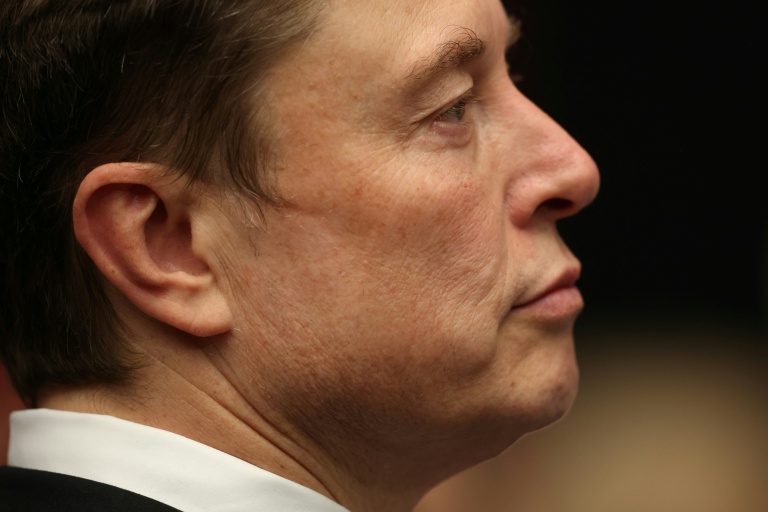
Elon Musk, already the world’s richest person with a net worth exceeding $820 billion as of early April 2026, could soon become the first individual in history to surpass $1 trillion in personal wealth if SpaceX completes a blockbuster initial public offering later this year, according to reports and industry estimates.
SpaceX, Musk’s privately held aerospace company, reportedly filed paperwork for an IPO on Wednesday, with an anticipated public debut in June that could value the firm at $1.75 trillion and raise as much as $75 billion — dwarfing the previous record set by Saudi Aramco’s $29 billion listing in 2019, Forbes reported.
The development, highlighted in a LinkedIn post by Forbes Magazine, has reignited discussions about Musk’s unprecedented accumulation of wealth and the potential for him to shatter yet another financial milestone. Musk’s fortune, driven primarily by his stakes in Tesla Inc. and SpaceX, has surged dramatically in recent months, with Forbes estimating it at $839 billion on its 2026 Billionaires List released in March and real-time trackers showing around $823.8 billion as of April 1.
Musk became the first person to reach $500 billion in October 2025, $600 billion in December 2025, $700 billion shortly after, and $800 billion in February 2026 following a series of corporate moves, including SpaceX’s acquisition of his xAI venture. His 2025-2026 wealth gain of roughly $497 billion represents the largest single-year increase ever recorded for any individual.
SpaceX IPO Could Be the Catalyst
A successful SpaceX listing at the projected $1.75 trillion valuation would significantly boost Musk’s holdings. Musk owns approximately 42-43% of SpaceX, making that stake alone potentially worth hundreds of billions more once shares trade publicly. Combined with his roughly 13-20% ownership in Tesla (depending on options and dilutions) and other assets, analysts say the IPO could easily push his total net worth past the $1 trillion threshold.
The filing comes amid strong investor appetite for space and defense-related technology, fueled by SpaceX’s dominance in reusable rockets, Starlink satellite internet, and NASA contracts. The company has achieved multiple milestones, including frequent Starship test flights and rapid growth in its Starlink constellation, which now serves customers worldwide.
If the IPO raises $75 billion as estimated, it would not only provide SpaceX with substantial capital for expansion but also create liquidity for early employees and investors while cementing Musk’s companies as central players in the new space economy.
Musk’s Wealth Trajectory
Musk first topped the Forbes Billionaires List in 2021 and has reclaimed the No. 1 spot multiple times. As of April 2026, he remains far ahead of the competition: Google co-founder Larry Page ranks second with roughly $245-257 billion, followed by Sergey Brin, Jeff Bezos and others in the $200-250 billion range. Musk’s fortune is more than three times that of the second-richest person, according to recent snapshots.
His wealth has been volatile, swinging with Tesla stock performance and private valuations of SpaceX and xAI. Key boosts in the past year included Tesla’s recovery after Musk stepped back from government-related roles to focus on the automaker, a Delaware court ruling restoring valuable stock options, and strategic deals involving SpaceX and xAI.
Real-time trackers like Forbes’ Billionaires Index show daily fluctuations of several billion dollars tied to market movements. Musk’s X (formerly Twitter) activity, product announcements and political commentary often influence sentiment around his companies.
Broader Implications
Reaching trillionaire status would mark a historic first in modern capitalism, raising questions about wealth concentration, taxation of unrealized gains and the role of innovation-driven fortunes in society. Musk has previously downplayed personal wealth discussions, emphasizing instead the mission of making humanity multi-planetary and advancing sustainable energy and artificial intelligence through his ventures.
Critics argue that such extreme wealth underscores inequalities, while supporters point to the technological breakthroughs enabled by Musk’s companies — from electric vehicles reducing emissions to Starlink providing internet in remote areas.
The potential IPO also highlights the maturation of the private space industry. SpaceX’s valuation has climbed steadily from earlier tender offers around $400-800 billion, reflecting confidence in its technology and revenue streams from launches and satellite services.
For Tesla shareholders, any SpaceX listing could indirectly benefit the ecosystem, though the companies operate independently. Musk has repeatedly stated that Tesla and SpaceX pursue separate but complementary goals.
Market and Expert Reactions
Financial analysts reacted to the IPO news with cautious optimism. Some predict strong demand for SpaceX shares given its near-monopoly in commercial space launches and growing Starlink subscriber base. Others caution that public market scrutiny could introduce volatility, as seen with Tesla.
“SpaceX going public would be transformative not just for Musk but for the entire space sector,” one aerospace investment specialist said. “It would provide a clear benchmark for valuations and likely spur more investment in related technologies.”
Social media buzzed with the Forbes post, with users debating the likelihood of Musk hitting $1 trillion and what it would mean for philanthropy, policy or further innovation. Musk himself has not publicly commented on the specific IPO filing as of Thursday, though he frequently engages with followers on X about his companies’ progress.
What Comes Next
SpaceX has not officially confirmed the IPO details, and regulatory filings with the Securities and Exchange Commission will provide more clarity in coming weeks. An June listing would represent one of the fastest timelines from filing to debut for a company of this scale.
Musk’s path to $1 trillion depends on multiple variables: successful execution of the IPO, sustained high valuations for both SpaceX and Tesla, and broader market conditions. Even without the IPO, some projections suggest he could approach the milestone through organic growth in his portfolio.
For now, Musk continues to lead the global wealth rankings by a wide margin while juggling leadership roles at Tesla, SpaceX, xAI and X. His ability to turn ambitious visions into high-value businesses has repeatedly rewritten records.
As the world watches the next chapter in Musk’s financial journey, the reported SpaceX IPO filing adds another layer of anticipation to an already extraordinary story of wealth creation in the 21st century.
Whether Musk becomes the world’s first trillionaire in 2026 or shortly thereafter, the development underscores the rapid pace of innovation in technology, space and artificial intelligence — sectors where his influence remains unmatched.

Pensioner banned from Alicante as mum finds him in caravan with very young girl

CoreWeave: Why I Am Reiterating A Buy

Ripple Treasury puts XRP and RLUSD inside corporate finance for the first time

Smart energy pays enters the US market, targeting scalable financial infrastructure

Why Israel is blocking foreign journalists from entering

Bitcoin: We’re Entering The Most Dangerous Phase

Explained: 7 financial changes from April 1 | Income tax | ATM withdrawals | PAN rules | STT hike

Krypto: Wenn Du im Minus bist, dann schau Dir das an.

New Financial Year, New Rules: New Financial Year Changes | New Income Tax Rules 2026 | BIG TV
-

 Business6 days ago
Instagram, YouTube Found Responsible for Teen’s Mental Health Struggle in Historic Ruling
-
 Tech7 days ago
Intercom’s new post-trained Fin Apex 1.0 beats GPT-5.4 and Claude Sonnet 4.6 at customer service resolutions
-

 NewsBeat5 days ago
The Story hosts event on Durham’s historic registers
-

 Sports5 days ago
Sweet Sixteen Game Thread: Tide vs Michigan
-
Entertainment3 days ago
Fans slam 'heartbreaking' Barbie Dream Fest convention debacle with 'cardboard cutout' experience
-
 Entertainment4 days ago
Lana Del Rey Celebrates Her Husband’s 51st Birthday In New Post
-
Crypto World2 days ago
Dems press CFTC, ethics board on prediction-market insider trades
-

 Crypto World10 hours ago
Gold Price Prediction: Worst Month in 17 Years fo Save Haven Rock
-

 Tech3 days ago
The Pixel 10a doesn’t have a camera bump, and it’s great
-

 Sports2 days ago
Tallest college basketball player ever, standing at 7-foot-9, entering transfer portal
-

 Tech2 days ago
EE TV is using AI to help you find something to watch
-

 Tech3 days ago
Apple will hide your email address from apps and websites, but not cops
-

 Tech2 days ago
Flipsnack and the shift toward motion-first business content with living visuals
-

 Tech2 days ago
How to back up your iPhone & iPad to your Mac before something goes wrong
-

 Fashion7 days ago
En Vogue in Brown Leather and Tailored Neutrals by Atelier Savoir, Styled by J Bolin
-

 Politics2 days ago
Should Trump Be Scared Strait?
-

 Crypto World2 days ago
U.S. rule change may open trillions in 401(k) funds to crypto
-

 Fashion7 days ago
What Are Your Favorite T-Shirts for the Weekend?
-

 Fashion6 days ago
Weekly News Update, 3.27.26 – Corporette.com
-
 Crypto World3 days ago
Bitcoin’s Six-Month Losing Streak: What On-Chain Data Says About the Market’s Next Move
You must be logged in to post a comment Login