
Business
US Supreme Court clears way for dismissal of case against Trump ally Steve Bannon





Form 13D/A Evotec SE For: 6 April
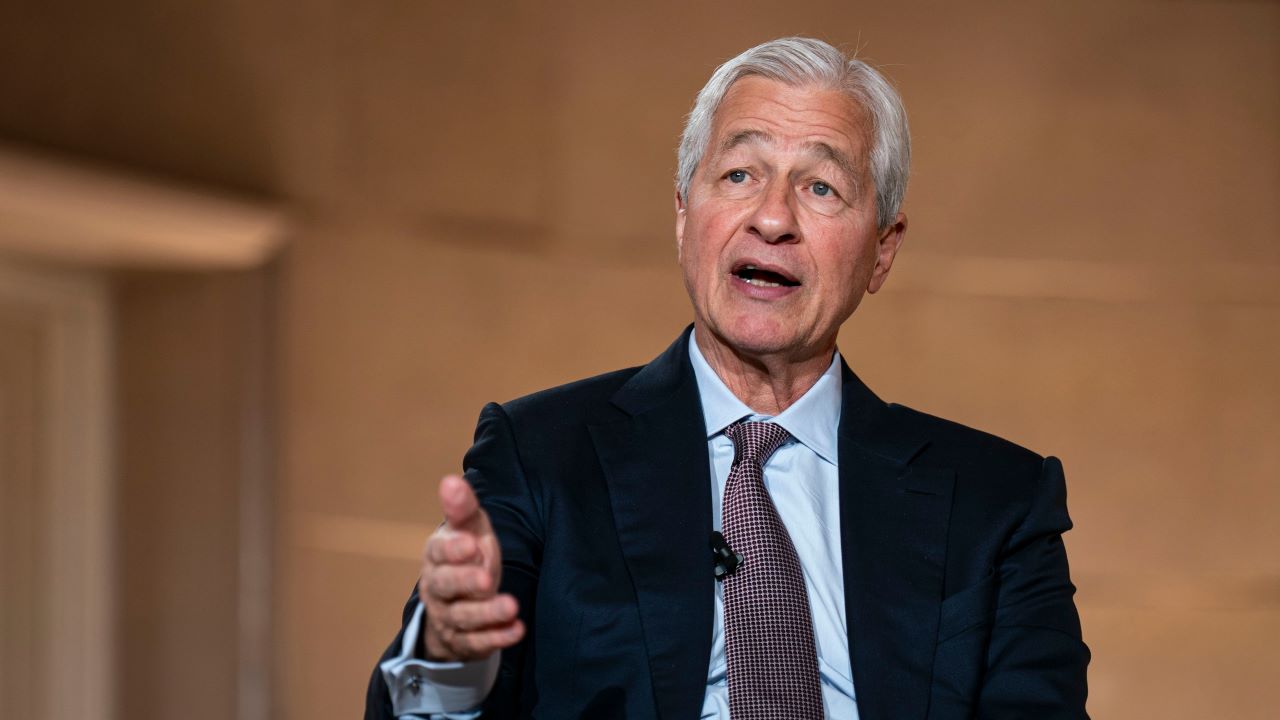
M2 Communities CEO Mitch Roschelle breaks down rising mortgage rates as war-driven inflation hits affordability and raises questions about when relief may come on Varney & Co.
JPMorgan Chase CEO Jamie Dimon warned in his annual letter to shareholders that the war in Iran could lead to more stubborn inflation as well as higher interest rates than what the market is currently anticipating.
Dimon’s letter was released Monday in conjunction with JPMorgan’s annual report for 2025 and said that the Iran war may cause energy shocks along with disruptions to global supply chains that could cause inflation to remain higher than expected.
Inflation that persists above the Federal Reserve’s 2% and rises further from its already elevated level could also prompt the central bank to raise interest rates to slow the pace of price growth.
“Now, because of the war in Iran, we additionally face the potential for significant ongoing oil and commodity price shocks, along with the reshaping of global supply chains, which may lead to stickier inflation and ultimately higher interest rates than markets currently expect,” Dimon wrote.
NY FED PRESIDENT JOHN WILLIAMS WARNS IRAN-DRIVEN OIL SPIKE COULD RIPPLE THROUGH ECONOMY
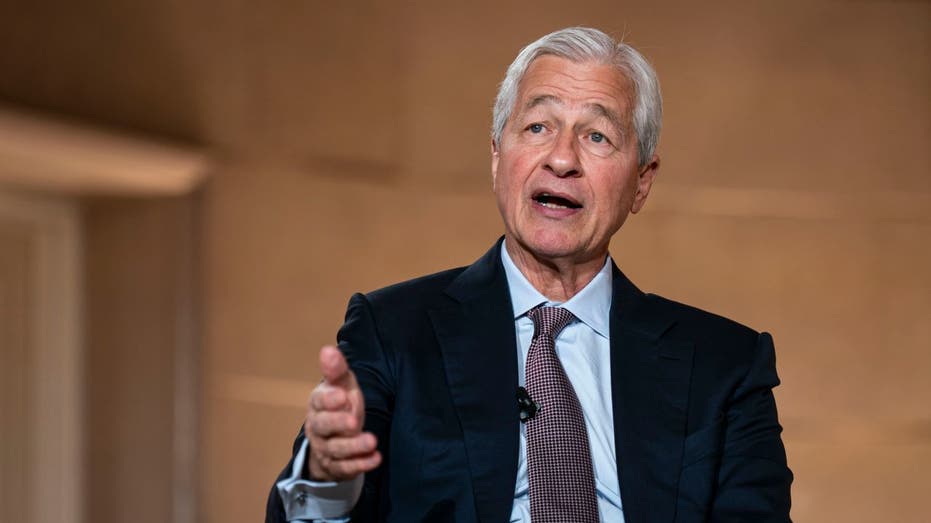
JPMorgan Chase CEO Jamie Dimon said that the Iran war could push inflation and interest rates higher. (Al Drago/Bloomberg via Getty Images)
Dimon said that the foremost risks facing financial markets and the economy are geopolitical in nature, including the Iran war and Russia’s war in Ukraine, as both conflicts have an “impact on countries and economies across the globe that are not directly involved in war.”
“Nations that are heavily dependent upon imported energy are already seeing the effects. And it’s not just energy, it’s commodity products that are byproducts of oil and gas, like fertilizer and helium. And given our complex global supply chains, countries are experiencing disruptions in shipbuilding, food and farming, among others,” Dimon wrote.
“The outcome of current geopolitical events may very well be the defining factor in how the future global economic order unfolds – then again, it may not,” he added.
Dimon said that while the most important outcome of those conflicts should be the “proper resolution of the current wars and, ultimately, peace on Earth, we do need to understand and track the economic effects” of those conflicts and the risks they pose.
POWELL WARNS OF NEW ENERGY SUPPLY SHOCK AS GAS PRICES SURGE: ‘NO ONE KNOWS HOW BIG IT WILL BE’
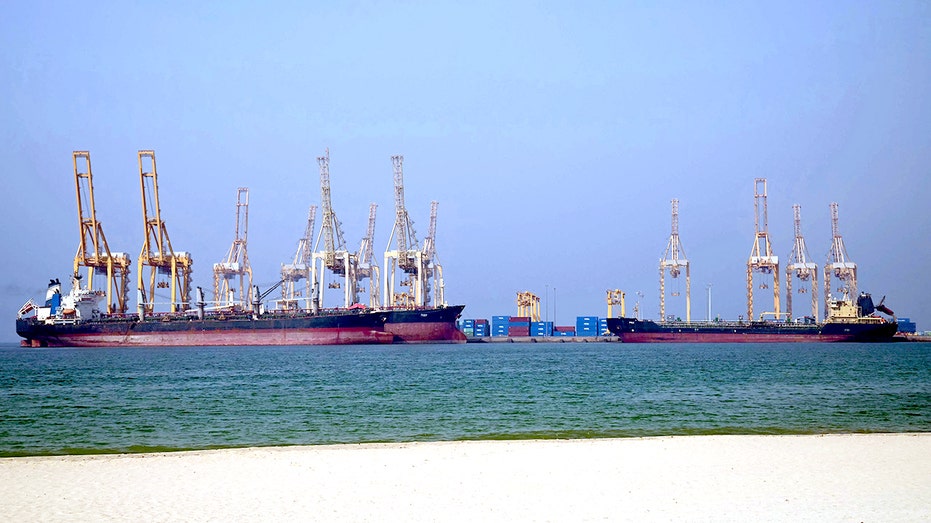
The Iran war has disrupted the flow of oil through the Strait of Hormuz, a key choke point for ships transiting the Persian Gulf. (Giuseppe Cacace/AFP via Getty Images)
He said that a “bad confluence of events” can generally cause some degree of a recession accompanied by high credit losses and market volatility, as well as lower asset prices and elevated unemployment, though it could play out in different ways in different places.
“There are some scenarios that would result in a recession, which generally reduces inflation, and other scenarios that would lead to a recession with inflation (stagflation – where inflationary forces overcome deflationary ones),” Dimon said.
“The skunk at the garden party – and it could happen in 2026 – would be inflation slowly going up, as opposed to slowly going down,” he added. “This alone could cause interest rates to rise and asset prices to drop. Interest rates are like gravity to almost all asset prices. And falling asset prices at one point can change sentiment rapidly and cause a flight to cash.”
IRAN WAR COULD PUSH INFLATION HIGHER THIS YEAR, GOLDMAN SACHS SAYS
| Ticker | Security | Last | Change | Change % |
|---|---|---|---|---|
| JPM | JPMORGAN CHASE & CO. | 294.60 | -0.78 | -0.26% |
Dimon said it’s too early to tell how the Iran war will play out and what it means for the region’s balance of power, and said that the Iranian regime has fomented terrorism around the world while also violently repressing its own populace.
“Time will tell whether the current war in Iran achieves our short-term and long-term objectives in the region and at what cost. We should not turn a blind eye to the role the current regime in Iran has played in fostering terrorism and killing thousands of people, including Americans and many of its own citizens, over many years,” he said.
GET FOX BUSINESS ON THE GO BY CLICKING HERE
“That threat must be addressed in an appropriate manner (by those who have more intel and knowledge than I do) – and urgently if Iran ever acquires a nuclear ballistic missile. Nuclear proliferation remains the gravest threat to the future of mankind,” Dimon wrote.
Business
Is Kuwait International Airport Open Today? Airport Remains Closed to Commercial Flights Due To Drone Strikes
KUWAIT CITY — Kuwait International Airport (KWI) stayed largely closed to regular commercial passenger traffic Monday as authorities continued safety assessments and repairs following a series of Iranian-linked drone attacks that damaged radar systems, fuel storage facilities and infrastructure since late February 2026.

The Directorate General of Civil Aviation (DGCA) and the Public Authority for Civil Aviation have suspended most operations, with no confirmed reopening date announced. Flight tracking sites and the official airport website showed virtually no scheduled arrivals or departures, displaying messages prompting travelers to contact airlines directly. Kuwait Airways has suspended all flights indefinitely from KWI, rerouting some operations through alternative hubs such as King Fahd International Airport in Dammam, Saudi Arabia.
The troubles escalated with multiple drone strikes reported in late February and early March, including attacks on March 28 that damaged radar systems and sparked fires at fuel depots. Additional strikes in early April targeted fuel tanks, causing large fires and further structural damage to Terminal 1 and runways. Officials described one incident as a “brazen attack” on critical infrastructure, with smoke visible from affected areas and emergency teams responding to contain blazes.
As of April 6, 2026, the airport has been effectively shut to standard commercial traffic for more than five weeks. Some limited cargo or military-related movements may continue under strict controls, but civilian passenger flights remain heavily disrupted or canceled. FlightStats reported excessive and increasing delays where any activity occurred, while Flightradar24 and other trackers showed near-zero commercial operations.
Travelers face significant chaos. Hundreds of passengers have been stranded or forced to rebook through neighboring countries. Kuwait Airways advised customers to check with local offices or the airport for updates, with many long-haul routes to destinations such as London, New York, Geneva and regional hubs either canceled or suspended. Some airlines have implemented hybrid ground-and-air transfer arrangements via Saudi Arabia to maintain limited connectivity.
The closures stem from both physical damage and precautionary airspace restrictions imposed amid heightened regional tensions involving the U.S., Israel and Iran. Kuwait’s airspace has been closed to most commercial civilian flights since late February, with air defense operations taking priority. Even after repairs, full resumption will require safety inspections, clearance of restricted airspace and confirmation that infrastructure meets international aviation standards.
Kuwait International Airport, one of the busiest in the Gulf with millions of passengers annually before the crisis, serves as a key hub for Kuwait Airways and several international carriers. The prolonged shutdown has sent shockwaves through regional travel, affecting tourism, business travel and expatriate movements in a country heavily reliant on foreign labor and oil-driven commerce.
Authorities have held cabinet-level meetings focused on aviation recovery, economic safeguards and coordination with international partners. Repair timelines remain unclear, with estimates ranging from several weeks to months depending on the extent of damage to radar, terminals, runways and fuel systems. No casualties were reported in the strikes, but the psychological and economic impact on travelers and the aviation sector has been significant.
Regional ripple effects include increased pressure on alternative airports in Saudi Arabia, the UAE, Bahrain and Qatar. Some carriers have added or expanded flights from those hubs to accommodate displaced passengers. Jazeera Airways and other low-cost operators have adjusted networks, with some launching or restarting routes that bypass Kuwait temporarily.
For passengers holding tickets involving KWI, airlines recommend checking flight status frequently and preparing for rebooking or refunds. Many have faced difficulties contacting customer service amid high call volumes. Travel insurance claims related to disruptions are expected to rise, while some governments have issued or updated advisories urging caution in the region.
The situation highlights the vulnerability of Gulf aviation infrastructure to geopolitical conflicts. Previous incidents, including temporary airspace closures and refueling interruptions, caused shorter disruptions, but the current series of drone attacks has caused more sustained damage. Smoke from fuel facility fires and reports of panic in terminals during incidents underscored the severity.
Kuwait’s government has activated emergency response protocols, with civil defense and military units involved in securing the site and supporting repairs. International aviation bodies are monitoring developments, though no formal global alerts beyond standard conflict-zone advisories have been issued.
As Monday progressed, scattered reports mentioned temporary refueling interruptions causing further delays on any limited departing flights, according to statements from the General Authority for Civil Aviation. However, the broader picture remained one of suspended operations rather than normal activity with delays.
Travelers planning trips to or through Kuwait are urged to contact their airlines well in advance and monitor official channels, including the Kuwait Airport website and Kuwait Airways updates. No immediate resumption of full services is expected, with some advisories suggesting the situation could persist into mid-April or beyond.
The prolonged closure has broader economic implications for Kuwait, a nation where aviation supports significant expatriate flows and business ties. Oil sector workers, medical tourists and family visitors have been particularly affected.
While exact repair costs and timelines remain undisclosed, officials emphasize that safety remains the top priority. Full operations will resume only after comprehensive assessments confirm the airport meets all required standards.
In the meantime, passengers are advised to explore alternative routes via neighboring Gulf states. Some carriers have offered flexible rebooking policies or compensation where applicable under international regulations.
The events at Kuwait International Airport serve as a stark reminder of how regional conflicts can rapidly disrupt global travel networks. As repairs continue and diplomatic efforts unfold, travelers and airlines alike await clearer signals on when normal operations might return to this vital Gulf hub.
Anyone affected by cancellations should retain all documentation for potential claims and stay updated through reliable sources. The situation remains fluid, with new developments possible as assessments progress.

Form 6K BTQ Technologies Corp For: 6 April


Bakers are seeking to capitalize on the high demand for protein fortified products.

Evercore ISI reiterates Procter & Gamble stock rating on commodity view

PetroChina: Positive On FY2025 Beat And Potential Catalysts


Skye Anderson to COO among personnel changes.


The popsicles offer 12 grams of protein.
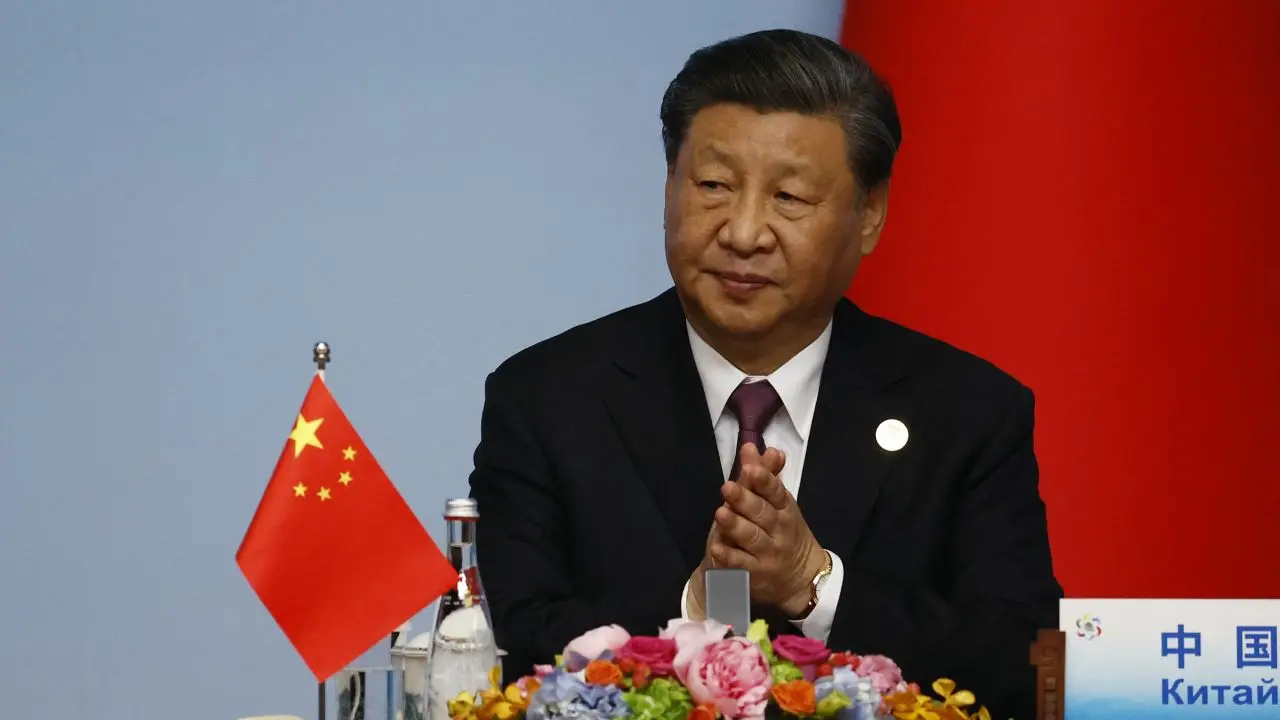
Gatestone Institute senior fellow Gordon Chang joins ‘Mornings with Maria’ to break down China’s ties to Russia and Iran amid Strait of Hormuz tensions and warn of rising threats to US national security.
Unidentified, sophisticated drones flying over a handful of U.S. military bases could be a warning sign from China, Gordon Chang warned Monday, suggesting Beijing could target the American homeland if the U.S. becomes more involved in its conflict with Iran.
“The important point here is that we have had, last month, over four of our important military bases, foreign drones. These drones were large, they were un-hackable, they obviously were not recreational, so some foreign power — probably China, maybe Russia — was operating drones over our critical air force bases,” Chang said on “Mornings with Maria.”
“Really, right now, the United States needs to be able to defend its bases in the homeland because those drone flights were a warning to the United States of some sort,” he continued.
GORDON CHANG URGES US TO TREAT CHINA AS ‘ENEMY COMBATANT,’ WARNS SUBS OPERATING ‘VERY CLOSE’ TO US
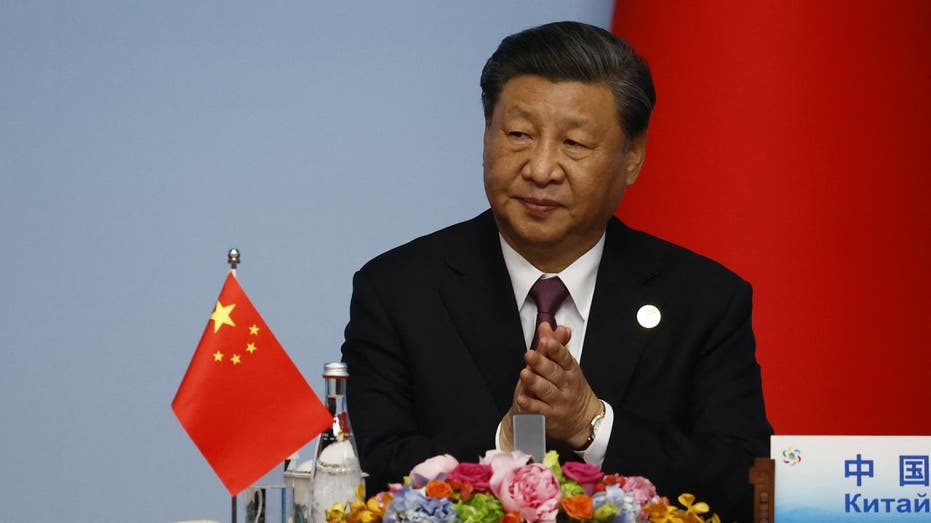
Chinese President Xi Jinping applauds during the joint press conference of the China-Central Asia Summit in Xian, China, on May 19, 2023. (Florence Lo/Pool/AFP via Getty Images)
Chang suggested the drone activity could be an attempt to send President Donald Trump the message that, if U.S. forces escalate in the region, China could respond by potentially targeting bases on American soil.
That warning, coupled with a recent suspicious device left near MacDill Air Force Base in Florida — which Chang suggested may have been linked to China — highlights a growing threat, he warned.
IRAN STRIKES COULD SIGNAL LIMITS OF BEIJING, MOSCOW’S POWER AS US FLEXES STRENGTH
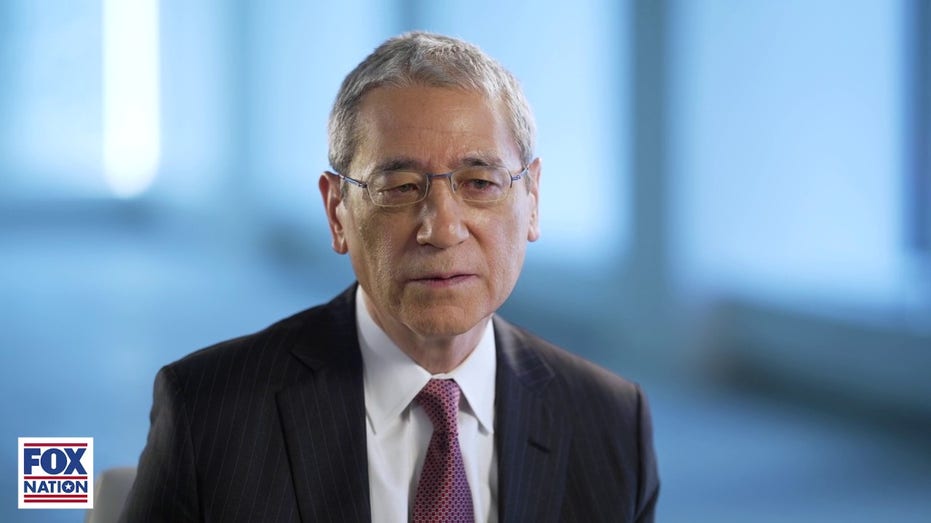
“The Coming Collapse of China” author Gordon Chang has consistently warned about the threat the U.S. adversary poses. (Fox Nation)
“We’ve really got to be concerned,” he said, later adding, “These are warnings that China intends to move on the U.S. in the American homeland.”
Chang also warned that Beijing’s actions should be viewed in the context of its growing alignment with other U.S. adversaries like Russia and Iran, as tensions continue to spill across multiple global fronts.
“China is supporting Russia in Ukraine, and China is supporting Russia in other matters as well… So they have a durable partnership, and anything that helps one of them is going to generally help the other, with the exception of the matter that you just raised,” he said, referring to the tension between higher oil prices benefiting Russia while raising costs for China.
“Generally speaking, the United States now faces a very powerful combination, and we shouldn’t be doing anything that fuels that combination,” he added.
GET FOX BUSINESS ON THE GO BY CLICKING HERE
Rep. Rich McCormick, R-G.A., discusses what is important to put in a reconciliation plan on ‘Maria Bartiromo’s Wall Street.’
Fox News Digital’s Michael Dorgan contributed to this report.

BTC USD Price Finally Moving Up: Saylor Strategy Bought More Before The Rally

‘Stop doing this at lunch’ warns ITV’s Dr Amir
Form 13D/A Evotec SE For: 6 April


-

 NewsBeat4 days ago
Steven Gerrard disagrees with Gary Neville over ‘shock’ Chelsea and Arsenal claim | Football
-

 Business4 days ago
No Jackpot Winner and $194 Million Prize Rolls Over
-

 Fashion3 days ago
Weekend Open Thread: Spanx – Corporette.com
-

 Crypto World5 days ago
Gold Price Prediction: Worst Month in 17 Years fo Save Haven Rock
-

 Business17 hours ago
Three Gulf funds agree to back Paramount’s $81 billion takeover of Warner, WSJ reports
-
Crypto World6 days ago
Dems press CFTC, ethics board on prediction-market insider trades
-

 Sports2 days ago
India men’s 4x400m and mixed 4x100m relay teams register big progress | Other Sports News
-

 Business5 days ago
Login and Checkout Issues Spark Merchant Frustration
-

 Tech6 days ago
EE TV is using AI to help you find something to watch
-

 Sports6 days ago
Tallest college basketball player ever, standing at 7-foot-9, entering transfer portal
-

 Politics7 days ago
Should Trump Be Scared Strait?
-
Tech6 days ago
Daily Deal: StackSkills Premium Annual Pass
-

 Tech7 days ago
Flipsnack and the shift toward motion-first business content with living visuals
-

 Sports7 days ago
Women’s hockey camp eyes fitness boost, tactics ahead of WC 2026 campaign | Other Sports News
-

 Crypto World7 days ago
U.S. rule change may open trillions in 401(k) funds to crypto
-

 Tech6 days ago
How to back up your iPhone & iPad to your Mac before something goes wrong
-

 NewsBeat7 days ago
Newscast – Scott Mills Sacked By BBC
-

 Politics7 days ago
Usha Vance: Disney Hats Over MAGA Caps?
-
Crypto World7 days ago
Valinor raises $25m to put private credit on-chain
-

 Business7 days ago
Functional benefits brewing in coffee innovation
You must be logged in to post a comment Login