“You know, maybe President Trump is jealous of Pope Leo XIV, because it is a blowout. It is a blowout!” Enten said in his trademark excitable style.
He pointed to an NBC News poll last month showing that the Pope had +34 point net favorability rating with Americans, compared to Trump’s -12.
Advertisement
“It’s not even close,” said Enten. “Pope Leo XIV absolutely crushing President Trump… and I will note that Pope Leo was the most popular person tested by NBC News.
This image appearing to show Trump as Jesus Christ, posted and then deleted on Trump’s Truth Social feed, was condemned as ‘blasphemous’ by many American Christians (Mandel NGAN / AFP via Getty Images)
“I believe the president is making a humongous mistake going after the most popular guy in America.”
Some reports have even claimed that U.S. officials threatened the Vatican with military force during a tense meeting in January.
In his segment Monday, Harry Enten noted that Trump had beaten Kamala Harris by 20 points among American Catholics in the November 2024 presidential election, according to a CNN exit poll.
Yet by late March, a Fox News poll put him on -4 points among the same group.
“President Trump crushed, crushed Kamala Harris,” Enten said. “But [now,] down he goes, down he goes, into the Dead Sea…
Advertisement
“The president has been struggling with Catholics. And I must say, in my expert opinion, I’m not quite sure that going after the Pope is the way to recover with Catholics.”
He added that Pope Leo’s views on the Iran war were “emblematic of Catholics in America”, citing a Fox News poll showing they were against U.S. military action in Iran by 10 points and against Trump’s conduct towards Iran by 20 points.
“The bottom line is this,” Enten said. “The Pope is emblematic of Catholics here in the United States. The Pope is far more popular with the American public than Trump is here in the United States…
“[He’s] losing a lot of ground, and this ain’t gonna help.”
Huntley was killed after being attacked at HMP Frankland in February
The inquest into the death of Soham child murderer Ian Huntley is set to open.
Advertisement
Huntley, who killed 10-year-olds Holly Wells and Jessica Chapman in August 2002, was allegedly attacked with a metal bar while serving his life sentence at the maximum security prison HMP Frankland in Durham on February 26. Durham Police confirmed the 52-year-old was taken to hospital and was in a serious condition after the attack.
He died at the Royal Victoria Infirmary on Saturday, March 7. Inmate Anthony Russell, 43, of HMP Frankland, has been charged with his murder.
Get MEN Premium now for just £1 HERE – or get involved in our WhatsApp group by clicking HERE. And don’t miss out on our brilliant selection of newsletters HERE.
Today (Tuesday, April 14) an inquest into Huntley’s death will open in Crook in Country Durham. The County Durham and Darlington Coroner has scheduled an inquest opening hearing to be held before senior coroner Jeremy Chipperfield.
Advertisement
Huntley was serving life in jail for the 2002 murders of Holly Wells and Jessica Chapman. The ex-school caretaker killed the best friends after they left a family barbecue to buy sweets in Soham, Cambridgeshire.
He dumped their bodies in a ditch 10 miles away. They were not found for 13 days, despite a search involving hundreds of police.
At the time, Huntley lived with Maxine Carr, who was a teaching assistant at Holly and Jessica’s primary school. He denied murdering the girls but was convicted after a trial at the Old Bailey in 2003. He was jailed for life with a recommended minimum term of 40 years.
Advertisement
Carr gave Huntley a false alibi and was jailed for 21 months for perverting the course of justice. She is now living under a new identity.
Russell will attend Newcastle Crown Court on April 24 for a pre-trial preparation hearing. He is charged with a single offence of murder.
The railway line proposal now takes into account the new Universal Resort near Bedford
An updated proposal for a new railway line in Cambridgeshire has been released by East West Railway Company (EWR Co). The new route will connect Oxford, Milton Keynes, Bedford, and Cambridge and will deliver up to five trains an hour.
Advertisement
The plans now take into account the new Universal Resort near Bedford and the increased passenger demands expected because of the development. A station at Stewartby has been planned to serve the theme park.
Gidon Freeman, Vice-President, External Affairs, Universal Destinations and Experiences, said: “One of the reasons we selected our site for a new entertainment resort complex featuring a world class theme park is its central location and excellent transport links. East West Rail can further improve that connectivity – its proposed station by Universal would enhance guest and team member arrival with a new link to our resort from across the Ox-Cam Corridor.”
The railway line is proposed to be built in new delivery phases with new stations and sections of the railway to open as soon as they are ready. EWR Co hopes this will bring forward the benefits of the line to communities and passengers and to allow growth such as housing opportunities and attracting businesses to the areas.
The core service will provide four five-carriage trains per hour across the whole route with an additional fifth train running at peak times or all day, if required. The fifth train could be used to enable service extensions to and from locations on rail network outside of the EWR route.
Advertisement
The latest updates include a new entrance to Cambridge Station proposed to help make access more convenient and provide step-free access to all platforms. It will also have bike storage, landscaping and street improvements like seating and lighting.
The new Cambridge East Station is set to be near Cambridge City Airport to help connect the wider region through an upgraded Newmarket line and will reduce pressure on Cambridge Station. A new location on the north side of St Neots Road for the Cambourne station has been proposed to “enable a greater degree of development close to the station”.
Changes have been proposed for the height of the railway between Bourne Brook and Harlton to be reduced by six metres and a green bridge will be created over the railway on the A603 Cambridge Road. The length of the tunnel starting at Harlton Road has increased from 700m to 940m.
Advertisement
Hybrid electric and battery equipped trains are planned to operate along the railway to reduce emissions and support net zero goals. Fulbourn could become the site for a train care centre where trains can be kept overnight and serviced, although other locations are being explored.
EWR Co is now asking for feedback on the updates with feedback from the consultation being taken into account before finalising the designs for the railways design ahead of the submission of a Development Consent Order in 2027.
The consultation will run from April 14 until June 9 with a series of public drop-in events being held to provide people with more information about the updated proposals.
David Hughes, CEO, East West Railway Company, said: “These updated proposals mark a major step forward for East West Rail to help ensure communities see the benefits of the project sooner as we finalise the design. More frequent and higher-capacity trains alongside a new station at Cambridge East and a new entrance at Cambridge station, will help unlock housing, support new jobs and attract investment, while giving residents and businesses better connections to Bedford, Milton Keynes and Oxford and wider destinations across the country.
Advertisement
“By bringing forward key elements of the railway and planning for increased demand, we are helping to ensure the infrastructure is in place to support future growth and opportunities for our communities. I encourage residents, businesses and stakeholders to take part in the consultation and share their views on our latest plans.”
“I had a round table with a load of cricket media and journalists and they mentioned all my hard work, graft and what it took to finally cement my place in an England team and honestly, I just burst out crying in front of them all,” Taylor says.
“It had meant so much to me, it meant so much to so many people and that really, really hurt, not being able to do that any more.”
Advertisement
In the years after his retirement, Taylor channeled his professional juices into golf, becoming a scratch player within three and a half years.
He also worked as a commentator for Test Match Special and then became a selector with England in 2018.
“At that stage, I just wanted to do things that I enjoyed and that I could make a difference in,” he says.
“It was an opportunity that I couldn’t turn down.
Advertisement
“I felt like I could make a difference and ultimately we did, we had a great time becoming number one in the white-ball game and winning the World Cup [in 2019], we were also tasked with winning Tests away from home which we did.”
Taylor stood down in 2022 after director Rob Key, who had just appointed Brendon McCullum as Test coach, implemented a new structure.
“Of course, [the job] is stressful,” Taylor says.
“If you don’t have the right process when it comes to decision-making, and if you let emotion get in the way or you’re not being honest or communication is poor, that makes it hard and that can be stressful.
Advertisement
“But if your process is as good as it can possibly be, it does make things easier because you’ve done everything you can to make the best-informed decision.
“You’re dropping and hiring players in the elite end of international sport but you’re working with great people and I was making the right decisions at the right time in my head, so I could sleep at night.”
These days Taylor is an assistant coach back at Leicestershire, where he became the youngest batter to make 1,000 County Championship runs in a season in 2009.
He has an internal defibrillator, has medication for his heart issue and tries to keep stress to a minimum.
Advertisement
“Like if my football team loses, it’s not the end of the world to me,” he says.
“I try to have fun with what I do and I don’t get too het up and bothered about things.
“I wish I was more passionate about things sometimes and that I could get more riled up about things but I just don’t, and I’ve learnt not to and that I can’t.
“I guess I’ve just taught myself to be more laid-back.”
Advertisement
Armed with that mindset, Taylor and Leicestershire are back in Division One for the first time in 22 years this season after being promoted.
He also points to the help he gained from speaking to friends and family at his most difficult moments.
“I have lived a great life over the past 10 years when I shouldn’t have, and I’ve been so lucky, and I am extremely grateful for the experiences,” he says.
“I’ve trusted some great people who have allowed me to get things off my chest which is so important because physically we can’t control what happens to us, but mentally we can, and it’s so important to speak to people you trust instead of battling with yourself.”
James Morton, 33, was arrested and charged with murder after 45-year-old Italian national Gloria De Lazzari was found dead by police at Kempston Gardens in Halliwell on Monday January 19.
Gloria De Lazzari was found dead in Bolton (Image: GMP)
A brief hearing at Manchester Crown Court this week heard how a trial that had been set for July this year will now be delayed.
The Honorary Recorder for Manchester Judge Nicholas Dean KC said: “I do not feel that the current trial date is viable for the reasons that have been discussed.”
Morton, who wore glasses and a plain grey top, appeared before the court for the hearing via video-link.
Advertisement
The case was heard at Manchester Crown Court (Image: Phil Taylor)
He spoke twice, to confirm his identity and that he could see and hear the proceedings during which mainly administrative matters were discussed that cannot be reported at this stage.
Morton was not asked to enter a plea.
David Temkin KC, prosecuting, agreed that Morton, of Kempston Gardens, Halliwell, can be brought back before the court for a plea later.
Morton is expected to next appear before the court for a further case management hearing on Monday June 15 this year and was further remanded into custody.
Advertisement
Police on the scene at Kempston Gardens (Image: Phil Taylor)
Judge Dean set a trial date for February 1, 2026, which is expected to last around two weeks.
A tribute from Ms De Lazzari’s mother released by Greater Manchester Police after she was confirmed dead in January described her as a “fantastic person and devoted daughter”.
She said: “She was a fantastic person and a devoted daughter. I always looked forward to her visits to me in Italy, where we loved spending time together outdoors and going on long walks.
Forsensic at the scene at Kempston Gardens (Image: Phil Taylor)
A tribute from Ms De Lazzari’s ex-husband added: “Gloria De Lazzari was a great lady with a pure soul and a gentle, compassionate heart.
Advertisement
“She was always available to help others and never held a bad thought for anyone. Her kindness, humility, and selflessness touched everyone who had the privilege of knowing her.
“She carried grace in her actions and warmth in her words, leaving behind memories filled with love and goodness.
“Gloria was truly a lovely lady, and her absence will be deeply felt by all whose lives she brightened.
“May her soul rest in eternal peace, and may her kindness live on in the hearts of those she leaves behind.”
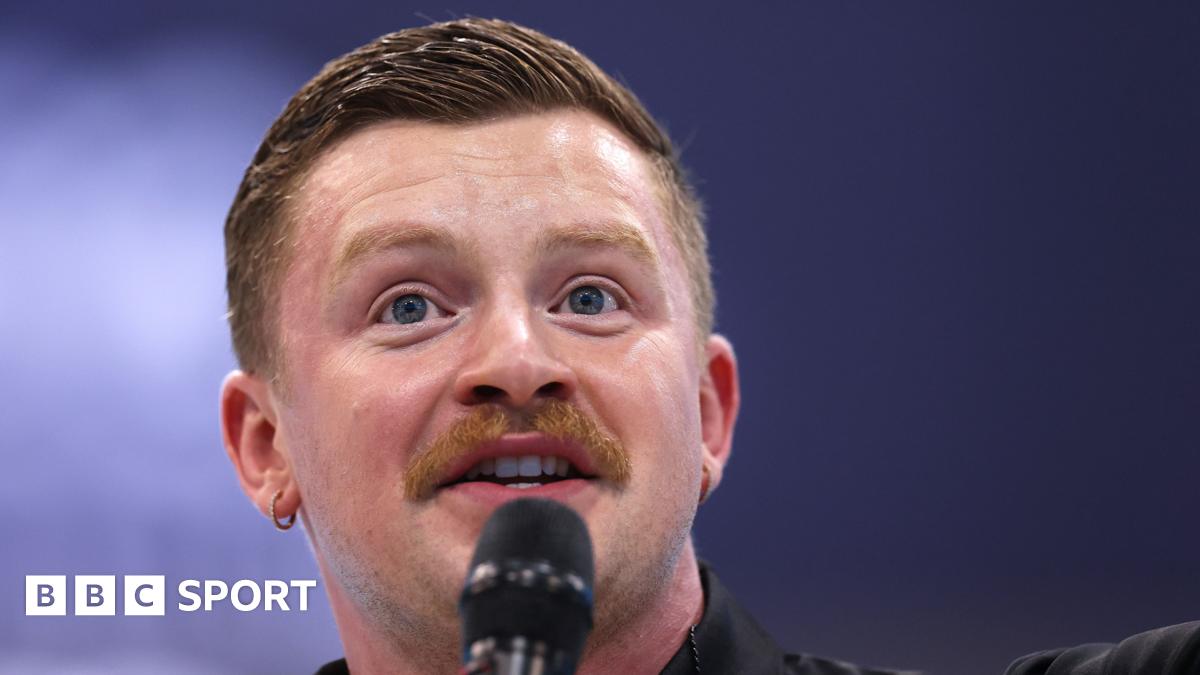
Peaty believes he is in a “very good frame of mind” as he makes his return in London.
He won gold in the 50m at the Edinburgh International Swim Meet a month ago but finished fourth in the 100m, beaten by 18-year-old British junior world champion Filip Nowacki.
He’s settled in his family life too, having married model Holly Ramsay, the daughter of TV chef Gordon, in December.
“It gives an incredible amount of peace, the life we’ve got together,” he says. “But also that I can do this incredible thing which I call sport.”
Advertisement
He adds that swimming “will humble you” and is a “hard path”, but “what makes that path a lot easier is having my wife, my son and friends around me”.
Peaty credits the support of his famous in-laws, too, with whom he completed his debut triathlon as part of Team Ramsay last August.
But thinking back to his wedding speech, he concedes Gordon probably won the prize for best toast of the day.
“It was always going to be hard to beat Gordon’s speech – Gordon is never going to find it hard to make a room laugh.”
Tiny organisms on the ground – bacteria and fungi – have a “superpower” that allows them to reach up into the atmosphere and pull down the rain, according to a recent study.
To understand how a microbe can control a storm, we first have to look at how clouds become rain. High up in the atmosphere, water doesn’t always freeze at 0°C. Temperatures are normally much lower at cloud level but pure water can stay liquid down to a bone-chilling -40°C.
Most rain starts as ice. In the atmosphere, clouds are full of “supercooled” water – liquid that is colder than freezing but hasn’t turned to ice yet because it has nothing to hold onto.
For a cloud to turn into rain or snow, it needs a “seed”– a tiny particle for water molecules to grab onto so they can crystallise into ice, then fall from the clouds as rain. Dust, soot and salt – swept into the clouds by wind – can do this, but they aren’t very good at it. They usually require the temperature to drop significantly before they start working. This is where biology enters the frame.
Advertisement
Meet the ice-makers
For decades, scientists have known about ice-nucleating proteins (INpros) found in certain bacteria like Pseudomonas syringae. Bacteria travel from plant leaves into the clouds to trigger rain. They use special proteins to force water to freeze at temperatures as high as -2°C.
However, the recent discovery published in the journal Science Advances has revealed a new player in the climate game: fungal INpros. While bacteria keep their ice-making proteins tucked away on their “skin”, fungi (mainly Fusarium and Mortierella) secrete these proteins into the soil around them. Their structure makes these fungal proteins water soluble and smaller than the bacterial ones, and with a high ice seeding activity which makes them more effective cloud seeds.
Making it rain
This leads us to the bio-precipitation cycle. Imagine a forest floor covered in these fungi. As the wind kicks up, their microscopic ice-making proteins are launched into the clouds. Once there, they act as powerful “seeds”.
Fungal spores from the forest floor can get carried up to the clouds by the winds. ABO PHOTOGRAPHY/Shutterstock
Even in relatively warm clouds (above -5°C), these fungal proteins can force water to crystallise into ice. As these ice crystals grow, they become heavy and fall. As they drop through warmer air, they melt and turn into rain.
Advertisement
This creates a loop:
fungi grow in the damp soil of a forest
proteins from the fungi are swept into the sky
rain is triggered by these proteins, watering the forest below
growth of more fungi is triggered by the rain, starting the cycle over again.
Unlike the Pseudomonas bacteria, which use ice to “attack” and damage crops to access their nutrients, these Mortierella fungi are peaceful plant partners. They aren’t looking to destroy. Instead, they secrete their ice-making proteins into the surrounding soil, which seems to create a protective shield from harsh conditions and a nutrient-rich environment that helps both the fungus and the plant flourish.
The new discovery about fungi is exciting because it shows that even organisms buried in the soil can influence the atmosphere, adding a new dimension to this ancient partnership between life and the sky.
It’s a missing piece in the puzzle of how life and the global climate shape one another. This ice-making ability probably gives the fungi a survival edge. They use ice to pump moisture toward their mycelia (a vast, underground web of tiny fungal threads), shield themselves from jagged frost damage and hitchhike through the clouds to reach new homes.
Advertisement
The evolutionary heist
The new research also uncovered how fungi of the Mortierellaceae family gained the ability to create ice. When the researchers studied the fungi’s genetic code, they found that these fungi didn’t evolve this trait on their own. Millions of years ago, they “borrowed” the genetic code for it from bacteria, through a process called horizontal gene transfer.
Think of it as a biological “copy and paste”. While most animals only inherit DNA from their parents, microbes can swap snippets of genetic code with their neighbours, giving them an instant evolutionary upgrade.
However, these fungi are much more efficient at making ice than the bacteria because the fungus secretes (sweats out – meaning they exist outside the fungal cell) these proteins, they can coat the environment around it and stay active in the soil after the fungus has moved on. These proteins are incredibly hardy. They can wash into streams, dry up into dust, and get swept into the sky by the wind.
Why this matters
This discovery could change how researchers view conservation. If we clear-cut a forest – stripping every tree away and leaving the land bare, we aren’t just losing trees. We might be breaking the biological engine that triggers regional rainfall.
Advertisement
As we face a changing climate with more frequent droughts, understanding these fungal INpros could be vital. We might one day use these natural, biodegradable proteins for “cloud seeding” to create rain.
Many countries (like the UAE, China and parts of the US) already have cloud-seeding programs to protect crops from frost. But this kind of cloud seeding relies on silver iodide – a heavy metal that can linger in the environment.
The fungal proteins offer a natural, biodegradable alternative. They could also protect crops from frost. By forcing ice to form early and smoothly, they release a tiny burst of heat that acts like a thermal blanket for the plant.
The next time you’re caught in a sudden downpour, take a deep breath. That “smell of rain” might just be the scent of the these little organisms telling the clouds it’s time to let go.
Vice president JD Vance tried to spin President Donald Trump’s now-deleted Truth Social post depicting himself as Jesus Christ in an AI-generated image.
“Well, first of all, Bret, I think the president was posting a joke,” Vance, who is Catholic, said. “And of course, he took it down because he recognised that a lot of people weren’t understanding his humour in that case.”
BAIER: I wonder as a catholic how you consider this picture which a lot of people took as the president posting a picture of himself as Jesus?
VANCE: I think the president was posting a joke and, of course, he took it down because he recognized that a lot of people weren’t… pic.twitter.com/gdcaVw6Ahy
Vance then tried to paint Trump’s unorthodox use of social media as a positive attribute.
“I think the president of the United States likes to mix it up on social media, and I actually think that’s one of the good things about this president, is that he’s not filtered. He doesn’t send everything through a communications professional. He actually reaches out directly to the people,” Vance said.
Despite taking the post down, Trump tried to spin the image’s message.
Subscribe to Commons People, the podcast that makes politics easy. Every week, Kevin Schofield and Kate Nicholson unpack the week’s biggest stories to keep you informed. Join us for straightforward analysis of what’s going on at Westminster.
Hello, and welcome to WalesOnline’s live blog for Tuesday, April 14. We’ll be bringing you all of the latest news from across Wales – whether you’re on the move, at home or at work – as well as the latest traffic and travel.
We’ll also be keeping you informed of major news stories from the UK and overseas.
Contribute to the live blog by posting your comments below, or tweet us@WalesOnline to share the news that’s breaking in your area. Read the biggest stories in Wales first bysigning up to our daily newsletter here.
I’m a dad to a great 15-year-old son, and I could do with some guidance.
Over the past year or so, I’ve had a strong feeling that he might be gay. It’s not based on one big thing, just lots of small signs and instincts that have added up.
Advertisement
I want to be absolutely clear: if he is, I’d be completely supportive. It wouldn’t change how I feel about him one bit.
My problem is whether I should say something or keep quiet.
Part of me thinks that asking him directly could be reassuring – a way of showing that home is a safe place and that he doesn’t need to hide anything.
But I’m also worried that bringing it up could put pressure on him, embarrass him, or make him feel pushed into a conversation he isn’t ready to have.
Advertisement
He’s still young, and I remember how private and confusing those teenage years can be.
I don’t want to make assumptions or label him before he’s figured things out himself. At the same time, I don’t want him to feel alone if he is struggling.
Do I wait and let him come to me, or is a gentle conversation the right move?
Thanks, David.
Advertisement
Dicky says:
You sound like a good, thoughtful father, and that already puts your son in a far better position than many young people.
Sadly, there are still parents who see being gay as something to “fix” rather than accept, so the fact you’re approaching this with care and love really matters.
My advice is simple: let your son tell you in his own time. At 15, he may still be working things out for himself.
Advertisement
Being asked outright, even kindly, can feel like pressure or expectation when he’s not ready for labels or conversations yet.
Coming out should always be on the person’s terms, not sped up because others are curious or well-meaning.
That doesn’t mean staying silent or distant. In the meantime, you can show your support in quieter ways – challenging homophobic comments if they crop up, speaking positively about LGBTQ+ people you see in the media, or being openly accepting when topics like relationships or identity come up naturally.
Those small signals build a sense of safety far more effectively than one big conversation.
Advertisement
If and when your son decides to tell you something important, he’ll remember whether home felt like a safe place long before he spoke the words.
Keep the door open, keep the tone relaxed, and trust that he’ll walk through it when he’s ready.
A vet has urged dog owners not to ‘wait it out’ if they spot symptoms
Sophie Buchan Money and Lifestyle Writer
05:34, 14 Apr 2026
A vet has issued a serious warning to dog owners, urging them not to ‘wait it out’ if they spot particular symptoms in their pet, as the consequences could prove fatal.
Jade, a qualified veterinary professional, discussed a lethal condition known as GDV – gastric dilatation volvulus, commonly referred to as bloat. She described as “a dog owner’s worst nightmare.”
Advertisement
Despite how serious it is, Jade said a many owners don’t know about the condition. She said: “I have found quite a lot of dog owners still haven’t heard about bloat, or [if] they have heard about bloat, they actually don’t realise the severity of it, because bloat is a life-threatening emergency for dogs.”
What is GDV?
Jade, aka @jade.the.vet.nurs on TikTok, explained: “GDV is when the stomach fills with air, which is ‘gastric dilation’ and twists – that’s the ‘volvulus’. So when the stomach twists, it cuts off the entrance and the exit to the stomach meaning that any contents and in the stomach can’t go either way.”
She further explained that any food in the stomach continues to be digested, releasing gas in the process. This causes the stomach to inflate more and more with gas, “which is really painful and uncomfortable for your dog.”
Advertisement
She emphasised: “So when the stomach twists, it can block the flow of blood to the stomach or to other vital organs and this can quickly send a dog into shock. It can cause organ damage, it can cause organ failure, and if you do not get your dog to the vet quickly and they get surgical treatment, this will be fatal.”
Throughout her video, the respected vet warned this fatal condition “is not to be taken lightly” and it’s “not the type of thing that if you start noticing symptoms, you should be thinking, ‘we’ll wait it out’.”
She continued: “If your dog shows any signs or symptoms of GDV you need to get them to the vet as soon as possible, because from the time those symptoms start presenting, you’ve probably got one to two hours before your dog needs to be in theatre and having the stomach untwisted and the gas removed, before you start getting permanent damage that means your dog is not likely to survive.”
What are the markers indicating GVD in dogs?
Content cannot be displayed without consent
Jade explained: “Your dog is going to look very bloated and they are going to steadily and progressively getting more and more bloated. You can physically see when you look at them that their abdomen is quite distended and if you’re to touch the sides of their stomach, you can feel just how tight it is to touch.”
Advertisement
She also said owners should look out for signs like such as their pet constantly looking at their stomach and attempting to vomit. “Your dog is going to keep trying to be sick, but because the entrance is blocked, the contents cannot go anywhere.” she said.
As a result, “your dog is going to keep trying to bring them up however it’s just going to present as retching and dry heaving – sometimes it might even bring up white froth or white foam they are drooling.”
Other symptoms to watch for include:
Restlessness – panting and pacing
Excessive drooling
Collapse
Difficulty breathing
How is GDV diagnosed?
GDV requires an abdominal x-ray. However if your dog is critically ill, they may need urgent treatment before a formal diagnosis can be established.
The People’s Dispensary for Sick Animals (PDSA) advises: “After their operation, it’s likely your dog will need to stay hospitalised for a day or two so they can be monitored. Your vet will check for further bloating and possible complications such as peritonitis (infection inside the abdomen).
Advertisement
“They will be discharged once your vet is happy they are recovering well. Once your dog is home, you’ll need to continue monitoring them for any symptoms of recurring bloat or infection.”
How to prevent GDV?
Jade recommends: “Instead of feeding them one or two big meals a day, you can split this up into three or four smaller portions that you can spread across the day. It helps to feed dogs out of a slow feeder, which stops them inhaling their food.
“Because when dogs eat really quick, they can also swallow a lot of air. So we’ve got food in the stomach and air in the stomach which is just a recipe for GDV.”
When it comes to walks, timing is essential in relation to feeding schedules. The advice given is: “You should walk your dogs two hours before or after feeding and you can also get slow drinking bowls, as well as the same applies for water.”
Advertisement
Ask your vet about surgery
Prevention-wise, surgery is also an option. Jade mentioned: “You can also speak to your vet about a preventative surgery, which is where your vet will attach your dog’s stomach to their abdominal wall to prevent it flipping.”
“This is normally during a routine procedure, such as neutering, but if you think your dog is susceptible to GDV, then I think it’s something you should definitely talk to your vet about in advance.”
























































You must be logged in to post a comment Login